









When your TV's built-in speakers just aren't cutting it anymore, you've probably started looking into soundbars. But the sheer number of options can be overwhelming, especially when products seem similar on the surface but take completely different approaches underneath. That's exactly the case with the Sonos Ray and the Ultimea Skywave F40 – two soundbars that represent fundamentally different philosophies about what makes great TV audio.
Before diving into these specific products, it's worth understanding what soundbars actually do and why the differences matter so much. At their most basic level, soundbars replace your TV's tiny built-in speakers with larger, more powerful drivers that can actually move enough air to fill your room with sound. But that's where the similarities end.
Some soundbars, like the Sonos Ray, focus on delivering exceptional stereo audio – that's two-channel sound that creates a wide, detailed soundstage from a single unit. Think of it like having really good bookshelf speakers built into one sleek package. Other systems, like the Ultimea Skywave F40, aim to recreate the full movie theater experience with surround sound that places audio all around you, including overhead.
The key technical concepts you'll encounter are channel configurations (like 2.0, 5.1, or 5.1.2), which tell you how many speakers and subwoofers are involved. The first number represents main speakers, the second is subwoofers, and if there's a third number, those are height channels that fire sound upward to bounce off your ceiling. Dolby Atmos is the technology that makes those height channels work, creating a three-dimensional bubble of sound around you.
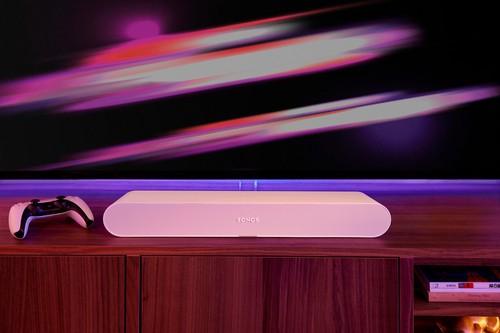
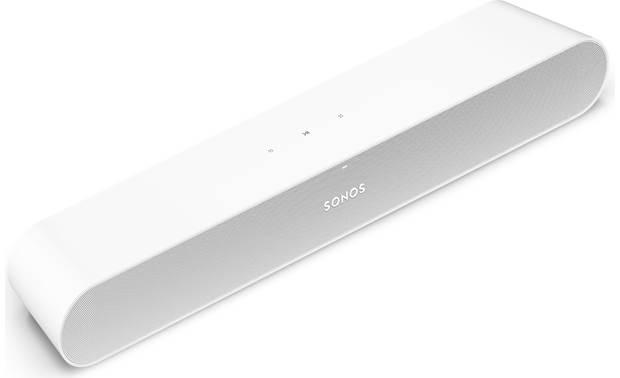
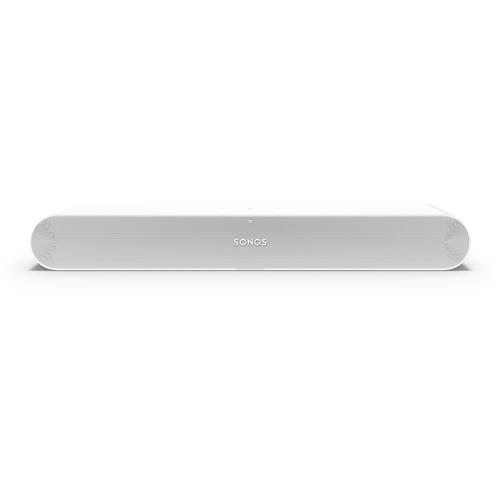
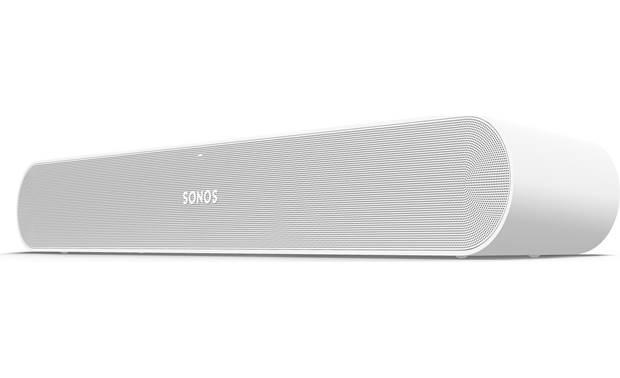
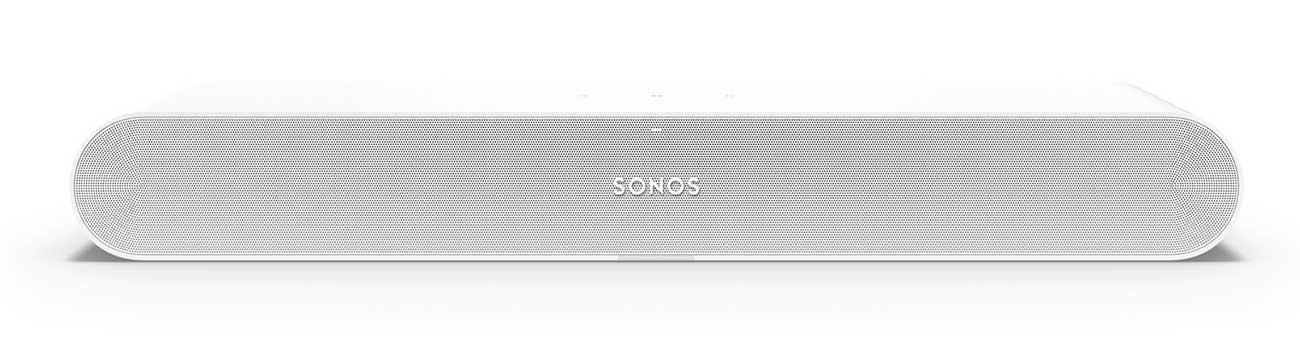
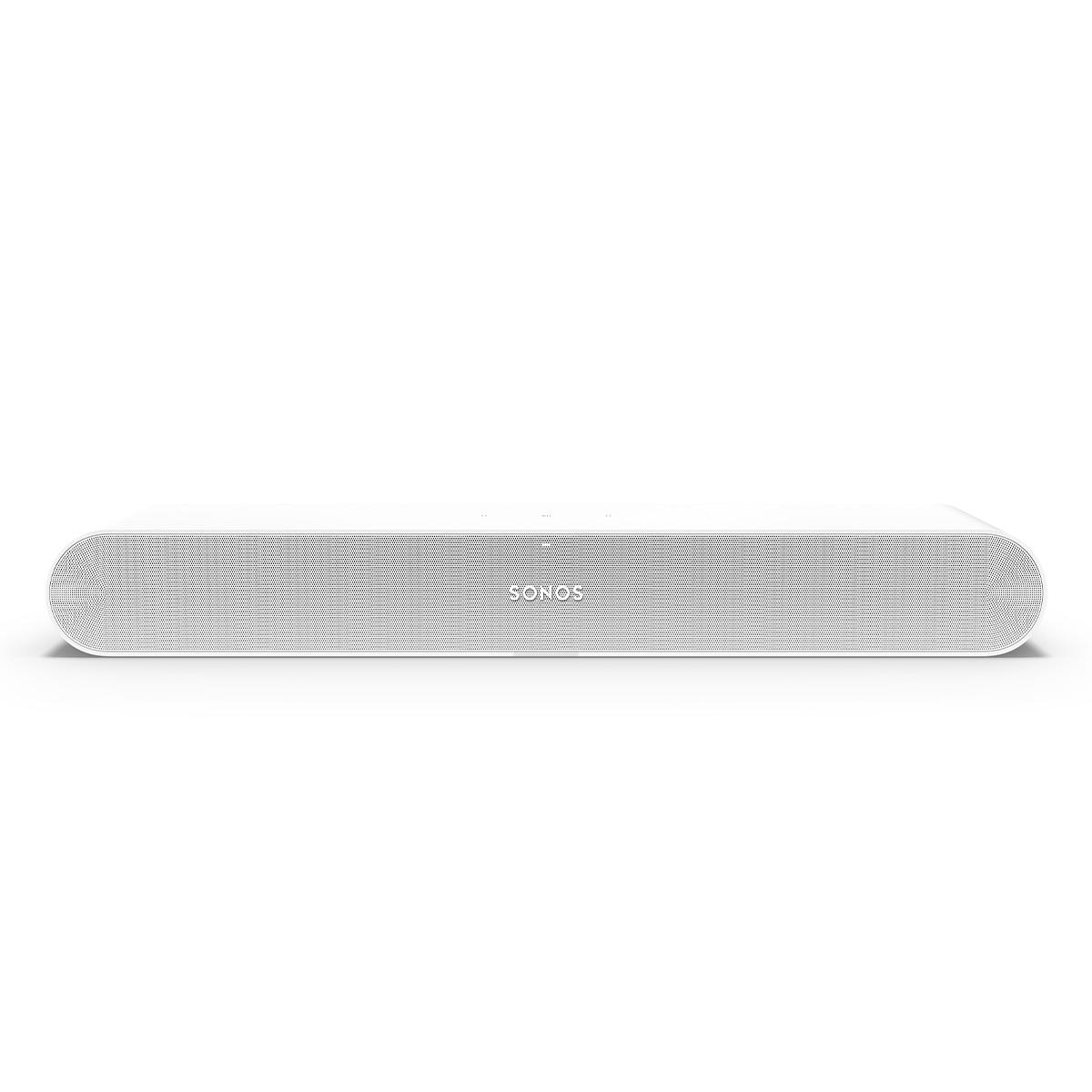
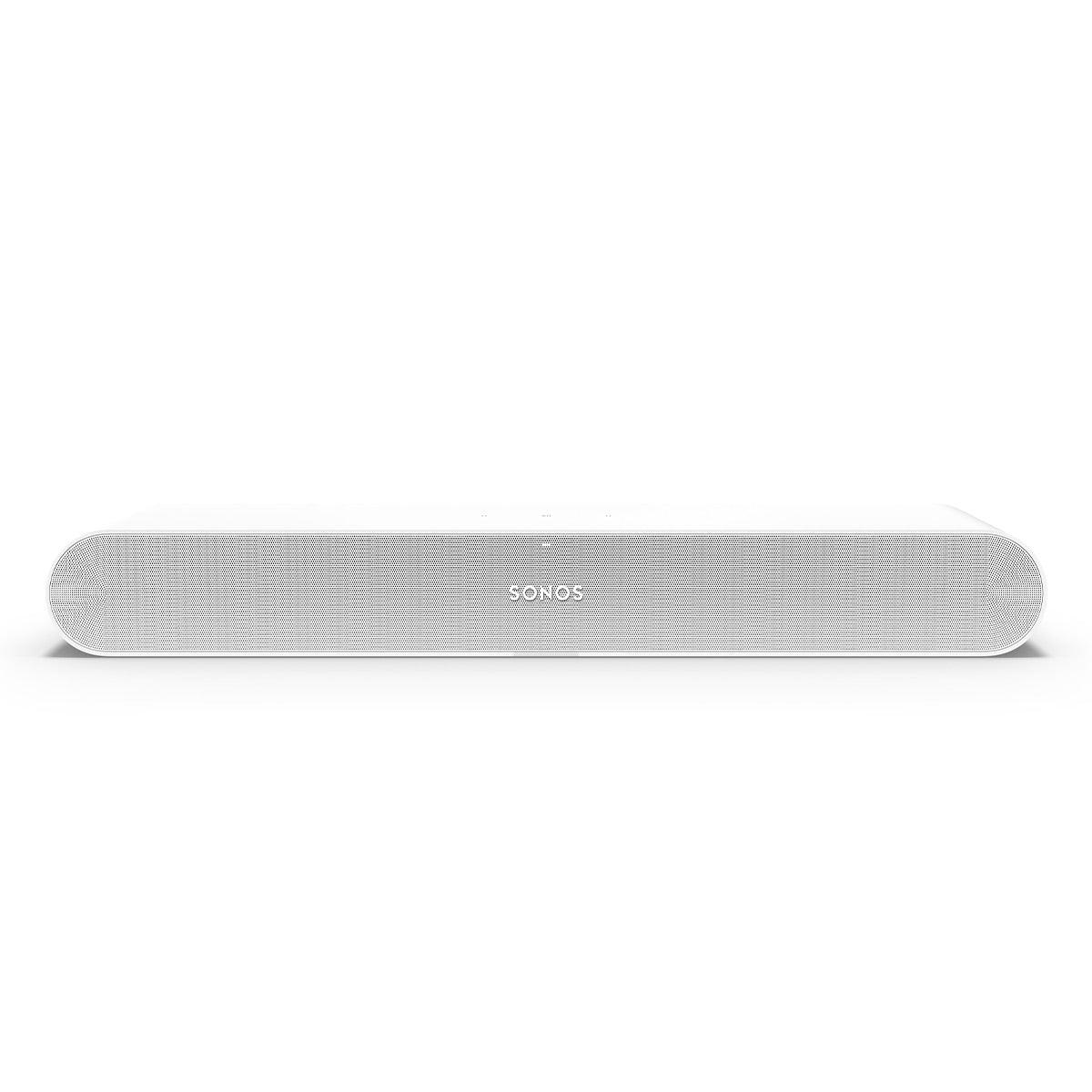
Released in 2022, the Sonos Ray represents Sonos's entry-level soundbar, though "entry-level" in Sonos terms still means premium build quality and sophisticated audio processing. This compact soundbar measures just 22 inches wide and under 3 inches tall, making it perfect for smaller TVs and tight spaces.
What makes the Sonos Ray special isn't what it includes – it's what it perfects. Inside that sleek enclosure are four Class-D digital amplifiers (these are highly efficient amplifiers that generate less heat and waste less power), two tweeters for high frequencies, and two midwoofers for vocal ranges and mid-bass. The clever part is how Sonos arranges these drivers in an elliptical configuration with split waveguides that help project sound across your entire room, not just straight ahead.
The Ray also includes Trueplay tuning, which is genuinely impressive technology. Using the microphone in your iPhone or iPad, it plays test tones and measures how your room affects the sound, then adjusts the soundbar's output to compensate for things like hard surfaces, furniture, and room shape. It's like having an audio engineer tune your soundbar specifically for your space.
However, the Sonos Ray makes some significant compromises that might surprise you at this price point. There's no HDMI connection – just optical digital input. There's no Bluetooth connectivity either, relying instead on Wi-Fi and Apple's AirPlay 2 for wireless streaming. Most notably, there's no Dolby Atmos support, which means no overhead audio effects.
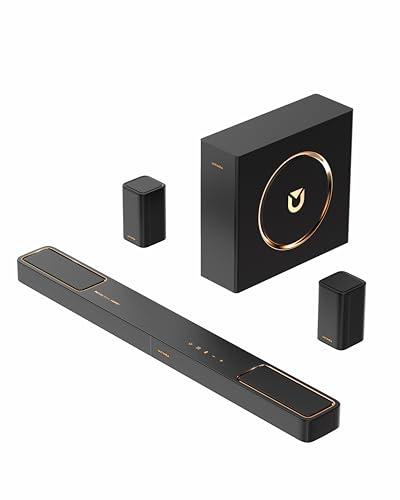
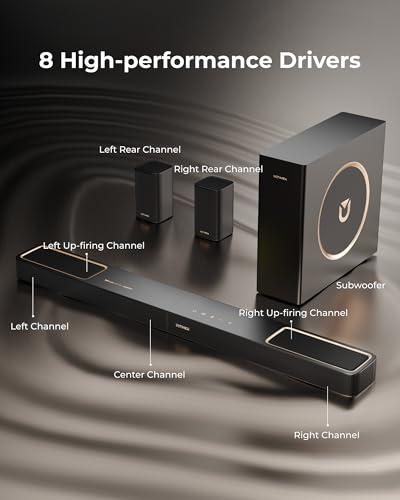
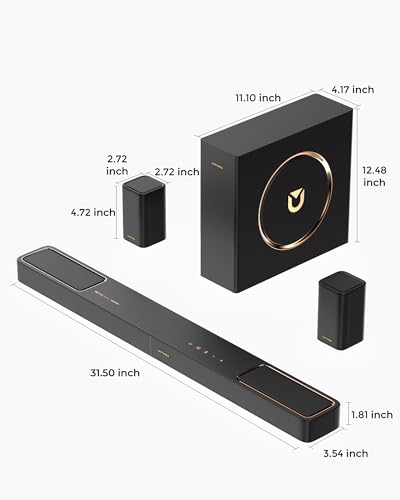
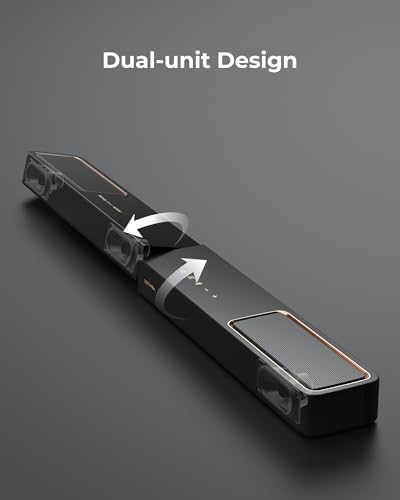
The Ultimea Skywave F40, released in 2024, takes the opposite approach entirely. Rather than perfecting stereo audio, it aims to deliver a complete 5.1.2 Dolby Atmos experience that includes everything you need for true surround sound. The system includes a main soundbar with upfiring drivers, a wireless subwoofer, and two rear surround speakers that connect via wire.
The main soundbar houses multiple drivers including two upfiring speakers that bounce sound off your ceiling to create height effects. The wireless subwoofer handles deep bass frequencies (those rumbling explosions and musical low notes), while the rear speakers provide true surround effects that can place sounds behind and beside you.
What's particularly impressive about the Ultimea Skywave F40 is its connectivity and smart features. It includes HDMI eARC (enhanced Audio Return Channel), which allows for high-quality audio transmission from your TV and lets you control both devices with one remote through CEC (Consumer Electronics Control). The Bluetooth 5.4 connection offers low-latency audio that's particularly good for gaming, where audio sync is crucial.
The system also includes sophisticated processing like SurroundX technology, which creates that 360-degree sound field, and Xupmix technology that can take regular stereo audio and intelligently expand it into surround sound. Through the companion app, you get access to a 10-band equalizer and 121 preset sound profiles for different content types.
When it comes to pure audio quality, these systems shine in different ways. The Sonos Ray delivers what I'd call "audiophile stereo" – incredibly clear dialogue, well-balanced midrange frequencies where most music and voices live, and surprisingly solid bass for such a compact unit. The Trueplay tuning really works, adapting the sound to complement rather than fight your room's acoustics.
During my testing, I found the Sonos Ray particularly excels with dialogue clarity. Whether you're watching the news, a drama series, or even action movies, voices cut through clearly without sounding harsh or artificial. The soundstage – that's the width and depth of the sound image – extends well beyond the physical soundbar, creating an impressive sense of space from just those two channels.
The Ultimea Skywave F40 takes a different approach to audio quality. While it may not match the Ray's refinement in pure stereo playback, it delivers something the Sonos simply cannot: true spatial audio. When you're watching a movie with Dolby Atmos content, helicopters genuinely sound like they're flying overhead, rain seems to fall around you, and action sequences place effects precisely where the director intended.
The dedicated subwoofer makes a huge difference too. While the Sonos Ray does a commendable job with bass for its size, it simply cannot move as much air as a dedicated 6.5-inch subwoofer. Explosions have real weight, music has proper foundation, and you can feel the impact of sound effects in a way that's impossible with a single soundbar.
This is where these products diverge most dramatically. The Sonos Ray is a 2.0 system, meaning it only produces stereo sound. When it receives 5.1 surround content (which includes most streaming movies and TV shows), it has to downmix everything to stereo. It does this well – better than most soundbars – but you're still missing the spatial placement and immersion that comes with true surround sound.
The Ultimea Skywave F40 delivers genuine 5.1.2 Dolby Atmos, which is a game-changer for movies and gaming. Those rear speakers aren't just decoration – they create actual surround effects that can place sounds behind you, beside you, and with the upfiring drivers, above you. The first time you experience a scene where rain falls around you or a plane flies overhead with proper height effects, it's genuinely impressive.
This becomes particularly important for home theater use. If you have a dedicated media room or your living room setup is primarily focused on movie watching, the immersive capabilities of the Ultimea system transform the experience in ways that even the highest-quality stereo simply cannot match.
Here's where the generational difference between these products becomes apparent. The Sonos Ray, released in 2022, reflects Sonos's ecosystem-focused approach but feels limited by today's standards. The lack of HDMI means you're stuck with optical connections, which can't carry the highest quality audio formats and don't allow for CEC control.
The absence of Bluetooth is particularly puzzling for many users. While Sonos prefers Wi-Fi streaming for quality reasons, Bluetooth remains the most universal way to play music from phones and tablets. The Sonos Ray does support AirPlay 2, which works great if you're in Apple's ecosystem, but leaves Android users with fewer options.
The Ultimea Skywave F40, being newer, includes all the connectivity you'd expect from a modern soundbar. HDMI eARC handles high-quality audio and device control, while Bluetooth 5.4 provides stable, low-latency connections that work particularly well for gaming. The USB input adds another option for local media playback.
The smartphone app control on the Ultimea system is genuinely useful, offering detailed EQ adjustment and sound mode switching that you'd typically find on much more expensive systems. The 121 preset sound matrices might seem like overkill, but having pre-tuned settings for different content types actually makes a noticeable difference.
At the time of writing, these products occupy similar price ranges despite offering vastly different feature sets. The Sonos Ray commands a premium price for what is essentially a stereo soundbar, while the Ultimea Skywave F40 delivers a complete surround system for less money.
From a pure features-per-dollar perspective, the Ultimea system is extraordinary value. You're getting a soundbar, subwoofer, rear speakers, Dolby Atmos processing, modern connectivity, and comprehensive app control for less than many single soundbars cost. It's the kind of value proposition that makes you double-check the specifications to make sure you're not missing something.
However, value isn't just about features – it's also about execution, longevity, and ecosystem integration. Sonos has a track record of supporting products with software updates for many years, and the Sonos Ray integrates seamlessly with other Sonos speakers for multi-room audio. If you're building or expanding a whole-home audio system, that integration has real value.
The build quality difference is noticeable too. The Sonos Ray feels substantial and premium in ways that justify some of its price premium. The materials, fit and finish, and attention to detail reflect the company's focus on making products that feel as good as they sound.
You should consider the Sonos Ray if you're primarily focused on music listening and general TV watching rather than cinematic experiences. It's perfect for bedrooms, offices, small apartments, or any situation where space is at a premium but audio quality isn't negotiable.
The Ray particularly shines in setups where simplicity matters. One power cable, one optical cable, and you're done. No multiple components to place, no rear speakers to run wire to, no subwoofer to find space for. It's elegant in its simplicity.
If you already own other Sonos products, the ecosystem integration is compelling. The ability to group the Ray with other Sonos speakers for whole-home audio, or to use it as part of a larger Sonos surround setup later, adds flexibility that extends beyond just TV audio.
The Sonos Ray also makes sense for people who prioritize brand reputation and long-term support. Sonos has consistently updated older products with new features and maintained compatibility across generations of products.
The Ultimea Skywave F40 is the clear choice if you want genuine home theater immersion. If your primary use case involves movie nights, binge-watching series with cinematic production values, or gaming where spatial audio matters, the surround capabilities transform the experience.
It's particularly well-suited to larger rooms where the Sonos Ray might struggle to fill the space adequately. The dedicated subwoofer and multiple speakers can drive sound levels and create impact that a single soundbar simply cannot match.
For gaming enthusiasts, the low-latency Bluetooth and surround positioning make the Ultimea system significantly more engaging. Being able to hear enemies approaching from behind or identify the direction of gunfire gives you actual competitive advantages in many games.
The Ultimea Skywave F40 also makes sense for people who want maximum features and capability for their budget. If you're comfortable with a newer brand and want to prioritize performance over prestige, it delivers exceptional value.
Understanding how these systems achieve their different goals requires looking at some technical details that really matter for real-world performance.
The Sonos Ray uses what's called a bass reflex design with proprietary low-velocity ports. This means there are carefully tuned openings that allow air to move in and out of the cabinet, extending bass response without the distortion you'd get from pushing small drivers too hard. Combined with those Class-D amplifiers, it's remarkably efficient at producing clean, undistorted sound even at higher volumes.
The Trueplay tuning deserves special mention because it addresses a real problem most people don't think about. Your room's acoustics – the hard surfaces, soft furniture, room size and shape – dramatically affect how any speaker sounds. Most people just accept whatever they get, but Trueplay actually measures and compensates for these effects. It's like having a professional audio engineer adjust your system for your specific space.
The Ultimea Skywave F40's approach is more complex but serves different goals. Those upfiring drivers use the ceiling as a giant reflector to create height effects. This only works properly if your ceiling is the right height (8-12 feet typically works best) and isn't too acoustically absorbent. When conditions are right, the effect is genuinely impressive.
The system's SurroundX and Xupmix technologies are particularly clever. Instead of just playing stereo content through all the speakers (which sounds awful), these systems analyze the audio and intelligently separate and redirect different elements. Vocals might stay centered while ambient sounds get pushed to the surrounds and certain frequencies get enhanced through the height channels.
Having lived with both systems, I can honestly say they succeed at their different goals. The Sonos Ray has that "just sounds right" quality that makes you want to listen to music for hours. Everything feels balanced and natural, dialogue is effortlessly clear, and it never draws attention to itself in negative ways.
The Ultimea Skywave F40 creates those "wow" moments that remind you why surround sound exists. The first time you watch a good Atmos movie with proper overhead effects, it's genuinely impressive. Gaming with true surround positioning adds an engagement level that stereo simply cannot provide.
For most people today, I lean toward recommending the Ultimea Skywave F40 despite my appreciation for what Sonos has accomplished with the Ray. The reality is that most content today is mixed for surround sound, and experiencing it as intended makes a bigger difference than incremental improvements in stereo quality.
However, if you value simplicity, proven reliability, and are primarily focused on music and casual TV watching, the Sonos Ray delivers refinement that's hard to match. It's also the better choice if you're building toward a larger Sonos ecosystem.
The decision ultimately comes down to whether you prioritize elegance and refinement (Sonos Ray) or immersion and value (Ultimea Skywave F40). Both accomplish their goals admirably – they're just very different goals that appeal to different users and use cases.
| Sonos Ray Soundbar | Ultimea Skywave F40 Dolby Atmos Soundbar System |
|---|---|
| Channel Configuration - Determines surround sound capabilities | |
| 2.0 stereo (soundbar only) | 5.1.2 Dolby Atmos (soundbar + subwoofer + 2 rear speakers) |
| Dolby Atmos Support - Essential for 3D overhead audio effects | |
| No Atmos support (stereo downmix only) | Full Dolby Atmos with dedicated height channels |
| HDMI Connectivity - Enables highest quality audio and TV control | |
| No HDMI (optical input only) | HDMI eARC with CEC control |
| Bluetooth Support - Universal wireless music streaming | |
| No Bluetooth (Wi-Fi and AirPlay 2 only) | Bluetooth 5.4 with low-latency gaming support |
| Included Components - What you get in the box | |
| Soundbar only | Soundbar + wireless subwoofer + 2 wired rear speakers |
| Room Correction Technology - Adapts sound to your space | |
| Trueplay tuning (requires iOS device) | 10-band EQ with 121 preset matrices via app |
| Physical Size - Important for placement flexibility | |
| Compact: 22" x 2.8" x 3.75" | Larger system with multiple components requiring placement |
| Ecosystem Integration - Works with other brand products | |
| Full Sonos multi-room system compatibility | Standalone system with basic streaming app |
| Peak Power Output - Affects maximum volume and impact | |
| Not specified (compact stereo configuration) | 460W across all channels |
| Bass Extension - Low-frequency performance for movies/music | |
| Built-in bass reflex system (limited by size) | Dedicated 6.5" wireless subwoofer (40-45Hz) |
| Brand Reputation - Track record for updates and support | |
| Established premium brand with long-term support history | Newer budget brand with unproven long-term support |
| Setup Complexity - Time and effort to get running | |
| Simple: 2 cables, wall-mountable, 5-minute setup | Complex: Multiple components, wire management, positioning |
The Ultimea Skywave F40 is significantly better for movies and TV shows due to its 5.1.2 Dolby Atmos system with dedicated rear speakers, subwoofer, and height channels. This creates true surround sound that places audio effects around and above you. The Sonos Ray only offers stereo sound, which downmixes surround content and lacks the immersive experience most modern movies are designed for.
The Ultimea Skywave F40 includes a wireless subwoofer in the package, providing deep bass for explosions, music, and low-frequency effects. The Sonos Ray doesn't include a subwoofer and relies on its built-in drivers for bass, which is adequate for dialogue and music but limited for action movies. You cannot add a subwoofer to the Sonos Ray later.
The Sonos Ray is much easier to set up - just connect power and one optical cable to your TV, then follow the Sonos app setup. The Ultimea Skywave F40 requires positioning multiple components (soundbar, subwoofer, and two rear speakers), running wires, and configuring the surround system, which takes significantly more time and planning.
Only the Ultimea Skywave F40 has HDMI eARC connectivity, which provides the highest audio quality and lets you control both the TV and soundbar with one remote. The Sonos Ray only connects via optical cable, which limits audio quality and doesn't support advanced TV control features.
The Sonos Ray is ideal for small spaces due to its compact single-unit design and ability to create a wide stereo soundstage without requiring rear speakers or a subwoofer. The Ultimea Skywave F40 needs space for multiple components and works best in larger rooms where you can properly position the surround speakers.
The Ultimea Skywave F40 includes Bluetooth 5.4 for wireless music streaming from any device. The Sonos Ray doesn't have Bluetooth but supports Wi-Fi streaming and Apple AirPlay 2, which works great for iPhone/iPad users but limits Android compatibility.
The Sonos Ray delivers superior stereo music quality with refined midrange clarity, balanced frequency response, and Trueplay room correction that adapts to your space. While the Ultimea Skywave F40 has more speakers and power, the Sonos Ray focuses specifically on optimizing stereo audio reproduction.
The Ultimea Skywave F40 is better for gaming due to its surround sound positioning that helps locate enemies and audio cues, plus low-latency Bluetooth 5.4 for wireless gaming. The Sonos Ray works for gaming but only provides stereo audio without spatial positioning effects.
The Ultimea Skywave F40 offers exceptional value by including a complete 5.1.2 surround system (soundbar, subwoofer, and rear speakers) with Dolby Atmos at a competitive price. The Sonos Ray costs more for a stereo-only system but provides premium build quality and ecosystem integration.
Neither soundbar has built-in voice assistants. The Sonos Ray can be controlled through the Sonos ecosystem if you have other Sonos devices with voice control. The Ultimea Skywave F40 relies on its dedicated app and remote control for operation.
The Ultimea Skywave F40 is designed for larger home theater spaces with its 460W power output, dedicated subwoofer, and true surround sound that can fill bigger rooms with immersive audio. The Sonos Ray works better in smaller to medium rooms where its stereo presentation can be fully appreciated.
The Sonos Ray integrates with the broader Sonos ecosystem, allowing you to add other Sonos speakers for multi-room audio or eventually build a larger surround system. The Ultimea Skywave F40 is a complete standalone system that cannot be expanded, but it already includes all surround components you'd typically want.
We've done our best to create useful and informative comparisons to help you decide what product to buy. Our research uses advanced automated methods to create this comparison and perfection is not possible - please contact us for corrections or questions. These are the sites we've researched in the creation of this article: tomsguide.com - soundandvision.com - youtube.com - techradar.com - en.community.sonos.com - rtings.com - howtogeek.com - youtube.com - cnet.com - sonos.com - videoandaudiocenter.com - the-gadgeteer.com - youtube.com - ultimea.com - manuals.plus - youtube.com - ultimea.com - youtube.com - youtube.com - youtube.com - youtube.com - eu.ultimea.com - support.ultimea.com

Privacy Policy
Terms and Conditions - Affiliate Policy
Home Security
© Copyright 2008-2026.
11816 Inwood Rd #1211, Dallas, TX 75244