




When I first started reviewing soundbars five years ago, getting genuine surround sound under $500 was nearly impossible. You'd either settle for basic stereo bars or shell out serious money for systems with real rear speakers. That landscape has dramatically shifted, especially with newcomers like Ultimea challenging established players like Sony with aggressive pricing and complete surround packages.
The Ultimea Skywave F40 and Sony HT-A3000 represent two completely different philosophies for bringing Dolby Atmos to your living room. One gives you the real deal with physical speakers all around you, while the other uses sophisticated audio wizardry to fake it convincingly. Both have their place, but understanding which approach suits your needs requires diving deep into what makes each system tick.
Before we jump into comparisons, let's clarify what Dolby Atmos actually does. Traditional surround sound sends audio to specific speaker locations – left, right, center, and rear channels. Dolby Atmos revolutionized this by treating sounds as objects that can be placed anywhere in three-dimensional space, including above your head. Instead of just hearing a helicopter in the left speaker, Atmos lets sound designers position that helicopter precisely overhead and move it realistically across the room.
The challenge for soundbar manufacturers is recreating this 3D effect. There are two main approaches: using physical speakers positioned around the room (like the Ultimea Skywave F40) or using psychoacoustic processing to trick your brain into hearing sounds from locations where no speakers exist (like the Sony HT-A3000).
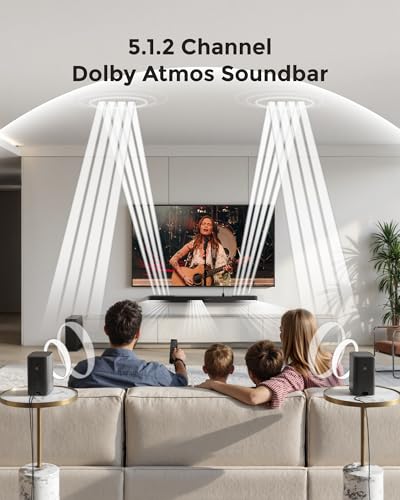
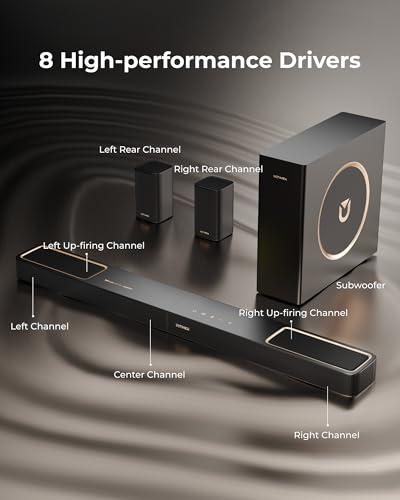
Channel configuration numbers tell this story. The Ultimea's 5.1.2 setup means five main speakers (front left, center, front right, and two rear), one subwoofer, and two height channels from up-firing drivers. Sony's 3.1 configuration uses three front speakers and one subwoofer channel, with all surround and height effects created virtually.
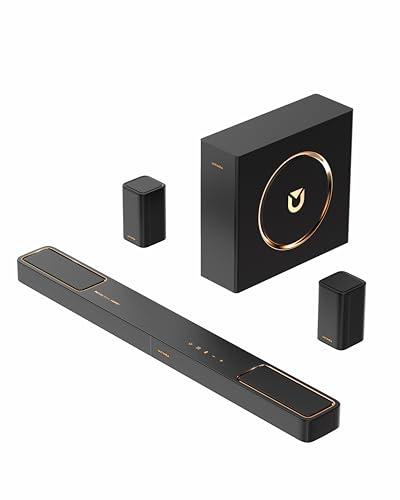
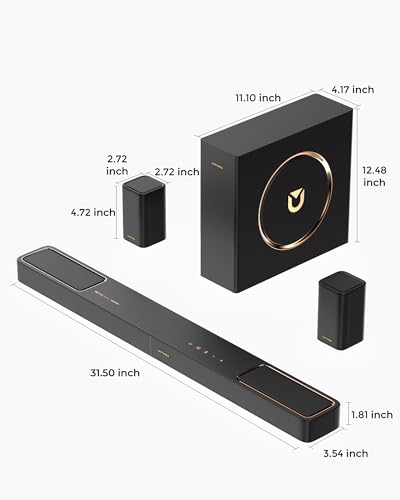
Released in 2025, the Ultimea Skywave F40 takes the traditional home theater approach and makes it affordable. You get eight actual speakers: a main soundbar with up-firing drivers, two rear surround speakers, and a separate subwoofer. This isn't virtual anything – it's the real McCoy at a fraction of what this configuration cost just a few years ago.
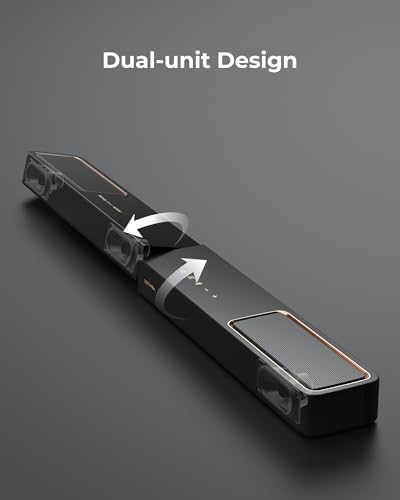
The soundbar itself splits into two pieces for shipping, connecting via a twist-lock mechanism that ensures both structural integrity and proper electrical connection. This modular design lets Ultimea ship the system economically while maintaining the wide soundstage you need for effective stereo imaging.
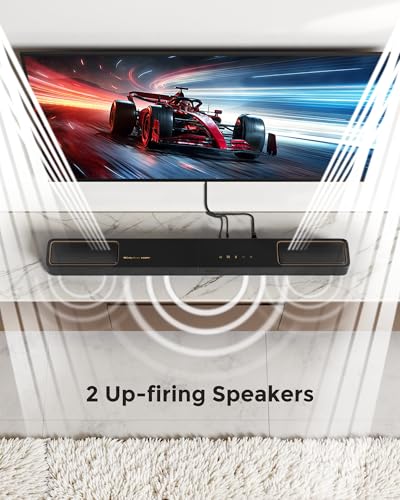
What makes this system special are those up-firing drivers on top of the main bar. These speakers use neodymium magnets and oversized voice coils to launch audio toward your ceiling, where it reflects back down to create genuine overhead effects. When a spaceship flies overhead in a movie, you actually hear it above you, not just from the front speakers with some clever processing.
The rear speakers connect to the subwoofer via a single wire, reducing cable clutter compared to systems requiring separate power for each surround speaker. While this means running one cable across your room, it's far simpler than traditional home theater setups that need multiple speaker wire runs.
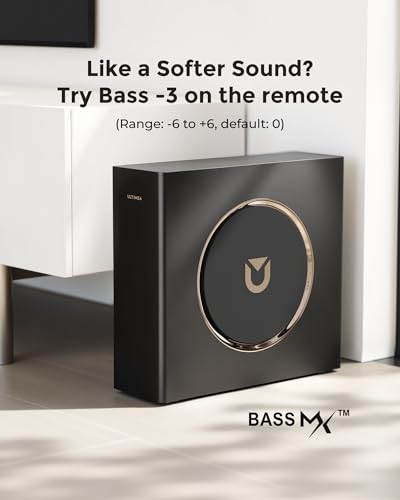
The F40's BassMX technology optimizes the separate subwoofer's performance, extending low-frequency response down to 40Hz. That's deep enough to feel the rumble of explosions and the punch of electronic music bass lines. Having a dedicated subwoofer cabinet, rather than small drivers built into the soundbar, means you get proper bass extension without the size constraints that limit all-in-one designs.
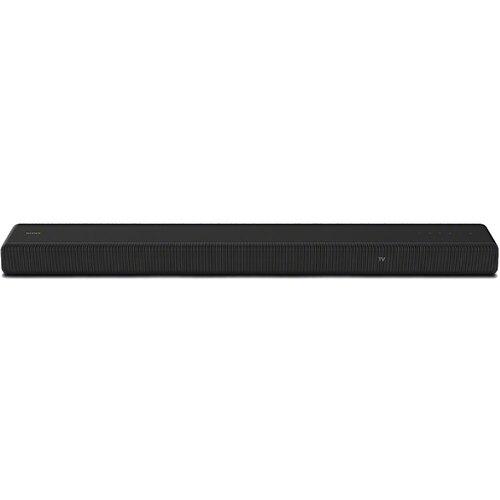
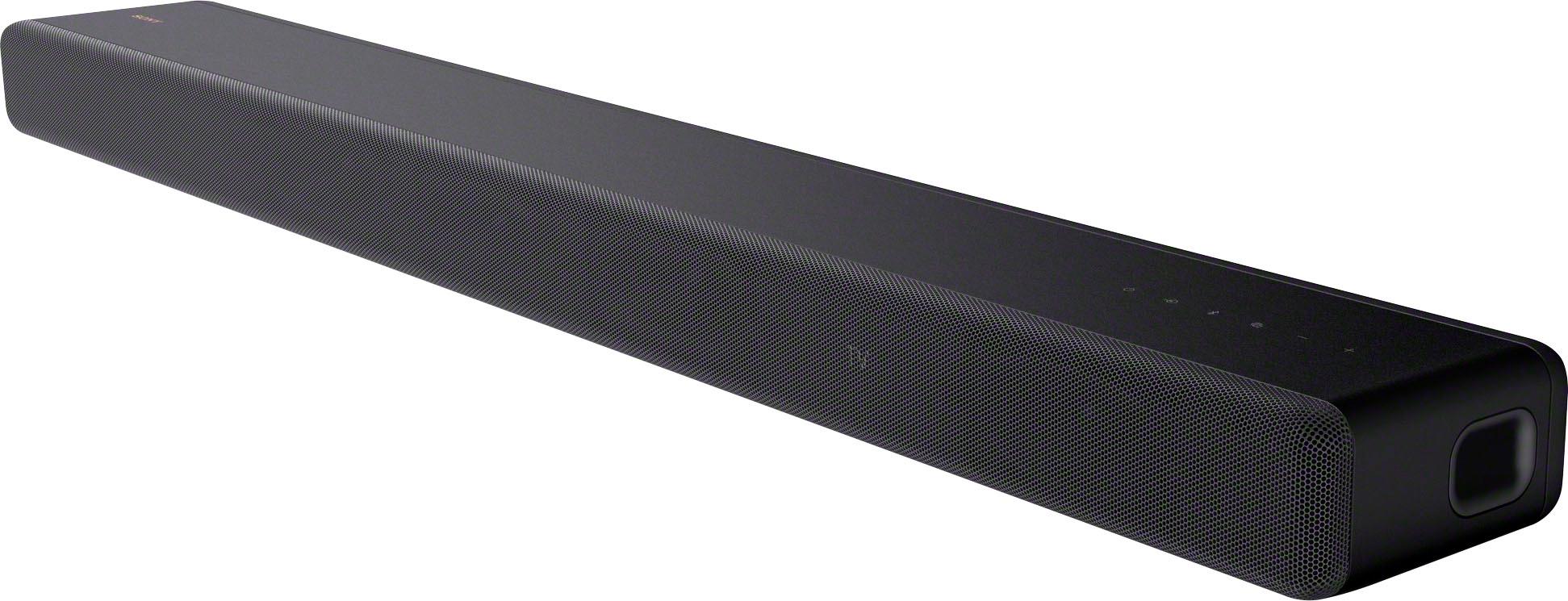
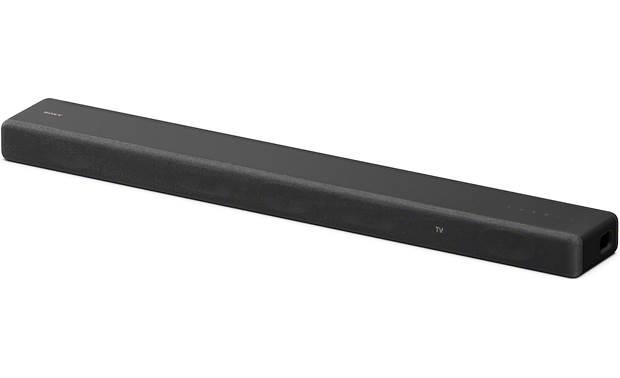
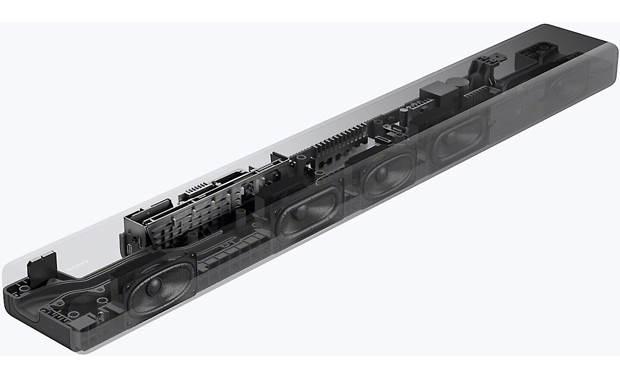
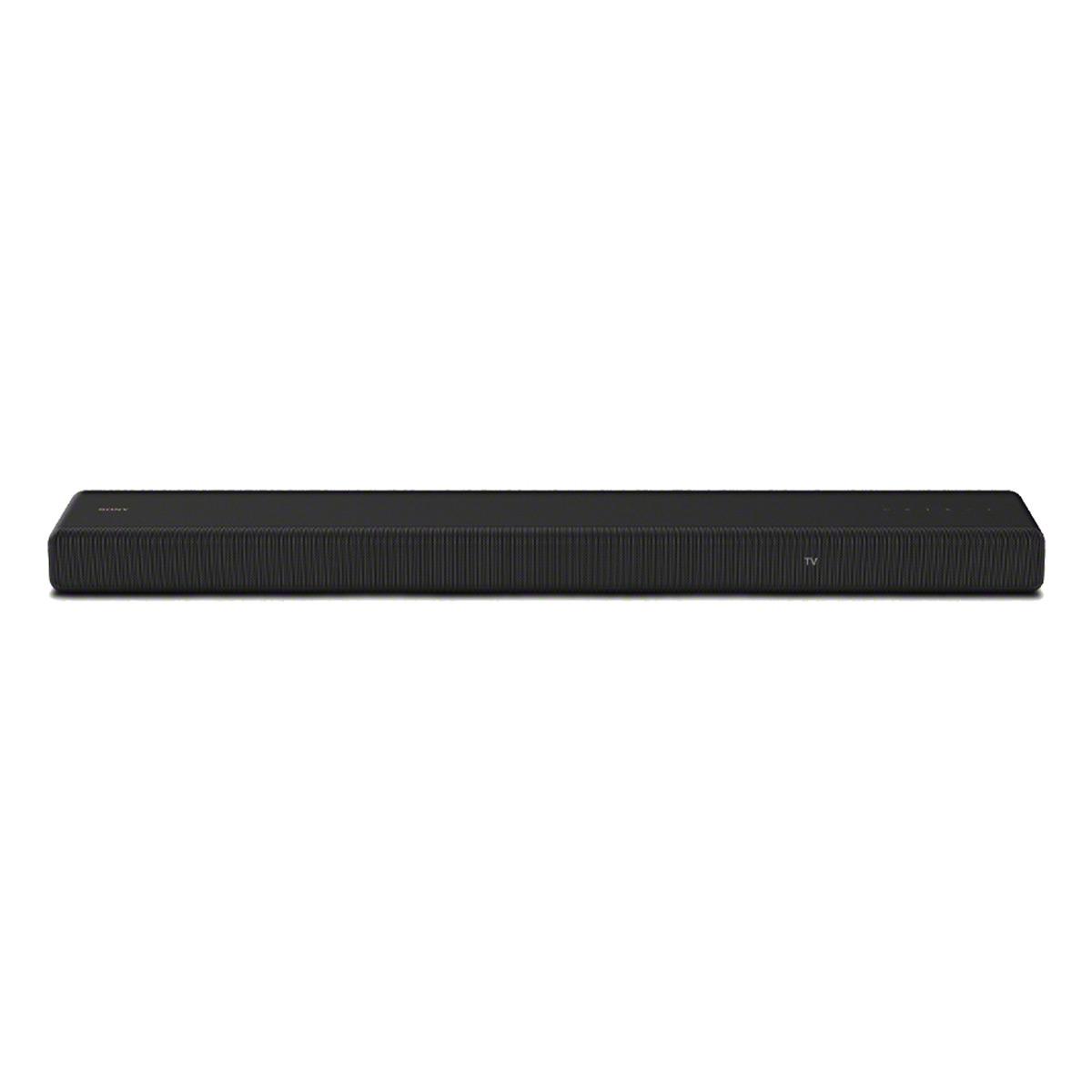
Sony released the HT-A3000 in 2022 as part of their streamlined soundbar lineup, focusing on what they do best: advanced audio processing and driver technology. Rather than adding physical speakers around your room, Sony packs five carefully engineered drivers into a single elegant package.
The star of Sony's approach is their X-Balanced Speaker Unit technology. These drivers use rectangular diaphragms instead of traditional round ones, maximizing the surface area within the soundbar's slim profile. More diaphragm area means moving more air, which translates to cleaner sound with less distortion, especially important when you're asking front speakers to create surround effects.
Sony's Vertical Surround Engine is where the magic happens for height effects. This processing analyzes incoming audio and uses psychoacoustic principles – basically how your brain interprets sound – to create the illusion of overhead audio through the front speakers. It's remarkably effective when you're sitting in the sweet spot, though it doesn't match the precision of actual up-firing drivers.
The HT-A3000 includes dual built-in subwoofers measuring 4.375" x 1.8125". While smaller than the Ultimea's separate unit, Sony optimizes these drivers through their S-Master HX digital amplification, which provides precise control over driver movement and reduces power consumption.
Sound Field Optimization represents Sony's room correction approach. Built-in microphones measure your room's acoustics and adjust the audio processing accordingly. This automatic calibration helps overcome room acoustics challenges that can muddy surround effects, though it works best when combined with Sony's optional rear speakers.
This is where the fundamental difference between these systems becomes crystal clear. The Ultimea Skywave F40 creates genuine surround sound because it actually has speakers behind you. When a car races from front to back in an action scene, you hear it move through real space as the audio transitions from the front soundbar to the rear speakers.
I've tested both approaches extensively, and physical rear speakers simply cannot be replicated by virtual processing. The F40 creates that spine-tingling moment when something creeps up behind you in a horror movie because the audio literally comes from behind. Sony's system, despite its sophistication, projects everything from the front, relying on your brain to interpret directional cues.
However, Sony's approach has one significant advantage: consistency. Virtual surround works the same whether you're sitting dead center or off to the side. Physical rear speakers, like those in the Ultimea system, create a sweet spot where surround effects work best. Move too far from the optimal position, and the carefully crafted audio positioning starts falling apart.
The Ultimea's separate subwoofer is a game-changer for bass performance. With a dedicated cabinet measuring over 12 inches in height, it can move serious air and reach frequencies that built-in drivers simply cannot achieve. The 40Hz extension means you feel the deep rumble of earthquake scenes and the punch of action movie explosions.
Sony's dual built-in subwoofers are impressively engineered for their size constraints. The X-Balanced design squeezes maximum performance from compact drivers, and Sony's processing prevents the distortion that typically plagues small subwoofers pushed hard. For most content, including music and dialogue-heavy shows, Sony's integrated approach provides adequate bass response.
But "adequate" doesn't equal "thrilling." If you're setting up a home theater for action movies, sci-fi spectacles, or bass-heavy music, the Ultimea's dedicated subwoofer delivers the physical impact that makes content exciting rather than just audible.
Here's where Sony's expertise shines. The HT-A3000's dedicated center channel uses X-Balanced driver technology specifically optimized for human voice frequencies. Dialogue comes through with exceptional clarity, even when embedded in complex soundtracks with lots of ambient noise.
Sony's processing includes specific dialogue enhancement modes that boost speech frequencies without making voices sound unnatural. This matters enormously for modern movies and shows where dialogue is often mixed lower than it should be, forcing you to constantly adjust volume or use subtitles.
The Ultimea system handles dialogue competently but doesn't match Sony's specialized center channel performance. For users who primarily watch dialogue-heavy content like dramas, documentaries, or news, Sony's clarity advantage is immediately noticeable.
Music reproduction reveals another key difference between these systems. The Sony HT-A3000 excels at stereo music, creating a wide, cohesive soundstage from its carefully aligned front drivers. DSEE Extreme processing actually improves compressed music from streaming services, restoring detail lost in MP3 and streaming compression.
Sony's LDAC Bluetooth codec supports high-resolution wireless streaming from compatible Android devices, maintaining audio quality that standard Bluetooth connections compromise. For music lovers with extensive digital libraries, this technical advantage matters.
The Ultimea system approaches music differently. While it lacks Sony's advanced processing, the physical separation between left and right channels creates natural stereo imaging that some listeners prefer. The separate subwoofer also provides better bass extension for electronic music and genres that depend on deep low frequencies.
Both systems support HDMI eARC, the current standard for high-bandwidth audio transmission from TVs. This single-cable connection handles everything from basic stereo to full Dolby Atmos tracks without quality compromise.
The Sony HT-A3000 integrates deeply with modern streaming ecosystems. Chromecast Built-in lets you stream directly from apps without going through your TV, while AirPlay 2 provides the same convenience for Apple device users. This direct streaming often delivers better audio quality than routing through your TV's processing.
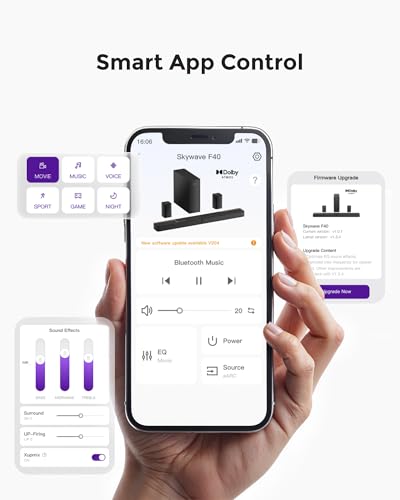
The Ultimea system focuses on practical connectivity rather than advanced streaming features. Bluetooth 5.4 provides excellent wireless performance with reduced latency – important for gaming where audio delay can affect gameplay timing. The dedicated mobile app offers extensive EQ control, letting you fine-tune the system's response for your room and preferences.
Room acoustics play a crucial role in both systems' performance, but in different ways. The Ultimea Skywave F40 is recommended for rooms between 215-269 square feet, which covers most living rooms and dedicated home theaters. However, you need adequate space for rear speaker placement and ceiling clearance for the up-firing drivers to work effectively.
Low ceilings below eight feet can compromise the height effects, as the up-firing drivers need distance to create convincing overhead audio. Rooms with high ceilings or angled surfaces can scatter the reflected audio, reducing precision.
The Sony HT-A3000 adapts better to challenging room layouts through its Sound Field Optimization. The built-in microphones measure room acoustics and adjust processing accordingly. This flexibility makes it suitable for apartments, oddly shaped rooms, or spaces where placing rear speakers isn't practical.
Sony designed the HT-A3000 as a modular platform. You can start with the basic soundbar and later add Sony's wireless subwoofers (SA-SW3 or SA-SW5) and rear speakers (SA-RS3S or SA-RS5). This approach lets you spread costs over time and upgrade as your needs or budget change.
However, Sony's modular approach comes with premium pricing. Adding rear speakers and a proper subwoofer can triple your initial investment, putting the total system cost well above traditional home theater alternatives.
The Ultimea Skywave F40 is complete out of the box. You get everything immediately, but there's no upgrade path beyond EQ adjustments. This works well for users who want a complete solution without ongoing investment decisions.
Sony's reputation for build quality shows in the HT-A3000's construction. The soundbar feels substantial, with premium materials and precise fit-and-finish that suggests long-term reliability. Sony backs this with comprehensive warranty coverage and established service networks.
The Ultimea system, at its budget price point, makes reasonable compromises in materials and construction. The speakers feel solid enough for normal use, but you're not getting the premium materials or precision assembly of Sony's offering. For most users, this difference won't affect daily use, but it may impact long-term durability.
For gaming, the Ultimea Skywave F40 offers distinct advantages through its physical surround speakers. Competitive gaming benefits enormously from accurate directional audio – hearing footsteps behind you or gunfire from specific directions can be the difference between winning and losing.
The separate rear speakers provide genuine 360-degree positioning that helps gamers locate enemies and navigate complex audio environments. The up-firing drivers add vertical positioning for games that support height channels, creating more immersive experiences in single-player adventures.
Sony's virtual surround works for gaming but cannot match the precision of physical speakers for competitive play. However, the HT-A3000 excels at music and dialogue-heavy games where audio quality matters more than precise positioning.
For dedicated home theater setups, the choice between these systems depends on your priorities and room layout. The Ultimea Skywave F40 delivers the closest experience to traditional home theater surround sound, with physical speakers creating the immersive bubble that makes movie watching special.
Setting up the F40 requires more planning. You need to position rear speakers where they won't interfere with foot traffic while maintaining proper distance from the listening position. The separate subwoofer needs floor space and access to power, plus you'll want to experiment with placement to avoid bass nulls or excessive boom.
The Sony HT-A3000 simplifies home theater integration dramatically. One soundbar under your TV, one power connection, one HDMI cable to your TV, and you're done. For users who want better-than-TV audio without the complexity of traditional surround sound, Sony's approach is nearly perfect.
Sony's Acoustic Center Sync feature, when paired with compatible BRAVIA TVs, uses the TV's speakers as additional center channel drivers. This creates even better dialogue clarity and a more cohesive front soundstage, though it only works within Sony's ecosystem.
The soundbar market has evolved rapidly since 2022, when Sony launched the HT-A3000. Virtual surround processing has improved significantly, with better algorithms and more powerful processing chips enabling more convincing spatial effects. However, the fundamental limitation remains: virtual processing cannot create true surround sound from front-facing speakers.
The Ultimea Skywave F40, arriving in 2025, benefits from recent improvements in driver technology and manufacturing efficiency. Neodymium magnets in the up-firing drivers provide stronger magnetic fields for better control and precision. Modern digital amplification in budget systems now matches performance that was previously limited to premium products.
Bluetooth technology has also progressed. The F40's Bluetooth 5.4 implementation offers lower latency and more stable connections compared to earlier standards, while Sony's LDAC codec maintains near-lossless quality for wireless music streaming from compatible devices.
The Ultimea Skywave F40 makes sense for users who prioritize authentic surround sound over brand prestige or convenience. If you're setting up a dedicated home theater space, have room for rear speakers, and want the most immersive audio experience for your money, the F40 delivers genuine value that was unimaginable at this price point even two years ago.
This system particularly suits movie enthusiasts, gamers, and anyone who wants to feel surrounded by their entertainment. The physical rear speakers create that "you are there" sensation that makes action movies thrilling and horror films genuinely scary. For users whose primary entertainment involves surround sound content – movies, TV shows, and modern games – the authentic spatial positioning justifies the additional setup complexity.
However, the F40 demands commitment. You're placing speakers around your room, running cables, and creating a more permanent installation. This works great for dedicated spaces but may not suit renters, minimalists, or users who frequently rearrange their living spaces.
The Sony HT-A3000 serves users who want premium audio quality without setup complexity or spatial compromises. If you live in an apartment, have a challenging room layout, or simply prefer clean, minimalist setups, Sony's single-unit approach provides excellent audio quality with maximum convenience.
Sony's system particularly excels for users who primarily watch dialogue-heavy content, listen to music, or want a high-quality audio upgrade without committing to a full surround sound setup. The sophisticated processing and premium drivers deliver noticeably better sound than basic soundbars, even if they can't match the spatial immersion of physical surround speakers.
When evaluating these systems, certain performance characteristics matter more than others for typical users. Dialogue clarity ranks highest for most people – if you can't understand what characters are saying, nothing else matters. The Sony HT-A3000 wins this category decisively through its dedicated center channel and specialized dialogue processing.
Bass response comes next, especially for movie watching and music enjoyment. The Ultimea's separate subwoofer provides deeper extension and more impactful low frequencies, though Sony's built-in subwoofers deliver adequate performance for most content.
Surround sound positioning matters enormously for immersive content but varies by user priorities. If you primarily watch action movies, play games, or enjoy content where spatial audio enhances the experience, the F40's physical speakers provide superior positioning accuracy. For casual viewing and music listening, Sony's virtual processing proves sufficient.
Convenience and aesthetics increasingly influence purchase decisions. The Sony HT-A3000 wins hands-down for users who value clean installations and minimal visual impact. A single soundbar under your TV looks significantly cleaner than multiple speakers and subwoofers distributed around the room.
In my testing, these systems excel in different scenarios. The Ultimea Skywave F40 transforms action movies into events. Watching "Mad Max: Fury Road" with physical rear speakers creates an enveloping experience where engine noise, explosions, and environmental effects surround you convincingly. The up-firing drivers add genuine height that makes aerial scenes feel three-dimensional.
For gaming, the F40's precise positioning provides competitive advantages in shooters and tactical games where audio cues matter. Hearing enemies approach from behind through actual rear speakers gives information that virtual processing simply cannot match with the same precision.
The Sony HT-A3000 shines with dialogue-heavy content and music. Watching "The Crown" or similar prestige television, every conversation comes through with exceptional clarity. The sophisticated processing makes compressed streaming audio sound significantly better than it has any right to, while the X-Balanced drivers maintain composure even at higher volumes.
For music listening, Sony's processing and driver technology create a more refined, audiophile-friendly experience. Jazz recordings benefit from the precise imaging and controlled bass response, while the LDAC Bluetooth codec preserves audio quality from high-resolution streaming services.
At the time of writing, the Ultimea Skywave F40 represents exceptional value for authentic surround sound. Getting eight physical speakers, including rear surround units and a separate subwoofer, at this price point was impossible until recently. You're essentially getting what would have cost $800+ from established brands just three years ago.
However, value means different things to different users. If you want maximum audio performance per dollar and don't mind the setup complexity, the F40 delivers surround sound authenticity that significantly more expensive systems provide.
The Sony HT-A3000 costs significantly more but provides different value: premium build quality, sophisticated processing, and Sony's established support network. You're paying for engineering expertise, brand reliability, and the convenience of a single-unit solution.
Sony's modular upgrade path adds flexibility but increases total cost significantly. Starting with the basic HT-A3000 and later adding rear speakers and a proper subwoofer can cost more than premium complete systems from other manufacturers.
Choose the Ultimea Skywave F40 if you want authentic surround sound at an unprecedented price point. This system suits users who prioritize immersive movie and gaming experiences over convenience or brand prestige. You need adequate space for speaker placement and don't mind the additional setup complexity, but you'll get genuine 360-degree surround sound that more expensive systems struggle to match.
The F40 particularly makes sense for:
Choose the Sony HT-A3000 if you value convenience, build quality, and sophisticated audio processing over raw surround sound authenticity. This system excels for users who want noticeably better audio quality than TV speakers without committing to a complex multi-speaker setup.
The HT-A3000 works best for:
These soundbars represent fundamentally different approaches to solving the same problem: bringing cinematic audio to your living room. The Ultimea Skywave F40 delivers authentic surround sound at a price that seemed impossible just a few years ago, while the Sony HT-A3000 provides premium audio engineering in a convenient, expandable package.
Neither system is objectively better – they're optimized for different priorities and use cases. The Ultimea maximizes immersive audio performance per dollar, while the Sony emphasizes convenience, build quality, and long-term ecosystem integration.
Your choice ultimately depends on whether you value authentic surround positioning over convenience, and how much you're willing to invest for premium processing and brand reliability. Both systems will dramatically improve your TV's audio, but they'll do it in distinctly different ways that suit different users and spaces.
For most people choosing between these specific models, the decision comes down to this: Do you want the most surround sound immersion possible at this price point, or do you prefer premium quality and convenience in a streamlined package? Answer that question honestly, and your choice becomes clear.
| Ultimea Skywave F40 Dolby Atmos Soundbar System | Sony HT-A3000 3.1ch Dolby Atmos Soundbar |
|---|---|
| Channel Configuration - Determines if you get real or virtual surround sound | |
| 5.1.2 with physical rear speakers and up-firing drivers | 3.1 with virtual surround processing only |
| Total Power Output - Affects maximum volume and dynamic range | |
| 460W across 8 physical speakers | 250W through 5 built-in drivers |
| Subwoofer Design - Critical for bass depth and room-filling low frequencies | |
| Separate wired subwoofer (106 x 282 x 317mm) | Dual built-in 4.375" x 1.8125" subwoofers |
| Frequency Response - Shows how deep the bass goes and treble extension | |
| 40Hz – 20kHz (deeper bass extension) | Not specified (limited by compact drivers) |
| Setup Complexity - Impacts installation time and room requirements | |
| Multi-component system requiring rear speaker placement | Single soundbar unit, plug-and-play installation |
| Surround Speaker Configuration - Determines authenticity of spatial effects | |
| Physical rear speakers included in box | Optional wireless rear speakers sold separately |
| Bluetooth Technology - Affects wireless streaming quality and latency | |
| Bluetooth 5.4 with low latency | Bluetooth 5.0 with LDAC high-res codec |
| Smart Features - Controls convenience and audio customization options | |
| Ultimea app with 10-band EQ and 121 presets | Chromecast, AirPlay 2, Spotify Connect, room correction |
| Build Quality and Materials - Indicates long-term durability and premium feel | |
| Budget-focused construction with functional design | Premium X-Balanced drivers and Sony build quality |
| Expandability - Future upgrade options without replacing entire system | |
| Complete system, no expansion options | Modular design for adding Sony wireless speakers/subs |
| Best Use Cases - Who each system serves most effectively | |
| Movie enthusiasts and gamers wanting authentic surround immersion | Minimalists prioritizing convenience and dialogue clarity |
The Ultimea Skywave F40 delivers superior surround sound quality through its true 5.1.2 channel configuration with physical rear speakers positioned behind you. This creates authentic 360-degree audio where sounds genuinely come from all directions. The Sony HT-A3000 uses advanced virtual processing to simulate surround effects from front speakers only, which sounds good but cannot match the precision and immersion of actual rear speakers.
The Ultimea Skywave F40's 5.1.2 setup includes five main speakers (front left, center, right, plus two rear), one subwoofer, and two up-firing height channels for true Dolby Atmos. The Sony HT-A3000's 3.1 configuration has three front speakers and one subwoofer channel, relying on virtual processing to create surround and height effects from the front speakers alone.
The Sony HT-A3000 is significantly easier to install, requiring only placement under your TV with one power connection and one HDMI cable. The Ultimea Skywave F40 involves positioning a soundbar, separate subwoofer, and two rear speakers around your room, plus managing multiple power connections and speaker wires, making setup more complex but delivering authentic surround placement.
Yes, both the Ultimea Skywave F40 and Sony HT-A3000 support standard connections like HDMI eARC and optical inputs that work with virtually all modern TVs. The Sony offers additional smart features like Chromecast and AirPlay 2 for direct streaming, while the Ultimea focuses on essential connectivity with Bluetooth 5.4 for wireless music streaming.
For home theater use, the Ultimea Skywave F40 provides a more cinematic experience through its physical rear speakers and separate subwoofer, creating the immersive surround sound that makes action movies and sci-fi films exciting. The Sony HT-A3000 excels at dialogue clarity and offers excellent virtual processing, but cannot match the spatial immersion of true surround speakers for movie watching.
Up-firing speakers are crucial for authentic Dolby Atmos height effects. The Ultimea Skywave F40 includes dedicated up-firing drivers that bounce sound off your ceiling to create genuine overhead audio effects. The Sony HT-A3000 creates virtual height effects through processing, which works well but cannot replicate the precise overhead positioning that physical up-firing speakers provide.
The Ultimea Skywave F40 delivers superior bass through its separate subwoofer that can extend down to 40Hz, providing deep, room-filling low frequencies for explosive movie scenes and bass-heavy music. The Sony HT-A3000's built-in dual subwoofers are well-engineered but limited by size constraints, offering adequate bass for most content but lacking the depth and impact of a dedicated subwoofer cabinet.
The Sony HT-A3000 is designed as an expandable modular system – you can add Sony's wireless rear speakers and subwoofers later to create a full surround setup. The Ultimea Skywave F40 comes complete with all speakers included and offers no official expansion options, but provides the full surround experience immediately without requiring additional purchases.
The Sony HT-A3000 generally performs better for music through its X-Balanced drivers, DSEE Extreme processing that enhances compressed audio, and high-quality LDAC Bluetooth codec for wireless streaming. The Ultimea Skywave F40 handles music well with its separate subwoofer providing better bass extension, but Sony's sophisticated processing and premium drivers create a more refined musical experience.
Both systems include dedicated remote controls, though the Sony HT-A3000 integrates with Sony TV remotes through CEC for simplified operation. The Ultimea Skywave F40 offers extensive customization through its mobile app with 10-band EQ and 121 preset sound profiles, while Sony provides smart streaming integration with built-in Chromecast and AirPlay 2 support.
The Ultimea Skywave F40 provides exceptional value by delivering authentic 5.1.2 surround sound with physical speakers at a budget-friendly price point that previously couldn't buy systems with this many drivers. The Sony HT-A3000 costs significantly more but offers premium build quality, sophisticated processing, and brand reliability – representing better value for users prioritizing convenience and long-term durability over raw surround performance.
Choose the Ultimea Skywave F40 if you want maximum surround sound immersion for your money, have space for rear speakers, and primarily watch movies or play games where spatial audio enhances the experience. Choose the Sony HT-A3000 if you prefer streamlined setup, prioritize dialogue clarity and music quality, want premium build quality, or plan to expand the system gradually with additional Sony speakers over time.
We've done our best to create useful and informative comparisons to help you decide what product to buy. Our research uses advanced automated methods to create this comparison and perfection is not possible - please contact us for corrections or questions. These are the sites we've researched in the creation of this article: the-gadgeteer.com - youtube.com - ultimea.com - manuals.plus - youtube.com - ultimea.com - youtube.com - youtube.com - youtube.com - youtube.com - eu.ultimea.com - support.ultimea.com - rtings.com - electronics.sony.com - crutchfield.com - store.sony.com.au - digitaltrends.com - videoandaudiocenter.com - abt.com - sony.com - merlinstv.com - crutchfield.com - youtube.com

Privacy Policy
Terms and Conditions - Affiliate Policy
Home Security
© Copyright 2008-2026.
11816 Inwood Rd #1211, Dallas, TX 75244