


The world of home theater audio has undergone a massive transformation in recent years. Gone are the days when your only options were tinny TV speakers or complex, expensive surround sound systems that required running wires through your walls. Today's wireless surround systems promise to deliver that immersive, theater-like experience without turning your living room into a construction zone.
Two systems that have caught our attention represent completely different approaches to solving this problem: the Hisense HT Saturn with its unique distributed wireless design, and the Ultimea Skywave F40 with its more traditional but feature-packed configuration. Both launched in 2024 and represent the latest thinking in home theater audio, but they take remarkably different paths to get there.
Before diving into the comparison, it's worth understanding what makes today's systems so much better than what we had even a few years ago. The big breakthrough has been in wireless technology and audio processing power. Modern systems can now transmit high-quality, synchronized audio across multiple speakers without the interference and delay issues that plagued earlier wireless designs.
The key considerations when evaluating these systems boil down to a few critical areas. First is surround sound authenticity—whether you're getting real discrete channels (separate audio signals for each speaker) or virtual processing that tries to trick your ears. Second is installation flexibility—how easy it is to set up and whether you can position speakers optimally for your room. Third is audio processing capabilities—the system's ability to handle advanced formats like Dolby Atmos (which adds overhead sound effects) and enhance regular content. Finally, there's integration ease—how well the system works with your TV and other devices.
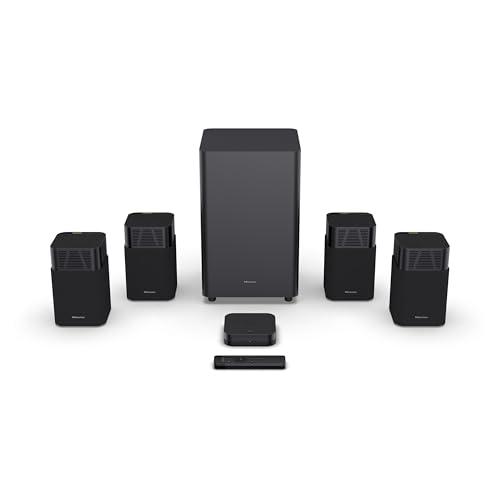
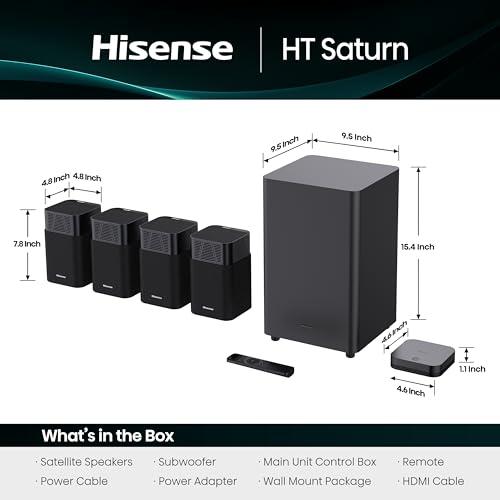
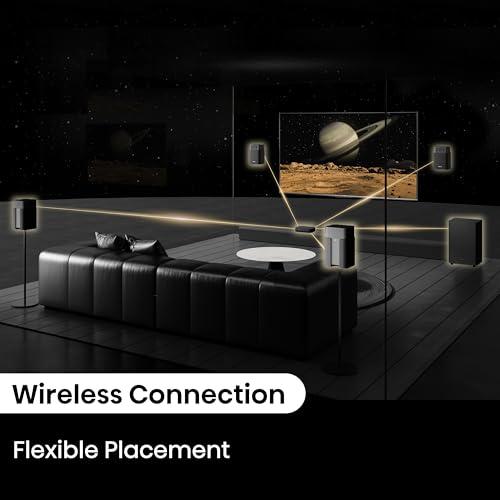
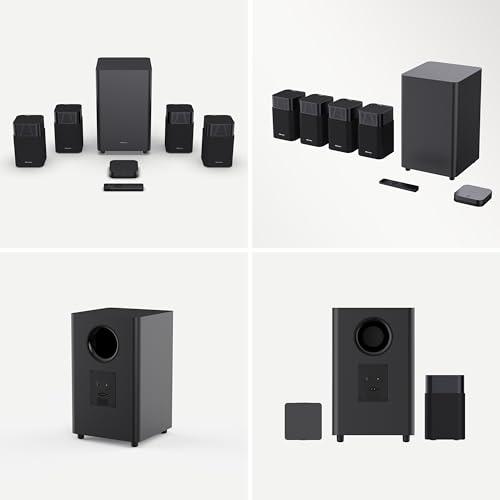
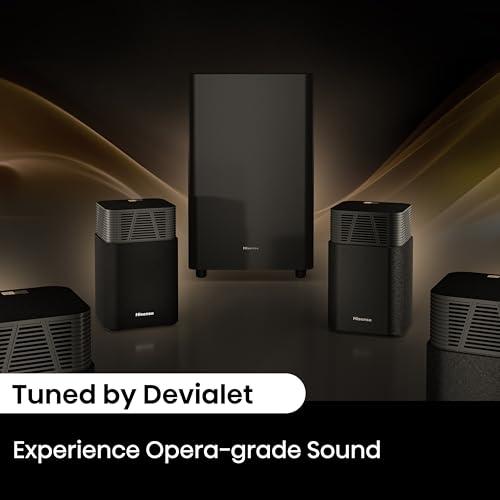
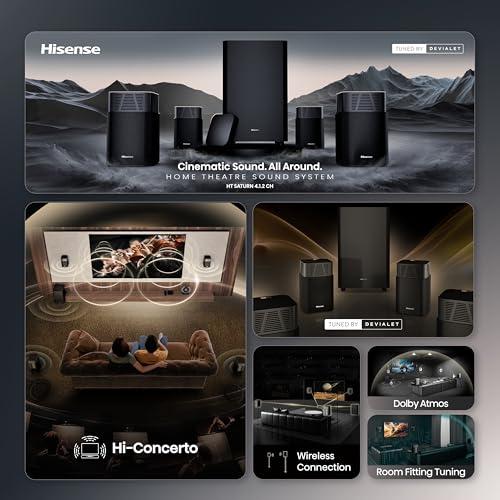
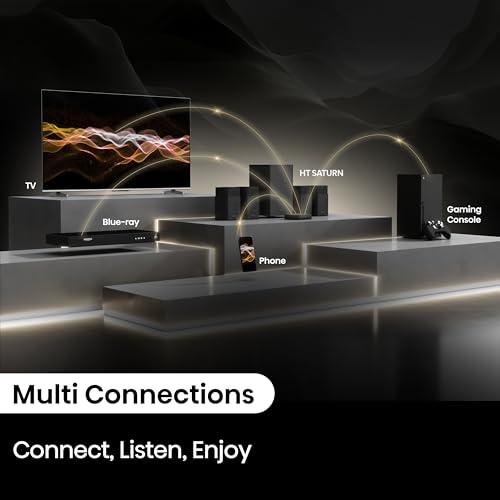
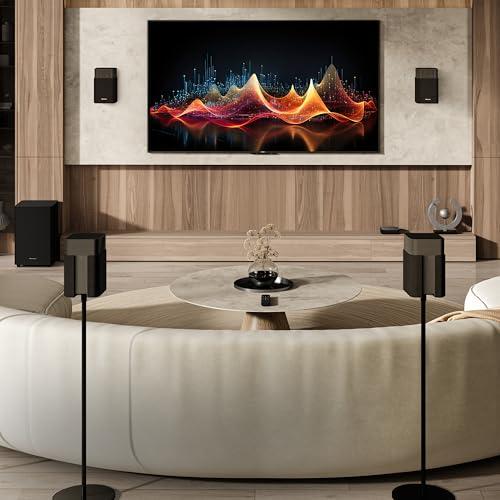
The Hisense HT Saturn takes what we'd call a "distributed approach." Instead of a traditional soundbar sitting under your TV, you get four separate satellite speakers that you place around your room, plus a wireless subwoofer for bass. Think of it as breaking apart a surround sound system and making every piece wireless. This creates what's called a 4.1.2 channel system—four main speakers, one subwoofer, and two upward-firing channels for height effects.
What makes this particularly interesting is the phantom center channel technology. Most surround systems have a dedicated center speaker for dialogue, but the Saturn uses sophisticated processing to create the illusion of a center channel using just the left and right front speakers. When done well, this can sound remarkably convincing.
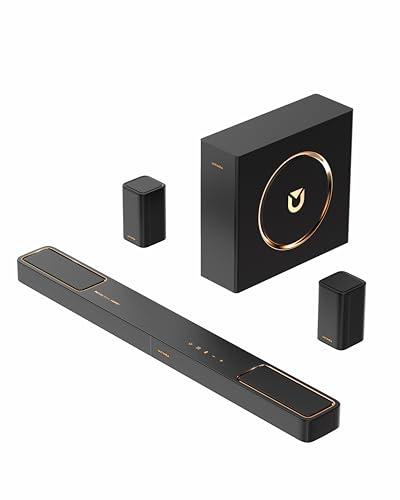
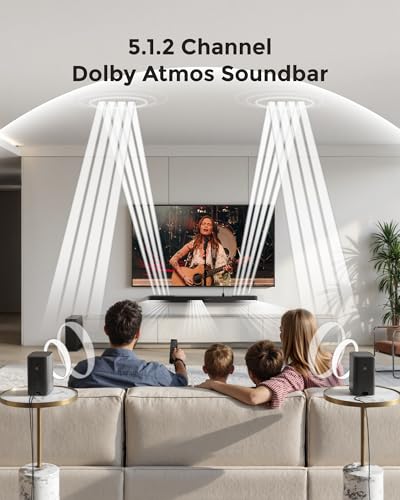
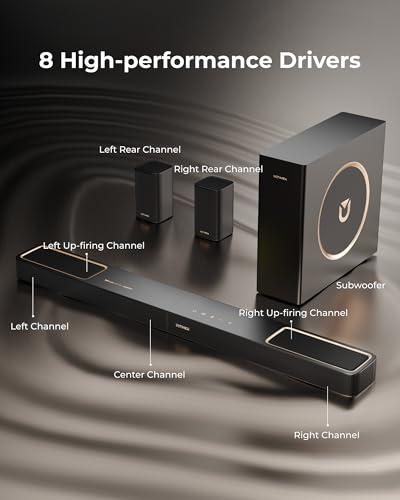
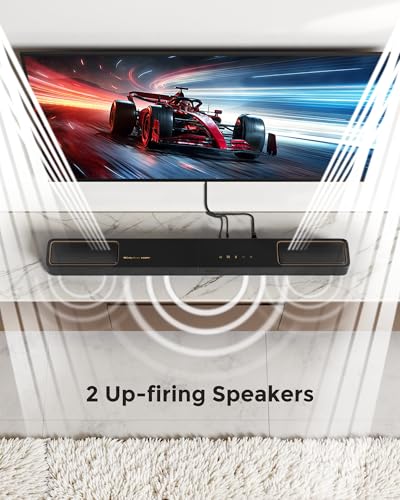
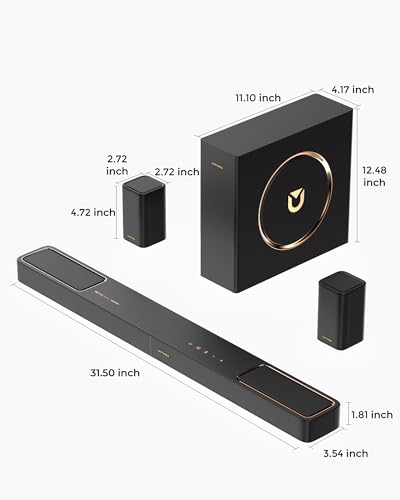
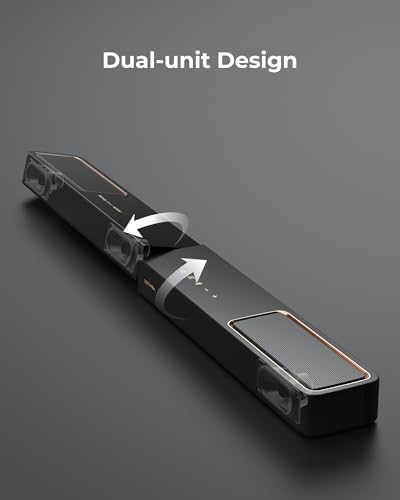
The Ultimea Skywave F40, on the other hand, follows a more traditional 5.1.2 approach with a modern twist. You get a main soundbar that sits under your TV, two rear surround speakers, and a subwoofer. The soundbar itself contains multiple drivers including dedicated up-firing speakers for Dolby Atmos height effects. This gives you a true center channel for dialogue, which many people prefer for clarity.
The HT Saturn's distributed design creates some genuine advantages in surround sound authenticity. When you have four actual speakers positioned around your room, sound effects can move between them with remarkable precision. Explosions, car chases, and ambient sounds feel more natural because they're coming from discrete locations rather than being processed and "virtualized" by a single unit.
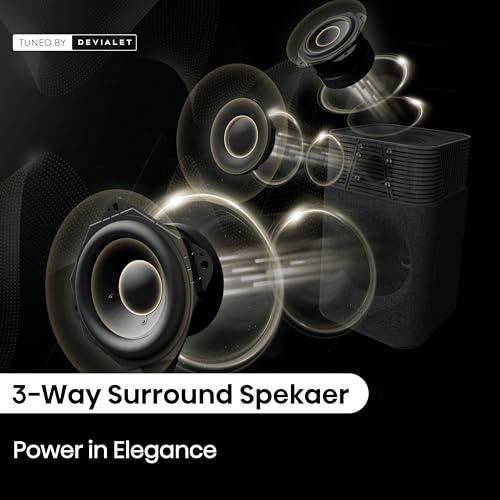
Based on our research into user experiences and expert reviews, the Saturn excels at creating what audiophiles call "soundstage width"—the sense that sound is coming from a much larger area than just your TV. The Devialet tuning (Devialet is a premium French audio company known for high-end speakers) brings a level of acoustic refinement that's unusual in this price category. Users consistently report that the system maintains clarity and balance even at higher volumes, with smooth transitions between channels.
However, the phantom center channel approach has trade-offs. While it can sound impressive, dialogue positioning isn't quite as rock-solid as with a dedicated center speaker. Some users report that voices can seem to "wander" slightly during action scenes, particularly if you're not sitting in the optimal listening position.
The Skywave F40 takes a more conventional but proven approach. The dedicated center channel in the soundbar provides what most people consider superior dialogue clarity and positioning. Voices stay locked to the screen, even when other sound effects are happening around you. The rear speakers handle surround duties effectively, and while the soundstage isn't quite as wide as the Saturn's distributed design, it's more predictable and consistent.
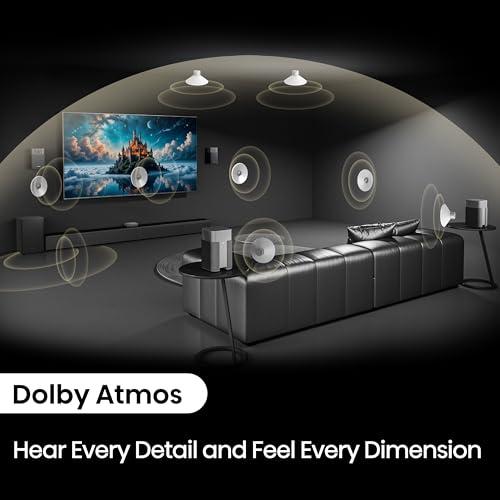
Both systems support Dolby Atmos, the technology that adds overhead sound effects to create a three-dimensional audio experience. But their implementations differ significantly.
The HT Saturn integrates up-firing elements into its satellite speakers and relies heavily on room acoustics for height effects. This means your ceiling height, surface materials, and room layout significantly impact performance. In ideal conditions—rooms with 8-10 foot ceilings and reflective surfaces—users report convincing overhead effects. But in rooms with vaulted ceilings, heavy carpet, or lots of furniture, the height effects can be less pronounced.
The Skywave F40 uses dedicated up-firing drivers with neodymium magnets and specialized voice coils. These components are specifically designed to project sound upward with more precision and power. The system also includes Xupmix technology, which can take regular stereo or 5.1 content and upmix it to create height effects even when the original content wasn't mixed for Atmos. This means you get enhanced immersion from more of your content, not just specially-encoded movies.
From a practical standpoint, the Skywave F40 seems to deliver more consistent height effects across different room types, though neither system will match the precision of actual ceiling-mounted speakers.
Both systems include capable subwoofers that extend down to around 40Hz—low enough to reproduce the rumble in explosion scenes and the deep notes in music. But their approaches differ in important ways.
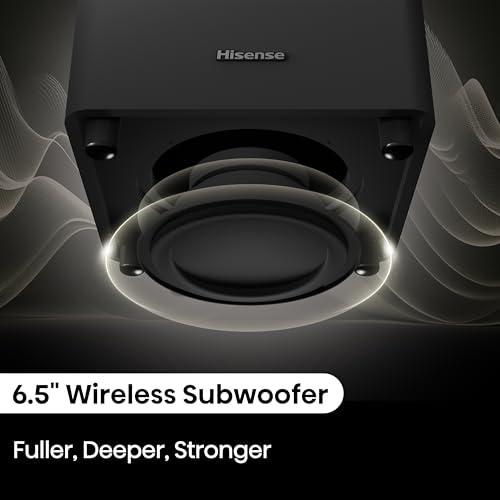
The Saturn's wireless 6.5-inch subwoofer can be positioned anywhere in your room for optimal bass response. This flexibility is huge because bass performance is heavily dependent on placement—corners and walls can boost output, while open areas can reduce it. The wireless design also means cleaner installation with fewer cables.
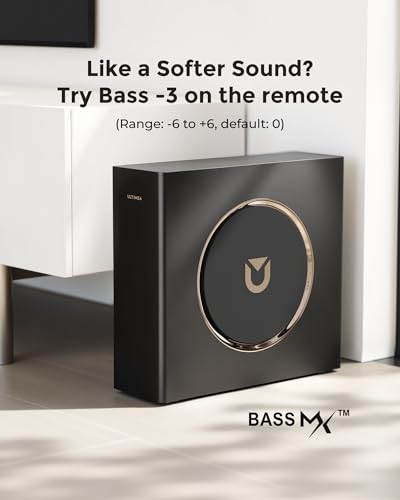
The Skywave F40's subwoofer is wired but includes BassMX technology for enhanced impact. While you lose placement flexibility, the wired connection eliminates any potential wireless interference or synchronization issues. The bass integration is reportedly very good, with smooth transitions between the subwoofer and main speakers.
Based on user feedback, both systems provide satisfying bass for most rooms, but the Saturn has an edge in larger spaces where optimal subwoofer placement becomes more critical.
This is where the philosophical differences become most apparent. The HT Saturn requires power outlets for five separate components but eliminates all audio cables between them. Setup involves powering on each component and letting them automatically pair—users report this process typically takes just a few minutes.
The challenge is power outlet placement. You need outlets positioned around your room where the satellites will sound best, not just where it's convenient to plug them in. For some rooms, this might require extension cords or additional outlet installation. But once positioned, you can easily move speakers if you rearrange furniture or want to optimize the sound.
The Skywave F40 needs fewer power connections but requires running speaker wire from the rear speakers to the subwoofer. The good news is that modern speaker wire is thin and can often be hidden along baseboards or under rugs. The system uses a hybrid approach—wireless for streaming from your phone, wired for the critical surround channels that need perfect synchronization.
Most users find the Skywave F40 quicker to set up initially, but the Saturn offers more long-term flexibility for room changes.
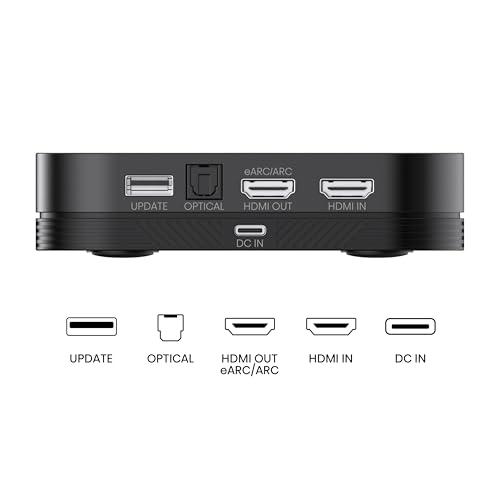
Modern home theater systems need to play well with your TV and other devices. Both systems handle the basics—HDMI eARC for high-quality audio from your TV, optical inputs for older devices, and Bluetooth for streaming from phones and tablets.
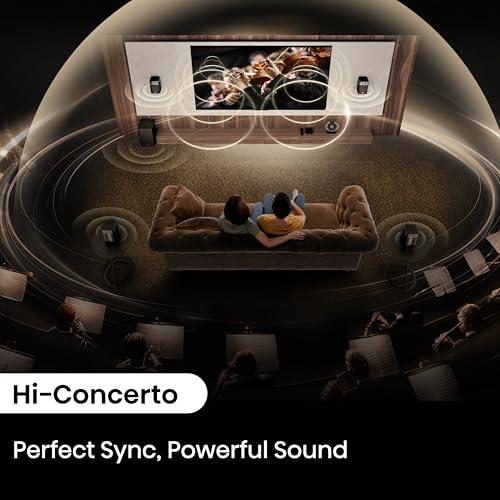
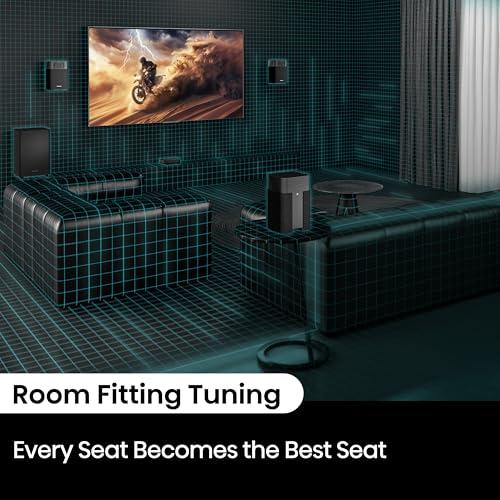
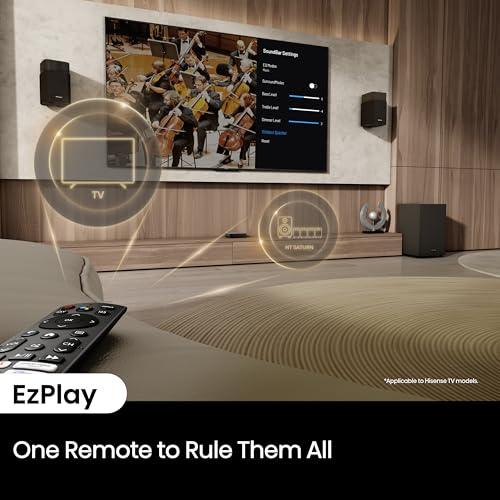
The HT Saturn really shines with Hisense TV integration. Hi-Concerto technology lets the system use your Hisense TV's built-in speakers alongside the satellite speakers, effectively expanding the soundstage even further. Room Fitting Tuning can automatically calibrate the system based on your room's acoustics. If you own or are planning to buy a Hisense TV, this integration adds significant value.
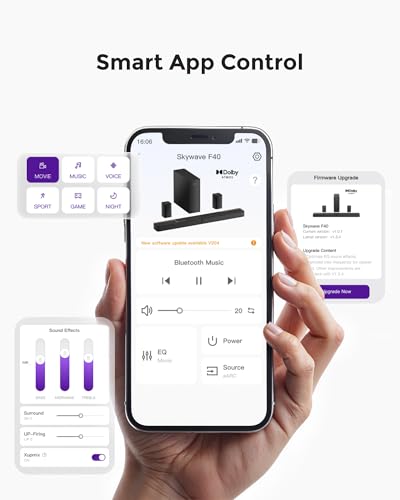
The Skywave F40 takes a more universal approach with broader TV compatibility. The smartphone app provides extensive control over EQ settings—10 bands with 121 preset combinations. This level of customization appeals to users who like fine-tuning their audio experience. The Bluetooth 5.4 implementation is also more advanced, with better range and lower latency for gaming and video streaming.
When evaluating these systems, certain performance characteristics matter more than others for real-world use.
Dialogue clarity is crucial since most of your listening involves movies and TV shows. The Skywave F40's dedicated center channel provides more consistent performance here, especially for off-center seating positions. The Saturn can match or exceed this clarity when you're in the sweet spot, but it's less forgiving of seating position changes.
Dynamic range refers to the system's ability to handle both quiet dialogue and explosive action scenes without compression. Both systems handle this well, but the Saturn's distributed power design and Devialet tuning give it a slight edge in maintaining clarity during complex passages.
Spatial accuracy—how precisely the system can place sound effects in three-dimensional space—favors the Saturn due to its discrete speaker placement. The Skywave F40 creates good surround effects but can't match the pinpoint accuracy of having actual speakers positioned around the room.
Bass integration is how smoothly the subwoofer blends with the main speakers. Both systems do this well, but the Saturn's Devialet tuning and flexible subwoofer placement provide more optimization opportunities.
At the time of writing, both systems compete in the mid-range wireless surround segment, typically priced significantly below premium brands but above basic soundbars. The value equation depends heavily on your priorities and room setup.
The HT Saturn offers unique wireless distributed surround with premium acoustic tuning. You're paying for Devialet's expertise and the flexibility of wireless placement. The phantom center approach may not appeal to everyone, but the overall system delivers acoustic sophistication that punches above its price point.
The Skywave F40 provides comprehensive Dolby Atmos features with tried-and-true surround sound principles. You get extensive customization options and broader device compatibility. The traditional configuration delivers predictable performance that most users will find satisfying.
Neither system will match the absolute performance of high-end separates costing several times more, but both deliver dramatic improvements over TV speakers and basic soundbars.
For dedicated home theater use, several factors become more important. Room size compatibility matters—the Saturn works better in larger, more open spaces where its distributed design can breathe, while the Skywave F40 is more suitable for traditional rectangular rooms.
Seating arrangement also influences the choice. The Saturn's phantom center works best for centered seating positions, making it ideal for single-row theater setups. The Skywave F40's dedicated center channel provides more consistent dialogue for multiple seating positions, better for family viewing.
Content variety plays a role too. If you watch a lot of older movies and TV shows, the Skywave F40's Xupmix technology provides more consistent enhancement of non-Atmos content. If you primarily watch modern releases with full Atmos soundtracks, the Saturn's discrete placement approach can be more immersive.
The Hisense HT Saturn is the better choice if you prioritize acoustic sophistication and installation flexibility. It's ideal for users who want the cleanest possible setup without running any cables, have compatible Hisense TVs for enhanced integration, and can position speakers optimally around their room. The system rewards careful placement with exceptional surround sound accuracy and refined audio quality courtesy of Devialet's tuning.
However, you should be comfortable with phantom center channel performance and have a room with suitable acoustics for wireless height effects. The Saturn works best for users who primarily sit in optimal listening positions and value long-term flexibility for room changes.
The Ultimea Skywave F40 makes more sense if you want predictable, traditional surround sound performance with extensive customization options. It's the better choice for users who prioritize dialogue clarity, need broader TV compatibility, and prefer hands-on control over their audio experience. The system delivers reliable performance across different room types and seating arrangements.
Choose the Skywave F40 if you want a more conventional setup with proven surround sound principles, extensive EQ options, and don't mind running some speaker wire for optimal performance.
Both systems represent significant improvements over basic soundbars and TV speakers. Your choice ultimately depends on whether you value the acoustic refinement and flexibility of the Saturn's distributed approach or the reliability and comprehensive features of the Skywave F40's traditional configuration. Either way, you'll end up with a dramatic improvement in your home theater experience.
| Hisense HT Saturn HTSATURN | Ultimea Skywave F40 |
|---|---|
| Channel Configuration - Determines surround sound authenticity | |
| 4.1.2 channels with phantom center | 5.1.2 channels with dedicated center |
| Speaker Layout - Affects installation and sound quality | |
| Four wireless satellite speakers + wireless subwoofer | Traditional soundbar + rear speakers + wired subwoofer |
| Total Power Output - Impacts volume and dynamic range | |
| 500W across 13 discrete drivers | 400-460W concentrated in main units |
| Wireless Design - Installation convenience vs reliability | |
| Fully wireless (all components) using tri-band 2.4/5.2/5.8 GHz | Hybrid: wireless streaming, wired surround connections |
| Audio Tuning - Sound quality refinement | |
| Devialet-tuned with "opera-grade" acoustics | BassMX and SurroundX proprietary processing |
| Height Effects Implementation - Dolby Atmos performance | |
| Up-firing elements in satellites, room-dependent | Dedicated up-firing drivers with neodymium magnets |
| TV Integration - Ease of use and control | |
| Hi-Concerto with Hisense TVs, Room Fitting Tuning | Universal HDMI eARC/CEC, broader TV compatibility |
| Customization Options - User control over sound | |
| Multiple sound modes, basic EQ through TV | 10-band EQ with 121 preset matrices via app |
| Content Enhancement - Making regular content sound better | |
| Standard Dolby/DTS processing | Xupmix technology upmixes stereo to surround |
| Connectivity Options - Device compatibility | |
| HDMI eARC, Optical, Bluetooth 5.3 | HDMI eARC, Optical, USB, Bluetooth 5.4 |
| Installation Requirements - Setup complexity | |
| Five power outlets needed, zero audio cables | Fewer power connections, some speaker wire required |
| Subwoofer Design - Bass flexibility and performance | |
| 6.5" wireless, flexible placement for room optimization | Wired connection ensures consistent performance |
| Smart Control - Modern convenience features | |
| TV remote integration, EzPlay control | Dedicated smartphone app with advanced controls |
| Room Size Optimization - Performance in different spaces | |
| Best in larger, open floor plans (20+ m²) | Suitable for traditional rectangular rooms (20-25 m²) |
| Upgrade Path - Future expansion possibilities | |
| Proprietary system, limited upgrade options | More standard configuration, easier component upgrades |
For dedicated home theater use, the Hisense HT Saturn excels in larger rooms with its distributed wireless speaker design that creates authentic surround sound. The Ultimea Skywave F40 is better for traditional rectangular home theaters where you want reliable dialogue clarity from its dedicated center channel. The Saturn offers more immersive sound positioning, while the Skywave F40 provides more predictable performance across different seating positions.
Yes, both the Hisense HT Saturn and Ultimea Skywave F40 support Dolby Atmos for overhead sound effects. The Saturn uses up-firing elements integrated into its satellite speakers, while the Skywave F40 has dedicated up-firing drivers with specialized magnets. The Skywave F40 also includes Xupmix technology that can enhance regular content to create surround effects from non-Atmos sources.
The Ultimea Skywave F40 is generally easier to set up initially, requiring fewer power connections and standard speaker wire placement. The Hisense HT Saturn needs five separate power outlets for its wireless components but eliminates all audio cables. While the Saturn takes more planning for power outlet placement, it offers greater long-term flexibility for repositioning speakers.
The key difference is design philosophy: the Hisense HT Saturn uses four separate wireless satellite speakers placed around your room, creating a distributed surround system without a traditional soundbar. The Ultimea Skywave F40 follows a conventional approach with a main soundbar, rear speakers, and subwoofer. This means the Saturn offers more placement flexibility, while the Skywave F40 provides familiar, predictable surround sound performance.
Both systems offer similar low-frequency extension down to 40Hz. The Hisense HT Saturn has a wireless 6.5" subwoofer that can be positioned anywhere for optimal bass response in your room. The Ultimea Skywave F40 uses a wired subwoofer with BassMX technology for enhanced impact. The Saturn offers more placement flexibility for bass optimization, while the Skywave F40 provides more consistent wireless-interference-free performance.
The Ultimea Skywave F40 works with all TV brands through standard HDMI eARC and optical connections. The Hisense HT Saturn also works universally but offers special integration features like Hi-Concerto and Room Fitting Tuning when paired with Hisense TVs. If you own a Hisense TV, the Saturn provides enhanced functionality, but the Skywave F40 offers broader universal compatibility.
The Ultimea Skywave F40 typically provides superior dialogue clarity due to its dedicated center channel speaker in the soundbar. The Hisense HT Saturn uses phantom center technology that creates dialogue positioning between left and right speakers. While the Saturn can sound impressive when properly positioned, the Skywave F40 offers more consistent dialogue clarity across different seating positions.
The Hisense HT Saturn is fully wireless, using tri-band frequencies (2.4/5.2/5.8 GHz) for all speaker connections with no audio cables required. The Ultimea Skywave F40 uses a hybrid approach with Bluetooth 5.4 for device streaming but wired connections between surround speakers. The Saturn offers cleaner installation, while the Skywave F40 ensures more reliable surround channel synchronization.
Both systems offer excellent value in different ways. The Hisense HT Saturn provides unique wireless distributed surround with premium Devialet acoustic tuning at a competitive price. The Ultimea Skywave F40 offers comprehensive Dolby Atmos features, extensive EQ customization, and proven surround sound performance. The Saturn delivers more acoustic sophistication, while the Skywave F40 provides more features and universal compatibility.
Yes, but with different approaches. The Hisense HT Saturn offers multiple sound modes and basic EQ adjustment through compatible TV interfaces, with Devialet's acoustic tuning handling most optimization automatically. The Ultimea Skywave F40 provides extensive customization with a 10-band equalizer, 121 preset sound matrices, and comprehensive smartphone app control. The Skywave F40 offers more hands-on customization options.
The Hisense HT Saturn generally performs better in larger, open spaces due to its distributed speaker design that can fill wide areas with authentic surround sound. The wireless satellites can be positioned optimally throughout larger rooms. The Ultimea Skywave F40 works well in medium to large traditional rooms but may struggle to fill very large open floor plans as effectively as the Saturn's distributed approach.
The Hisense HT Saturn's main limitations include requiring multiple power outlets, phantom center performance that varies by seating position, and limited upgrade flexibility due to its proprietary design. The Ultimea Skywave F40's drawbacks include needing speaker wire connections, less placement flexibility due to wired components, and potentially less immersive surround effects compared to the Saturn's discrete speaker placement approach.
We've done our best to create useful and informative comparisons to help you decide what product to buy. Our research uses advanced automated methods to create this comparison and perfection is not possible - please contact us for corrections or questions. These are the sites we've researched in the creation of this article: bestbuy.com - youtube.com - blog.son-video.com - youtube.com - youtube.com - techradar.com - ecoustics.com - jbhifi.com.au - shop.hisense-usa.com - bhphotovideo.com - bestbuy.com - digitalreviews.net - hisense-usa.com - projectorscreenstore.com - valueelectronics.com - dolby.com - giftpack.ai - the-gadgeteer.com - youtube.com - ultimea.com - manuals.plus - youtube.com - ultimea.com - youtube.com - youtube.com - youtube.com - youtube.com - eu.ultimea.com - support.ultimea.com

Privacy Policy
Terms and Conditions - Affiliate Policy
Home Security
© Copyright 2008-2026.
11816 Inwood Rd #1211, Dallas, TX 75244