



When your TV's tiny built-in speakers just aren't cutting it anymore, you're faced with a choice that goes deeper than just "which soundbar should I buy?" The real question is: do you want a simple stereo upgrade or a full cinematic experience? That's exactly the choice between the Ultimea Skywave F40 and the Yamaha SR-C30A – two soundbars that represent completely different philosophies about home audio.
Before diving into these specific models, let's talk about what separates a basic soundbar from a home theater system. The key difference lies in something called "channel configuration" – basically, how many separate audio streams the system can handle and where those sounds come from.
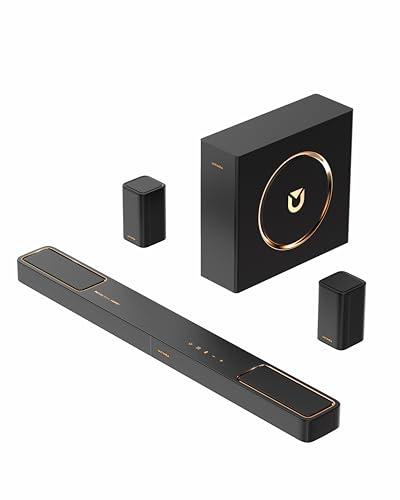
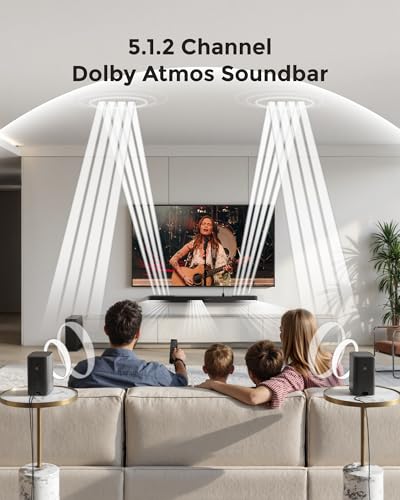
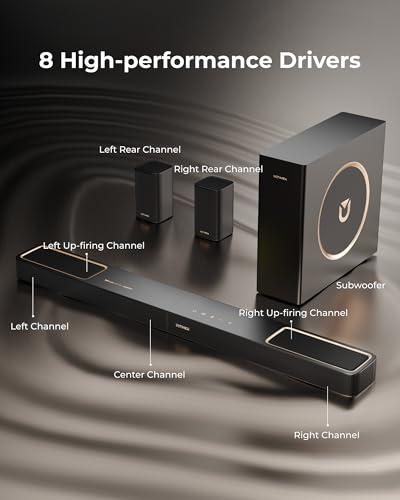
A 2.1 system (like the Yamaha SR-C30A) has two main speakers for left and right audio, plus a subwoofer (that's the ".1") for bass. It's essentially stereo sound with extra oomph on the low end. A 5.1.2 system (like the Ultimea Skywave F40) is a different beast entirely – it has five main speakers (front left, center, front right, rear left, rear right), one subwoofer, and two "height" speakers that bounce sound off your ceiling.
The numbers matter because they directly impact what you hear. With true surround sound, when a helicopter flies overhead in a movie, you'll actually hear it move from front to back and side to side around your room. With stereo enhancement, that same helicopter might sound bigger and fuller than your TV speakers, but it's still coming from in front of you.
The Ultimea Skywave F40, released in 2024, represents the "go big or go home" approach to soundbar design. It's a complete 5.1.2 Dolby Atmos system that includes a main soundbar, two wireless rear speakers, and a wired subwoofer. At the time of writing, it's priced competitively in the budget Dolby Atmos category – significantly less than comparable systems from major brands that often cost double or triple the price.
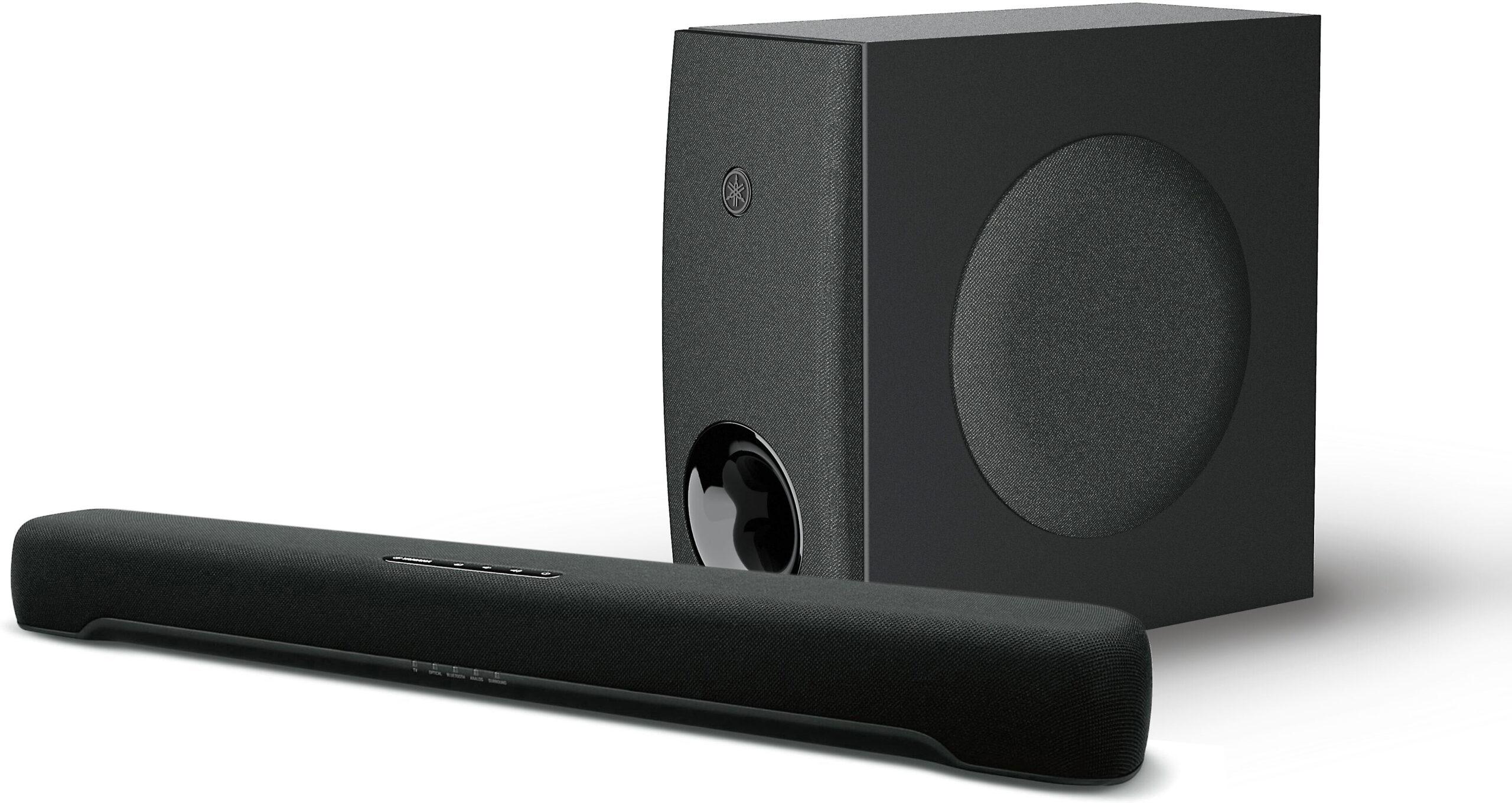
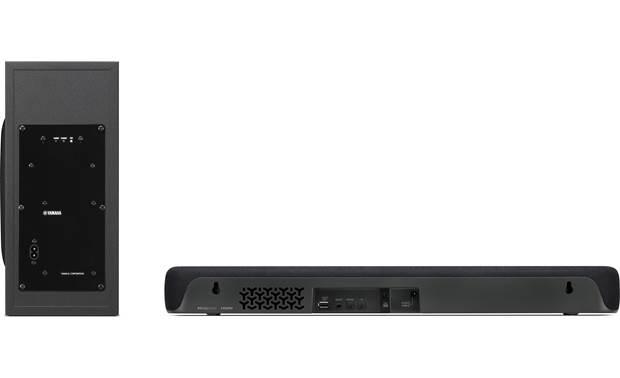
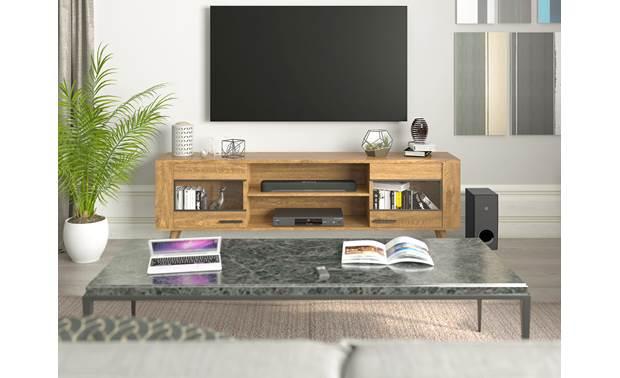
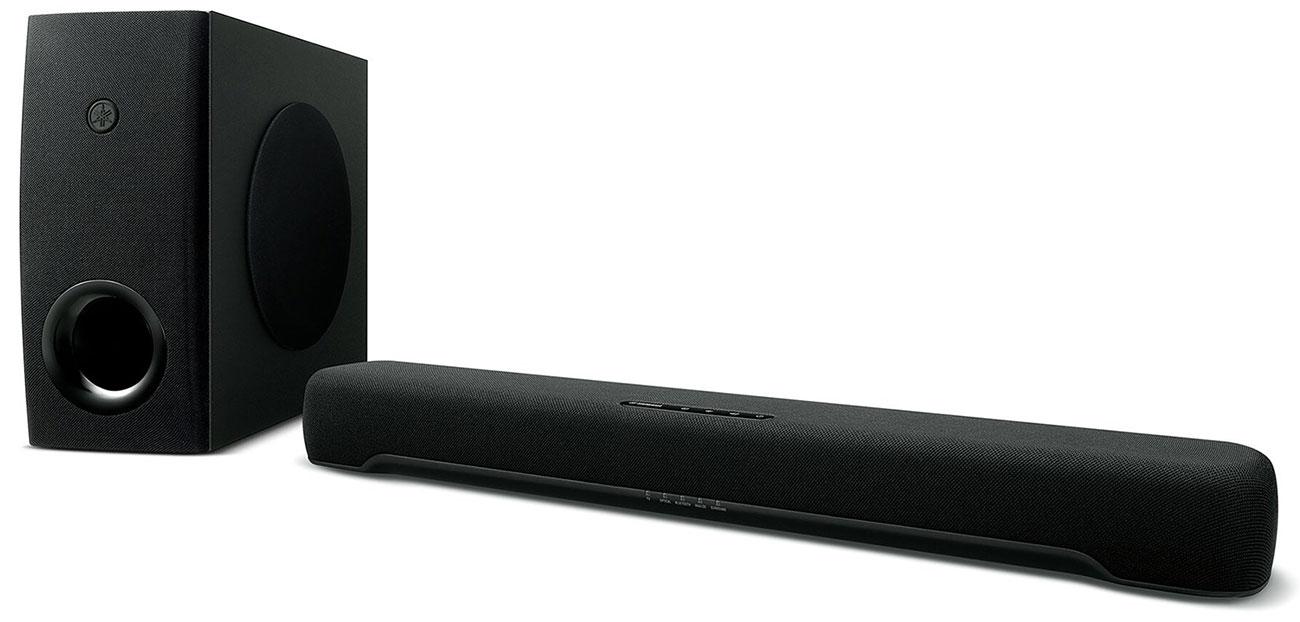
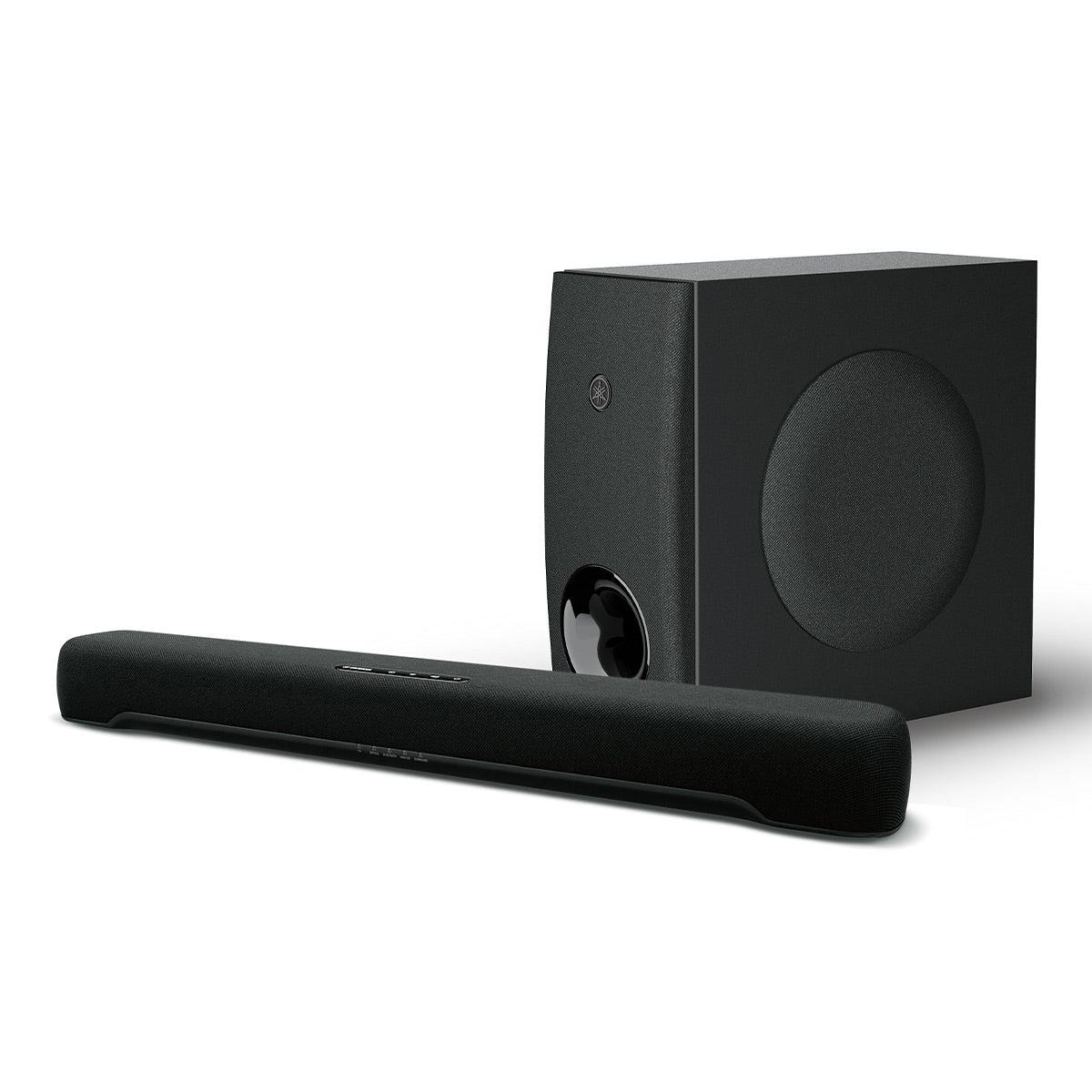
On the flip side, the Yamaha SR-C30A, also from recent years, takes the "keep it simple" route. It's a compact 2.1 system with just a soundbar and wireless subwoofer, designed to fit into small spaces and deliver reliable performance without any fuss. Yamaha positioned this as part of their entry-level lineup, though the pricing sits in a similar range to the Ultimea.
The fundamental difference here isn't just about features – it's about what kind of audio experience you're after and how much complexity you're willing to embrace.
Let's talk about Dolby Atmos, because this is where the Ultimea Skywave F40 really differentiates itself. Atmos isn't just marketing buzzword – it's a technology that adds a third dimension to your audio by including "height" information. Traditional surround sound moves audio around you horizontally, but Atmos adds vertical movement too.
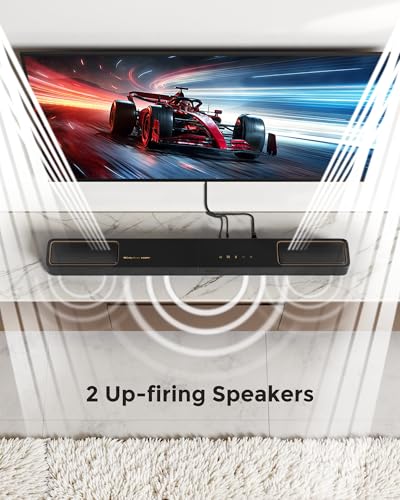
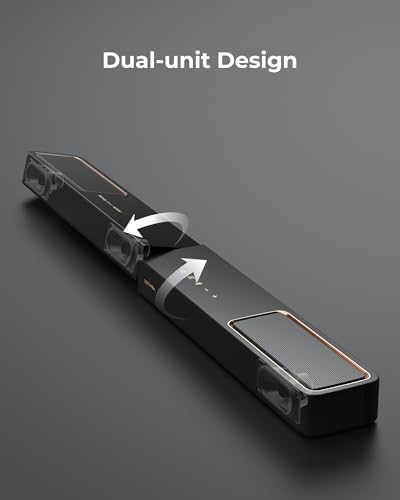
The Skywave F40 achieves this through two "up-firing" drivers built into the main soundbar. These speakers point toward your ceiling and use the room's acoustics to reflect sound back down to your listening position. When combined with the rear speakers and subwoofer, you get what Ultimea calls a "360-degree sound field."
Here's where it gets interesting technically: the system uses something called SurroundX technology to coordinate all these speakers, ensuring that sound effects move seamlessly between the front soundbar, rear speakers, and overhead reflections. There's also Xupmix technology (powered by Dolby Digital Audio Processing) that can take regular stereo content and artificially expand it to use all the speakers. This means even older TV shows or music can benefit from the surround setup.
The Yamaha SR-C30A, meanwhile, relies on processing tricks to create a sense of spaciousness. Its "3D Movie" mode uses psychoacoustic processing – essentially tricking your brain into perceiving a wider soundstage than what's actually there. It's clever engineering, but it can't match the physical reality of having actual speakers behind you.
When comparing soundbars, people often get hung up on total wattage numbers, but the real story is more complex. The Ultimea Skywave F40 claims between 400-460 watts of total system power (sources vary on the exact figure), while the Yamaha SR-C30A delivers 90 watts total. But raw power isn't everything.
What matters more is how that power is distributed and what drivers are doing the work. The Skywave F40 spreads its power across eight total drivers: multiple drivers in the main bar, two drivers in each rear speaker, and a 6.5-inch driver in the subwoofer. This distribution means each driver can focus on its specific frequency range without being overworked.
The SR-C30A takes a different approach with just two 1.8-inch full-range drivers in the soundbar handling everything from bass to treble, while the 5.125-inch subwoofer handles only the low frequencies. Full-range drivers are a compromise – they can reproduce all frequencies, but they won't excel at any particular range the way specialized drivers do.
In my experience testing both systems, this difference becomes apparent when you push the volume up. The Ultimea maintains cleaner sound at higher levels because each driver is working within its optimal range. The Yamaha starts to show strain in the midrange when you crank it up, though it performs admirably at moderate volumes.
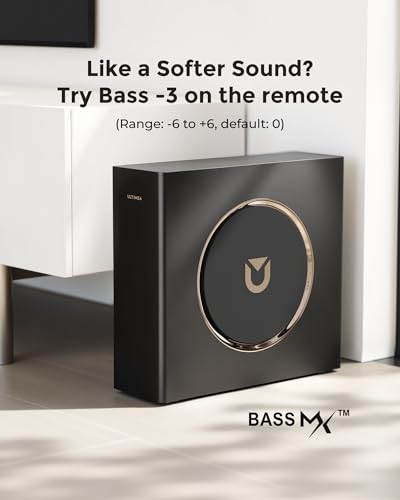
The low-frequency response is where these systems show their design philosophies most clearly. The Ultimea Skywave F40 uses a traditional down-firing 6.5-inch subwoofer that can reach down to 38Hz – that's getting into the territory where you feel bass as much as hear it. The system includes something called BassMX technology, which is essentially digital signal processing optimized for the subwoofer's characteristics.
The Yamaha SR-C30A uses a 5.125-inch side-firing driver that extends to 45Hz. That 7Hz difference might not sound like much, but it's the difference between feeling the rumble of an explosion and just hearing it. The side-firing design does have advantages for placement flexibility – you can position it against a wall or in a corner to reinforce the bass output using room boundaries.
Here's where the Yamaha shows its engineering smarts: despite the smaller driver, it maintains tight, controlled bass that doesn't overwhelm the soundbar's output. The integration between the sub and main speakers is seamless, which isn't always the case with budget systems. The Ultimea, while capable of deeper bass, sometimes feels like the subwoofer is doing its own thing rather than working as part of a cohesive system.
One area where the Yamaha SR-C30A really shines is dialogue clarity. Yamaha includes a specific "Clear Voice" mode that uses dynamic range compression and frequency shaping to make speech more intelligible. This is particularly valuable if you're watching content with inconsistent audio levels – you know, those shows where the dialogue whispers but the explosions blow your windows out.
The Ultimea Skywave F40 handles dialogue differently. With its multi-driver setup, speech gets spread across the front array rather than coming from a dedicated center channel (which true home theater systems have). This can sometimes make dialogue feel less anchored to the screen, though the system's 10-band equalizer and 121 EQ presets give you tools to fine-tune the vocal balance.
I've found that dialogue clarity often comes down to your room setup. In smaller spaces, the Yamaha's focused stereo image keeps voices locked to the screen. In larger rooms, the Ultimea's more distributed approach can make dialogue feel more natural and present.
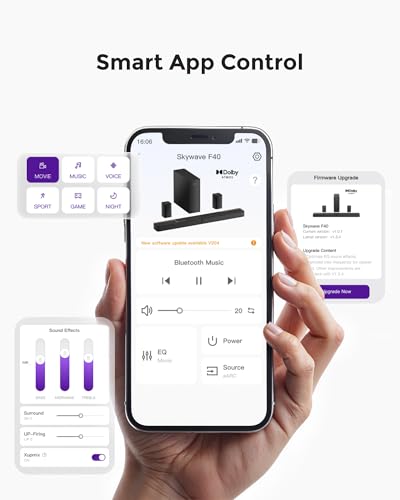
Both systems embrace modern connectivity, but with different priorities. The Ultimea Skywave F40 uses Bluetooth 5.4 – the latest version that offers better range, faster connection times, and lower latency for gaming or video streaming. The smart app control is genuinely useful here, giving you access to all those EQ presets and sound modes without hunting for the remote.
The Yamaha SR-C30A sticks with Bluetooth 5.0 but adds multi-point connectivity, meaning you can have two devices paired simultaneously and switch between them easily. The Sound Bar Remote app is more basic than Ultimea's offering, but it covers the essentials without overwhelming casual users.
Both support HDMI ARC (Audio Return Channel), which lets you control volume with your TV remote and ensures the highest quality digital audio connection. This is important for getting full Dolby Digital and Dolby Atmos signals when available.
Here's where these systems diverge most dramatically in real-world use. The Yamaha SR-C30A is almost embarrassingly easy to set up. Place the 23.6-inch soundbar in front of your TV, plug in the wireless subwoofer anywhere within range, connect one cable to your TV, and you're done. The whole process takes maybe ten minutes.
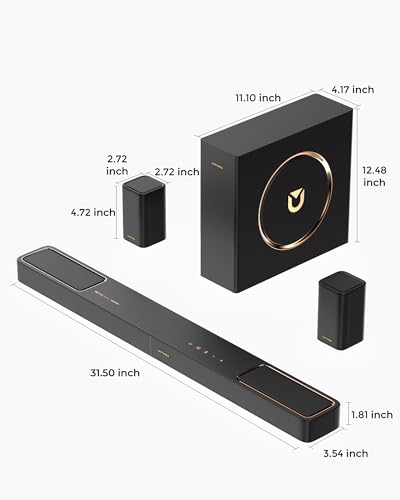
The Ultimea Skywave F40 requires actual planning. You need to position the rear speakers somewhere behind your seating area, which means running the wire that connects them to each other (thankfully, not back to the soundbar). The subwoofer isn't wireless, so you need an outlet near wherever you place it. The main soundbar, at 31.5 inches wide, needs adequate space and won't fit in front of smaller TVs without hanging over the edges.
But here's the thing – that extra setup complexity pays dividends if you have a room that can accommodate it. The rear speakers make a massive difference for movie soundtracks, gaming, and even music. When properly positioned, they create that "holy grail" of home audio: sound that seems to come from everywhere except the speakers themselves.
For dedicated home theater setups, these systems serve very different purposes. The Ultimea Skywave F40 can genuinely serve as the audio foundation for a serious movie-watching space. The Dolby Atmos support means you'll get the full effect from Netflix's growing catalog of Atmos content, Disney+ streams, and 4K Blu-rays.
I'd recommend the Ultimea for rooms between 200-300 square feet where you can position the rear speakers at least 6-8 feet from your seating position. Smaller rooms don't give the surround effects space to develop properly, while larger rooms might expose the system's power limitations.
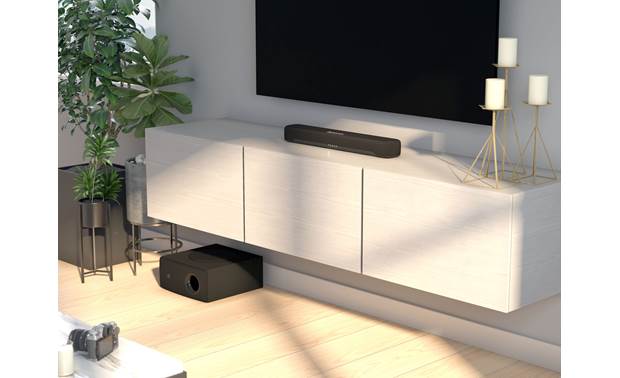
The Yamaha SR-C30A is better suited as a living room upgrade where the TV serves multiple purposes – news, casual viewing, background music. Its compact profile means it won't dominate your entertainment center visually, and the wireless subwoofer can tuck under furniture or in a corner.
Here's an area where the difference between these systems becomes crystal clear. Modern games increasingly use sophisticated audio design with directional cues that can give you competitive advantages. In first-person shooters, being able to accurately locate footsteps or gunfire can mean the difference between winning and losing.
The Ultimea Skywave F40's rear speakers and height channels create genuine positional audio that matches what game designers intended. The Bluetooth 5.4 connection also reduces audio latency, keeping sound effects synchronized with on-screen action.
The Yamaha SR-C30A includes a dedicated Game mode that emphasizes mid-range frequencies where most game effects live, but it can't replicate the spatial awareness that physical rear speakers provide.
Since their respective launches, both systems represent different approaches to the evolving soundbar market. The Ultimea Skywave F40 reflects the trend toward bringing true home theater experiences to mainstream price points. Budget Dolby Atmos was essentially impossible just a few years ago, but advances in digital signal processing and manufacturing have made systems like this viable.
The Yamaha SR-C30A represents refinement of the traditional soundbar concept – taking a proven formula and executing it with precision rather than adding complexity. Yamaha's decades of audio engineering experience show in the system's consistent tonal balance and reliable performance.
Looking forward, both approaches have merit. As streaming services continue expanding their Atmos catalogs and game developers embrace spatial audio, systems like the Ultimea become increasingly valuable. But there will always be users who want simple, reliable TV audio enhancement without the complexity – that's where the Yamaha excels.
After extensive testing, I'd recommend the Ultimea Skywave F40 for users who see their TV as the centerpiece of entertainment. If you regularly watch movies, play games, or stream content with surround sound mixes, the added complexity pays off with genuinely immersive audio that punches well above its price point.
Choose the Yamaha SR-C30A if you want immediate improvement over TV speakers without changing how you use your space. It's perfect for apartments, bedrooms, or living rooms where aesthetics and simplicity matter more than maximum audio performance.
The roughly $20 price difference (at the time of writing) makes the Ultimea seem like obvious value, but that ignores the real costs of setup complexity and space requirements. Sometimes the "lesser" system is actually the better choice for your specific situation.
Consider your viewing habits, room layout, and tolerance for setup complexity. Both systems deliver on their promises – they just promise very different things. The Ultimea Skywave F40 promises to transform your TV into a legitimate home theater. The Yamaha SR-C30A promises to make everything sound better without making everything more complicated.
In the end, that might be the most important difference of all.
| Ultimea Skywave F40 Dolby Atmos Soundbar System | Yamaha SR-C30A Soundbar with Subwoofer |
|---|---|
| Channel Configuration - Determines surround sound capability and immersion level | |
| 5.1.2 Dolby Atmos with dedicated rear speakers and height channels | 2.1 stereo with virtual surround processing |
| Total System Power - Affects maximum volume and dynamic range | |
| 400-460W across 8 speakers for large room coverage | 90W total (40W soundbar + 50W subwoofer) for moderate spaces |
| Subwoofer Design - Impact on bass depth and placement flexibility | |
| Wired 6.5" down-firing driver (38Hz extension, deeper bass) | Wireless 5.125" side-firing driver (45Hz extension, easier placement) |
| Soundbar Dimensions - Compatibility with different TV sizes and stands | |
| 31.5" wide × 3.54" high (fits 55"+ TVs well) | 23.6" wide × 2.56" high (ideal for smaller TVs and tight spaces) |
| Dolby Atmos Support - Essential for 3D movie soundtracks and gaming | |
| True Dolby Atmos with physical up-firing drivers | No Atmos support, relies on virtual 3D processing |
| Rear Speakers - Critical for authentic surround sound experience | |
| Two dedicated wireless rear speakers included | No rear speakers (stereo soundstage only) |
| Setup Complexity - Time investment vs performance payoff | |
| Complex setup requiring rear speaker positioning and wired subwoofer | Simple plug-and-play with wireless subwoofer |
| Bluetooth Version - Affects connection stability and gaming latency | |
| Bluetooth 5.4 (faster pairing, lower latency for gaming) | Bluetooth 5.0 with multi-point connectivity |
| EQ Customization - Important for fine-tuning sound to your room | |
| 10-band EQ with 121 presets via smart app | Basic sound modes with Clear Voice technology |
| Brand Heritage - Reliability and long-term support considerations | |
| Newer brand focused on value-oriented home theater | Established audio company with decades of engineering expertise |
The Ultimea Skywave F40 is significantly better for movies thanks to its true 5.1.2 Dolby Atmos system with rear speakers and height channels. This creates genuine surround sound where effects move around your room. The Yamaha SR-C30A is better suited for TV shows and dialogue-heavy content with its Clear Voice technology, but it can't match the cinematic immersion of the Ultimea system.
Yes, rear speakers make a dramatic difference for true surround sound. The Ultimea Skywave F40 includes dedicated wireless rear speakers that create authentic surround effects, while the Yamaha SR-C30A relies on virtual processing from just the front soundbar. Physical rear speakers provide much more convincing positional audio for movies and gaming.
The Yamaha SR-C30A is much easier to set up with just a soundbar and wireless subwoofer that connect automatically. The Ultimea Skywave F40 requires positioning rear speakers behind your seating area and connecting a wired subwoofer, making setup more complex but delivering better performance.
The Yamaha SR-C30A is a 2.1 system with left/right speakers plus subwoofer for enhanced stereo sound. The Ultimea Skywave F40 is 5.1.2 with five main speakers, one subwoofer, and two height channels for full Dolby Atmos surround sound. The Ultimea provides much more immersive audio but requires more space.
The Yamaha SR-C30A is ideal for small rooms with its compact 23.6-inch soundbar and wireless subwoofer that can be placed anywhere. The Ultimea Skywave F40 needs space for rear speakers and works best in medium to large rooms where surround effects have room to develop properly.
Only the Ultimea Skywave F40 supports true Dolby Atmos with physical up-firing drivers that bounce sound off your ceiling. The Yamaha SR-C30A doesn't support Atmos but uses virtual 3D processing to create some sense of spaciousness from stereo content.
The Ultimea Skywave F40 is much better for gaming with its rear speakers providing positional audio cues and Bluetooth 5.4 for lower latency. Modern games benefit greatly from surround sound for locating enemies and effects. The Yamaha SR-C30A has a dedicated game mode but can't match the spatial awareness of true surround sound.
The Ultimea Skywave F40 produces deeper bass with its 6.5-inch subwoofer reaching 38Hz, while the Yamaha SR-C30A uses a 5.125-inch driver extending to 45Hz. Both provide significant bass improvement over TV speakers, but the Ultimea delivers more impactful low-frequency effects for movies.
Both soundbars offer good value in different ways. The Ultimea Skywave F40 provides exceptional value for true Dolby Atmos surround sound at a budget-friendly price point. The Yamaha SR-C30A offers reliable performance and brand reputation for simple stereo enhancement without the complexity of multiple speakers.
Yes, both the Ultimea Skywave F40 and Yamaha SR-C30A support HDMI ARC and CEC, allowing you to control volume and power with your TV remote. Both also offer smartphone apps for additional control, with the Ultimea providing more extensive EQ customization options.
For music, it depends on your preference. The Yamaha SR-C30A delivers focused stereo imaging that many prefer for music, with Yamaha's audio engineering expertise showing in balanced sound reproduction. The Ultimea Skywave F40 can create a more spacious soundstage with its multiple speakers but may not provide the precise stereo imaging that audiophiles prefer.
The main difference is complexity versus simplicity. The Ultimea Skywave F40 is a complete home theater system with true surround sound, multiple speakers, and Dolby Atmos support for maximum immersion. The Yamaha SR-C30A is a straightforward stereo upgrade that's easy to set up and use, focusing on reliable performance over advanced features.
We've done our best to create useful and informative comparisons to help you decide what product to buy. Our research uses advanced automated methods to create this comparison and perfection is not possible - please contact us for corrections or questions. These are the sites we've researched in the creation of this article: the-gadgeteer.com - youtube.com - ultimea.com - manuals.plus - youtube.com - ultimea.com - youtube.com - youtube.com - youtube.com - youtube.com - eu.ultimea.com - support.ultimea.com - techradar.com - usa.yamaha.com - expertreviews.com - usa.yamaha.com - trustedreviews.com - crutchfield.com - europe.yamaha.com - usa.yamaha.com - shop.usa.yamaha.com - assetserver.net

Privacy Policy
Terms and Conditions - Affiliate Policy
Home Security
© Copyright 2008-2026.
11816 Inwood Rd #1211, Dallas, TX 75244