




If you've ever watched a movie or TV show and found yourself constantly adjusting the volume—cranking it up during quiet dialogue scenes, then scrambling for the remote when an explosion rattles your windows—you understand why soundbars have become such essential home entertainment gear. These sleek audio devices promise to solve the age-old problem of terrible TV speakers, but choosing the right one can feel overwhelming when you're staring at dozens of options with confusing technical specifications.
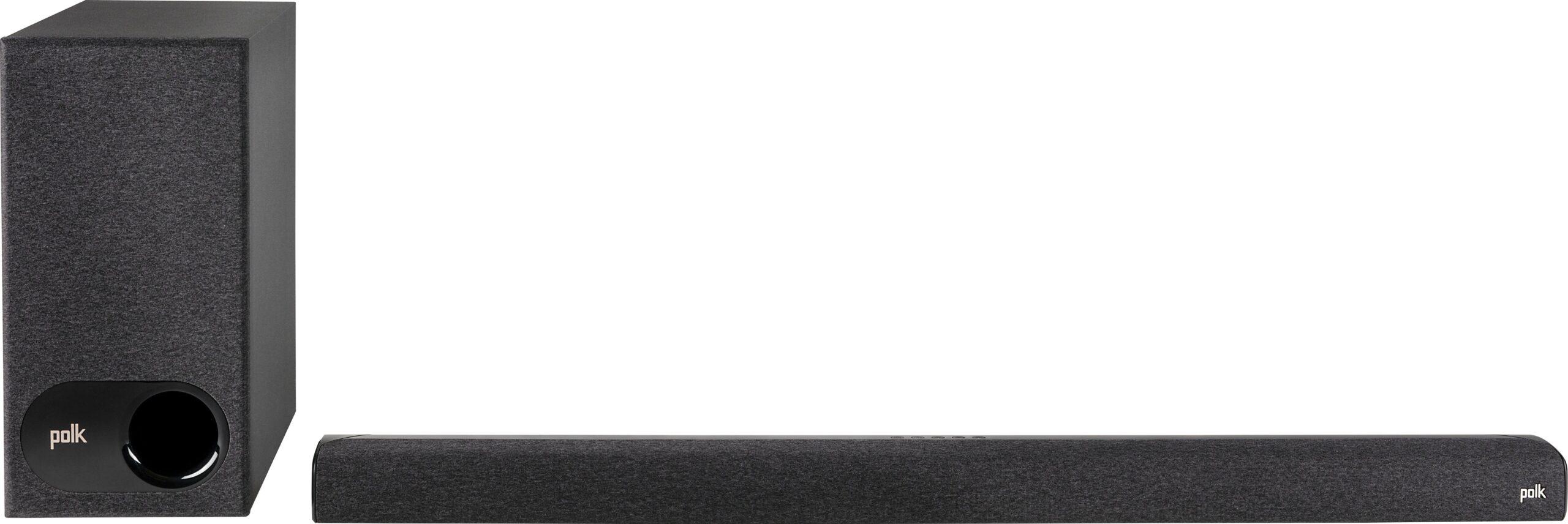
Today, we're diving deep into two soundbars that represent completely different approaches to better TV audio: the Sonos Ray and the Polk Audio MagniFi Max AX. One focuses on delivering exceptional stereo sound in a compact package, while the other goes all-in on creating a full surround sound experience. Understanding which approach works better for your situation—and your budget—will help you make a decision you'll be happy with for years to come.
Before we jump into comparing these specific models, let's talk about what makes soundbars tick and why certain features matter more than marketing buzzwords might suggest.
The most fundamental consideration is channel configuration—those numbers like 2.0, 3.1, or 5.1.2 that you see plastered on every soundbar box. The first number represents main audio channels (left, center, right), the second indicates subwoofers (the .1), and a third number shows height or overhead channels. A 2.0 system like the Sonos Ray uses two main channels to create stereo sound, while the Polk MagniFi Max AX's 3.1.2 configuration includes left, center, and right channels, plus a subwoofer and two height channels for overhead effects.
Connectivity options might seem boring, but they directly impact how well your soundbar works with your TV and other devices. HDMI connections, particularly HDMI eARC (enhanced Audio Return Channel), allow for the highest quality audio transmission and can carry advanced surround sound formats like Dolby Atmos without compression. Optical connections, while reliable, are limited to older audio formats and can't handle the latest surround sound technologies.
Room acoustics play a huge role in how any soundbar performs. Sound waves bounce off walls, ceilings, and furniture, either enhancing or muddying the audio depending on your room's layout. Some soundbars include room correction technology that automatically adjusts their output to compensate for these acoustic challenges.
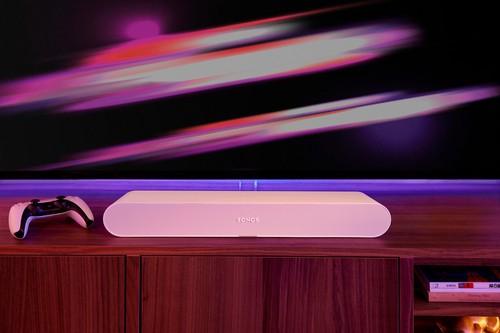
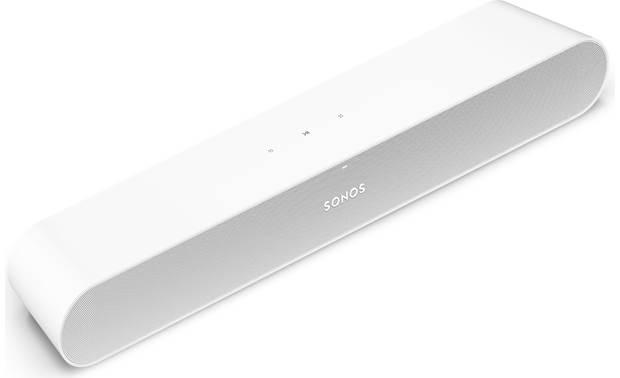
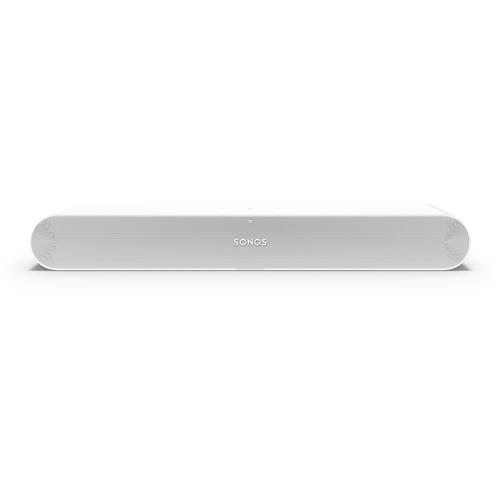
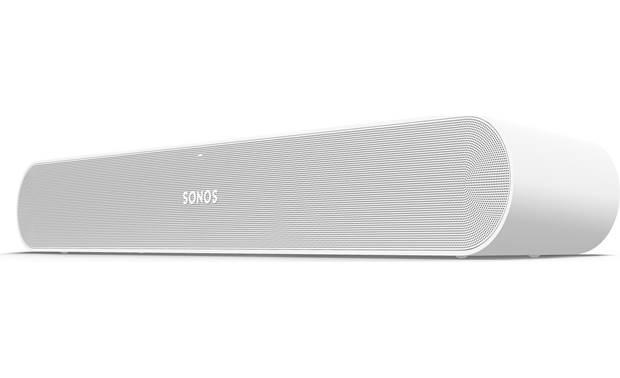
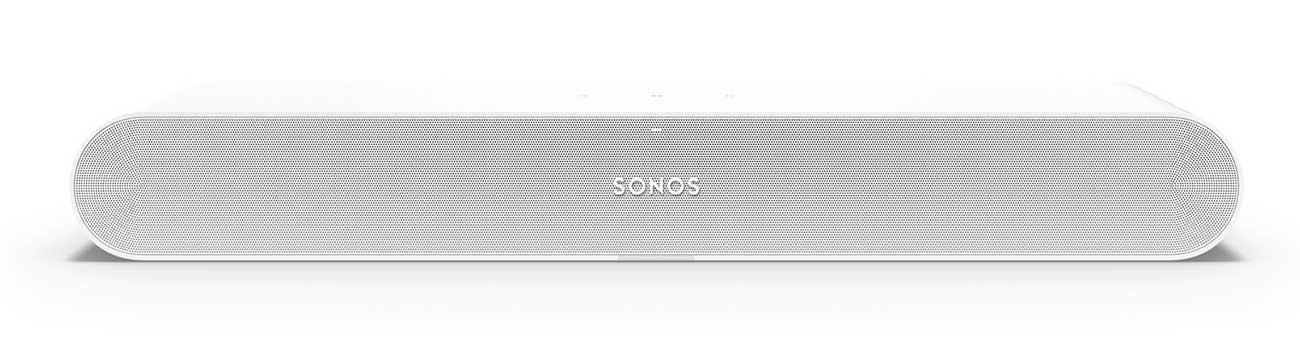
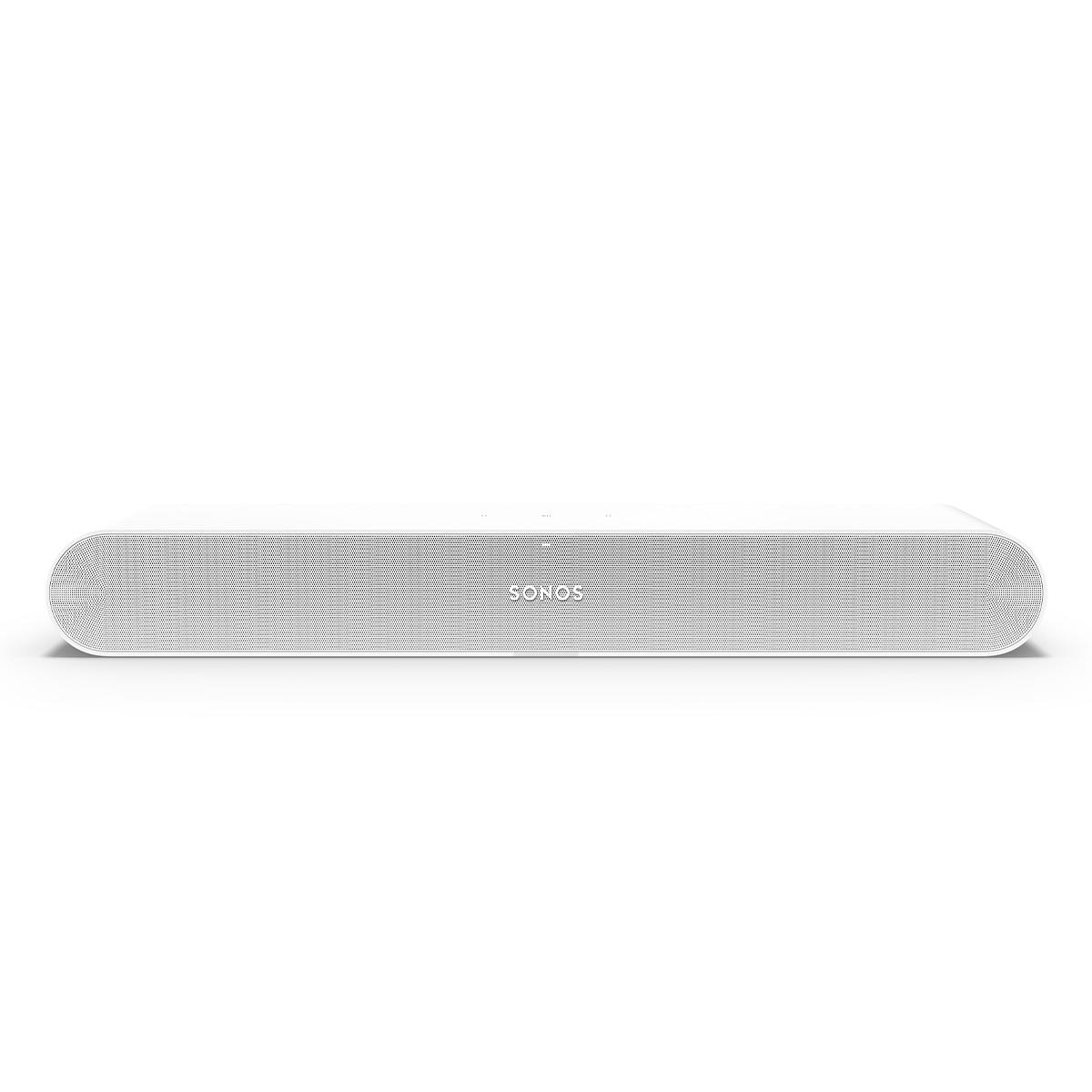
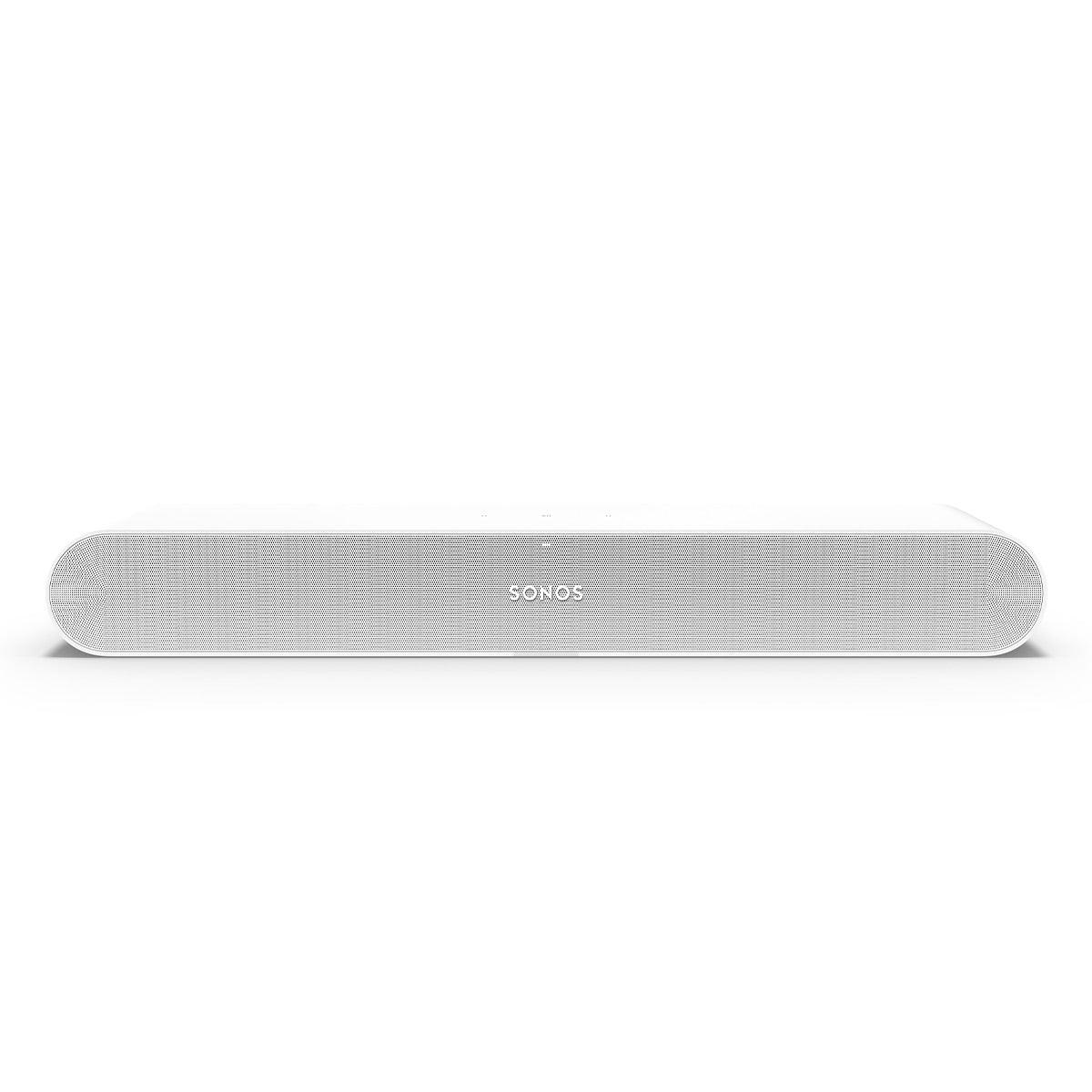
Released in 2022, the Sonos Ray marked Sonos's entry into the budget-friendly soundbar market. At the time of writing, it sits at the lower end of the price spectrum for premium soundbars, making it an attractive option for people who want excellent audio quality without breaking the bank.
The Ray's design philosophy centers on doing stereo audio exceptionally well rather than attempting to recreate surround sound effects. Its four-driver array—two midwoofers and two tweeters—might seem modest compared to systems boasting double-digit driver counts, but Sonos has engineered these components with remarkable precision.
The proprietary waveguides deserve special attention here. These carefully shaped acoustic channels direct high-frequency sounds from the tweeters in a controlled pattern, creating a wider soundstage than you'd expect from such a compact unit. Think of waveguides as acoustic lenses that focus and shape sound waves, similar to how a camera lens focuses light.
One standout feature is Trueplay room correction, though it comes with a catch—you need an iOS device to use it. This technology plays test tones through your iPhone or iPad's microphone, analyzes how sound bounces around your room, then automatically adjusts the Ray's output to compensate for acoustic problems. Having used this feature extensively, I can say it makes a noticeable difference, especially in rooms with hard surfaces that cause sound reflections.
The Ray also includes Speech Enhancement technology, which boosts vocal frequencies to improve dialogue clarity. This isn't just a simple treble boost—it's sophisticated signal processing that identifies and emphasizes the specific frequency ranges where human voices naturally occur, typically between 300Hz and 3,000Hz.
In stereo content, the Sonos Ray punches well above its weight class. Its frequency response—how evenly it reproduces different audio frequencies—remains impressively balanced from deep bass notes up through sparkling highs. The bass response deserves particular praise; despite lacking a dedicated subwoofer, the Ray produces surprising low-end punch thanks to its bass reflex design, which uses a carefully tuned port to enhance lower frequencies.
For music listening, this balanced approach shines. Whether you're streaming jazz, rock, classical, or electronic music, the Ray maintains the tonal relationships that artists and engineers intended. Vocals sit naturally in the mix, instruments occupy their proper spaces in the stereo field, and nothing sounds artificially boosted or recessed.
The Ray's connectivity story is both its strength and weakness. It connects to your TV via optical cable only—no HDMI inputs at all. This simplifies setup and ensures reliable, low-latency audio transmission, but it also means you can't take advantage of advanced audio formats or connect multiple source devices directly.
Where the Ray truly excels is wireless streaming and ecosystem integration. It supports AirPlay 2, Spotify Connect, and integrates seamlessly with other Sonos speakers for whole-home audio. The Sonos app, while occasionally criticized for interface changes, provides reliable control over streaming services, EQ adjustments, and multi-room functionality.
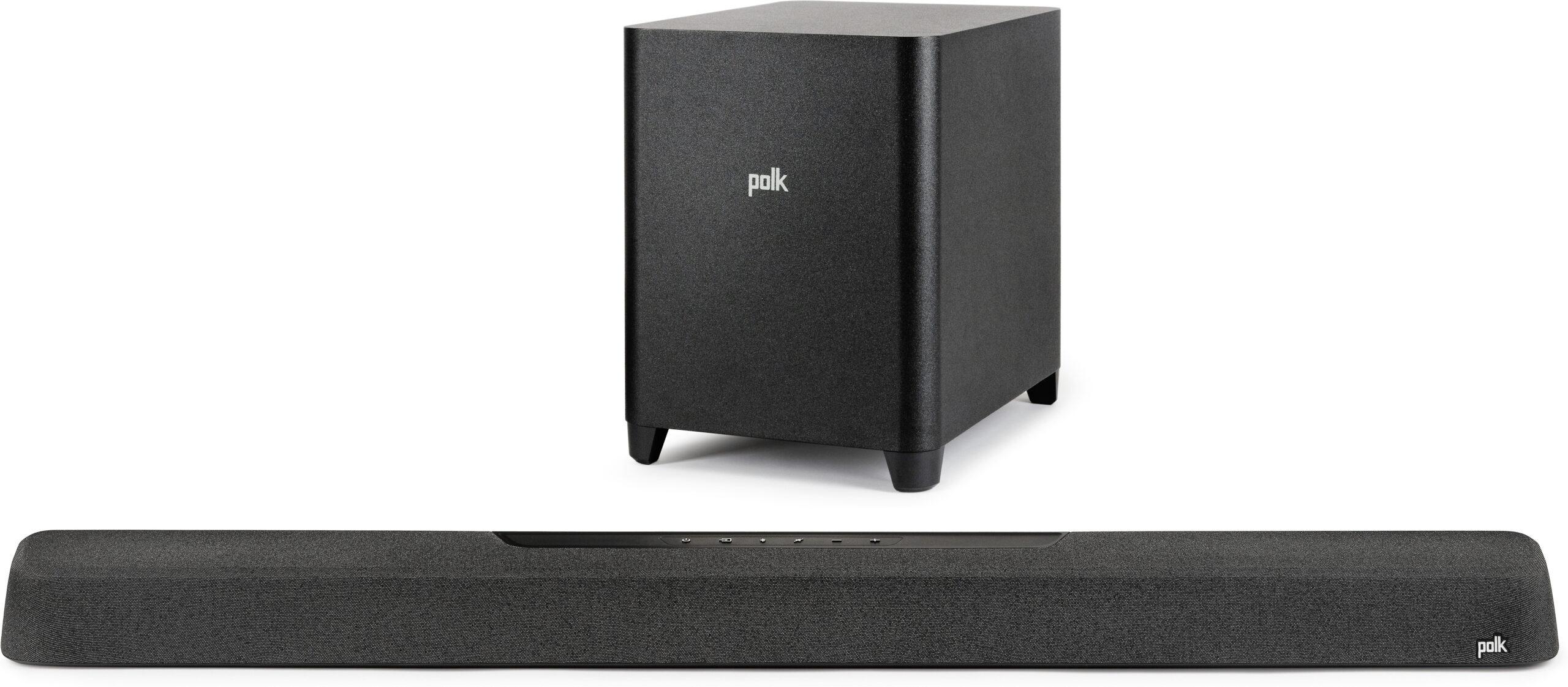
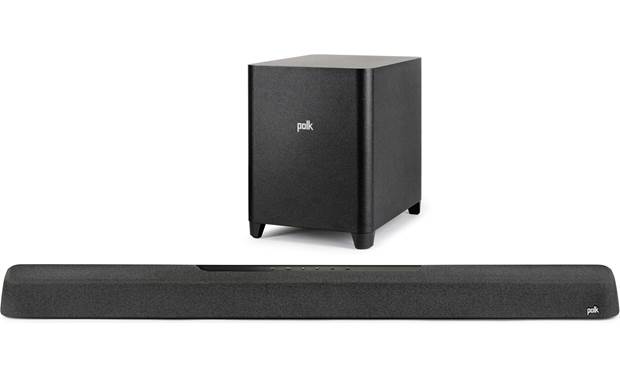
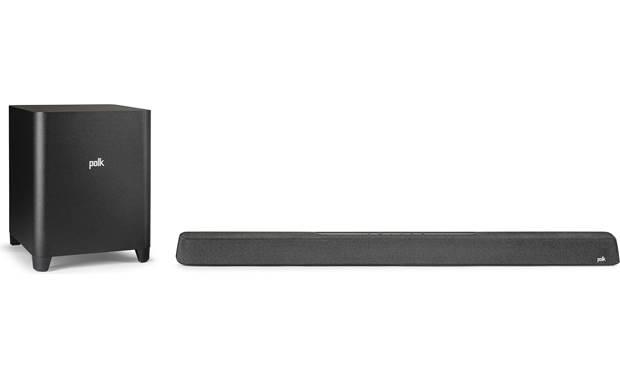
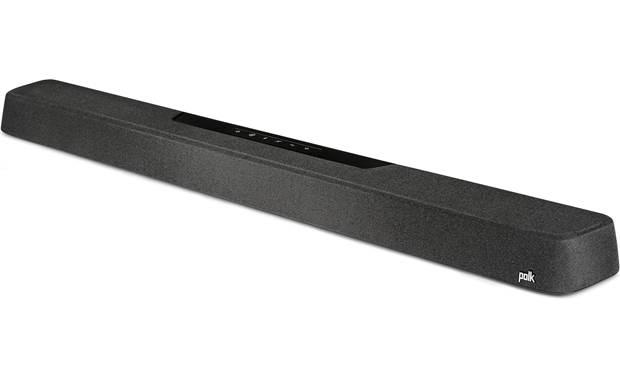
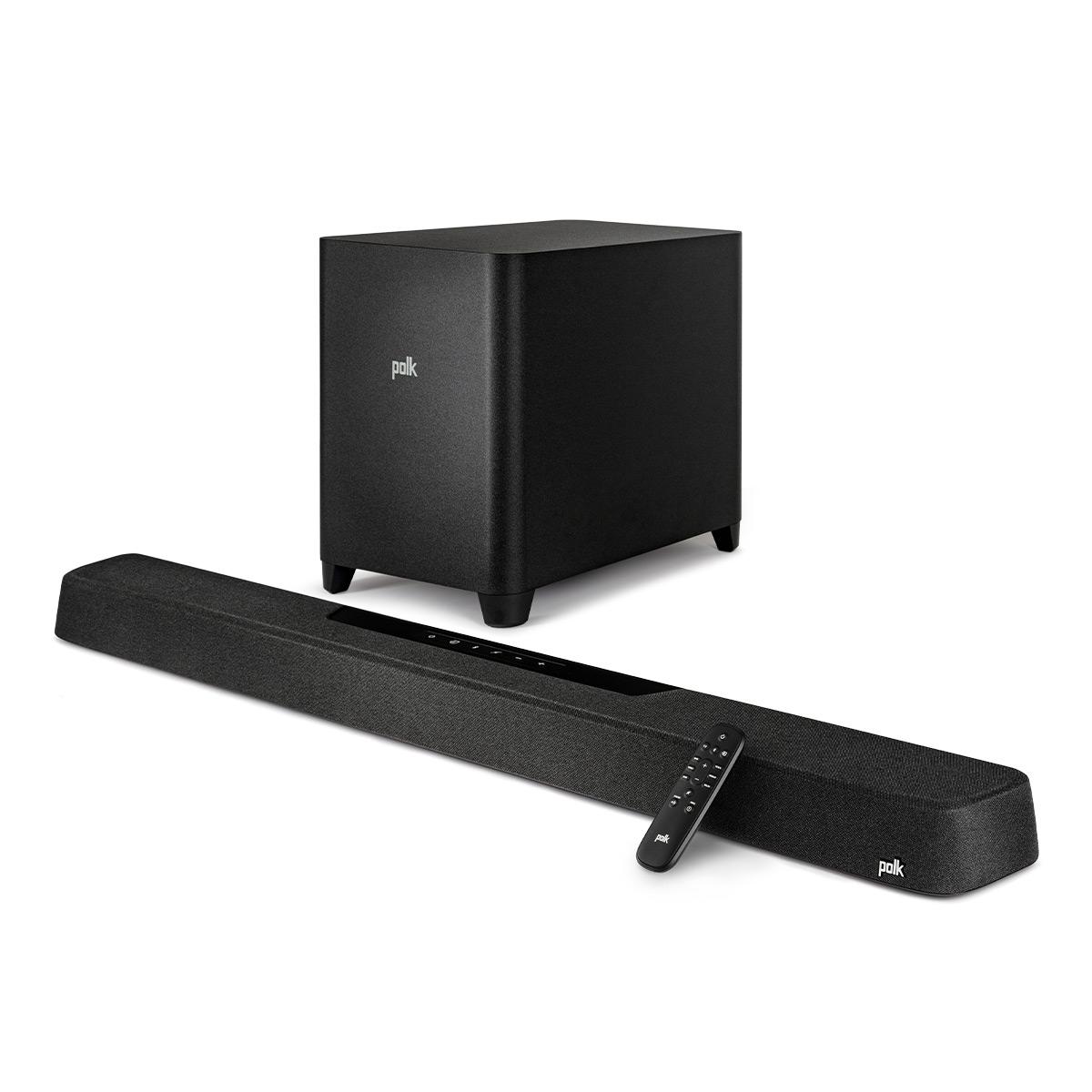
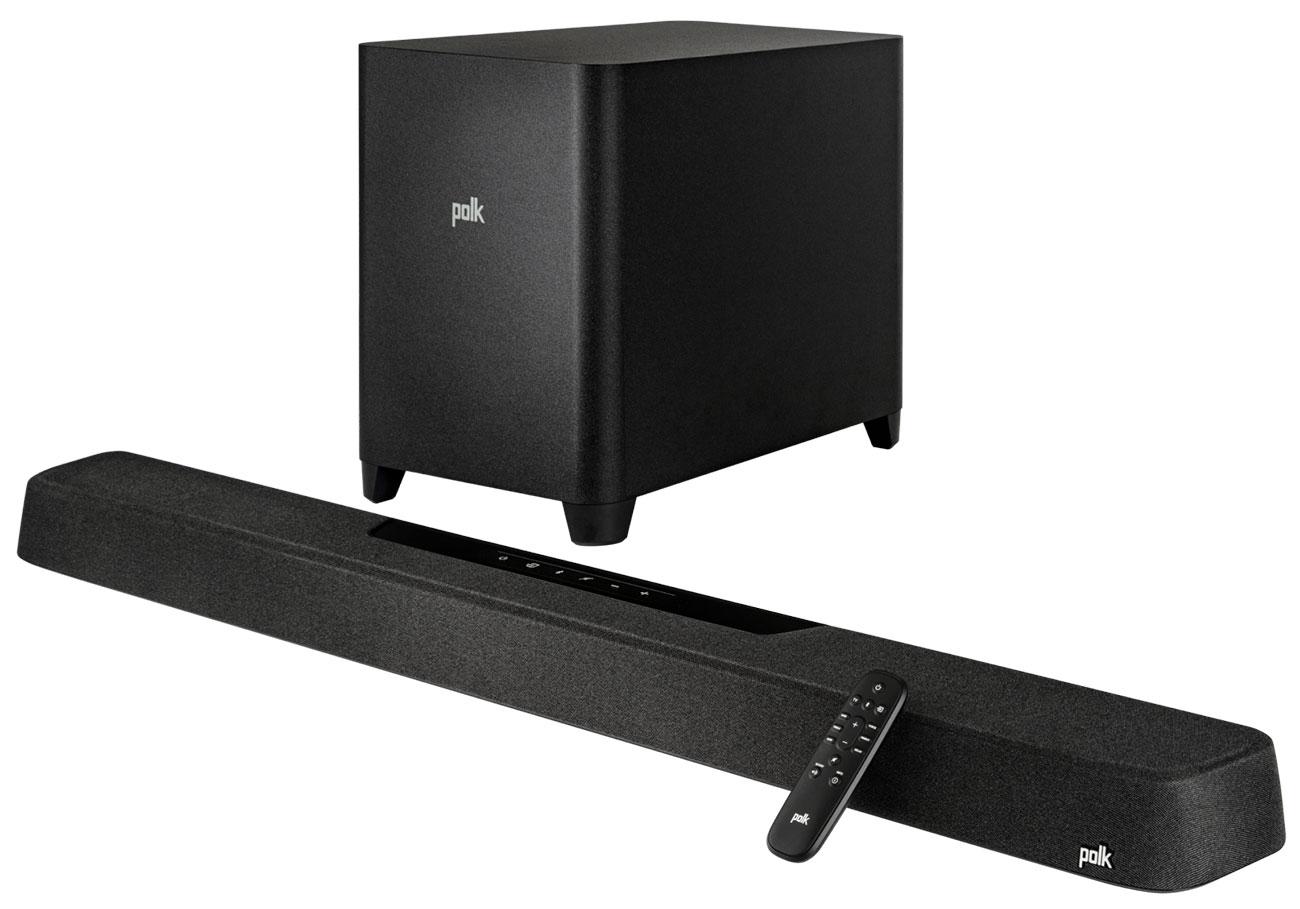
The Polk Audio MagniFi Max AX, released in 2022 as well, takes a dramatically different approach. At the time of writing, it costs significantly more than the Sonos Ray, but includes a wireless subwoofer and aims to deliver a complete home theater experience right out of the box.
The MagniFi Max AX features an 11-driver array designed to create genuine surround sound effects. Its 3.1.2 channel configuration includes dedicated left, center, and right channels for the main soundstage, plus two up-firing drivers that bounce sound off your ceiling to create height effects—crucial for Dolby Atmos content.
Dolby Atmos and DTS:X support represent the current pinnacle of home theater audio technology. Unlike traditional surround sound that sends audio to specific speaker locations, these object-based audio formats treat sounds as three-dimensional objects that can move freely through space. Imagine a helicopter flying overhead in a movie—with Dolby Atmos, you'll hear it actually pass above you rather than just coming from your left and right speakers.
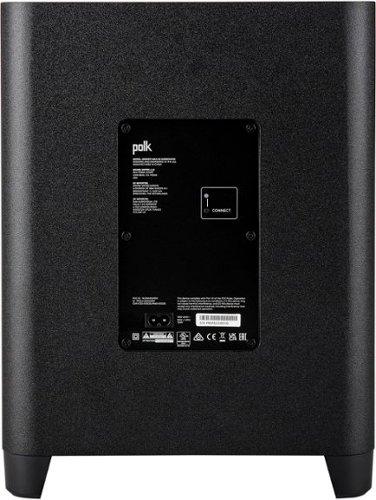
The included wireless subwoofer features a 10-inch down-firing driver that can reproduce frequencies as low as 35Hz—well into the range where you feel sound as much as hear it. This is crucial for action movies, where explosion effects and rumbling sound effects add visceral impact to the viewing experience.
Polk's Stereo Dimensional Array (SDA) technology is a proprietary feature that manipulates the phase relationships between left and right channels to create a wider, more enveloping soundstage. This psychoacoustic technique tricks your brain into perceiving a larger sound source than what's physically present.
In movie and TV content, the MagniFi Max AX delivers a significantly more immersive experience than any stereo soundbar can achieve. The dedicated center channel ensures dialogue remains clear and anchored to the screen, even during complex action sequences with lots of background noise and sound effects.
The system's VoiceAdjust technology goes beyond simple dialogue enhancement by allowing independent control of the center channel level. This means you can boost voice clarity without affecting music, sound effects, or ambient audio—particularly useful for movies with dense, layered soundtracks.
For sports viewing, the MagniFi Max AX excels at recreating the stadium atmosphere that makes live broadcasts engaging. Crowd noise envelops you from multiple directions, while commentary remains clearly focused in the center channel. The subwoofer adds weight to everything from the crack of a baseball bat to the impact of football tackles.
The MagniFi Max AX's HDMI eARC connectivity and multiple HDMI inputs make it particularly well-suited for gaming setups. Modern gaming consoles like the PlayStation 5 and Xbox Series X can output Dolby Atmos audio for supported games, creating three-dimensional soundscapes that enhance immersion and can even provide competitive advantages in multiplayer games where directional audio cues matter.
The HDMI 2.1 support ensures compatibility with the latest gaming features like Variable Refresh Rate (VRR) and Auto Low Latency Mode (ALLM), which automatically minimize input lag when gaming sources are detected. These features are becoming increasingly important as gaming technology advances.
For dedicated music listening, the Sonos Ray maintains clear advantages. Its stereo-focused design preserves the spatial relationships that mixing engineers create when producing albums. The soundstage—the perceived width and depth of the musical presentation—remains coherent and natural.
The MagniFi Max AX includes music-specific EQ presets and can switch to a pure stereo mode that bypasses surround sound processing, but it's fundamentally designed for multi-channel content. While it sounds good with music, especially bass-heavy genres that benefit from the dedicated subwoofer, it doesn't match the Ray's refinement and accuracy for critical music listening.
Both soundbars excel at dialogue clarity, but through different approaches. The Ray's Speech Enhancement mode works exceptionally well with stereo TV content, making voices sound natural while remaining clearly intelligible. However, when watching movies with complex surround sound mixes, the Ray must downmix everything to stereo, potentially losing spatial information and the director's intended audio presentation.
The MagniFi Max AX's dedicated center channel provides superior dialogue clarity in surround sound content because it isolates voices from other audio elements. During action scenes with explosions, musical score, and dialogue happening simultaneously, the center channel ensures you never miss important spoken information.
Room acoustics significantly impact both soundbars, but in different ways. The Sonos Ray works exceptionally well in smaller rooms where its compact size doesn't look out of place and its forward-firing drivers can reflect off walls to create a wider soundstage. In larger rooms, it may struggle to fill the space with adequate volume and bass response.
The MagniFi Max AX better suits larger rooms and open floor plans where its higher power output and dedicated subwoofer can properly energize the space. The surround sound effects also work more effectively when you have some distance from the soundbar, allowing the psychoacoustic tricks to create convincing directional audio.
At the time of writing, the price difference between these soundbars reflects their different target markets and included features. The Sonos Ray offers exceptional value for listeners who prioritize audio quality and don't need surround sound capabilities. When you factor in Sonos's track record of supporting products with software updates for many years, the long-term value proposition becomes even stronger.
The MagniFi Max AX costs significantly more but includes a wireless subwoofer that would cost hundreds of dollars separately from other manufacturers. If you were to build a comparable system using individual components, you'd likely spend considerably more than the MagniFi Max AX's asking price.
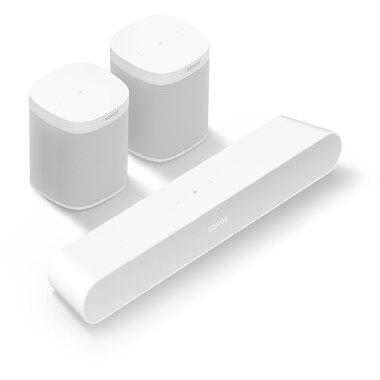
Consider the total cost of ownership when making your decision. The Ray works excellently on its own but can be expanded with a Sonos Sub and surround speakers for a full home theater experience—at considerable additional cost. The MagniFi Max AX provides most of its capabilities immediately, with optional wireless surround speakers available for even fuller surround sound.
After extensive testing and living with both systems, I can confidently recommend specific scenarios where each soundbar excels.
Choose the Sonos Ray if you:
Choose the Polk MagniFi Max AX if you:
The most important consideration is matching the soundbar to your primary use case. If you're a music lover who occasionally watches movies, the Ray's superior stereo performance will bring more daily enjoyment than surround sound features you rarely use. Conversely, if you're building a dedicated home theater setup and want the most cinematic experience possible, the MagniFi Max AX's comprehensive feature set justifies its higher price.
Both the Sonos Ray and Polk MagniFi Max AX represent excellent approaches to solving the TV audio problem, but they serve different audiences and priorities. The Ray proves that exceptional audio quality doesn't require a huge price tag or complex setup, while the MagniFi Max AX demonstrates how modern soundbar technology can recreate the theater experience at home.
Your decision should ultimately come down to how you plan to use your soundbar most often. For music-focused listening with occasional movie watching, the Ray's refined stereo performance and ecosystem potential provide outstanding value. For dedicated home theater use with modern gaming and streaming content, the MagniFi Max AX's comprehensive surround sound capabilities justify the investment.
Either choice will dramatically improve your TV audio experience compared to built-in speakers. The key is matching your selection to your room, your content preferences, and your long-term entertainment goals.
| Sonos Ray Soundbar | Polk Audio MagniFi Max AX 3.1.2 Soundbar |
|---|---|
| Channel Configuration - Determines surround sound capability | |
| 2.0 stereo (no dedicated center or height channels) | 3.1.2 with dedicated center channel and height drivers for Dolby Atmos |
| Audio Drivers - More drivers can mean better sound separation | |
| 4 drivers (2 midwoofers, 2 tweeters) in compact design | 11-driver array including up-firing speakers for height effects |
| Subwoofer - Essential for deep bass and movie impact | |
| Built-in bass drivers only (no separate subwoofer) | Wireless 10-inch subwoofer included |
| HDMI Connectivity - Critical for modern devices and advanced audio formats | |
| None (optical input only) | HDMI eARC plus 3 additional HDMI inputs with 4K passthrough |
| Dolby Atmos Support - Premium surround sound for movies and gaming | |
| Not supported (stereo-only processing) | Full Dolby Atmos and DTS:X support with dedicated height channels |
| Room Correction - Automatically optimizes sound for your space | |
| Trueplay (requires iOS device for setup) | No automated room correction available |
| Wireless Streaming - Important for music and multi-room audio | |
| Wi-Fi, AirPlay 2, Spotify Connect, Sonos ecosystem | Bluetooth 5.0, AirPlay 2, Chromecast, Spotify Connect |
| Size and Design - Consider TV stand space and room aesthetics | |
| Compact 22" wide, designed for tight spaces | Larger 43" wide soundbar plus separate wireless subwoofer |
| Voice Enhancement - Critical for clear dialogue in movies and TV | |
| Speech Enhancement mode for dialogue clarity | VoiceAdjust technology with independent center channel control |
| Multi-Room Capability - Expand to whole-home audio system | |
| Full Sonos ecosystem integration for seamless multi-room | Limited multi-room features, primarily single-room focused |
| Gaming Features - Important for console gamers | |
| Basic stereo audio via optical connection | HDMI 2.1 support with VRR passthrough and Dolby Atmos gaming |
| Warranty Coverage - Protection for your investment | |
| 1 year parts and labor | 3 years parts and labor |
The Sonos Ray is ideal for small rooms due to its compact 22-inch design that fits easily on TV stands or mounted close to walls. Its forward-firing drivers work well in tight spaces where sound can reflect naturally off nearby surfaces. The Polk Audio MagniFi Max AX is much larger at 43 inches wide plus a separate subwoofer, making it better suited for medium to large rooms.
Dolby Atmos creates overhead sound effects that make movies and games more immersive. The Polk Audio MagniFi Max AX supports full Dolby Atmos with dedicated height drivers, while the Sonos Ray only handles stereo audio. If you watch a lot of action movies or play modern games, Atmos adds noticeable immersion. For casual TV watching and music, stereo sound from the Sonos Ray is perfectly adequate.
Both excel at dialogue but through different methods. The Sonos Ray uses Speech Enhancement technology to boost vocal frequencies in stereo content. The Polk Audio MagniFi Max AX has a dedicated center channel that isolates dialogue from other sounds, plus VoiceAdjust technology for independent voice control. For movies with complex soundtracks, the Polk's center channel provides superior dialogue separation.
The Sonos Ray only has one optical input, so you can connect one device directly (usually your TV). The Polk Audio MagniFi Max AX offers HDMI eARC plus three additional HDMI inputs, letting you connect multiple sources like gaming consoles, streaming devices, and Blu-ray players directly to the soundbar.
The Sonos Ray is significantly better for music due to its refined stereo tuning and balanced frequency response. It integrates with the Sonos ecosystem for whole-home audio and supports high-quality streaming services. The Polk Audio MagniFi Max AX includes music presets and sounds good, but it's primarily designed for movies and TV rather than critical music listening.
Yes, both work with virtually any TV. The Sonos Ray connects via optical cable (included), which is found on nearly all modern TVs. The Polk Audio MagniFi Max AX connects via HDMI eARC for best performance, with optical as a backup option. Both include the necessary cables and work with your existing TV remote.
The Sonos Ray produces impressive bass for its compact size using advanced bass reflex design, but it can't match a dedicated subwoofer. The Polk Audio MagniFi Max AX includes a wireless 10-inch subwoofer that delivers deep, powerful bass essential for action movies and music with heavy low-end content.
The Sonos Ray can expand into a full Sonos ecosystem with the addition of a Sonos Sub and surround speakers, though this requires significant additional investment. The Polk Audio MagniFi Max AX can add optional SR2 wireless surround speakers to create a 7.1.2 system, but otherwise doesn't integrate with other audio systems.
The Sonos Ray has simpler physical setup with just one optical cable connection, but requires the Sonos app for initial configuration. The Polk Audio MagniFi Max AX involves connecting the soundbar, positioning the wireless subwoofer, and running HDMI cables, but works immediately without app setup. Both include clear instructions and take about 15-30 minutes to set up properly.
For casual gaming, the Sonos Ray provides good stereo audio with low latency via optical connection. The Polk Audio MagniFi Max AX is much better for serious gaming, offering HDMI 2.1 support for modern consoles, Dolby Atmos gaming audio, and multiple inputs for different gaming devices. It also supports advanced features like Variable Refresh Rate passthrough.
The Sonos Ray offers excellent value for its price point, with regular software updates that add features over time and strong build quality for longevity. The Polk Audio MagniFi Max AX costs more upfront but includes a subwoofer and complete surround sound system, plus offers a 3-year warranty compared to Sonos's 1-year coverage.
The fundamental difference is approach: the Sonos Ray focuses on delivering exceptional stereo audio quality in a compact, affordable package with ecosystem integration. The Polk Audio MagniFi Max AX provides a complete home theater experience with surround sound, Dolby Atmos, and a subwoofer. Choose the Ray for music and simple TV audio; choose the Polk for movies, gaming, and immersive surround sound.
We've done our best to create useful and informative comparisons to help you decide what product to buy. Our research uses advanced automated methods to create this comparison and perfection is not possible - please contact us for corrections or questions. These are the sites we've researched in the creation of this article: tomsguide.com - soundandvision.com - youtube.com - techradar.com - en.community.sonos.com - rtings.com - howtogeek.com - youtube.com - cnet.com - sonos.com - videoandaudiocenter.com - youtube.com - avsforum.com - rtings.com - rtings.com - bestbuy.com - walts.com - hometechnologyreview.com - polkaudio.com - pcrichard.com

Privacy Policy
Terms and Conditions - Affiliate Policy
Home Security
© Copyright 2008-2026.
11816 Inwood Rd #1211, Dallas, TX 75244