






When your TV's built-in speakers sound like they're trapped inside a tin can, it's time to consider a soundbar upgrade. But the soundbar world has evolved dramatically over the past few years, creating two distinct camps: minimalist stereo bars focused on clarity and convenience, and full-featured systems that bring cinema-quality surround sound to your living room.
Today we're comparing two soundbars that perfectly represent these different philosophies: the Sonos Ray and the Sony BRAVIA Theater Bar 6. Released in 2022, these products showcase how soundbar technology has matured, offering compelling but very different solutions to the same problem.
Before diving into specifics, it's worth understanding what makes soundbars tick in 2024. The category has exploded from simple stereo upgrades to sophisticated audio systems that can rival traditional home theater setups.
Channel configuration is the first thing to understand. When you see numbers like "2.0" or "3.1.2," they're describing the speaker layout. The first number represents main channels (left, center, right), the second is subwoofers, and the third indicates height channels for overhead effects. The Sonos Ray uses a 2.0 setup (stereo only), while the Sony BRAVIA Theater Bar 6 employs a 3.1.2 configuration with dedicated center, subwoofer, and height channels.
Audio formats have also evolved significantly. Basic soundbars handle standard TV audio, but premium models support Dolby Atmos and DTS:X – these are "object-based" surround formats that can place sounds anywhere in a three-dimensional space around you, including overhead. Think of the difference between a flat painting and a sculpture – traditional surround sound is the painting, while Atmos is the sculpture.
The key considerations when shopping remain consistent: How much better will this sound than my TV? Will it fit my space? Can it handle the content I watch? And crucially – is the performance improvement worth the price difference?
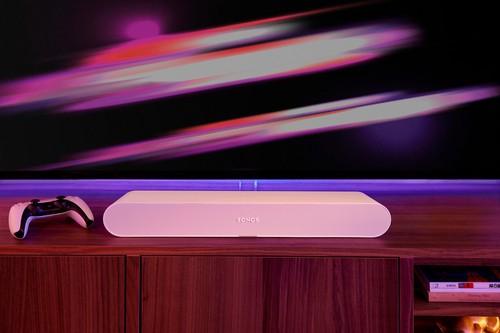
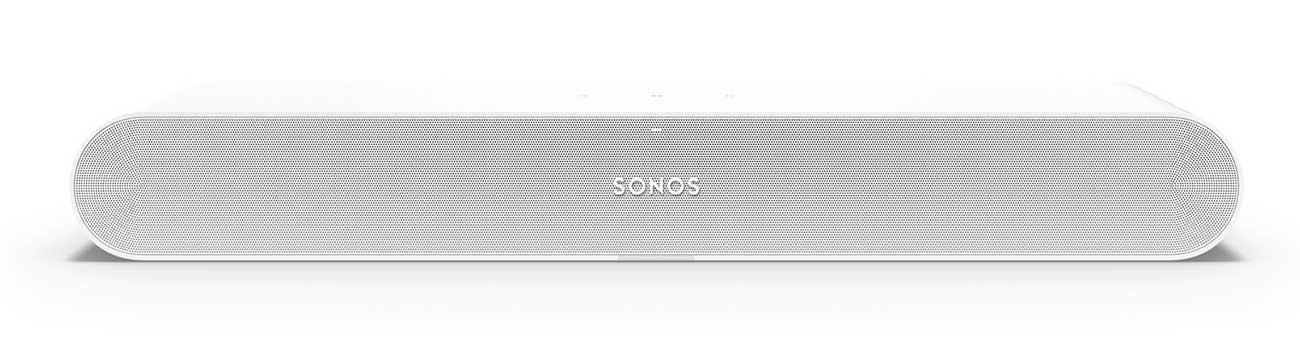
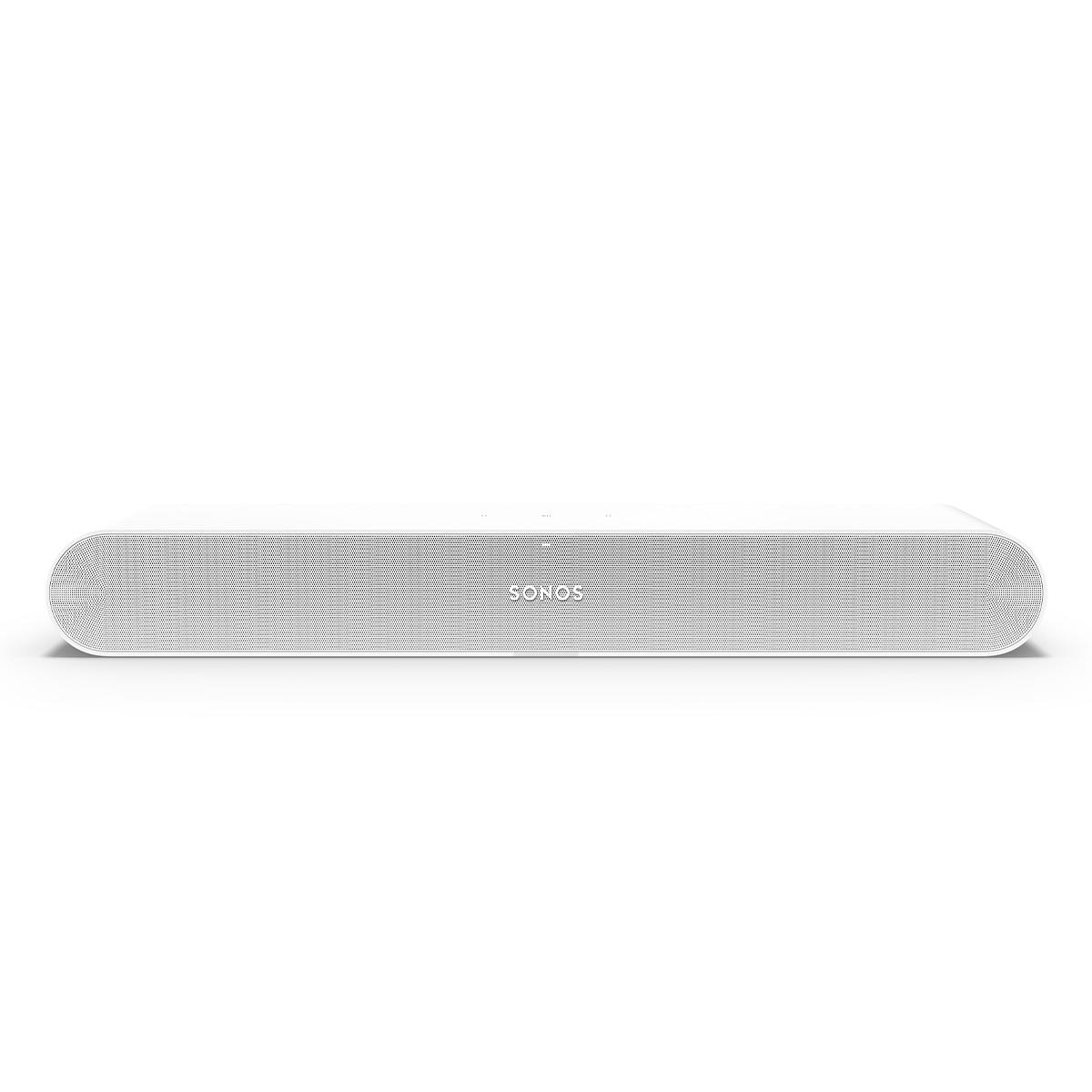
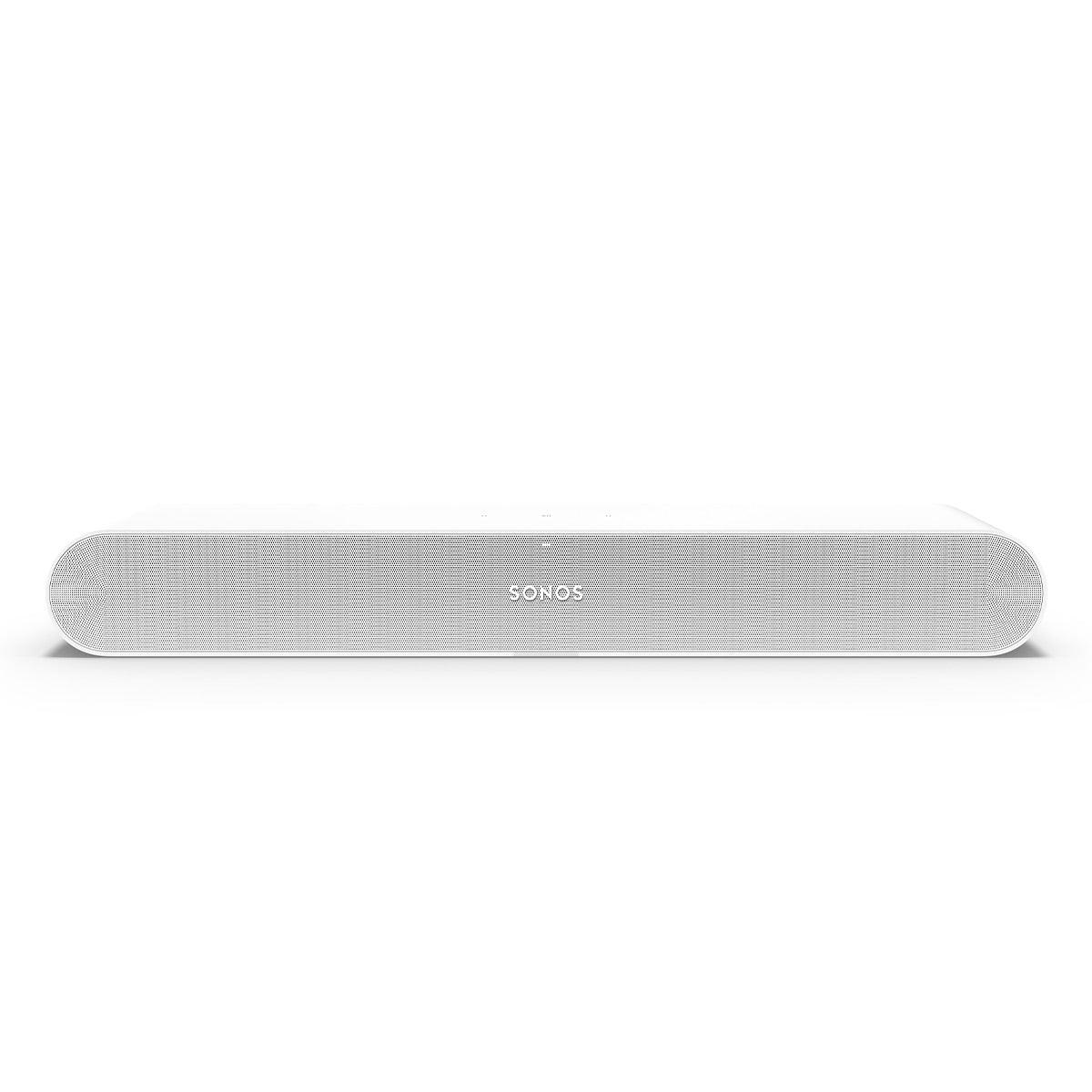
The Sonos Ray represents Sonos's entry into affordable soundbars, arriving in May 2022 as their most compact and budget-friendly option. At roughly half the cost of Sony's offering (at time of writing), it takes a decidedly minimalist approach that prioritizes what matters most for everyday TV watching.
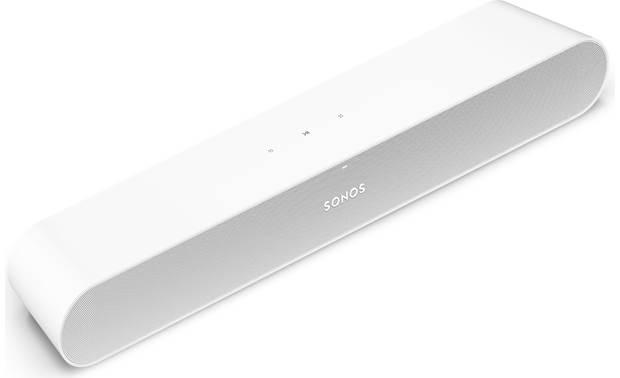
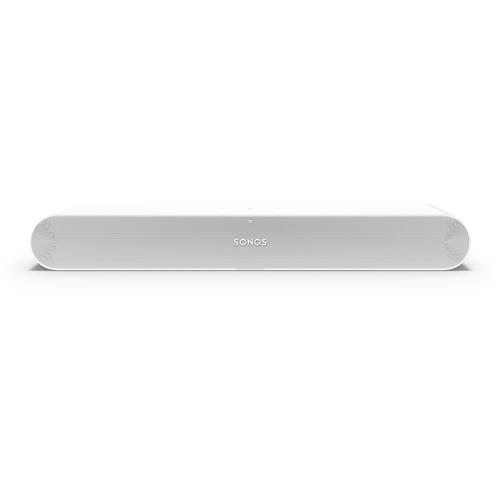
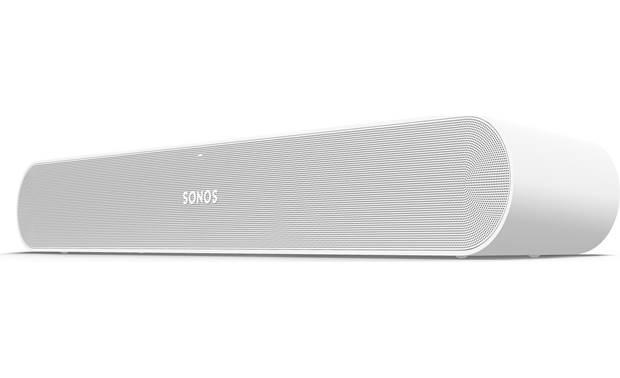
Physical Design and Placement Measuring just 22 inches wide and under 3 inches tall, the Sonos Ray practically disappears beneath your TV. This isn't just about aesthetics – the compact size means it fits in TV stands where larger bars simply won't. I've found this particularly valuable in bedrooms or secondary viewing areas where space is premium.
The Ray's acoustic architecture uses two tweeters (for high frequencies) and two high-efficiency midwoofers (for mid and low frequencies) in a carefully tuned enclosure. Sonos employs X-balanced drivers – rectangular rather than circular speakers that maximize surface area within the limited space. This engineering allows the Ray to move more air and produce cleaner sound than you'd expect from such a small package.
Connectivity: Simple but Limited Here's where the Sonos Ray's minimalist philosophy becomes apparent. You get one optical digital input – that's it. No HDMI, no Bluetooth for phone connections. This might seem limiting, but it forces simplicity. Connect the optical cable from your TV, and you're done. The Ray handles whatever your TV sends it, including Dolby Digital and DTS formats, though it downmixes everything to stereo since there's no center channel or surround speakers.
This approach works because modern TVs are excellent content hubs. Your streaming services, cable box, and gaming console all connect to the TV, and the TV sends audio to the soundbar. The limitation comes with format support – you won't get the full impact of Dolby Atmos content since the Ray simply can't reproduce those height effects.
Smart Features and Ecosystem Integration Where the Sonos Ray truly shines is its software intelligence. Trueplay tuning uses your iPhone's microphone to measure your room's acoustics and automatically adjust the sound accordingly. This isn't just marketing fluff – room acoustics dramatically affect sound quality, and having automatic correction can make the difference between muddy and clear audio.
The Ray integrates seamlessly into the Sonos ecosystem, supporting AirPlay 2, Spotify Connect, and direct streaming from dozens of music services. If you're building a multi-room audio system, this connectivity is invaluable. The Sonos app provides sophisticated control, letting you group speakers, adjust EQ, and manage everything from your phone.
Audio Performance: Exceeding Expectations For dialogue clarity, the Sonos Ray punches well above its weight class. Voices come through clean and intelligible, thanks partly to Sonos's Clear Voice processing and partly to careful frequency tuning. The built-in Dialog Enhancement mode specifically boosts voice frequencies when you're struggling with mumbly actors or competing sound effects.
Bass response is the Ray's biggest limitation – physics simply won't allow deep bass from small drivers in a compact enclosure. However, Sonos's engineers have done impressive work here. The Ray produces what I'd call "musical bass" – enough low-end punch to make music enjoyable and give action scenes some weight, but not the room-shaking impact you get from dedicated subwoofers.
The soundstage (how wide the audio feels) benefits from Sonos's split waveguide technology. Rather than pointing all speakers straight forward, the Ray uses specially shaped acoustic channels to spread sound wider than the physical bar. In smaller rooms, this creates a surprisingly expansive presentation.
Released in 2022 as part of Sony's renewed focus on home theater audio, the Sony BRAVIA Theater Bar 6 represents a completely different philosophy. While significantly more expensive than the Ray (roughly double the cost at time of writing), it includes a wireless subwoofer and support for modern surround formats.
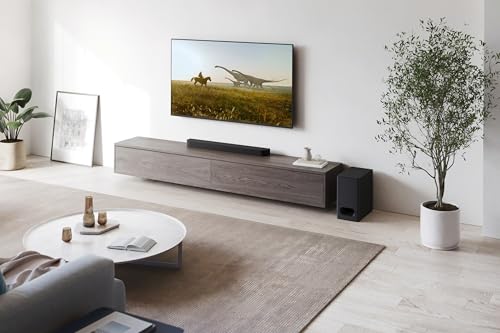
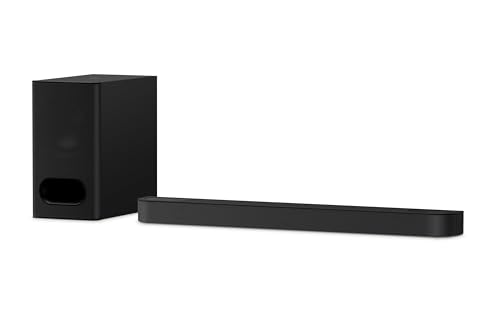
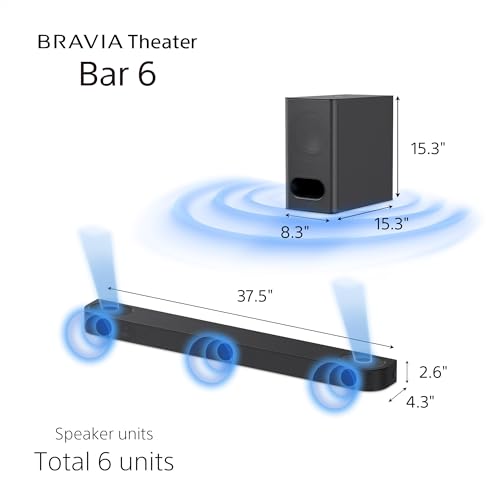
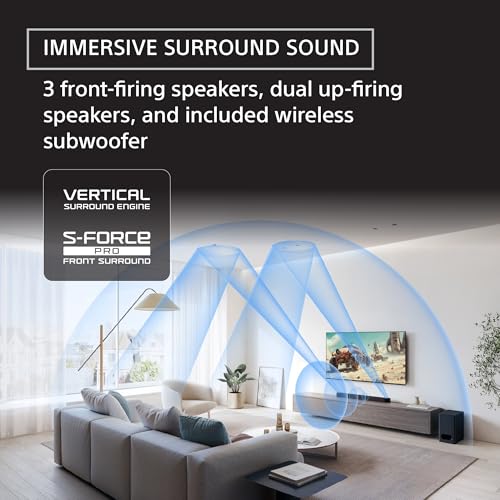
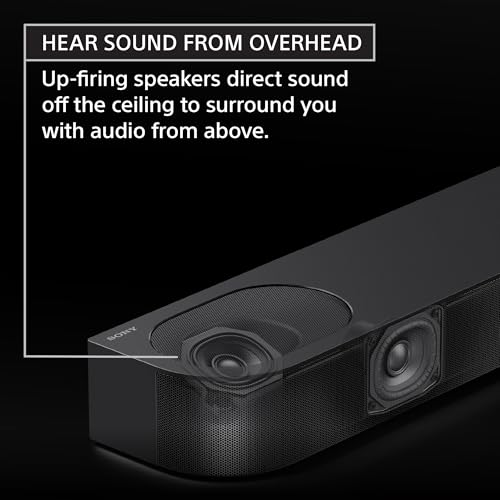
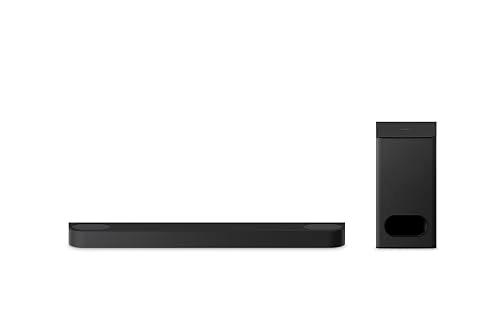
System Architecture and Design The Sony BRAVIA Theater Bar 6's 3.1.2 configuration immediately signals serious intent. You get three front-facing speakers (left, center, right), two up-firing speakers for height effects, and a separate wireless subwoofer. This is a proper surround sound system, not just a TV speaker upgrade.
The main bar houses Sony's X-Balanced drivers – similar to Sonos's rectangular approach but implemented differently. Sony focuses on maximizing driver surface area to improve both power handling and clarity. The two up-firing speakers use the same technology, bouncing sound off your ceiling to create the illusion of overhead effects for Dolby Atmos content.
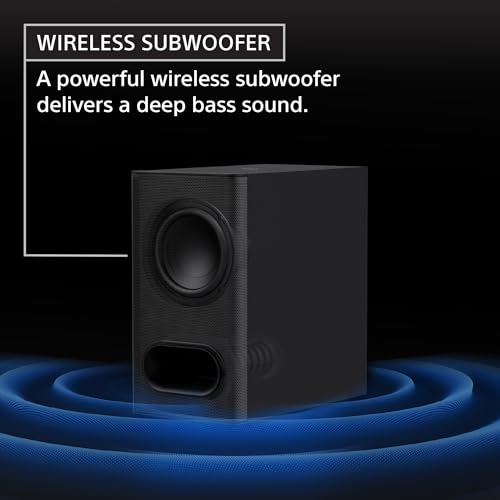
The wireless subwoofer deserves special mention. With a 6-inch driver in a ported enclosure, it's designed to reach down to 20Hz – the threshold of human hearing. This isn't just about loud bass; it's about reproducing the full frequency spectrum that makes movie soundtracks feel realistic.
Advanced Format Support Here's where the Sony BRAVIA Theater Bar 6 flexes its technical muscles. Full Dolby Atmos and DTS:X support means compatible content can place sounds anywhere in three-dimensional space around you. When a helicopter flies overhead in a movie, you'll hear it move from front to back and up into the height channels – something the Sonos Ray simply cannot reproduce.
Sony's S-Force PRO Front Surround technology virtualizes rear surround effects when you don't have physical rear speakers. It's not as convincing as real surround speakers, but it's remarkably effective at widening the soundstage and creating immersion beyond what traditional stereo can achieve.
The Vertical Surround Engine specifically handles height channel processing, using psychoacoustic tricks (how your brain interprets sound) to enhance the overhead effect from the up-firing drivers. This works best with flat, reflective ceilings – vaulted or textured ceilings can diminish the effect.
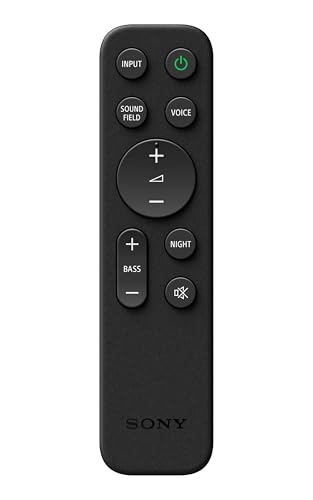
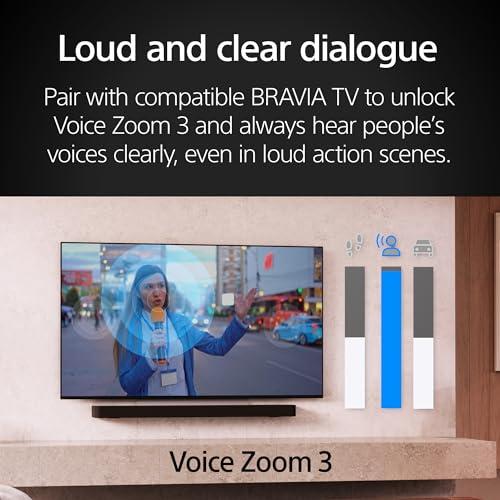
BRAVIA TV Integration Sony's ecosystem integration deserves mention, especially if you own or plan to buy a Sony TV. BRAVIA SYNC allows the TV remote to control soundbar functions seamlessly. More impressively, Voice Zoom 3.0 combines the TV's built-in speakers with the soundbar's center channel to create enhanced dialogue clarity – essentially turning your TV into an additional center speaker.
The BRAVIA Connect app provides system setup and sound customization, though it's not as sophisticated as Sonos's offering. You can manually adjust bass, treble, and height levels, plus access various sound modes optimized for different content types.
Audio Performance: Where Physics Matters The performance difference between these systems becomes immediately apparent with bass-heavy content. The Sony BRAVIA Theater Bar 6's subwoofer delivers genuine room-filling low frequencies that you feel as much as hear. Action movies, music with deep bass lines, and gaming all benefit enormously from this extended frequency response.
However, the default subwoofer level tends toward excessive – most users find dialing it back 3-4 steps creates better balance with the main speakers. This powerful bass can overwhelm dialogue and midrange detail if not properly calibrated.
For surround content, the height channels create convincing overhead effects when the source material supports it. Netflix, Amazon Prime, and most Blu-rays now include Dolby Atmos tracks, and the difference is immediately noticeable with properly mixed content. Rain sounds like it's falling around you, aircraft move convincingly through space, and ambient effects create genuine immersion.
The dedicated center channel provides focused dialogue reproduction that stereo systems can't match. Voices stay anchored to the screen center even when you're sitting off-axis, and the physical center speaker generally provides better clarity than phantom center imaging used by stereo systems.
Bass Response and Impact This represents the most significant difference between these systems. Bass isn't just about loudness – it's about reproducing the full frequency spectrum that makes content feel realistic and impactful.
The Sonos Ray reaches down to approximately 80Hz effectively, which covers most dialogue and midrange content but misses the deep fundamentals that give music and movies their weight. This limitation becomes apparent with action scenes, electronic music, or any content mixed to take advantage of deep bass extension.
The Sony BRAVIA Theater Bar 6's subwoofer extends to 20Hz – the threshold of human hearing. This means every frequency in most source material gets reproduced. The difference is immediately apparent: explosions have genuine impact, music has proper foundation, and the overall presentation feels more complete and realistic.
Dialogue Clarity: The Make-or-Break Factor Both systems excel here but through different approaches. The Sonos Ray uses careful frequency shaping and processing to ensure voices cut through the mix. Its stereo presentation creates a wide phantom center image that works well for most listening positions.
The Sony BRAVIA Theater Bar 6's dedicated center channel provides more precise dialogue localization and generally better off-axis performance. If you regularly watch with multiple people or from different seating positions, the dedicated center channel offers advantages.
Both systems include dialogue enhancement modes, but I've found the Sony's implementation more effective for challenging content like mumbling actors or heavily mixed action sequences.
Surround Immersion: The Cinema Experience This is where format support becomes crucial. The Sonos Ray downmixes all surround content to stereo, which means you lose the spatial information that makes content immersive. It sounds good, but it sounds like stereo.
The Sony BRAVIA Theater Bar 6 preserves and enhances spatial information through its height channels and surround processing. With properly mixed Dolby Atmos content, the difference is transformative – you're no longer listening to a soundtrack, you're inside the scene.
However, this advantage only appears with compatible content. Traditional stereo sources won't benefit from the Sony's additional channels, making the format support difference irrelevant for older content or basic TV programming.
Small Rooms and Apartments The Sonos Ray excels in compact spaces where a larger system might overwhelm the room acoustics. Its balanced frequency response works well in near-field listening situations, and the compact footprint fits easily in small entertainment centers.
For apartments with noise considerations, the Ray's more modest bass output can be advantageous – you get significant audio improvement without disturbing neighbors.
Medium to Large Rooms The Sony BRAVIA Theater Bar 6 becomes necessary as room size increases. Larger spaces require more acoustic energy to fill properly, and the Sony's additional speakers and subwoofer provide the necessary output and frequency extension.
The height channels also work better in larger rooms where there's sufficient distance for ceiling reflections to develop properly.
Ceiling Considerations The Sony's up-firing speakers work best with flat, reflective ceilings 8-14 feet high. Vaulted, textured, or very high ceilings can diminish the height effect significantly. If your room has challenging ceiling acoustics, this advantage may not materialize as expected.
Music Performance The Sonos Ray was clearly tuned with music in mind. Its balanced frequency response, wide soundstage, and streaming service integration make it excellent for casual music listening. The lack of deep bass is less problematic with most popular music, and the overall presentation is musical and engaging.
The Sony BRAVIA Theater Bar 6 can sound overly bass-heavy with music unless you dial back the subwoofer. It's certainly capable of good music reproduction, but it requires more adjustment to achieve balance.
Movie and TV Content For cinema content, the Sony BRAVIA Theater Bar 6 provides a significantly more immersive and impactful experience. The combination of deep bass, height effects, and surround processing creates genuine home theater atmosphere that the Sonos Ray cannot match.
The Ray still provides excellent dialogue clarity and better sound than TV speakers, but it's fundamentally a stereo upgrade rather than a home theater transformation.
At time of writing, the Sonos Ray costs roughly half as much as the Sony BRAVIA Theater Bar 6, making the value equation interesting. You're not just comparing soundbars – you're comparing philosophies.
The Ray delivers exceptional value for its intended use case: compact TV audio upgrade with smart features and music streaming integration. If you primarily watch dialogue-heavy content, listen to music, and want simple setup, the performance-per-dollar is excellent.
The Sony system costs significantly more but includes a wireless subwoofer that would cost $200-400 separately, plus genuine Dolby Atmos capability that's becoming standard in premium content. If you watch action movies, play games, or want full home theater immersion, the additional cost is justified by substantially greater capability.
Choose the Sonos Ray if:
Choose the Sony BRAVIA Theater Bar 6 if:
The fundamental decision comes down to scope and ambition. The Sonos Ray is an excellent TV speaker replacement that happens to be smart and compact. The Sony BRAVIA Theater Bar 6 is a complete home theater system disguised as a soundbar.
Both succeed brilliantly at their intended purposes – just make sure you're choosing the right purpose for your needs.
| Sonos Ray | Sony BRAVIA Theater Bar 6 |
|---|---|
| Channel Configuration - Determines surround sound capability | |
| 2.0 stereo (no center channel or subwoofer) | 3.1.2 with dedicated center, wireless subwoofer, and height channels |
| Dolby Atmos Support - Essential for modern movie immersion | |
| No Dolby Atmos support (downmixes to stereo) | Full Dolby Atmos and DTS:X with up-firing speakers |
| Bass Extension - Critical for action movies and music impact | |
| Built-in drivers only, limited low-end extension | Dedicated 6-inch wireless subwoofer reaches 20Hz |
| Physical Size - Important for space-constrained setups | |
| Ultra-compact: 22" W x 2.8" H x 3.75" D, 4.29 lbs | Larger bar plus separate subwoofer placement required |
| Connectivity Options - Affects compatibility and setup flexibility | |
| Optical input only, no HDMI or Bluetooth | HDMI eARC/ARC, optical, Bluetooth streaming |
| Smart Features - Streaming and ecosystem integration | |
| Extensive: AirPlay 2, Spotify Connect, Trueplay tuning, multiroom | Basic: Bluetooth streaming, BRAVIA Connect app |
| Dialogue Clarity Technology - Key for TV watching experience | |
| Dialog Enhancement mode, balanced midrange tuning | Dedicated center channel, Clear Voice algorithms, Voice Zoom 3.0 |
| Room Correction - Optimizes sound for your space | |
| Trueplay automatic tuning using iPhone microphone | Manual setup only, no automatic room correction |
| Total System Power - Affects maximum volume and dynamics | |
| Not specified (compact drivers limit output) | 350W total system output |
| Best Room Size - Where each system performs optimally | |
| Small to medium rooms, ideal for compact spaces | Medium to large rooms with ceiling height 8-14 feet |
| Primary Strengths - What each does exceptionally well | |
| Compact design, music streaming, dialogue clarity, value | Home theater immersion, deep bass, height effects, surround sound |
The Sonos Ray is ideal for small rooms due to its ultra-compact 22-inch width and balanced audio tuning that won't overwhelm tight spaces. Its smaller drivers and lack of subwoofer prevent bass buildup that can make small rooms sound muddy. The Sony BRAVIA Theater Bar 6 may produce too much bass for compact spaces without proper adjustment.
Yes, the Sony BRAVIA Theater Bar 6 fully supports Dolby Atmos and DTS:X with dedicated up-firing speakers that bounce sound off your ceiling for height effects. The Sonos Ray does not support Dolby Atmos and downmixes all surround content to stereo, limiting its home theater capabilities.
The Sony BRAVIA Theater Bar 6 has significantly better bass thanks to its included wireless 6-inch subwoofer that extends down to 20Hz. The Sonos Ray relies only on built-in drivers with limited low-frequency extension, making it unsuitable for bass-heavy movies or music.
The Sonos Ray offers extensive wireless streaming with AirPlay 2, Spotify Connect, and integration with the Sonos ecosystem for multiroom audio. The Sony BRAVIA Theater Bar 6 only supports basic Bluetooth streaming from phones and tablets, with no Wi-Fi connectivity or advanced streaming features.
The Sonos Ray is simpler to set up with just one optical cable connection and automatic Trueplay room tuning via iPhone. The Sony BRAVIA Theater Bar 6 requires placement of both the main bar and wireless subwoofer, plus manual room calibration through the BRAVIA Connect app.
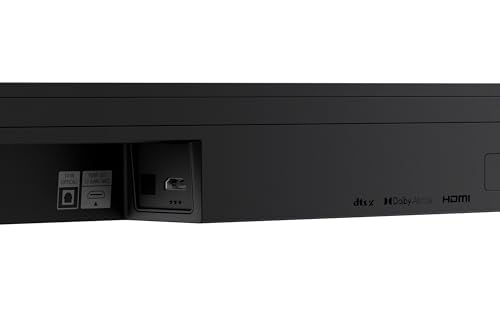
The Sonos Ray only has optical input and no HDMI connectivity, which limits format support but simplifies connections. The Sony BRAVIA Theater Bar 6 includes HDMI eARC/ARC for higher quality audio formats and better TV integration, especially with Sony BRAVIA TVs.
Both excel at dialogue but through different approaches. The Sonos Ray uses Dialog Enhancement mode and careful frequency tuning for clear voices. The Sony BRAVIA Theater Bar 6 has a dedicated center channel speaker that provides more precise dialogue localization, especially beneficial for off-center seating.
Yes, both the Sonos Ray and Sony BRAVIA Theater Bar 6 work with any TV that has optical or HDMI outputs. However, the Sony model offers enhanced features like Voice Zoom 3.0 when paired specifically with Sony BRAVIA televisions.
The Sony BRAVIA Theater Bar 6 is superior for home theater use with its 3.1.2 channel configuration, Dolby Atmos support, powerful subwoofer, and height channels that create immersive surround sound. The Sonos Ray provides good TV audio improvement but cannot match the cinematic experience of the Sony system.
The Sonos Ray has a minimal footprint at just 22 inches wide and fits easily in TV stands or wall-mounted setups. The Sony BRAVIA Theater Bar 6 requires space for both the main soundbar and a separate wireless subwoofer, making it less suitable for very tight spaces.
The Sonos Ray offers excellent value for users wanting compact TV audio improvement with smart streaming features. The Sony BRAVIA Theater Bar 6 costs significantly more but includes a wireless subwoofer and genuine home theater capabilities that justify the higher price for serious movie watchers.
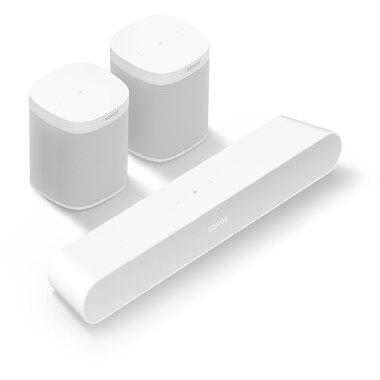
The Sonos Ray can be expanded with the optional Sub Mini for deeper bass and integrated into a larger Sonos multiroom system. The Sony BRAVIA Theater Bar 6 supports optional wireless rear speakers for full 5.1.2 surround sound but doesn't offer multiroom audio capabilities like the Sonos ecosystem.
We've done our best to create useful and informative comparisons to help you decide what product to buy. Our research uses advanced automated methods to create this comparison and perfection is not possible - please contact us for corrections or questions. These are the sites we've researched in the creation of this article: tomsguide.com - soundandvision.com - youtube.com - techradar.com - en.community.sonos.com - rtings.com - howtogeek.com - youtube.com - cnet.com - sonos.com - videoandaudiocenter.com - rtings.com - bestbuy.com - whathifi.com - youtube.com - youtube.com - sony.com - galaxus.at - helpguide.sony.net - audioadvice.com - electronics.sony.com - youtube.com - youtube.com - electronics.sony.com - helpguide.sony.net - whatgear.net - consumerreports.org

Privacy Policy
Terms and Conditions - Affiliate Policy
Home Security
© Copyright 2008-2026.
11816 Inwood Rd #1211, Dallas, TX 75244