





















When I first experienced Dolby Atmos audio in a movie theater, the overhead helicopter sounds in Mad Max: Fury Road completely changed how I thought about home audio. That three-dimensional sound experience—where audio seems to come from above, around, and through you—was something I desperately wanted to recreate at home. Today's Dolby Atmos soundbars promise to deliver that immersive experience without the complexity of installing ceiling speakers or running wires throughout your room.
However, not all Dolby Atmos soundbars take the same approach. Some manufacturers bundle everything you need into one purchase, while others focus on creating a premium foundation that you can expand over time. This fundamental difference in philosophy creates two distinct paths for consumers, each with compelling advantages depending on your priorities and budget.
Dolby Atmos represents a revolutionary leap from traditional surround sound. Instead of limiting audio to specific channels like "front left" or "rear right," Atmos treats sounds as objects that can be precisely positioned anywhere in a three-dimensional space around the listener. This object-based audio system means a helicopter can smoothly travel overhead, rain can fall from above, or a character's voice can seem to come from exactly where they appear on screen.
Traditional soundbars create this height dimension using upward-firing drivers—specialized speakers that point toward the ceiling and bounce sound off it to create the illusion of overhead audio. This technique, called "height virtualization," works surprisingly well when your room has the right acoustics. The key factors that matter most in any Dolby Atmos soundbar are how effectively these upward-firing drivers create height effects, how well the system handles channel separation (keeping different audio elements distinct), and whether the overall sound signature enhances both movies and music.
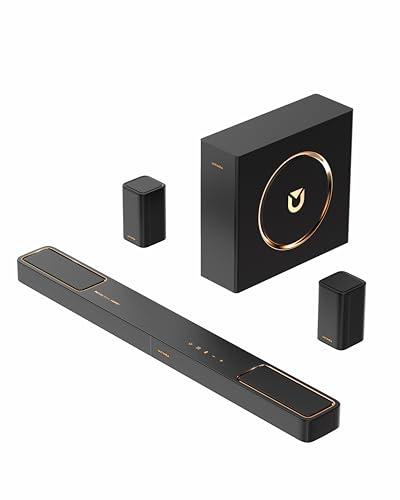
The Ultimea Skywave F40 and Sonos Arc represent fundamentally different approaches to home theater audio. Released in 2024, the Ultimea Skywave F40 follows what I call the "complete system" philosophy—everything you need comes in one box. The Sonos Arc, launched in 2020, exemplifies the "premium foundation" approach where you start with a sophisticated soundbar and expand it over time.
These different philosophies create vastly different user experiences. The Ultimea F40 gives you authentic 5.1.2 channel surround sound immediately, with physical speakers placed around your room creating genuine directional audio. The Sonos Arc uses advanced digital processing to simulate that surround experience from a single soundbar, relying on psychoacoustics—essentially tricking your brain into perceiving sounds coming from locations where there are no actual speakers.
Both approaches work, but they excel in different scenarios and serve different types of users.
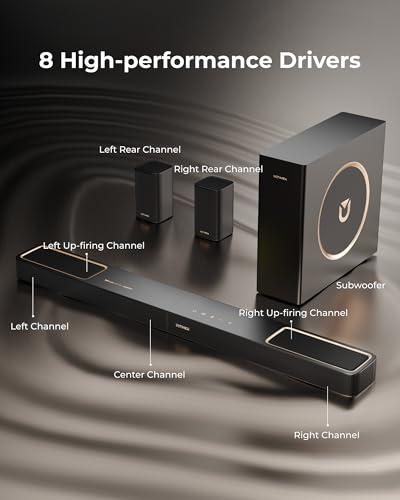
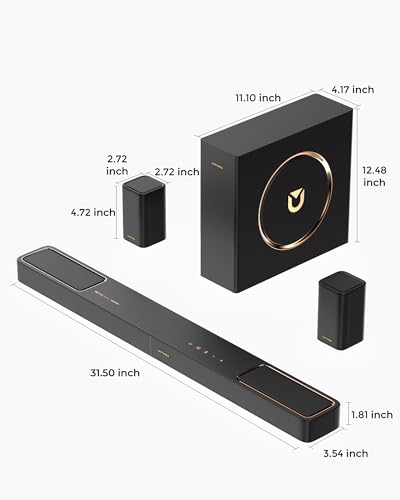
The Ultimea Skywave F40 delivers true 5.1.2 channel audio through eight physical speakers: the main soundbar handles front channels and height effects, two wireless rear speakers create authentic surround sound, and a dedicated subwoofer provides deep bass. With 460 watts of total system power distributed across these components, it can generate impressive sound pressure levels—important for creating that visceral home theater experience where you feel explosions and dramatic musical crescendos.
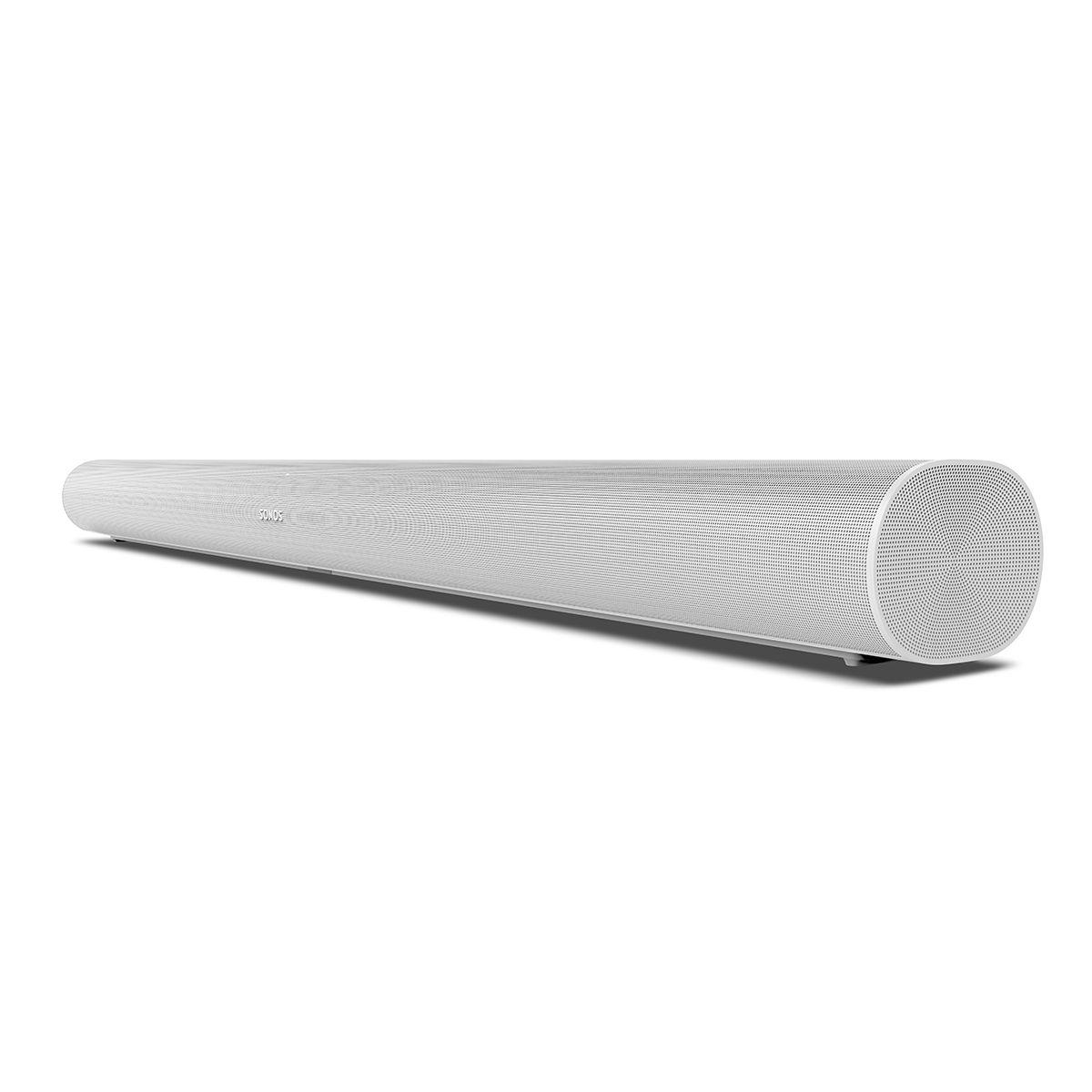
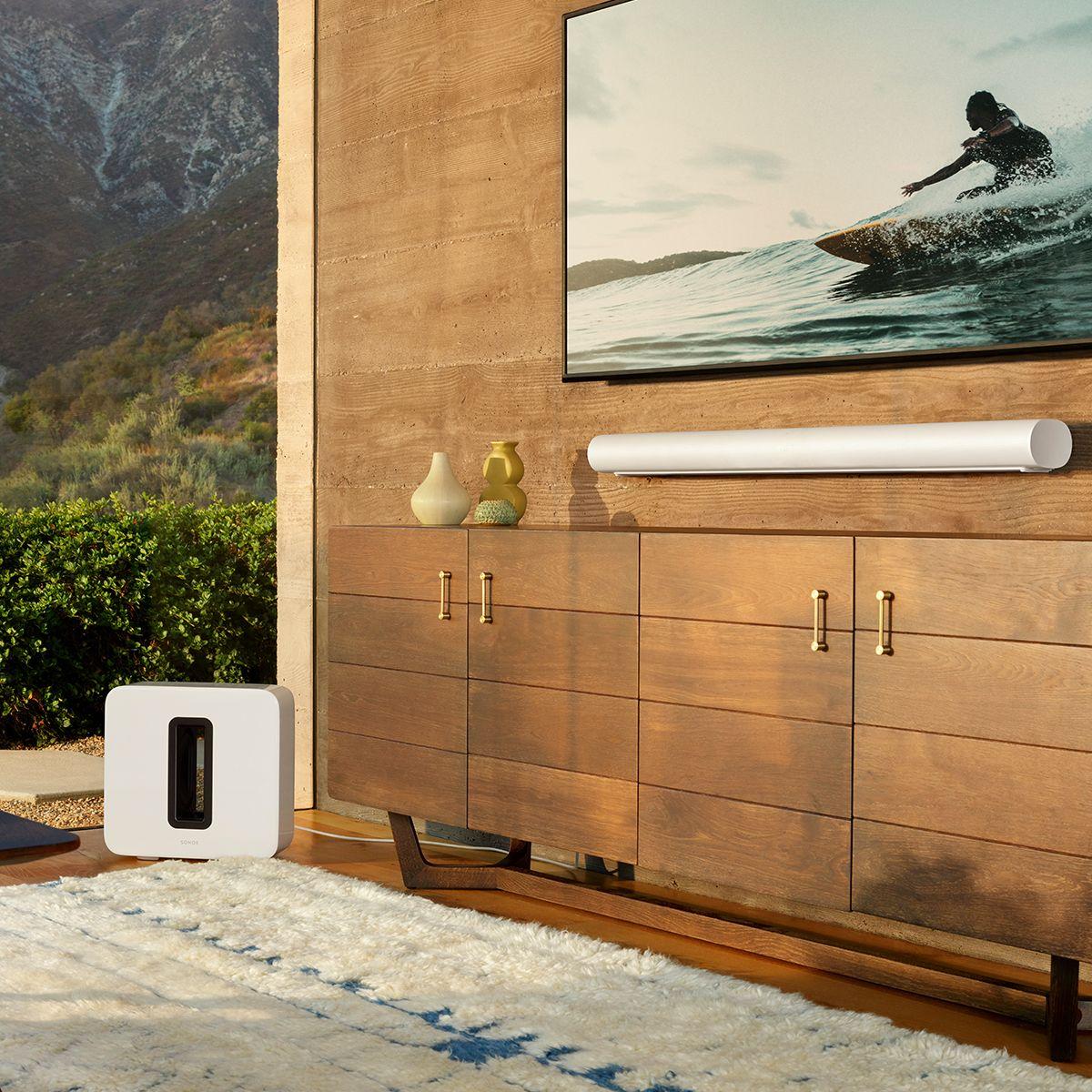
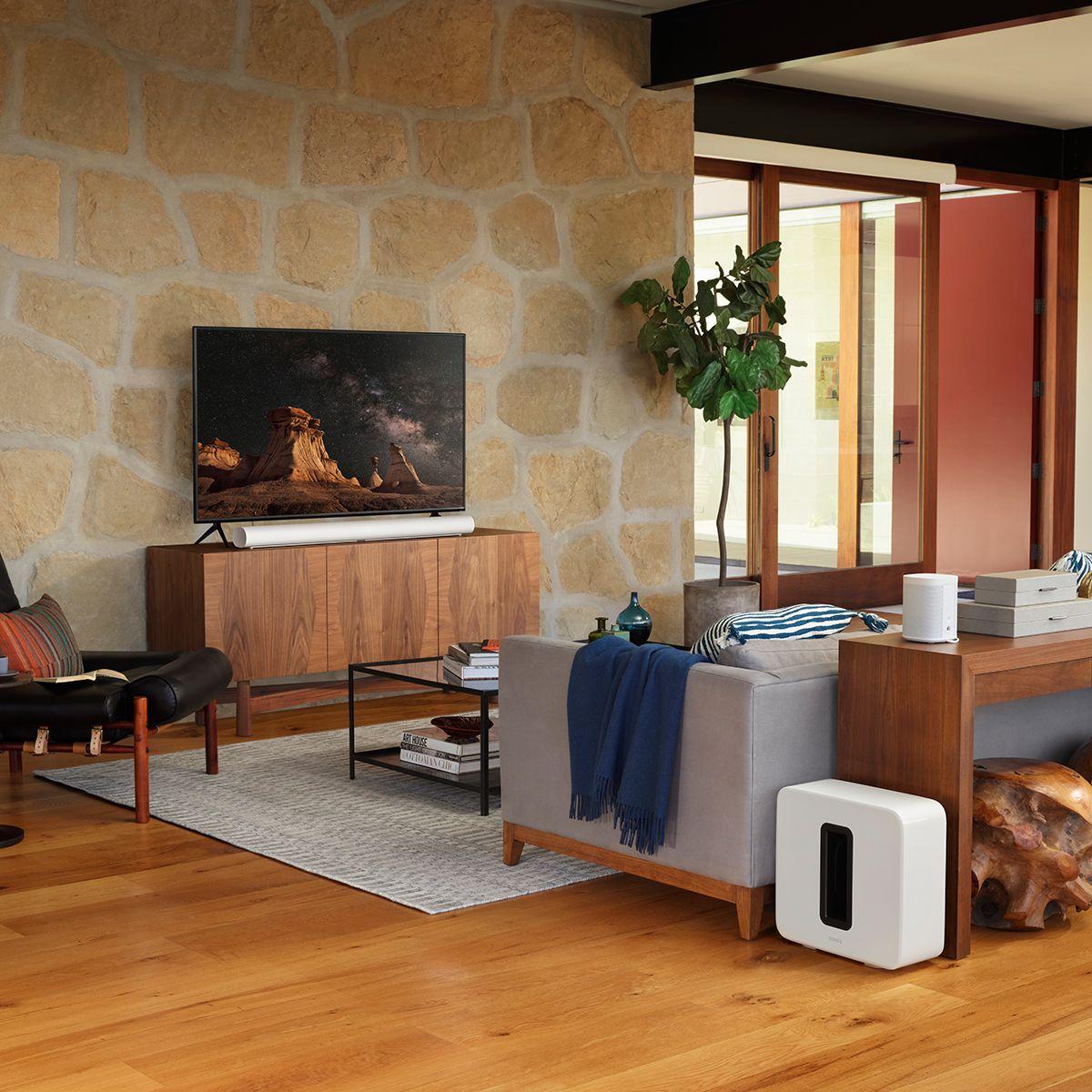
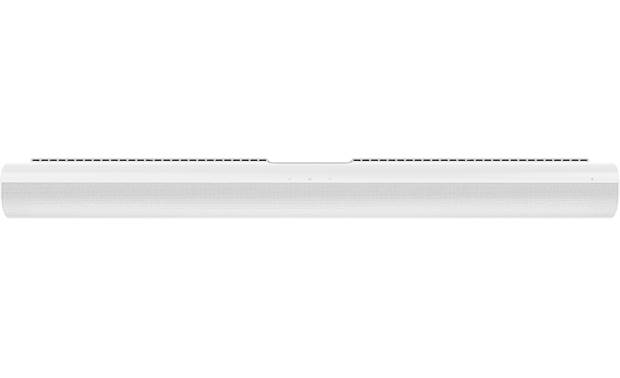
In contrast, the Sonos Arc packs eleven individually amplified drivers into its sleek soundbar body. Each driver has its own Class-D amplifier, which means precise control over every element of the sound. This approach allows for sophisticated digital signal processing (DSP) that can create remarkably convincing virtual surround effects. The Arc's 5.0.2 configuration means it provides front channels plus height effects from the soundbar itself, then uses clever processing to simulate rear surround channels.
The fundamental trade-off here is authentic surround versus sophisticated processing. Physical rear speakers, like those in the Ultimea F40, create undeniable directional audio—when something happens behind you in a movie, you genuinely hear it from behind. The Sonos Arc's virtual approach can be surprisingly effective, especially in rooms with good acoustics, but it depends heavily on your room's size, shape, and wall surfaces.
Bass response might be the most critical differentiator between these systems. The Ultimea F40 includes a dedicated 6.5-inch subwoofer that can reproduce frequencies down to 40Hz—deep enough to deliver the rumbling explosions, dinosaur footsteps, and musical bass lines that make movies and music feel powerful and engaging. This dedicated subwoofer approach means you get immediate, room-shaking bass without additional purchases.
The Sonos Arc takes a different approach, using eight internal woofers to handle bass duties. While these drivers are well-engineered and produce controlled, musical bass, they simply cannot move enough air to create the deep, tactile bass response that many home theater enthusiasts crave. At the time of writing, adding a Sonos Sub to match the bass capability of the Ultimea F40 would cost significantly more than the entire Ultimea system.
For action movies, this difference is immediately apparent. The opening scene of Blade Runner 2049 features deep, synthesized bass that should be felt as much as heard. The Ultimea F40 delivers this experience out of the box, while the Sonos Arc provides a more refined but less impactful presentation without its separate subwoofer.
Gaming represents one of the most demanding applications for surround sound systems. Modern games like Call of Duty or Apex Legends rely heavily on positional audio—being able to hear exactly where footsteps or gunshots are coming from can mean the difference between victory and defeat. The Ultimea F40's physical rear speakers excel in this application, creating a true 360-degree sound field where audio positioning is precise and reliable.
The Sonos Arc's virtual surround can work well for gaming, particularly in optimally configured rooms, but it's more dependent on your seating position and room acoustics. If you're not sitting in the "sweet spot"—typically directly in front of the soundbar at an appropriate distance—the surround effects may become less convincing.
For movie watching, both systems create engaging Dolby Atmos experiences, but in different ways. The Ultimea F40 excels with action-heavy content where discrete channel effects and deep bass enhance the spectacle. The Sonos Arc shines with dialogue-heavy content and creates a sophisticated soundstage that can make dramas and comedies feel more intimate and engaging.
The technology landscape has shifted dramatically since the Sonos Arc launched in 2020. Back then, built-in voice assistants and sophisticated app control were relatively novel features. Today, these capabilities have become more standard, but implementation quality varies significantly.
The Sonos Arc integrates Amazon Alexa and Google Assistant directly into the soundbar, allowing voice control for music playback, smart home devices, and basic soundbar functions. This integration feels natural and responsive, with far-field microphones that can hear commands even during loud audio playback. The Sonos ecosystem's strength becomes apparent here—you can easily group the Arc with other Sonos speakers throughout your home for synchronized whole-house audio.
The Ultimea F40 takes a more focused approach to smart features, concentrating on audio customization rather than voice control or ecosystem integration. Its companion app provides extensive equalization options, including a 10-band EQ and over 100 preset sound profiles. This level of audio customization allows fine-tuning for different content types—boosting dialogue clarity for TV shows, enhancing bass for movies, or optimizing the sound signature for music listening.
Room acoustics play a crucial role in any audio system's performance. The Sonos Arc includes Trueplay technology, which uses the microphone in your iPhone to analyze your room's acoustic characteristics and automatically adjusts the soundbar's output accordingly. This feature can dramatically improve performance, especially in challenging rooms with hard surfaces or irregular shapes.
The Ultimea F40 relies more on physical placement and manual adjustment. Since it uses actual speakers positioned around the room, it's inherently less dependent on room acoustics for basic surround effects. However, optimal subwoofer placement still matters significantly for bass response—something you'll need to experiment with to achieve the best results.
Installing the Sonos Arc is remarkably straightforward. It's essentially a single component that sits below your TV or mounts to the wall with included hardware. Cable management is minimal—just power and a single HDMI connection to your TV. This simplicity makes it ideal for living spaces where aesthetics matter and visible wires are unwelcome.
The Ultimea F40 requires more planning and setup time. You'll need to position the main soundbar, find appropriate locations for two rear surround speakers (keeping in mind they need power outlets), and place the subwoofer where it sounds best while remaining reasonably hidden. While the rear speakers connect wirelessly to the system, they still require power connections. The entire setup process typically takes 30-45 minutes compared to about 15 minutes for the Arc.
This difference in complexity affects who should consider each system. If you rent your home, frequently rearrange furniture, or prioritize a clean, minimalist aesthetic, the Sonos Arc's single-unit approach offers clear advantages. If you have a dedicated media room or aren't concerned about multiple components, the Ultimea F40's more complex setup pays dividends in audio performance.
At the time of writing, the pricing difference between these systems is substantial. The Ultimea F40 costs roughly half what you'd pay for the Sonos Arc alone, while providing a complete surround sound system with dedicated subwoofer and rear speakers. To achieve comparable functionality with Sonos components, you'd need to add their subwoofer and rear speakers, potentially tripling the total investment.
However, value considerations extend beyond initial purchase price. The Sonos Arc represents an investment in an established ecosystem with a track record of long-term software support and regular feature additions. Sonos has consistently updated older products with new capabilities, and their commitment to backwards compatibility means your investment should remain current for years.
The Ultimea F40 comes from a newer company in the audio space, which brings both advantages and concerns. The advantage is cutting-edge features and aggressive pricing as they establish market presence. The potential concern is uncertainty about long-term software support and ecosystem development.
While home theater performance often dominates soundbar discussions, music listening reveals another important distinction between these systems. The Sonos Arc excels at stereo music reproduction, with a refined tonal balance that makes everything from jazz vocals to electronic music sound engaging and detailed. The sophisticated driver arrangement and DSP tuning create an impressive stereo image that extends well beyond the physical boundaries of the soundbar.
The Ultimea F40, optimized primarily for home theater applications, can sound somewhat bass-heavy with music compared to the more neutral Sonos presentation. However, its extensive EQ options allow customization for different musical genres, and the dedicated Music mode provides a more balanced sound signature for stereo content.
If you primarily stream music and occasionally watch movies, the Sonos Arc's strengths align better with those priorities. If home theater is your primary focus with music as a secondary consideration, the Ultimea F40's approach makes more sense.
After extensive experience with both approaches to Dolby Atmos audio, I believe the decision comes down to three key factors: your budget constraints, your space limitations, and your primary use case.
Choose the Ultimea Skywave F40 if you want maximum audio performance for your investment, have a dedicated space where multiple components work well, and prioritize explosive home theater experiences. It's ideal for movie enthusiasts, gamers, and anyone who wants authentic surround sound without spending premium prices. The system particularly excels in basements, media rooms, or any space where you can optimize speaker placement without worrying about living space aesthetics.
Choose the Sonos Arc if you value sophisticated design, want excellent music reproduction, prefer smart home integration, and are willing to invest more for premium build quality and ecosystem benefits. It's perfect for main living areas where aesthetics matter, for users who primarily stream music with occasional movie watching, and for anyone planning to build a complete Sonos whole-house audio system over time.
The Ultimea F40 delivers immediate gratification—unbox it, set it up, and enjoy impressive surround sound right away. The Sonos Arc offers long-term satisfaction through its refined engineering, ecosystem integration, and expansion possibilities.
Both represent excellent products that succeed in their intended roles. The key is honestly assessing your priorities, budget, and living situation to determine which philosophy aligns better with your needs. In my experience, neither choice is wrong—they simply serve different types of users with different goals for their home audio experience.
| Ultimea Skywave F40 | Sonos Arc |
|---|---|
| System Configuration - Determines immediate surround sound capability | |
| Complete 5.1.2 system with soundbar, subwoofer, and rear speakers included | Single soundbar only; requires separate purchases for true surround |
| Total Power Output - Affects maximum volume and dynamic range | |
| 460W across all components | 11 individual Class-D amplifiers (power not specified) |
| Bass Response - Critical for movie impact and music fullness | |
| Dedicated 6.5" subwoofer reaches 40Hz for deep bass | Internal woofers only; requires separate Sub purchase for equivalent bass |
| Surround Channels - Determines authenticity of directional audio | |
| Physical rear speakers create true 360° surround sound | Virtual surround through advanced DSP and room reflections |
| Voice Assistant Integration - Convenience for smart home control | |
| No built-in voice assistants; app and remote control only | Built-in Amazon Alexa and Google Assistant with far-field microphones |
| Connectivity Options - Flexibility for different devices | |
| HDMI eARC, Optical, USB, Bluetooth 5.4 | HDMI eARC, Optical adapter included, Apple AirPlay 2 |
| Room Optimization - Automatic sound tuning capability | |
| Manual EQ with 10-band equalizer and 121 presets | Trueplay automatic room correction (iOS device required) |
| Installation Complexity - Setup time and space requirements | |
| Multiple components require strategic placement and power outlets | Single unit with minimal cables and clean aesthetic |
| Ecosystem Expansion - Future upgrade possibilities | |
| Limited expansion options within Ultimea brand | Full integration with Sonos multiroom ecosystem |
| Music Performance - Sound quality for stereo content | |
| Home theater optimized; customizable via extensive EQ options | Audiophile-tuned for excellent stereo music reproduction |
| Gaming Performance - Positional audio accuracy | |
| Exceptional with physical rear speakers providing precise directional cues | Good virtual positioning dependent on room acoustics and seating |
The Ultimea Skywave F40 is better for dedicated home theater use because it includes physical rear speakers and a subwoofer, creating authentic 5.1.2 surround sound. The Sonos Arc uses virtual surround processing from a single unit, which works well but can't match the directional accuracy of actual rear speakers for movies and gaming.
The key difference is system completeness: the Ultimea Skywave F40 comes with everything needed for surround sound (soundbar, subwoofer, and rear speakers), while the Sonos Arc is a premium single soundbar that requires separate purchases to achieve comparable surround sound capabilities.
No additional speakers are needed with the Ultimea F40 - it includes rear surround speakers and a subwoofer. The Sonos Arc works as a standalone unit but you'll need to purchase separate Sonos rear speakers and a subwoofer for true surround sound, significantly increasing the total cost.
The Ultimea Skywave F40 has significantly better bass out of the box thanks to its included 6.5-inch subwoofer that reaches down to 40Hz. The Sonos Arc relies on internal woofers for bass, which sounds more controlled but lacks the deep, room-shaking impact that enhances action movies.
Only the Sonos Arc has built-in voice control with Amazon Alexa and Google Assistant. The Ultimea F40 doesn't include voice assistants but can be controlled through its smartphone app, remote control, or your TV's remote via CEC.
The Sonos Arc is much easier to install - it's a single unit that connects with just power and one HDMI cable. The Ultimea Skywave F40 requires positioning multiple components (soundbar, subwoofer, and two rear speakers) and takes about 30-45 minutes compared to 15 minutes for the Sonos.
The Sonos Arc excels at music with its refined stereo imaging and audiophile-tuned sound signature. The Ultimea F40 is optimized more for home theater but offers extensive EQ customization with 121 presets to fine-tune music performance to your preferences.
The Ultimea Skywave F40 is superior for gaming because its physical rear speakers provide precise positional audio - crucial for competitive games where you need to hear exactly where opponents are located. The Sonos Arc can work for gaming but relies on virtual positioning that may be less accurate.
The Sonos Arc integrates into the comprehensive Sonos ecosystem, allowing expansion with additional Sonos speakers throughout your home. The Ultimea F40 has limited expansion options within the Ultimea brand but comes complete as a full surround system from day one.
The Ultimea Skywave F40 offers exceptional value, providing a complete 5.1.2 surround system with subwoofer and rear speakers at a fraction of what you'd pay for equivalent Sonos Arc components. However, the Sonos offers premium build quality and long-term ecosystem benefits.
Both the Ultimea F40 and Sonos Arc work with virtually any modern TV through HDMI eARC/ARC or optical connections. Both include optical adapters for older TVs. The Sonos Arc requires HDMI eARC for full Dolby Atmos capability, while the Ultimea F40 supports Atmos through both HDMI and optical.
For small apartments, the Sonos Arc is typically better due to its single-unit design and minimal cable management. The Ultimea Skywave F40 requires space for multiple components and may overwhelm smaller rooms with its powerful output, though it can be volume-adjusted for apartment living.
We've done our best to create useful and informative comparisons to help you decide what product to buy. Our research uses advanced automated methods to create this comparison and perfection is not possible - please contact us for corrections or questions. These are the sites we've researched in the creation of this article: the-gadgeteer.com - youtube.com - ultimea.com - manuals.plus - youtube.com - ultimea.com - youtube.com - youtube.com - youtube.com - youtube.com - eu.ultimea.com - support.ultimea.com - whathifi.com - soundandvision.com - en.community.sonos.com - cnet.com - worldwidestereo.com - abt.com - creativeaudio.net - target.com - sonos.com - worldwidestereo.com - businessinsider.com - en.community.sonos.com - youtube.com

Privacy Policy
Terms and Conditions - Affiliate Policy
Home Security
© Copyright 2008-2026.
11816 Inwood Rd #1211, Dallas, TX 75244