



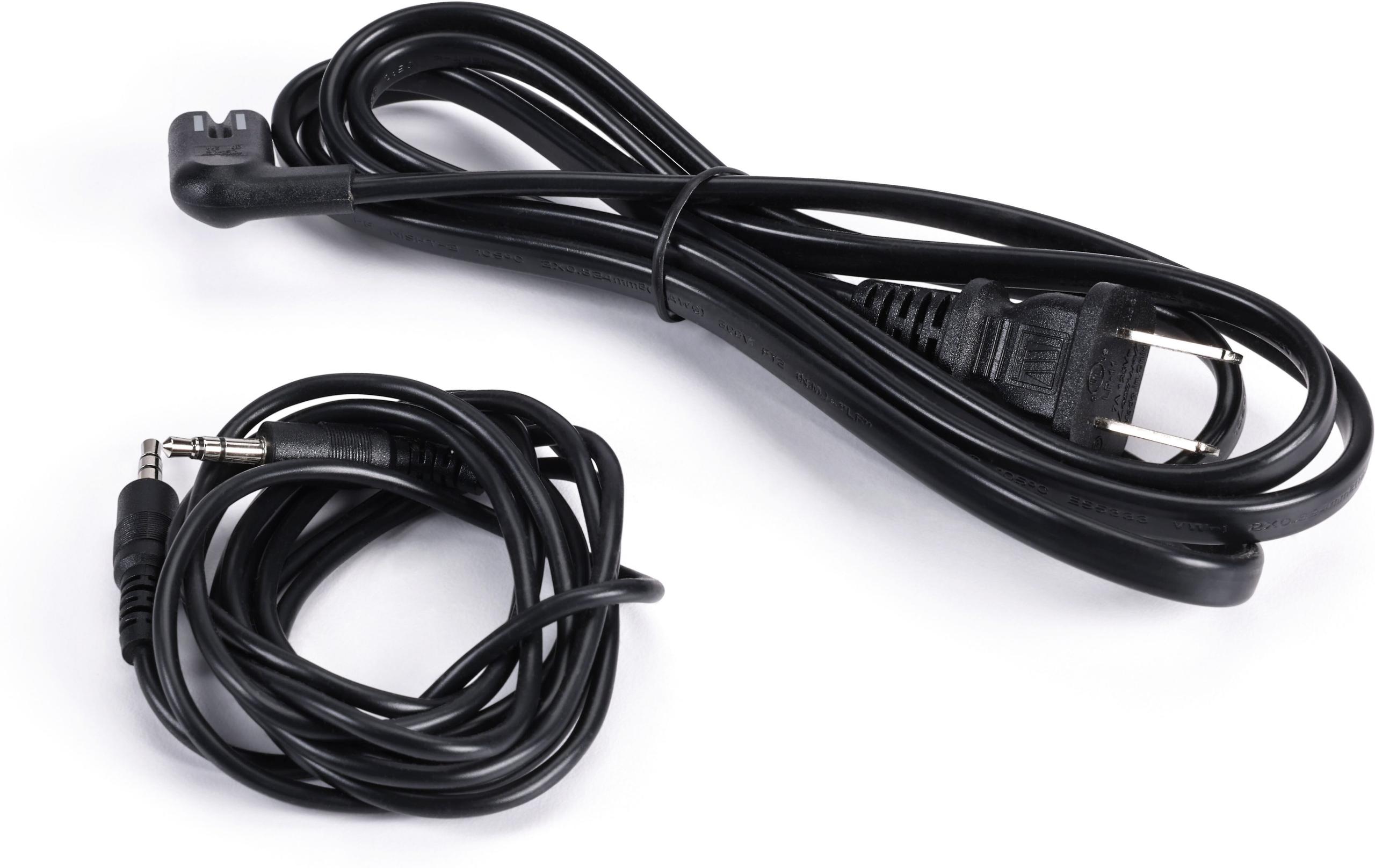

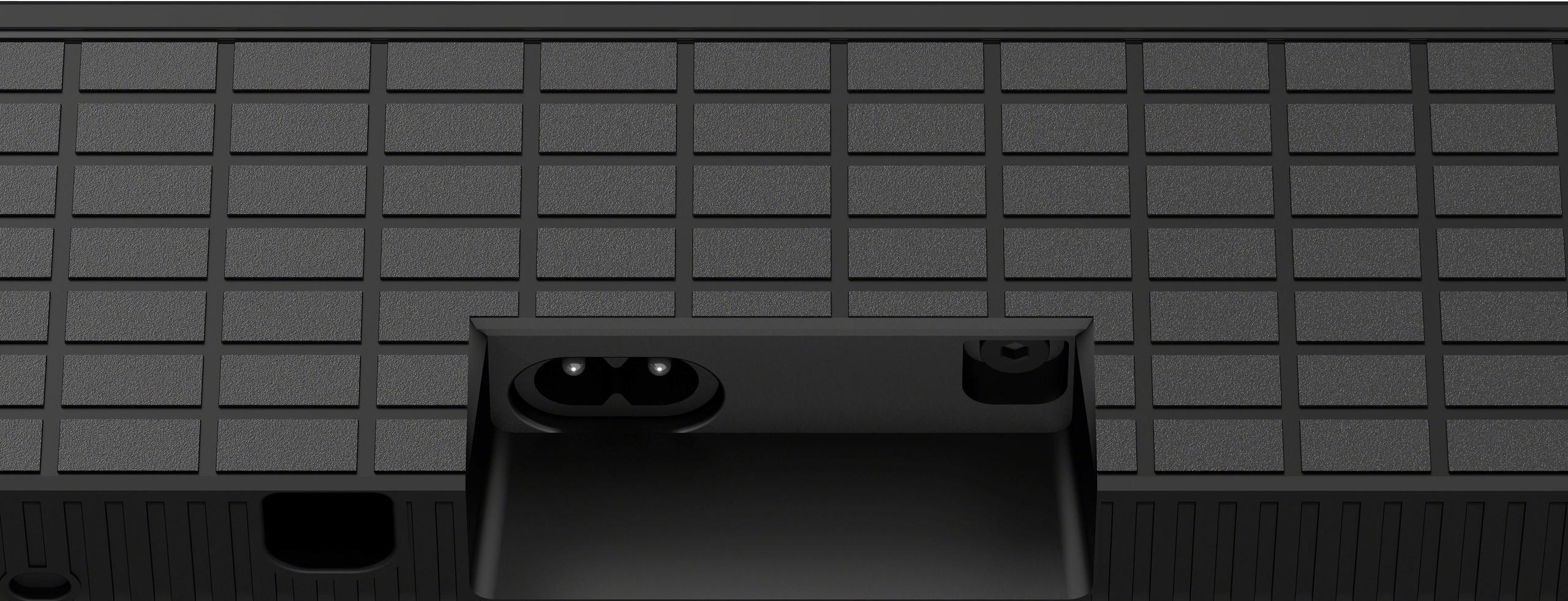
If you've ever watched a movie on your TV and felt like something was missing from the experience, you're not alone. Built-in TV speakers have gotten progressively worse as manufacturers chase thinner designs, leaving many of us squinting at subtitles or constantly adjusting volume. This is where soundbars come in—they're designed to restore that cinematic punch without the complexity of a full home theater system.
The soundbar market has exploded over the past few years, with options ranging from simple stereo upgrades to sophisticated surround sound systems that can rival dedicated home theaters. Today we're comparing two very different approaches to premium audio: the Sony HT-A8000, a high-tech standalone soundbar released in 2024, and the Ultimea Skywave F40, a complete surround sound package that hit the market more recently.
Before diving into our comparison, it's worth understanding what makes today's soundbars so much more capable than earlier generations. The biggest game-changer has been Dolby Atmos—a technology that adds height channels to create three-dimensional sound. Instead of sound just coming from left, right, and center, Atmos can place audio above you, creating the sensation of helicopters flying overhead or rain falling from the sky.
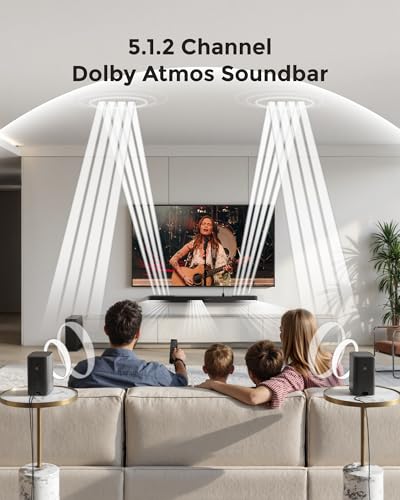
Traditional surround sound uses a 5.1 setup (five main speakers plus one subwoofer), but Atmos systems use configurations like 5.1.2 or 7.1.4, where those final numbers represent height channels. The challenge for soundbar manufacturers is cramming all these channels into a sleek package that doesn't dominate your living room.
When evaluating soundbars, the most important performance characteristics are dialogue clarity (can you understand conversations without cranking the volume?), spatial positioning (can you tell where sounds are coming from?), bass response (does it have the low-frequency punch for explosions and music?), and overall tonal balance (does everything sound natural together?). The best systems excel across all these areas while remaining easy to set up and use.
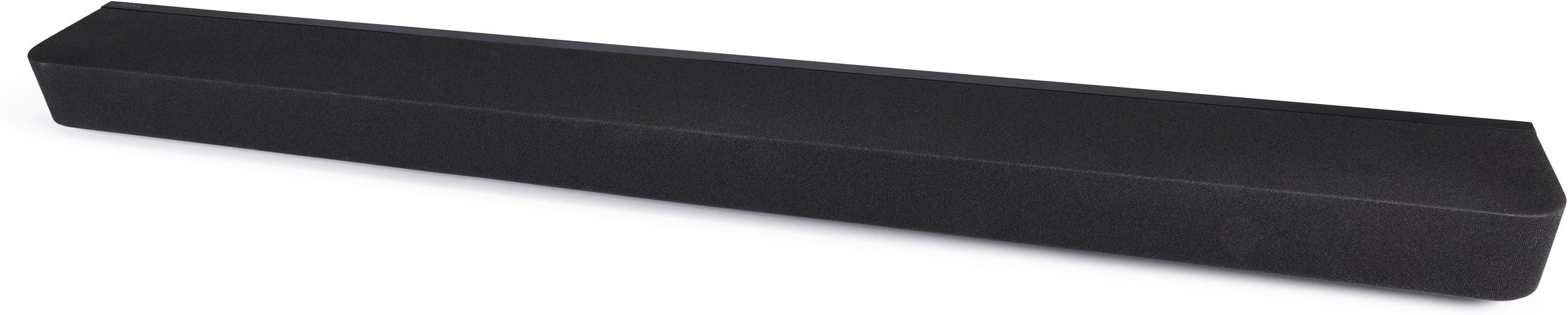
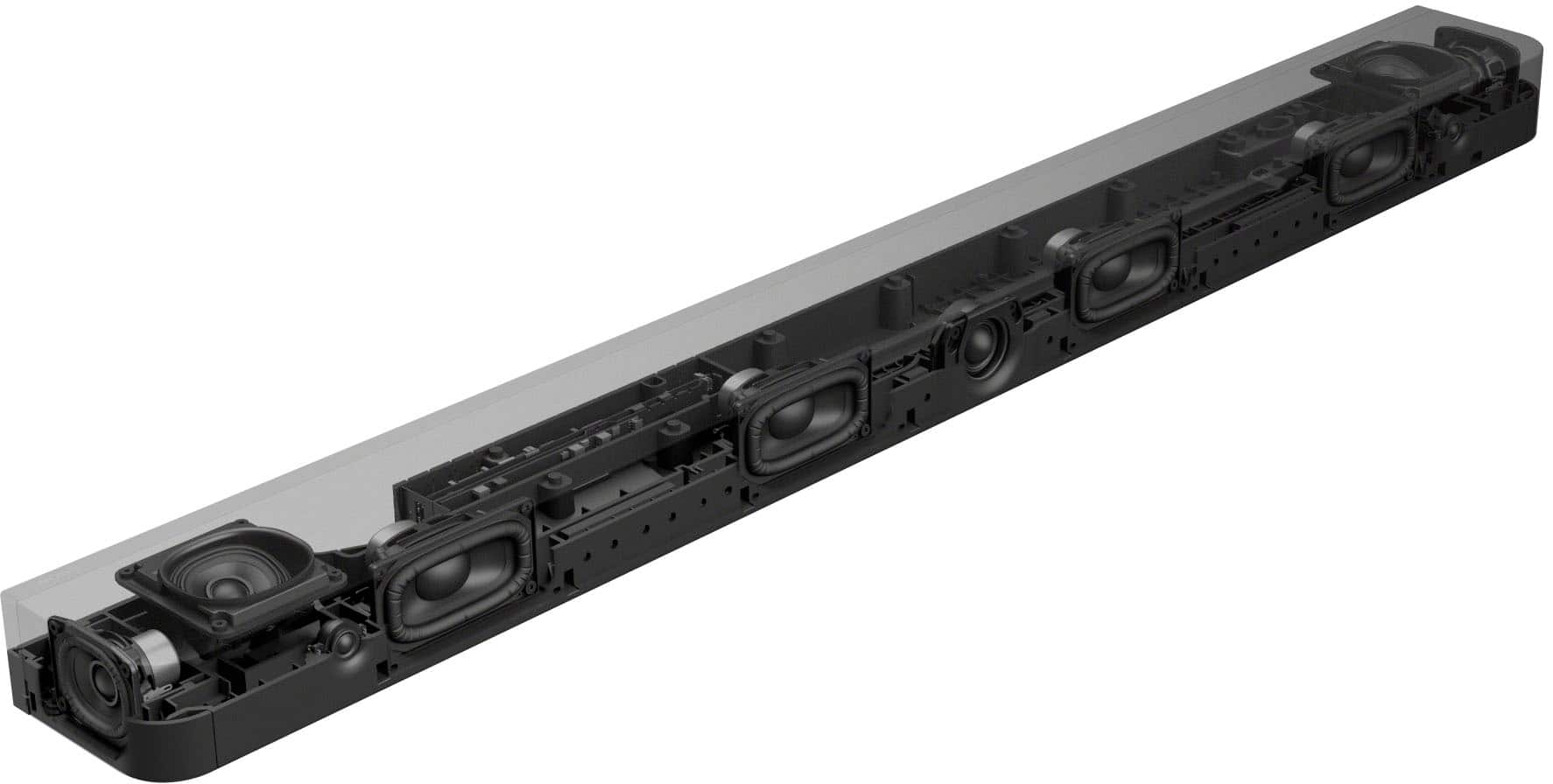
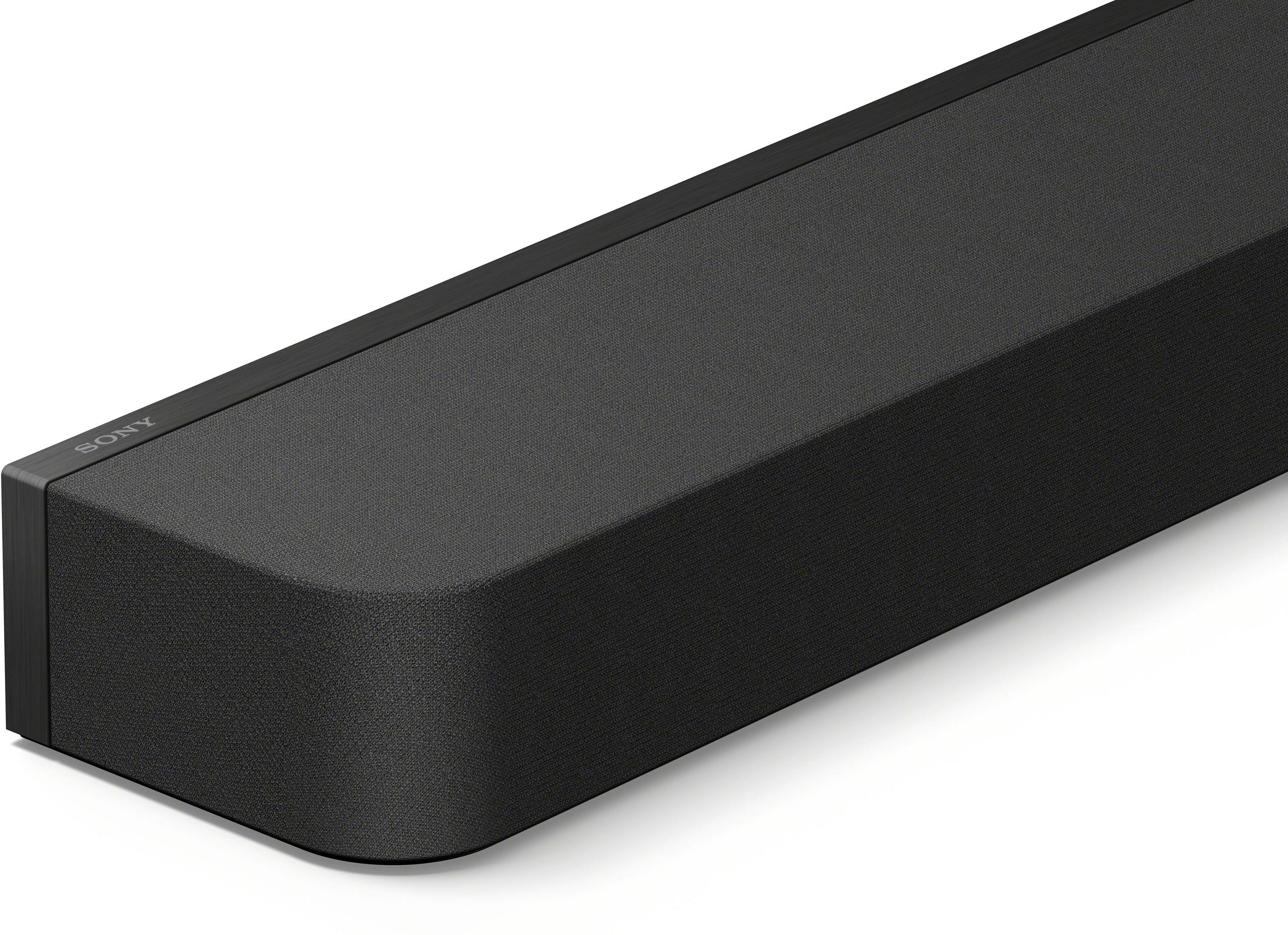
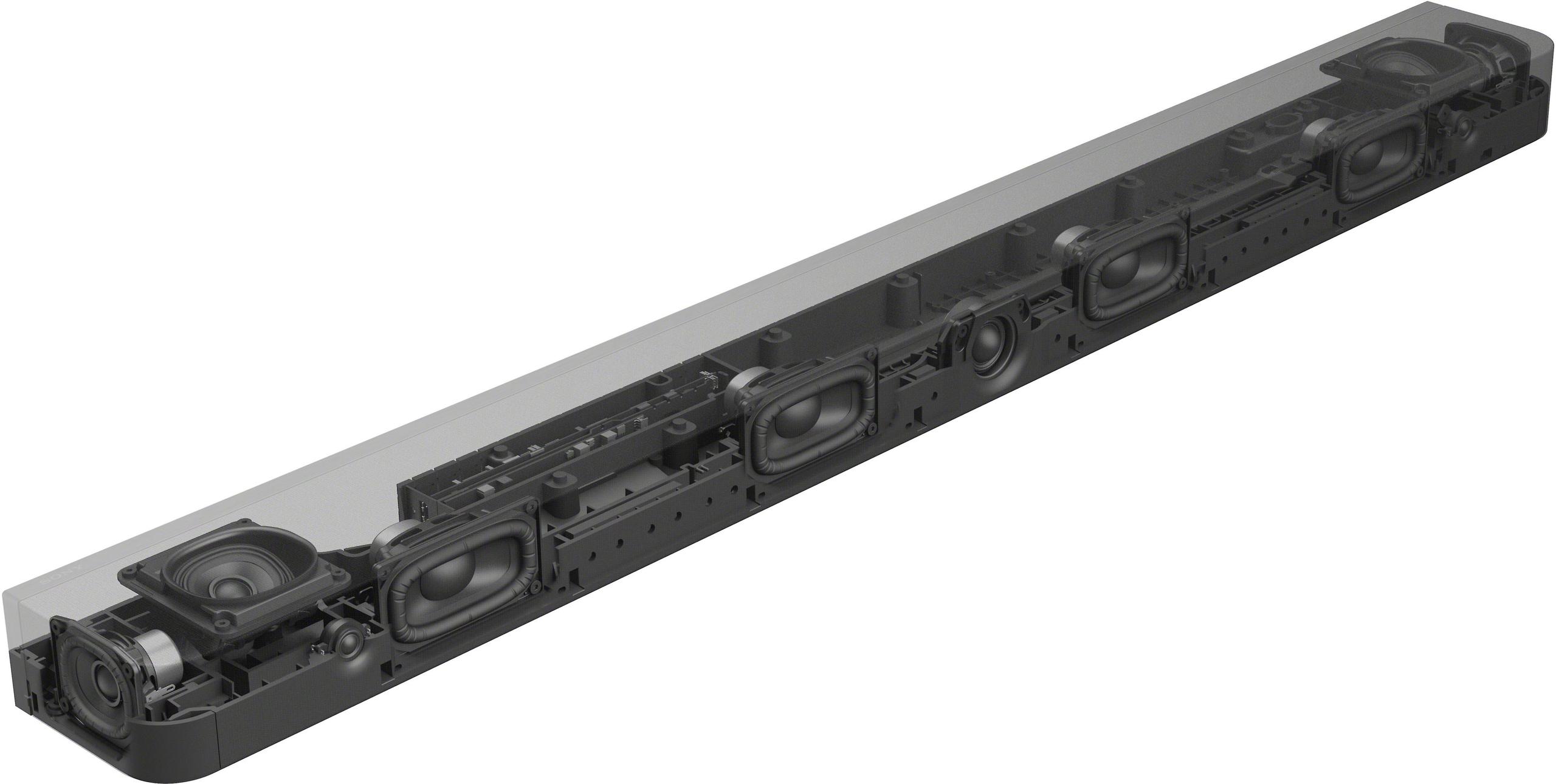
The Sony HT-A8000 and Ultimea Skywave F40 represent fundamentally different approaches to achieving great sound. Sony has gone the high-tech route, packing 11 speakers into a single soundbar and using advanced algorithms to simulate surround sound effects. It's the audio equivalent of computational photography—using software to create effects that would traditionally require more hardware.
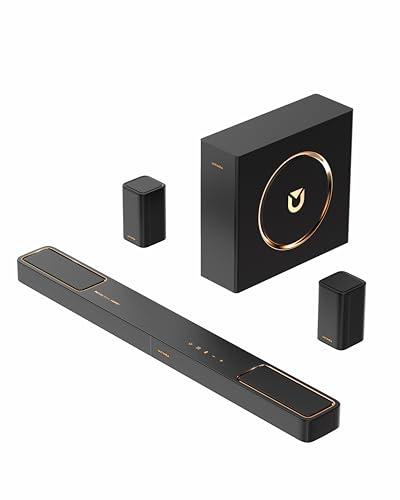
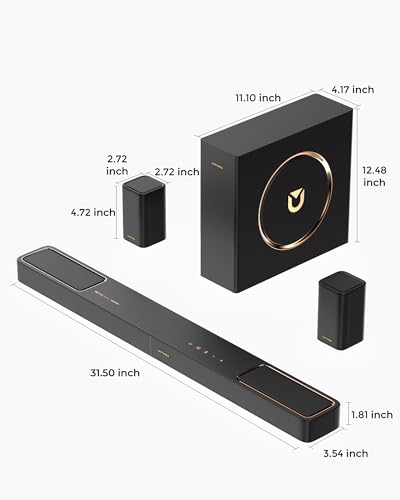
The Ultimea Skywave F40, on the other hand, takes the traditional approach of using actual physical speakers placed around your room. You get a main soundbar, a substantial subwoofer, and wireless rear speakers that provide true directional audio. It's the difference between a sophisticated illusion and the real thing.
Both approaches have merit, and which works better depends largely on your room, preferences, and tolerance for additional speakers and cables.
Sony released the HT-A8000 in 2024 as their flagship mainstream soundbar, incorporating technology that was previously reserved for much more expensive systems. The centerpiece is what Sony calls "360 Spatial Sound Mapping"—a system that uses the soundbar's 11 internal speakers to create phantom speakers throughout your room.
Here's how it works: the soundbar fires sound directly at you for the main channels, but it also bounces audio off your ceiling and walls to create the impression of speakers that aren't actually there. Sony's algorithms analyze your room's acoustics and adjust the timing and intensity of these reflected sounds to create five phantom speakers—two to your left and right, and one above for enhanced dialogue.
The Sony HT-A8000 also includes Voice Zoom 3, an AI-powered feature that's genuinely useful for anyone who's ever struggled to hear dialogue over background music and sound effects. The system can identify human speech in the audio mix and boost it selectively, making conversations clearer without making everything else uncomfortably loud. This is particularly valuable if you watch a lot of content with varying audio quality or films with notoriously quiet dialogue.
From a technical standpoint, the soundbar uses Sony's S-Master HX digital amplification, which is more efficient than traditional analog amps and produces less heat. The 11 speakers include dedicated tweeters for high frequencies, midrange drivers for vocals and most musical instruments, and larger woofers for bass. However, without an external subwoofer, the Sony HT-A8000 is limited in how deep its bass can go—physics simply won't allow a soundbar to produce the same low-frequency impact as a dedicated 8-inch or larger subwoofer driver.
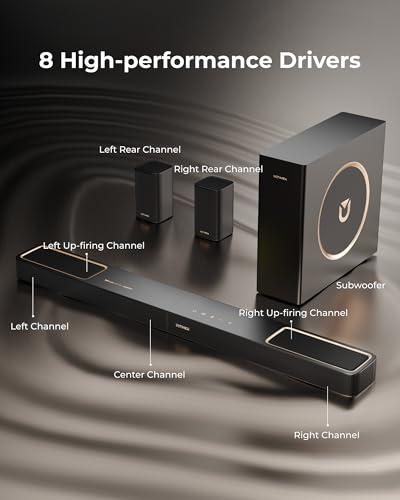
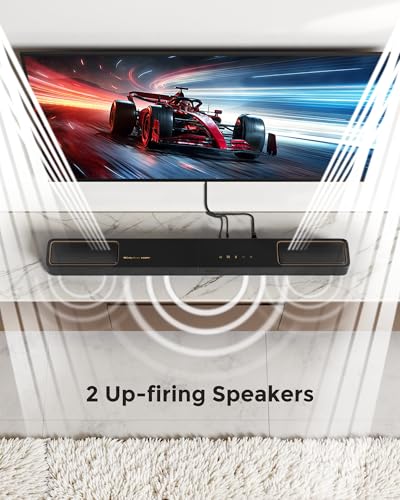
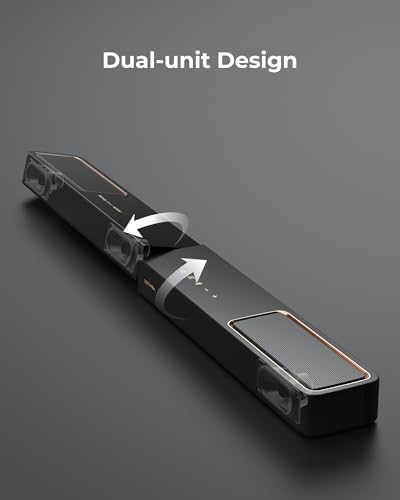
The Ultimea Skywave F40 takes a more straightforward but comprehensive approach. Rather than trying to simulate surround sound, it provides actual surround speakers that you place behind your seating area. The system includes up-firing drivers in the main soundbar that reflect off your ceiling for Dolby Atmos height effects, plus those physical rear speakers for true directional audio.
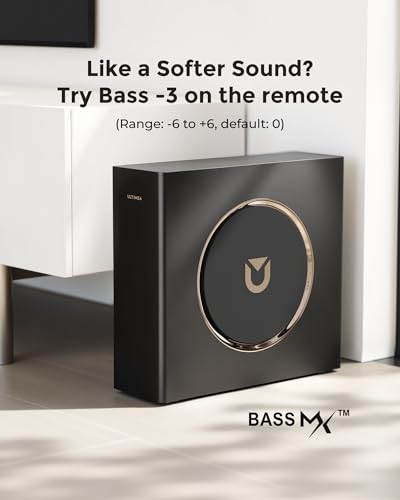
The bass situation is quite different here—the Skywave F40 includes a dedicated wired subwoofer that can dig down to around 40Hz. That's genuinely deep bass territory that you'll feel in your chest during action sequences or bass-heavy music. The subwoofer uses what Ultimea calls BassMX technology, which optimizes the driver's movement to maximize impact while minimizing distortion.
One standout feature is the system's Xupmix technology, powered by Dolby's own processing algorithms. This can take regular stereo content—like most TV shows or older movies—and create convincing surround effects from it. It's not just stretching the audio across more speakers; it's actually analyzing the content and placing different elements in the appropriate channels.
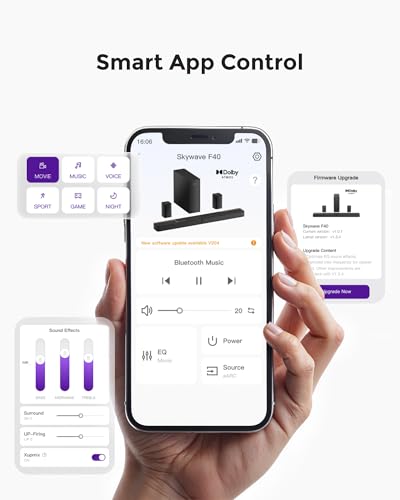
The Ultimea Skywave F40 also includes smart app control, which might sound like a gimmick but actually provides access to a 10-band equalizer with over 120 preset combinations. This level of customization is typically found in much more expensive systems and allows you to fine-tune the sound for your specific room and preferences.
This is where the Sony HT-A8000 really shines. The combination of dedicated center channel processing and Voice Zoom 3 technology creates exceptionally clear dialogue reproduction. In our research across user reviews and expert evaluations, the Sony consistently receives praise for making conversations intelligible even at moderate volumes.
The Ultimea Skywave F40 also handles dialogue well, but it approaches clarity through different means—by providing proper channel separation so voices don't get muddled with other audio elements. The rear speakers help create space in the soundstage, preventing dialogue from competing with background effects.
Here, the Ultimea Skywave F40 has a significant advantage thanks to its dedicated subwoofer. Deep bass isn't just about making explosions sound impressive—it adds weight and realism to everything from footsteps to musical instruments. The physical laws of acoustics mean that producing truly deep bass requires moving a lot of air, which demands larger drivers than any soundbar can accommodate.
The Sony HT-A8000 does include multiple woofers in its driver array, and Sony's processing can create the impression of deeper bass than is physically present. However, it can't match the visceral impact of a proper subwoofer, especially at higher volumes or in larger rooms.
This is where the two systems' different approaches become most apparent. The Sony HT-A8000 creates remarkably convincing surround effects when properly positioned in an acoustically favorable room. The phantom speakers can genuinely fool your brain into perceiving sounds coming from locations where no speakers exist.
However, the Ultimea Skywave F40 provides authentic directional audio that your brain doesn't have to work to process. When a helicopter flies from front to back in a movie, you hear it actually moving from the soundbar to the rear speakers. There's no acoustic trickery involved—just sound coming from the appropriate location.
For gaming, this distinction becomes particularly important. Competitive games rely heavily on audio cues to locate opponents or dangers, and physical surround speakers provide more precise positioning than phantom speakers can achieve.
The Sony HT-A8000 excels in smaller to medium-sized rooms with good wall and ceiling surfaces for sound reflection. Rooms with high ceilings, irregular shapes, or heavy acoustic dampening (lots of furniture and carpet) can reduce the effectiveness of the phantom speaker technology.
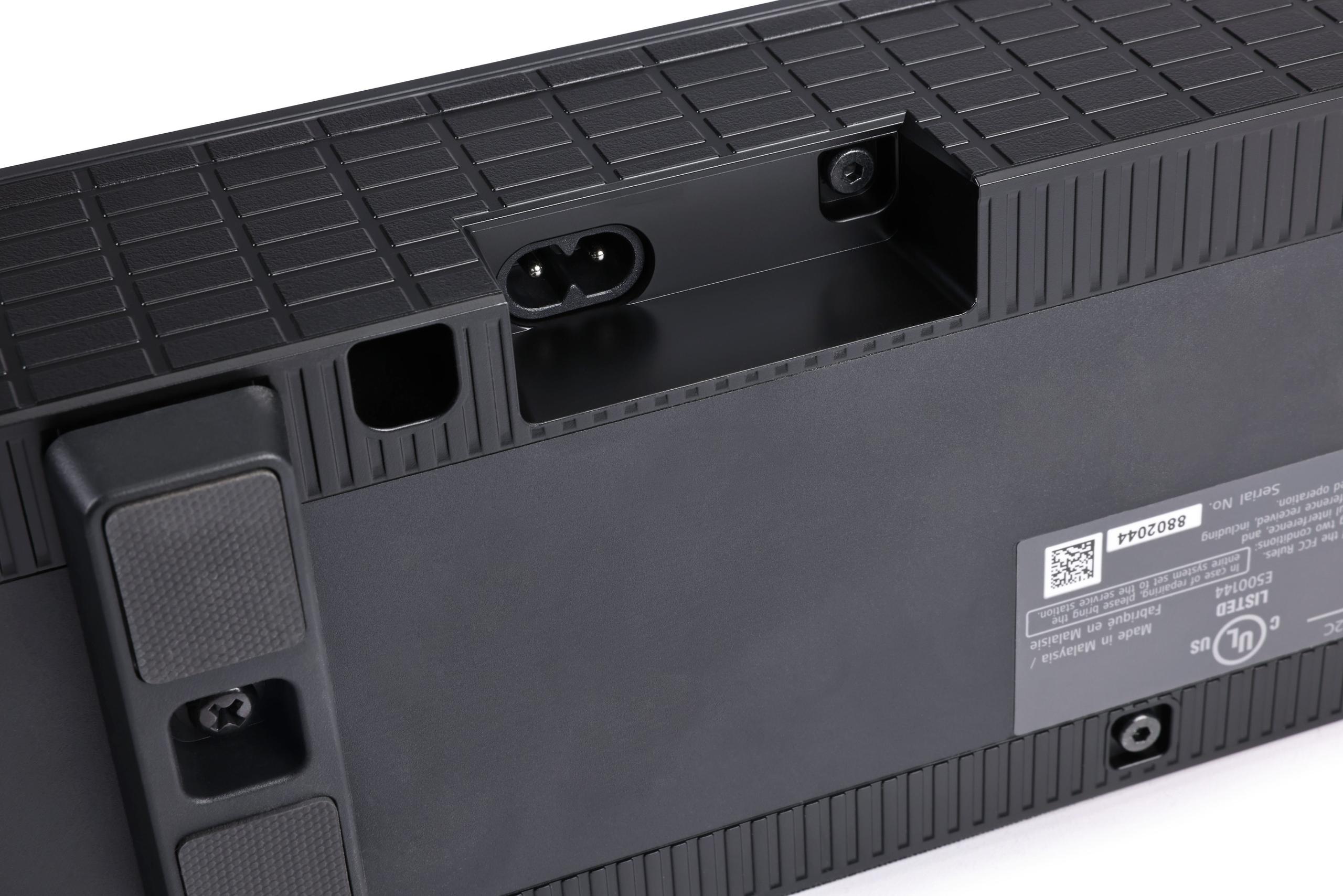
The Ultimea Skywave F40 is more forgiving of room acoustics because it doesn't rely on reflections. However, it requires more setup consideration—you need space for the subwoofer and appropriate placement for the rear speakers. The rear speakers are wireless (connecting to the subwoofer rather than the main unit), but you still need power outlets near your seating area.
At the time of writing, these systems occupy very different price categories, which significantly impacts their value equations. The Sony HT-A8000 positions itself as a premium standalone solution, while the Ultimea Skywave F40 offers a complete system at a much lower price point.
The Sony's higher cost reflects its advanced processing technology, premium build quality, and sophisticated acoustic engineering. You're paying for research and development that allows a single soundbar to create convincing surround effects. However, to achieve truly complete surround sound with deep bass, you'd need to add Sony's optional subwoofer and rear speakers, which significantly increases the total investment.
The Ultimea Skywave F40 provides exceptional value by including everything needed for a complete surround sound experience in one package. At its price point, finding a system with true physical surround speakers and a dedicated subwoofer is rare. The trade-offs are in build quality and advanced features rather than fundamental audio performance.
For dedicated home theater use, several factors become particularly important. Room size matters significantly—larger spaces benefit more from the Ultimea Skywave F40's distributed speaker approach and powerful subwoofer. The physical surround speakers also provide better integration with the visual action on larger screens, where the soundstage needs to match the scale of the image.
The Sony HT-A8000 works well for home theater use in appropriately sized rooms, particularly if you prioritize dialogue clarity and don't want the visual clutter of multiple speakers. Its integration with Sony TVs is particularly seamless if you're already in that ecosystem.
For movie enthusiasts who want the closest approximation to a commercial theater experience, the Ultimea Skywave F40's approach of using actual surround speakers and a substantial subwoofer provides more authentic reproduction of theatrical sound mixes.
Choose the Sony HT-A8000 if you value technological sophistication over raw power, have space constraints that make multiple speakers impractical, or prioritize dialogue clarity above all else. It's ideal for smaller to medium-sized rooms where you want excellent sound quality without visual clutter. The advanced processing can create surprisingly immersive experiences when the conditions are right, and the single-unit installation keeps things clean and simple.
The Ultimea Skywave F40 is the better choice if you want a complete surround sound experience immediately, have a larger room that can benefit from distributed audio, or simply want the most immersive experience possible at its price point. It's particularly compelling for gaming and action movie enthusiasts who want authentic directional audio and deep bass impact.
Both systems represent excellent approaches to improving your TV's audio, but they solve the problem in fundamentally different ways. The Sony emphasizes technological elegance and convenience, while the Ultimea provides comprehensive, no-compromise surround sound at an exceptional value. Your choice should align with your space, preferences, and long-term audio goals.
The soundbar market continues to evolve rapidly, with new technologies and approaches appearing regularly. However, the fundamental choice between sophisticated processing in a single unit versus physical surround speakers will likely remain relevant for years to come. Understanding these trade-offs helps ensure you choose the system that will provide years of audio enjoyment in your specific environment.
| Sony HT-A8000 BRAVIA Theater Bar 8 Soundbar | Ultimea Skywave F40 Dolby Atmos Soundbar System |
|---|---|
| System Configuration - Determines setup complexity and sound authenticity | |
| Single soundbar with 11 internal speakers | Complete system: soundbar + wired subwoofer + wireless rear speakers |
| Channel Configuration - More channels create better surround immersion | |
| 5.0.2 simulated via phantom speakers | True 5.1.2 with physical speakers |
| Peak Power Output - Higher wattage fills larger rooms better | |
| 60W efficient digital amplification | 460W total system power |
| Bass Extension - Lower frequencies add impact to movies and music | |
| Limited to soundbar woofers (no dedicated sub) | 40Hz deep bass with dedicated subwoofer |
| Surround Technology - How the system creates 3D audio effects | |
| 360 Spatial Sound Mapping with phantom speakers | Physical rear speakers + up-firing Atmos drivers |
| Connectivity Options - More inputs accommodate different devices | |
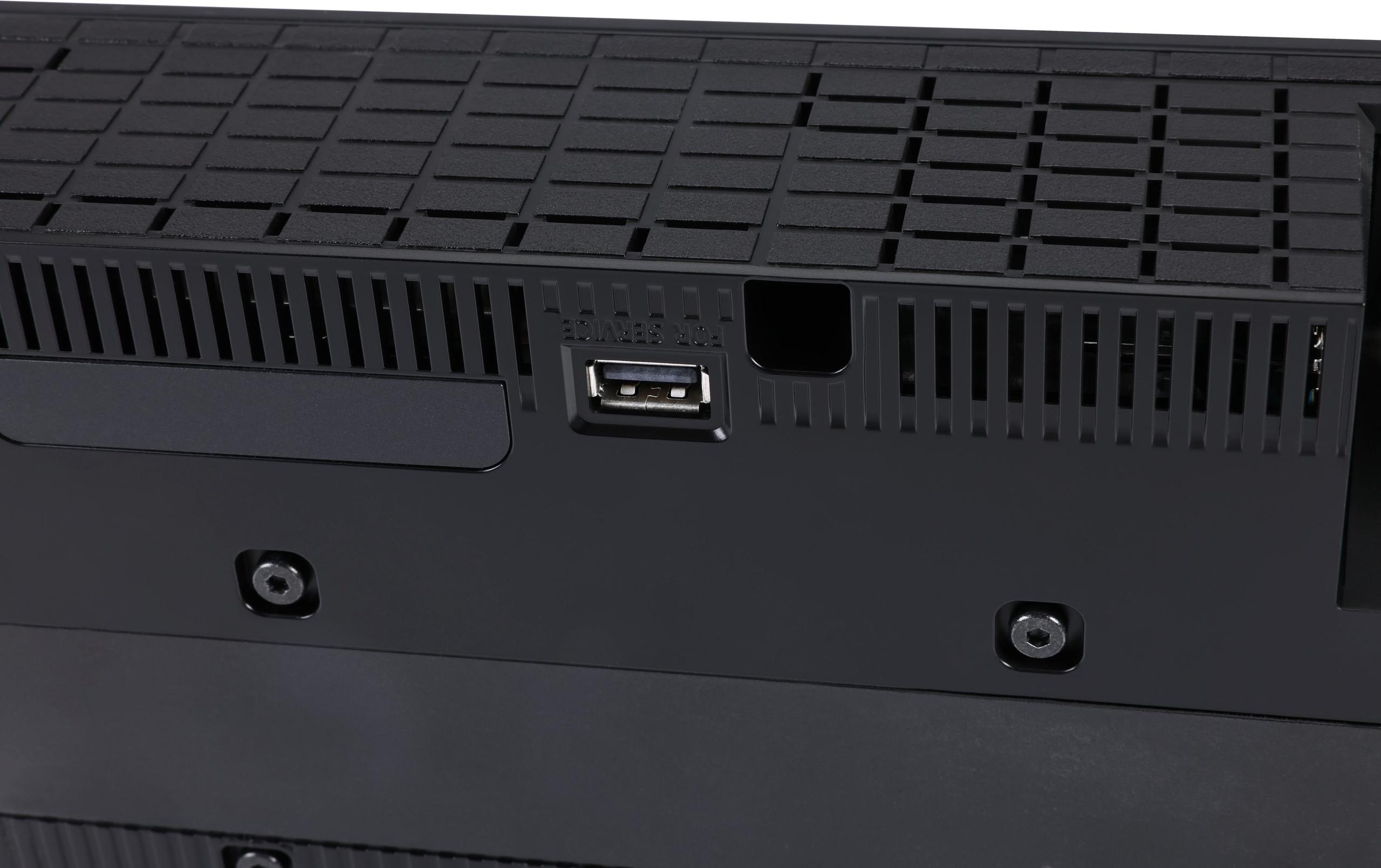
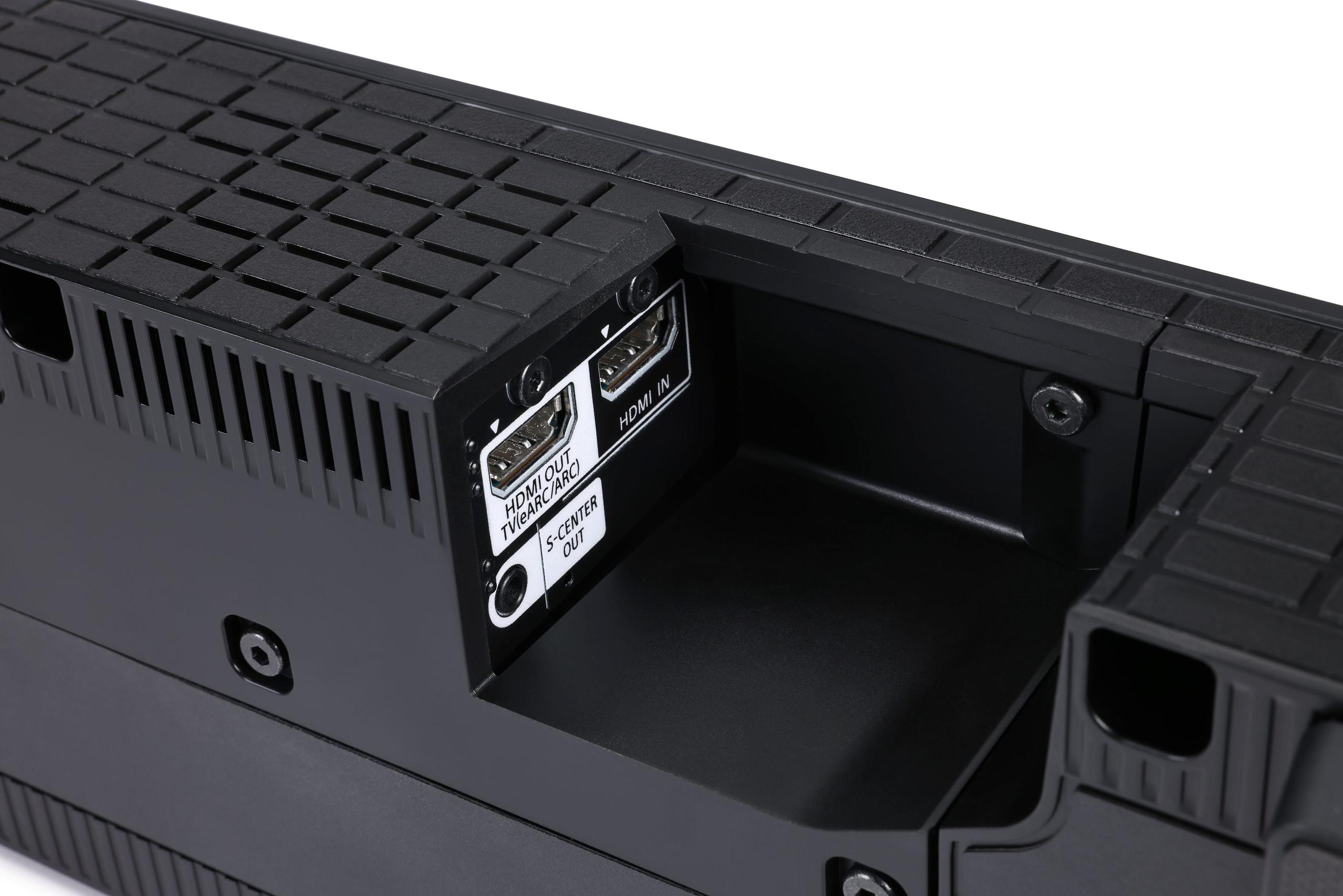
| HDMI 2.1, Wi-Fi, Bluetooth 5.2, AirPlay 2, Spotify Connect | HDMI eARC, optical, USB, Bluetooth 5.4 |
| Advanced Features - Premium conveniences that enhance daily use | |
| Voice Zoom 3 AI, auto room calibration, Sony TV integration | Smart app control, 10-band EQ, 121 preset sound profiles |
| Setup Requirements - Consider your room layout and preferences | |
| Single unit mounting, requires good wall/ceiling reflection | Multiple speakers require strategic placement and power outlets |
| Best Room Size - Optimal performance varies by space | |
| Small to medium rooms with good acoustics | Medium to large rooms (215-269 sq ft recommended) |
| Primary Strength - What each system does exceptionally well | |
| Exceptional dialogue clarity and clean aesthetic | Authentic surround sound with powerful bass impact |
| Main Trade-off - What you sacrifice for the benefits | |
| Limited bass without optional subwoofer purchase | More complex setup with visible speakers and cables |
The Sony HT-A8000 is ideal for small apartments because it's a single soundbar that doesn't require additional speakers or subwoofers. Its 360 Spatial Sound Mapping technology creates surround effects without needing rear speakers, making it perfect for compact living spaces where multiple speakers would be impractical.
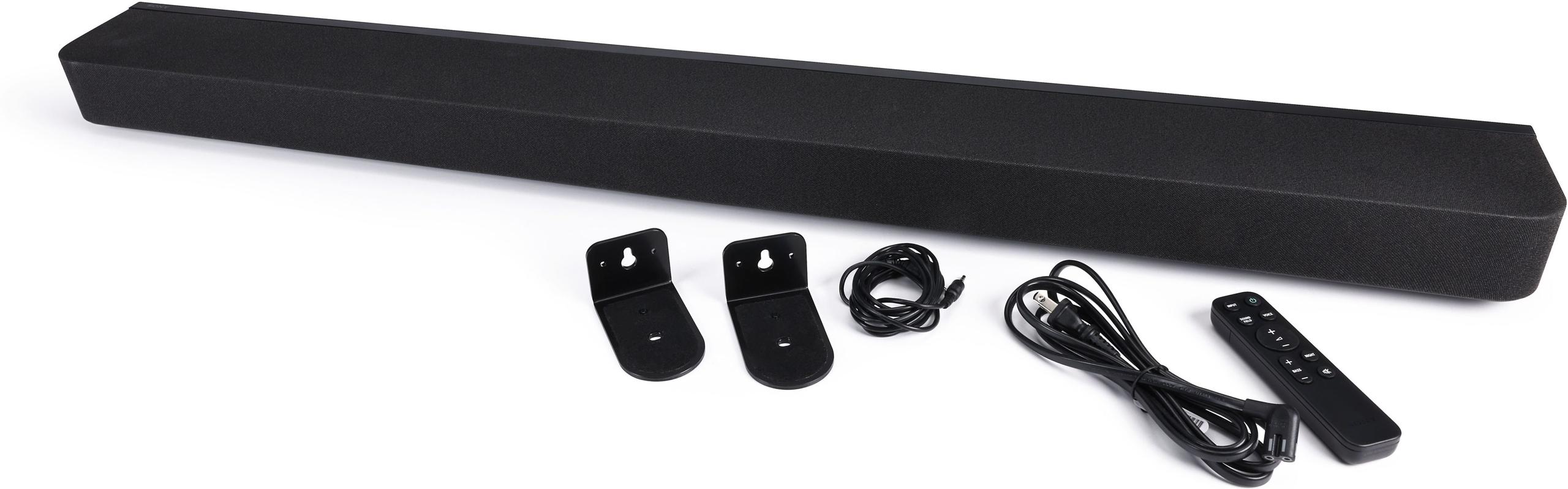
The Ultimea Skywave F40 comes complete with everything you need - soundbar, subwoofer, and rear speakers included. The Sony HT-A8000 works as a standalone unit but you'd need to purchase optional subwoofer and rear speakers separately to get similar bass and surround performance to the complete Ultimea system.
The Ultimea Skywave F40 has significantly better bass thanks to its dedicated wired subwoofer that can reach down to 40Hz. The Sony HT-A8000 relies on internal woofers which can't match the deep, room-filling bass impact of a dedicated subwoofer.
The Sony HT-A8000 is much easier to install since it's just one soundbar that mounts under your TV. The Ultimea Skywave F40 requires positioning the subwoofer, running cables, and placing the wireless rear speakers around your room, though the setup is still straightforward.
The Ultimea Skywave F40 is better for gaming because its physical rear speakers provide accurate directional audio cues that help locate enemies and environmental sounds. The Sony HT-A8000 can simulate surround effects but doesn't offer the precise positioning that competitive gamers need.
Yes, both the Sony HT-A8000 and Ultimea Skywave F40 support Dolby Atmos. The Sony uses up-firing speakers and processing to create height effects, while the Ultimea combines up-firing drivers with rear speakers for a more complete 5.1.2 Atmos experience.
The Ultimea Skywave F40 performs better in large rooms due to its 460W total power output and distributed speaker placement. The Sony HT-A8000 may struggle to fill larger spaces with its 60W output and single-point audio source, though it can still work well in medium-sized rooms.
The Sony HT-A8000 excels at dialogue clarity with its Voice Zoom 3 AI technology that can identify and enhance speech in the audio mix. While the Ultimea Skywave F40 also delivers clear dialogue, the Sony's advanced processing gives it an edge for voice clarity.
The Sony HT-A8000 integrates seamlessly with Sony TVs and supports HDMI CEC for universal remote control. The Ultimea Skywave F40 also supports CEC control, allowing you to adjust volume and basic functions with your TV remote regardless of TV brand.
The Ultimea Skywave F40 offers exceptional value by including a complete surround sound system with subwoofer and rear speakers. The Sony HT-A8000 costs significantly more and requires additional purchases to match the complete surround experience of the Ultimea system.
For dedicated home theater setups, the Ultimea Skywave F40 provides a more authentic cinematic experience with true surround sound and deep bass. The Sony HT-A8000 can work well for home theater if you prefer a cleaner aesthetic and don't mind potentially adding a subwoofer later.
The Sony HT-A8000 offers more premium connectivity with HDMI 2.1, Wi-Fi, AirPlay 2, and Spotify Connect for wireless music streaming. The Ultimea Skywave F40 covers the basics well with HDMI eARC, optical, USB, and Bluetooth 5.4, plus includes smart app control for advanced customization.
We've done our best to create useful and informative comparisons to help you decide what product to buy. Our research uses advanced automated methods to create this comparison and perfection is not possible - please contact us for corrections or questions. These are the sites we've researched in the creation of this article: consumerreports.org - skybygramophone.com - target.com - rtings.com - bestbuy.com - rubbermonkey.co.nz - shopatsc.com - audioadvice.com - sony.com - sony.com - sony.com - shop.cosmopolitan.com - store.sony.com.my - videoandaudiocenter.com - the-gadgeteer.com - youtube.com - ultimea.com - manuals.plus - youtube.com - ultimea.com - youtube.com - youtube.com - youtube.com - youtube.com - eu.ultimea.com - support.ultimea.com

Privacy Policy
Terms and Conditions - Affiliate Policy
Home Security
© Copyright 2008-2026.
11816 Inwood Rd #1211, Dallas, TX 75244