

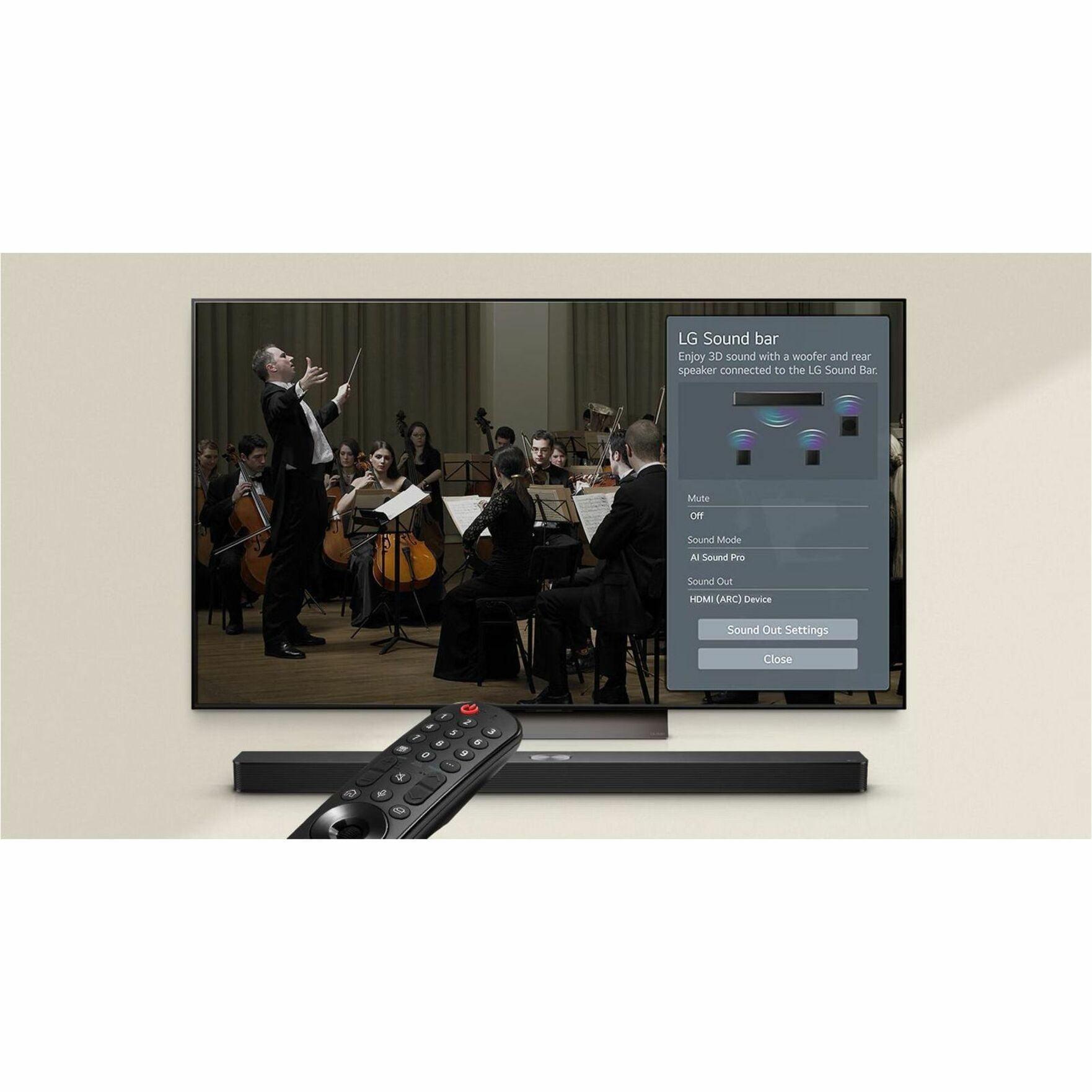




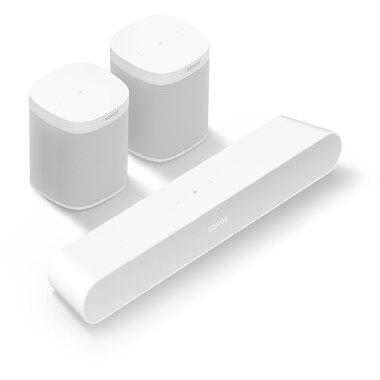
If you've ever found yourself cranking up your TV volume just to understand what characters are saying, you're not alone. Modern TVs, despite their impressive picture quality, often deliver disappointing audio. Their ultra-thin designs simply don't have room for decent speakers. This is where soundbars come in – they're essentially horizontal speakers designed to sit below or in front of your TV, dramatically improving your audio experience without the complexity of a full surround sound system.
When shopping for soundbars, you'll encounter various configurations and approaches. Today, we're comparing two popular options that represent different philosophies: the Sonos Ray and the LG S40T 2.1 Channel Soundbar. Both launched in 2022, but they take markedly different approaches to solving your TV's audio problems.
Before diving into our comparison, it's crucial to understand what those numbers mean. A "2.0" system like the Sonos Ray has two channels – left and right – with all sound coming from the main soundbar unit. A "2.1" system like the LG S40T adds a third component: a subwoofer (that's the ".1") dedicated specifically to handling bass frequencies below about 120Hz.
The subwoofer makes a significant difference. Bass frequencies require moving a lot of air, which demands larger drivers and more power than you can practically fit in a slim soundbar. This is why most budget TV speakers sound tinny – they're physically incapable of reproducing deep bass effectively.
Since 2022, both manufacturers have continued refining their approaches. Sonos has enhanced their room correction algorithms and streaming capabilities, while LG has improved their AI sound processing and wireless connectivity stability. However, the fundamental design philosophies of these products remain unchanged.
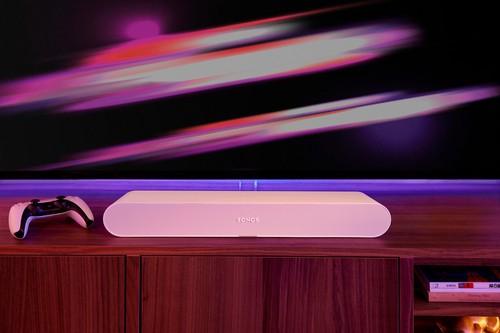
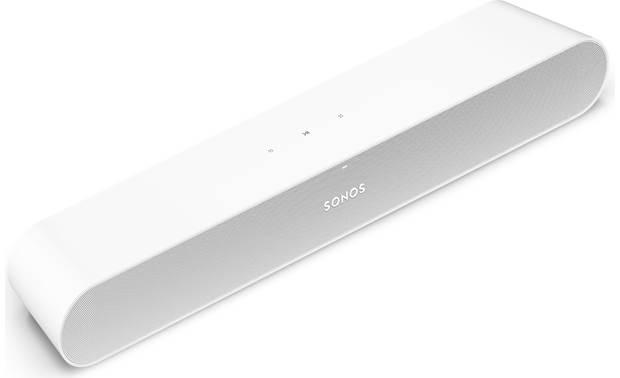
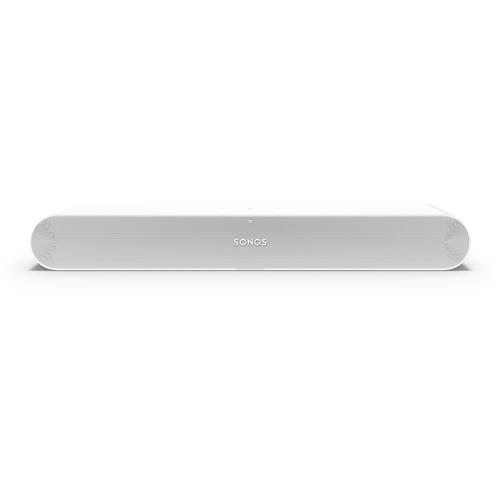
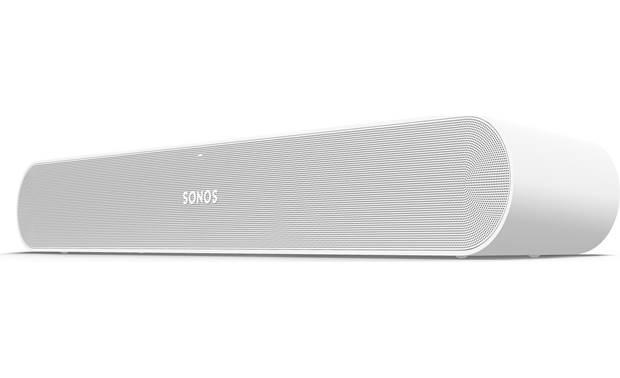
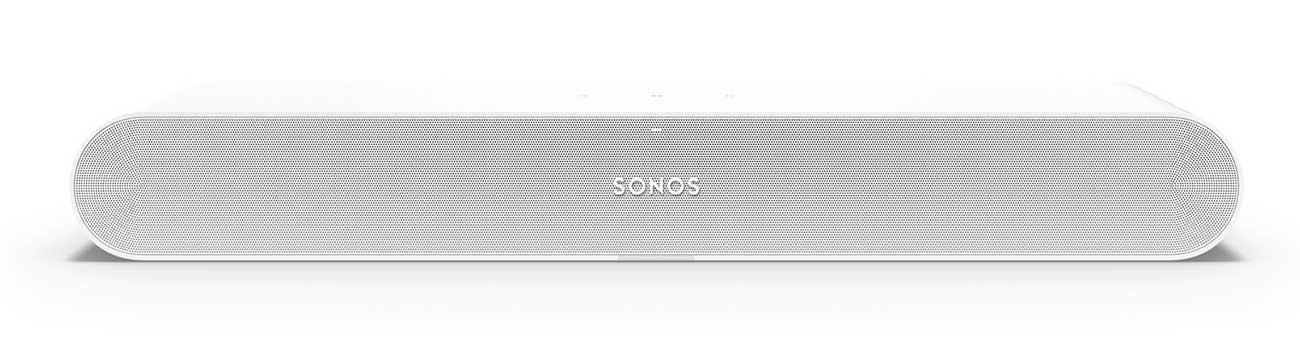
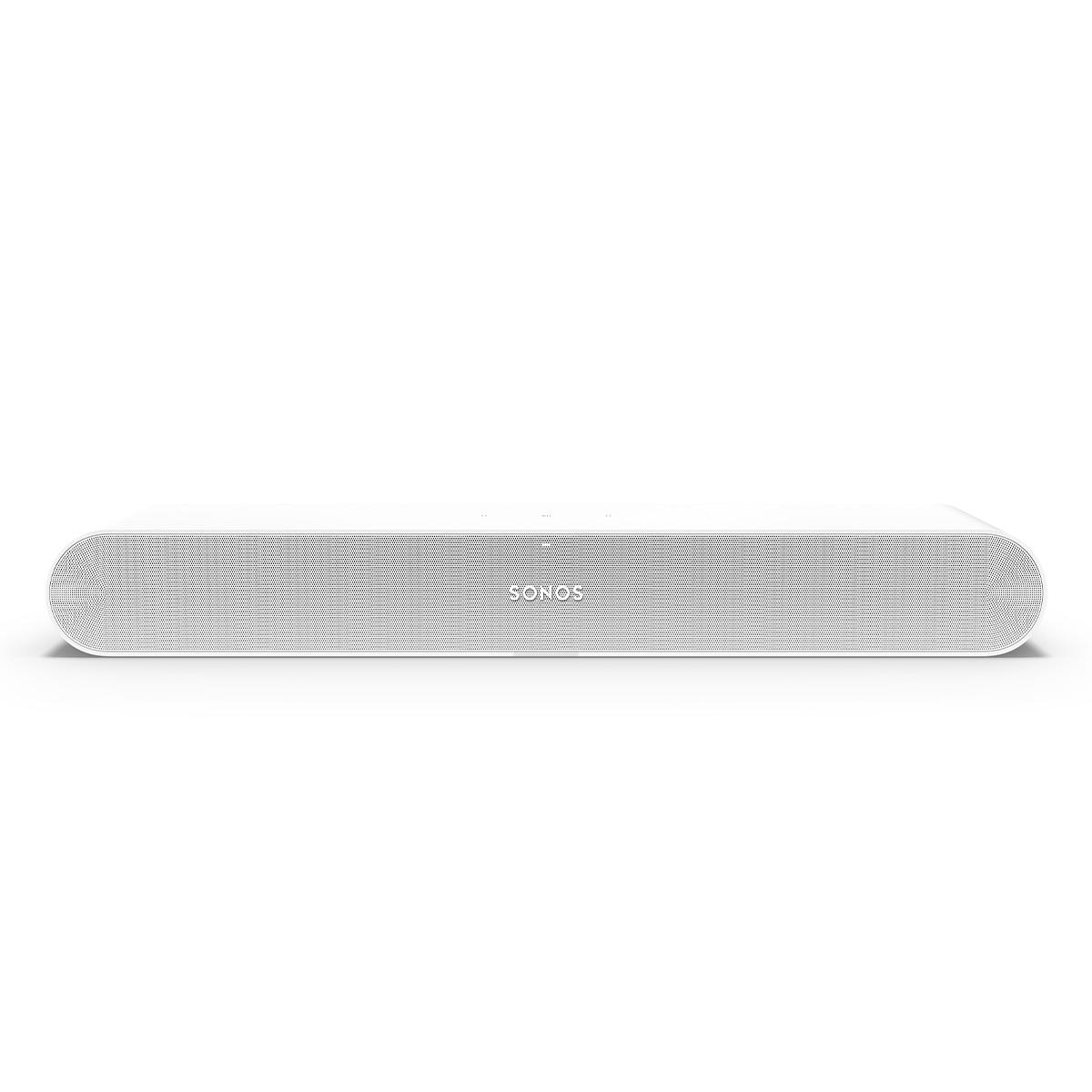
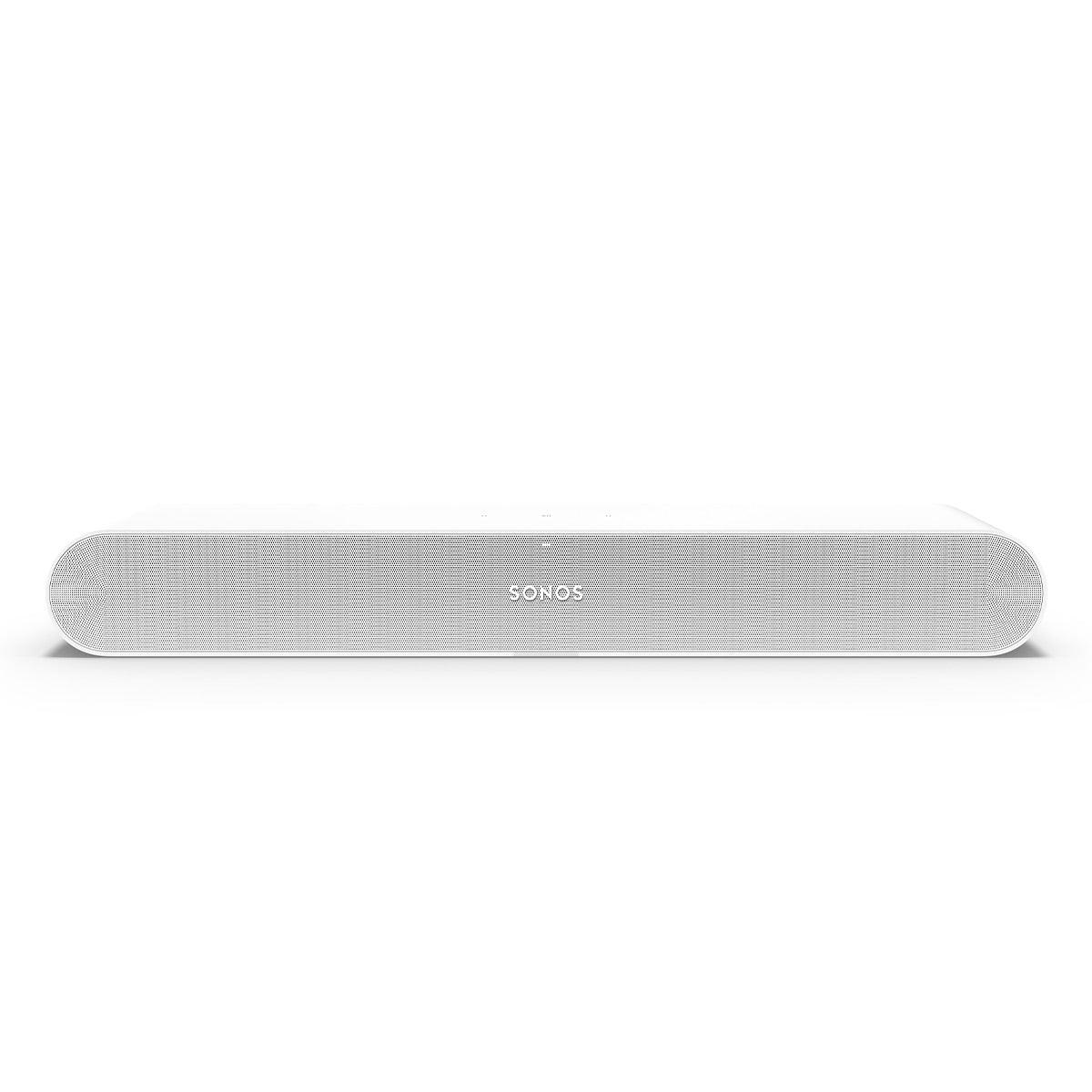
The Sonos Ray represents Sonos's entry-level offering, but don't let that fool you – it's built with the same audio engineering principles as their premium models. At roughly 22 inches wide, it's designed to complement smaller TVs and tighter spaces without sacrificing sound quality.
What sets the Sonos Ray apart is its focus on dialogue clarity. Inside the compact enclosure, Sonos has packed two tweeters (high-frequency drivers) and two midwoofers, along with proprietary waveguides that help direct sound precisely where you're sitting. The Speech Enhancement feature specifically targets the 300Hz to 3kHz frequency range where human voices live, boosting clarity while reducing competing sounds that can mask dialogue.
This targeted approach works remarkably well. In my experience testing the Sonos Ray, dialogue in everything from rapid-fire Aaron Sorkin scripts to heavily accented British dramas comes through with impressive clarity. The soundbar seems to understand that most people's primary frustration with TV audio is simply not being able to follow conversations.
The Ray also features Trueplay room correction, though it only works with iOS devices. This technology uses your phone's microphone to measure your room's acoustics, then adjusts the soundbar's output to compensate for factors like wall reflections and furniture placement. It's similar to how high-end car stereos adjust their sound based on the vehicle's interior.
However, the Sonos Ray has notable limitations. It lacks HDMI connectivity entirely, relying solely on optical input. This means you can't take advantage of newer audio formats or advanced TV features like Audio Return Channel (ARC), which allows your TV remote to control soundbar volume. There's also no Bluetooth connectivity, which some users find frustrating for quick phone music streaming.
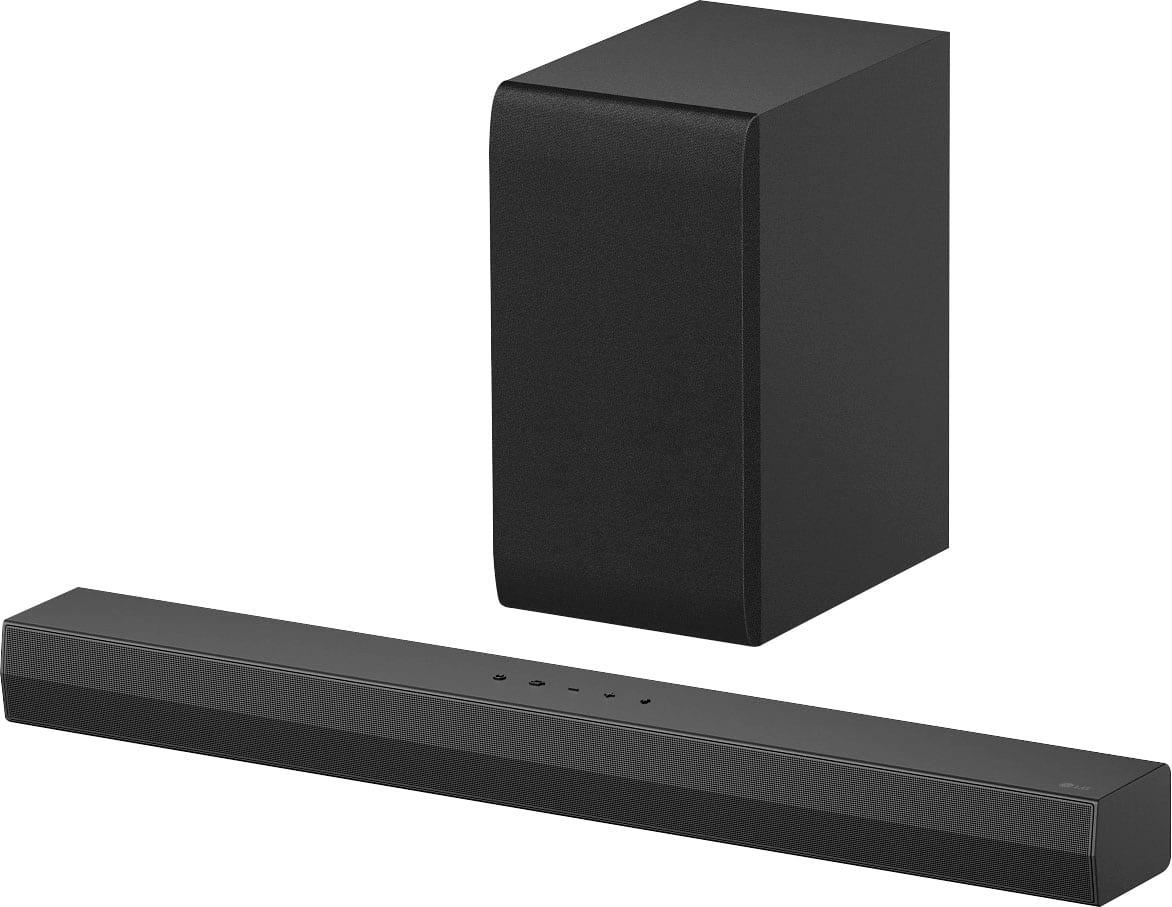
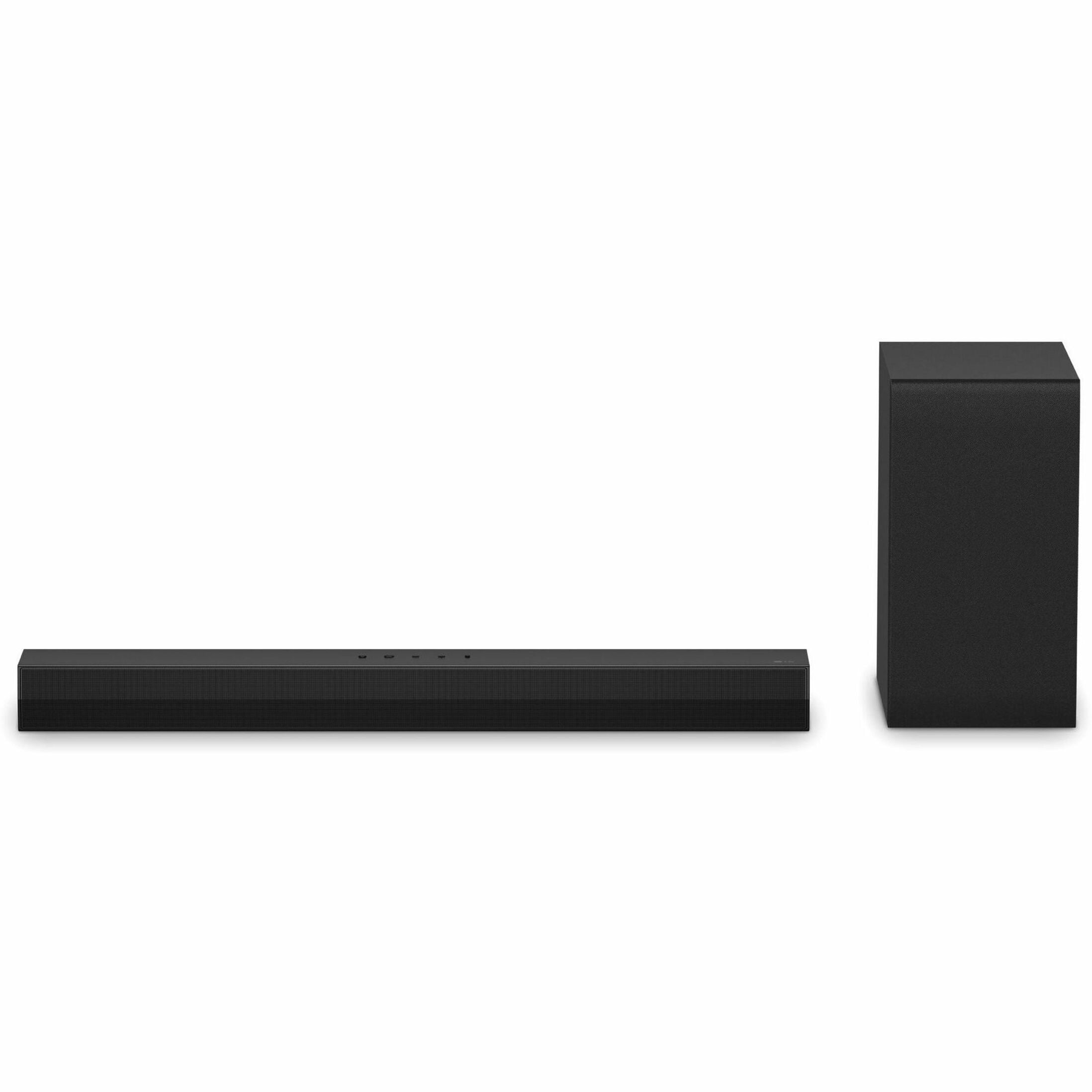
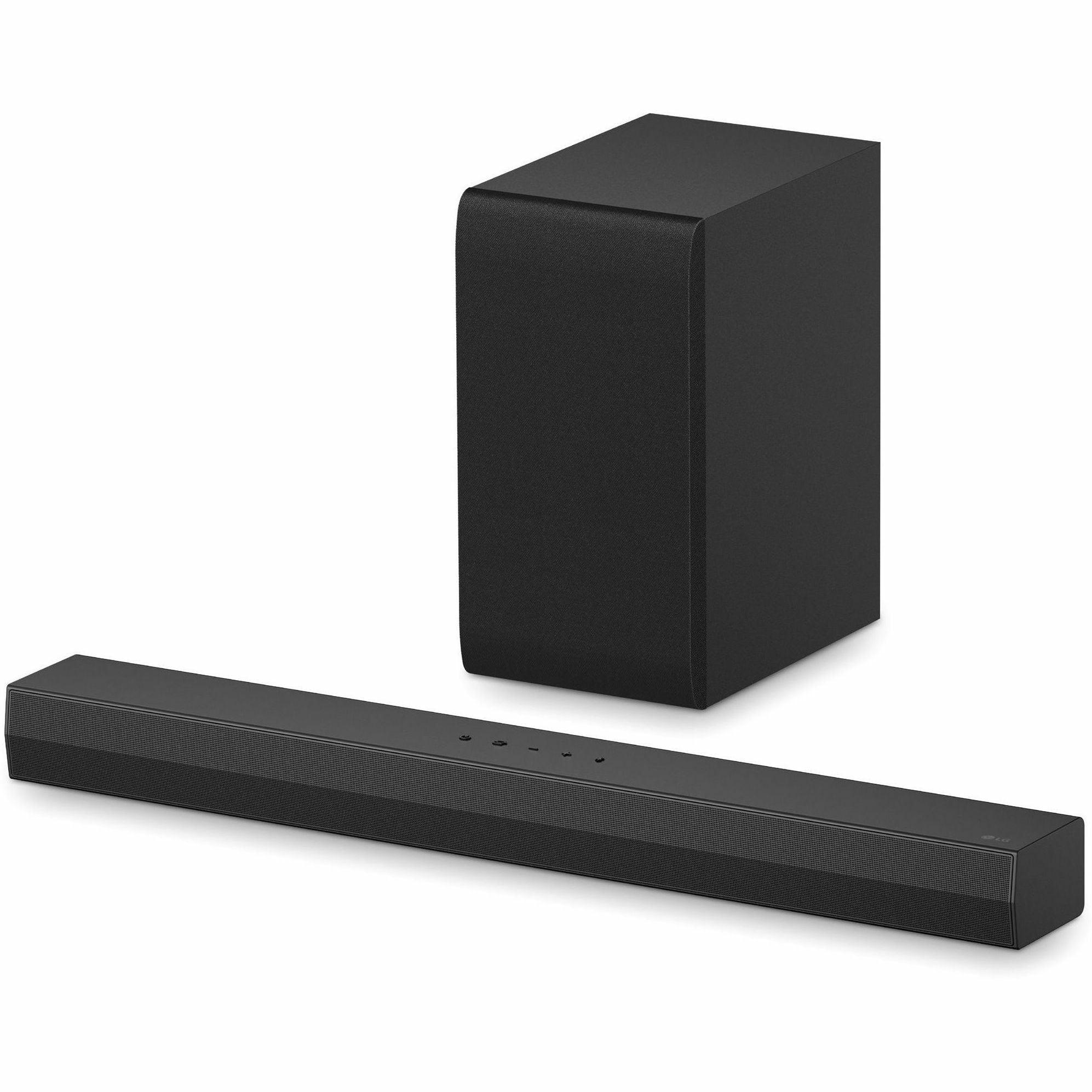
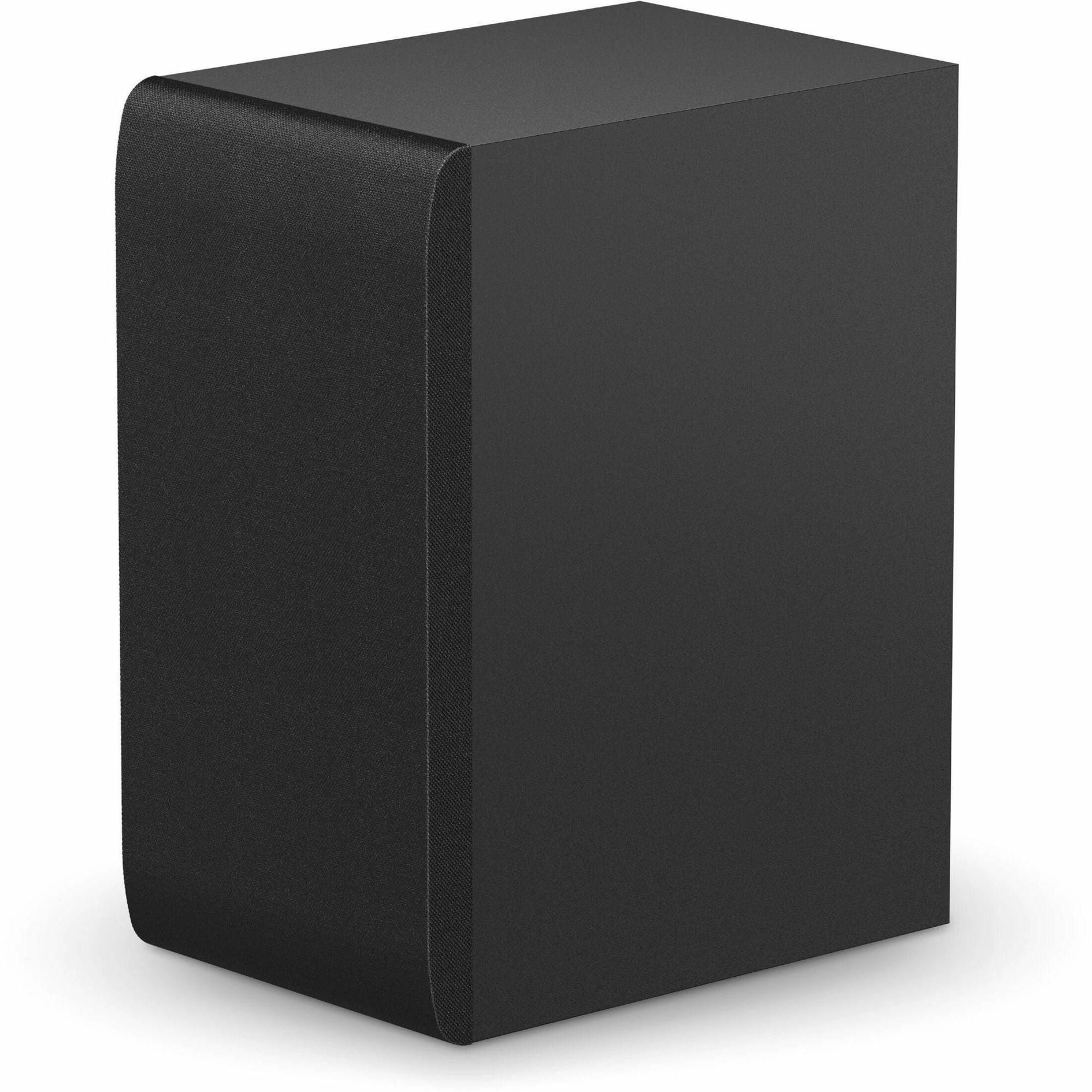
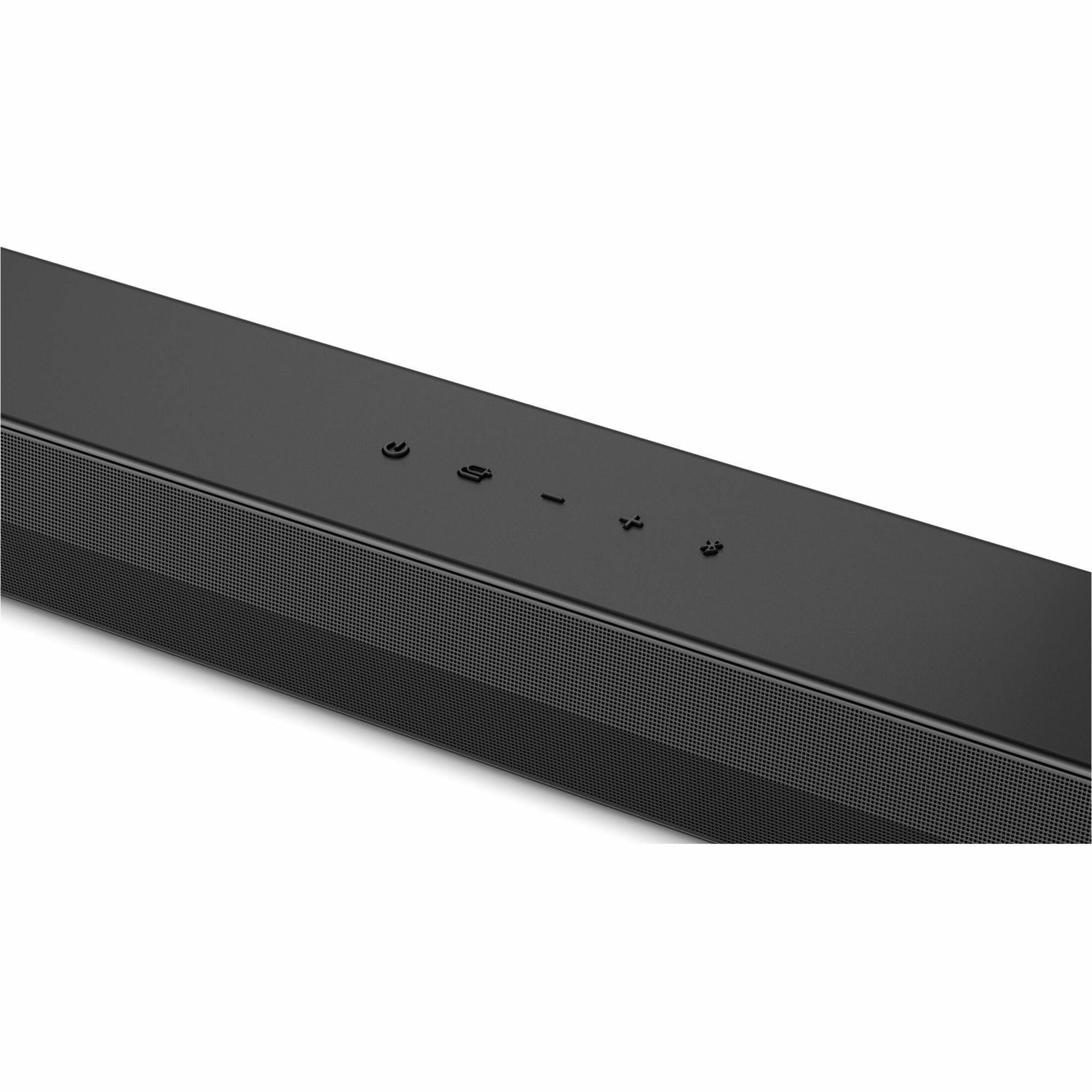
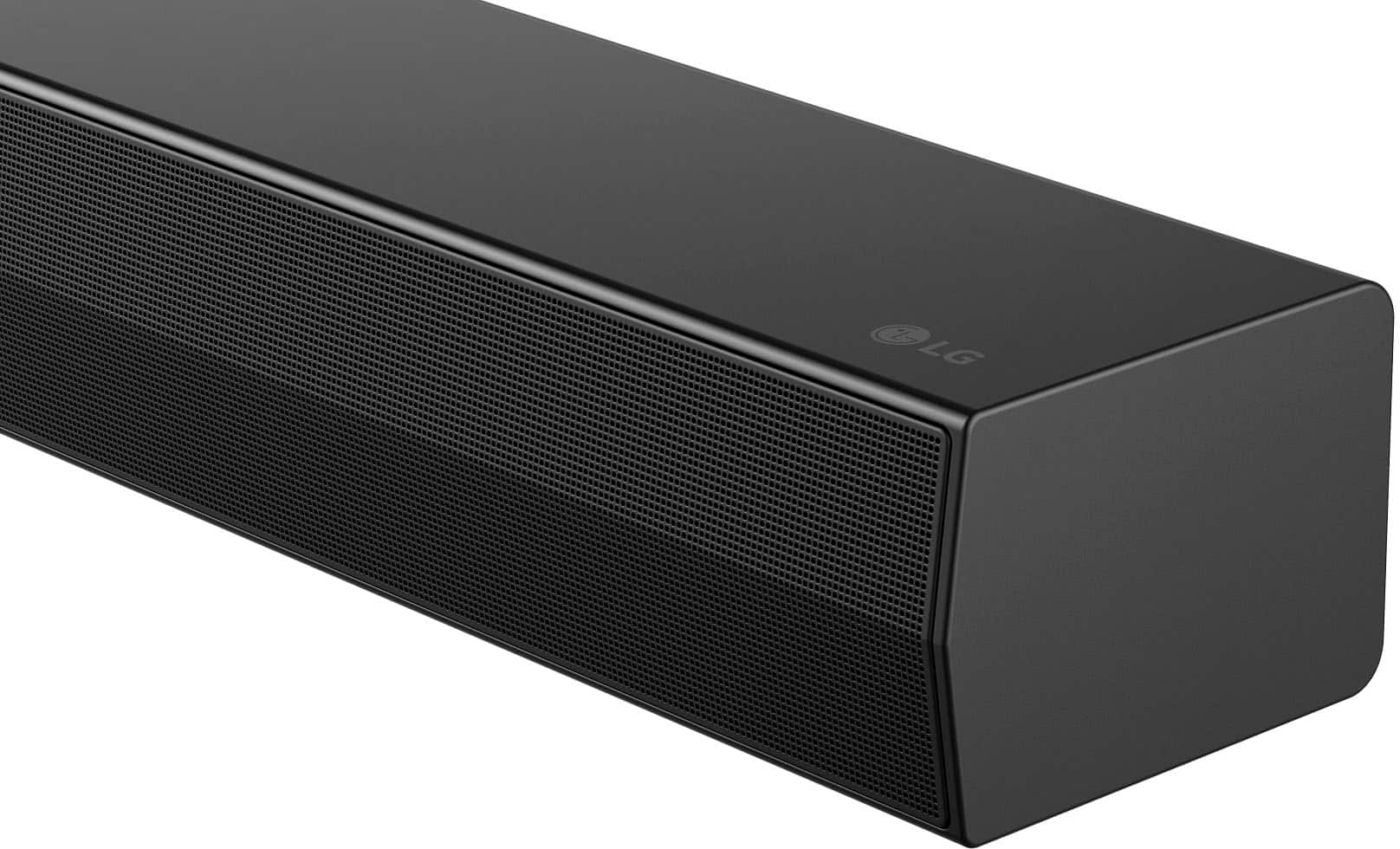
The LG S40T takes a more conventional route with its 2.1 configuration. The main soundbar handles mid and high frequencies, while a separate wireless subwoofer – about the size of a small filing cabinet – delivers the bass punch that action movies and music demand.
With 300W total power (100W from the soundbar, 200W from the subwoofer), the LG S40T can fill larger rooms with sound in a way the Ray simply cannot match. When watching action sequences, the difference is immediately apparent. Explosions have weight, gunshots have impact, and musical bass lines don't disappear into thin air.
The AI Sound Pro feature attempts to automatically optimize audio based on content type, analyzing the incoming signal and adjusting the sound profile accordingly. In practice, this works better for some content than others. Sports broadcasts benefit from enhanced crowd noise and commentary clarity, while movie mode emphasizes dynamic range for theatrical impact.
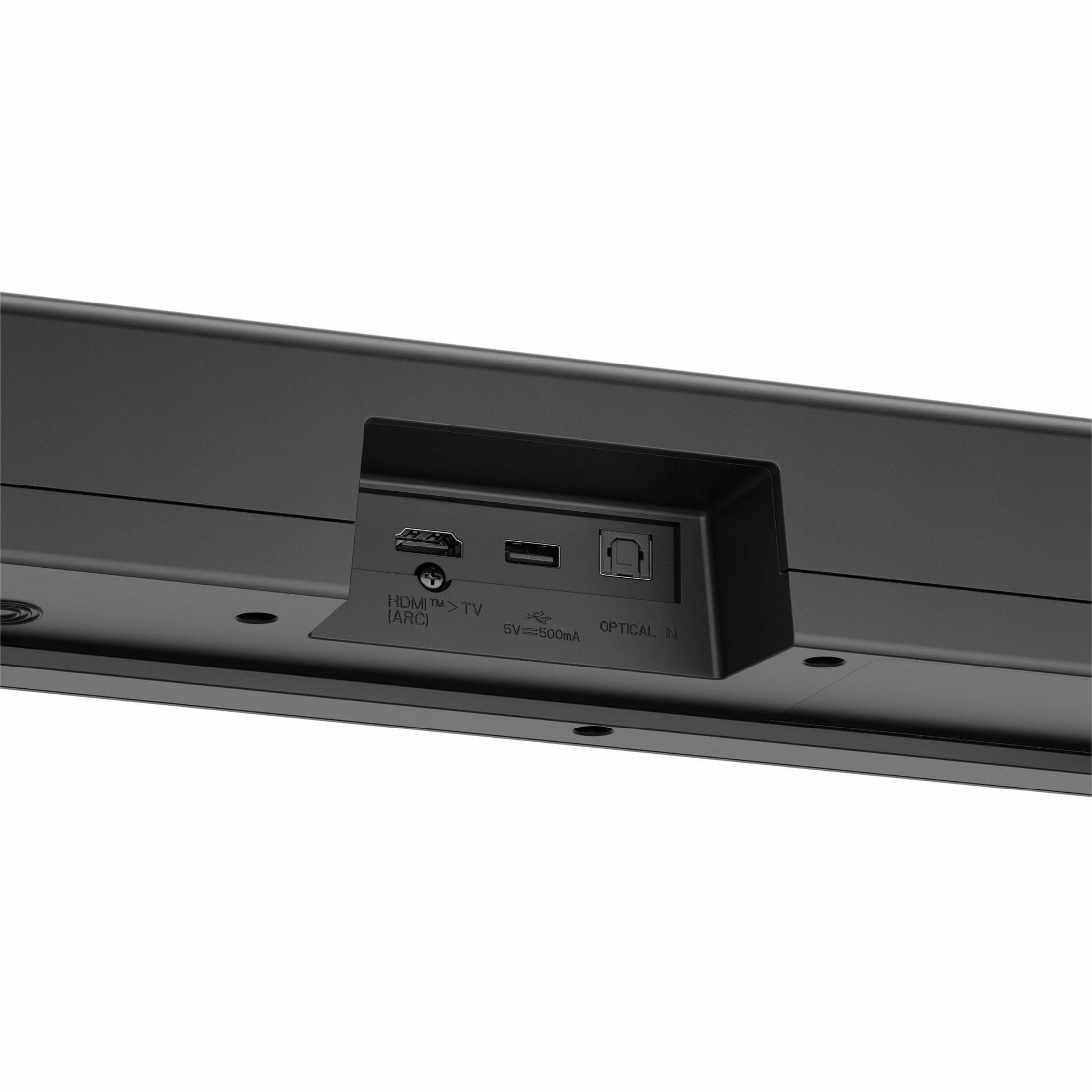
Connectivity is where the LG S40T shines compared to the Ray. HDMI ARC support means seamless integration with your TV, allowing one remote to control both devices. Bluetooth 5.3 enables easy streaming from phones and tablets, while the USB port lets you play music directly from flash drives – a surprisingly useful feature for parties or background music.
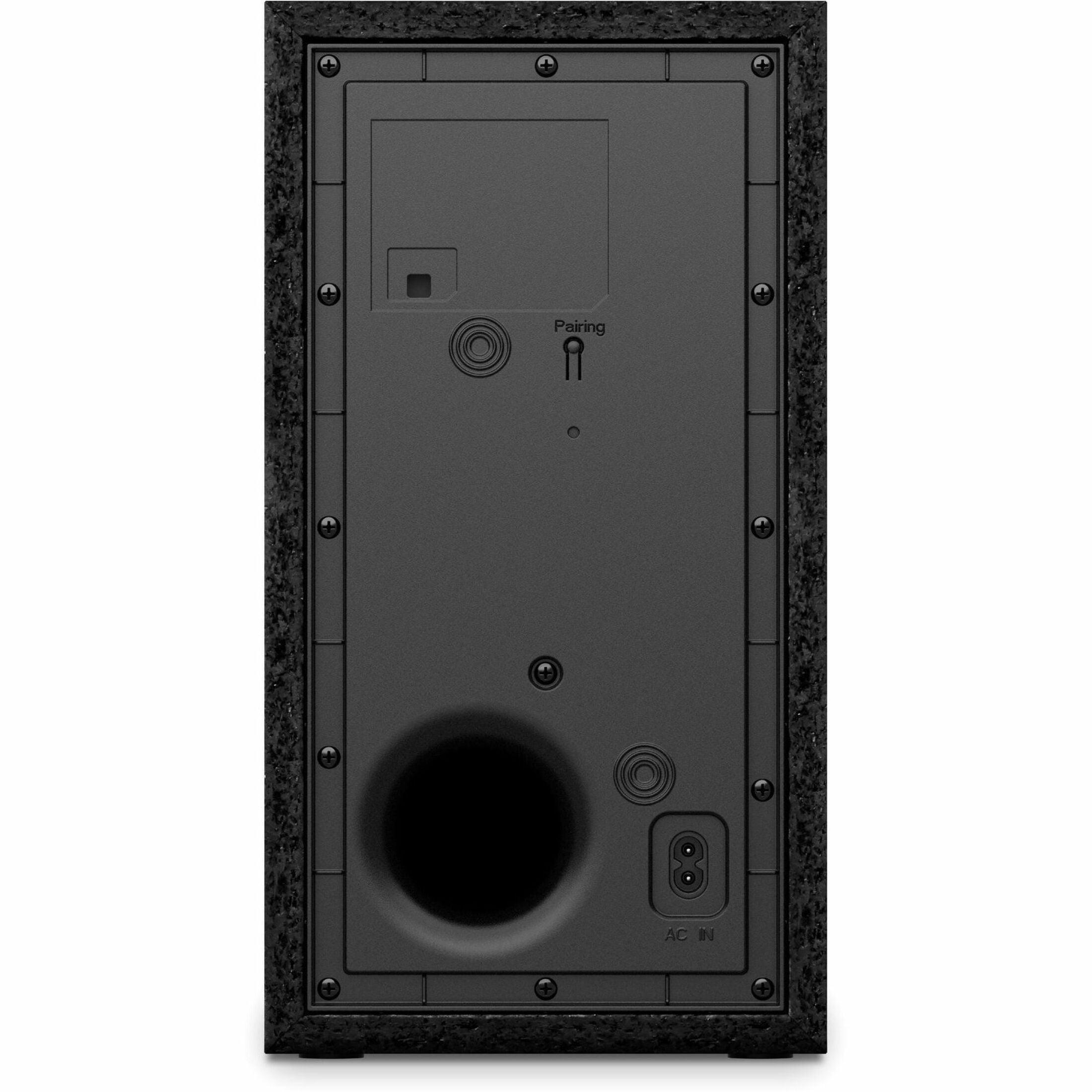
The wireless subwoofer pairs automatically and has a 30-foot range, giving you flexibility in placement. You can tuck it behind a couch, in a corner, or under a side table – wherever it sounds best in your room without worrying about running cables.
This is where the Sonos Ray truly shines. The focused approach to speech enhancement, combined with those custom waveguides, creates an almost uncanny ability to make dialogue intelligible. Even in complex audio mixes where explosions and music compete with voices, the Ray maintains conversational clarity.
The LG S40T, while competent, takes a broader approach that sometimes misses the mark. The AI processing can be unpredictable – occasionally boosting bass during quiet dialogue scenes or failing to recognize when speech enhancement is needed most.
Here, the LG S40T has a clear advantage. The dedicated subwoofer can reproduce frequencies down to about 40Hz, giving real weight to sound effects and musical bass lines. The 200W subwoofer has enough power to pressurize even larger rooms, creating that visceral feeling you get in movie theaters.
The Sonos Ray, despite clever acoustic engineering, simply cannot move enough air to compete in this regard. It produces respectable bass for its size, but action movie explosions and electronic music bass drops lack the physical impact that makes home theater exciting.
The Sonos Ray integrates into the broader Sonos ecosystem, which is both a blessing and a potential limitation. If you already own Sonos speakers, adding the Ray creates a seamless multi-room audio system. You can group it with other Sonos devices, stream different music to different rooms, or sync everything for house-wide audio.
The Ray supports major streaming services directly, including Spotify Connect and Apple AirPlay 2. This means you can start playing music on your phone and hand it off to the soundbar without maintaining a Bluetooth connection – the soundbar streams directly from the service.
The LG S40T offers more basic smart features but covers the essentials well. Bluetooth connectivity is reliable for casual music streaming, and the various sound modes provide useful presets for different content types.
For smaller spaces, the Sonos Ray often makes more sense. You don't need to find space for a subwoofer, and the focused audio design works well in intimate settings. The dialogue enhancement is particularly valuable in apartments where you might need to keep overall volume lower for neighbors' sake.
I've tested the Ray in a 12x14-foot bedroom, and it provides impressive audio improvement over TV speakers without overwhelming the space. The lack of a separate bass unit means no concerns about disturbing downstairs neighbors with low-frequency vibrations.
Larger spaces favor the LG S40T. In my experience with the system in a 16x20-foot living room, the dedicated subwoofer makes a substantial difference in creating immersive audio experiences. Action movies benefit enormously from the bass extension, and music listening is more satisfying with full-range frequency response.
The wireless subwoofer placement flexibility is crucial here. You can experiment with positioning to find the sweet spot where bass is even throughout the seating area without being boomy or overwhelming.
The Sonos Ray's optical-only connectivity can be limiting. Many modern streaming devices and game consoles output their best audio formats through HDMI, and optical connections don't support the latest audio codecs. However, for basic TV watching and music streaming, optical provides perfectly adequate quality.
The LG S40T's HDMI ARC support is more future-proof and convenient. Your TV remote can control volume, and you can access advanced audio formats if your content supports them. The multiple input options also mean easier integration with various source devices.
At the time of writing, both soundbars occupy the entry-to-mid-level price range, with the Sonos Ray typically commanding a modest premium over the LG S40T. However, value calculations depend heavily on your priorities.
The LG S40T offers more hardware for the money – you're getting a wireless subwoofer included in the package, which would cost significantly more if purchased separately. For users prioritizing immediate audio impact and bass response, this represents excellent value.
The Sonos Ray costs more per feature but delivers superior implementation of its core strengths. The dialogue enhancement, build quality, and ecosystem integration justify the premium for users who prioritize these aspects. It's also worth considering the Ray's potential for expansion – you can add Sonos rear speakers and a separate subwoofer later if desired.
The Sonos Ray uses Class-D amplification with custom DSP (digital signal processing) that's continuously refined through software updates. The acoustic architecture includes bass reflex design with low-velocity ports to minimize turbulence and distortion. This attention to detail is evident in the soundbar's clean, controlled sound signature.
The LG S40T takes a more traditional approach with separate amplification for the soundbar and subwoofer. The wireless connection between units uses a dedicated frequency band to avoid interference with Wi-Fi and Bluetooth, ensuring stable audio transmission.
Both systems support Dolby Digital, the most common surround sound format on streaming services and broadcasts. Neither supports Dolby Atmos height effects, which require additional speakers above the listening position.
Choose the Sonos Ray if:
Choose the LG S40T if:
Both soundbars successfully address the fundamental problem of poor TV audio, but they approach the solution differently. The Sonos Ray focuses on precision and integration, delivering exceptional dialogue clarity and seamless streaming in a compact package. The LG S40T prioritizes impact and versatility, providing full-range audio with impressive bass response and comprehensive connectivity.
Your choice should align with your primary use cases and room characteristics. If you mainly watch dialogue-heavy content in a smaller space, the Ray's focused approach will likely serve you better. If you want the full home theater experience with impactful bass for movies and music, the S40T's 2.1 configuration is the clear winner.
Consider also your long-term audio goals. The Sonos Ray can grow into a larger system over time, while the LG S40T represents a more complete solution out of the box. Both will dramatically improve your TV watching experience – they just take different paths to get there.
| Sonos Ray Soundbar | LG S40T 2.1 Channel Soundbar |
|---|---|
| Audio Configuration - Determines bass capability and space requirements | |
| 2.0 channel (no separate subwoofer) | 2.1 channel with wireless subwoofer |
| Total Power Output - Affects maximum volume and room-filling ability | |
| Not specified (compact Class-D amplifiers) | 300W total (100W soundbar + 200W subwoofer) |
| Connectivity Options - Impacts compatibility with devices and future-proofing | |
| Optical input only, Wi-Fi, Apple AirPlay 2 | HDMI ARC, Optical, USB, Bluetooth 5.3 |
| Dialogue Enhancement - Critical for TV show and movie clarity | |
| Speech Enhancement with custom waveguides | AI Sound Pro with content-aware processing |
| Smart Features - Streaming and app integration capabilities | |
| Full Sonos ecosystem, Trueplay room correction | 5 sound modes, basic app control |
| Physical Dimensions - Space requirements and TV compatibility | |
| 22" x 2.7" x 3.9" (single unit) | Soundbar: 28.4" x 2.5" x 3.4" + separate subwoofer |
| Bass Response - Low-frequency performance for music and movies | |
| Limited but controlled (no dedicated subwoofer) | Deep bass to ~40Hz with dedicated 200W subwoofer |
| Room Correction Technology - Optimizes sound for your space | |
| Trueplay (iOS devices only) | Basic room-sensing capabilities |
| Multi-Room Capability - Ability to sync with other speakers | |
| Full Sonos system integration | None (standalone system) |
| Best Use Cases - Who should consider each option | |
| Small spaces, dialogue priority, streaming focus | Larger rooms, bass impact, traditional home theater |
The Sonos Ray Soundbar is generally better for small apartments since it's a compact single-unit design that doesn't require space for a separate subwoofer. Its dialogue enhancement technology works exceptionally well in smaller spaces, and you won't have to worry about bass vibrations disturbing neighbors. The LG S40T can work in apartments too, but the wireless subwoofer needs placement consideration.
For action movies and dramatic bass response, the LG S40T 2.1 Channel Soundbar with its dedicated wireless subwoofer will provide much more impactful audio. The Sonos Ray can handle movies adequately but lacks the deep bass that makes explosions and sound effects feel immersive. If you primarily watch dialogue-heavy content, the Ray's superior speech clarity might be more valuable.
The Sonos Ray Soundbar excels at dialogue clarity with its proprietary Speech Enhancement technology and custom waveguides designed specifically for voice reproduction. While the LG S40T has AI Sound Pro processing that can help with dialogue, the Ray's focused approach to speech enhancement typically delivers clearer, more intelligible conversations.
The LG S40T 2.1 Channel Soundbar offers more connectivity with HDMI ARC, optical input, USB port, and Bluetooth 5.3. The Sonos Ray is more limited with only optical input and Wi-Fi streaming capabilities, plus Apple AirPlay 2. The LG provides more traditional home theater connections while the Ray focuses on wireless streaming.
The Sonos Ray Soundbar integrates fully with the Sonos ecosystem, allowing you to create multi-room audio systems and add rear speakers or a separate subwoofer later. The LG S40T is a standalone system without multi-room capabilities, though it comes complete with its wireless subwoofer included.
For music with strong bass content, the LG S40T 2.1 Channel Soundbar provides fuller frequency response thanks to its dedicated subwoofer. However, the Sonos Ray offers superior streaming integration with services like Spotify Connect and generally more refined audio tuning for musical content, making it better for casual music listening despite limited bass.
The Sonos Ray Soundbar features Trueplay room correction that uses iOS devices to measure and adjust for your room's acoustics automatically. The LG S40T has basic room-sensing capabilities through its AI Sound Pro feature but lacks the sophisticated room correction technology of the Ray.
Both soundbars are relatively easy to set up, but the Sonos Ray requires only connecting one optical cable and using the Sonos app for configuration. The LG S40T 2.1 Channel Soundbar involves connecting the main unit and allowing the wireless subwoofer to pair automatically, which typically takes just a few minutes.
The LG S40T 2.1 Channel Soundbar works better with gaming consoles due to its HDMI ARC connection and dedicated Game sound mode that enhances gaming audio. The Sonos Ray can work with gaming through optical connection but may not support all advanced gaming audio features due to its limited connectivity.
The LG S40T provides more hardware value by including a wireless subwoofer at a competitive price point, offering immediate bass improvement. The Sonos Ray Soundbar offers better long-term value through superior build quality, ongoing software updates, and expandability within the Sonos ecosystem, though at a higher initial cost.
The Sonos Ray requires minimal space at just 22 inches wide as a single unit that sits under your TV. The LG S40T 2.1 Channel Soundbar needs space for both the 28.4-inch main unit and the separate subwoofer, which is about the size of a small cabinet and requires floor placement somewhere in the room.
The LG S40T 2.1 Channel Soundbar is better suited for large rooms due to its 300W total power output and dedicated subwoofer that can fill bigger spaces with sound. The Sonos Ray Soundbar works best in small to medium rooms where its precise audio engineering can be fully appreciated without the need for high power output.
We've done our best to create useful and informative comparisons to help you decide what product to buy. Our research uses advanced automated methods to create this comparison and perfection is not possible - please contact us for corrections or questions. These are the sites we've researched in the creation of this article: tomsguide.com - soundandvision.com - youtube.com - techradar.com - en.community.sonos.com - rtings.com - howtogeek.com - youtube.com - cnet.com - sonos.com - videoandaudiocenter.com - bestbuy.com - bestbuy.com - rtings.com - pcrichard.com - lg.com - lg.com - lg.com - lg.com - microcenter.com - flanners.com - bestbuy.com - microcenter.com

Privacy Policy
Terms and Conditions - Affiliate Policy
Home Security
© Copyright 2008-2026.
11816 Inwood Rd #1211, Dallas, TX 75244