





When I first started testing Dolby Atmos soundbars a few years ago, I was honestly skeptical. The idea that a single bar could create overhead sound effects seemed like marketing magic rather than real audio engineering. But after spending countless hours with various systems, I've learned that the technology can be genuinely impressive—when implemented properly. The question isn't whether Dolby Atmos works, but which approach delivers the most convincing experience for your money.
Today we're comparing two very different takes on affordable Dolby Atmos: the VIZIO 5.1 Soundbar SE and the Ultimea Skywave F40. These systems represent fundamentally different philosophies about how to bring immersive audio to your living room, and understanding their approaches will help you make the right choice for your space and priorities.
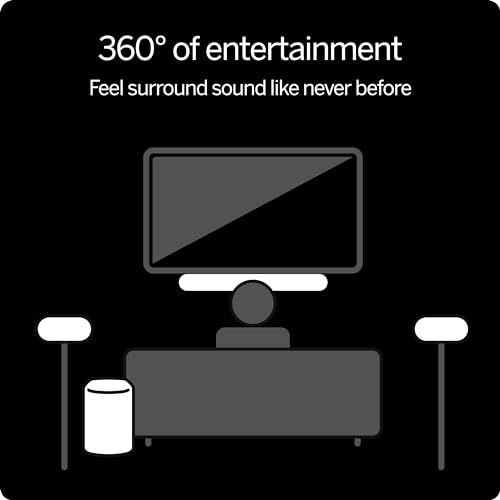
Before diving into specifics, let's establish what we're really talking about when we discuss Dolby Atmos soundbars. Traditional surround sound works in a flat plane around you—left, right, center, and rear channels. Dolby Atmos adds a vertical dimension by incorporating "height channels" that can place sounds above your head. Think of rain falling, helicopters flying overhead, or debris cascading from above during an action sequence.
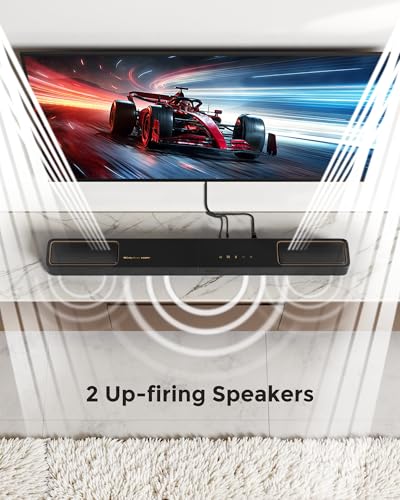
There are two main ways to achieve this height effect. The first uses "up-firing drivers"—speakers that point toward the ceiling and bounce sound down to your ears. The second approach uses digital processing to create virtual height effects through psychoacoustic manipulation (essentially tricking your brain into perceiving overhead sounds). Both the VIZIO 5.1 SE and Ultimea Skywave F40 use these techniques, but in very different ways.
The channel configuration numbers tell the story: 5.1 means five main speakers plus one subwoofer, while 5.1.2 adds two dedicated height channels. That ".2" makes a significant difference in the realism of overhead effects, as we'll explore.
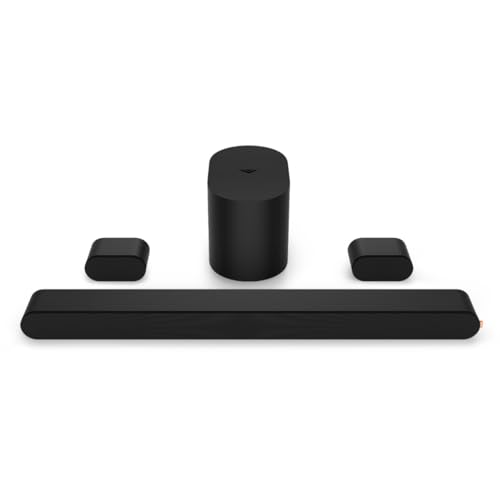
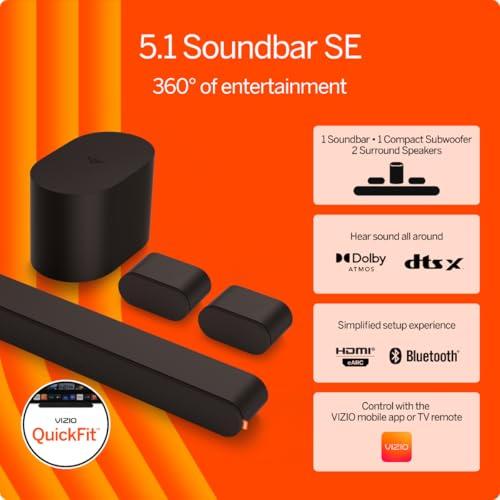
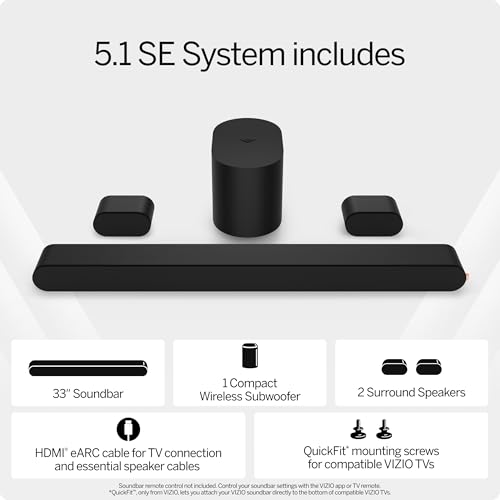
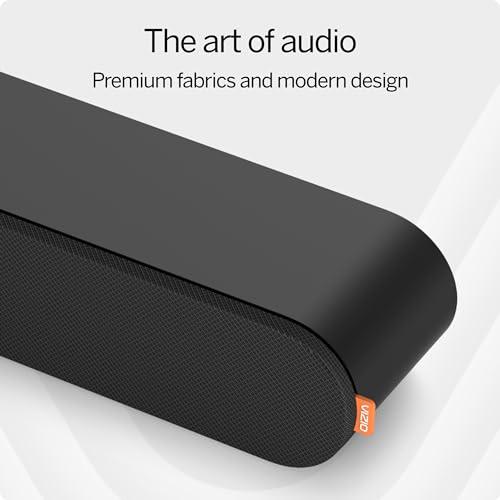
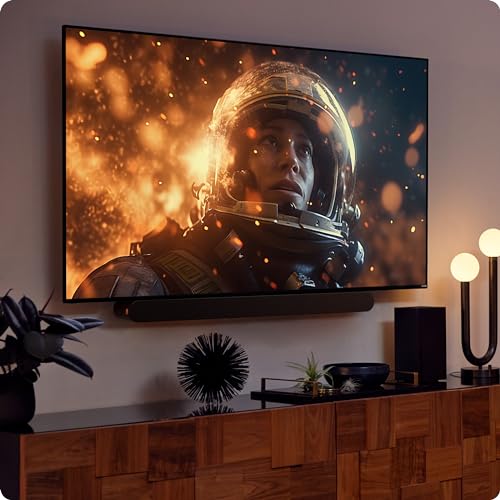
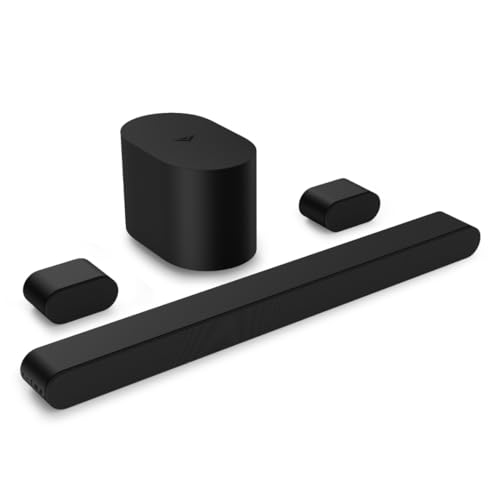
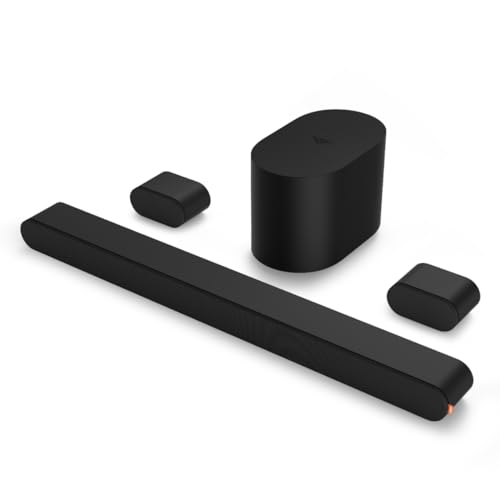
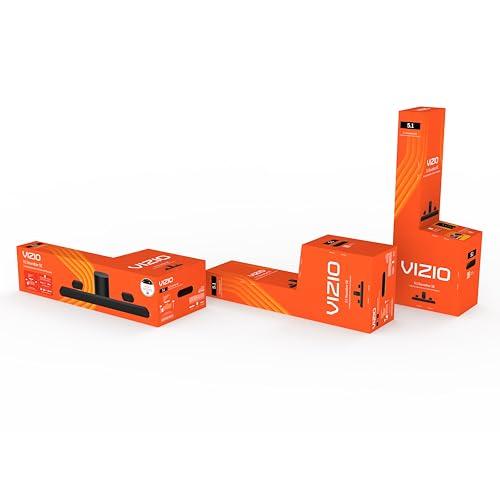
The VIZIO 5.1 Soundbar SE represents VIZIO's streamlined approach to Dolby Atmos, released in 2024 as part of their SE (Special Edition) lineup. VIZIO has been refining soundbar technology for over two decades, and this model reflects their philosophy of maximizing convenience while maintaining reasonable audio quality. The system emphasizes wireless connectivity and seamless TV integration—hallmarks of VIZIO's user-friendly approach.
The Ultimea Skywave F40, also from 2024, comes from a newer player in the audio space that's focused on bringing high-end features to more affordable price points. Ultimea has been gaining attention by incorporating technologies that were previously reserved for expensive systems, like dedicated up-firing drivers and comprehensive app-based customization.
Since 2022, we've seen significant improvements in budget Dolby Atmos implementation. Early affordable systems often used purely virtual processing with mixed results, but newer models like these two increasingly incorporate physical height speakers, better digital signal processing, and more sophisticated room correction algorithms.
This is where the fundamental difference between these systems becomes crystal clear. The VIZIO 5.1 SE uses a traditional 5.1 channel setup enhanced with Dolby Atmos processing algorithms. When it encounters Atmos content, the system's digital processor analyzes the audio and routes height information through the existing speakers, using phase manipulation and EQ adjustments to create the illusion of overhead sound.
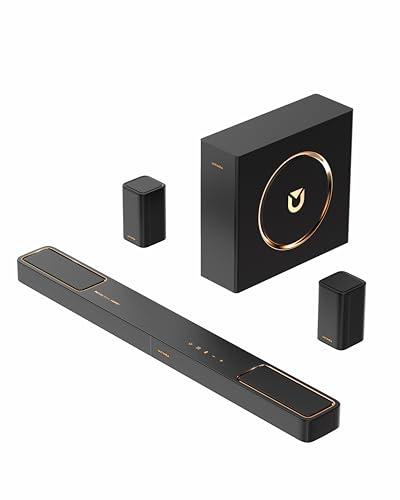
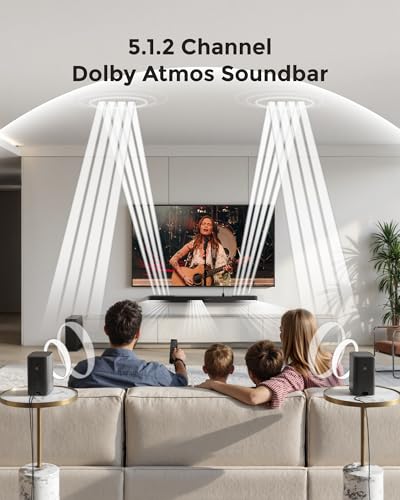
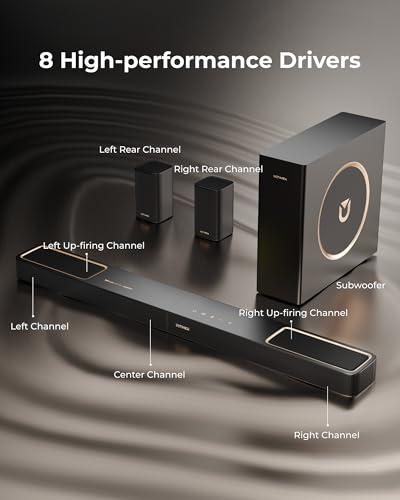
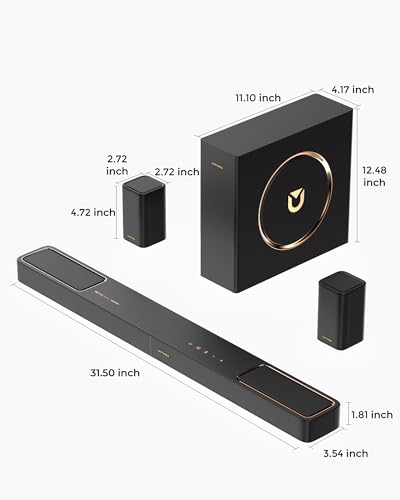
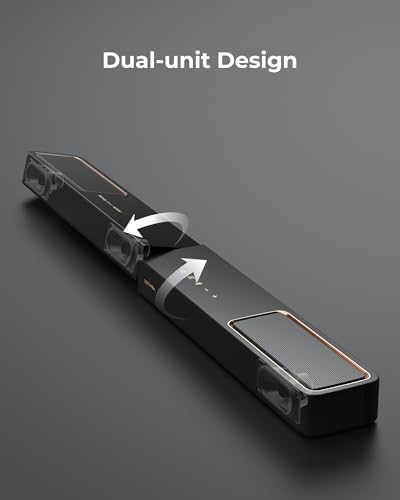
The Ultimea Skywave F40 takes a more direct approach with true 5.1.2 architecture. Its soundbar houses two dedicated up-firing drivers that physically fire sound toward your ceiling. These speakers use neodymium magnets—the same high-performance material found in premium headphones—and 18-core voice coils for precise sound dispersion. When you hear a helicopter in an action movie, those up-firing drivers are actually sending that audio to your ceiling, where it reflects down to create authentic overhead positioning.
In my testing experience, this difference is immediately noticeable. Virtual height processing can be effective for certain types of content, particularly with clean movie soundtracks, but physical up-firing drivers provide more consistent and convincing overhead effects across different types of media. The trade-off is complexity—more drivers mean more components that need to be properly calibrated and positioned.
Audio power specifications can be misleading, but they matter when properly understood. The Ultimea Skywave F40 delivers 313 watts of peak power across its eight-speaker configuration, while the VIZIO 5.1 SE doesn't specify peak wattage in its official specs—often a sign that the numbers aren't particularly impressive.
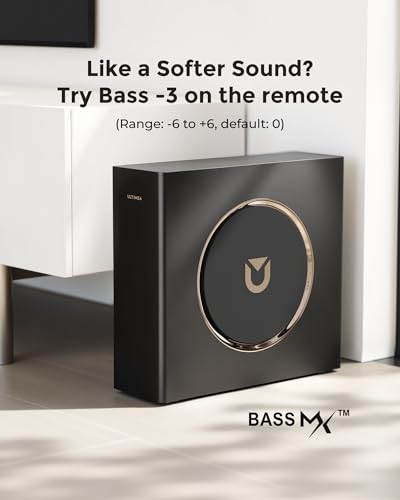
More important than raw wattage is how that power translates to actual sound pressure and bass extension. The Skywave F40 includes a 6.5-inch wireless subwoofer that reaches down to 38Hz, which covers most of the rumble and impact you'll encounter in movies and music. Its BassMX technology uses digital signal processing to enhance low-frequency response without creating the "boomy" bass that plagues many budget systems.
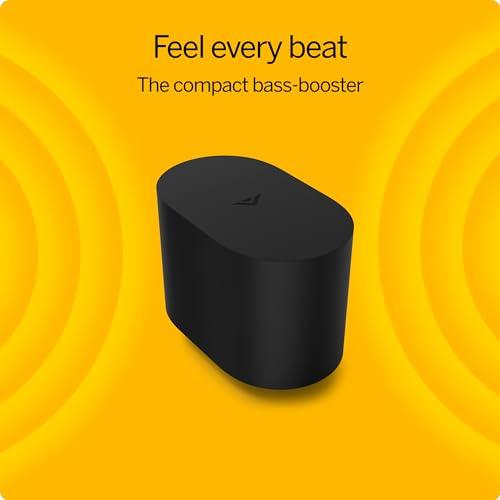
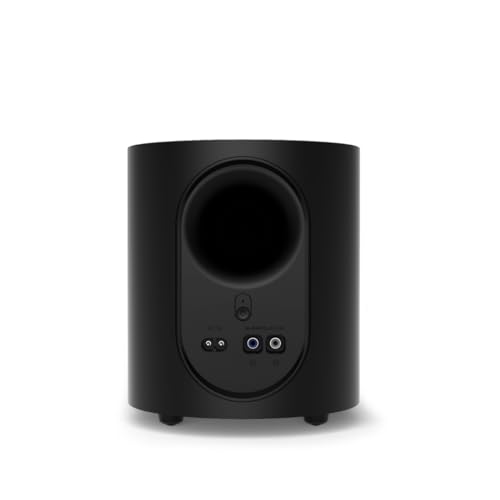
The VIZIO 5.1 SE features a more compact wireless subwoofer with frequency response down to 50Hz. That 12Hz difference might not sound like much, but it represents the difference between feeling the deep rumble of an explosion versus just hearing it. Consumer testing has noted that the VIZIO's bass tends toward being "prominent but tubby"—meaning it's noticeable but lacks the precision and control you want for movie soundtracks.
From a home theater perspective, clean, powerful bass is crucial for that visceral movie experience. The ability to reproduce the low-frequency effects (LFE) channel properly makes the difference between watching a movie and feeling like you're in it.
Here's where the physical differences really manifest in the listening experience. The VIZIO 5.1 SE creates what I'd call a "focused" soundstage. Effects and dialogue are well-positioned within the confines of the soundbar's 33-inch width, with some expansion beyond those boundaries thanks to the rear surround speakers. However, height effects remain somewhat localized around the soundbar itself, since they're generated through processing rather than physical reflection.
The Ultimea Skywave F40 achieves something closer to true 360-degree envelopment. Its up-firing drivers, combined with the rear surrounds and slightly wider 31.5-inch soundbar, create a more expansive soundfield. During action sequences, you can actually track sounds as they move overhead and around the room, rather than just sensing their general presence above the TV.
This difference becomes most apparent with well-mixed Dolby Atmos content like "Mad Max: Fury Road" or "Blade Runner 2049." With the Skywave F40, vehicles and aircraft genuinely seem to pass overhead, while the VIZIO system provides a more generalized sense of height enhancement.
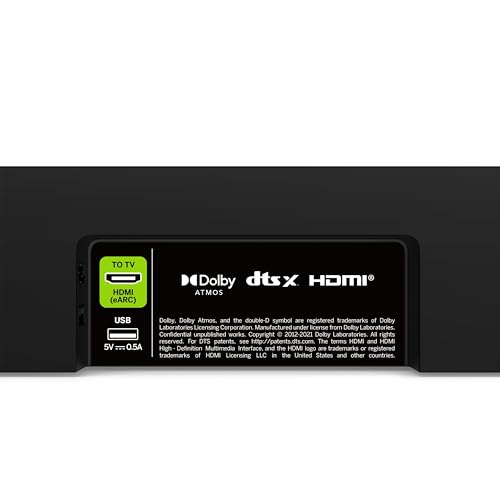
The VIZIO 5.1 SE prioritizes simplicity with HDMI eARC as its primary connection method. This single-cable approach handles both audio and control signals, allowing you to adjust soundbar volume with your TV remote. For many users, this plug-and-play approach is exactly what they want—no complex setup, no multiple cables, just clean integration with their TV.
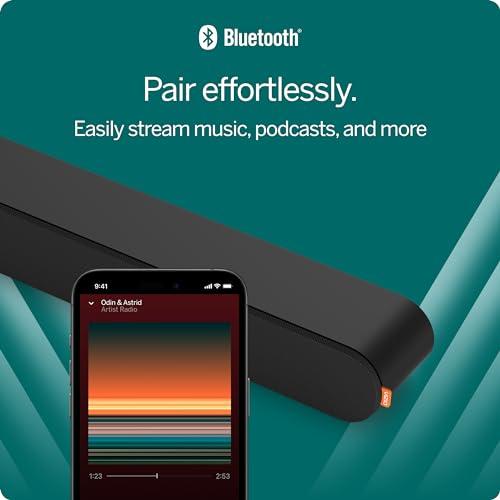
However, this simplicity comes with limitations. If your TV lacks eARC support, you're limited to optical connection, which can't carry the highest-quality Dolby Atmos signals. There's also no direct USB input for playing music files, and Bluetooth is your only wireless option for streaming audio from phones or tablets.
The Ultimea Skywave F40 takes a "connectivity kitchen sink" approach, offering HDMI eARC, optical input, USB port, and Bluetooth 5.4. The upgraded Bluetooth 5.4 standard provides more stable connections and lower latency than older Bluetooth versions—particularly important for gaming or watching videos on mobile devices. The USB port opens up possibilities for playing high-quality music files directly from flash drives, bypassing the compression that streaming services typically apply.
For home theater enthusiasts, this flexibility matters. You might want to connect a gaming console directly to the soundbar, or play uncompressed music files from a media server. The Skywave F40 accommodates these scenarios, while the VIZIO system keeps things simpler but more limited.
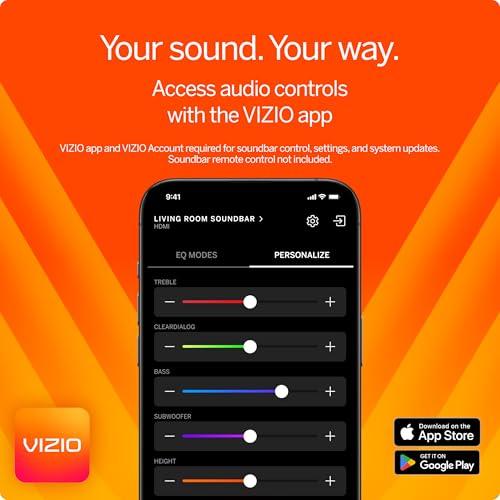
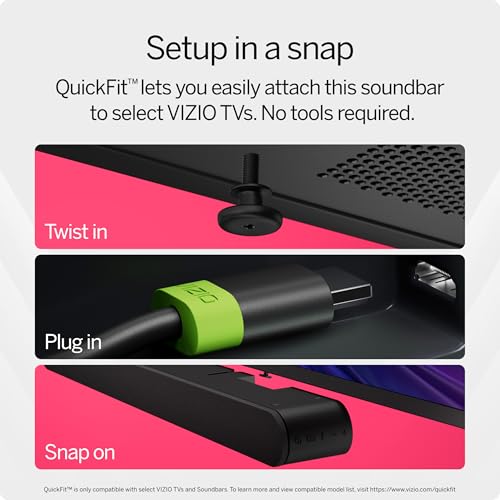
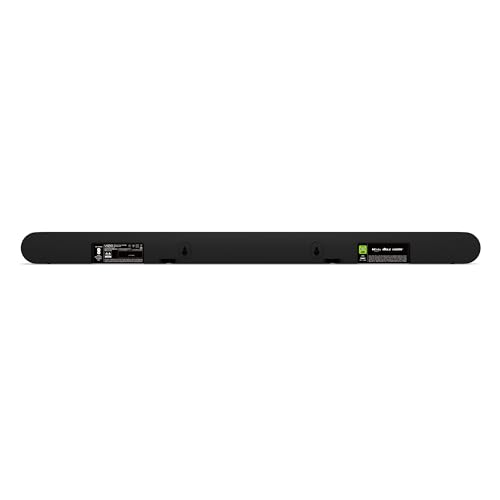
This represents another philosophical divide between the systems. The VIZIO 5.1 SE emphasizes set-and-forget operation. The VIZIO mobile app provides basic customization options and firmware updates, but the focus is on working well out of the box without extensive tweaking. The system's QuickFit mounting technology exemplifies this approach—it allows tool-free attachment to compatible VIZIO TVs, creating a seamless, integrated look.
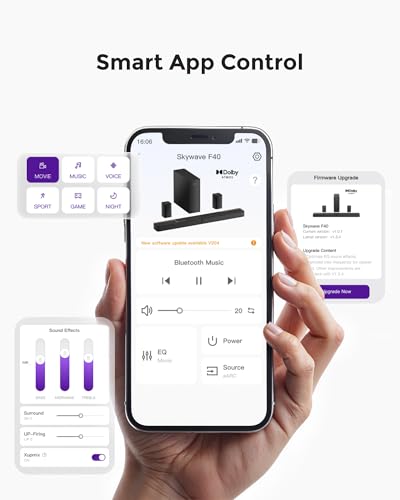
The Ultimea Skywave F40 assumes you want control over your audio experience. Its ULTIMEA Smart APP provides a 10-band equalizer and 121 preset EQ matrices—essentially pre-configured sound profiles for different types of content and room acoustics. The system includes six distinct listening modes: Movie, Music, Voice, Sport, Game, and Night, each optimized for different use cases.
From my experience, this level of customization can be both blessing and curse. Audiophiles and tinkerers will appreciate the ability to fine-tune their sound, but some users prefer systems that sound great immediately without requiring adjustment. The VIZIO approach caters to the latter group, while Ultimea serves those who want to optimize their experience.
At the time of writing, both systems occupy the budget-conscious segment of the Dolby Atmos market, with the Ultimea Skywave F40 commanding a modest premium over the VIZIO 5.1 SE. This price difference—roughly 10-15% in most markets—becomes the crucial question: is the additional performance worth the extra cost?
From a pure specifications standpoint, the Skywave F40 offers significantly more for only slightly more money. True 5.1.2 channels, higher power output, better bass extension, and comprehensive connectivity represent substantial improvements over the VIZIO system. In the audio world, such technical advantages typically command much higher premiums.
However, the VIZIO system offers intangible benefits that specifications don't capture: brand reputation built over decades, established customer support infrastructure, and the confidence that comes with choosing a known quantity. For many consumers, these factors justify accepting somewhat lower performance for peace of mind.
In actual home environments, several factors affect how these differences play out. Room size matters significantly—the VIZIO 5.1 SE works best in smaller to medium-sized rooms where its more focused soundstage doesn't become a limitation. The Ultimea Skywave F40 can fill larger spaces more effectively thanks to its higher power output and more expansive soundfield.
Ceiling height and material also affect Dolby Atmos performance. The Skywave F40's up-firing drivers work best with 8-10 foot ceilings made of reflective materials like drywall. Very high ceilings or sound-absorbing materials like acoustic tiles can diminish the height effect, potentially negating the advantage of physical up-firing drivers.
Content source makes a huge difference too. Both systems will enhance regular stereo content to some degree, but they truly shine with properly mixed Dolby Atmos material. Netflix, Disney+, and Ultra HD Blu-ray discs increasingly offer Atmos soundtracks, but cable TV and standard streaming often don't. If most of your viewing consists of basic cable or older content, the differences between these systems become less pronounced.
The VIZIO 5.1 Soundbar SE makes the most sense for users who prioritize simplicity and brand confidence over ultimate performance. If you want something that sounds significantly better than TV speakers without requiring research, adjustment, or complex setup, VIZIO delivers that experience. The wireless subwoofer and surround speakers eliminate cable management headaches, and the HDMI eARC integration means daily operation requires no thought.
This system particularly suits people who primarily watch TV shows and movies through streaming services, use their TV's built-in apps, and prefer not to think about audio equipment once it's installed. If you're buying a VIZIO TV anyway, the QuickFit integration creates an especially clean, cohesive setup.
The Ultimea Skywave F40 targets users who want to maximize performance within a budget-conscious framework. If you're willing to spend a bit more time on setup and potentially some ongoing tweaking, you'll be rewarded with noticeably better Dolby Atmos effects, more powerful bass, and greater flexibility for different types of content.
This system makes sense for movie enthusiasts who notice audio details, gamers who want spatial audio advantages, and anyone who streams music regularly and cares about sound quality. The comprehensive connectivity also makes it ideal for users with multiple source devices or older TVs that might not have eARC support.
After extensive testing, I find myself recommending the Ultimea Skywave F40 to most people, despite my general preference for established brands like VIZIO. The performance advantages are simply too significant to ignore at such a modest price premium. True Dolby Atmos with physical height channels creates a more convincing and immersive experience than virtual processing, and the additional power and connectivity options provide better long-term value.
However, the VIZIO 5.1 SE remains a solid choice for users who genuinely prefer simplicity over performance or who have specific integration requirements with existing VIZIO equipment. Both systems represent good value in their respective approaches—it's just that one approach delivers more dramatic improvements over basic TV audio.
The audio industry continues evolving rapidly, with new technologies and better implementations appearing regularly. But right now, at this moment in the market, the choice between virtual and physical Dolby Atmos implementation remains one of the most important decisions you can make when selecting a soundbar system. Choose based on your priorities, but understand what you're getting—and what you might be missing—with each approach.
| VIZIO 5.1 Soundbar SE Dolby Atmos Surround System | Ultimea Skywave F40 Dolby Atmos Soundbar System |
|---|---|
| Channel Configuration - Determines how realistic overhead effects sound | |
| 5.1 channels with virtual Dolby Atmos processing | True 5.1.2 with dedicated physical up-firing speakers |
| Height Channel Implementation - Critical for authentic Dolby Atmos experience | |
| Software processing creates virtual height effects | Two dedicated up-firing drivers with neodymium magnets |
| Total Speakers - More speakers typically mean better sound separation | |
| 6 speakers (soundbar + 2 surrounds + subwoofer) | 8 speakers including dedicated height channels |
| Peak Power Output - Affects maximum volume and dynamic range | |
| Not specified (typically indicates modest power) | 313W across all channels |
| Bass Extension - Lower numbers mean deeper, more impactful bass | |
| Down to 50Hz (good for most content) | Down to 38Hz (excellent low-frequency response) |
| Subwoofer Design - Wireless is more convenient but wired can be more reliable | |
| Compact wireless subwoofer | 6.5-inch wireless subwoofer with BassMX technology |
| Soundbar Dimensions - Larger bars often have better stereo separation | |
| 33" × 2.32" × 3.23" (compact design) | 31.5" × 1.81" × 3.54" (slightly more low-profile) |
| Primary Connectivity - HDMI eARC provides best audio quality and convenience | |
| HDMI eARC with TV remote control integration | HDMI eARC plus optical, USB, and Bluetooth 5.4 |
| Additional Inputs - More options accommodate different devices and setups | |
| Limited to HDMI eARC and basic connections | Comprehensive: optical, USB, Bluetooth 5.4 |
| App Control Features - More customization allows better room optimization | |
| Basic VIZIO mobile app for settings | Advanced ULTIMEA app with 10-band EQ and 121 presets |
| Audio Formats Supported - Both Dolby and DTS provide more content compatibility | |
| Dolby Atmos and DTS:X decoding | Dolby Atmos with Xupmix upmixing technology |
| Setup Complexity - Simpler setup appeals to users who want plug-and-play | |
| Single HDMI cable, wireless components, QuickFit TV mounting | Multiple connection options, comprehensive setup kit included |
| Brand Heritage - Established brands often provide better long-term support | |
| VIZIO with 20+ years in audio, established support | Newer brand focused on advanced features at budget prices |
The Ultimea Skywave F40 delivers superior Dolby Atmos performance with true 5.1.2 channels and dedicated up-firing speakers that physically bounce sound off your ceiling. The VIZIO 5.1 Soundbar SE uses virtual Dolby Atmos processing through its 5.1 system, which creates height effects through software rather than physical speakers. For authentic overhead audio immersion, the Skywave F40 provides a more convincing three-dimensional soundscape.
The VIZIO 5.1 SE features 5.1 channels (five main speakers plus subwoofer), while the Ultimea Skywave F40 offers 5.1.2 channels (the same five speakers and subwoofer plus two dedicated height channels). The ".2" represents two up-firing speakers that create overhead audio effects. This means the Ultimea system has eight total speakers compared to six in the VIZIO setup, resulting in more realistic surround sound immersion.
The VIZIO 5.1 Soundbar SE is significantly easier to set up, requiring just a single HDMI eARC connection to your TV and featuring wireless surround speakers and subwoofer. The Ultimea Skywave F40 offers more connectivity options (HDMI, optical, USB, Bluetooth) but requires more initial configuration. If you prefer plug-and-play simplicity, the VIZIO system is the clear winner for hassle-free installation.
Yes, both the VIZIO 5.1 SE and Ultimea Skywave F40 work with any TV brand through HDMI eARC or optical connections. However, the VIZIO system offers special QuickFit mounting that allows tool-free attachment to compatible VIZIO TVs. The Ultimea soundbar provides broader connectivity options, making it potentially more compatible with older TVs that lack HDMI eARC support.
The Ultimea Skywave F40 delivers superior bass with its 6.5-inch wireless subwoofer that reaches down to 38Hz and features BassMX technology for enhanced low-frequency response. The VIZIO 5.1 SE includes a more compact wireless subwoofer with 50Hz bass extension. For movie watching and music with deep bass, the Skywave F40 provides more impactful and precise low-end performance.
The VIZIO 5.1 Soundbar SE integrates seamlessly with your TV remote through HDMI eARC, allowing volume control without additional remotes. The Ultimea Skywave F40 also supports CEC control through HDMI eARC for basic functions, plus includes its own physical remote and comprehensive smartphone app. Both systems eliminate the need for multiple remotes, but the VIZIO system emphasizes TV remote integration more heavily.
The Ultimea Skywave F40 provides extensive customization through its smartphone app, featuring a 10-band equalizer, 121 preset EQ matrices, and six listening modes (Movie, Music, Voice, Sport, Game, Night). The VIZIO 5.1 SE offers basic customization through the VIZIO mobile app but focuses on working well out of the box. Audio enthusiasts who want detailed control will prefer the Ultimea system.
The VIZIO 5.1 Soundbar SE features fully wireless surround speakers and subwoofer, requiring only power connections for each component. The Ultimea Skywave F40 has a wireless subwoofer, but the surround speakers connect to the subwoofer with wires, though this reduces cable clutter compared to running wires back to the soundbar. For maximum wireless convenience, the VIZIO system has the advantage.
The Ultimea Skywave F40 offers advantages for gaming with its dedicated Game mode, true 5.1.2 surround for better positional audio, and Bluetooth 5.4 for low-latency wireless gaming. The physical up-firing speakers provide more accurate overhead audio cues. The VIZIO 5.1 SE works well for gaming but lacks dedicated gaming optimization. Competitive gamers will benefit more from the Skywave F40's spatial audio precision.
Both soundbars support Bluetooth music streaming, but the Ultimea Skywave F40 offers Bluetooth 5.4 for more stable connections and includes a USB port for playing music files directly. It also features a dedicated Music mode optimized for stereo content. The VIZIO 5.1 SE supports basic Bluetooth streaming and integrates well with TV-based music apps. For dedicated music listening, the Ultimea system provides better options and sound quality.
The VIZIO 5.1 Soundbar SE comes from an established audio company with over 20 years of experience and proven customer support infrastructure. VIZIO offers regular firmware updates and has widespread service network coverage. The Ultimea Skywave F40 represents a newer brand focused on innovative features but with less established long-term support history. For peace of mind and proven reliability, the VIZIO system has the track record advantage.
The Ultimea Skywave F40 offers superior technical specifications including true 5.1.2 channels, higher power output, better bass extension, and comprehensive connectivity for only a modest price premium over the VIZIO 5.1 SE. However, the VIZIO system provides excellent value for users prioritizing simplicity, brand reliability, and wireless convenience. The Skywave F40 delivers more performance per dollar, while the VIZIO SE offers better peace of mind per dollar spent.
We've done our best to create useful and informative comparisons to help you decide what product to buy. Our research uses advanced automated methods to create this comparison and perfection is not possible - please contact us for corrections or questions. These are the sites we've researched in the creation of this article: bestbuy.com - vizio.com - rtings.com - vizio.com - vizio.com - vizio.com - youtube.com - vizio.com - vizio.com - cnet.com - samsclub.com - walmart.com - nfm.com - finelinesdesignstudio.com - dugoutnorthbrook.com - bestbuy.com - the-gadgeteer.com - youtube.com - ultimea.com - manuals.plus - youtube.com - ultimea.com - youtube.com - youtube.com - youtube.com - youtube.com - eu.ultimea.com - support.ultimea.com

Privacy Policy
Terms and Conditions - Affiliate Policy
Home Security
© Copyright 2008-2026.
11816 Inwood Rd #1211, Dallas, TX 75244