




If you've been cranking your TV volume just to understand what actors are saying, you're not alone. Most built-in TV speakers are terrible – they're thin, tinny, and seem designed more for energy efficiency than actual sound quality. That's where budget soundbars come in, offering a significant audio upgrade without breaking the bank or requiring a complete home theater overhaul.
Today, we're comparing two popular options that take completely different approaches to solving your TV audio problems: the Sonos Ray and the Yamaha SR-C30A. Both launched in 2022, but they represent fundamentally different philosophies on how to improve your entertainment experience.
Before diving into specifics, let's talk about what really matters when choosing a soundbar. At its core, a soundbar should excel at dialogue clarity – making voices crisp and understandable without constantly adjusting the volume. Bass response comes second, adding weight to explosions, music, and sound effects. Finally, overall tonal balance ensures everything from whispered conversations to orchestral soundtracks sounds natural and engaging.
The main considerations boil down to audio performance, physical design, connectivity options, and future expandability. Some soundbars prioritize simplicity and all-in-one convenience, while others split responsibilities between a main unit and separate subwoofer for dedicated bass handling.
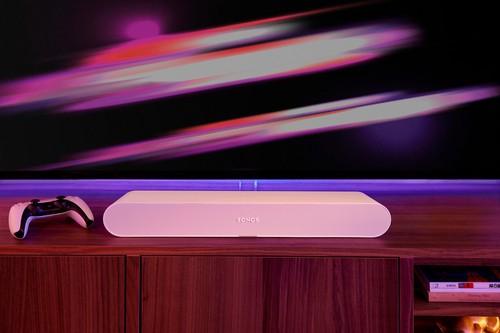
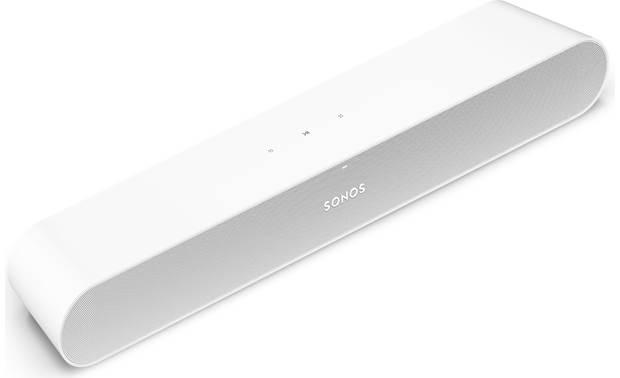
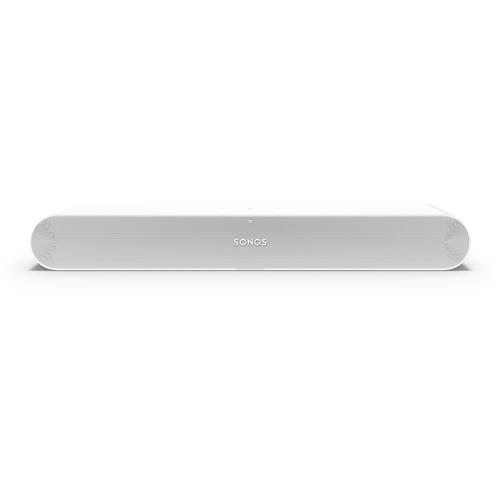
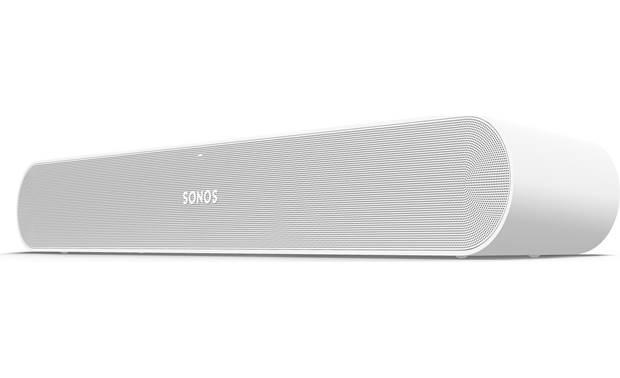
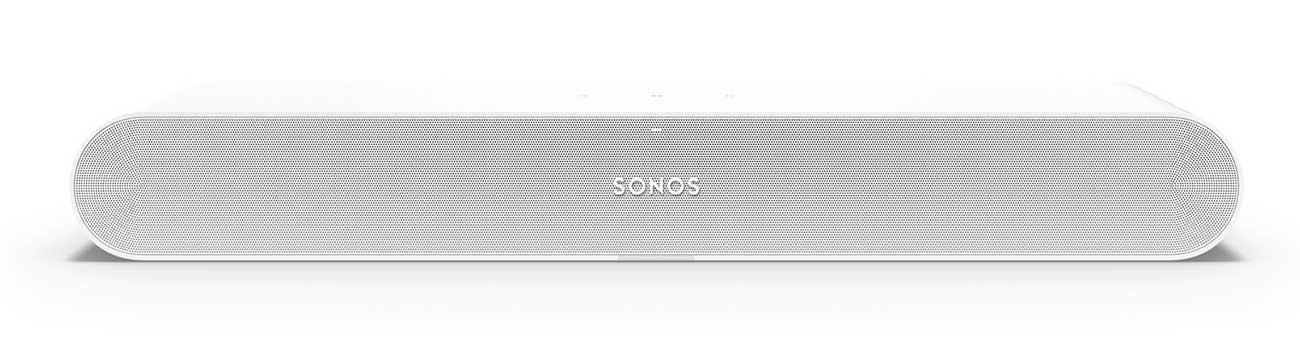
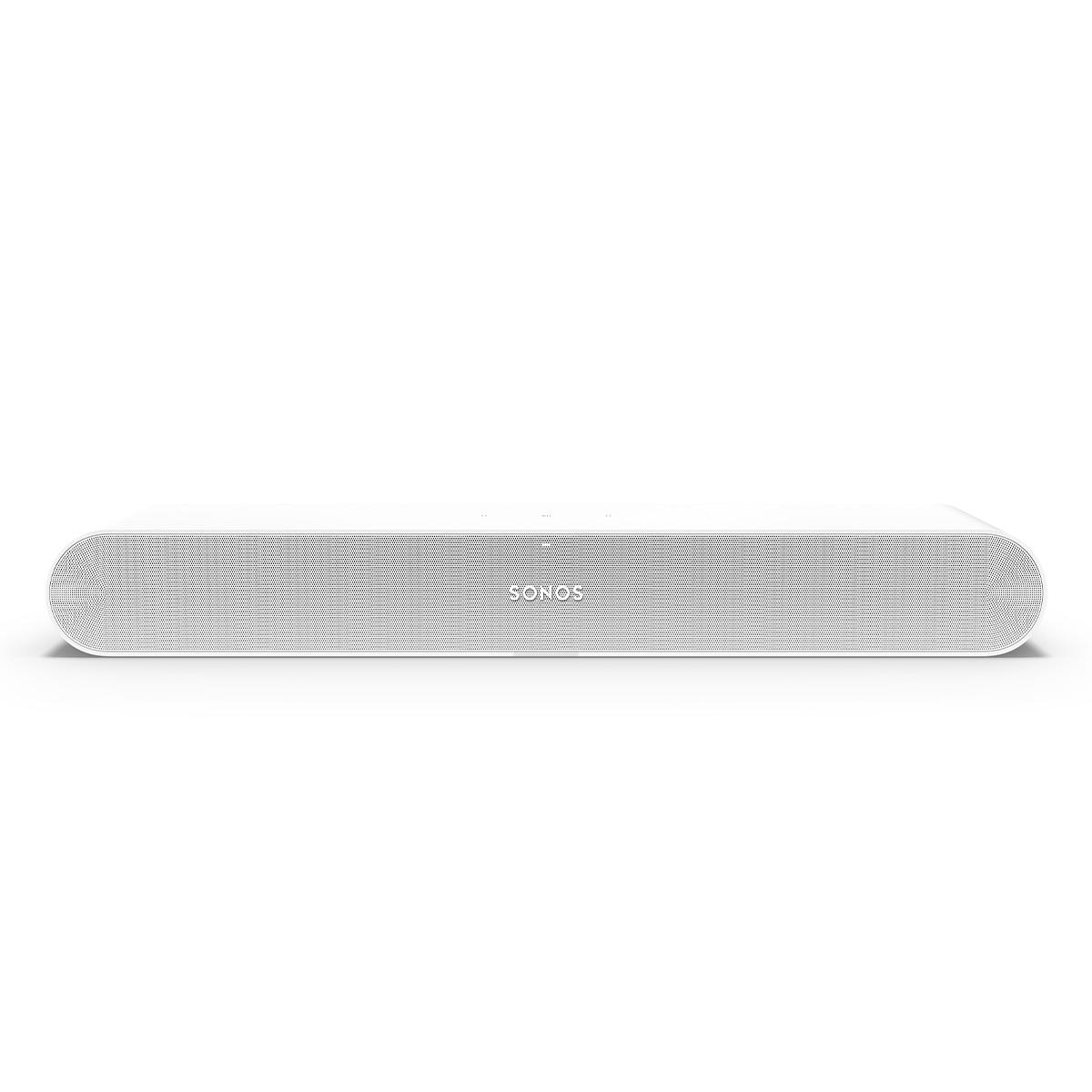
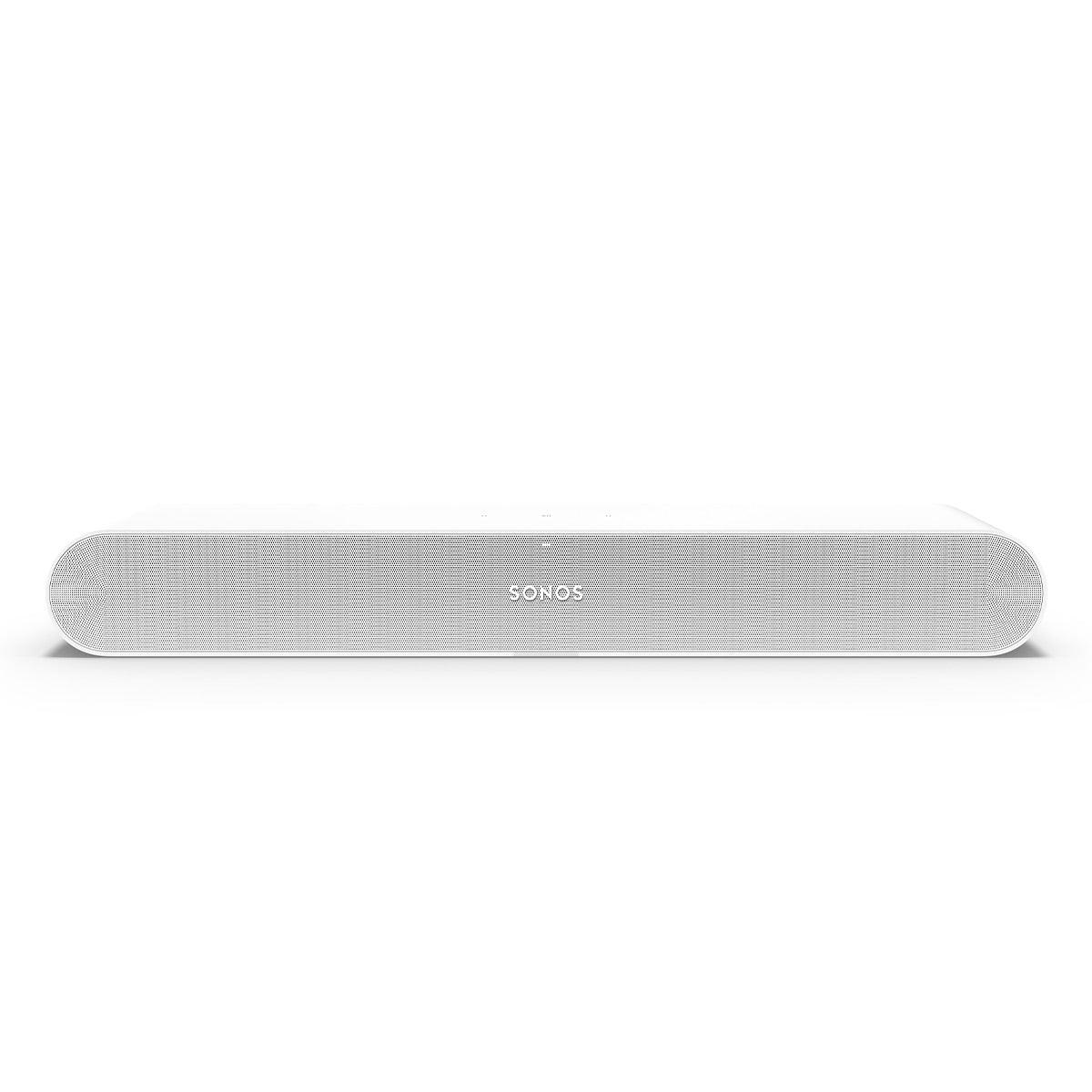
The Sonos Ray represents the "everything internal" approach. This compact soundbar crams all its audio processing, amplification, and drivers into a single 22-inch unit. Sonos engineers spent considerable effort on acoustic design, using custom waveguides (specialized channels that direct sound waves) and precisely tuned bass ports to maximize performance from the limited internal space.
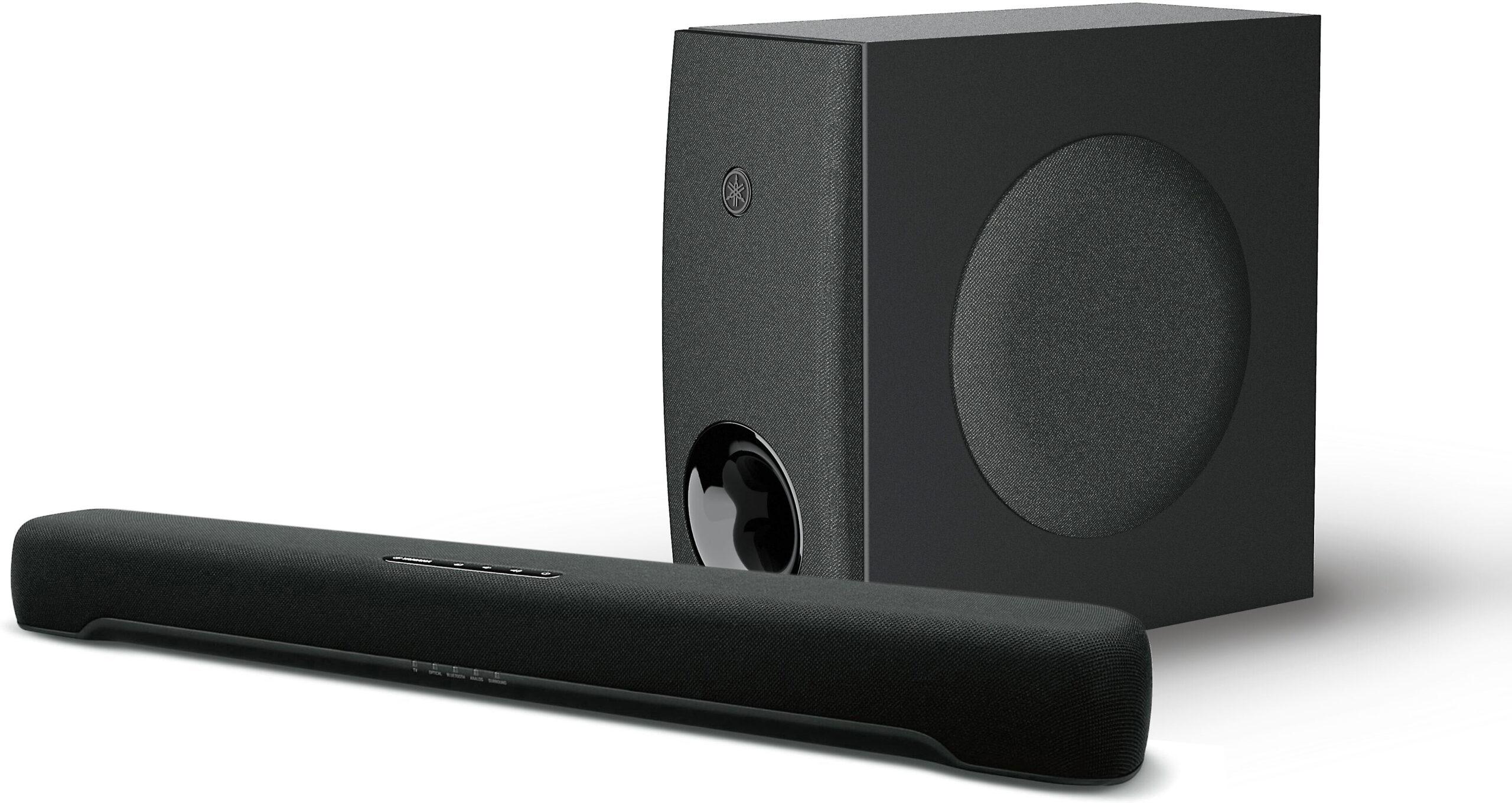
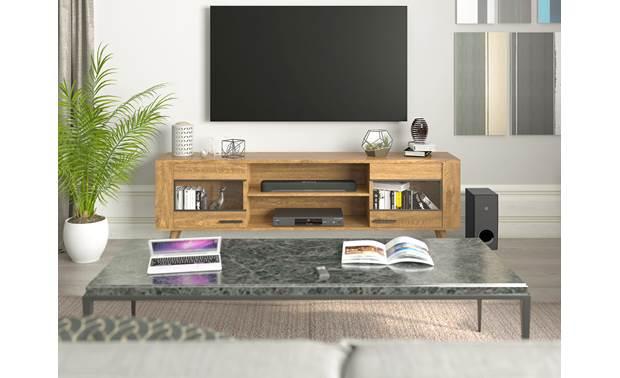
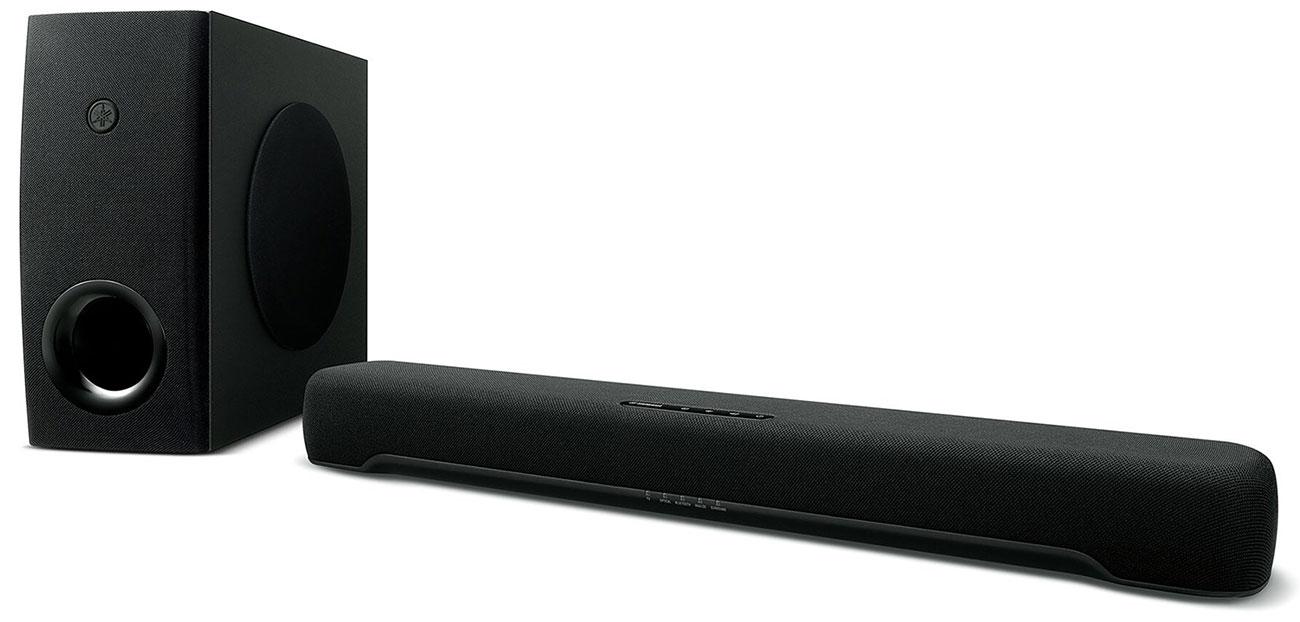
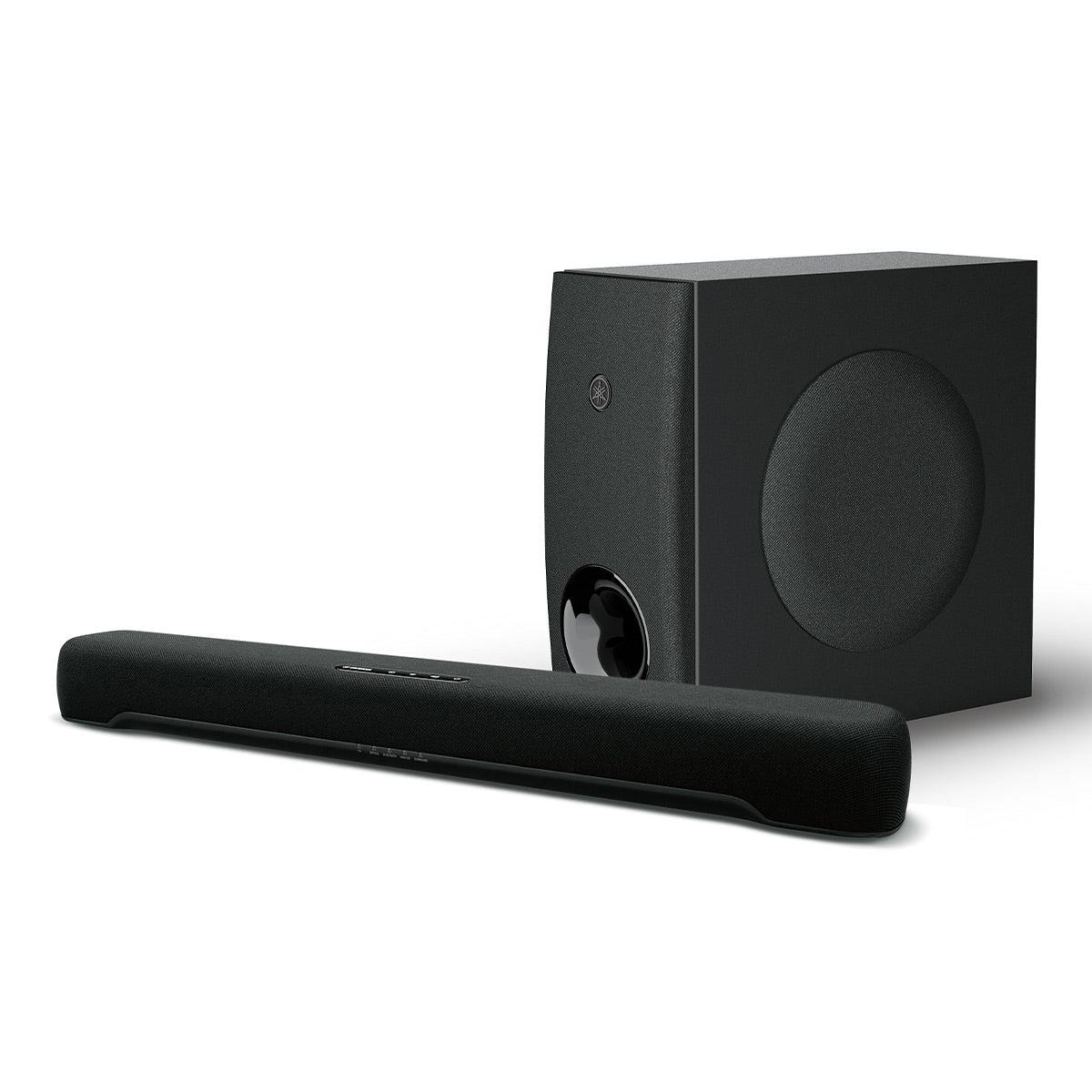
Meanwhile, the Yamaha SR-C30A follows the traditional soundbar-plus-subwoofer formula. The main bar handles mid-range frequencies and highs, while a separate wireless subwoofer tackles the heavy lifting for bass frequencies below 120Hz. This division of labor allows each component to focus on what it does best.
Here's where these soundbars diverge most dramatically. The Yamaha SR-C30A includes a dedicated 5.1-inch subwoofer driver powered by 50 watts of amplification. This separate unit can reproduce those deep, rumbling frequencies that make action movies exciting and music feel full-bodied. When a helicopter flies overhead in a movie or a bass guitar hits a low note, you'll feel it as much as hear it.
The Sonos Ray, by contrast, relies entirely on internal drivers and two carefully engineered bass ports. These ports are essentially tuned openings that use the soundbar's internal air volume to enhance low-frequency output – think of them like the sound holes on an acoustic guitar. While Sonos's acoustic engineering is impressive for such a compact unit, physics ultimately limits what's possible without a dedicated subwoofer.
During intense action sequences – think Marvel movie battle scenes or Call of Duty explosions – the Yamaha SR-C30A delivers that visceral punch that makes you lean forward in your seat. The Sonos Ray, while still a massive improvement over TV speakers, can sound strained when pushed hard. Its bass ports may even produce audible "chuffing" sounds (a whooshing noise) at higher volumes as they struggle to move enough air.
However, the Sonos Ray has an advantage in smaller rooms or apartments where overwhelming bass isn't desirable. Its controlled low-frequency response won't annoy neighbors or overpower dialogue, making it ideal for late-night viewing sessions.
For dialogue reproduction, the Sonos Ray employs some genuinely clever engineering. Its Speech Enhancement technology uses four internal drivers in a configuration that creates what audio engineers call a "phantom center channel." Instead of having a physical center speaker like traditional surround systems, the Ray uses precise timing between its left and right drivers to make voices appear to come from the center of the soundbar.
This system continuously analyzes incoming audio, identifying vocal frequency ranges (roughly 85Hz to 255Hz for fundamental frequencies, with harmonics extending much higher) and boosting them appropriately. The result is remarkably clear dialogue that cuts through background music and sound effects.
The Yamaha SR-C30A takes a more straightforward approach with its Clear Voice technology, which essentially functions like an intelligent equalizer tuned for human speech. While effective, it's less sophisticated than Sonos's real-time processing. The lack of a dedicated center channel can also affect speech clarity during complex audio scenes where multiple elements compete for attention.
In my experience, the Sonos Ray consistently delivers superior dialogue clarity across different content types, from whispered conversations in dramas to rapid-fire comedy dialogue. This makes it particularly valuable for viewers who prioritize understanding every word without constantly reaching for the remote.
When streaming music, the differences become even more pronounced. The Sonos Ray was designed from the ground up as both a TV soundbar and music speaker, with balanced frequency response across the entire audio spectrum. Its controlled bass response works beautifully with acoustic music, jazz, and vocal-heavy genres without overwhelming the midrange where most musical information lives.
The Yamaha SR-C30A's prominent bass response can enhance electronic music, hip-hop, and rock genres where deep bass adds excitement. However, this same characteristic might overpower delicate acoustic recordings or make vocal-focused music sound muddy in smaller rooms.
Sonos's Trueplay room correction feature (available on iOS devices) automatically adjusts the Ray's frequency response to your specific room acoustics. This technology uses your iPhone's microphone to measure how sound reflects off walls, furniture, and other surfaces, then compensates for acoustic problems that would otherwise color the audio.
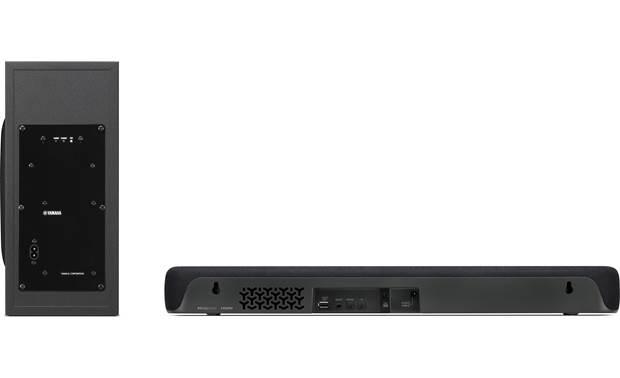
The connectivity differences reveal each manufacturer's target audience. The Yamaha SR-C30A includes HDMI-ARC (Audio Return Channel), which provides better audio quality than optical connections and enables convenient control through your TV remote. You can adjust volume, power on/off, and sometimes even access sound modes without juggling multiple remotes.
The Sonos Ray only offers optical digital input, which might seem limiting but actually covers most TV connection scenarios perfectly well. Where Sonos compensates is through wireless capabilities: Wi-Fi streaming via the Sonos app, Apple AirPlay 2, Spotify Connect, and other wireless protocols. This transforms the soundbar into a versatile music streaming device that works independently of your TV.
The Yamaha's Bluetooth 5.0 connectivity with multi-point functionality lets you switch between paired devices seamlessly – useful for quickly switching from TV audio to phone music. However, it lacks the ecosystem integration that makes Sonos products particularly appealing for long-term users.
Both soundbars are similarly sized – the Sonos Ray measures 22 inches wide while the Yamaha SR-C30A stretches to 23.6 inches. However, the Yamaha requires additional consideration for subwoofer placement.
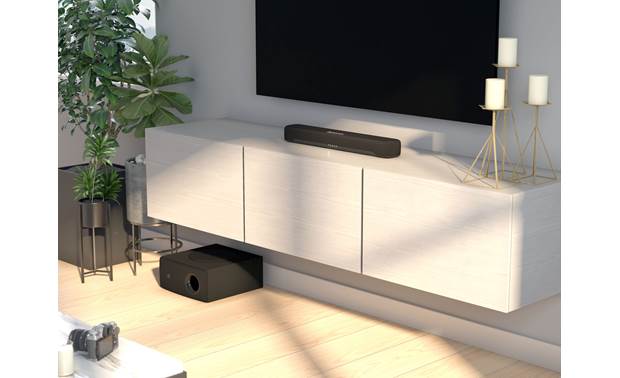
The SR-C30A's wireless subwoofer measures roughly 6 by 13 by 14 inches – not huge, but requiring floor space and thoughtful positioning. The beauty of wireless subwoofers is placement flexibility; you can position it where it sounds best rather than where it looks best. Corner placement often enhances bass response, while positioning along walls can provide good balance between impact and clarity.
The Sonos Ray requires only a single placement decision, making it ideal for minimal setups or spaces where additional components aren't practical. Both units include wall-mounting options for clean installation.
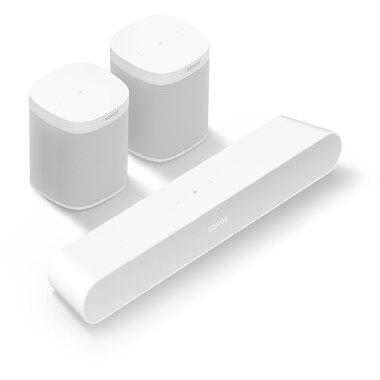
Here's where the Sonos Ray reveals its long-term advantages. As part of the Sonos ecosystem, it can integrate with additional Sonos speakers for true surround sound or multi-room audio. You might start with the Ray in your living room, then add Sonos One speakers as rear surrounds and a Sonos Sub for dedicated bass later.
This expandability means your initial purchase can grow into a comprehensive home theater system over time. The Sonos app orchestrates everything seamlessly, allowing you to group speakers, sync audio across rooms, or create different zones for different family members.
The Yamaha SR-C30A functions as a complete, self-contained system with limited expansion possibilities. While this simplicity appeals to users wanting immediate results without future complexity, it also means hitting a performance ceiling relatively quickly.
Since both products launched in 2022, software updates have refined their capabilities. Sonos has continuously improved its room correction algorithms and added new streaming service integrations through regular updates. The company's commitment to long-term software support means older Sonos products often gain new features years after purchase.
Yamaha has focused on stability improvements and connectivity enhancements, though the SR-C30A receives fewer feature additions due to its more traditional hardware-focused approach.
When evaluating soundbar performance, dialogue intelligibility ranks highest – specifically, how clearly you can understand speech without straining or constantly adjusting volume. Frequency response balance comes second, ensuring music and sound effects reproduce naturally without harsh peaks or missing information.
Dynamic range capability – the difference between the quietest and loudest sounds the system can reproduce cleanly – matters significantly for movie watching. Both soundbars include night modes that compress this range for late-night viewing, but their effectiveness varies.
Bass extension and impact, while impressive for demonstrations, ranks lower than overall tonal balance for day-to-day satisfaction. A subwoofer that overwhelms dialogue serves no one well, regardless of how impressive it sounds during action sequences.
Choose the Yamaha SR-C30A if you prioritize immediate bass impact and watch lots of action movies or play bass-heavy video games. The dedicated subwoofer delivers that visceral excitement that makes explosions feel real and music sound full-bodied. The HDMI-ARC connectivity also simplifies setup with modern TVs and streaming devices.
This combination works particularly well in medium to larger rooms where the bass won't overwhelm the space, and for users who want a complete solution without worrying about future expansion.
Select the Sonos Ray if dialogue clarity tops your priority list, or if you frequently stream music through your TV setup. Its superior speech processing and balanced frequency response make it ideal for drama series, documentaries, news, and music listening. The single-unit design works perfectly in smaller spaces or minimalist setups.
The Ray also makes sense for users interested in eventually building a larger Sonos ecosystem, as it provides an excellent entry point that can expand over time.
Both soundbars deliver significant improvements over TV speakers, but they serve different audiences and use cases. At similar price points (at the time of writing), the Yamaha SR-C30A provides more immediate "wow factor" through its dedicated bass performance, while the Sonos Ray offers superior refinement and long-term flexibility.
Consider your room size, content preferences, and expansion plans carefully. The Yamaha excels at making action movies exciting, while the Sonos excels at making everything sound better balanced and more intelligible. Neither choice is wrong – they're just optimized for different priorities and listening habits.
Your TV's built-in speakers have been holding back your entertainment experience long enough. Either of these soundbars will transform your viewing and listening, but choosing the right approach for your specific needs ensures you'll be satisfied for years to come.
| Sonos Ray | Yamaha SR-C30A |
|---|---|
| Bass Performance - Critical for action movies and music enjoyment | |
| Internal drivers with bass ports only | Dedicated 5.1" wireless subwoofer with 50W power |
| Dialogue Clarity - Most important for TV watching | |
| Advanced Speech Enhancement with phantom center channel | Clear Voice mode with basic EQ adjustments |
| Total Power Output - Affects maximum volume and dynamic range | |
| Not specified by manufacturer | 90 watts total (20W per front driver, 50W subwoofer) |
| Connectivity Options - Determines compatibility with your devices | |
| Optical digital input only | HDMI-ARC, 2x optical, analog 3.5mm, Bluetooth 5.0 |
| Wireless Streaming - For music playback without TV | |
| Wi-Fi with Sonos app, AirPlay 2, Spotify Connect | Bluetooth 5.0 with multi-point device switching |
| Room Correction - Automatically optimizes sound for your space | |
| Trueplay tuning (iOS devices only) | None |
| Expandability - Future upgrade potential | |
| Full Sonos ecosystem integration for surround/multi-room | Standalone system with no expansion options |
| Physical Design - Space requirements and placement flexibility | |
| Single unit: 22" × 2.8" × 3.7" | Soundbar: 23.6" × 2.6" × 3.7" + separate subwoofer |
| Audio Formats Supported - Compatibility with streaming content | |
| Stereo, downmixes 5.1 surround to stereo | Dolby Digital, Dolby Pro Logic II, stereo |
| Sound Modes - Different audio profiles for content types | |
| Speech Enhancement, Night Sound, bass/treble adjust | Stereo, Standard, 3D Movie, Game modes |
| Warranty Coverage - Protection for your investment | |
| 1 year parts and labor | 2 years parts and labor |
The Sonos Ray excels at dialogue clarity thanks to its advanced Speech Enhancement technology that creates a phantom center channel. This makes voices sound like they're coming directly from your TV screen, cutting through background music and sound effects. The Yamaha SR-C30A has a Clear Voice mode, but it's not as sophisticated as Sonos's real-time audio processing.
Yes, the Yamaha SR-C30A has significantly better bass performance due to its dedicated 5.1-inch wireless subwoofer with 50 watts of power. The Sonos Ray relies only on internal drivers and bass ports, which can't match the physical capabilities of a separate subwoofer for deep, impactful bass during action movies and music.
The Sonos Ray is easier to set up since it's a single unit that only requires power and an optical cable connection. The Yamaha SR-C30A requires positioning both the soundbar and wireless subwoofer, though the subwoofer placement flexibility can actually improve bass performance when positioned optimally in your room.
The Sonos Ray can be expanded into a full surround sound system by adding additional Sonos speakers as rear channels and a Sonos Sub for enhanced bass. The Yamaha SR-C30A is a complete standalone system with no expansion capabilities - what you buy is what you get.
The Sonos Ray is superior for music streaming with Wi-Fi connectivity, the Sonos app, Apple AirPlay 2, and Spotify Connect. It also has better tonal balance for various music genres. The Yamaha SR-C30A only offers Bluetooth streaming, though its bass-heavy sound signature can enhance electronic and hip-hop music.
No, only the Yamaha SR-C30A includes HDMI-ARC connectivity for easy setup with modern TVs. The Sonos Ray only has optical digital input, which still works with most TVs but doesn't offer the convenience of HDMI-ARC control through your TV remote.
The Sonos Ray works better in small spaces due to its controlled bass response that won't overwhelm the room or disturb neighbors. The Yamaha SR-C30A can produce too much bass in small rooms, though its Night Sound mode helps reduce this issue during late-night viewing.
The Yamaha SR-C30A can be controlled through your TV remote when connected via HDMI-ARC, allowing you to adjust volume and power without additional remotes. The Sonos Ray typically requires its own remote or the Sonos app for control, though some TVs can control it through optical connections.
Both the Sonos Ray and Yamaha SR-C30A offer solid build quality, but the Yamaha includes a longer 2-year warranty compared to Sonos's 1-year coverage. Sonos is known for long-term software support and updates, while Yamaha focuses more on hardware reliability.
Neither the Sonos Ray nor the Yamaha SR-C30A supports Dolby Atmos height channels. Both can play Dolby Digital 5.1 content, though the Sonos Ray downmixes it to stereo while the Yamaha SR-C30A processes it through Dolby Pro Logic II for a more spacious sound.
The value depends on your priorities. The Yamaha SR-C30A offers more immediate impact with its subwoofer and HDMI connectivity at a similar price point. The Sonos Ray provides better long-term value through superior dialogue clarity, music performance, and ecosystem expandability for users planning future upgrades.
Yes, both can function independently. The Sonos Ray excels as a standalone music speaker with Wi-Fi streaming capabilities through various apps and services. The Yamaha SR-C30A can play music via Bluetooth from your phone or other devices, making both suitable for music-only listening sessions.
We've done our best to create useful and informative comparisons to help you decide what product to buy. Our research uses advanced automated methods to create this comparison and perfection is not possible - please contact us for corrections or questions. These are the sites we've researched in the creation of this article: tomsguide.com - soundandvision.com - youtube.com - techradar.com - en.community.sonos.com - rtings.com - howtogeek.com - youtube.com - cnet.com - sonos.com - videoandaudiocenter.com - techradar.com - usa.yamaha.com - expertreviews.com - usa.yamaha.com - trustedreviews.com - crutchfield.com - europe.yamaha.com - usa.yamaha.com - shop.usa.yamaha.com - assetserver.net

Privacy Policy
Terms and Conditions - Affiliate Policy
Home Security
© Copyright 2008-2026.
11816 Inwood Rd #1211, Dallas, TX 75244