





When it comes to upgrading your TV's built-in speakers, soundbars have become the go-to solution for most people. But not all soundbars are created equal, and the choice between different approaches can dramatically affect your listening experience. Today, we're diving deep into two very different philosophies: the Ultimea Aura A40 7.1 channel system and the Sonos Ray compact soundbar.
These products represent fundamentally different approaches to solving the same problem—your TV sounds terrible, and you want better audio without the complexity of a full home theater system. The question is: do you want more speakers for immersive surround sound, or fewer speakers that sound exceptionally good?
Before we dive into these specific products, let's talk about what really matters when choosing a soundbar. The audio world is full of confusing specifications and marketing terms, but there are some key factors that will actually impact your daily listening experience.
Channel configuration is probably the most important starting point. This refers to how many separate audio channels a system can produce. A 2.0 system has two channels (left and right stereo), while a 7.1 system theoretically has seven main channels plus a subwoofer channel (that's what the ".1" represents). However, many soundbars use "virtual" surround processing to simulate more channels than they physically have speakers for.
Physical setup complexity varies dramatically between products. Some soundbars are literally just one bar that sits under your TV, while others come with separate surround speakers and subwoofers that need to be positioned around your room. This affects both the installation process and how the system will fit into your living space.
Room compatibility is often overlooked but crucial. A powerful surround system might be wasted in a small apartment bedroom, while a compact stereo soundbar could get lost in a large family room. The acoustics of your space—hard surfaces, carpet, furniture placement—all influence how any audio system will perform.
The truth is, most people underestimate how much these fundamental differences will affect their satisfaction with a soundbar purchase. Let's look at how the Ultimea Aura A40 and Sonos Ray handle these considerations.
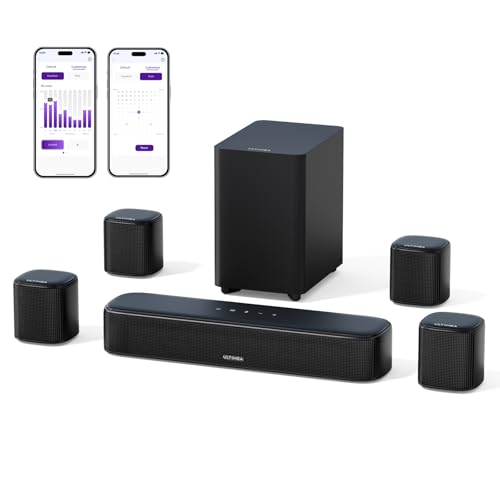
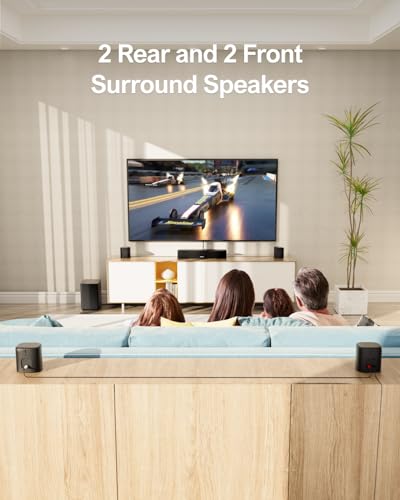
Released in 2023, the Ultimea Aura A40 represents what we might call the "maximum hardware for minimum money" philosophy. You get a complete 7.1 channel system with eight physical speakers: a three-driver soundbar, four separate surround speakers, and a dedicated subwoofer. At the time of writing, this complete system costs significantly less than most premium single-unit soundbars.
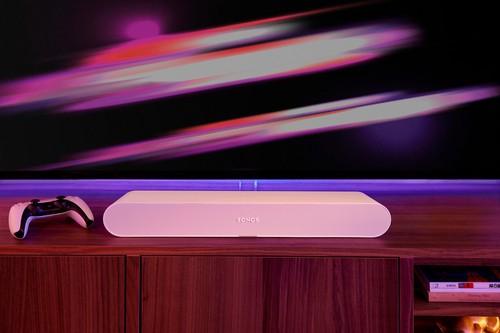
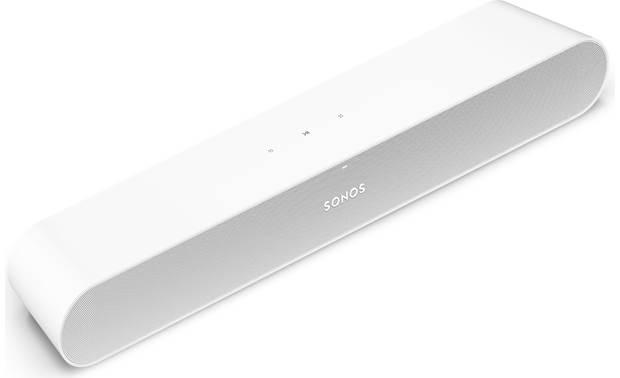
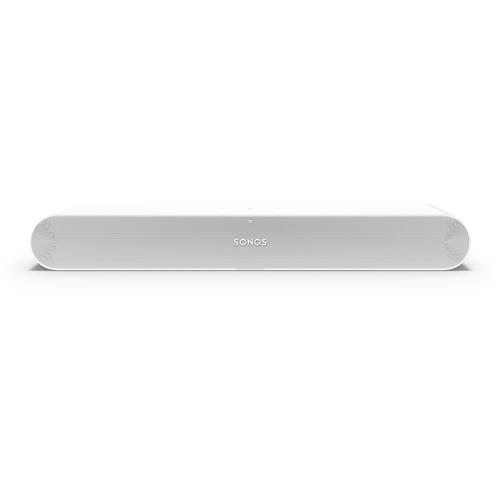
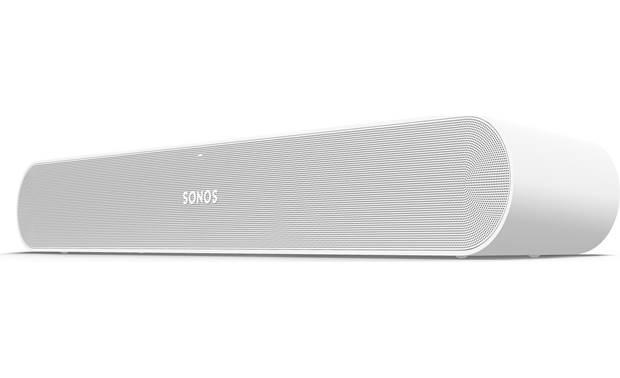
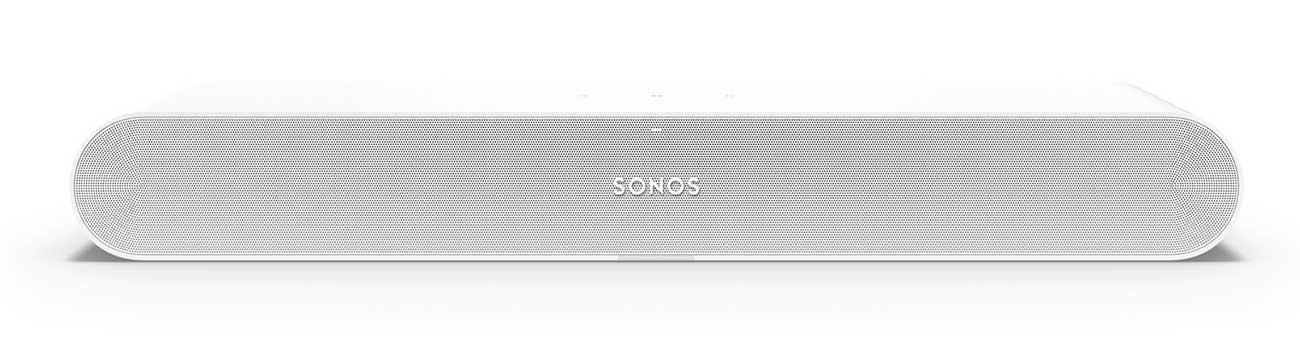
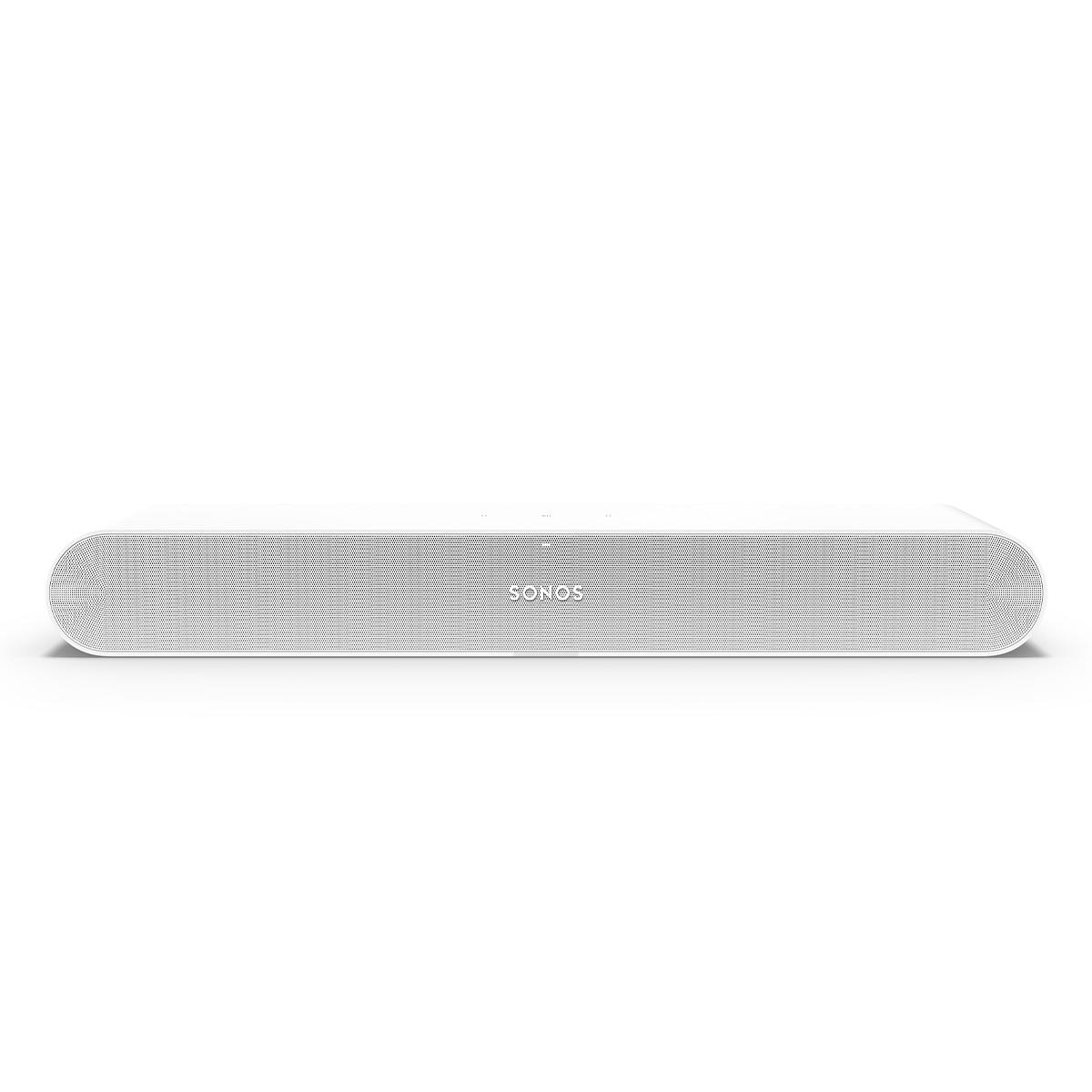
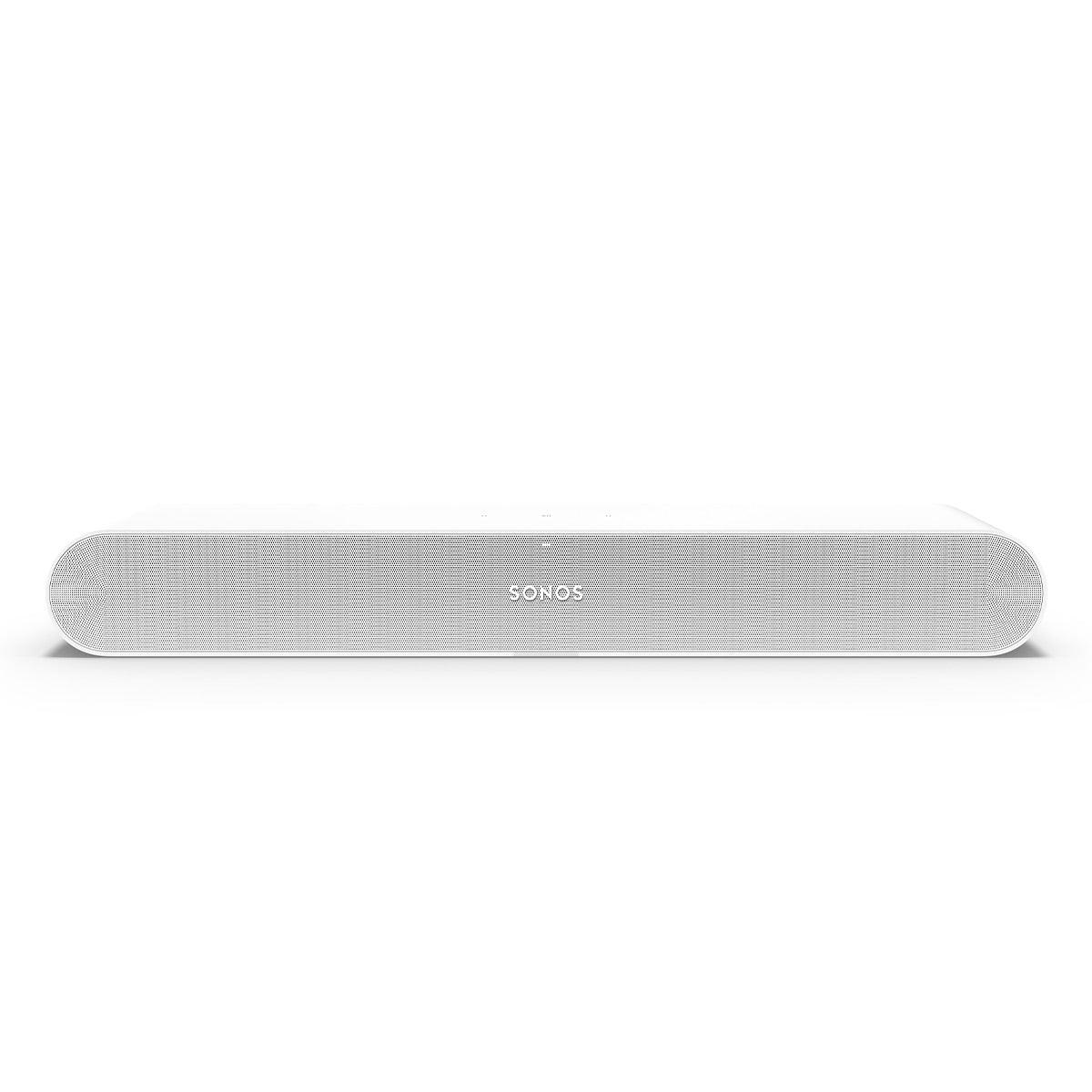
The Sonos Ray, launched in 2022, takes the opposite approach. This compact stereo soundbar contains just two speakers but focuses intensely on audio quality, ease of use, and integration with smart home ecosystems. It's part of Sonos's strategy to offer a more affordable entry point into their premium audio ecosystem, though it still commands a higher per-speaker price than budget alternatives.
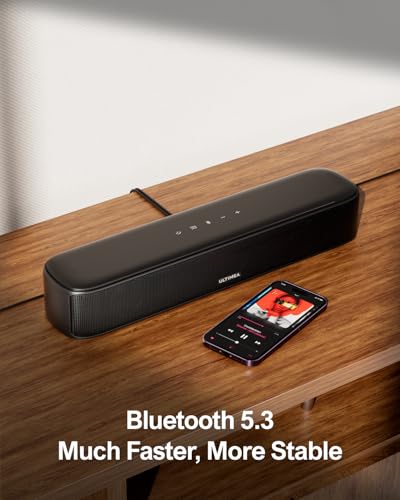
Since these products launched, we've seen the soundbar market continue to evolve rapidly. Budget manufacturers like Ultimea have gotten more aggressive with feature sets, while premium brands like Sonos have had to defend their market position against increasingly capable lower-cost alternatives. The Ultimea Aura A40 benefits from recent improvements in Bluetooth connectivity (it uses version 5.3) and smartphone app integration, while the Sonos Ray has received several firmware updates that have improved its Trueplay room correction and overall performance.
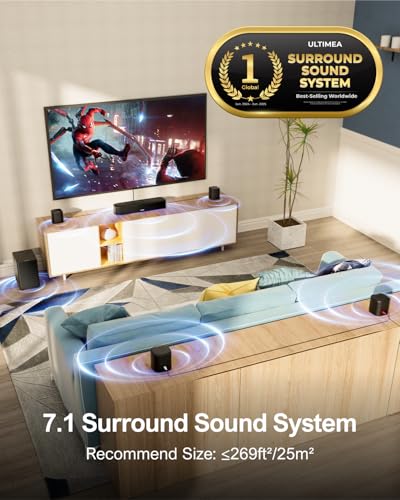
When it comes to creating an immersive, theater-like experience, the Ultimea Aura A40 has a massive advantage simply due to physics. With four dedicated surround speakers that you position around your seating area, this system can create genuine directional audio effects that the Sonos Ray simply cannot match.
The A40's SurroundX technology processes audio to create what Ultimea calls "99.99% detail accuracy" in sound positioning. While that specific claim is marketing speak, the underlying principle is sound: when you have physical speakers behind and beside you, effects like helicopters flying overhead, footsteps moving across a room, or ambient sounds in a forest scene become much more convincing.
During our research into user experiences, we found that people consistently mention the "wow factor" when first experiencing the Ultimea Aura A40 with action movies or games. The system excels with content that has distinct directional audio cues—think Marvel movies with flying sequences, war films with explosions moving across the battlefield, or video games where you need to locate enemies by sound.
The system's 13 adjustable surround levels let you fine-tune how aggressive the spatial effects are. Some users prefer subtle surround enhancement, while others want the full "audio theme park" experience. This adjustability is particularly important because room acoustics vary so much between different spaces.
However, the Sonos Ray is fundamentally limited here. As a stereo-only system, it can only create the illusion of width, not true surround sound. When it receives 5.1 surround content from streaming services or Blu-ray players, it has to downmix all that spatial information into just two channels. You lose the immersive effect entirely.
Here's where the tables turn dramatically. Despite costing less per speaker, the Ultimea Aura A40 struggles with one of the most important aspects of TV audio: making dialogue clear and natural.
The Sonos Ray excels at dialogue reproduction in ways that consistently surprise users. Its dedicated dialogue enhancement mode doesn't just boost frequencies where voices live—it intelligently processes the signal to make conversations more intelligible even when there's background music or sound effects. The midrange clarity that Sonos has built into this compact soundbar is genuinely impressive.
This difference becomes particularly noticeable with complex content like Christopher Nolan films, where dialogue often competes with massive soundscapes. The Sonos Ray maintains voice clarity even during loud sequences, while users report that the Ultimea Aura A40 can make voices sound hollow or get lost in the mix, even with its dedicated center channel.
The Ray's Night Sound feature is another thoughtful touch. It automatically balances the dynamic range between loud and quiet sounds, so you can watch movies at lower volumes without missing whispered conversations or getting blasted by explosion scenes. The Ultimea system has a night mode too, but it's less sophisticated in its implementation.
This is where the fundamental difference in audio philosophy becomes most apparent. Despite having a dedicated subwoofer and more total speakers, the Ultimea Aura A40 struggles significantly with music reproduction.
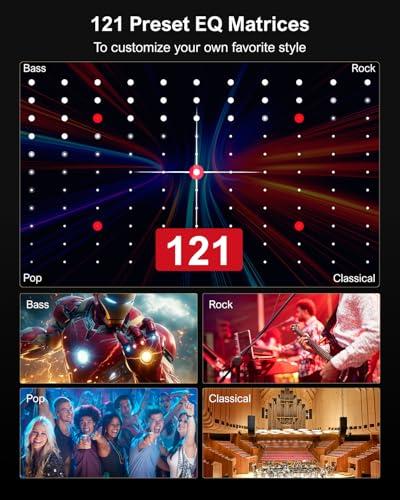
User reviews consistently describe the A40's music performance as "tinny," "boxy," and lacking the naturalness that makes music enjoyable for extended listening. The system seems optimized for the impact and excitement of movie soundtracks rather than the nuanced tonal balance that music demands. Even with its 10-band equalizer and 121 preset sound profiles, users report difficulty getting music to sound natural and engaging.
The Sonos Ray, on the other hand, delivers music performance that punches well above its weight class. The tonal balance is more neutral, instruments have better separation, and there's a naturalness to the sound that makes it genuinely enjoyable for music listening. The Trueplay room correction feature (available on iOS devices) analyzes your room's acoustics and adjusts the sound accordingly, often making a dramatic improvement in music reproduction.
However, the Sonos Ray does have limitations with music that has significant low-end content. Without a subwoofer, bass-heavy genres like hip-hop, electronic music, or rock can sound thin and lack the physical impact that many listeners expect. This is where Sonos's ecosystem approach becomes relevant—you can add a Sonos Sub later, but that significantly increases the total system cost.
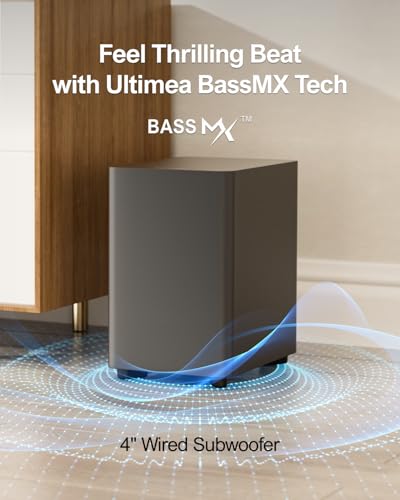
The Ultimea Aura A40 includes a dedicated 4-inch subwoofer with what the company calls BassMX technology. This gives it a clear advantage in terms of bass quantity and physical impact. Action movies, gaming, and bass-heavy music will have more low-end presence and room-shaking capability.
However, our research into user experiences reveals that the A40's bass quality is inconsistent. Many users describe it as "loose" or "flabby"—meaning it lacks the tight, controlled character that audiophiles prefer. The subwoofer extends down to about 65Hz, which is adequate for most content but not as deep as higher-end subwoofers that can reproduce the lowest frequencies in movie soundtracks.
The Sonos Ray approaches bass differently. Without a dedicated subwoofer, it relies on its internal drivers and acoustic design to produce what low-end it can. The result is more controlled and musical, but with significantly less impact and extension. For dialogue-heavy content and most music, this approach works well. For action movies and bass-heavy content, the limitations become apparent quickly.
The Ultimea Aura A40 can play significantly louder than the Sonos Ray, with a maximum sound pressure level exceeding 98dB. Combined with its multiple speakers and dedicated subwoofer, this makes it better suited for larger rooms and situations where you want to really fill a space with sound.
The Sonos Ray is designed for smaller to medium-sized rooms. Push it too hard in a large space, and it starts to sound strained and loses the refinement that makes it appealing in the first place. This isn't necessarily a flaw—it's a design choice that prioritizes quality over quantity.
Setting up the Sonos Ray is almost laughably simple. You connect one optical cable to your TV, plug it in, and spend a few minutes with the Sonos app to get everything configured. The compact design means it fits easily in TV stands or mounted setups, and there are no additional speakers to position or wire.
The Ultimea Aura A40 is a completely different story. You're essentially installing a mini home theater system with speakers that need to be positioned around your room. The rear surround speakers come with 6-meter cables, while the front surrounds use 2-meter cables. You'll need to run these cables to appropriate locations and deal with the visual impact of having speakers positioned around your seating area.
The system does try to minimize complexity where possible. The rear speakers can connect wirelessly to the soundbar after initial pairing, though they still need to be plugged into power outlets. But there's no getting around the fact that you're dealing with multiple components that need thoughtful placement to work properly.
Both systems offer smartphone app control, but with very different focuses. The Ultimea Aura A40's app is essentially a sophisticated remote control and equalizer. You can switch between six preset modes (Movie, Music, Voice, Sport, Game, Night), adjust the 10-band equalizer, and fine-tune surround levels. The 121 preset EQ matrices cover different music genres and sound preferences, though many users find this overwhelming rather than helpful.
The Sonos app that controls the Ray is part of a much larger ecosystem. Beyond basic playback controls, it handles multi-room audio, streaming service integration, and system updates. The Trueplay room correction feature is particularly useful—it uses your iPhone or iPad's microphone to measure your room and optimize the soundbar's output accordingly.
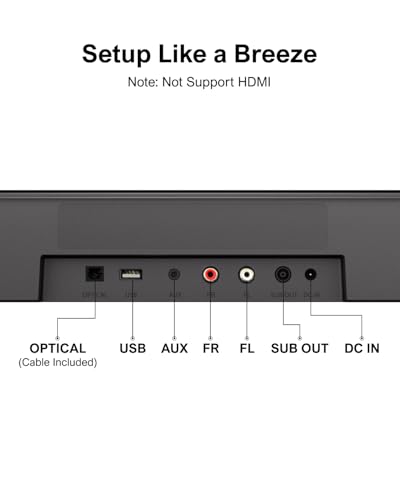
Both systems have notable connectivity limitations, but in different ways. The Ultimea Aura A40 offers optical, AUX, USB, and Bluetooth 5.3 connections, but notably lacks HDMI inputs. This means you can't take advantage of advanced features like ARC (Audio Return Channel) or eARC (enhanced Audio Return Channel) that allow better integration with your TV and access to higher-quality audio formats.
The Sonos Ray has even more limited physical connections—just optical input—but compensates with robust wireless capabilities. It supports AirPlay 2, Spotify Connect, and Tidal Connect, making it easy to stream music directly from your devices. The Wi-Fi connection also enables features like automatic updates and integration with other Sonos products.
From a pure hardware perspective, the Ultimea Aura A40 offers exceptional value at the time of writing. You're getting eight speakers, multiple amplifiers, and a complete surround sound system for less than many single-unit premium soundbars cost. If your primary concern is maximizing the amount of audio hardware you get for your money, the A40 is hard to beat.
The Sonos Ray costs significantly more per speaker, but those speakers and the associated electronics are built to a higher standard. The question becomes whether you value quantity of features or quality of execution.
This is where the comparison becomes more complex. The Ultimea Aura A40 is essentially a complete, closed system. What you buy is what you get, with limited opportunities for expansion or improvement over time.
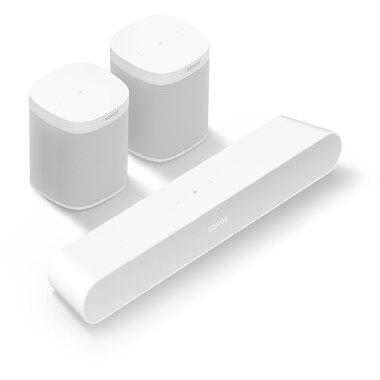
The Sonos Ray is designed as part of a larger ecosystem. You can add a Sonos Sub for deeper bass, Sonos One SL speakers for rear surround channels, or integrate it with other Sonos products throughout your home. However, building a complete Sonos surround system costs significantly more than the A40's all-in-one approach.
The Ray also benefits from regular software updates that can improve performance and add features over time. Sonos has a strong track record of supporting their products with meaningful updates for many years after purchase.
For the Ultimea Aura A40 to perform at its best, you need to think carefully about speaker placement. The surround speakers should be positioned slightly behind and to the sides of your main seating position, ideally at ear level or slightly above. The subwoofer placement is less critical but can significantly affect bass response depending on your room's layout.
Hard surfaces like hardwood floors and bare walls can make the A40 sound harsh or echoey, while too much soft furnishing can deaden the surround effect. Getting the balance right often requires experimentation with speaker positioning and the system's various adjustments.
The Sonos Ray is much more forgiving of room placement, but it still benefits from proper positioning. The Trueplay feature helps compensate for acoustic challenges, and the forward-firing design minimizes issues with nearby surfaces.
The Ultimea Aura A40 really shines with content that's designed to showcase surround sound. Marvel movies, war films, racing games, and action-heavy TV shows all benefit from the system's spatial capabilities. However, it can make quieter, dialogue-focused content sound artificial or overdone if you're not careful with the settings.
The Sonos Ray excels with dialogue-heavy content, documentaries, and music. It's particularly good for streaming TV shows where clear dialogue is more important than explosive effects.
You're primarily interested in creating an immersive experience for movies and gaming, have a dedicated media room or space where you can properly position multiple speakers, and want to maximize features while minimizing cost. The A40 makes sense if you're willing to accept some compromises in audio refinement in exchange for a true surround sound experience.
This system is ideal for families who watch a lot of action movies, gamers who want positional audio advantages, and anyone who has the space and patience to properly set up a multi-speaker system. If you're the type of person who gets excited about tweaking audio settings and optimizing your setup, the A40's extensive customization options could be appealing.
You prioritize audio quality over surround effects, need a compact solution that fits seamlessly into your living space, and value the simplicity of a single-unit setup. The Ray is perfect for people who watch a mix of content types, listen to significant amounts of music, and want a "set it and forget it" experience.
This soundbar makes particular sense for smaller rooms, apartments, secondary TVs, and situations where clean aesthetics matter as much as audio performance. If you're already invested in or interested in smart home ecosystems, the Sonos integration capabilities add significant value.
The choice between the Ultimea Aura A40 and Sonos Ray ultimately comes down to your priorities and living situation. The A40 offers maximum immersive impact at a budget-friendly price but requires more setup complexity and makes compromises in audio refinement. The Ray provides premium audio quality in a compact, elegant package but can't match the spatial immersion of a true surround system.
Consider your room size first—small spaces favor the Ray's refined approach, while larger rooms can better accommodate and benefit from the A40's multi-speaker setup. Think about your content preferences too: action-heavy viewers will appreciate the A40's surround capabilities, while those who watch diverse content and listen to music will prefer the Ray's superior audio quality.
Finally, consider your tolerance for complexity. The A40 rewards users who enjoy optimizing and tweaking their setup, while the Ray appeals to those who want professional-quality results with minimal effort. Both approaches have merit—the question is which one aligns better with your needs and preferences.
| Ultimea Aura A40 7.1 Channel Soundbar System | Sonos Ray Soundbar |
|---|---|
| Channel Configuration - Determines immersive experience potential | |
| 7.1 virtual surround with 8 physical speakers (soundbar + 4 surrounds + subwoofer) | 2.0 stereo only (two speakers in single unit) |
| Setup Complexity - Impacts installation time and room requirements | |
| Complex multi-speaker setup with surround positioning and cable management | Simple plug-and-play single unit installation |
| Bass Response - Critical for action movies and music impact | |
| Dedicated 4" subwoofer with BassMX technology (65Hz-18kHz range) | No subwoofer, limited low-end extension (bass roll-off around 80Hz) |
| Audio Quality - Most important for daily listening satisfaction | |
| Budget-focused with "tinny, metallic" music reproduction but decent movie performance | Premium audio quality with natural tonal balance and excellent dialogue clarity |
| Room Size Compatibility - Determines optimal placement scenarios | |
| Medium to large rooms (108-270 sq ft) with space for surround speakers | Small to medium rooms, compact design for tight spaces |
| Connectivity Options - Affects device compatibility and future-proofing | |
| Optical, AUX, USB, Bluetooth 5.3 (no HDMI) | Optical only plus Wi-Fi, AirPlay 2, streaming service integration |
| App Control and Customization - Important for fine-tuning performance | |
| Ultimea app with 10-band EQ, 121 presets, 13 surround levels | Sonos app with Trueplay room correction, multi-room integration, OTA updates |
| Expandability - Future upgrade potential | |
| Complete closed system with no expansion options | Part of Sonos ecosystem, can add Sub, surrounds, and other Sonos products |
| Dialogue Enhancement - Critical for TV and movie clarity | |
| Basic voice mode, can struggle with dialogue intelligibility | Advanced dialogue enhancement with excellent vocal clarity at all volumes |
| Music Performance - Important if you stream music frequently | |
| Requires extensive EQ tweaking, better for movies than music | Excellent music reproduction with natural instrument separation |
| Maximum Volume - Matters for larger spaces and dynamic content | |
| >98dB SPL with multiple amplified speakers | Limited dynamic range, best at moderate volumes |
| Value Proposition - Cost vs. features delivered | |
| Maximum hardware and surround features for budget price | Premium audio quality and ecosystem integration at higher per-speaker cost |
The Ultimea Aura A40 is significantly better for movies due to its true 7.1 surround sound system with dedicated surround speakers positioned around your room. This creates immersive directional audio effects that make action scenes, explosions, and ambient sounds much more realistic. The Sonos Ray is limited to stereo sound and cannot create the spatial audio experience that enhances movie watching.
The Sonos Ray has superior dialogue clarity thanks to its premium audio engineering and dedicated dialogue enhancement mode. It maintains clear vocal reproduction even during complex scenes with background music and sound effects. While the Ultimea Aura A40 has a center channel for dialogue, users often report voices can sound hollow or get lost in the mix.
The Sonos Ray is much easier to set up, requiring only one optical cable connection and a few minutes with the Sonos app. The Ultimea Aura A40 requires positioning and wiring four separate surround speakers around your room, managing multiple cables (some up to 6 meters long), and careful speaker placement for optimal performance.
The Sonos Ray is significantly better for music listening, offering natural tonal balance, good instrument separation, and refined sound quality that works well for extended listening sessions. The Ultimea Aura A40 struggles with music reproduction, with users describing it as "tinny" and "metallic," requiring extensive equalizer adjustments to sound acceptable.
The Ultimea Aura A40 has more bass impact due to its dedicated 4-inch subwoofer, providing physical low-end presence for action movies and bass-heavy content. The Sonos Ray has no subwoofer and limited bass extension, though what it produces is more controlled and musical. You can add a Sonos Sub later but at additional cost.
The Ultimea Aura A40 is designed for medium to large rooms (108-270 square feet) and needs space to properly position four surround speakers around your seating area. The Sonos Ray is ideal for small to medium rooms and fits easily in compact spaces, TV stands, or apartments where space is limited.
The Ultimea Aura A40 offers more physical connections including optical, AUX, USB, and Bluetooth 5.3, but lacks HDMI inputs. The Sonos Ray has fewer physical connections (optical only) but provides advanced wireless features like Wi-Fi, AirPlay 2, and direct streaming service integration.
The Ultimea Aura A40 is a complete closed system with no expansion options - what you buy is what you get. The Sonos Ray is part of the larger Sonos ecosystem, allowing you to add a Sonos Sub for bass, surround speakers, or integrate with other Sonos products throughout your home, though at significantly higher total cost.
The Ultimea Aura A40 is better for gaming due to its surround sound capabilities that help with directional audio cues, letting you locate enemies or environmental sounds spatially. This provides a competitive advantage and more immersive gaming experience. The Sonos Ray offers good audio quality but lacks the positional audio benefits that enhance gaming performance.
Both soundbars offer night modes, but the Sonos Ray has more sophisticated dynamic range control that automatically balances loud and quiet sounds for comfortable nighttime viewing. The Ultimea Aura A40 can play much louder overall (>98dB) making it better for large rooms, but its night mode is less refined.
The Ultimea Aura A40 offers exceptional hardware value, providing a complete 8-speaker surround system for significantly less than most premium single-unit soundbars. The Sonos Ray costs more per speaker but delivers superior audio quality, build construction, and ecosystem integration. Value depends on whether you prioritize quantity of features or quality of sound.
Choose the Ultimea Aura A40 if you want maximum immersive surround sound for movies and gaming, have space for multiple speakers, and prioritize features over audio refinement. Choose the Sonos Ray if you want premium sound quality in a compact design, watch diverse content including dialogue-heavy shows, listen to music regularly, and value simplicity over surround effects.
We've done our best to create useful and informative comparisons to help you decide what product to buy. Our research uses advanced automated methods to create this comparison and perfection is not possible - please contact us for corrections or questions. These are the sites we've researched in the creation of this article: youtube.com - walmart.com - youtube.com - ultimea.com - homestudiobasics.com - ultimea.co - youtube.com - eu.ultimea.com - walmart.com - device.report - bestbuy.com - manuals.plus - community.ultimea.com - judge.me - support.ultimea.com - geekmaxi.com - provantage.com - bestbuy.com - youtube.com - uk.whatgeek.com - tomsguide.com - soundandvision.com - youtube.com - techradar.com - en.community.sonos.com - rtings.com - howtogeek.com - youtube.com - cnet.com - sonos.com - videoandaudiocenter.com

Privacy Policy
Terms and Conditions - Affiliate Policy
Home Security
© Copyright 2008-2026.
11816 Inwood Rd #1211, Dallas, TX 75244