

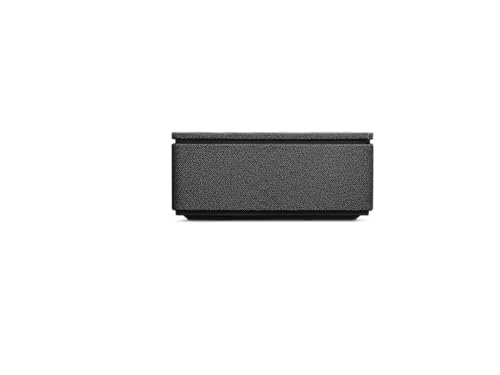
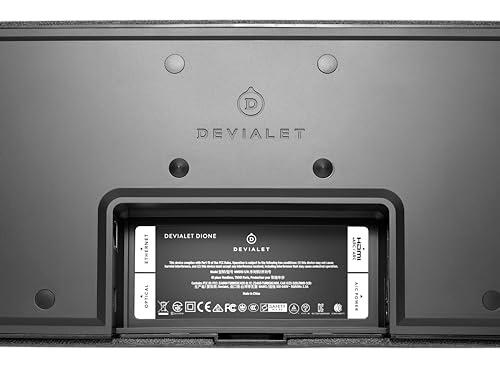
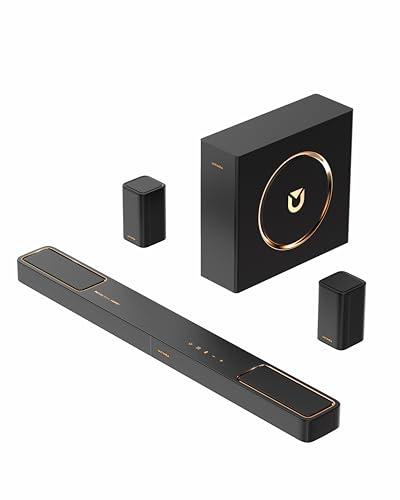
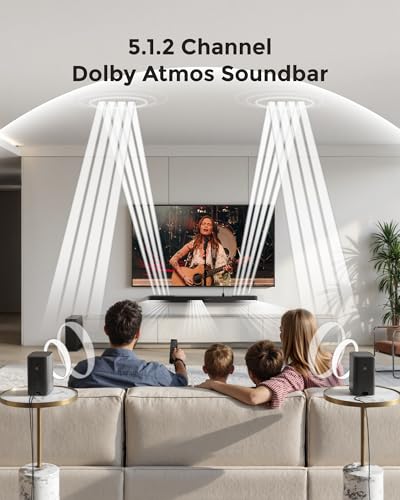

When you're shopping for a soundbar to transform your living room into a home theater, you'll quickly discover that the market offers everything from budget-friendly options to audiophile-grade systems that cost more than some people's cars. Today, we're comparing two soundbars that represent opposite ends of this spectrum: the Devialet Dione, a premium all-in-one system released in 2021, and the Ultimea Skywave F40, a complete multi-component system that arrived in 2024.
These aren't just different products—they represent fundamentally different philosophies about how to deliver immersive sound in your home. Understanding their approaches will help you decide which makes more sense for your setup, budget, and listening preferences.
Before diving into these specific products, it's worth understanding what separates a great soundbar from a mediocre one. The most important factors are audio performance (how good it actually sounds), surround virtualization (how well it creates that "movie theater" experience), build quality, and overall value.
Audio performance comes down to several key metrics. Frequency response tells us how evenly the soundbar reproduces different pitches—ideally, you want deep bass, clear midrange for dialogue, and crisp highs without harshness. Dynamic range measures the difference between the quietest and loudest sounds the system can handle, which is crucial for movie soundtracks that jump from whispered conversations to explosive action sequences. Total harmonic distortion (THD) indicates how "clean" the sound remains at higher volumes—lower numbers mean less audible distortion.
Surround virtualization is where soundbars get really interesting. Traditional home theater systems use multiple speakers placed around your room to create immersive sound. Soundbars try to achieve this same effect using clever processing and speaker placement within a single cabinet (or with minimal additional components). The quality of this virtualization separates premium products from budget options.
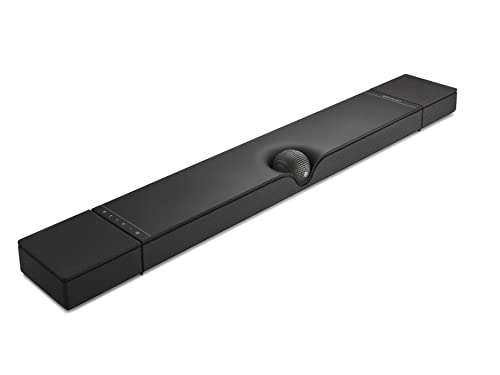
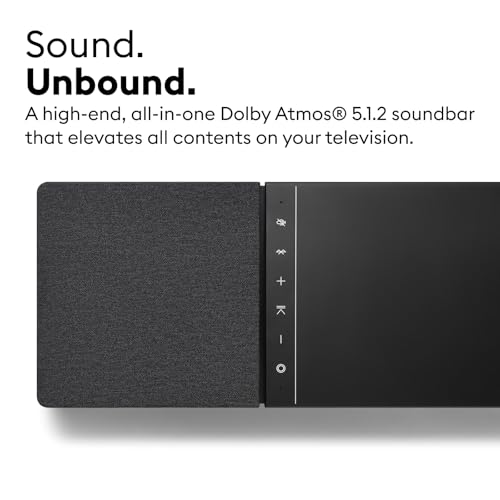
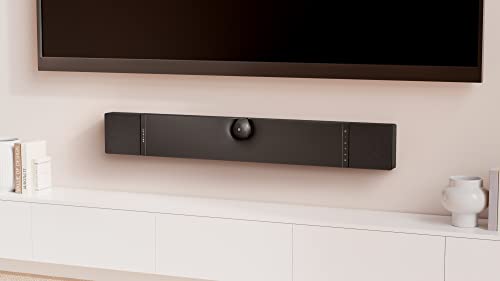
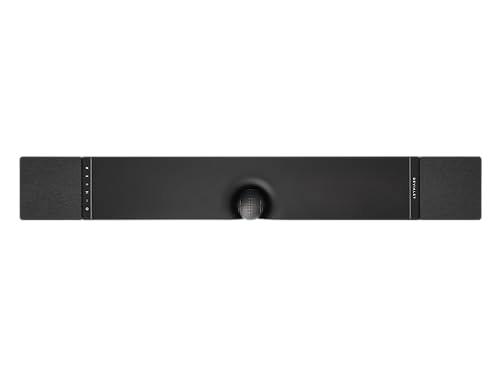
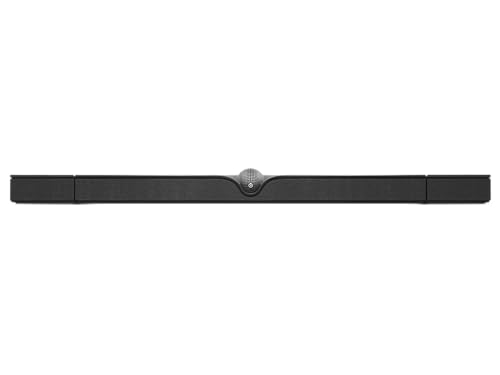
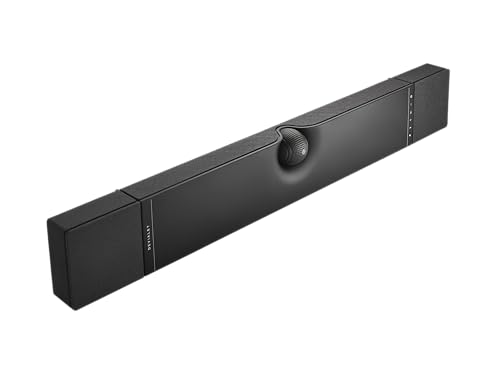
The Devialet Dione represents what happens when a company known for ultra-high-end audio equipment decides to make a soundbar. Released in 2021, it packs an almost ridiculous amount of engineering sophistication into a single, sleek package.
What makes the Dione special starts with its 17-driver array. Most soundbars use perhaps 6-8 drivers total, but Devialet packed in 9 full-range aluminum dome drivers for midrange and treble, plus 8 high-excursion aluminum woofers for bass. These aren't cheap drivers either—they feature neodymium magnets, which are more expensive but provide stronger magnetic fields for better control and efficiency.
The really clever part is how these drivers work together. The eight woofers are arranged in what Devialet calls a "push-push" configuration. Imagine two woofers facing each other inside the cabinet—when one pushes air out, the other pulls it in. This cancels out vibrations that would normally shake the entire soundbar cabinet, allowing for much cleaner bass reproduction. It's the same principle used in high-end studio monitors that cost thousands of dollars.
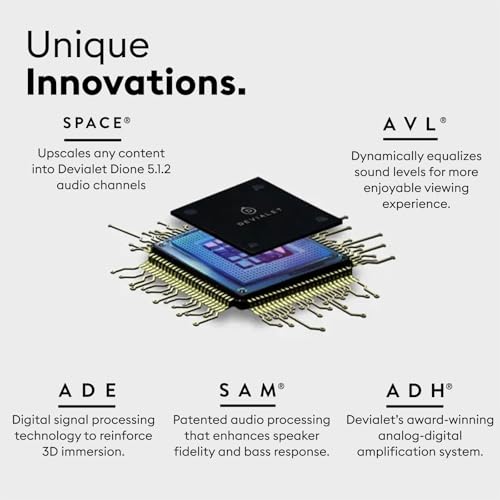
The Dione's amplification system deserves special attention because it's genuinely innovative. Most audio equipment uses either Class A amplification (which sounds great but runs hot and wastes power) or Class D amplification (which is efficient but can sound a bit sterile). Devialet's ADH (Analog Digital Hybrid) system combines both approaches.
The Class A section handles the delicate task of defining the signal's character and tonal qualities, while Class D stages provide the raw power needed to drive those 17 drivers. This hybrid approach delivers the sonic purity of Class A with the efficiency and power of Class D. The result is extremely low distortion—around 0.001%, which is better than most dedicated amplifiers.
Another standout feature is SAM (Speaker Active Matching), which is essentially a real-time correction system for the bass drivers. SAM analyzes the electrical signal going to each woofer and the actual acoustic output, then corrects for any discrepancies. This ensures that what you hear matches what was recorded as closely as possible.
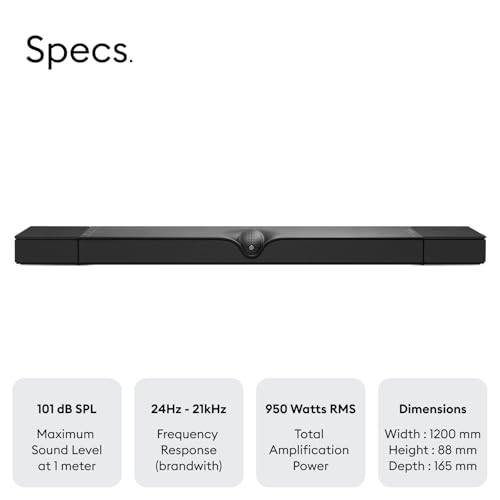
This technology allows the Dione to extend its frequency response down to an impressive 24 Hz—that's deep enough to reproduce the lowest notes on a pipe organ or the subsonic rumble in movie soundtracks. For context, most soundbars struggle to reach below 40-50 Hz without a separate subwoofer.
The Dione uses several proprietary technologies to create its surround sound effect. SPACE technology analyzes incoming audio and redistributes elements across the soundbar's driver array to create a wider, deeper soundstage. ADE (Advanced Dimensional Experience) uses beamforming—essentially steering sound waves in specific directions—to create convincing phantom surround and height channels.
What's particularly clever is how the system adapts to its placement. Whether you mount the Dione on a wall or place it on furniture, internal sensors detect the orientation and automatically adjust the processing to maintain optimal surround effects.
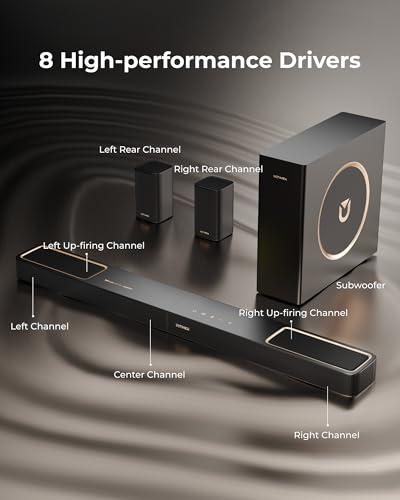
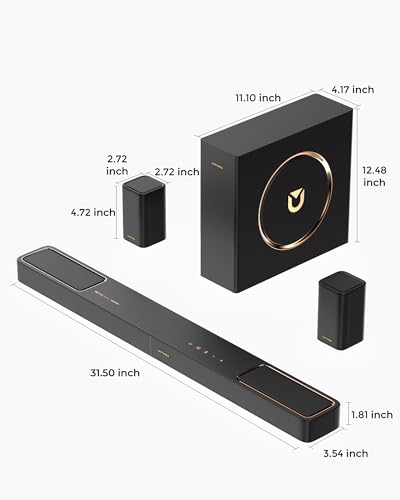
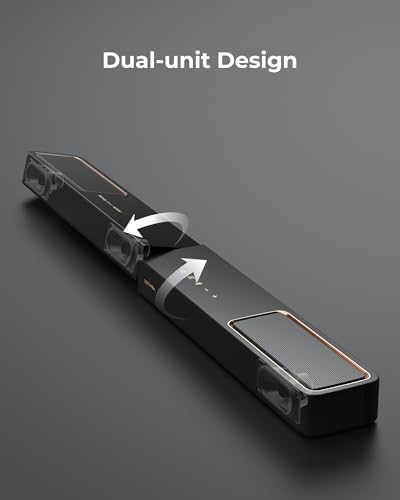
The Ultimea Skywave F40, released in 2024, takes a completely different approach. Instead of cramming everything into a single cabinet, it follows the traditional multi-component model with a main soundbar, dedicated subwoofer, and separate rear surround speakers.
The biggest advantage of the Skywave F40's approach is that it creates genuine surround sound rather than simulated effects. The rear speakers physically sit behind or beside your listening position, creating authentic surround localization that no amount of signal processing can fully replicate from a single soundbar.
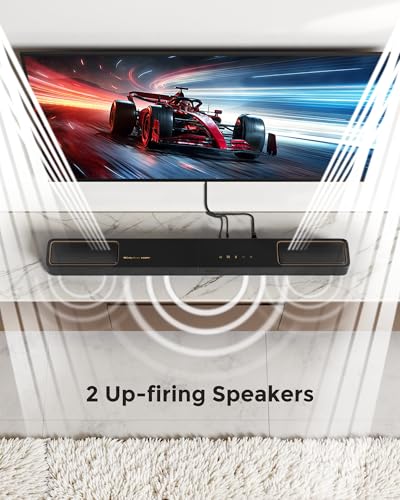
The main soundbar handles front left, center, and right channels, plus two up-firing drivers for Dolby Atmos height effects. The separate subwoofer takes care of bass duties with its own dedicated driver and enclosure, while the rear speakers handle surround left and right channels. This gives you a true 5.1.2 setup with discrete channels for each speaker position.
Where the Skywave F40 really shines is in its connectivity and customization options. The Bluetooth 5.4 implementation offers faster, more stable connections than older versions, with lower latency that's particularly beneficial for gaming or watching videos on mobile devices.
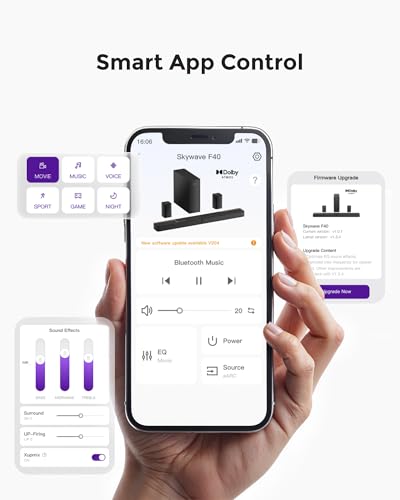
The system's 10-band equalizer with 121 preset matrices gives you unprecedented control over the sound signature. You can fine-tune frequency response for your room's acoustics or personal preferences in ways that most soundbars simply don't allow. The companion app provides easy access to these controls, making the system much more adaptable than typical budget offerings.
Despite its accessible pricing, the Skywave F40 includes features typically found in much more expensive systems. CEC (Consumer Electronics Control) support lets you control the soundbar with your TV remote, eliminating the need to juggle multiple remotes. The system also includes multiple listening modes optimized for different content types—movie mode for cinematic experiences, music mode for stereo content, and voice mode that enhances dialogue clarity.
This is where the price difference between these systems becomes most apparent. The Dione delivers genuinely audiophile-grade performance that stands up to critical listening. Its frequency response is remarkably linear across the entire spectrum, with bass that extends deeper and remains more controlled than virtually any other soundbar.
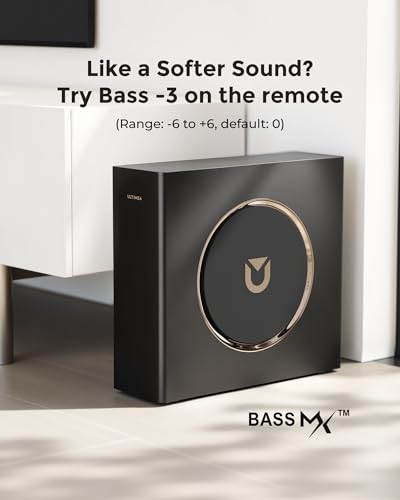
The Skywave F40 can't match this level of sonic sophistication, but it punches well above its weight class. The separate subwoofer provides good bass extension down to around 40-45 Hz, and the discrete channel separation offers advantages that even the Dione can't replicate.
The Dione's integrated bass system represents a masterpiece of acoustic engineering. Those eight woofers work together seamlessly, creating bass that's both powerful and precisely controlled. The push-push configuration eliminates cabinet resonances that plague most soundbars, resulting in cleaner, more articulate low frequencies.
However, physics still matters. The Skywave F40's dedicated subwoofer cabinet can pressurize more air than the Dione's internal woofers, potentially providing more visceral impact for movie soundtracks. The separate enclosure also allows for optimal placement—you can position the subwoofer where it sounds best in your room, rather than being limited to where the soundbar sits.
Here's where these systems' different approaches create the most interesting comparison. The Dione's virtual surround processing is remarkably sophisticated, using advanced beamforming and room modeling to create convincing spatial effects. The system's automatic room correction helps optimize performance for your specific space.
But there's no substitute for actual physical separation. The Skywave F40's rear speakers create genuine surround localization that no processing can fully replicate. When a helicopter flies overhead in a movie, you'll hear it move convincingly from front to back, rather than just getting an impression of movement.
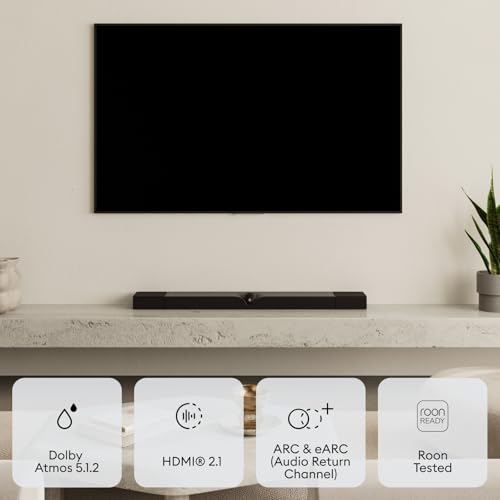
Both systems support Dolby Atmos, but their implementation differs significantly. The Dione uses sophisticated ceiling reflection algorithms that work consistently regardless of your room's characteristics. The system's automatic calibration adapts the processing to your specific setup.
The Skywave F40 relies on traditional up-firing drivers that bounce sound off your ceiling. This approach can be more effective when properly set up, but it's more dependent on your room having appropriate ceiling height and materials. In ideal conditions, the physical approach might provide more convincing height effects.
At the time of writing, these products occupy completely different price tiers. The Dione commands premium pricing that reflects its sophisticated engineering and luxury positioning. You're paying for cutting-edge amplification technology, precision drivers, and the convenience of a single-component solution that delivers audiophile performance.
The Skywave F40 offers remarkable value, delivering genuine multi-channel surround sound at a fraction of the Dione's cost. While it can't match the sonic sophistication of the premium system, it provides features and performance that were unimaginable at this price point just a few years ago.
For dedicated home theater use, both systems offer compelling advantages. The Dione excels in setups where simplicity and premium performance matter most. If you want exceptional sound quality without dealing with multiple components and speaker placement, it's an outstanding choice.
The Skywave F40 makes more sense for traditional home theater enthusiasts who appreciate the authentic surround experience that discrete speakers provide. The ability to optimize component placement for your specific room can result in more immersive surround effects than any single soundbar can achieve.
You prioritize audio quality above all else and have the budget for premium performance. The Dione makes sense for music lovers who also watch movies, as its exceptional fidelity and dynamic range excel with both content types. If you value sophisticated engineering, premium materials, and the convenience of a single-component solution, the Dione delivers on all fronts.
The system also suits apartments or rooms where placing multiple speakers isn't practical. The Dione's ability to create convincing surround effects from a single cabinet makes it ideal for space-constrained setups.
You want authentic surround sound performance at accessible pricing. The Skywave F40 is perfect for movie enthusiasts who appreciate the genuine spatial effects that only discrete speakers can provide. The extensive customization options make it suitable for users who like to fine-tune their audio setup.
This system also makes sense if you're building your first serious home theater and want the flexibility to upgrade components individually over time. The traditional approach allows future expansion in ways that an integrated system simply can't match.
These soundbars represent two valid but completely different approaches to home audio. The Devialet Dione pushes the boundaries of what's possible in a single-component system, delivering audiophile-grade performance with unmatched convenience. The Ultimea Skywave F40 proves that you don't need premium pricing to enjoy genuine surround sound immersion.
Your choice ultimately depends on your priorities, space constraints, and budget. Both systems will transform your TV audio experience, just through very different means. The Dione represents the pinnacle of soundbar engineering for those who demand the absolute best, while the Skywave F40 offers exceptional value for users who want authentic surround sound without breaking the bank.
Either way, you'll be getting a dramatic upgrade over your TV's built-in speakers and a taste of what modern home audio technology can achieve.
| Devialet Dione | Ultimea Skywave F40 |
|---|---|
| System Architecture - Determines setup complexity and surround authenticity | |
| All-in-one soundbar with 17 integrated drivers | Multi-component system with soundbar + subwoofer + rear speakers |
| Channel Configuration - Foundation for immersive audio experience | |
| 5.1.2 Dolby Atmos (virtualized surround) | 5.1.2 Dolby Atmos (true discrete surround) |
| Total Power Output - Impacts maximum volume and dynamic range | |
| 950W RMS (exceptional headroom for any room size) | 400-460W peak (adequate for most living rooms) |
| Frequency Response - Determines bass depth and overall tonal range | |
| 24-21,000 Hz (studio monitor grade bass extension) | 40-20,000 Hz (solid bass for movies and music) |
| Driver Technology - Core component affecting sound quality | |
| 17 aluminum drivers with neodymium magnets + push-push woofer config | Standard drivers with neodymium up-firing speakers |
| Amplification Technology - Determines audio fidelity and distortion levels | |
| ADH (Analog Digital Hybrid) with <0.001% THD | Conventional Class D amplification |
| Bass System - Critical for movie impact and music enjoyment | |
| 8 integrated high-excursion woofers with SAM technology | Dedicated wired subwoofer with flexible placement |
| Connectivity Options - Affects compatibility with modern devices | |
| HDMI 2.1 eARC, Optical, Wi-Fi, Bluetooth 5.0, AirPlay 2, Ethernet | HDMI eARC, Optical, USB, Bluetooth 5.4, smart app control |
| Sound Customization - Important for personalizing audio to room and taste | |
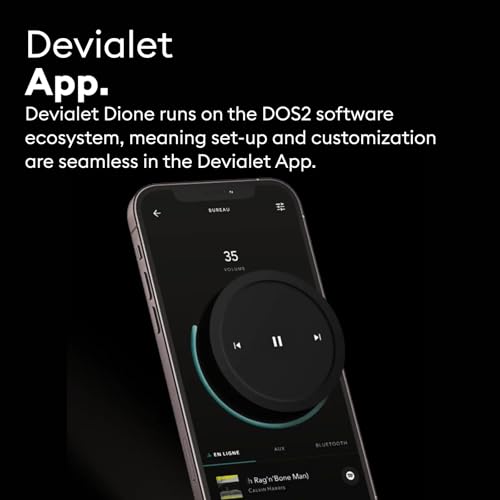
| 4 preset modes with automatic room calibration | 10-band EQ with 121 preset matrices + multiple sound modes |
| Setup Requirements - Determines installation complexity and flexibility | |
| Single component, auto-orientation detection, wall/table mount | Multiple components requiring optimal speaker placement |
| Premium Audio Technologies - Advanced features that justify higher costs | |
| SPACE upmixing, ADE beamforming, AVL dynamic EQ, Magic Wire | SurroundX, Xupmix with Dolby DAP, BassMX bass enhancement |
| Build Quality & Design - Reflects durability and living room aesthetics | |
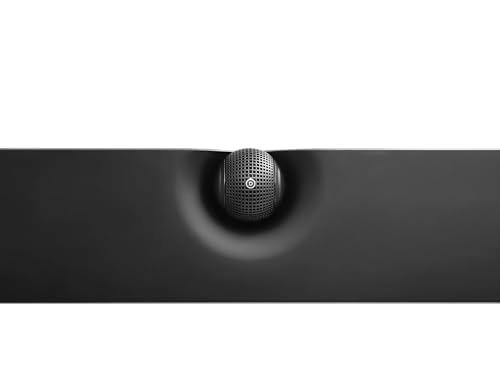
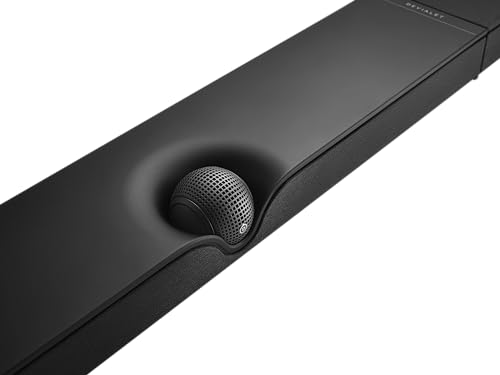
| Premium aluminum construction with rotating ORB center channel | Modern plastic design with sophisticated trim |
| Value Positioning - Target market and cost-benefit analysis | |
| Ultra-premium audiophile solution with luxury pricing | Budget-conscious complete surround system with excellent value |
The Devialet Dione is a premium all-in-one soundbar that integrates everything into a single sophisticated unit, while the Ultimea Skywave F40 is a complete multi-component system with separate rear speakers and subwoofer. The Dione focuses on audiophile-grade engineering and convenience, whereas the Skywave F40 provides authentic surround sound through physical speaker separation at a budget-friendly price.
The Devialet Dione features eight integrated high-excursion woofers with advanced SAM technology that extends down to 24 Hz, delivering exceptionally deep and controlled bass without needing a separate subwoofer. The Ultimea Skywave F40 includes a dedicated subwoofer that reaches 40-45 Hz and offers flexible room placement for optimal bass response. While the Dione has deeper extension, the Skywave F40's separate subwoofer can provide more tactile impact.
Yes, both the Devialet Dione and Ultimea Skywave F40 support Dolby Atmos 5.1.2 channel audio. The Dione uses sophisticated ceiling reflection algorithms and beamforming for height effects, while the Skywave F40 employs traditional up-firing drivers that bounce sound off your ceiling. Both create immersive overhead audio, but with different technical approaches.
The Devialet Dione is significantly easier to set up since it's a single component with automatic room calibration and orientation detection. The Ultimea Skywave F40 requires positioning multiple components including rear speakers and a subwoofer, though it includes all necessary cables and mounting hardware. The Dione offers plug-and-play simplicity, while the Skywave F40 needs more thoughtful placement for optimal performance.
The Ultimea Skywave F40 provides true discrete surround sound with physical rear speakers that create authentic spatial localization. The Devialet Dione uses advanced virtual surround processing with SPACE and ADE technologies to simulate surround effects from a single bar. While the Dione's processing is highly sophisticated, the Skywave F40's physical separation offers more convincing surround positioning for movies.
The Ultimea Skywave F40 delivers exceptional value by providing a complete 5.1.2 surround system with discrete components at an accessible price point. The Devialet Dione commands premium pricing that reflects its advanced engineering, audiophile-grade components, and luxury positioning. The Skywave F40 is ideal for budget-conscious buyers, while the Dione targets those prioritizing ultimate sound quality regardless of cost.
The Devialet Dione cannot be expanded with external speakers since it's designed as a complete all-in-one solution. The Ultimea Skywave F40 follows a traditional component approach that could theoretically allow future upgrades, though it's designed as a complete system. If expandability matters, the Skywave F40's multi-component design offers more flexibility than the Dione's integrated approach.
The Devialet Dione excels at music reproduction with its audiophile-grade ADH amplification, precise driver control, and exceptional frequency response from 24 Hz to 21 kHz. The Ultimea Skywave F40 offers good music performance with extensive EQ customization options. For serious music listening, the Dione's superior fidelity and dynamic range make it the clear choice, while the Skywave F40 provides solid musical performance at its price point.
Both soundbars offer modern connectivity, but with different focuses. The Devialet Dione includes HDMI 2.1 eARC, Wi-Fi, Ethernet, Bluetooth 5.0, and AirPlay 2 for premium streaming capabilities. The Ultimea Skywave F40 features HDMI eARC, Bluetooth 5.4, USB input, and smart app control with extensive EQ options. The Dione emphasizes high-quality wireless protocols, while the Skywave F40 focuses on user control and customization.
For home theater applications, the choice depends on your priorities. The Ultimea Skywave F40 provides more authentic surround sound localization with its physical rear speakers, making movie effects more convincing. The Devialet Dione offers superior audio quality and dynamic range for cinematic impact, plus the convenience of single-component installation. The Skywave F40 suits traditional home theater enthusiasts, while the Dione appeals to those wanting premium performance without complexity.
The Devialet Dione's main limitations include its premium pricing and inability to expand with additional components. Some users may prefer discrete rear speakers over virtual surround processing. The Ultimea Skywave F40 requires more complex setup with multiple components and may not match the Dione's audiophile-grade sound quality. The Skywave F40 also has a wired subwoofer, which some users find less convenient than wireless options.
Choose the Devialet Dione if you prioritize exceptional sound quality, have a premium budget, and want the simplicity of a single high-end component that excels with both movies and music. Select the Ultimea Skywave F40 if you want authentic surround sound with discrete speakers at an accessible price and don't mind a more complex setup. The Dione suits audiophiles and luxury buyers, while the Skywave F40 is perfect for value-conscious home theater enthusiasts.
We've done our best to create useful and informative comparisons to help you decide what product to buy. Our research uses advanced automated methods to create this comparison and perfection is not possible - please contact us for corrections or questions. These are the sites we've researched in the creation of this article: rtings.com - crutchfield.com - devialet.com - ooberpad.com - bhphotovideo.com - kjwestone.co.uk - whathifi.com - devialet.com - devialet.com - sound-advice.online - kjwestone.co.uk - device.report - tmraudio.com - devialet.com - devialetchat.com - projectorscreen.com - soundandvision.com - bestbuy.com - youtube.com - av.com - audiofi.ca - devialet.com - blog.son-video.com - audioconnection.com.au - baybloorradio.com - cdn.abicart.com - smarthomesounds.co.uk - e-piphany.co.za - cloneyaudio.com - devialet.com - catalog.asbis.ee - av.com - soundandvision.com - youtube.com - comparisontabl.es - the-gadgeteer.com - youtube.com - ultimea.com - manuals.plus - youtube.com - ultimea.com - youtube.com - youtube.com - youtube.com - youtube.com - eu.ultimea.com - support.ultimea.com

Privacy Policy
Terms and Conditions - Affiliate Policy
Home Security
© Copyright 2008-2026.
11816 Inwood Rd #1211, Dallas, TX 75244