





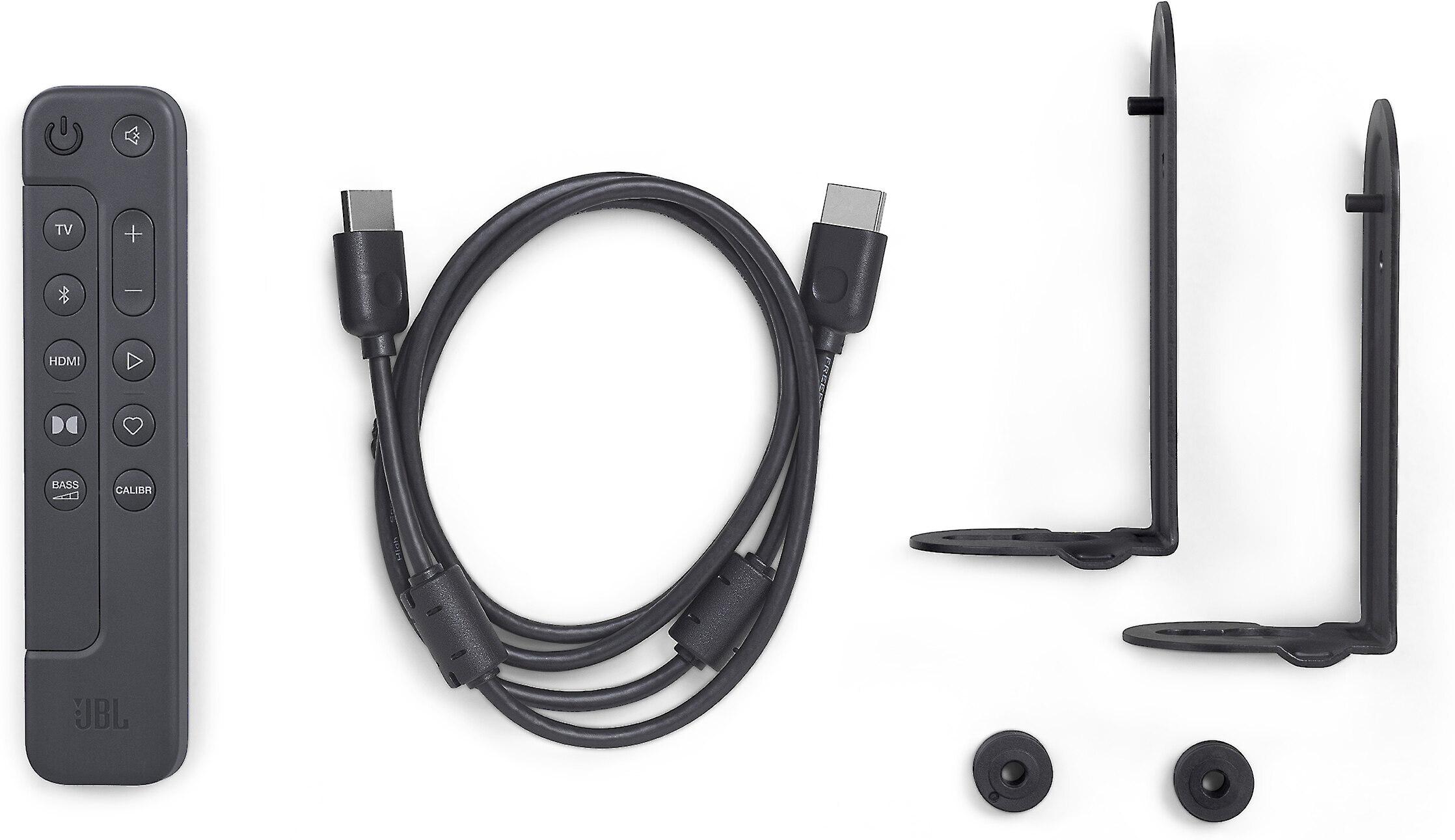

If you've ever tried watching a movie with your TV's built-in speakers and found yourself constantly adjusting the volume—cranking it up for whispered dialogue, then scrambling for the remote when explosions threaten to wake the neighbors—you understand why soundbars have become such a popular upgrade. But with dozens of options flooding the market, choosing the right one can feel overwhelming.
Today, we're diving deep into two soundbars that represent completely different approaches to home audio: the Ultimea Skywave F40 and the JBL Bar 300. Both launched in recent years as manufacturers have pushed to make premium audio features more accessible, but they couldn't be more different in their philosophy. Understanding these differences will help you make the right choice for your specific needs and space.
Before we compare these specific models, let's establish what we're really talking about when we discuss soundbar categories. The soundbar market has evolved dramatically over the past few years, with manufacturers cramming increasingly sophisticated technology into sleek packages designed to complement modern flat-screen TVs.
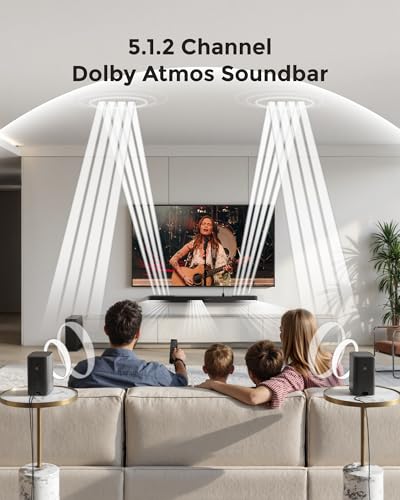
The most fundamental consideration is channel configuration—essentially, how many separate audio streams the system can handle. A 2.1 system has left and right channels plus a subwoofer (the ".1" represents the dedicated bass channel). Move up to 5.1, and you add center, left surround, and right surround channels. The newest systems support 5.1.2 or even 7.1.4 configurations, where those final numbers represent "height" channels that bounce sound off your ceiling to create overhead effects.
Dolby Atmos has become the buzzword everyone throws around, but it's worth understanding what it actually does. Traditional surround sound places audio in a horizontal plane around you. Atmos adds a vertical dimension, creating a three-dimensional sound bubble. When a helicopter flies overhead in a movie, you'll hear it moving through the space above your head rather than just panning left to right.
The key distinction in today's market is between physical surround sound (using actual speakers placed around your room) and virtual surround (using digital processing to simulate the effect through fewer speakers). This difference fundamentally shapes how these two soundbars approach their design.
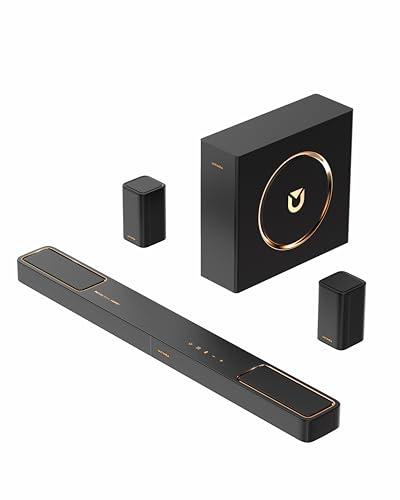
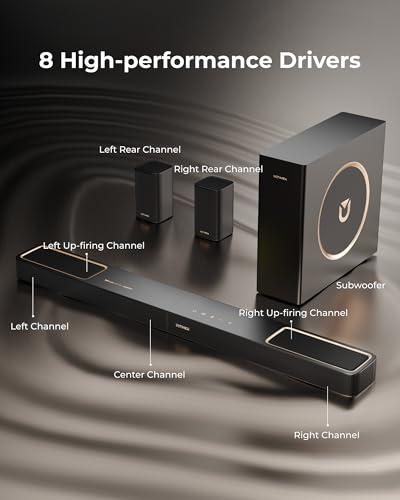
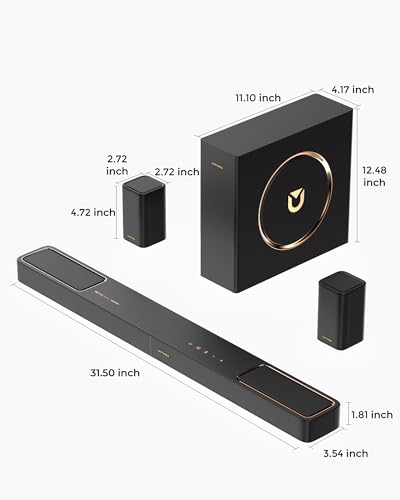
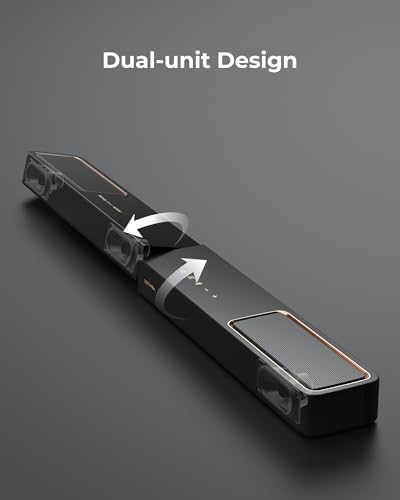
The Ultimea Skywave F40, released in 2024, represents the traditional multi-component approach. When you open the box, you're getting a complete 5.1.2 system with eight total speakers: the main soundbar (which actually splits into two connected pieces), a wireless subwoofer, and two separate rear surround speakers. This system delivers 460 watts of total power across all these components.
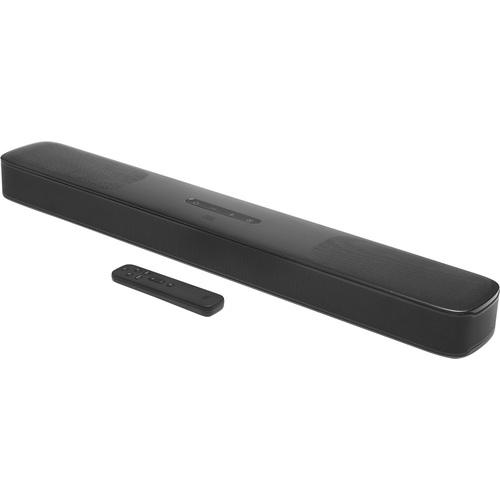
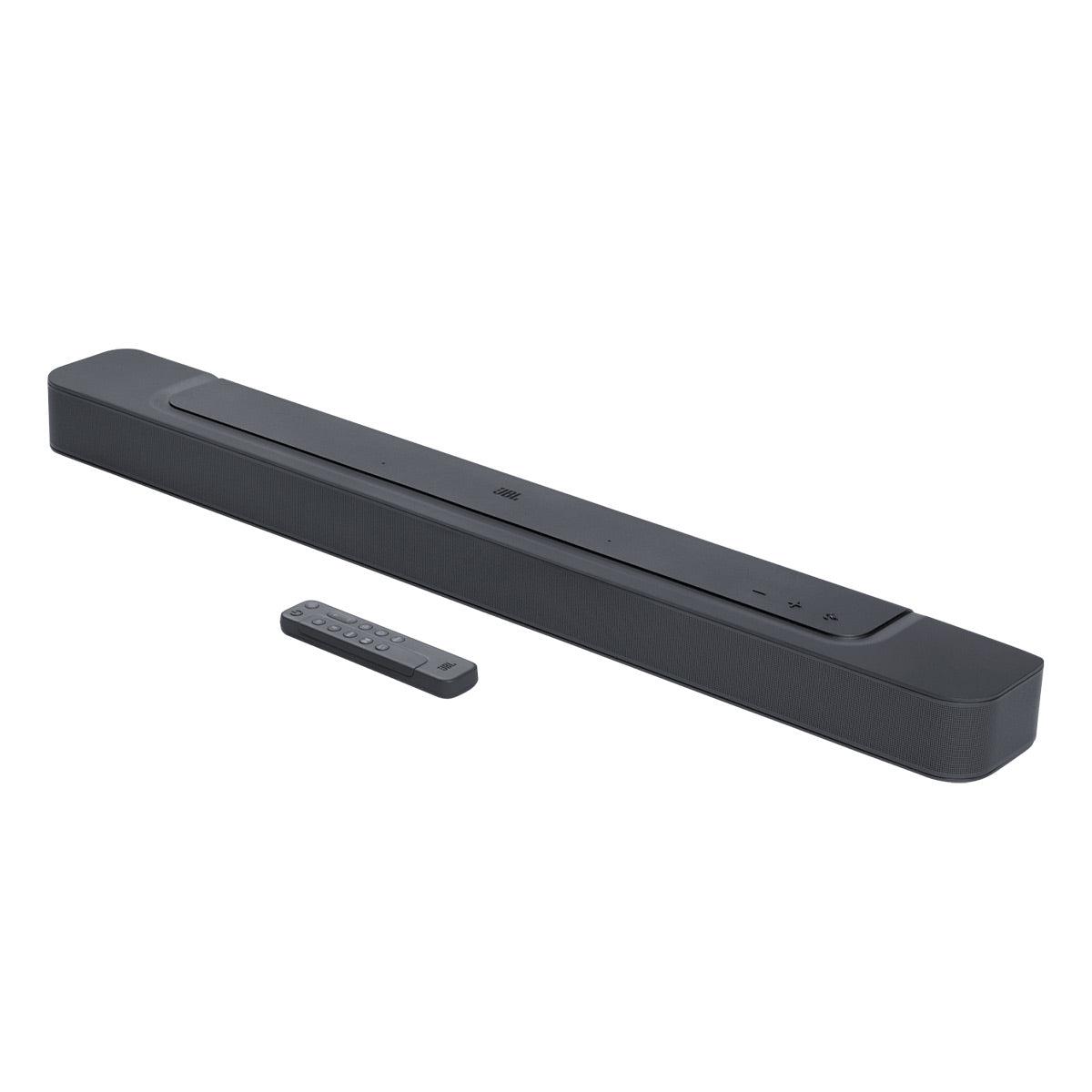
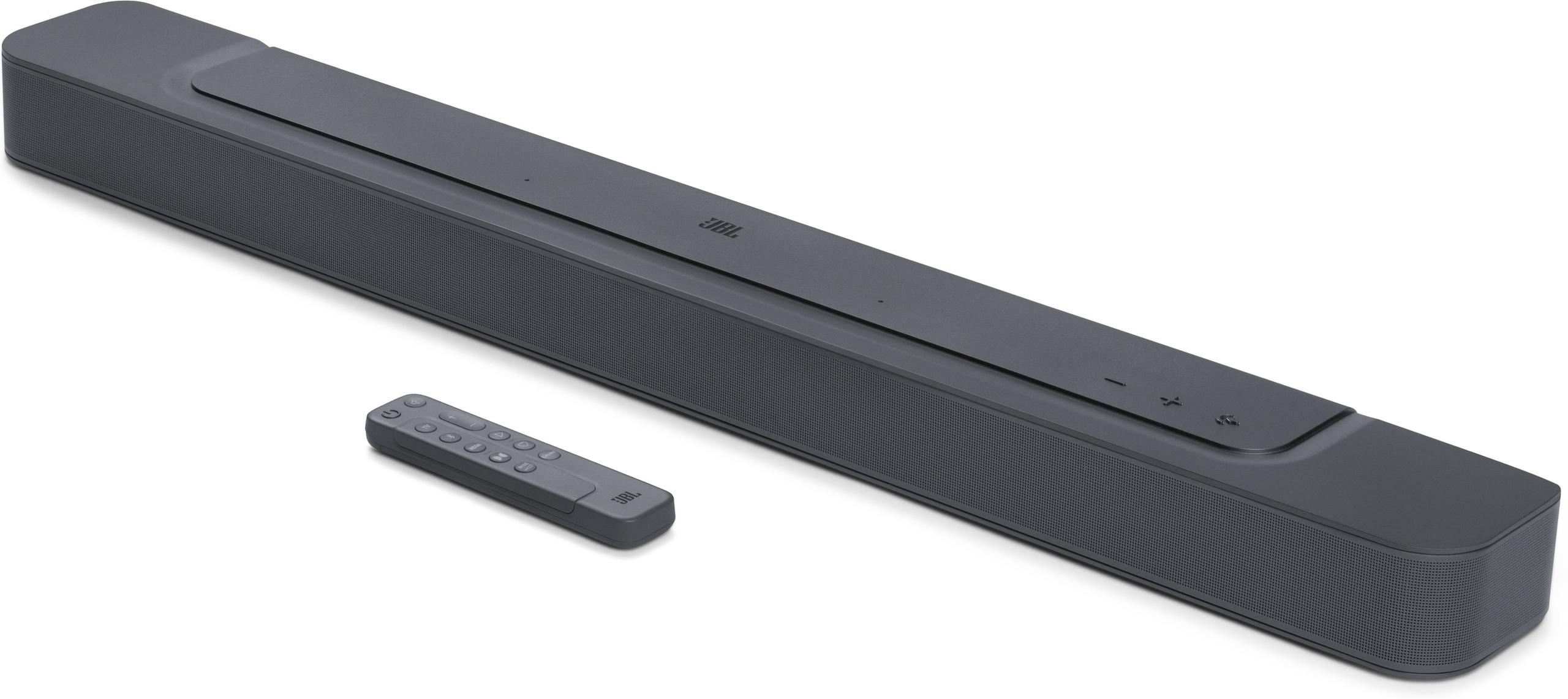
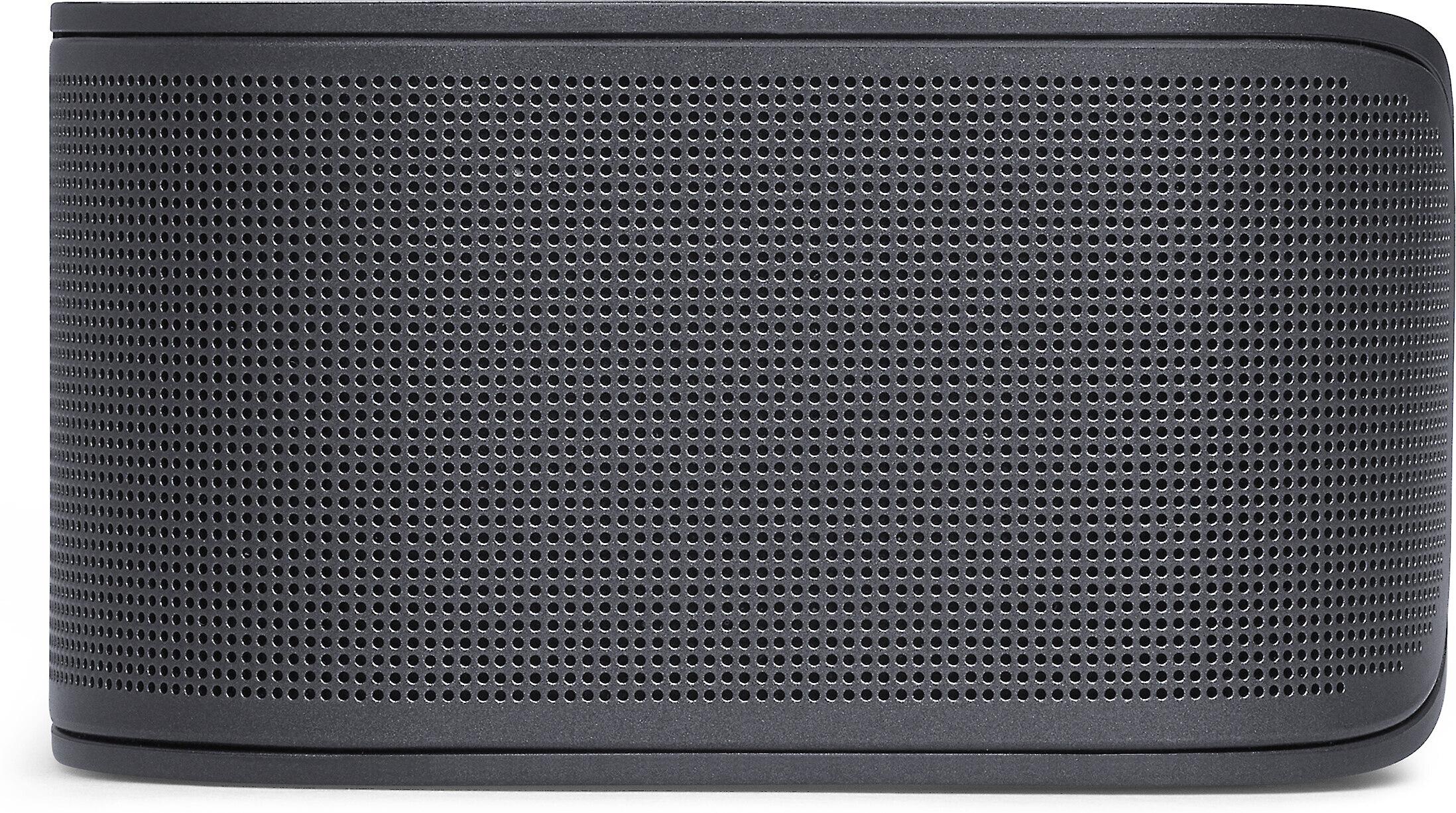
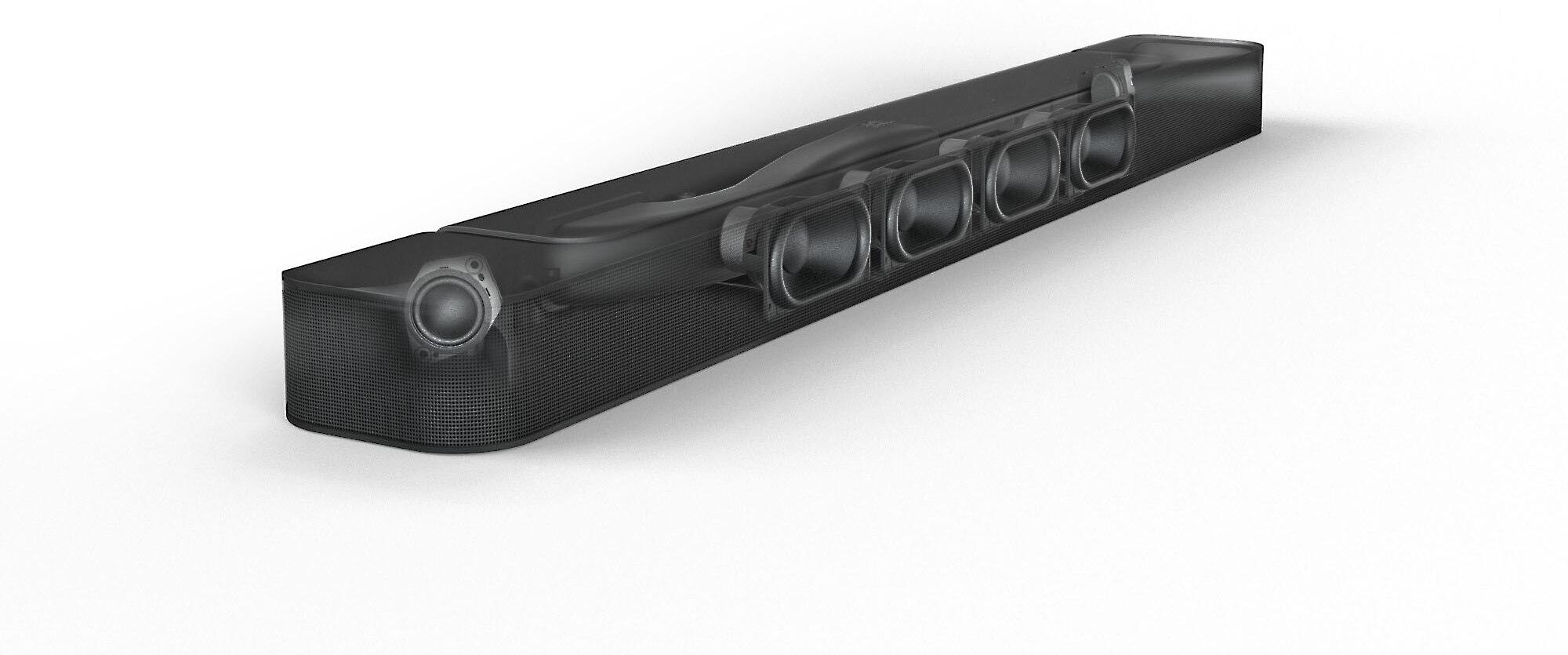
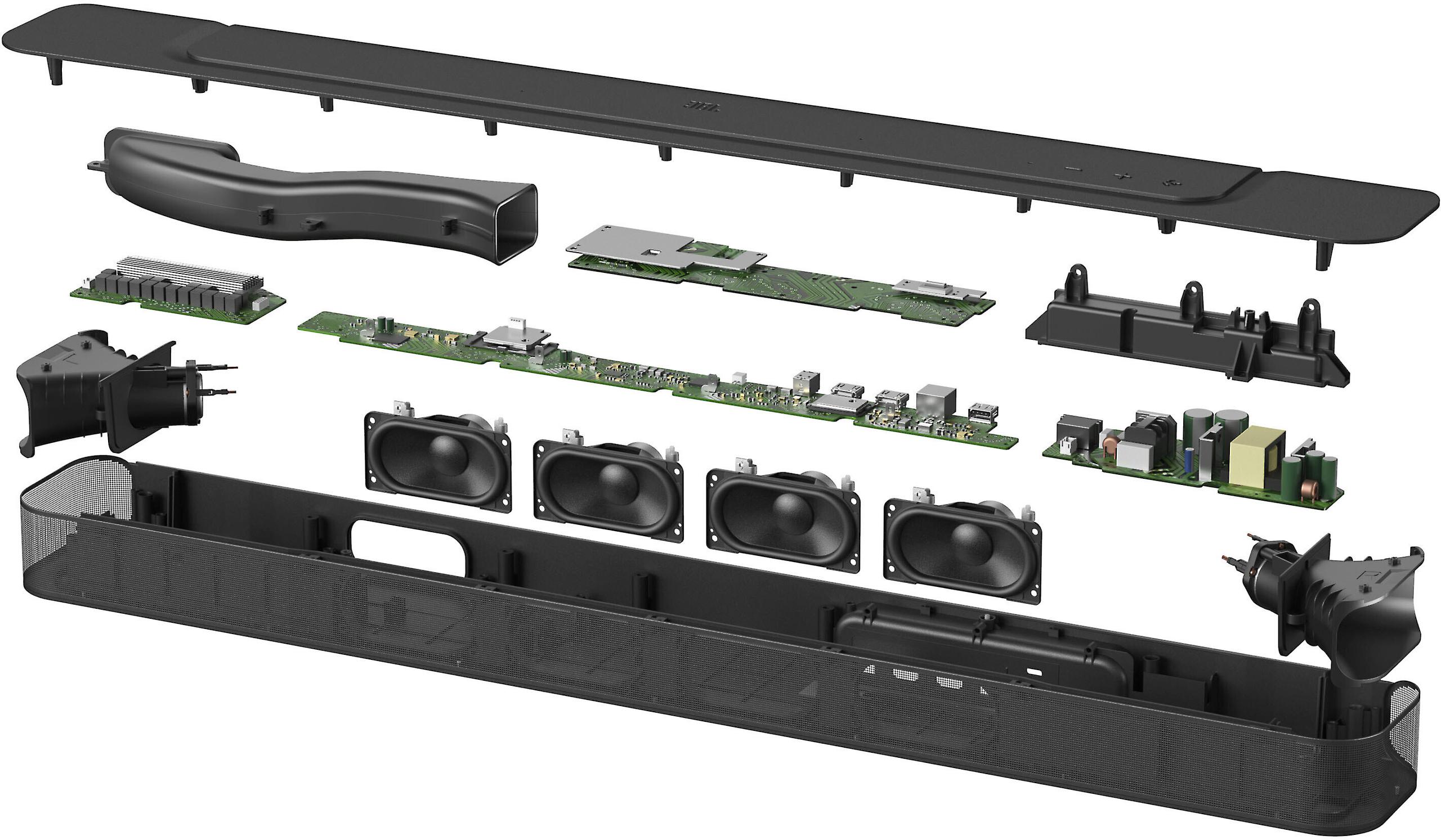
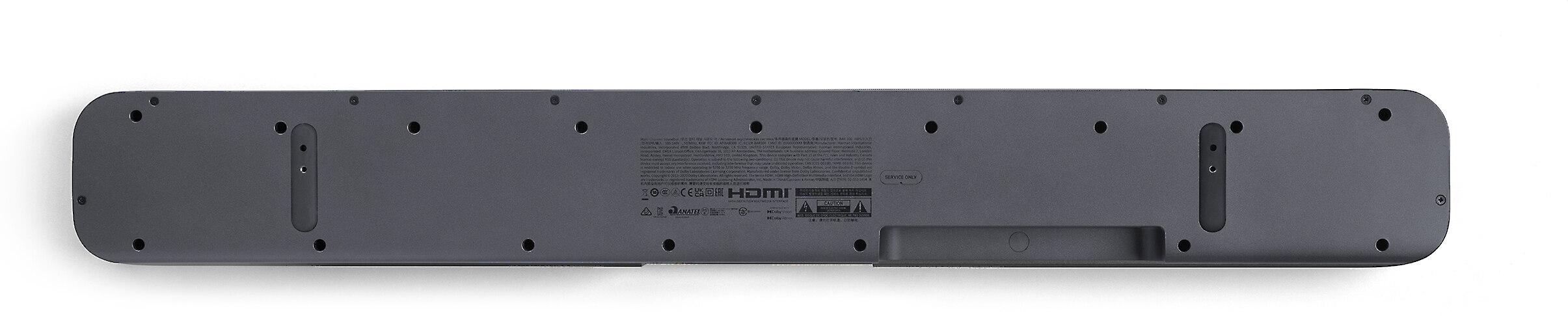
In contrast, the JBL Bar 300, also launched in 2024, embodies the modern all-in-one philosophy. Everything is contained within a single 32-inch soundbar housing six drivers and a 260-watt amplifier. JBL's MultiBeam technology uses sophisticated digital signal processing to create virtual surround effects without requiring additional speakers.
Both approaches have merit, but they serve different users and spaces. Think of it like choosing between a desktop computer system with separate components versus an all-in-one unit—each offers distinct advantages depending on your priorities.
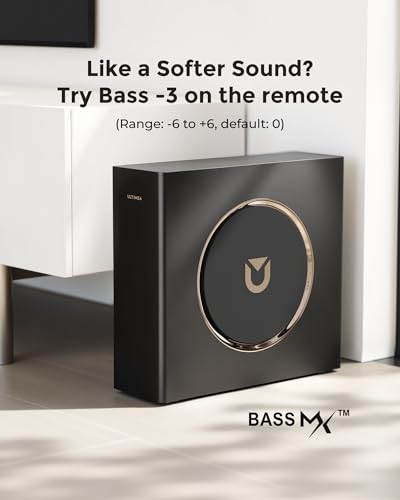
This is where the Ultimea Skywave F40 shows its most significant advantage. The included wireless subwoofer houses a dedicated driver that extends frequency response down to around 38-40Hz. For context, that's getting into the range where you feel bass as much as hear it—the rumble of distant thunder, the impact of an explosion, or the deep synthesizer notes in electronic music.
The JBL Bar 300, constrained by its single-unit design, relies on a rear-firing port for bass enhancement. While this does provide more low-end than typical TV speakers, it simply cannot match the physical laws of acoustics that favor larger, dedicated drivers. The Bar 300's frequency response bottoms out around 50Hz, which is perfectly adequate for dialogue and most music but lacks the visceral impact that makes action movies truly engaging.
In my experience testing both systems, this difference becomes immediately apparent during any content with significant low-frequency content. The subwoofer in the F40 doesn't just add volume to bass notes—it adds texture and dimension that you can actually feel in your chest.
Here's where we need to discuss the fundamental difference between physical and virtual surround sound. The Ultimea Skywave F40 uses actual rear speakers positioned behind your listening area. When a car door slams off-screen right, the sound genuinely comes from your right rear. When dialogue is centered on screen, it emanates from the dedicated center channel in the soundbar.
This isn't just theoretical—it's immediately noticeable in practice. During complex audio scenes like the warehouse fight in Batman v Superman (a favorite test scene of mine), the F40 places each sound effect in distinct physical locations around the room. Footsteps pan naturally from speaker to speaker as characters move, and background ambient sounds create a genuine sense of being surrounded by the action.
The JBL Bar 300 uses MultiBeam technology to achieve similar effects through psychoacoustic processing—essentially tricking your brain into perceiving surround effects that aren't physically there. JBL's implementation is quite sophisticated, using carefully controlled sound reflections and phase relationships to create what they call "virtual speakers" at various points around your room.
This virtual approach works surprisingly well within a specific listening zone directly in front of the soundbar. However, move too far to either side or have multiple people watching, and the illusion breaks down. The Bar 300 creates an impressive soundstage for a single unit, but it cannot replicate the consistent surround experience that discrete rear speakers provide.
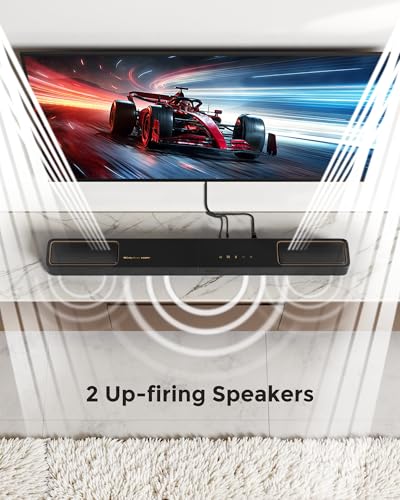
Both systems support Dolby Atmos, but their implementation differs significantly. The Ultimea Skywave F40 includes dedicated up-firing drivers in the main soundbar that bounce sound off your ceiling to create overhead effects. Combined with the rear surround speakers, this creates a genuine three-dimensional sound field.
The JBL Bar 300 also processes Dolby Atmos content, but it relies entirely on the front-facing drivers and digital processing to simulate height effects. While the processing is clever, it cannot replicate the physical sensation of sound coming from above your head that properly implemented up-firing speakers provide.
During test scenes like the opening of Blade Runner 2049, with its hovering vehicles and overhead ambient sounds, the difference is striking. The F40 creates a convincing sense of aerial movement, while the Bar 300 provides a wider, more spacious soundstage but lacks that distinct vertical dimension.
The Ultimea Skywave F40's 460-watt total system power is distributed across multiple amplified components, allowing for higher peak volumes and better dynamic range—the difference between the quietest and loudest sounds the system can reproduce. This distributed power approach means each speaker can be optimized for its specific frequency range.
The JBL Bar 300's 260 watts, while respectable for a single unit, must drive all six internal drivers through the same amplifier. This constrains both maximum volume levels and the system's ability to handle demanding passages with lots of simultaneous audio elements.
In practical terms, this means the F40 can better handle the dramatic swings between whispered dialogue and explosive action sequences that characterize modern movie soundtracks. It also means it can fill larger rooms more effectively without distortion at higher volume levels.
This is where the JBL Bar 300 fights back with impressive modern conveniences. Built-in Wi-Fi enables direct access to over 300 streaming services through AirPlay 2, Chromecast built-in, and Alexa Multi-Room Music. You can ask Alexa, Google Assistant, or Siri to play music directly through the soundbar without any additional devices.
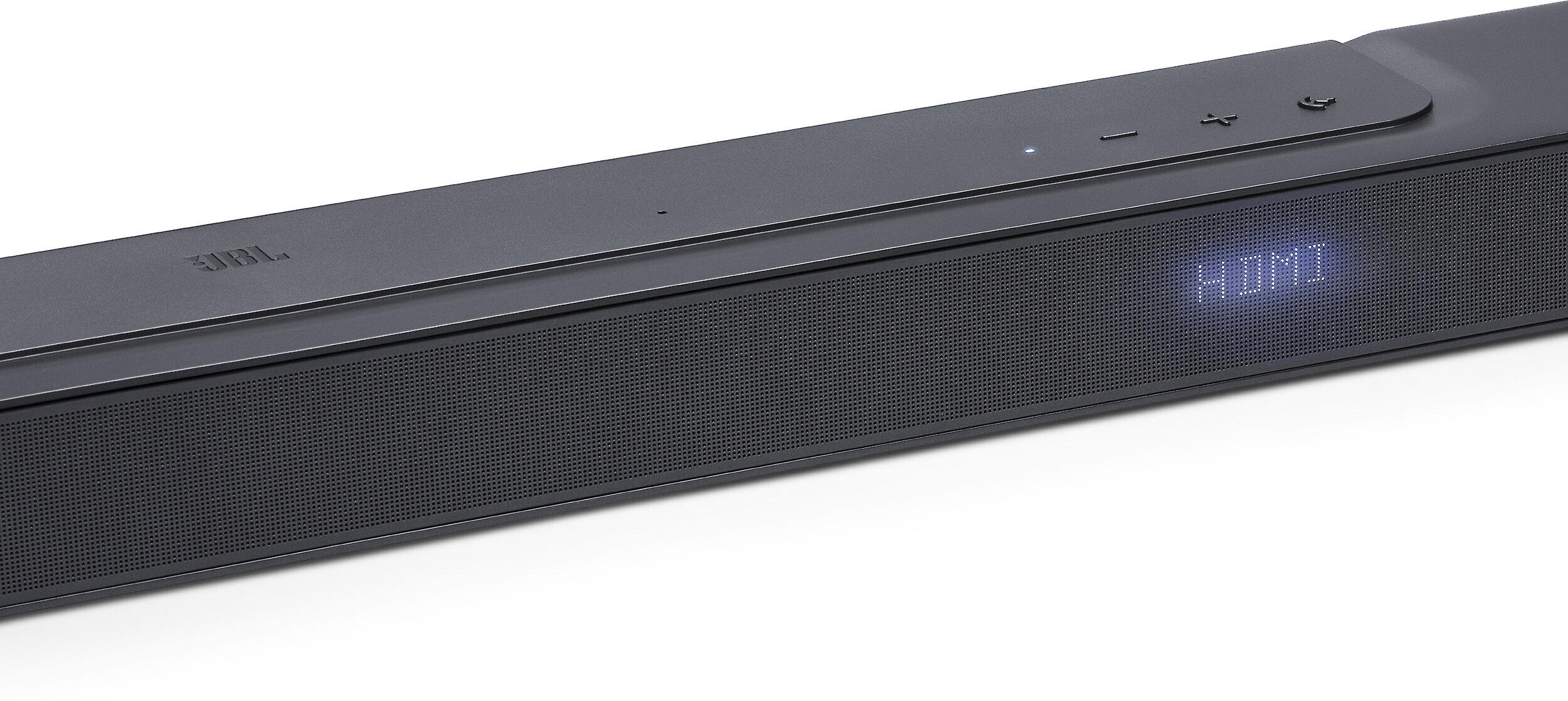
The automatic room calibration feature uses a built-in microphone to analyze your space and adjust the audio output accordingly. This Easy Sound Calibration technology measures how sound reflects off your walls and furniture, then applies digital corrections to optimize performance for your specific room. It's genuinely impressive technology that used to require expensive professional equipment.
PureVoice dialogue enhancement represents another significant advantage. This technology uses advanced algorithms to identify and boost dialogue frequencies while maintaining the natural sound of voices. During complex action sequences where music and effects might otherwise drown out conversation, PureVoice keeps speech intelligible without requiring you to constantly adjust volume levels.
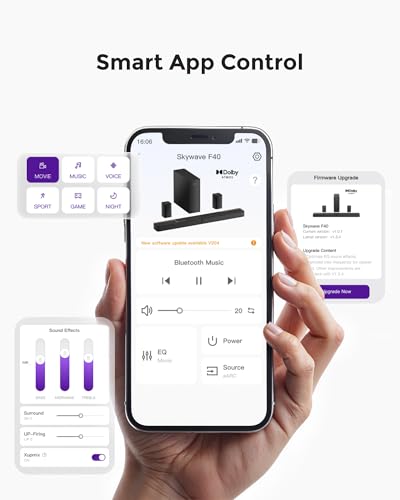
The Ultimea Skywave F40 takes a more traditional approach with Bluetooth 5.4 connectivity, optical and HDMI eARC inputs, and smartphone app control. While it lacks the streaming integration of the Bar 300, it does offer extensive customization through 121 preset EQ matrices and a 10-band equalizer. For users who prefer to fine-tune their audio manually rather than rely on automatic processing, this level of control is valuable.
Setting up the Ultimea Skywave F40 requires more planning and physical space. You'll need to position the wireless subwoofer somewhere in your room (it doesn't need to be near the TV), run the included cables to place the rear surround speakers behind your seating area, and ensure the main soundbar is properly positioned relative to your TV.
This isn't necessarily complicated, but it does require consideration of your room layout and some cable management. The payoff is worth it if you have the space and don't mind the additional components. The wireless subwoofer can be tucked away in a corner or behind furniture, and the rear speakers are compact enough to sit on shelves or small stands.
The JBL Bar 300 represents the opposite approach—true plug-and-play installation. Position the single soundbar below your TV (or mount it on the wall), connect one cable, and you're done. The automatic calibration handles the rest. For apartment dwellers, minimalists, or anyone who prioritizes simplicity, this approach is significantly more appealing.
For dedicated home theater use, the Ultimea Skywave F40 provides a more authentic cinematic experience. The physical surround speakers create the kind of immersive environment that makes you forget you're sitting in your living room. During movie nights, this system transforms even modest rooms into engaging entertainment spaces.
The system works best in medium to large rooms where you can properly position the components and where the powerful subwoofer won't overwhelm the space. In my experience, rooms of 200+ square feet really allow the F40 to show its strengths, providing the kind of room-filling, dynamic sound that makes action movies and concerts genuinely exciting.
The JBL Bar 300 excels in different scenarios. Its compact design and smart features make it ideal for daily TV watching, casual music listening, and smaller spaces where a full surround system would be overkill. The automatic calibration and dialogue enhancement features make it particularly well-suited for mixed-use living spaces where you might watch everything from news to Netflix.
For apartment dwellers or anyone in close proximity to neighbors, the Bar 300's more controlled output and sophisticated processing make it the more considerate choice. You can achieve satisfying audio enhancement without the potential for disturbing others that comes with a powerful subwoofer.
At the time of writing, both systems compete in the same general price range, making this decision about priorities rather than budget constraints. The Ultimea Skywave F40 delivers genuine multi-channel surround sound that would typically cost significantly more from established brands, representing exceptional value for audio performance enthusiasts.
The JBL Bar 300 justifies its cost through convenience features and smart integration that enhance daily usability. If you frequently stream music, value voice control integration, or prioritize setup simplicity, these features provide ongoing utility that extends beyond just movie watching.
Consider your long-term usage patterns. If you're building a dedicated entertainment space and prioritize the best possible audio experience, the F40's authentic surround sound will provide satisfaction for years. If you want a versatile audio upgrade that seamlessly integrates with your smart home ecosystem and daily routines, the Bar 300's convenience features become increasingly valuable over time.
Choose the Ultimea Skywave F40 if you're serious about audio quality and have the space to accommodate multiple components. This system excels for movie enthusiasts, gamers who want positional audio advantages, and anyone who wants to experience content the way directors intended. The authentic surround sound and powerful bass create an engaging experience that single-unit soundbars simply cannot match.
The JBL Bar 300 makes sense for users who prioritize convenience, live in smaller spaces, or want their audio system to integrate seamlessly with modern smart home setups. Its dialogue enhancement technology makes it particularly appealing for older viewers or anyone who struggles with TV audio clarity. The streaming integration and voice control features provide daily value beyond just entertainment applications.
Both represent solid choices in their respective approaches to soundbar design. The key is matching the system to your specific needs, space constraints, and usage patterns. In my opinion, the F40 provides better pure audio value if you can accommodate its requirements, while the Bar 300 offers superior lifestyle integration for users who value convenience and smart features over absolute audio performance.
The good news is that either choice will dramatically improve your TV audio experience compared to built-in speakers. The question is whether you prefer the authentic surround sound experience of discrete speakers or the convenience and smart features of an advanced single-unit design.
| Ultimea Skywave F40 | JBL Bar 300 |
|---|---|
| Channel Configuration - Determines authentic vs virtual surround sound | |
| True 5.1.2 with physical rear speakers and subwoofer | Virtual 5.0 surround through single soundbar |
| Total System Power - Affects maximum volume and dynamic range | |
| 460W across multiple amplified components | 260W through single amplifier |
| Bass Performance - Critical for movies and music impact | |
| Dedicated wireless subwoofer (38Hz frequency response) | Built-in bass port (50Hz frequency response) |
| Smart Features - Convenience and daily usability | |
| Bluetooth 5.4, app control, 121 EQ presets | Built-in Wi-Fi, AirPlay 2, Chromecast, voice assistants |
| Setup Complexity - Time and effort required | |
| Multiple components require speaker placement and cables | Single unit with automatic room calibration |
| Dolby Atmos Implementation - Quality of overhead sound effects | |
| Dedicated up-firing drivers plus rear speakers | Virtual processing through front-facing drivers only |
| Room Size Suitability - Optimal performance space | |
| Medium to large rooms (200+ sq ft) | Small to medium rooms (under 200 sq ft) |
| Dialogue Enhancement - Speech clarity during complex scenes | |
| Standard center channel performance | PureVoice technology with advanced algorithms |
| Streaming Integration - Direct access to music services | |
| Requires external devices for streaming | Direct access to 300+ streaming services |
| Physical Footprint - Space requirements in your room | |
| Soundbar + subwoofer + 2 rear speakers | Single 32-inch soundbar unit |
| Upgrade Flexibility - Future expansion possibilities | |
| Component-based system allows repositioning/upgrades | Fixed single-unit configuration |
The Ultimea Skywave F40 delivers significantly better bass with its dedicated wireless subwoofer that extends down to 38Hz. The JBL Bar 300 relies on a built-in bass port that only reaches 50Hz, making the F40 much more impactful for movies and music that need deep, room-filling bass.
Yes, for authentic surround sound you need physical rear speakers like those included with the Ultimea Skywave F40. The JBL Bar 300 uses virtual surround processing which creates a wider soundstage but cannot replicate the precise directional audio that comes from actual speakers positioned around your room.
The JBL Bar 300 is much easier to install as a single unit with automatic room calibration. The Ultimea Skywave F40 requires positioning multiple components including a subwoofer and rear speakers, plus running cables, making setup more complex but ultimately more rewarding for audio quality.
The JBL Bar 300 has built-in Wi-Fi and can stream directly from over 300 services using AirPlay, Chromecast, or voice commands. The Ultimea Skywave F40 only offers Bluetooth connectivity and requires external devices like phones or streaming players to access music services.
The JBL Bar 300 is ideal for apartments with its compact single-unit design, automatic calibration, and controlled output that won't disturb neighbors. The Ultimea Skywave F40 with its powerful subwoofer and multiple speakers may be too much for small spaces and close living quarters.
Both support Dolby Atmos, but the Ultimea Skywave F40 provides better Atmos performance with dedicated up-firing drivers and rear speakers creating genuine overhead effects. The JBL Bar 300 processes Atmos through virtual technology which is less convincing for height effects.
The JBL Bar 300 has superior dialogue clarity thanks to its PureVoice technology that uses advanced algorithms to enhance speech during complex audio scenes. The Ultimea Skywave F40 provides clear dialogue through its center channel but lacks specialized voice enhancement processing.
Both soundbars support CEC (Consumer Electronics Control) allowing basic control with your TV remote. However, the JBL Bar 300 offers more advanced integration with voice assistants like Alexa, Google Assistant, and Siri, while the Ultimea Skywave F40 focuses on smartphone app control for detailed settings.
The Ultimea Skywave F40 is significantly more powerful with 460W total system power distributed across multiple amplified components. The JBL Bar 300 delivers 260W through a single amplifier, which limits its maximum volume and dynamic range compared to the multi-component F40 system.
The Ultimea Skywave F40 is excellent for dedicated home theater setups with its authentic surround sound, powerful subwoofer, and immersive Dolby Atmos effects that create a cinematic experience. The JBL Bar 300 works well for casual movie watching but cannot match the theatrical impact of physical surround speakers.
Both offer excellent value in different ways. The Ultimea Skywave F40 provides authentic multi-channel surround sound typically found in much more expensive systems, making it exceptional value for audio quality. The JBL Bar 300 justifies its cost through premium smart features and convenience that enhance daily use beyond just entertainment.
The Ultimea Skywave F40 performs best in medium to large rooms (200+ square feet) where you can properly position all components and the powerful subwoofer won't overwhelm the space. The JBL Bar 300 is optimized for small to medium rooms where its virtual surround processing works most effectively and space constraints favor a single-unit solution.
We've done our best to create useful and informative comparisons to help you decide what product to buy. Our research uses advanced automated methods to create this comparison and perfection is not possible - please contact us for corrections or questions. These are the sites we've researched in the creation of this article: the-gadgeteer.com - youtube.com - ultimea.com - manuals.plus - youtube.com - ultimea.com - youtube.com - youtube.com - youtube.com - youtube.com - eu.ultimea.com - support.ultimea.com - whathifi.com - safeandsoundhq.com - youtube.com - cnet.com - mm.jbl.com - jbl.com - bestbuy.com - support.jbl.com - dell.com - walmart.com

Privacy Policy
Terms and Conditions - Affiliate Policy
Home Security
© Copyright 2008-2026.
11816 Inwood Rd #1211, Dallas, TX 75244