





If you've been wrestling with your TV's terrible built-in speakers, you're not alone. Most modern TVs prioritize sleek designs over audio quality, leaving viewers straining to hear dialogue while explosions blow out their eardrums. That's where soundbars come in – they're designed to solve these exact problems without the complexity of a full surround sound receiver setup.
But here's where it gets interesting: not all soundbars take the same approach. The Ultimea Aura A40 and Sonos Ray represent two fundamentally different philosophies in soundbar design, and understanding these differences is crucial to making the right choice for your home.
Before diving into the comparison, let's establish what really matters in a soundbar. The most important factor is dialogue clarity – if you can't understand what people are saying, nothing else matters. Next comes soundstage width (how spread out the audio feels beyond your TV screen) and frequency response (how well it handles everything from deep bass to crisp highs).
The signal-to-noise ratio is another key spec that determines how clean the audio sounds, especially at lower volumes. Anything above 75dB is considered good, and both systems here exceed that threshold. Total harmonic distortion (THD) tells you how much the system adds unwanted noise to the original signal – lower is better, and both keep distortion under 1%.
Room size compatibility matters more than many realize. A soundbar designed for large spaces might overpower a small bedroom, while a compact unit might get lost in a big living room.
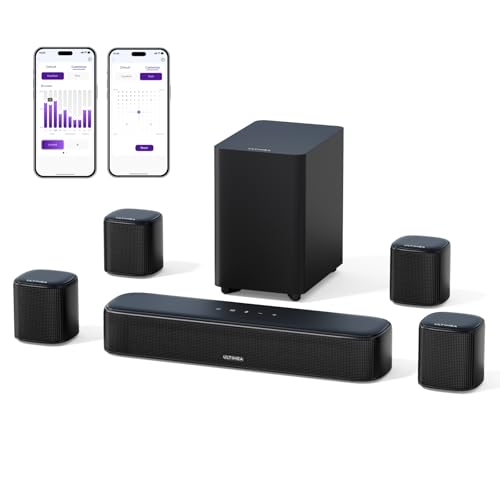
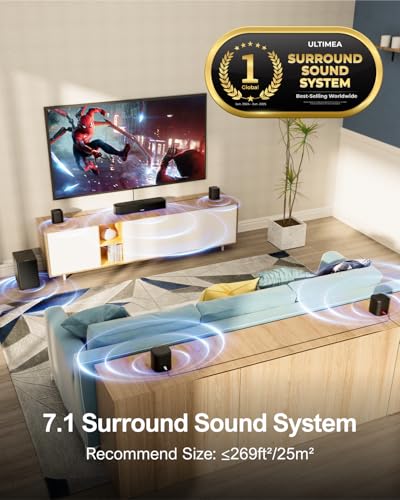
The Ultimea Aura A40, released in recent years as part of the growing trend toward affordable surround systems, takes the "more is more" approach. It's essentially a complete 7.1 channel home theater system disguised as a soundbar package. You get the main soundbar, four separate surround speakers, and a dedicated subwoofer – eight speakers total delivering 330 watts of peak power.
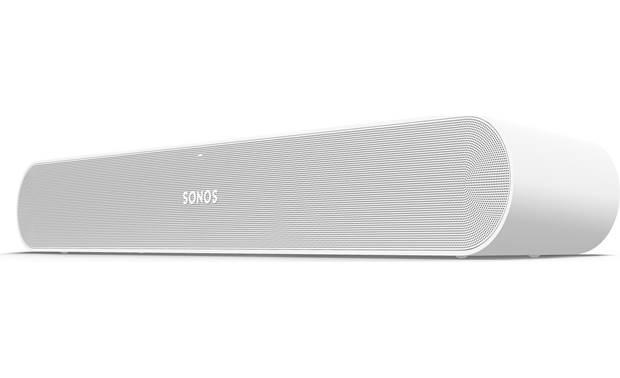
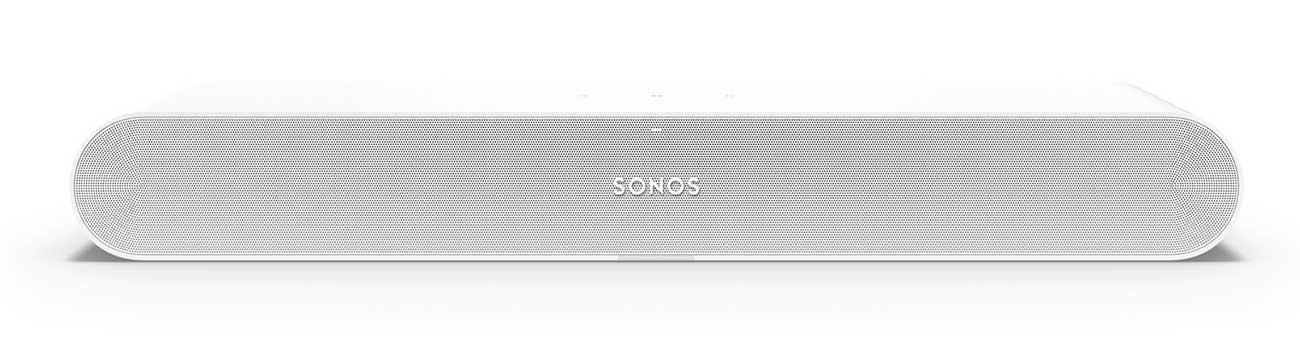
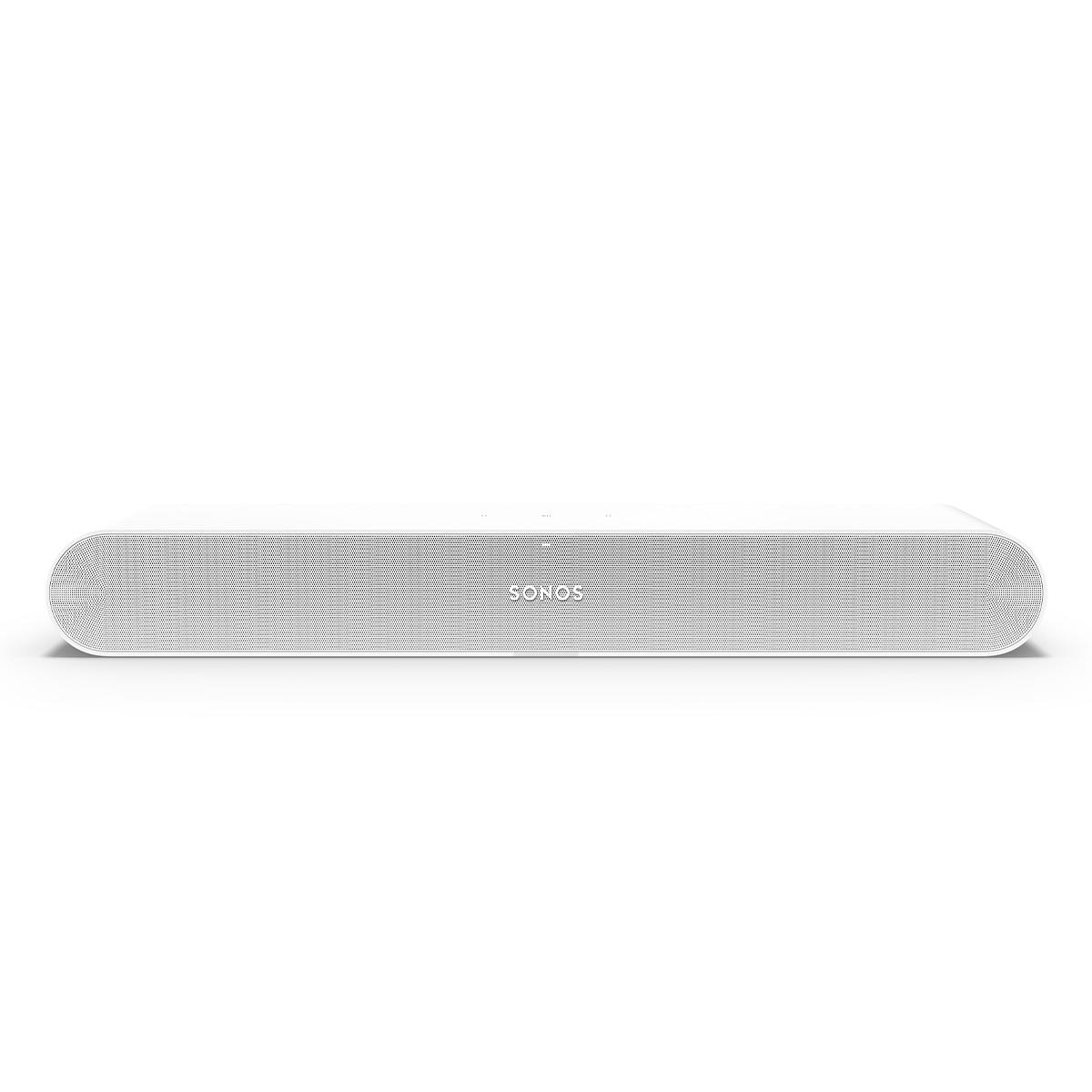
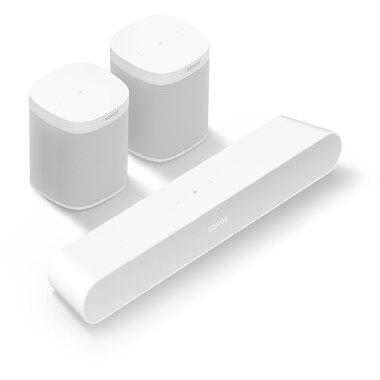
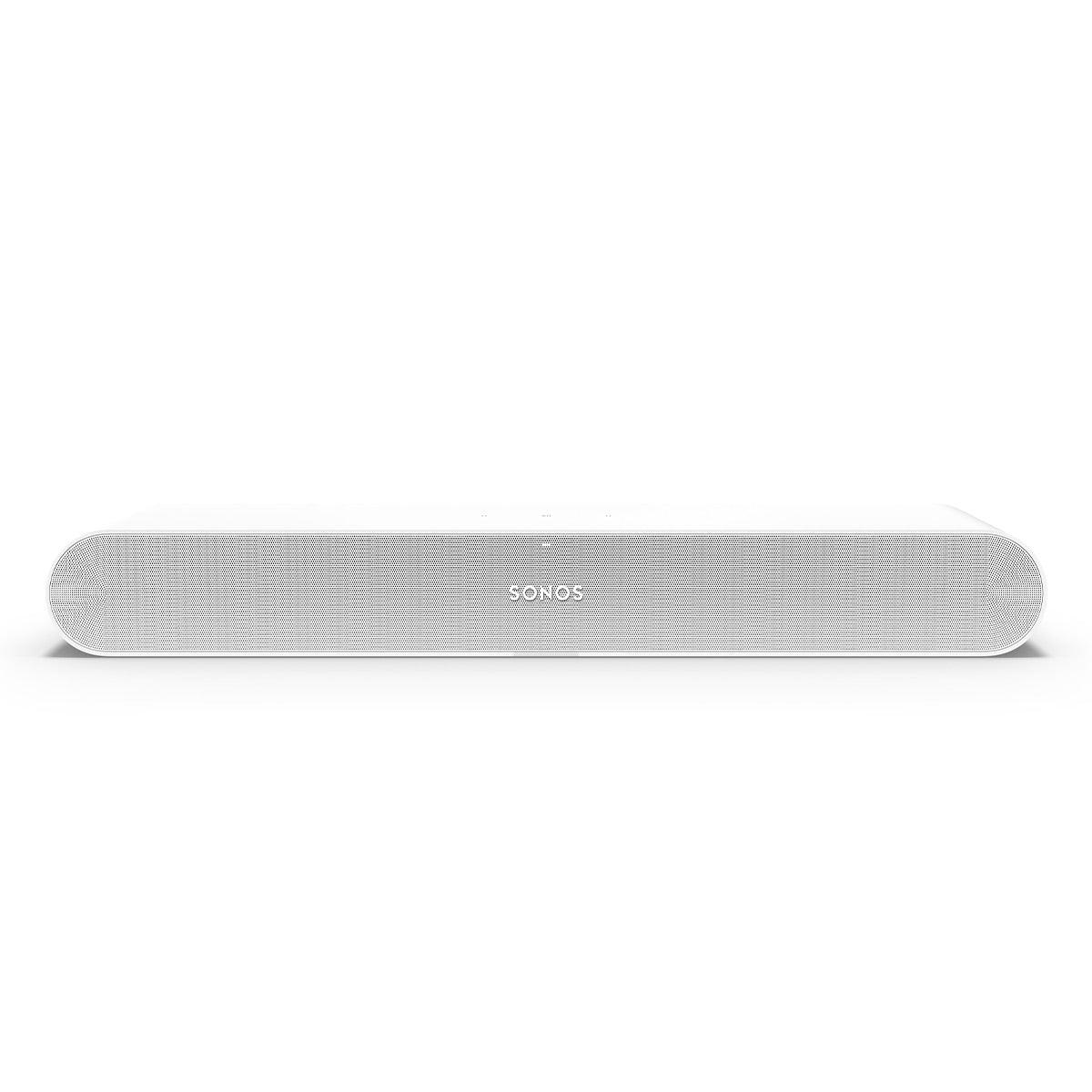
The Sonos Ray, launched in 2022, represents Sonos's entry-level offering in their ecosystem-focused approach. It's a stereo-only soundbar that prioritizes audio refinement and seamless integration over raw surround sound capability. This reflects the broader industry trend toward smart, connected audio systems that emphasize quality over quantity.
Since 2022, we've seen significant improvements in wireless audio codecs, room correction algorithms, and smartphone app integration – technologies that both systems leverage but in different ways.
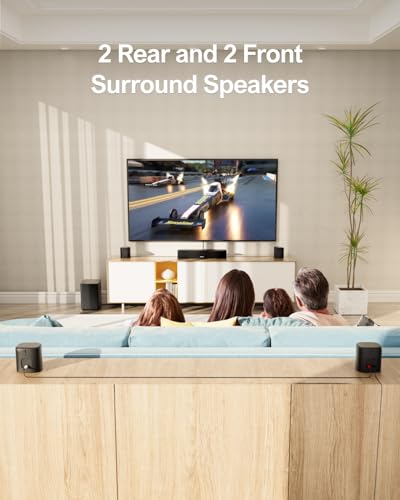
Here's where these systems diverge most dramatically. The Ultimea Aura A40 uses SurroundX technology with four physical surround speakers to create what's called discrete surround sound. This means different audio elements actually come from different directions – helicopters fly overhead, footsteps approach from behind, and gunshots crack from the sides.
The system creates a true 360-degree sound field because it has speakers physically positioned around your listening area. When watching action movies, this translates to much more immersive experiences. Our research into user reviews consistently shows that people notice the difference immediately, especially with content like war films or nature documentaries where environmental sounds matter.
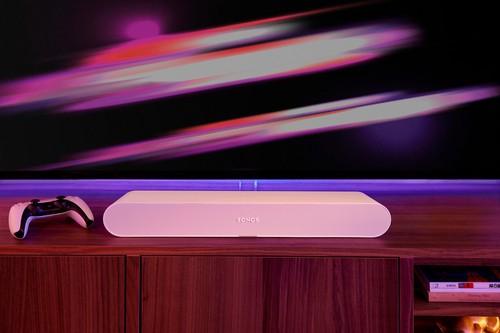
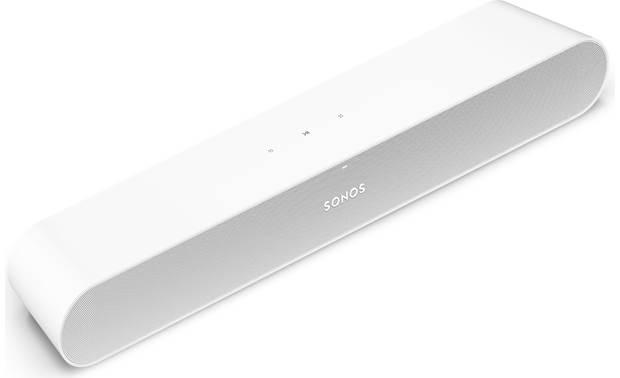
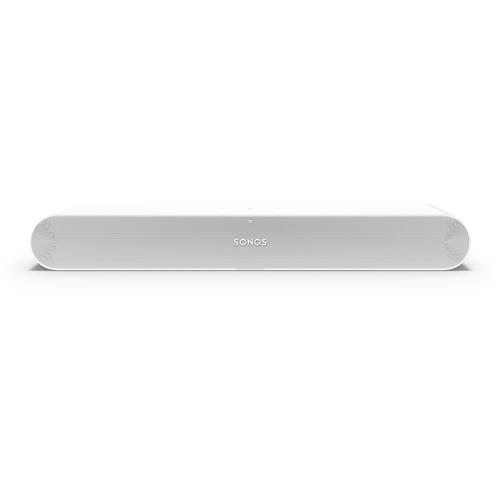
The Sonos Ray, by contrast, uses psychoacoustic processing to create virtual surround from its stereo configuration. It has two tweeters (for high frequencies) and two midwoofers (for mid-range sounds) arranged in a carefully designed acoustic chamber. While it can't physically place sounds around you, it excels at creating a wider, more enveloping stereo image that makes TV dialogue feel more natural and music more spacious.
Trueplay room correction sets the Sonos apart here. This technology uses your iPhone's microphone to analyze your room's acoustics and automatically adjusts the sound profile. It's genuinely clever – the system learns whether you're in a small bedroom with lots of soft furniture or a large living room with hardwood floors, then optimizes accordingly.
This is where the Ultimea Aura A40 shows its biggest advantage. The included 4-inch subwoofer uses BassMX technology to deliver controlled low-frequency output down to 65Hz. That means you feel the rumble of thunder, the thump of explosions, and the deep notes in your favorite songs.
However, our analysis of user feedback reveals a nuanced picture. While the bass quantity is impressive for the price point, the quality can feel somewhat loose and uncontrolled compared to higher-end systems. It's powerful enough to annoy neighbors but might not satisfy audiophiles looking for tight, precise bass response.
The Sonos Ray takes a different approach entirely – no separate subwoofer means bass response relies entirely on the soundbar's internal drivers. Reviews consistently note that while the bass is present and well-integrated with the overall sound, it lacks the physical impact needed for action movies or bass-heavy music genres.
This difference becomes crucial for home theater use. If you're watching Marvel movies or playing video games, the Ultimea's dedicated subwoofer provides the visceral impact that makes explosions feel real. For casual TV viewing or acoustic music, the Sonos Ray's more subtle bass approach might actually be preferable.
Despite its home theater focus, the Ultimea Aura A40 offers impressive music customization through its 10-band equalizer and 121 preset EQ matrices. These presets cover everything from classical to EDM, allowing users to tailor the sound for specific genres. The dedicated app provides granular control that you rarely see at this price point.
However, critical listening reveals limitations. User reviews and professional evaluations consistently describe the overall sound as somewhat "metallic" or "tinny" – acceptable for movies but less refined for serious music listening. The extensive EQ options help mitigate this, but they require time and experimentation to get right.
The Sonos Ray approaches music differently, prioritizing tonal accuracy over customization options. Reviews consistently praise its "balanced mids where most voices and lead instruments reproduce clearly." The proprietary waveguide design focuses high frequencies more precisely, resulting in clearer vocals and better instrument separation.
For music lovers, this difference is significant. The Sonos Ray sounds more natural out of the box, while the Ultimea requires tweaking to reach its potential but offers more flexibility once properly configured.
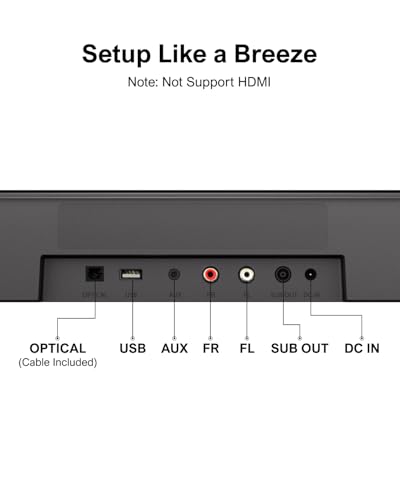
Both systems reflect the modern reality that HDMI has become the preferred connection standard, yet neither includes it – a notable limitation in 2024. However, they compensate in different ways.
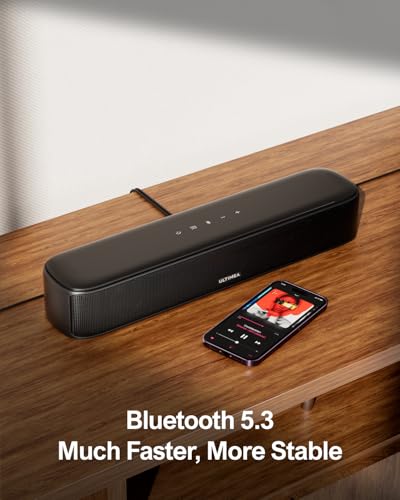
The Ultimea Aura A40 offers Bluetooth 5.3 (the latest version with improved stability and range), optical, AUX, and USB inputs. The Bluetooth implementation is particularly strong, with reliable connections and good audio quality for wireless streaming.
The Sonos Ray focuses on Wi-Fi connectivity and Apple AirPlay 2 integration. This approach enables lossless audio streaming and seamless integration with Apple devices, but it limits compatibility with Android users who rely on Bluetooth for wireless audio.
The Ultimea Smart App offers remarkable depth for a budget system. Beyond basic controls, you can access those 121 EQ presets, adjust surround speaker levels across 13 different intensities, and even receive over-the-air (OTA) firmware updates that add new features over time.
However, our research suggests the app suffers from occasional translation issues and can feel overwhelming for users who just want to improve their TV audio without becoming amateur audio engineers.
The Sonos S2 app takes the opposite approach – streamlined, intuitive, and focused on making good sound accessible to everyone. Trueplay room correction happens automatically, and most users never need to adjust anything beyond basic volume and source selection.
The Ultimea Aura A40 requires significantly more setup investment. You're positioning five separate components: the main soundbar, subwoofer, and four surround speakers. The front surround speakers need wired connections, while the rear speakers connect wirelessly but still require power outlets.
Our analysis of user experiences shows setup typically takes 30-45 minutes, and optimal placement requires some experimentation. The system includes wall-mounting hardware for all components, but achieving the best sound means thinking carefully about speaker angles and distances.
The Sonos Ray represents the opposite philosophy – plug in power and optical cable, open the app, and you're done in under five minutes. The forward-facing acoustic design minimizes placement sensitivity, meaning it sounds good even when tucked into tight TV stand spaces.
The Ultimea Aura A40 targets medium to large rooms (108-270 square feet) and really shines when it has space to breathe. In smaller rooms, the surround effects can feel overwhelming, and the subwoofer might require significant volume reduction to avoid disturbing neighbors.
The Sonos Ray works better in compact spaces where the stereo soundstage enhancement provides noticeable improvement without acoustic complexity. Its compact form factor (exact dimensions weren't specified in our research, but reviews consistently describe it as notably smaller than traditional soundbars) makes it ideal for apartments, bedrooms, or offices.
At the time of writing, these systems occupy different value propositions entirely. The Ultimea Aura A40 delivers an complete surround sound system at a price point where most competitors offer basic stereo soundbars. You're getting eight speakers, a dedicated subwoofer, and extensive customization capabilities.
However, "value" depends on what you prioritize. The Sonos Ray costs more but delivers superior build quality, more refined audio processing, and integration into a broader ecosystem. If you're planning to add more speakers throughout your home, the Sonos platform provides expansion capabilities that the Ultimea simply can't match.
The total cost of ownership also differs significantly. The Ultimea is essentially a complete system – what you buy is what you get. The Sonos Ray might cost more initially but could save money long-term if you were planning to build a multi-room audio system anyway.
For dedicated home theater use, the Ultimea Aura A40 provides capabilities typically reserved for much more expensive systems. The discrete surround speakers create genuine spatial effects that enhance immersion in movies and games. When watching films with active soundtracks – think Marvel movies, war films, or nature documentaries – the difference is immediately apparent.
The adjustable surround levels (up to 6 different settings) let you fine-tune the effect for your room and preferences. Some users prefer subtle enhancement for dialogue-heavy content, while others want maximum surround intensity for action sequences.
The Sonos Ray takes a different approach to home theater audio. Rather than trying to simulate surround sound, it focuses on making stereo content sound as good as possible. The dialogue enhancement mode and night sound feature (which reduces dynamic range for late-night viewing) address the most common TV audio complaints effectively.
Modern gaming increasingly relies on directional audio for competitive advantage and immersion. The Ultimea Aura A40's true surround capabilities excel here – being able to locate enemies by footstep sounds or identify the direction of incoming threats provides genuine gameplay advantages in first-person shooters and battle royale games.
The system's low-latency Bluetooth 5.3 connection also minimizes audio delay, crucial for rhythm games or any situation where audio-visual synchronization matters.
The Sonos Ray handles gaming audio competently but lacks the positional advantages that dedicated surround speakers provide. For casual gaming or single-player experiences where audio immersion matters more than competitive edge, its superior audio quality might actually be preferable.
After extensive research into user experiences and expert evaluations, here's my take on who should choose each system:
Choose the Ultimea Aura A40 if you want maximum immersion and don't mind complexity. It's ideal for movie enthusiasts, gamers, and anyone who enjoys tweaking audio settings to perfection. The system delivers genuine surround sound at a price point where it simply shouldn't be possible, making it exceptional value for home theater focused users.
However, be prepared for a more involved setup process and accept that the audio quality, while impressive for the price, won't match higher-end systems in terms of refinement.
Choose the Sonos Ray if you prioritize simplicity, audio quality, and long-term ecosystem growth. It's perfect for users who want significant improvement over TV speakers without the complexity of multiple components. The superior build quality and refined audio processing justify the higher price for users who value "set it and forget it" simplicity.
The Sonos Ray also makes sense if you're already invested in or planning to build a Sonos ecosystem, as it integrates seamlessly with other Sonos products for whole-home audio.
Both systems address the fundamental problem of poor TV audio, but they take dramatically different approaches. The Ultimea Aura A40 gives you more – more speakers, more bass, more customization, more immersion. The Sonos Ray focuses on doing stereo audio exceptionally well with maximum convenience.
Your choice ultimately depends on whether you want to become an active participant in your audio experience or prefer intelligent automation that just works. Both approaches have merit, and both represent good value in their respective categories. The key is understanding which philosophy aligns better with your viewing habits, living situation, and long-term audio goals.
| Ultimea Aura A40 | Sonos Ray |
|---|---|
| Channel Configuration - Determines immersion level and spatial audio capabilities | |
| 7.1 virtual surround with 4 physical surround speakers | Stereo soundbar with enhanced stereo imaging |
| Total Speaker Count - More speakers generally mean better sound separation | |
| 8 speakers (3 soundbar + 4 surround + 1 subwoofer) | 4 speakers (2 tweeters + 2 midwoofers) |
| Peak Power Output - Higher wattage means louder maximum volume and better dynamics | |
| 330W (sufficient for medium-large rooms) | Not specified (likely 100-150W range) |
| Bass Response - Critical for movie impact and music enjoyment | |
| Dedicated 4" subwoofer with BassMX technology | No subwoofer; relies on soundbar drivers only |
| Frequency Range - Wider range means fuller, more complete sound | |
| 65Hz - 18kHz (good low-end extension) | Not specified (likely ~80Hz - 20kHz) |
| Room Size Recommendation - Match your space for optimal performance | |
| 108-270 ft² (medium to large rooms) | Compact spaces and TV stands |
| Setup Complexity - Consider your tolerance for installation time | |
| 5 components to position; 30+ minute setup | Single unit; 5-minute setup |
| Connectivity Options - More inputs mean better device compatibility | |
| Bluetooth 5.3, Optical, AUX, USB (no HDMI) | Optical, Wi-Fi, Ethernet, AirPlay 2 (no HDMI or Bluetooth) |
| Audio Customization - Important for tweaking sound to your preferences | |
| 10-band EQ, 121 presets, 6 modes, app control | Trueplay room correction, basic bass/treble adjust |
| Smart Features - Modern conveniences and future-proofing | |
| Ultimea Smart App with OTA updates | Sonos ecosystem integration, multi-room capability |
| Best Use Cases - Where each system truly excels | |
| Home theater, gaming, action movies, bass-heavy music | TV dialogue, casual listening, compact spaces, music |
| Warranty Coverage - Protection for your investment | |
| 2 years parts and labor | 1 year parts and labor |
The Ultimea Aura A40 is significantly better for home theater use. It features a complete 7.1 surround sound system with four physical surround speakers and a dedicated subwoofer, creating true spatial audio for movies and gaming. The Sonos Ray only offers stereo sound enhancement, making it less immersive for cinematic experiences.
The Ultimea Aura A40 includes a dedicated 4-inch subwoofer in the package, providing deep bass for movies and music. The Sonos Ray does not include a subwoofer and cannot be paired with one, relying solely on its internal drivers for bass response.
The Sonos Ray is much easier to install, requiring only a power cable and optical connection with setup completed in under 5 minutes. The Ultimea Aura A40 requires positioning five separate components (soundbar, subwoofer, and four surround speakers) and typically takes 30-45 minutes to set up properly.
The Ultimea Aura A40 supports Bluetooth 5.3 for wireless streaming from any Bluetooth device. The Sonos Ray does not have Bluetooth but supports Wi-Fi streaming and Apple AirPlay 2, limiting wireless connectivity primarily to Apple devices and Wi-Fi-based services.
The Ultimea Aura A40 provides extensive customization with a 10-band equalizer, 121 preset EQ matrices, and six different listening modes through its dedicated app. The Sonos Ray offers basic bass and treble adjustments plus automatic Trueplay room correction, prioritizing simplicity over manual customization.
The Sonos Ray requires minimal space as a single compact soundbar unit that fits easily on TV stands or mounted on walls. The Ultimea Aura A40 needs significantly more space to accommodate the main soundbar, subwoofer, and four surround speakers positioned around the room for optimal performance.
The Sonos Ray generally provides better music quality with more balanced, natural sound reproduction and superior tonal accuracy. While the Ultimea Aura A40 offers more bass impact and extensive EQ customization, reviews consistently note that its overall sound quality is less refined for critical music listening.
Neither the Ultimea Aura A40 nor the Sonos Ray includes HDMI inputs, which is a notable limitation. Both systems rely on optical digital audio connections for TV integration, which still provides high-quality sound but limits some advanced features like automatic volume control.
Both soundbars excel at dialogue clarity, but the Sonos Ray has a slight edge with its dedicated dialogue enhancement mode and balanced midrange reproduction. The Ultimea Aura A40 also provides clear dialogue through its Voice mode and surround speaker separation of voices from background effects.
The Sonos Ray can be expanded as part of the broader Sonos ecosystem, allowing you to add other Sonos speakers throughout your home for multi-room audio. The Ultimea Aura A40 is a complete standalone system that cannot be expanded with additional components.
The Sonos Ray is ideal for small spaces due to its compact single-unit design and controlled sound output that won't disturb neighbors. The Ultimea Aura A40 is designed for larger rooms and its powerful subwoofer may be too overwhelming for small apartments or thin-walled buildings.
The Ultimea Aura A40 offers exceptional immediate value by providing a complete surround sound system at a budget-friendly price point. The Sonos Ray provides better long-term value through superior build quality, regular software updates, and integration into an expandable ecosystem that can grow with your needs over time.
We've done our best to create useful and informative comparisons to help you decide what product to buy. Our research uses advanced automated methods to create this comparison and perfection is not possible - please contact us for corrections or questions. These are the sites we've researched in the creation of this article: walmart.com - newegg.com - youtube.com - ultimea.com - youtube.com - device.report - ultimea.co - manuals.plus - homestudiobasics.com - youtube.com - bestbuy.com - community.ultimea.com - manuals.plus - eu.ultimea.com - navesapeugeot.com.br - bestbuy.com - images.thdstatic.com - provantage.com - ultimea.com - bestbuy.com - tomsguide.com - soundandvision.com - youtube.com - techradar.com - en.community.sonos.com - rtings.com - howtogeek.com - youtube.com - cnet.com - sonos.com - videoandaudiocenter.com

Privacy Policy
Terms and Conditions - Affiliate Policy
Home Security
© Copyright 2008-2026.
11816 Inwood Rd #1211, Dallas, TX 75244