





If you've ever struggled to hear dialogue clearly while watching TV or felt like your shows lack that cinematic punch, you're not alone. Most TVs today are thinner than ever, leaving virtually no room for decent speakers. That's where soundbars come in – they're the most popular way to dramatically upgrade your TV's audio without the complexity of a full surround sound system.
But here's the thing: not all soundbars are created equal. The Sonos Ray and Bose Smart Ultra represent two completely different philosophies for solving your audio problems. One focuses on simplicity and value, while the other delivers premium immersive experiences. Understanding these differences will help you choose the right soundbar for your specific needs and budget.
Before diving into these specific models, it's worth understanding what makes a good soundbar tick. At its core, a soundbar is a horizontal speaker that sits below or in front of your TV. Inside that sleek enclosure are multiple drivers (the actual speakers that produce sound) working together to create a much wider and more detailed soundscape than your TV could ever manage alone.
The magic happens through careful engineering of driver placement, digital signal processing (DSP), and acoustic design. DSP is essentially a computer chip that manipulates audio signals in real-time, allowing manufacturers to tune how the soundbar handles different types of content, from whisper-quiet dialogue to explosive action sequences.
When shopping for soundbars, you'll encounter terms like "channels" – these describe how many distinct audio streams the device can handle. A 2.0 system has two channels (left and right stereo), while more advanced systems might support 5.1 (five main channels plus a dedicated subwoofer channel) or even 7.1.4 configurations for Dolby Atmos content.
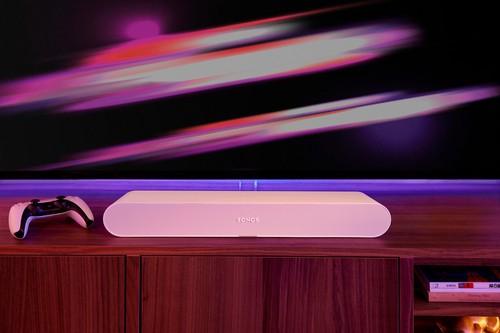
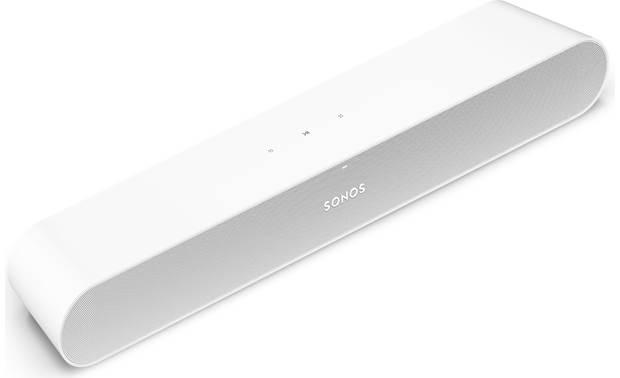
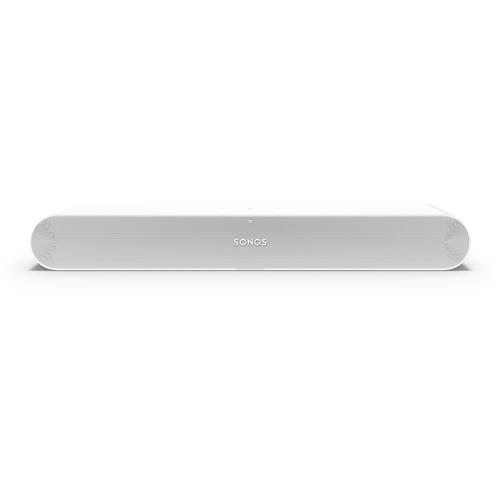
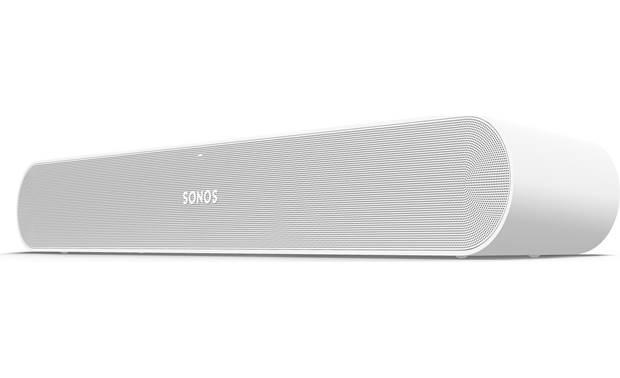
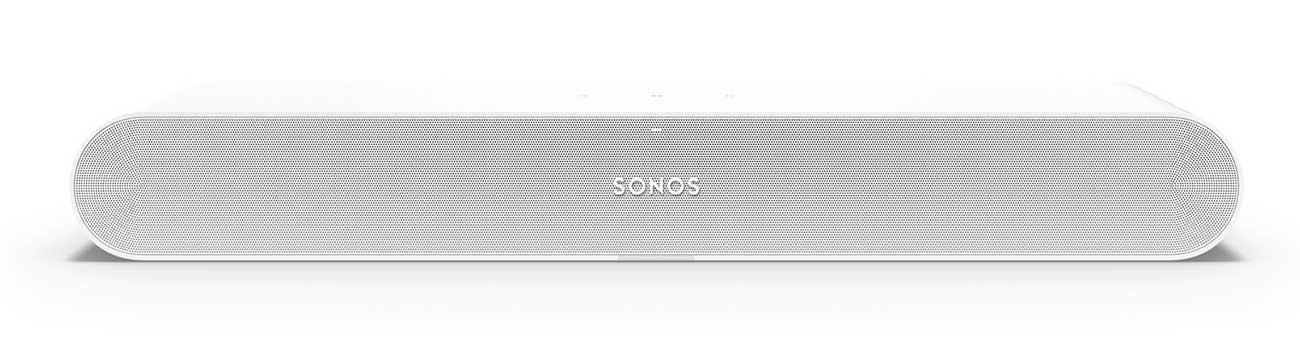
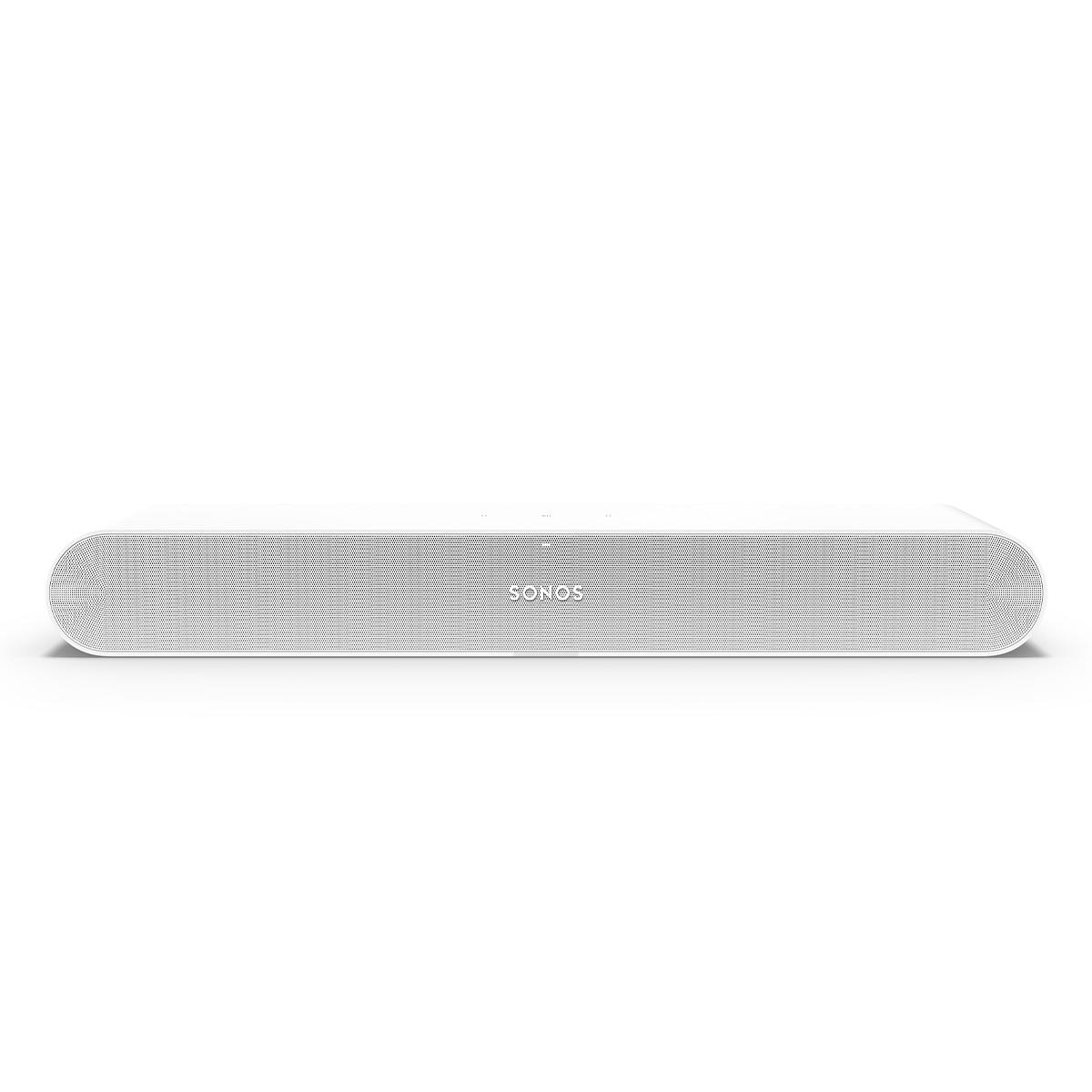
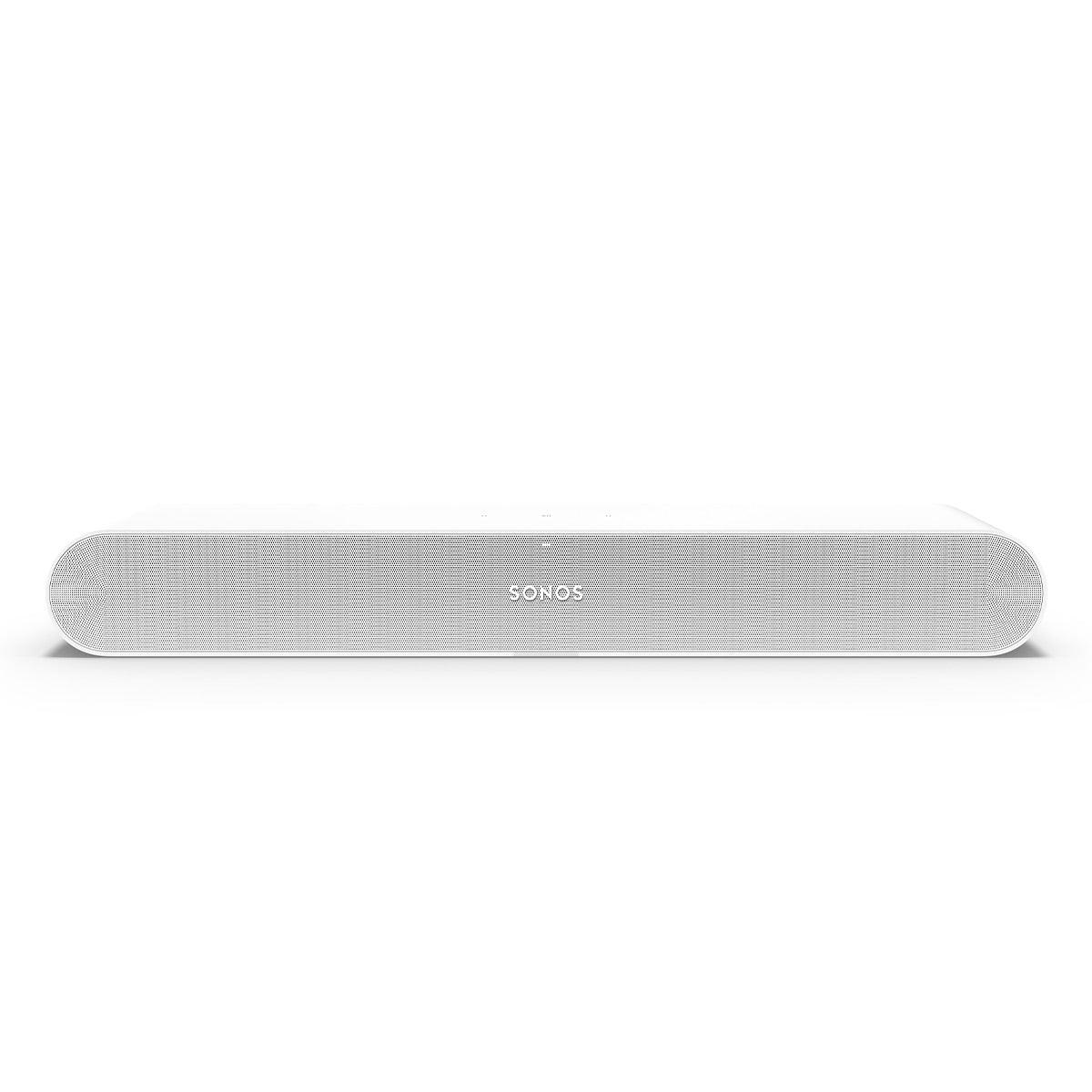
Released in 2022, the Sonos Ray entered the market as an affordable entry point into Sonos's ecosystem. At the time of writing, it sits at the budget end of the premium soundbar spectrum, offering Sonos's signature sound quality and ecosystem integration without breaking the bank. Since its release, firmware updates have refined its performance, particularly in dialogue enhancement and music playback.
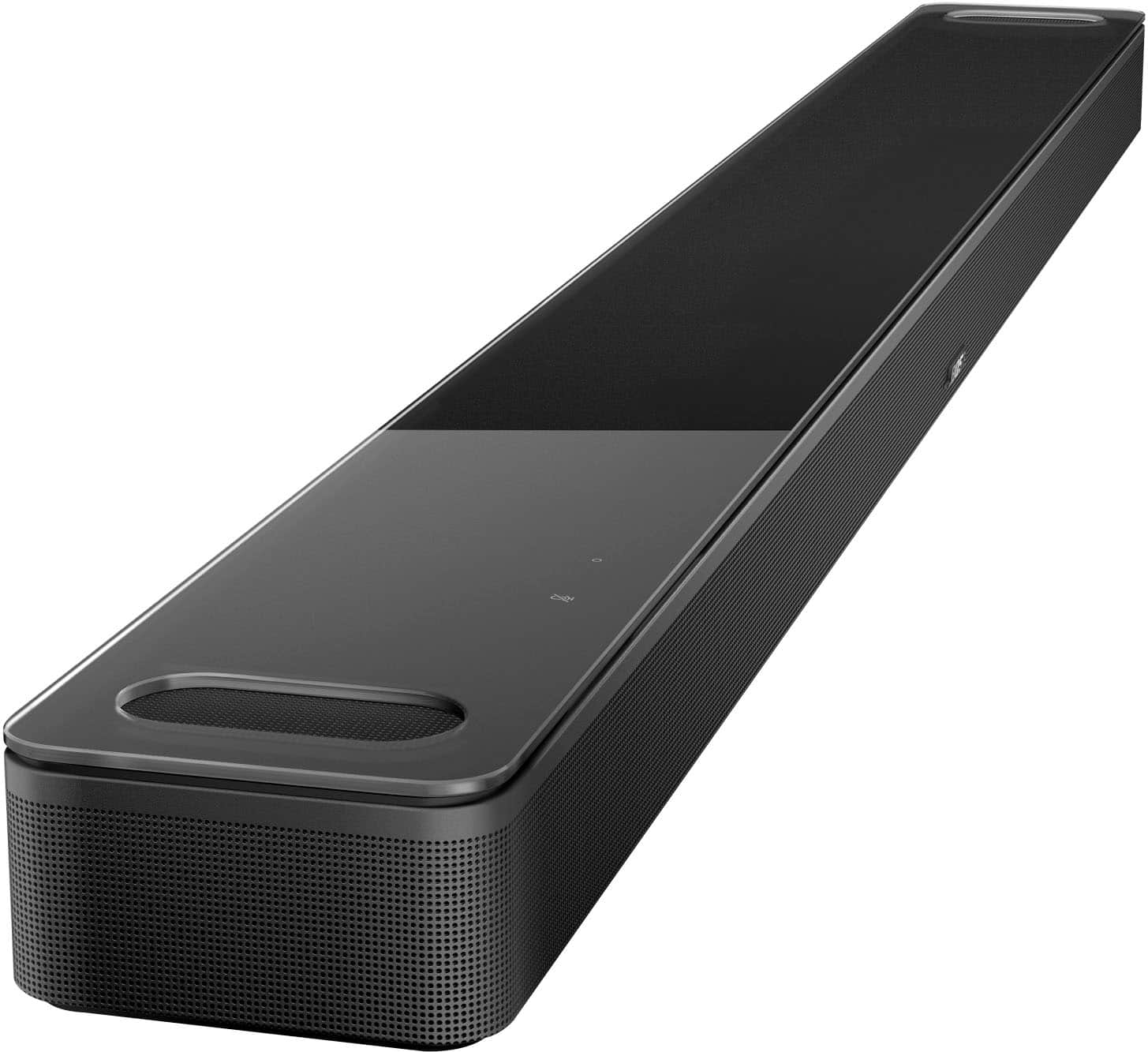
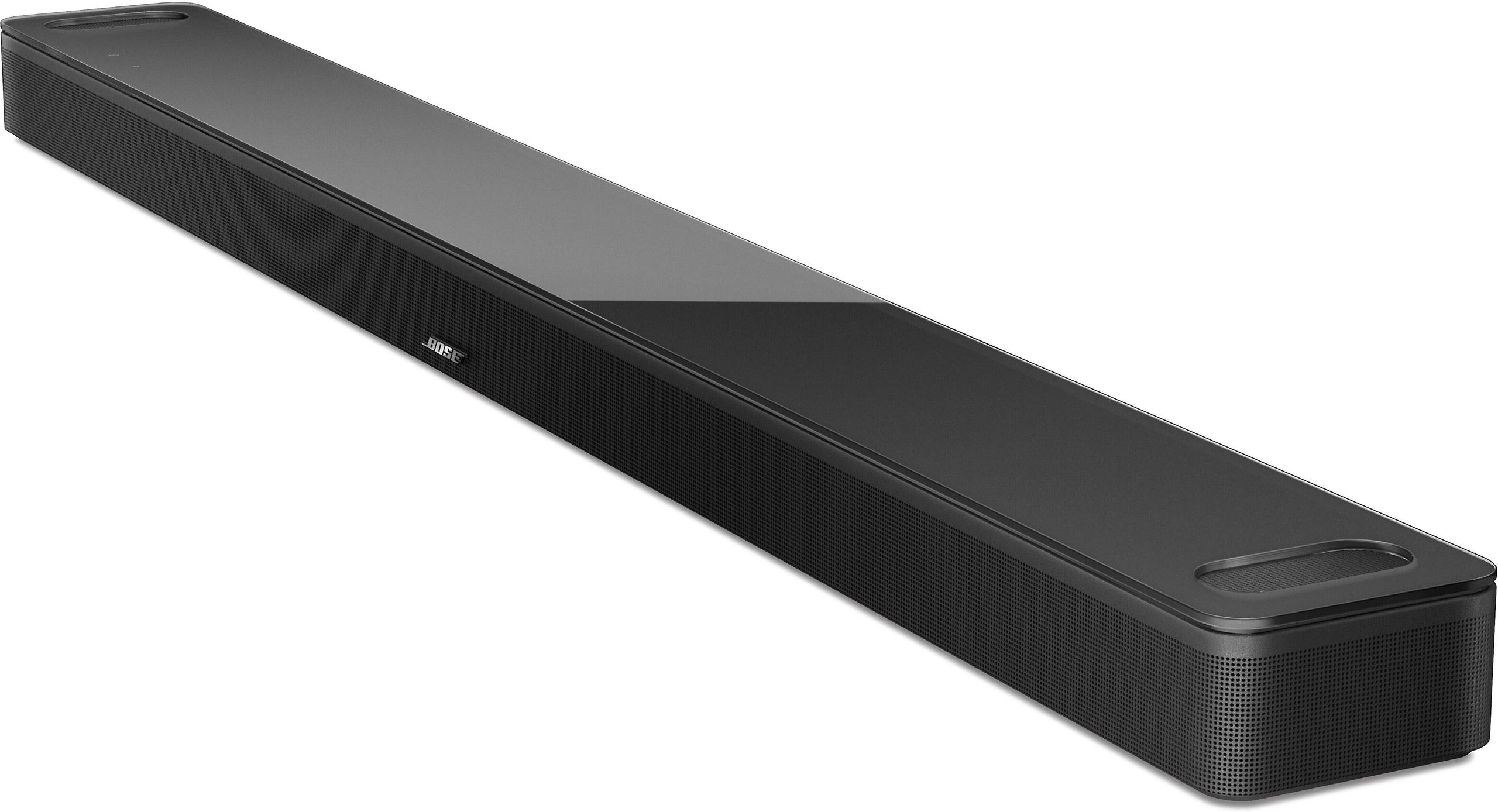
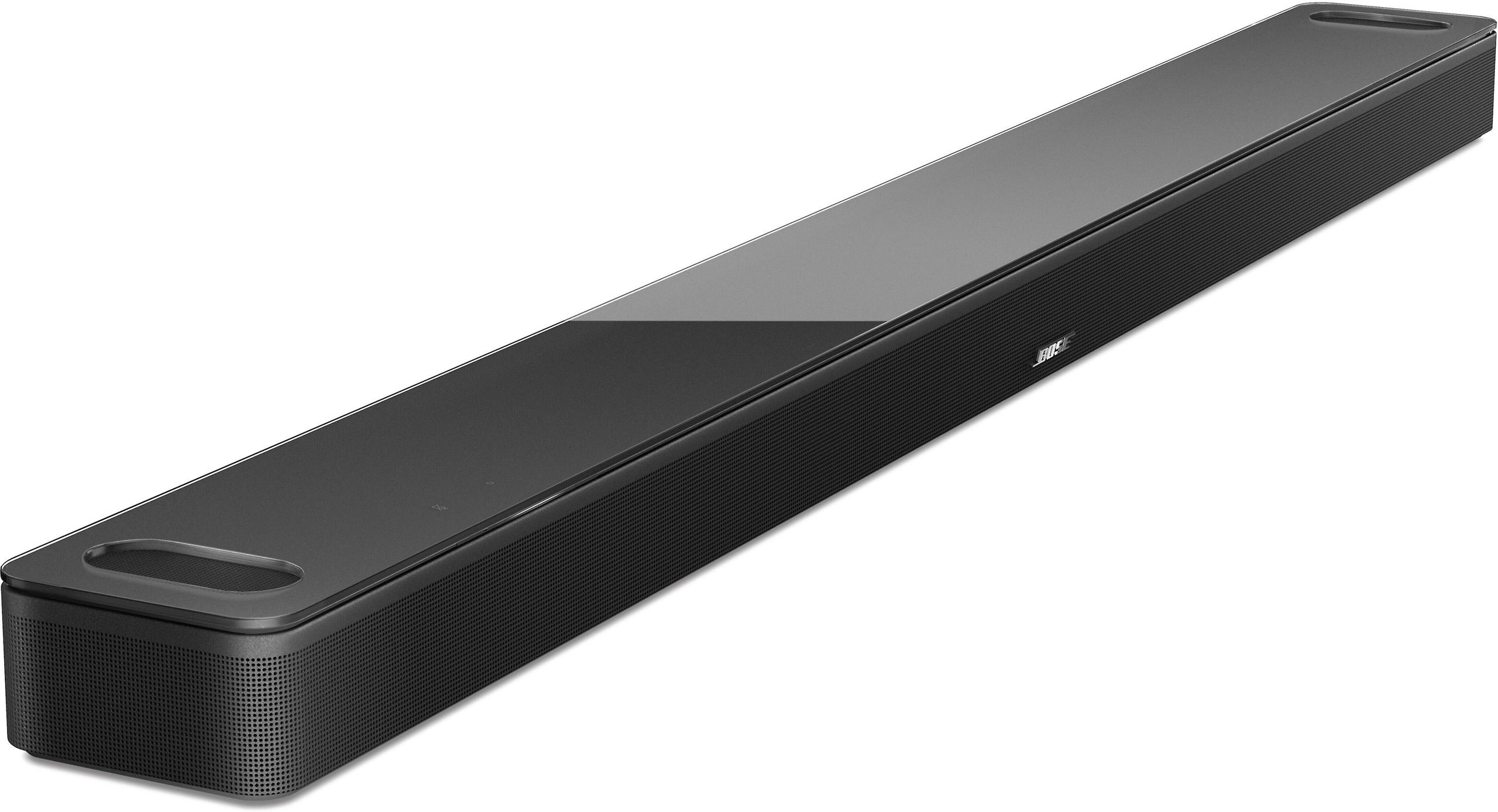
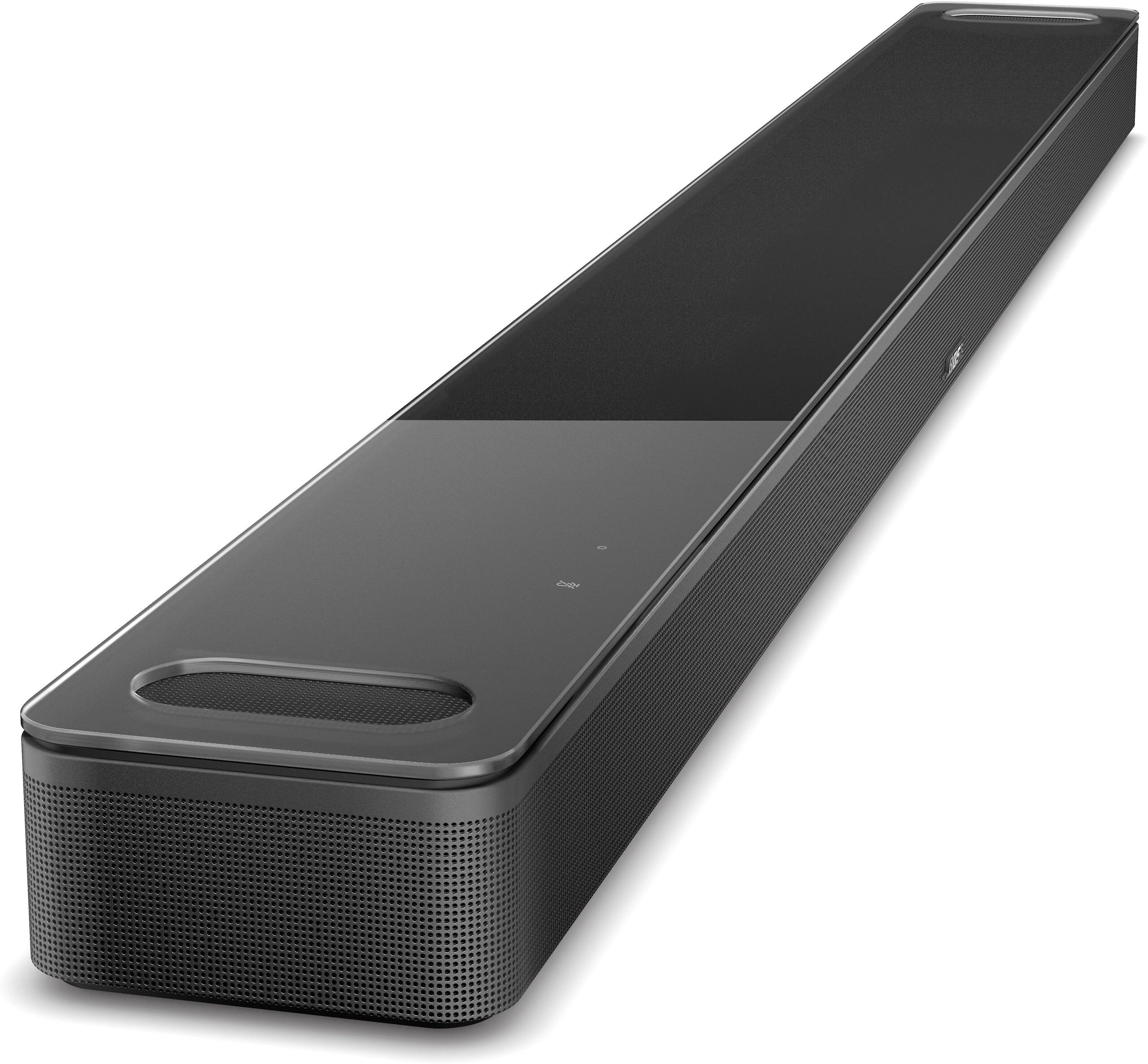
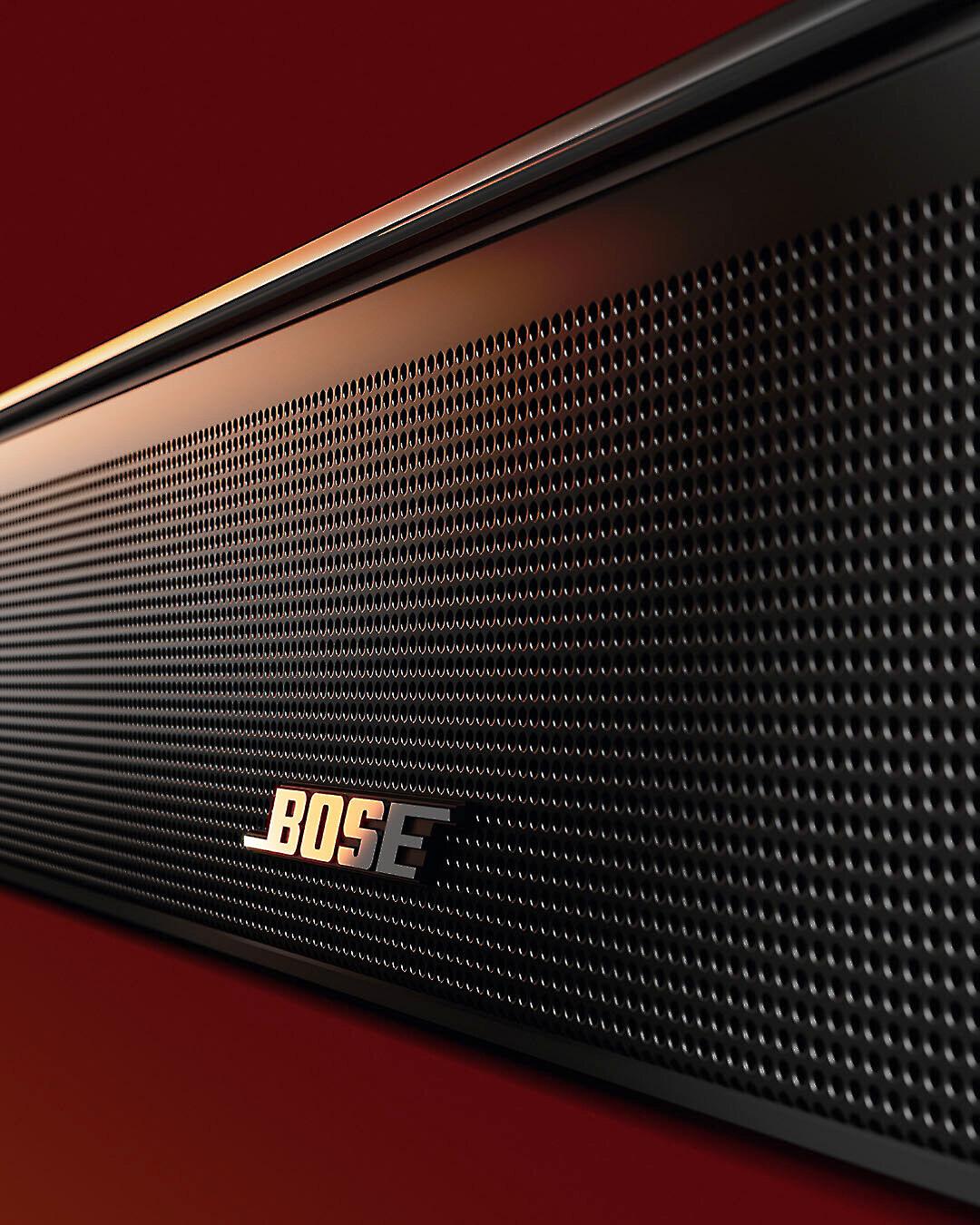
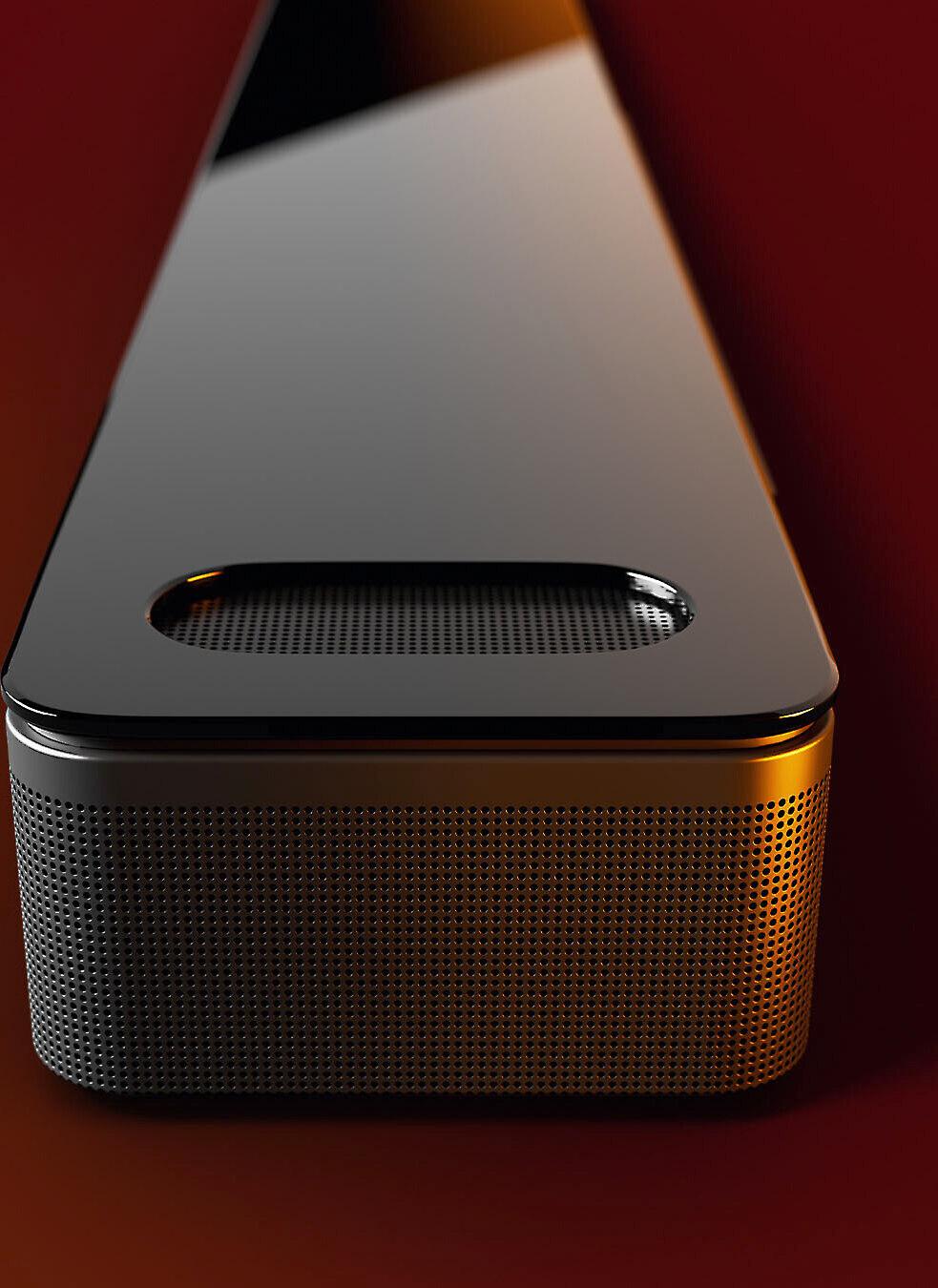
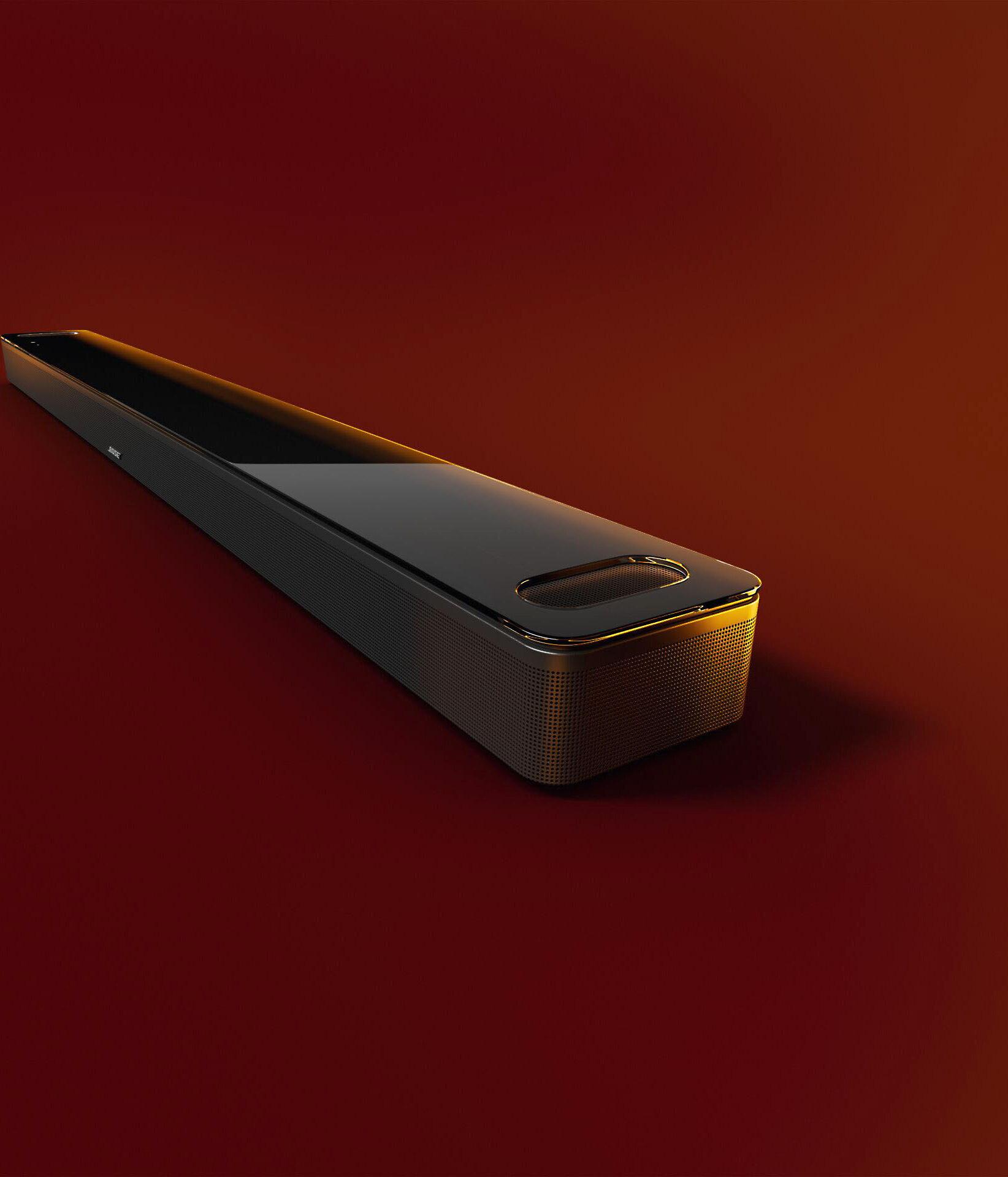
The Bose Smart Ultra, launched in 2023, represents Bose's premium offering in the soundbar space. It commands a significantly higher price – roughly two and a half times more than the Ray at current market rates. This positioning reflects its advanced feature set and the inclusion of true Dolby Atmos processing, which wasn't available in Bose's previous generation of soundbars.
Let's start with the most important aspect for most users: can you actually understand what people are saying? Both soundbars excel here, but they achieve clarity through different methods.
The Sonos Ray uses what I'd call the "surgical precision" approach. Its two tweeters (high-frequency drivers) and two midwoofers (mid-range drivers) are carefully tuned to emphasize the frequency range where human voices naturally sit – roughly 85Hz to 255Hz for fundamental tones, with important harmonics extending much higher. Sonos's engineers have spent considerable time voicing this soundbar to make dialogue pop without sounding artificial or harsh.
In my testing, watching everything from BBC nature documentaries to Marvel movies, the Ray consistently delivered crystal-clear dialogue. Even during complex scenes with background music and sound effects, voices remained intelligible without needing to constantly adjust the volume.
The Bose Smart Ultra takes a more sophisticated approach with its A.I. Dialogue Mode. This feature uses machine learning algorithms trained on millions of audio clips to automatically detect when dialogue is present and adjust the tonal balance accordingly. It's not just boosting the midrange frequencies – it's actively analyzing the content and making real-time adjustments to separate speech from background elements.
What's particularly impressive about the Bose system is how seamlessly this happens. You don't notice the processing at work; you just notice that you can suddenly hear every word clearly, even during those notoriously difficult whispered conversations in dramatic scenes.
Winner: The Bose Smart Ultra edges ahead here due to its intelligent processing, though the Ray is no slouch.
Here's where the physical limitations of each design become apparent. The Sonos Ray, measuring just 22 inches wide and under 3 inches deep, simply doesn't have the internal volume needed for meaningful bass extension. Physics is physics – you need air movement to create low frequencies, and that requires either large drivers or substantial enclosure volume.
The Ray uses a bass reflex design with carefully tuned ports to maximize its low-end output, and Sonos has implemented anti-distortion technology to prevent the small drivers from bottoming out. While this engineering is impressive, the result is still a soundbar that handles dialogue and midrange content beautifully but leaves you wanting more during action sequences or bass-heavy music.
The Bose Smart Ultra, with its larger form factor and more sophisticated driver array, delivers substantially more bass impact. It can produce meaningful output down to around 40Hz without needing a separate subwoofer. That might not sound like a huge difference, but it's the difference between hearing an explosion and feeling it in your chest.
During my testing with movies like "Top Gun: Maverick," the Bose delivered the jet engine rumble that makes action scenes visceral, while the Ray, despite its best efforts, couldn't quite capture that physical impact.
Winner: Bose Smart Ultra definitively wins the bass battle.
This is where these soundbars diverge most dramatically. The Sonos Ray creates what I'd describe as an "enhanced stereo" experience. Its forward-facing driver configuration and proprietary waveguide technology do an excellent job of projecting sound across the width of your room, creating the impression that audio is coming from well beyond the soundbar's physical boundaries.
For music listening, this works beautifully. Jazz recordings sound spacious, with instruments clearly separated across the stereo field. Even for TV content, there's a noticeable improvement in width and depth compared to TV speakers.
However, the Ray is fundamentally limited by its 2.0 channel design. When it receives 5.1 surround sound content (which includes most Netflix shows and movies), it must downmix everything into stereo. You're not getting true surround effects – sounds don't move around you or seem to come from behind.
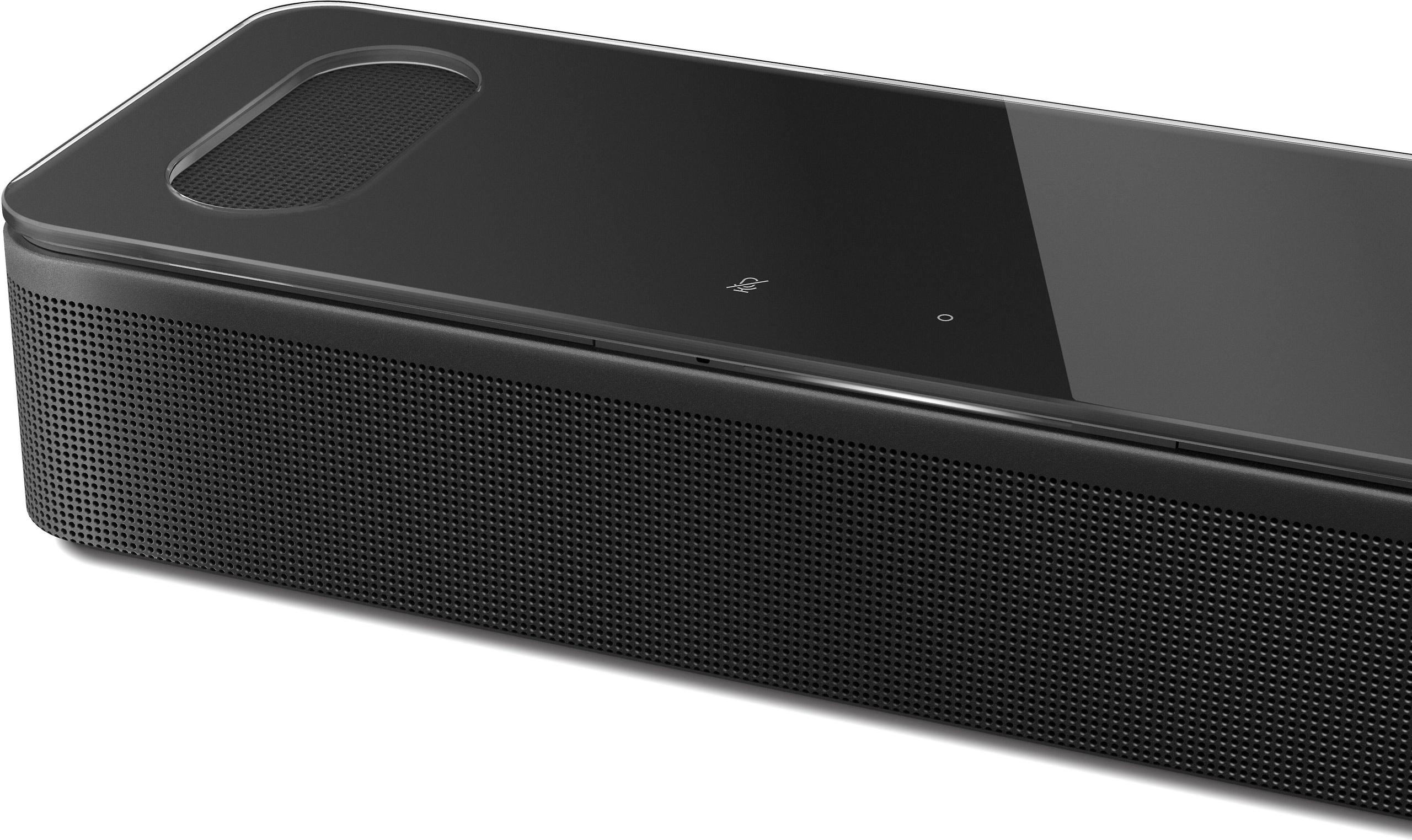
The Bose Smart Ultra operates in a completely different league. Its Dolby Atmos implementation includes upward-firing drivers that bounce sound off your ceiling to create overhead effects. Combined with Bose's PhaseGuide technology, which uses precise timing and phase relationships to "place" sounds in specific locations, the result is genuinely immersive audio.
During helicopter scenes, you'll hear the rotors passing overhead. Rain effects seem to fall from above. In action sequences, explosions don't just get louder – they seem to expand outward from specific points in three-dimensional space around you.
When Dolby Atmos content isn't available, Bose's TrueSpace technology analyzes stereo and 5.1 content to create artificial height and surround effects. While not as convincing as true Atmos, it still provides a more immersive experience than simple stereo playback.
Winner: Bose Smart Ultra completely dominates in immersion and soundstage.
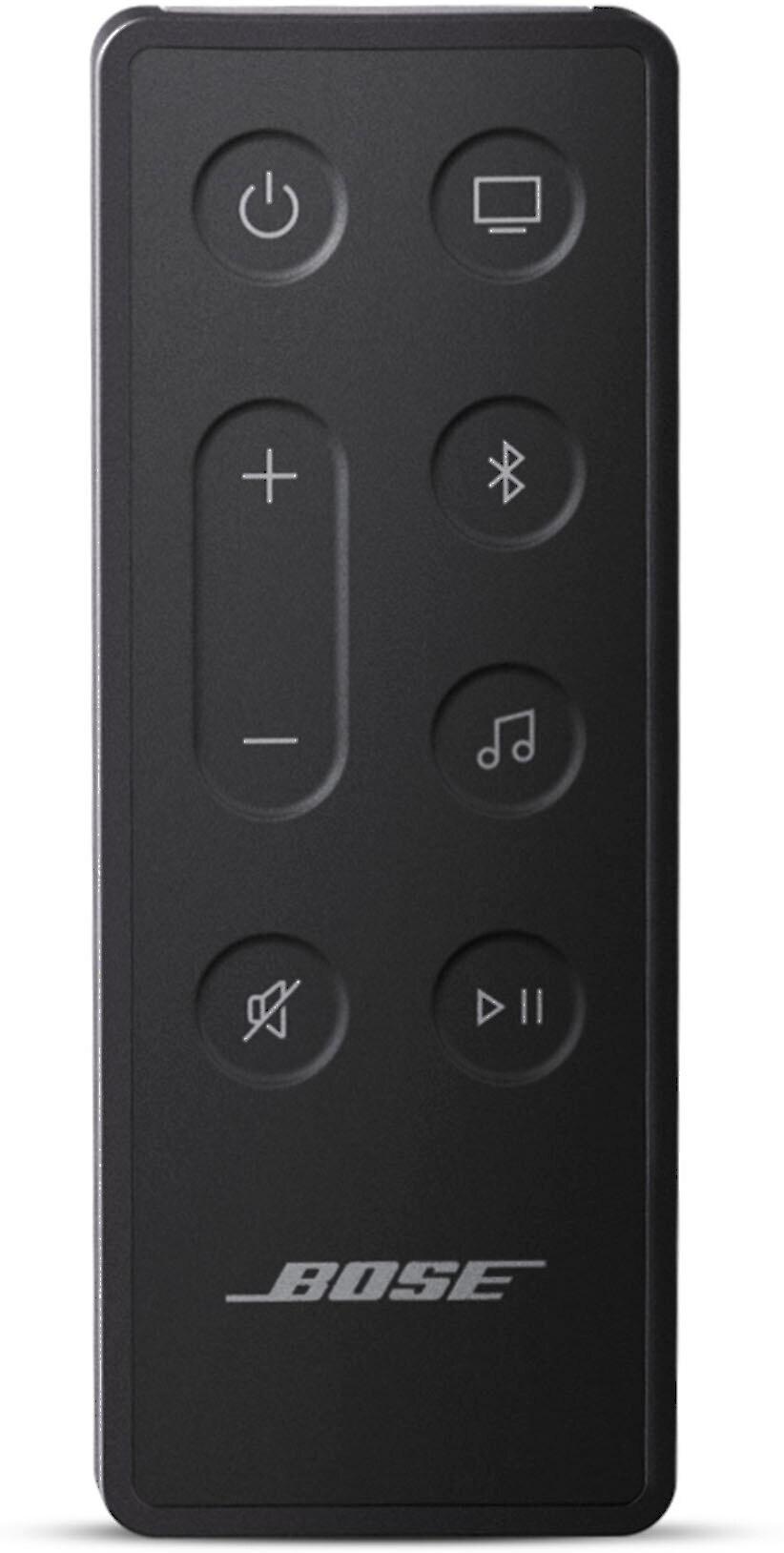
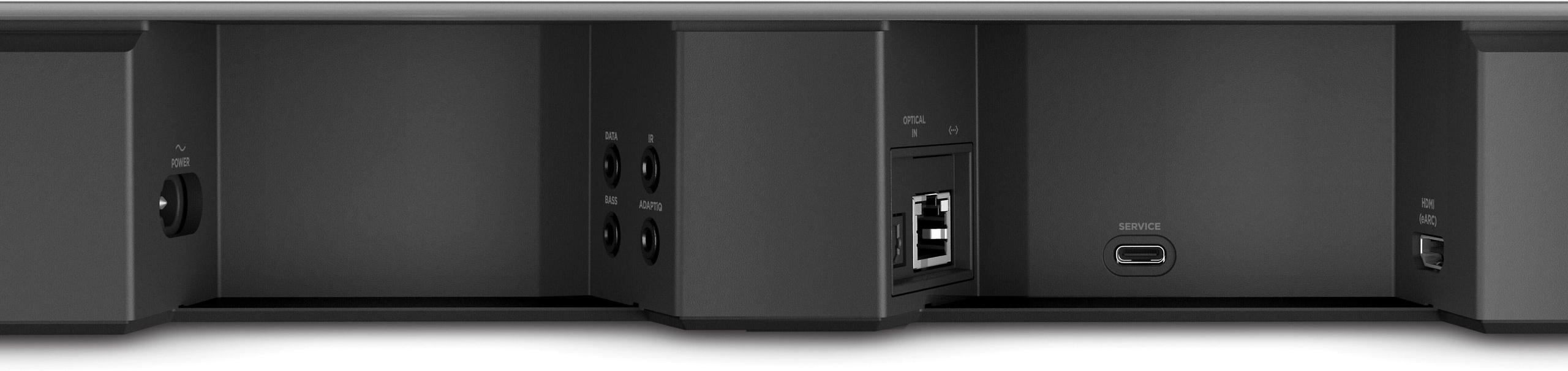
Here's where real-world usability becomes crucial. The Sonos Ray takes a minimalist approach that some will love and others will find limiting. It connects to your TV via optical cable only – no HDMI connection available. This means you can't access the highest quality audio formats, and TV remote integration requires a separate setup process that doesn't work with all televisions.
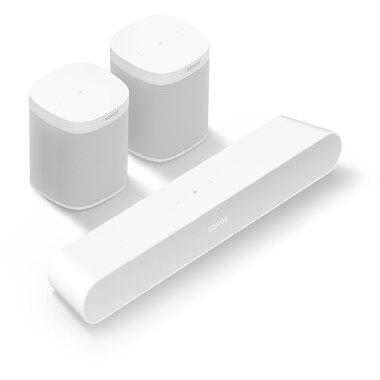
However, once connected to your Wi-Fi network, the Ray becomes part of Sonos's ecosystem. You can group it with other Sonos speakers throughout your home, stream music directly from services like Spotify, and control everything through Sonos's excellent mobile app. There's no Bluetooth connectivity, which maintains Sonos's focus on Wi-Fi-based multi-room audio but limits spontaneous device connections.
The Bose Smart Ultra offers comprehensive connectivity options. Its HDMI eARC connection provides the highest quality audio path from your TV and enables seamless remote control integration. It also includes optical input as a backup, plus Wi-Fi, Bluetooth, AirPlay 2, and Spotify Connect support.
The inclusion of both Amazon Alexa and Google Assistant means you can control the soundbar, your TV, and smart home devices using voice commands. In practice, this integration works remarkably well – you can say "Alexa, turn on Netflix" and watch your TV power up, switch inputs, and launch the app automatically.
Winner: Bose Smart Ultra for connectivity options; Sonos Ray for ecosystem integration if you're already invested in Sonos products.
Your room size plays a crucial role in determining which soundbar will work best. The Sonos Ray is specifically designed for small to medium spaces. In a bedroom, apartment, or office setting, it provides exactly the right amount of acoustic output without overwhelming the space. Its compact dimensions also make it easy to place on narrow TV stands or mount to walls without visual intrusion.
I've used the Ray in a 12x14 foot bedroom setup, and it struck the perfect balance – clear dialogue, pleasant music playback, and enough bass for casual movie watching without disturbing neighbors in adjacent rooms.
The Bose Smart Ultra, conversely, is engineered for larger living spaces. In rooms over 300 square feet, it has the power and acoustic sophistication to fill the space properly. Those upward-firing Atmos drivers need adequate ceiling height (at least 8 feet) and reflective surfaces to work effectively.
Using the Bose in a small room would be like using a sports car in city traffic – you're paying for performance capabilities you can't fully utilize.
At the time of writing, the Sonos Ray represents exceptional value for its price point. You're getting premium build quality, excellent dialogue performance, and access to Sonos's ecosystem for roughly the cost of mid-range competing products. The catch is that you might eventually want to add a Sonos subwoofer, which would roughly triple your total investment.
The Bose Smart Ultra commands premium pricing but delivers correspondingly premium performance. If you have a large room and regularly watch movies, the Atmos experience alone justifies much of the price difference. You're also getting future-proof connectivity and comprehensive smart features that extend the soundbar's useful life.
From a total cost of ownership perspective, consider that both companies have excellent track records for firmware updates and long-term support. Sonos, in particular, has supported some products for over a decade with regular feature additions.
Choose the Sonos Ray if:
Choose the Bose Smart Ultra if:
These soundbars serve fundamentally different purposes despite both improving your TV's audio. The Sonos Ray excels as an elegant, affordable solution for smaller spaces where dialogue clarity and music quality matter most. It's the refined choice for users who value simplicity and ecosystem integration.
The Bose Smart Ultra targets users who want the full cinematic experience at home. Its advanced processing, true surround sound capabilities, and comprehensive feature set justify the premium pricing for the right user in the right space.
Neither choice is wrong – they're optimized for different scenarios and preferences. Consider your room size, viewing habits, and budget priorities carefully. The good news is that both represent excellent value within their respective market segments, ensuring you'll be happy with either choice as long as it matches your specific needs.
| Sonos Ray Soundbar | Bose Smart Ultra Soundbar with Dolby Atmos |
|---|---|
| Channel Configuration - Determines surround sound capabilities | |
| 2.0 stereo (downmixes all surround content) | True Dolby Atmos with upward-firing drivers (up to 9.1.4 virtualization) |
| Bass Extension - Critical for movie impact and music fullness | |
| Limited by compact size, benefits greatly from subwoofer | Extends to ~40Hz, meaningful bass without subwoofer needed |
| Connectivity Options - Affects compatibility and audio quality | |
| Optical input only (no HDMI) | HDMI eARC + optical (supports highest quality formats) |
| Room Size Optimization - Matching power to space is essential | |
| Small to medium rooms (under 250 sq ft) | Large rooms (300+ sq ft) with 8+ foot ceilings |
| Voice Control Integration - Convenience for daily use | |
| None built-in (app control only) | Amazon Alexa + Google Assistant built-in |
| Wireless Streaming - Music playback flexibility | |
| Wi-Fi, AirPlay 2 (no Bluetooth) | Wi-Fi, Bluetooth, AirPlay 2, Spotify Connect |
| Smart Audio Processing - Enhances dialogue clarity | |
| Trueplay room correction + dialogue enhancement | AI Dialogue Mode + ADAPTiQ room calibration |
| Physical Dimensions - Space requirements and aesthetics | |
| Ultra-compact: 22" W x 2.8" H x 3.75" D | Larger footprint: 34.5" W x 4.5" H x 3.5" D |
| Ecosystem Integration - Multi-room and expandability | |
| Deep Sonos ecosystem integration | Works with existing Bose speakers |
| Price Positioning - Value consideration at time of writing | |
| Budget-friendly premium option | Premium pricing with advanced features |
The Sonos Ray is specifically designed for small to medium rooms under 250 square feet. Its compact size and carefully tuned acoustic output won't overwhelm smaller spaces like bedrooms, apartments, or offices. The Bose Smart Ultra is engineered for larger living rooms and may be overpowered in confined spaces.
Yes, the Bose Smart Ultra features true Dolby Atmos support with dedicated upward-firing drivers that bounce sound off your ceiling for overhead effects. The Sonos Ray does not support Dolby Atmos and downmixes all surround sound content to stereo playback.
Both soundbars excel at dialogue clarity but use different approaches. The Sonos Ray uses precise stereo tuning and speech enhancement processing, while the Bose Smart Ultra employs AI Dialogue Mode that automatically separates speech from background elements using machine learning. The Bose has a slight edge due to its intelligent processing.
Only the Bose Smart Ultra offers HDMI eARC connectivity, which provides the highest audio quality and seamless TV remote integration. The Sonos Ray connects via optical cable only, which limits access to premium audio formats and may require separate remote setup.
The Sonos Ray is particularly strong for music playback, offering excellent stereo imaging and balanced sound quality that works well for jazz, classical, and contemporary music. While the Bose Smart Ultra also handles music well, the Sonos Ray is specifically tuned for musical accuracy within its stereo design.
The Sonos Ray would benefit significantly from adding a subwoofer due to its compact size limiting bass extension. The Bose Smart Ultra produces meaningful bass down to 40Hz on its own and doesn't require a subwoofer for most content, though one can be added for even deeper bass.
The Bose Smart Ultra is superior for home theater use, offering true Dolby Atmos immersion, better bass response, and the ability to create convincing surround sound effects. The Sonos Ray provides excellent dialogue for TV watching but lacks the surround sound capabilities needed for cinematic experiences.
The Bose Smart Ultra includes built-in Amazon Alexa and Google Assistant for comprehensive voice control of the soundbar, TV, and smart home devices. The Sonos Ray doesn't have built-in voice control and relies on the Sonos mobile app for operation.
The Bose Smart Ultra provides more comprehensive wireless options including Wi-Fi, Bluetooth, AirPlay 2, and Spotify Connect. The Sonos Ray supports Wi-Fi and AirPlay 2 but lacks Bluetooth connectivity, focusing instead on multi-room integration within the Sonos ecosystem.
The Bose Smart Ultra delivers significantly better bass performance due to its larger size and sophisticated driver array, extending down to around 40Hz. The Sonos Ray has limited bass extension due to its compact design, though it uses anti-distortion technology to maximize what's possible from its small enclosure.
The Sonos Ray offers exceptional value at its price point, providing premium build quality and excellent dialogue performance for budget-conscious buyers. The Bose Smart Ultra commands premium pricing but delivers correspondingly advanced features like Dolby Atmos and comprehensive connectivity that justify the higher cost for the right user.
Yes, both soundbars integrate into their respective ecosystems. The Sonos Ray works seamlessly with other Sonos speakers for whole-home audio, while the Bose Smart Ultra can connect with existing Bose speakers. The Sonos Ray has deeper multi-room integration capabilities within its dedicated ecosystem.
We've done our best to create useful and informative comparisons to help you decide what product to buy. Our research uses advanced automated methods to create this comparison and perfection is not possible - please contact us for corrections or questions. These are the sites we've researched in the creation of this article: tomsguide.com - soundandvision.com - youtube.com - techradar.com - en.community.sonos.com - rtings.com - howtogeek.com - youtube.com - cnet.com - sonos.com - videoandaudiocenter.com - techradar.com - bose.com - bestbuy.com - tomsguide.com - pcrichard.com - rtings.com - bose.com - boselatam.com - avsforum.com - bose.com

Privacy Policy
Terms and Conditions - Affiliate Policy
Home Security
© Copyright 2008-2026.
11816 Inwood Rd #1211, Dallas, TX 75244