








When your TV's built-in speakers just aren't cutting it anymore, stepping up to a Dolby Atmos soundbar can transform your viewing experience. But with so many options available, choosing between different approaches can feel overwhelming. Today, we're comparing two popular soundbars that represent fundamentally different philosophies: the Ultimea Skywave F40 and the Sonos Beam Gen 2.
Released in 2024, the Ultimea Skywave F40 represents the newer generation of budget-focused complete surround systems, while the Sonos Beam Gen 2, launched in 2021, established itself as a premium single-unit solution. Both support Dolby Atmos—a technology that creates three-dimensional sound by bouncing audio off your ceiling—but they achieve this goal in completely different ways.
Before diving into specifics, let's establish what we're looking for in a modern soundbar system. Dolby Atmos isn't just marketing fluff—it's a genuine leap forward in home audio that adds overhead sound channels to create a "dome" of audio around you. Think of traditional surround sound as audio coming from a circle around you, while Atmos adds a sphere above.
The key considerations when shopping for any Dolby Atmos system are audio configuration (how many speakers and where they're placed), connectivity options, smart features, room size compatibility, and ultimately, value for money. Some systems achieve Atmos through virtual processing—using clever software to trick your ears—while others use physical up-firing speakers that literally bounce sound off your ceiling.
Performance metrics that matter most include bass response (how deep and powerful the low frequencies sound), dialogue clarity (can you understand what actors are saying without subtitles?), soundstage width (how spread out the audio feels), and dynamic range (the difference between the quietest whispers and loudest explosions). For home theater use, these characteristics can make or break your viewing experience.
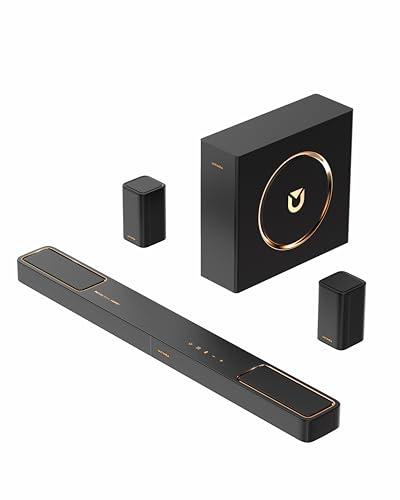
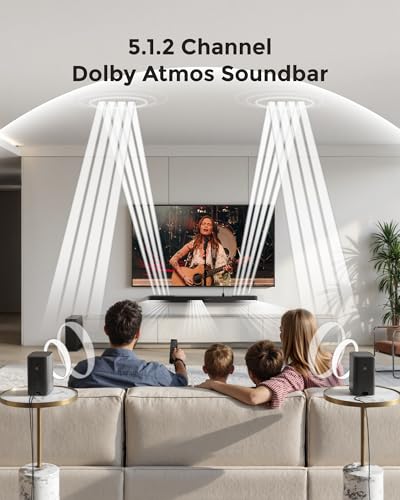
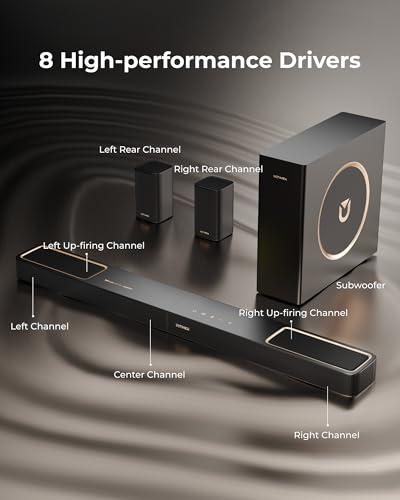
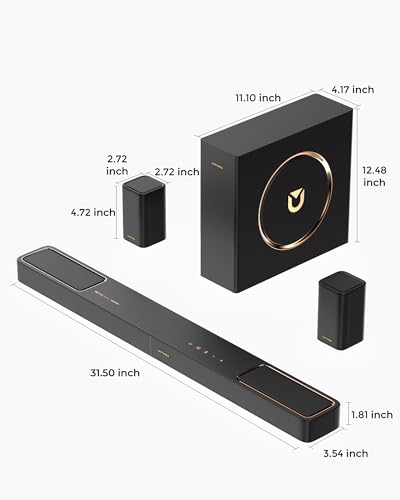
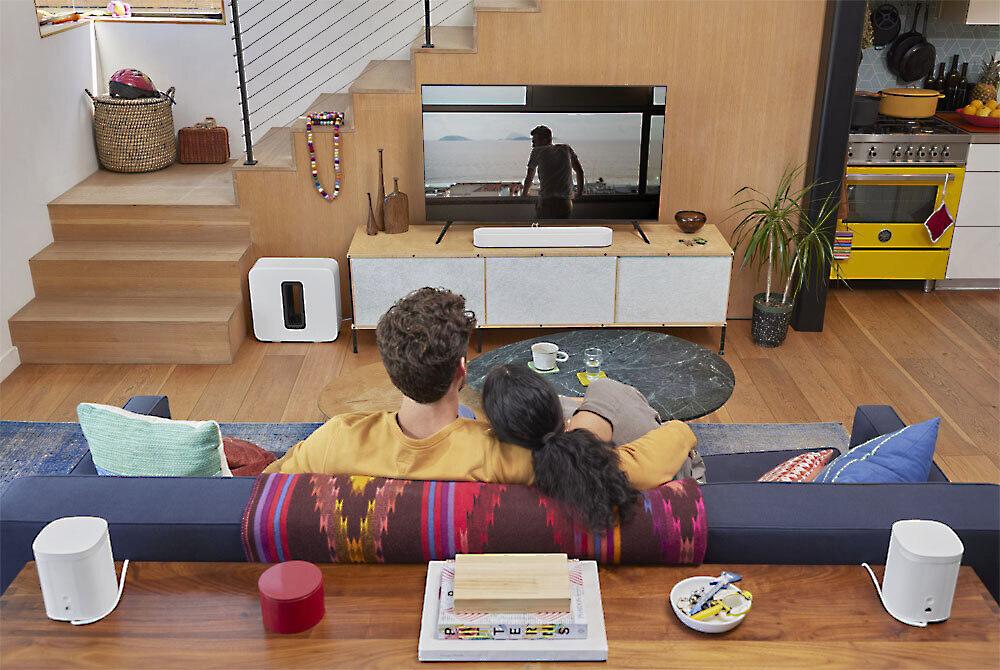
Here's where these two soundbars diverge dramatically. The Ultimea Skywave F40 is what we call a "true surround" system—it includes a main soundbar, a wireless subwoofer (the dedicated speaker that handles deep bass), and two separate surround speakers that you place behind or beside your seating area. This creates a genuine 5.1.2 configuration, where the numbers represent front channels, subwoofer, and height channels respectively.
The setup process for the Ultimea F40 involves connecting multiple components, but the payoff is immediate and noticeable. You're getting eight total speakers working together: five drivers in the main bar, one powerful 6.5-inch subwoofer, and two dedicated surround speakers. The system delivers between 313-460 watts of peak power across all these components, which translates to seriously impressive volume levels without distortion.
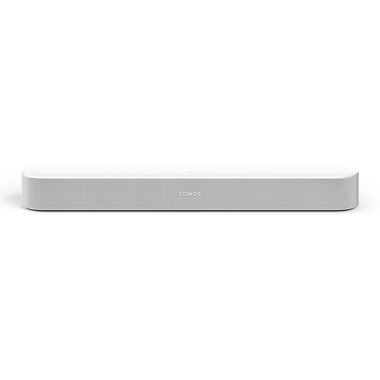
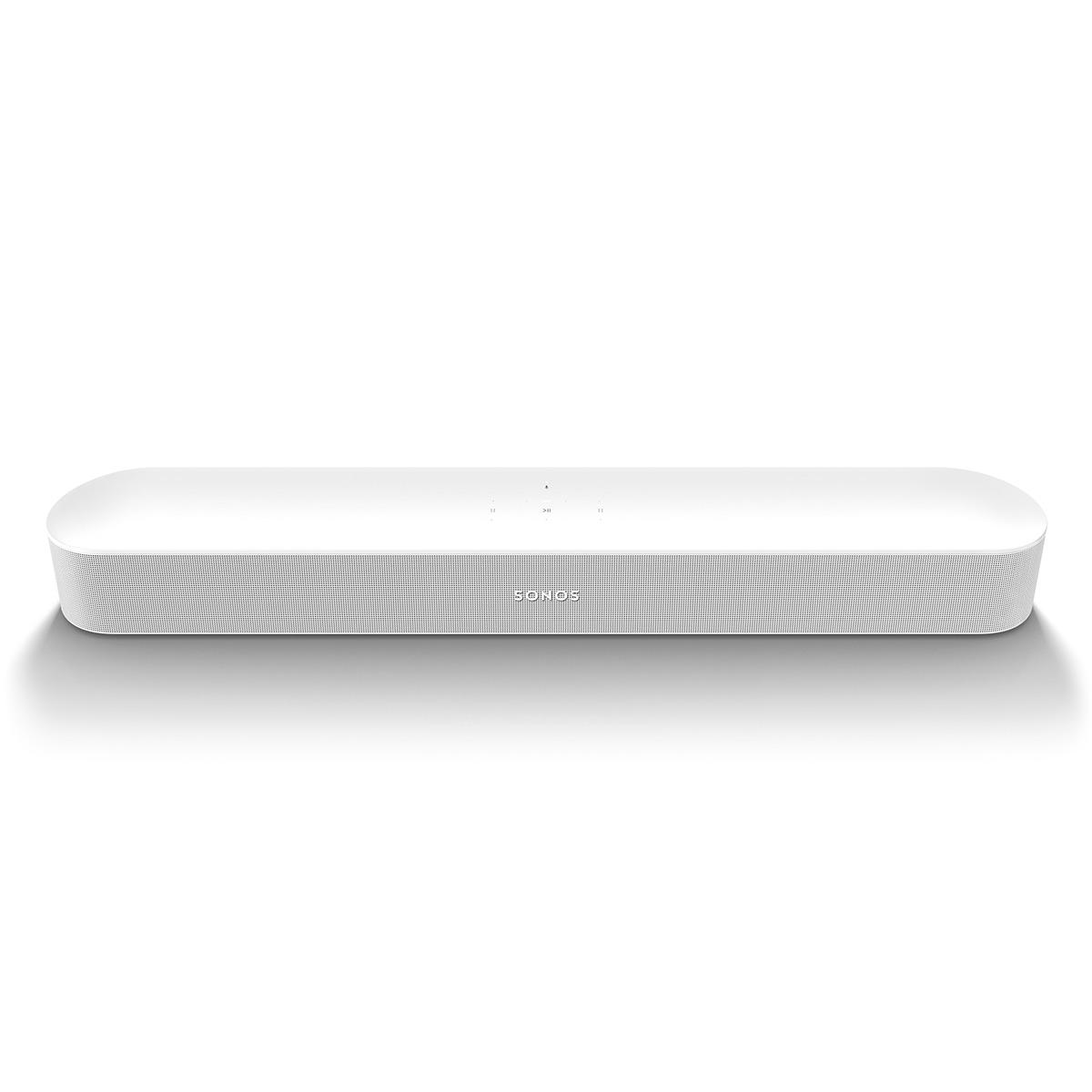
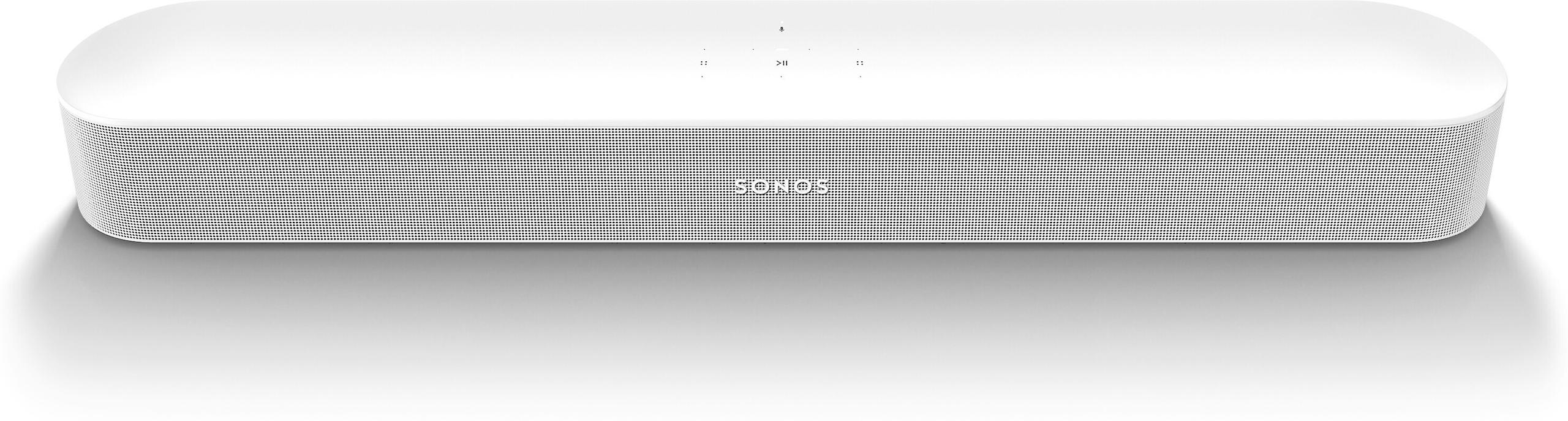
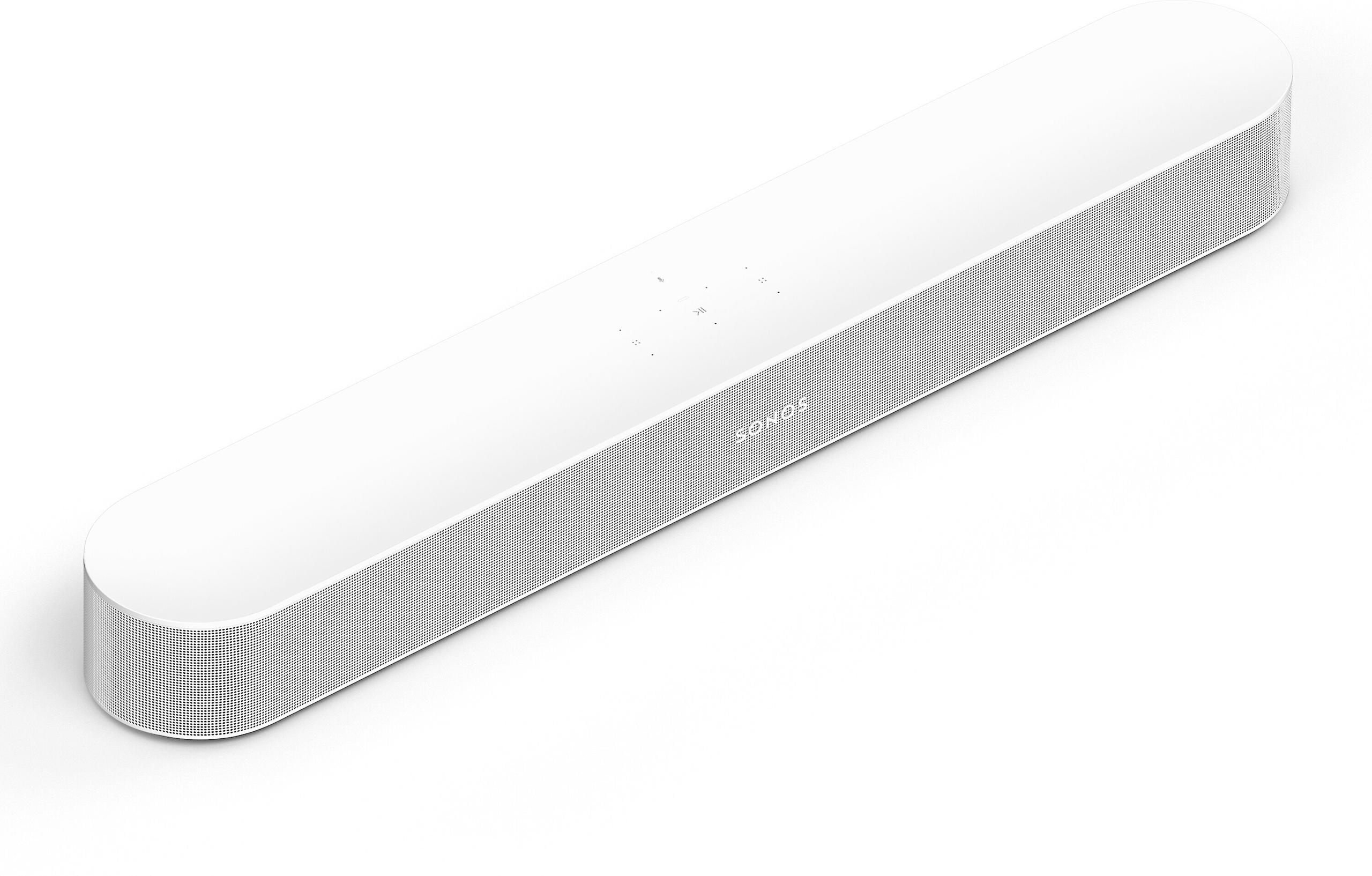
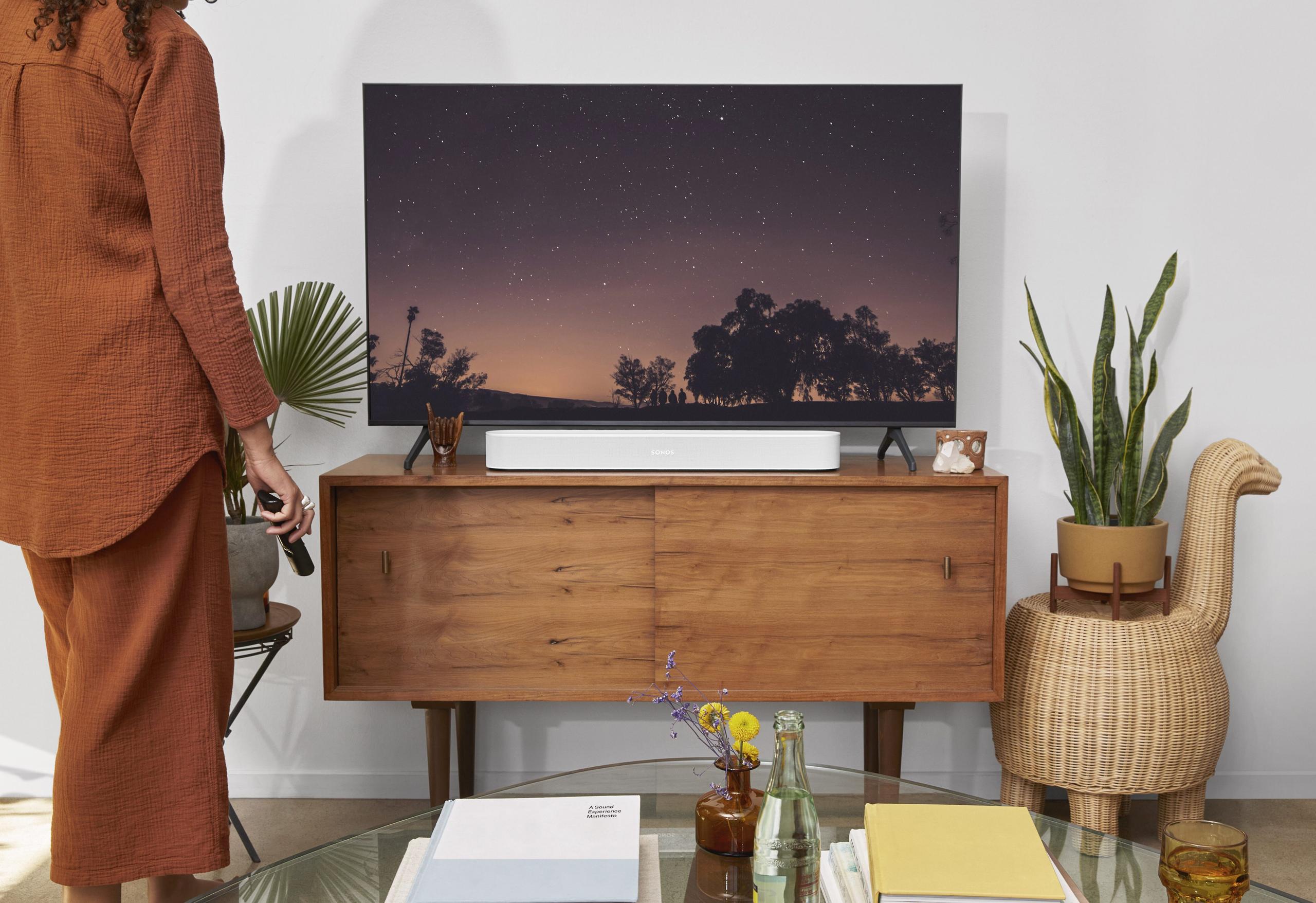
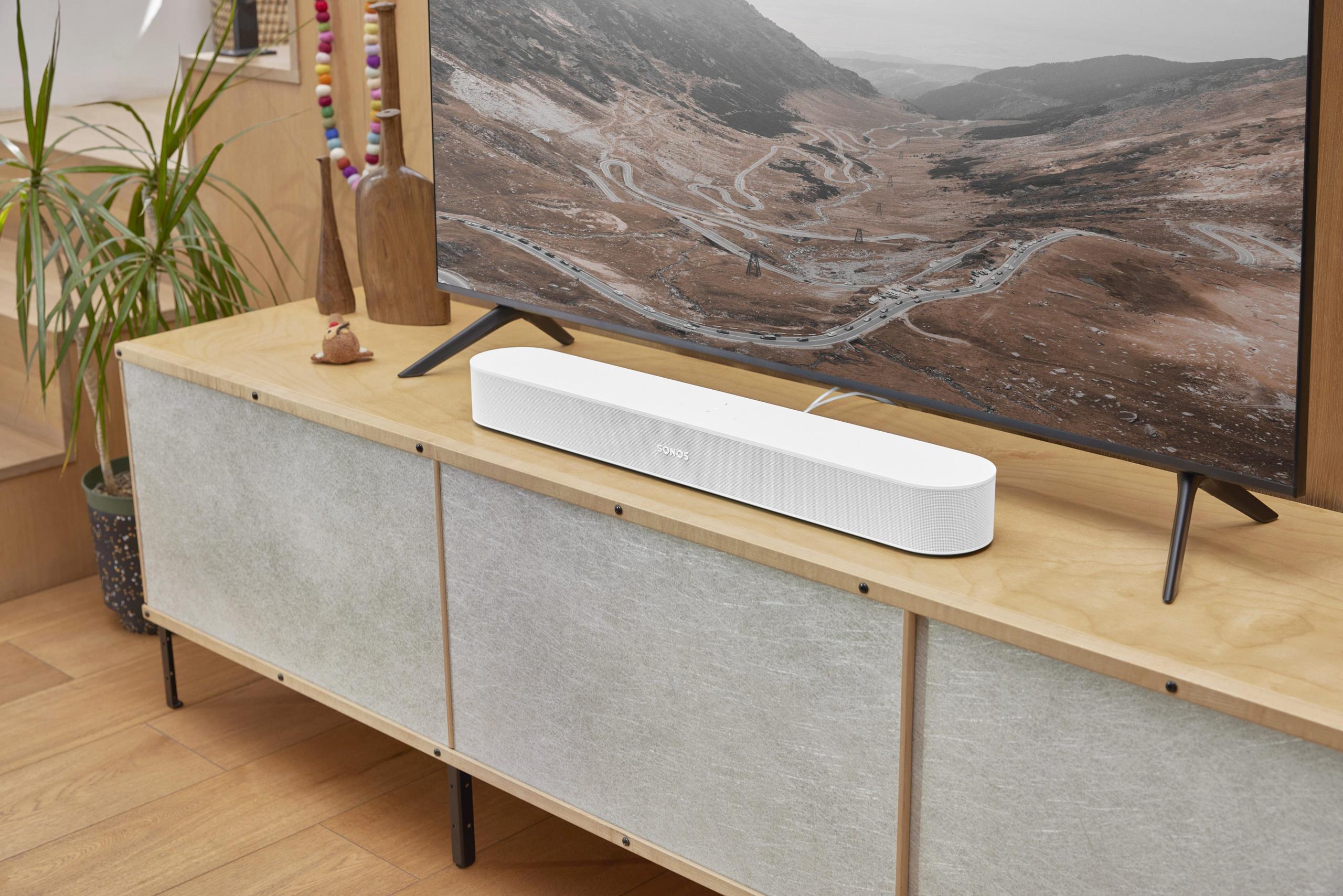
In contrast, the Sonos Beam Gen 2 takes the opposite approach. Everything happens within a single, sleek soundbar that measures just over two feet wide. Inside this compact unit, Sonos has packed 11 custom drivers—eight elliptical woofers and three silk-domed tweeters—powered by 11 separate digital amplifiers. It's an engineering marvel that maximizes what's possible from a single-unit design.
The Sonos Beam Gen 2 relies on sophisticated virtual processing to create its surround sound experience. Instead of physical surround speakers, it uses advanced algorithms and precisely positioned drivers to create the illusion of sound coming from behind and above you. While this approach can't match the spatial accuracy of physical surround speakers, it's remarkably effective for most content and infinitely more convenient.
This is where the fundamental design differences become most apparent. The Ultimea F40's dedicated wireless subwoofer is a game-changer for anyone who enjoys action movies or music with deep bass lines. With frequency response extending down to around 38-45Hz and featuring BassMX technology (Ultimea's bass enhancement processing), this system can deliver the kind of room-shaking low end that you feel in your chest.
User reports consistently mention that the F40's bass output is so powerful it might upset neighbors in apartments or condos. During testing, the system maintains zero distortion even at maximum volume levels, reaching over 96 decibels—loud enough to recreate a genuine theater experience. The wireless subwoofer gives you placement flexibility too, allowing you to position it where it sounds best in your room rather than being tethered to the TV stand.
The Sonos Beam Gen 2 handles bass quite differently. Without a dedicated subwoofer, it relies on its internal woofers and three passive radiators (speakers without magnets that vibrate sympathetically with the powered drivers) to produce low frequencies. While this approach works well for dialogue and mid-range content, users consistently note that the bass, while "decent," doesn't match what dedicated subwoofer systems can achieve.
For home theater use, this difference is significant. The rumble of thunder, the impact of explosions, or the deep notes in your favorite music simply hit harder with a dedicated subwoofer. However, the Sonos Beam Gen 2's more restrained bass response might actually be preferable in smaller spaces or for late-night viewing when you don't want to disturb others.
Here's where the Sonos Beam Gen 2 truly shines. The engineering team at Sonos has obsessed over dialogue reproduction, and it shows. The center-channel tweeter design, combined with advanced Speech Enhancement processing, produces remarkably clear dialogue. Users frequently mention they "rarely need subtitles anymore" when watching movies or TV shows through the Beam Gen 2.
This clarity comes from Sonos's sophisticated audio processing and the precise positioning of the center tweeter. The system can intelligently boost dialogue frequencies while maintaining overall tonal balance, ensuring voices cut through action sequences and background music without sounding artificial.
The Ultimea F40 also delivers clear dialogue through its dedicated center channel, enhanced by voice mode optimization. While not quite matching the Sonos's speech processing sophistication, the F40's dialogue reproduction is more than adequate for most users, especially considering its significantly lower price point at the time of writing.
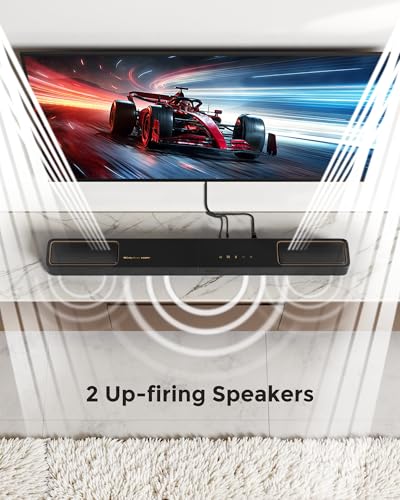
The implementation of Dolby Atmos reveals another fundamental difference between these approaches. The Ultimea F40 includes physical up-firing drivers—speakers that point toward your ceiling to bounce sound back down, creating genuine overhead audio placement. These drivers use neodymium magnets (a type of powerful permanent magnet) and large voice coils for improved vertical sound projection.
However, user feedback suggests the F40's height effects, while present, aren't as dramatic as some might expect. The up-firing speakers are described as "noticeable but not super strong," and you can "feel it but it's not overwhelming." This is actually typical for many up-firing Atmos implementations—the effect is more subtle than the front and surround channels but adds to the overall immersion.
The Sonos Beam Gen 2 creates Atmos effects through virtual processing rather than dedicated up-firing speakers. Using psychoacoustic techniques (methods that manipulate how our brains interpret sound), it creates the impression of overhead audio without physical speakers pointing at the ceiling. Users report getting "somewhat of a degree of immersion" with atmospheric sounds like rain, insects, or aircraft, though it's acknowledged as "more of a virtual representation than a physical one."
For critical home theater viewing, physical up-firing drivers generally provide more convincing height effects, even if they're not dramatically pronounced. The Ultimea F40 has the technical advantage here, though both systems deliver enough Atmos effect to enhance the viewing experience beyond traditional stereo soundbars.
This category showcases the biggest performance gap between these systems. The Ultimea F40's physical surround speakers create a genuine 360-degree sound field that's impossible to replicate with virtual processing alone. When watching movies or playing games, sounds can be precisely positioned behind you, beside you, and around you in ways that feel natural and immersive.
The rear speakers connect to the subwoofer via a single wire (reducing cable clutter), and while they require careful placement and some cable management, the payoff in immersion is substantial. For action movies, horror films, or immersive video games, having actual speakers behind your seating position creates a level of spatial audio that simply can't be matched by virtual processing.
The Sonos Beam Gen 2 maximizes what's possible from a single-unit design. Its wide soundstage and impressive stereo separation create an expansive listening experience that extends well beyond the physical width of the soundbar. However, the lack of actual surround speakers means it can't achieve true rear-channel effects—sounds that should come from behind you will always originate from the front soundbar.
The connectivity and smart feature comparison reveals different priorities and target audiences. The Ultimea F40 offers comprehensive traditional connectivity: HDMI eARC (enhanced Audio Return Channel for high-quality audio from your TV), optical input, USB, and Bluetooth 5.4. The newer Bluetooth standard provides faster, more stable connections with lower latency—important for gaming or lip-sync accuracy when streaming from phones or tablets.
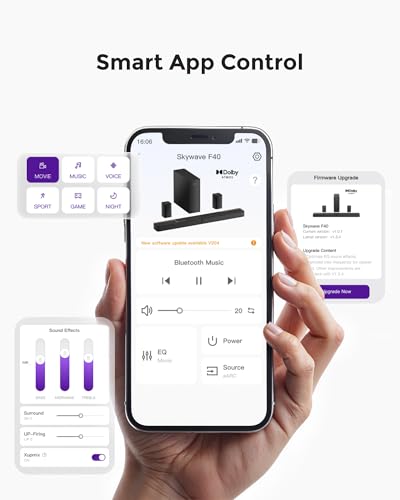
The F40's smart features center around its dedicated app, which provides access to a 10-band equalizer (letting you adjust specific frequency ranges) and 121 preset EQ matrices for different content types. You get six distinct listening modes: Movie, Music, Voice, Sport, Game, and Night, each optimized for different content. The system also supports HDMI-CEC, allowing your TV remote to control the soundbar automatically.
The Sonos Beam Gen 2 takes a different approach entirely. Rather than Bluetooth connectivity, it focuses on WiFi-based streaming with support for AirPlay 2, Spotify Connect, and Tidal Connect. This means seamless, high-quality streaming from compatible devices without the potential audio quality compromises of Bluetooth compression.
Where Sonos really excels is ecosystem integration. The Beam Gen 2 includes built-in Amazon Alexa and Google Assistant, turning it into a smart speaker when not handling TV audio. The Trueplay room calibration feature uses an iOS device's microphone to analyze your room's acoustics and automatically adjust the sound accordingly—though this unfortunately requires an Apple device.
The Sonos ecosystem advantage becomes apparent if you're interested in multi-room audio. The Beam Gen 2 can integrate with other Sonos speakers throughout your home, allowing you to play synchronized music in multiple rooms or use other Sonos speakers as surround channels (though this requires additional purchases).
At the time of writing, these systems occupy different value territories. The Ultimea F40 delivers exceptional value by including everything needed for a complete surround sound experience at a budget-friendly price point. You're getting a true 5.1.2 system with dedicated subwoofer and surround speakers for significantly less than most competitors charge for just a soundbar alone.
This represents outstanding value for users who want immediate audio gratification and maximum performance per dollar spent. The system includes all necessary cables, mounting hardware, and even provides genuine surround sound that typically costs much more from established brands.
The Sonos Beam Gen 2 costs more upfront but positions itself as a premium foundation that can grow over time. While the initial purchase provides excellent single-unit performance, creating an equivalent surround setup requires additional investments: a Sonos Sub (for deep bass) and surround speakers can more than triple the total system cost. However, this modular approach allows you to spread purchases over time and ensures each component integrates perfectly.
For budget-conscious buyers seeking immediate surround sound, the Ultimea F40 is compelling. For users who prioritize brand reputation, smart features, and future expandability, the Sonos Beam Gen 2 justifies its premium pricing.
If you're serious about recreating a cinema experience at home, the Ultimea F40 provides more authentic surround sound placement and dramatically superior bass response. The physical surround speakers and dedicated subwoofer create the kind of immersive audio that makes action sequences genuinely exciting and horror movies appropriately unsettling.
The Sonos Beam Gen 2 offers excellent audio quality but can't match the spatial accuracy and bass impact of a complete surround system. However, its clean aesthetic and simple setup appeal to users who want good sound without the complexity of multiple components.
This is where system choice becomes more nuanced. The Ultimea F40's powerful bass output might overwhelm small spaces or upset neighbors in thin-walled apartments. The multiple components also require more physical space and cable management.
The Sonos Beam Gen 2 excels in compact environments. Its refined bass response won't rattle windows or disturb neighbors, while the single-unit design fits cleanly under any TV without dominating the room visually.
For users invested in smart home ecosystems, the Sonos Beam Gen 2 provides superior integration. Built-in voice assistants, multi-room audio capabilities, and seamless streaming from various services create a more connected experience.
The Ultimea F40 offers basic smart features through its app but operates more as a traditional audio system rather than a smart home component.
After extensive analysis, the choice between these systems depends on your priorities and situation. Choose the Ultimea Skywave F40 if you want immediate, dramatic improvement in your TV's audio with genuine surround sound and powerful bass. It's perfect for movie lovers, gamers, and anyone who has adequate space for multiple components and doesn't mind some cable management. The value proposition is outstanding—you're getting a complete surround system for the price many competitors charge for just a soundbar.
The Sonos Beam Gen 2 is the better choice if you prioritize convenience, aesthetics, and smart features over maximum audio performance. It's ideal for smaller spaces, users who plan to gradually build a premium system, or anyone already invested in the Sonos ecosystem. The dialogue clarity is exceptional, making it particularly good for TV shows and dialogue-heavy content.
Both systems successfully improve upon basic TV audio and provide legitimate Dolby Atmos experiences, just through different approaches. The Ultimea F40 delivers more audio performance per dollar, while the Sonos Beam Gen 2 provides superior convenience and integration at a premium price point. Your choice should align with your space constraints, budget, future expansion plans, and how you primarily use your entertainment system.
| Ultimea Skywave F40 Dolby Atmos Soundbar System | Sonos Beam Gen 2 Soundbar |
|---|---|
| System Configuration - Determines audio immersion and bass response | |
| True 5.1.2 surround with dedicated subwoofer and rear speakers | Single-unit 5.0 virtual surround (no physical subwoofer or rears) |
| Total Speaker Count - More drivers typically mean fuller sound | |
| 8 speakers: 5 in soundbar + 6.5" subwoofer + 2 surround speakers | 11 custom drivers: 8 woofers + 3 tweeters (all in main unit) |
| Peak Power Output - Higher wattage enables louder, cleaner sound | |
| 313-460W across all components | Moderate power (exact specs not disclosed by Sonos) |
| Dolby Atmos Implementation - Physical vs virtual height effects | |
| Physical up-firing drivers with neodymium magnets | Virtual Atmos processing (no dedicated up-firing speakers) |
| Bass Response - Critical for movie impact and music enjoyment | |
| Dedicated wireless subwoofer: 38-45Hz frequency range with BassMX tech | Internal drivers with passive radiators: limited low-end extension |
| Connectivity Options - Affects device compatibility and streaming quality | |
| HDMI eARC, Optical, USB, Bluetooth 5.4, CEC support | HDMI eARC, Optical adapter, AirPlay 2, WiFi (no Bluetooth) |
| Smart Features - Voice control and app functionality | |
| Ultimea app with 10-band EQ, 121 presets, 6 listening modes | Built-in Alexa/Google Assistant, Trueplay calibration, Sonos ecosystem |
| Physical Footprint - Space requirements and aesthetic impact | |
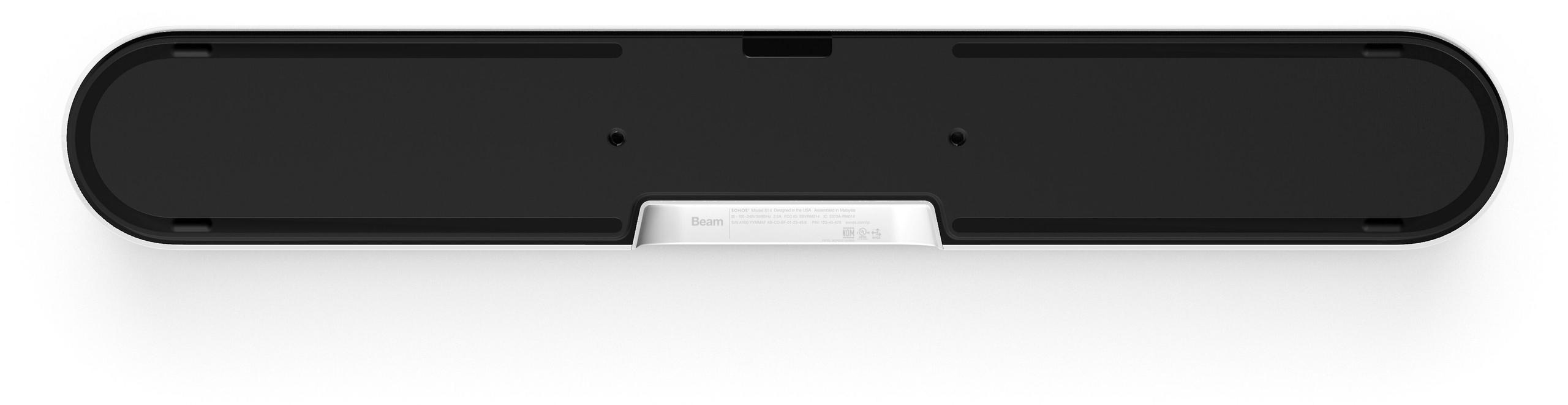
| Multi-component setup requiring cable management and speaker placement | Single compact unit: 25.6" × 3.9" × 2.7" (clean, minimal look) |
| Expandability - Future upgrade potential | |
| Standalone system with limited expansion options | Full Sonos ecosystem compatibility for multi-room and add-on speakers |
| Setup Complexity - Installation time and technical requirements | |
| Moderate: connect subwoofer, place rear speakers, run cables | Simple: single HDMI connection, automatic TV integration |
| Room Size Compatibility - Optimal performance environment | |
| Medium to large rooms (20-25 m²), powerful enough for big spaces | Small to medium rooms, apartment-friendly volume levels |
| Dialogue Clarity - Speech intelligibility without subtitles | |
| Clear center channel with voice mode optimization | Exceptional with Speech Enhancement and center tweeter design |
| Value Proposition - Performance per dollar spent | |
| Complete surround system at budget price point | Premium single-unit with ecosystem benefits at higher cost |
The Ultimea Skywave F40 is significantly better for home theater use. It provides true 5.1.2 surround sound with physical rear speakers and a dedicated subwoofer, creating genuine surround effects and powerful bass that you feel during action scenes. The Sonos Beam Gen 2 offers excellent audio quality but relies on virtual surround processing from a single unit, which can't match the spatial immersion of actual surround speakers for movie watching.
The Ultimea Skywave F40 includes a wireless subwoofer in the package, providing deep bass without additional purchases. The Sonos Beam Gen 2 doesn't include a subwoofer and relies on internal drivers and passive radiators for bass. If you want deep, impactful bass with the Sonos system, you'll need to buy the separate Sonos Sub as an add-on.
The Sonos Beam Gen 2 is much easier to set up - it's essentially plug-and-play with just an HDMI connection to your TV. The Ultimea Skywave F40 requires connecting the wireless subwoofer, positioning rear speakers, and managing cables, though it's still straightforward for most users.
The Ultimea Skywave F40 delivers more immersive surround sound with stronger bass due to its complete multi-speaker setup. The Sonos Beam Gen 2 excels in dialogue clarity and overall audio refinement from its single-unit design, but can't match the spatial effects and bass impact of the Ultimea system.
The Sonos Beam Gen 2 is better for small spaces. Its compact single-unit design doesn't overwhelm rooms visually, and its controlled bass output won't disturb neighbors. The Ultimea Skywave F40 might be too powerful for small apartments and requires more space for multiple components.
The Ultimea Skywave F40 includes Bluetooth 5.4 for wireless streaming from phones and tablets. The Sonos Beam Gen 2 doesn't have Bluetooth but supports AirPlay 2 and WiFi-based streaming services instead.
The Sonos Beam Gen 2 has superior smart features with built-in Alexa and Google Assistant, Trueplay room calibration, and integration with the Sonos ecosystem. The Ultimea Skywave F40 offers basic smart controls through its app with EQ adjustments and listening modes but lacks voice assistant integration.
The Sonos Beam Gen 2 is highly expandable within the Sonos ecosystem - you can add a Sub, surround speakers, or connect other Sonos speakers for multi-room audio. The Ultimea Skywave F40 is a complete system with limited expansion options beyond what's included.
The Ultimea Skywave F40 provides significantly better bass for music thanks to its dedicated 6.5-inch wireless subwoofer with BassMX technology. The Sonos Beam Gen 2 handles music well but has more limited bass extension without a separate subwoofer.
The Ultimea Skywave F40 is better for gaming due to its true surround sound positioning and powerful bass that enhances game audio immersion. Its Bluetooth 5.4 also provides low-latency connections for gaming. The Sonos Beam Gen 2 offers good gaming audio but lacks the spatial positioning of physical surround speakers.
The Ultimea Skywave F40 offers exceptional value, providing a complete surround sound system with subwoofer and rear speakers for less than many single soundbars cost. The Sonos Beam Gen 2 costs more upfront and requires additional purchases to match the Ultimea's surround capabilities, but offers premium build quality and smart features.
The Ultimea Skywave F40 uses physical up-firing drivers to bounce sound off your ceiling for height effects, while the Sonos Beam Gen 2 creates virtual Atmos through software processing. The Ultimea system provides more authentic overhead sound placement, though both deliver noticeable Atmos enhancement over standard soundbars.
We've done our best to create useful and informative comparisons to help you decide what product to buy. Our research uses advanced automated methods to create this comparison and perfection is not possible - please contact us for corrections or questions. These are the sites we've researched in the creation of this article: the-gadgeteer.com - youtube.com - ultimea.com - manuals.plus - youtube.com - ultimea.com - youtube.com - youtube.com - youtube.com - youtube.com - eu.ultimea.com - support.ultimea.com - whathifi.com - en.community.sonos.com - techradar.com - youtube.com - consumerreports.org - bestbuy.com - youtube.com - sonos.com - wave-electronics.com - en.community.sonos.com - epicsystems.tech - tomsguide.com - bestbuy.com

Privacy Policy
Terms and Conditions - Affiliate Policy
Home Security
© Copyright 2008-2026.
11816 Inwood Rd #1211, Dallas, TX 75244