


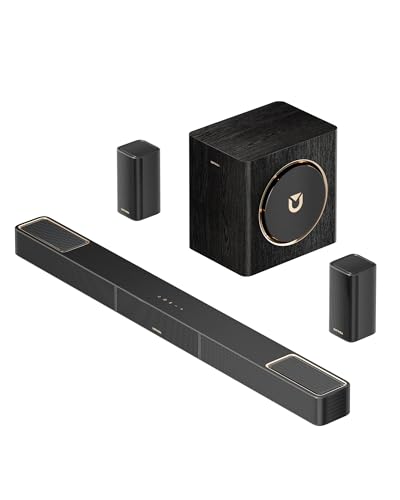





When your TV's built-in speakers make dialogue sound like it's coming from underwater and explosions feel about as impactful as a gentle breeze, it's time to consider a serious sound upgrade. The home theater soundbar market has evolved dramatically, and ULTIMEA has positioned two compelling options that promise to transform your living room into a cinema-worthy experience. But choosing between the Skywave X40 and the Skywave F40 requires understanding some significant differences in approach, technology, and value.
Before diving into the specifics, let's establish what separates premium soundbar systems from the basic models lining store shelves. A true premium system delivers what's called "5.1.2 Dolby Atmos" sound—a configuration that might sound like technical jargon but makes a world of difference in your viewing experience.
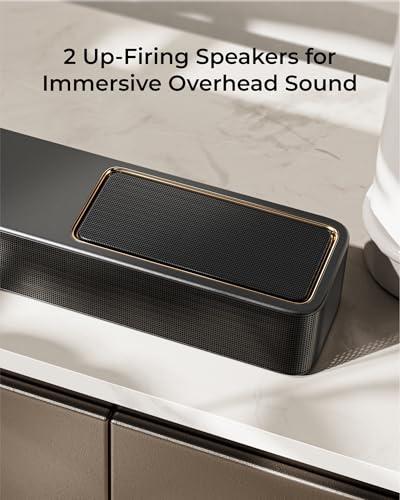
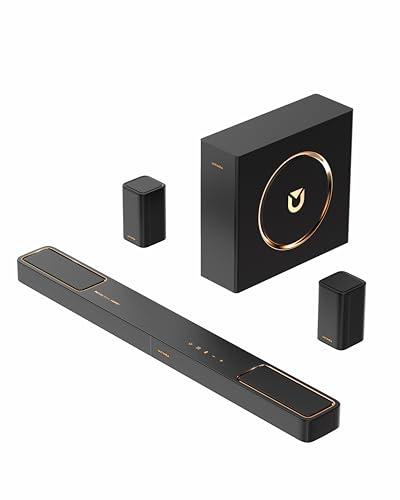
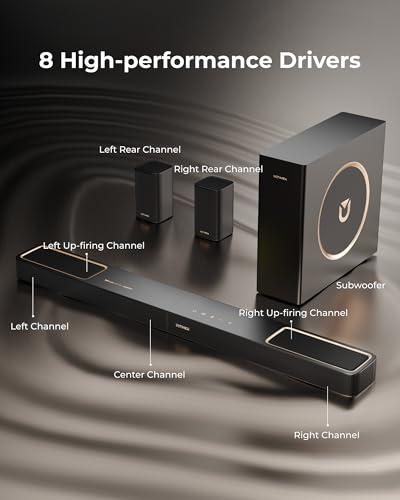
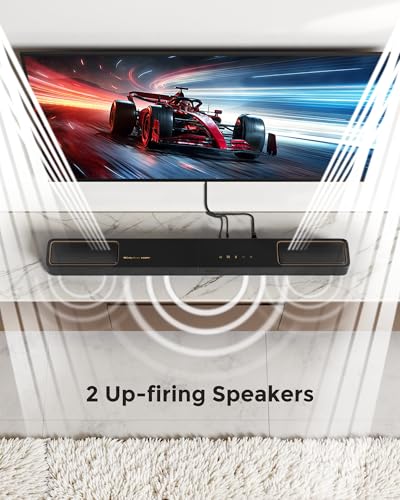
The "5.1.2" designation breaks down into specific audio channels: five main speakers (left, center, right, and two surrounds), one subwoofer for deep bass, and two height channels that bounce sound off your ceiling to create overhead effects. When a helicopter flies across the screen in an action movie, you'll actually hear it moving above your head rather than just from the front speakers.
Dolby Atmos takes this further by treating sound as objects that can move through three-dimensional space. Instead of being locked to specific speaker channels, a raindrop or bullet can travel seamlessly around and above you, creating an envelope of sound that pulls you into the scene.
Both the Skywave X40 and F40 deliver this premium experience, but they take notably different approaches to get there. The key considerations when evaluating these systems include wireless flexibility, processing power, bass response, and overall value proposition—factors that significantly impact your daily enjoyment and long-term satisfaction.
ULTIMEA released the Skywave F40 in 2024 as their entry into the premium Dolby Atmos market, focusing on delivering genuine surround sound at an accessible price point. The system quickly gained recognition for offering true 5.1.2 performance with dedicated rear speakers—something many competitors skip to cut costs.
The Skywave X40 arrived in 2025 as ULTIMEA's flagship response to user feedback and technological advancement. This newer model represents a significant leap forward, incorporating cutting-edge wireless technology and advanced processing that wasn't available when the F40 launched. The X40 addresses the most common complaints about the F40 while pushing the boundaries of what's possible in a home soundbar system.
This generational difference matters because audio technology has advanced rapidly. The processing power available in 2025 allows for more sophisticated sound manipulation, while wireless transmission has become more reliable and lower-latency than what was feasible just a year earlier.
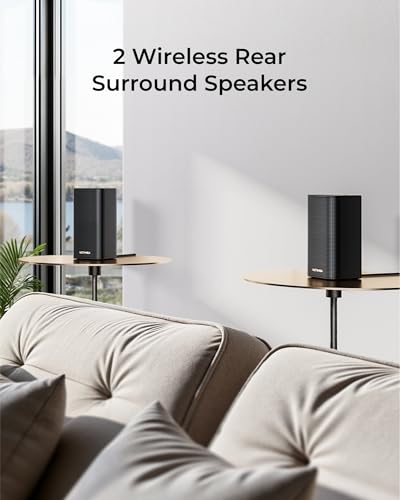
The most immediately noticeable difference between these systems lies in their wireless implementation—and this isn't just about convenience. The Skywave F40 uses a hybrid approach: wireless rear speakers paired with a traditional wired subwoofer. While this reduces some cable clutter, you'll still need to run a power cord and audio cable to your subwoofer, limiting where you can place it in your room.
The Skywave X40 takes a completely different approach with what ULTIMEA calls "CineMesh True Wireless" technology. This system uses dual 5GHz wireless transmission to connect not just the rear speakers, but also the subwoofer. The technical achievement here is maintaining ultra-low latency—less than 20 milliseconds—which ensures that dialogue sync remains perfect and action sequences feel immediate and responsive.
From a practical standpoint, this wireless freedom transforms how you set up your living space. With the X40, your subwoofer can go wherever it sounds best and looks good, not just where the cables reach. This flexibility becomes crucial in apartments, oddly-shaped rooms, or spaces where running cables isn't practical or aesthetically acceptable.
However, wireless isn't automatically better. The F40's wired subwoofer approach offers rock-solid reliability—there's no wireless connection to potentially drop or interfere with your network. For users who have a predictable setup and don't need to move components around, the wired connection can actually be preferable.
Here's where the generational gap becomes most apparent. The Skywave X40 features ULTIMEA's NEURACORE neural-level processing system—a triple-core DSP (Digital Signal Processor) paired with a dual-core MCU (Microcontroller Unit) that delivers 2,000 MIPS of processing power. While these specifications might sound like marketing speak, they translate to real performance advantages.
This processing power enables the X40 to handle 24-bit/192kHz audio with less than 0.5% distortion, creating what reviewers consistently describe as pinpoint spatial positioning. When a character walks across the screen, their footsteps move precisely with their location rather than jumping between general speaker zones.
The F40, while still capable, relies on more traditional digital processing combined with ULTIMEA's SurroundX and Xupmix technologies. These systems work well for creating an immersive sound field, but they don't offer the same level of precision or real-time optimization as the X40's advanced architecture.
In practical terms, this difference shows up most clearly during complex movie scenes. The X40 maintains clarity and separation when multiple sound elements compete for attention—think of a battle scene with dialogue, explosions, and a musical score all happening simultaneously. The F40 handles these scenes well, but can occasionally feel less refined during the most demanding content.
The Skywave X40 introduces GaN (Gallium Nitride) amplification technology, which represents a significant advancement over traditional silicon amplifiers. GaN amplifiers operate at 98% efficiency compared to roughly 70-80% for conventional designs, generating 50% less heat while responding eight times faster to audio signals.
This technical improvement delivers tangible benefits. The X40 can sustain high volume levels without the thermal stress that causes traditional amplifiers to compress dynamics or introduce distortion. The system remains stable and clear even during extended loud listening sessions, making it ideal for movie marathons or parties.
The F40 uses conventional amplification, which works perfectly well for most applications but can't match the efficiency and stability of GaN technology. For typical home theater use, this difference is subtle, but power users who frequently push their systems hard will appreciate the X40's superior thermal management.
Low-frequency performance often determines whether a soundbar feels like a genuine upgrade or just a lateral move from TV speakers. Both systems take different approaches to delivering the deep bass that makes action movies feel visceral and music sound full-bodied.
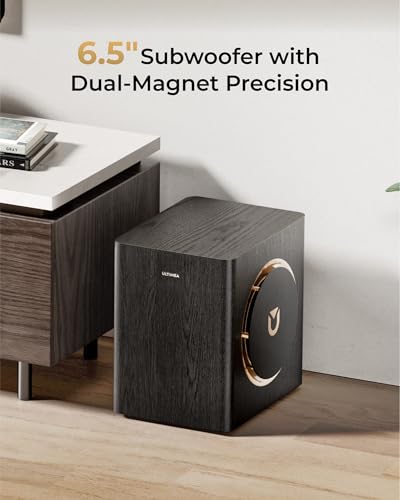
The Skywave X40 employs a 6.5-inch wireless subwoofer with Gravus Ultra-Linear Bass technology, extending down to 35Hz. This represents genuinely deep bass—low enough to reproduce the fundamental frequencies of organ music, earthquake rumbles in disaster movies, or the subsonic elements that make EDM music feel physically engaging.
The F40's 5.25-inch subwoofer with BassMX technology reaches down to 40-45Hz, which still delivers satisfying bass for most content but can't quite match the X40's depth. The five-hertz difference might seem small, but it represents the difference between feeling bass effects and merely hearing them.
From extensive review analysis, the X40 consistently receives praise for bass that remains tight and controlled even at high volumes, while the F40 occasionally shows signs of strain during the most demanding low-frequency content. For users who prioritize bass-heavy genres like action movies or electronic music, this difference becomes significant.
Both systems deliver genuine 5.1.2 Dolby Atmos performance, but their execution differs in important ways. The Skywave X40 leverages its advanced processing to create what reviewers describe as exceptionally precise spatial positioning. Effects move smoothly between speakers, and the height channels integrate seamlessly with the main soundstage.
The F40 still delivers impressive surround performance, but with slightly less refinement. The surround effects are clearly present and engaging, but they don't achieve quite the same level of seamless integration that characterizes the X40's presentation.
For home theater use, this translates to different levels of immersion. The X40 excels at creating that "disappearing speaker" effect where you're aware of sounds coming from all around you rather than from discrete speaker locations. The F40 provides clear surround effects, but you're more likely to notice that sounds are coming from specific speakers rather than floating in space.
Both systems offer comprehensive connectivity including HDMI eARC, Bluetooth 5.4, optical, and USB inputs. HDMI eARC (Enhanced Audio Return Channel) is particularly important as it allows lossless audio transmission from your TV and enables single-remote control of both devices.
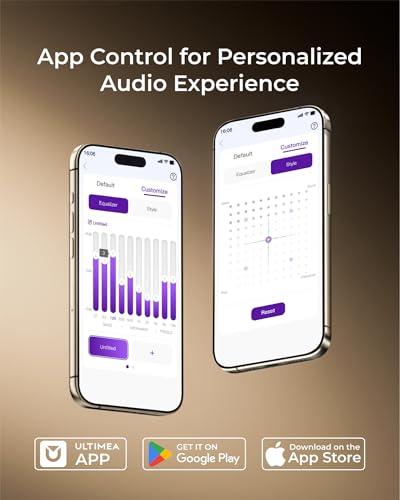
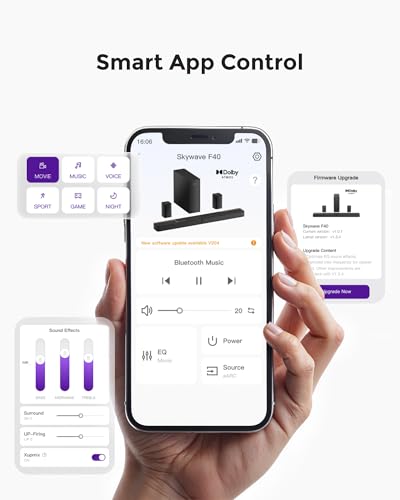
The Skywave X40 distinguishes itself with 121 preset sound profiles accessible through ULTIMEA's smart app, compared to the F40's more basic app functionality. While this might seem like feature bloat, having extensive presets means you can quickly optimize sound for different content types without manually adjusting equalizer settings.
Both systems support 4K HDR passthrough, ensuring that connecting gaming consoles or streaming devices directly to the soundbar won't compromise video quality—an important consideration as 4K content becomes standard.
At the time of writing, the Skywave F40 represents exceptional value in the premium soundbar category. It delivers genuine 5.1.2 Dolby Atmos performance with dedicated rear speakers at a price point that significantly undercuts many competitors who offer lesser configurations. For users seeking the maximum surround sound experience per dollar spent, the F40 is difficult to beat.
The Skywave X40 commands a premium price but justifies it with flagship technology and superior performance. The completely wireless design, advanced processing, deeper bass response, and refined audio quality create a more premium ownership experience. For users who prioritize having the latest technology and best possible performance, the price premium feels justified.
Analysis of professional and user reviews reveals consistent patterns. The F40 consistently receives praise for exceeding expectations given its price point. Users frequently comment on the easy setup, clear dialogue reproduction, and impressive surround effects. The most common criticisms focus on the non-backlit remote and the wired subwoofer connection.
The X40, despite its recent release, has generated enthusiastic early feedback. Reviewers consistently highlight the wireless convenience, superior bass depth, and refined sound quality. The advanced processing capabilities show up most clearly during complex movie soundtracks, where the X40 maintains clarity and separation that the F40 can't quite match.
Both systems receive strong marks for build quality and included accessories, with comprehensive cables and mounting hardware included in both packages.
Choose the Skywave F40 if you want excellent Dolby Atmos performance without flagship pricing. This system excels for users with predictable room layouts who don't need wireless flexibility. It's ideal for apartments or smaller homes where the wired subwoofer isn't a constraint, and where the goal is maximizing audio quality per dollar spent. The F40 particularly appeals to first-time soundbar buyers who want to experience genuine surround sound without fully committing to premium pricing.
The Skywave X40 makes sense when wireless convenience is important or when you demand the absolute best performance. This system excels in larger rooms, complex layouts, or situations where aesthetic concerns make cable management challenging. It's the clear choice for enthusiasts who want the latest audio technology and don't mind paying extra for meaningful improvements in bass depth, processing sophistication, and wireless convenience.
Consider room size as a key factor. The F40 works beautifully in typical living rooms up to about 270 square feet, while the X40's additional power and processing make it better suited for larger spaces or open-concept layouts.
Both systems deliver dramatically better audio than TV speakers or basic soundbars, transforming your home theater experience in ways that make the investment worthwhile. The choice ultimately comes down to whether you prioritize maximum value (F40) or flagship technology (X40)—either way, you'll enjoy genuinely immersive Dolby Atmos performance that brings movies and music to life in your living room.
| ULTIMEA Skywave X40 5.1.2 Soundbar System | Ultimea Skywave F40 Dolby Atmos Soundbar System |
|---|---|
| Channel Configuration - Both deliver true surround sound with overhead effects | |
| 5.1.2 Dolby Atmos with 8 total speakers | 5.1.2 Dolby Atmos with dedicated rear speakers |
| Wireless Technology - Key difference for room flexibility and aesthetics | |
| Fully wireless: subwoofer + rear speakers via CineMesh dual 5GHz | Hybrid: wireless rear speakers, wired subwoofer |
| Peak Power Output - Determines maximum volume and dynamic range | |
| 530W (handles large rooms and high volumes easily) | 400-460W (sufficient for most living rooms) |
| Bass Extension - Lower numbers mean deeper, more impactful bass | |
| 35Hz with 6.5" wireless subwoofer (theater-quality deep bass) | 40-45Hz with 5.25" wired subwoofer (good bass for most content) |
| Audio Processing - Advanced processing improves sound precision and clarity | |
| NEURACORE triple-core DSP with 2,000 MIPS processing power | Standard digital processing with SurroundX technology |
| Amplification Technology - Affects efficiency and performance at high volumes | |
| GaN amplifier (98% efficient, runs cooler, more stable) | Conventional amplification (proven reliable) |
| Connectivity Options - Both offer modern connection flexibility | |
| HDMI eARC, Bluetooth 5.4, optical, USB, 4K HDR passthrough | HDMI eARC, Bluetooth 5.4, optical, USB, 4K HDR passthrough |
| Smart App Features - Customization and control capabilities | |
| 10-band EQ with 121 preset sound profiles | 10-band EQ with multiple sound modes |
| Physical Size - Skywave X40 is larger but offers more power | |
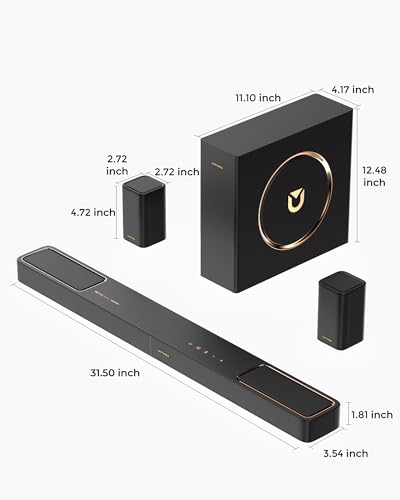
| Soundbar: 43.3" x 2.8" x 3.9" (premium aesthetic with metal grille) | Soundbar: 31.5" x 1.8" x 3.5" (compact, splits for shipping) |
| Setup Complexity - Wireless offers convenience but wired ensures reliability | |
| Plug-and-play wireless (only power outlets needed) | Simple setup with one subwoofer cable to manage |
| Release Year - Skywave X40 represents newer flagship technology | |
| 2025 (latest wireless and processing innovations) | 2024 (proven, mature technology with strong reviews) |
| Best For - Different priorities call for different systems | |
| Users wanting maximum performance, wireless flexibility, latest tech | Users prioritizing excellent value, proven reliability, simpler setup |
The biggest difference is wireless technology. The ULTIMEA Skywave X40 features a completely wireless system where both the subwoofer and rear speakers connect wirelessly, while the Ultimea Skywave F40 has wireless rear speakers but requires a wired connection to the subwoofer. The X40 also offers more advanced processing power and deeper bass response.
The ULTIMEA Skywave X40 is better suited for large rooms with its 530W peak power output and advanced GaN amplification technology. The Ultimea Skywave F40 works well in typical living rooms up to about 270 square feet, but the X40 handles larger spaces and higher volume levels more effectively.
Yes, both the ULTIMEA Skywave X40 and Ultimea Skywave F40 deliver genuine 5.1.2 Dolby Atmos with dedicated rear speakers and up-firing drivers for overhead effects. This sets them apart from many budget soundbars that only simulate surround sound without dedicated rear speakers.
The ULTIMEA Skywave X40 delivers superior bass with its 6.5-inch subwoofer extending down to 35Hz, compared to the Ultimea Skywave F40's 5.25-inch subwoofer reaching 40-45Hz. The X40 provides deeper, more impactful bass for action movies and music.
The ULTIMEA Skywave X40 uses CineMesh dual 5GHz wireless technology with ultra-low latency under 20ms, making it highly reliable for home theater use. The system is factory-paired and connects automatically when powered on, eliminating sync issues that plague some wireless audio systems.
The Ultimea Skywave F40 typically offers better value for budget-conscious buyers, delivering excellent 5.1.2 Dolby Atmos performance at a more accessible price point. The ULTIMEA Skywave X40 provides premium features and superior performance but at a higher cost.
Both systems are relatively easy to set up. The Ultimea Skywave F40 requires running one cable to the subwoofer, while the ULTIMEA Skywave X40 only needs power outlets for each component. The X40 offers more placement flexibility since no audio cables are required between components.
Both the ULTIMEA Skywave X40 and Ultimea Skywave F40 work well for gaming with Bluetooth 5.4 and low-latency wireless transmission. The X40 has a slight edge with its advanced processing and faster GaN amplification, providing more precise spatial audio for competitive gaming.
Yes, both the ULTIMEA Skywave X40 and Ultimea Skywave F40 are compatible with all major TV brands through HDMI eARC, optical, or Bluetooth connections. They also support 4K HDR passthrough and CEC control for seamless operation with your TV remote.
The ULTIMEA Skywave X40 offers more advanced app control with 121 preset sound profiles and extensive customization options. The Ultimea Skywave F40 includes smart app control with 10-band EQ and multiple sound modes, which covers most users' needs effectively.
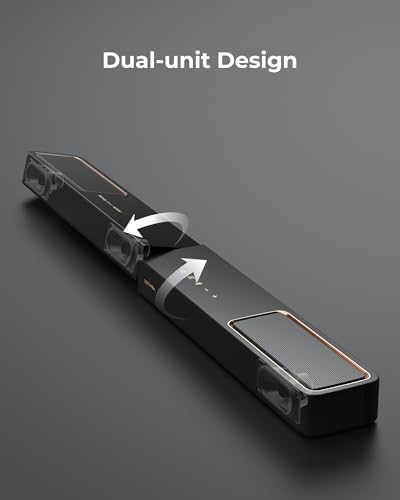
The ULTIMEA Skywave X40 is larger at 43.3 inches wide, while the Ultimea Skywave F40 is more compact at 31.5 inches. The F40 splits into two parts for easier shipping and installation, making it better suited for smaller entertainment centers.
Choose the ULTIMEA Skywave X40 if you want the latest technology, wireless convenience, and maximum performance for larger rooms. Select the Ultimea Skywave F40 if you're looking for excellent Dolby Atmos performance at better value, don't need wireless flexibility, and have a typical-sized living room setup.
We've done our best to create useful and informative comparisons to help you decide what product to buy. Our research uses advanced automated methods to create this comparison and perfection is not possible - please contact us for corrections or questions. These are the sites we've researched in the creation of this article: bestbuy.com - shopabunda.com - youtube.com - youtube.com - youtube.com - youtube.com - ultimea.com - walmart.com - youtube.com - hometechnologyreview.com - community.ultimea.com - avsforum.com - youtube.com - youtube.com - youtube.com - bestbuy.com - hometechnologyreview.com - the-gadgeteer.com - youtube.com - ultimea.com - manuals.plus - youtube.com - ultimea.com - youtube.com - youtube.com - youtube.com - eu.ultimea.com - support.ultimea.com

Privacy Policy
Terms and Conditions - Affiliate Policy
Home Security
© Copyright 2008-2026.
11816 Inwood Rd #1211, Dallas, TX 75244