



When you're tired of squinting at your TV to catch dialogue or missing the rumble of explosions in action movies, upgrading from basic TV speakers becomes essential. But the soundbar market has evolved far beyond simple audio bars sitting under your screen. Today's premium soundbar systems pack multiple speakers, wireless subwoofers, and surround sound processing that rivals traditional home theater setups - all while maintaining the simplicity that made soundbars popular in the first place.
This brings us to an interesting comparison between two approaches to home theater audio from Ultimea, both released in 2024. The Aura A40 takes a traditional surround sound approach with multiple physical speakers placed around your room, while the Skywave F40 embraces modern Dolby Atmos technology to create three-dimensional audio that includes overhead effects. At the time of writing, these systems are priced within $40 of each other, making the choice more about features and performance than budget.
The soundbar landscape has split into several distinct approaches, each with different strengths. Traditional soundbars rely on virtual surround processing - using digital tricks to make a single bar sound like it's coming from multiple directions. True surround systems include physical rear speakers for genuine surround effects. Then there's Dolby Atmos, which adds a vertical dimension by bouncing sound off your ceiling to create overhead effects.
The key factors when choosing between advanced soundbar systems include channel configuration (how many speakers and where they're positioned), audio format support (which surround sound standards work with your content), connectivity options (how the system talks to your TV and devices), room compatibility, and setup complexity. Both Ultimea systems represent different philosophies: spreading sound horizontally around you versus creating a complete 3D audio bubble.
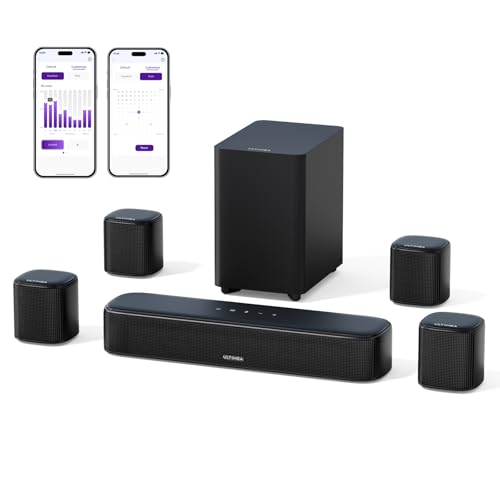
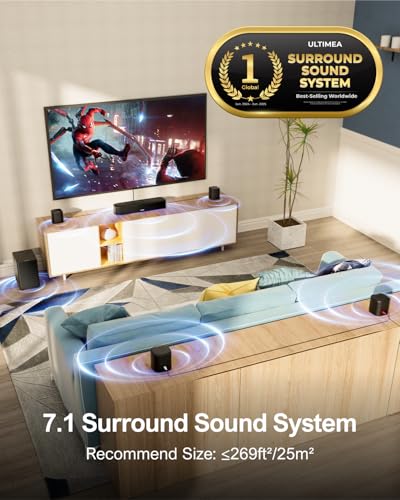
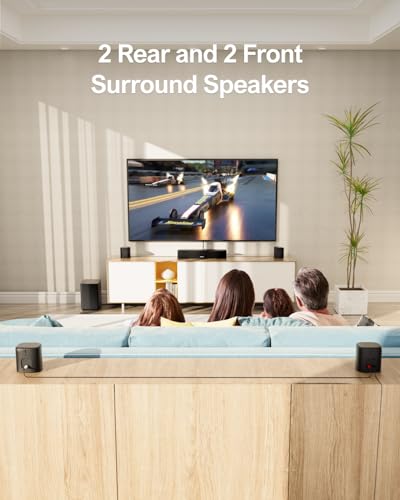
The Aura A40 embraces what many consider the "purist" approach to surround sound - placing actual speakers around your listening position. This system includes a main soundbar, four separate surround speakers (two for the front corners, two for the rear), and a dedicated subwoofer. The result is what's technically called a 7.1 virtual surround system, meaning it processes audio through seven main channels plus a dedicated low-frequency effects channel for the subwoofer.
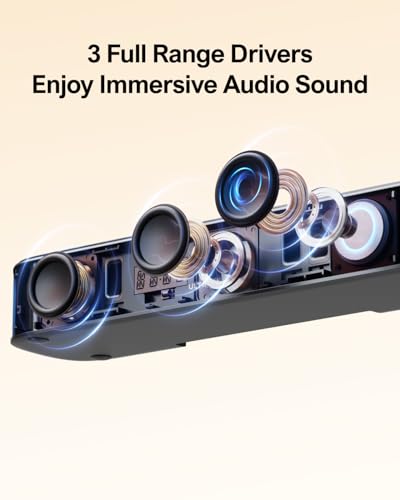
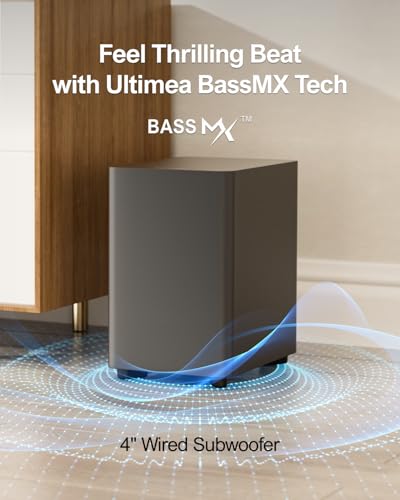
What makes the Aura A40 interesting is its commitment to physical speaker placement over digital processing tricks. The four surround speakers use 2-inch drivers - the actual speaker cones that move air to create sound - while the main soundbar houses three more 2-inch drivers. The subwoofer gets a 4-inch driver dedicated to bass frequencies below about 80Hz, which is where you feel movie explosions and music's rhythmic foundation.
This approach delivers 330W of peak power across eight total speakers. Peak power represents the maximum output during loud, brief sounds like gunshots or cymbal crashes, though the system's continuous power rating would be lower. The frequency response spans 65Hz to 18kHz, covering most audible sound from deep bass to the sparkle of high frequencies.
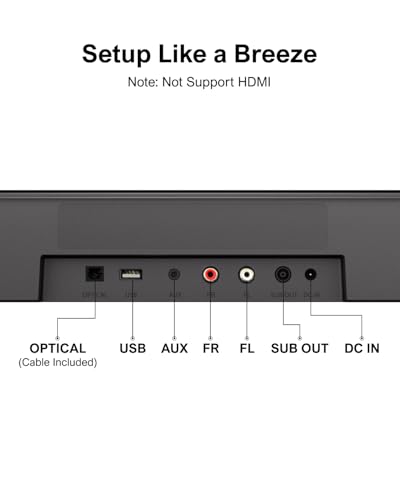
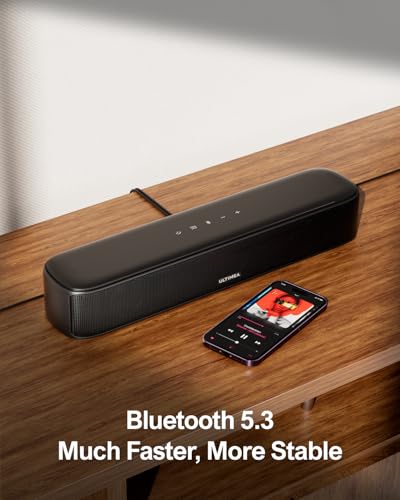
The Aura A40 connects through optical (digital audio from your TV), auxiliary (analog audio), USB for playing MP3 files, and Bluetooth 5.3 for wireless streaming. Notably absent is HDMI connectivity, which has become the preferred connection for modern TVs and streaming devices because it can carry high-quality, uncompressed audio.
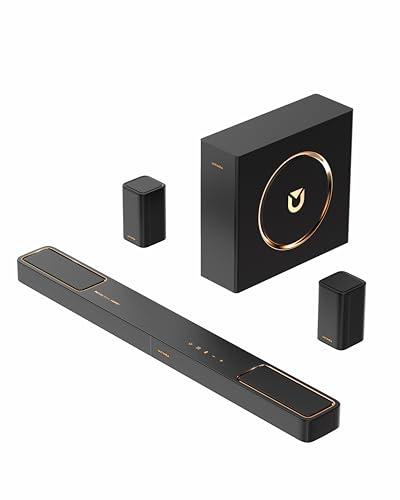
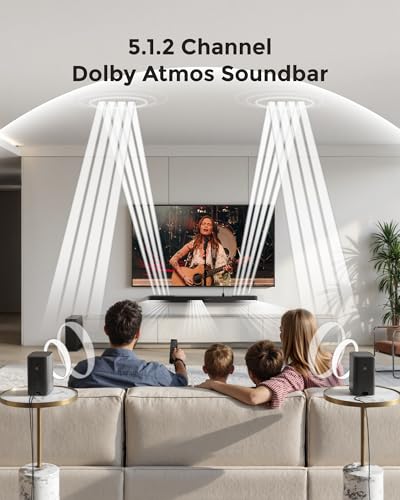
The Skywave F40 represents the newer school of soundbar design, built around Dolby Atmos technology that creates a three-dimensional audio experience. Instead of just surrounding you with sound from the sides and back, Atmos adds height channels that bounce audio off your ceiling to create overhead effects - imagine hearing a helicopter actually fly over your head rather than just in front of you.
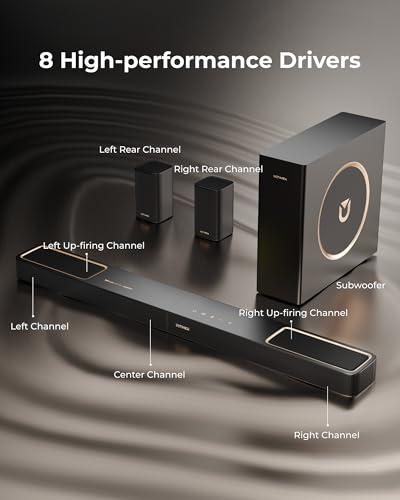
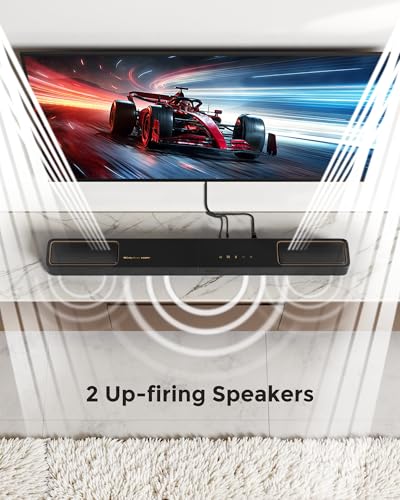
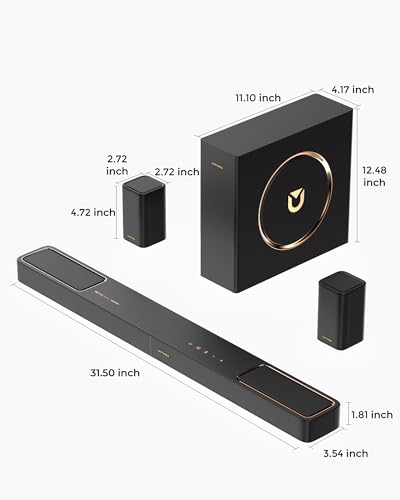
This system uses a 5.1.2 channel configuration, which breaks down as five main channels (front left, center, right, plus two rear speakers), one subwoofer channel, and two height channels from up-firing drivers built into the soundbar. These up-firing drivers are angled speakers that fire sound toward your ceiling, which then reflects down to create the illusion of overhead speakers.
The Skywave F40 delivers significantly more power at 400-460W peak output (sources vary slightly on the exact specification). More importantly, it extends deeper into bass frequencies, reaching down to 45Hz compared to the Aura A40's 65Hz limit. That 20Hz difference is substantial - it's the difference between feeling the rumble of a T-Rex footstep and just hearing it.
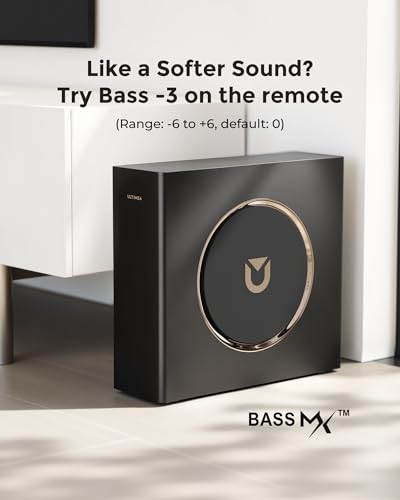
The system includes several proprietary technologies worth understanding. SurroundX processes audio to create convincing surround effects from the available speakers, while BassMX optimizes the subwoofer's output to prevent distortion during loud, bass-heavy scenes. Most intriguing is Xupmix technology, powered by Dolby DAP (Digital Audio Processing), which can take regular stereo music or older 5.1 surround content and transform it into multi-channel sound with height effects.
Here's where the technology gap becomes obvious. The Skywave F40 includes HDMI eARC (enhanced Audio Return Channel), which has become essential for modern home theater setups. This connection allows lossless audio transmission from your TV, supporting high-resolution formats including Dolby Atmos content from Netflix, Disney+, and other streaming services. eARC also enables HDMI-CEC, a feature that lets you control both your TV and soundbar with a single remote.
The Aura A40 lacks HDMI entirely, relying on older connection methods. While optical connections can carry compressed Dolby Digital and DTS audio, they can't handle the bandwidth required for Dolby Atmos or high-resolution audio formats. For users with newer 4K TVs and streaming devices, this becomes a significant limitation.
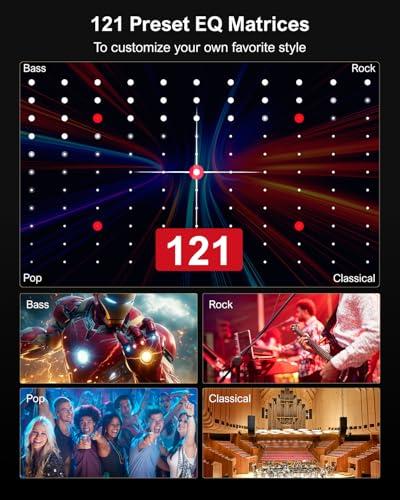
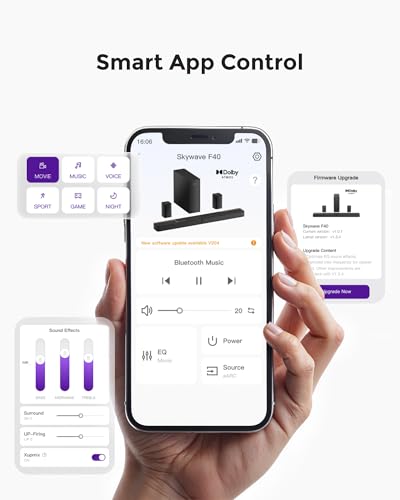
Both systems support smartphone app control through Ultimea's mobile app, offering 10-band equalizers and 121 preset EQ matrices across different musical genres. This level of customization goes well beyond what most soundbars provide, letting you fine-tune the sound signature for your room and preferences.
Based on extensive user and expert reviews, the Aura A40 excels at creating a wide, enveloping soundstage through its four physical surround speakers. When properly positioned, these speakers deliver convincing directional effects - you'll hear footsteps moving from left to right, or bullets whizzing past your ears. The system offers 13 adjustable surround levels, allowing you to balance individual speakers for optimal performance in your specific room layout.
The Skywave F40 takes a different approach, using fewer speakers but adding that crucial vertical dimension. Dolby Atmos content truly shines here - rain falls from above, aircraft pass overhead, and action sequences gain a three-dimensional quality that traditional surround can't match. However, this advantage only applies when watching Atmos-encoded content, which includes most modern movies and some TV shows on premium streaming services.
This is where the Skywave F40 shows clear advantages. The larger 5.25-inch subwoofer driver and deeper frequency response create more impactful bass during action scenes and music playback. Reviews consistently mention the system's ability to fill larger rooms without strain, thanks to its higher power output. The Aura A40 provides adequate bass for most content, but you'll notice the difference during bass-heavy scenes or when listening at higher volumes.
Peak power specifications tell only part of the story. What matters more is how cleanly each system reproduces sound at your preferred listening levels. Both systems maintain good clarity during dialogue-heavy scenes, but the Skywave F40's additional headroom means less distortion when you want to experience movies at cinematic volume levels.
The Skywave F40's extended frequency range (45Hz-20kHz versus 65Hz-18kHz) captures more audio detail at both extremes. The up-firing drivers use neodymium magnets and larger voice coils compared to typical soundbar speakers, improving their precision when creating height effects. This translates to more convincing overhead audio and better overall spatial accuracy.
However, the Aura A40's four-speaker surround approach delivers its own advantages. Physical speakers placed around your room create more convincing lateral effects than virtual processing can achieve. For content that emphasizes side-to-side audio movement - like car racing scenes or war movies with bullets flying past - the Aura A40 often provides superior immersion.
The Aura A40 requires more thoughtful installation planning. Four surround speakers need appropriate placement around your seating area, which works well in dedicated home theater rooms but can be challenging in open-concept living spaces. The system requires two power supplies and more cable management, though the rear speakers can connect wirelessly to reduce visible wiring.
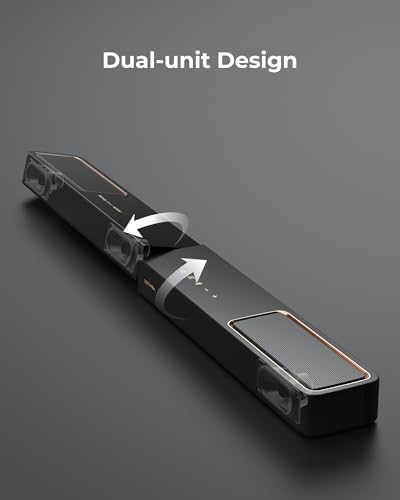
The Skywave F40 offers a more streamlined installation experience. Its innovative split-design soundbar ships in two halves that twist together with a robust locking mechanism - initially concerning but proving sturdy in practice. With only two rear speakers to position, room integration becomes simpler. The HDMI eARC connection also reduces cable complexity compared to multiple analog connections.
Both systems work best in medium-sized rooms, though the Skywave F40's higher power output gives it an edge in larger spaces. The Aura A40 is optimized for rooms between 108-270 square feet, while the Skywave F40 handles 215-269 square feet effectively.
At the time of writing, the Aura A40 costs about $40 less than the Skywave F40, making it an attractive entry point for true multi-speaker surround sound. This price advantage is significant for budget-conscious buyers who want genuine surround effects rather than virtual processing. The four physical speakers deliver an experience that single soundbars simply cannot match, regardless of how sophisticated their processing algorithms become.
However, the Skywave F40's modest price premium buys substantial technological advantages that become more valuable over time. Dolby Atmos support ensures compatibility with current and future content, while HDMI eARC provides the bandwidth needed for high-resolution audio formats. As streaming services continue expanding their Atmos catalogs and gaming consoles output 3D audio, these features become increasingly essential.
The connectivity difference cannot be overstated. Modern 4K TVs, game consoles, and streaming devices prioritize HDMI connections for audio. While the Aura A40 will work with any TV that has optical output, it cannot access the full audio quality these sources can provide.
For traditional home theater setups focused on movies and TV shows, both systems excel but in different ways. The Aura A40 shines with dialogue clarity and convincing surround effects in content that emphasizes horizontal audio movement. Action movies benefit from its wide soundstage, while the four speakers create an enveloping experience that makes you feel surrounded by the action.
The Skywave F40 transforms content that includes Atmos encoding. Modern Marvel movies, nature documentaries, and premium TV series gain an extra dimension that traditional surround cannot provide. The system's Xupmix technology also enhances older content, though the results vary depending on the source material.
Gaming represents an interesting use case where both approaches have merit. The Aura A40's four speakers excel at positional audio in competitive gaming, helping you locate enemies or environmental cues. The Skywave F40's Atmos support enhances single-player gaming experiences, particularly in games designed for 3D audio like flight simulators or adventure titles.
Music playback favors the Skywave F40 due to its extended frequency range and more powerful amplification. However, the Aura A40 creates an interesting wide-stage effect for music that some listeners prefer to traditional stereo presentation.
Choose the Aura A40 if you prioritize value and can accommodate four speakers around your room. It's ideal for users with older TVs lacking HDMI eARC, those focused primarily on broadcast television and standard streaming content, or anyone wanting genuine surround sound at the lowest possible price point. The system delivers on its promise of true multi-speaker surround without requiring premium pricing.
The Skywave F40 makes more sense for modern home theater setups, especially if you have a 4K TV with HDMI eARC capability. It's the better choice for users who stream content from services offering Dolby Atmos, play modern video games, or want future-proof connectivity. The modest price premium buys significant technological advantages that become more valuable over time.
Consider your room layout carefully. The Aura A40 requires strategic speaker placement that works well in dedicated media rooms but can be challenging in multipurpose living spaces. The Skywave F40 offers more installation flexibility while delivering comparable immersion through its height channels.
Ultimately, both systems represent excellent value in their respective approaches to home theater audio. The Aura A40 proves that physical speaker placement still matters, delivering convincing surround effects through proven methods. The Skywave F40 embraces modern audio technology to create three-dimensional soundscapes that traditional systems cannot match. Your choice depends on whether you prioritize proven surround sound techniques or cutting-edge audio formats - both deliver substantial improvements over basic TV speakers and standard soundbars.
| Ultimea Aura A40 7.1 Channel Soundbar System | Ultimea Skywave F40 Dolby Atmos Soundbar System |
|---|---|
| Audio Format Support - Determines compatibility with modern streaming content | |
| 7.1 virtual surround (no Dolby Atmos support) | Dolby Atmos 5.1.2 with height channels |
| Physical Speaker Configuration - Affects immersion and placement flexibility | |
| 4 surround speakers (2 front, 2 rear) + soundbar + subwoofer | 2 rear speakers + soundbar with up-firing drivers + subwoofer |
| Power Output - Higher wattage enables louder, cleaner sound in larger rooms | |
| 330W peak power | 400-460W peak power |
| Frequency Response - Lower bass extends deeper for more impact | |
| 65Hz - 18kHz | 45Hz - 20kHz (20Hz deeper bass extension) |
| HDMI Connectivity - Essential for modern 4K TVs and lossless audio | |
| No HDMI (optical, AUX, USB, Bluetooth only) | HDMI eARC + optical, USB, Bluetooth 5.4 |
| Subwoofer Size - Larger drivers produce deeper, more powerful bass | |
| 4-inch wired subwoofer | 5.25-inch wired subwoofer |
| Height Effects - Overhead audio for 3D immersion | |
| None (horizontal surround only) | Two up-firing drivers create ceiling-reflected height effects |
| Setup Complexity - More speakers require more planning and cables | |
| 4 surround speakers need strategic room placement | 2 rear speakers easier to position, split soundbar design |
| Smart Features - App control and customization options | |
| Ultimea app with 10-band EQ, 121 presets, 13 surround levels | Ultimea app with 10-band EQ, 121 presets, Xupmix upmixing |
| Future-Proofing - Compatibility with emerging audio standards | |
| Limited by lack of HDMI and Atmos support | Dolby Atmos and HDMI eARC ready for modern content |
| Recommended Room Size - Optimal performance area | |
| 108-270 sq ft (10-25 m²) | 215-269 sq ft (20-25 m²) |
| Best Use Cases - Ideal scenarios for each system | |
| Wide horizontal soundstage, older TVs, budget surround | Modern home theater, Atmos streaming, gaming with 3D audio |
The Ultimea Aura A40 uses four physical surround speakers placed around your room to create 7.1 virtual surround sound, while the Ultimea Skywave F40 features Dolby Atmos technology with up-firing drivers that bounce sound off your ceiling for 3D audio effects. The key distinction is horizontal surround versus three-dimensional audio with overhead effects.
The Skywave F40 is better suited for modern home theaters due to its Dolby Atmos support, HDMI eARC connectivity, and deeper bass response. It works seamlessly with 4K TVs and streaming services that offer Atmos content like Netflix and Disney+. The Aura A40 excels in dedicated media rooms where you can properly position all four surround speakers.
Yes, but with different capabilities. The Ultimea Aura A40 connects via optical, AUX, and Bluetooth, making it compatible with virtually any TV. The Ultimea Skywave F40 also has these connections but loses its main advantage (Dolby Atmos) without HDMI eARC, which is only available on newer TVs.
The Skywave F40 delivers superior bass with its larger 5.25-inch subwoofer and frequency response extending down to 45Hz compared to the Aura A40's 4-inch subwoofer reaching 65Hz. This 20Hz difference provides noticeably deeper, more impactful bass for movies and music.
The Ultimea Aura A40 includes 8 total speakers: 3 in the soundbar, 4 separate surround speakers, and 1 subwoofer. The Ultimea Skywave F40 also has 8 speakers but configured differently: 5 in the soundbar (including 2 up-firing), 2 rear surrounds, and 1 subwoofer.
The Skywave F40 offers simpler installation with only two rear speakers to position, plus its HDMI eARC connection reduces cable complexity. The Aura A40 requires strategic placement of four surround speakers around your room, which can be challenging in open living spaces but provides more immersive horizontal surround effects.
No, only the Ultimea Skywave F40 supports Dolby Atmos playback with its dedicated up-firing drivers and Atmos processing. The Ultimea Aura A40 cannot decode or play Dolby Atmos content, limiting it to traditional surround sound formats.
The Aura A40 provides excellent value for buyers wanting true multi-speaker surround sound at a lower price point. The Skywave F40 costs slightly more but includes modern features like Dolby Atmos, HDMI eARC, and better bass performance that justify the premium for most users with current home theater setups.
The Ultimea Skywave F40 outputs 400-460W peak power compared to the Ultimea Aura A40's 330W. This extra power enables the Skywave F40 to play louder with less distortion and better fill larger rooms while maintaining audio clarity.
Yes, both excel at gaming but in different ways. The Ultimea Aura A40 provides excellent positional audio for competitive gaming with its four surround speakers helping locate enemies. The Ultimea Skywave F40 enhances single-player gaming experiences with 3D audio effects, particularly effective in games designed for Dolby Atmos.
The Skywave F40 generally performs better for music due to its extended frequency range (45Hz-20kHz vs 65Hz-18kHz), more powerful amplification, and cleaner audio reproduction. However, the Aura A40 creates an interesting wide-stage effect that some listeners prefer for certain music genres.
Choose the Ultimea Aura A40 if you have an older TV, want the most affordable true surround option, and can accommodate four speakers. Pick the Ultimea Skywave F40 if you have a modern 4K TV with HDMI eARC, stream Dolby Atmos content, or want future-proof connectivity and deeper bass performance.
We've done our best to create useful and informative comparisons to help you decide what product to buy. Our research uses advanced automated methods to create this comparison and perfection is not possible - please contact us for corrections or questions. These are the sites we've researched in the creation of this article: youtube.com - walmart.com - youtube.com - ultimea.com - homestudiobasics.com - ultimea.co - youtube.com - eu.ultimea.com - walmart.com - device.report - bestbuy.com - manuals.plus - community.ultimea.com - judge.me - support.ultimea.com - geekmaxi.com - provantage.com - bestbuy.com - youtube.com - uk.whatgeek.com - the-gadgeteer.com - youtube.com - ultimea.com - manuals.plus - youtube.com - ultimea.com - youtube.com - youtube.com - youtube.com - youtube.com - eu.ultimea.com - support.ultimea.com

Privacy Policy
Terms and Conditions - Affiliate Policy
Home Security
© Copyright 2008-2026.
11816 Inwood Rd #1211, Dallas, TX 75244