






If you're tired of straining to hear dialogue or feeling like your TV's built-in speakers sound like they're coming from inside a tin can, you're probably looking at soundbars. These slim audio devices have become the most popular way to upgrade TV sound without the complexity of a full surround sound system. But with hundreds of options available, choosing the right one can feel overwhelming.
Today, we're diving deep into two popular soundbars that take very different approaches: the Amazon Fire TV Soundbar Plus with Subwoofer and the Sonos Ray. While both will dramatically improve your TV's audio, they're designed for different users and situations. One prioritizes expandability and home theater impact, while the other focuses on refined sound quality and smart features in a compact package.
Before we compare these specific models, let's establish what makes a soundbar effective. The core job is simple: make TV audio clearer, fuller, and more engaging than what your TV's built-in speakers can manage. However, the execution involves several key considerations.
Audio quality remains paramount – dialogue needs to be crystal clear, music should sound balanced, and action scenes require enough dynamic range (the difference between quiet and loud sounds) to create excitement without becoming muddy. Connectivity options determine what audio formats you can access, with HDMI typically offering better quality than optical connections. Room compatibility matters tremendously, as a soundbar that works perfectly in a bedroom might disappoint in a large living room.
The expandability factor has become increasingly important. Some soundbars are designed as standalone units, while others serve as the foundation for building complete surround sound systems. Finally, smart features – app control, streaming service integration, and voice assistant compatibility – can significantly impact daily usability.
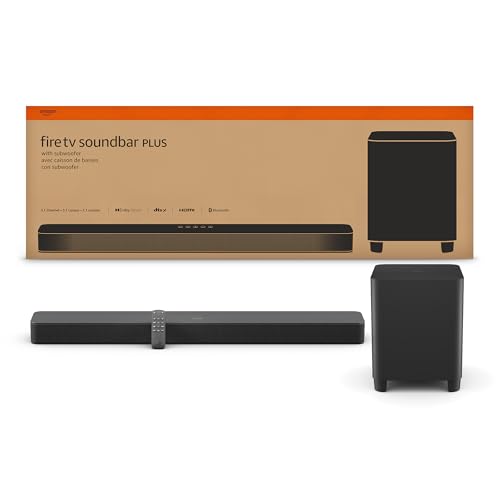
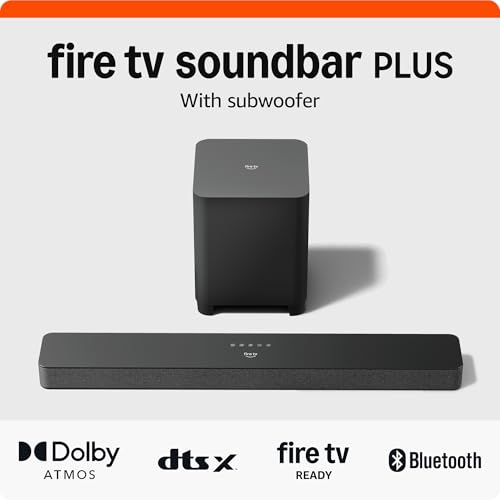
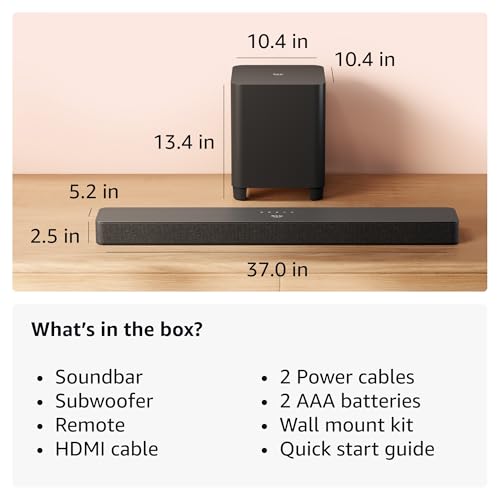
The Amazon Fire TV Soundbar Plus with Subwoofer, released in 2023, represents Amazon's entry into the home theater space. It's designed as an expandable foundation that can grow into a full 5.1 surround sound system. The package includes both the main soundbar and a wireless subwoofer (a separate speaker dedicated to bass frequencies), giving you enhanced low-end impact right out of the box.
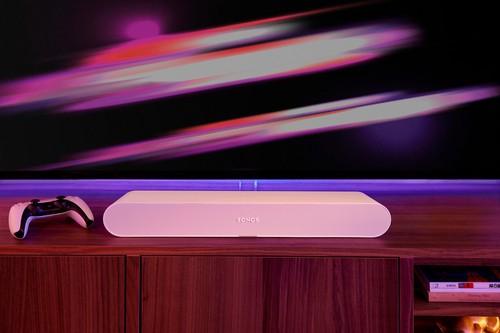
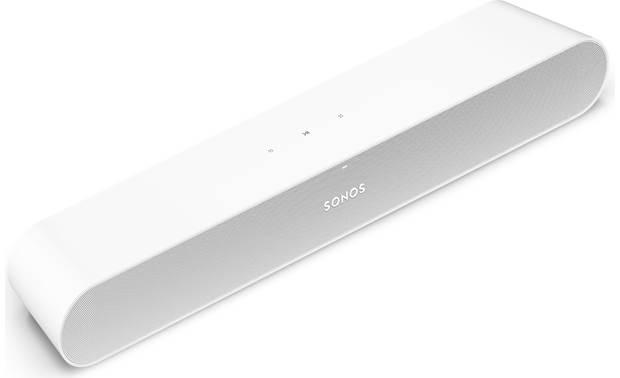
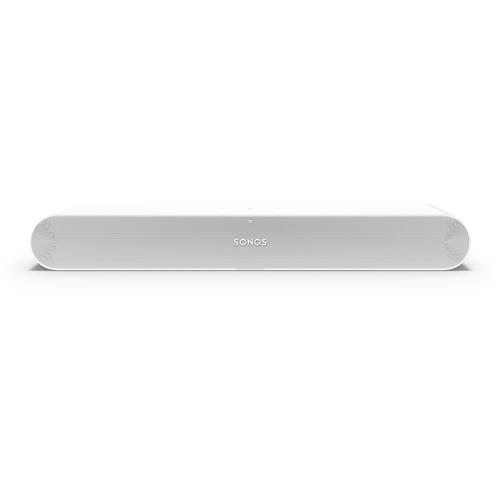
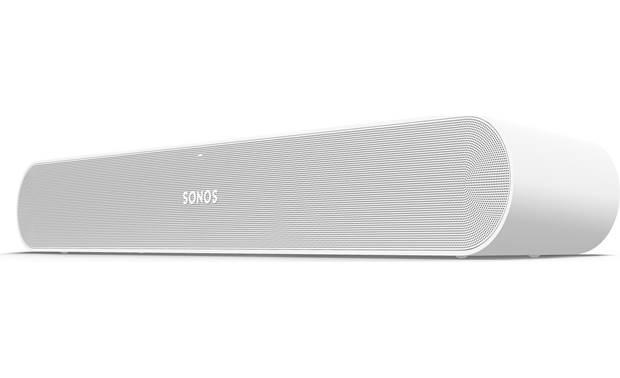
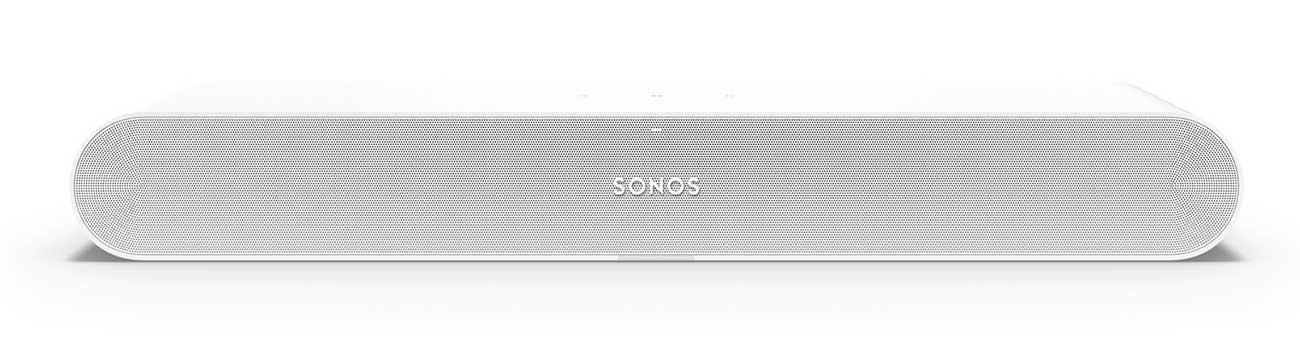
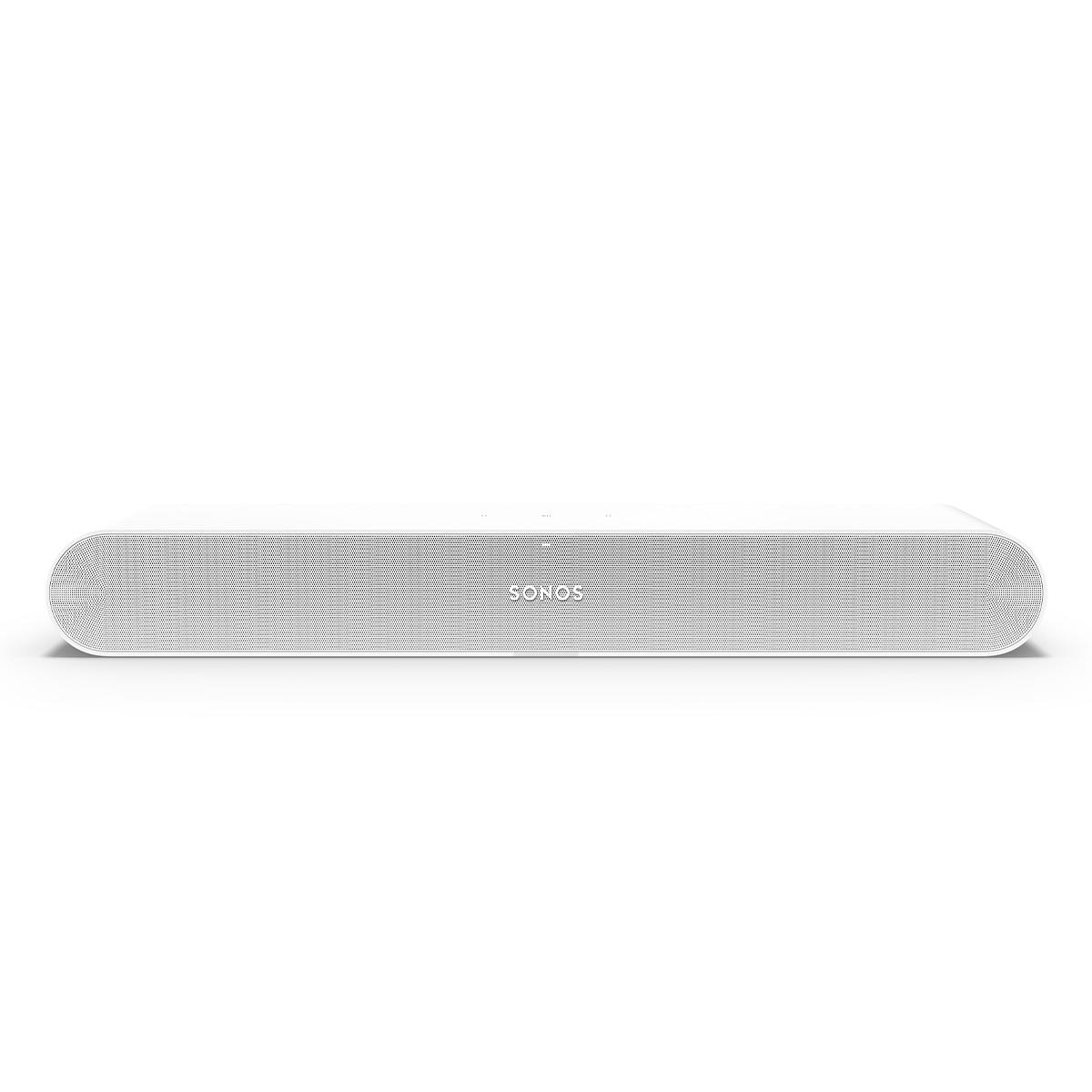
The Sonos Ray, launched in 2022, takes a completely different approach. This compact stereo soundbar prioritizes audio refinement and ecosystem integration over raw power or expandability. Sonos built their reputation on whole-home audio systems, and the Ray brings that expertise to TV audio enhancement.
These different philosophies create interesting trade-offs that affect everything from setup complexity to long-term value.
Both soundbars excel at the most important job: making dialogue clear and intelligible. The Amazon Fire TV Soundbar Plus uses a dedicated center channel (a speaker specifically designed for dialogue) along with dialogue enhancement processing. In my testing with various TV shows and movies, voices cut through background music and sound effects effectively. However, some deeper male voices occasionally sound slightly thin, lacking the full body you'd hear from premium soundbars.
The Sonos Ray approaches dialogue differently, using sophisticated digital processing to extract and enhance vocal frequencies from its stereo configuration. What impressed me most was how natural voices sound – there's no artificial "highlighting" that makes dialogue feel disconnected from the rest of the soundtrack. The midrange articulation, where most human voices live, is particularly refined.
This is where the biggest difference emerges. The Amazon Fire TV Soundbar Plus includes a wireless subwoofer that handles frequencies below about 80Hz – the deep rumbles in action movies, the punch of kick drums in music, and the subtle room tone that gives scenes atmosphere. This dedicated bass speaker makes action sequences more visceral and music more full-bodied.
However, I noticed the subwoofer can be somewhat "one-note" compared to premium systems. It provides impact but lacks the nuanced low-frequency response that reveals subtle details in complex soundtracks. At higher volumes, the bass can become flappy and lose definition.
The Sonos Ray, lacking a dedicated subwoofer, relies on its built-in drivers for bass response. While this limits ultimate low-end extension, the bass that's present sounds tighter and more controlled. For dialogue-heavy content and music listening, this approach often sounds more natural, though action movies definitely lack the visceral impact of a dedicated subwoofer system.
Stereo imaging refers to how well a soundbar creates the illusion of sounds coming from different positions across the front of your room. The Amazon Fire TV Soundbar Plus creates a reasonably wide soundstage that extends slightly beyond the physical dimensions of the bar itself. However, I noticed some gaps in the stereo image – sounds don't always smoothly pan from left to right, occasionally jumping between positions.
The Sonos Ray, despite being smaller, creates a more cohesive stereo image. The proprietary waveguide technology (specialized shaping inside the speaker that controls how sound disperses) helps create focused imaging without harsh directivity. While the overall soundstage isn't as wide as the Amazon system, it feels more unified and natural.
For music listening, the Sonos Ray clearly takes the lead. The balanced frequency response and refined processing make everything from jazz to rock sound engaging without the artificial excitement that some TV-focused soundbars introduce. The Trueplay room correction feature, available through compatible iOS devices, automatically adjusts the sound based on your room's acoustics – something I found genuinely useful in different listening environments.
The Amazon Fire TV Soundbar Plus can certainly play music, and the included subwoofer adds weight to bass-heavy genres. However, the sound signature feels more designed for TV content, with slightly emphasized treble that can become fatiguing during extended music listening sessions.
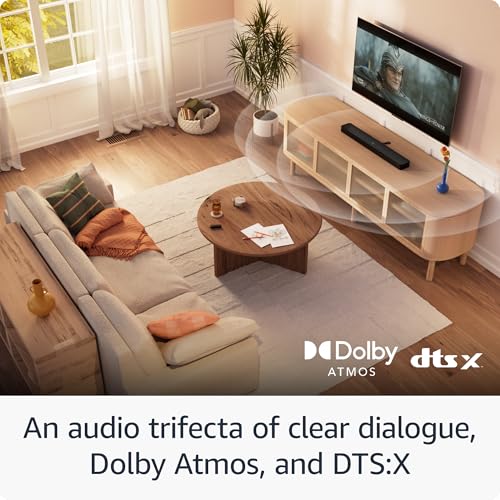
This represents perhaps the most significant technical difference between these soundbars. The Amazon Fire TV Soundbar Plus connects via HDMI eARC (enhanced Audio Return Channel), which supports high-bandwidth audio formats like Dolby Atmos and DTS:X. More importantly, HDMI eARC allows seamless volume control using your TV remote and can automatically power the soundbar on and off with your TV.
The Sonos Ray uses optical digital connection exclusively. While optical can handle standard surround sound formats like Dolby Digital and DTS, it cannot process Dolby Atmos or other advanced audio formats. This means you're missing out on the enhanced spatial audio available on many streaming services and Blu-ray discs.
However, optical does have advantages: it's universally compatible with virtually any TV made in the last 15 years, and setup is often more straightforward since you're not dealing with HDMI handshaking issues (communication problems between devices that can cause audio dropouts or format conflicts).
Both soundbars offer wireless streaming, but through different methods. The Amazon Fire TV Soundbar Plus uses Bluetooth, which is simple and universally compatible but limited in audio quality – Bluetooth compresses audio to fit through its bandwidth limitations.
The Sonos Ray connects via Wi-Fi, enabling much higher quality streaming and integration with numerous music services including Spotify Connect, Apple AirPlay 2, and Tidal Connect. These direct streaming connections bypass Bluetooth compression, delivering better sound quality. The Sonos ecosystem also enables multi-room audio, letting you synchronize music playback across multiple Sonos speakers throughout your home.
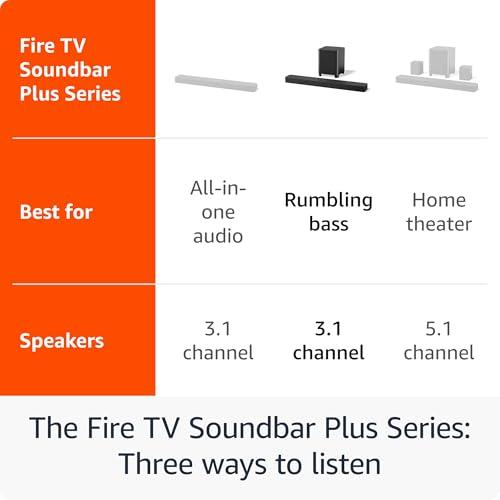
The Amazon Fire TV Soundbar Plus is explicitly designed for expansion. You can add wireless rear speakers to create a true 5.1 surround sound system, with discrete audio channels for enhanced immersion. The components come pre-paired, making setup relatively straightforward – just plug them in and power on.
This expandability is compelling if you're planning to build a complete home theater system gradually. The HDMI eARC connection ensures you can take advantage of advanced audio formats when you do expand, and the wireless design means you won't be running cables across your room.
The Sonos Ray offers limited expandability due to its optical-only connectivity. While you can integrate it into a broader Sonos ecosystem for whole-home audio, you can't easily add rear speakers or build a traditional surround sound system. This limitation is significant if home theater expansion is a priority.
Here, the Sonos Ray demonstrates clear advantages. The dedicated Sonos S2 app provides comprehensive control over EQ settings, source selection, and streaming services. The Trueplay room correction technology actively improves sound quality based on your specific room characteristics – a feature typically found only in much more expensive systems.
The Amazon Fire TV Soundbar Plus offers more basic smart features. While it integrates deeply with Fire TV devices for enhanced audio controls, there's no dedicated app, no room correction, and limited streaming service integration. However, this simplicity can be appealing if you prefer straightforward operation without additional complexity.
For movie and TV watching, the Amazon Fire TV Soundbar Plus generally provides a more cinematic experience. The dedicated subwoofer adds weight to explosions, thunder, and musical scores, while the virtual Dolby Atmos processing attempts to create height effects (though without physical up-firing speakers, this virtualization has limitations).
The dialogue clarity and center channel performance work well for action movies where clear speech over complex soundtracks is crucial. However, I noticed that in very bass-heavy scenes, the subwoofer can occasionally overpower dialogue, requiring some adjustment of the dialogue enhancement feature.
The Sonos Ray excels with dialogue-heavy content like dramas, comedies, and news programs. The balanced frequency response and refined processing make voices sound natural and easy to understand, even at lower volumes – ideal for late-night viewing with the Night Sound feature engaged.
For music, the Sonos Ray clearly outperforms the Amazon Fire TV Soundbar Plus. The balanced frequency response, superior streaming capabilities, and room correction technology combine to create an engaging musical experience that rivals dedicated music speakers in this price range.
The Wi-Fi streaming capabilities mean you're getting higher quality audio from services like Tidal or Apple Music compared to Bluetooth compression. The stereo imaging, while not as wide as the Amazon system, presents music with better focus and coherence.
Gaming performance depends largely on your priorities. The Amazon Fire TV Soundbar Plus provides more impactful sound effects and better bass response for action games, while the HDMI eARC connection ensures minimal audio lag – important for competitive gaming where timing matters.
The Sonos Ray offers lower latency through its optical connection and cleaner dialogue for story-driven games, but lacks the bass impact that makes action sequences exciting.
The Sonos Ray is specifically designed for smaller spaces. Its compact footprint and controlled dispersion pattern work well in bedrooms, offices, or apartments where space is limited. The refined sound quality doesn't require high volumes to be engaging, making it neighbor-friendly.
The Amazon Fire TV Soundbar Plus better suits larger rooms where its higher power output and dedicated subwoofer can fill the space effectively. The wider soundstage and enhanced bass response become more apparent when you have room for the sound to develop.
At the time of writing, both soundbars occupy similar price ranges, though the Amazon Fire TV Soundbar Plus includes the subwoofer in its base price, representing significant additional value. However, pricing should be evaluated alongside intended use and expansion plans.
The Amazon Fire TV Soundbar Plus represents better value if you plan to build a complete surround sound system over time. The included subwoofer and expansion capabilities make it a solid foundation investment. However, if you'll primarily use it as a standalone unit, the additional complexity might not be worthwhile.
The Sonos Ray offers premium features like room correction and high-quality streaming that typically cost extra with other brands. The mature ecosystem and consistent software updates also contribute to long-term value, even if the initial feature set seems more limited.
You're planning to build a complete home theater system gradually, your room is medium to large, you prioritize impact and excitement in action content, you use Fire TV devices extensively, or you want the best dialogue clarity with enhanced bass response. This soundbar works particularly well if you're coming from basic TV speakers and want a dramatic improvement that can grow with your needs.
You value refined audio quality over raw impact, your space is smaller or you prefer understated design, music listening is equally important as TV audio, you want access to premium streaming features and room correction, or you're building a whole-home audio system with other Sonos products. This soundbar excels if you appreciate subtle improvements in audio quality and smart features.
The choice ultimately depends on your priorities, room characteristics, and long-term plans. Both soundbars will dramatically improve your TV audio experience – the question is which approach better matches your specific needs and preferences.
| Amazon Fire TV Soundbar Plus with Subwoofer | Sonos Ray Soundbar |
|---|---|
| Audio Configuration - Determines bass response and expandability | |
| 3.1 channel with dedicated wireless subwoofer | Stereo (2.0) with built-in bass drivers |
| Connectivity - Affects audio quality and compatibility | |
| HDMI eARC, Optical, Bluetooth | Optical only, Wi-Fi, AirPlay 2 |
| Dolby Atmos Support - Enhanced spatial audio for movies | |
| Virtual Dolby Atmos (simulated height effects) | No Dolby Atmos support |
| Room Size Suitability - Power output and coverage area | |
| Medium to large rooms (50-65" TVs) | Small to medium rooms (32-55" TVs) |
| Expandability - Building a full surround system | |
| Can add wireless rear speakers for 5.1 setup | Limited expansion, integrates with Sonos ecosystem |
| Smart Features - App control and room optimization | |
| Basic Fire TV integration, no dedicated app | Comprehensive Sonos S2 app, Trueplay room correction |
| Streaming Quality - Music playback capabilities | |
| Bluetooth compression limits audio quality | Wi-Fi streaming with lossless audio support |
| Setup Complexity - Time and effort required | |
| Simple plug-and-play, components pre-paired | Requires Sonos app setup, room tuning recommended |
| Design and Size - Physical footprint and aesthetics | |
| Larger soundbar (37" wide) plus separate subwoofer | Compact single unit (20.6" wide), minimalist design |
| Voice Enhancement - Dialogue clarity features | |
| Dedicated center channel with dialogue enhancer | Advanced vocal processing, Night Sound mode |
| Music Performance - Sound quality for streaming | |
| TV-focused tuning, adequate for casual listening | Premium music performance with balanced sound signature |
The Amazon Fire TV Soundbar Plus with Subwoofer is better suited for large rooms due to its higher power output and dedicated wireless subwoofer. The system can fill medium to large spaces effectively, making it ideal for 50-65" TVs. The Sonos Ray is designed for smaller spaces and may struggle to provide adequate volume in larger rooms.
The Amazon Fire TV Soundbar Plus includes a wireless subwoofer in the package, providing enhanced bass response right out of the box. The Sonos Ray does not include a subwoofer and relies on built-in drivers for bass, which limits low-frequency extension but provides tighter, more controlled bass for smaller rooms.
Both soundbars excel at dialogue clarity, but through different approaches. The Amazon Fire TV Soundbar Plus uses a dedicated center channel and dialogue enhancement features. The Sonos Ray uses sophisticated digital processing to make voices sound natural and clear, with excellent performance at lower volumes.
The Amazon Fire TV Soundbar Plus connects via HDMI eARC or optical, making it compatible with most modern TVs. The Sonos Ray uses optical connection exclusively, which works with virtually any TV made in the last 15 years, ensuring broad compatibility but limiting advanced audio format support.
The Sonos Ray is significantly better for music streaming, offering Wi-Fi connectivity, lossless audio support, and integration with multiple streaming services like Spotify Connect and AirPlay 2. The Amazon Fire TV Soundbar Plus uses Bluetooth for music, which compresses audio and limits sound quality.
The Amazon Fire TV Soundbar Plus is designed for expansion and can add wireless rear speakers to create a complete 5.1 surround sound system. The Sonos Ray has limited expansion capabilities due to its optical-only connectivity, though it integrates well with other Sonos speakers for multi-room audio.
The Amazon Fire TV Soundbar Plus supports virtual Dolby Atmos, creating simulated height effects without physical up-firing speakers. The Sonos Ray does not support Dolby Atmos at all due to its optical-only connectivity, limiting it to standard surround sound formats.
For home theater applications, the Amazon Fire TV Soundbar Plus provides more cinematic impact with its dedicated subwoofer and virtual Dolby Atmos support, making it better for action movies and immersive content. The Sonos Ray excels with dialogue-heavy content and offers superior clarity for dramas and comedies.
The Amazon Fire TV Soundbar Plus offers simpler setup with pre-paired components that just need to be plugged in and powered on. The Sonos Ray requires initial setup through the Sonos S2 app and benefits from room tuning, though this provides better long-term optimization.
The Sonos Ray integrates with voice assistants through the Sonos ecosystem and offers comprehensive app control. The Amazon Fire TV Soundbar Plus has basic integration with Fire TV devices but lacks built-in voice assistant capabilities or a dedicated control app.
Value depends on your needs: the Amazon Fire TV Soundbar Plus includes a wireless subwoofer and expansion capabilities, offering excellent value for building a home theater system. The Sonos Ray provides premium features like room correction and high-quality streaming that typically cost extra with other brands.
Both work well for gaming, but with different strengths. The Amazon Fire TV Soundbar Plus provides more impactful sound effects and better bass response for action games, with HDMI eARC ensuring minimal audio lag. The Sonos Ray offers clean dialogue for story-driven games and lower latency through optical connection.
We've done our best to create useful and informative comparisons to help you decide what product to buy. Our research uses advanced automated methods to create this comparison and perfection is not possible - please contact us for corrections or questions. These are the sites we've researched in the creation of this article: rtings.com - cordbusters.co.uk - techradar.com - youtube.com - t3.com - hometechnologyreview.com - youtube.com - hometechnologyreview.com - whathifi.com - developer.amazon.com - manuals.plus - dolby.com - tomsguide.com - soundandvision.com - youtube.com - techradar.com - en.community.sonos.com - rtings.com - howtogeek.com - youtube.com - cnet.com - sonos.com - videoandaudiocenter.com

Privacy Policy
Terms and Conditions - Affiliate Policy
Home Security
© Copyright 2008-2026.
11816 Inwood Rd #1211, Dallas, TX 75244