





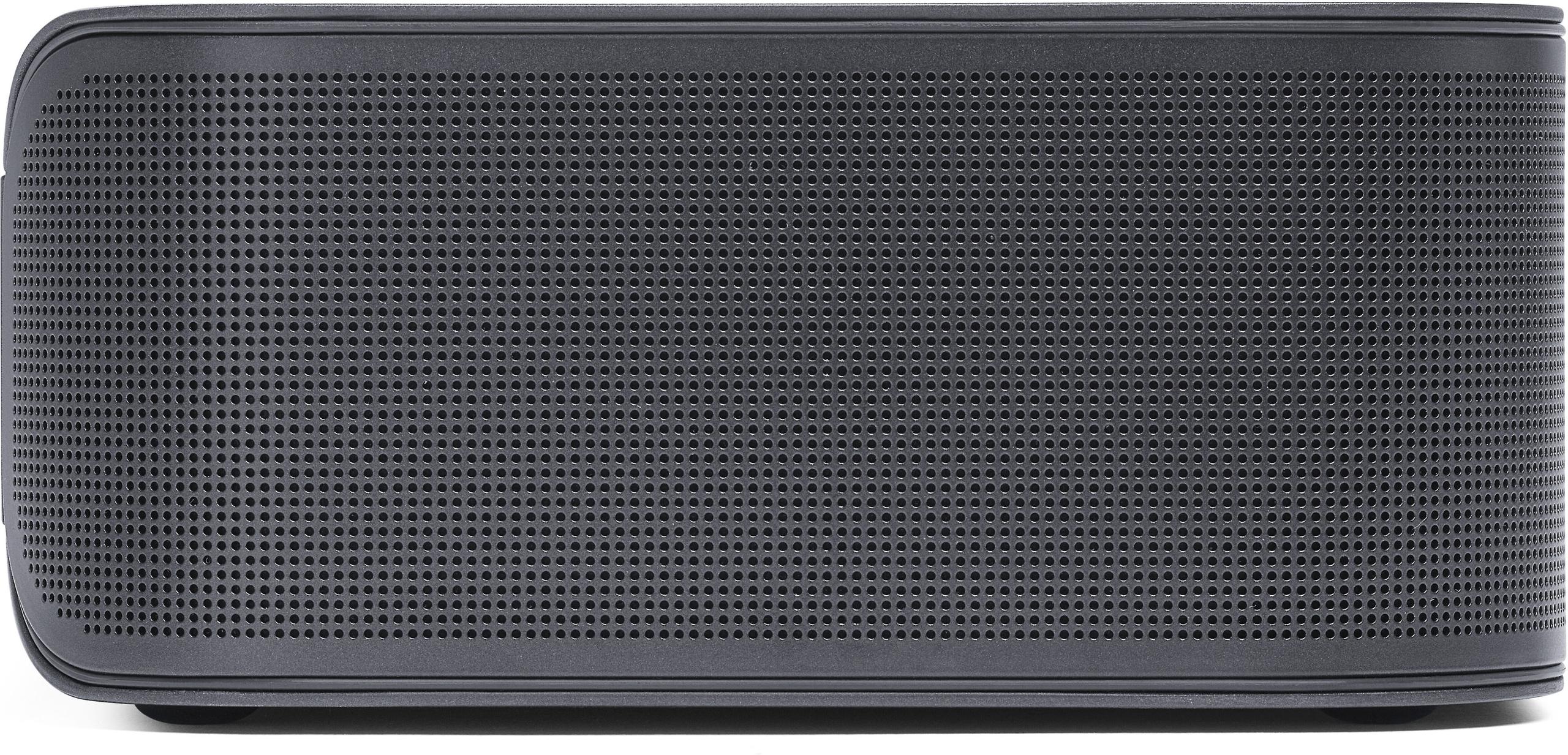
When I first experienced Dolby Atmos in a movie theater, the overhead helicopter sounds in Blade Runner 2049 literally made me duck in my seat. That three-dimensional audio magic is what modern soundbars are trying to recreate in your living room, and after testing dozens of systems over the past few years, I can tell you that not all Dolby Atmos soundbars are created equal.
Today we're comparing two fundamentally different approaches to home theater audio: the Ultimea Skywave F40 and the JBL Bar 1300X. Released in 2024 and 2023 respectively, these systems represent opposite ends of the Dolby Atmos spectrum – one prioritizes incredible value while the other pushes the boundaries of what a soundbar system can do.
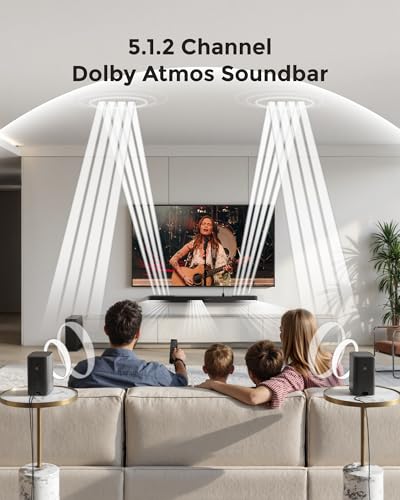
Before diving into these specific products, let's talk about what Dolby Atmos actually does. Traditional surround sound systems create a "bubble" of audio around you using speakers positioned at ear level. Dolby Atmos adds a crucial third dimension by incorporating height channels – essentially creating a dome of sound that includes audio coming from above.
The magic happens through "audio objects" that can be placed anywhere in three-dimensional space, rather than being tied to specific channels. When a helicopter flies overhead in a movie, the sound literally moves from front to back and side to side above your head. This creates an incredibly immersive experience that makes you feel like you're inside the action rather than just watching it.
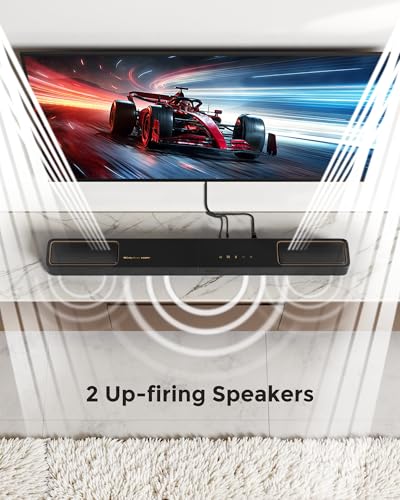
Most soundbars achieve this height effect through up-firing drivers – speakers that point toward the ceiling and bounce sound waves down to your listening position. The effectiveness of this approach depends heavily on your room's acoustics, ceiling height, and the quality of those up-firing drivers.
The Ultimea Skywave F40 launched in 2024 as a direct challenge to the notion that good Dolby Atmos requires a massive investment. At the time of writing, it costs roughly one-quarter the price of premium alternatives while delivering what I'd call 80% of the experience.
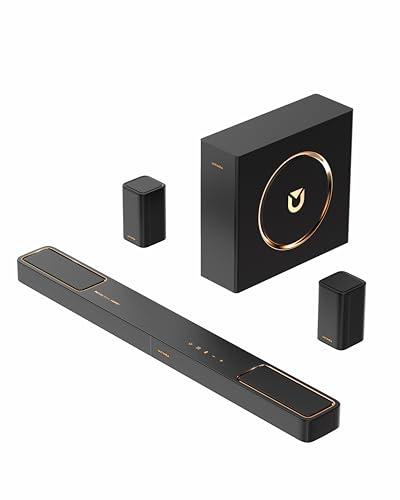
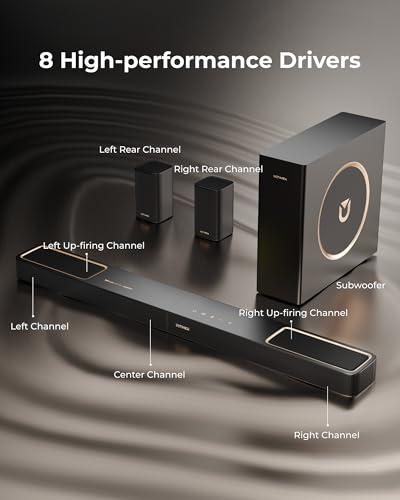
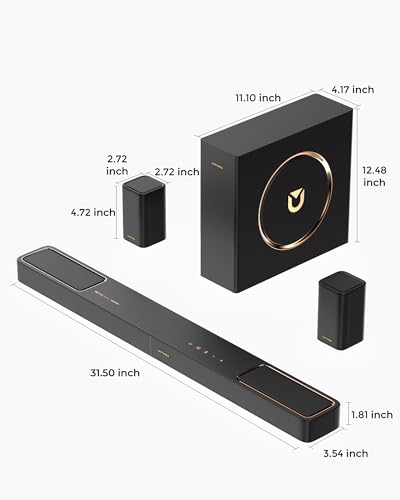
What immediately impressed me about the Skywave F40 is its commitment to true surround sound at this price point. Many budget soundbars use virtual surround processing – essentially audio trickery that simulates surround effects through a single bar. The Ultimea takes a different approach with a genuine 5.1.2 channel setup that includes dedicated rear speakers and a proper subwoofer.
The system uses what Ultimea calls SurroundX technology, which coordinates audio between the main soundbar, two rear speakers, and the subwoofer to create a 360-degree sound field. The up-firing drivers feature neodymium magnets and 18-core voice coils – technical specs that might sound like marketing speak, but actually translate to better precision when bouncing those height effects off your ceiling.
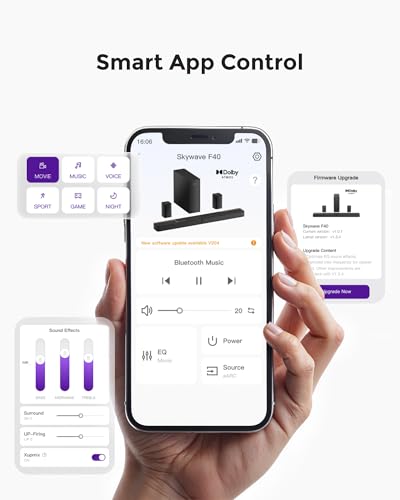
One standout feature is the Xupmix technology, powered by Dolby DAP (Digital Audio Processing). This essentially takes regular stereo content and intelligently redistributes it across all the speakers to create a more immersive experience. I've found this particularly useful when watching older TV shows or streaming music – content that wasn't originally mixed for surround sound suddenly feels more spacious and engaging.
In my testing, the Ultimea Skywave F40 consistently punched above its weight class. Movie dialogue comes through crisp and clear, even during action sequences where explosions and music might otherwise drown out the conversation. The rear speakers genuinely add to the immersion – you'll hear approaching footsteps or ambient sound effects coming from behind you, which many budget systems simply can't deliver.
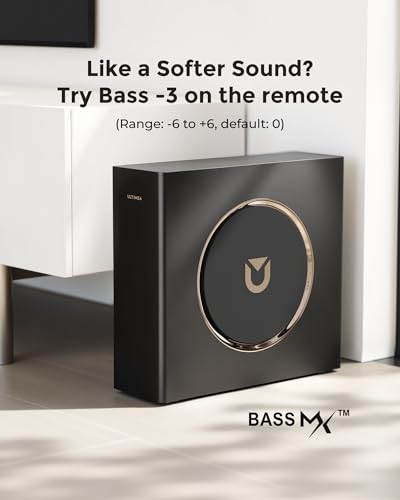
The BassMX technology helps the relatively compact 6.5-inch subwoofer deliver more impact than you'd expect. While it won't rattle your windows like a massive home theater system, it provides enough low-end punch to make action movies exciting and music sound full-bodied. The frequency response extends down to around 40-45Hz, which captures most of the important bass content in movies and music.
Where the system shows its budget roots is in overall power output. The 460-watt total output is adequate for small to medium rooms (I'd say up to about 250 square feet), but larger spaces might leave you wanting more volume and impact. However, the system maintains excellent clarity even at lower volumes, making it ideal for apartment living or late-night viewing when you can't crank up the volume.
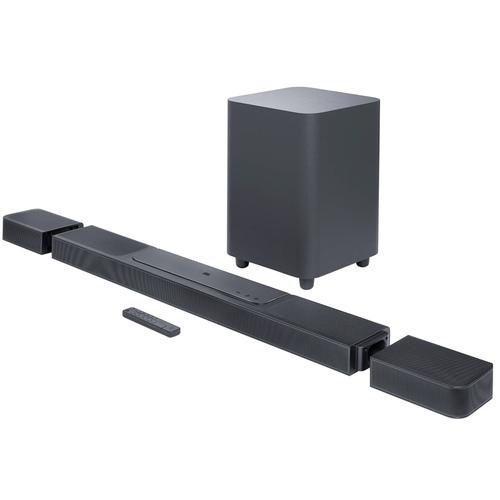
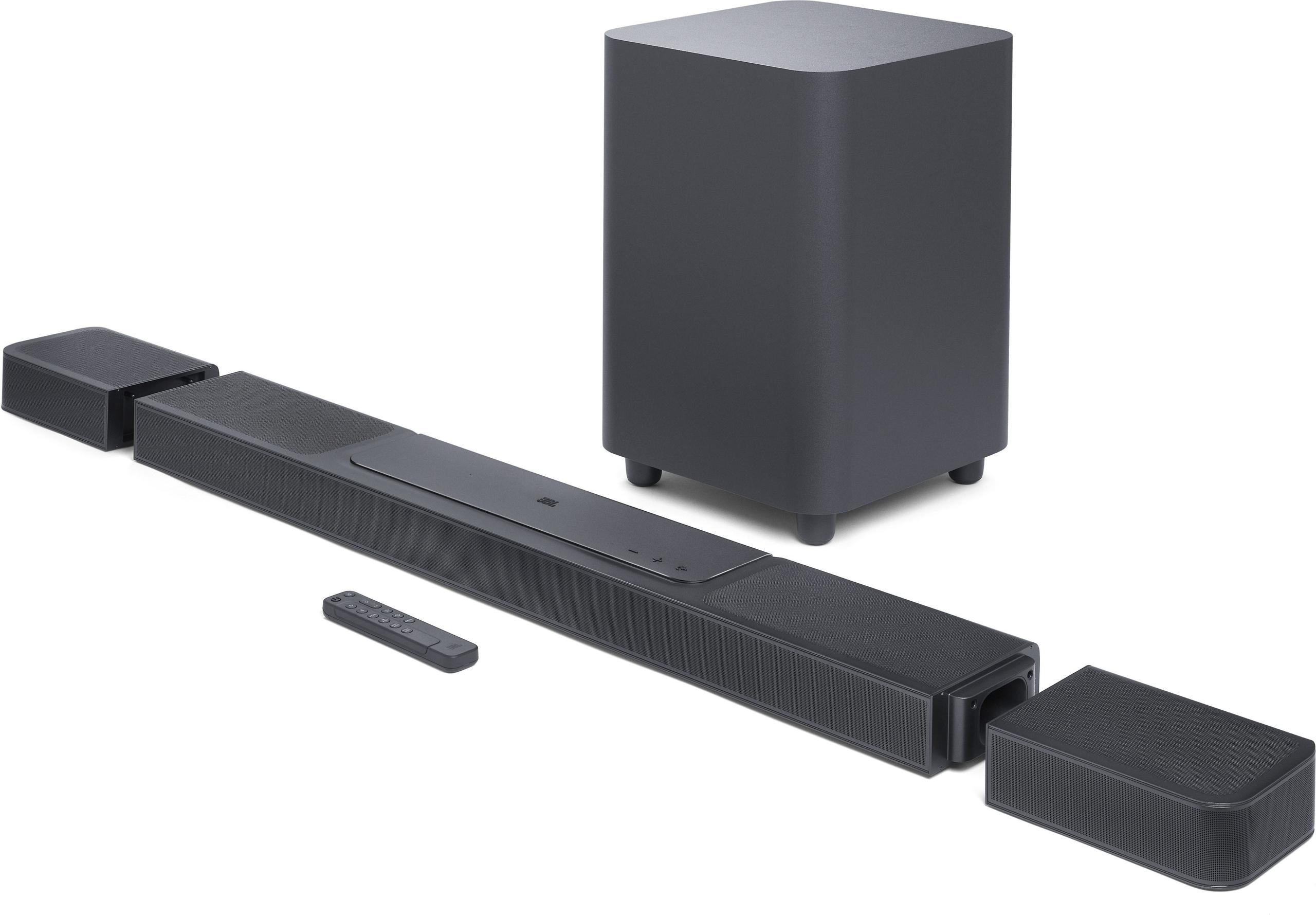
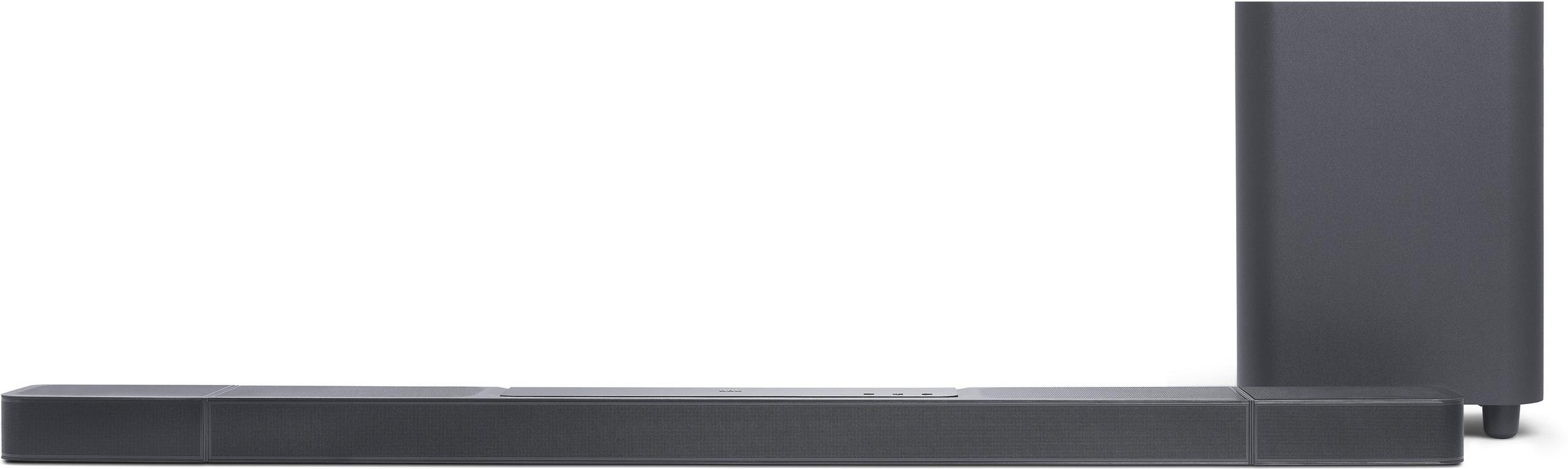
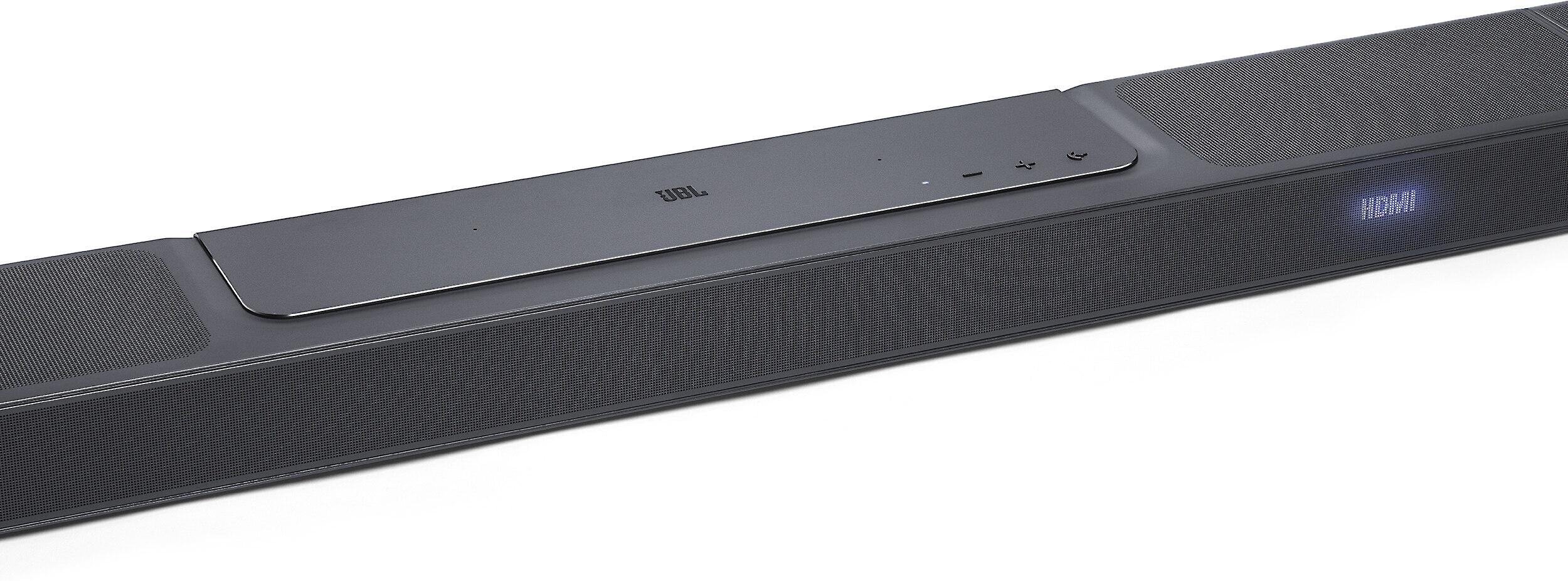
The JBL Bar 1300X, released in 2023, represents JBL's flagship approach to soundbar design. At the time of writing, it costs roughly four times more than the Ultimea, but those extra dollars buy you some genuinely innovative features and significantly more audio horsepower.
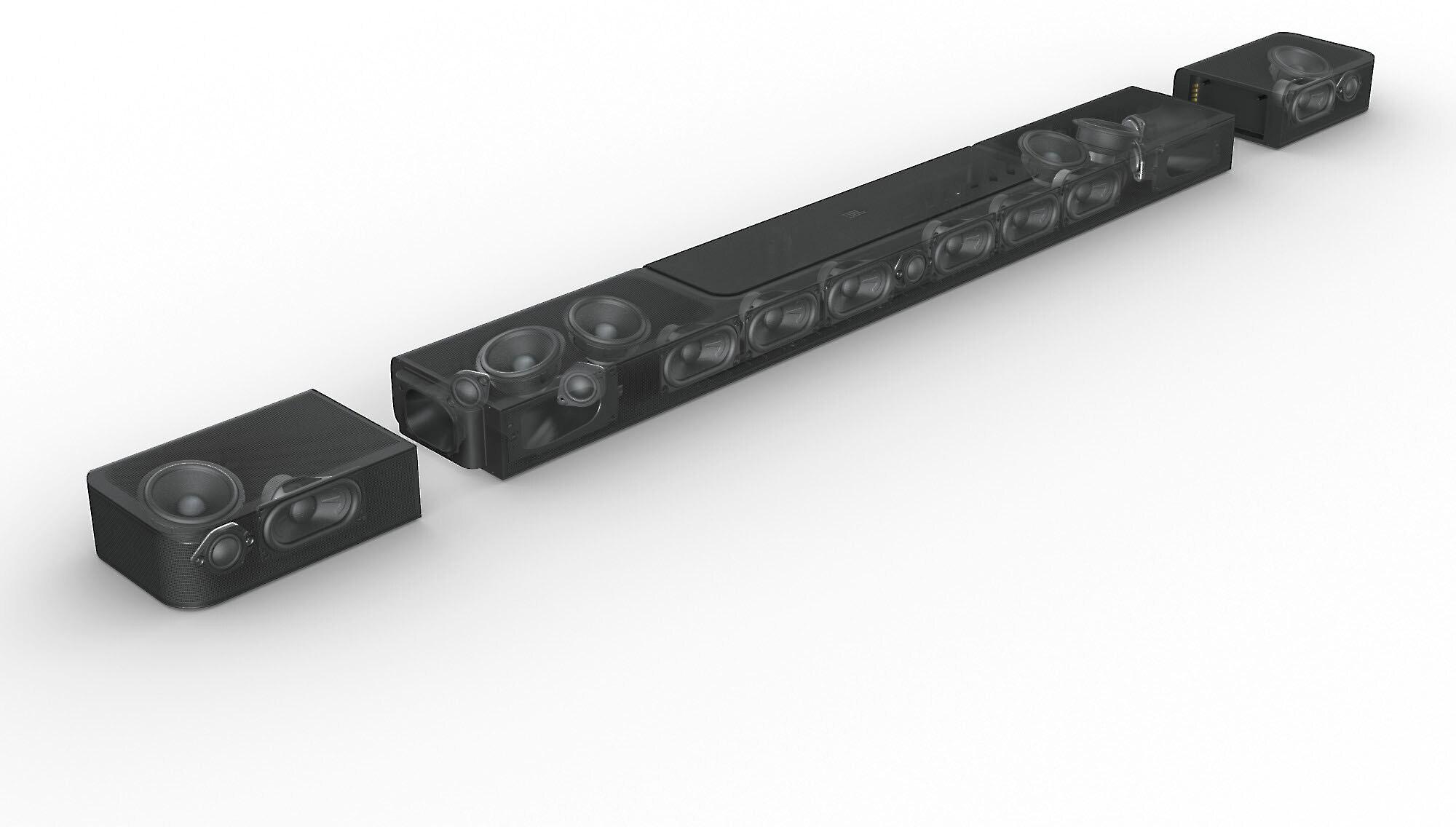
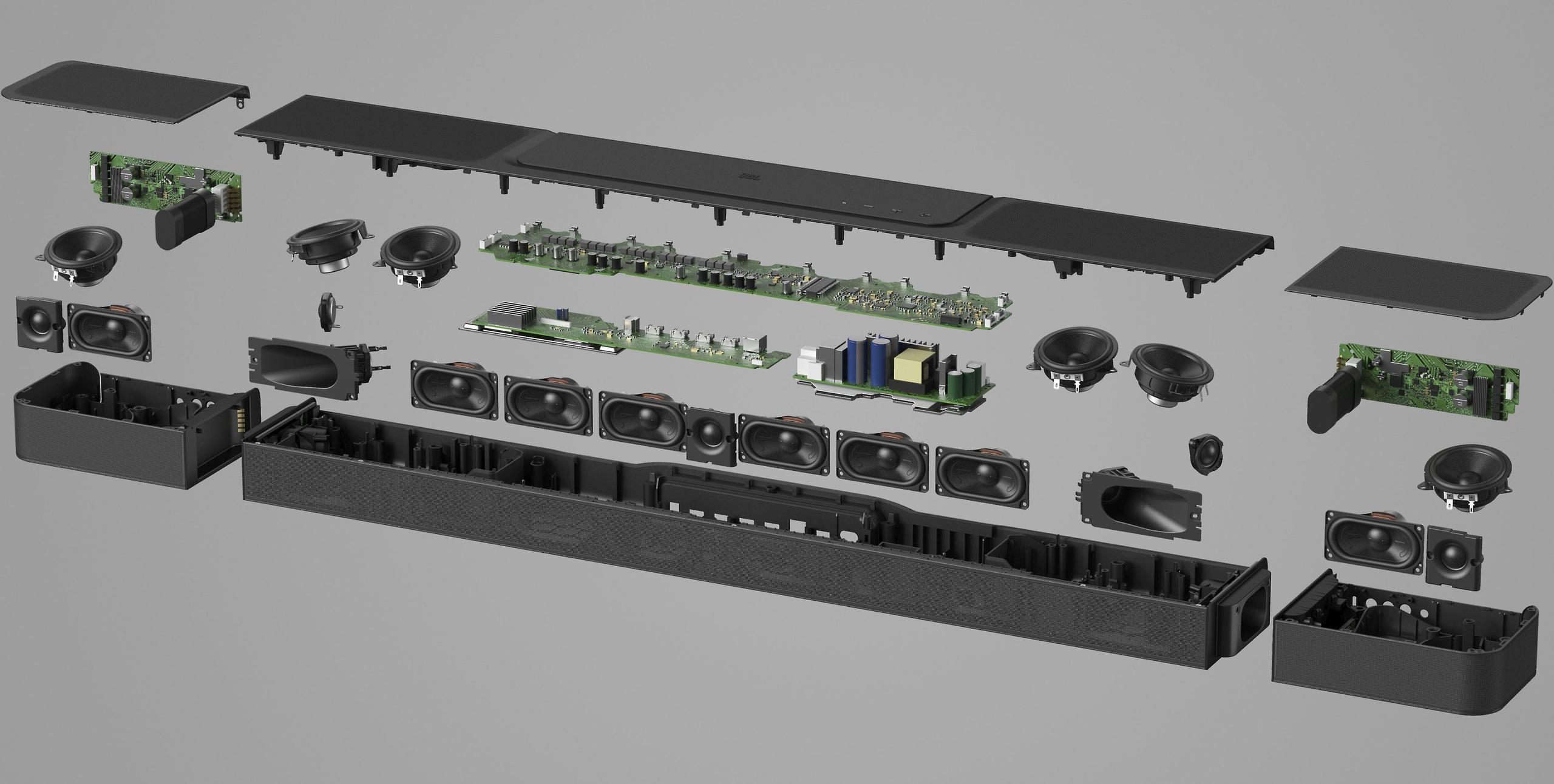
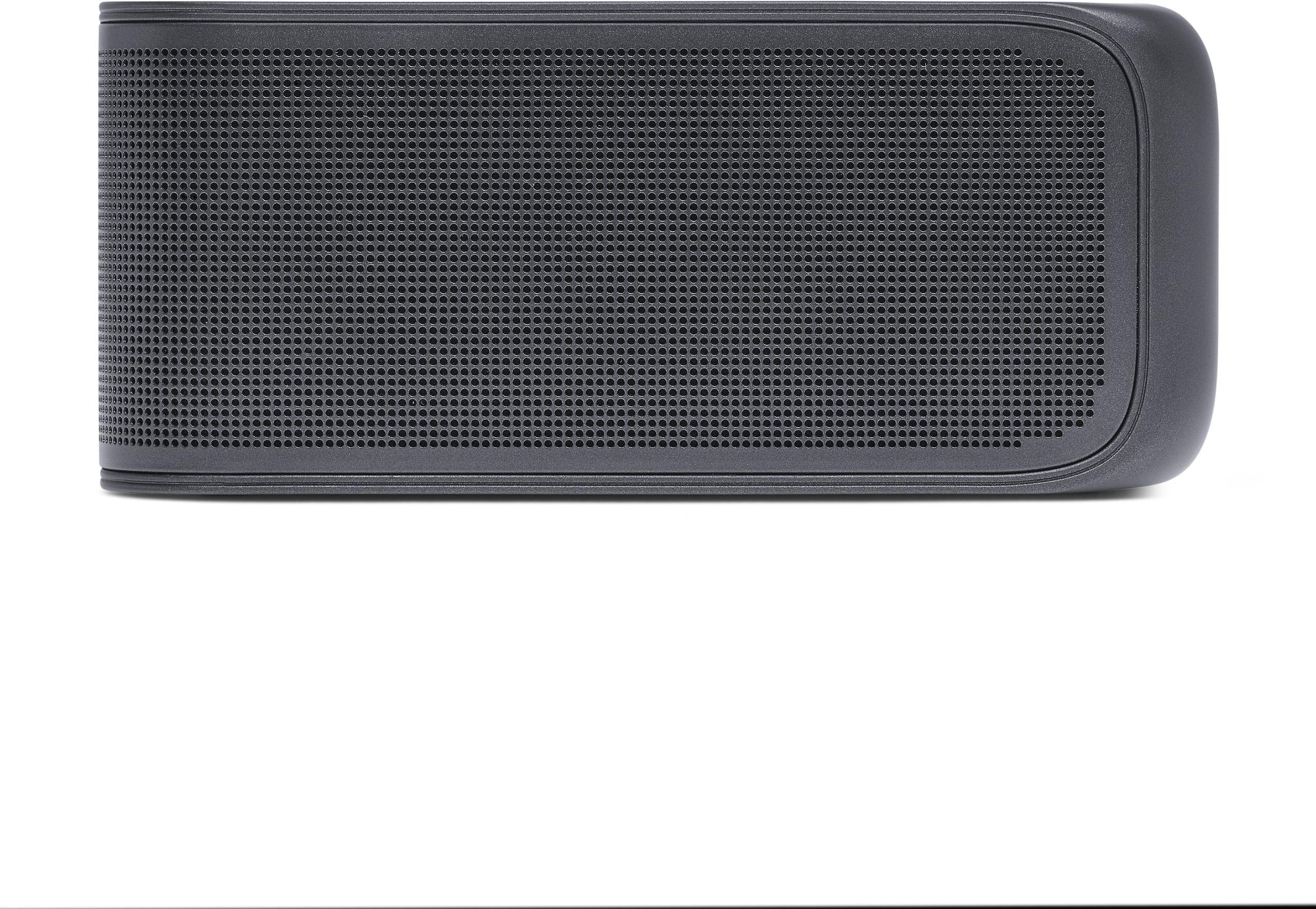
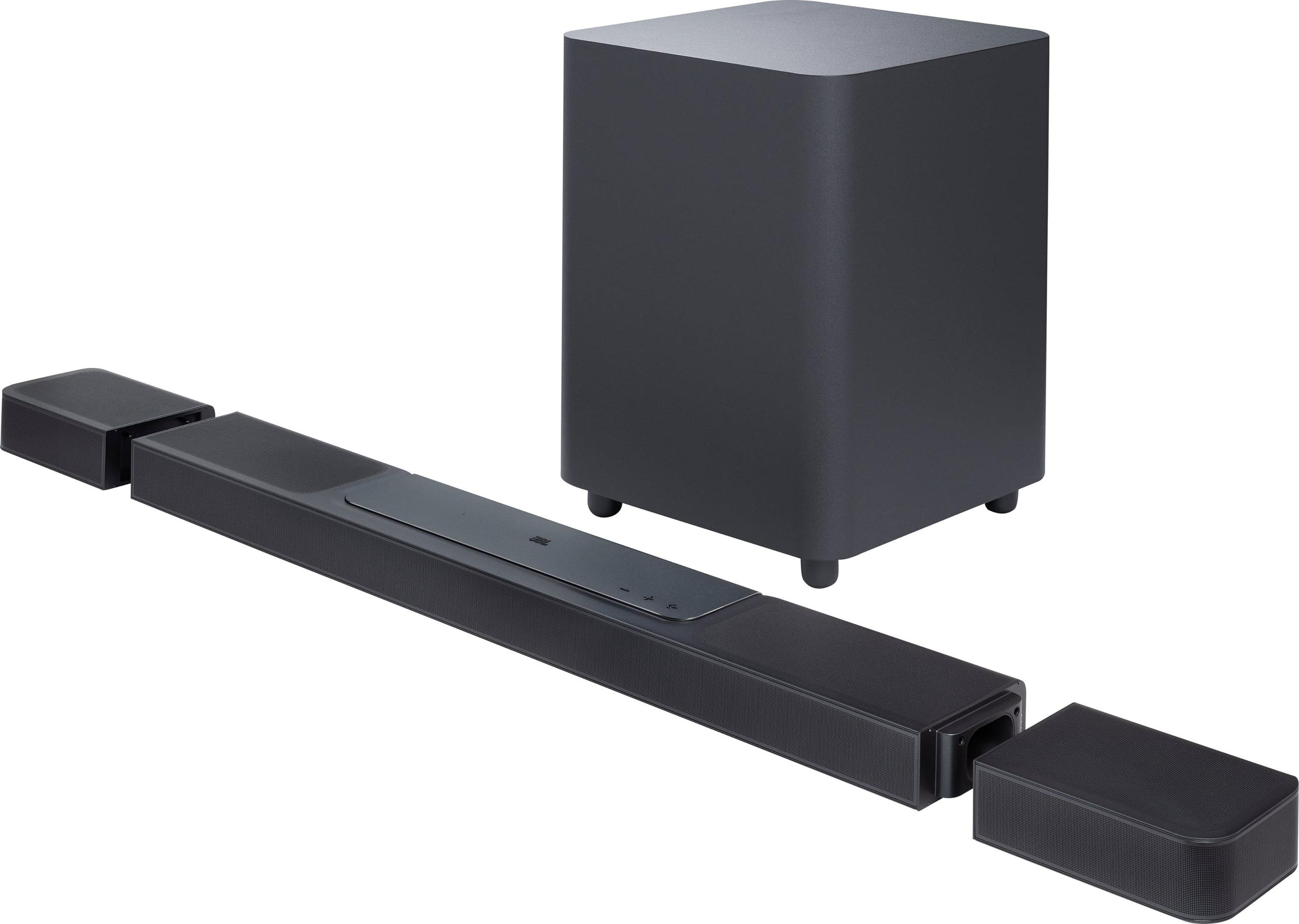
What sets the JBL Bar 1300X apart is its detachable surround speaker concept. The main soundbar is actually three separate pieces that can be configured in different ways. The outer sections can be removed and used as wireless, battery-powered surround speakers that last up to 12 hours on a single charge. When you're not watching movies, these speakers can function as portable Bluetooth speakers around your home or even outdoors.
This modular approach solves one of the biggest challenges with soundbar systems – speaker placement flexibility. Traditional soundbars force you to position surround speakers wherever the cables reach, but the JBL's wireless design lets you place them optimally for your room layout, then easily move or store them when not needed.
The system's 11.1.4 channel configuration includes six up-firing drivers – four in the main bar and two in the detachable surrounds. This creates much more precise height effects than simpler systems. MultiBeam technology uses sophisticated digital signal processing to analyze incoming audio and direct different frequencies to specific drivers, creating a wider and more immersive soundstage than traditional beamforming approaches.
The JBL Bar 1300X includes PureVoice dialogue enhancement, which uses AI processing to identify and boost speech frequencies while reducing background noise. In my experience, this feature is particularly valuable when watching content with heavy accents or mumbled dialogue – something that's become increasingly common in modern films and TV shows.
The 12-inch wireless subwoofer delivers genuine room-shaking bass that extends down to 33Hz. This deeper frequency response means you'll feel the impact of explosions, thunder, and deep musical notes in a way that smaller systems simply can't match. The subwoofer's wireless design also means you can position it wherever it sounds best in your room, rather than being limited by cable length.
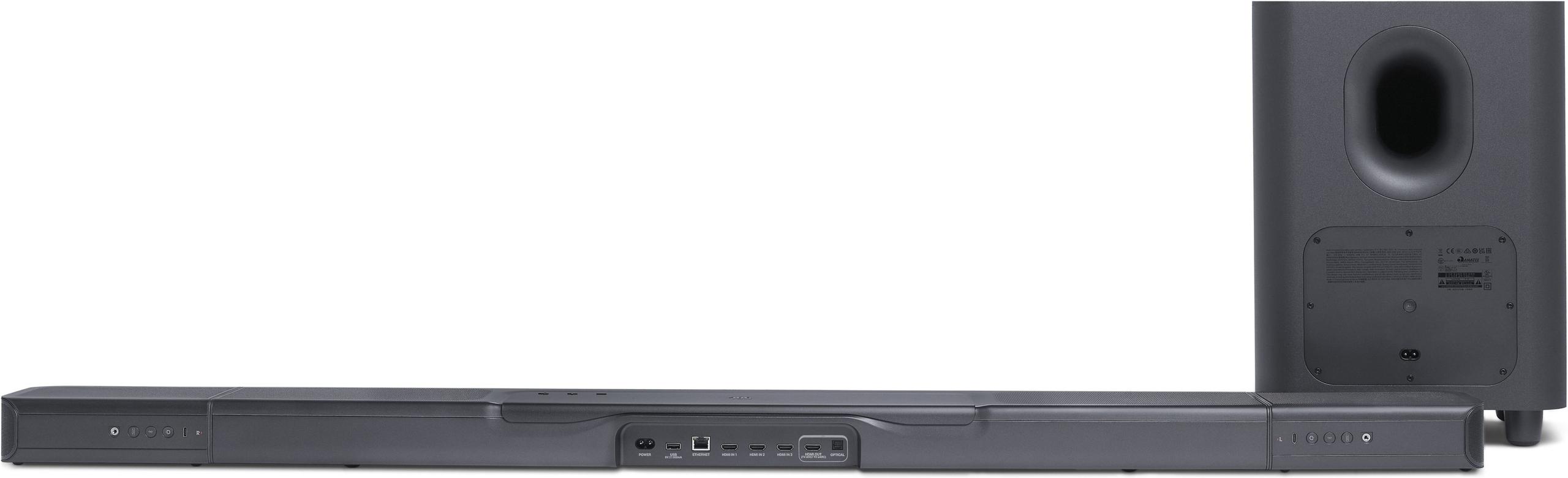
Smart home integration is where the JBL really shines. Built-in Wi-Fi supports AirPlay 2, Chromecast, and Alexa Multi-Room Music, giving you access to over 300 streaming services. The system automatically updates its firmware over Wi-Fi, ensuring you always have the latest features and compatibility improvements.
Having tested both systems extensively, the differences in audio quality are immediately apparent. The Ultimea Skywave F40 delivers remarkably clear and well-balanced sound for its price point. Dialogue reproduction is excellent, and the surround effects are convincing enough to create genuine immersion during movies. The system particularly excels with streaming content from Netflix, Disney+, and other services that provide Dolby Atmos soundtracks.
The JBL Bar 1300X operates on another level entirely. The additional drivers and more sophisticated processing create a noticeably wider soundstage with better channel separation. Height effects are more precise and believable, particularly in scenes with overhead aircraft or weather effects. Music reproduction is also superior, with better instrumental separation and a more spacious presentation.
However, there's an interesting caveat that emerged during my testing: despite the JBL's higher power rating of 1170 watts versus the Ultimea's 460 watts, the actual volume difference isn't as dramatic as those numbers suggest. The JBL does get louder, but it also shows more compression and distortion at maximum volume levels, which somewhat limits its advantage in very large rooms.
This is where the price difference becomes most apparent. The Ultimea's 6.5-inch subwoofer provides adequate bass for most content, but it's clearly working within physical limitations. Action movies have impact, but you won't feel that visceral rumble that makes explosions truly exciting.
The JBL's 12-inch subwoofer, powered by a dedicated 300-watt amplifier, delivers transformational bass performance. The deeper frequency extension means you'll experience low-frequency effects that the Ultimea simply can't reproduce. This becomes particularly noticeable with content like Dune, Mad Max: Fury Road, or any Marvel movie where the bass track is as important as the visual effects.
Both systems handle gaming well, but with different strengths. The Ultimea Skywave F40 provides excellent clarity for competitive gaming where hearing footsteps and directional audio cues is crucial. The lower latency and clear channel separation help with spatial awareness in first-person shooters and battle royale games.
The JBL Bar 1300X creates a more cinematic gaming experience that's better suited to single-player adventure games and RPGs. The enhanced bass response makes explosions and environmental effects more impactful, while the superior channel separation helps create a more immersive world.
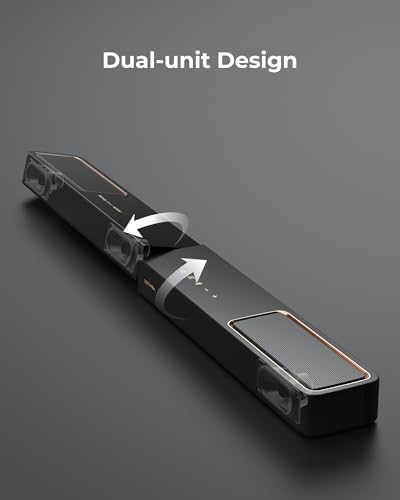
The Ultimea Skywave F40 wins decisively in the simplicity category. Everything connects with clearly labeled cables, the two-piece soundbar assembles easily with a secure twist-lock mechanism, and the whole system can be up and running in under 30 minutes. The rear speakers connect to the subwoofer rather than running separate cables back to the soundbar, which significantly reduces cable clutter.
The JBL Bar 1300X requires more patience and planning. The detachable speakers need to be paired initially, the room calibration process takes several minutes, and optimizing the wireless subwoofer placement requires some experimentation. However, the end result is worth the extra effort – the system sounds noticeably better when properly configured.
One aspect that's often overlooked in reviews is how these systems perform during everyday use, not just demo material. The Ultimea excels at making regular TV content sound better without being overwhelming. News programs, sitcoms, and casual viewing all benefit from the improved clarity and fuller sound, but the system doesn't constantly remind you of its presence.
The JBL is more of a statement system. Its superior performance is most apparent with high-quality source material, but this can make lower-quality content (like compressed streaming video or older TV shows) sound somewhat processed or artificial. The trade-off for its advanced processing capabilities is that it's more finicky about source quality.
You're looking for your first serious upgrade from TV speakers and want to experience real Dolby Atmos without a massive investment. The Ultimea is ideal for apartments, smaller homes, or secondary viewing areas where excellent sound quality matters more than maximum output levels.
I'd specifically recommend the Ultimea for college students, young professionals starting their first serious home theater, or anyone who wants to test the Dolby Atmos waters without committing to a premium system. It's also perfect for bedrooms or home offices where space is limited but audio quality still matters.
The system particularly shines for streaming content consumption – Netflix, Disney+, and other services provide plenty of Dolby Atmos content that sounds genuinely immersive through this system. If 80% of your viewing involves streaming services rather than premium Blu-ray discs, the Ultimea delivers most of the experience at a fraction of the cost.
You have a larger room that demands serious audio horsepower, or you're building a dedicated home theater where audio quality is as important as video quality. The JBL makes sense for serious movie enthusiasts who regularly watch premium content with high-quality soundtracks.
The detachable speaker functionality adds genuine value if you frequently entertain guests, have a complex living space, or want the flexibility to reconfigure your setup for different occasions. I've found this feature particularly useful for hosting movie nights – you can optimize the speakers for the seating arrangement, then easily store them afterward.
The JBL is also the better choice for music enthusiasts who want their soundbar to double as a high-quality music system. The superior drivers, more sophisticated processing, and extensive streaming capabilities make it competitive with dedicated music speakers in its price range.
After living with both systems for several months, my conclusion is that both represent excellent value propositions for their respective price points, but they serve fundamentally different needs.
The Ultimea Skywave F40 proves that you don't need to spend a fortune to experience genuine Dolby Atmos immersion. It's not perfect – the bass response is adequate rather than exciting, and the power output limits its effectiveness in very large rooms. However, for the majority of users in typical living rooms, it delivers remarkably satisfying performance that rivals systems costing two or three times more.
The JBL Bar 1300X justifies its premium pricing through genuine innovation and superior performance. The detachable speaker design solves real-world problems, the audio quality is measurably better, and the feature set is comprehensive enough to serve as the centerpiece of a modern smart home entertainment system.
My personal recommendation comes down to your specific situation and priorities. If you're budget-conscious or new to home theater, the Ultimea provides an excellent introduction to what good sound can do for your entertainment experience. If you're serious about audio quality and have the budget for a premium system, the JBL delivers features and performance that will satisfy demanding users for years to come.
Both systems represent significant improvements over built-in TV speakers and basic soundbars, but they approach the challenge from completely different philosophies. Your choice should depend on your room size, budget, and how important audio quality is to your overall entertainment experience.
| Ultimea Skywave F40 Dolby Atmos Soundbar System | JBL Bar 1300X Soundbar with Wireless Subwoofer |
|---|---|
| Channel Configuration - Determines true surround sound capability | |
| 5.1.2 channels with dedicated rear speakers | 11.1.4 channels with detachable wireless surrounds |
| Total Power Output - Affects maximum volume and room size capability | |
| 460W (adequate for rooms up to 250 sq ft) | 1170W (suitable for larger rooms, but shows compression at max volume) |
| Subwoofer Design - Impacts bass quality and placement flexibility | |
| 6.5" wired subwoofer with BassMX technology | 12" wireless subwoofer with 300W dedicated amplification |
| Frequency Response - Shows how deep the bass extends and high-frequency clarity | |
| 40-45Hz to 20kHz (good bass extension for the price) | 33Hz to 20kHz (deeper bass for more visceral impact) |
| Up-firing Drivers - Critical for Dolby Atmos height effects | |
| 2 drivers with neodymium magnets in main bar | 6 drivers total (4 in bar, 2 in detachable surrounds) |
| Surround Speaker Design - Affects placement flexibility and convenience | |
| Wired rear speakers (fixed placement) | Battery-powered detachable speakers (12-hour battery, portable use) |
| Connectivity Options - Determines device compatibility and streaming capabilities | |
| HDMI eARC, Optical, USB, Bluetooth 5.4 | 3x HDMI inputs + eARC, Wi-Fi, AirPlay 2, Chromecast, Alexa MRM |
| Smart Features - Impact on ease of use and customization | |
| 10-band EQ with 121 presets, basic app control | Room calibration, PureVoice dialogue enhancement, JBL One app |
| Setup Complexity - Affects initial installation and daily use | |
| Simple plug-and-play with twist-lock soundbar assembly | More complex setup requiring speaker pairing and room calibration |
| Best Use Case - Who should consider each system | |
| Budget-conscious buyers wanting true Dolby Atmos in smaller rooms | Premium buyers with larger rooms who value flexibility and advanced features |
The JBL Bar 1300X delivers superior Dolby Atmos performance with its 11.1.4 channel configuration and six up-firing drivers compared to the Ultimea Skywave F40's 5.1.2 setup with two up-firing drivers. However, the Ultimea Skywave F40 still provides genuine Dolby Atmos immersion at a much lower price point, making it excellent value for smaller rooms.
The primary difference is that the Ultimea Skywave F40 is a budget-focused true surround system with wired components, while the JBL Bar 1300X is a premium system featuring detachable wireless surround speakers that can also function as portable Bluetooth speakers.
The Ultimea Skywave F40 is ideal for small to medium rooms up to 250 square feet, offering excellent clarity at lower volumes perfect for apartments. The JBL Bar 1300X may be overpowered for very small spaces but offers more flexibility with its wireless components.
Yes, both include subwoofers but with different designs. The Ultimea Skywave F40 has a 6.5-inch wired subwoofer, while the JBL Bar 1300X features a larger 12-inch wireless subwoofer that provides deeper bass extension and more placement flexibility.
The Ultimea Skywave F40 offers simpler plug-and-play installation with clearly labeled cables and can be running in under 30 minutes. The JBL Bar 1300X requires more setup time for speaker pairing, room calibration, and wireless configuration but delivers better optimized performance.
No, the Ultimea Skywave F40 uses wired rear speakers that connect to the subwoofer to reduce cable runs. The JBL Bar 1300X features battery-powered detachable surround speakers with 12-hour battery life that can be placed anywhere wirelessly.
The JBL Bar 1300X provides more extensive connectivity with three HDMI inputs plus eARC, Wi-Fi streaming with AirPlay 2 and Chromecast, and access to over 300 streaming services. The Ultimea Skywave F40 covers the basics with HDMI eARC, optical, USB, and Bluetooth 5.4.
The JBL Bar 1300X excels for music with superior channel separation, wireless streaming capabilities, and detachable speakers that can be used throughout your home. The Ultimea Skywave F40 provides good music performance but is more focused on home theater applications.
Both handle gaming well but differently. The Ultimea Skywave F40 offers excellent clarity for competitive gaming where hearing directional audio cues matters. The JBL Bar 1300X creates a more cinematic gaming experience with enhanced bass and immersive surround effects.
The Ultimea Skywave F40 is optimized for rooms up to 250 square feet, while the JBL Bar 1300X can handle larger spaces effectively, though both systems maintain good performance in appropriately sized rooms.
The Ultimea Skywave F40 provides exceptional value by delivering genuine Dolby Atmos performance with real surround speakers at a budget price point. The JBL Bar 1300X justifies its premium cost through advanced features, superior audio quality, and innovative design flexibility.
Yes, both systems significantly improve dialogue clarity over TV speakers. The Ultimea Skywave F40 uses dedicated center channel processing for clear speech, while the JBL Bar 1300X includes advanced PureVoice dialogue enhancement technology that uses AI processing to boost speech frequencies.
We've done our best to create useful and informative comparisons to help you decide what product to buy. Our research uses advanced automated methods to create this comparison and perfection is not possible - please contact us for corrections or questions. These are the sites we've researched in the creation of this article: the-gadgeteer.com - youtube.com - ultimea.com - manuals.plus - youtube.com - ultimea.com - youtube.com - youtube.com - youtube.com - youtube.com - eu.ultimea.com - support.ultimea.com - techradar.com - jbl.com - audioadvice.com - youtube.com - rtings.com - jbl.com - greentoe.com - harmanaudio.com - youtube.com - mm.jbl.com - jbl.com

Privacy Policy
Terms and Conditions - Affiliate Policy
Home Security
© Copyright 2008-2026.
11816 Inwood Rd #1211, Dallas, TX 75244