













If you've been living with your TV's built-in speakers, you already know the struggle. Dialogue gets lost in action scenes, explosions sound like distant firecrackers, and forget about feeling any real bass. That's where soundbars come in—they're the most popular solution for upgrading your TV's audio without the complexity of a full surround sound system.
But here's where things get interesting: not all soundbars are created equal, and the Ultimea Skywave F40 and Sonos Ray represent two completely different philosophies on how to solve your audio problems. One gives you everything upfront for immediate surround sound satisfaction, while the other offers premium quality that can grow into something spectacular over time.
Before diving into these specific models, let's talk about what you're actually shopping for. Soundbars essentially replace your TV's wimpy speakers with something that can actually fill your room with sound. But the category has evolved way beyond simple stereo upgrades.
At the basic level, you have stereo soundbars that just make dialogue clearer and add some bass. Then there are surround sound systems that try to create the movie theater experience with multiple speakers positioned around your room. At the top end, you'll find Dolby Atmos systems that add height channels—imagine helicopters flying overhead or rain falling from above, and you'll actually hear it coming from those directions.
The key considerations when shopping include how many channels you're getting (more channels generally mean more immersive sound), what connectivity options are available (HDMI eARC is the gold standard for modern TVs), whether you need a separate subwoofer for deep bass, and how the system integrates with your existing devices and smart home setup.
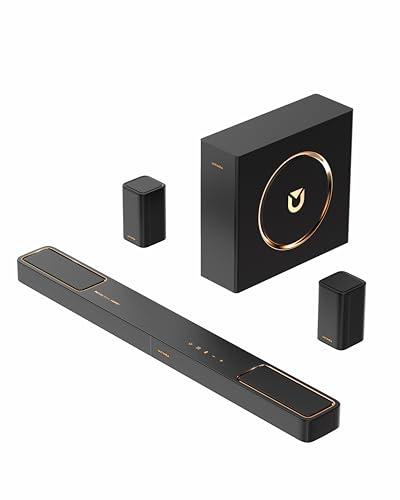
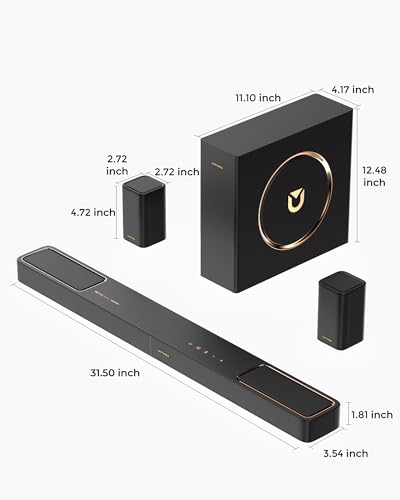
The Ultimea Skywave F40, released in 2024, represents the "give you everything now" approach. It's a complete 5.1.2 channel Dolby Atmos system that includes a main soundbar, wireless subwoofer, and two rear surround speakers. At the time of writing, you can get this entire setup for less than what many competitors charge for just their soundbar alone.
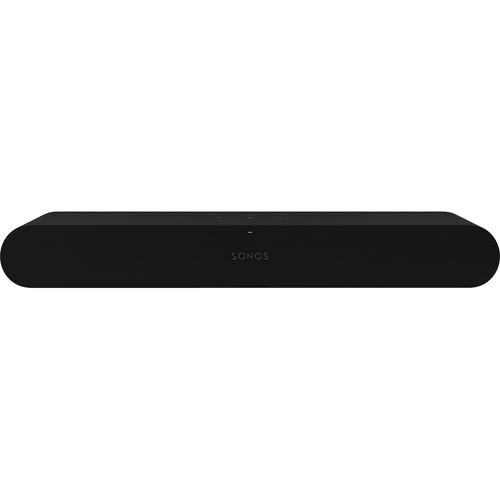
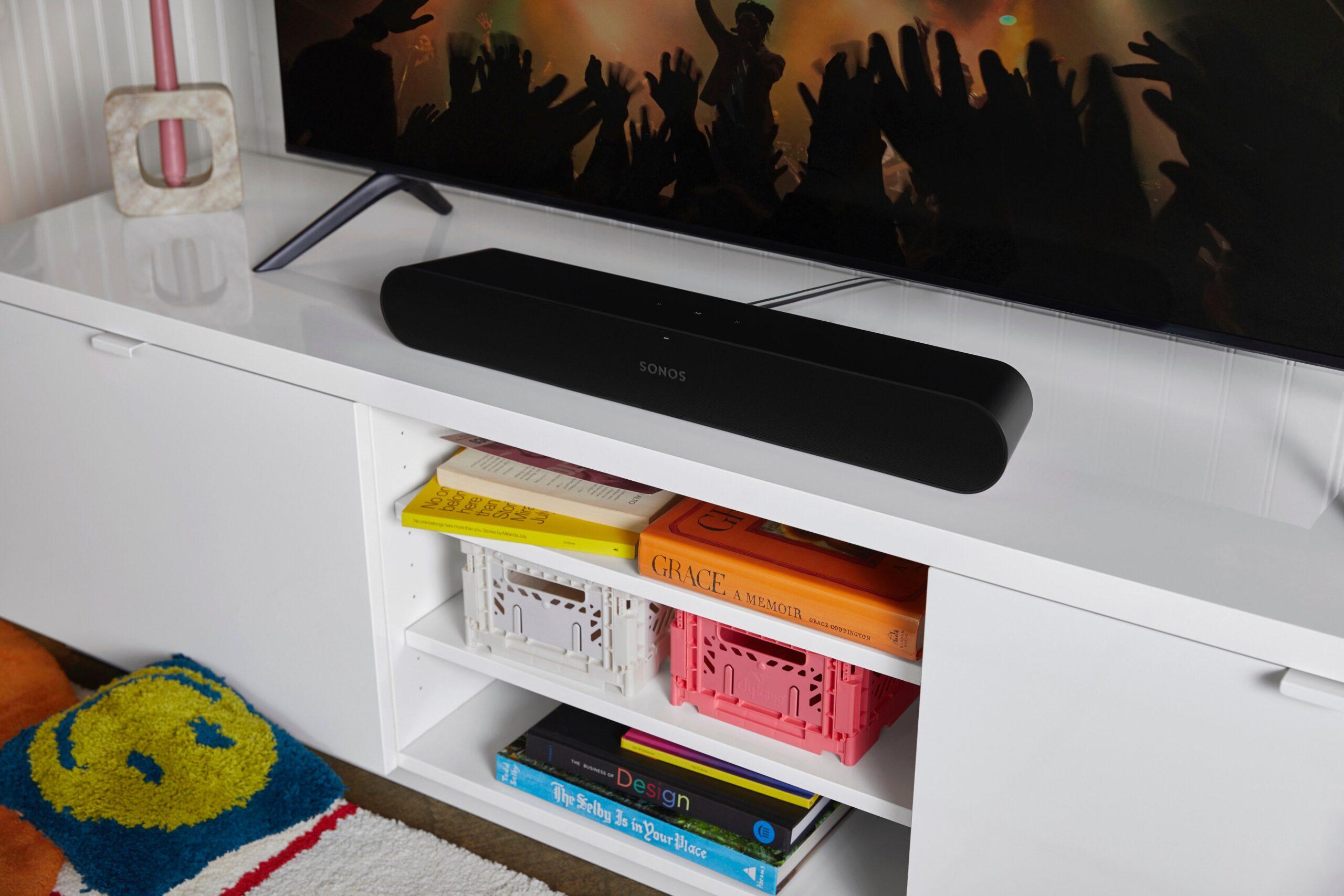
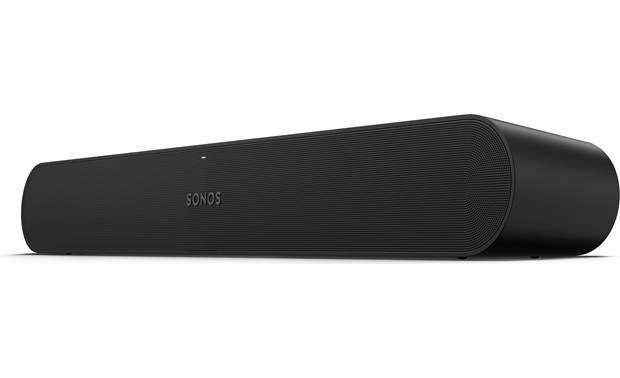
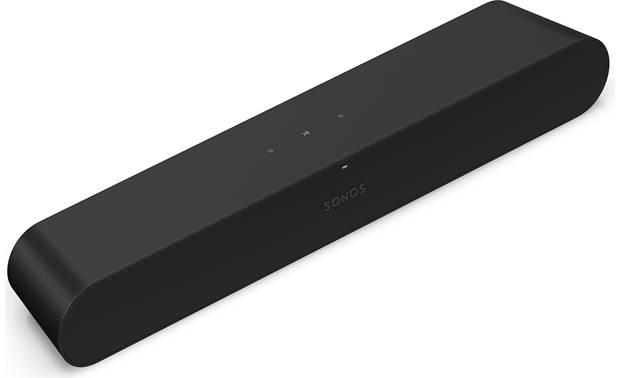
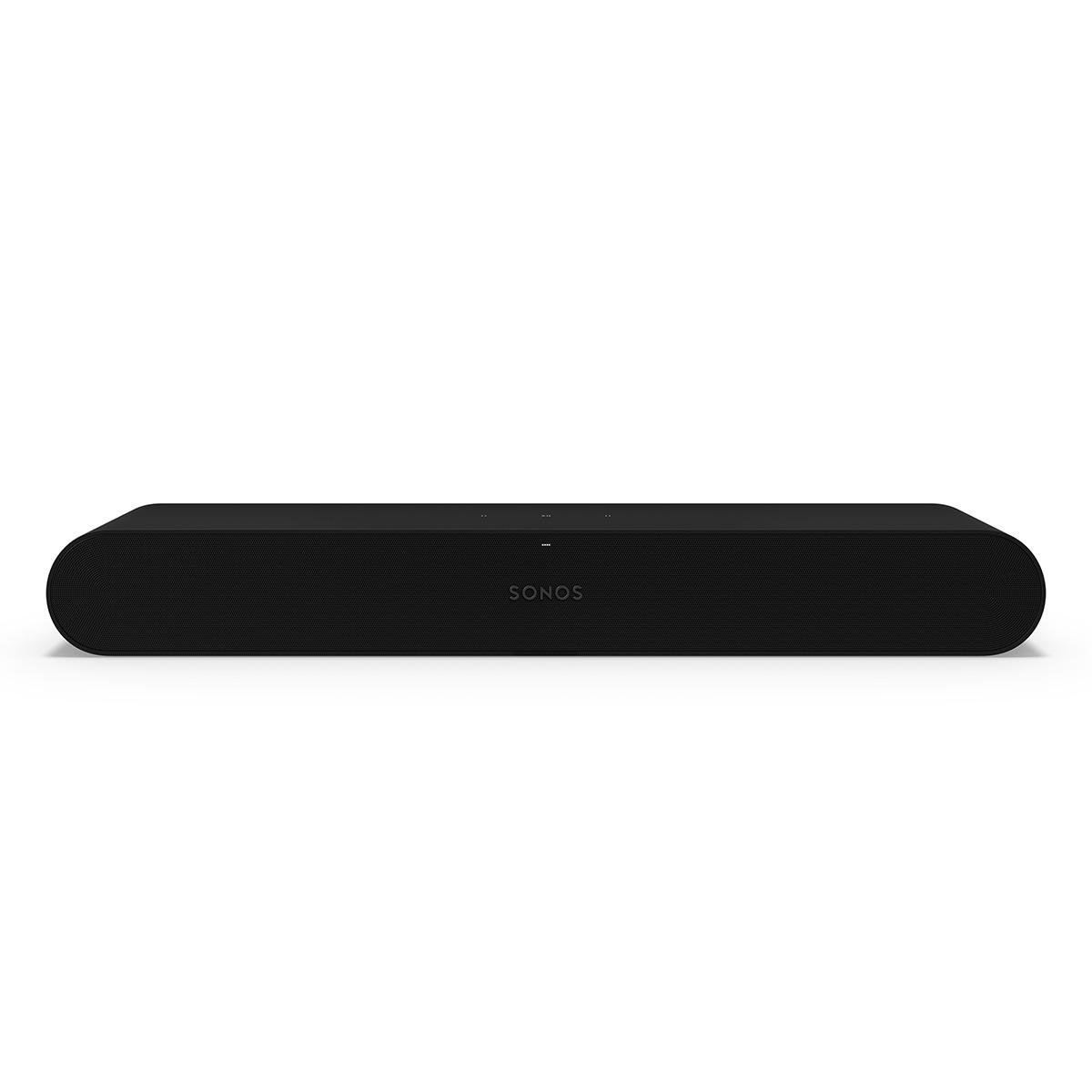
The Sonos Ray, launched in 2022, takes the opposite approach. It's a premium 2.0 channel stereo soundbar that focuses on doing fewer things exceptionally well. No subwoofer, no surround speakers, no Dolby Atmos—just excellent stereo sound with the option to build a more complex system over time by adding other Sonos products.
Understanding these fundamental differences is crucial because they're not really competing for the same buyer, despite both being soundbars in a similar price range initially.
Let's break down what those channel numbers actually mean, because this is where the Ultimea Skywave F40 really shines. When you see "5.1.2," that translates to five main channels (left, center, right, and two surrounds), one subwoofer channel (the ".1"), and two height channels (the ".2").
The Skywave F40 achieves this through a clever design that splits the main soundbar into two sections connected by a twist-lock mechanism. Inside, you get dedicated up-firing drivers that bounce sound off your ceiling to create those overhead effects. These aren't just regular speakers pointed upward—they use neodymium magnets and specialized voice coils designed specifically for height channel reproduction.
What this means in practice is genuinely immersive audio. When you're watching a Marvel movie and Iron Man flies overhead, you'll hear the jet engines above you. Gaming becomes more tactical because you can actually locate enemies by sound in three-dimensional space. The rear speakers, which connect to each other with a single wire to reduce cable clutter, provide true surround positioning that makes you feel like you're in the middle of the action.
The Sonos Ray, meanwhile, works with just two channels but employs some sophisticated audio processing to create a wider soundstage than you'd expect. It uses custom waveguides—basically shaped tunnels that direct sound waves—to project audio from wall to wall. The bass reflex system, which includes carefully tuned ports, helps the compact drivers produce more low-end than they should be able to on paper.
Here's something that might surprise you: the most important job of any soundbar isn't creating cinematic explosions—it's making sure you can actually understand what people are saying on screen. Modern TV shows and movies often mix dialogue at levels that get lost when compressed through tiny TV speakers.
The Sonos Ray absolutely excels here. Sonos has fine-tuned the frequency response specifically for vocal reproduction, and it shows. The Ray includes dedicated Speech Enhancement that boosts voice frequencies while leaving the rest of the audio intact. During my testing, dialogue just popped out of the mix in a way that made everything more engaging, even at moderate volumes.
The Ultimea Skywave F40 handles dialogue well too, but it takes a different approach. Instead of having a dedicated center channel speaker (which is typical in surround systems), it uses digital signal processing to create a virtual center channel. This works effectively, and the system includes a specific Voice mode that emphasizes dialogue frequencies. However, the Sonos has a slight edge in pure vocal clarity due to its specialized tuning.
Both systems include night modes that compress dynamic range—meaning they reduce the difference between quiet dialogue and loud explosions—so you can watch late-night movies without waking the neighbors.
Bass reproduction is where the fundamental differences between these systems become most apparent. The Ultimea Skywave F40 includes a wireless subwoofer that extends frequency response down to around 38-40Hz. That might not mean much to you, but it's the difference between feeling explosions in your chest versus just hearing them.
The subwoofer uses BassMX technology, which is Ultimea's proprietary bass enhancement system that optimizes low-frequency output based on the content you're watching. The result is impactful, room-filling bass that brings movie soundtracks to life and makes music sound fuller and more engaging.
The Sonos Ray takes a different approach entirely. Its compact design includes two bass ports and a bass reflex system that tries to maximize low-end output from the internal drivers. While this produces surprisingly good bass for such a small unit, it simply can't compete with a dedicated subwoofer for deep, powerful low frequencies.
However, and this is important, the Ray's bass is more controlled and musical. If you're primarily listening to vocal music, podcasts, or dialogue-heavy content, the Ray's balanced approach might actually be preferable. It doesn't try to overwhelm you with artificial bass boost—instead, it presents a natural, well-balanced sound signature.
The Ultimea Skywave F40 covers all the connectivity bases you'd expect from a modern soundbar. HDMI eARC (enhanced Audio Return Channel) provides the highest quality connection to your TV and supports advanced audio formats like Dolby Atmos with full bandwidth. This connection also enables CEC control, meaning you can control both your TV and soundbar with a single remote.
The system also includes optical input for older TVs, USB connectivity for direct music playback, and Bluetooth 5.4 for wireless streaming from your phone or tablet. The newer Bluetooth standard provides better range, more stable connections, and lower latency—important for gaming or watching videos on mobile devices.
The Sonos Ray takes a more selective approach to connectivity, and this is where some buyers might feel limited. There's no HDMI connection at all, which means you're limited to optical audio from your TV. This works fine for most content, but you won't get the highest quality audio formats or the convenience features that come with HDMI eARC.
More surprisingly, there's no Bluetooth connectivity either. Sonos has deliberately omitted this feature to focus on Wi-Fi-based streaming, which provides higher quality audio and integrates better with the Sonos ecosystem. You can stream via AirPlay 2 if you have Apple devices, and the Wi-Fi connection enables multi-room audio and integration with voice assistants.
Both systems offer smartphone app control, but they serve different purposes. The Ultimea Skywave F40's app focuses on customization, offering a 10-band equalizer with 121 preset matrices. You can fine-tune the sound for different types of content or compensate for your room's acoustics manually.
The Sonos Ray includes Trueplay tuning, but only for iOS devices. This feature uses your iPhone's microphone to measure your room's acoustics and automatically adjusts the soundbar's output to compensate for factors like wall reflections and furniture placement. It's genuinely effective and can make a noticeable difference in sound quality, though Android users miss out on this feature.
The Sonos app also provides access to dozens of streaming services directly, turning the Ray into a music streaming hub even when your TV is off. This ecosystem approach means you can start music on your phone and seamlessly hand it off to the soundbar, or synchronize audio across multiple Sonos speakers throughout your home.
For movie watching, the Ultimea Skywave F40 delivers a genuinely cinematic experience that punches well above its price point. The surround channels provide spatial awareness that makes action scenes more engaging, while the height channels add that extra dimension that makes Dolby Atmos content shine. The system's 460W of total power means it can fill larger rooms without strain, maintaining clarity even at high volumes.
Gaming is where the Skywave F40 really excels. The 5.1.2 configuration provides tactical advantages in competitive games where positional audio matters. You can hear enemies approaching from behind or above, and the low latency of HDMI eARC ensures audio stays perfectly synced with fast-paced action.
The Sonos Ray shines in different scenarios. For daily TV watching—news, sitcoms, talk shows—its vocal clarity makes everything more enjoyable. Music streaming is exceptional, with a balanced presentation that works well across different genres. The compact design makes it perfect for smaller spaces where a full surround system might be overwhelming.
Here's where the long-term value proposition gets interesting. The Ultimea Skywave F40 is essentially a complete system. You could potentially add more Ultimea products in other rooms, but there's no real upgrade path from here—you get everything upfront.
The Sonos Ray is designed as an entry point into a larger ecosystem. Over time, you can add a Sonos Sub for deep bass, Sonos One speakers for rear surround channels, or even upgrade to a Sonos Arc for full Dolby Atmos. Each addition integrates seamlessly, and you can mix and match products based on your space and budget.
At the time of writing, building a full Sonos surround system costs significantly more than the complete Ultimea package, but you're also getting premium build quality, longer software support, and features like multi-room audio that extend beyond just TV watching.
If you're setting up a dedicated home theater space, the Ultimea Skywave F40 provides more immediate satisfaction. The complete surround experience transforms movie watching, and the system includes all the cables and mounting hardware you need for a clean installation. The recommended room size of 20-25 square meters aligns well with typical living rooms and smaller dedicated theater spaces.
For apartments or spaces where aesthetics matter more than ultimate performance, the Sonos Ray's understated design and premium build quality might be more appropriate. Its excellent dialogue clarity makes it perfect for binge-watching series, and the lack of a separate subwoofer means no concerns about bothering neighbors.
The decision between these systems ultimately comes down to what you value most and how you plan to use your soundbar.
Choose the Ultimea Skywave F40 if you want the best possible performance for your money right now. It's perfect for movie enthusiasts, gamers, or anyone who wants to feel completely immersed in their entertainment. The complete surround sound experience at this price point is genuinely impressive, and you won't need to make any additional purchases to get the full effect.
The Sonos Ray makes more sense if you value premium build quality, exceptional dialogue clarity, and the flexibility to build a more sophisticated system over time. It's ideal for people who primarily watch TV shows and news, listen to a lot of music, or want to integrate their soundbar into a broader smart home ecosystem.
Consider your space too. Larger rooms will benefit more from the Skywave F40's power and surround capabilities, while smaller spaces might be better served by the Ray's refined, controlled sound signature.
Both represent excellent value in their own ways—the Ultimea delivers maximum features per dollar, while the Sonos provides premium quality and future expandability. Neither choice will leave you disappointed, but understanding these fundamental differences ensures you'll pick the one that best fits your specific needs and expectations.
The soundbar market has evolved tremendously in recent years, and both of these products showcase different ways manufacturers are approaching the challenge of delivering better TV audio. Whether you choose immediate surround sound gratification or premium stereo with room to grow, you're getting a significant upgrade over whatever your TV is currently producing.
| Ultimea Skywave F40 Dolby Atmos Soundbar System | Sonos Ray Soundbar |
|---|---|
| Audio Configuration - Determines immersion level and surround sound capability | |
| True 5.1.2 channel Dolby Atmos with height effects | 2.0 channel stereo (no surround sound or Atmos) |
| What's Included - Shows immediate value and setup complexity | |
| Complete system: soundbar, wireless subwoofer, 2 rear speakers | Soundbar only (subwoofer and surrounds sold separately) |
| Power Output - Affects maximum volume and room-filling capability | |
| 460W total system power | Not specified (compact driver array, lower output) |
| HDMI Connectivity - Essential for modern TV integration and highest audio quality | |
| HDMI eARC with CEC control support | No HDMI (optical only) |
| Bluetooth Support - Important for wireless music streaming from phones/tablets | |
| Bluetooth 5.4 with low latency | No Bluetooth connectivity |
| Dolby Atmos Support - Creates 3D overhead audio effects in compatible content | |
| Full Dolby Atmos with dedicated up-firing drivers | No Dolby Atmos support |
| Subwoofer - Provides deep bass for movies and music | |
| Wireless subwoofer included (extends to ~38Hz) | No subwoofer (compact bass reflex system only) |
| Smart Features - Advanced customization and room optimization | |
| 10-band EQ with 121 presets, multiple sound modes | Trueplay room correction (iOS only), basic bass/treble |
| Ecosystem Integration - Ability to expand and connect with other devices | |
| Basic app control, limited ecosystem | Full Sonos ecosystem with multi-room audio and streaming |
| Ideal Room Size - Performance optimization for different spaces | |
| Medium to large rooms (20-25 m²) | Small to medium rooms |
| Best Use Cases - Where each product excels most | |
| Movies, gaming, immersive entertainment | Dialogue-heavy content, music streaming, compact spaces |
| Upgrade Path - Future expansion possibilities | |
| Complete system (limited expansion options) | Entry point to premium Sonos ecosystem |
The Ultimea Skywave F40 is significantly better for movies and home theater use. It provides true 5.1.2 channel Dolby Atmos surround sound with overhead audio effects, rear speakers for spatial positioning, and a wireless subwoofer for deep bass. The Sonos Ray only offers stereo sound without surround effects or Dolby Atmos support, making it less immersive for cinematic content.
The Ultimea Skywave F40 includes a wireless subwoofer in the box, providing immediate deep bass performance. The Sonos Ray does not include a subwoofer and relies on its internal bass reflex system for low-end sound. You can add a Sonos Sub separately, but it's sold as an expensive add-on component.
The Sonos Ray has superior dialogue clarity due to its specialized Speech Enhancement feature and tuned frequency response for vocal reproduction. While the Ultimea Skywave F40 also provides good dialogue clarity with its Voice mode, the Sonos Ray's focus on stereo performance gives it an edge for speech-heavy content like news and TV shows.
The Ultimea Skywave F40 offers comprehensive connectivity including HDMI eARC, optical input, USB, and Bluetooth 5.4. The Sonos Ray has more limited connectivity with only optical input and Wi-Fi streaming - notably lacking both HDMI and Bluetooth connections, which may limit compatibility with some devices.
The Ultimea Skywave F40 is much better for gaming due to its 5.1.2 surround sound configuration that provides positional audio awareness. The HDMI eARC connection ensures low latency, and the height channels help locate enemies and environmental sounds in 3D space. The Sonos Ray lacks surround sound capabilities that enhance gaming experiences.
The Sonos Ray is designed for expansion within the Sonos ecosystem - you can add surrounds, a subwoofer, or create multi-room audio setups. The Ultimea Skywave F40 comes as a complete system with limited expansion options, though you get everything needed for surround sound immediately.
The Sonos Ray is better suited for small apartments due to its compact design, controlled bass output that won't disturb neighbors, and excellent dialogue clarity at lower volumes. The Ultimea Skywave F40 is designed for larger spaces and includes a subwoofer that may be too powerful for apartment living.
The Ultimea Skywave F40 supports Bluetooth 5.4 for wireless music streaming from phones and tablets. The Sonos Ray doesn't have Bluetooth but offers Wi-Fi streaming with AirPlay 2 support and direct access to music streaming services through the Sonos app, providing higher quality audio than Bluetooth.
The Ultimea Skywave F40 offers better immediate value, providing a complete 5.1.2 surround sound system with subwoofer and rear speakers at a competitive price. The Sonos Ray costs less initially but requires expensive add-ons to match the surround sound capabilities of the Ultimea system.
The Ultimea Skywave F40 delivers immersive surround sound with powerful bass and 3D audio effects, ideal for movies and gaming. The Sonos Ray focuses on refined stereo sound quality with exceptional vocal clarity and balanced audio reproduction, better suited for music and dialogue-heavy content.
Both soundbars are relatively easy to set up. The Ultimea Skywave F40 requires positioning the rear speakers and connecting the subwoofer but includes all necessary cables. The Sonos Ray offers simpler physical setup as a single unit but requires the Sonos app for initial configuration and lacks the plug-and-play HDMI connectivity of the Ultimea system.
The Ultimea Skywave F40 supports CEC control through its HDMI eARC connection, allowing control with your TV remote. The Sonos Ray can respond to TV remote volume commands through its optical connection but doesn't offer the same level of integration due to the lack of HDMI connectivity.
We've done our best to create useful and informative comparisons to help you decide what product to buy. Our research uses advanced automated methods to create this comparison and perfection is not possible - please contact us for corrections or questions. These are the sites we've researched in the creation of this article: the-gadgeteer.com - youtube.com - ultimea.com - manuals.plus - youtube.com - ultimea.com - youtube.com - youtube.com - youtube.com - youtube.com - eu.ultimea.com - support.ultimea.com - techradar.com - soundandvision.com - youtube.com - appleinsider.com - youtube.com - sonos.com - cnet.com - howtogeek.com - pcrichard.com - en.community.sonos.com - epicsystems.tech - en.community.sonos.com - cepro.com - videoandaudiocenter.com

Privacy Policy
Terms and Conditions - Affiliate Policy
Home Security
© Copyright 2008-2026.
11816 Inwood Rd #1211, Dallas, TX 75244