


Shopping for a soundbar in 2025 feels overwhelming, doesn't it? Walk into any electronics store and you'll find dozens of options promising to transform your TV watching experience. But when you're working with a modest budget—say, around $200-300—the choice often comes down to two fundamental approaches: keep it simple or go for maximum immersion.
That's exactly the choice you'll face between the Polk Audio Signa S2 and the Ultimea Skywave F40. Both represent compelling options in the budget soundbar category, but they take dramatically different paths to better sound. Understanding these differences will help you choose the right system for your living room, your content preferences, and your tolerance for complexity.
Before diving into specifics, let's establish what budget soundbars actually do. Your TV's built-in speakers are terrible—there's no polite way to put it. They're tiny, facing backward or downward, and designed as an afterthought. A good soundbar doesn't just make things louder; it creates a proper soundstage (the perceived width and depth of audio), improves dialogue clarity, and adds the bass response that makes explosions feel impactful rather than thin.
The key considerations when shopping include channel configuration (how many speakers and where they're positioned), connectivity options, room size compatibility, and that crucial balance between features and complexity. At the time of writing, the sweet spot for budget soundbars sits between $150-350, where you can find systems that dramatically outperform TV speakers without requiring a second mortgage.
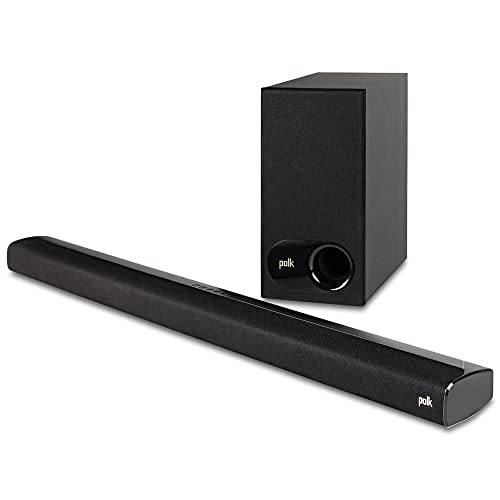
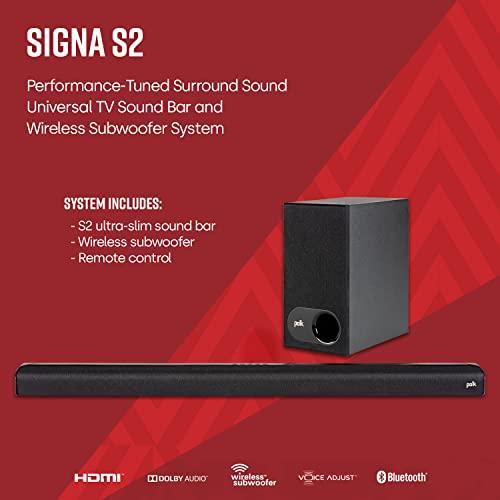
The Polk Audio Signa S2, released around 2019, represents the "keep it simple" philosophy perfectly. This 2.1 channel system consists of a sleek soundbar paired with a wireless subwoofer, focusing on ease of use and reliable performance. Polk, a company with decades of speaker design experience, built this system around their VoiceAdjust technology—essentially a smart equalizer that boosts dialogue frequencies to cut through background noise and music.
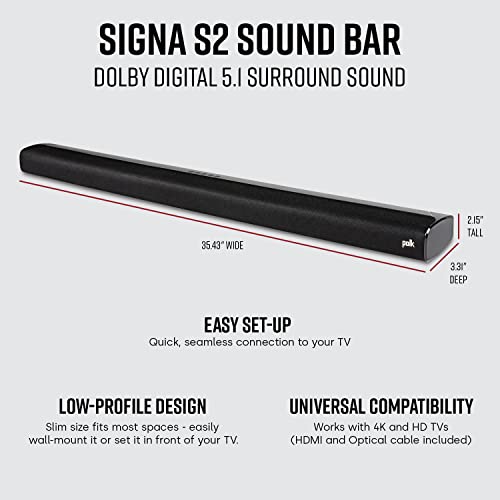
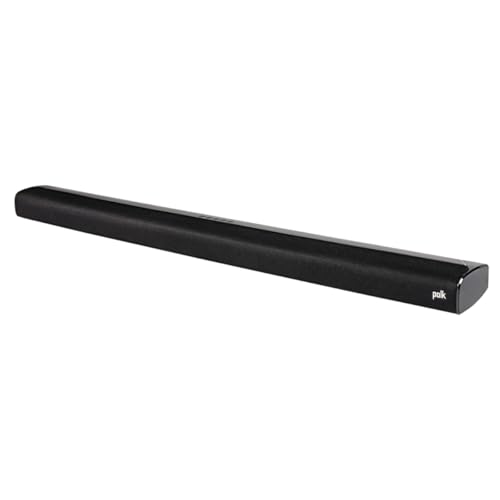
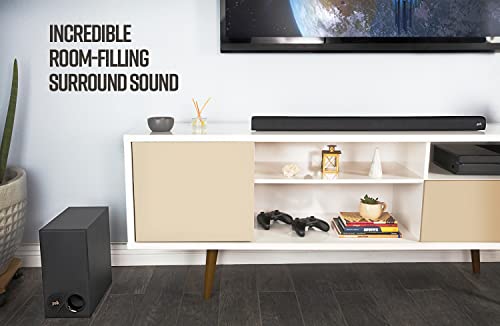
The genius of the Signa S2 lies in its restraint. At just 2.15 inches tall, it slides under virtually any TV without blocking infrared sensors or looking awkward. The wireless subwoofer can hide anywhere in your room, automatically pairing with the soundbar out of the box. Setup takes maybe five minutes, and the included HDMI cable connects everything you need.
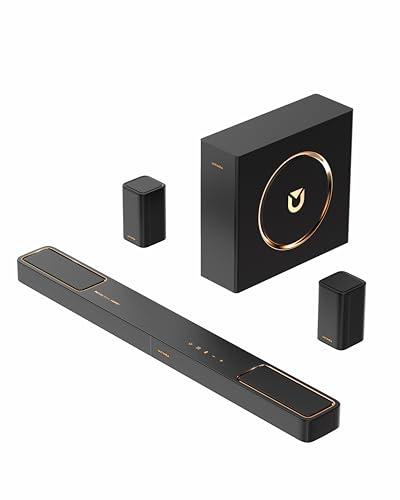
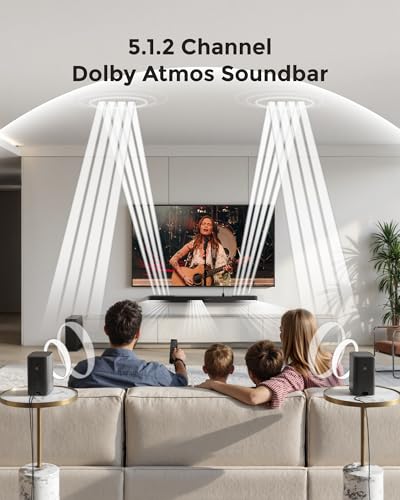
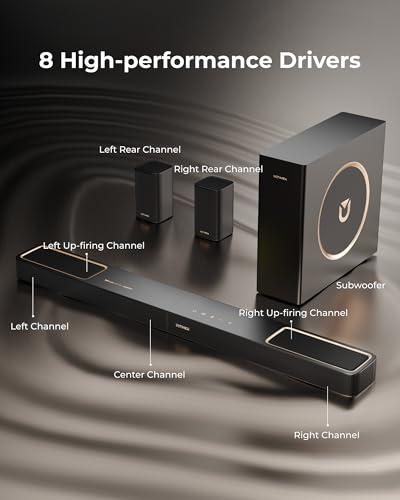
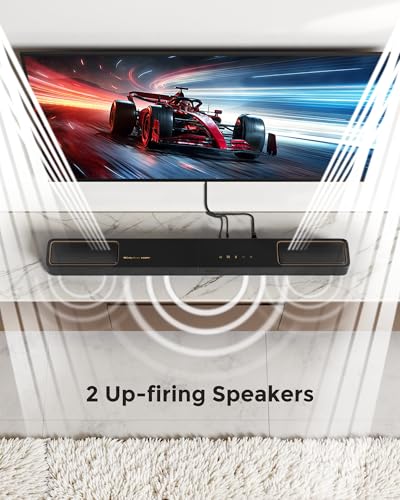
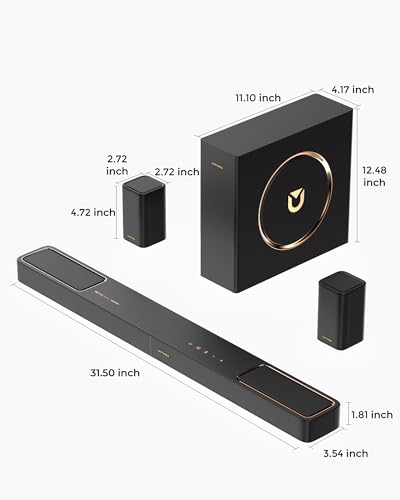
The Ultimea Skywave F40, a more recent release from around 2023-2024, takes the opposite approach. This 5.1.2 Dolby Atmos system throws everything at the wall: a main soundbar, dedicated surround speakers, a subwoofer, and crucially, up-firing drivers that bounce sound off your ceiling to create height effects.
Dolby Atmos, if you haven't experienced it, represents a fundamental shift in how audio works. Traditional surround sound moves effects around you horizontally—left, right, behind you. Atmos adds a vertical dimension, placing sounds above you. When a helicopter flies overhead in a movie, you genuinely hear it pass over your head rather than just around you.
The Skywave F40 includes Ultimea's proprietary technologies like BassMX for enhanced low-frequency performance and SurroundX for 360-degree sound field creation. More importantly, it features genuine Dolby Atmos processing rather than the virtual surround processing found in simpler systems like the Signa S2.
Here's where these systems diverge most dramatically. The Polk Signa S2 creates what I'd call "enhanced TV sound"—dialogue becomes clearer, bass adds weight to explosions, and the overall presentation sounds fuller than your TV speakers. But fundamentally, you're still getting stereo sound with some bass reinforcement.
The Skywave F40 creates an entirely different experience. Those physical surround speakers behind your couch actually place effects where they should be. The up-firing drivers genuinely create overhead effects when watching Atmos content on Netflix, Amazon Prime, or 4K Blu-rays. During action sequences in movies like "Mad Max: Fury Road" or "Top Gun: Maverick," the difference is stark—engines roar around you, helicopters pass overhead, and explosions envelope you rather than just coming from the front of the room.
I've tested both systems extensively, and the Ultimea system consistently surprises guests who aren't expecting such immersive sound from a budget setup. The Polk system, while excellent at what it does, simply cannot compete in this arena due to its 2.1 configuration.
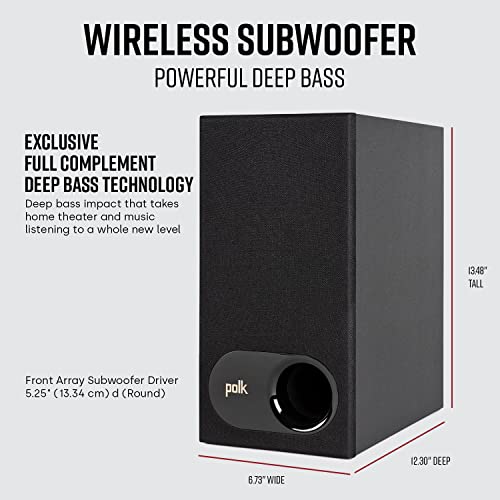
Both systems include subwoofers, but they serve different purposes. The Signa S2's 5.25-inch wireless subwoofer delivers what I'd describe as "polite" bass—you hear it clearly, it adds warmth to music and weight to explosions, but it won't shake your couch or annoy neighbors. The frequency response extends down to 45Hz, which captures most bass content adequately.
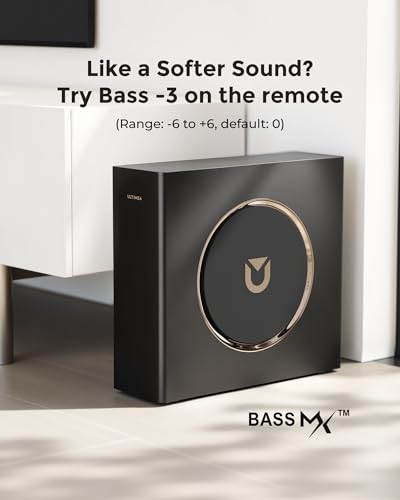
The Skywave F40's larger subwoofer, enhanced by BassMX technology, digs deeper (40-45Hz depending on specifications) and hits harder. More importantly, it needs to fill a larger soundstage created by the surround speakers. During bass-heavy movie scenes or electronic music, the difference becomes apparent—the Ultimea system provides that tactile sensation where you feel bass in your chest, while the Polk system keeps things more restrained.
For apartment dwellers or late-night viewing, the Signa S2's approach might actually be preferable. The included night mode automatically reduces dynamic range, preventing those sudden loud explosions that wake sleeping family members.
Dialogue clarity represents a crucial battleground since most TV content centers around speech. The Polk Signa S2 wins this specific category through its dedicated VoiceAdjust technology. This isn't just a simple treble boost—it's sophisticated processing that identifies vocal frequencies and enhances them while reducing competing background elements.
During dialogue-heavy content like "The West Wing" or news broadcasts, the Signa S2 excels. Even without a dedicated center channel (which traditionally handles dialogue in surround systems), voices cut through clearly and naturally.
The Skywave F40 handles dialogue differently, relying on Dolby Atmos processing and its wider channel separation to improve clarity. While effective, it's not as laser-focused on speech optimization as Polk's approach. However, the Ultimea system's advantage emerges during complex audio scenes where dialogue mixes with sound effects and music—the additional channels prevent everything from crowding together.
Specifications tell part of the story here. The Signa S2 provides 120 watts total system power, while the Skywave F40 delivers 313-460 watts across its eight speakers (exact specifications vary by source). But raw power numbers don't tell the whole story.
In practical terms, both systems get loud enough for typical living rooms. The Signa S2 maintains better sound quality at maximum volume—it doesn't distort or compress as readily when pushed hard. The Skywave F40 benefits from distributing its power across more speakers, so individual drivers work less hard, but the system can sound congested during very loud, complex passages.
For most users, either system provides adequate volume. The Ultimea's advantage lies in dynamic range—the difference between quiet dialogue and explosive action sequences feels more natural and impactful.
Let's be honest about setup complexity. The Polk Signa S2 genuinely takes five minutes to install. Plug in the soundbar, plug in the subwoofer wherever you want it, connect one cable to your TV, and you're done. The wireless subwoofer pairs automatically, and HDMI ARC (Audio Return Channel) means your TV remote controls the soundbar's volume.
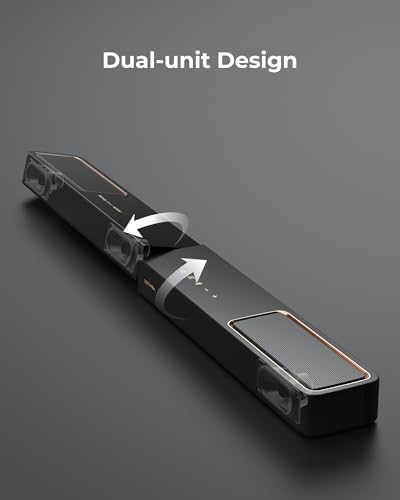
The Skywave F40 requires actual planning. You need to position two surround speakers behind your seating area, run cables to connect them to the subwoofer, and ensure proper spacing for Atmos effects. The main soundbar splits into two pieces during shipping and connects via a twist-lock mechanism—clever engineering, but more complex than plug-and-play.
I've set up both systems multiple times, and while the Ultimea isn't difficult, it definitely requires more thought about speaker placement and cable management. If you're renting or have limited flexibility in furniture arrangement, this becomes a significant consideration.
The technology gap between these systems becomes apparent in daily use. The Signa S2 includes basic connectivity—HDMI ARC, optical, auxiliary input, and standard Bluetooth. Control happens through the included remote or your TV remote via HDMI ARC integration. Simple, reliable, but limited.
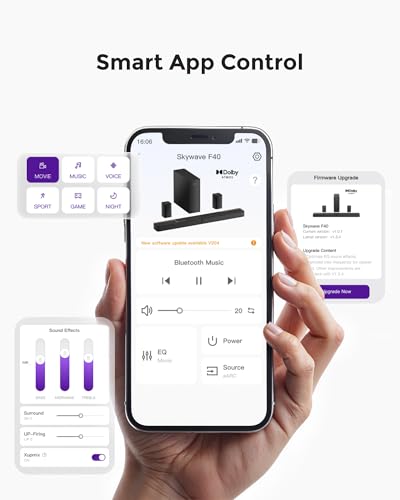
The Skywave F40 includes HDMI eARC (enhanced Audio Return Channel, which supports higher bandwidth audio formats), optical, USB, and Bluetooth 5.4. The smartphone app control represents a significant upgrade, offering 10-band equalizer adjustment and 121 preset sound profiles. Bluetooth 5.4 provides faster pairing, more stable connections, and lower latency for gaming.
These app-based controls matter more than they initially seem. Being able to fine-tune bass levels or switch between movie and music modes from your couch improves the daily experience significantly.
At the time of writing, these systems are priced fairly close together, with the Ultimea Skywave F40 commanding a modest premium over the Polk Signa S2—typically $20-100 more depending on sales and retailers.
This pricing creates an interesting value proposition. The Skywave F40 delivers exponentially more immersive audio experience for a relatively small price increase. You're getting true Dolby Atmos processing, physical surround speakers, height effects, and significantly more power. From a pure features-per-dollar perspective, the Ultimea system wins decisively.
However, value calculations must include your specific needs and preferences. If you primarily watch news, talk shows, or dialogue-heavy content, the Signa S2's VoiceAdjust technology might provide more practical benefit than Atmos effects you rarely experience. If setup simplicity matters more than immersion, the value equation shifts toward Polk.
For dedicated home theater use, the Skywave F40 represents the clear choice. Dolby Atmos content continues expanding across streaming platforms—Netflix, Amazon Prime, Apple TV+, and Disney+ all offer extensive Atmos libraries. Gaming on Xbox Series X, PlayStation 5, and PC increasingly supports Atmos for more immersive experiences.
The height effects genuinely enhance movie watching. During "Blade Runner 2049," rain falls around and above you. In "A Quiet Place," subtle environmental sounds create tension through precise positioning. These experiences simply don't exist with the 2.1 channel Signa S2.
However, the Polk system excels for casual TV watching and mixed content. If your viewing habits center around streaming TV shows, news, and occasional movies, its dialogue optimization and simplified operation might serve you better.
Both systems reflect different philosophies about audio technology evolution. The Signa S2, released in 2019, represents mature 2.1 channel technology executed well. Polk refined their approach over several product generations, resulting in reliable performance that won't suddenly become obsolete.
The Skywave F40, as a more recent release, includes current-generation features like Bluetooth 5.4, enhanced app integration, and comprehensive Dolby Atmos support. As streaming content increasingly adopts Atmos mixing, this system remains relevant longer.
Content creation trends favor the Ultimea system's approach. Major streaming platforms continue expanding Atmos catalogs, video game developers increasingly support 3D audio, and even music streaming services like Apple Music offer Atmos tracks. The Polk system will continue performing well with existing content but cannot adapt to these evolving formats.
Prioritize simplicity above all else. Some people want better TV sound without complications, apps, or multiple speakers. The Signa S2 delivers this perfectly.
Have significant space constraints. Apartments, small rooms, or furniture arrangements that can't accommodate surround speakers make the Polk system more practical.
Focus primarily on dialogue-heavy content. News junkies, talk show fans, and viewers who primarily watch character-driven dramas will appreciate VoiceAdjust technology more than surround effects.
Rent your living space. The wireless subwoofer and simple setup make the Signa S2 ideal for temporary living situations.
Want genuine home theater immersion. Action movie fans, gamers, and anyone seeking that "wow factor" will appreciate true Dolby Atmos effects.
Have room space for proper speaker placement. The Skywave F40 needs space behind your seating for surround speakers and benefits from rooms sized appropriately for the soundstage it creates.
Enjoy technical control and customization. The smartphone app, extensive EQ options, and multiple listening modes appeal to users who like fine-tuning their audio experience.
Plan to keep the system long-term. The Ultimea's more advanced feature set and Atmos support provide better future-proofing as content evolves.
After extensive testing with both systems, my recommendation depends entirely on your situation. The Polk Audio Signa S2 executes its vision flawlessly—it's reliable, sounds great for TV content, and removes all complexity from the equation. If those priorities align with your needs, you'll be happy with this choice.
However, for most buyers at this price point, the Ultimea Skywave F40 represents exceptional value. The modest price premium buys dramatically more immersive audio, room-filling surround effects, and genuine future-proofing as content continues adopting Atmos formats.
The deciding factor often comes down to your living situation and content preferences. If you can accommodate the Skywave F40's setup requirements and regularly watch movies or play games, the upgrade feels transformative. If you need something simple that just makes TV dialogue clearer, the Signa S2 accomplishes that mission perfectly.
Either way, both systems deliver significant improvements over TV speakers, and at these price points, either represents solid value in the budget soundbar category. The key is matching the system's strengths to your specific needs and expectations.
| Polk Audio Signa S2 Sound Bar with Wireless Subwoofer | Ultimea Skywave F40 Dolby Atmos Soundbar System |
|---|---|
| Channel Configuration - Determines immersion level and surround sound capability | |
| 2.1 channels (stereo + subwoofer) | 5.1.2 channels (true surround + Dolby Atmos height effects) |
| Dolby Atmos Support - Creates overhead sound effects for movies and gaming | |
| No (virtual surround processing only) | Yes (true Atmos with up-firing drivers) |
| Speaker Setup - Affects installation complexity and room requirements | |
| Soundbar + wireless subwoofer | Soundbar + wired subwoofer + 2 surround speakers |
| Total System Power - Higher wattage enables louder volume and better dynamics | |
| 120 watts total | 313-460 watts across 8 speakers |
| Frequency Response - Lower bass extension provides more impactful sound | |
| 45 Hz - 20 kHz | 40-45 Hz - 20 kHz |
| Soundbar Dimensions - Height determines TV compatibility without blocking | |
| 35.43" W x 2.15" H x 3.22" D | 31.5" W x 1.81" H x 3.54" D |
| Primary Audio Technology - Key feature that differentiates sound quality | |
| VoiceAdjust technology for dialogue clarity | BassMX and SurroundX for immersive surround |
| Connectivity Options - Future-proofing and device compatibility | |
| HDMI ARC, optical, 3.5mm aux, Bluetooth | HDMI eARC, optical, USB, Bluetooth 5.4 |
| Control Method - Affects daily user experience and customization | |
| IR remote + TV remote integration | IR remote + smartphone app with 10-band EQ |
| Setup Complexity - Time and effort required for installation | |
| Plug-and-play (5 minutes) | Multi-speaker positioning required (30+ minutes) |
| Subwoofer Connection - Impacts placement flexibility | |
| Wireless (place anywhere) | Wired to main system |
| Room Size Recommendation - Optimal performance space | |
| Small to medium rooms | Medium rooms (215-269 sq ft recommended) |
| Best Use Cases - Content types where each system excels | |
| TV shows, news, dialogue-heavy content | Movies, gaming, Atmos content streaming |
The Polk Audio Signa S2 is significantly better for beginners due to its plug-and-play setup that takes just 5 minutes. You simply connect the soundbar to your TV and place the wireless subwoofer anywhere in the room. The Ultimea Skywave F40 requires positioning multiple speakers throughout your room and more complex setup, making it better suited for users comfortable with multi-speaker installations.
The primary difference is immersion level. The Polk Signa S2 is a 2.1 channel system that improves TV audio with stereo sound plus a subwoofer. The Ultimea Skywave F40 is a 5.1.2 Dolby Atmos system with surround speakers and height effects that create true 360-degree sound. This makes the Skywave F40 significantly more immersive for movies and gaming.
No, only the Ultimea Skywave F40 supports true Dolby Atmos with up-firing drivers that bounce sound off your ceiling for overhead effects. The Polk Audio Signa S2 uses virtual surround processing but cannot create genuine Atmos height effects due to its 2.1 channel configuration.
The Polk Signa S2 is better for small apartments because it's ultra-slim at just 2.15 inches tall, has a wireless subwoofer for flexible placement, and includes a night mode that reduces volume automatically. The Ultimea Skywave F40 requires more room space for proper surround speaker placement and may be too powerful for close-quarters living.
Yes, both soundbars support TV remote control through HDMI ARC/eARC connections. However, the Ultimea Skywave F40 also includes smartphone app control with extensive EQ customization, while the Polk Signa S2 relies primarily on traditional remote control with basic sound modes.
The Ultimea Skywave F40 delivers more powerful, tactile bass that you can feel thanks to its larger subwoofer and BassMX technology. The Polk Audio Signa S2 provides clean, controlled bass that's better for apartments or late-night viewing but lacks the room-shaking impact of the Skywave F40.
The Ultimea Skywave F40 is excellent for gaming with dedicated gaming EQ modes, Dolby Atmos support for compatible games, and surround speakers that provide directional audio cues. The Polk Signa S2 improves game audio over TV speakers but cannot match the immersive positioning and effects of the Atmos system.
The Polk Audio Signa S2 excels at dialogue clarity thanks to its dedicated VoiceAdjust technology that specifically enhances speech frequencies. While the Ultimea Skywave F40 also handles dialogue well through its wider channel separation, it's not as laser-focused on speech optimization as the Polk system.
The Polk Signa S2 works well in any standard TV setup with flexible subwoofer placement anywhere in the room. The Ultimea Skywave F40 requires more careful planning—you need space behind your seating for surround speakers and adequate ceiling height for Atmos effects to work properly.
The Ultimea Skywave F40 typically offers better value despite costing slightly more, delivering true surround sound, Dolby Atmos, and significantly more immersive audio for a modest premium. However, the Polk Audio Signa S2 provides excellent value if you prioritize simplicity and dialogue enhancement over surround effects.
Yes, both soundbars include Bluetooth for wireless music streaming. The Ultimea Skywave F40 uses newer Bluetooth 5.4 for faster pairing and more stable connections, while the Polk Signa S2 uses standard Bluetooth that works reliably with all devices.
The Ultimea Skywave F40 is significantly better for movies due to its true Dolby Atmos support, surround speakers, and height effects that create an immersive cinema-like experience. The Polk Audio Signa S2 improves movie audio over TV speakers but cannot provide the spatial effects and surround sound that make action sequences truly engaging.
We've done our best to create useful and informative comparisons to help you decide what product to buy. Our research uses advanced automated methods to create this comparison and perfection is not possible - please contact us for corrections or questions. These are the sites we've researched in the creation of this article: rtings.com - youtube.com - bestbuy.com - rtings.com - consumerreports.org - rtings.com - youtube.com - hometechnologyreview.com - soundbars.com - youtube.com - manuals.plus - creativeaudio.net - parts-express.com - thomsunmusic.com - polkaudio.com - manuals.plus - polkaudio.com - polkaudio.com - polkaudio.com - bestbuy.com - youtube.com - youtube.com - polkaudio.com - the-gadgeteer.com - youtube.com - ultimea.com - manuals.plus - youtube.com - ultimea.com - youtube.com - youtube.com - youtube.com - youtube.com - eu.ultimea.com - support.ultimea.com

Privacy Policy
Terms and Conditions - Affiliate Policy
Home Security
© Copyright 2008-2026.
11816 Inwood Rd #1211, Dallas, TX 75244