



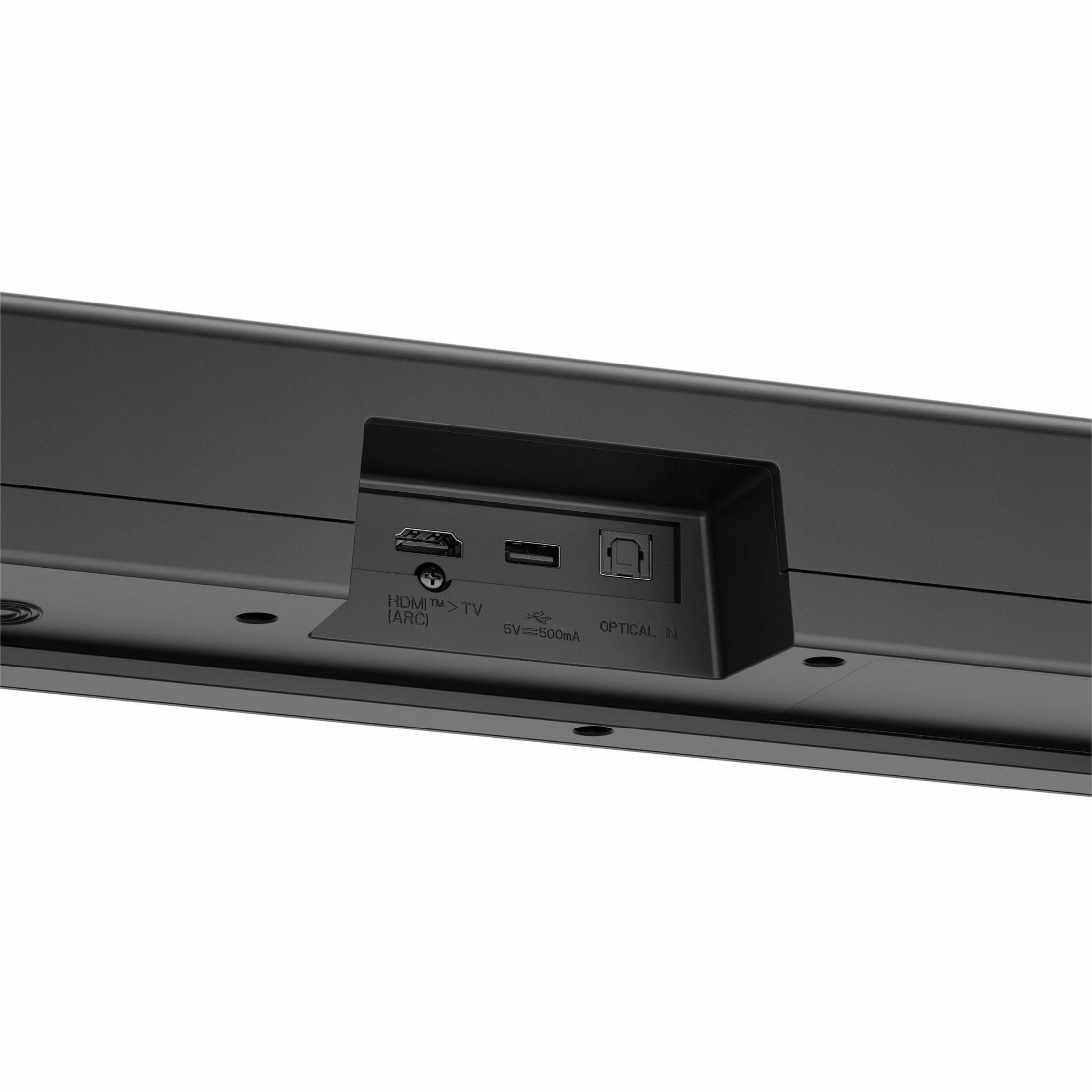

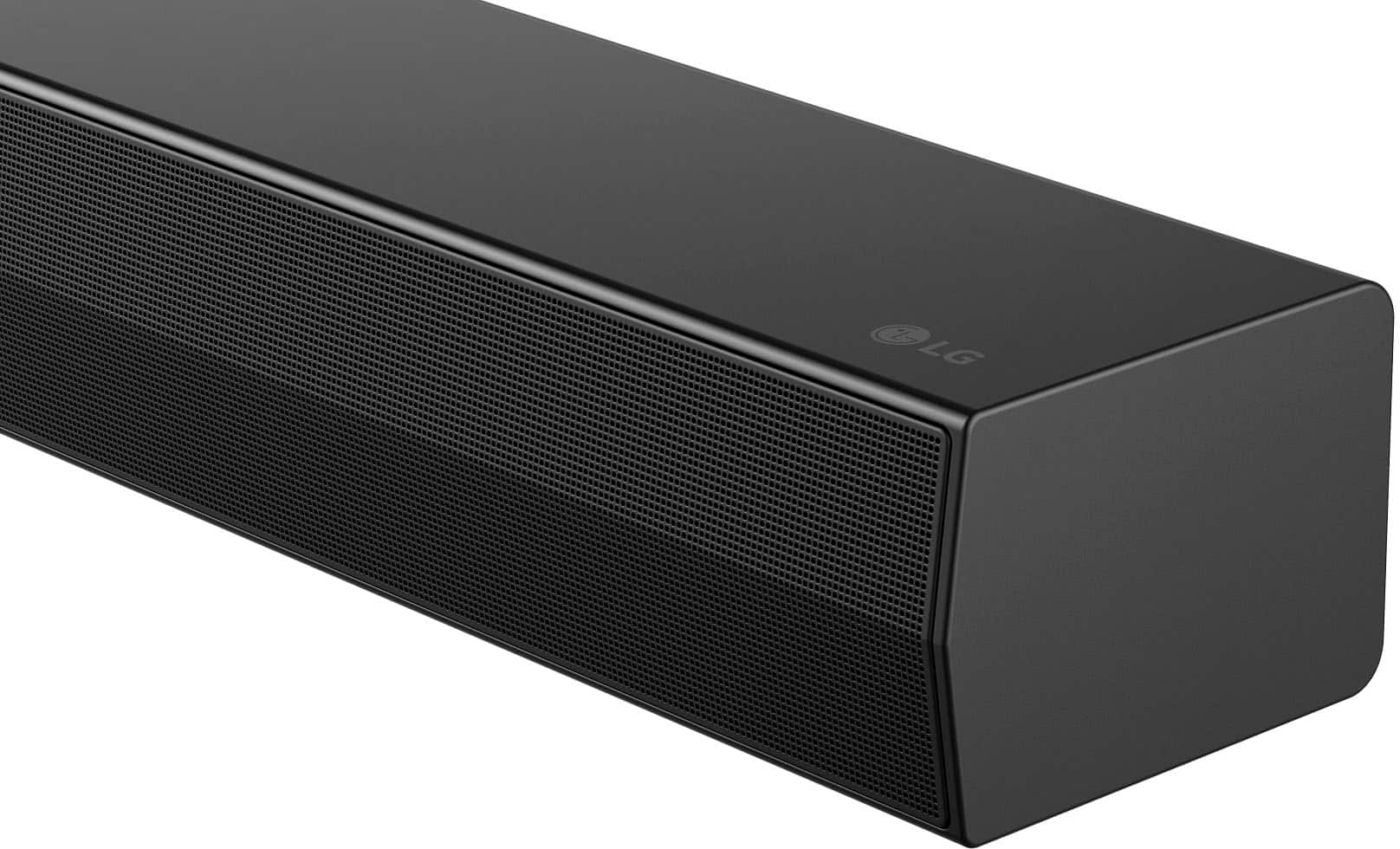
When your TV's built-in speakers just aren't cutting it anymore, you've probably started looking at soundbars. These sleek audio solutions have revolutionized home entertainment, offering everything from basic stereo enhancement to full-blown cinematic experiences. Today, we're comparing two very different approaches to better TV audio: the Ultimea Skywave F40 and the LG S40T.
The soundbar market has exploded over the past decade, driven by TVs getting thinner (and their speakers getting worse) while streaming content has gotten richer in audio quality. Modern soundbars range from simple two-channel systems that just make dialogue clearer, to sophisticated multi-driver setups that can rival traditional surround sound systems.
The key thing to understand is that not all soundbars are created equal. Some use "virtual surround" processing—fancy digital tricks that try to make stereo speakers sound like surround sound. Others include physical speakers that actually place sound around your room. This fundamental difference shapes everything about how these systems perform and what they cost.
Both the Ultimea Skywave F40 and LG S40T launched in 2024, representing the latest thinking in their respective categories. The F40 embodies the trend toward affordable true surround sound, while the S40T focuses on the integration and simplicity that many users actually prefer.
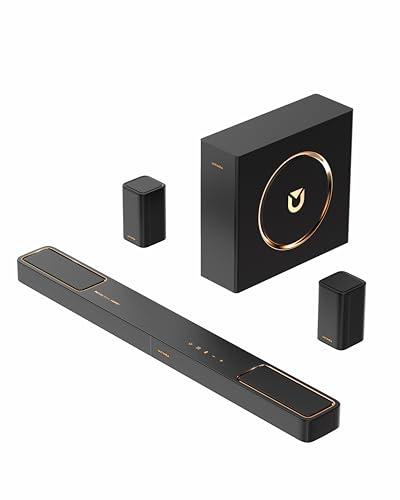
The Ultimea Skywave F40 represents something relatively new in the budget soundbar space: genuine 5.1.2 Dolby Atmos surround sound. Let me break down what those numbers mean, because they're crucial to understanding what this system does differently.
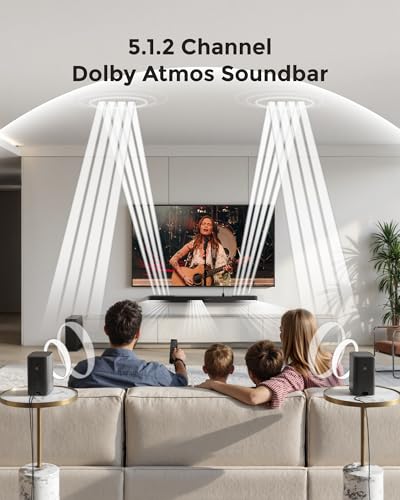
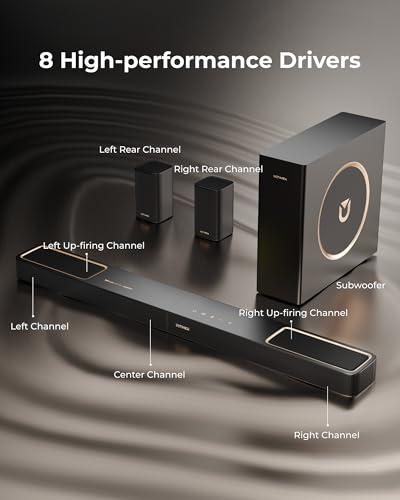
The "5.1.2" tells you exactly how many speakers you're getting and where they're placed. The "5" means five main speakers: left, center, right, and two rear surround channels. The "1" is your subwoofer for bass. The "2" is the exciting part—those are "height" channels that fire sound upward to bounce off your ceiling, creating the overhead audio effects that make Dolby Atmos so immersive.
When I first tested systems like the Skywave F40, I was skeptical about whether those upward-firing speakers actually work. The answer is: surprisingly well, if your room has decent acoustics. During action scenes, you genuinely hear helicopters passing overhead or rain falling from above. It's not just a marketing gimmick—the effect is real and adds significantly to the movie-watching experience.
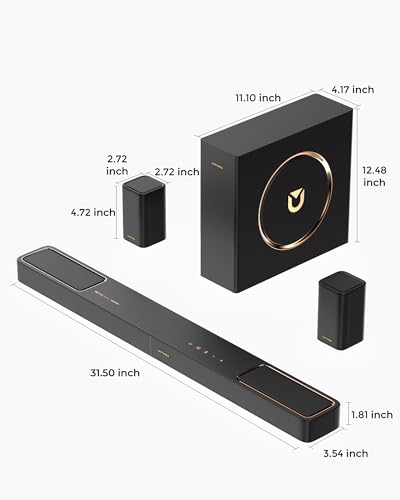
The F40's approach is refreshingly honest about what it takes to create true surround sound. Instead of trying to fake it with digital processing, Ultimea includes actual rear speakers that you place behind your seating area. Yes, this means running a wire (they connect to the subwoofer, which then connects wirelessly to the main soundbar), but the payoff in audio realism is substantial.
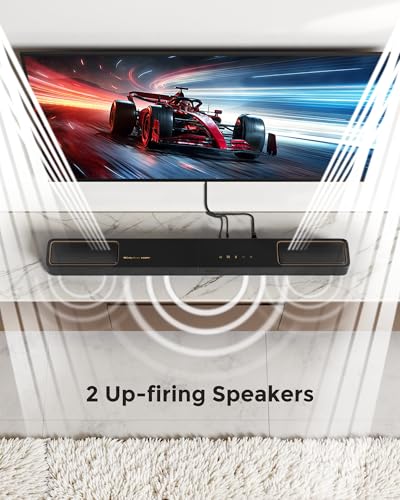
The Skywave F40 packs some impressive technology into its relatively affordable package. The upward-firing drivers use neodymium magnets—the same powerful magnetic material found in premium headphones—which allows them to move more air with less power. This is crucial because these speakers need to throw sound all the way to your ceiling and back down to your ears.
The system's 460-watt total power output is distributed across eight individual drivers, meaning each speaker can be optimized for its specific role. The rear surrounds focus on ambient effects and directional audio cues, while the main soundbar handles dialogue and front-stage effects. This specialization is why true surround systems sound more convincing than virtual alternatives.
One feature that particularly impressed me is the F40's "XupMix" technology, powered by Dolby Digital Audio Processing. This takes regular stereo content—like most TV shows or older movies—and intelligently expands it into multi-channel surround sound. It's not as precise as content originally mixed for Atmos, but it makes everything you watch more engaging.
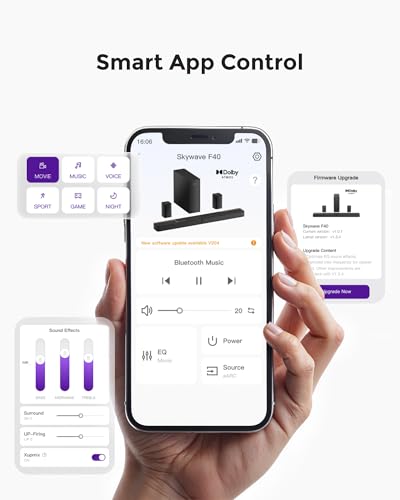
The ULTIMEA app deserves special mention here. While many budget soundbars offer basic app control, the F40's app provides genuine customization. The 10-band equalizer lets you fine-tune frequency response, while 121 preset sound profiles handle everything from dialogue enhancement to bass-heavy gaming scenarios. This level of control used to be exclusive to high-end systems.
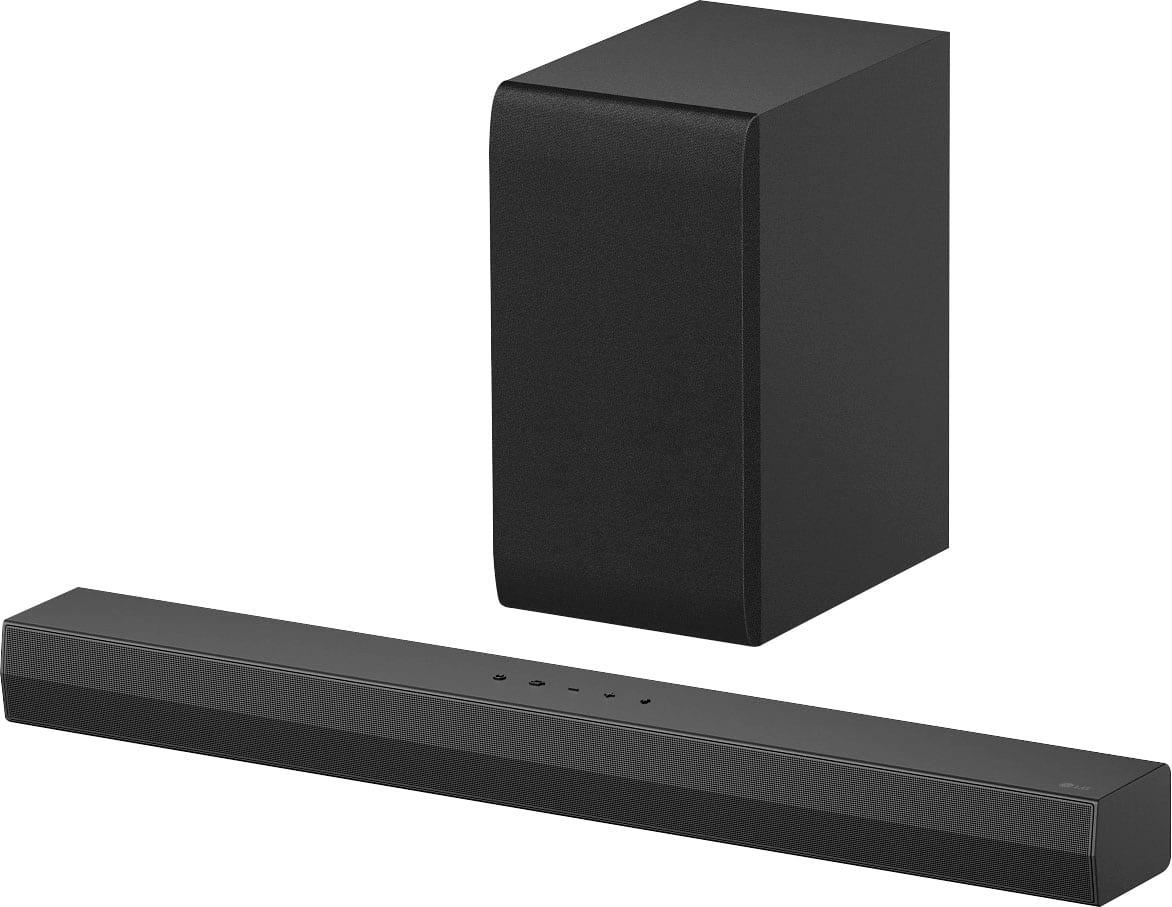
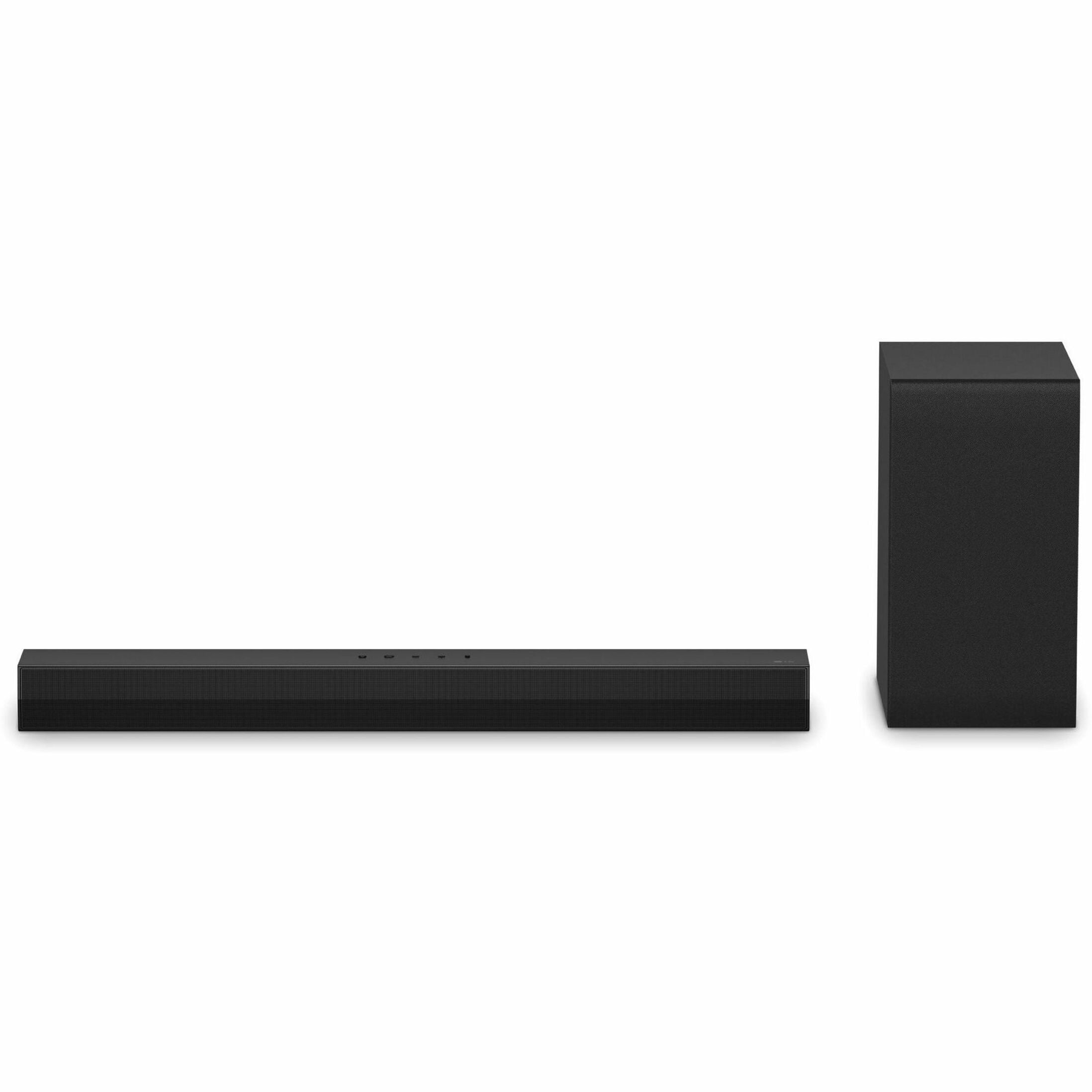
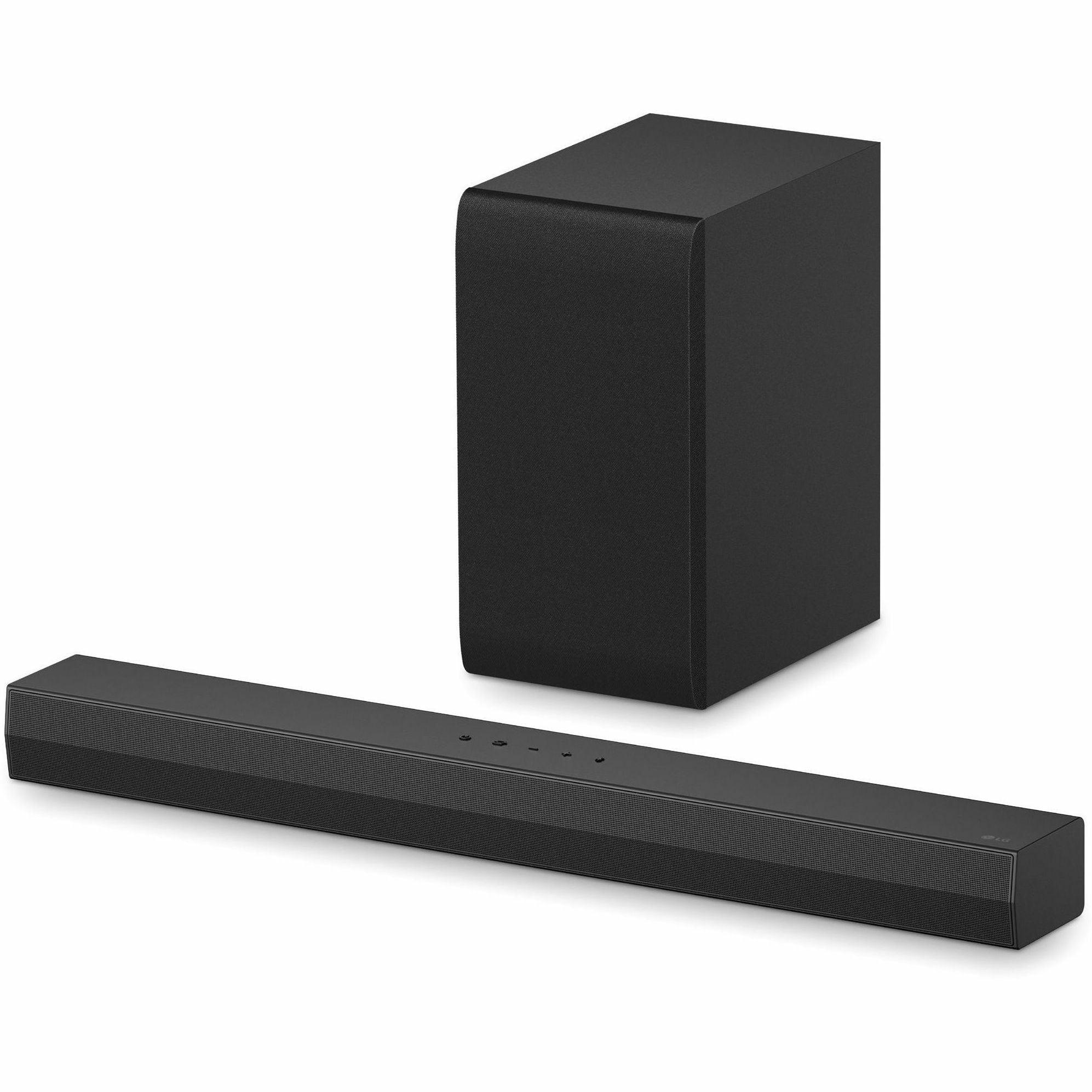
The LG S40T takes a completely different philosophy. Instead of trying to recreate a movie theater in your living room, it focuses on making your TV sound significantly better with minimal fuss. This 2.1 system—meaning two main channels plus a subwoofer—represents the sweet spot for many users who want better audio without complexity.
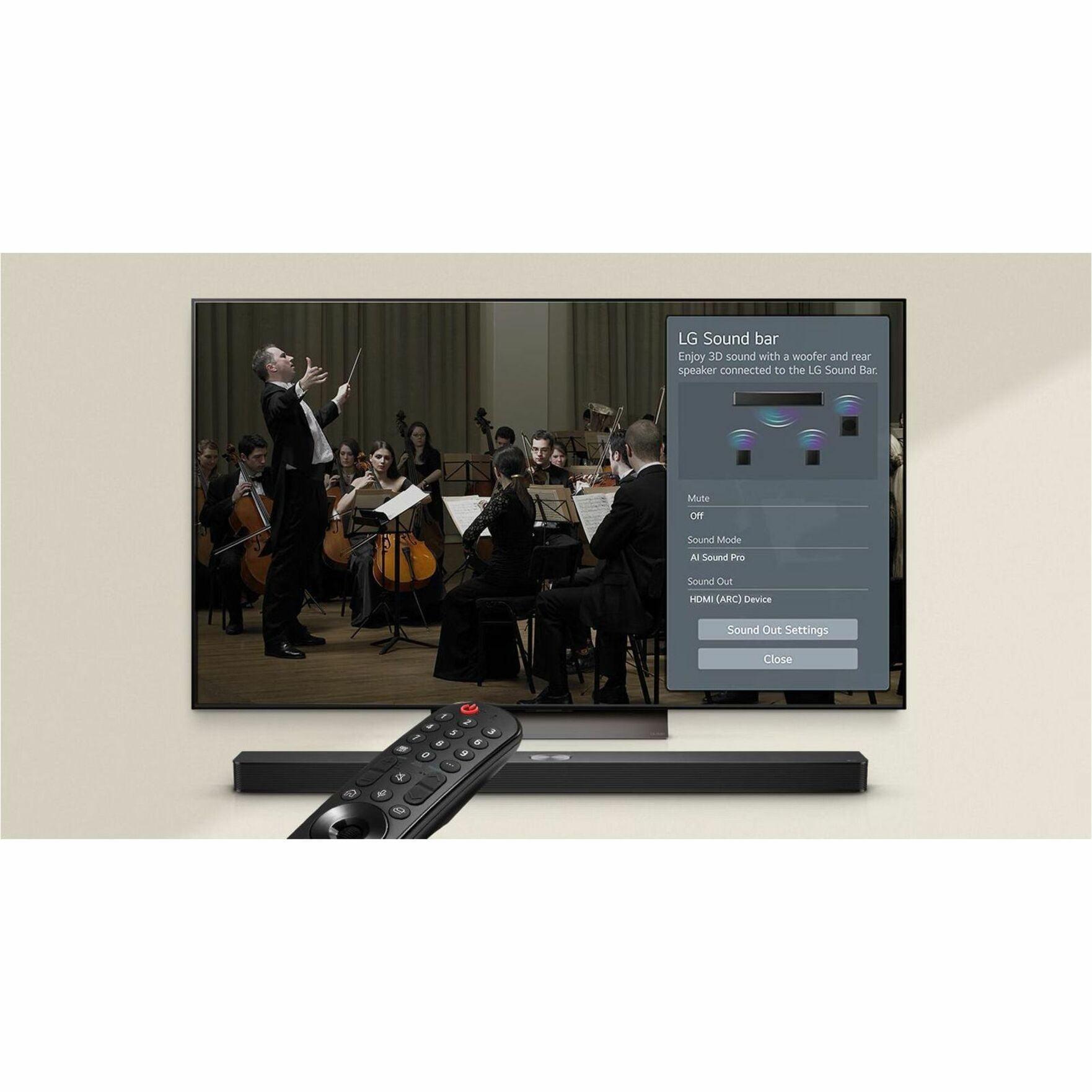
What makes the S40T particularly compelling is how deeply it integrates with LG's TV ecosystem. If you own an LG TV manufactured in the past few years, this soundbar can work together with your TV's built-in speakers through a feature called "WOW Orchestra." Instead of replacing your TV's audio entirely, it supplements it, using the TV speakers for additional mid-range clarity while the soundbar handles dialogue and the subwoofer provides bass.
This integration extends to control as well. Through SIMPLINK (LG's version of HDMI-CEC technology), you can control both your TV and the S40T with a single remote. Volume adjustments, input switching, and power management all work seamlessly together. After living with systems that require juggling multiple remotes, this unified experience feels genuinely premium.
Don't mistake the S40T's simpler setup for basic technology. LG has packed sophisticated audio processing into this system, particularly the AI Sound Pro feature. This technology analyzes incoming audio in real-time, automatically categorizing sounds into effects, voices, and music, then applying optimal processing to each category.
During dialogue-heavy scenes, AI Sound Pro emphasizes midrange frequencies and applies slight compression to ensure every word comes through clearly. When music starts playing, it opens up the frequency response and adds subtle stereo widening effects. For action sequences, it enhances dynamic range and spatial effects within the stereo field. This happens automatically, without any input from you.
The Clear Voice Plus technology goes further, using advanced filtering to separate dialogue from background noise and effects. This is particularly valuable for modern content, where sound mixing often prioritizes immersive effects over dialogue clarity. Many users find they can lower their overall volume while still hearing every word clearly.
Understanding how these systems actually perform requires looking at several key areas where soundbars make their biggest impact.
Both systems excel here, but in different ways. The LG S40T uses dedicated center-channel processing (even though it only has two physical speakers) to enhance dialogue intelligibility. Its Clear Voice Plus feature is particularly effective with news, talk shows, and dialogue-heavy dramas where speech clarity matters most.
The Ultimea F40, with its dedicated center speaker in the main soundbar, provides even clearer dialogue separation. During complex movie scenes with multiple conversations, music, and effects happening simultaneously, that physical center channel keeps voices anchored and intelligible. The difference becomes most apparent in challenging content like Christopher Nolan films, where dialogue often competes with overwhelming soundscapes.
This is where the fundamental difference between these approaches becomes most apparent. The S40T creates its soundstage through digital processing and stereo imaging. It can make your TV sound wider and more open, with better separation between left and right channels. For most TV viewing, this provides a satisfying improvement over built-in speakers.
The F40 creates actual spatial audio through physical speaker placement. When a car drives from the front of the screen to the rear, you hear it move through the room via the rear speakers. Overhead audio effects—like helicopters, thunder, or debris falling—come from above through the upward-firing drivers. This three-dimensional soundstage is fundamentally more convincing than any virtual processing can achieve.
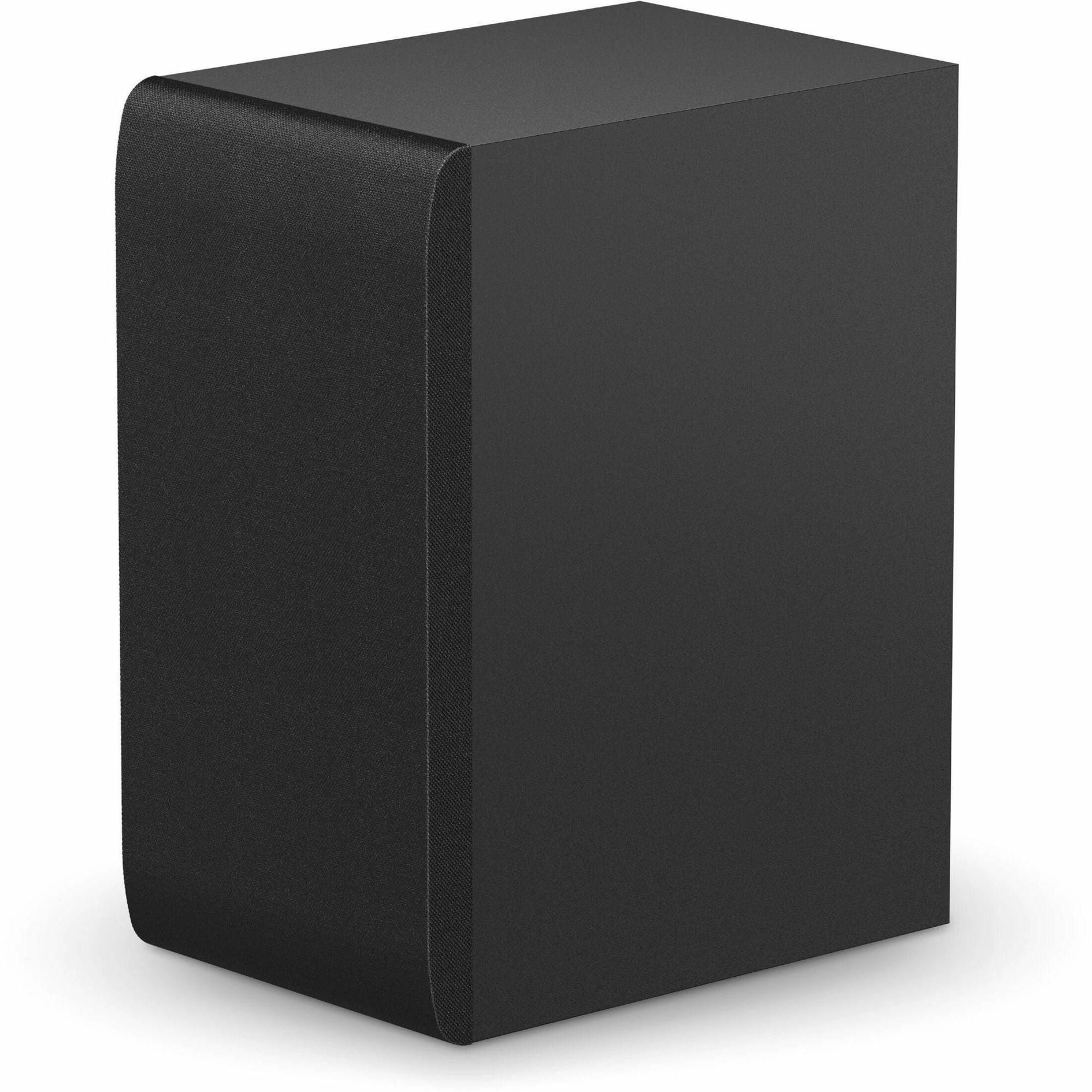
Both systems include dedicated subwoofers, but they serve different roles. The S40T's subwoofer primarily handles the lowest frequencies that the main soundbar cannot reproduce, adding weight to explosions, music bass lines, and ambient effects. It's well-integrated and provides satisfying low-end extension for most content.
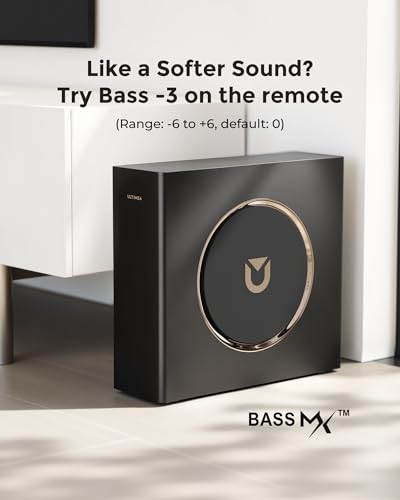
The F40's subwoofer is part of a more complex system, handling not just low frequencies but also connecting the rear speakers and participating in the overall surround sound field. Its BassMX technology provides more sophisticated bass management, including the ability to direct certain low-frequency effects to different speakers based on the content. The result is more nuanced and powerful bass response, particularly noticeable in action movies and music.
Modern gaming increasingly relies on spatial audio for competitive advantage and immersion. The F40 provides genuine positional audio that can help in first-person shooters (hearing footsteps behind you) and enhance immersion in single-player adventures. The low-latency Bluetooth 5.4 connection also ensures wireless audio stays synchronized with fast-paced gaming.
The S40T offers solid gaming performance with its AI Sound Pro processing, which can enhance game audio dynamically. However, it cannot provide the directional audio cues that come from physical surround speakers. For casual gaming, this difference may not matter. For serious gamers, the F40's spatial audio provides a genuine competitive advantage.
Real-world usability often matters more than specification sheets suggest. Both systems approach the setup and daily-use experience very differently.
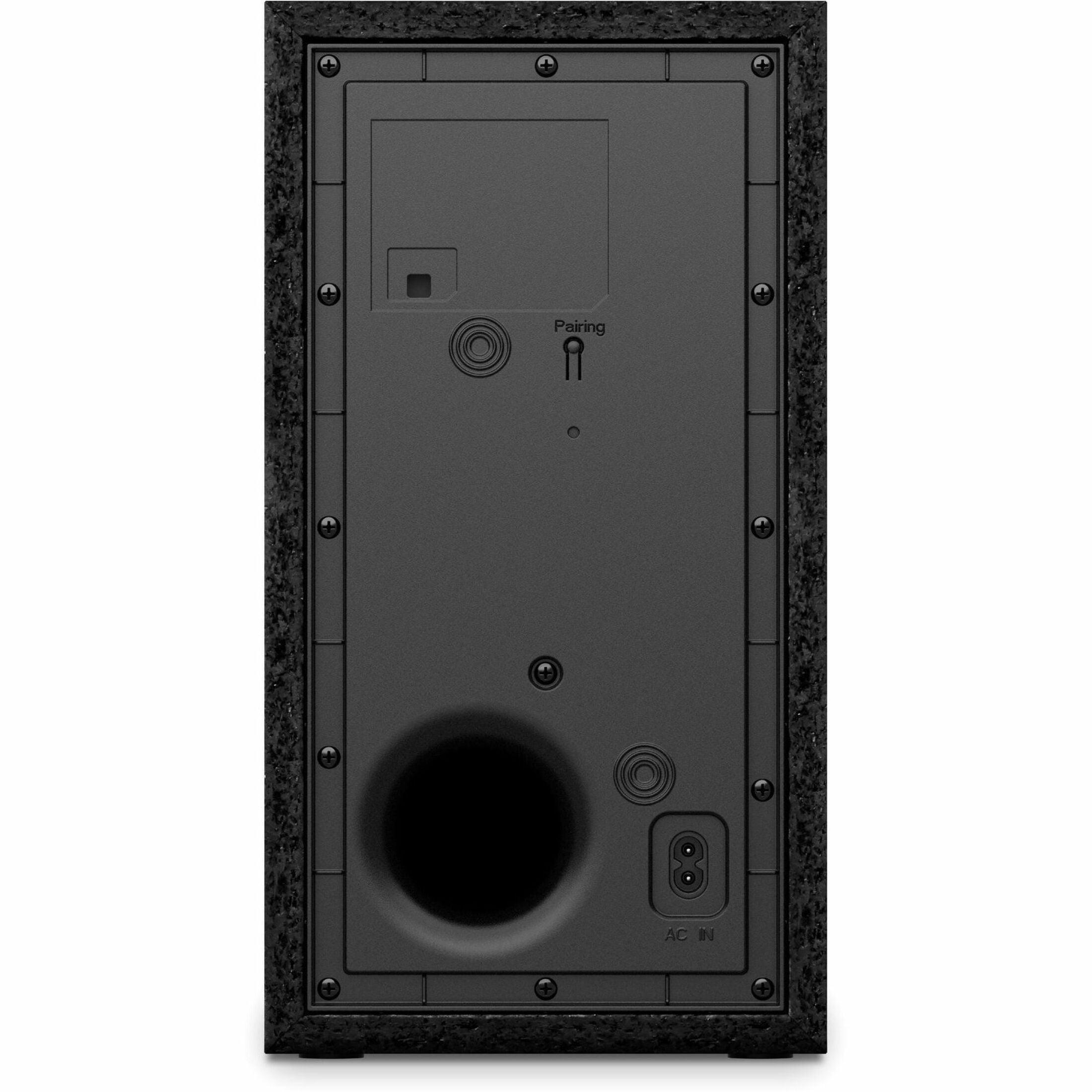
The F40 requires more planning and effort during installation. You need to position the rear speakers behind your main seating area, which means running the included speaker wire from your subwoofer to the rear of your room. While the wire can usually be hidden along baseboards or under rugs, it does require some cable management.
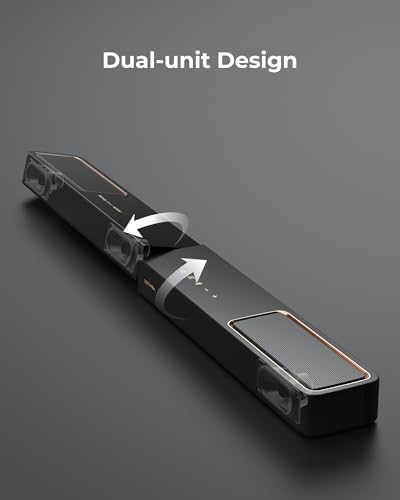
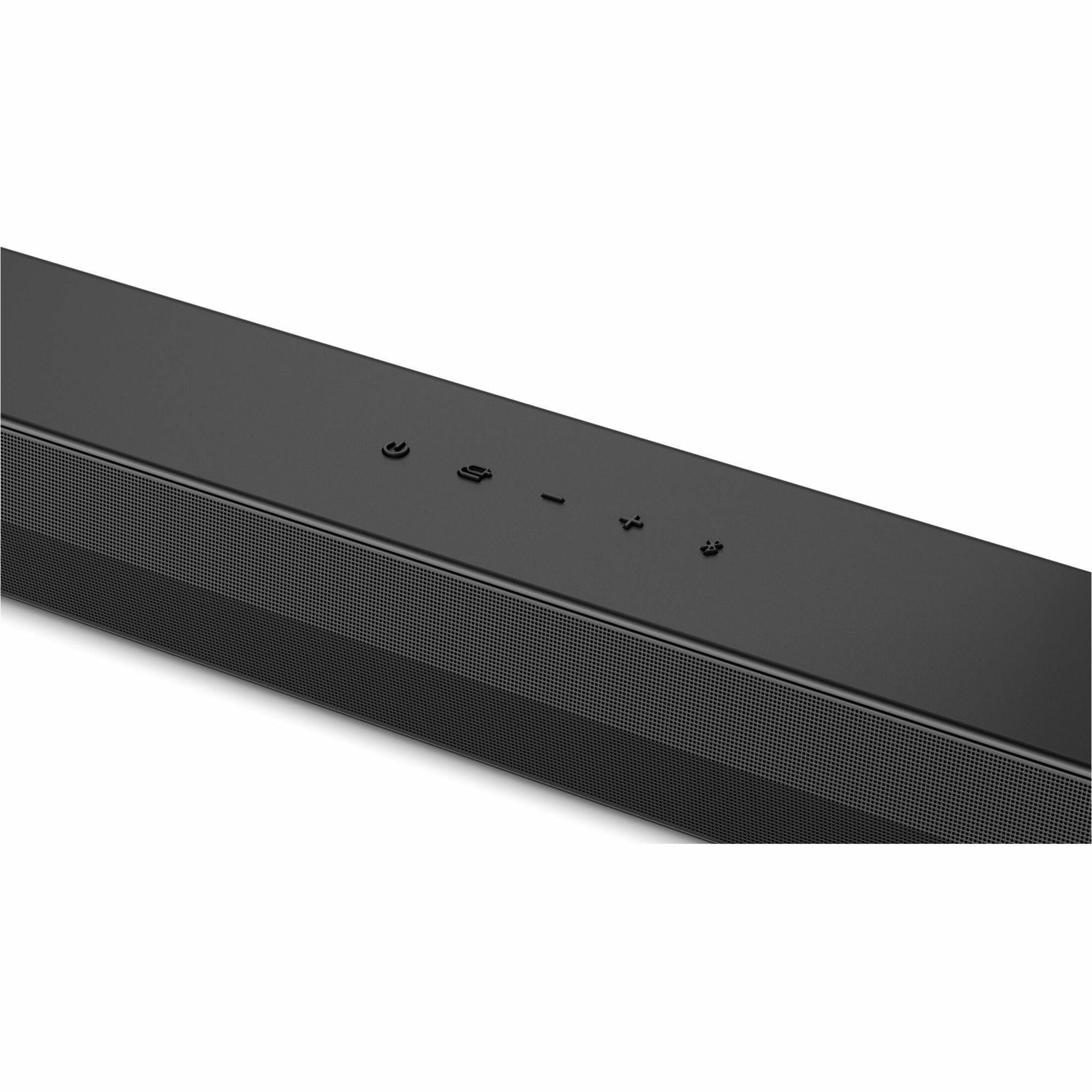
The soundbar itself comes in two pieces that twist-lock together, which initially seems like a shipping convenience but actually provides flexibility in placement. The connection is solid and secure—I've never had one come apart accidentally.
Once everything is connected, the system provides clear setup guidance through its app. The room correction process helps optimize the sound for your specific space, though it's not as sophisticated as what you'd find in high-end systems. The entire setup typically takes 45 minutes to an hour if you take time to position everything properly.
The S40T epitomizes plug-and-play simplicity. The wireless subwoofer pairs automatically with the soundbar, and if you have an LG TV, SIMPLINK typically configures itself without manual intervention. The entire setup can be completed in 15-20 minutes, even if you wall-mount the soundbar.
Daily operation is where the S40T's integration really shines. Power management is seamless—the soundbar turns on when your TV turns on and automatically switches to the correct input. Volume adjustments feel natural because they're handled by your familiar TV remote. For many users, this transparency is exactly what they want from a soundbar.
At the time of writing, these systems occupy different price tiers that reflect their different approaches and capabilities. The LG S40T typically sells for roughly half the price of the F40, making the value comparison complex but interesting.
The S40T represents exceptional value in the basic soundbar category. It provides meaningful audio improvement over TV speakers, premium brand reliability, and sophisticated features typically found in more expensive systems. For users who primarily watch TV shows, news, and occasional movies, it delivers most of the benefits of soundbar ownership without complexity or high cost.
The F40 competes in the budget home theater category, where it faces both higher-priced systems from major brands and cheaper alternatives with questionable build quality. Its value proposition is compelling: genuine surround sound capabilities that would cost significantly more from established audio brands, packaged in a system that's still reasonably affordable and easy to set up.
If you're building a dedicated home theater or have a primary viewing room where you spend serious time watching movies, the differences between these systems become more pronounced.
The F40 provides the foundation for a true home theater audio experience. Its Dolby Atmos capabilities mean it can properly decode and play the sophisticated audio tracks found on 4K Blu-rays and premium streaming content. The spatial audio effects genuinely enhance the movie-watching experience, making action sequences more exciting and ambient scenes more immersive.
For a dedicated theater room, the F40's customization options become more valuable. The 10-band EQ lets you compensate for room acoustics, while the various sound modes optimize performance for different content types. The system can grow with your interest in audio—you can spend time tweaking settings and learning about sound reproduction, or just use the presets and enjoy better audio.
The S40T is better suited to family rooms and multi-purpose spaces where simplicity and integration matter more than ultimate performance. Its strength lies in making everything sound better without drawing attention to itself or requiring ongoing management.
After extensive testing and living with both systems, clear usage patterns emerge.
Choose the Ultimea Skywave F40 if you:
Choose the LG S40T if you:
Both systems represent 2024 technology, but they handle future content differently. The F40 supports current and emerging audio formats through its HDMI eARC connection and receives over-the-air firmware updates. As streaming services continue improving their audio quality and more content includes Dolby Atmos tracks, the F40 can take full advantage.
The S40T focuses on core audio improvement rather than cutting-edge format support. While it handles current content excellently, it's not designed to be a platform for future audio format adoption. This isn't necessarily a limitation—many users prefer systems that do their current job well rather than chasing specifications they may never use.
These soundbars represent two legitimate but different approaches to improving your TV audio experience. The Ultimea Skywave F40 brings genuine home theater capabilities to a budget-friendly package, while the LG S40T perfects the art of simple, effective TV audio enhancement.
Neither system is objectively better—they're optimized for different users and different priorities. The F40 rewards users who want to engage with their audio system and can accommodate its physical requirements. The S40T serves users who want better sound without complexity or disruption to their existing setup.
Both represent solid value in their respective categories and reflect how far soundbar technology has advanced. Whether you choose immersive surround sound or integrated simplicity, you'll end up with dramatically better audio than your TV can provide alone.
| Ultimea Skywave F40 | LG S40T |
|---|---|
| Channel Configuration - Determines surround sound capability | |
| 5.1.2 true surround with physical rear speakers and overhead effects | 2.1 stereo with subwoofer, uses virtual surround processing |
| Dolby Audio Support - Critical for modern streaming content | |
| Full Dolby Atmos with height channels for 3D audio | Dolby Digital support, no overhead audio effects |
| Physical Components - Affects setup complexity and performance | |
| Soundbar + wireless subwoofer + 2 wired rear speakers | Soundbar + wireless subwoofer only |
| Total Power Output - Impacts volume and dynamic range | |
| 460W across 8 individual drivers | 300W across 3 drivers |
| HDMI Connectivity - Affects audio quality and device compatibility | |
| HDMI eARC for lossless audio transmission | HDMI ARC (standard, not enhanced) |
| Bluetooth Version - Determines wireless audio quality and latency | |
| Bluetooth 5.4 with ultra-low latency for gaming | Bluetooth 5.3 standard connectivity |
| App Control and EQ - Customization capabilities | |
| ULTIMEA app with 10-band EQ and 121 preset matrices | LG app with basic controls and AI Sound Pro |
| TV Integration - Convenience for daily use | |
| Universal compatibility with any TV brand | Deep LG TV integration with WOW Orchestra and SIMPLINK |
| Room Size Optimization - Performance in different spaces | |
| Optimized for 215-269 sq ft with rear speaker placement | Flexible for various room sizes, no placement restrictions |
| Setup Complexity - Time and effort required | |
| Moderate setup with rear speaker wiring and positioning | Simple plug-and-play with automatic pairing |
| Upgrade Path - Future expansion possibilities | |
| Complete system, no further expansion needed | Entry-level system, may want to upgrade for surround sound later |
The Ultimea Skywave F40 is a true 5.1.2 Dolby Atmos surround sound system with physical rear speakers and overhead audio effects, while the LG S40T is a 2.1 channel system that focuses on stereo enhancement with virtual surround processing. The F40 provides genuine surround sound, whereas the S40T offers simpler TV audio improvement.
The Ultimea Skywave F40 is significantly better for home theater use. It delivers true Dolby Atmos with overhead audio effects, physical rear surround speakers, and immersive 3D soundstage that makes action movies and cinematic content much more engaging. The LG S40T works well for casual movie watching but cannot match the surround sound experience.
The LG S40T is much easier to set up, requiring only the main soundbar and wireless subwoofer with automatic pairing. The Ultimea Skywave F40 requires positioning rear speakers behind your seating area and running speaker wire, making setup more complex but delivering better audio performance as a result.
Not necessarily. The LG S40T provides excellent sound quality improvement over TV speakers without rear speakers, using advanced processing to enhance stereo audio. However, the Ultimea Skywave F40 with physical rear speakers creates a much more immersive experience for movies and gaming where directional audio effects matter.
The LG S40T is specifically designed for LG TV integration, offering features like WOW Orchestra (combining TV and soundbar speakers) and SIMPLINK for single-remote control. The Ultimea Skywave F40 works with any TV brand but doesn't offer the same level of seamless integration with LG TVs.
The Ultimea Skywave F40 provides superior sound quality for immersive content with true surround sound, overhead audio effects, and 460W of power across 8 speakers. The LG S40T offers excellent dialogue clarity and stereo enhancement with 300W across 3 speakers, making it ideal for TV shows and news but less impressive for action-packed content.
The Ultimea Skywave F40 is better for gaming, providing positional audio that helps with directional sound cues in competitive games and enhanced immersion in single-player adventures. Its Bluetooth 5.4 also offers lower latency. The LG S40T works fine for casual gaming but cannot provide the spatial audio advantages.
The Ultimea Skywave F40 fully supports Dolby Atmos with dedicated height channels that create overhead audio effects. The LG S40T supports Dolby Digital but not Dolby Atmos, so it cannot reproduce the three-dimensional audio experience that modern streaming content and movies offer.
This depends on your needs. The LG S40T offers exceptional value for basic TV audio improvement with premium features at a lower price point. The Ultimea Skywave F40 provides outstanding value in the home theater category, delivering true surround sound capabilities that typically cost much more from major brands.
The LG S40T requires minimal space - just room for the soundbar and subwoofer placement. The Ultimea Skywave F40 needs additional space for rear speaker placement behind your seating area and is optimized for rooms around 215-269 square feet for best performance.
The Ultimea Skywave F40 offers more advanced customization with its app featuring 10-band equalizer and 121 preset sound profiles for extensive audio tuning. The LG S40T provides simpler app control focused on basic settings and AI Sound Pro automatic optimization, which many users prefer for its simplicity.
Choose the Ultimea Skywave F40 if you want true home theater experience, watch lots of movies, and can accommodate rear speakers. Choose the LG S40T if you have an LG TV, prefer simple setup, watch mostly TV shows, or live in a smaller space where rear speakers aren't practical.
We've done our best to create useful and informative comparisons to help you decide what product to buy. Our research uses advanced automated methods to create this comparison and perfection is not possible - please contact us for corrections or questions. These are the sites we've researched in the creation of this article: the-gadgeteer.com - youtube.com - ultimea.com - manuals.plus - youtube.com - ultimea.com - youtube.com - youtube.com - youtube.com - youtube.com - eu.ultimea.com - support.ultimea.com - bestbuy.com - bestbuy.com - rtings.com - pcrichard.com - lg.com - lg.com - lg.com - lg.com - microcenter.com - flanners.com - bestbuy.com - microcenter.com

Privacy Policy
Terms and Conditions - Affiliate Policy
Home Security
© Copyright 2008-2026.
11816 Inwood Rd #1211, Dallas, TX 75244