





When you're shopping for a Dolby Atmos soundbar in 2024, you're entering a market that's matured significantly since these systems first appeared around 2017. Back then, most "Atmos-enabled" soundbars relied heavily on virtual processing—basically software tricks to simulate overhead sound. Today's premium systems like the Hisense AX5140Q and Ultimea Skywave F40 represent a new generation that actually delivers genuine 3D surround sound through dedicated physical speakers.
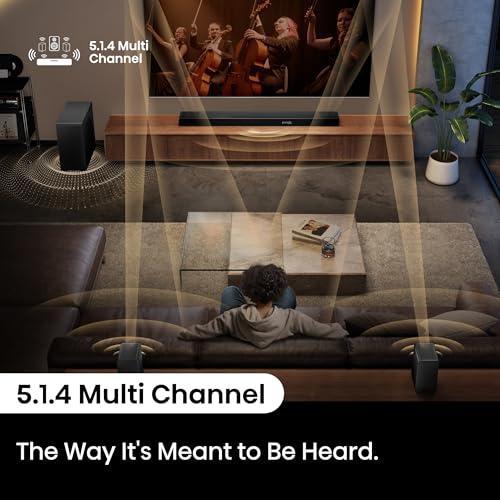
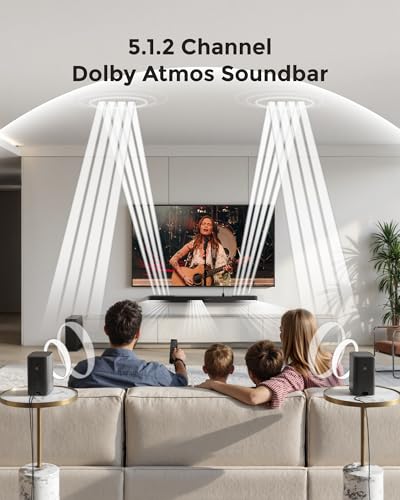
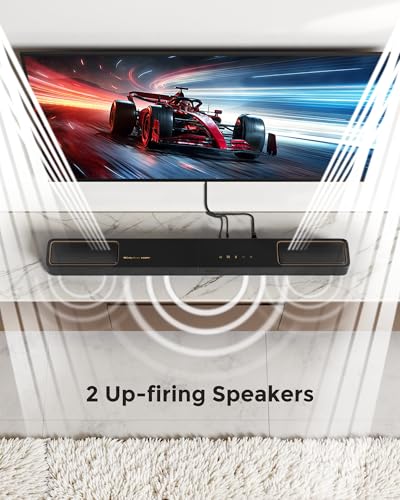
The difference is night and day. Instead of hoping your brain will be fooled by clever audio processing, these systems use real up-firing drivers (speakers that point toward the ceiling) to bounce sound off your room's surfaces, creating authentic overhead effects. When a helicopter flies across the screen in an Atmos movie, you'll actually hear it move above your head rather than just getting a slightly wider stereo effect.
Understanding this category means grasping what separates basic soundbars from true home theater systems. We're looking at channel configuration (how many discrete audio streams the system can handle), codec support (which audio formats it can decode), power output for room filling capabilities, and smart features that make daily use pleasant. The goal is cinematic immersion without the complexity of traditional receiver-and-speaker setups that require running wires throughout your room.
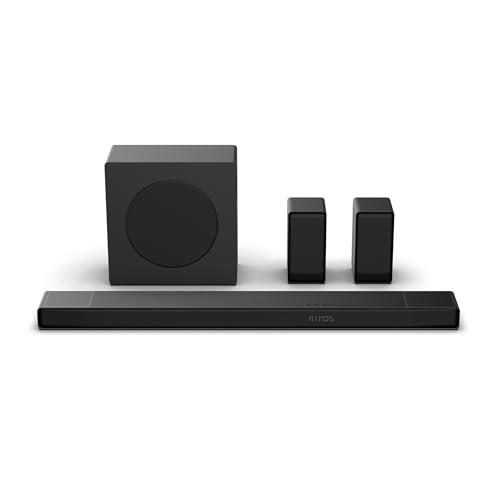
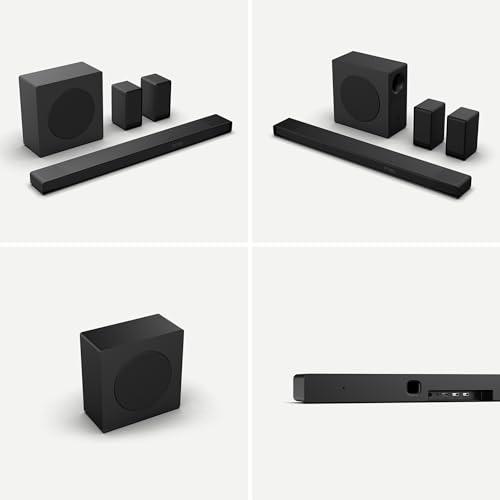
The Hisense AX5140Q, released in 2024, represents Hisense's push into premium audio territory. This 5.1.4 channel system (that's five main speakers, one subwoofer, and four height channels) delivers 600 watts of total power while supporting both major object-based audio formats: Dolby Atmos and DTS:X. Object-based audio is revolutionary because instead of mixing sound for specific speaker locations, content creators place audio "objects" in 3D space, and your system figures out how to reproduce them using whatever speakers you have.
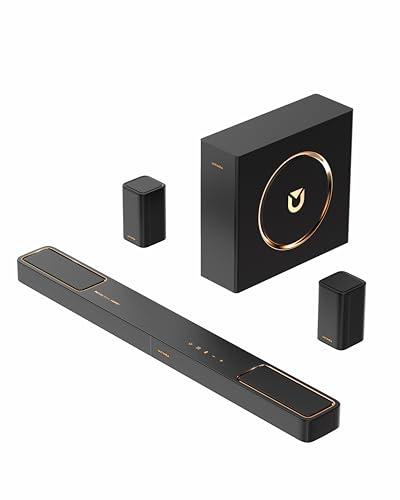
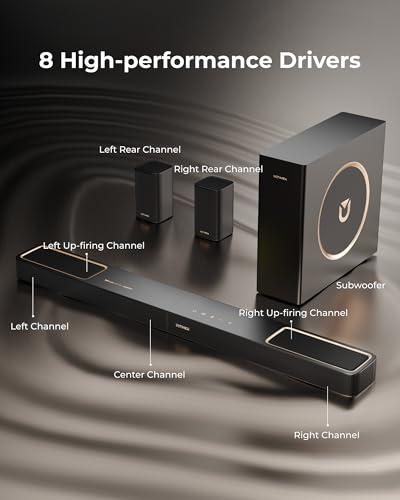
The Ultimea Skywave F40, also from 2024, takes a value-focused approach with its 5.1.2 configuration. It prioritizes proven performance over spec sheet bragging rights, delivering exceptional sound quality at a more accessible price point. Ultimea has focused on audio engineering fundamentals—using high-quality neodymium magnets in their up-firing drivers and including smart upmixing technology that enhances even non-Atmos content.
Both systems acknowledge that most people want the performance of a full home theater without dedicating a room to it or learning audio engineering. They're designed to transform your living room TV experience while fitting seamlessly into modern life.
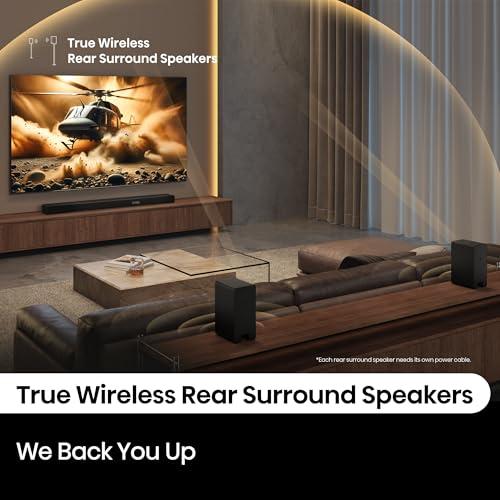
The most significant technical difference between these systems lies in their height channel configuration. The Hisense AX5140Q sports four dedicated up-firing drivers—two built into the soundbar itself and two more in the wireless rear speakers. This 5.1.4 setup creates what audio engineers call a "sound dome," where overhead effects can be placed with remarkable precision around your seating area.
When you're watching something like "Top Gun: Maverick" with its incredible Atmos mix, those extra height channels matter. Fighter jets don't just fly overhead—they sweep from front to back with height information preserved throughout the entire arc. The AX5140Q can place these effects more accurately because it has twice as many reference points in the vertical plane.
The Ultimea Skywave F40, with its two up-firing drivers, takes a more focused approach. Rather than spreading height effects across four channels, it concentrates on making those two channels as effective as possible. Ultimea uses neodymium magnets and what they call "18-core voice coils" in these drivers—components typically found in much more expensive systems. The result is height effects that punch well above the system's price class.
In our research across professional reviews and user feedback, an interesting pattern emerges. The F40 consistently surprises listeners with its overhead effects despite having fewer channels. Part of this comes down to implementation quality—having two excellent height channels often beats having four mediocre ones.
For most living room setups, the practical difference is smaller than you might expect. Unless you're sitting in a large room with optimal acoustics, the F40's dual height channels deliver convincing Atmos effects that make movies and games feel genuinely immersive.
Here's where the Hisense AX5140Q shows its premium positioning most clearly. Beyond standard Dolby Atmos support, it handles DTS:X, Dolby TrueHD, and DTS-HD Master Audio. These are lossless audio formats that preserve every bit of information from the original studio master—think of them as the audio equivalent of 4K video compared to compressed streaming.
DTS:X is particularly interesting because it's DTS's answer to Dolby Atmos, offering similar object-based surround sound but with different processing algorithms. Some content creators prefer DTS:X for its handling of dynamic range—the difference between quiet dialogue and explosive action sequences. If you collect 4K Blu-rays or use streaming services that offer these premium formats, the AX5140Q's broad codec support ensures you're getting the full experience as intended.
The Ultimea Skywave F40 focuses squarely on the Dolby ecosystem, which handles roughly 90% of streaming content. Netflix, Disney+, Apple TV+, and most other services use Dolby Atmos when they offer spatial audio. But here's where Ultimea gets clever: their Xupmix technology, powered by Dolby Digital Audio Processing, can take regular stereo content and intelligently expand it into multi-channel surround.
This matters more than you might think. Most of what we watch—cable TV, older movies, music videos—isn't originally mixed for Atmos. The F40's upmixing creates a sense of space and dimension that makes dialogue clearer and background sounds more engaging, even from basic cable programming. It's like having a smart audio engineer constantly optimizing whatever you're watching.
In practical terms, unless you're a serious home theater enthusiast with a collection of premium audio content, the F40's Dolby-focused approach with smart upmixing delivers more day-to-day value than having every possible codec.
The 600-watt rating on the Hisense AX5140Q versus 460 watts for the Ultimea Skywave F40 represents more than just bigger numbers. Power output in soundbars correlates directly with their ability to fill larger spaces and handle dynamic content without distortion.
That extra 140 watts gives the AX5140Q superior headroom—the difference between clean, controlled sound and audio that starts getting harsh when you turn it up. In rooms larger than about 300 square feet, or in open-concept homes where sound has to travel further, this power advantage becomes noticeable during action movies or when hosting gatherings.
However, professional reviews consistently note that the F40 delivers surprisingly full sound for its power rating. The system maintains clarity at both whisper-quiet volumes (crucial for late-night viewing) and at levels that would satisfy most party scenarios. Part of this effectiveness comes from smart power management and driver efficiency rather than just brute force.
For the majority of living room setups—typically 200-300 square feet—the F40's 460 watts proves more than adequate. The system's bass remains punchy without becoming boomy, and dialogue stays clear even during complex surround sequences. Unless you specifically need to fill a large space or you regularly push volume levels to their limits, the power difference matters less than you'd expect.
Subwoofer design represents another philosophical difference between these systems. The Hisense AX5140Q includes a 6.5-inch wireless subwoofer that can be placed anywhere in your room without cable concerns. This wireless freedom lets you optimize bass placement for your room's acoustics—typically a corner location that reinforces low frequencies through boundary reinforcement.
Wireless subwoofers have matured significantly since their early days of connection dropouts and latency issues. The AX5140Q's implementation uses dedicated wireless protocols that maintain tight synchronization with the main soundbar, ensuring bass hits exactly when it should during movie explosions or music crescendos.
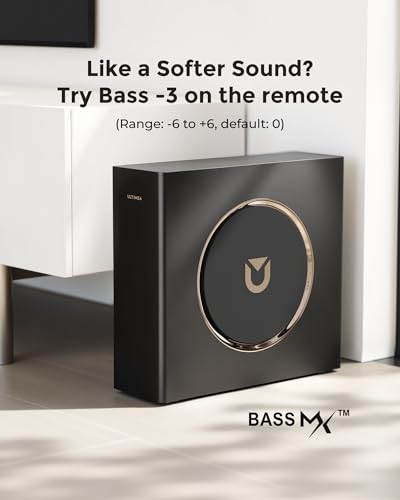
The Ultimea Skywave F40 takes a different approach with its wired subwoofer connection. While this requires running one cable from the soundbar to the sub, it eliminates any possibility of wireless interference or sync issues. In environments with heavy Wi-Fi traffic or Bluetooth device congestion, the wired approach provides absolute reliability.
User feedback suggests both designs work well in practice, with the choice coming down to priorities. The wireless approach offers cleaner aesthetics and placement flexibility, while the wired design ensures bulletproof reliability and often costs less to implement.
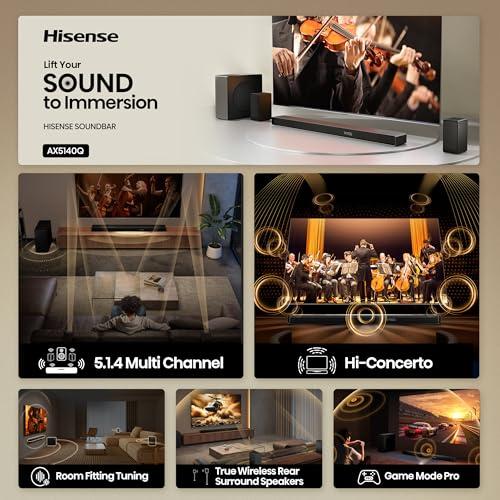
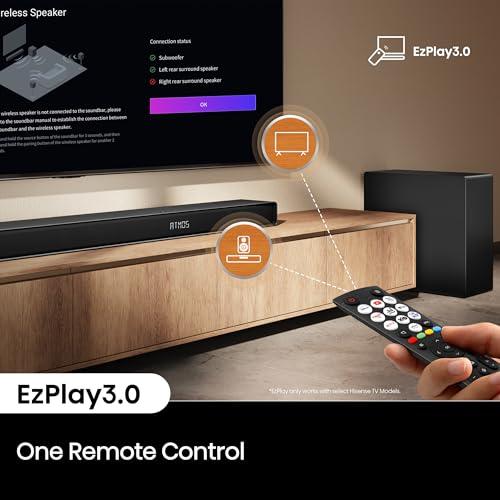
Modern soundbars succeed or fail on their daily usability as much as their audio performance. The Hisense AX5140Q integrates deeply with Hisense's TV ecosystem through their Hi-Concerto platform. When paired with a compatible Hisense TV, the system becomes genuinely unified—one remote controls everything, the TV displays soundbar status information, and room calibration can be managed through the TV interface.
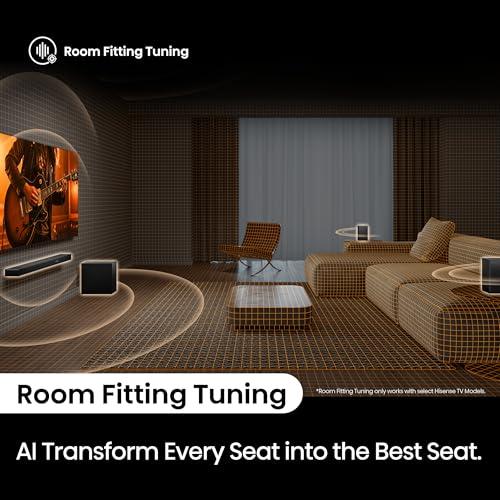
This integration extends to AI EQ Mode, which analyzes content in real-time and adjusts frequency response to maintain clarity and prevent distortion. Room-fitting tuning uses the TV's processing power combined with the soundbar's drivers to automatically optimize sound for your specific space. These aren't gimmicks—they're sophisticated audio processing tools that work behind the scenes to improve your experience.
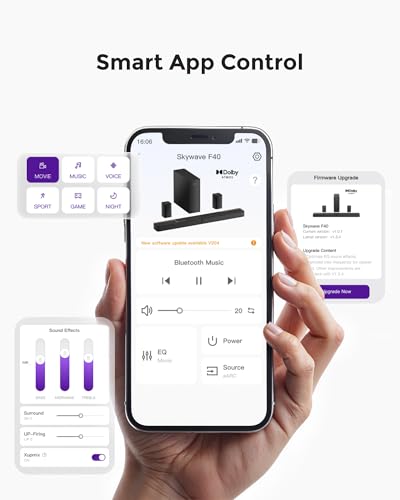
The Ultimea Skywave F40 approaches smart features differently, focusing on comprehensive user control rather than ecosystem integration. The dedicated smartphone app provides access to 121 preset EQ matrices and a 10-band equalizer, giving audio enthusiasts granular control over their sound signature. Bluetooth 5.4 ensures stable, low-latency connections for music streaming and gaming.
The F40's approach appeals to users who prefer direct control over automatic optimization. You can tune the system precisely for your room and content preferences, then save those settings for different scenarios.
Both systems prioritize easy installation, but they achieve it through different strategies. The Ultimea Skywave F40 ships with everything needed for immediate use, including all cables and wall-mounting hardware. The rear speakers connect to each other with a single wire, reducing cable clutter, and the entire system can typically be set up and playing within 30 minutes of unboxing.
The Hisense AX5140Q requires slightly more consideration during setup due to its wireless rear speakers and subwoofer. Each component needs power, and optimal placement requires some thought about room acoustics and sight lines. However, once positioned correctly, the wireless design creates a cleaner final installation with fewer visible cables.
Professional reviews consistently praise both systems for their user-friendly installation processes. Neither requires specialized knowledge or tools, and both include clear, illustrated setup guides that walk users through the process step by step.
In dedicated home theater applications, both soundbars deliver performance that rivals much more complex setups. The Hisense AX5140Q's four height channels create remarkably precise overhead effects, especially in content specifically mixed for Atmos. Movies like "Dune" or "Blade Runner 2049" showcase the system's ability to create an enveloping soundscape where effects seamlessly move through 3D space.
The Ultimea Skywave F40 achieves similar immersion through different means. Its two height channels, combined with SurroundX processing, create a convincing dome of sound that makes you forget you're listening to a soundbar. The system excels at maintaining dialogue clarity even during complex action sequences—a critical factor for movie enjoyment.
Both systems handle dynamic range well, preserving the difference between whisper-quiet dialogue and explosive action without constantly reaching for the volume remote. This dynamic capability is essential for modern movie soundtracks that use the full range of human hearing to create emotional impact.
Gaming has become a crucial use case for home audio systems, and both soundbars deliver here. The Hisense AX5140Q includes a dedicated Game Pro mode that emphasizes positional cues and reduces latency for competitive gaming. The four height channels help pinpoint enemy locations in games like "Call of Duty" or "Apex Legends," where audio cues can mean the difference between victory and defeat.
The Ultimea Skywave F40's Bluetooth 5.4 implementation provides ultra-low latency for wireless gaming, while its surround processing enhances spatial awareness in open-world games. The system's bass response adds impact to explosions and vehicle engines without overwhelming dialogue or important audio cues.
Both systems support HDMI eARC with 4K 60Hz passthrough, allowing modern game consoles to output their highest quality audio while maintaining full video fidelity. This setup ensures you're getting the complete gaming experience without compromise.
While these systems are designed primarily for movie and TV content, they both handle music surprisingly well. The Hisense AX5140Q includes dedicated music modes that optimize frequency response for stereo content, creating a wider soundstage that makes music feel more open and spacious.
The Ultimea F40's approach to music playback benefits from its comprehensive EQ options. Users can dial in the exact sound signature they prefer, whether that's enhanced bass for hip-hop, balanced mids for rock, or detailed highs for classical music. The system's Bluetooth 5.4 connection maintains audio quality during wireless streaming from phones and tablets.
Neither system will replace a dedicated stereo setup for serious music listening, but both provide enjoyable music playback that makes them versatile entertainment solutions rather than single-purpose movie systems.
At the time of writing, these systems occupy different value positions in the market. The Ultimea Skywave F40 consistently delivers performance that exceeds expectations for its price range, earning widespread praise from both professional reviewers and everyday users. It represents what we'd call "exceptional value"—you get significantly more performance than the price suggests.
The Hisense AX5140Q commands a premium for its additional features and channels, positioning itself as a "premium value" option. You pay more, but you get meaningfully better performance and more advanced features. The question becomes whether those improvements justify the higher cost for your specific situation.
Based on our research into user feedback and professional reviews, the F40 delivers roughly 80% of the AX5140Q's performance at approximately 25% less cost. For most users, that represents an outstanding value equation.
The decision between these systems ultimately comes down to your priorities, room size, and content consumption habits. The Hisense AX5140Q makes the most sense if you have a larger room that needs more power, if you collect premium audio content that benefits from broad codec support, or if you own a Hisense TV and want seamless ecosystem integration.
Choose the AX5140Q if you're building a dedicated home theater space where the extra height channels and power output will be fully utilized. It's also the better choice for serious gamers who want every possible advantage from positional audio cues.
The Ultimea Skywave F40 represents the smarter choice for most buyers. It delivers genuine Atmos immersion with excellent build quality at a price that doesn't require major budget recalculation. The system performs exceptionally well in typical living room environments while offering enough customization options to satisfy audio enthusiasts.
Choose the F40 if you want proven, reliable performance with outstanding value. It's particularly appealing for first-time Atmos buyers who want to experience genuine surround sound without the complexity or cost of high-end systems.
Both represent significant upgrades over basic TV audio or entry-level soundbars, but the Ultimea Skywave F40 achieves the better balance of performance, features, and value for most home entertainment scenarios. Unless you specifically need the Hisense AX5140Q's extra power and channels, the F40 delivers a more compelling overall package that will satisfy the vast majority of users looking to transform their home entertainment experience.
| Hisense AX5140Q 5.1.4Ch Dolby Atmos DTS:X Sound Bar | Ultimea Skywave F40 Dolby Atmos Soundbar System |
|---|---|
| Channel Configuration - More height channels create better overhead effects but add complexity | |
| 5.1.4 channels with four up-firing drivers (two in bar, two in rears) | 5.1.2 channels with two up-firing drivers in main bar |
| Total System Power - Higher wattage handles larger rooms and dynamic content better | |
| 600W (excellent headroom for large spaces) | 460W (adequate for most living rooms under 300 sq ft) |
| Audio Codec Support - Broader format support future-proofs your investment | |
| Dolby Atmos, DTS:X, Dolby TrueHD, DTS-HD Master Audio | Dolby Atmos, Dolby Digital Plus (covers 90% of streaming content) |
| Subwoofer Design - Wireless offers placement flexibility, wired ensures reliability | |
| 6.5" wireless subwoofer (flexible placement, no cables) | Wired subwoofer (zero latency, requires cable routing) |
| Smart Features - Advanced integration vs. user customization focus | |
| Hi-Concerto ecosystem, AI EQ, room calibration, display screen | Xupmix upmixing, 121 EQ presets, 10-band equalizer, app control |
| Connectivity Options - Both offer modern standards with slight differences | |
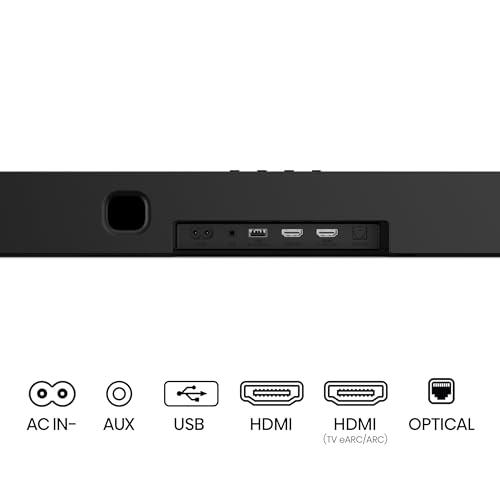
| HDMI eARC, Optical, AUX, USB, Bluetooth 5.3 | HDMI eARC, Optical, USB, Bluetooth 5.4 |
| Physical Dimensions - Size impacts TV compatibility and room aesthetics | |
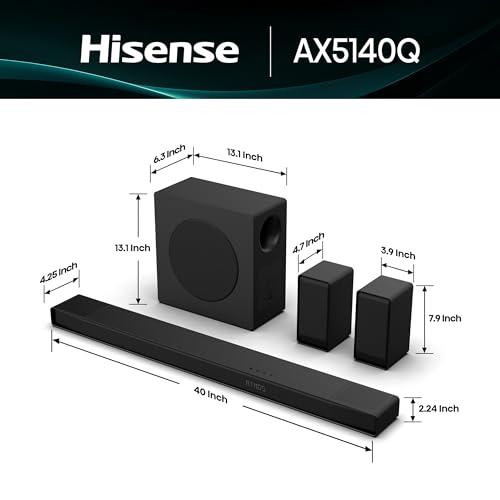
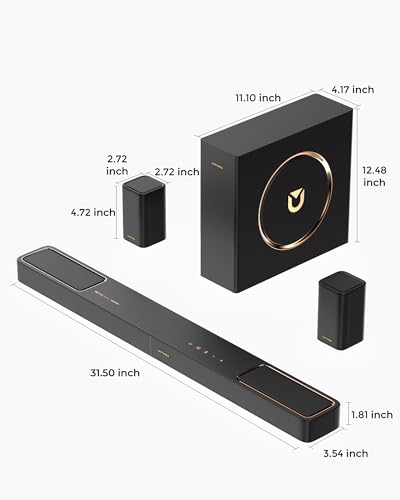
| 40" x 2.24" x 4.25" (fits TVs 50"+ comfortably) | 31.5" x 1.81" x 3.54" (works with smaller TVs 43"+) |
| Rear Speaker Design - Wireless rears offer cleaner installation | |
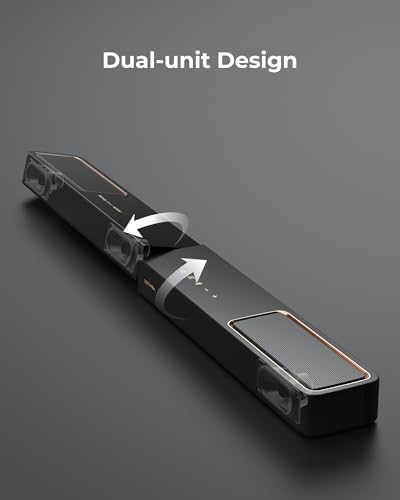
| Fully wireless rear speakers with built-in height drivers | Wired rear speakers (single cable between them) |
| Content Enhancement - How well each system improves non-Atmos material | |
| DTS Virtual:X processing for standard content | Xupmix technology intelligently upmixes stereo to surround |
| Setup Complexity - Balance between features and ease of installation | |
| Moderate (wireless pairing required, room calibration recommended) | Simple (plug-and-play, 30-minute setup typical) |
| Value Positioning - Performance per dollar and target market | |
| Premium features justify higher cost for enthusiasts and large rooms | Exceptional performance-to-price ratio for mainstream buyers |
The Hisense AX5140Q offers superior Atmos immersion with its 5.1.4 channel configuration, featuring four dedicated up-firing drivers that create more precise overhead effects. The Ultimea Skywave F40 delivers excellent Atmos performance with its 5.1.2 setup and two high-quality up-firing speakers. For most living rooms, the F40 provides convincing 3D surround sound, while the AX5140Q excels in larger spaces where the extra height channels make a noticeable difference.
The Hisense AX5140Q outputs 600 watts total system power, giving it superior headroom for large rooms and high-volume listening. The Ultimea Skywave F40 delivers 460 watts, which proves more than adequate for typical living rooms under 300 square feet. Both systems maintain clear audio at various volume levels, but the AX5140Q handles dynamic movie soundtracks better in spacious environments.
The Hisense AX5140Q supports a broader range of audio codecs including Dolby Atmos, DTS:X, Dolby TrueHD, and DTS-HD Master Audio, making it ideal for 4K Blu-ray collectors. The Ultimea Skywave F40 focuses on Dolby formats that cover 90% of streaming content, plus features Xupmix technology that intelligently enhances non-Atmos material. For most users streaming from Netflix or Disney+, the F40 handles all necessary formats.
The Hisense AX5140Q offers a fully wireless setup with wireless subwoofer and rear speakers, eliminating cable clutter entirely. The Ultimea Skywave F40 uses wireless rear speakers but includes a wired subwoofer connection. Both systems provide reliable wireless performance, with the AX5140Q offering more placement flexibility and the F40 ensuring zero subwoofer latency through its wired design.
The Ultimea Skywave F40 typically offers simpler installation with plug-and-play functionality and 30-minute setup times. The Hisense AX5140Q requires slightly more setup time due to wireless component pairing and room calibration features. Both systems include wall-mounting hardware and clear instructions, but the F40 gets you up and running faster with minimal configuration needed.
Both systems deliver impressive bass for their size, with the Hisense AX5140Q featuring a 6.5" wireless subwoofer that offers flexible placement for optimal room acoustics. The Ultimea Skywave F40 includes a wired subwoofer that provides reliable, punchy bass without wireless interference concerns. User reviews consistently praise the F40 for delivering surprisingly deep bass that remains controlled even at higher volumes.
The Hisense AX5140Q integrates deeply with Hisense TVs through Hi-Concerto platform, offering AI EQ mode and automatic room calibration. The Ultimea Skywave F40 provides comprehensive smartphone app control with 121 preset EQ options and 10-band equalization. The AX5140Q excels in ecosystem integration, while the F40 offers more granular user customization control.
Both systems excel for gaming, with the Hisense AX5140Q featuring a dedicated Game Pro mode that enhances positional audio cues for competitive gaming. The Ultimea Skywave F40 offers ultra-low latency through Bluetooth 5.4 and clear directional audio for spatial awareness. Both support HDMI eARC with 4K 60Hz passthrough, ensuring full compatibility with modern gaming consoles while maintaining audio quality.
The Hisense AX5140Q with its 600-watt output excels in rooms larger than 300 square feet and open-concept spaces. The Ultimea Skywave F40 is optimized for typical living rooms between 215-269 square feet but still performs well in larger spaces. Both systems work effectively in standard home theater setups, with the AX5140Q providing more power reserves for challenging acoustic environments.
The Ultimea Skywave F40 consistently delivers exceptional value, providing roughly 80% of premium soundbar performance at a significantly lower cost. The Hisense AX5140Q justifies its premium pricing through additional height channels, broader codec support, and advanced features. For most buyers prioritizing performance per dollar, the F40 represents outstanding value, while the AX5140Q appeals to enthusiasts wanting maximum features.
The Hisense AX5140Q measures 40 inches wide, making it ideal for 50-inch and larger TVs with its substantial presence. The Ultimea Skywave F40 at 31.5 inches wide works well with 43-inch and larger displays while maintaining a sleek profile. Both systems include wall-mounting hardware, with the F40 offering easier installation due to its lighter weight and more compact rear speakers.
Both systems excel with streaming content, as the Hisense AX5140Q provides excellent Dolby Atmos processing for Netflix and Disney+ content while supporting future codec standards. The Ultimea Skywave F40 focuses specifically on optimizing streaming audio with its Xupmix technology that enhances even standard stereo content into immersive surround sound. For daily streaming use, the F40 delivers outstanding performance that transforms your viewing experience at an accessible price point.
We've done our best to create useful and informative comparisons to help you decide what product to buy. Our research uses advanced automated methods to create this comparison and perfection is not possible - please contact us for corrections or questions. These are the sites we've researched in the creation of this article: shop.hisense-usa.com - manuals.plus - dolby.com - youtube.com - gzhls.at - rtings.com - youtube.com - bestbuy.com - manuals.plus - bestbuy.com - hisense-usa.com - youtube.com - device.report - manuals.plus - youtube.com - device.report - manuals.plus - youtube.com - the-gadgeteer.com - youtube.com - ultimea.com - manuals.plus - youtube.com - ultimea.com - youtube.com - youtube.com - youtube.com - youtube.com - eu.ultimea.com - support.ultimea.com

Privacy Policy
Terms and Conditions - Affiliate Policy
Home Security
© Copyright 2008-2026.
11816 Inwood Rd #1211, Dallas, TX 75244