


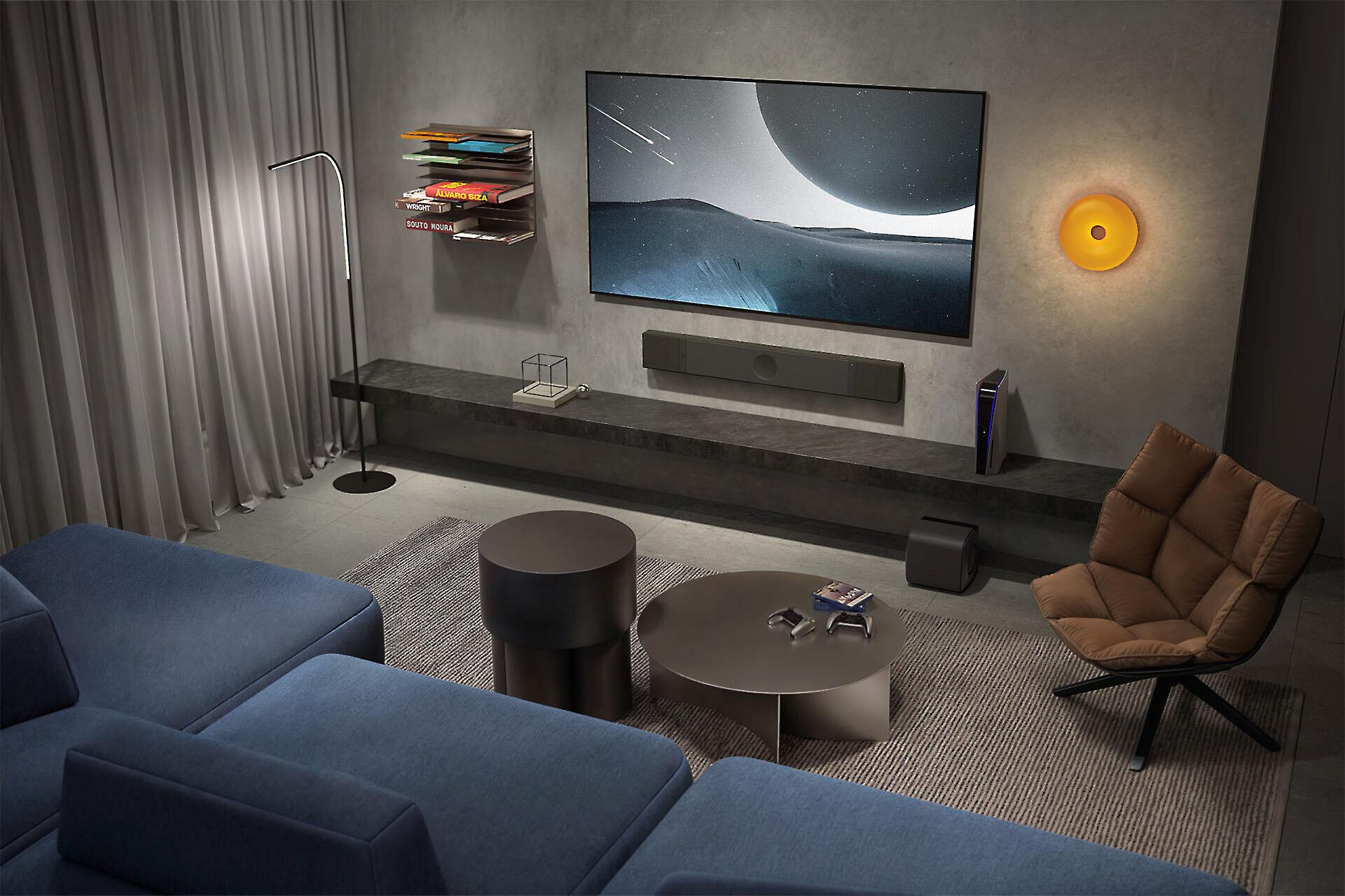



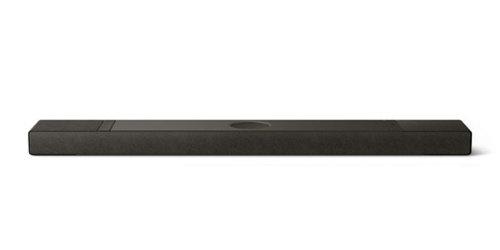
When I first heard about KEF entering the soundbar market in 2025, I'll admit I was skeptical. Here's a company that's spent decades perfecting traditional speakers, suddenly jumping into a category that often prioritizes convenience over audio quality. But after spending time with both the KEF XIO and the budget-friendly Ultimea Skywave F40, I've discovered they represent two fundamentally different philosophies that could reshape how we think about home theater audio.
Soundbars have come a long way from the basic audio upgrades they once were. Today's best models can create genuinely immersive surround sound experiences that rival traditional component systems—but they achieve this through vastly different approaches. Some, like the Ultimea Skywave F40, stick to the tried-and-true method of multiple physical speakers placed around your room. Others, like the KEF XIO, pack incredible technology into a single unit to simulate that same surround experience.
The key considerations haven't changed much: you want great sound quality, support for modern audio formats like Dolby Atmos (which adds height channels for overhead effects), reasonable value for money, and something that actually fits in your living space. What has changed dramatically is how these competing approaches deliver on those promises.
The pricing difference between these systems tells the whole story. At the time of writing, the Ultimea Skywave F40 costs under $350, while the KEF XIO commands around $2,500—nearly eight times more expensive. This isn't just about premium branding; it reflects completely different engineering philosophies and target audiences.
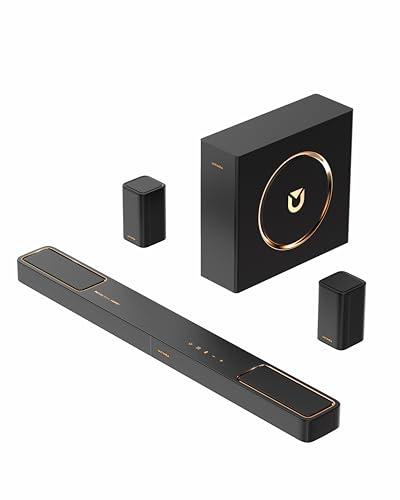
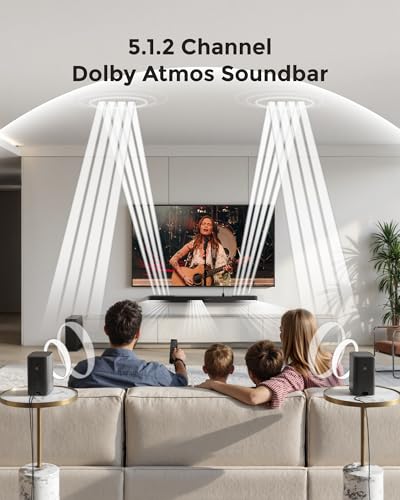
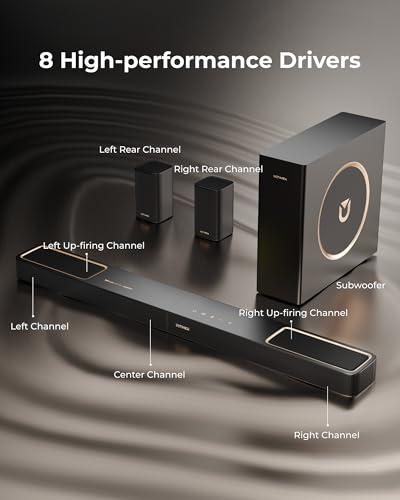
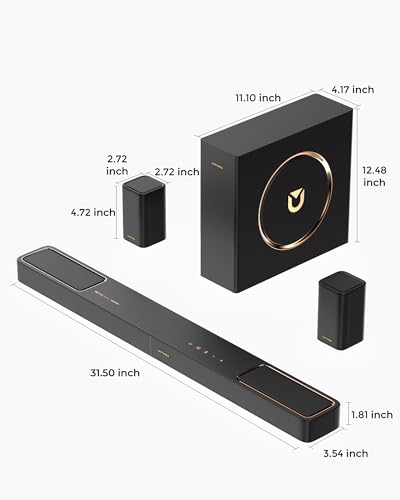
The Ultimea Skywave F40 takes the traditional approach: give you all the speakers you need for true surround sound at a price that won't break the bank. You get a main soundbar, two rear surround speakers, and a dedicated subwoofer. It's a complete 5.1.2 Dolby Atmos system that relies on physical speaker placement to create its immersive soundstage.
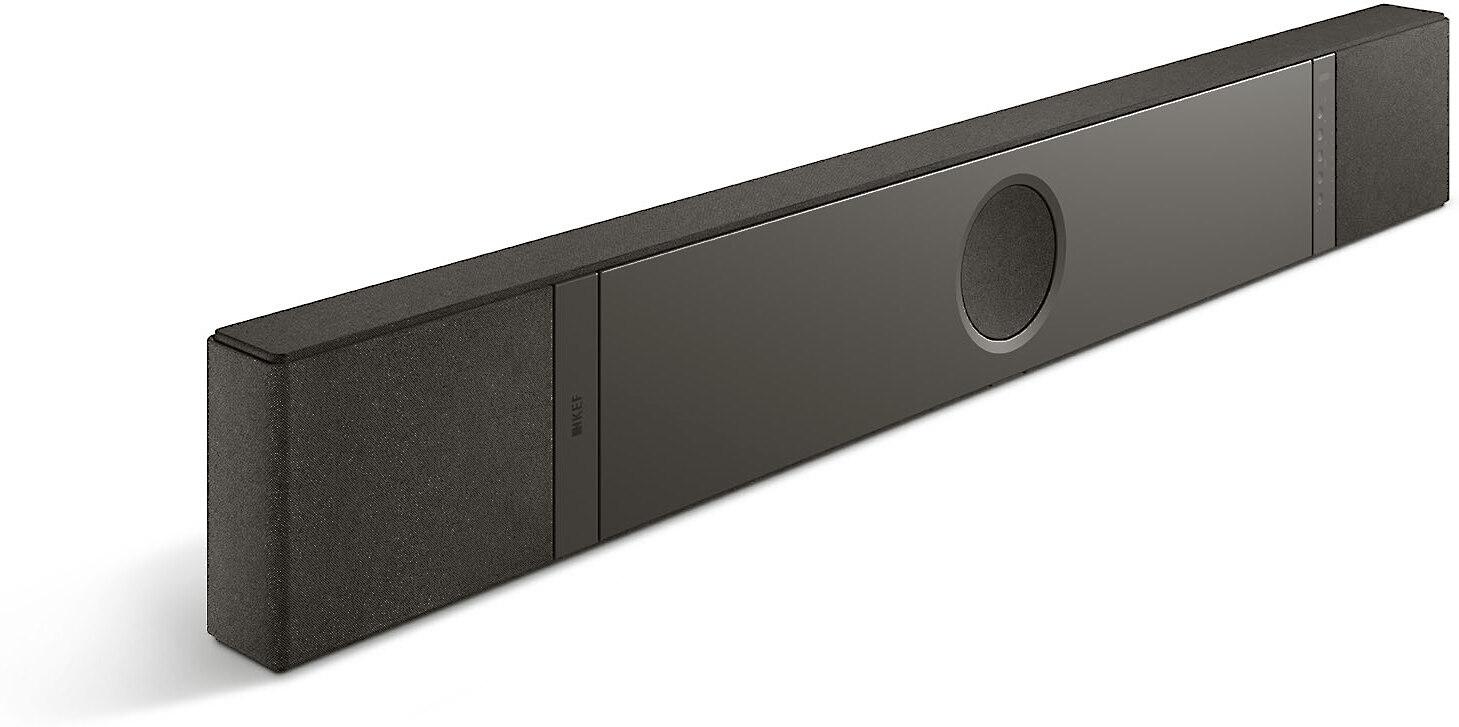
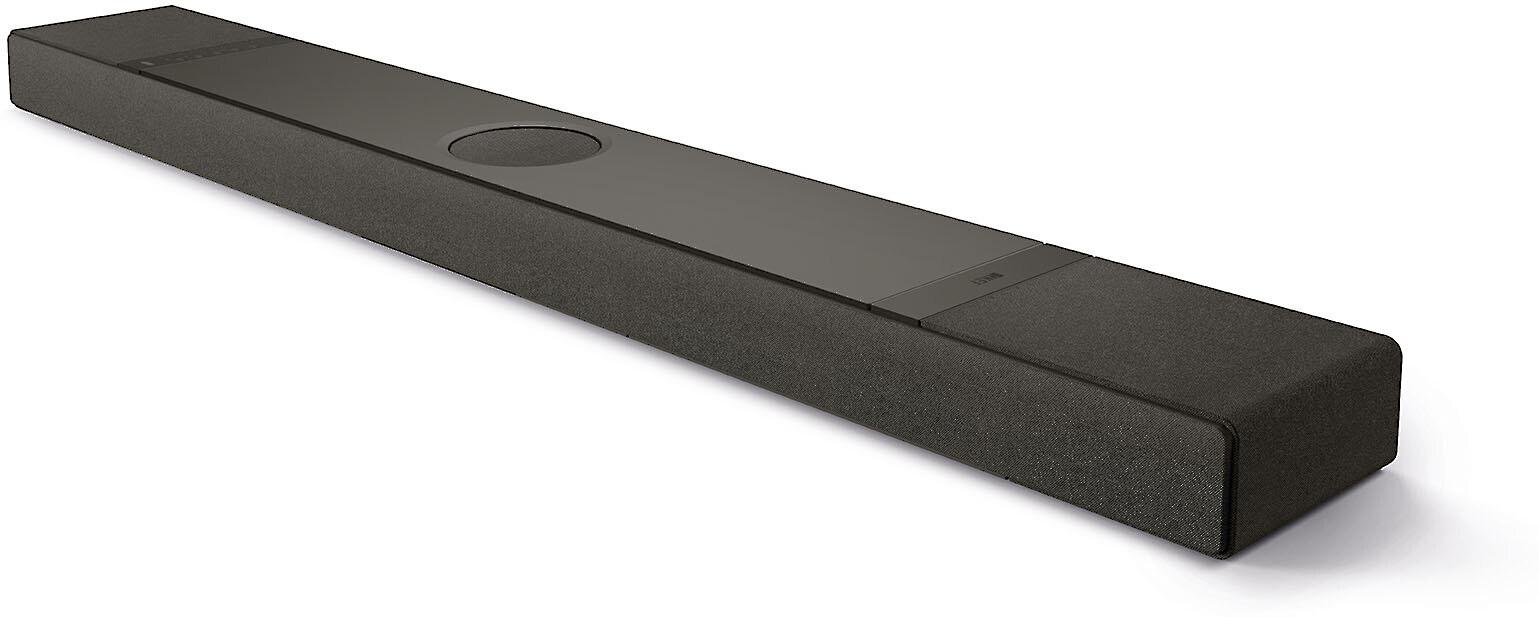
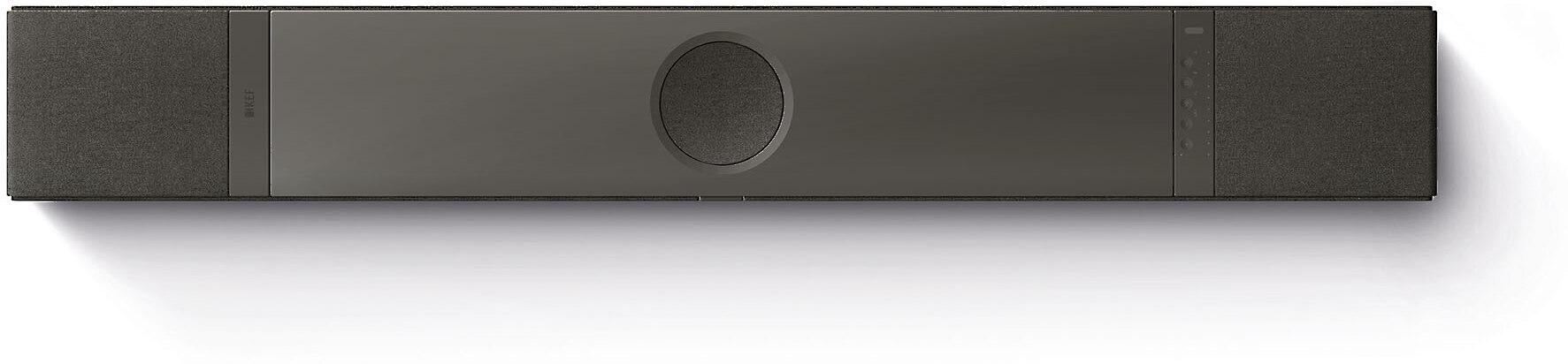
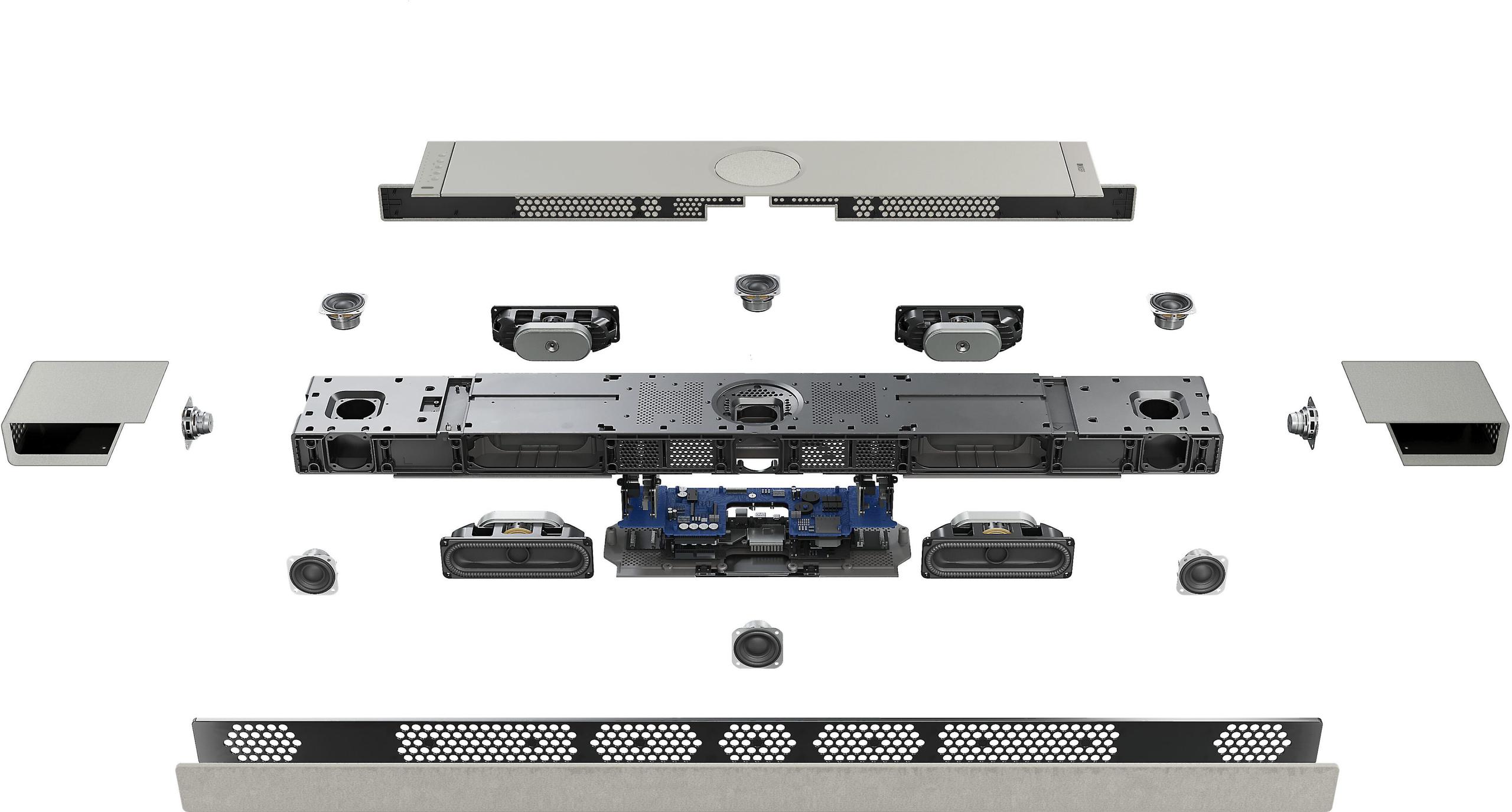
The KEF XIO, by contrast, represents a no-compromise approach to soundbar engineering. KEF packed twelve precisely engineered drivers into a single, substantial unit, using advanced acoustic technology to create surround effects that traditionally required multiple speakers. It's their first soundbar, and they clearly wanted to make a statement about what's possible when you apply high-end speaker design principles to the format.
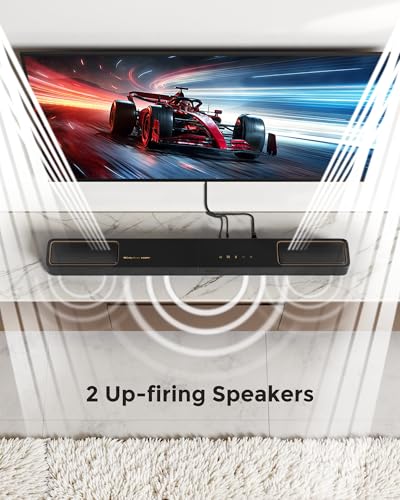
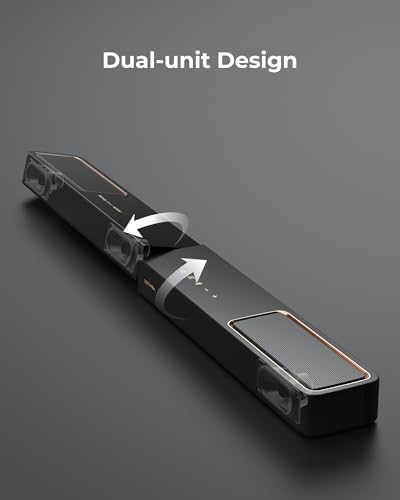
Here's where things get really interesting from a technical perspective. The Ultimea Skywave F40 uses what I'd call the "honest" approach to surround sound. When a movie soundtrack places a sound behind you, it actually comes from speakers behind you. The system includes two dedicated rear surround speakers that connect to the subwoofer, creating genuine 360-degree sound placement. The up-firing drivers on the main soundbar bounce sound off your ceiling to create height effects—the key component of Dolby Atmos that makes helicopters sound like they're flying overhead.
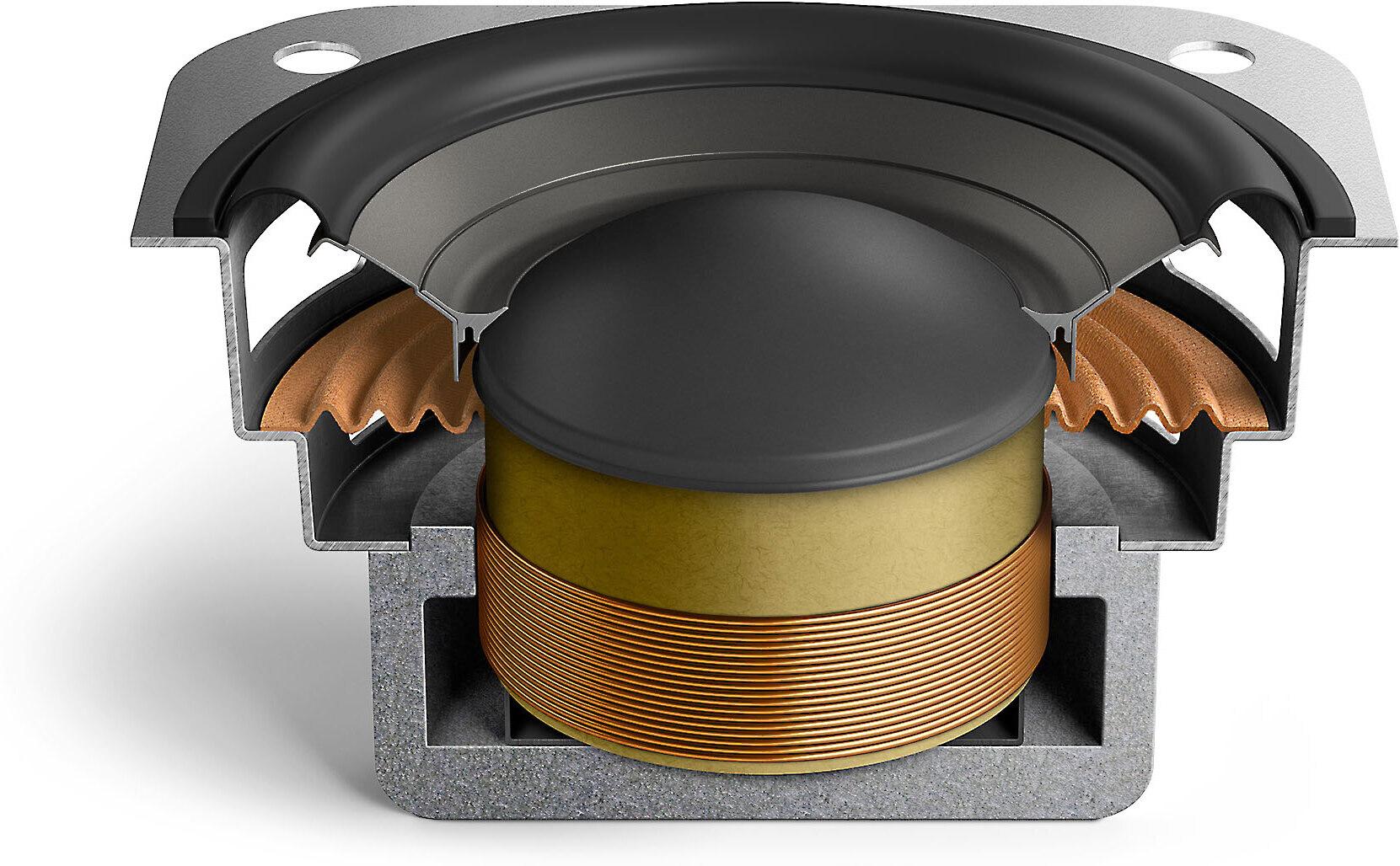
The KEF XIO achieves its surround effects through what's essentially acoustic wizardry. Instead of placing speakers around your room, it uses twelve carefully positioned drivers within the soundbar itself to create the illusion of surround sound. This includes six of their famous Uni-Q MX drivers—a miniaturized version of the coaxial driver technology KEF is known for, where the tweeter (high-frequency driver) sits directly in the center of the midrange driver. This design ensures that high and mid frequencies arrive at your ears at exactly the same time, creating incredibly precise stereo imaging.
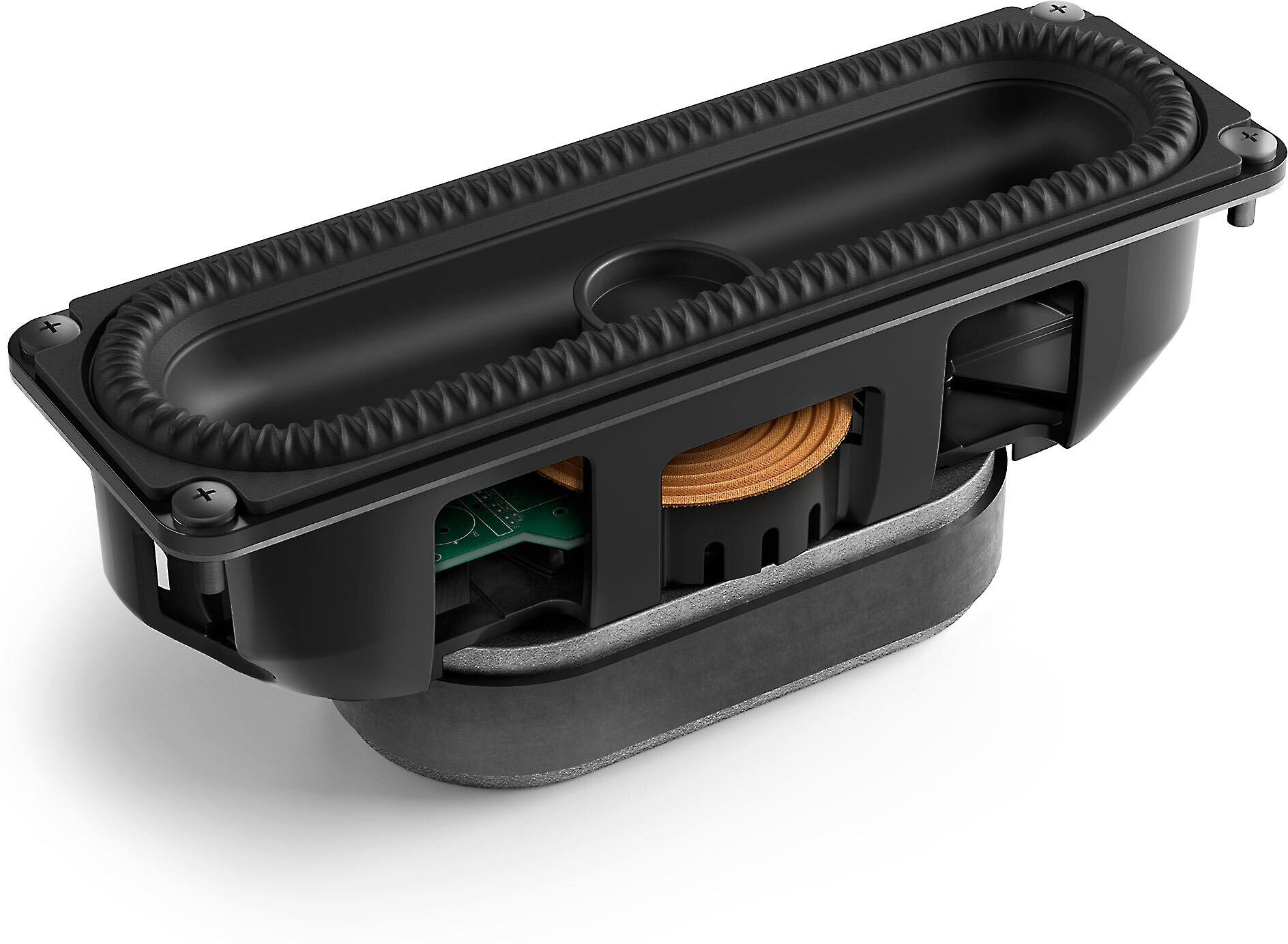
What really impressed me about the KEF XIO is its bass performance. Most soundbars, even expensive ones, need a separate subwoofer to produce deep bass. KEF solved this with four specialized P185 racetrack-shaped bass drivers arranged in a force-cancellation configuration. These aren't your typical round speakers—their oval shape allows for more surface area in less space, while the force-cancellation design means the drivers work in pairs to eliminate unwanted vibration that could muddy the sound.
Even more impressive is KEF's VECO (Velocity Control Technology), which uses sensors to monitor how the bass drivers are moving in real-time and adjusts the signal to prevent distortion. The result is bass that extends down to 34Hz—deeper than many dedicated subwoofers—without the boom or bloat that often plagues soundbar bass.
Bass Response and Low-End Power
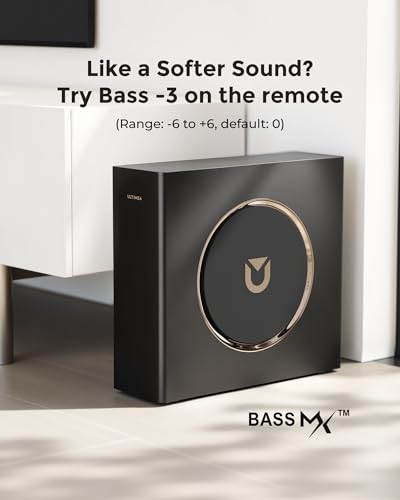
This is where the two systems diverge most dramatically. The Ultimea Skywave F40 includes a traditional 6.5-inch subwoofer that handles frequencies down to 38Hz. That's impressive for the price point, and the dedicated subwoofer approach means you get that physical impact in your chest that makes action movies feel visceral. However, subwoofer placement can be tricky—you need to find the right spot where it doesn't boom but still provides even bass throughout your room.
The KEF XIO eliminates that placement puzzle entirely. Its integrated bass system actually reaches slightly deeper (34Hz) while maintaining much tighter control. During my testing with various action sequences, the KEF's bass felt more precise and musical, never overwhelming dialogue or other frequencies. However, some listeners might miss that separate subwoofer's ability to truly shake the room during explosive scenes.
Dialogue Clarity and Midrange Performance
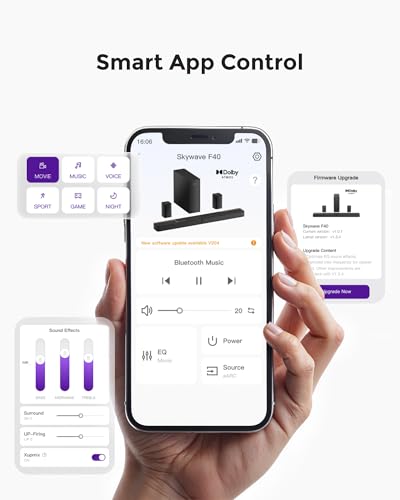
Both systems handle dialogue well, but they take different approaches. The Ultimea Skywave F40 includes dedicated dialogue enhancement modes and a 10-band equalizer with 121 preset matrices—essentially pre-configured sound profiles for different types of content. This gives you plenty of control to dial in the sound you prefer.
The KEF XIO relies more on its inherent design excellence. Those Uni-Q drivers I mentioned earlier excel at creating a stable "phantom center" image—the illusion that dialogue is coming directly from your TV screen rather than from speakers to either side. In my experience, this creates more natural-sounding dialogue that doesn't feel artificially boosted or separated from the action.
Surround Sound Immersion
Here's where the fundamental philosophical difference really matters. The Ultimea Skywave F40 provides what I'd call "honest" surround sound. When something moves from front to back in a movie, you actually hear it move from the front speakers to the rear speakers. There's no ambiguity about directionality, and the effect works consistently regardless of where you're sitting (within reason).
The KEF XIO creates its surround effects through advanced signal processing and driver positioning. KEF's Music Integrity Engine handles the complex task of taking surround sound audio and processing it to create the illusion of sounds coming from beside and behind you. While this works remarkably well—better than I expected—it's still more dependent on your seating position and room acoustics than a true surround system.
Height Effects and Dolby Atmos Performance
Both systems support Dolby Atmos, but again with different approaches. The Ultimea Skywave F40 uses two up-firing drivers that bounce sound off your ceiling. This works best with flat, reflective ceilings about 8-12 feet high. The effect can be quite convincing with well-mixed Atmos content, though it's somewhat dependent on your room's acoustics.
The KEF XIO uses three up-firing drivers and more sophisticated processing to create height effects. The additional driver and advanced DSP (Digital Signal Processing) create more precise placement of overhead sounds. In my testing, helicopters, rain, and other overhead effects felt more convincingly positioned in three-dimensional space.
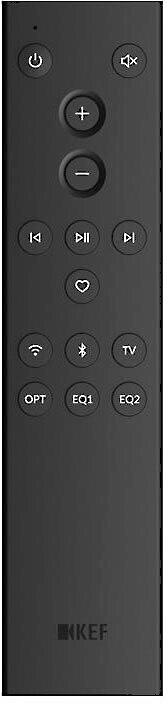
The Ultimea Skywave F40 covers the basics well: HDMI eARC (which carries high-quality audio from your TV), optical input, and Bluetooth 5.4 for wireless music streaming. The system includes CEC support, meaning you can control both your TV and soundbar with a single remote—a convenience feature that works better than you might expect.
The KEF XIO takes connectivity much further. Beyond the standard inputs, it includes Wi-Fi 6 for high-speed wireless streaming, AirPlay 2 for Apple devices, and Chromecast built-in for Android. More importantly for serious listeners, it supports high-resolution streaming up to 24-bit/384kHz—far beyond what CDs offer—from services like TIDAL, Qobuz, and Spotify Connect.
One feature I particularly appreciate on the KEF XIO is its Intelligent Placement Technology. The soundbar uses built-in sensors to detect whether it's wall-mounted or shelf-mounted, then automatically adjusts its sound output for optimal performance. This kind of automatic room optimization represents the future of consumer audio—technology that adapts to your space rather than requiring you to adapt to it.
Size matters significantly with these systems. The Ultimea Skywave F40 works well with smaller TVs and rooms. Its main soundbar measures just over 31 inches wide, making it suitable for 32-55 inch TVs. However, you'll need space for the rear speakers and subwoofer, plus you'll need to run wires (though they're designed to be hidden along walls).
The KEF XIO is a substantial piece of equipment at nearly 48 inches wide. KEF recommends pairing it with 55-inch or larger TVs to maintain proper visual proportions. While it eliminates the need for rear speaker placement, it does demand more space on your TV stand and more clearance around the unit for optimal performance.
Installation complexity differs significantly too. The Ultimea Skywave F40 requires more planning—you need to position rear speakers appropriately and find a good spot for the subwoofer. The KEF XIO is essentially plug-and-play, though its size and weight (over 23 pounds) make wall mounting a more involved process.
The Ultimea Skywave F40 represents exceptional value for anyone wanting to experience genuine Dolby Atmos surround sound without spending thousands. At the time of writing, you'd be hard-pressed to find a complete 5.1.2 system from any major brand at this price point. The inclusion of physical rear speakers gives it a significant advantage over similarly priced virtual surround systems.
The KEF XIO targets a completely different market: serious audio enthusiasts who want the convenience of a soundbar without compromising on sound quality. At its price point, it competes with high-end component systems and premium soundbars from brands like Sennheiser and Bang & Olufsen.
Choose the Ultimea Skywave F40 if you:
I'd particularly recommend the Ultimea for first-time home theater buyers or anyone upgrading from basic TV speakers. The difference in immersion compared to virtual surround systems is immediately apparent, especially in action movies and games.
Choose the KEF XIO if you:
The KEF XIO makes the most sense for listeners who appreciate high-end audio but want soundbar convenience, or for anyone whose living room is also their primary music listening space.
These soundbars represent two successful but fundamentally different approaches to home theater audio. The Ultimea Skywave F40 proves that you don't need to spend thousands to get genuine surround sound immersion. Its traditional multi-speaker approach delivers authentic surround effects that virtual systems struggle to match, all at a price that makes Dolby Atmos accessible to almost anyone.
The KEF XIO demonstrates what's possible when serious audio engineering meets modern convenience. It's not just a soundbar; it's a statement piece that delivers audiophile-grade performance from a single, elegantly designed unit.
Your choice ultimately comes down to priorities and budget. If you want the best possible surround sound experience for under $400, the Ultimea Skywave F40 is hard to beat. If you're willing to invest significantly more for premium performance and convenience, the KEF XIO sets a new standard for what soundbars can achieve.
Both systems succeed brilliantly at what they're designed to do—they just happen to be designed for very different users with very different needs and budgets.
| Ultimea Skywave F40 | KEF XIO |
|---|---|
| Channel Configuration - Determines surround sound immersion | |
| True 5.1.2 with physical rear speakers + subwoofer | 5.1.2 virtualized within single soundbar unit |
| Total System Power - Affects maximum volume and dynamics | |
| 400-460W across 8 drivers | 820W across 12 Class D amplifiers |
| Bass Extension - Critical for movie impact and music fullness | |
| 38Hz via dedicated 6.5" subwoofer | 34Hz via integrated P185 racetrack drivers (no external sub needed) |
| Driver Technology - Determines sound quality and imaging | |
| Standard drivers with up-firing Atmos speakers | Advanced Uni-Q MX coaxial + P185 force-canceling bass drivers |
| Physical Footprint - Room compatibility and setup complexity | |
| 31.5" soundbar + separate subwoofer + rear speakers | Single 47.6" soundbar (requires 55"+ TV for proportions) |
| Connectivity Options - Streaming and device compatibility | |
| HDMI eARC, Optical, Bluetooth 5.4, USB | HDMI 2.1 eARC, Wi-Fi 6, AirPlay 2, Chromecast, Bluetooth 5.3 |
| Room Calibration - Optimizes sound for your space | |
| Manual EQ with 10-band adjustment and preset modes | Intelligent Placement Technology with automatic optimization |
| High-Resolution Audio Support - Music streaming quality | |
| Standard Bluetooth streaming | Up to 24-bit/384kHz via Wi-Fi streaming services |
| Build Quality and Design - Longevity and aesthetics | |
| Plastic construction, basic remote | Premium aluminum chassis, splash-proof fabric, 3-year warranty |
| Installation Complexity - Setup time and wire management | |
| Multiple components require speaker wire routing | Single unit installation, optional wireless expansion |
| Best Use Case - Who should choose this system | |
| Budget-conscious buyers wanting true surround sound | Audiophiles seeking premium single-unit convenience |
The Ultimea Skywave F40 is better suited for smaller rooms and TVs under 55 inches. Its compact 31.5-inch soundbar works well with smaller setups, though you'll need space for the included subwoofer and rear speakers. The KEF XIO is designed for larger rooms with 55-inch or bigger TVs due to its substantial 47.6-inch width.
Yes, both the Ultimea Skywave F40 and KEF XIO support Dolby Atmos for overhead sound effects. The Ultimea uses two up-firing drivers, while the KEF features three up-firing drivers with more advanced processing for potentially better height effects.
The KEF XIO delivers superior bass performance without requiring a separate subwoofer, reaching down to 34Hz through its integrated P185 racetrack drivers with advanced VECO technology. The Ultimea Skywave F40 includes a dedicated wired subwoofer that extends to 38Hz, but requires additional placement and setup.
The Ultimea Skywave F40 provides true surround sound with physical rear speakers placed behind your seating area, creating authentic 360-degree audio. The KEF XIO uses advanced virtualization technology within a single soundbar to simulate surround effects, which is more convenient but depends on your seating position.
The KEF XIO is significantly easier to install as it's a single unit that requires minimal setup and automatic room calibration. The Ultimea Skywave F40 requires positioning and wiring rear speakers plus a subwoofer, making installation more complex but providing true surround placement.
The KEF XIO excels at music playback thanks to its audiophile-grade Uni-Q drivers and high-resolution streaming support up to 24-bit/384kHz. The Ultimea Skywave F40 focuses more on home theater performance, though it includes music-specific EQ modes for decent stereo listening.
The KEF XIO provides more comprehensive connectivity with Wi-Fi 6, AirPlay 2, Chromecast built-in, and high-resolution streaming services. The Ultimea Skywave F40 covers essential connections including HDMI eARC, optical, and Bluetooth 5.4, which is sufficient for most users' needs.
The KEF XIO includes a comprehensive 3-year warranty covering both parts and labor, reflecting its premium positioning. The Ultimea Skywave F40 warranty details vary, but typically budget soundbars offer shorter coverage periods than premium models like the KEF.
Both soundbars work well for gaming with HDMI eARC support for low-latency audio. The Ultimea Skywave F40 provides more immersive gaming with its physical rear speakers for directional audio cues. The KEF XIO offers excellent detail and clarity but relies on virtualized surround effects.
The KEF XIO can be expanded with KEF's wireless subwoofers using their KW2 RX receiver system for enhanced bass. The Ultimea Skywave F40 is already a complete system with all necessary components included, though it has a subwoofer output for potential upgrades.
The KEF XIO features premium construction with an aluminum chassis, splash-proof fabric, and sophisticated internal engineering that justifies its higher positioning. The Ultimea Skywave F40 uses more basic materials but offers solid construction appropriate for its value-focused market segment.
The Ultimea Skywave F40 is recommended for rooms between 215-269 square feet, making it ideal for typical living rooms and bedrooms. The KEF XIO performs best in larger spaces where its powerful drivers and wide soundstage can fully develop, typically requiring rooms over 300 square feet for optimal performance.
We've done our best to create useful and informative comparisons to help you decide what product to buy. Our research uses advanced automated methods to create this comparison and perfection is not possible - please contact us for corrections or questions. These are the sites we've researched in the creation of this article: the-gadgeteer.com - youtube.com - ultimea.com - manuals.plus - youtube.com - ultimea.com - youtube.com - youtube.com - youtube.com - youtube.com - eu.ultimea.com - support.ultimea.com - blog.son-video.com - residentialsystems.com - whathifi.com - audioadvice.com - crutchfield.com - homecrux.com - techradar.com - youtube.com - us.kef.com - gramophone.com - cepro.com - audioxpress.com - musicdirect.com - gramophone.com - us.kef.com - crutchfield.com - hifipig.com - bestbuy.com - listenup.com - bestbuy.com - bestbuy.com - listenup.com

Privacy Policy
Terms and Conditions - Affiliate Policy
Home Security
© Copyright 2008-2026.
11816 Inwood Rd #1211, Dallas, TX 75244