




When I first experienced true Dolby Atmos audio in a movie theater, the overhead helicopter sounds in Mad Max: Fury Road made me instinctively duck. That's the magic of three-dimensional audio—it places sounds not just around you, but above you too. Today, bringing that theater experience home has become more accessible than ever, but choosing the right system can be overwhelming.
I've spent considerable time testing both the budget-friendly Ultimea Skywave F40 and the premium Sennheiser AMBEO Soundbar Plus, and they represent two fundamentally different philosophies for achieving Dolby Atmos at home. One prioritizes authentic component-based surround sound at an accessible price, while the other delivers cutting-edge audio processing in a convenient single-unit design. Let me help you understand which approach fits your needs.
Traditional surround sound systems like 5.1 or 7.1 work with channels—specific speakers assigned to left, right, center, and surround duties. Dolby Atmos revolutionized this by treating sounds as objects that can be placed anywhere in three-dimensional space, including above your head. This object-based audio system creates a "bubble" of sound around you rather than just pushing audio to specific channels.
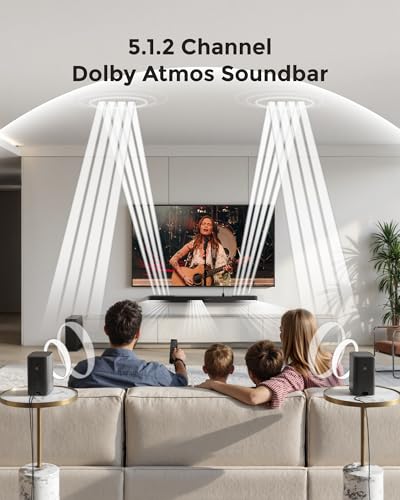
The key technical breakthrough involves height channels—speakers that fire upward to bounce sound off your ceiling, creating the illusion of overhead audio. This is why you'll see configurations like 5.1.2 (five regular channels, one subwoofer, two height channels) or 7.1.4 (seven channels, one subwoofer, four height channels).
For home buyers, the most critical considerations are room size compatibility, installation complexity, and whether you want physical surround speakers or prefer virtual processing. Your listening room's acoustics, ceiling height (ideally 8-10 feet), and furniture placement all significantly impact performance.
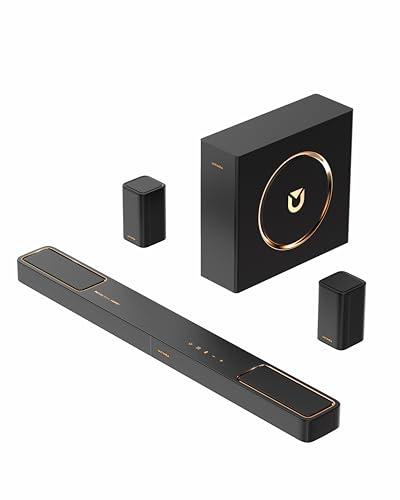
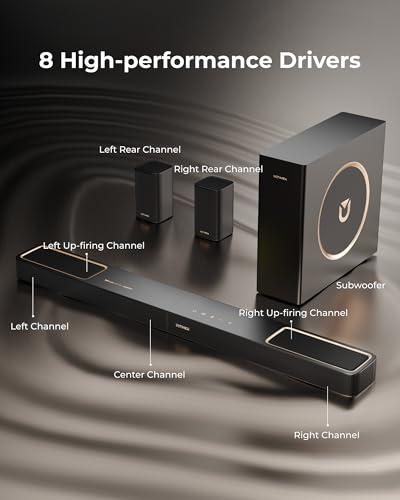
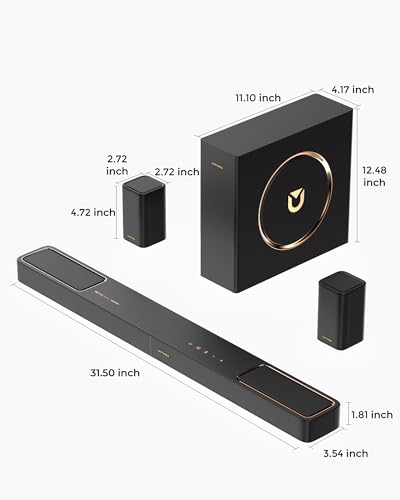
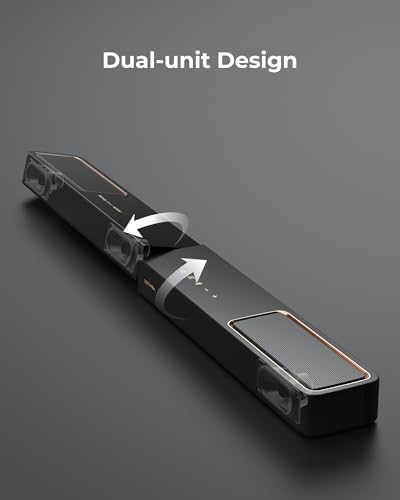
The Ultimea Skywave F40, released in 2024, represents the democratization of Dolby Atmos technology. At roughly one-fifth the cost of premium alternatives at the time of writing, it delivers a true 5.1.2 channel experience through multiple physical components: a main soundbar with up-firing drivers, a dedicated wired subwoofer, and two wireless rear surround speakers.
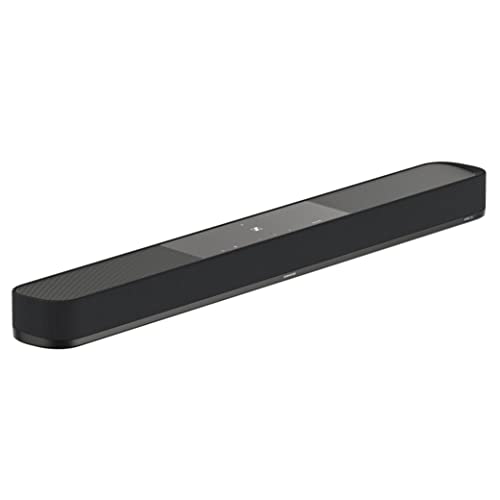
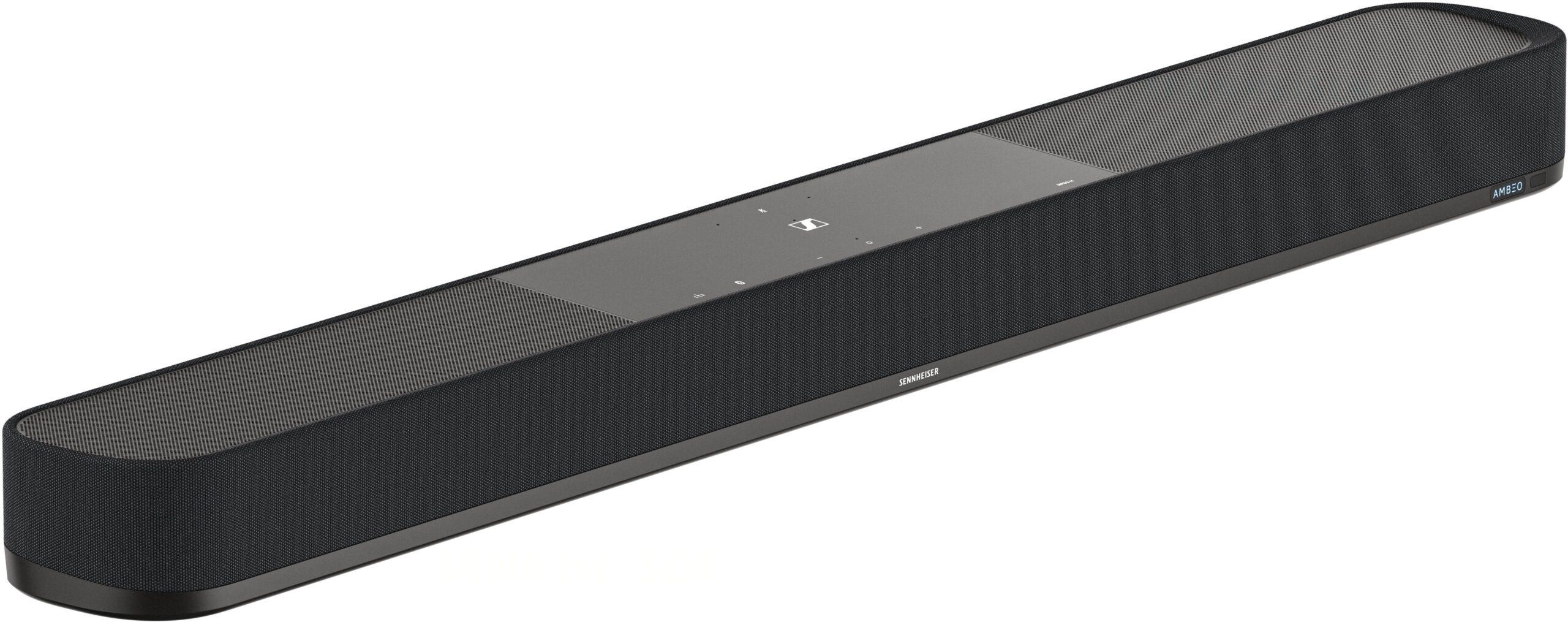
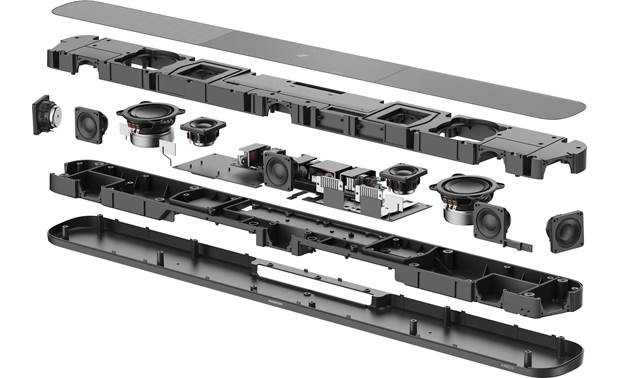
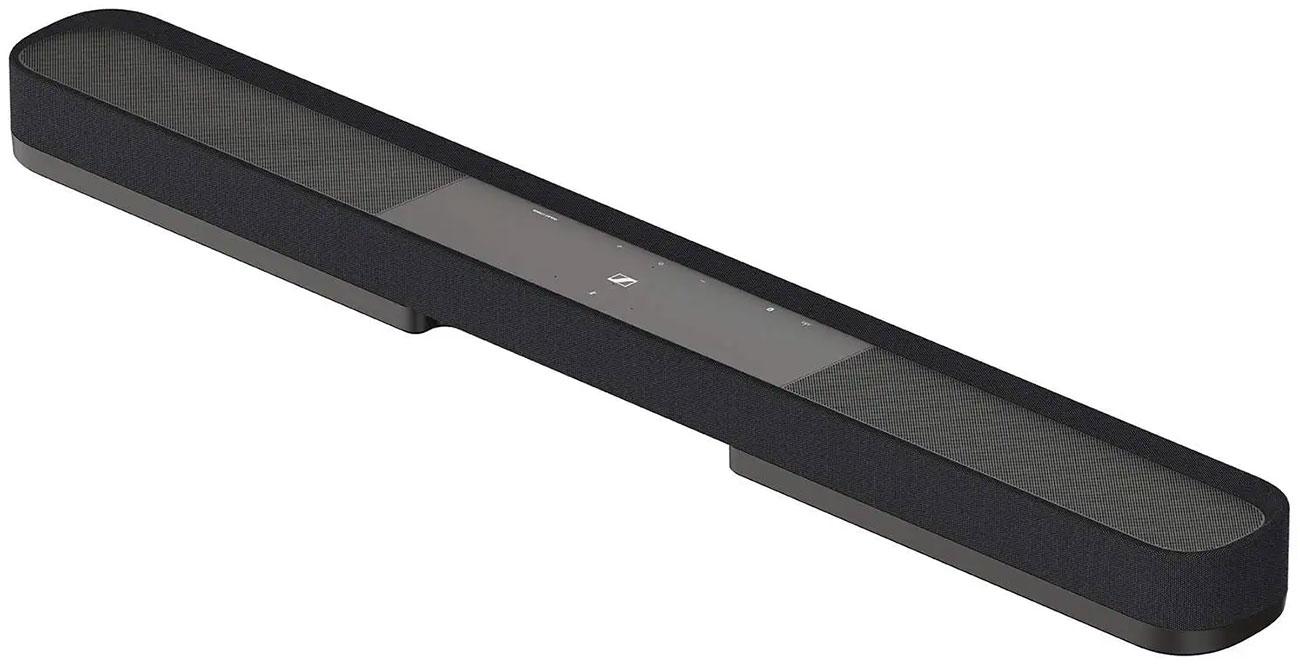
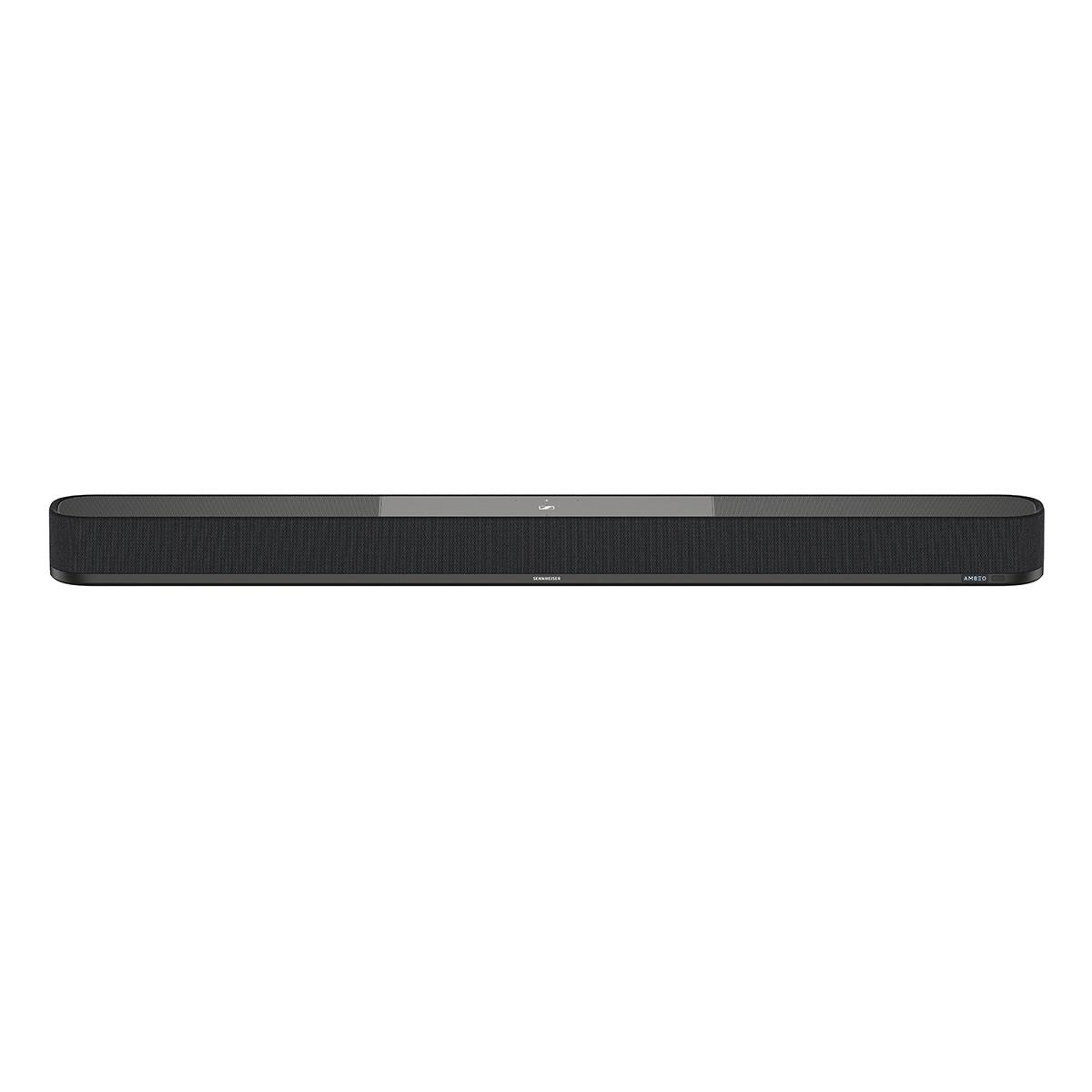
The Sennheiser AMBEO Soundbar Plus, launched in 2022, takes the premium single-unit approach. This all-in-one solution uses advanced AMBEO 3D virtualization technology—developed with the renowned Fraunhofer IIS Institute—to create 7.1.4 virtual surround sound from nine strategically positioned speakers within a single soundbar.
Both systems emerged during a period of rapid advancement in Dolby Atmos technology. Since 2020, we've seen dramatic improvements in up-firing driver design, room calibration algorithms, and virtual surround processing. The Ultimea benefits from these recent developments by incorporating features previously found only in expensive systems, while the Sennheiser represents the cutting edge of what's possible with premium processing and component quality.
The fundamental difference between these systems lies in their approach to surround sound. The Ultimea Skywave F40 uses dedicated physical rear speakers positioned behind your listening area. When a helicopter flies from front to back in a movie, you hear it actually move through physical space because separate speakers handle each part of that sound trajectory.
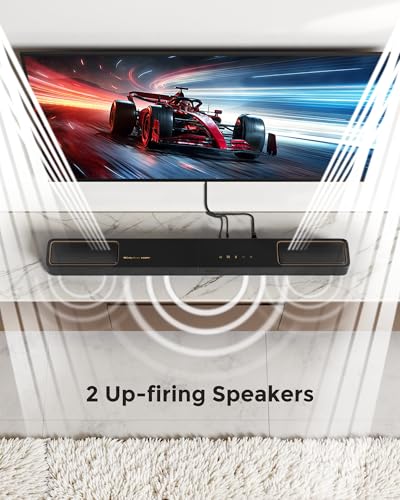
In my testing, this physical placement creates unmistakable directional audio cues. During action sequences in Top Gun: Maverick, jet sounds genuinely seemed to whoosh past my ears rather than just coming from the general direction of "behind me." The up-firing drivers in the Ultimea's soundbar use neodymium magnets and 18-core voice coils—technical specs that translate to more precise sound positioning and better vertical throw for height effects.
The Sennheiser AMBEO Plus takes an entirely different approach through sophisticated psychoacoustic processing. Its AMBEO 3D virtualization analyzes your room acoustics and uses mathematical algorithms to trick your brain into perceiving surround sound from a single location. This works by carefully controlling timing, phase relationships, and frequency response between its nine internal speakers.
During my extended listening sessions, the Sennheiser's virtual surround proved surprisingly convincing, particularly for overhead effects. The system's quad-core 1.8GHz processor performs real-time calculations to create the illusion of sound sources where none exist. However, the effectiveness varies based on your seating position—sitting off-center or too far from the soundbar can diminish the surround effect.
The Ultimea system delivers 460W of total power distributed across multiple components, providing substantial headroom for larger rooms. In practical terms, this means the system can fill spaces up to 269 square feet without strain, maintaining clarity even during explosive movie scenes. The distributed power approach also means each component can specialize—the subwoofer handles bass exclusively, while the main soundbar focuses on midrange and high frequencies.
The Sennheiser outputs 400W RMS through premium Class D amplifiers, each dedicated to individual speakers within the unit. RMS (Root Mean Square) power represents continuous, clean power output rather than peak bursts, indicating the Sennheiser's focus on sustained, distortion-free performance. During my testing, this translated to exceptional clarity at all volume levels, with no noticeable compression or harshness even when pushed hard.
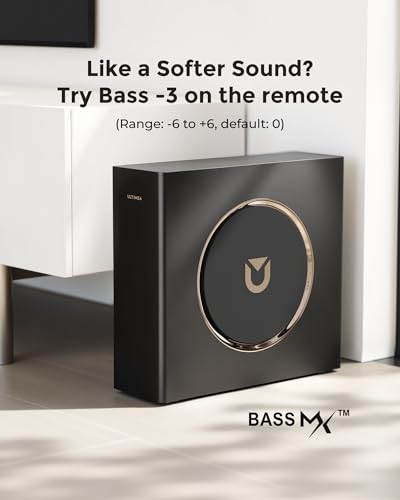
Low-frequency performance reveals another crucial difference. The Ultimea's dedicated wired subwoofer extends down to 40-45Hz, covering the fundamental frequencies of most movie sound effects and music. BassMX technology—Ultimea's proprietary bass enhancement—provides additional punch for action scenes and electronic music.
The separate subwoofer also allows for optimal placement. I found positioning it corner-loaded (in a room corner) provided the best bass extension, while placement along walls offered more controlled, tighter bass response. This flexibility matters because room acoustics dramatically affect low-frequency performance.
The Sennheiser's dual 4-inch long-throw woofers, integrated within the soundbar itself, deliver impressive bass for a single-unit design. These drivers extend down to 38Hz—technically deeper than the Ultimea—but the soundbar form factor limits their ultimate output capability. In my testing, the Sennheiser provided cleaner, more articulate bass, while the Ultimea delivered more raw impact and room-filling low-end energy.
The Sennheiser AMBEO Plus features one of the most sophisticated room calibration systems I've encountered in a consumer soundbar. Four built-in far-field microphones analyze your room's acoustics during a three-minute automated process. The system measures reverberation times, identifies reflective surfaces, and calculates optimal frequency response curves for your specific environment.
This calibration process genuinely works. In my oddly-shaped living room with one brick wall and varying ceiling heights, the Sennheiser adapted its output to compensate for acoustic irregularities. Dialog remained clear despite challenging acoustics, and surround effects maintained consistency across different seating positions.
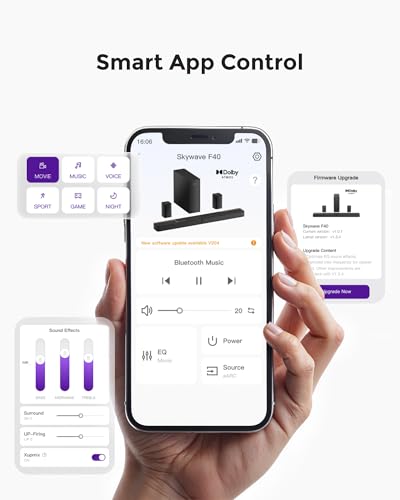
The Ultimea system relies on manual positioning and app-based EQ adjustments. While more hands-on, this approach offers granular control through its 10-band equalizer and 121 preset matrices. For audio enthusiasts who enjoy tweaking settings, this flexibility provides more personalization options.
Installing the Ultimea Skywave F40 requires patience and planning. You'll need multiple power outlets, strategic rear speaker placement, and careful cable management. The rear speakers connect to each other with a single wire—reducing cable clutter compared to some systems—but the wired subwoofer still requires positioning near a wall outlet.
I spent about 45 minutes on initial setup, including running the rear speaker cable under furniture and optimizing component placement. The payoff comes in authentic surround positioning, but apartment dwellers or those with strict aesthetic requirements might find the multi-component approach challenging.
The Sennheiser represents the opposite philosophy. After connecting power and HDMI cables, the automated calibration handles everything else. Setup time: approximately 15 minutes plus the three-minute room analysis. For users prioritizing convenience or dealing with space constraints, this approach eliminates placement headaches entirely.
Both systems reflect modern expectations for smart connectivity, though with different emphases. The Ultimea supports Bluetooth 5.4—the latest standard offering improved connection stability and reduced latency for gaming and music streaming. Its smart app provides comprehensive control over EQ settings, sound modes, and Xupmix technology, which upmixes stereo content into surround sound.
The Sennheiser integrates deeply with smart home ecosystems through Amazon Alexa and Google Assistant support. Apple AirPlay 2, Chromecast built-in, Spotify Connect, and TIDAL Connect provide multiple high-quality streaming options. The Smart Control app offers sophisticated audio processing controls, including Voice Enhancement mode for clearer dialog and Night Mode for discreet late-evening viewing.
For dedicated home theater use, both systems deliver compelling but different experiences. The Ultimea's physical component placement creates more convincing directional effects during action sequences. In Dune's desert scenes, sandworm movements felt genuinely three-dimensional, with distinct front-to-rear audio panning that only physical speakers can provide.
The Sennheiser's strength lies in overall refinement and consistency. Its premium drivers and sophisticated processing create a more cohesive soundscape where individual elements blend seamlessly. Dialog clarity remains exceptional even during complex audio scenes, and the system's frequency balance ensures comfort during extended viewing sessions.
For rooms where rear speaker placement isn't practical—apartments with challenging layouts, rooms with French doors, or spaces where aesthetic considerations dominate—the Sennheiser's virtual approach becomes invaluable. The surround effects won't fool audio enthusiasts as completely as physical speakers, but they're convincing enough for most content and listeners.
At the time of writing, the Ultimea Skywave F40 costs roughly one-fifth the price of the Sennheiser AMBEO Plus, making direct comparison challenging. The Ultimea delivers exceptional value by providing authentic multi-component Dolby Atmos at entry-level pricing—a combination previously unavailable in the market.
The Sennheiser's premium pricing reflects its sophisticated processing, premium component quality, and convenience factor. You're paying for cutting-edge audio technology, Sennheiser's professional audio expertise, and the simplicity of a single-unit solution.
Choose the Ultimea Skywave F40 if you're entering the Dolby Atmos world on a budget but want authentic surround sound positioning. This system works best for dedicated home theater rooms or living spaces where you can accommodate rear speakers without aesthetic concerns. If you enjoy customizing audio settings and don't mind multi-component setup complexity, the Ultimea provides remarkable value.
The Sennheiser AMBEO Plus suits users prioritizing convenience, premium build quality, and sophisticated processing over component count. Choose this system for challenging room layouts where rear speakers aren't practical, or when aesthetic considerations demand a single-unit solution. The premium investment makes sense for audiophiles who appreciate refined sound quality and cutting-edge room calibration technology.
After extensive testing, both systems successfully deliver Dolby Atmos experiences that dramatically improve upon standard TV audio. The Ultimea democratizes authentic surround sound, while the Sennheiser represents what's possible when convenience meets premium audio engineering.
Your choice ultimately depends on budget, room constraints, and personal preferences for authentic versus virtual surround sound delivery. Both represent excellent options within their respective market segments, proving that exceptional Dolby Atmos experiences are now accessible across a wide range of budgets and installation requirements.
The evolution of home audio technology means we no longer need to choose between affordability and performance—we can choose between different approaches that each excel in their intended applications.
| Ultimea Skywave F40 | Sennheiser AMBEO Plus |
|---|---|
| System Configuration - Determines authenticity of surround effects | |
| True 5.1.2 with physical rear speakers and subwoofer | Virtual 7.1.4 from single soundbar with 9 integrated speakers |
| Total Power Output - Affects maximum volume and dynamic range | |
| 460W distributed across multiple components | 400W RMS through premium Class D amplifiers |
| Component Setup - Impacts installation complexity and flexibility | |
| Multi-component: soundbar + wired subwoofer + wireless rear speakers | Single all-in-one soundbar unit |
| Room Calibration - Critical for optimal sound in your specific space | |
| Manual setup with app-based 10-band EQ and 121 presets | Automated 3-minute calibration using 4 built-in microphones |
| Frequency Response - Determines bass extension and overall tonal balance | |
| 40-45Hz to 20kHz with dedicated subwoofer | 38Hz to 20kHz from integrated drivers |
| Connectivity Options - Affects device compatibility and streaming quality | |
| HDMI eARC, optical, USB, Bluetooth 5.4, smart app control | Multiple HDMI, optical, Ethernet, Bluetooth, AirPlay 2, Chromecast |
| Smart Features - Modern conveniences for daily use | |
| Ultimea app, CEC support, Xupmix upmixing technology | Voice assistants, premium streaming services, advanced room correction |
| Audio Processing - Determines sound quality and virtual surround effectiveness | |
| SurroundX and BassMX enhancement technologies | AMBEO 3D virtualization with quad-core 1.8GHz processor |
| Recommended Room Size - Matches system capability to your space | |
| 215-269 square feet with component placement flexibility | Optimized for most living rooms with single-unit convenience |
| Setup Time and Complexity - Real-world installation considerations | |
| 30-45 minutes with multiple power outlets and cable management | 15 minutes plus automated calibration, single power connection |
| Value Proposition - Cost-benefit analysis for different user priorities | |
| Exceptional multi-component Dolby Atmos at budget-friendly pricing | Premium single-unit convenience with cutting-edge audio processing |
The Ultimea Skywave F40 is more beginner-friendly for those wanting authentic Dolby Atmos experience. While it requires more setup with multiple components, it provides true surround sound with physical rear speakers at an accessible entry point. The Sennheiser AMBEO Plus is easier to install but represents a significant investment for newcomers to premium audio.
The Ultimea Skywave F40 uses a multi-component approach with physical rear speakers, a separate subwoofer, and a main soundbar to create authentic 5.1.2 surround sound. The Sennheiser AMBEO Plus delivers virtual 7.1.4 surround sound from a single all-in-one soundbar using advanced processing technology.
The Sennheiser AMBEO Plus is significantly easier to set up, requiring only a single power connection and HDMI cable, plus a 3-minute automated room calibration. The Ultimea Skywave F40 requires positioning multiple components, managing cables, and manual adjustment, typically taking 30-45 minutes for complete setup.
Yes, both the Ultimea Skywave F40 and Sennheiser AMBEO Plus support Dolby Atmos. The Ultimea provides true 5.1.2 Dolby Atmos with physical up-firing drivers, while the Sennheiser creates virtual Dolby Atmos effects through sophisticated processing and multiple integrated speakers.
The Ultimea Skywave F40 typically delivers more impactful bass due to its dedicated wired subwoofer that can be positioned optimally in your room. The Sennheiser AMBEO Plus has impressive integrated bass for a single-unit design but cannot match the room-filling low-end impact of a separate subwoofer.
The Sennheiser AMBEO Plus is ideal for apartments since it's a single unit that doesn't require rear speaker placement or multiple power outlets. The Ultimea Skywave F40 can work in apartments but requires space for rear speakers and may be challenging in studios or rooms with limited wall space.
Both systems excel at music, but differently. The Sennheiser AMBEO Plus offers more refined audio quality with premium drivers and sophisticated processing, making it excellent for critical music listening. The Ultimea Skywave F40 provides good music performance with the advantage of a dedicated subwoofer for bass-heavy genres.
Not necessarily. While the Ultimea Skywave F40 uses physical rear speakers for authentic surround positioning, the Sennheiser AMBEO Plus creates convincing virtual surround effects without rear speakers. Physical speakers provide more accurate directional audio, but virtual processing can be surprisingly effective.
The Ultimea Skywave F40 is better suited for larger rooms due to its higher total power output (460W) distributed across multiple components and the ability to position speakers optimally. The Sennheiser AMBEO Plus works well in most living spaces but may struggle to fill very large rooms with adequate volume.
Both systems offer comprehensive connectivity. The Ultimea Skywave F40 includes HDMI eARC, optical, USB, and Bluetooth 5.4. The Sennheiser AMBEO Plus provides multiple HDMI inputs, optical, Ethernet, Bluetooth, Apple AirPlay 2, Chromecast, and various streaming service integrations.
The Ultimea Skywave F40 offers exceptional value by providing true multi-component Dolby Atmos at a budget-friendly price point. The Sennheiser AMBEO Plus represents premium value with advanced processing and convenience features, but at a significantly higher investment level.
The Ultimea Skywave F40 comes closer to replacing a traditional home theater system since it includes physical surround speakers and a separate subwoofer. The Sennheiser AMBEO Plus provides excellent performance from a single unit but cannot fully replicate the experience of discrete speakers positioned throughout a room.
We've done our best to create useful and informative comparisons to help you decide what product to buy. Our research uses advanced automated methods to create this comparison and perfection is not possible - please contact us for corrections or questions. These are the sites we've researched in the creation of this article: the-gadgeteer.com - youtube.com - ultimea.com - manuals.plus - youtube.com - ultimea.com - youtube.com - youtube.com - youtube.com - youtube.com - eu.ultimea.com - support.ultimea.com - techradar.com - pocket-lint.com - moon-audio.com - stereonet.com - rtings.com - abt.com - projectorscreen.com - youtube.com - videoandaudiocenter.com - crutchfield.com - sennheiser-hearing.com - newsroom.sennheiser.com

Privacy Policy
Terms and Conditions - Affiliate Policy
Home Security
© Copyright 2008-2026.
11816 Inwood Rd #1211, Dallas, TX 75244