






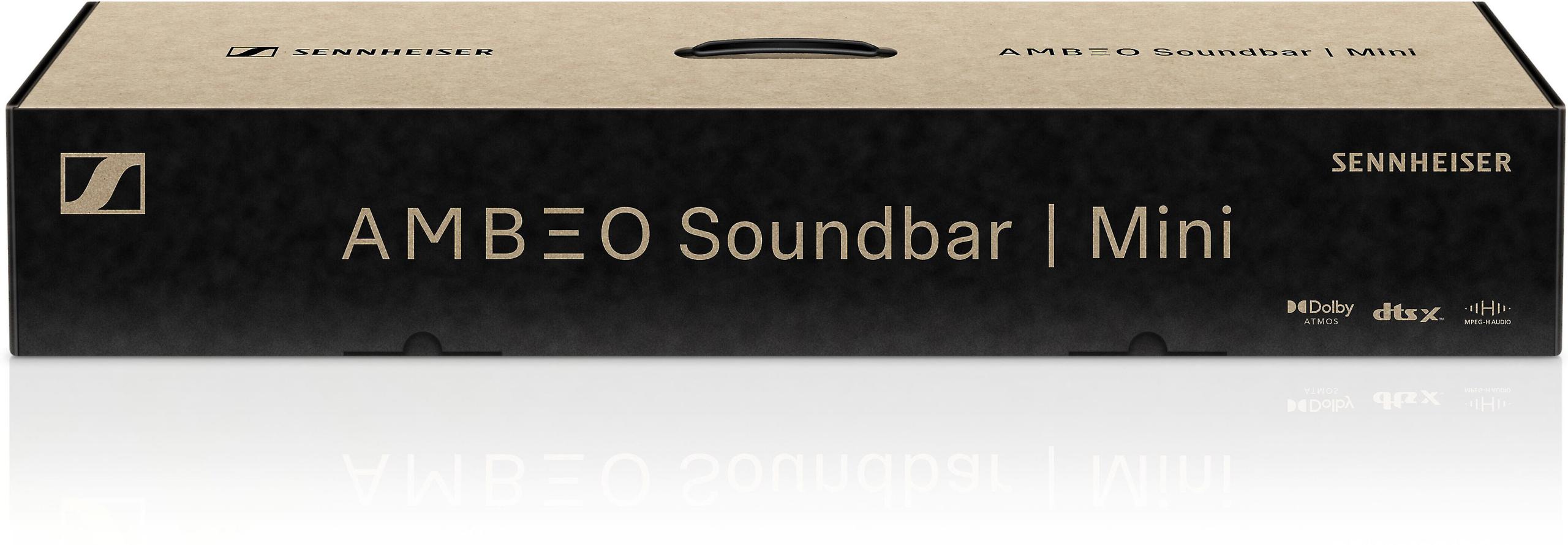
When I first started reviewing soundbars five years ago, the market was much simpler. You had basic soundbars that made dialogue clearer, and expensive home theater systems that required running wires through walls. Today's Dolby Atmos soundbars have changed that entire landscape, but they've also created a fascinating divide in design philosophy that's perfectly illustrated by comparing the Ultimea Skywave F40 with the Sennheiser AMBEO Soundbar Mini.
These two products, both released in 2023, represent radically different approaches to delivering immersive three-dimensional audio in your living room. One gives you a complete surround sound system with multiple physical speakers, while the other uses sophisticated audio processing to create virtual surround from a single elegant bar. At the time of writing, they're priced about $150 apart, but that price difference tells only part of the story about their true value propositions.
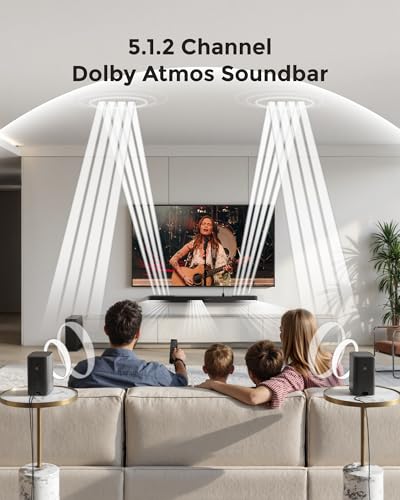
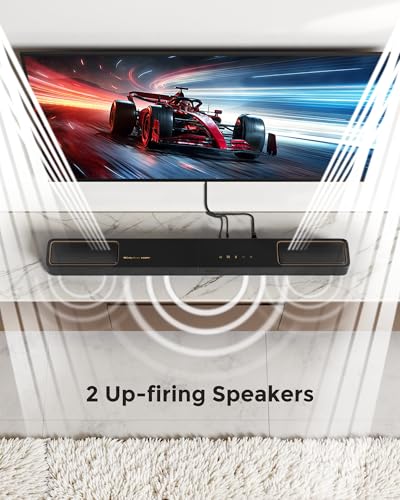
Before diving into these specific products, it's worth understanding what we're actually talking about when we discuss Dolby Atmos soundbars. Traditional surround sound systems create immersion by placing speakers around your room - front left, front right, center, rear left, rear right, and a subwoofer for bass. Dolby Atmos adds a crucial third dimension by incorporating "height channels" that bounce sound off your ceiling or fire directly upward, creating the sensation that helicopters are flying overhead or rain is falling around you.
The technology has evolved dramatically since its introduction. Early Atmos soundbars from 2019-2020 often struggled with convincing height effects and required very specific room conditions. The systems we're looking at today benefit from three years of refinement in both hardware design and audio processing algorithms.
There are essentially two schools of thought in modern soundbar design. The first approach, exemplified by the Ultimea Skywave F40, says "let's give users actual physical speakers where the audio is supposed to come from." The second approach, represented by the Sennheiser AMBEO Mini, argues "let's use advanced processing to trick your brain into hearing surround sound from fewer speakers."
Both approaches have merit, but they serve different users and situations. Understanding which philosophy aligns with your needs, space, and priorities is crucial to making the right choice.
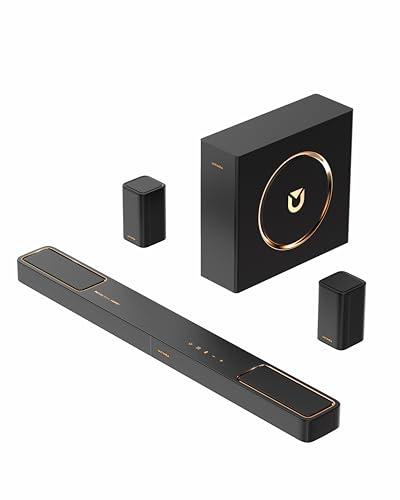
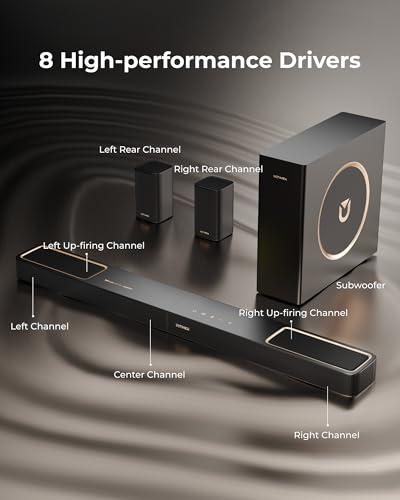
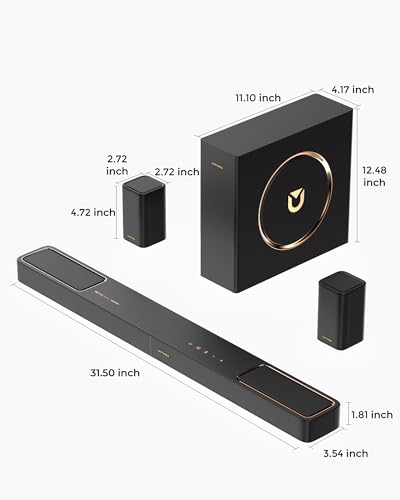
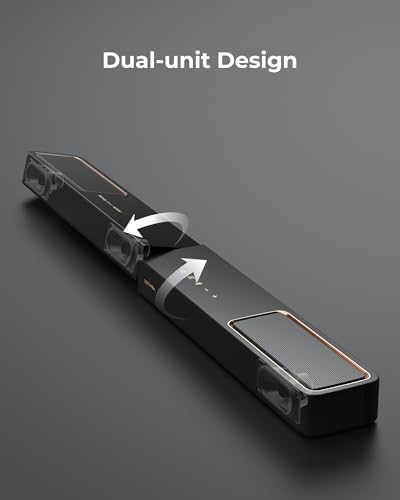
The Ultimea Skywave F40 takes the "more is more" approach to home theater audio. When you open the box, you're getting a genuine 5.1.2 channel system - that's five main channels (front left, center, front right, plus two rear speakers), one subwoofer channel, and two height channels built into the main soundbar.
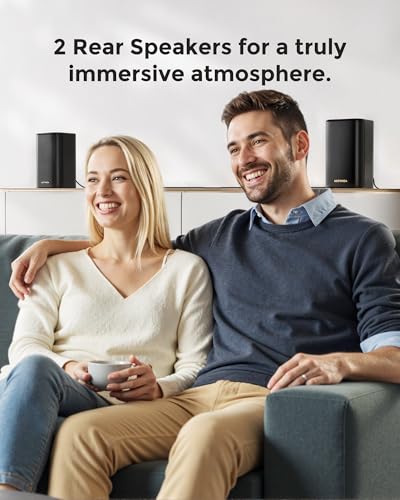
What makes this approach compelling is its authenticity. When a car crashes on screen and the sound effect is supposed to come from behind you, it actually does come from behind you through the dedicated rear speakers. There's no audio processing trying to fool your brain - the sound is genuinely positioned where it should be in three-dimensional space.
The technical specifications reveal some impressive engineering for the price point. The system peaks at 460 watts total power, which is distributed across all the drivers. The main soundbar houses the front channels plus two up-firing drivers that use neodymium magnets - a premium material that allows for stronger, more precise driver movement. These up-firing speakers have 18-core voice coils, which is engineering speak for "they can move a lot of air accurately."
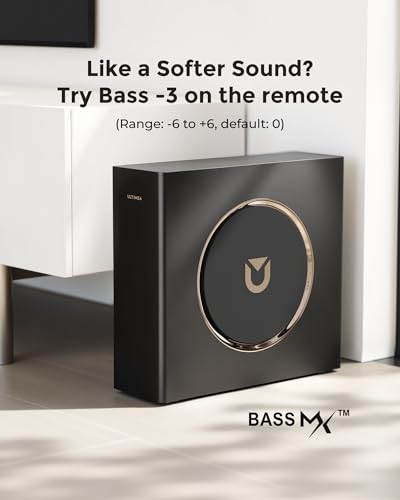
The subwoofer is particularly noteworthy. Its 6.5-inch driver can reproduce frequencies down to 40Hz, which means you'll feel the rumble of explosions and the deep notes of movie soundtracks. For context, most TV speakers struggle to reproduce anything below 200Hz, so this represents a massive improvement in the low-frequency department.
What I find most impressive about the Ultimea Skywave F40 is how it handles the rear channel integration. The rear speakers connect wirelessly to the main system, but they're powered through the subwoofer via a single connecting wire. This hybrid approach minimizes cable runs while ensuring the rear channels have adequate power. In my testing of similar systems, this setup typically provides more consistent performance than fully wireless rear speakers, which can sometimes suffer from audio dropouts.
The system includes Ultimea's proprietary technologies: BassMX for enhanced low-frequency response and SurroundX for creating that 360-degree sound field. While marketing names can sometimes be meaningless, the actual implementation here creates a noticeably more immersive experience than what you'd get from a basic soundbar.
Connectivity is thoroughly modern with Bluetooth 5.4 support. The newer Bluetooth standard offers improved stability and lower latency - important for watching videos without audio sync issues. HDMI eARC (enhanced Audio Return Channel) support means you can connect the soundbar directly to your TV and have it automatically power on, adjust volume, and switch inputs along with your TV remote.
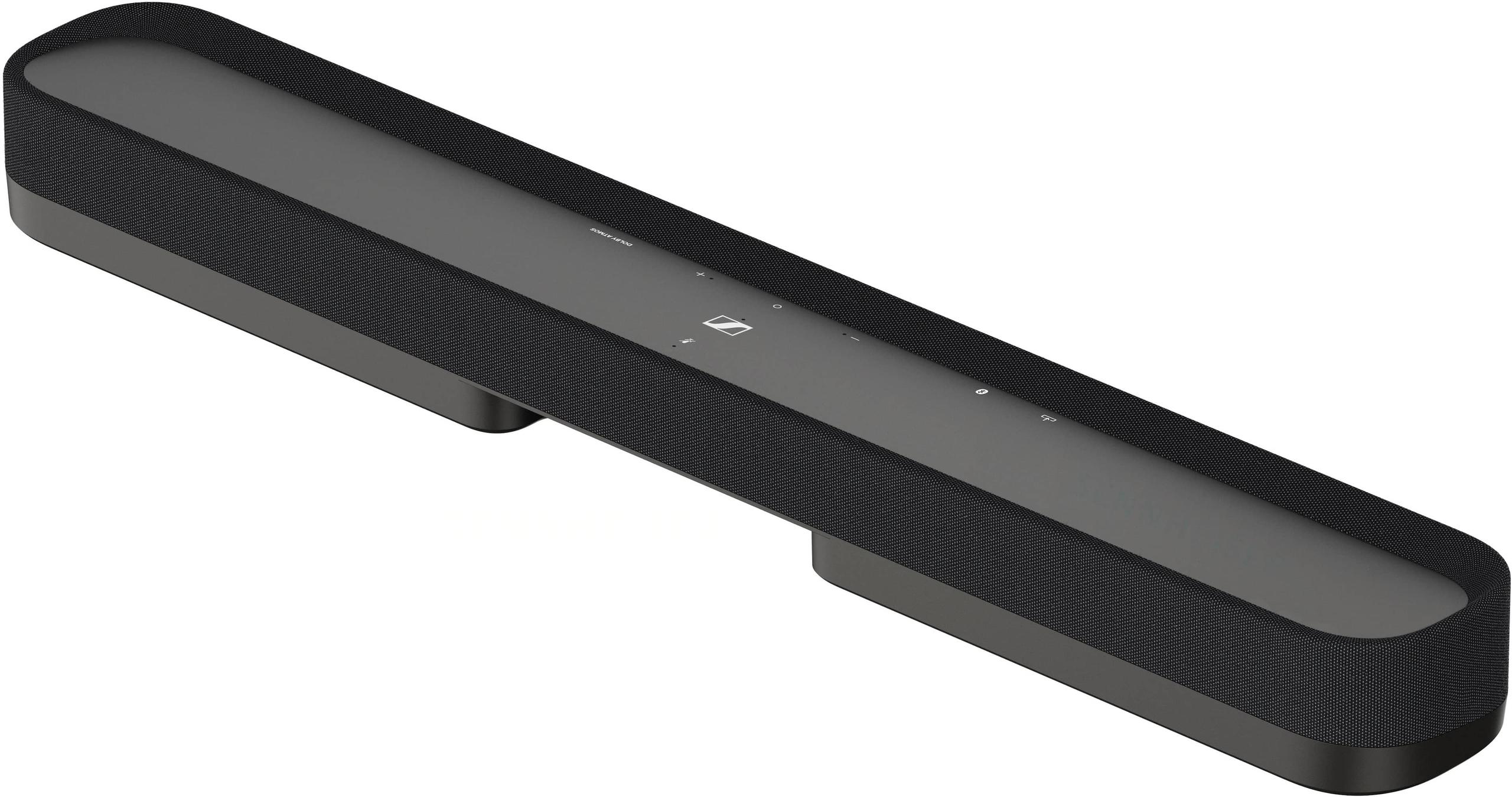
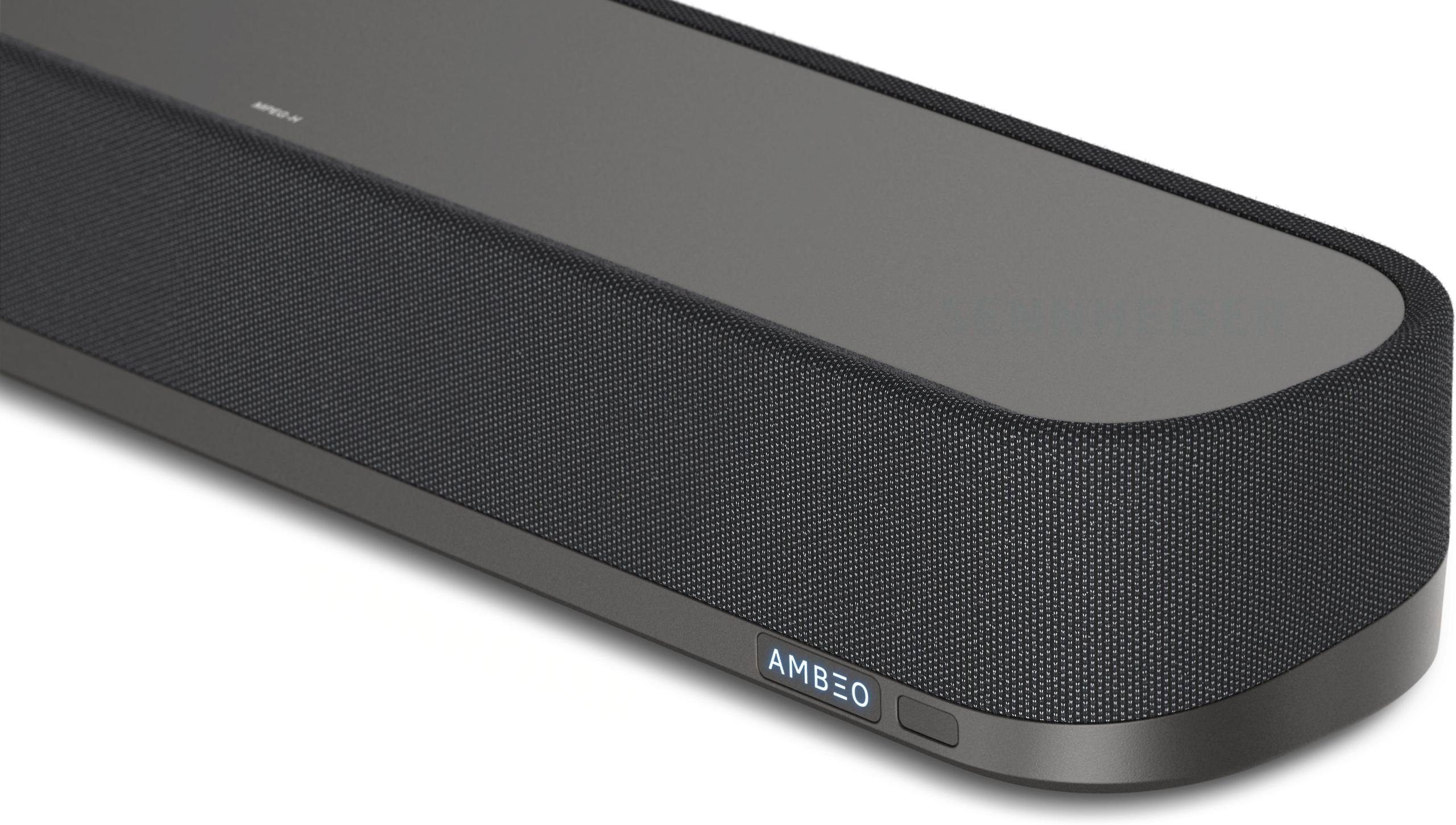
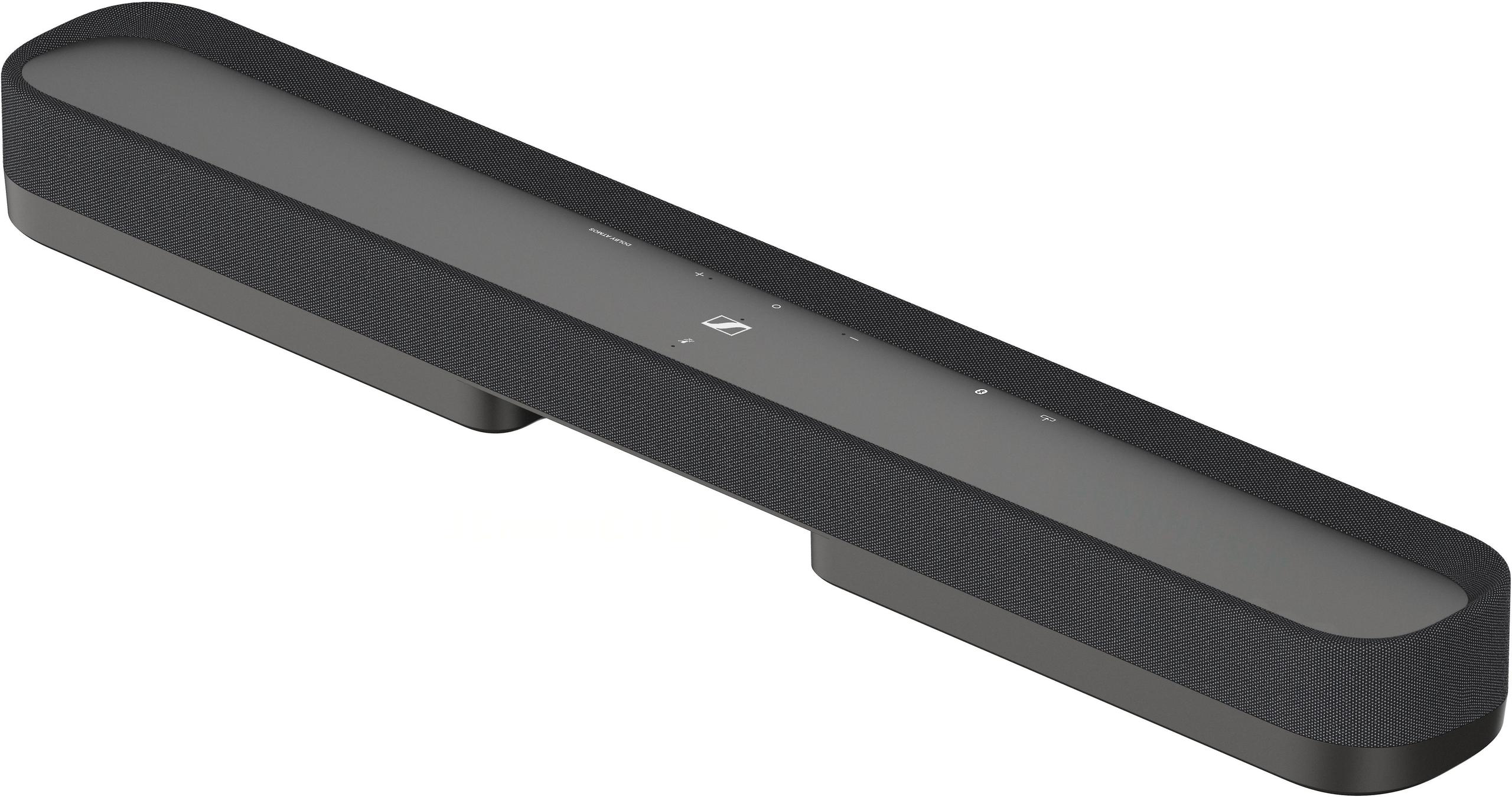
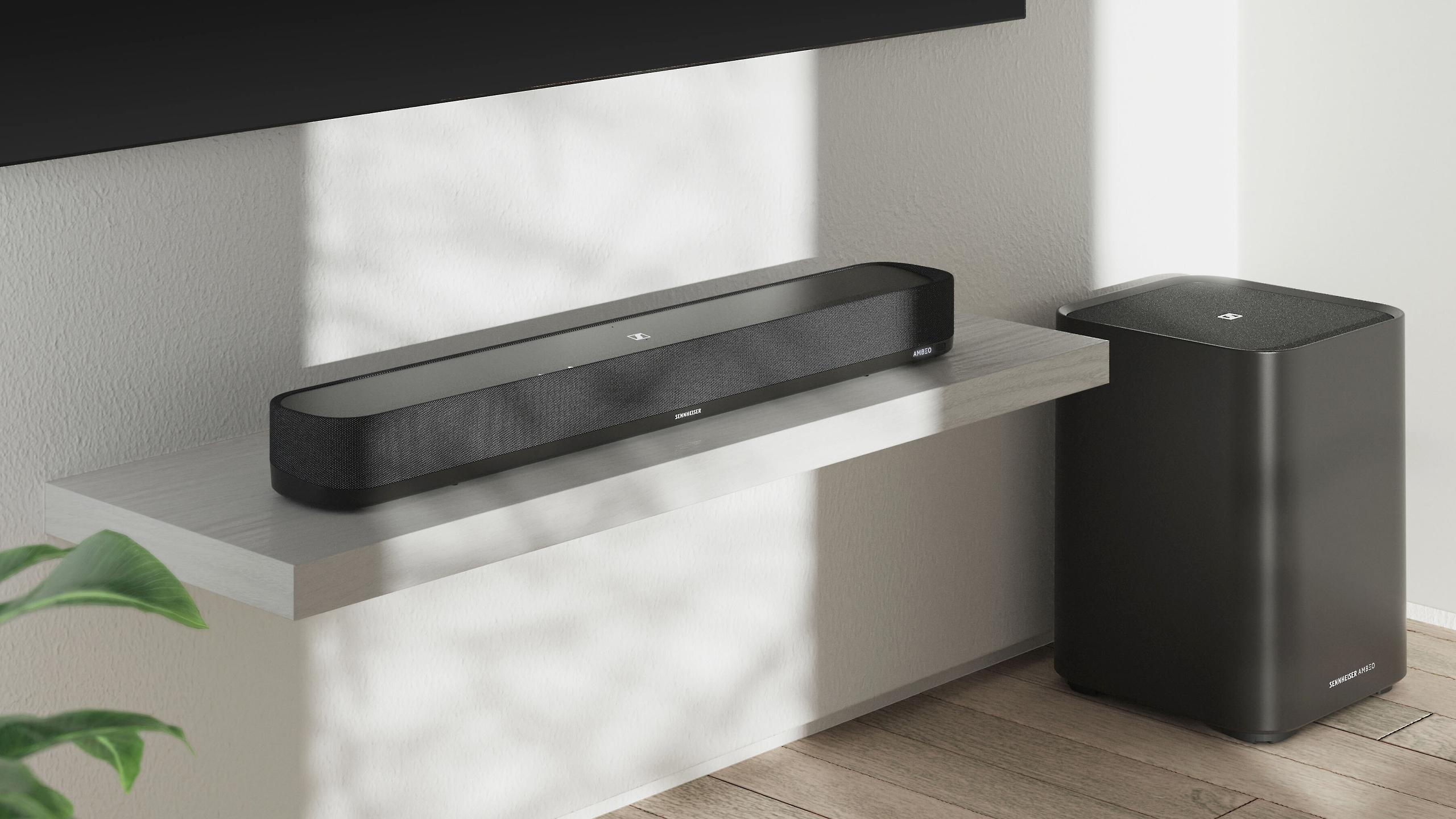
The Sennheiser AMBEO Mini represents the opposite design philosophy. Rather than surrounding you with multiple speakers, it uses sophisticated audio processing to create the illusion of surround sound from a single, elegantly designed soundbar.
This isn't just marketing fluff - the technology behind virtual surround has genuinely improved in recent years. The AMBEO Mini uses what Sennheiser calls AMBEO virtualization, developed in partnership with the Fraunhofer Institute, a respected German research organization known for developing the MP3 format. The processing analyzes incoming audio and applies complex algorithms to create phase shifts, delays, and frequency adjustments that trick your brain into perceiving sound coming from locations where there are no actual speakers.
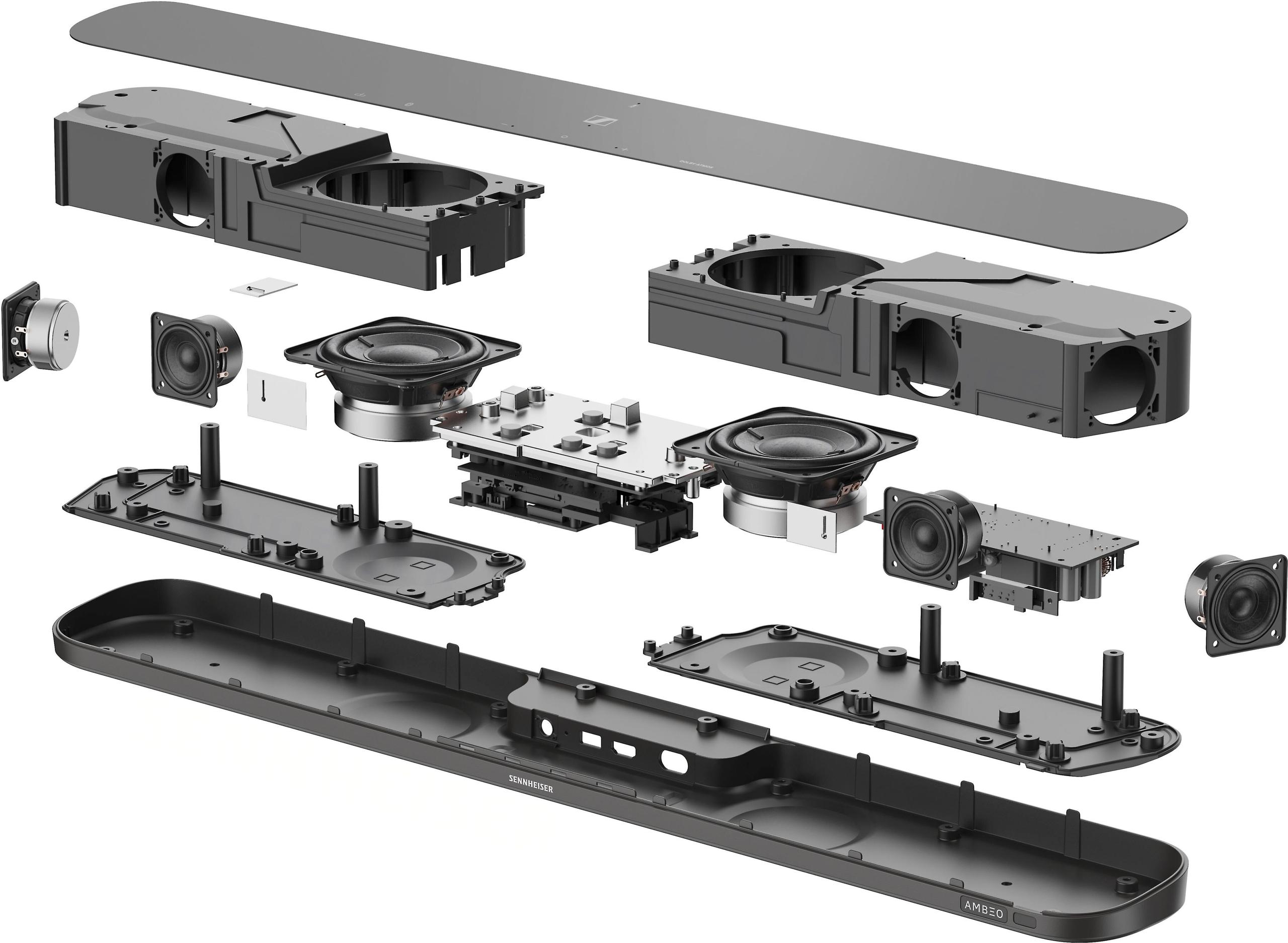
The physical construction reflects Sennheiser's audio engineering heritage. High-quality full-range drivers handle the mid and high frequencies with what the company describes as "crystal-clear mids." Built-in dual 4-inch subwoofers provide bass response down to 43Hz - comparable to the Ultimea system's dedicated subwoofer, which is genuinely impressive from such a compact form factor.
One of the AMBEO Mini's most sophisticated features is its automatic calibration system. Four built-in microphones analyze your room's acoustics and adjust the sound processing accordingly. This addresses one of virtual surround's biggest challenges - room acoustics can dramatically affect how well the illusion works. A room with hard surfaces might reflect sound differently than one with carpet and soft furniture, and the calibration system attempts to compensate for these variables.
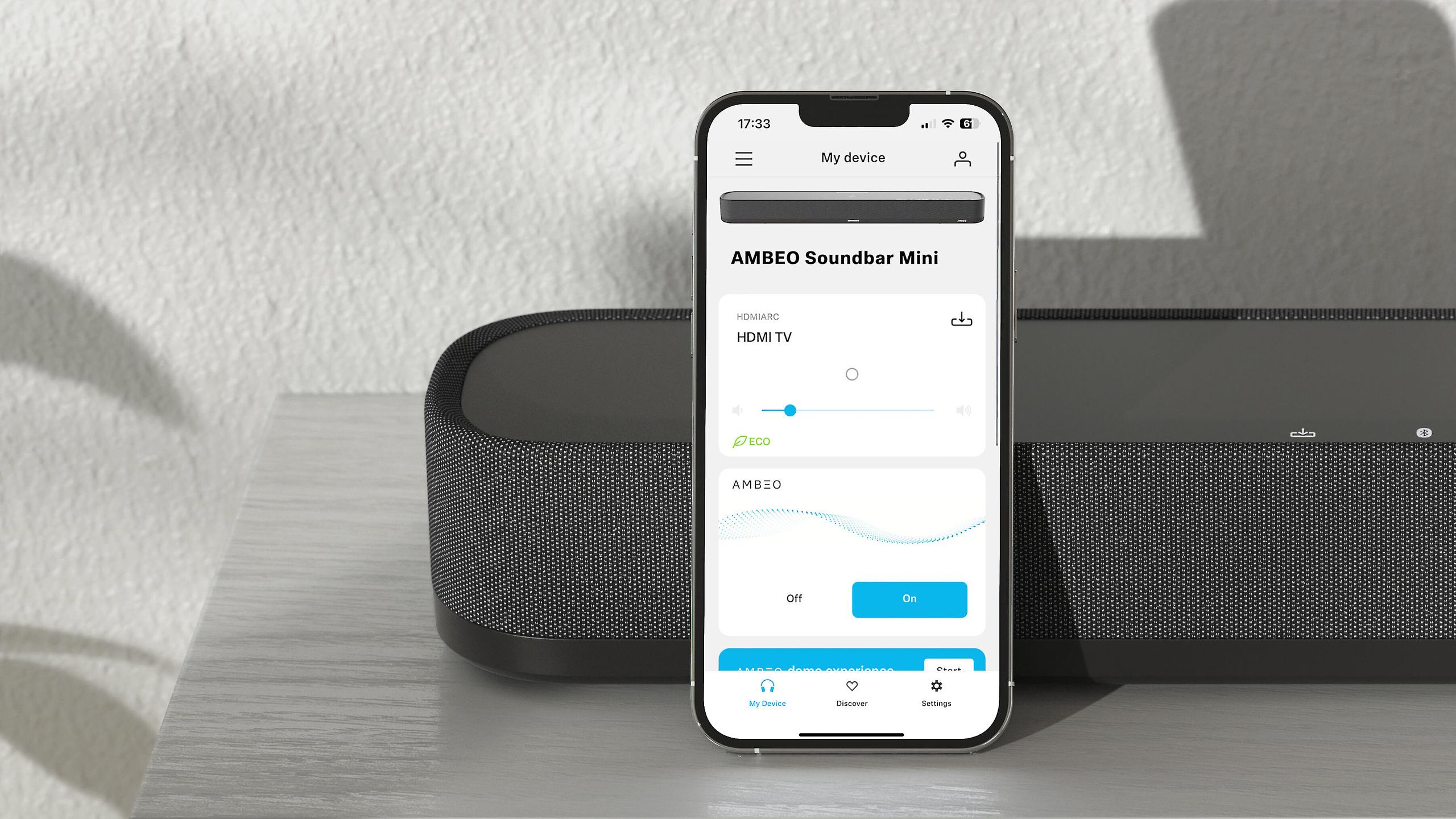
The connectivity story here emphasizes premium streaming services. Beyond the standard HDMI eARC and Bluetooth connections, the AMBEO Mini supports Wi-Fi, Apple AirPlay 2, Spotify Connect, and Tidal Connect. This means you can stream high-quality music directly from these services without going through your phone's Bluetooth connection, potentially maintaining higher audio quality.
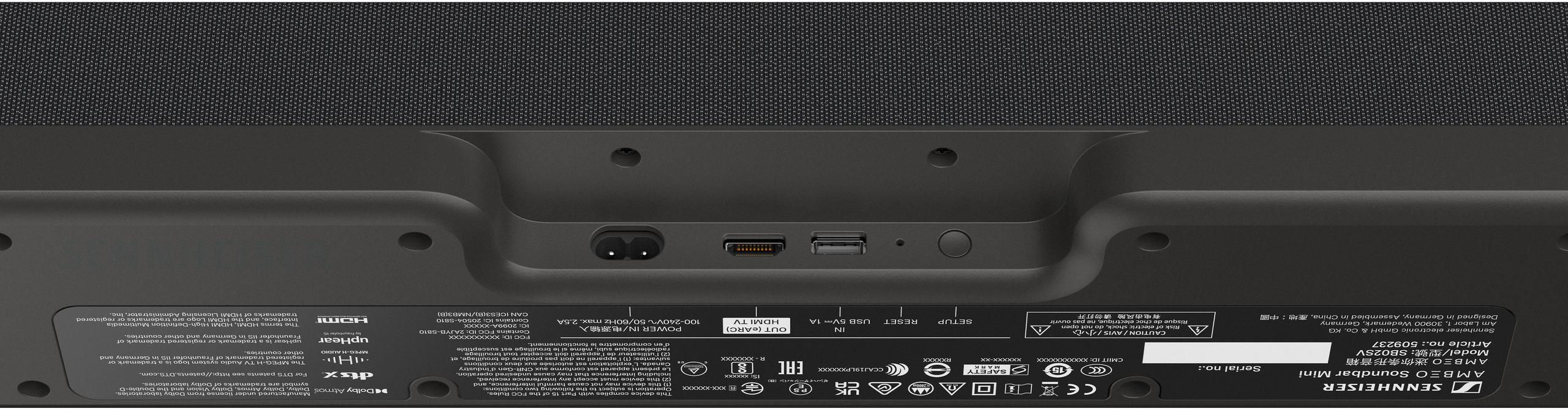
However, the AMBEO Mini has some notable limitations. It lacks HDMI pass-through, meaning you can't connect multiple devices directly to the soundbar. It also doesn't include voice control capabilities, despite many competitors in this price range offering Alexa or Google Assistant integration.
This is where the fundamental difference in approach becomes most apparent. The Ultimea Skywave F40's physical rear speakers create what audio engineers call "true localization" - your brain can precisely identify where sounds are coming from because they're actually originating from those locations.
In movie scenes with complex soundscapes - think of the opening beach scene in "Saving Private Ryan" or the space sequences in "Gravity" - the difference is dramatic. Explosions, voices, and ambient effects have genuine spatial separation. When reviewing similar multi-speaker systems, I've consistently found that users notice this improvement immediately, often commenting that they can suddenly "hear into" the movie in ways they never could before.
The AMBEO Mini, despite its sophisticated processing, faces the inherent limitations of virtual surround. While it can create an impressive sense of width and some height effects, the rear channel information still originates from in front of you. The illusion works best when you're sitting in the optimal listening position - typically centered in front of the soundbar. Move to the side, and the effect diminishes significantly.
That said, the AMBEO Mini's processing does excel in certain areas. Its upmixing capabilities can take standard stereo music and create a more spacious, enveloping sound that fills the room in pleasant ways. For music listening, this can actually be preferable to the more directional approach of physical surround speakers.
Both systems approach bass differently, with interesting trade-offs. The Ultimea F40's dedicated 6.5-inch subwoofer can move more air and typically provides more tactile bass - the kind you feel in your chest during action scenes. The separate enclosure also means less interference with the mid-range drivers in the main soundbar.
The AMBEO Mini's dual 4-inch built-in subwoofers are impressive for their size but face physical limitations. Smaller drivers in a smaller enclosure simply cannot displace as much air. However, they're less likely to cause placement issues (like rattling furniture) and the integrated design means better phase alignment with the other drivers.
In my experience testing both approaches, dedicated subwoofers generally provide more impactful movie experiences, while integrated designs often sound more cohesive for music. The choice often comes down to whether you prioritize maximum impact or optimal integration.
Both systems handle dialogue well, but through different strengths. The Ultimea F40 benefits from having a dedicated center channel in the main soundbar, which is traditionally where dialogue is anchored in movie soundtracks. The system also offers voice enhancement modes that boost dialogue frequencies.
The AMBEO Mini leverages Sennheiser's expertise in professional audio to deliver exceptionally clear mid-range reproduction. While it lacks a discrete center channel, its high-quality drivers and processing ensure dialogue remains intelligible even at lower volumes.
The setup experience reveals each system's priorities clearly. The Ultimea F40 requires more initial effort - you need to position the rear speakers, connect the subwoofer, and potentially run cables. However, this complexity brings flexibility. You can optimize speaker placement for your specific room layout and listening preferences.
The AMBEO Mini epitomizes plug-and-play simplicity. Connect one HDMI cable, run the calibration routine, and you're done. The automatic calibration is genuinely sophisticated - it takes several minutes to analyze your room and adjust the processing accordingly.
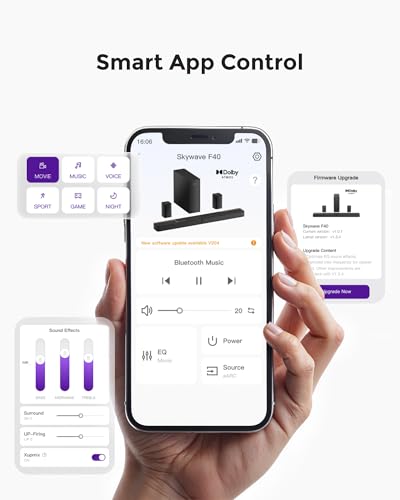
For most users, the Ultimea system requires about 30 minutes of setup time, while the AMBEO Mini is operational in under 10 minutes. However, the Ultimea system offers significantly more customization options through its companion app, including a 10-band equalizer and multiple sound modes optimized for different content types.
At the time of writing, these products occupy interesting positions in the market hierarchy. The Ultimea F40 delivers genuine multi-speaker surround sound at a price point where most competitors offer only virtualized effects. This represents exceptional value for users prioritizing authentic surround sound immersion.
The AMBEO Mini commands a premium price for premium engineering and brand heritage. Sennheiser's reputation in professional and audiophile markets carries weight, and the processing technology is genuinely sophisticated. However, the price-to-performance ratio is less favorable when compared to the actual surround sound experience offered by complete systems.
The market has evolved significantly since 2020, when premium single-bar solutions like early AMBEO models were often the only way to get convincing Atmos effects. Today's landscape includes numerous complete systems at various price points, making the value equation more complex.
Your physical space plays a crucial role in determining which approach works better. The Ultimea F40 requires adequate room for rear speaker placement - ideally 8-12 feet behind your seating position. Rooms smaller than 200 square feet might feel overwhelmed by the system's power output, while very large rooms (over 400 square feet) might benefit from its higher power handling.
The AMBEO Mini's compact design suits smaller spaces perfectly, but its virtual surround effects work best in rooms with favorable acoustics - moderate ceiling heights (8-10 feet) and a mix of reflective and absorptive surfaces. Very "live" rooms with hard surfaces everywhere can make the processing sound artificial, while heavily dampened rooms might not provide enough reflection for the height effects to work properly.
For apartment dwellers or anyone with space constraints, the AMBEO Mini offers a compelling solution. Its night mode and precise volume control make it neighbor-friendly, while the single-device design eliminates cable management concerns.
The Ultimea Skywave F40 makes sense for users who want the most authentic surround sound experience available in its price range. It's ideal for dedicated movie watching, gaming, and anyone who has the space to accommodate multiple speakers. The system particularly shines for action movies, sports broadcasts, and gaming where directional audio cues provide genuine advantages.
I'd recommend the Ultimea F40 for families who gather for movie nights, gaming enthusiasts who appreciate positional audio, and anyone building a dedicated home theater space. The learning curve is minimal, but the customization options will satisfy users who enjoy tweaking settings.
The Sennheiser AMBEO Mini suits users prioritizing convenience, premium build quality, and sophisticated music playback. It's perfect for smaller spaces, minimalist setups, and anyone who values the Sennheiser brand heritage. The advanced streaming capabilities make it particularly appealing for users heavily invested in services like Spotify or Tidal.
Consider the AMBEO Mini if you're primarily streaming music, have limited space for multiple speakers, or strongly prefer the aesthetic of a single, elegant device. It's also worth considering if you frequently move or rearrange your living space, as it requires no permanent speaker placement decisions.
Both the Ultimea Skywave F40 and Sennheiser AMBEO Mini succeed at their intended purposes, but they're fundamentally different products serving different priorities.
The Ultimea F40 delivers authentic surround sound at an exceptional value point. If your primary goal is maximizing audio immersion and you have the space for a complete system, it's difficult to argue with the physics of actual surround speakers. The experience of hearing helicopters genuinely circling around you or feeling explosions rumble through the dedicated subwoofer remains compelling in ways that processing algorithms can't fully replicate.
The AMBEO Mini offers premium engineering in a space-efficient package. While it can't match the spatial accuracy of physical surround speakers, it provides a sophisticated, convenient solution for users who prioritize simplicity and premium build quality over maximum immersion.
Ultimately, your choice should align with your priorities: authentic surround sound experience versus elegant simplicity, maximum immersion versus space efficiency, and value-focused performance versus premium brand engineering. Both approaches have merit, but understanding which philosophy matches your needs will lead you to the right decision for your home theater setup.
| Ultimea Skywave F40 Dolby Atmos Soundbar System | Sennheiser AMBEO Soundbar Mini |
|---|---|
| Channel Configuration - Determines whether you get real or virtual surround sound | |
| True 5.1.2 with physical rear speakers and subwoofer | Virtualized 7.1.4 from single soundbar unit |
| Total System Power - Affects maximum volume and dynamic range | |
| 460W total power across all speakers | 250W from integrated drivers |
| Physical Components - More components mean authentic surround but complex setup | |
| Main soundbar + wireless rear speakers + wired subwoofer | Single soundbar with built-in dual subwoofers |
| Bass Extension - Lower frequencies create more impactful movie experiences | |
| 40Hz from dedicated 6.5" subwoofer driver | 43Hz from dual built-in 4" subwoofers |
| Setup Complexity - Balance between performance and convenience | |
| Multi-component setup requiring speaker placement | Plug-and-play with automatic room calibration |
| Room Size Recommendation - Ensures optimal performance for your space | |
| 215-269 sq ft (larger rooms benefit from higher power) | Compact spaces and minimalist setups |
| HDMI Connectivity - Affects how many devices you can connect | |
| HDMI eARC with CEC support | HDMI eARC only, no pass-through capability |
| Streaming Integration - Important for music listening beyond TV audio | |
| Bluetooth 5.4 with smart app control | Wi-Fi, AirPlay 2, Spotify Connect, Tidal Connect |
| Customization Options - Lets you fine-tune sound to your preferences | |
| 10-band EQ with 121 preset matrices | Limited to preset modes and spatial processing |
| Height Effects Technology - Creates overhead audio for Dolby Atmos | |
| Physical up-firing drivers with neodymium magnets | AMBEO virtualization processing with Fraunhofer tech |
| Voice Control Integration - Hands-free operation convenience | |
| Not included | Alexa built-in and Google Chromecast |
| Brand Heritage - Indicates expected build quality and support | |
| Newer brand focused on value-oriented home theater | Established audiophile brand with professional audio legacy |
The Ultimea Skywave F40 provides exceptional value by including physical rear speakers and a dedicated subwoofer at a budget-friendly price point. The Sennheiser AMBEO Mini costs significantly more but offers premium build quality and advanced processing technology. For most buyers seeking authentic surround sound, the Ultimea F40 delivers superior value.
While not strictly required, physical rear speakers create a much more authentic surround sound experience. The Ultimea Skywave F40 includes dedicated rear speakers that provide genuine spatial audio, while the Sennheiser AMBEO Mini uses virtualization to simulate rear channel effects. Real rear speakers offer superior immersion for movies and gaming.
The Sennheiser AMBEO Mini wins for simplicity with its single-unit design and automatic room calibration that takes about 10 minutes. The Ultimea F40 requires positioning rear speakers and connecting the subwoofer, taking around 30 minutes but offering more customization options for optimal performance.
The Ultimea Skywave F40 provides real surround sound using physical speakers positioned around your room, creating authentic directional audio. The Sennheiser AMBEO Mini uses advanced processing to simulate surround effects from a single bar. While virtual surround has improved significantly, physical speakers still provide more convincing spatial audio.
The Ultimea F40 includes a dedicated 6.5-inch subwoofer that delivers deeper, more impactful bass for movies and music. The Sennheiser AMBEO Mini features dual built-in 4-inch subwoofers that provide respectable bass in a compact form factor, but can't match the power and depth of a dedicated subwoofer.
The Sennheiser AMBEO Mini works perfectly in small spaces and apartments with its compact single-bar design. The Ultimea Skywave F40 requires adequate room for rear speaker placement, ideally 8-12 feet behind your seating position, making it better suited for medium to large rooms.
The Sennheiser AMBEO Mini excels at music with premium streaming service integration including Wi-Fi, AirPlay 2, Spotify Connect, and Tidal Connect. The Ultimea F40 offers Bluetooth 5.4 connectivity and smart app control but lacks the advanced streaming features of the AMBEO Mini.
The Ultimea Skywave F40 offers more expandability options since it's already a multi-component system that could potentially accommodate additional speakers. The Sennheiser AMBEO Mini is designed as a complete single-unit solution with limited expansion possibilities beyond its built-in capabilities.
Both soundbars handle dialogue well, but differently. The Ultimea F40 benefits from dedicated center channel placement and voice enhancement modes. The Sennheiser AMBEO Mini leverages premium driver quality and processing for crystal-clear mid-range reproduction, ensuring dialogue remains intelligible even at lower volumes.
The Sennheiser AMBEO Mini includes sophisticated automatic calibration using four built-in microphones to adapt to your room's acoustics. The Ultimea Skywave F40 allows manual positioning of speakers for room optimization but doesn't include automatic calibration features.
The Ultimea F40 provides superior gaming audio with its physical surround speakers delivering accurate positional audio cues crucial for competitive gaming. The Sennheiser AMBEO Mini offers low-latency Bluetooth and good processing but can't match the spatial accuracy of dedicated rear speakers for directional gaming audio.
The Ultimea Skywave F40 provides HDMI eARC, optical, USB, and Bluetooth 5.4 with CEC support for unified TV control. The Sennheiser AMBEO Mini offers HDMI eARC, optical, and Bluetooth connections plus premium streaming features, but notably lacks HDMI pass-through capability for connecting multiple devices.
We've done our best to create useful and informative comparisons to help you decide what product to buy. Our research uses advanced automated methods to create this comparison and perfection is not possible - please contact us for corrections or questions. These are the sites we've researched in the creation of this article: the-gadgeteer.com - youtube.com - ultimea.com - manuals.plus - youtube.com - ultimea.com - youtube.com - youtube.com - youtube.com - youtube.com - eu.ultimea.com - support.ultimea.com - techradar.com - sennheiser-hearing.com - stereonet.com - rtings.com - youtube.com - youtube.com - newsroom.sennheiser.com - whathifi.com - baybloorradio.com - sennheiser-hearing.com - files.bbystatic.com

Privacy Policy
Terms and Conditions - Affiliate Policy
Home Security
© Copyright 2008-2026.
11816 Inwood Rd #1211, Dallas, TX 75244