








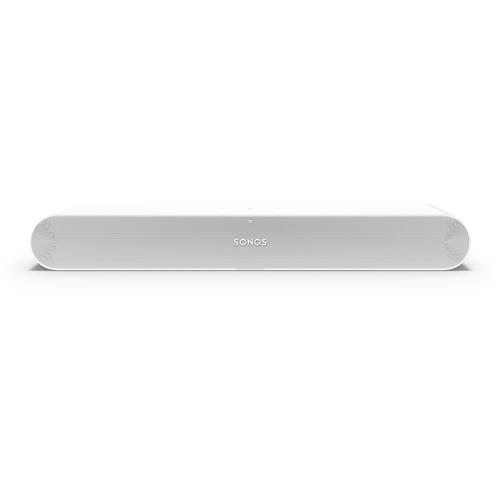

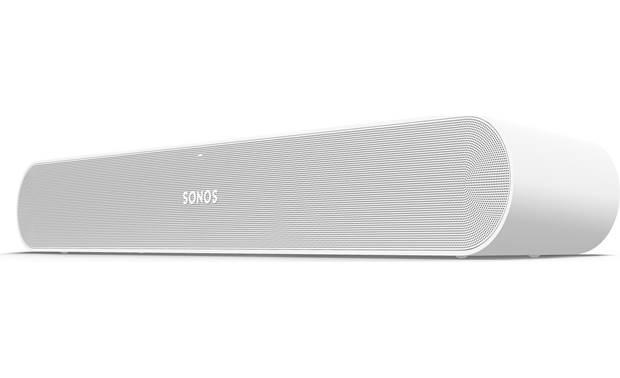
When your TV's built-in speakers sound like they're coming from inside a tin can, it's time for a soundbar upgrade. But with hundreds of options flooding the market, choosing the right one can feel overwhelming. Today, we're comparing two soundbars that couldn't be more different: the ULTIMEA Skywave X40, a fully-featured surround sound system released in 2024, and the Sonos Ray, a minimalist stereo soundbar that's been around since 2022.
These products represent completely different approaches to solving the same problem—bad TV audio. Understanding which philosophy matches your needs and budget will help you make the right choice for your setup.
Before diving into specifics, let's talk about what actually matters when upgrading your TV's audio. The most important factors are dialogue clarity, bass response, and spatial audio capabilities. Dialogue clarity determines whether you'll catch every word without constantly adjusting volume. Bass response affects how impactful explosions, music, and sound effects feel. Spatial audio—which includes surround sound and height effects—creates the immersive experience that makes movies feel like theater experiences rather than just louder TV watching.
Power output, measured in watts, gives you an idea of how loud a system can get without distorting, but it's not everything. A well-designed 100-watt system can often sound better than a poorly tuned 300-watt one. Channel configuration tells you how many separate audio streams the system can handle—stereo (2.0) handles left and right, while 5.1 adds center, two surround, and a subwoofer channel. The newer 5.1.2 format includes two additional height channels for overhead effects.
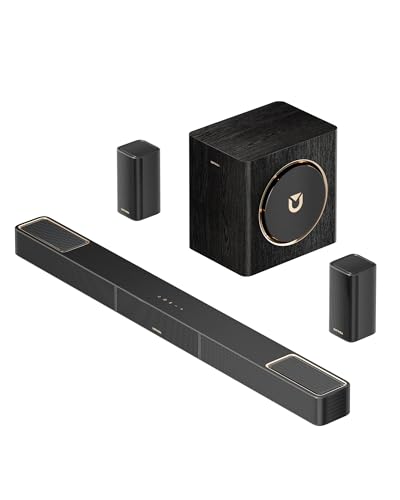
The ULTIMEA Skywave X40 and Sonos Ray exemplify two completely different soundbar philosophies. The X40 is what we'd call a "complete system" approach—it includes everything you need for true surround sound right in the box. You get a main soundbar, wireless rear speakers, a subwoofer, and support for Dolby Atmos height effects. It's designed to transform your living room into a mini movie theater.
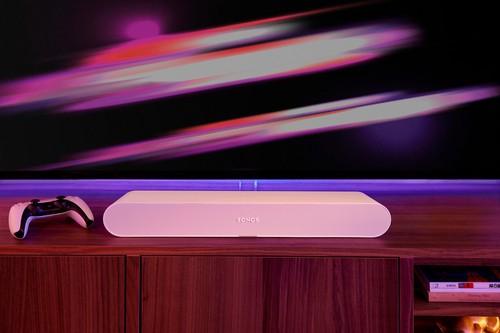
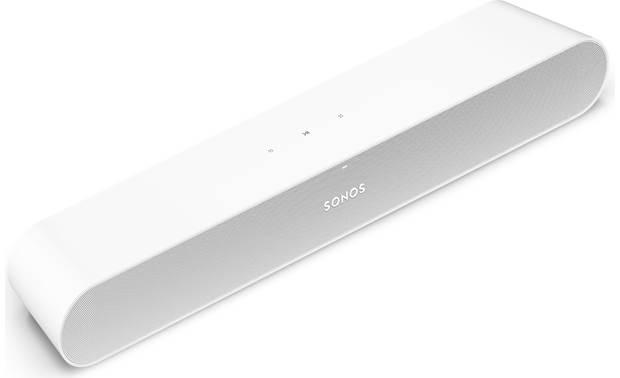
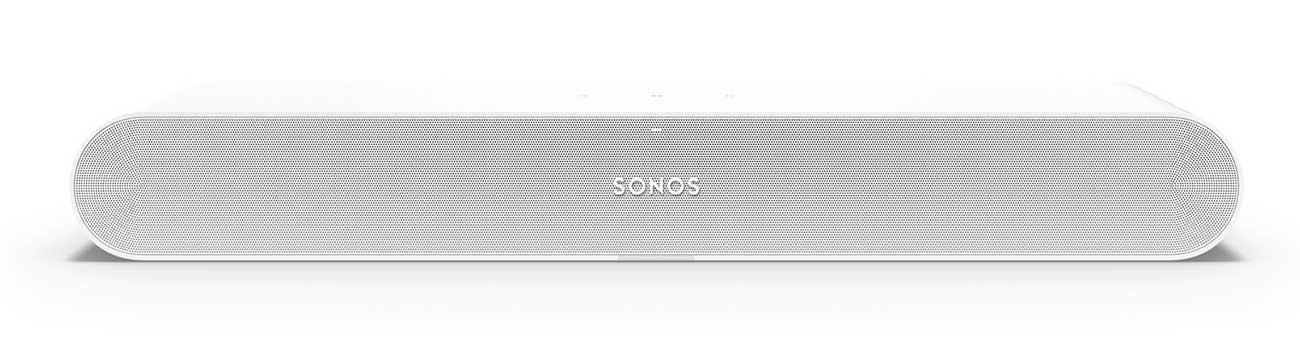
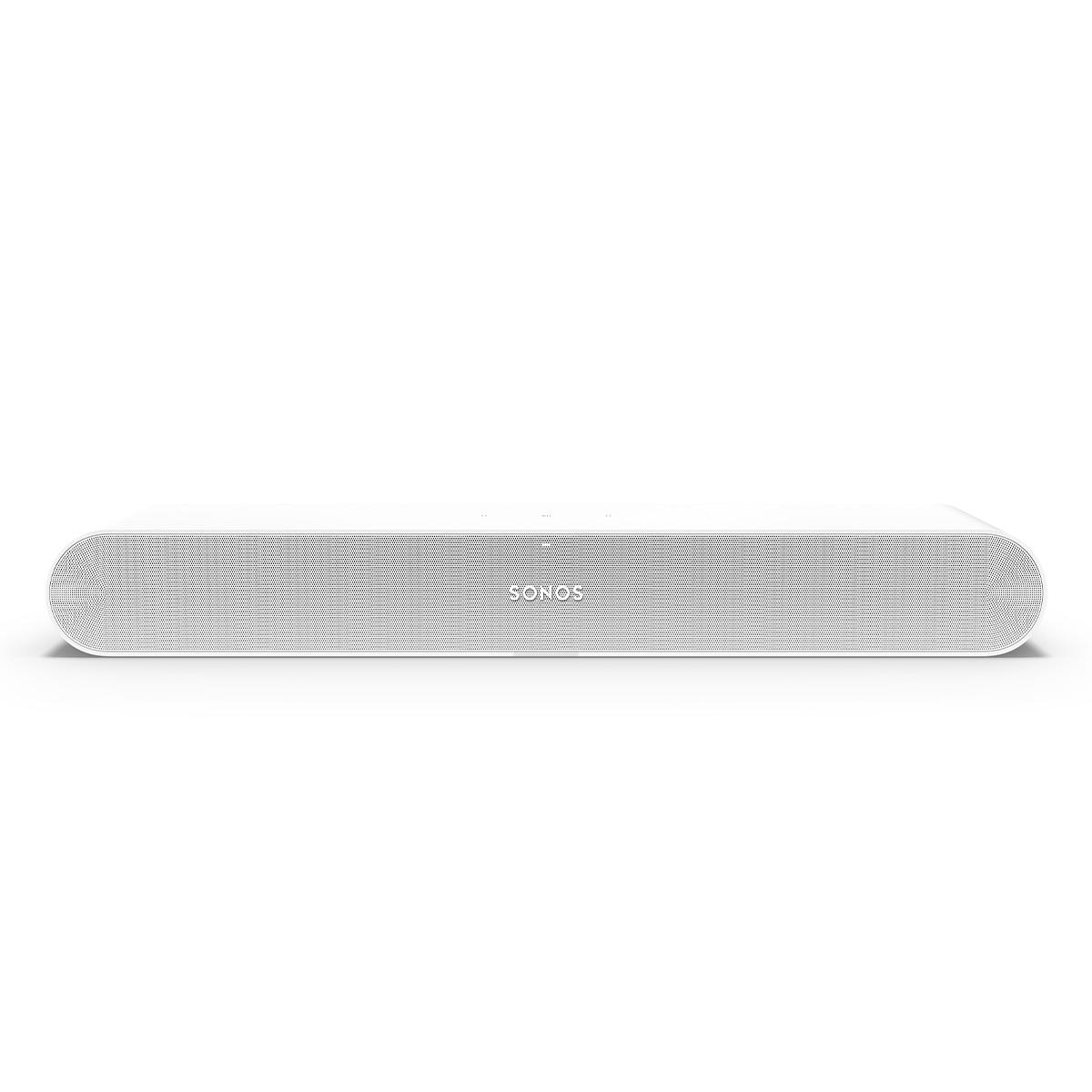
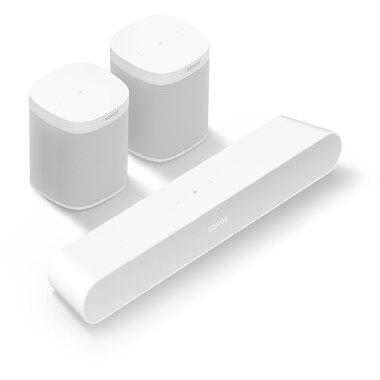
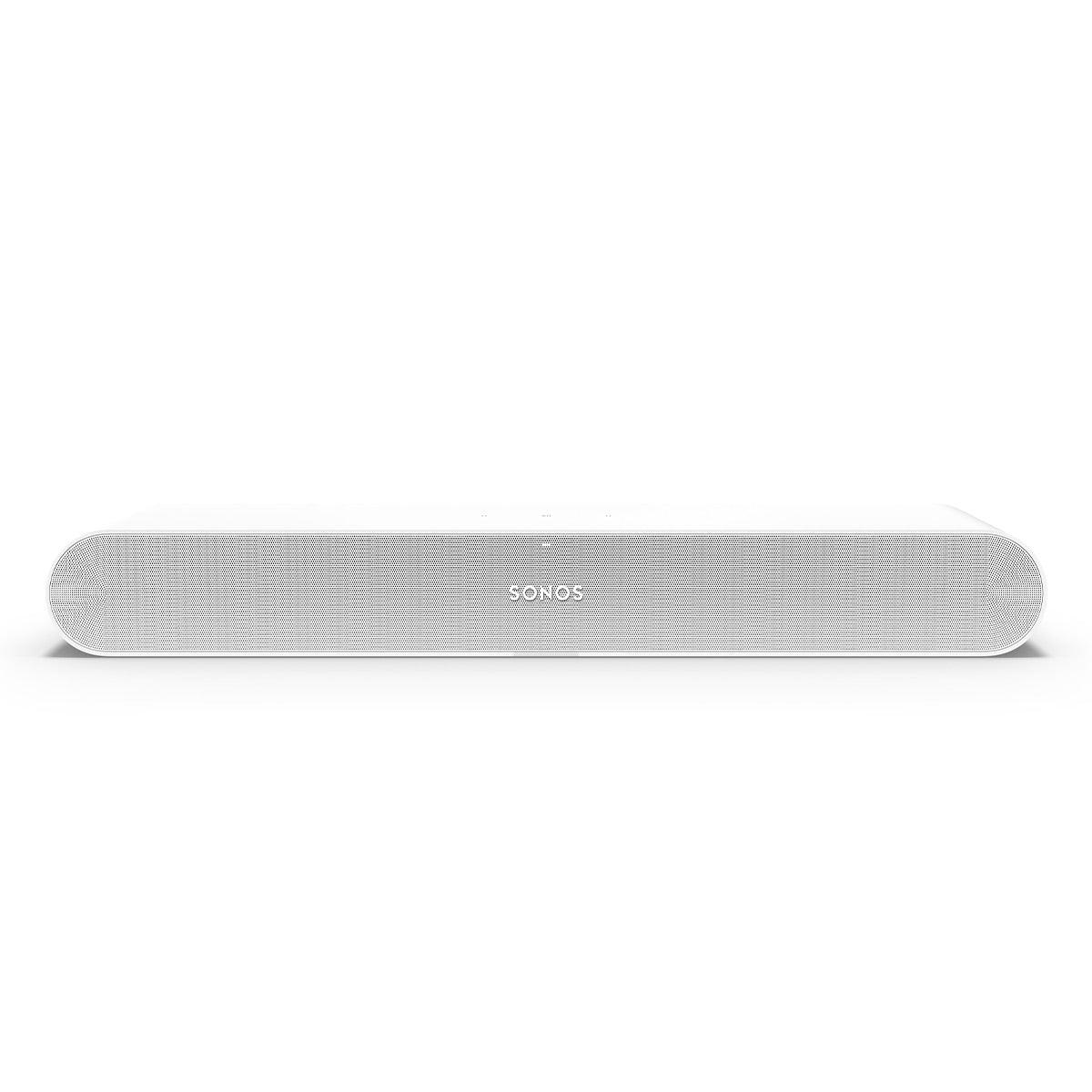
The Sonos Ray, on the other hand, represents the "simple upgrade" philosophy. It's a single-unit soundbar focused on doing the basics really well: making dialogue clearer and adding some musicality to your TV watching. There are no additional speakers, no complex setup, and no height effects—just noticeably better sound than what your TV provides.
Since 2022, when the Ray launched, the soundbar market has shifted significantly toward more affordable surround systems. The X40's 2024 release timing allowed ULTIMEA to incorporate newer wireless transmission technology and more efficient amplification, which we'll explore in detail.
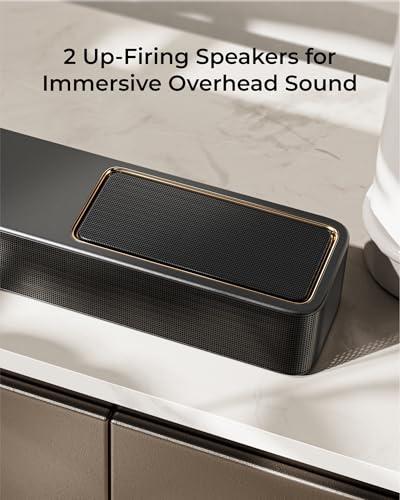
The biggest performance difference between these systems lies in their approach to surround sound. The ULTIMEA Skywave X40 delivers true 5.1.2 channel audio, meaning it processes and outputs eight separate audio channels through dedicated speakers. This includes traditional left, right, and center channels, two rear surround speakers, a subwoofer, and two upward-firing drivers for height effects.
What makes this particularly impressive is the system's wireless implementation. The rear surround speakers connect to the main unit using what ULTIMEA calls "CineMesh True Wireless" technology—essentially a dual 5GHz wireless system that maintains ultra-low latency below 20 milliseconds. For context, anything under 40 milliseconds is generally considered imperceptible, so this wireless connection won't create noticeable delays between what you see and hear.
The height channels deserve special attention because they're what enable Dolby Atmos effects. These upward-firing drivers bounce sound off your ceiling to create the illusion of overhead audio. When a helicopter flies across the screen or rain falls in a movie scene, you'll actually perceive those sounds coming from above rather than just from the front of your room.
The Sonos Ray, in contrast, relies on psychoacoustic processing—essentially audio tricks that your brain interprets as wider soundstage without additional speakers. While this can create some sense of spaciousness, it fundamentally cannot recreate true surround effects or height information. When the Ray encounters 5.1 surround content from Netflix or a Blu-ray disc, it must "downmix" all that spatial information into two channels, losing much of the director's intended audio design.
Based on user reviews and expert consensus, the difference in immersion between these approaches is substantial. The X40 creates what reviewers consistently describe as "room-filling, cinematic sound" while the Ray is praised more for its "clean, focused presentation." Both are compliments, but they describe very different listening experiences.
Bass performance might be the most dramatic difference between these systems. The ULTIMEA Skywave X40 includes a dedicated 6.5-inch wireless subwoofer that can reproduce frequencies down to 35Hz. To put that in perspective, the deepest note on a bass guitar is about 41Hz, and most movie sound effects that create that "chest-thumping" sensation live in the 20-50Hz range.
ULTIMEA's "Gravus Ultra-Linear Bass Technology" is marketing speak for a well-engineered subwoofer design that includes dual magnets and a low-velocity port design. These features help the subwoofer move more air efficiently while minimizing distortion—the unwanted buzzing or rattling that cheaper subwoofers produce at high volumes.
The Sonos Ray has no dedicated subwoofer, relying instead on small drivers within the soundbar itself to handle bass duties. Reviews consistently note that while the Ray's bass is "adequate for dialogue and music," it becomes "mushy" during action scenes and lacks the extension needed for movie soundtracks. This isn't a flaw in the Ray's design—it's an intentional trade-off to keep the system simple and affordable.
The practical impact is significant. With the X40, explosion scenes in action movies will have physical impact you can feel, while electronic music and bass-heavy genres will have proper foundation. The Ray will make these elements more present than TV speakers, but won't deliver the visceral impact that makes movies truly engaging.
Interestingly, both systems excel at dialogue clarity, though through different methods. The Sonos Ray has built its reputation largely on vocal intelligibility. Its frequency tuning specifically emphasizes the midrange frequencies where human voices live, and its "Dialogue Enhancement" mode further boosts these frequencies when watching dialogue-heavy content like news or TV dramas.
The ULTIMEA Skywave X40 achieves excellent dialogue through more sophisticated means. Its NEURACORE processing engine—powered by triple-core DSP (Digital Signal Processing) chips—can analyze audio in real-time and optimize voice frequencies dynamically. The system also includes a dedicated "Voice" EQ mode and the ability to fine-tune dialogue levels independently from other audio elements.
Based on review consensus, both systems will make dialogue significantly clearer than TV speakers, and the difference between them for speech clarity is minimal. The Ray might have a slight edge for pure dialogue content like talk shows, while the X40 maintains better dialogue clarity when mixed with complex soundtracks and effects.
Music playback reveals another interesting contrast. The Sonos Ray was designed with music streaming in mind, featuring integration with services like Spotify Connect and Apple AirPlay 2. Its stereo presentation creates a focused soundstage that many reviewers describe as excellent for casual music listening. The frequency response is tuned to be balanced across the spectrum, making it suitable for various musical genres.
The X40 approaches music differently. While it includes a dedicated "Music" EQ mode, its 5.1.2 processing can sometimes make stereo music sources sound artificially wide or processed. However, its superior bass extension means electronic music, hip-hop, and rock will have much more impact and presence than through the Ray.
For critical music listening, the Ray probably has the edge due to its focused stereo presentation. For party music or background listening where you want the sound to fill the room, the X40's additional drivers and bass capability make it more engaging.
The ULTIMEA Skywave X40's 2024 release allowed it to incorporate several technological advances that weren't available when the Sonos Ray launched in 2022. The most significant is its GaN (Gallium Nitride) amplifier technology. GaN amplifiers can operate at up to 98% efficiency compared to traditional silicon amplifiers' 70-80% efficiency. This means less heat generation, faster response times, and cleaner sound reproduction—particularly noticeable at higher volumes.
The X40's wireless technology also represents a generational improvement. Its dual 5GHz transmission system operates in a less congested frequency band than traditional 2.4GHz wireless, reducing interference from WiFi networks, microwaves, and other household devices. The sub-20ms latency ensures perfect audio-video synchronization even with fast-paced gaming or action movies.
Connectivity differences are stark. The X40 includes HDMI eARC (enhanced Audio Return Channel), which allows it to receive high-quality, uncompressed audio directly from your TV and pass through 4K HDR video signals without degradation. The Ray only includes optical digital input, which limits it to compressed audio formats and requires an additional cable connection.
The Ray's strength lies in its integration with the broader Sonos ecosystem. If you already own other Sonos speakers, the Ray can be grouped with them for multi-room audio. The Sonos app is also generally considered more polished and user-friendly than most soundbar apps, though the X40's app includes more audio customization options.
At the time of writing, these products target very different price points, reflecting their different capabilities and market positioning. The ULTIMEA Skywave X40 typically sells in the mid-to-upper tier of soundbar pricing, while the Sonos Ray occupies the budget-friendly segment.
However, comparing just the initial purchase prices misses the bigger picture. To achieve surround sound capabilities equivalent to what the X40 provides out of the box, you'd need to add a Sonos Sub (typically 2-3x the Ray's price) and rear surround speakers (roughly 2x the Ray's price) to the Ray. This upgrade path pushes the total investment well into premium territory—significantly more than the X40's complete system price.
The X40 represents what we consider exceptional value in the current market. Competing 5.1.2 systems from established brands like Samsung, JBL, or Sony typically cost 50-100% more while offering similar or sometimes lesser feature sets. The wireless surround implementation, in particular, eliminates the cable management headaches that plague many home theater setups.
Real-world usability differs significantly between these systems. The ULTIMEA Skywave X40 requires more initial consideration—you need to position the wireless rear speakers and find placement for the subwoofer—but ULTIMEA's factory pre-pairing means everything connects automatically when powered on. The lack of cables between components provides surprising flexibility in room arrangement.
The Sonos Ray wins on simplicity. It's literally plug-and-play: connect one optical cable to your TV, plug in power, and you're done. This makes it ideal for secondary rooms, apartments with limited space, or users who want immediate improvement without any setup complexity.
Both systems include smartphone apps for control and customization, but they serve different purposes. The Ray's app focuses on source selection, volume control, and basic audio settings. The X40's app provides extensive customization including 10-band EQ adjustment, multiple preset modes, and individual channel level controls—powerful but potentially overwhelming for users who just want better TV sound.
Gaming performance reveals another area where these systems diverge. The X40's sub-20ms wireless latency and dedicated "Game" EQ mode make it well-suited for competitive gaming where audio cues matter. The surround speakers can provide positional audio advantages in first-person shooters or immersive games, while the dedicated subwoofer adds impact to explosions and environmental effects.
The Ray's single-unit design eliminates latency concerns between multiple speakers, but its lack of surround positioning means you won't get directional audio benefits. For casual gaming or single-player story games where audio immersion matters more than competitive advantage, both systems work well, though the X40 provides more engaging experiences.
The ULTIMEA Skywave X40 makes sense for households where the primary TV serves as the main entertainment hub. If you watch movies regularly, enjoy gaming, or want music that can fill the room for gatherings, the X40's complete surround system provides engaging experiences that justify its higher initial cost. The wireless implementation makes it practical even in rooms where running cables would be difficult or unsightly.
The X40 is also the better choice for future-proofing. As more content becomes available in Dolby Atmos format—including Netflix originals, Disney+ movies, and new video games—having height channel capability becomes increasingly valuable.
The Sonos Ray serves specific but important niches. It's perfect for secondary TVs in bedrooms, kitchens, or offices where full surround would be overkill. It's also ideal for users who primarily watch dialogue-heavy content like news, documentaries, or TV dramas where spatial effects matter less than vocal clarity.
The Ray also makes sense as an entry point for users interested in the Sonos ecosystem. While expensive to upgrade later, the system provides immediate improvement with the option to gradually build a more comprehensive setup over time.
Based on our research and evaluation of user reviews, the choice between these systems comes down to your primary use cases and room requirements. The ULTIMEA Skywave X40 delivers significantly more immersive entertainment value and represents better long-term value for most users, especially considering its competitive pricing relative to comparable surround systems.
However, the Sonos Ray shouldn't be dismissed. For users with specific constraints—extremely tight budgets, severe space limitations, or simple upgrade needs—it provides meaningful improvement over TV speakers with minimal complexity.
The soundbar market has evolved rapidly since the Ray's 2022 launch, with systems like the X40 demonstrating that advanced features like wireless surround and Dolby Atmos can now be delivered at accessible price points. This trend suggests that comprehensive systems are becoming the better value proposition for most users, relegating simple soundbars to specialized use cases.
For primary living room use where you want noticeably better entertainment experiences, the X40's complete feature set and competitive pricing make it hard to justify choosing less capable alternatives. For secondary rooms or specific constraint situations, the Ray remains a solid choice that does exactly what it promises—makes your TV sound significantly better without any complexity.
| ULTIMEA Skywave X40 5.1.2 Soundbar System | Sonos Ray Soundbar |
|---|---|
| Channel Configuration - Determines immersion level and surround sound capability | |
| 5.1.2 Dolby Atmos with dedicated height channels | 2.0 stereo only, no surround or height effects |
| Included Components - What you get in the box for complete setup | |
| Main soundbar + wireless subwoofer + 2 wireless rear speakers | Single soundbar unit only |
| Peak Power Output - Maximum volume and dynamic range capability | |
| 530W across 8 drivers | Not specified (estimated ~100W based on size) |
| Bass Extension - How deep the low frequencies go for movie impact | |
| 35Hz with dedicated 6.5" wireless subwoofer | Limited by small drivers, no dedicated sub |
| Wireless Technology - Setup flexibility and cable management | |
| Dual 5GHz CineMesh for all components (<20ms latency) | N/A - single unit, but connects to other Sonos speakers |
| Connectivity Options - Future-proofing and device compatibility | |
| HDMI eARC, Optical, USB, Bluetooth 5.4, 4K HDR passthrough | Optical input only, AirPlay 2, no HDMI or Bluetooth |
| Audio Processing - Sound optimization and customization capability | |
| NEURACORE triple-core DSP with 2,000 MIPS processing power | Basic processing, Trueplay room correction (iOS only) |
| App Control Features - Customization and fine-tuning options | |
| 10-band EQ, 121 presets, individual channel controls | Basic controls, integration with Sonos ecosystem |
| Amplification Technology - Efficiency and sound quality at high volumes | |
| GaN (Gallium Nitride) amplifiers with 98% efficiency | Traditional Class-D amplifiers |
| Release Year - Technology generation and feature currency | |
| 2024 (latest wireless and processing tech) | 2022 (established but older technology) |
| Ideal Room Size - Best performance environment | |
| Medium to large rooms where surround speakers can be positioned | Small to medium rooms, compact spaces, secondary TVs |
| Primary Strengths - What each does exceptionally well | |
| Complete home theater immersion, wireless flexibility, exceptional value for surround sound | Dialogue clarity, music playback, Sonos ecosystem integration, minimal footprint |
The ULTIMEA Skywave X40 is significantly better for movies due to its 5.1.2 Dolby Atmos configuration with wireless rear speakers and height channels. This creates true surround sound with overhead effects for an immersive cinematic experience. The Sonos Ray only offers stereo sound, which means movie soundtracks lose their spatial design and immersion.
The ULTIMEA Skywave X40 includes a wireless 6.5-inch subwoofer that delivers deep bass down to 35Hz, so no additional subwoofer is needed. The Sonos Ray doesn't include a subwoofer, relying on small drivers for bass, though you can add a Sonos Sub separately for better low-end performance.
The Sonos Ray is easier to set up as it's a single unit requiring only one optical cable connection. The ULTIMEA Skywave X40 requires positioning multiple wireless components (rear speakers and subwoofer) but benefits from factory pre-pairing that makes everything connect automatically when powered on.
Neither soundbar connects wirelessly to your TV for audio. The ULTIMEA Skywave X40 uses HDMI eARC or optical cable, while the Sonos Ray requires an optical cable connection. However, the X40 features wireless connections between its soundbar, subwoofer, and rear speakers.
For focused stereo music listening, the Sonos Ray has a slight edge with its balanced frequency response and integration with music streaming services. However, the ULTIMEA Skywave X40 offers more impactful bass and room-filling sound that works better for party music or background listening.
Only the ULTIMEA Skywave X40 supports Dolby Atmos with dedicated up-firing speakers that create overhead sound effects. The Sonos Ray doesn't support Dolby Atmos and will downmix any Atmos content to stereo, losing the height information.
The ULTIMEA Skywave X40 offers exceptional value by including a complete 5.1.2 surround system with wireless components at a competitive price point. While the Sonos Ray costs less initially, achieving equivalent surround sound would require expensive additional components, making the X40 better long-term value.
Both work for gaming, but the ULTIMEA Skywave X40 is superior due to its low-latency wireless transmission, surround sound positioning for competitive advantages, and dedicated Game EQ mode. The Sonos Ray works fine for casual gaming but lacks positional audio benefits.
The Sonos Ray is better suited for small rooms, bedrooms, or secondary spaces due to its compact single-unit design and focused stereo presentation. The ULTIMEA Skywave X40 is designed for medium to large rooms where you can properly position the wireless surround speakers.
Both soundbars excel at dialogue clarity through different approaches. The Sonos Ray has dedicated dialogue enhancement mode and midrange tuning optimized for speech. The ULTIMEA Skywave X40 uses advanced DSP processing with a dedicated Voice EQ mode and real-time dialogue optimization.
The ULTIMEA Skywave X40 offers more comprehensive app control with 10-band EQ, 121 preset profiles, and individual channel level adjustments. The Sonos Ray has a more polished but basic app focused on simple controls and integration with the broader Sonos ecosystem.
The Sonos Ray can be expanded with additional Sonos components like the Sub and rear speakers, though this becomes expensive. The ULTIMEA Skywave X40 comes as a complete system and doesn't offer official expansion options, but includes everything needed for full surround sound from the start.
We've done our best to create useful and informative comparisons to help you decide what product to buy. Our research uses advanced automated methods to create this comparison and perfection is not possible - please contact us for corrections or questions. These are the sites we've researched in the creation of this article: bestbuy.com - shopabunda.com - youtube.com - youtube.com - youtube.com - youtube.com - ultimea.com - walmart.com - youtube.com - hometechnologyreview.com - community.ultimea.com - avsforum.com - youtube.com - youtube.com - youtube.com - bestbuy.com - hometechnologyreview.com - tomsguide.com - soundandvision.com - youtube.com - techradar.com - en.community.sonos.com - rtings.com - howtogeek.com - youtube.com - cnet.com - sonos.com - videoandaudiocenter.com

Privacy Policy
Terms and Conditions - Affiliate Policy
Home Security
© Copyright 2008-2026.
11816 Inwood Rd #1211, Dallas, TX 75244