



When I first started researching Dolby Atmos soundbars, I was overwhelmed by the sheer number of options and the massive price differences between systems. After spending considerable time with various setups, I've learned that the most important decision isn't just about how much you want to spend—it's about understanding two fundamentally different philosophies for delivering surround sound in your home.
Today, we're comparing the Ultimea Skywave F40, a 2025 newcomer that's shaking up the budget category, against Sony's established HT-A5000, a premium offering from 2021 that represents the sophisticated single-unit approach to Dolby Atmos.
Before diving into these specific products, let's talk about what Dolby Atmos actually does and why it matters. Traditional surround sound works with channels—think 5.1 surround with five speakers plus a subwoofer. Atmos is different because it treats sound as objects that can be placed anywhere in three-dimensional space, including above your head.
The "height layer" is what makes Atmos special. Instead of just having sound come from your left, right, and behind you, Atmos can make a helicopter sound like it's actually flying overhead, or raindrops seem to fall from the ceiling. This creates what audio engineers call "immersive audio"—sound that surrounds you completely rather than just coming from the sides.
Both the Ultimea F40 and Sony HT-A5000 achieve this effect, but they use dramatically different methods. Understanding these approaches is crucial because it affects everything from setup complexity to the final audio experience in your living room.
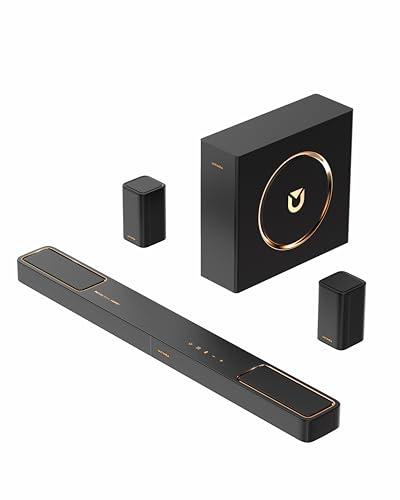
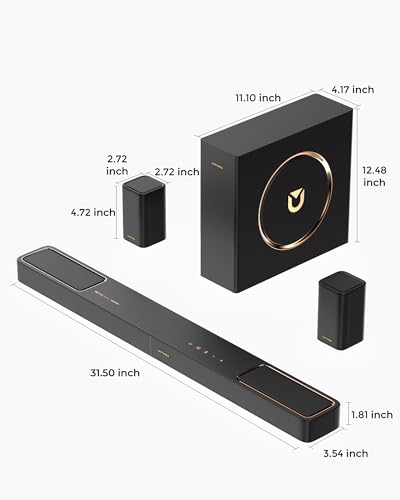
The Ultimea Skywave F40 follows what I call the "complete system" philosophy. When you open the box, you get everything needed for true surround sound: a main soundbar, wireless rear speakers, and a wired subwoofer. This means you're physically placing speakers around your room, just like a traditional home theater system, but in a much more user-friendly package.
This approach has obvious advantages. When a movie scene calls for sound to come from behind you, it literally does—there are actual speakers positioned there. The rear surround speakers in the F40 system create what's called "discrete surround channels," meaning each speaker handles its own specific audio information rather than trying to simulate the effect.
The trade-off? You need to find places for those rear speakers and run some wires. While the F40 makes this easier than traditional systems (the rear speakers are compact and wireless to each other), you're still dealing with multiple components and the room layout considerations that come with them.
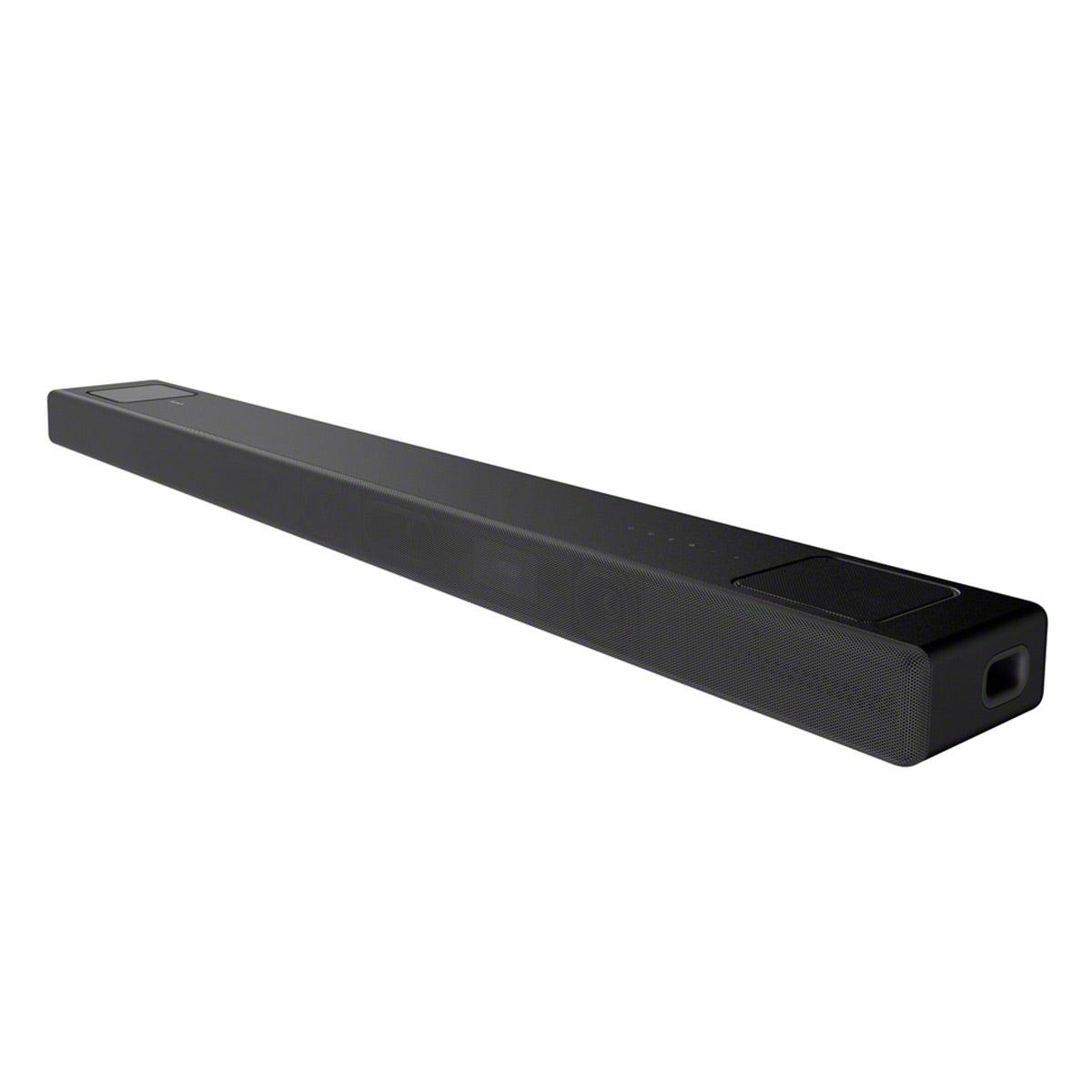
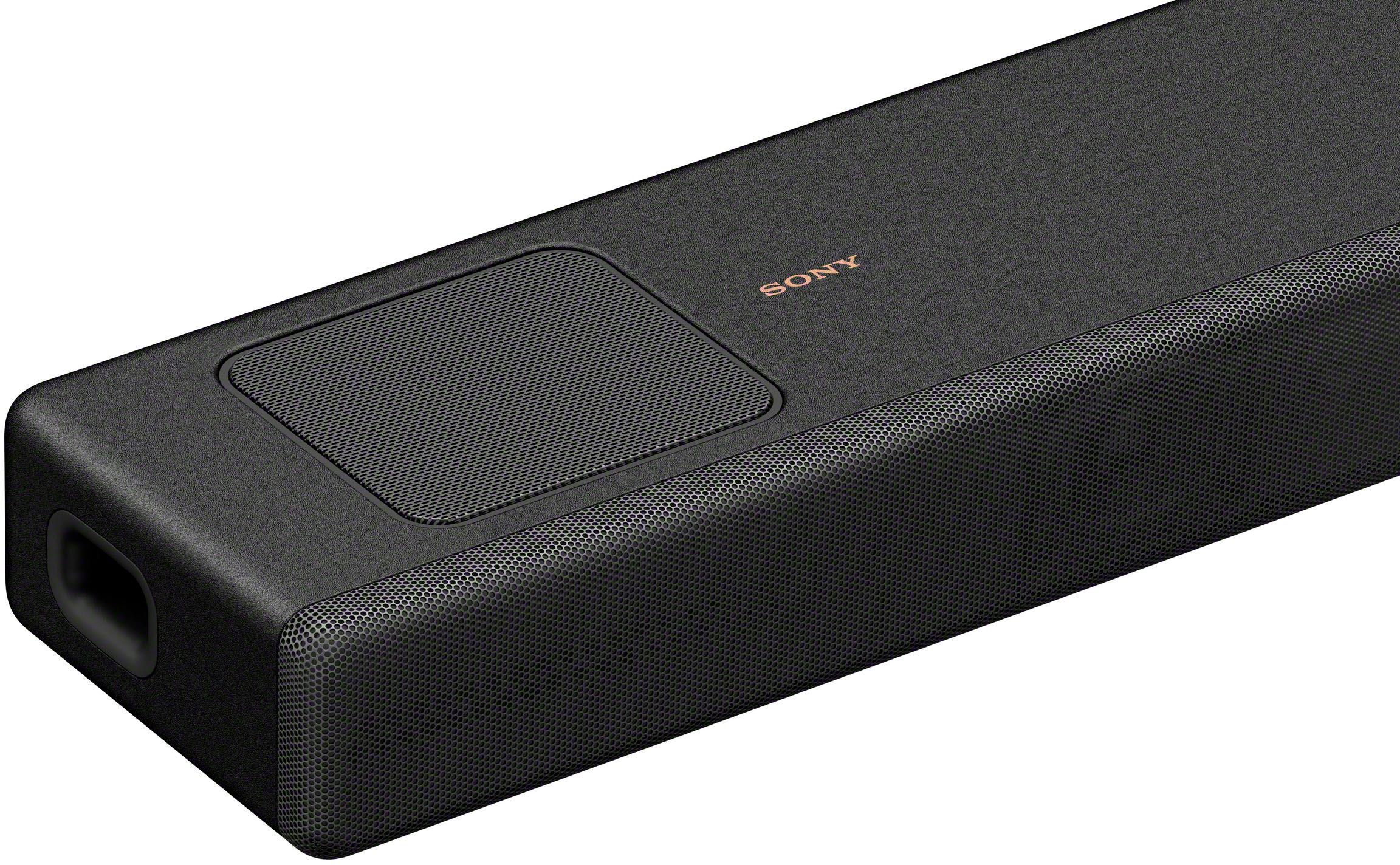
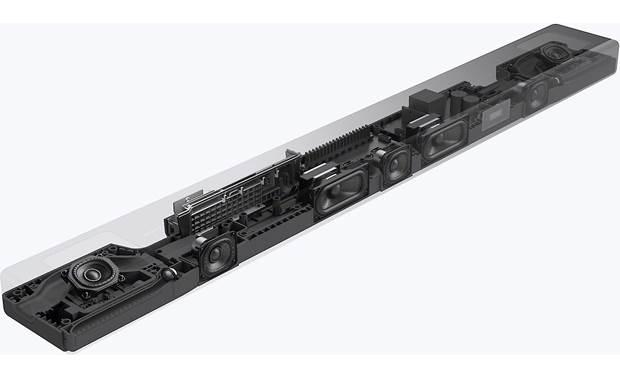
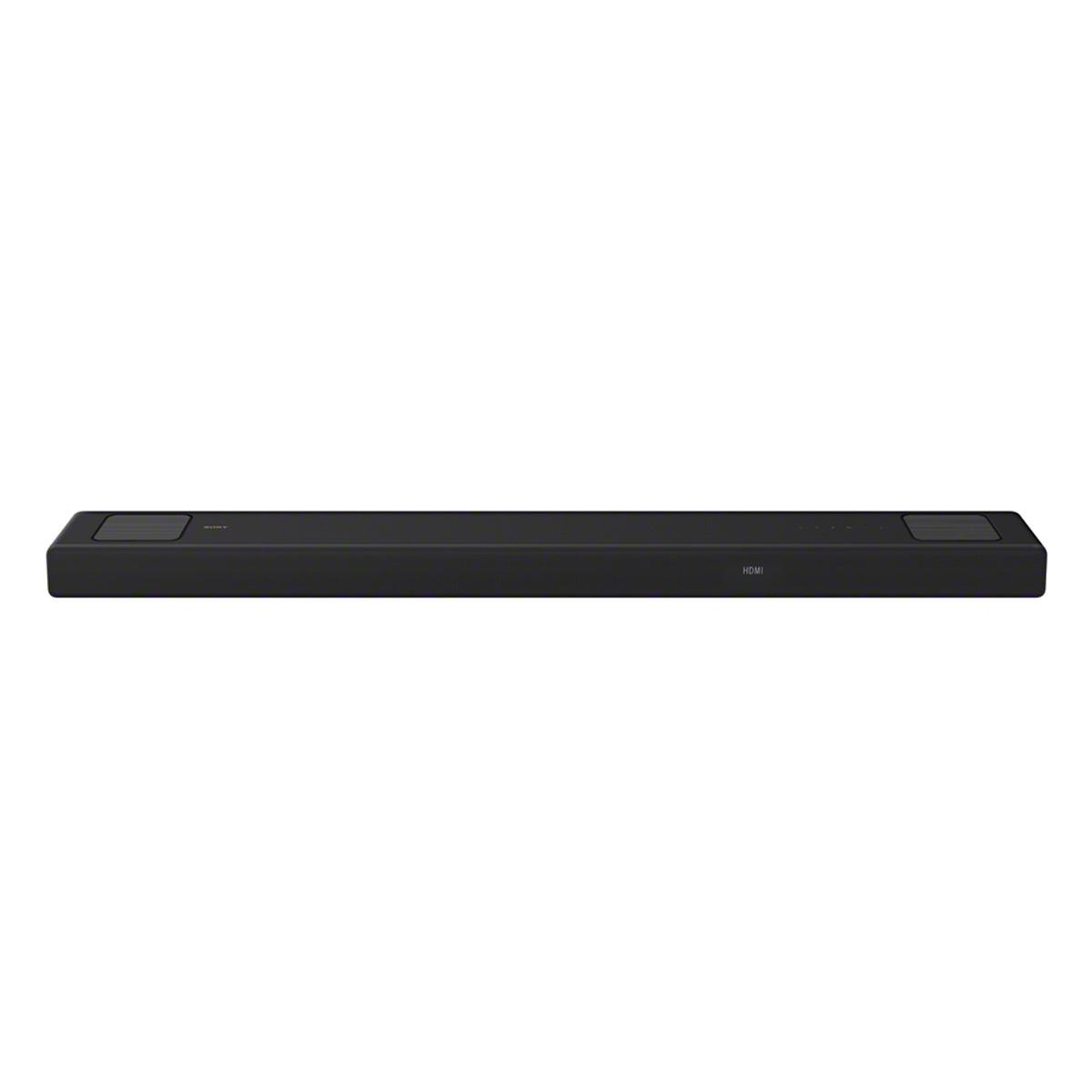
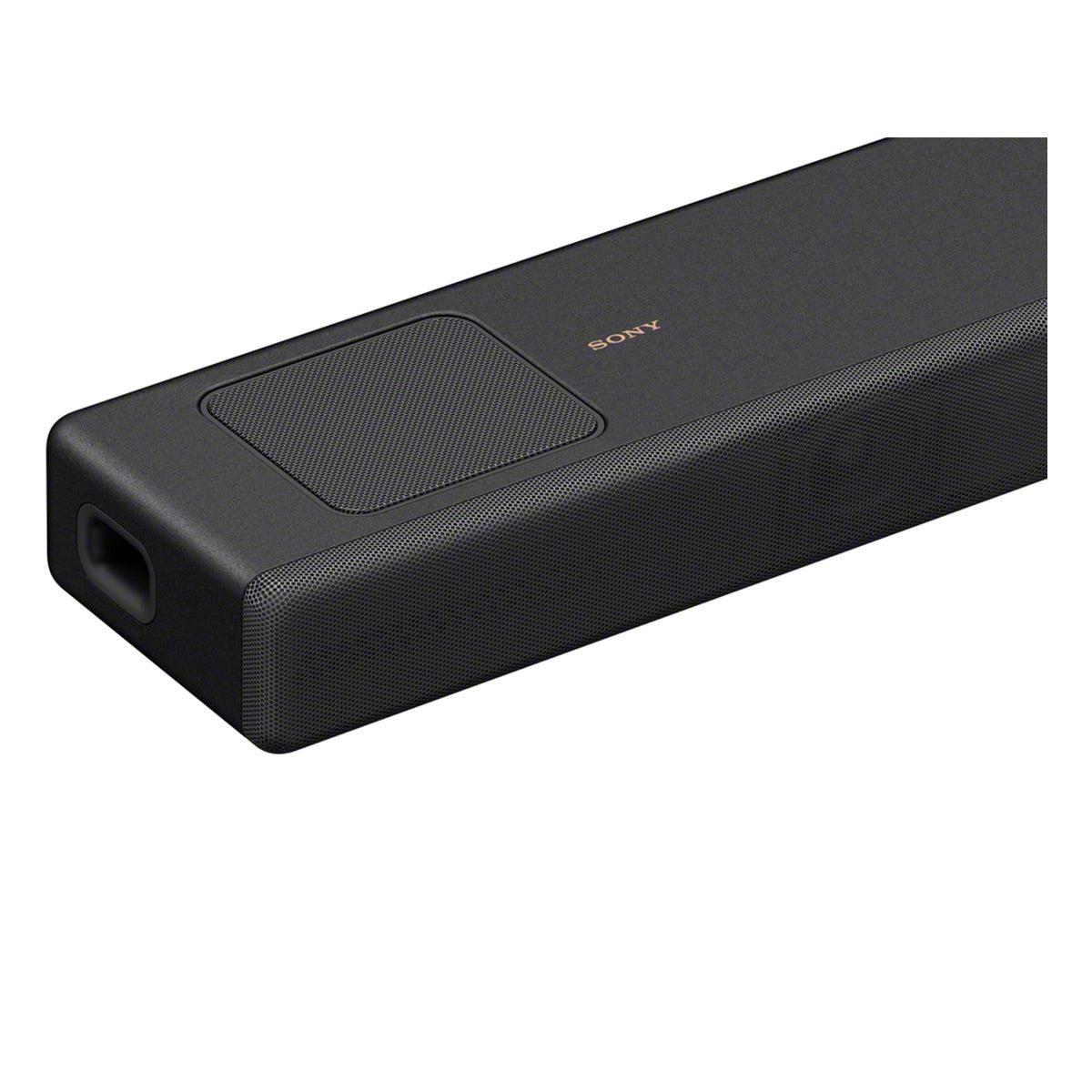
The Sony HT-A5000 takes the opposite approach—cramming all the technology into one sophisticated soundbar. Sony's engineers have spent years developing what they call "360 Spatial Sound Mapping" and "Vertical Surround Engine" technologies. These systems use advanced digital signal processing (DSP) to create the illusion of surround sound coming from speakers that don't actually exist.
Here's how it works: the soundbar analyzes your room's acoustics and bounces sound off your walls and ceiling to create "phantom speakers"—spots where your brain thinks speakers are located even though there aren't any physical drivers there. Sony has refined this technology significantly since the HT-A5000 launched in 2021, and the results can be surprisingly convincing.
The benefit is obvious: you get sophisticated surround sound from a single, elegant unit that looks great under any TV. The limitation is equally clear—you're dependent on room acoustics and processing algorithms rather than actual speaker placement.
This is where the fundamental differences between these systems really show themselves. Having tested both approaches extensively, I can tell you they create distinctly different listening experiences.
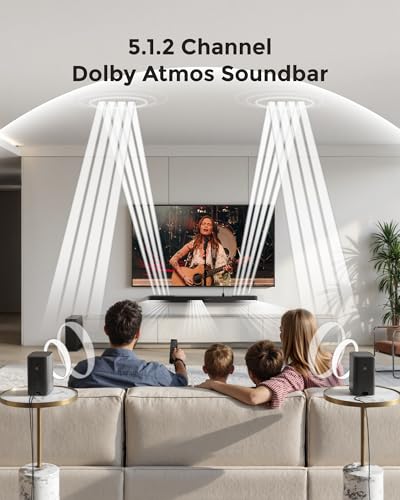
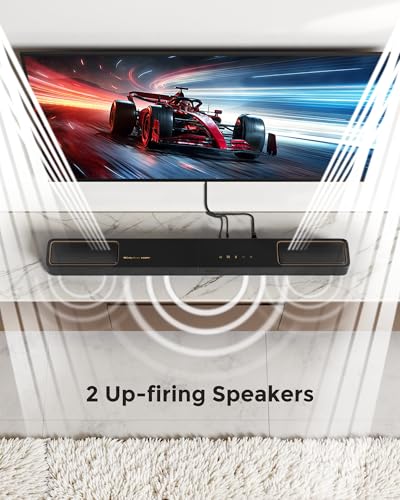
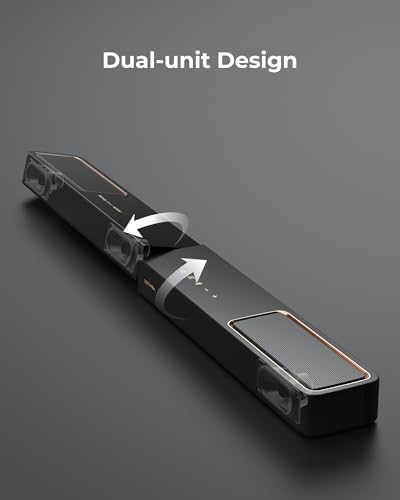
The Ultimea F40 delivers what I call "honest surround sound." When you're watching a movie and hear footsteps approaching from behind, the sound actually originates from behind your seating position. The system's SurroundX technology combines these physical rear speakers with dual upfiring drivers in the main soundbar. These upfiring speakers use neodymium magnets (stronger than typical magnets) and bounce sound off your ceiling to create height effects.
What impressed me most about the F40 is how well it handles complex scenes. During action sequences with multiple sound sources, you can clearly identify where each sound is coming from. The rear speakers use 2-inch drivers—not huge, but properly sized for their job of handling ambient effects and directional audio cues.
The Sony HT-A5000 creates immersion through sheer processing sophistication. Sony's Vertical Surround Engine doesn't just bounce sound off surfaces randomly—it maps your room's acoustics and creates specific phantom speaker locations. The S-Force Pro technology then manages how sound travels between these virtual locations.
In my testing, the Sony excels at creating an expansive soundstage that seems much larger than what a single soundbar should be capable of. The effect is particularly impressive with Atmos-encoded content, where Sony's algorithms really shine. However, there are moments—especially with very directional effects—where you're aware that the sound is being processed rather than naturally positioned.
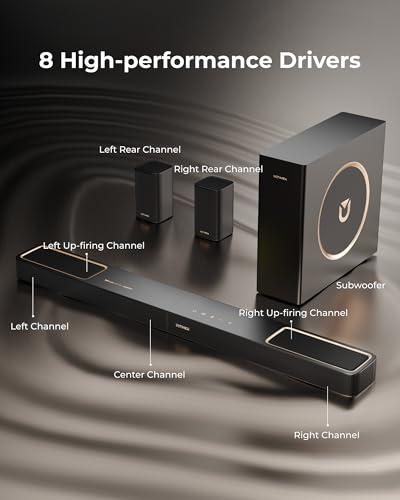
Both systems pack considerable power, but they distribute it differently. The Ultimea F40 spreads its 400-460 watts across eight physical drivers: three 3.4" x 1.5" drivers plus two 1.75" drivers in the main bar, 2" drivers in each rear speaker, and a 6.5" driver in the subwoofer. This distribution means each driver can focus on its specific frequency range without trying to do everything at once.
The Sony HT-A5000 concentrates its 450 watts into fewer, but more sophisticated drivers. Sony's X-Balanced driver design maximizes the diaphragm area—the part of the speaker that actually moves air—which allows for more controlled bass and clearer midrange reproduction. The company's S-Master HX amplification provides cleaner power delivery with less distortion.
In terms of frequency response—how low and high the system can reproduce sound—both systems are well-matched. The F40 reaches down to 38-45Hz thanks to its dedicated subwoofer, while the Sony relies on built-in subwoofers and sophisticated bass management. For reference, 40Hz is roughly where you start feeling bass rather than just hearing it, so both systems can deliver that visceral impact that makes explosions feel real.
Where Sony pulls ahead is in midrange clarity, particularly with dialogue. The company's DSEE Extreme technology analyzes compressed audio (like Netflix streams) and reconstructs detail that was lost during compression. This means dialogue sounds more natural, and music has better separation between instruments.
The F40 counters with sheer dynamic range—its ability to go from whisper-quiet to thunderously loud without losing clarity. Having multiple drivers and a dedicated subwoofer means the system never seems strained, even at volumes that would make your neighbors unhappy.
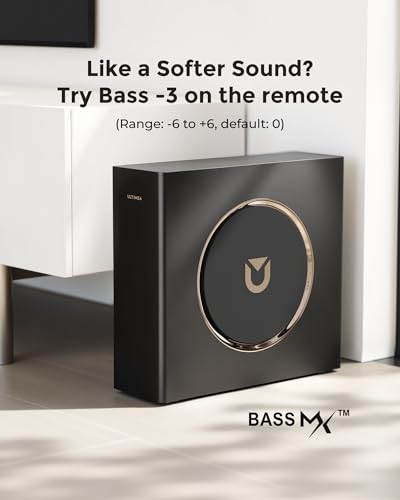
This is where the approaches really diverge. The Ultimea F40 includes a wired 6.5-inch subwoofer that sits on your floor and handles everything below about 120Hz. This creates what audio engineers call "tactile bass"—low frequencies you feel in your chest during explosions or dramatic musical moments.
The Sony's built-in subwoofers are impressive for their size, but they're still constrained by the soundbar's form factor. Sony compensates with sophisticated bass management algorithms that maximize the impact of smaller drivers, but physics is physics—larger drivers move more air and create more physical impact.
However, Sony's approach has its own advantages. The built-in bass integrates seamlessly with the rest of the frequency spectrum, creating what sounds like a more cohesive presentation. With the F40, there's occasionally a slight disconnect between the subwoofer and the main speakers, though this is minor and mostly noticeable during critical listening rather than normal movie watching.
Both systems support the core technologies you'd expect from modern soundbars, but they prioritize different aspects of connectivity.
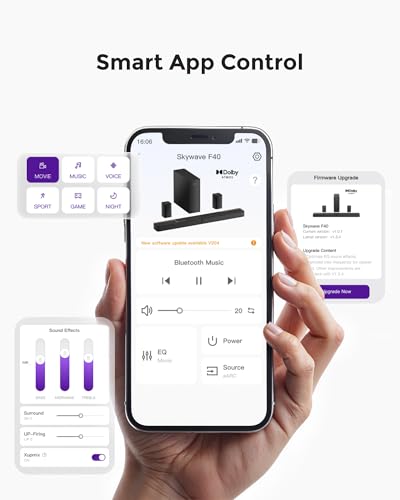
The Ultimea F40 focuses on customization and control. Its Bluetooth 5.4 connection is notably newer than what most soundbars offer, providing more stable wireless streaming with lower latency—important for gaming or watching videos on your phone. The system includes a 10-band equalizer accessible through the smartphone app, along with 121 preset EQ matrices. This level of customization is unusual in any soundbar, let alone one in this price category.
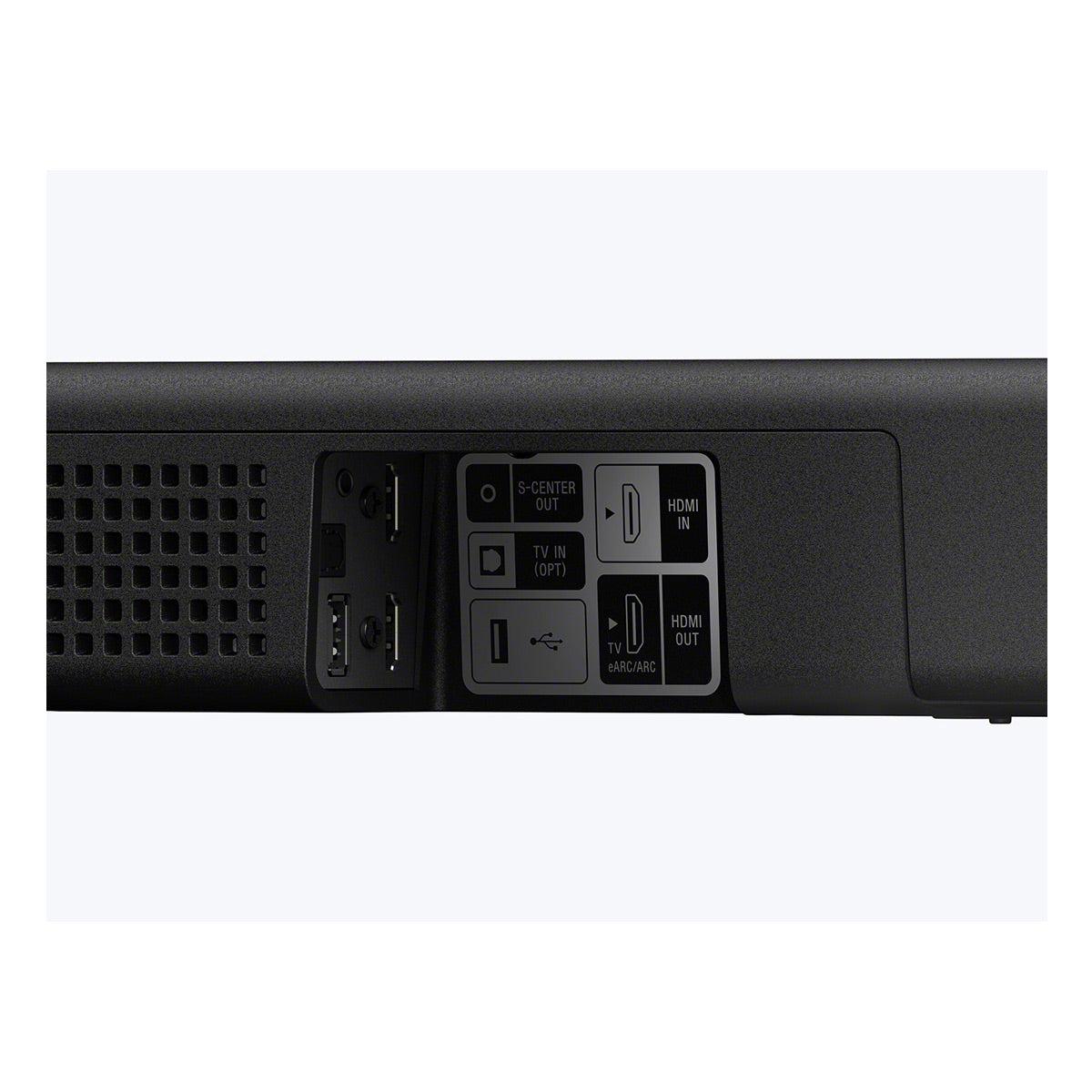
The Sony emphasizes ecosystem integration. HDMI 2.1 support means it can handle 8K video passthrough and 4K at 120Hz—crucial for next-generation gaming consoles. More importantly, the Sony integrates with Chromecast, AirPlay 2, and voice assistants. You can tell your Google Assistant to play music, and it'll start streaming directly to the soundbar.
The Sony's Sound Field Optimization feature uses built-in microphones to measure your room and automatically adjust the audio accordingly. This happens every time you turn the system on, ensuring optimal performance even if you rearrange your furniture.
Setting up the Ultimea F40 requires more initial work but offers a more straightforward ongoing experience. You'll need to position the rear speakers—ideally 2-3 feet behind and slightly above your seating position—and run the connecting wire to the subwoofer. The system comes with everything you need, including wall brackets, but you'll need to plan your room layout around speaker placement.
Once set up, the F40 is remarkably simple to use. CEC support means your TV remote can control volume and basic functions, and the smartphone app handles everything else. The system works well in rooms between 215-269 square feet, which covers most living rooms and smaller home theaters.
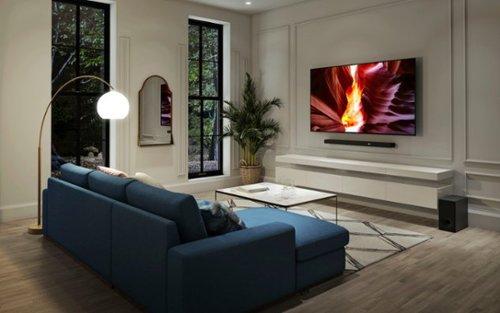
The Sony HT-A5000 is the definition of plug-and-play. Position it under your TV, connect one HDMI cable, and the automatic room optimization takes care of the rest. The built-in microphones analyze your space and adjust the sound accordingly—no manual measurements or complicated setup menus required.
However, the Sony's convenience comes with limitations. If your room has challenging acoustics—like high ceilings or lots of hard surfaces—the virtual surround processing might not work as effectively as physical speakers would.
At the time of writing, these systems occupy very different price tiers, with the Sony HT-A5000 costing roughly 2-3 times more than the Ultimea F40. This price difference reflects more than just features—it represents completely different approaches to delivering premium audio.
The F40 represents exceptional value by providing a complete surround sound system at a price point where most competitors offer only basic soundbars. You're getting physical rear speakers, a dedicated subwoofer, and sophisticated processing technology that would typically cost significantly more from established brands.
The risk with the F40 is primarily about the unknown. Ultimea is a newer brand without the decades of audio engineering experience that Sony brings to the table. However, the technical specifications and user feedback suggest they've done their homework, delivering performance that competes with much more expensive systems.
The Sony HT-A5000 commands its premium through refinement and ecosystem integration. You're paying for Sony's decades of audio research, sophisticated room optimization technology, and the assurance that comes with an established brand. The build quality is noticeably higher, and the feature set is more comprehensive.
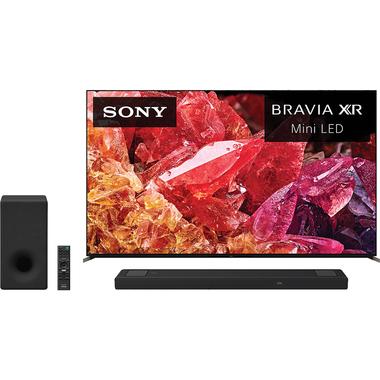
More importantly, Sony offers an upgrade path. While the F40 is a complete system out of the box, the Sony can be enhanced with additional wireless rear speakers and subwoofers down the road. This modular approach appeals to users who want to start with a premium soundbar and potentially build a full surround system over time.
Both systems excel in home theater applications, but they require different room considerations. The Ultimea F40 works best in rectangular rooms where you can properly position the rear speakers. The ideal setup places the rear speakers at ear level or slightly above, about 2-3 feet behind your primary seating position.
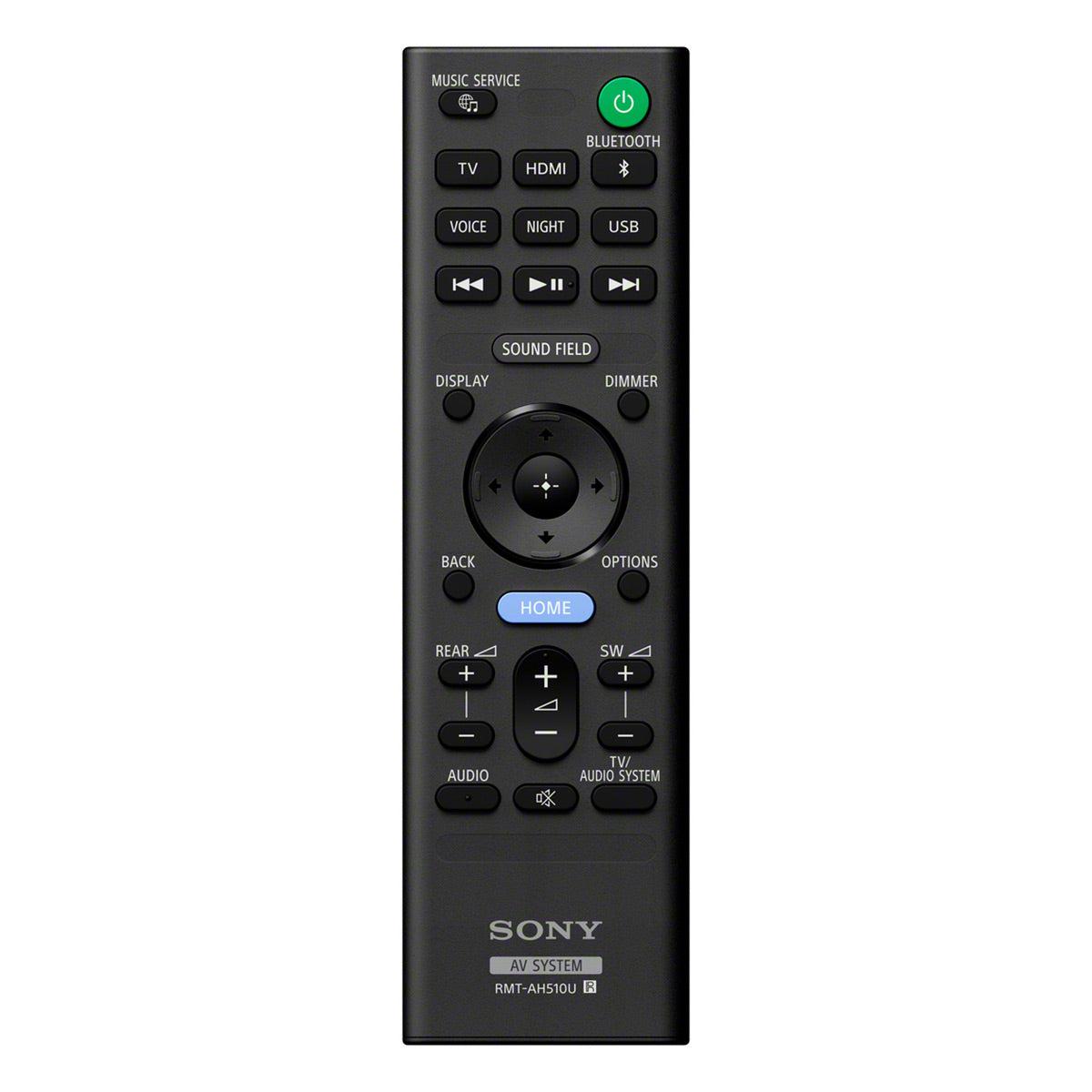
The system's multiple listening modes—Movie, Music, Voice, Sport, Game, and Night—optimize the sound for different content types. Movie mode emphasizes surround effects and bass impact, while Voice mode focuses on dialogue clarity. Night mode compresses the dynamic range, keeping explosions quiet while maintaining dialogue audibility—perfect for late-night viewing.
The Sony HT-A5000 adapts to more challenging room layouts but works best in rooms with reasonably standard ceiling heights (8-10 feet) and surfaces that can reflect sound effectively. Very large rooms or those with unusual acoustics might not provide optimal phantom speaker placement.
Sony's advantage in home theater use is its sophisticated content processing. The system automatically detects whether you're playing Dolby Atmos content, DTS:X, or standard audio and applies the appropriate processing. The DSEE Extreme technology is particularly beneficial for streaming content, where compression artifacts can make dialogue sound unnatural.
Both systems handle gaming well, but with different strengths. The F40's discrete surround channels provide excellent positional audio for competitive gaming—you can precisely locate footsteps or gunfire. The low-latency Bluetooth 5.4 connection also makes it suitable for mobile gaming.
The Sony HT-A5000's 4K120Hz passthrough support makes it ideal for next-generation console gaming. The system's Game mode optimizes processing for lower latency while maintaining surround effects.
For music listening, the Sony's more sophisticated drivers and processing generally provide better stereo imaging and instrument separation. However, the F40's extensive EQ options allow for more personalized sound tuning, and some listeners prefer the more dynamic presentation that comes from having multiple physical speakers.
After extensive testing with both systems, I believe the choice comes down to your priorities and room situation.
Choose the Ultimea Skywave F40 if you want maximum audio impact for your investment and don't mind the additional setup complexity. This system is perfect for users who prioritize authentic surround sound over convenience and are comfortable with newer brands. The F40 excels in dedicated home theater rooms or living spaces where you can properly position rear speakers.
The F40 is also ideal for users who enjoy customizing their audio experience. The extensive EQ options and multiple listening modes provide more personalization than most systems in any price category.
Choose the Sony HT-A5000 if you value convenience, brand reputation, and sophisticated processing over pure value. This system works better in challenging room layouts and integrates seamlessly with modern smart home ecosystems. The Sony is perfect for users who want premium audio without the complexity of multiple speakers, or those planning to gradually build a more comprehensive system over time.
The Sony makes more sense for renters or those who frequently rearrange their living spaces, as it doesn't require permanent speaker positioning. It's also the better choice for users who prioritize streaming integration and voice control features.
Both the Ultimea Skywave F40 and Sony HT-A5000 succeed at their intended missions. The F40 delivers exceptional value by providing a complete, authentic surround sound experience that would typically cost much more. The Sony offers premium convenience and processing sophistication that justifies its higher price point.
Your choice should be based on how you plan to use the system and what you value most. If you want the most immersive possible audio experience and don't mind positioning speakers around your room, the F40 delivers extraordinary value. If you prefer elegant simplicity with room to grow, the Sony provides a more refined, flexible foundation for your home theater.
Either way, you'll be getting Dolby Atmos performance that would have been unimaginable at these price points just a few years ago. The evolution of soundbar technology has been remarkable, and both of these systems represent the current state of the art in their respective categories.
| Ultimea Skywave F40 | Sony HT-A5000 |
|---|---|
| System Configuration - Determines authenticity of surround sound experience | |
| Complete 5.1.2 system with physical rear speakers and wired subwoofer | Single soundbar with built-in subwoofers, expandable with optional wireless speakers |
| Power Output - Affects maximum volume and dynamic range | |
| 400-460W across 8 physical drivers | 450W through S-Master HX digital amplification |
| Surround Sound Method - Core difference in how you experience directional audio | |
| Physical rear speakers create true directional surround | Virtual surround through 360 Spatial Sound Mapping and room processing |
| Frequency Response - How deep the bass goes and how clear the highs are | |
| 38-45Hz to 18-20kHz with dedicated 6.5" subwoofer | Enhanced range with X-Balanced drivers and DSEE Extreme processing |
| Setup Complexity - Time and effort required for installation | |
| Requires positioning rear speakers and subwoofer around room | Single unit setup with automatic room optimization |
| Connectivity Options - Modern features and device compatibility | |
| HDMI eARC, Optical, USB, Bluetooth 5.4, smartphone app with 10-band EQ | HDMI 2.1 with 8K/4K120 passthrough, Chromecast, AirPlay 2, voice assistants |
| Room Size Compatibility - Optimal performance area | |
| Recommended for 215-269 sq ft rooms | Adapts to various room sizes through acoustic mapping |
| Expandability - Future upgrade options | |
| Complete system out of box, no official expansion path | Modular design allows adding Sony wireless subwoofers and rear speakers |
| Brand Heritage - Support and reliability considerations | |
| New 2025 brand with aggressive pricing strategy | Established Sony audio engineering since 2021 release |
| Value Proposition - Performance per dollar spent | |
| Exceptional value with complete surround system at budget price | Premium pricing for convenience, processing sophistication, and brand reliability |
The Sony HT-A5000 is significantly easier for beginners due to its single-unit design and automatic room optimization. You simply place it under your TV, connect one HDMI cable, and the system handles the rest. The Ultimea Skywave F40 requires positioning rear speakers around your room and connecting multiple components, though it still offers a straightforward setup process with clear instructions.
The core difference is approach: the Ultimea Skywave F40 provides a complete surround sound system with physical rear speakers that you place around your room, creating authentic directional audio. The Sony HT-A5000 uses advanced processing technology to create virtual surround sound from a single soundbar unit, relying on room acoustics and sophisticated algorithms.
For authentic surround sound, the Ultimea F40 has the advantage because it uses actual rear speakers positioned behind your seating area. This creates genuine directional effects where sounds literally come from behind you. The Sony HT-A5000 creates impressive virtual surround through processing, but it's still simulated rather than discrete surround channels.
No, you don't need rear speakers for Dolby Atmos, but they enhance the experience significantly. The Sony HT-A5000 delivers excellent Dolby Atmos with height effects from a single unit. However, the Ultimea Skywave F40 provides a more immersive experience by combining physical rear speakers with upfiring Atmos drivers for complete 360-degree surround sound.
The Sony HT-A5000 is ideal for small apartments because it requires no additional speaker placement and works well in challenging room layouts. The Ultimea F40 can work in smaller spaces but requires room for rear speaker positioning and may overwhelm very small rooms with its multiple components.
Both systems excel at dialogue, but differently. The Sony HT-A5000 uses DSEE Extreme technology to enhance compressed audio and optimize voice frequencies. The Ultimea Skywave F40 offers dedicated voice modes and extensive EQ customization to fine-tune dialogue clarity to your preferences.
The Ultimea Skywave F40 offers exceptional value by providing a complete 5.1.2 surround system with physical speakers at a budget-friendly price point. The Sony HT-A5000 costs significantly more but justifies the premium through brand reliability, advanced processing, and sophisticated features like automatic room optimization.
The Sony HT-A5000 offers excellent expandability with optional Sony wireless rear speakers and subwoofers that integrate seamlessly. The Ultimea F40 comes as a complete system out of the box with no official expansion options, but it already includes everything most users need for full surround sound.
Both systems work well for gaming, but serve different needs. The Ultimea Skywave F40 provides excellent positional audio through its discrete surround speakers, perfect for competitive gaming. The Sony HT-A5000 supports 4K/120Hz passthrough for next-gen consoles and offers lower latency processing in game mode.
The Sony HT-A5000 requires minimal space—just room under your TV for the single soundbar unit. The Ultimea F40 needs space for rear speakers (ideally 2-3 feet behind seating) and floor space for the subwoofer, making it better suited for dedicated home theater rooms or larger living spaces.
The Sony HT-A5000 comes from an established audio brand with decades of experience and proven support infrastructure. The Ultimea Skywave F40 is from a newer company, so long-term reliability is less proven, though early user feedback has been positive and the technical specifications are impressive.
Choose the Ultimea F40 if you want authentic surround sound and don't mind positioning speakers around your room. The physical approach creates more convincing directional effects. Choose the Sony HT-A5000 if you prioritize convenience and sophisticated processing that adapts to your room automatically without requiring additional speaker placement.
We've done our best to create useful and informative comparisons to help you decide what product to buy. Our research uses advanced automated methods to create this comparison and perfection is not possible - please contact us for corrections or questions. These are the sites we've researched in the creation of this article: the-gadgeteer.com - youtube.com - ultimea.com - manuals.plus - youtube.com - ultimea.com - youtube.com - youtube.com - youtube.com - youtube.com - eu.ultimea.com - support.ultimea.com - whathifi.com - electronics.sony.com - costco.com - sony.com - expertreviews.co.uk - crutchfield.com - audioadvice.com - sony.com - sony.com - bestbuy.com - videoandaudiocenter.com - community.sony.co.uk

Privacy Policy
Terms and Conditions - Affiliate Policy
Home Security
© Copyright 2008-2026.
11816 Inwood Rd #1211, Dallas, TX 75244