


If you've been listening to movies through your TV's built-in speakers, you're missing out on a significant chunk of the audio experience. TV manufacturers keep making screens thinner, which leaves less room for decent speakers, resulting in dialogue that sounds like it's coming from a tin can. The good news? Even a modest soundbar investment can transform your viewing experience without breaking the bank.
Today we're comparing two popular budget soundbars that take completely different approaches: the Samsung HW-C450, a simple 2.1 system focused on ease of use, and the Ultimea Skywave F40, a full 5.1.2 Dolby Atmos setup that promises true surround sound. At the time of writing, these systems are priced roughly $50 apart, but the question is whether that price difference translates to meaningful performance gains.
The budget soundbar market has evolved dramatically over the past few years. When the Samsung HW-C450 launched in 2023, it represented Samsung's entry-level approach: clean design, wireless subwoofer, and virtual surround processing. The Ultimea Skywave F40, arriving in 2024, reflects newer thinking about what budget buyers deserve – namely, real surround speakers and genuine Dolby Atmos processing instead of just simulation.
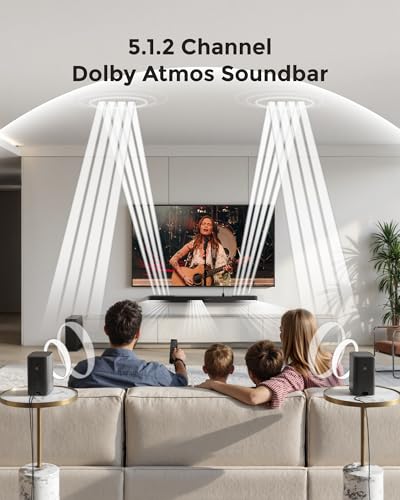
This shift matters because of how we consume content today. Streaming services like Netflix and Disney+ increasingly offer Dolby Atmos soundtracks that create three-dimensional audio with sounds moving around and above you. A traditional 2.1 system like the Samsung HW-C450 can only simulate these effects through clever processing, while systems like the Ultimea F40 can actually place sounds in specific locations using dedicated speakers.
The key considerations when shopping in this category boil down to room size, content preferences, and setup tolerance. Some people want to plug in one cable and forget about it. Others don't mind positioning rear speakers if it means better immersion during movie night.
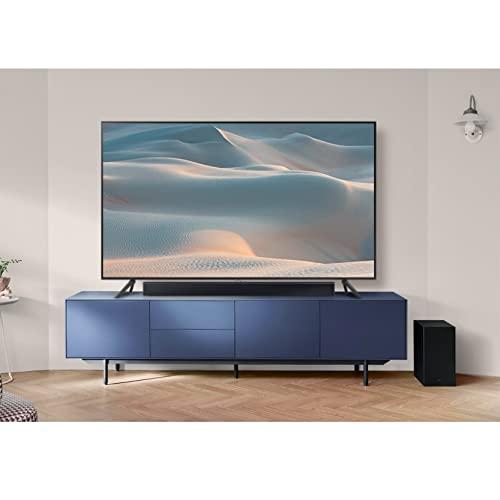
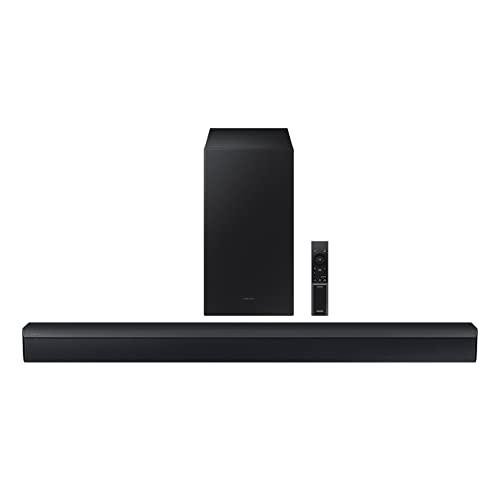
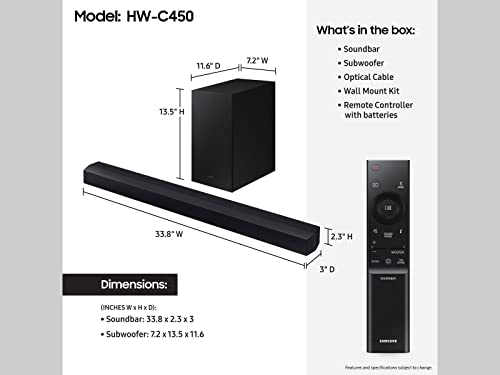
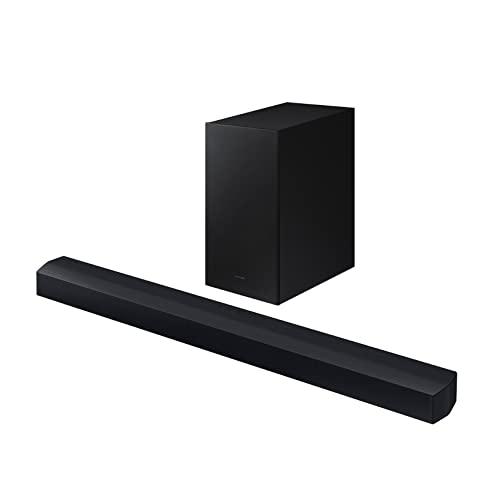
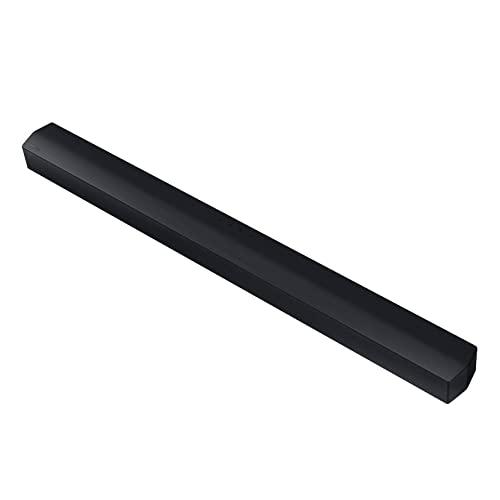
The Samsung HW-C450 keeps things straightforward: a slim soundbar and a wireless subwoofer that connects automatically when you power everything up. The soundbar measures about 34 inches wide, making it suitable for TVs from 40 to 65 inches without looking out of proportion. The wireless subwoofer can be tucked anywhere within reasonable range, giving you flexibility in placement.
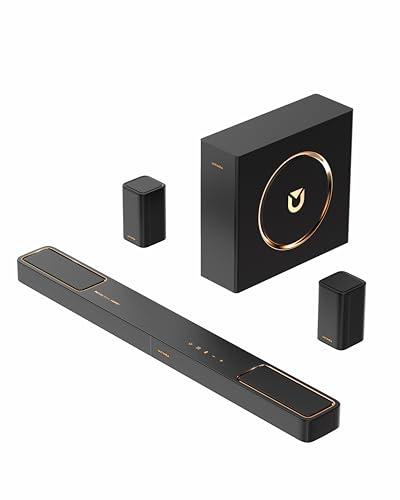
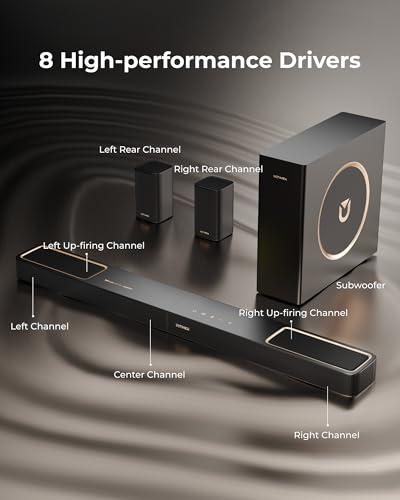
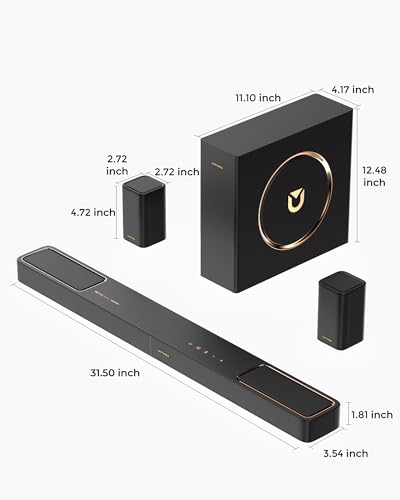
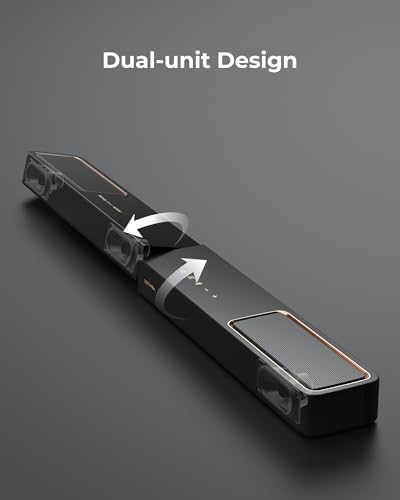
The Ultimea Skywave F40 is more complex but includes everything needed for a complete home theater setup. You get the main soundbar (which actually splits into two pieces for shipping), two rear surround speakers, and a subwoofer. The rear speakers are compact enough to sit on shelves or mount on walls without dominating your room's aesthetic.
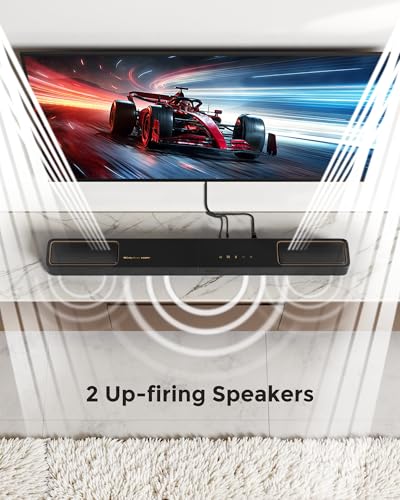
Here's where things get interesting: the Ultimea system includes two up-firing drivers in the main soundbar. These speakers point toward your ceiling and bounce sound down to create overhead effects – the core of Dolby Atmos technology. The Samsung has no such drivers, relying entirely on DTS Virtual:X processing to simulate height effects through the front speakers.
The power difference between these systems tells an important story. The Samsung HW-C450 delivers 300W total system power, split between the soundbar (around 80W) and subwoofer (220W). The Ultimea F40 claims 460W peak power distributed across more speakers, though real-world power delivery varies based on content and volume levels.
More power typically means better dynamics – the ability to handle sudden loud sounds without distortion while maintaining clear quiet passages. Based on our research of user experiences, the Ultimea system maintains clarity at higher volumes better than the Samsung, which can sound compressed when pushed hard. This matters if you have a larger room or like your action movies loud enough to feel the explosions.
Both systems include dedicated subwoofers, but they take different approaches. The Samsung's wireless subwoofer offers placement freedom – you can position it wherever it sounds best in your room without worrying about cable runs. The trade-off is potential wireless interference and the need for a separate power outlet.
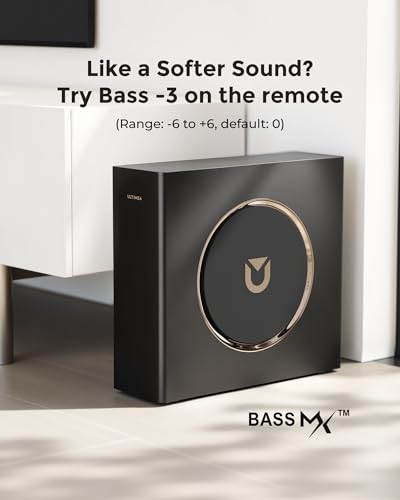
The Ultimea's wired subwoofer requires cable management but provides rock-solid connection stability. More importantly, it extends deeper into bass frequencies, reaching down to 40Hz compared to the Samsung's less specified but reportedly shallower response. Those extra low frequencies make explosion scenes more visceral and give music more foundation.
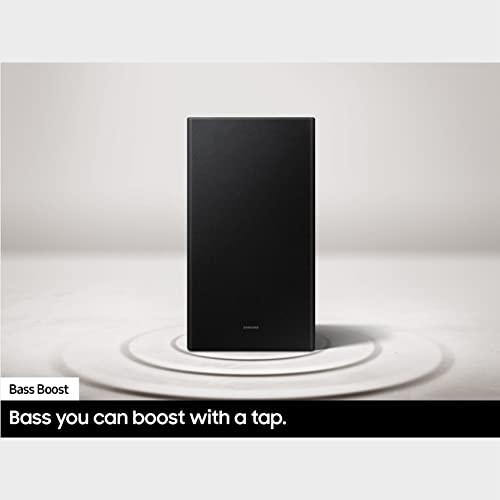
BassMX technology in the Ultimea system represents active bass management – the system analyzes incoming audio and adjusts subwoofer output to prevent muddiness while maintaining impact. The Samsung offers a simpler Bass Boost mode that increases low-frequency emphasis but without the intelligent processing to prevent boom and distortion.
This is where the fundamental difference between these systems becomes crystal clear. The Samsung HW-C450 uses DTS Virtual:X processing, which is essentially sophisticated audio trickery. It analyzes stereo or surround sound content and uses phase manipulation and frequency adjustments to create the illusion of sounds coming from beside and behind you.
Virtual surround can be impressive under ideal conditions – sitting in the sweet spot with proper room acoustics. But it's still an illusion. Move your head or change your seating position, and the effect weakens or disappears entirely.
The Ultimea F40 takes the physical approach. Those rear speakers actually place sounds behind your listening position, creating genuine surround effects that work regardless of where you sit (within reason). The up-firing drivers bounce sound off your ceiling to create overhead effects that virtual processing simply cannot match.
When we dove into user reviews and professional assessments, the consensus was clear: once you experience true surround sound with physical rear speakers, virtual surround feels noticeably artificial. The Ultimea's approach creates a more enveloping soundstage that enhances everything from action movie chase scenes to the ambient sounds in nature documentaries.
Both systems handle dialogue well, but through different methods. The Samsung HW-C450 includes Voice Enhance mode, which boosts midrange frequencies where human speech lives. This helps voices cut through background music and effects, addressing one of the most common complaints about TV audio.
The Ultimea F40 uses its speaker configuration advantage. In a proper surround setup, dialogue typically comes through dedicated center channel speakers. While the F40 doesn't have a discrete center speaker, its wider soundbar creates better stereo imaging that helps anchor voices to the screen center.
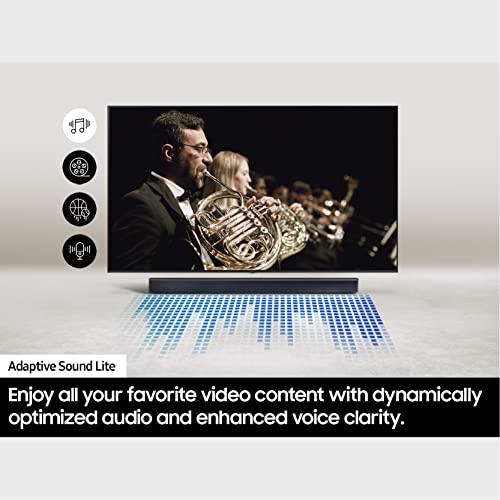
Adaptive Sound Lite in the Samsung system automatically adjusts audio based on content type – boosting dialogue for news shows, enhancing bass for action scenes, and optimizing dynamics for music. It's a clever feature that reduces the need for manual adjustments.
The connectivity story reveals each system's design philosophy. The Samsung HW-C450 offers optical digital input and Bluetooth, period. This reflects a keep-it-simple approach that works for basic TV connection and music streaming from phones.
The limitation becomes apparent with modern content consumption. Optical connections max out at compressed Dolby Digital 5.1, meaning you're not getting the full quality of Netflix's Atmos soundtracks or uncompressed audio from Blu-ray discs. The Samsung's older Bluetooth implementation also introduces audio latency that can create lip-sync issues with video content.
The Ultimea F40 includes HDMI eARC (Enhanced Audio Return Channel), which is becoming the gold standard for soundbar connections. eARC supports high-bandwidth, uncompressed audio formats including Dolby Atmos and DTS:X. It also enables CEC (Consumer Electronics Control), letting you control both your TV and soundbar with a single remote.
Bluetooth 5.4 in the Ultimea system offers faster connection speeds, better range, and ultra-low latency that eliminates lip-sync issues during music streaming or gaming. These might seem like technical details, but they translate to a more seamless user experience.
Gaming audio has specific requirements that differ from movies or music. Competitive gamers need precise directional audio to locate enemies, while casual gamers want immersive soundscapes that enhance the experience.
The Samsung HW-C450's Game Mode removes background processing that can introduce audio delay, ensuring that sound effects sync perfectly with on-screen action. It also adjusts the frequency response to emphasize important gaming sounds like footsteps and gunfire while reducing distracting ambient noise.
However, the Ultimea F40's physical surround speakers provide inherently better directional audio. When an enemy approaches from your right in a first-person shooter, you'll hear it through the right rear speaker rather than through processed virtual positioning. This creates more accurate spatial awareness that can improve gaming performance.
The up-firing speakers in the Ultimea system add another dimension by placing sounds like helicopter rotors or aircraft engines overhead where they belong. Modern games increasingly use height channels for atmospheric effects, and the F40 can reproduce these as intended.
For serious home theater use, several factors come into play beyond basic sound quality. The Samsung HW-C450 works best as a simple TV audio upgrade. Its wireless subwoofer won't interfere with other wireless devices in your entertainment center, and the single optical connection keeps cable management minimal.
The Ultimea F40 represents a more committed home theater approach. You'll need to plan rear speaker placement, run the subwoofer cable, and possibly mount speakers on walls or stands. But the payoff is genuine cinematic audio that transforms your living room into a mini movie theater.
Room size considerations matter significantly. The Samsung system works well in smaller spaces where rear speakers would be impractical or overwhelming. The Ultimea's surround speakers need adequate distance from your seating position to create proper spatial effects – sitting too close makes the rear channels overpowering.
Both systems support wall mounting with included brackets, but the Ultimea requires more planning to position everything optimally. The reward is audio that scales with your room size and maintains immersion across multiple seating positions.
The Samsung HW-C450 excels at disappearing into daily use. Setup involves connecting one optical cable and plugging in the soundbar and subwoofer. The wireless subwoofer pairs automatically, and basic functions work immediately. The included remote handles essential functions, and Samsung's One Remote Control support lets you manage everything through your TV remote if you have a compatible Samsung TV.
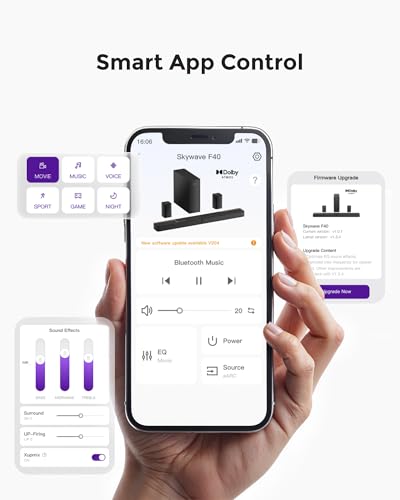
The Ultimea F40 demands more initial effort but rewards you with greater long-term flexibility. The smartphone app provides access to a 10-band equalizer and 121 preset matrices, letting you fine-tune the sound for your room and preferences. You can create custom profiles for different content types and switch between them easily.
Night Mode features differ between the systems. The Samsung's Night Mode compresses audio dynamics to prevent loud scenes from disturbing others while keeping dialogue audible. The Ultimea's approach maintains surround effects while reducing overall volume and bass impact.
At the time of writing, the price difference between these systems represents one of the most interesting value propositions in budget audio. The Samsung HW-C450 delivers reliable 2.1 audio improvement at the lowest entry price, making it accessible to anyone wanting better TV sound without complexity.
The Ultimea F40 costs roughly 30-40% more but delivers exponentially more capability. You're getting genuine 5.1.2 surround sound, Dolby Atmos processing, premium connectivity, and advanced customization features that typically appear in much more expensive systems.
This price-to-performance ratio becomes even more compelling when you consider that adding rear speakers to any soundbar system typically costs hundreds of additional dollars. The Ultimea includes everything needed for complete surround sound at a price point that undercuts many basic 2.1 systems from premium brands.
The Samsung HW-C450 makes sense for specific scenarios. If you live in a small apartment where rear speakers aren't practical, prioritize simplicity above all else, or have a firm budget ceiling, it delivers meaningful improvement over TV speakers. It's also ideal for secondary TV locations like bedrooms or offices where basic audio enhancement suffices.
The Ultimea Skywave F40 represents better value for most users willing to invest slightly more. The genuine surround sound experience, Dolby Atmos capability, and future-proof connectivity justify the additional cost for anyone serious about their entertainment audio. It's particularly compelling for movie enthusiasts, gamers, and music listeners who want their content to sound as intended.
My recommendation leans strongly toward the Ultimea system unless space constraints or budget limitations make it impossible. The performance gap between virtual and physical surround sound is significant enough that most users will appreciate the difference immediately. The additional features like HDMI eARC and advanced EQ provide long-term value that makes the initial price premium worthwhile.
For home theater use specifically, the Ultimea F40 is the clear choice. True Dolby Atmos with height effects creates the immersive experience that makes movies more engaging and games more realistic. The Samsung simply cannot compete in this use case, regardless of its other merits.
The bottom line: both systems succeed at their intended purposes, but the Ultimea Skywave F40 delivers substantially more entertainment value for a modest price increase. Unless simplicity is your absolute top priority, the step up to genuine surround sound is worth the investment.
| Samsung HW-C450 2.1ch Soundbar | Ultimea Skywave F40 Dolby Atmos Soundbar System |
|---|---|
| Channel Configuration - Determines surround sound authenticity and immersion level | |
| 2.1 channels (soundbar + wireless subwoofer) | 5.1.2 channels with physical rear speakers and height drivers |
| Surround Sound Technology - Key difference between simulated vs. real spatial audio | |
| DTS Virtual:X (simulated surround through processing) | True Dolby Atmos with 2 up-firing drivers and rear speakers |
| Total System Power - Affects maximum volume and dynamic range | |
| 300W total (80W soundbar, 220W subwoofer) | 460W peak power distributed across all speakers |
| Physical Speaker Count - More speakers enable better sound placement | |
| 3 speakers total (2 in bar, 1 subwoofer) | 8+ speakers (bar, 2 rear surrounds, subwoofer, 2 up-firing) |
| Connectivity Options - Modern inputs reduce cable clutter and improve audio quality | |
| Optical input + Bluetooth only | HDMI eARC + Optical + USB + Bluetooth 5.4 |
| Subwoofer Connection - Affects placement flexibility vs. reliability | |
| Wireless (flexible placement, potential interference) | Wired (stable connection, requires cable management) |
| Frequency Response - Lower numbers mean deeper bass extension | |
| Not specified (limited bass extension) | 40Hz - 20kHz (deeper, more impactful bass) |
| Smart Features - Advanced control and customization options | |
| Basic preset modes (Game, Voice Enhance, Bass Boost) | Smart app with 10-band EQ and 121 preset matrices |
| Setup Complexity - Time and effort required for optimal performance | |
| Plug-and-play simplicity (single cable + wireless sub) | Requires rear speaker placement and cable routing |
| Ideal Room Size - Optimal space for each system's capabilities | |
| Small to medium rooms (under 200 sq ft) | Medium to large rooms (215-269 sq ft recommended) |
| Best Use Cases - Primary scenarios where each system excels | |
| Casual TV viewing, dialogue clarity, simple setup | Movies, gaming, music, true home theater experience |
| Future-Proofing - Compatibility with evolving content formats | |
| Limited to optical audio quality and basic processing | Full Dolby Atmos support and premium HDMI connectivity |
The Samsung HW-C450 is a basic 2.1 channel system with a soundbar and wireless subwoofer that uses virtual surround processing. The Ultimea Skywave F40 is a complete 5.1.2 Dolby Atmos system with physical rear speakers and up-firing drivers for true three-dimensional sound.
The Samsung HW-C450 works better in small spaces where rear speakers aren't practical. Its compact design and wireless subwoofer make it ideal for apartments or bedrooms. The Ultimea F40 needs adequate space for proper rear speaker placement and performs best in medium to large rooms.
While the Samsung HW-C450 creates simulated surround sound through processing, the Ultimea Skywave F40 delivers authentic surround effects with physical rear speakers. Real rear speakers provide more convincing directional audio and better immersion, especially for movies and gaming.
The Ultimea F40 produces deeper, more impactful bass with its larger subwoofer and BassMX technology, extending down to 40Hz. The Samsung HW-C450 offers decent bass through its wireless subwoofer but with less depth and precision.
The Samsung HW-C450 only offers optical input and Bluetooth connectivity. The Ultimea Skywave F40 includes HDMI eARC, optical, USB, and Bluetooth 5.4, providing better connectivity options and support for high-quality audio formats like Dolby Atmos.
The Samsung HW-C450 offers simpler installation with just one optical cable connection and automatic wireless subwoofer pairing. The Ultimea F40 requires more setup time for positioning rear speakers and running the subwoofer cable, but includes all necessary mounting hardware.
Both systems enhance dialogue over TV speakers. The Samsung HW-C450 includes Voice Enhance mode that boosts speech frequencies. The Ultimea Skywave F40 uses its wider soundbar design and superior speaker configuration to create better voice anchoring and clarity.
The Samsung HW-C450 offers dedicated Game Mode that reduces audio delay and emphasizes directional cues. However, the Ultimea F40 provides superior gaming audio through physical surround speakers that deliver more accurate positional audio for competitive and immersive gaming.
Only the Ultimea Skywave F40 supports true Dolby Atmos with dedicated up-firing drivers that bounce sound off the ceiling for overhead effects. The Samsung HW-C450 uses DTS Virtual:X to simulate height effects but cannot reproduce genuine Atmos content.
The Samsung HW-C450 provides basic soundbar functionality at the lowest entry point. The Ultimea F40 delivers significantly more capability including true surround sound, Dolby Atmos, and premium connectivity for a modest price increase, making it better value for most users.
The Samsung HW-C450 supports One Remote Control with compatible Samsung TVs. The Ultimea Skywave F40 offers CEC control through its HDMI eARC connection, allowing single-remote operation with most modern TVs, plus smartphone app control for advanced settings.
For serious home theater applications, the Ultimea Skywave F40 is the clear choice with its true 5.1.2 Dolby Atmos configuration, physical rear speakers, and HDMI eARC connectivity. The Samsung HW-C450 works well for casual TV viewing but cannot match the cinematic experience of a complete surround system.
We've done our best to create useful and informative comparisons to help you decide what product to buy. Our research uses advanced automated methods to create this comparison and perfection is not possible - please contact us for corrections or questions. These are the sites we've researched in the creation of this article: e-catalog.com - alibaba.com - smart.dhgate.com - greentoe.com - requiremints.com - versus.com - bhphotovideo.com - rtings.com - soundmachine.com.mt - samsung.com - samsung.com - youtube.com - bhphotovideo.com - newegg.com - images.samsung.com - bestbuy.com - samsung.com - youtube.com - jsappliance.com - gadgetsleo.com - youtube.com - saraappliance.com - walmart.com - the-gadgeteer.com - youtube.com - ultimea.com - manuals.plus - youtube.com - ultimea.com - youtube.com - youtube.com - youtube.com - youtube.com - eu.ultimea.com - support.ultimea.com

Privacy Policy
Terms and Conditions - Affiliate Policy
Home Security
© Copyright 2008-2026.
11816 Inwood Rd #1211, Dallas, TX 75244