


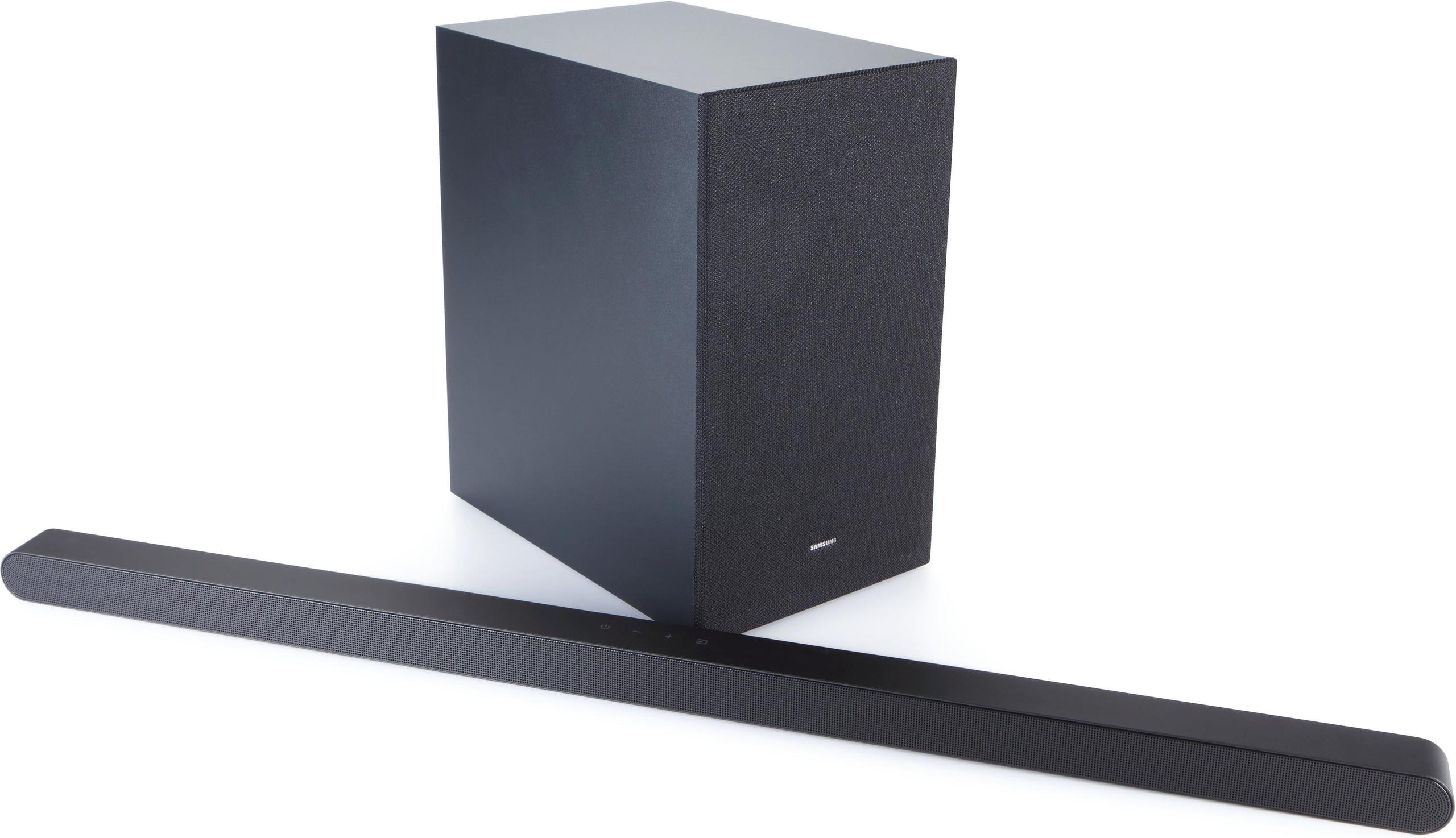
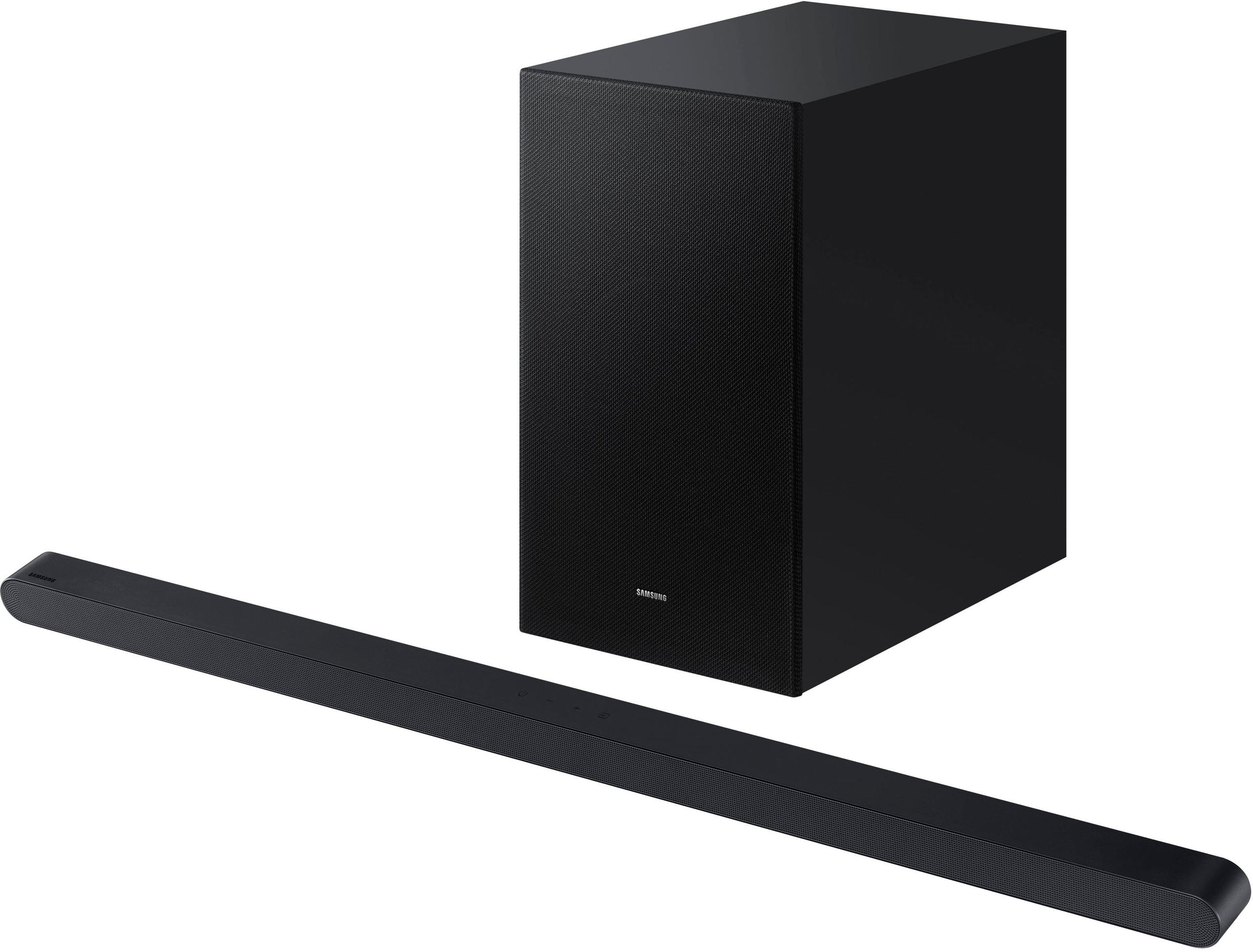


When I first started testing soundbars several years ago, the market was clearly divided between basic models that barely improved on TV speakers and expensive systems that required major room modifications. Today's soundbar landscape offers much more nuanced choices, with products like the Ultimea Skywave F40 and Samsung HW-S700D representing two fundamentally different philosophies about how to deliver great home theater audio.
The soundbar category has evolved dramatically since its early days of simple stereo upgrades. Today's systems fall into two main camps: true surround systems that use multiple physical speakers placed around your room, and virtual surround systems that create spatial effects through advanced audio processing from fewer speakers.
This distinction matters more than most people realize. When you're watching a movie and hear a helicopter flying overhead, a true surround system actually sends that sound to speakers mounted above or behind you. Virtual surround systems use psychoacoustic processing—essentially tricks that exploit how our brains interpret sound—to make it seem like audio is coming from directions where no speakers exist.
The key considerations when choosing between these approaches include your room layout, aesthetic preferences, setup tolerance, and how much you value authentic versus simulated surround effects. Some people can't tell the difference between well-executed virtual surround and the real thing, while others immediately notice when effects aren't coming from their actual locations.
The Ultimea Skywave F40 represents the newer generation of affordable true surround systems, launching in 2024 as part of Ultimea's push into the premium budget market. This timing allowed the company to incorporate recent advances in Dolby Atmos processing, Bluetooth 5.4 connectivity, and smartphone app integration that weren't available in earlier budget systems.
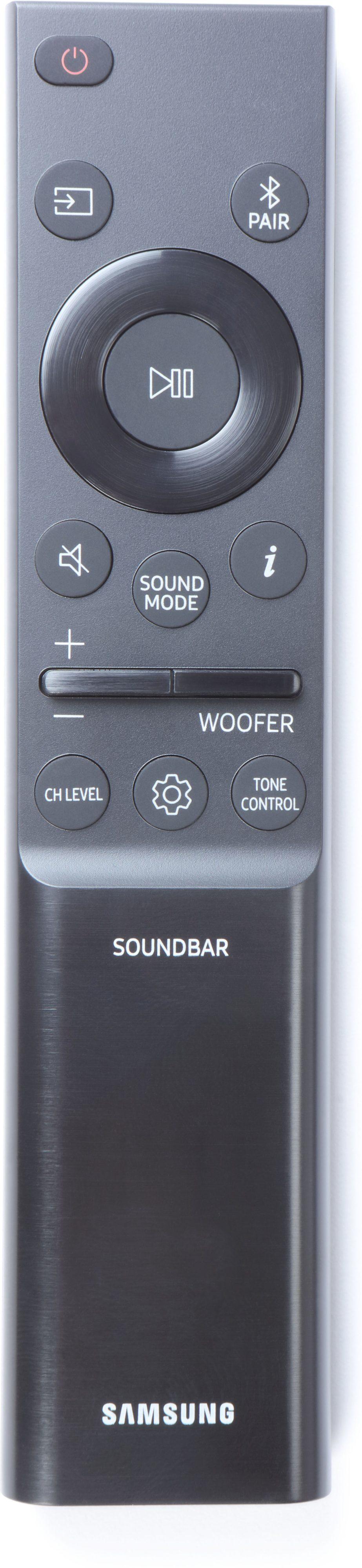
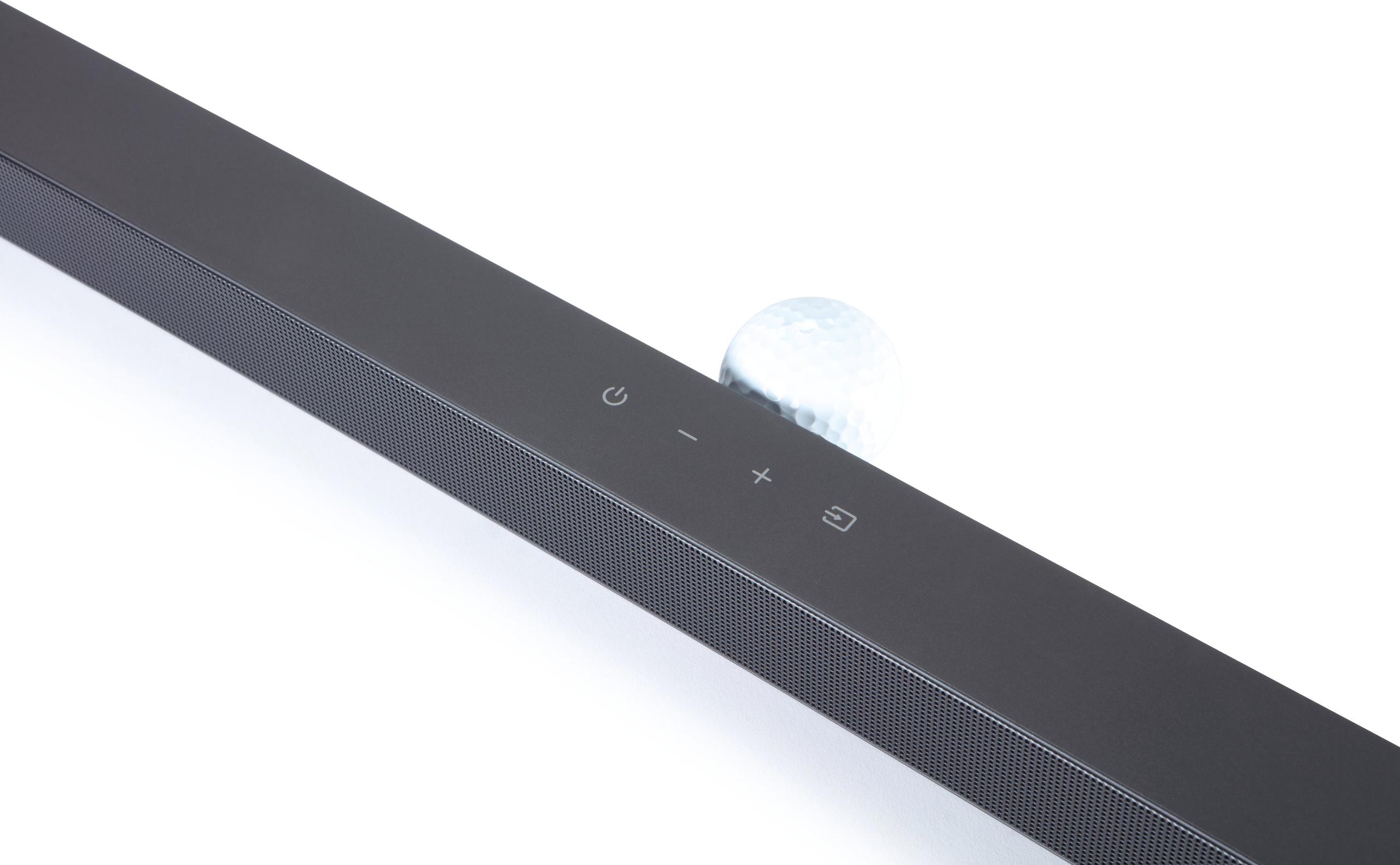
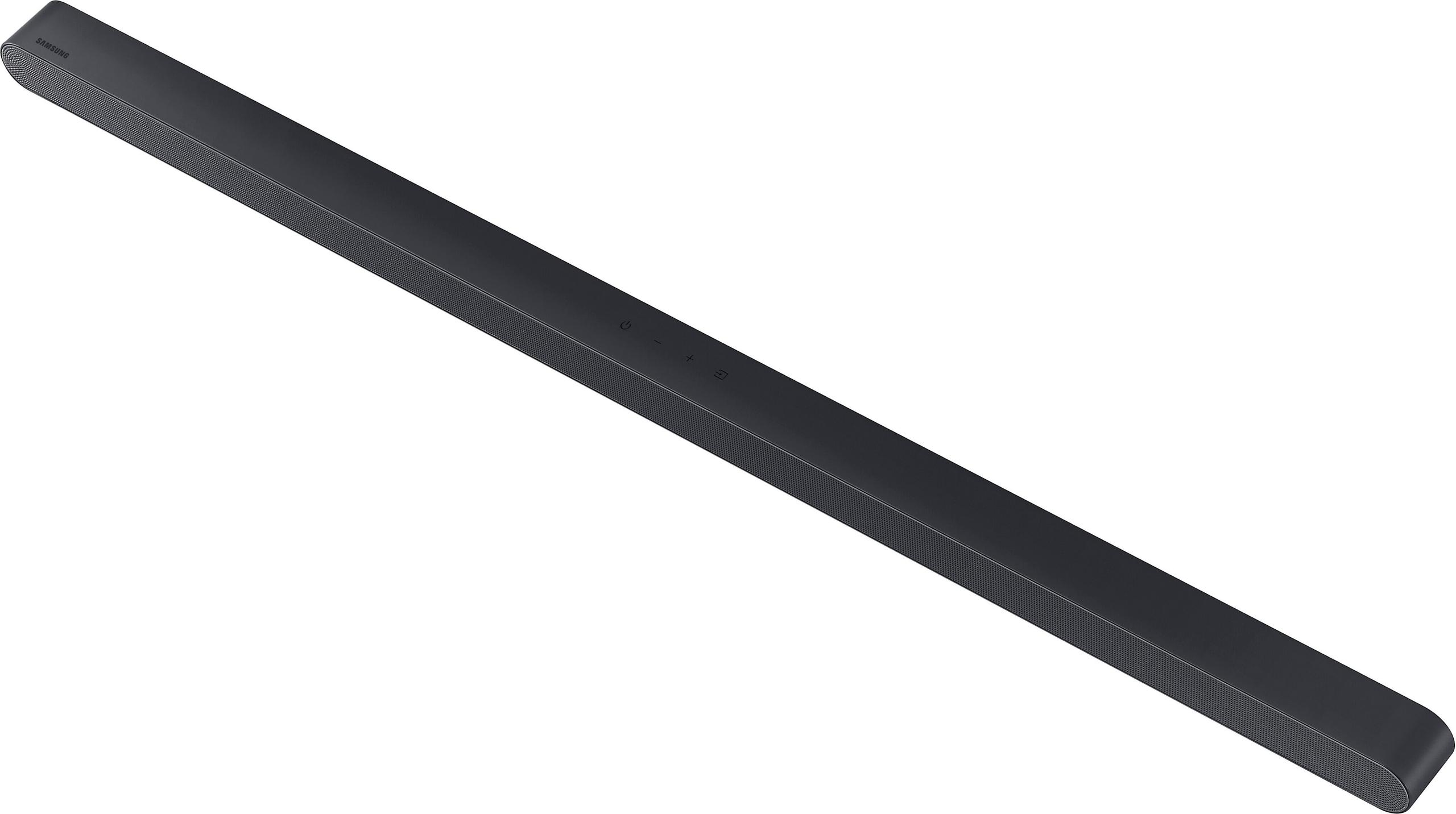
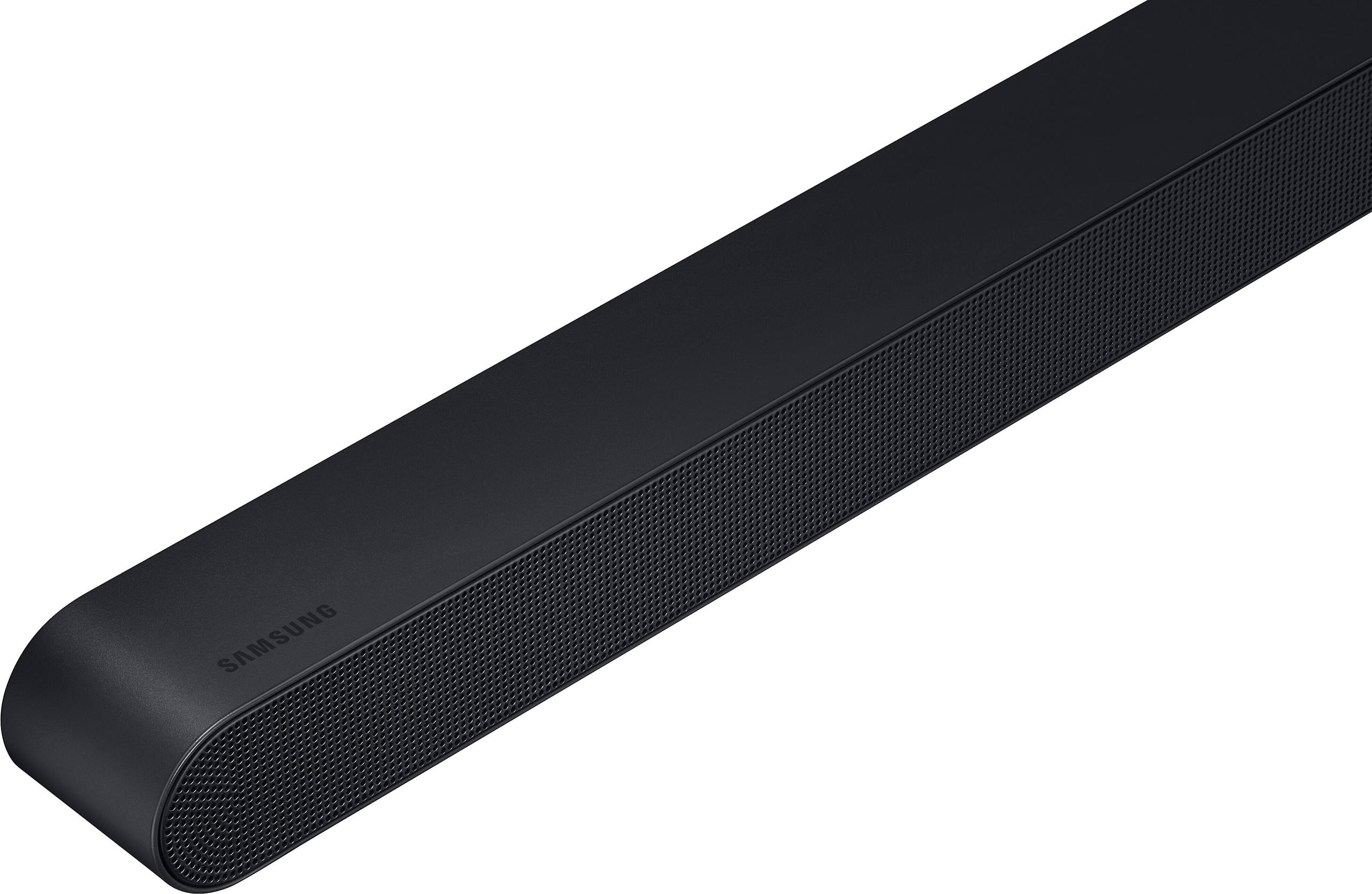
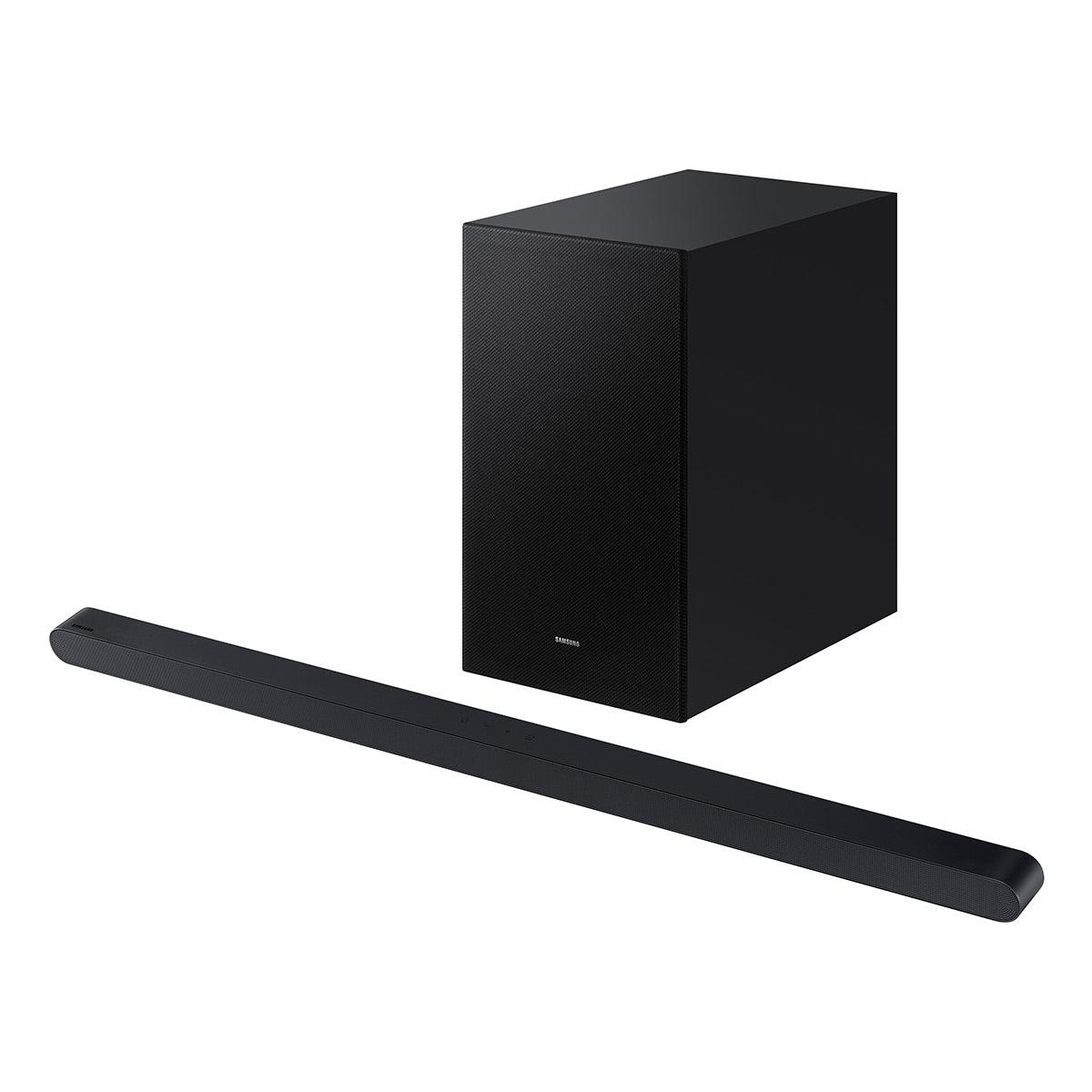
The Samsung HW-S700D, also from 2024, reflects Samsung's focus on ultra-minimal design and ecosystem integration. Samsung has been refining their slim soundbar approach for several years, and this model incorporates their latest Q-Symphony technology (which lets compatible Samsung TVs work together with the soundbar) and improved virtual surround processing.
Both products benefit from 2024's improvements in wireless connectivity, smartphone app control, and more sophisticated audio processing chips that were prohibitively expensive just a few years ago.
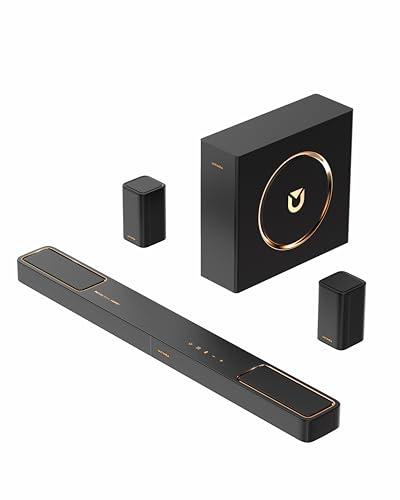
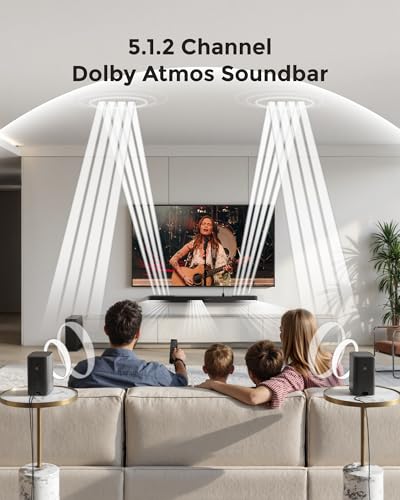
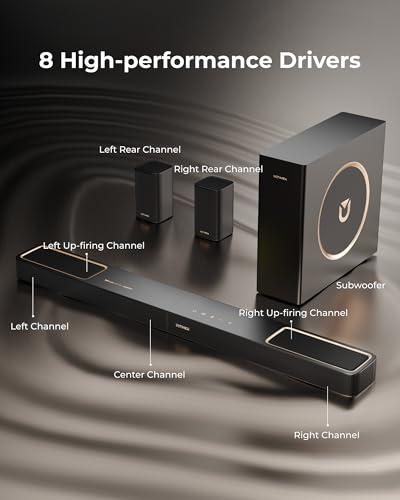
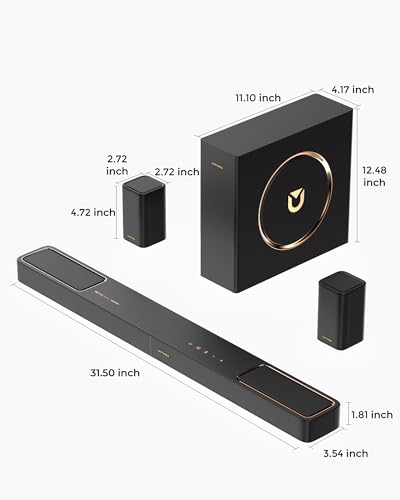
The most fundamental difference between these systems lies in their channel configurations, which determine how audio gets distributed around your room. The Ultimea Skywave F40 uses a 5.1.2 setup, meaning five main speakers (front left, center, front right, and two surrounds), one subwoofer, and two height channels for Dolby Atmos overhead effects.
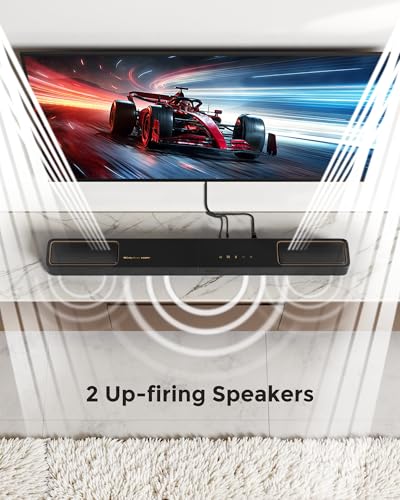
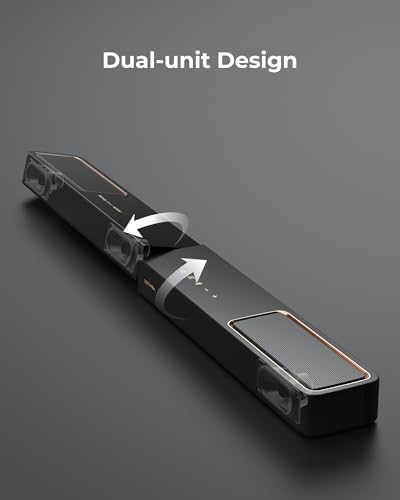
This translates to eight total speakers: the main soundbar contains front left, right, and center channels plus two up-firing drivers for height effects. The wireless subwoofer handles low-frequency effects (LFE), while two separate wireless surround speakers provide genuine rear channel audio. When you're watching a movie and characters move from screen left to behind you, that sound literally travels from the soundbar to the rear speakers.
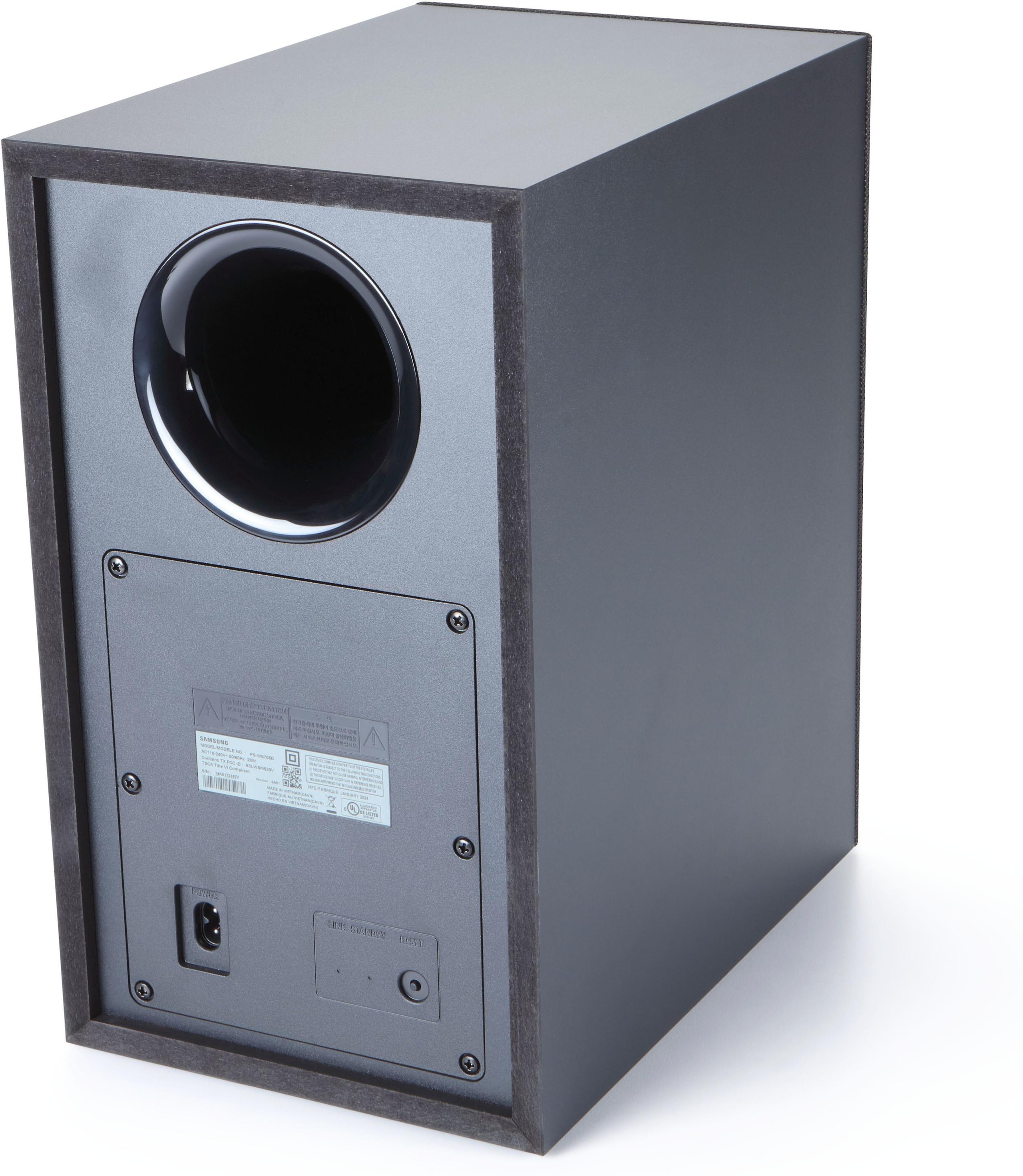
The Samsung HW-S700D takes a different approach with its 3.1.2 configuration: three main channels (left, center, right), one subwoofer, and two height channels, all contained within the soundbar itself plus the separate subwoofer. This creates seven total speakers, but they're concentrated in just two physical locations rather than distributed around your room.
Samsung relies on sophisticated digital signal processing (DSP) to create virtual surround effects. The soundbar analyzes incoming audio and applies phase shifts, timing delays, and frequency adjustments to trick your brain into perceiving sounds as coming from locations where no speakers exist. This works surprisingly well for many people, especially in smaller rooms where the acoustic reflections help sell the illusion.
From a pure physics standpoint, the Ultimea Skywave F40 has inherent advantages for creating immersive audio. Sound actually originates from multiple locations around your room, so when a film's sound engineer placed a helicopter in the rear right channel, you hear it from your rear right. There's no processing or interpretation—just direct acoustic placement.
The system's 460 watts of total power (though marketing power numbers should always be taken with skepticism) gets distributed across all eight speakers, allowing for dynamic range that can fill medium to large rooms effectively. The dual up-firing drivers use neodymium magnets and larger voice coils than typical budget systems, creating more convincing height effects when sound bounces off your ceiling.
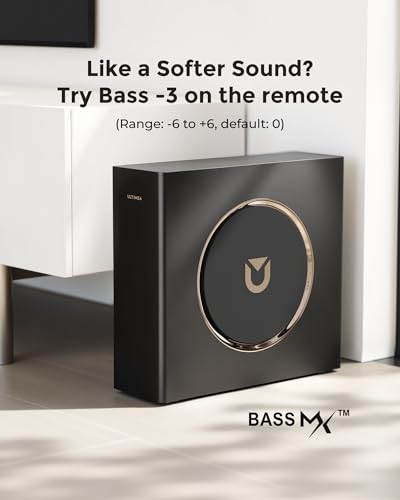
BassMX technology—Ultimea's proprietary bass enhancement—works with the wireless subwoofer to extend low-frequency response down to around 40Hz. While that won't satisfy subwoofer enthusiasts who want to feel every explosion, it covers the fundamental frequencies of most movie content and music.
The Samsung HW-S700D compensates for its physical limitations through advanced processing. Active Voice Amplifier (AVA) technology dynamically analyzes dialogue in real-time, boosting vocal frequencies when background music or effects threaten to mask speech. This addresses one of the most common complaints about home theater audio: "I can't understand what they're saying."
SpaceFit Sound represents Samsung's attempt to overcome room acoustic challenges by using the soundbar's built-in microphone to analyze your space and automatically adjust EQ settings. While this can't replicate the effect of properly placed surround speakers, it does optimize the virtual surround processing for your specific room characteristics.
The 250W RMS power rating is more honest than the peak power figures often quoted, and Samsung's engineers have tuned the system specifically for the slim form factor. The dedicated center channel driver—often missing from ultra-compact soundbars—ensures dialogue clarity that many users find superior to systems that rely on phantom center imaging.
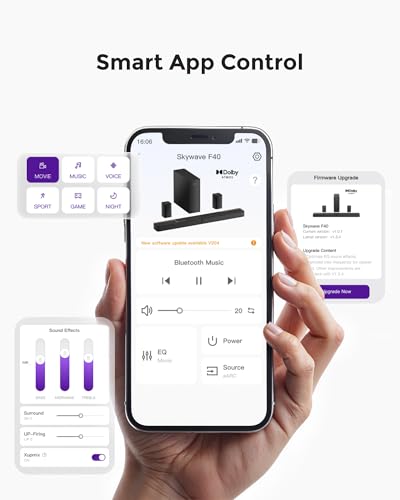
Both systems embrace the smartphone-controlled future of home audio, but with different emphases. The Ultimea Skywave F40 includes Bluetooth 5.4, a significant upgrade from the 5.0 standard that dominated earlier soundbars. This newer protocol offers improved range, stability, and notably lower latency—important when you're wirelessly streaming audio for movies or gaming.
The companion app provides access to a 10-band equalizer and 121 preset sound matrices, giving audio enthusiasts extensive control over frequency response. I've found these granular controls particularly valuable when switching between different content types, as the optimal sound signature for dialogue-heavy TV differs significantly from action movies or music.
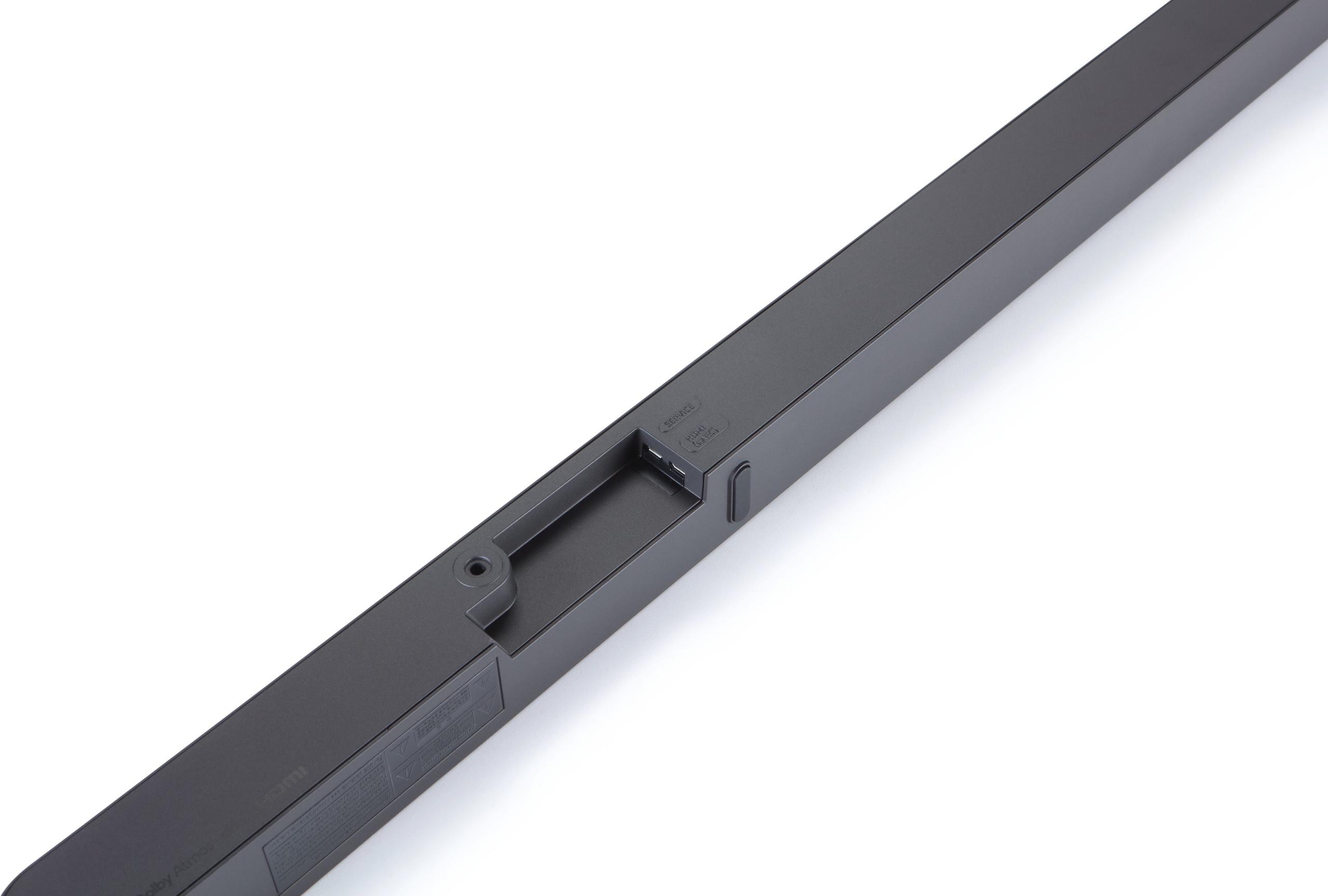
Over-the-air updates mean the system can gain new features and improvements after purchase, something that wasn't common in budget soundbars until recently. HDMI eARC support enables lossless audio transmission from compatible TVs, ensuring you're getting full-resolution Dolby Atmos signals rather than compressed versions.
The Samsung HW-S700D integrates more deeply with smart home ecosystems through built-in Amazon Alexa and Google Assistant compatibility. Voice control for volume, input switching, and basic EQ adjustments works reliably, though I still prefer physical remotes for quick adjustments during movie watching.
AirPlay and Chromecast built-in support multiple streaming protocols, making it easy to send high-quality audio from phones, tablets, or computers. The SmartThings app connectivity allows the soundbar to participate in Samsung's broader smart home ecosystem, potentially useful if you're already invested in Samsung appliances and devices.
Game Mode Pro deserves special mention for gaming enthusiasts. This feature analyzes gaming audio in real-time, optimizing directional sound cues and reducing processing latency. While it can't match the positional accuracy of discrete rear speakers, it does provide clearer directional information than standard TV speakers or basic soundbars.
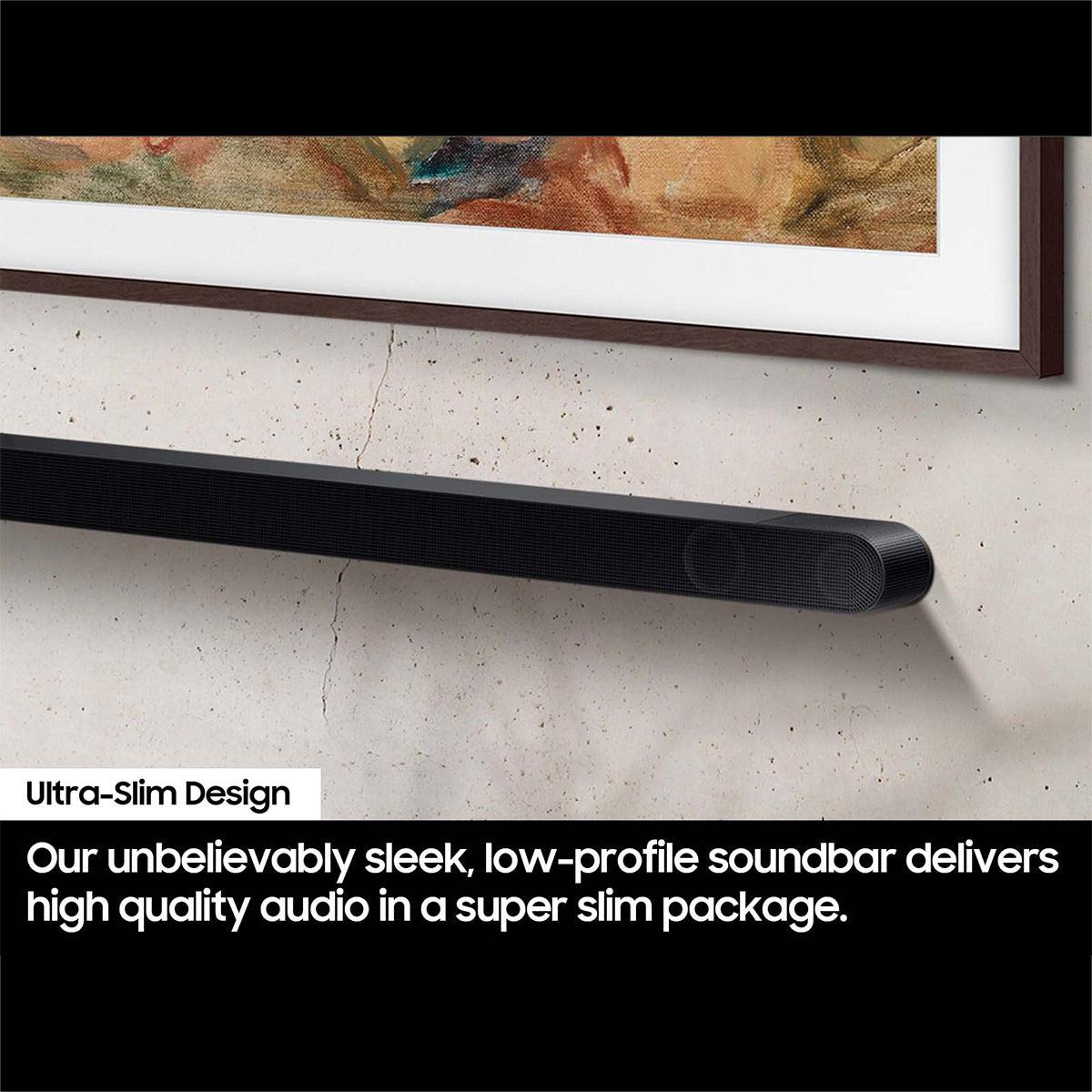
The aesthetic differences between these systems reflect fundamentally different priorities. The Samsung HW-S700D measures just 1.4 inches high, designed to virtually disappear when wall-mounted below modern flat-panel TVs. This ultra-slim profile appeals to users who want dramatic audio improvements without any visual compromise to their carefully designed living spaces.
I've installed similar Samsung slim soundbars in multiple homes, and the near-invisible mounting consistently impresses visitors who can't figure out where the dramatically improved audio is coming from. The single-unit design (plus hidden wireless subwoofer) maintains clean sight lines that traditional home theater systems often disrupt.
The Ultimea Skywave F40 requires a different mindset about room design. You need to accommodate rear speakers, either through wall mounting or bookshelf placement. The wireless connection between rear speakers and the main system eliminates the need for long speaker cables, but you still need power outlets near the rear speaker locations.
This isn't necessarily a disadvantage—properly placed surround speakers can actually enhance a room's visual balance when positioned thoughtfully. However, it does require more planning and potentially more acceptance from other household members who might prefer minimal equipment visibility.
Movie and TV Performance
For cinematic content, the Ultimea Skywave F40 provides genuinely transformative experiences compared to TV speakers. The combination of discrete surround channels and overhead height effects creates the enveloping soundfield that Dolby Atmos engineers intended. Action sequences benefit from precise directional effects, while quieter dramatic scenes gain spatial depth that draws you into the story.
The system's ability to maintain clarity at lower volumes makes it apartment-friendly, addressing the common problem of needing excessive volume to hear dialogue clearly. The dedicated center channel and rear speakers ensure speech intelligibility without the volume levels that might disturb neighbors.
The Samsung HW-S700D excels particularly with dialogue-heavy content through its dedicated center channel and Active Voice Amplifier technology. The virtual surround processing works best with well-mixed stereo content, where the psychoacoustic effects can create convincing width and depth. However, complex multichannel content may not achieve the same level of spatial precision as discrete speaker systems.
Q-Symphony technology, available with compatible Samsung TVs, creates an interesting hybrid approach. The TV's built-in speakers continue operating in coordination with the soundbar, effectively expanding the number of active drivers and potentially improving the virtual surround illusion.
Music Performance
Music reproduction reveals different strengths in each system. The Ultimea Skywave F40 benefits from its higher total power output and the ability to create genuine stereo width through properly positioned speakers. The 10-band EQ allows detailed tuning for different music genres—boosting midrange presence for vocals or enhancing bass extension for electronic music.
However, music doesn't typically benefit from surround speaker placement the way movies do, so the Samsung HW-S700D doesn't suffer from the same disadvantages here. Its Adaptive Sound processing can optimize frequency response for music content, and the high-quality wireless streaming options (AirPlay, Chromecast) ensure you're getting full-resolution audio from streaming services.
Gaming Performance
Gaming represents an interesting test case where the differences between these approaches become most apparent. The Ultimea Skywave F40 provides authentic directional audio cues—when footsteps approach from behind in a competitive shooter, they actually come from behind you. This can provide tangible gameplay advantages in competitive scenarios.
The Samsung HW-S700D's Game Mode Pro attempts to replicate these benefits through processing, and while it succeeds in providing clearer directional information than TV speakers, it can't match the precision of discrete rear channel placement. However, the reduced setup complexity might appeal to gamers who frequently rearrange their gaming spaces or use multiple displays.
At the time of writing, the Ultimea Skywave F40 offers exceptional value in the true surround soundbar category, typically priced significantly below competing systems with similar speaker counts. This represents roughly the cost of a mid-range stereo soundbar but delivers eight speakers and genuine surround sound.
The Samsung HW-S700D commands a premium over the Ultimea system, justified primarily through advanced processing features, ultra-slim design, and ecosystem integration. However, it's worth noting that achieving true surround sound requires purchasing additional rear speakers (Samsung's SWA-9500S), which significantly increases the total system cost.
From a long-term perspective, both systems should remain relevant as streaming services and content producers continue adopting Dolby Atmos. The Ultimea provides immediate access to the full surround experience, while the Samsung offers an upgrade path that preserves the initial minimal aesthetic.
Room acoustics play a crucial role in soundbar performance, often more than users anticipate. The Ultimea Skywave F40 works best in rooms between 215-269 square feet, where the rear speakers can be positioned appropriately relative to the main listening area. Larger rooms may require higher volume levels that could stress the individual drivers, while very small rooms might create overwhelming bass response.
Ceiling height matters particularly for Dolby Atmos height effects. Standard 8-9 foot ceilings work well with both systems' up-firing drivers, but vaulted or very high ceilings can prevent the sound reflections that create overhead effects.
The Samsung HW-S700D adapts better to varying room sizes through its SpaceFit Sound calibration, though the effectiveness of virtual surround processing depends heavily on your seating position relative to the soundbar. The sweet spot for optimal surround illusion is typically more limited than with discrete speaker systems.
Choose the Ultimea Skywave F40 if you want authentic surround sound and don't mind accommodating multiple speakers around your room. This system excels for movie enthusiasts who prioritize immersive audio experiences and for users who want extensive customization control through the companion app. The exceptional value proposition makes it ideal for budget-conscious buyers who don't want to compromise on surround sound authenticity.
The system works best for dedicated home theater setups where the multiple speakers can be properly positioned and where the dramatic audio improvement justifies the more complex installation.
Choose the Samsung HW-S700D if minimal visual impact is paramount and you value advanced smart features over discrete surround speakers. This system suits users who want significant audio improvements without disrupting carefully designed living spaces, and it's particularly appealing for Samsung TV owners who can benefit from Q-Symphony integration.
The upgrade path to true surround sound (through optional rear speakers) makes it suitable for users who want to start simple and potentially expand later, though the total cost of a fully expanded system exceeds the Ultimea's complete package.
Both systems represent solid choices within their respective approaches, but your decision ultimately depends on whether you prioritize authentic surround sound positioning or minimal aesthetic impact. In my experience, users who choose discrete speakers rarely regret the setup complexity, while those who prioritize clean aesthetics appreciate Samsung's nearly invisible integration.
The Ultimea Skywave F40 offers better immediate value for pure performance, while the Samsung HW-S700D provides superior integration for users already invested in smart home ecosystems and minimal design aesthetics.
| Ultimea Skywave F40 | Samsung HW-S700D |
|---|---|
| Channel Configuration - Determines surround sound authenticity | |
| 5.1.2 channels with 8 total speakers (true surround) | 3.1.2 channels with 7 speakers (virtual surround) |
| Physical Speaker Placement - Key for immersive audio | |
| Soundbar + wireless subwoofer + 2 wireless rear speakers | Soundbar + wireless subwoofer only |
| Total Power Output - Affects volume and dynamics | |
| 460W peak (fills medium to large rooms effectively) | 250W RMS (optimized for slim design, adequate for most spaces) |
| Design Profile - Critical for TV mounting and aesthetics | |
| Standard soundbar height (requires rear speaker placement) | Ultra-slim 1.4" height (nearly invisible when wall-mounted) |
| Dolby Atmos Implementation - Height effects quality | |
| Dual up-firing drivers with neodymium magnets | Up-firing drivers with virtual processing |
| Smart Features - Modern convenience and control | |
| Bluetooth 5.4, 10-band EQ, 121 presets, smartphone app | Voice assistants, AirPlay, Chromecast, Q-Symphony with Samsung TVs |
| Setup Complexity - Installation time and requirements | |
| Moderate (requires rear speaker positioning and power) | Minimal (single soundbar + hidden wireless sub) |
| Connectivity Options - Source compatibility | |
| HDMI eARC, optical, USB, Bluetooth 5.4 | HDMI eARC, optical, USB, Bluetooth 5.2, wireless streaming |
| Frequency Response - Bass extension capability | |
| 40Hz-20kHz (solid low-end for most content) | Not specified (focus on dialogue clarity over deep bass) |
| Room Size Optimization - Performance scaling | |
| Best for 215-269 sq ft with proper speaker placement | SpaceFit Sound adapts to various room sizes automatically |
| Expandability - Future upgrade options | |
| Complete system (no additional speakers needed) | Can add SWA-9500S rear speakers for true 5.1 surround |
| Value Proposition - Performance per dollar | |
| Exceptional value for true surround at budget price | Premium pricing for ultra-slim design and Samsung integration |
The Ultimea Skywave F40 delivers superior surround sound through its true 5.1.2 channel system with physical rear speakers placed around your room. The Samsung HW-S700D uses virtual surround processing from a single soundbar, which creates spatial effects but can't match the authenticity of discrete rear channels.
The key difference is speaker configuration: the Ultimea Skywave F40 includes separate wireless rear speakers for genuine surround sound, while the Samsung HW-S700D contains all speakers within an ultra-slim soundbar that uses processing to simulate surround effects.
The Samsung HW-S700D is significantly easier to install with its single soundbar unit and wireless subwoofer. The Ultimea Skywave F40 requires positioning and powering separate rear speakers around your room, making installation more complex but delivering authentic surround sound.
Yes, both the Ultimea Skywave F40 and Samsung HW-S700D support Dolby Atmos with up-firing drivers that bounce sound off your ceiling for height effects. However, the Ultimea combines this with true rear surround speakers for a more complete Atmos experience.
The Ultimea Skywave F40 excels for movie watching due to its authentic surround sound placement and higher power output. The Samsung HW-S700D focuses on dialogue clarity and works well for movies in smaller rooms, but lacks the immersive surround effects of discrete rear speakers.
Both soundbars offer smartphone control, but differently. The Ultimea Skywave F40 provides extensive app control with 10-band EQ and 121 sound presets. The Samsung HW-S700D integrates with Samsung's SmartThings app and supports voice assistants like Alexa and Google Assistant.
The Samsung HW-S700D works better in small rooms due to its compact design and virtual surround processing that doesn't require rear speaker placement. The Ultimea Skywave F40 is optimized for rooms between 215-269 square feet where rear speakers can be properly positioned.
No, the Samsung HW-S700D works with any TV through HDMI or optical connections. However, you'll get additional features like Q-Symphony (TV and soundbar speakers working together) only with compatible Samsung TVs from 2020-2024.
The Ultimea Skywave F40 offers exceptional value by providing eight total speakers and true surround sound at a budget-friendly price point. The Samsung HW-S700D costs more but justifies the premium through ultra-slim design, advanced processing, and smart home integration features.
The Ultimea Skywave F40 includes eight total speakers: soundbar with five drivers, wireless subwoofer, and two wireless rear speakers. The Samsung HW-S700D has seven speakers total: six drivers in the soundbar plus the wireless subwoofer.
The Ultimea Skywave F40 is a complete system that doesn't require additional speakers. The Samsung HW-S700D can be expanded by adding Samsung's SWA-9500S wireless rear speakers to create true 5.1 surround sound, though this increases the total system cost significantly.
The Ultimea Skywave F40 provides superior gaming audio through authentic directional sound from rear speakers, offering competitive advantages in games where positional audio matters. The Samsung HW-S700D includes Game Mode Pro for optimized gaming audio processing, but virtual surround can't match the precision of discrete speaker placement.
We've done our best to create useful and informative comparisons to help you decide what product to buy. Our research uses advanced automated methods to create this comparison and perfection is not possible - please contact us for corrections or questions. These are the sites we've researched in the creation of this article: the-gadgeteer.com - youtube.com - ultimea.com - manuals.plus - youtube.com - ultimea.com - youtube.com - youtube.com - youtube.com - youtube.com - eu.ultimea.com - support.ultimea.com - crutchfield.com - samsung.com - bestbuy.com - avsforum.com - walts.com - samsung.com - samsung.com - videoandaudiocenter.com - samsung.com - samsung.com - samsung.com - pcrichard.com

Privacy Policy
Terms and Conditions - Affiliate Policy
Home Security
© Copyright 2008-2026.
11816 Inwood Rd #1211, Dallas, TX 75244