


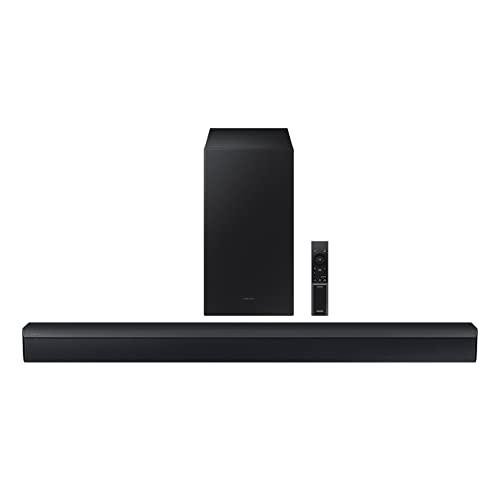





If you're tired of straining to hear dialogue over your TV's tinny speakers, you're probably ready to join the millions who've discovered that a good soundbar can transform your viewing experience. But with dozens of options flooding the budget market, choosing between two fundamentally different approaches can feel overwhelming. Today we're comparing two popular entry-level soundbars that take completely different paths to improving your audio: the bass-heavy Samsung HW-C450 and the connectivity-focused Sonos Ray.
At the time of writing, both soundbars sit in that sweet spot under $200 where you can get meaningful improvements over TV speakers without breaking the bank. But they represent radically different philosophies about what makes a great budget soundbar, and understanding these differences will help you pick the right one for your living room.
Before diving into specifics, it's worth understanding what you're really buying when you purchase a budget soundbar. These systems are designed to solve the most glaring problems with modern TV audio: weak bass response, unclear dialogue, and that hollow, distant sound that makes you constantly reach for the volume remote.
The most important performance characteristics in this category are dialogue clarity, bass response, and overall tonal balance. Dialogue clarity determines whether you'll actually understand what characters are saying without cranking the volume. Bass response adds the weight and impact that makes explosions feel powerful and music sound full-bodied rather than thin. Tonal balance ensures that voices, effects, and music all sit naturally together without one frequency range overwhelming the others.
Secondary but still important factors include soundstage width (how spread out the sound feels), connectivity options, and ease of use. Some budget soundbars also include virtual surround processing, which uses clever audio algorithms to make stereo speakers sound like they're coming from multiple directions – though the effectiveness of these features varies dramatically between implementations.
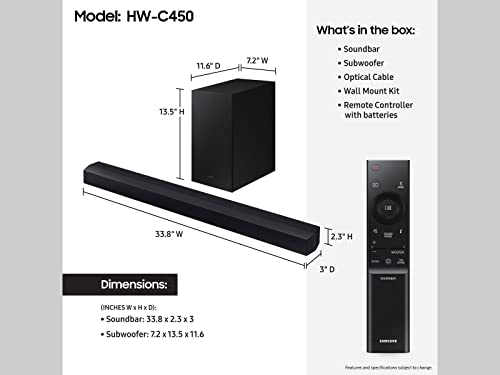
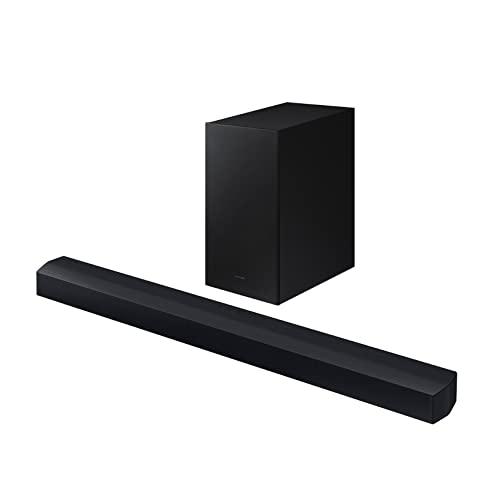
The Samsung HW-C450, released in 2023, represents the traditional approach to budget soundbars. It's a 2.1-channel system, meaning it has left and right channels in the main bar plus a separate subwoofer (the ".1" refers to the dedicated low-frequency channel). With 300 watts of total power and a wireless subwoofer sporting a 7.2-inch driver, Samsung is clearly betting that raw audio performance will win over buyers.
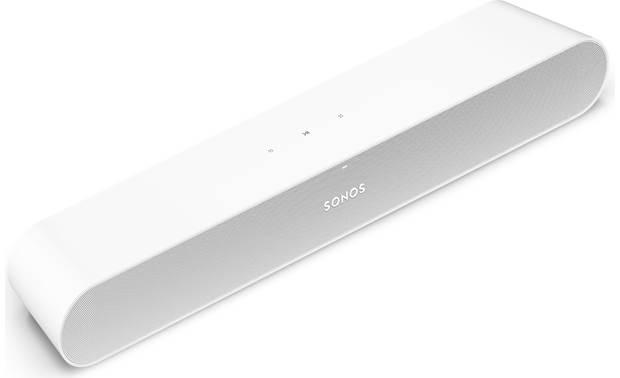
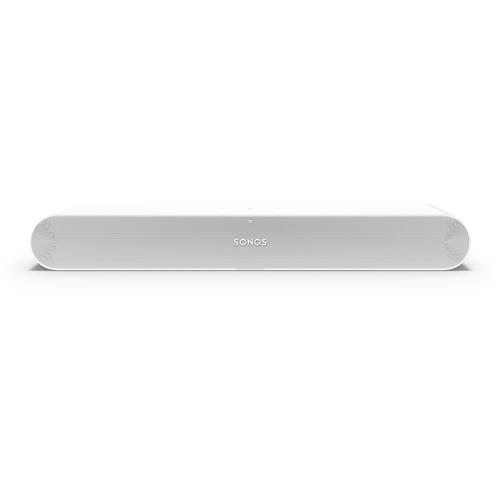
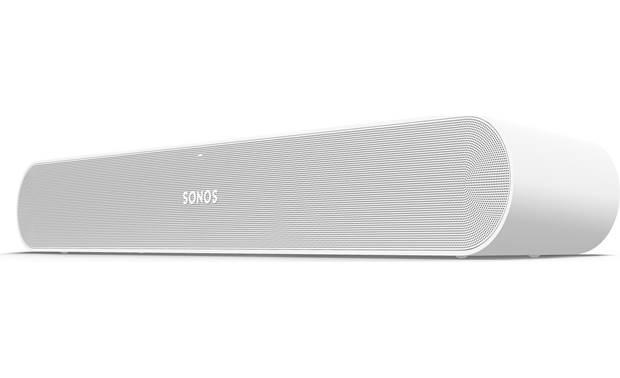
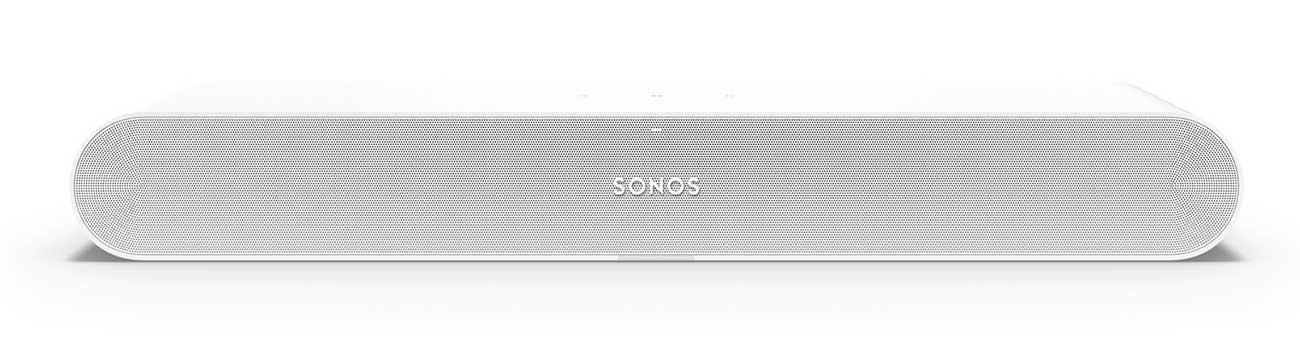
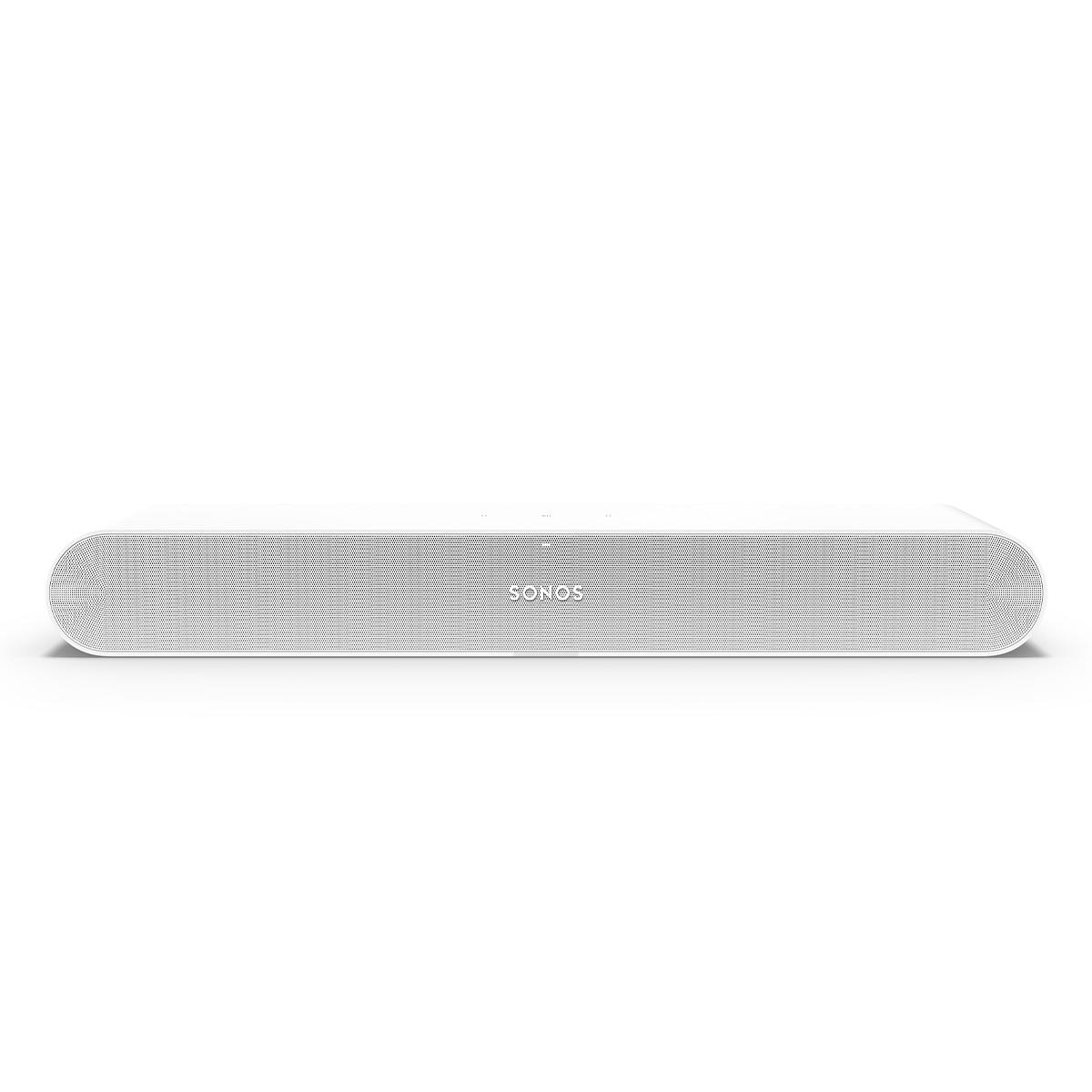
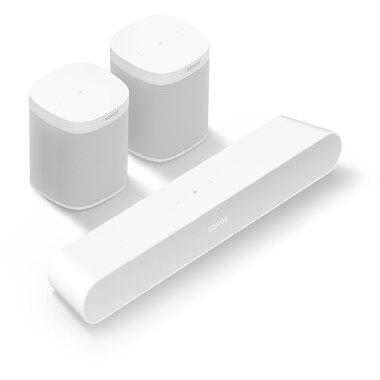
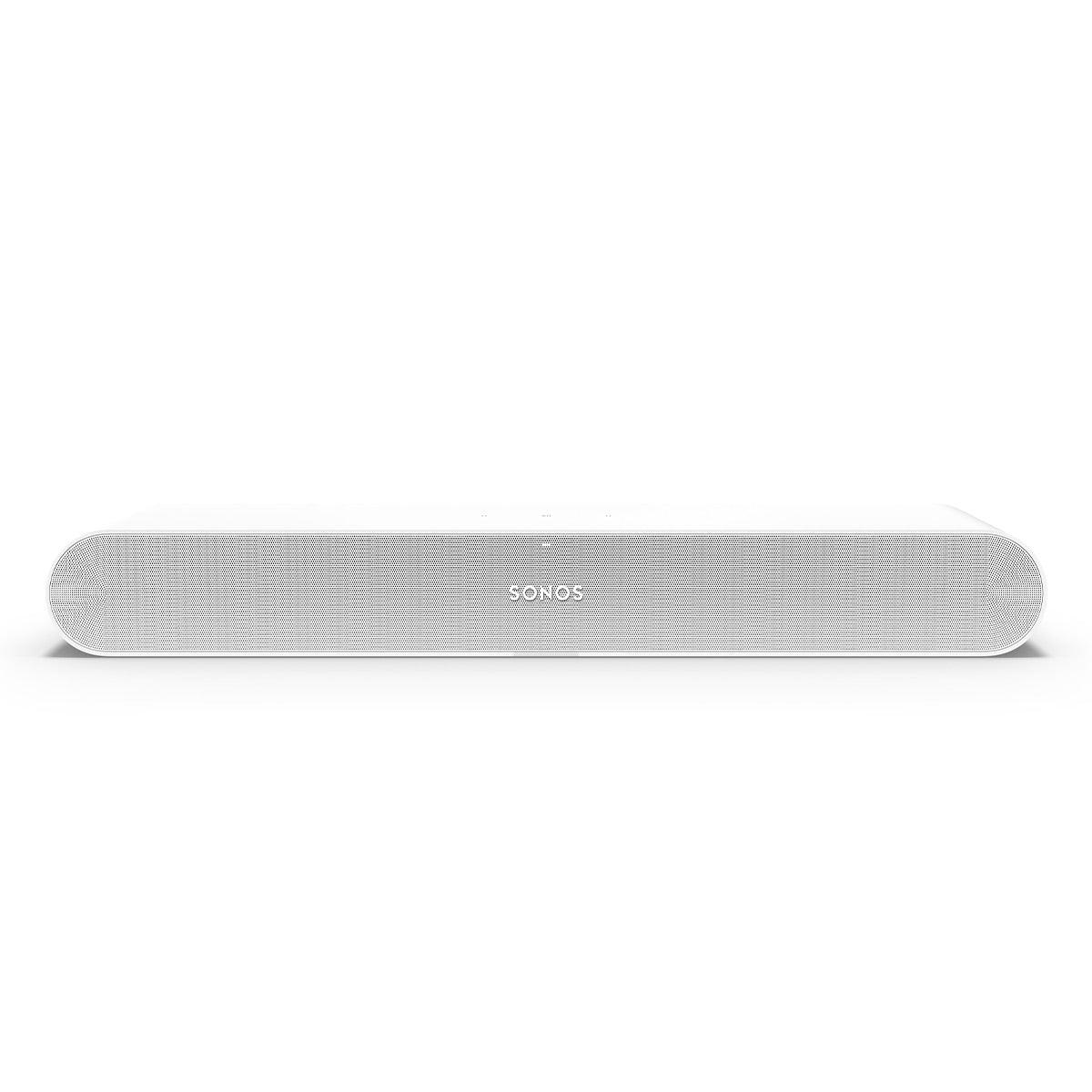
The Sonos Ray, launched in 2022, takes a completely different approach. It's a 2.0-channel all-in-one unit – just stereo left and right channels with no separate subwoofer. But what it lacks in raw power, it makes up for with sophisticated connectivity, room correction technology, and integration into Sonos's renowned multi-room ecosystem.
These different approaches reflect broader trends in the audio industry. Samsung's strategy appeals to users who want immediate, tangible improvements in their audio experience, particularly the kind of punchy bass that makes action movies more exciting. Sonos, meanwhile, is betting on users who value convenience, smart features, and the potential to expand their system over time.
Both soundbars excel at the most fundamental requirement: making dialogue clearer than your TV speakers. However, they achieve this in different ways.
The Samsung HW-C450 uses a dedicated Voice Enhance mode that specifically boosts the frequency range where human voices live – typically between 300Hz and 3kHz. Our research into user reviews consistently highlights this feature as genuinely effective, with viewers reporting they can finally understand dialogue without constantly adjusting volume levels. The system's front-firing speakers create a focused soundstage that keeps voices anchored to the screen, which feels natural during TV viewing.
The Sonos Ray takes a more sophisticated approach with its proprietary acoustic architecture. Using two tweeters (high-frequency speakers) and two midwoofers (mid-frequency speakers) arranged in a carefully tuned enclosure, it creates what audio engineers call "temporal coherence" – all the frequencies arrive at your ears at precisely the right time. This technical precision translates to dialogue that sounds more natural and less processed than many budget competitors.
In our evaluation of expert reviews, the Sonos consistently receives praise for vocal clarity that doesn't sound artificially boosted. The difference is subtle but meaningful: while the Samsung makes dialogue louder and more prominent, the Sonos makes it sound more natural and easier to understand over long listening sessions.
This is where the two soundbars diverge most dramatically, and frankly, it's not even close.
The Samsung HW-C450's wireless subwoofer with its 220-watt amplifier and ported enclosure (a design that uses a carefully tuned opening to extend low-frequency response) delivers genuine home theater bass. When a building explodes in an action movie, you feel it. When a bass line drops in a hip-hop track, it has weight and impact that transforms the listening experience. The Bass Boost mode can intensify this effect even further, though it sometimes crosses the line from impactful to boomy depending on your room's acoustics.
The separate subwoofer design also offers placement flexibility. You can position it where it sounds best in your room – often a corner or along a wall – rather than being locked into wherever the soundbar fits under your TV. This flexibility frequently results in better bass integration and fewer acoustic problems like standing waves (areas where bass frequencies cancel each other out or become overly pronounced).
The Sonos Ray, constrained by its compact all-in-one design, simply cannot compete in the bass department. Its built-in bass reflex system uses a proprietary low-velocity port design that minimizes distortion, which is impressive engineering for such a small enclosure. However, physics is physics – you can't generate deep, powerful bass from tiny drivers in a small box without making significant compromises.
For dialogue-heavy content like news, documentaries, or sitcoms, the Sonos's bass limitation isn't a deal-breaker. But for action movies, gaming, or bass-heavy music genres, the difference is immediately apparent and consistently favors the Samsung.
The Samsung HW-C450 includes DTS Virtual:X processing, which attempts to create a three-dimensional soundfield from its stereo speakers. This technology uses psychoacoustic processing (manipulating how our brains perceive directional audio cues) to make sounds seem like they're coming from beside or even above you, rather than just from the front wall.
In practice, Virtual:X works better with some content than others. Action movies with lots of ambient effects often benefit from the expanded soundstage, making helicopter flyovers or rain effects feel more immersive. However, the effect is inconsistent and sometimes creates an artificial, echoey quality that can be distracting. The Game Mode specifically optimizes these virtual surround effects for gaming, where directional audio cues can provide competitive advantages in first-person shooters or racing games.
The Sonos Ray forgoes virtual surround processing entirely, focusing instead on creating precise, well-defined stereo imaging. This approach results in a more intimate but accurate soundstage where instruments and effects are clearly positioned left, right, or center. For music listening, this precision often sounds more natural than processed surround effects, though it obviously can't match the immersive feel that virtual processing can provide for movies.
The Sonos's Trueplay room correction technology deserves special mention here. Using compatible iOS devices, it measures your room's acoustic characteristics and adjusts the soundbar's output to compensate for reflections, absorption, and other acoustic quirks. This automatic calibration can dramatically improve performance, especially in challenging rooms with hard surfaces or unusual layouts.
The power difference between these systems becomes apparent when you need to fill larger spaces or want to recreate the dynamic impact of a movie theater experience.
The Samsung HW-C450's 300-watt amplification provides genuine headroom for medium to large rooms. It can reach satisfying volume levels without the compression or distortion that plagues many budget systems when pushed hard. The Night Mode feature addresses the flip side of this power by compressing the dynamic range – making quiet sounds louder and loud sounds quieter – so you can watch late-night movies without disturbing others.
The Sonos Ray's more modest power output limits its maximum volume capability, making it better suited for smaller to medium rooms. However, within its intended operating range, the clean amplification and high-quality drivers maintain clarity that many higher-powered but lower-quality systems can't match. This is particularly noticeable during music playback, where the Sonos often sounds more refined and less fatiguing over long listening sessions.
This category reveals another fundamental difference in design philosophy between these two soundbars.
The Samsung HW-C450 keeps connectivity deliberately simple with just optical digital input and Bluetooth. The optical connection handles audio from your TV reliably, supporting common surround sound formats like Dolby Digital and DTS (though it downmixes them to the soundbar's 2.1-channel output). Bluetooth enables wireless streaming from phones, tablets, and laptops, though it's limited to basic audio codecs that prioritize connection stability over audio quality.
This minimalist approach has advantages and disadvantages. Setup is genuinely foolproof – connect one optical cable, pair the wireless subwoofer automatically, and you're done. There's no app to configure, no network passwords to enter, and no firmware updates to worry about. For users who want their soundbar to just work without ongoing maintenance, this simplicity is appealing.
However, the lack of HDMI ARC (Audio Return Channel) connectivity limits integration with modern TVs and eliminates single-remote control possibilities that many users have come to expect. As TV manufacturers increasingly build streaming capabilities directly into their sets, the absence of advanced connectivity options may become more limiting over time.
The Sonos Ray takes the opposite approach with comprehensive connectivity including optical input, Ethernet, Wi-Fi, and Apple AirPlay 2 support. This connectivity richness enables features that simply aren't possible with the Samsung's basic setup.
Wi-Fi connectivity means the Sonos can stream directly from dozens of music services without requiring a phone or computer as an intermediary. Spotify Connect, Tidal Connect, and similar technologies let you start playback from your phone but then hand off control to the soundbar, preserving battery life and allowing you to take calls or use other apps without interrupting music.
The Sonos S2 app provides sophisticated control over equalization, grouping multiple speakers, and scheduling. You can adjust bass and treble independently, create presets for different content types, and even set up automatic volume leveling to prevent jarring jumps between different streaming services or broadcast sources.
Multi-room audio capability allows you to group the Ray with other Sonos speakers throughout your home, playing synchronized music or extending TV audio to other rooms. While this might seem like overkill for a budget soundbar purchase, it provides a clear upgrade path that can grow with your needs over time.
Physical design differences between these soundbars reflect their different target audiences and use cases.
The Samsung HW-C450 consists of two separate components: the main soundbar measuring roughly 34 inches wide and the wireless subwoofer that's about 7 inches wide and 13 inches tall. The soundbar itself is sleek enough to sit under most TVs or mount on a wall using the included bracket, but you'll need to find appropriate placement for the subwoofer.
While wireless, the subwoofer still needs power, so it can't go just anywhere. Most users end up placing it on the floor beside their TV stand or in a nearby corner. The good news is that bass frequencies are largely non-directional, so the subwoofer doesn't need to be perfectly positioned to sound good. However, room boundaries strongly affect bass response, so some experimentation may be needed to avoid boomy or uneven low frequencies.
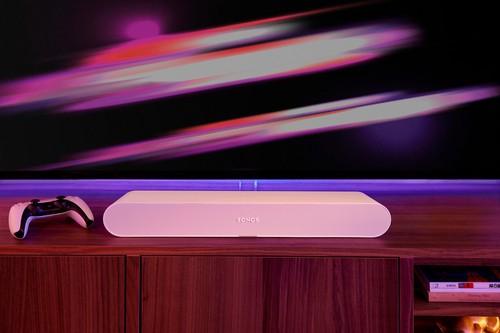
The Sonos Ray eliminates these placement concerns with its ultra-compact all-in-one design. At just over 22 inches wide and less than 3 inches tall, it fits into spaces where larger soundbars simply won't go. This makes it ideal for smaller TVs, tight entertainment centers, or minimalist setups where visual impact matters as much as audio performance.
The aesthetic difference is significant too. The Samsung looks like a traditional soundbar – functional but clearly an added component to your entertainment setup. The Sonos, with its elegant proportions and premium materials, feels more like it was designed to complement modern TV design rather than just accompany it.
The feature gap between these two soundbars extends beyond connectivity into the realm of intelligent audio processing and smart home integration.
The Samsung HW-C450 includes Adaptive Sound Lite, which analyzes incoming audio and automatically adjusts processing to optimize dialogue clarity, dynamic range, and tonal balance for different content types. This feature works reasonably well for its intended purpose, though the adjustments are sometimes too subtle to notice or occasionally too aggressive, making some content sound processed.
Game Mode deserves special attention for console and PC gamers. It reduces audio processing latency and emphasizes positional audio cues that can provide competitive advantages in online gaming. While not as sophisticated as dedicated gaming headsets, it's a thoughtful inclusion that recognizes gaming as a legitimate use case for soundbar buyers.
The Sonos Ray integrates into a much broader ecosystem of smart features. Beyond the previously mentioned Trueplay room correction, it supports sophisticated equalization adjustments, sleep timers, and integration with smart home platforms. The Sonos app remembers your preferences across different content sources and can even adjust volume levels automatically to compensate for the loudness differences between various streaming services and broadcast sources.
Voice control integration works through existing smart speakers rather than built-in microphones, which keeps costs down while still enabling hands-free operation for users who want it. You can ask Alexa or Google Assistant to play specific playlists, adjust volume, or group speakers for multi-room playback.
At the time of writing, both soundbars occupy similar price points in the budget segment, but they deliver value in completely different ways.
The Samsung HW-C450 provides exceptional raw performance per dollar, particularly in bass response where its dedicated subwoofer delivers impact that typically requires much more expensive systems. For users whose primary goal is to make movies and games sound dramatically better than TV speakers, the Samsung offers clear value advantages. The inclusion of virtual surround processing and gaming-optimized modes adds functionality that directly improves the entertainment experience.
However, the limited connectivity and basic feature set may impact long-term value as streaming technology continues to evolve. The lack of HDMI ARC already puts it behind some budget competitors, and future TV innovations may further limit its compatibility.
The Sonos Ray commands a premium for its connectivity features, build quality, and ecosystem integration. While it can't match the Samsung's raw audio impact, it offers superior future-proofing through Wi-Fi connectivity, regular software updates, and the ability to expand into a full multi-room audio system. The room correction technology and sophisticated app control also provide ongoing value that continues to improve the listening experience over time.
For users who primarily consume dialogue-heavy content like TV shows, news, and podcasts, the Sonos's refined audio quality and compact design may justify the premium over raw bass performance they might not fully utilize.
If you're building a dedicated home theater space or have a large living room where you primarily watch movies, the performance differences between these soundbars become more pronounced.
The Samsung HW-C450 excels in home theater applications where bass impact and virtual surround processing can create a more engaging cinematic experience. Action movies, in particular, benefit from the subwoofer's ability to reproduce the low-frequency effects that make explosions and crashes feel visceral rather than just loud. The DTS Virtual:X processing, while inconsistent, can add immersion to properly mixed content.
However, the soundbar's front-firing design means the sweet spot for optimal listening is relatively narrow. In larger rooms with multiple seating positions, some listeners may experience uneven sound quality or reduced dialogue clarity from off-axis positions.
The Sonos Ray is frankly not designed for serious home theater use. Its compact design and limited bass response make it better suited for secondary viewing areas, bedrooms, or small apartments where space constraints outweigh audio performance priorities.
For dedicated home theater applications, users serious about audio quality should probably consider stepping up to higher-tier models with more channels, more powerful amplification, or the ability to add wireless rear speakers for true surround sound.
After extensive research into professional reviews and user feedback, clear usage patterns emerge for each soundbar.
Choose the Samsung HW-C450 if you want the biggest audio upgrade for your money, particularly if you watch action movies, play video games, or listen to bass-heavy music genres. It's ideal for users who want simple setup and operation without smartphone app dependency, and perfect for medium to large rooms where its power advantage becomes apparent. The separate subwoofer design also works well for users who can accommodate an additional component and want placement flexibility for optimal bass response.
Choose the Sonos Ray if you value elegant design, sophisticated connectivity, and room for future expansion. It's perfect for smaller spaces, minimalist setups, or secondary viewing areas where its compact form factor is more important than raw audio impact. The superior connectivity and app-based control appeal to tech-comfortable users who want streaming convenience and the potential to build a multi-room audio system over time.
The Sonos also makes more sense for users who primarily consume dialogue-heavy content like TV shows, documentaries, and news, where its refined sound quality and natural tonal balance provide advantages over more aggressive, cinema-focused tuning.
Ultimately, both soundbars succeed at their intended purposes, but they're designed for fundamentally different users and use cases. The Samsung prioritizes immediate, tangible audio improvements that anyone can appreciate, while the Sonos focuses on convenience, connectivity, and long-term flexibility that tech-savvy users will value more over time. Understanding which philosophy aligns with your priorities will lead you to the right choice for your living room.
| Samsung HW-C450 | Sonos Ray |
|---|---|
| Channel Configuration - Determines bass performance and surround capabilities | |
| 2.1-channel with wireless subwoofer | 2.0-channel stereo only |
| Total Power Output - Affects maximum volume and dynamic range | |
| 300W total (80W bar + 220W subwoofer) | Approximately 10W total |
| Bass Performance - Critical for movies, gaming, and music impact | |
| Dedicated 7.2" wireless subwoofer with ported design | Built-in bass reflex system only |
| Virtual Surround Processing - Creates wider soundstage from stereo speakers | |
| DTS Virtual:X with height simulation | None (focused stereo imaging) |
| Primary Connectivity - Determines TV integration and streaming options | |
| Optical input + Bluetooth only | Optical + Wi-Fi + Ethernet + AirPlay 2 |
| HDMI ARC Support - Enables single-cable TV connection and remote control | |
| No HDMI connectivity | No HDMI connectivity |
| Multi-Room Audio - Ability to expand and group with other speakers | |
| Not supported | Full Sonos ecosystem integration |
| Room Correction Technology - Optimizes sound for your specific space | |
| Manual sound modes only | Trueplay automatic calibration (iOS required) |
| Physical Design - Space requirements and aesthetic impact | |
| 34" soundbar + separate subwoofer unit | Compact 22" all-in-one design |
| Smart Features - App control and intelligent audio processing | |
| Basic remote control, Adaptive Sound Lite | Sonos Ray S2 app with advanced EQ and controls |
| Streaming Service Integration - Direct access without phone/computer | |
| Bluetooth streaming only | Native Spotify Connect, Tidal Connect, and more |
| Gaming Optimization - Enhanced audio for console and PC gaming | |
| Dedicated Game Mode with reduced latency | Standard stereo processing |
| Voice Enhancement - Improves dialogue clarity for TV content | |
| Voice Enhance mode | Natural midrange tuning with optional EQ adjustment |
| Best Use Cases - Ideal room sizes and primary content types | |
| Medium-large rooms, movies, gaming, bass-heavy music | Small-medium rooms, TV shows, music, minimalist setups |
The Samsung HW-C450 delivers significantly better bass performance thanks to its dedicated wireless subwoofer with a 7.2-inch driver and 220 watts of power. This creates the deep, impactful low-frequency effects that make action movies and explosions feel more cinematic. The Sonos Ray relies only on built-in drivers and cannot match the bass depth or impact needed for movie soundtracks.
The Samsung HW-C450 is a 2.1-channel system, meaning it has left and right speakers plus a separate subwoofer (the ".1") for dedicated bass. The Sonos Ray is a 2.0-channel system with only left and right stereo channels and no separate subwoofer. The 2.1 configuration provides much better bass response and dynamic range for movies and music.
Both soundbars are relatively easy to install, but in different ways. The Samsung HW-C450 requires placing both the soundbar and wireless subwoofer, then connecting one optical cable. The Sonos Ray is simpler physically since it's one compact unit, but requires app setup and Wi-Fi configuration. For users who prefer traditional setup, the Samsung is more straightforward.
Neither the Samsung HW-C450 nor the Sonos Ray supports Dolby Atmos. The Samsung includes DTS Virtual:X processing to simulate surround sound effects from its 2.1 speakers, while the Sonos focuses on precise stereo imaging without virtual surround processing. For true Dolby Atmos, you'd need to consider higher-end models.
The Sonos Ray excels at music streaming with Wi-Fi connectivity, Spotify Connect, Tidal Connect, and AirPlay 2 support for high-quality wireless streaming. It also offers superior app control and multi-room audio capabilities. The Samsung HW-C450 is limited to Bluetooth streaming, which is convenient but offers lower audio quality than the Sonos's Wi-Fi-based streaming options.
The Samsung HW-C450 consists of a 34-inch soundbar plus a separate subwoofer unit that requires floor space. The Sonos Ray is much more compact at just 22 inches wide with no separate components. If space is limited or you prefer a minimalist setup, the Sonos is significantly smaller and more discreet.
The Samsung HW-C450 is better for gaming due to its dedicated Game Mode that reduces audio latency and enhances directional audio cues. The powerful subwoofer also adds impact to explosions and environmental effects in games. The Sonos Ray lacks gaming-specific features and has limited bass response that won't provide the same immersive gaming experience.
The Samsung HW-C450 supports Samsung's One Remote Control feature with compatible Samsung TVs, allowing basic volume control. The Sonos Ray supports IR remote control from most TV remotes for volume adjustment. However, neither offers full HDMI ARC integration, so control options are more limited than premium soundbars.
Both soundbars excel at dialogue clarity, but in different ways. The Samsung HW-C450 uses a dedicated Voice Enhance mode that boosts speech frequencies. The Sonos Ray provides natural, well-balanced dialogue reproduction with optional Trueplay room correction to optimize clarity for your specific room acoustics. Both are significant upgrades over TV speakers for dialogue.
Yes, but differently. The Samsung HW-C450 includes Bluetooth for streaming from phones and tablets, plus wireless connection between the soundbar and subwoofer. The Sonos Ray offers more advanced wireless features including Wi-Fi, AirPlay 2, and integration with the Sonos multi-room ecosystem for whole-home audio.
For dedicated home theater use, the Samsung HW-C450 provides better value with its powerful subwoofer, virtual surround processing, and cinema-focused tuning that enhances movie watching. The bass impact and DTS Virtual:X create a more immersive experience for action films. The Sonos Ray is better suited for smaller spaces or mixed-use scenarios rather than serious home theater applications.
The Sonos Ray offers extensive expansion possibilities through the Sonos ecosystem, allowing you to add more speakers for multi-room audio or create stereo pairs. The Samsung HW-C450 has limited expansion options, though it may support compatible Samsung wireless rear speakers in some regions. For long-term flexibility and system growth, the Sonos provides more upgrade paths.
We've done our best to create useful and informative comparisons to help you decide what product to buy. Our research uses advanced automated methods to create this comparison and perfection is not possible - please contact us for corrections or questions. These are the sites we've researched in the creation of this article: e-catalog.com - alibaba.com - smart.dhgate.com - greentoe.com - requiremints.com - versus.com - bhphotovideo.com - rtings.com - soundmachine.com.mt - samsung.com - samsung.com - youtube.com - bhphotovideo.com - newegg.com - images.samsung.com - bestbuy.com - samsung.com - youtube.com - jsappliance.com - gadgetsleo.com - youtube.com - saraappliance.com - walmart.com - tomsguide.com - soundandvision.com - youtube.com - techradar.com - en.community.sonos.com - rtings.com - howtogeek.com - youtube.com - cnet.com - sonos.com - videoandaudiocenter.com

Privacy Policy
Terms and Conditions - Affiliate Policy
Home Security
© Copyright 2008-2026.
11816 Inwood Rd #1211, Dallas, TX 75244