

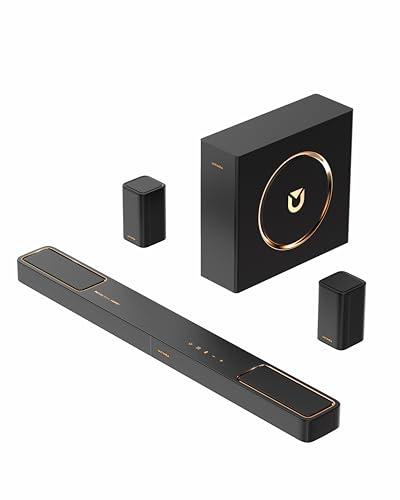



Choosing a soundbar in 2025 feels a lot like picking a car—you can get something that does the job perfectly well, or you can go for the luxury model with every bell and whistle imaginable. The Ultimea Skywave F40 and Samsung HW-Q990D represent these two very different philosophies in the world of Dolby Atmos soundbars, and understanding which approach suits you better could save you hundreds of dollars or dramatically improve your home entertainment experience.
The soundbar market has evolved dramatically over the past few years. What started as simple speaker bars designed to make TV dialogue clearer has transformed into a sophisticated category of home theater systems. At the heart of this evolution is Dolby Atmos—a technology that creates three-dimensional soundscapes by bouncing audio off your ceiling to simulate overhead effects.
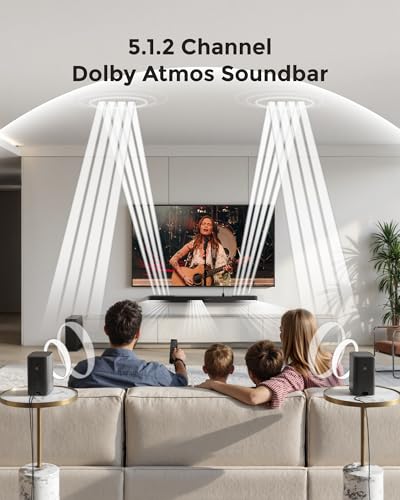
Think of traditional surround sound like a flat circle around you, with speakers at different points on the same horizontal plane. Dolby Atmos adds a vertical dimension, creating a sphere of sound that can place audio objects anywhere in three-dimensional space around you. When a helicopter flies overhead in a movie, you should actually hear it moving above you, not just from side to side.
The main considerations when shopping for a modern soundbar include channel configuration (how many discrete audio channels the system can produce), the physical setup requirements, connectivity options, and of course, how much you're willing to spend. The Ultimea Skywave F40, released in 2024, takes a "maximum value" approach at around $300, while the Samsung HW-Q990D, also from 2024, represents Samsung's flagship effort in the premium segment at roughly three times the price.
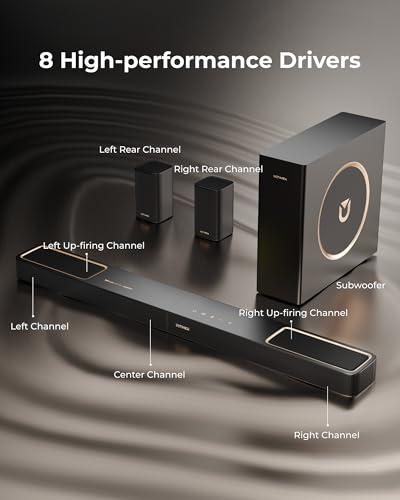
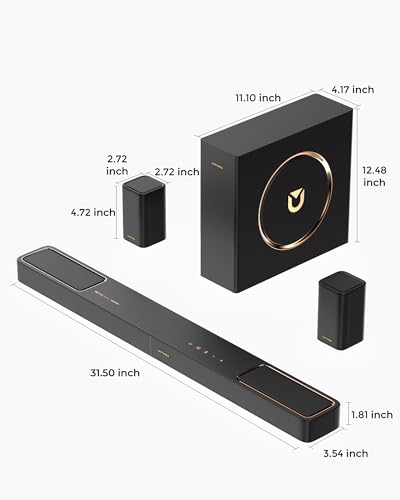
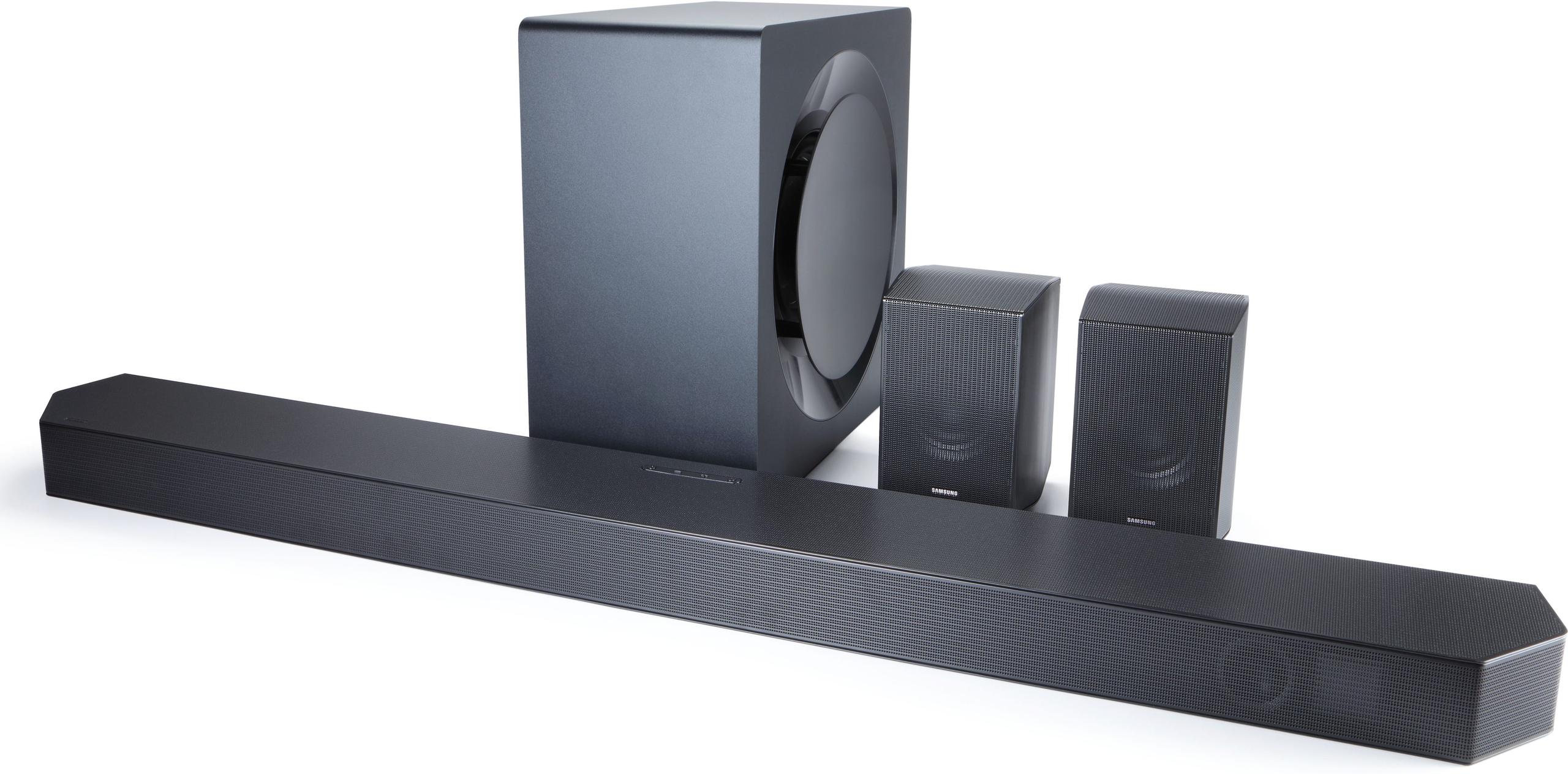
The most fundamental difference between these systems lies in their channel configurations, and this is where the numbers start to tell a story. The Ultimea Skywave F40 features what's called a 5.1.2 configuration. Let me break that down: the "5.1" part means five main speakers (front left, front right, center, and two surround speakers) plus one subwoofer for bass. The ".2" indicates two additional height channels that fire sound upward to bounce off your ceiling.
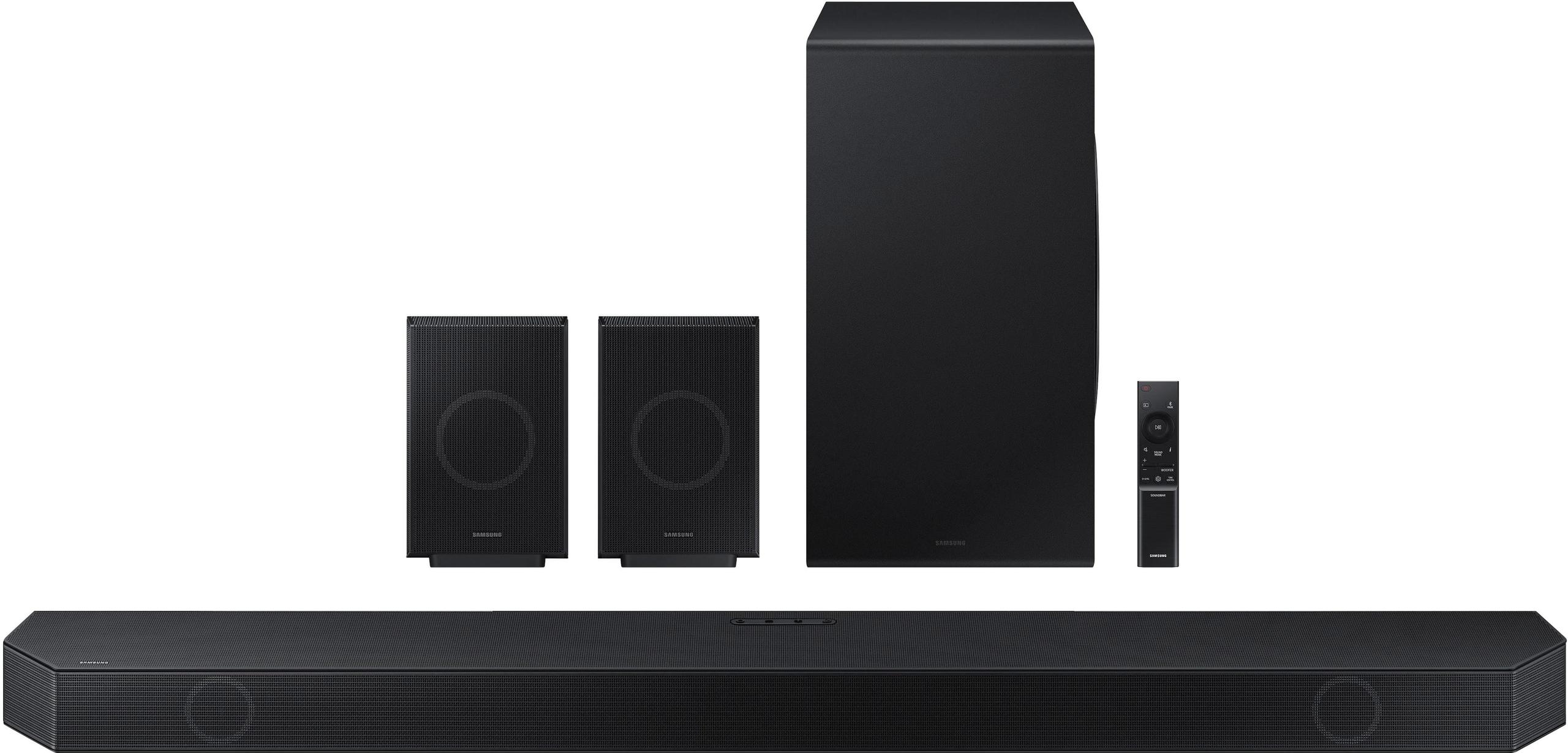
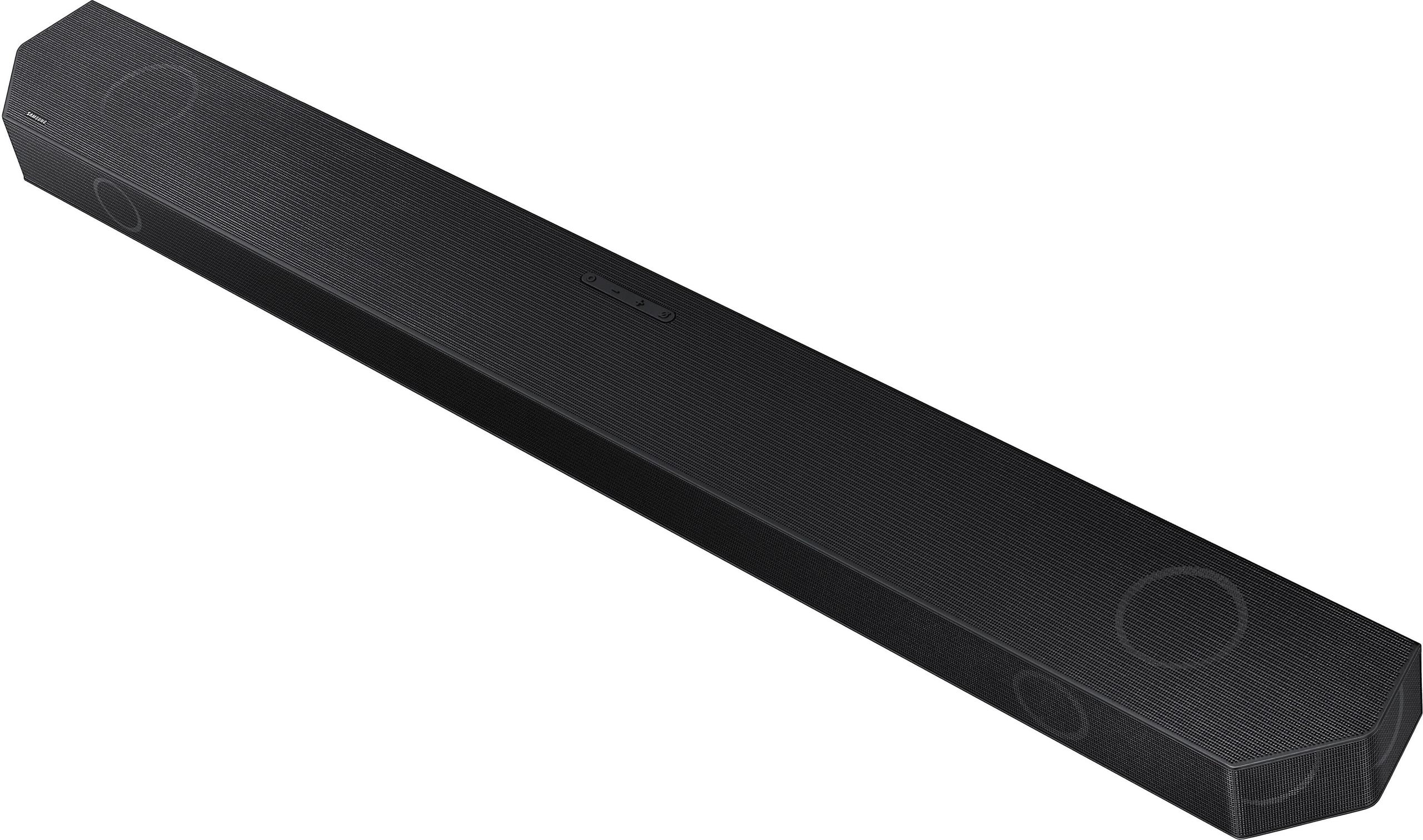
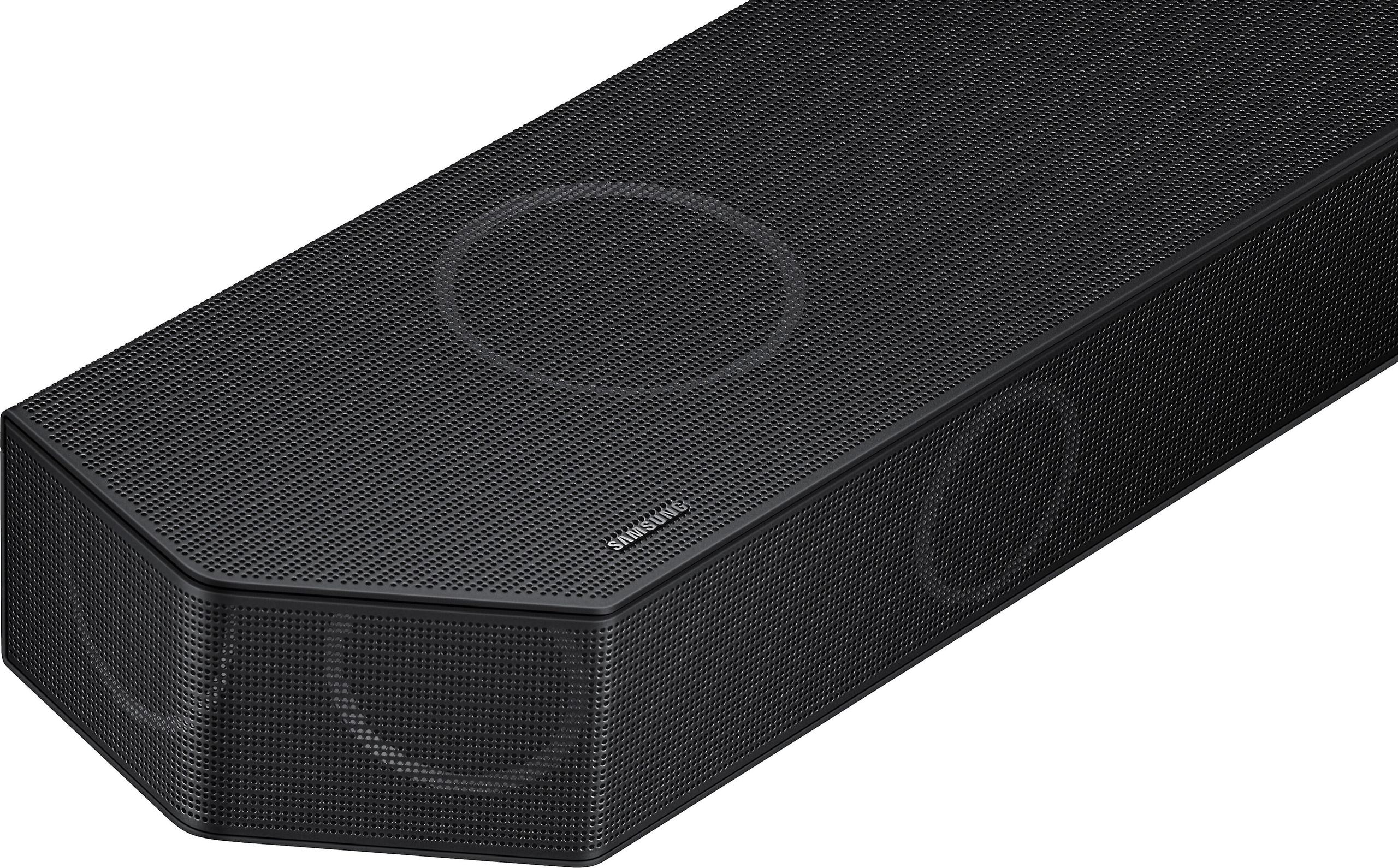
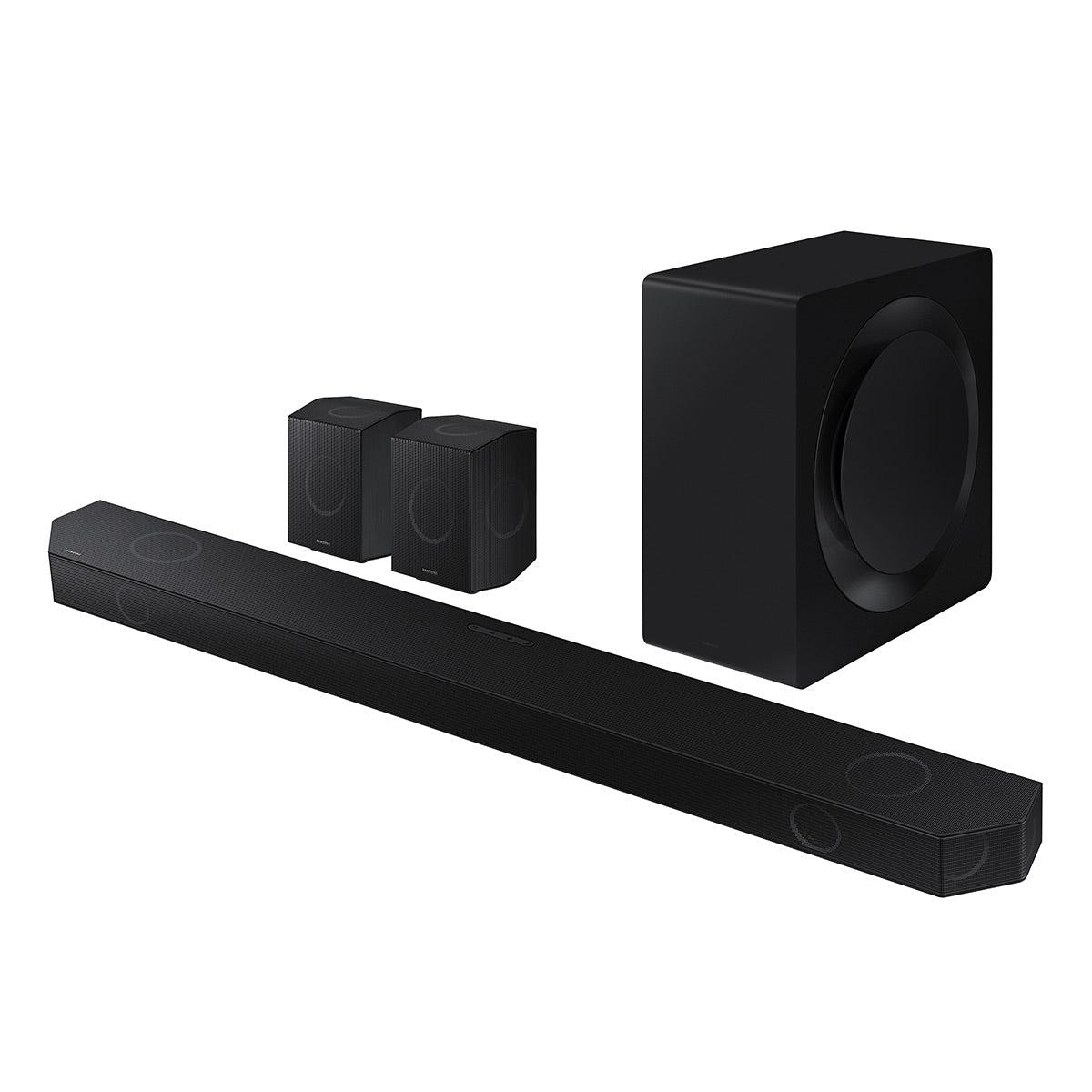
The Samsung HW-Q990D, on the other hand, boasts an 11.1.4 configuration with 22 total speakers. This means eleven main channels, one subwoofer, and four dedicated height channels. Those eleven main channels include not just the basic five, but also front wide speakers, front height speakers, and additional side channels. It's like comparing a small jazz ensemble to a full symphony orchestra.
In practical terms, this difference is immediately noticeable. The Samsung system can place sounds with surgical precision anywhere in your room. When watching a movie scene with rain, you'll hear individual droplets seeming to fall from specific points above and around you. The Ultimea, while still providing genuine Dolby Atmos effects, creates a more generalized sense of immersion—you'll definitely hear those height effects, but with less pinpoint accuracy.
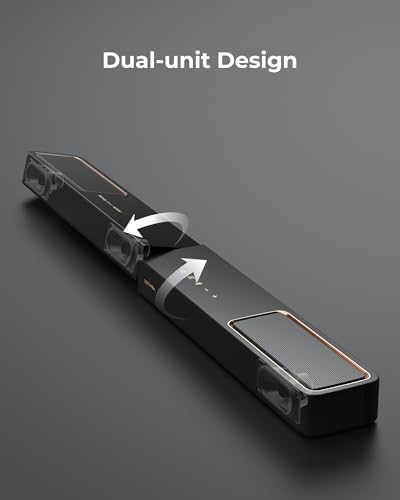
Here's where the two systems reveal their different target audiences most clearly. The Ultimea Skywave F40 ships with its soundbar in two pieces that twist together (a clever shipping solution), includes two wired rear surround speakers, and features a wired subwoofer. You'll be running speaker wire from your rear speakers back to the subwoofer, which then connects to the main soundbar.
This wired approach has both advantages and disadvantages. On the positive side, you never have to worry about wireless dropouts, battery life in the rear speakers, or connection issues. The audio signal travels directly through copper wire, which is inherently more reliable than any wireless connection. However, you'll need to plan your room layout around running those wires, either along baseboards or through walls if you want a clean installation.
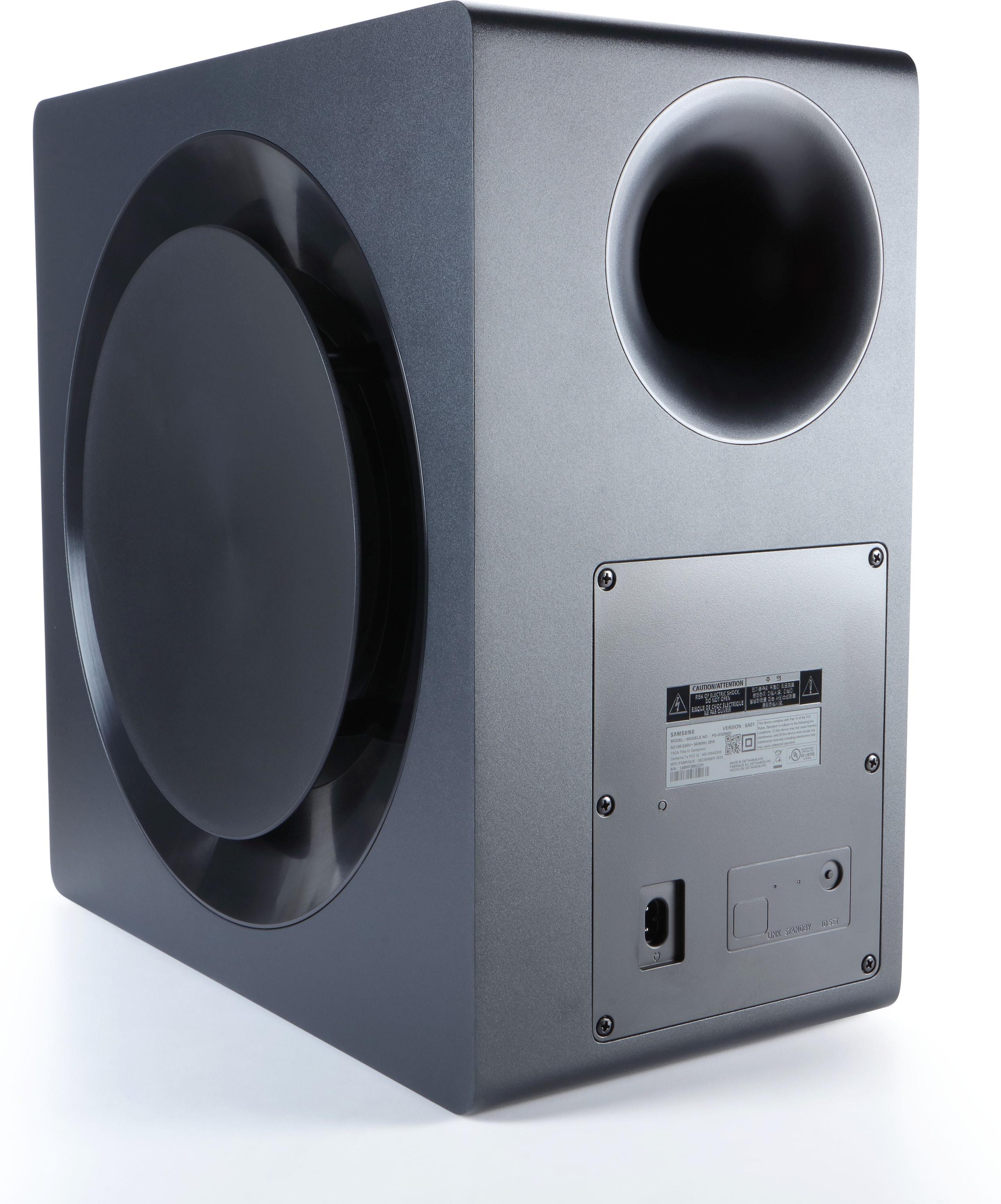
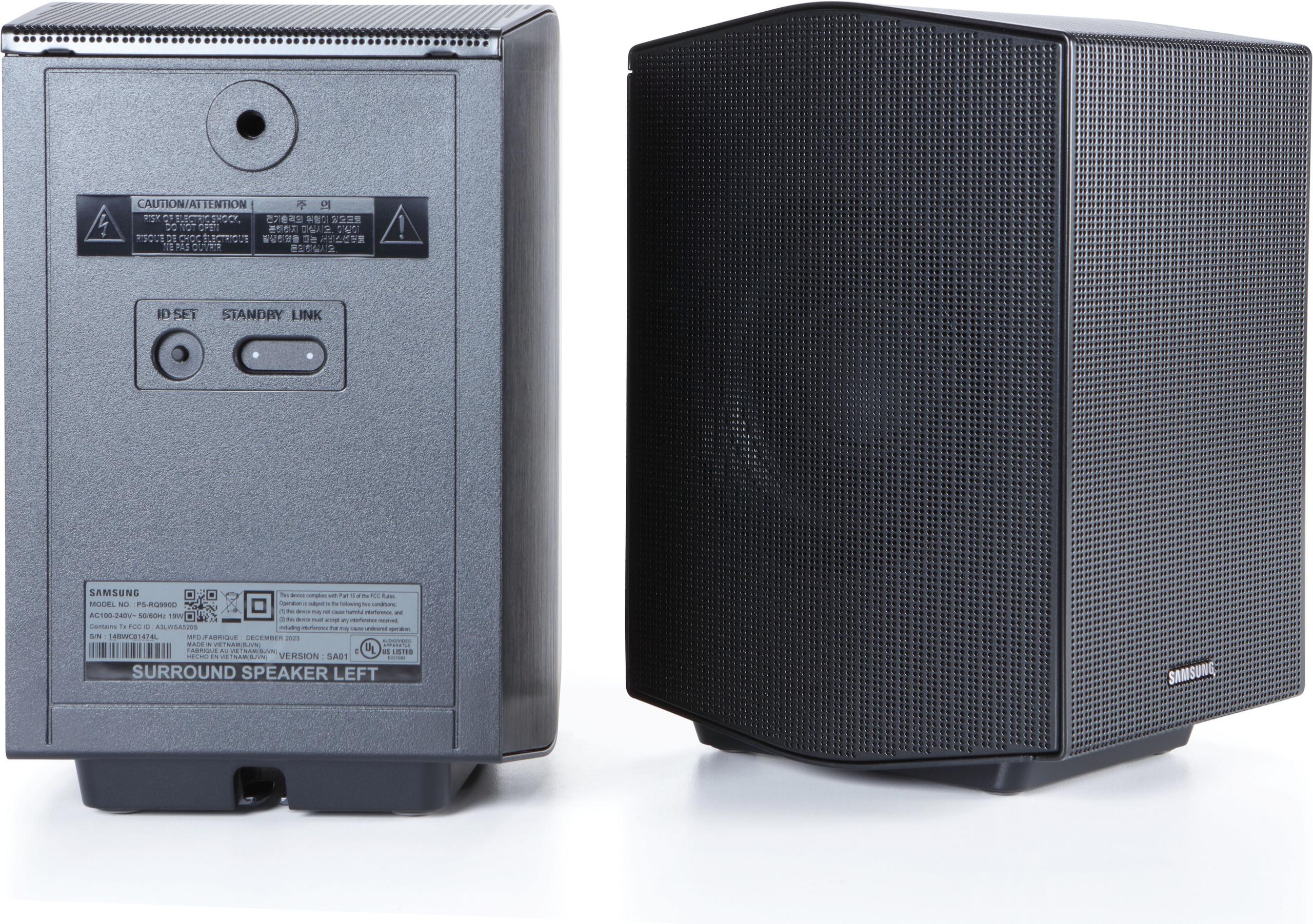
The Samsung HW-Q990D takes the opposite approach with completely wireless rear speakers and subwoofer. This means you can place the components wherever they sound best and look good, without worrying about wire runs. The trade-off is complexity—more wireless components mean more potential points of failure, and you'll need to ensure each component stays charged and maintains a good connection to the main unit.
From a practical standpoint, I've found that the wireless approach works beautifully when it works, but when connection issues arise, they can be frustrating to troubleshoot. The wired approach of the Ultimea might look less elegant, but it's virtually foolproof once installed.
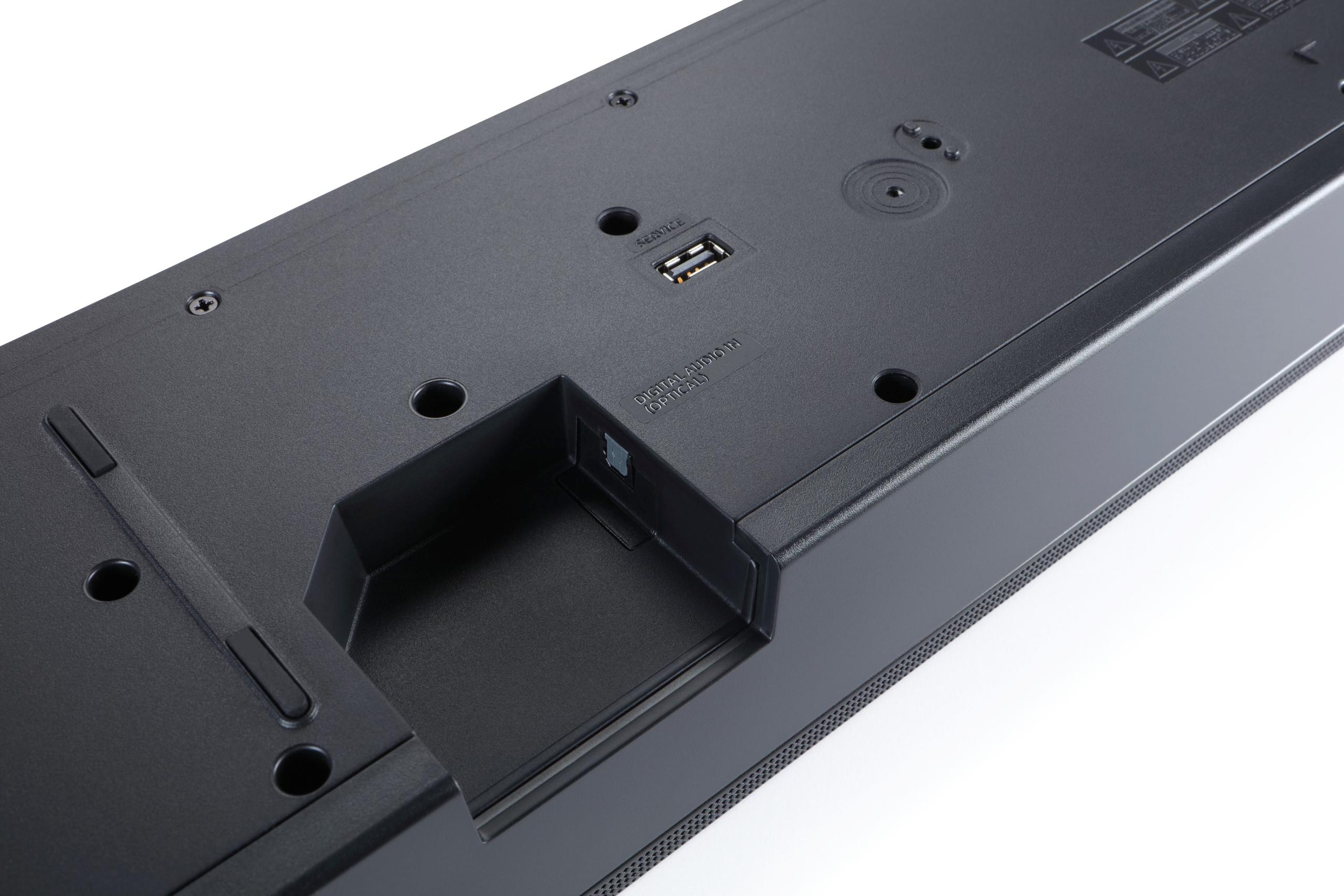
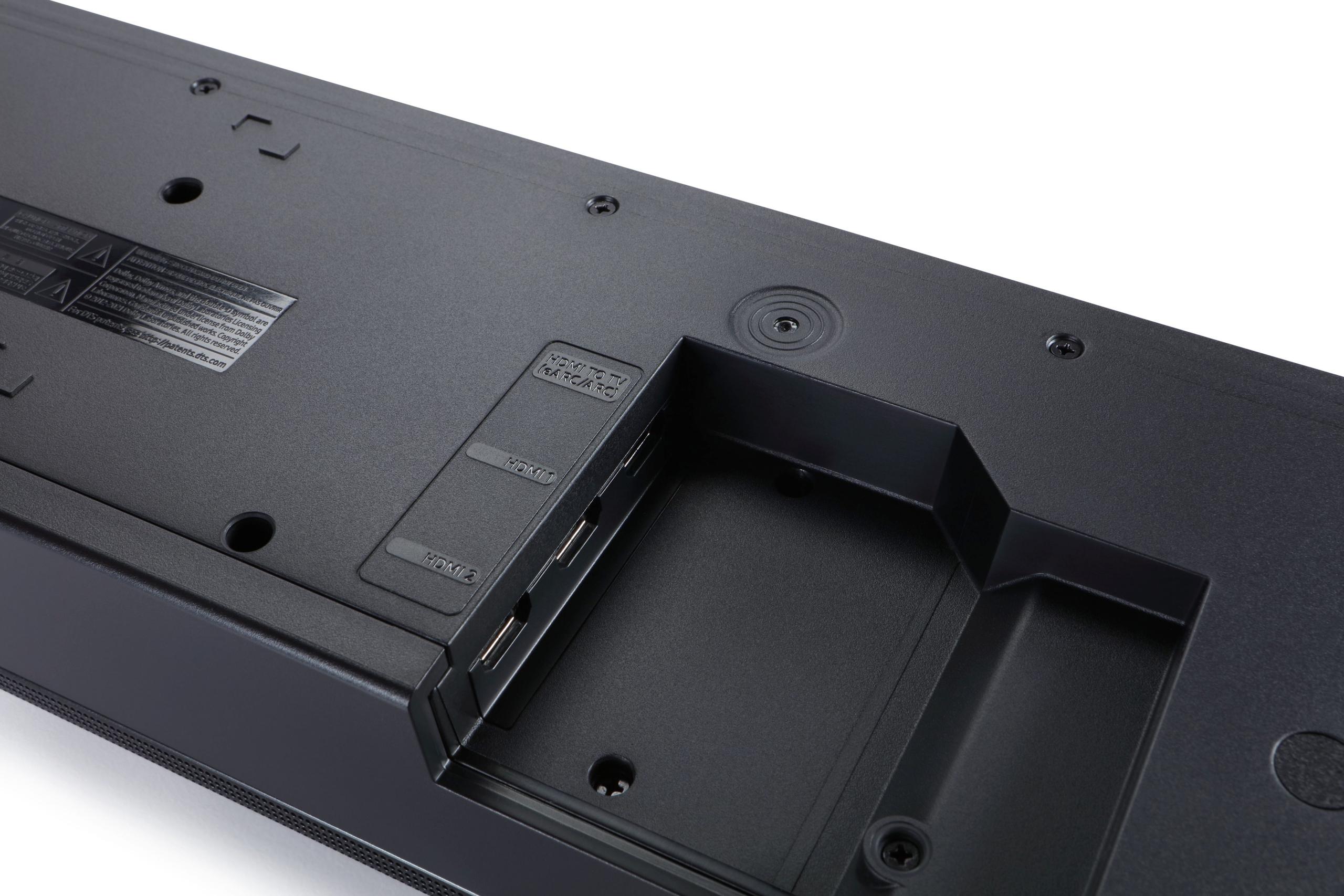
The connectivity story reveals another key philosophical difference. The Ultimea Skywave F40 covers the essentials with HDMI eARC (enhanced Audio Return Channel), optical digital input, and Bluetooth 5.4. HDMI eARC is crucial because it allows your TV to send high-quality audio back to the soundbar, including full-resolution Dolby Atmos signals. The Bluetooth 5.4 support means you can stream music from your phone with improved connection stability and lower latency compared to older Bluetooth versions.
The Samsung HW-Q990D goes much further with HDMI 2.1 inputs that support 4K video at 120Hz refresh rates—essential for modern gaming consoles like the PlayStation 5 or Xbox Series X. This means you can connect your gaming console directly to the soundbar and pass the video through to your TV without losing any gaming performance features like Variable Refresh Rate (VRR) or Auto Low Latency Mode (ALLM).
For gamers, this difference is significant. The Samsung system includes Game Mode Pro, which automatically adjusts audio processing based on what type of game you're playing. Racing games get different audio tuning than first-person shooters, optimizing the soundscape for competitive advantage or immersion as appropriate.
Both systems approach room optimization differently, reflecting their target markets. The Ultimea Skywave F40 provides a 10-band equalizer with 121 preset matrices, giving you extensive manual control over how the system sounds. You can adjust different frequency ranges to compensate for your room's acoustics or personal preferences. It's like having a mixing board for your living room.
The Samsung HW-Q990D features SpaceFit Sound Pro, an automated system that uses built-in microphones to analyze your room's acoustics and adjust the sound accordingly. It continuously monitors the audio environment and makes real-time adjustments. Think of it as having a professional audio engineer constantly tweaking your system for optimal performance.
There's merit to both approaches. Manual EQ gives you complete control and the satisfaction of dialing in your perfect sound. Automatic room correction, when done well, can often achieve better results than manual tuning for most people, especially in difficult acoustic environments.
When it comes to actual audio performance, the differences between these systems become clear in several key areas. Let's start with dynamic range—the difference between the quietest and loudest sounds the system can reproduce effectively.
The Samsung HW-Q990D excels here with minimal compression even at high volumes. This means during explosive action sequences, you still hear subtle details like rustling leaves or whispered dialogue underneath the chaos. The system's 22 speakers and sophisticated processing allow it to maintain clarity across all frequency ranges simultaneously.
The Ultimea Skywave F40, while impressive for its price point, shows more compression under demanding conditions. During complex movie scenes with lots of simultaneous audio elements, some subtle details might get lost as the system prioritizes the most important sounds. However, for typical TV watching and most movies, this difference is subtle enough that many users won't notice.
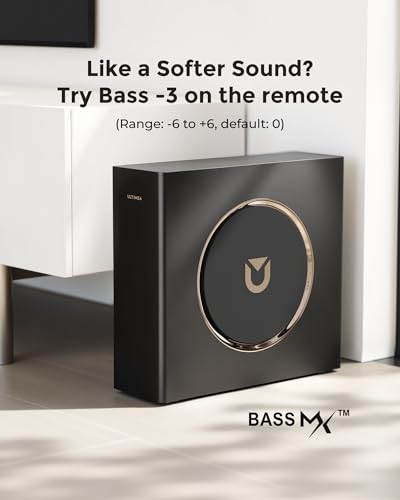
Bass response tells another interesting story. The Ultimea's subwoofer reaches down to about 45Hz, which covers most movie sound effects and music adequately. The Samsung's larger subwoofer and advanced DSP (Digital Signal Processing) reach deeper and with more control, providing that chest-thumping impact you feel during earthquake scenes or explosion sequences.
Dialogue clarity is crucial for any home theater system, and here both systems perform well but differently. The Samsung HW-Q990D includes a discrete center channel with dual woofers and a dedicated tweeter, ensuring voices remain clear even during complex audio passages. The Ultimea handles dialogue well through its virtual center channel processing, though it can't quite match the precision of a dedicated center speaker.
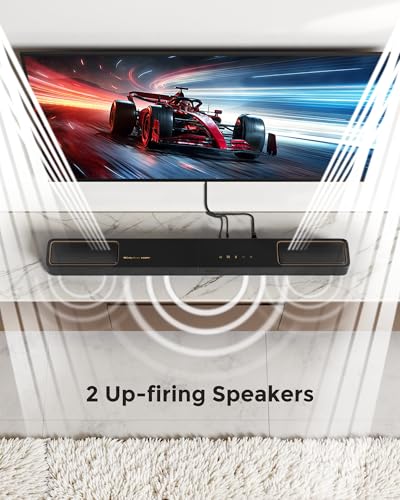
Both systems deliver genuine Dolby Atmos, but the experience differs significantly. The Ultimea Skywave F40 uses two up-firing drivers in the main soundbar to create height effects. These drivers use neodymium magnets and specialized voice coils to project sound upward, where it bounces off your ceiling and back down to your listening position.
The effect is noticeable and enjoyable—you'll definitely hear rain falling from above, aircraft flying overhead, and other height-based sound effects. However, the precision is somewhat generalized. You'll get a sense of "up there" rather than specific positioning in the height layer.
The Samsung HW-Q990D doubles down on height effects with four up-firing drivers—two in the main soundbar and two in the rear speakers. This creates much more precise height positioning. During a thunderstorm scene, you might hear lightning crack specifically above and behind you, then roll forward overhead as the thunder develops.
The difference becomes most apparent in content specifically mixed for Dolby Atmos. Streaming services like Netflix, Disney+, and Apple TV+ increasingly offer Atmos content, and gaming is starting to embrace object-based audio as well. Both systems handle this content well, but the Samsung extracts more detail and spatial information.
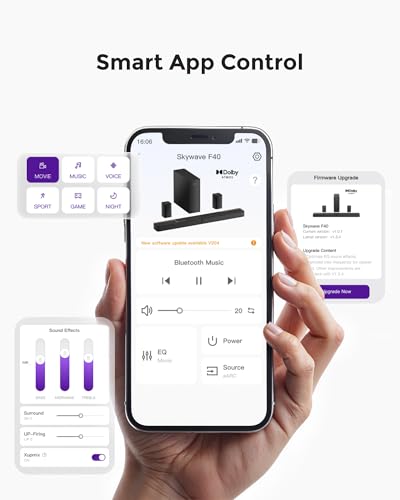
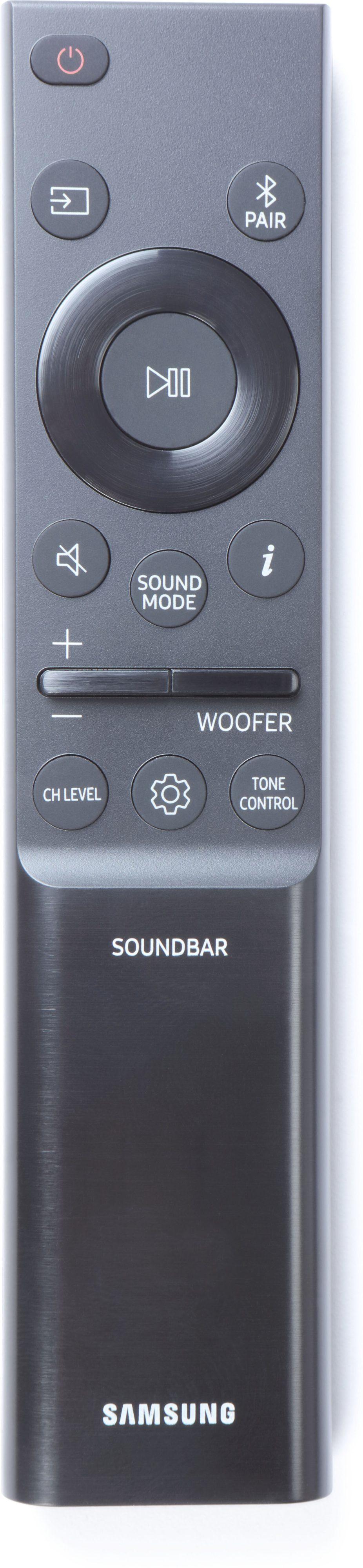
Modern soundbars are increasingly smart devices, and both systems reflect this trend differently. The Ultimea Skywave F40 includes smart app control through the ULTIMEA app, letting you adjust settings, switch inputs, and modify EQ settings from your phone. It's straightforward and functional without being overwhelming.
The Samsung HW-Q990D integrates deeply with Samsung's ecosystem through features like Q Symphony, which coordinates the soundbar with your Samsung TV's built-in speakers to create an even wider soundstage. If you own a Samsung TV, the system can use both the TV's speakers and the soundbar simultaneously, effectively creating additional channels.
Both systems support voice control through Alexa and Google Assistant, though implementation varies. The Samsung has more advanced integration, allowing for more sophisticated voice commands and smart home control.
At the time of writing, the price difference between these systems is substantial—the Ultimea costs roughly one-third the price of the Samsung. This creates an interesting value equation that depends heavily on your priorities and expectations.
The Ultimea Skywave F40 delivers perhaps 75-80% of the surround sound experience at 35% of the cost. For many users, especially those upgrading from TV speakers or a basic soundbar, this represents exceptional value. You're getting genuine Dolby Atmos, true surround sound with physical rear speakers, and solid build quality at a price point that doesn't require serious financial consideration.
The Samsung HW-Q990D offers that additional 20-25% of performance, plus significant convenience features and future-proofing, but at a much higher cost. The question becomes whether those improvements are worth the price premium for your specific situation.
Your room size significantly impacts which system makes more sense. The Ultimea Skywave F40 is designed for rooms up to about 270 square feet—typical living rooms, bedrooms, or smaller family rooms. In these spaces, it can fill the room with sound effectively without strain.
The Samsung HW-Q990D is built for larger spaces and can handle open-concept living areas, large family rooms, or dedicated home theaters without breaking a sweat. Its higher power output and more sophisticated driver array allow it to maintain clarity and impact even when filling larger volumes.
In smaller rooms, the Samsung system might actually be overkill, potentially overpowering the space and requiring significant volume reduction. The Ultimea might be more appropriate for intimate settings where you want immersive sound without overwhelming power.
For gaming enthusiasts, the connectivity differences become crucial. The Samsung HW-Q990D supports all the latest console features through HDMI 2.1, including 4K gaming at 120Hz, VRR for smoother gameplay, and ALLM for reduced input lag. Game Mode Pro automatically optimizes audio processing for different game genres.
The Ultimea Skywave F40 handles gaming adequately through HDMI eARC but lacks the advanced gaming features. If you're a serious gamer with a PlayStation 5 or Xbox Series X, the Samsung provides a noticeably better experience. For casual gaming or older consoles, the Ultimea works fine.
Both systems handle music well but with different strengths. The Ultimea Skywave F40 provides a warmer, more intimate presentation that works well for most music genres. Its Bluetooth 5.4 connection ensures stable streaming from phones and tablets with minimal audio compression.
The Samsung HW-Q990D offers more analytical presentation with better separation between instruments and more precise soundstaging. For serious music listening, especially with high-resolution audio files, the Samsung reveals more detail and nuance.
However, the Ultimea's more relaxed presentation might actually be preferable for casual music listening or background music during gatherings. It's less fatiguing over long listening sessions.
Setting up the Ultimea Skywave F40 is refreshingly straightforward. The two-piece soundbar twists together securely, you run one wire to each rear speaker, plug in the subwoofer, and connect to your TV via HDMI. The included cables handle most situations, and the setup process typically takes 30-45 minutes including wire management.
The Samsung HW-Q990D setup is more complex but potentially more convenient long-term. You'll need to pair each wireless component, run the room calibration, and potentially troubleshoot connectivity issues. However, once set up properly, the wireless nature means easier repositioning and cleaner aesthetics.
Both systems include wall-mounting hardware, but the Samsung's wireless rear speakers offer more placement flexibility. You can put them on shelves, wall-mount them, or use optional stands without worrying about wire runs.
After extensive consideration, the choice comes down to your specific situation and priorities. Choose the Ultimea Skywave F40 if you want excellent value for money, have a typical-sized living room, prioritize reliability over convenience, and want genuine Dolby Atmos without premium pricing. It's perfect for first-time soundbar buyers, budget-conscious families, or anyone who wants significantly better TV audio without a major financial commitment.
The Samsung HW-Q990D makes sense for serious home theater enthusiasts, users with large rooms or open floor plans, gamers who need HDMI 2.1 features, and anyone who values premium convenience features. If you're already invested in Samsung's ecosystem with a compatible TV, the integration benefits add significant value.
Ultimately, both systems succeed at their intended missions. The Ultimea Skywave F40 proves that excellent surround sound doesn't require premium pricing, while the Samsung HW-Q990D demonstrates how much additional performance and convenience you can achieve with a larger investment.
Consider your room size, usage patterns, budget constraints, and technical requirements. If the Ultimea meets 90% of your needs at one-third the cost, it's hard to argue against that value proposition. But if you want the absolute best performance, have the budget for premium features, and will use the advanced capabilities, the Samsung justifies its higher price through superior performance and convenience.
The good news is that both represent solid choices in their respective categories, meaning you'll likely be happy with either decision based on your specific needs and expectations.
| Ultimea Skywave F40 | Samsung HW-Q990D |
|---|---|
| Channel Configuration - Determines surround sound precision and immersion | |
| 5.1.2 channels with 8 total speakers | 11.1.4 channels with 22 total speakers |
| Height Channels - Creates overhead Dolby Atmos effects | |
| 2 up-firing drivers in soundbar | 4 up-firing drivers (2 in bar, 2 in satellites) |
| Rear Speaker Setup - Impacts installation flexibility and reliability | |
| Wired rear speakers (more reliable, requires cable management) | Wireless rear speakers (cleaner install, potential connectivity issues) |
| Subwoofer Connection - Affects placement options | |
| Wired subwoofer (limited placement, stable connection) | Wireless subwoofer (flexible placement, advanced features) |
| Power Output - Determines maximum volume and room filling capability | |
| 313W peak power (suitable for medium rooms) | Significantly higher output (handles large, open spaces) |
| Frequency Response - Shows bass depth and treble extension | |
| 45Hz - 20kHz (good bass for most content) | Lower bass extension with better control |
| HDMI Connectivity - Critical for modern gaming and high-quality audio | |
| HDMI eARC (supports most Atmos content) | HDMI 2.1 with 4K/120Hz passthrough (gaming optimized) |
| Room Calibration - Automatically optimizes sound for your space | |
| Manual 10-band EQ with 121 presets | SpaceFit Sound Pro with automatic room analysis |
| Gaming Features - Important for console users | |
| Basic gaming support via HDMI eARC | Game Mode Pro with genre-specific optimization |
| Smart Integration - Enhances convenience and control | |
| Ultimea app control, basic voice assistant support | Q Symphony (Samsung TV integration), advanced voice control |
| Recommended Room Size - Ensures optimal performance | |
| Up to 270 sq ft (typical living rooms) | Large rooms and open floor plans |
| Setup Complexity - Time and effort required for installation | |
| Simple wired setup, 30-45 minutes | More complex wireless pairing and calibration |
| Value Proposition - Performance per dollar spent | |
| Exceptional value - 80% of premium performance at 35% of the cost | Premium experience with advanced features at flagship pricing |
The Ultimea Skywave F40 provides exceptional value, delivering genuine Dolby Atmos and 5.1.2 surround sound at a budget-friendly price point. While the Samsung HW-Q990D costs significantly more, it offers premium features like 11.1.4 channels and wireless connectivity. For most users, the Ultimea Skywave F40 delivers 80% of the performance at roughly one-third the cost.
The Ultimea Skywave F40 features 5.1.2 channels (8 total speakers), providing basic surround sound with height effects. The Samsung HW-Q990D boasts 11.1.4 channels with 22 speakers, offering much more precise sound placement and additional channels like front wide and front height speakers. The Samsung system creates a more immersive surround experience but at a higher cost.
The Ultimea Skywave F40 is specifically designed for rooms up to 270 square feet, making it ideal for typical living rooms and bedrooms. The Samsung HW-Q990D is built for larger spaces and might be overkill in smaller rooms. For most home environments, the Ultimea Skywave F40 provides adequate power and performance.
Yes, both the Ultimea Skywave F40 and Samsung HW-Q990D support genuine Dolby Atmos with up-firing drivers that bounce sound off your ceiling. The Ultimea uses 2 up-firing drivers while the Samsung features 4 up-firing drivers for more precise height effects and better overhead sound placement.
The Ultimea Skywave F40 offers simpler installation with wired connections that ensure reliable performance. Setup typically takes 30-45 minutes with basic cable management. The Samsung HW-Q990D requires more complex wireless pairing and room calibration but offers cleaner aesthetics once installed. The Ultimea is more plug-and-play friendly.
No, the Ultimea Skywave F40 uses wired rear speakers that connect to the subwoofer, requiring some cable management but ensuring stable connections. The Samsung HW-Q990D features completely wireless rear speakers and subwoofer, providing more placement flexibility but potentially introducing connectivity issues.
The Samsung HW-Q990D excels for gaming with HDMI 2.1 support, 4K/120Hz passthrough, and Game Mode Pro that optimizes audio for different game genres. The Ultimea Skywave F40 handles gaming adequately through HDMI eARC but lacks advanced gaming features. Serious console gamers will prefer the Samsung.
The Ultimea Skywave F40 includes a wired subwoofer that reaches down to 45Hz, providing solid bass for most content. The Samsung HW-Q990D features a larger wireless subwoofer with deeper bass extension and more sophisticated processing. Both deliver good bass, but the Samsung offers more impact and control.
The Samsung HW-Q990D offers superior integration with Samsung TVs through Q Symphony technology, which coordinates the soundbar with your TV's built-in speakers for a wider soundstage. The Ultimea Skywave F40 works well with any TV brand through standard connections but lacks special Samsung TV integration features.
Yes, both the Ultimea Skywave F40 and Samsung HW-Q990D support Bluetooth music streaming and voice control through Alexa and Google Assistant. The Ultimea uses Bluetooth 5.4 for stable connections, while the Samsung offers more advanced smart home integration and voice command features.
The Samsung HW-Q990D provides superior dialogue clarity with its discrete center channel featuring dual woofers and a dedicated tweeter. The Ultimea Skywave F40 handles dialogue well through virtual center channel processing but can't match the precision of the Samsung's dedicated center speaker. Both systems include voice enhancement modes.
The Ultimea Skywave F40 includes the two-piece soundbar, wired subwoofer, two rear speakers, all necessary cables, wall mount brackets, and remote control. The Samsung HW-Q990D comes with the main soundbar, wireless subwoofer, wireless rear speakers, HDMI cable, wall mount kit, and remote. Both systems include everything needed for installation.
We've done our best to create useful and informative comparisons to help you decide what product to buy. Our research uses advanced automated methods to create this comparison and perfection is not possible - please contact us for corrections or questions. These are the sites we've researched in the creation of this article: the-gadgeteer.com - youtube.com - ultimea.com - manuals.plus - youtube.com - ultimea.com - youtube.com - youtube.com - youtube.com - youtube.com - eu.ultimea.com - support.ultimea.com - techradar.com - avsforum.com - valueelectronics.com - samsung.com - rtings.com - samsung.com - avsforum.com - samsung.com - cdwg.com - youtube.com - whathifi.com

Privacy Policy
Terms and Conditions - Affiliate Policy
Home Security
© Copyright 2008-2026.
11816 Inwood Rd #1211, Dallas, TX 75244