






The soundbar market has exploded over the past few years, transforming from simple TV audio upgrades into sophisticated home theater alternatives. When I first started reviewing audio gear a decade ago, getting true surround sound meant dedicating an entire room to bulky speakers and running wires through walls. Today's best soundbars can deliver surprisingly immersive experiences while maintaining the clean aesthetics most people want in their living rooms.
The challenge now isn't finding a decent soundbar—it's choosing between fundamentally different approaches to the same goal. Do you want everything included upfront, or are you willing to build your system piece by piece for potentially better performance? This dilemma perfectly captures the difference between the Ultimea Skywave F40 and Samsung HW-Q800D, two 2024 soundbars that represent opposing philosophies in the 5.1.2 Dolby Atmos category.
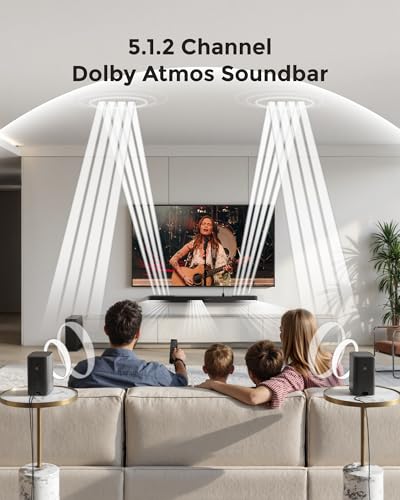
Before diving into specifics, it's worth understanding what makes these systems tick. Both soundbars support Dolby Atmos, which is essentially a way of encoding sound that tells your speakers not just which channel to play audio through, but where in three-dimensional space that sound should appear to come from. Think of it as GPS coordinates for sound effects—instead of just left, right, and center, you get precise placement including height information.
The "5.1.2" designation tells us exactly what we're working with: five main channels (front left, center, front right, rear left, rear right), one subwoofer channel for deep bass, and two height channels that bounce sound off your ceiling to create overhead effects. When done well, this creates a bubble of sound around you rather than just audio coming from the front of the room.
What's changed significantly since 2024 is how affordable this technology has become. Previously, true Dolby Atmos required expensive AV receivers and multiple speakers. Now, sophisticated processing can create convincing surround effects from compact soundbars, though there are still trade-offs in how different manufacturers approach this challenge.
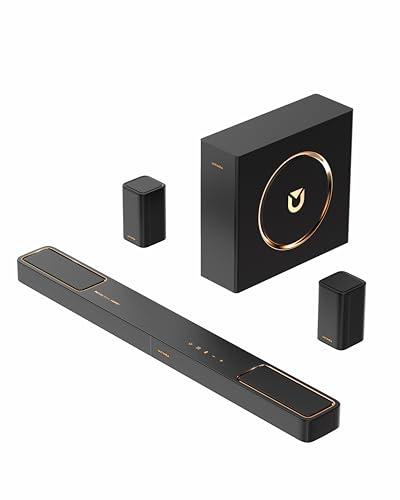
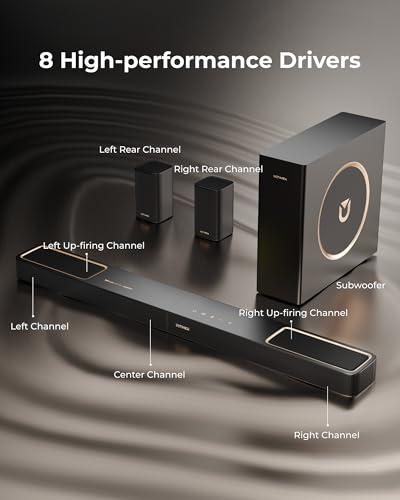
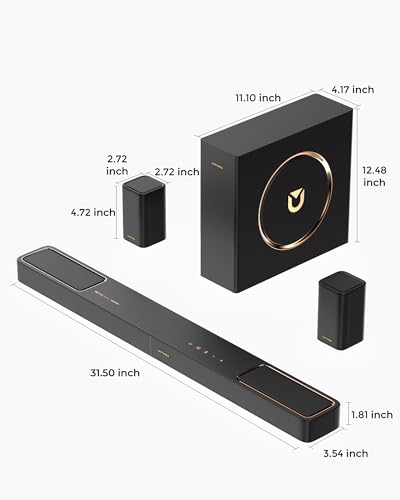
The Ultimea Skywave F40 represents what I call the "everything included" philosophy. When you unbox this system, you get the main soundbar, a subwoofer, and two dedicated rear surround speakers. This immediately solves one of the biggest compromises in soundbar design: virtual vs. real surround sound.
Here's where the Ultimea Skywave F40 shines brightest. Those physical rear speakers make a genuine difference that no amount of digital processing can fully replicate. When a helicopter flies overhead in a movie, you hear it start behind you and move forward. When someone speaks off-screen in a TV show, their voice comes from the appropriate direction. This spatial accuracy is something I genuinely miss when switching to soundbars that rely purely on reflections and psychoacoustic tricks.
The rear speakers connect to each other with a single wire, which keeps cable management reasonable, though they do need to connect back to the subwoofer. It's not as clean as completely wireless rear speakers, but it's far more reliable than systems that struggle with wireless dropouts during intense action scenes.
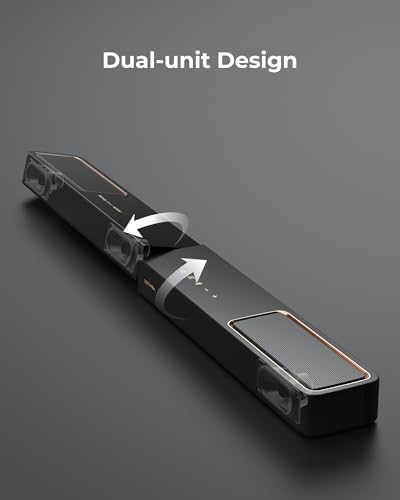
With 460W total power spread across eight drivers, the Ultimea Skywave F40 delivers surprisingly robust performance for its price point. The soundbar section handles the critical front channels and height effects, while the rear speakers and subwoofer fill out the rest of the frequency spectrum. This distributed approach means each component can focus on its specific role rather than trying to do everything from a single location.
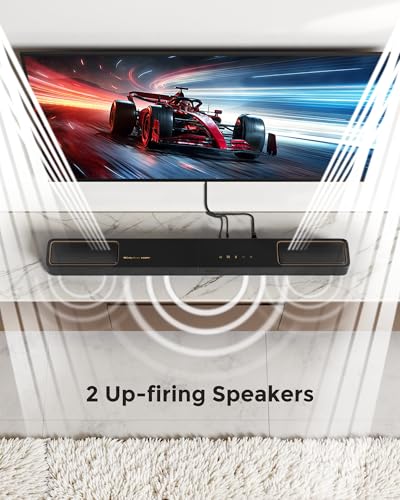
The up-firing drivers use neodymium magnets, which might sound like marketing speak but actually matters. Neodymium magnets are much stronger than traditional magnets, allowing for more precise control over the speaker cone. This translates to better height effects when sound bounces off your ceiling—the difference between vague overhead ambiance and precisely placed effects.
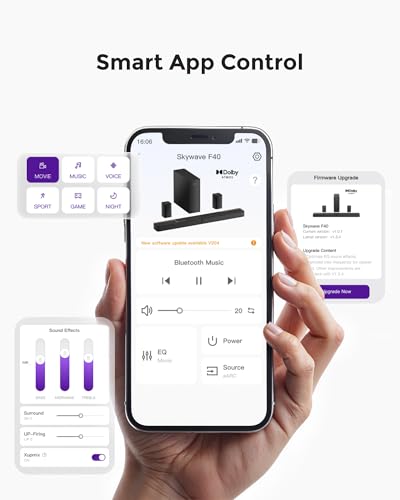
The Ultimea Skywave F40 includes smart app control, which has become increasingly important as soundbars gain more customization options. The 10-band equalizer with 121 preset matrices gives you granular control over how different content sounds. I particularly appreciate having distinct presets for different content types—what works for dialogue-heavy TV shows rarely works best for music or explosive action movies.
The Bluetooth 5.4 connectivity deserves mention because it's genuinely better than older Bluetooth versions. The improved codec support and reduced latency make a noticeable difference when streaming music from your phone, eliminating the slight delay that made older wireless audio feel disconnected from the visual experience.
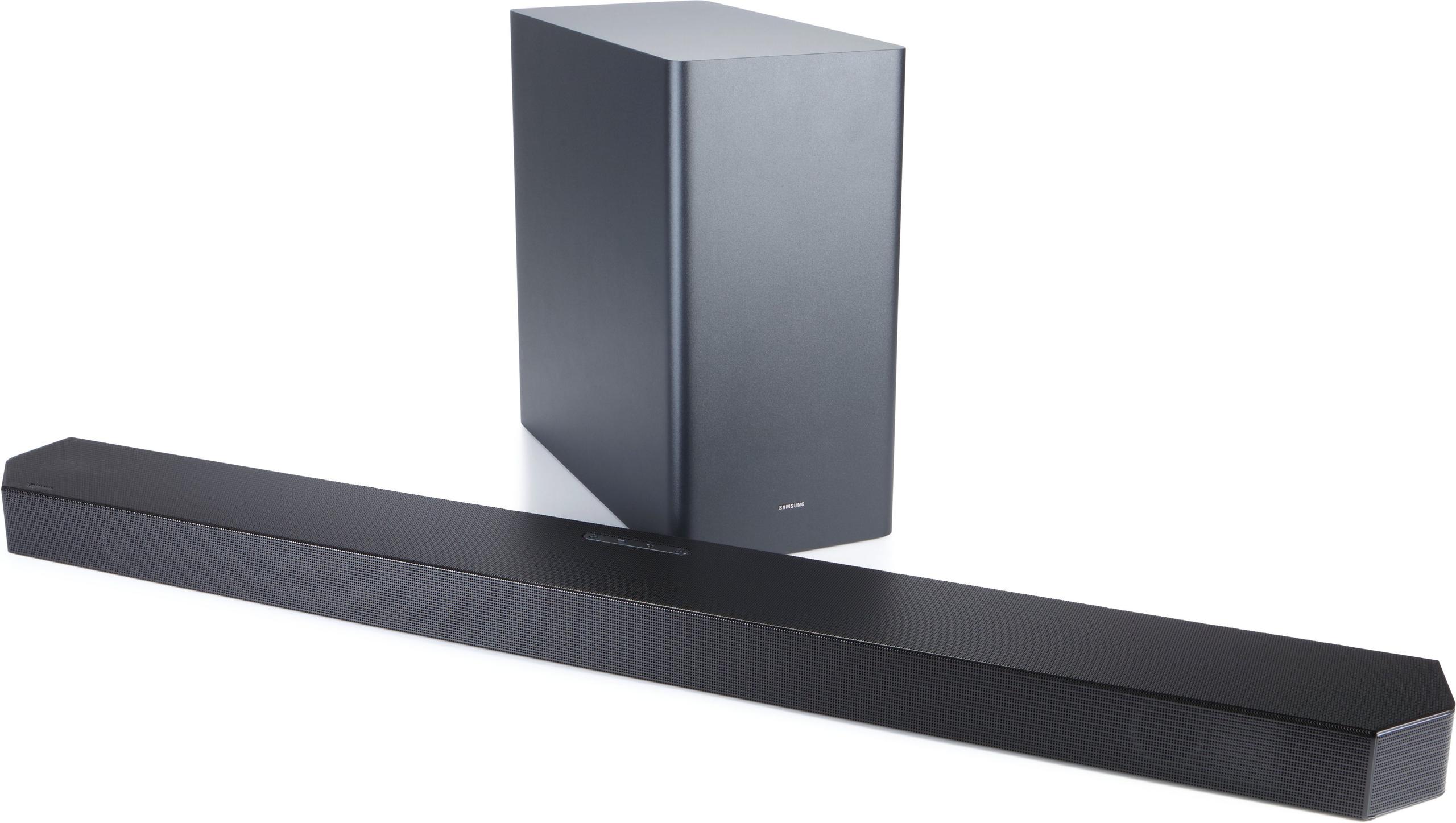
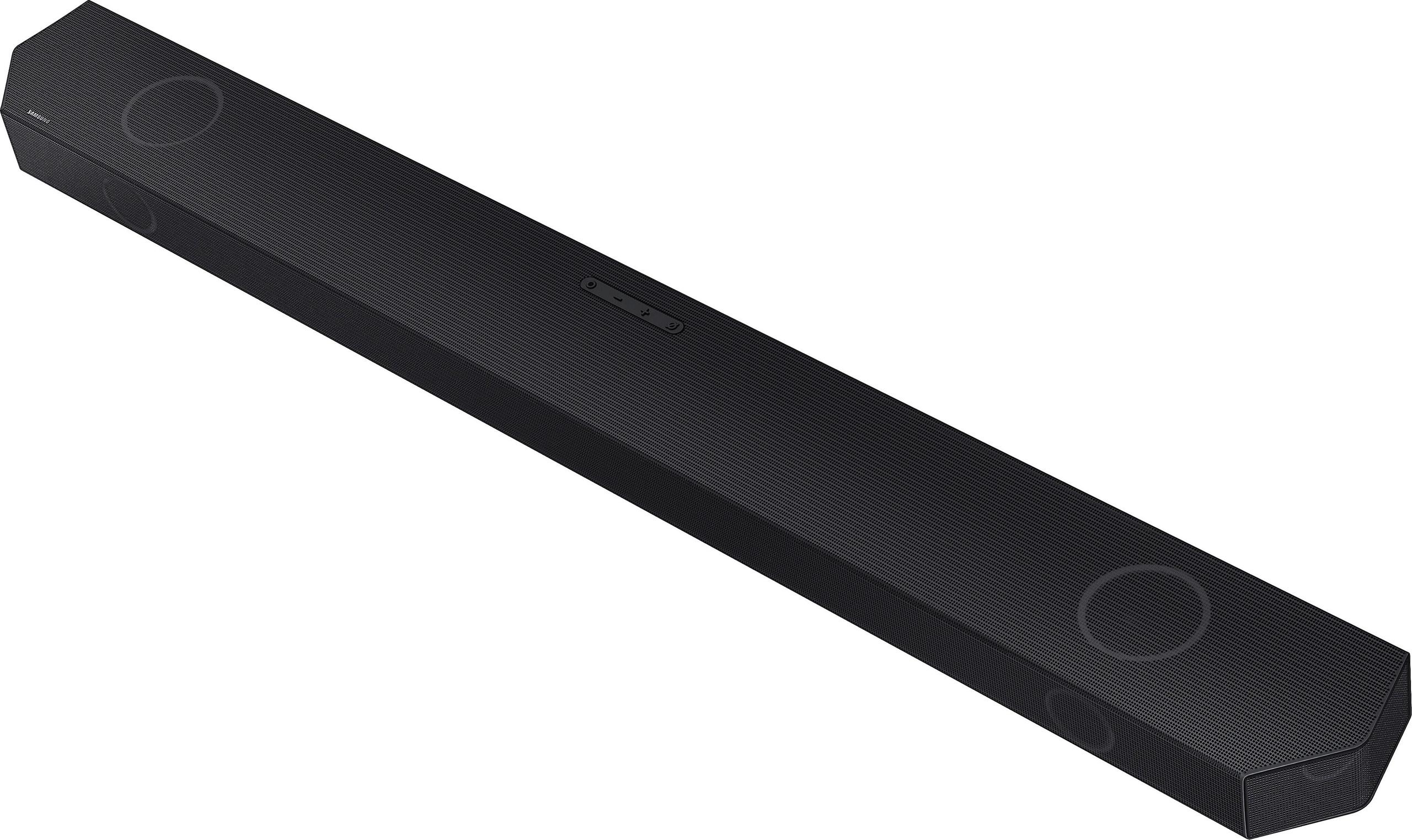
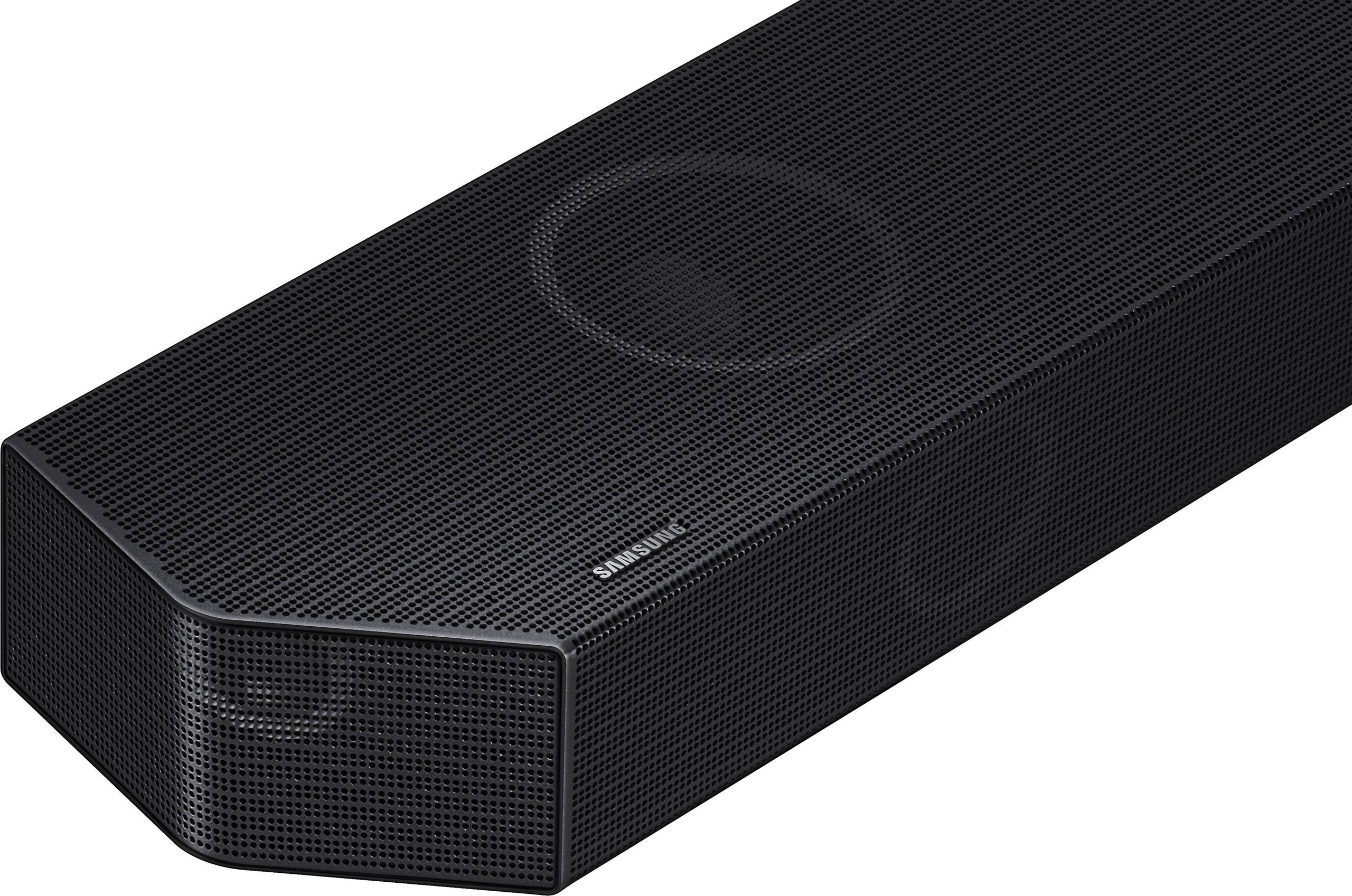
The Samsung HW-Q800D takes a completely different approach. Instead of including everything upfront, Samsung focuses on building the best possible soundbar and subwoofer combination, leaving rear speakers as an optional upgrade. This philosophy reflects Samsung's broader ecosystem approach—they want you to build a system that integrates seamlessly with other Samsung devices.
With 11 drivers powered by 360W, the Samsung HW-Q800D immediately feels more sophisticated in its engineering. The discrete center channel makes a genuine difference for dialogue clarity—something you notice immediately when switching from TV speakers. Movie dialogue becomes crisp and intelligible even during loud action sequences, which is crucial for home theater enjoyment.
The SpaceFit Sound Pro technology actively analyzes your room using built-in microphones, then adjusts the audio processing accordingly. This isn't just marketing fluff—room acoustics genuinely affect how soundbars perform, especially the height effects that rely on ceiling reflections. A high ceiling, lots of soft furniture, or unusual room dimensions can dramatically change how Dolby Atmos effects work, and having the soundbar automatically compensate for these variables is genuinely useful.
If you own a compatible Samsung TV from 2022 or newer, the Q-Symphony feature becomes a significant advantage. Instead of disabling your TV's speakers when you connect the soundbar, Q-Symphony uses both the TV and soundbar speakers working together. This creates a larger, more immersive soundstage than either component could achieve alone.
I've tested this feature extensively, and while it's not revolutionary, it does create a noticeably fuller sound. The TV speakers handle some midrange frequencies while the soundbar focuses on what it does best. For Samsung TV owners, this integration alone can justify the price premium.
The Samsung HW-Q800D includes several processing modes that demonstrate its more sophisticated approach. Active Voice Amplifier (AVA) technology automatically identifies and enhances dialogue in real-time, which is particularly useful for streaming content where audio levels vary wildly between different shows and movies.
The 3D Surround mode attempts to create height and surround effects using just the soundbar and subwoofer. While this can't match the precision of physical rear speakers, Samsung's implementation is among the better virtual surround systems I've tested. It creates a convincing sense of space and movement, though you lose some of the pinpoint accuracy that dedicated speakers provide.
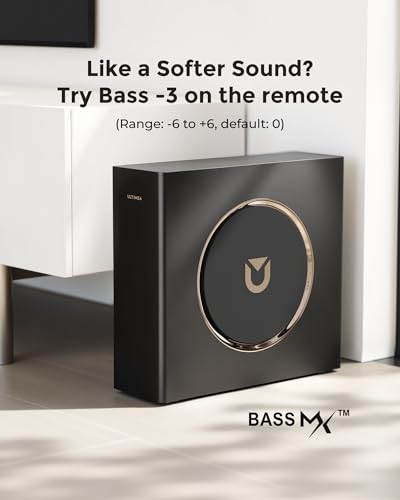
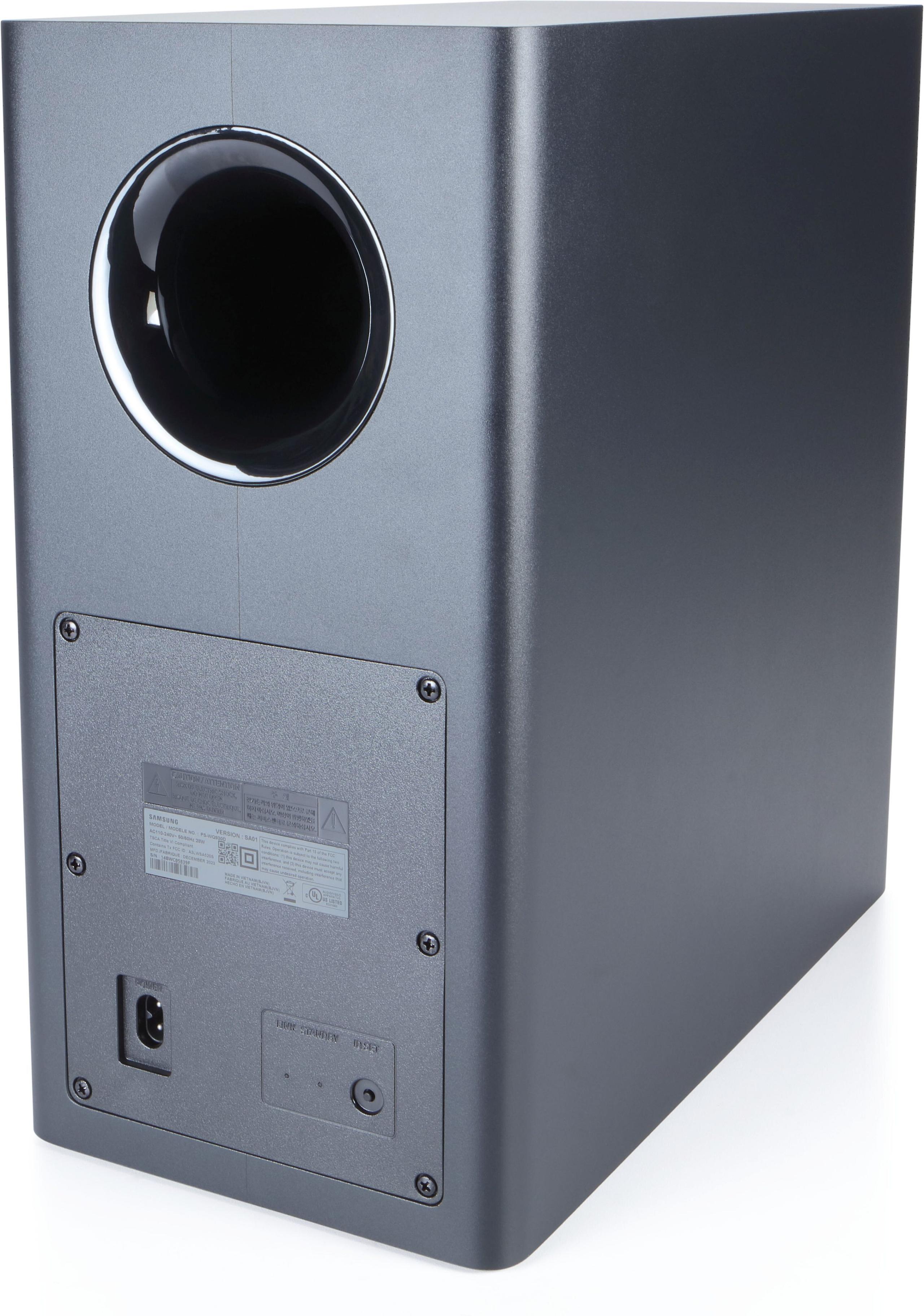
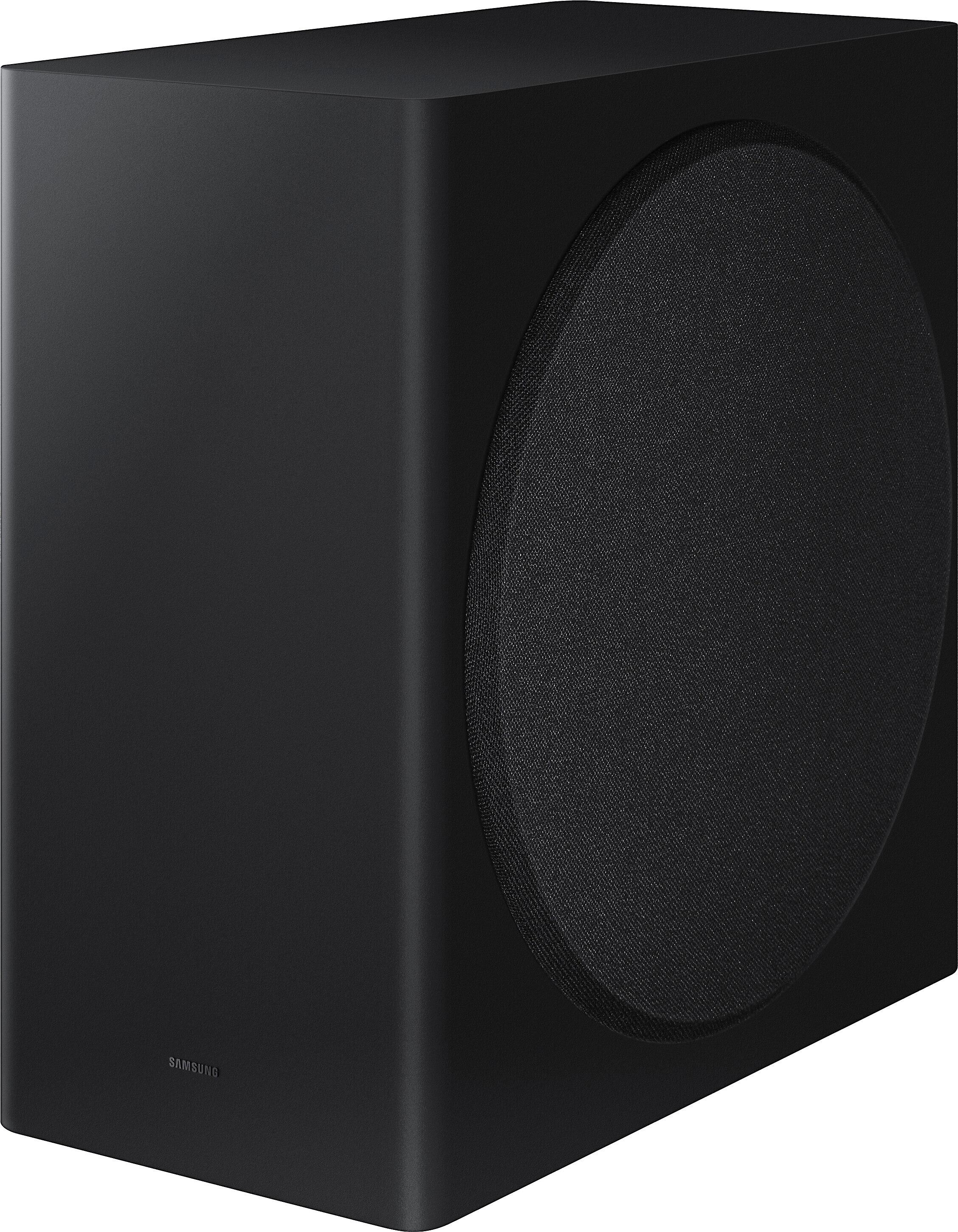
The subwoofer comparison reveals one of the clearest performance differences between these systems. The Samsung HW-Q800D's 8-inch side-firing woofer in a bass-reflex enclosure delivers deeper, more controlled bass than the Ultimea Skywave F40's 6.5-inch equivalent. This matters most during demanding movie soundtracks where deep bass effects need to feel physical rather than just audible.
However, the Ultimea Skywave F40's wired subwoofer connection offers a reliability advantage. Wireless subwoofers can occasionally suffer from dropouts or synchronization issues, especially in homes with crowded wireless networks. The wired approach eliminates these concerns entirely, though at the cost of placement flexibility.
Both systems handle Dolby Atmos height effects, but with different strengths. The Samsung HW-Q800D's more sophisticated processing and room correction create more convincing ceiling bounce effects when the acoustic conditions are right. In rooms with standard 8-9 foot ceilings and minimal sound-absorbing materials, Samsung's implementation can be remarkably effective.
The Ultimea Skywave F40 takes a more straightforward approach with its up-firing drivers, but the inclusion of physical rear speakers creates authentic surround positioning that processing alone cannot match. When sound effects are supposed to come from behind you, having actual speakers there makes an immediate difference that's hard to ignore once you've experienced it.
Neither system excels specifically for gaming, but they handle it differently. The Samsung HW-Q800D includes Game Pro mode, which emphasizes directional audio cues important for competitive gaming. However, the lack of HDMI 2.1 support means missing out on 4K gaming at 120Hz with Variable Refresh Rate (VRR)—features that serious gamers increasingly expect.
The Ultimea Skywave F40 provides better spatial awareness through its physical rear speakers, which can be advantageous for games where positional audio matters. The system's multiple preset modes include gaming-specific tuning, though without the advanced processing of Samsung's dedicated gaming mode.
For dedicated home theater setups, both systems offer compelling but different advantages. The Ultimea Skywave F40 delivers authentic surround sound positioning that's crucial for the cinematic experience. When you're watching movies in a darkened room, having sound effects come from their proper locations enhances immersion in ways that virtual processing struggles to match.
The Samsung HW-Q800D counters with superior dialogue clarity and more sophisticated processing for challenging content. If you frequently watch streaming content with inconsistent audio levels, or if you often view movies at lower volumes to avoid disturbing others, Samsung's advanced processing modes provide real benefits.
The upgrade path consideration becomes important for home theater enthusiasts. Samsung's optional rear speakers integrate seamlessly when you're ready to expand, while the Ultimea Skywave F40 provides complete surround sound immediately but offers limited expansion options.
At the time of writing, the pricing difference between these systems is substantial—the Ultimea Skywave F40 costs roughly one-third the price of the Samsung HW-Q800D. However, direct price comparison doesn't tell the complete story.
To achieve equivalent channel separation with the Samsung HW-Q800D, you'd need to purchase Samsung's rear speaker kit separately, potentially doubling the total system cost. This makes the Ultimea Skywave F40 an exceptional value for buyers wanting complete surround sound without additional investments.
The Samsung HW-Q800D justifies its premium through superior build quality, advanced processing, and ecosystem integration. For Samsung TV owners who plan to use the system for several years, the additional features and performance refinements can justify the higher cost.
Choose the Ultimea Skywave F40 if you want immediate, dramatic improvement over TV audio without future upgrade requirements. It's perfect for smaller to medium-sized rooms where the included components provide adequate performance. The complete surround sound package delivers genuine cinematic immersion at a price point that makes high-quality home theater accessible to budget-conscious buyers.
The Samsung HW-Q800D makes sense for users prioritizing long-term audio quality and ecosystem integration. If you own a compatible Samsung TV, the Q-Symphony benefits alone can justify the premium. It's also the better choice for larger rooms where the superior processing and driver quality become more apparent, and for users who prefer building their system incrementally rather than getting everything upfront.
For serious home theater enthusiasts, the decision often comes down to immediate gratification versus long-term potential. The Ultimea Skywave F40 delivers complete surround sound right out of the box, while the Samsung HW-Q800D provides a premium foundation that can grow with your needs and budget.
Neither system will satisfy users seeking the ultimate in audio performance—that still requires dedicated speakers and proper room treatment. However, both represent significant steps forward in making immersive audio accessible and practical for modern living spaces, just through fundamentally different approaches to achieving that goal.
| Ultimea Skywave F40 Dolby Atmos Soundbar System | Samsung HW-Q800D 5.1.2 Channel Soundbar |
|---|---|
| System Configuration - What's included in the box affects total value | |
| Complete 5.1.2 system: soundbar, subwoofer, and rear speakers included | Soundbar + subwoofer only (rear speakers sold separately) |
| Total Power Output - Higher wattage generally means louder, more dynamic sound | |
| 460W across all components | 360W (160W soundbar + 200W subwoofer) |
| Driver Count - More drivers allow better frequency separation | |
| 8 drivers total across all components | 11 drivers in soundbar and subwoofer |
| Subwoofer Design - Affects bass depth and placement flexibility | |
| 6.5" wired subwoofer (more reliable connection) | 8" wireless side-firing subwoofer (deeper bass, flexible placement) |
| Physical Rear Speakers - Critical for authentic surround sound positioning | |
| Dedicated 2" rear speakers included | Not included (available as separate purchase) |
| Smart Features - App control and room optimization capabilities | |
| Ultimea app with 10-band EQ and 121 presets | SmartThings app, SpaceFit Sound Pro room correction |
| TV Integration - Enhanced performance with compatible TVs | |
| Universal compatibility with any TV brand | Q-Symphony technology with Samsung TVs (2022-2024) |
| Connectivity Options - Determines compatibility with various devices | |
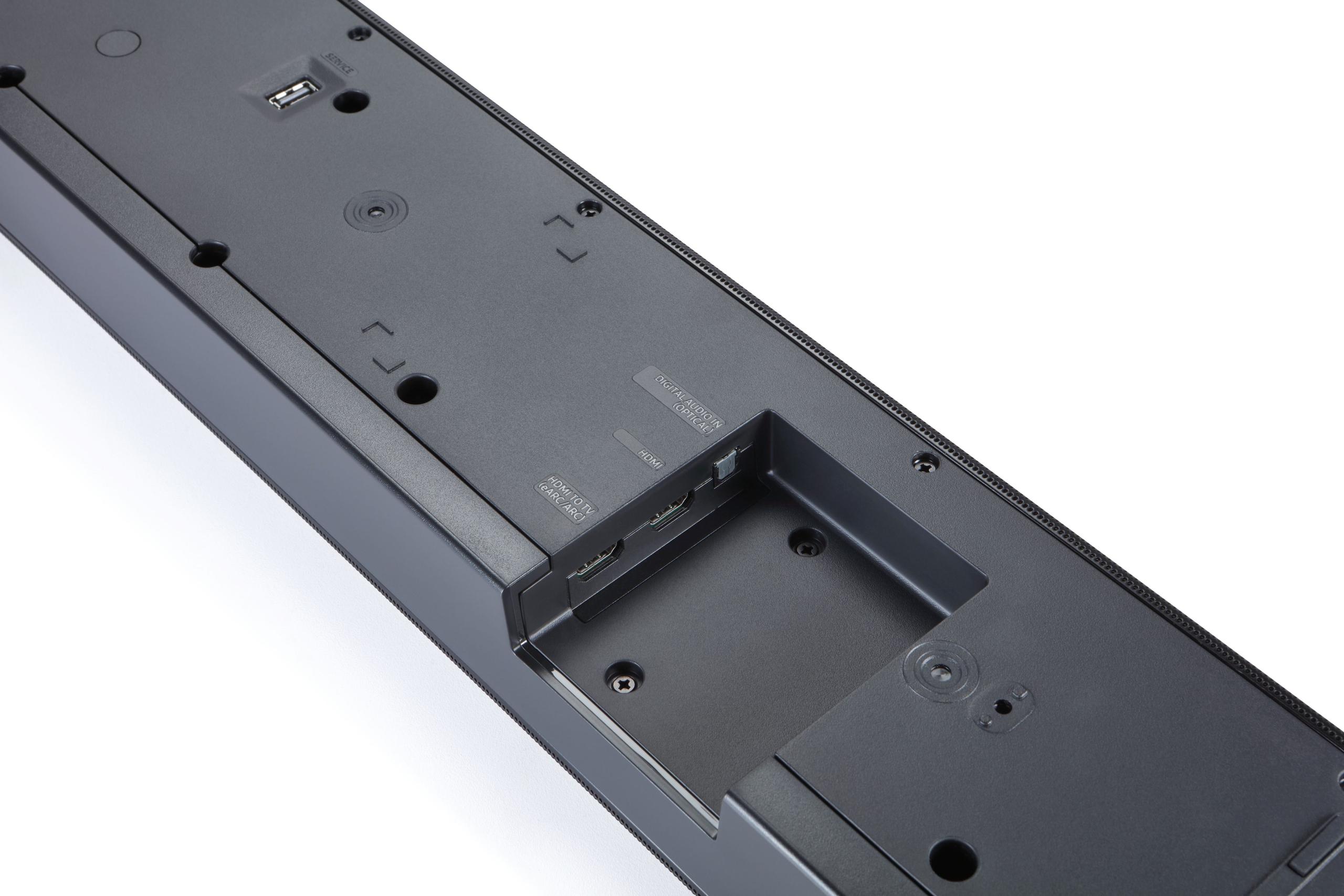
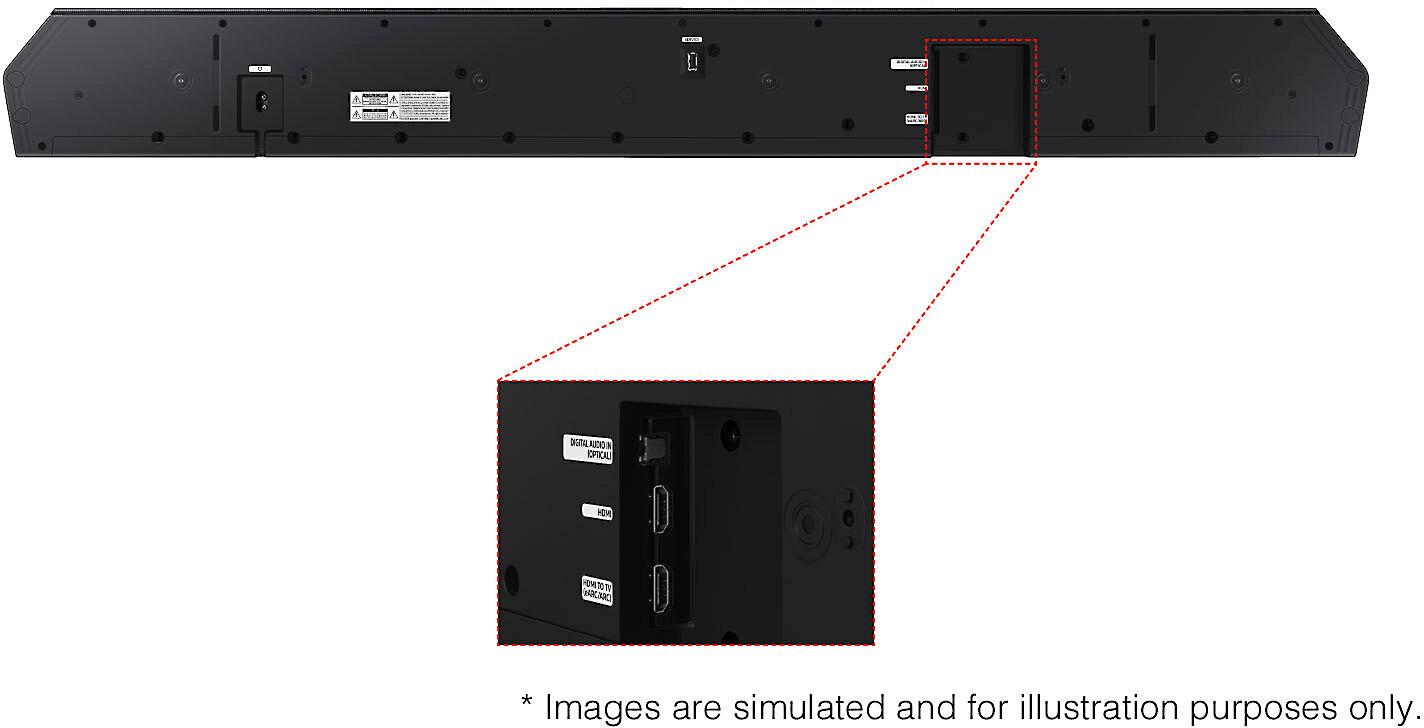
| HDMI eARC, Optical, USB, Bluetooth 5.4 | HDMI eARC (4K/60Hz), Optical, Bluetooth 5.2, no HDMI 2.1 |
| Audio Format Support - Affects compatibility with different content sources | |
| Dolby Atmos, multiple EQ presets | Dolby Atmos, DTS:X, Dolby Digital, DTS HD |
| Target Room Size - Manufacturer recommendations for optimal performance | |
| 20-25 m² (215-269 sq ft) recommended | Larger rooms supported due to higher-quality drivers |
| Setup Complexity - Time and effort required for installation | |
| Plug-and-play with all components included | Simple soundbar setup, but rear speakers require separate purchase and setup |
| Voice Enhancement - Important for dialogue clarity in movies and TV | |
| Voice mode preset available | Active Voice Amplifier (AVA) with real-time dialogue enhancement |
| Upgrade Path - Future expansion possibilities | |
| Complete system with limited expansion options | Premium foundation designed for optional component additions |
The Ultimea Skywave F40 provides exceptional value by including everything needed for complete 5.1.2 surround sound in one package - soundbar, subwoofer, and rear speakers. The Samsung HW-Q800D costs significantly more but offers premium build quality and advanced features. For budget-conscious buyers wanting immediate surround sound, the Ultimea Skywave F40 is hard to beat.
The Ultimea Skywave F40 includes dedicated rear surround speakers in the box, providing authentic surround sound positioning. The Samsung HW-Q800D comes only with the soundbar and subwoofer - rear speakers are sold separately as an optional upgrade, significantly increasing the total system cost.
For home theater, the Ultimea Skywave F40 excels with physical rear speakers that create genuine surround sound immersion. The Samsung HW-Q800D offers superior dialogue clarity and more sophisticated processing but relies on virtual surround effects without the optional rear speakers. Both support Dolby Atmos for overhead sound effects.
The Samsung HW-Q800D features a larger 8-inch wireless subwoofer that delivers deeper, more controlled bass than the Ultimea Skywave F40's 6.5-inch wired subwoofer. However, the wired connection on the Ultimea Skywave F40 ensures more reliable performance without wireless dropouts.
Both soundbars offer straightforward setup, but the Ultimea Skywave F40 provides a complete plug-and-play experience with all components included. The Samsung HW-Q800D setup is simpler initially since it's just two components, but adding rear speakers later requires additional setup and investment.
The Ultimea Skywave F40 works universally with any TV brand through HDMI or optical connections. The Samsung HW-Q800D also works with all TV brands but offers special Q-Symphony integration features only with compatible Samsung TVs from 2022-2024, using both TV and soundbar speakers together.
The Samsung HW-Q800D offers more advanced smart features including SpaceFit Sound Pro room correction and Samsung SmartThings integration. The Ultimea Skywave F40 provides comprehensive app control with a 10-band equalizer and 121 preset sound profiles, focusing on audio customization rather than smart home integration.
The Ultimea Skywave F40 delivers 460W total power across all its components, while the Samsung HW-Q800D provides 360W. However, the Samsung's power is concentrated in fewer, higher-quality drivers, potentially offering better efficiency and sound quality per watt.
Neither soundbar excels specifically for gaming, but they offer different advantages. The Ultimea Skywave F40 provides better spatial awareness through physical rear speakers. The Samsung HW-Q800D includes Game Pro mode for directional audio but lacks HDMI 2.1 support for 4K/120Hz gaming.
Both soundbars support Dolby Atmos with up-firing speakers that bounce sound off the ceiling. The Samsung HW-Q800D offers more sophisticated processing and room correction for potentially better height effects. The Ultimea Skywave F40 provides solid Dolby Atmos performance with the added benefit of authentic rear channel positioning.
The Samsung HW-Q800D is designed as a premium foundation that can be expanded with optional rear speakers and other Samsung audio components. The Ultimea Skywave F40 comes complete out of the box with limited upgrade paths, making it ideal for users who want everything immediately without future investments.
The Ultimea Skywave F40 is recommended for rooms sized 20-25 square meters (215-269 square feet), making it perfect for typical living rooms. The Samsung HW-Q800D can handle larger spaces more effectively due to its higher-quality drivers and more powerful processing, though it works well in smaller rooms too.
We've done our best to create useful and informative comparisons to help you decide what product to buy. Our research uses advanced automated methods to create this comparison and perfection is not possible - please contact us for corrections or questions. These are the sites we've researched in the creation of this article: the-gadgeteer.com - youtube.com - ultimea.com - manuals.plus - youtube.com - ultimea.com - youtube.com - youtube.com - youtube.com - youtube.com - eu.ultimea.com - support.ultimea.com - techradar.com - valueelectronics.com - samsung.com - rtings.com - samsung.com - crutchfield.com - samsung.com - samsung.com - samsung.com - shidirect.com

Privacy Policy
Terms and Conditions - Affiliate Policy
Home Security
© Copyright 2008-2026.
11816 Inwood Rd #1211, Dallas, TX 75244