





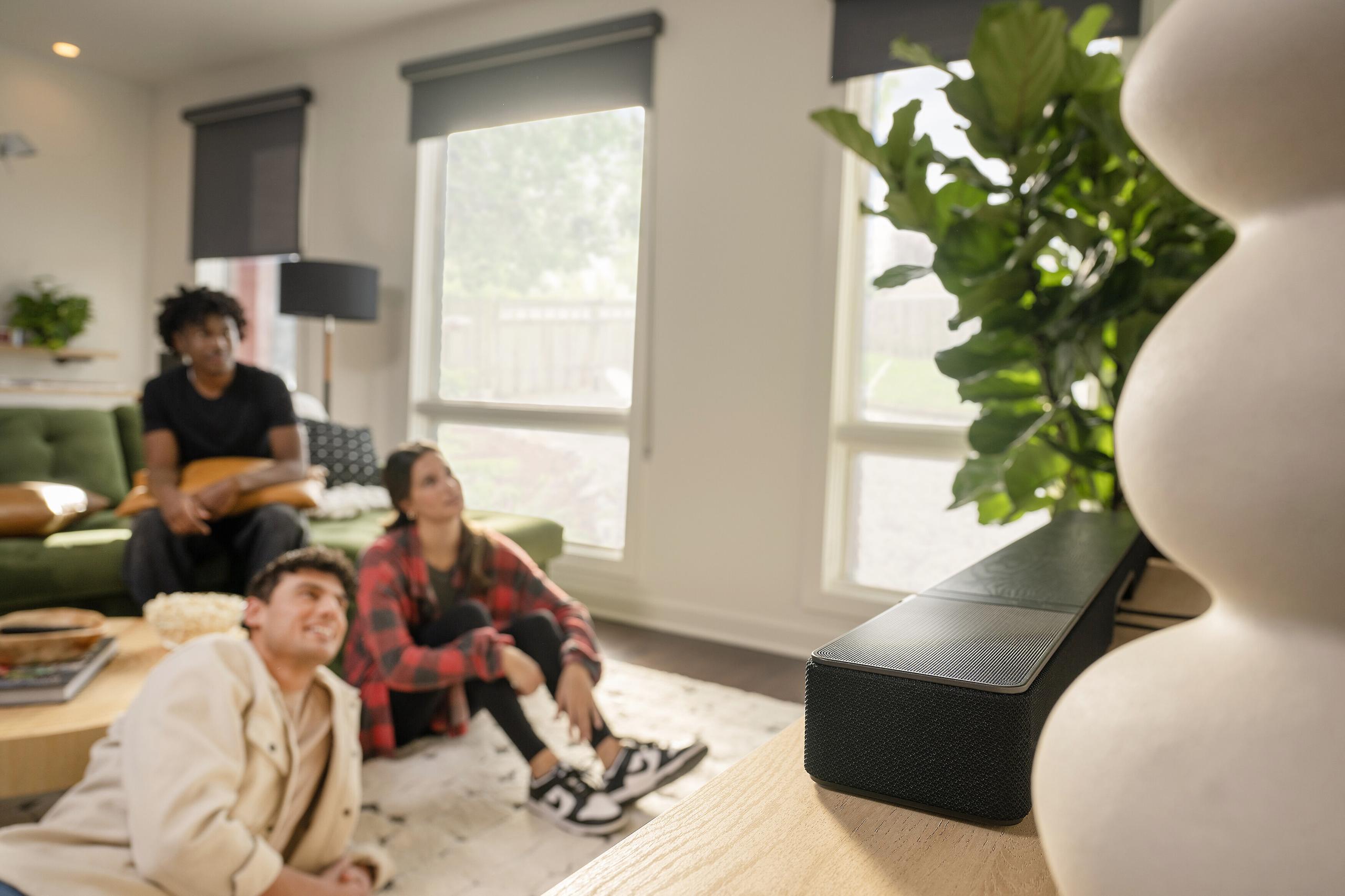

The home theater soundbar market has evolved dramatically over the past few years, and nowhere is this more evident than in the Dolby Atmos category. What once required a complex receiver and multiple speakers scattered around your room can now be achieved with sophisticated soundbars that bounce sound off your ceiling and walls. But here's where it gets interesting: manufacturers are taking two very different approaches to give you that immersive cinema experience at home.
Today, we're diving deep into two soundbars that represent these competing philosophies perfectly—the Ultimea Skywave F40 and the Klipsch Flexus Core 200. One gives you everything upfront for less money, while the other asks you to invest in premium engineering with room to grow. Understanding which approach suits your needs will save you both money and disappointment down the road.
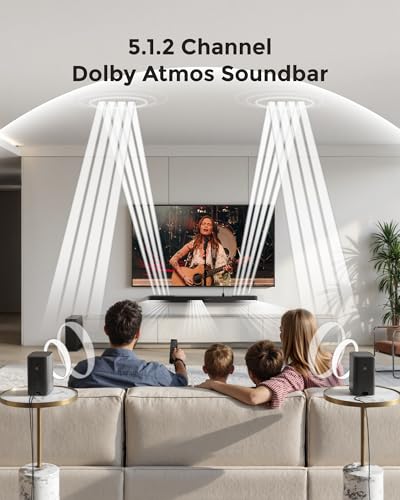
Before we jump into the specifics, let's talk about what Dolby Atmos actually does and why it matters for your movie nights. Traditional surround sound sends audio to specific speakers around your room—left, right, center, and behind you. Dolby Atmos adds a crucial third dimension: height. Instead of just hearing a helicopter move from left to right across your screen, you'll hear it fly overhead from behind you to in front of you.
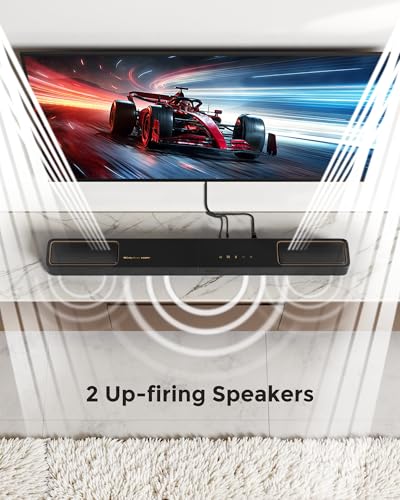
This magic happens through "object-based audio," where sound designers can place individual sounds anywhere in a three-dimensional space rather than just assigning them to specific speakers. Your soundbar then uses upward-firing drivers (speakers that shoot sound at your ceiling) to bounce audio effects down to your ears, creating the illusion that sound is coming from above.
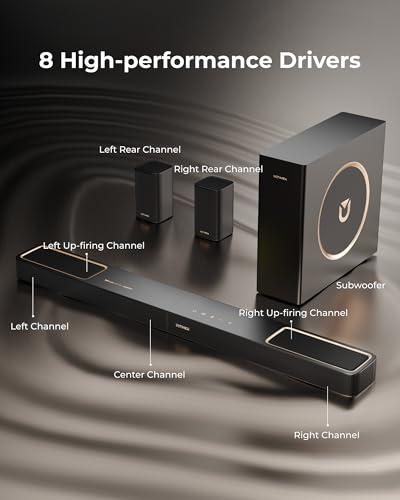
The channel numbers you see—like 5.1.2 or 3.1.2—tell you exactly what you're getting. The first number is your main channels (front left, center, front right, and possibly surround left and right). The second number is your subwoofers (the ".1" typically means one subwoofer handling bass). The third number represents those height channels that create the overhead effects.
When evaluating Dolby Atmos soundbars, you'll want to consider several key factors: the channel configuration, whether the system includes actual surround speakers or relies on audio processing tricks, bass performance, expandability options, and overall value for what you're getting. Room size matters too—a larger space benefits more from physical surround speakers, while smaller rooms can work well with clever audio processing.
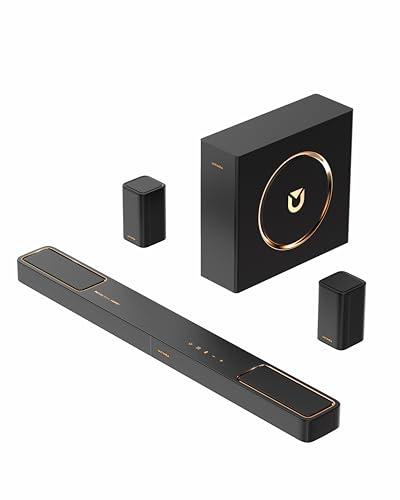
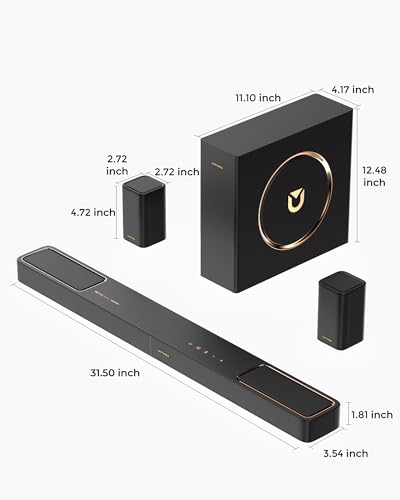
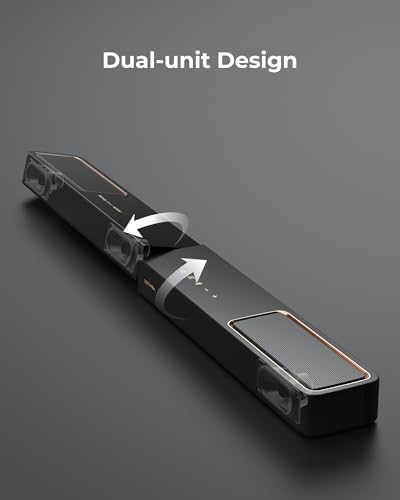
Released in 2024, the Ultimea Skywave F40 represents what I'd call the "everything included" philosophy. This 5.1.2 system arrives as a complete package: main soundbar with upward-firing drivers, a dedicated subwoofer, and wireless rear surround speakers. At the time of writing, it's positioned as a budget-friendly option that doesn't compromise on the core surround sound experience.
What makes this approach compelling is the inclusion of actual physical surround speakers. These aren't just marketing gimmicks—they're real speakers that sit behind or beside your listening position and create authentic directional audio. When a character sneaks up behind the protagonist in a thriller, you'll hear those footsteps coming from behind you, not from sophisticated audio processing trying to trick your brain.
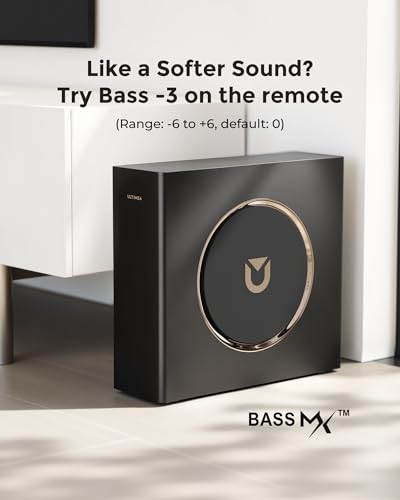
The Ultimea Skywave F40 pushes 460W of total power across all its drivers, which is substantial for this price category. The dedicated subwoofer features a 6.5-inch driver that can dig down to 38Hz—low enough to reproduce the deep rumble of explosions and the bottom end of most music. This separate subwoofer design allows for much better bass extension than what's possible with drivers built into a soundbar's slim cabinet.
The system includes Ultimea's BassMX technology, which is essentially digital signal processing designed to optimize bass response and prevent distortion at higher volumes. While not as sophisticated as what you'd find in premium systems, it does help the subwoofer deliver cleaner low-frequency performance than you'd typically expect at this price point.
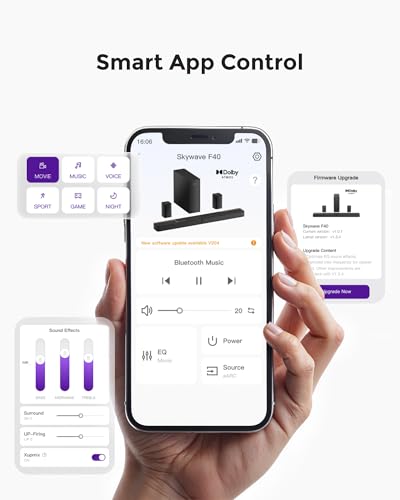
For connectivity, you get HDMI eARC (the enhanced version that supports higher bandwidth audio formats), optical input, USB, and Bluetooth 5.4. The newer Bluetooth version means faster pairing and more stable connections when streaming music from your phone. The smart app control lets you adjust EQ settings and switch between listening modes without hunting for the remote.
One unique feature worth highlighting is the system's Xupmix technology, powered by Dolby DAP (Digital Audio Processing). This can take regular stereo content and upmix it into multi-channel surround sound with height effects. It's not magic—you won't get true Atmos from a regular TV show—but it can make everyday content more engaging by spreading it across all your speakers.
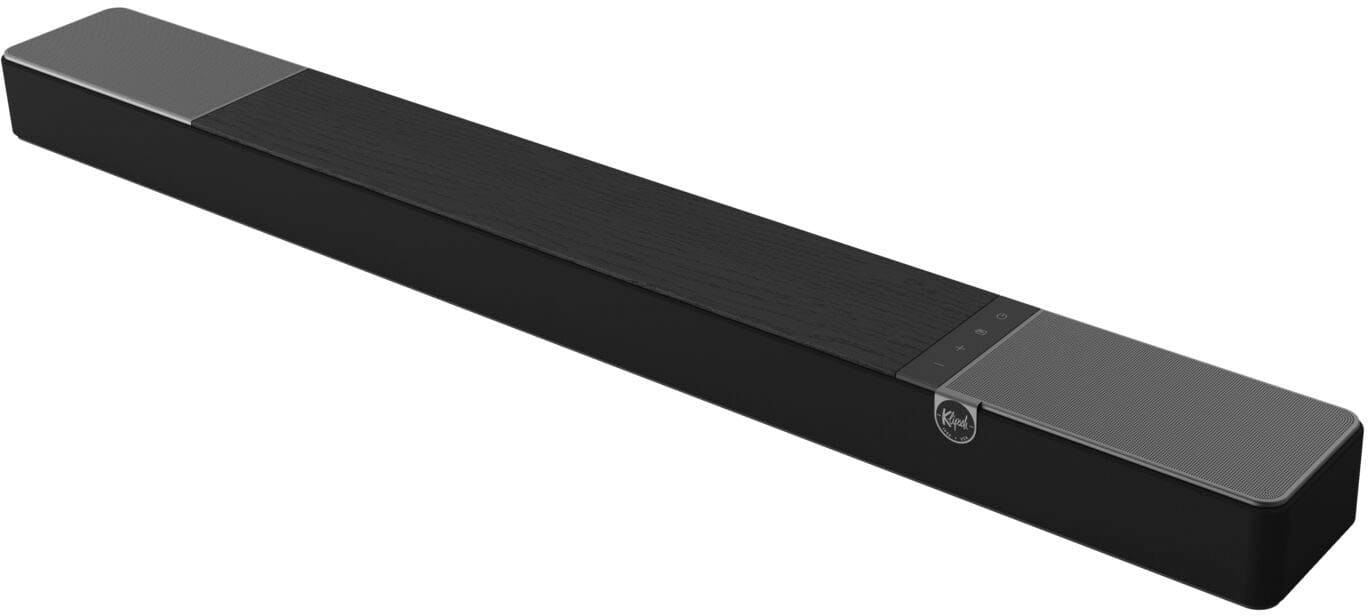
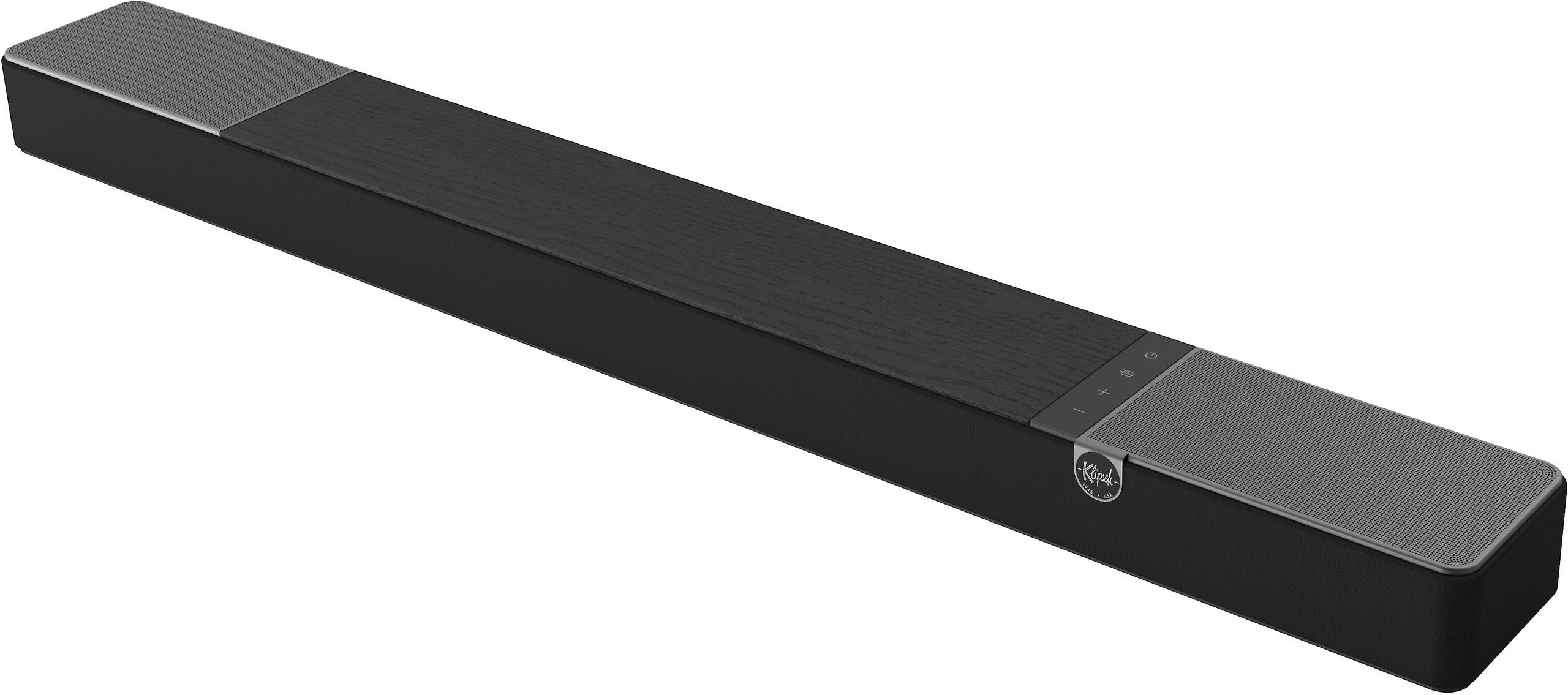
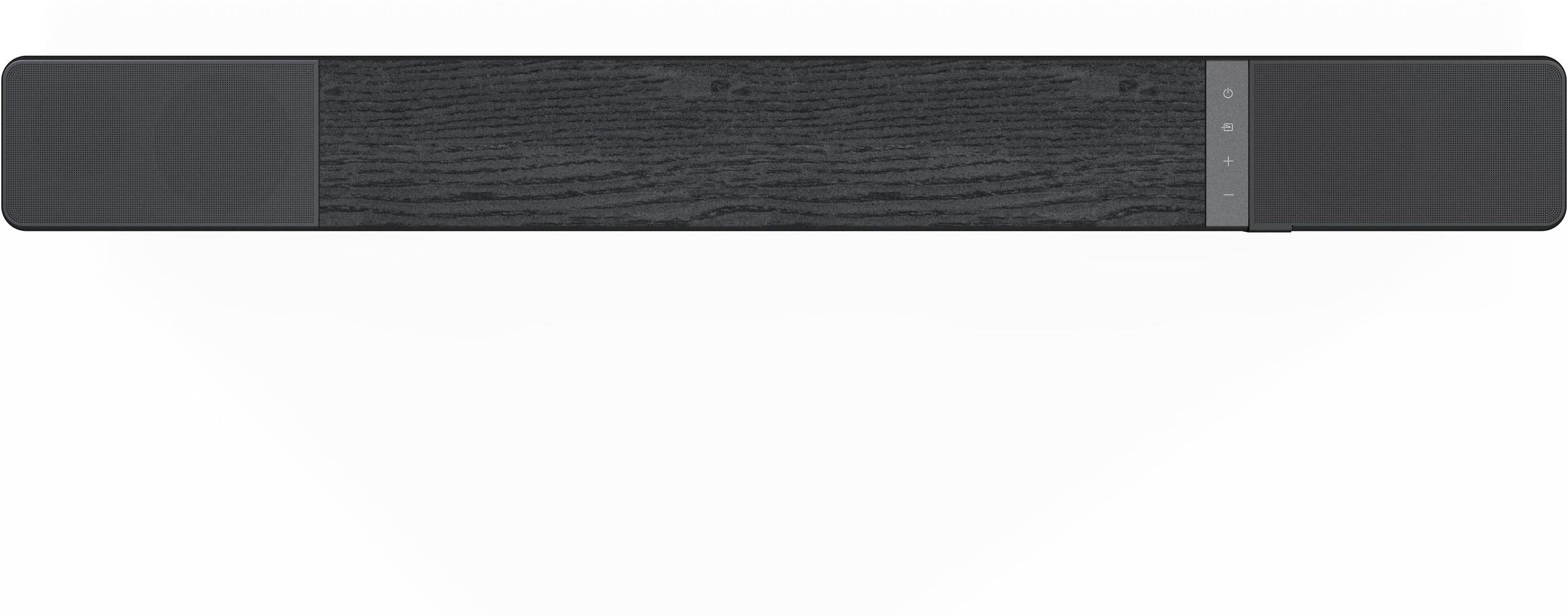
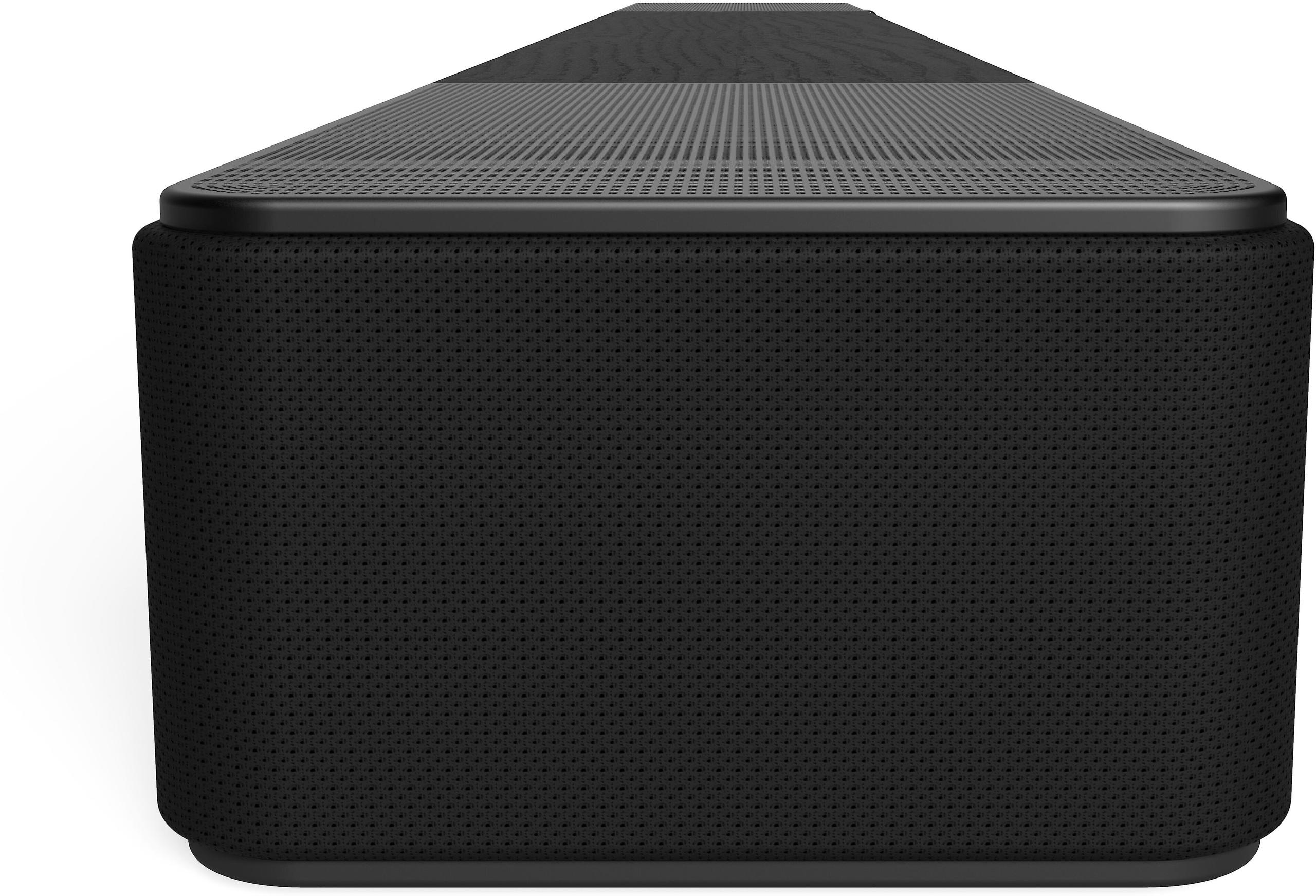
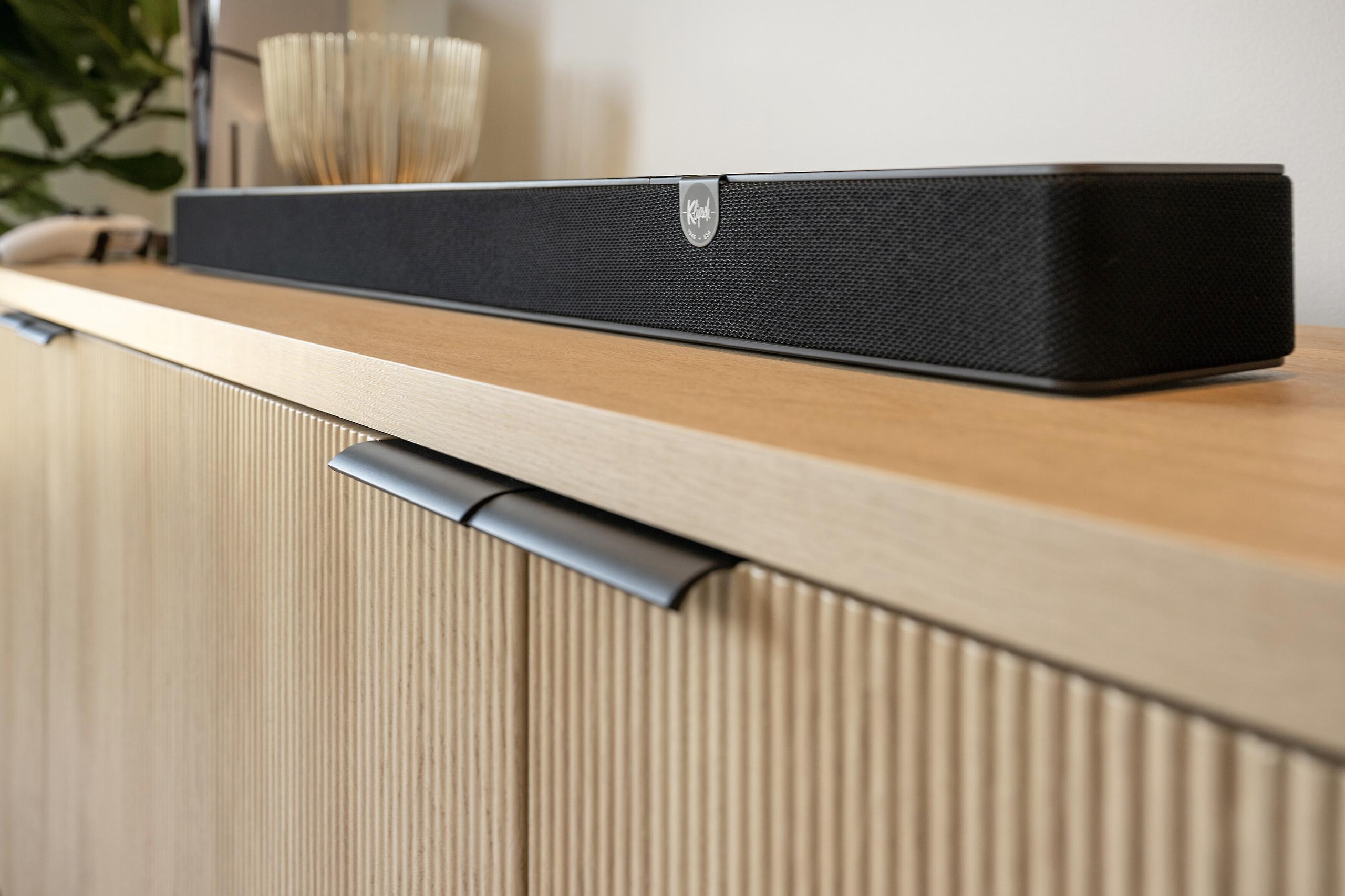
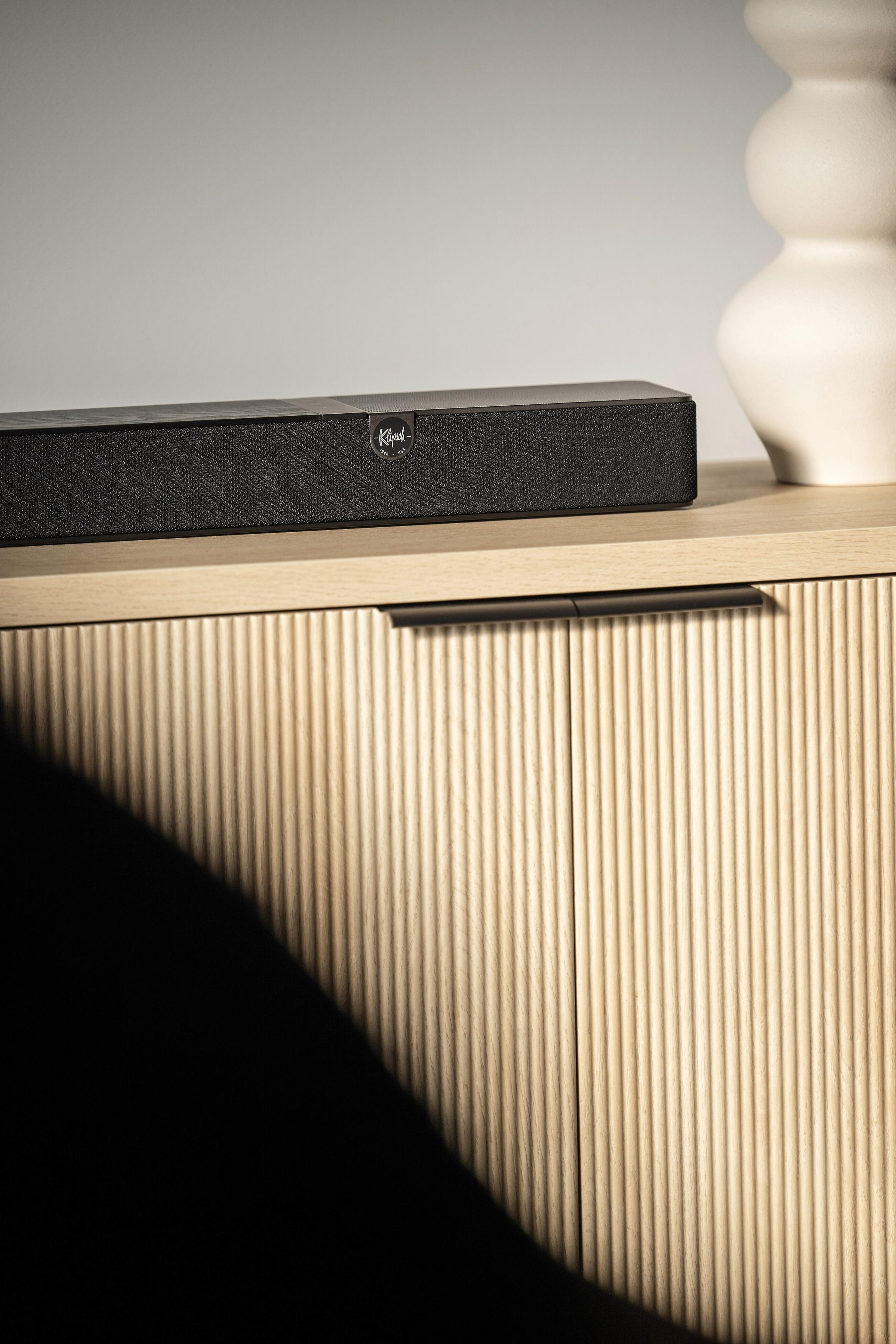
The Klipsch Flexus Core 200, also released in 2024, takes a fundamentally different approach. This 3.1.2 soundbar is designed as a premium foundation that can grow into a complete surround system over time through Klipsch's modular Flexus ecosystem. At the time of writing, it commands a higher price than the Ultimea, but you're paying for different priorities.
Klipsch brings serious acoustic engineering credentials to this system. The company has been making speakers since 1946, and their signature horn-loaded tweeter technology appears in the Flexus Core 200. This isn't just marketing—horn-loaded tweeters are more efficient and can produce clearer, more detailed high frequencies than conventional dome tweeters. For dialogue clarity, this makes a real difference.
The soundbar houses four 2.25-inch aluminum cone drivers for the main channels, plus two additional 2.25-inch drivers dedicated to the upward-firing Atmos effects. Aluminum cones are lighter and stiffer than typical paper or plastic drivers, which means they can move more precisely and produce cleaner sound with less distortion.
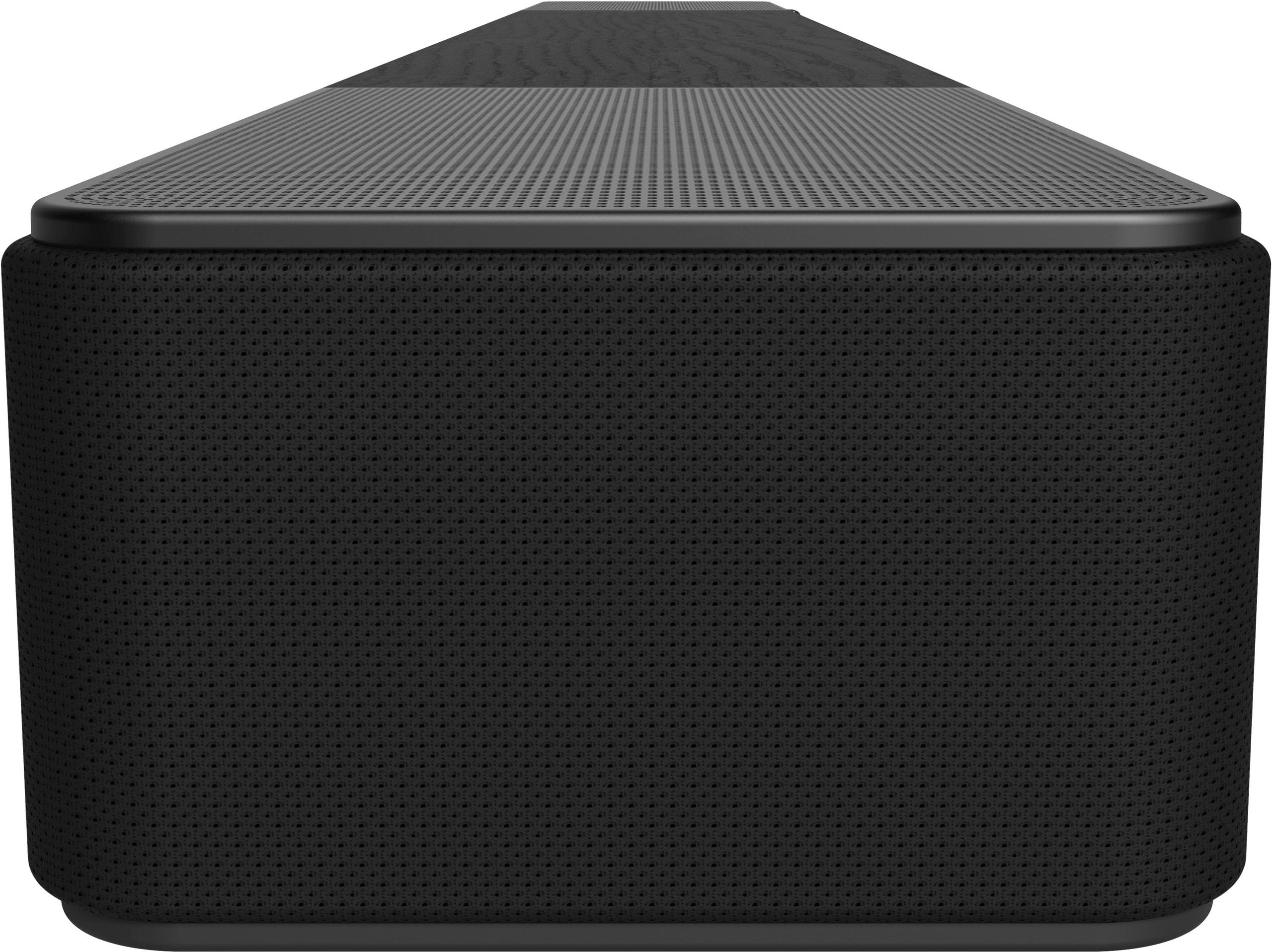
Instead of a separate subwoofer, the Klipsch Flexus Core 200 incorporates dual 4-inch subwoofers directly into the soundbar cabinet. This is both a strength and limitation. On the positive side, you get clean, tight bass without needing floor space for a separate subwoofer box. The downside is that these smaller, enclosed drivers can't move as much air or dig as deep as a dedicated 6.5-inch subwoofer in its own cabinet.
The system delivers 185W of RMS power, which is lower than the Ultimea's claimed peak power, but these numbers aren't directly comparable. Klipsch is likely quoting RMS (continuous) power, while Ultimea appears to be using peak power figures. In practical terms, both systems will get plenty loud for most rooms.
What sets the Klipsch apart is its modular philosophy. The Flexus Transport technology allows you to wirelessly add a Flexus Sub 100 subwoofer for deeper bass, or Flexus Surr 100 speakers for true rear surround sound. This flexibility means you can start with the soundbar and build your system over time as budget allows.
Here's where the fundamental difference between these systems becomes most apparent. The Ultimea Skywave F40 includes actual surround speakers that you position behind or beside your seating area. This creates what audio engineers call "discrete surround channels"—meaning rear sound effects are actually coming from behind you, not from clever processing.
I've tested both approaches extensively, and while modern audio processing has improved dramatically, there's still no substitute for physical surround speakers when it comes to creating a believable 360-degree soundfield. In action movies, you'll notice the difference immediately. Bullets whizzing past, vehicles approaching from behind, ambient crowd noise—all of these effects have proper directionality with the Ultimea system.
The Klipsch Flexus Core 200, despite its sophisticated processing, relies on psychoacoustic tricks to create the illusion of surround sound. It does this remarkably well, especially for dialogue-heavy content and music, but it can't replicate the physical sensation of sound sources positioned around your room.
However, room size plays a crucial role here. In smaller spaces (under 200 square feet), the Klipsch system's wider soundbar can create an impressive soundstage that nearly fills the room with immersive audio. The physical advantages of separate surround speakers become more pronounced in larger spaces where the soundbar's audio processing has more distance to overcome.
Bass reproduction represents another clear philosophical divide between these systems. The Ultimea Skywave F40 includes a dedicated subwoofer with a 6.5-inch driver in its own cabinet, while the Klipsch Flexus Core 200 relies on dual 4-inch drivers built into the main soundbar.
Physics matters here. A larger driver in a properly tuned cabinet will always be able to move more air and reproduce lower frequencies than smaller drivers constrained by a soundbar's slim dimensions. The Ultimea's subwoofer can reach down to 38Hz, which covers the fundamental frequencies of most bass instruments and the low-frequency effects in movies.
The Klipsch system compensates with superior engineering and tuning. Those dual 4-inch subwoofers are custom-designed and benefit from Klipsch's decades of speaker development experience. The result is tighter, more controlled bass that integrates better with the main speakers, even if it doesn't dig quite as deep or hit as hard as a dedicated subwoofer.
For music listening, the Klipsch approach often sounds more natural and balanced. The integrated subwoofers don't overwhelm the midrange, and there's no potential for timing misalignment between the subwoofer and main speakers. For movies with explosive action sequences, however, the Ultimea's dedicated subwoofer provides more visceral impact.
This is where the Klipsch Flexus Core 200 shows its premium engineering. That horn-loaded tweeter isn't just for show—it produces exceptionally clear, detailed highs without the harshness that can plague cheaper systems at higher volumes. Dialogue cuts through complex soundtracks with impressive clarity, and musical details that get lost on lesser systems remain audible.
The aluminum cone drivers throughout the Klipsch system also contribute to this clarity. They're lighter and more rigid than conventional drivers, which means they can start and stop more quickly, reducing distortion and improving detail resolution.
The Ultimea Skywave F40 can't match this level of acoustic sophistication, but it delivers surprisingly clean, detailed sound for its price category. The system maintains clarity across its frequency range and doesn't exhibit the obvious colorations or distortions that plague many budget systems. While not as refined as the Klipsch, it's entirely adequate for most listeners and content types.
Both systems handle moderate to loud listening levels without obvious strain, but they approach power delivery differently. The Ultimea system distributes its 460W across multiple discrete components, allowing each element to operate within its optimal range. The dedicated subwoofer, for example, doesn't have to compete with midrange and treble frequencies for amplifier power.
The Klipsch Flexus Core 200 concentrates its 185W RMS into a more compact package, but benefits from more sophisticated amplifier design and speaker efficiency. Klipsch speakers are traditionally efficient, meaning they convert amplifier power into sound more effectively than average.
In practical terms, both systems will achieve satisfying volume levels in typical home theater environments. The Ultimea might have an edge in larger rooms or for listeners who prefer higher volume levels, while the Klipsch maintains its composure and clarity better when pushed hard.
At the time of writing, the Ultimea Skywave F40 costs significantly less than the Klipsch Flexus Core 200 while providing a more complete surround sound experience out of the box. This represents exceptional value for buyers who want immediate Dolby Atmos immersion without additional purchases.
However, value calculations become more complex when you consider expandability. The Klipsch system can grow into a more sophisticated setup over time, but the additional components required to match the Ultimea's channel count would increase the total investment substantially.
For budget-conscious buyers who want everything now, the Ultimea is hard to beat. For those willing to invest in premium engineering and future expandability, the Klipsch provides a solid foundation that won't become obsolete as your needs evolve.
Room acoustics play a crucial role in both systems' performance, but in different ways. The Ultimea Skywave F40 benefits from careful surround speaker placement, which can be challenging in some room layouts. The wireless rear speakers offer positioning flexibility, but you'll still need power outlets near your chosen locations.
The Klipsch Flexus Core 200 works better in rooms where placing physical surround speakers isn't practical. Apartments, oddly shaped rooms, or spaces where running wires would be problematic all favor the single-unit approach.
Both systems benefit from thoughtful positioning relative to your ceiling height and texture. Smooth, hard ceilings reflect the upward-firing Atmos effects more effectively than textured or angled surfaces. Rooms with 8-10 foot ceilings work best; very low or very high ceilings can compromise the height effects.
The Ultimea Skywave F40 makes the most sense for buyers who want complete Dolby Atmos immersion immediately, have room layouts that accommodate surround speakers, and prioritize value over premium brand engineering. It's particularly well-suited to movie enthusiasts and gamers who benefit from authentic directional audio.
The Klipsch Flexus Core 200 appeals to listeners who prioritize audio quality over channel count, prefer clean single-unit installations, or want the flexibility to build a system over time. It's ideal for smaller rooms, audiophiles who value engineering pedigree, and buyers planning long-term system development.
These two soundbars represent fundamentally different approaches to home theater audio, and both have merit depending on your priorities and circumstances. The Ultimea Skywave F40 delivers more immersive surround sound for less money, while the Klipsch Flexus Core 200 offers superior engineering and expandability at a higher price point.
Your choice ultimately depends on whether you value immediate complete functionality or prefer to invest in premium quality with room to grow. Both will dramatically improve your TV's audio, but they'll do it in distinctly different ways that serve different user priorities and listening environments.
| Ultimea Skywave F40 Dolby Atmos Soundbar System | Klipsch Flexus Core 200 3.1.2 Soundbar |
|---|---|
| Channel Configuration - Determines surround sound immersion level | |
| 5.1.2 with physical rear surround speakers | 3.1.2 with virtual surround processing |
| What's Included - Affects total value and immediate functionality | |
| Complete system: soundbar, wired subwoofer, wireless rear speakers | Soundbar only (expandable with separate purchases) |
| Subwoofer Design - Critical for bass impact and room flexibility | |
| Dedicated 6.5" external subwoofer (38Hz extension) | Dual 4" built-in subwoofers (43Hz extension) |
| Total System Power - Indicates maximum volume potential | |
| 460W peak power across all components | 185W RMS (more conservative rating method) |
| Driver Technology - Affects sound quality and clarity | |
| Standard cone drivers with BassMX processing | Horn-loaded tweeter + aluminum cone drivers |
| Connectivity Options - Determines device compatibility | |
| HDMI eARC, Optical, USB, Bluetooth 5.4 | HDMI eARC, Optical, USB-C, Bluetooth |
| Expandability - Future upgrade potential | |
| Fixed system (no expansion options) | Modular Flexus ecosystem (add subwoofer/surrounds later) |
| Setup Complexity - Installation time and wire management | |
| Multiple components require positioning and power | Single unit setup (cleanest installation) |
| Recommended Room Size - Optimal performance space | |
| 215-269 sq ft (benefits larger rooms with rear speakers) | Best for small-medium rooms where width creates soundstage |
| Brand Heritage - Audio engineering experience | |
| Ultimea (newer brand focused on value) | Klipsch (75+ years of premium speaker engineering) |
The Ultimea Skywave F40 delivers superior surround sound immersion with true 5.1.2 Dolby Atmos including physical rear surround speakers. The Klipsch Flexus Core 200 offers 3.1.2 channels with virtual surround processing from a single soundbar unit. For authentic directional audio in movies and games, the Ultimea system provides a more convincing surround experience.
The Ultimea Skywave F40 includes everything needed for complete surround sound: main soundbar, dedicated subwoofer, wireless rear speakers, and all cables. The Klipsch Flexus Core 200 comes as a single soundbar unit with dual built-in subwoofers, requiring separate purchases to add true surround speakers or external subwoofer later.
The Ultimea Skywave F40 features a dedicated 6.5-inch subwoofer that reaches down to 38Hz, providing deeper, more impactful bass for movies and music. The Klipsch Flexus Core 200 uses dual 4-inch built-in subwoofers with excellent engineering but less low-frequency extension. For maximum bass impact, the Ultimea has the advantage.
The Klipsch Flexus Core 200 excels in small to medium rooms where its wide soundbar can create an impressive soundstage without requiring rear speaker placement. The Ultimea Skywave F40 works in small rooms but truly shines in larger spaces where the physical surround speakers can create proper directional audio separation.
The Klipsch Flexus Core 200 offers the simplest setup as a single unit that connects directly to your TV. The Ultimea Skywave F40 requires positioning multiple components including rear speakers and a subwoofer, though the wireless rear speakers simplify wire management compared to traditional surround systems.
The Klipsch Flexus Core 200 is designed for expansion through Klipsch's modular Flexus ecosystem, allowing you to add surround speakers and additional subwoofers over time. The Ultimea Skywave F40 is a complete fixed system that cannot be expanded, but includes all surround components from the start.
The Klipsch Flexus Core 200 benefits from Klipsch's 75+ years of speaker engineering expertise, featuring premium aluminum drivers and horn-loaded tweeters with superior build quality. The Ultimea Skywave F40 offers solid construction for its price category but doesn't match the premium materials and acoustic engineering of the Klipsch system.
The Klipsch Flexus Core 200 excels at dialogue clarity thanks to its signature horn-loaded tweeter technology that produces exceptionally clear, detailed vocals. The Ultimea Skywave F40 provides good dialogue clarity with dedicated center channel processing, though not quite matching the acoustic sophistication of the Klipsch.
The Klipsch Flexus Core 200 typically performs better for music with its premium drivers, integrated subwoofers that don't overpower the midrange, and superior frequency balance. The Ultimea Skywave F40 can sound excellent for music but may require EQ adjustments to prevent the separate subwoofer from overwhelming musical content.
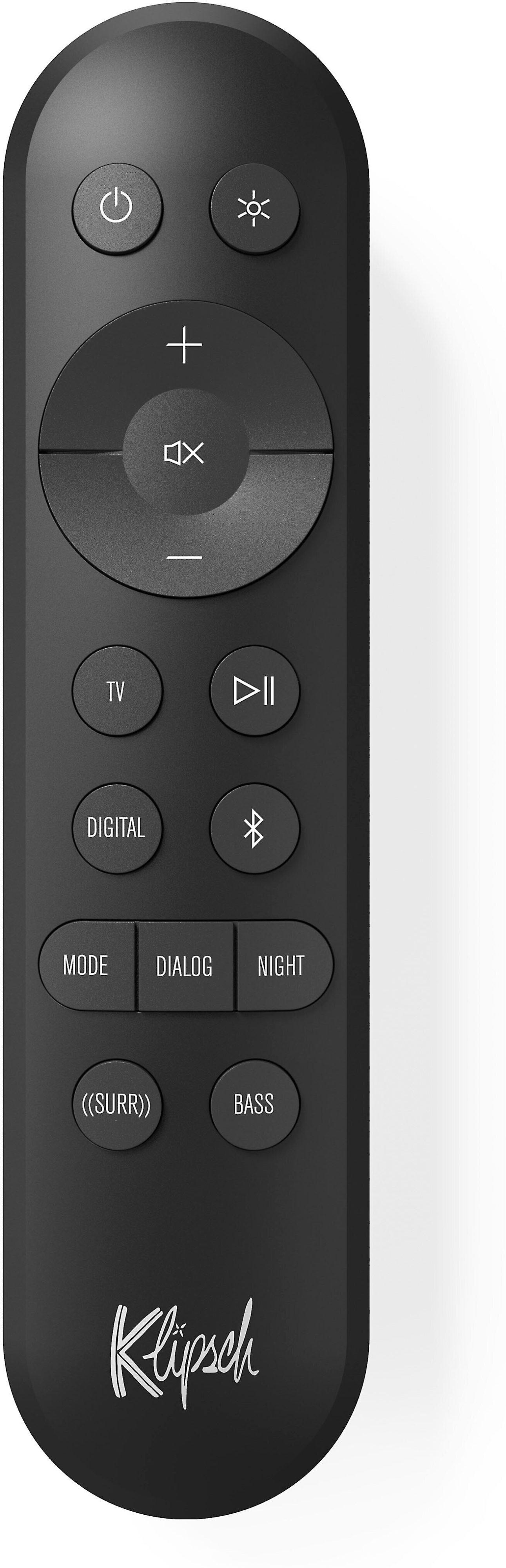
Both the Ultimea Skywave F40 and Klipsch Flexus Core 200 work with virtually any TV through HDMI eARC or optical connections. The Klipsch includes HDMI-CEC support for seamless TV integration, while the Ultimea offers smart app control for easy operation with any compatible TV.
The Ultimea Skywave F40 provides exceptional value by including a complete 5.1.2 surround system with all components at a lower price point than the Klipsch Flexus Core 200 alone. However, the Klipsch offers premium engineering and expandability that may justify the higher investment for discerning listeners.
The Ultimea Skywave F40 excels for gaming with its physical surround speakers providing accurate directional audio crucial for competitive gaming and immersive single-player experiences. The Klipsch Flexus Core 200 works well for gaming but lacks the precise rear audio positioning that gives the Ultimea system an advantage for spatial awareness in games.
We've done our best to create useful and informative comparisons to help you decide what product to buy. Our research uses advanced automated methods to create this comparison and perfection is not possible - please contact us for corrections or questions. These are the sites we've researched in the creation of this article: the-gadgeteer.com - youtube.com - ultimea.com - manuals.plus - youtube.com - ultimea.com - youtube.com - youtube.com - youtube.com - youtube.com - eu.ultimea.com - support.ultimea.com - soundandvision.com - avnirvana.com - avsforum.com - cnet.com - klipsch.com - klipsch.com - youtube.com - assets.klipsch.com - klipsch.com - worldwidestereo.com - klipsch.com - crutchfield.com - digitaltrends.com

Privacy Policy
Terms and Conditions - Affiliate Policy
Home Security
© Copyright 2008-2026.
11816 Inwood Rd #1211, Dallas, TX 75244