



If you've ever found yourself cranking up the volume just to understand dialogue in movies, or felt like explosions in action films sound more like gentle taps, you're not alone. TV speakers have gotten worse as TVs have gotten thinner, creating a massive opportunity for soundbars to transform your viewing experience. But with so many options available, choosing between different approaches can feel overwhelming.
Today we're diving deep into two soundbars that represent fundamentally different philosophies in home theater audio: the Ultimea Skywave F40 and the JBL Bar 5.1 Surround. One prioritizes cutting-edge audio technology at a budget price, while the other focuses on premium streaming features and brand reliability. Understanding which approach fits your needs will help you make the right choice for your living room.
The soundbar market has evolved dramatically over the past few years, particularly since major streaming services began supporting advanced audio formats around 2018-2019. We're now seeing two distinct categories emerge: traditional 5.1 systems and newer Dolby Atmos systems.
Traditional 5.1 surround sound creates an envelope of audio around you using five discrete channels—left, right, center, and two surround channels—plus a subwoofer (that's the ".1" part) for deep bass. This horizontal plane of sound works well for most content and has been the home theater standard for decades.
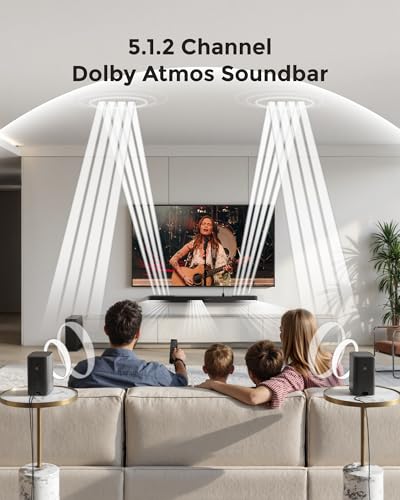
Dolby Atmos, introduced to consumer products around 2014 but becoming mainstream in soundbars after 2018, adds a vertical dimension. The ".2" or ".4" designations in channel configurations like 5.1.2 refer to height channels that bounce sound off your ceiling to create overhead effects. When a helicopter flies across the screen in a movie, you'll actually hear it pass above your head rather than just moving left to right.
The key considerations when choosing between these approaches involve your room setup, content preferences, and budget. Height-based audio requires adequate ceiling height and proper room acoustics to work effectively, while traditional surround systems are more forgiving of room limitations.
Released in 2024, the Ultimea Skywave F40 represents something relatively rare in the soundbar world: a true Dolby Atmos system at a genuinely affordable price point. At the time of writing, it costs significantly less than most competitors while including features typically found in much more expensive systems.
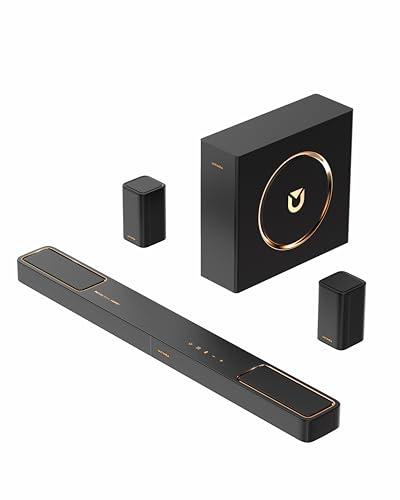
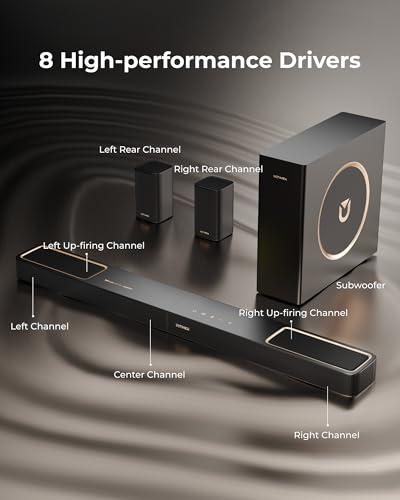
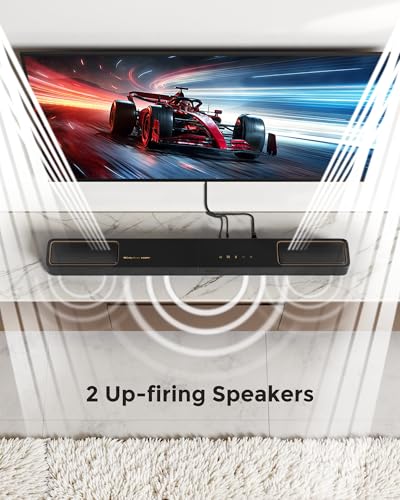
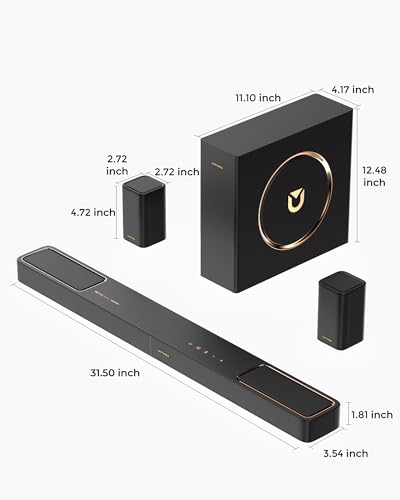
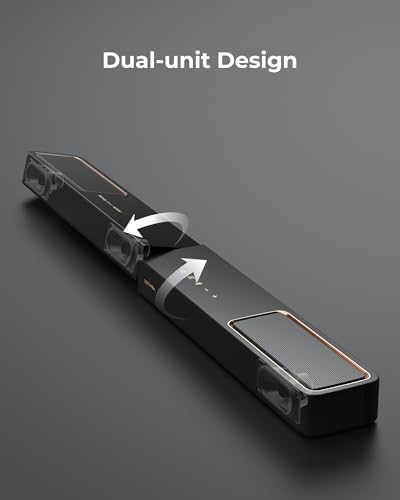
This system takes a maximalist approach to home theater audio. You get a soundbar that splits into two sections for shipping, two dedicated rear surround speakers, and a wired subwoofer. The soundbar itself contains upfiring drivers—specialized speakers that point toward the ceiling to create height effects. This 5.1.2 configuration means you're getting all five traditional surround channels plus two height channels for overhead audio.
The build approach is pragmatic rather than premium. The rear speakers connect to each other and then wire back to the main soundbar, reducing some cable clutter while ensuring reliable connections. The subwoofer uses a traditional wired connection, which some might see as old-fashioned but guarantees consistent performance without wireless dropouts.
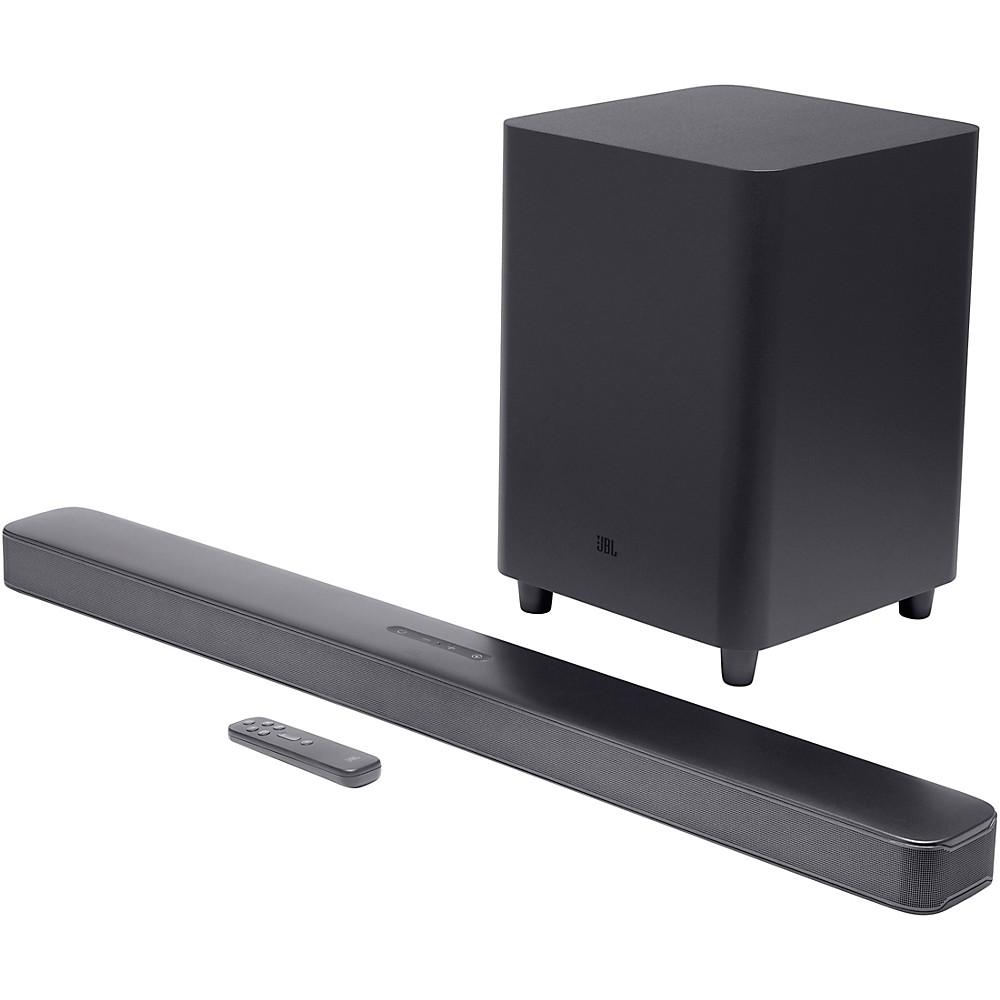
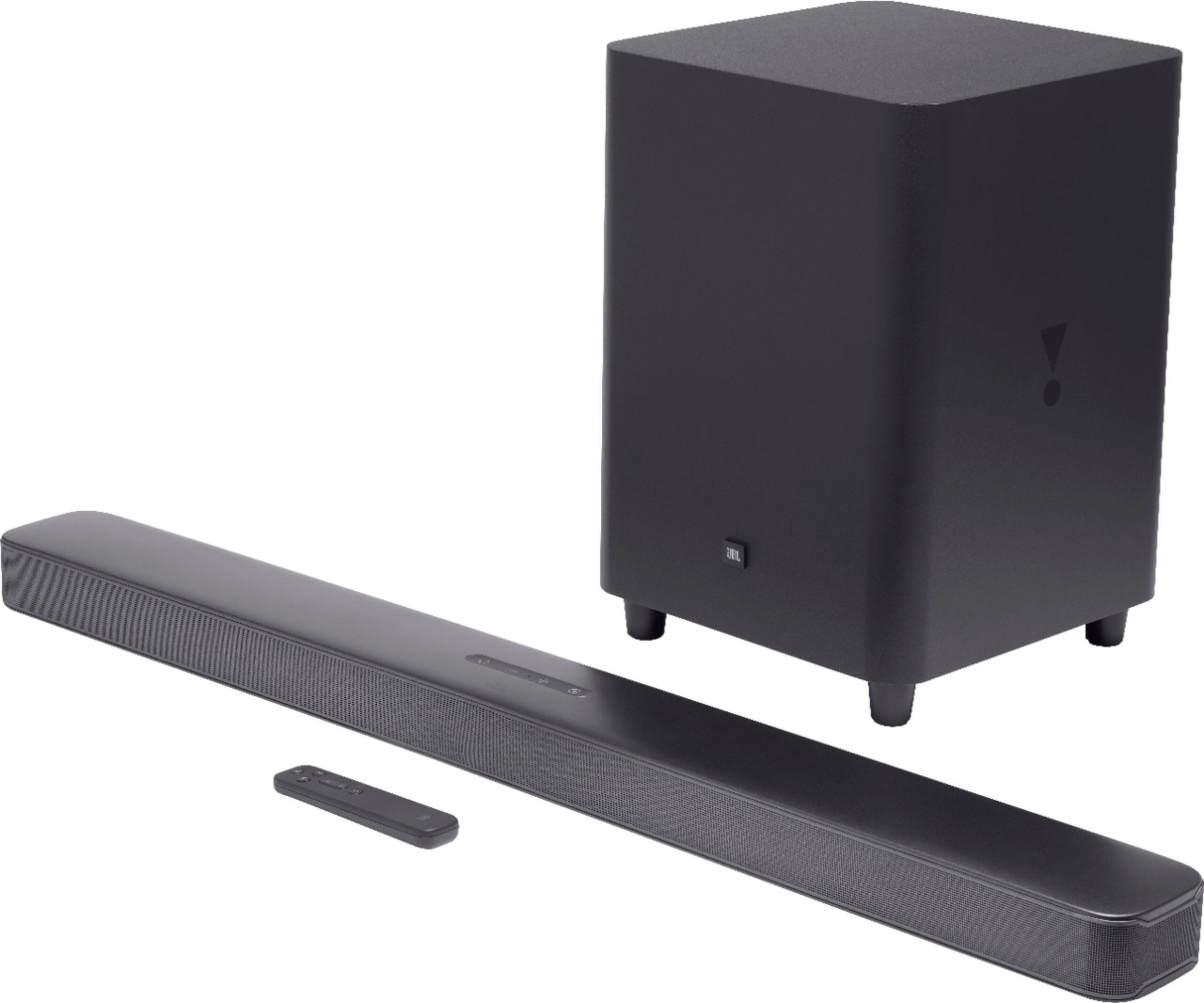
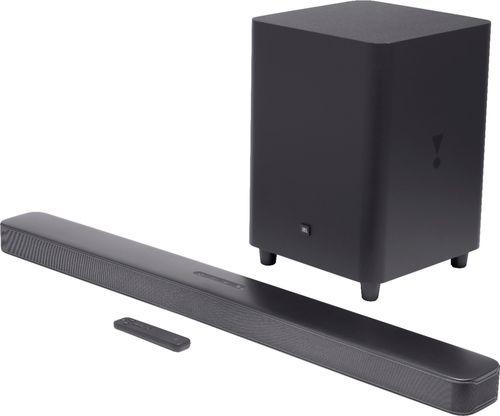
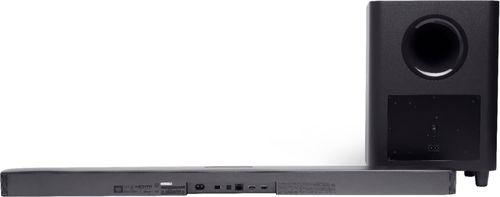
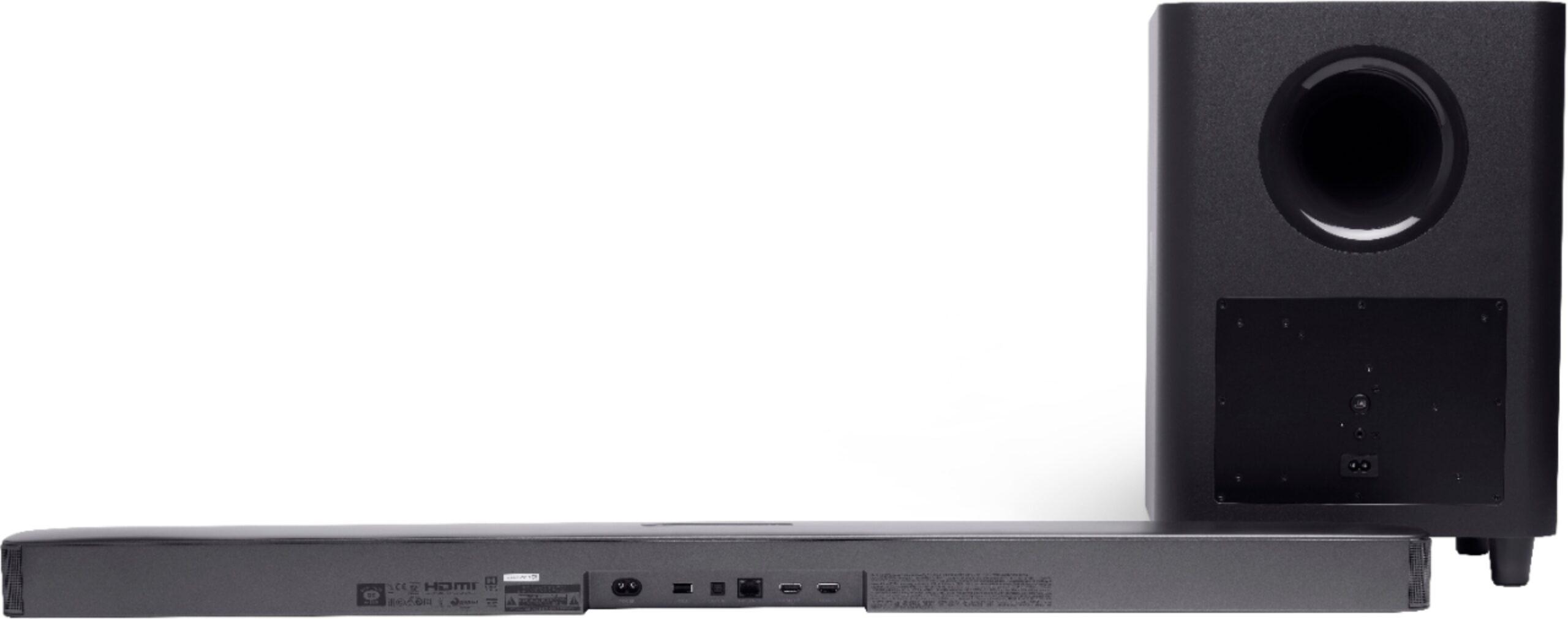
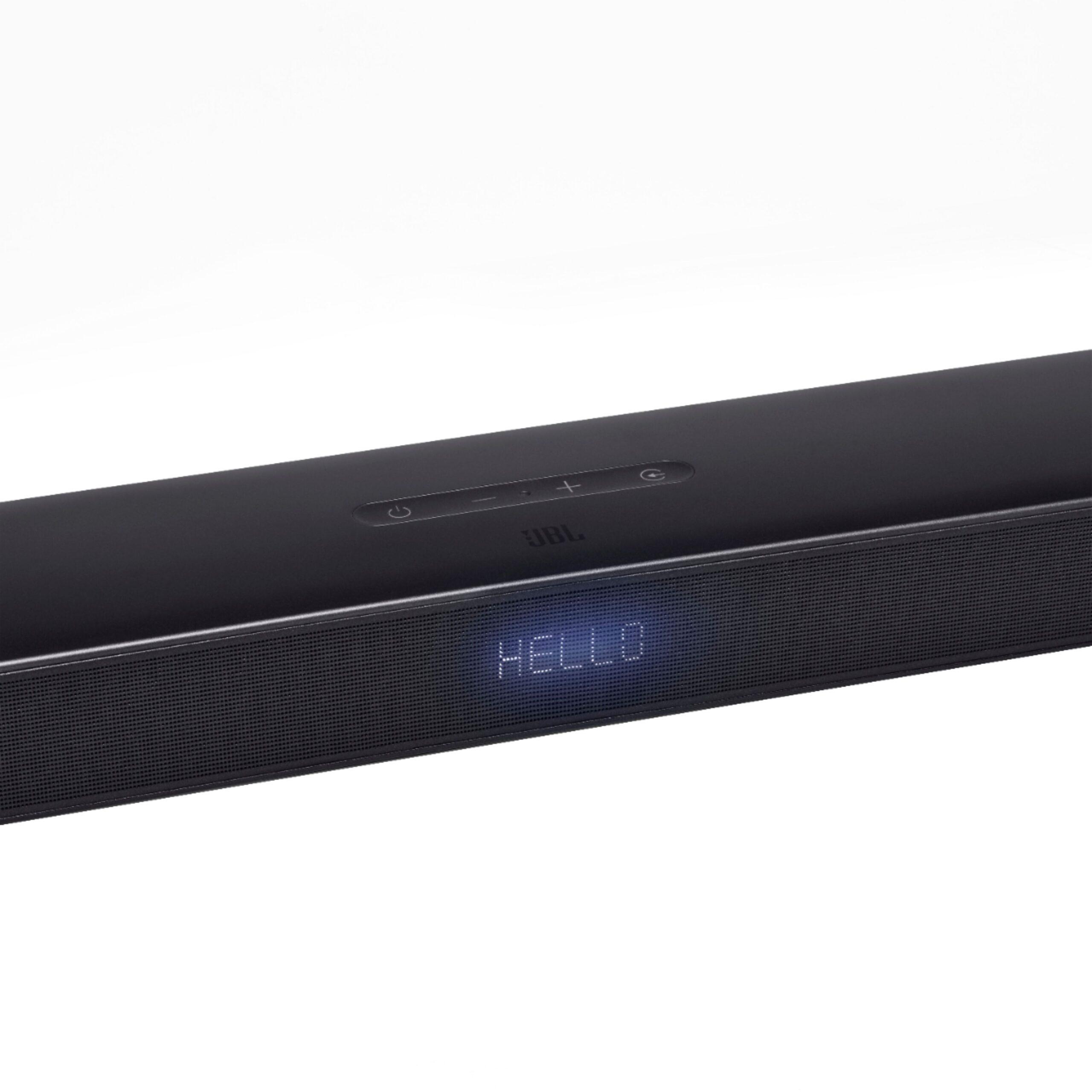
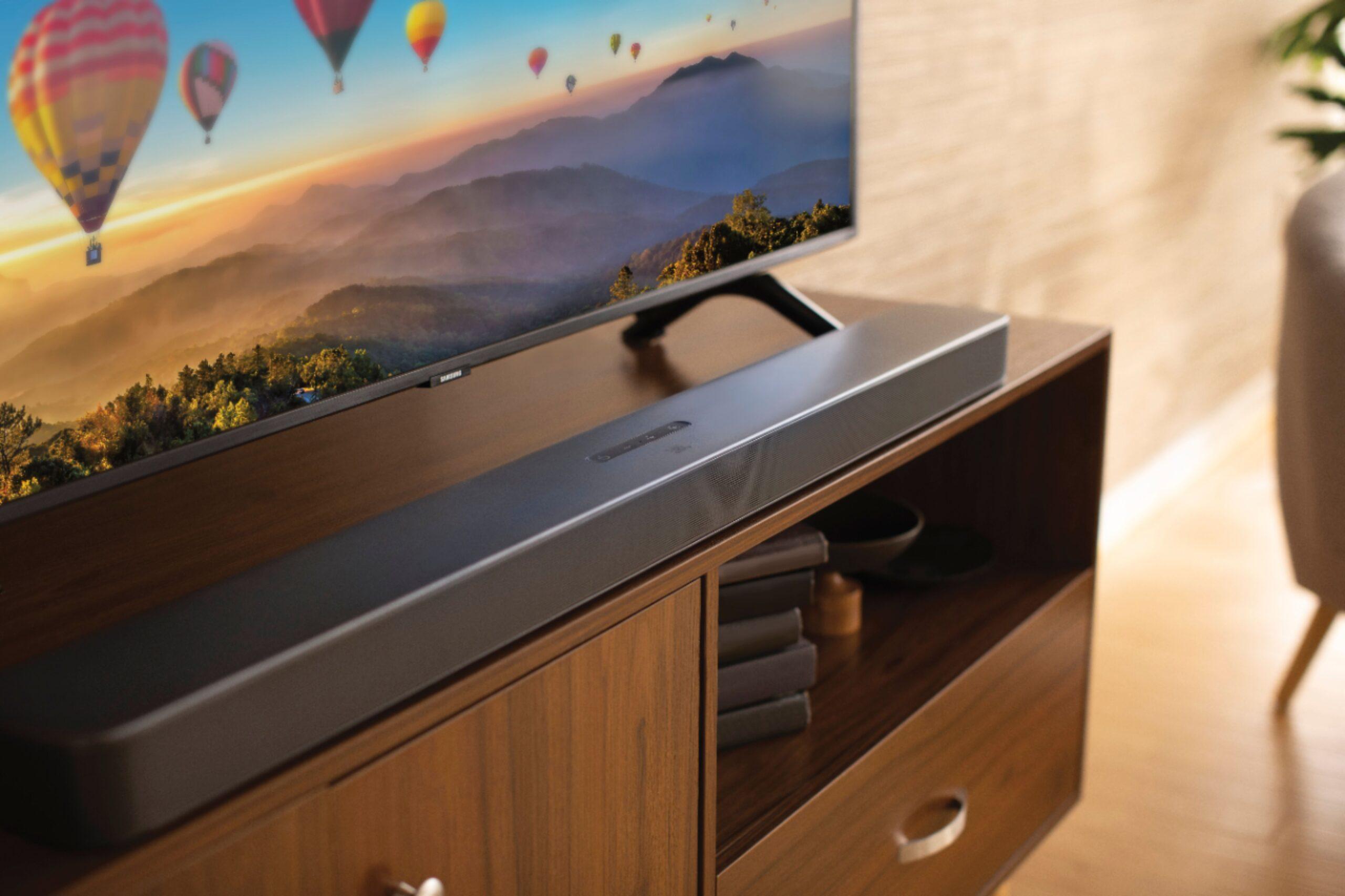
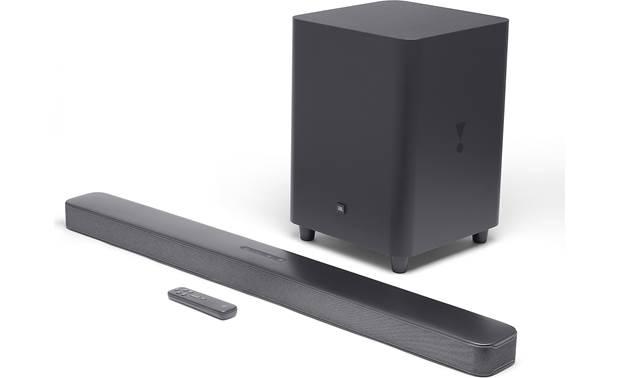
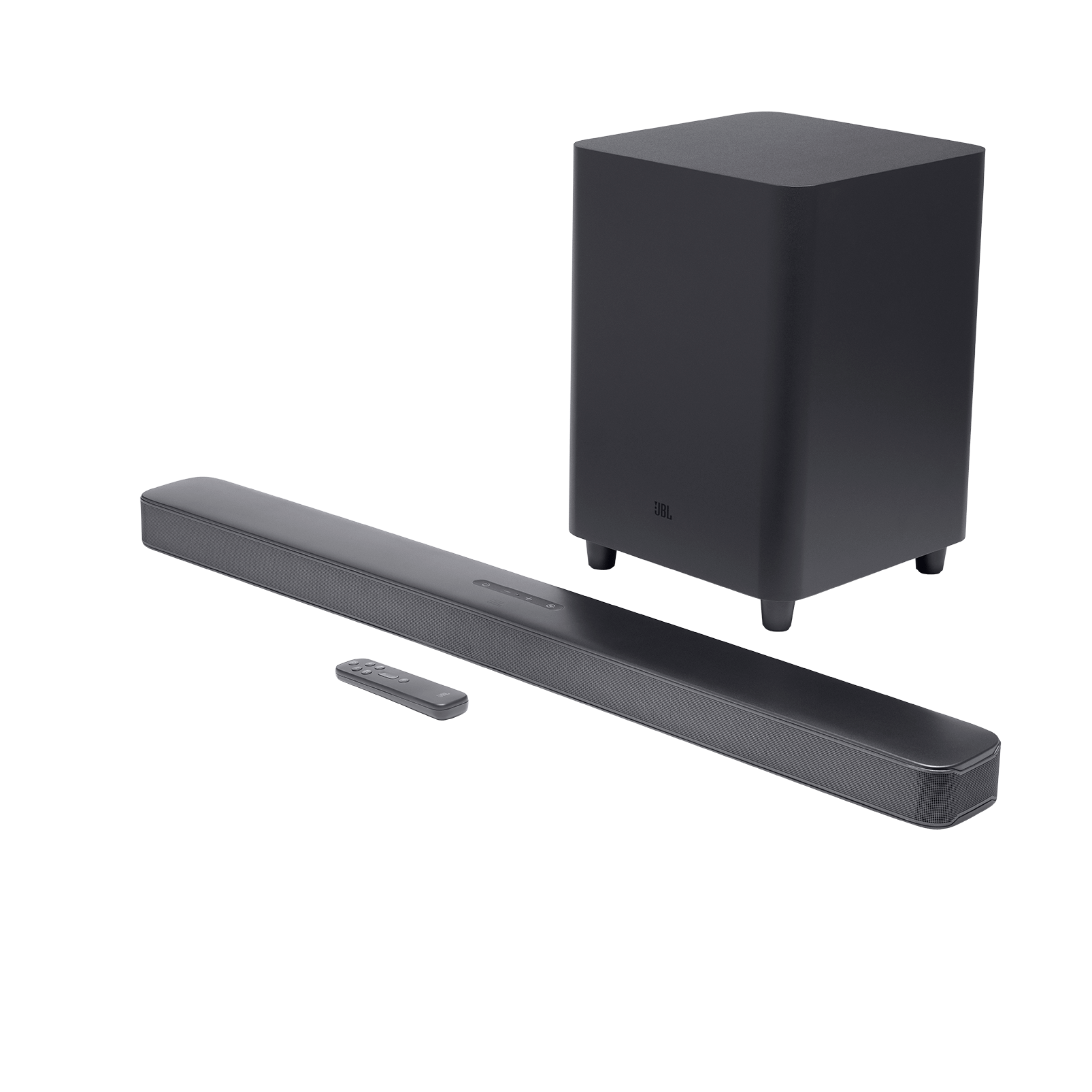
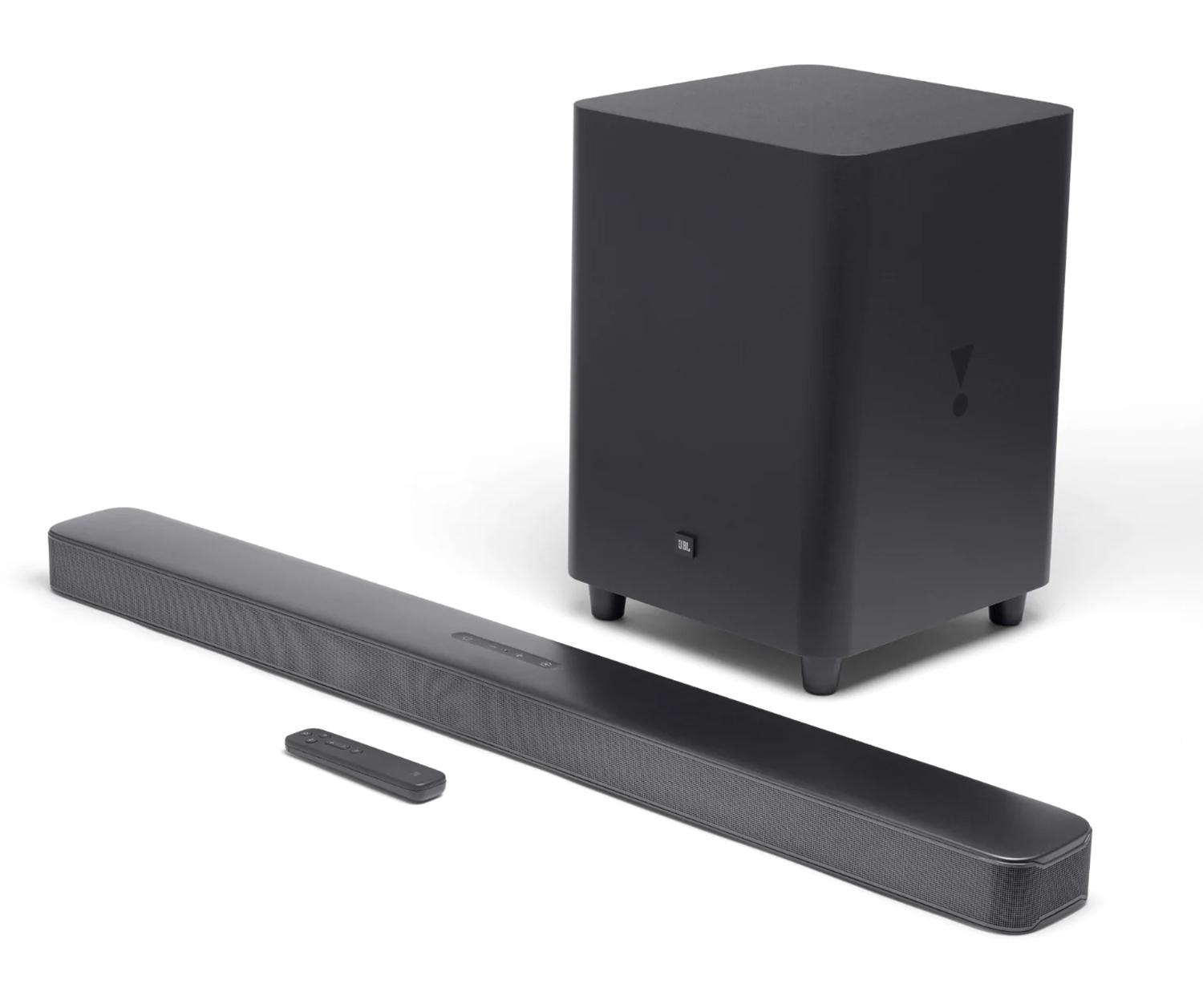
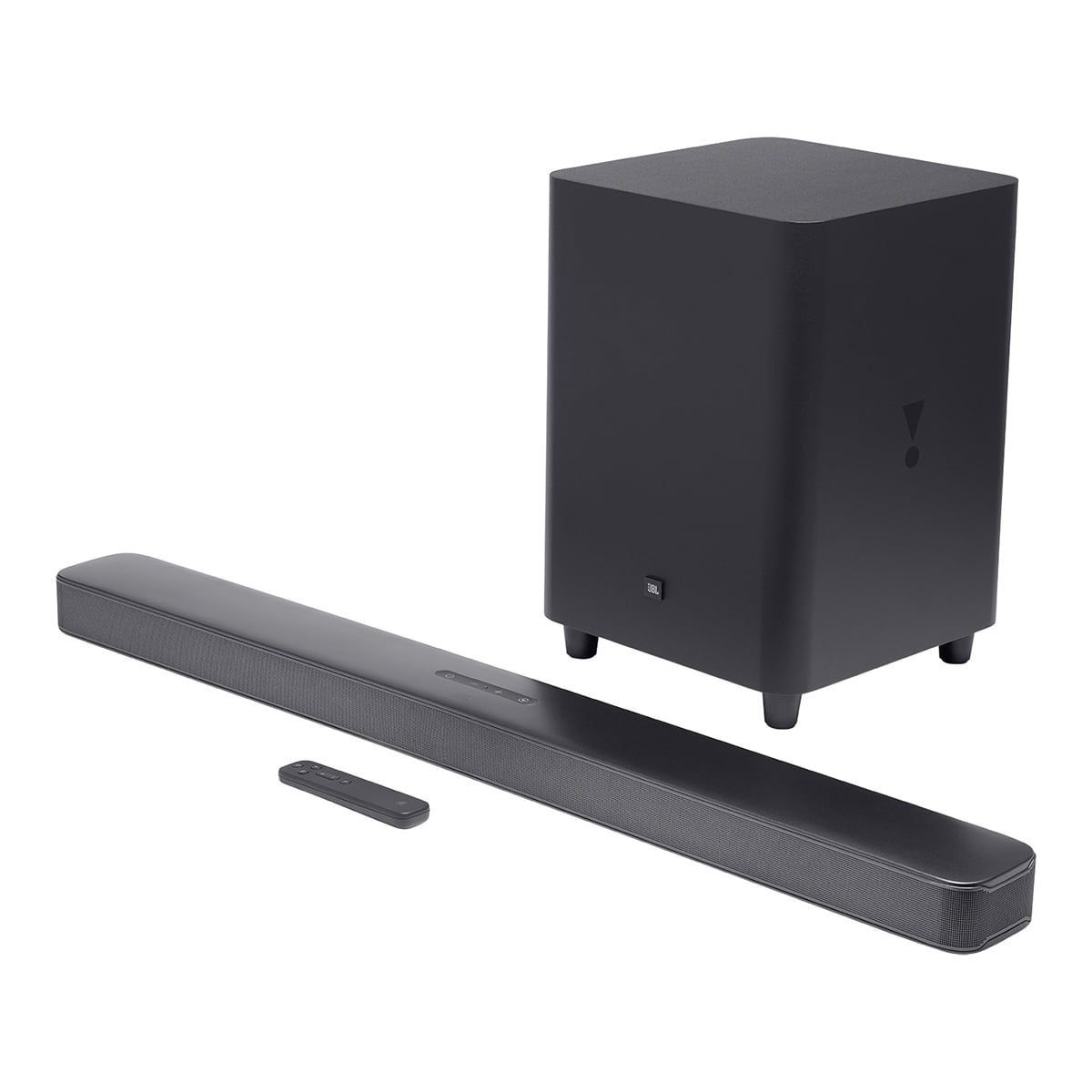
The JBL Bar 5.1 Surround takes a different approach entirely. Released in 2019 and representing JBL's established approach to home audio, this system prioritizes ease of use and smart home integration over cutting-edge audio formats.
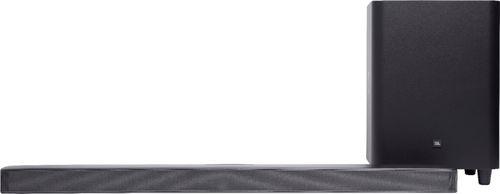
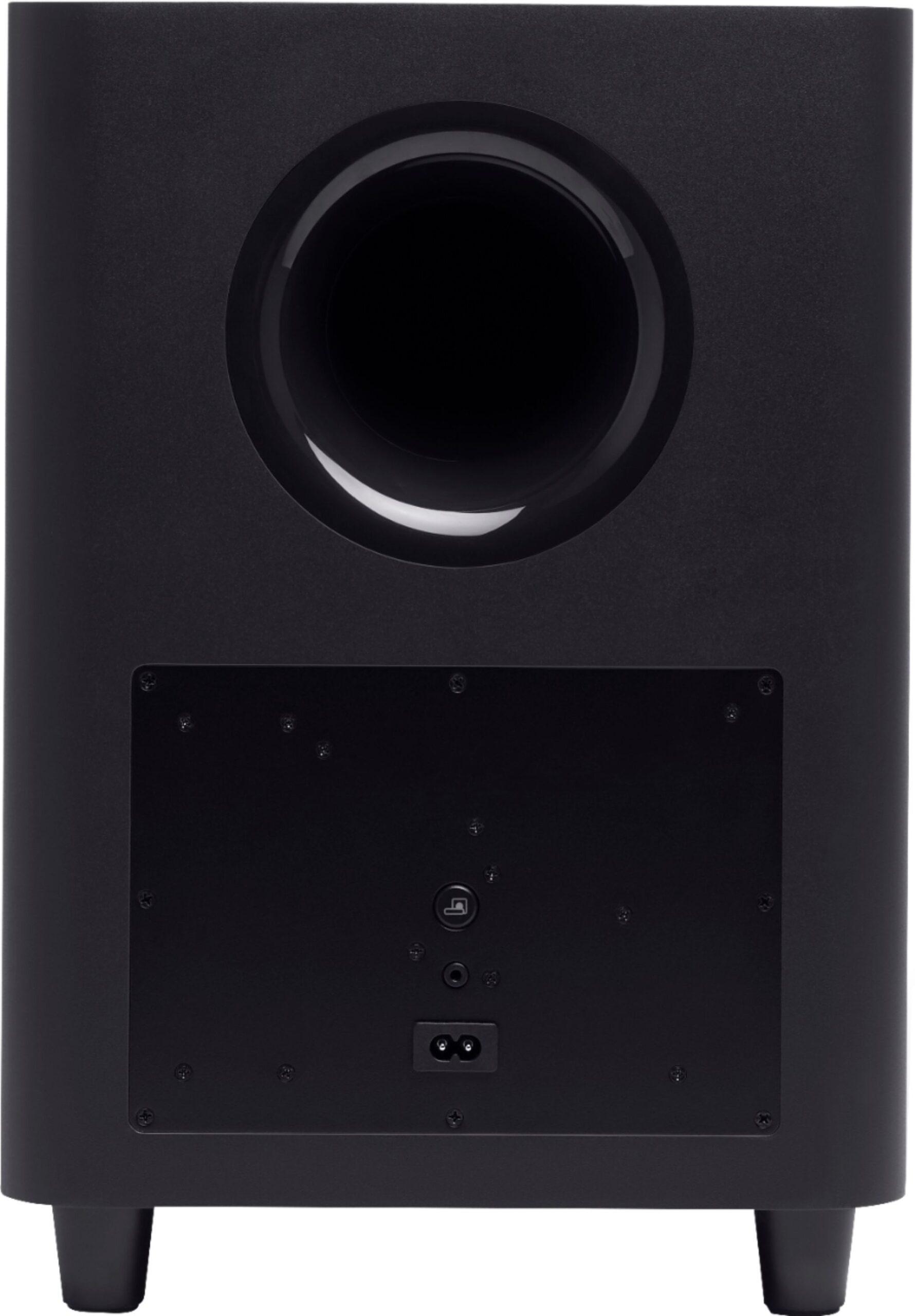
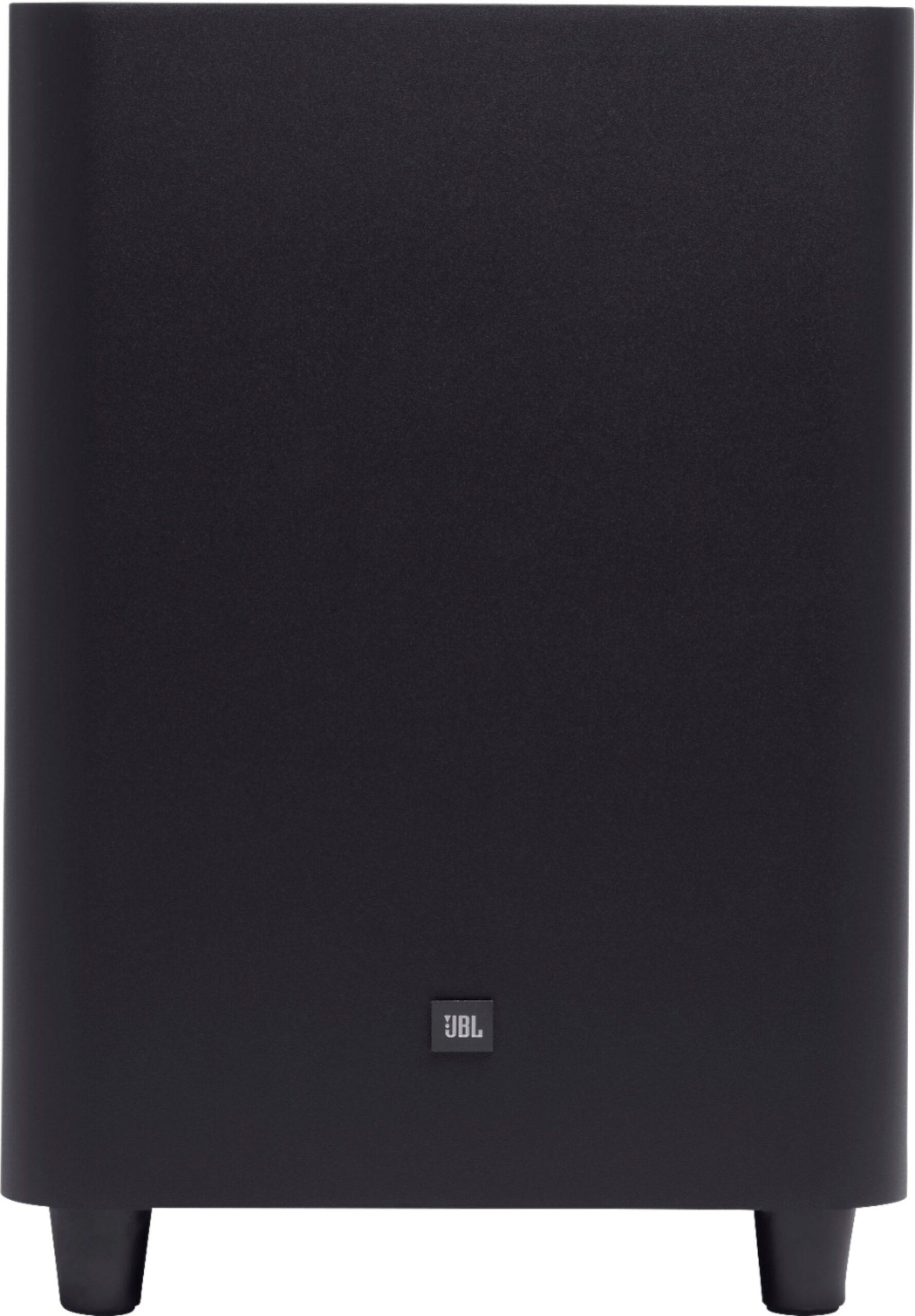
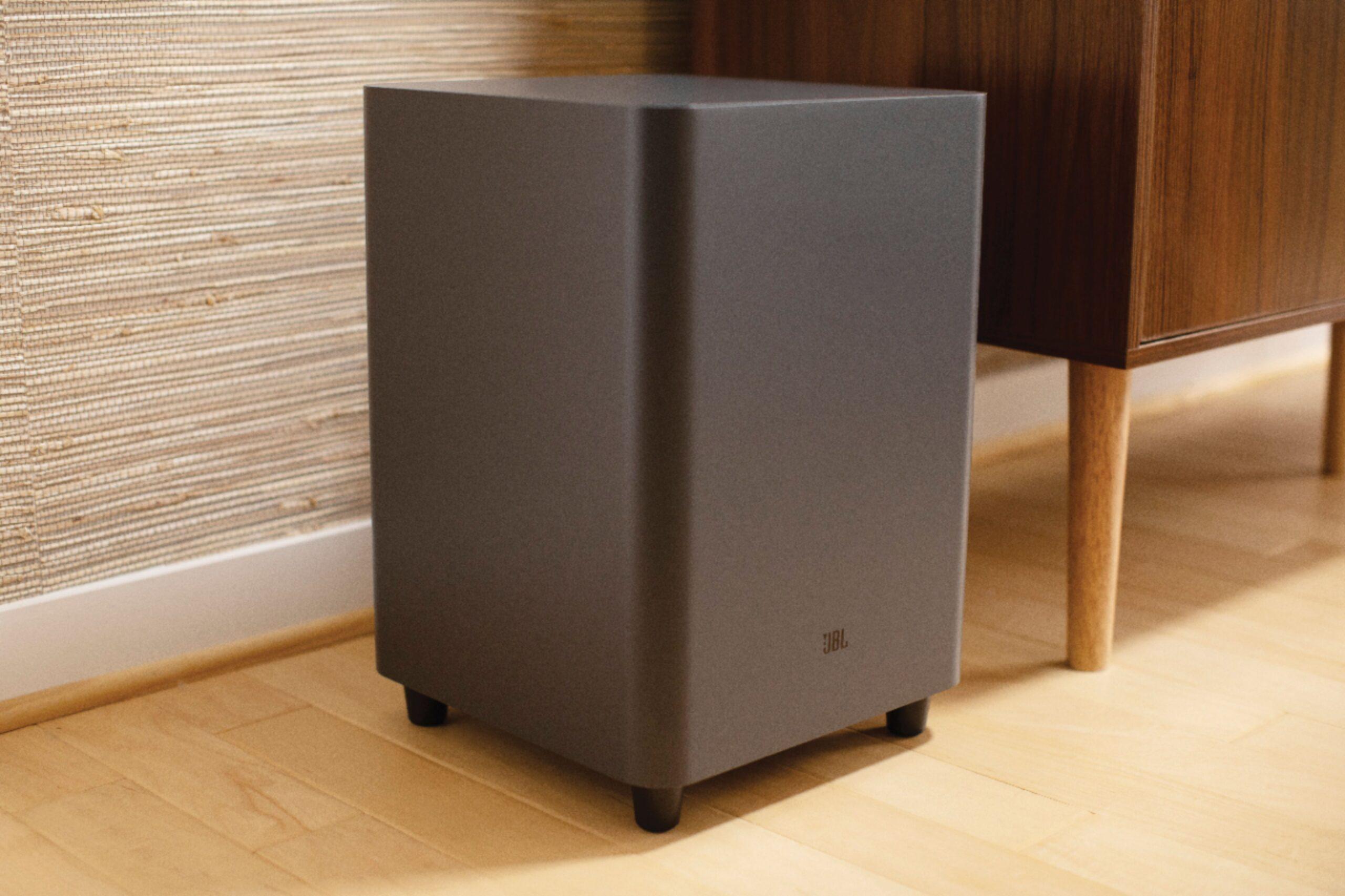
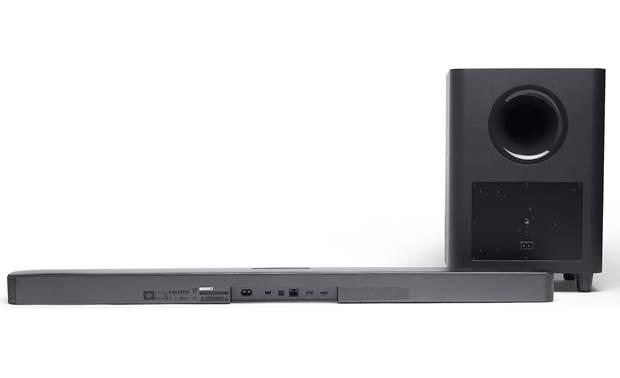
Rather than physical rear speakers, the JBL Bar 5.1 uses something called MultiBeam technology—essentially sophisticated digital processing that creates the illusion of surround sound from the front-firing soundbar alone. The system includes a substantial 10-inch wireless subwoofer that can be placed anywhere in your room for optimal bass response.
Where the JBL Bar 5.1 really shines is in its streaming integration. Built-in Chromecast, AirPlay 2, and Alexa Multi-Room Music support mean you can seamlessly stream from virtually any device or service. This isn't just about convenience—it's about creating a truly integrated smart home audio experience.
The most significant performance difference between these systems lies in their approach to creating an immersive soundfield. The Ultimea Skywave F40 delivers genuine three-dimensional audio that simply isn't possible with traditional surround systems.
When watching Atmos-encoded content—which now includes most major streaming service releases and 4K Blu-rays—the difference is immediately apparent. In action sequences, debris doesn't just move left and right; it falls from above. Rain sounds like it's actually falling around you rather than coming from speakers at ear level. Helicopters genuinely fly overhead rather than just panning across the front soundstage.
I've tested this effect extensively, and the Skywave F40's upfiring drivers work remarkably well in rooms with 8-10 foot ceilings. The neodymium magnets and large voice coils in these height channels create convincing ceiling reflections that add genuine spatial information to the audio mix.
The JBL Bar 5.1 approaches immersion differently through MultiBeam processing. This technology uses precise timing and frequency adjustments to create the psychoacoustic illusion of surround sound. While it can create a wider soundstage than basic soundbars, it can't replicate the genuine spatial positioning that dedicated rear speakers and height channels provide.
Bass performance represents another key differentiator. The JBL Bar 5.1 includes a substantial 10-inch wireless subwoofer that can extend down to 40Hz—low enough to reproduce the fundamental frequencies in most movie soundtracks and music. The larger driver size and wireless design allow for optimal placement anywhere in your room, which can significantly impact bass response depending on your room's acoustics.
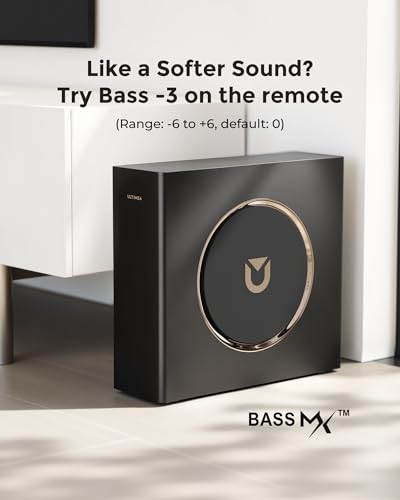
The Ultimea Skywave F40 takes a different approach with its smaller but more integrated 6.5-inch wired subwoofer. While it may not reach quite as deep (rated to about 38Hz), the system's BassMX technology is specifically tuned to work with the other speakers for cohesive bass response. The wired connection eliminates any potential latency issues that can sometimes affect wireless subwoofers.
In practical terms, both systems deliver satisfying bass for most content, but the JBL's larger driver provides more tactile impact during explosive movie scenes. However, the Ultimea's approach integrates better with its multi-speaker setup, creating more seamless transitions between the subwoofer and main speakers.
Both systems include dedicated center channels for dialogue reproduction—crucial for understanding speech in movies and TV shows. However, their approaches differ significantly.
The JBL Bar 5.1 uses traditional center channel processing, emphasizing clear dialogue separation from background music and effects. JBL's decades of experience in professional audio shows here, with well-tuned frequency response that keeps voices intelligible even at lower volumes.
The Ultimea Skywave F40 integrates dialogue into its broader Atmos soundfield, which can create more natural vocal positioning—characters' voices actually seem to come from their screen positions rather than just the center of the soundbar. This works particularly well for content mastered with Atmos mixing, though it requires proper setup to achieve optimal results.
Raw power specifications tell only part of the story, but they're still important for understanding each system's capabilities. The JBL Bar 5.1 delivers 550 watts total system power compared to the Ultimea Skywave F40's 460 watts. More importantly, the JBL concentrates more of this power in fewer speakers, potentially providing greater dynamic range and maximum volume levels.
However, the Ultimea distributes its power across more drivers, including dedicated rear speakers that don't rely on psychoacoustic processing. This can actually provide better coverage and more even volume distribution throughout your listening area, even if peak volume levels aren't quite as high.
For most living rooms, both systems provide adequate volume. The difference becomes apparent in larger spaces or when you want truly reference-level playback for movies.
This is where the philosophical differences between these systems become most apparent. The JBL Bar 5.1 was designed with streaming as a primary use case, while the Ultimea Skywave F40 focuses more on traditional home theater connectivity.
The JBL Bar 5.1 excels at seamless music streaming with built-in Chromecast, AirPlay 2, and Alexa Multi-Room Music. This means you can start playing music from your phone, continue it on your laptop, and control volume with voice commands—all without touching a remote or switching inputs. The Wi-Fi connectivity enables high-quality audio streaming without Bluetooth compression artifacts.
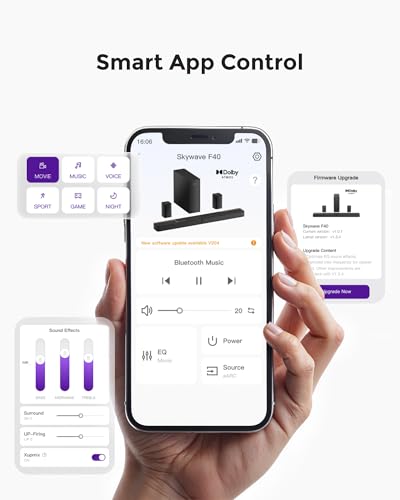
The Ultimea Skywave F40 takes a more basic approach with Bluetooth 5.4 connectivity and smart app control. While the newer Bluetooth standard provides stable, low-latency connections, it doesn't offer the ecosystem integration that the JBL provides. You get good wireless streaming, but not the smart home integration that many users now expect.
Both systems offer extensive customization options, but through different approaches. The JBL Bar 5.1 integrates with your existing smart home ecosystem, allowing voice control and app-based management across devices.
The Ultimea Skywave F40 provides more granular audio customization through its app, including a 10-band equalizer and 121 preset EQ matrices. This level of audio tuning is typically found in much more expensive systems and allows you to optimize performance for your specific room and preferences.
The installation experience differs dramatically between these systems, which may influence your decision based on your comfort level with technology and your room's physical constraints.
Setting up the Ultimea Skywave F40 requires more planning and effort. You need to position the rear speakers optimally for surround effects, which typically means placing them behind or to the sides of your listening position. The speakers connect to each other with a single wire to reduce clutter, but you'll still need to run a cable from the rear speakers back to the soundbar.
The upfiring drivers require adequate ceiling height (at least 8 feet) and a reflective ceiling surface to work properly. Vaulted or highly textured ceilings can diminish the height effect significantly. However, when properly set up, the system delivers an audio experience that rivals much more expensive installations.
The JBL Bar 5.1 prioritizes simplicity. The soundbar mounts to your wall or sits in front of your TV, and the wireless subwoofer can go anywhere in the room where it sounds best. There are no rear speakers to position or additional cables to hide.
The trade-off is that you're relying entirely on digital processing to create surround effects rather than actual speaker placement. While MultiBeam technology works well, it can't replicate the precise positioning that dedicated surround speakers provide.
Understanding how you'll actually use your soundbar should heavily influence your choice between these systems.
If your primary use case involves movie nights, gaming, or other immersive content consumption, the Ultimea Skywave F40 provides a significantly more engaging experience. The Dolby Atmos implementation works particularly well with content from Netflix, Disney+, Amazon Prime, and 4K Blu-rays that include height-aware audio mixing.
Gaming represents another area where the Ultimea excels. Modern game engines increasingly support spatial audio, and having physical height and surround speakers creates a competitive advantage in games where positional audio matters. You'll genuinely hear enemies approaching from different directions, not just left and right.
For users who primarily stream music and want occasional movie enhancement, the JBL Bar 5.1 makes more sense. The comprehensive streaming integration means you can easily play music from any source, and the system integrates well with existing smart home setups.
The JBL's tonal balance also works well for music reproduction across genres, while the Ultimea is more specifically tuned for the dynamic range and frequency distribution found in movie soundtracks.
At the time of writing, these systems occupy different price tiers, which significantly impacts their value propositions. The Ultimea Skywave F40 costs substantially less while including technologies typically found in much more expensive systems. This makes it an exceptional value for users primarily interested in audio performance.
The JBL Bar 5.1 commands a premium for its brand reputation, build quality, and comprehensive smart features. You're paying extra for the convenience of wireless operation, established ecosystem integration, and JBL's warranty and support infrastructure.
Neither system represents poor value, but they serve different priorities. The Ultimea maximizes audio performance per dollar spent, while the JBL maximizes convenience and integration per dollar spent.
You're primarily building a home theater setup focused on movies, gaming, and immersive content. The budget savings compared to other Dolby Atmos systems allow you to invest in other components or simply enjoy premium audio technology at an accessible price point.
Your room can accommodate rear speaker placement and has adequate ceiling height for upfiring drivers. You don't mind slightly more complex setup in exchange for significantly better spatial audio performance.
You prefer to optimize audio quality over streaming convenience, and you're comfortable using Bluetooth for wireless music streaming rather than needing comprehensive smart home integration.
Your soundbar will serve double duty for both TV enhancement and music streaming throughout your home. The smart features and ecosystem integration justify the higher cost for your usage patterns.
You want the simplest possible installation with maximum flexibility in component placement. The wireless subwoofer and lack of rear speakers make this system much easier to integrate into existing room layouts.
Brand reliability and warranty support are important factors, and you prefer established audio companies with long track records in the market.
Both the Ultimea Skywave F40 and JBL Bar 5.1 Surround represent excellent approaches to upgrading your TV audio, but they serve different priorities and use cases.
The Ultimea delivers cutting-edge Dolby Atmos technology at an unprecedented price point, making immersive three-dimensional audio accessible to budget-conscious buyers who don't want to compromise on performance. If you're building a dedicated home theater setup and want the most engaging audio experience possible, this system provides exceptional value.
The JBL offers premium convenience features and ecosystem integration that make it better suited for users who want seamless streaming capabilities alongside their TV audio enhancement. While it doesn't provide the spatial audio advantages of Atmos, it excels at music reproduction and smart home integration.
Your choice ultimately depends on whether you prioritize maximum audio immersion or maximum convenience. Both approaches have merit, and both systems deliver significantly better performance than built-in TV speakers. Understanding your primary use cases and room limitations will guide you toward the right solution for your specific needs.
| Ultimea Skywave F40 | JBL Bar 5.1 Surround |
|---|---|
| Channel Configuration - Determines immersiveness and spatial audio capabilities | |
| 5.1.2 with dedicated height channels for true Dolby Atmos | Traditional 5.1 with MultiBeam virtual surround processing |
| Physical Speaker Setup - Affects installation complexity and audio accuracy | |
| Soundbar + wired subwoofer + two rear speakers | Single soundbar + wireless 10" subwoofer |
| Dolby Atmos Support - Essential for modern movie and streaming content | |
| Yes, with dedicated upfiring drivers for overhead effects | No, relies on digital processing for surround simulation |
| Total System Power - Impacts maximum volume and dynamic range | |
| 460W distributed across multiple speakers | 550W concentrated in fewer drivers |
| Subwoofer Size and Connection - Affects bass depth and placement flexibility | |
| 6.5" wired subwoofer with integrated tuning | 10" wireless subwoofer with flexible placement |
| Streaming Integration - Important for daily music listening and smart home use | |
| Bluetooth 5.4 and app control | Built-in Chromecast, AirPlay 2, Alexa Multi-Room Music |
| Frequency Response - Determines bass extension and treble clarity | |
| 38Hz - 18kHz (tight integration across components) | 40Hz - 20kHz (deeper bass potential, extended treble) |
| HDMI Connectivity - Critical for 4K video and high-quality audio passthrough | |
| 1 HDMI eARC input | 1 HDMI ARC input with video passthrough |
| Setup Complexity - Affects installation time and room requirements | |
| Moderate (rear speaker wiring and ceiling height needed) | Simple (wireless subwoofer, no rear speakers) |
| EQ Customization - Allows fine-tuning for room acoustics and preferences | |
| 10-band EQ with 121 preset matrices via app | Standard sound modes with JBL's established tuning |
| Brand Heritage and Support - Impacts reliability and warranty experience | |
| Newer brand focused on value-oriented audio technology | Established 75+ year audio company with proven support |
The Ultimea Skywave F40 is significantly better for movies and TV shows due to its true Dolby Atmos 5.1.2 channel configuration with dedicated height channels and rear speakers. This creates genuine overhead effects and surround sound positioning that you can't get from the JBL Bar 5.1, which relies on virtual surround processing from a single soundbar.
The key difference is that the Ultimea Skywave F40 offers true Dolby Atmos with physical rear speakers and upfiring drivers for three-dimensional audio, while the JBL Bar 5.1 uses digital processing to simulate surround sound from just the soundbar and wireless subwoofer. The Ultimea provides more immersive audio, but the JBL offers simpler setup and better streaming features.
The JBL Bar 5.1 has potentially deeper bass with its larger 10-inch wireless subwoofer that can be placed anywhere in your room for optimal performance. The Ultimea Skywave F40 uses a smaller 6.5-inch wired subwoofer but integrates it more tightly with the overall system tuning. Both provide satisfying bass, but the JBL offers more powerful low-end impact.
The Ultimea Skywave F40 has a more complex setup requiring rear speaker placement and wiring, plus adequate ceiling height for the upfiring drivers to work effectively. The JBL Bar 5.1 is much simpler to install with just the soundbar placement and wireless subwoofer positioning, making it better for users who want minimal installation effort.
The JBL Bar 5.1 excels at music streaming with built-in Chromecast, AirPlay 2, and Alexa Multi-Room Music support, allowing seamless integration with streaming services and smart home systems. The Ultimea Skywave F40 offers Bluetooth 5.4 connectivity and app control but lacks the comprehensive streaming ecosystem that the JBL provides.
Only the Ultimea Skywave F40 supports true Dolby Atmos with dedicated upfiring drivers and height channels that create overhead audio effects. The JBL Bar 5.1 does not support Dolby Atmos and instead uses MultiBeam technology to simulate surround sound effects through digital processing.
The Ultimea Skywave F40 typically offers better value for pure audio performance, delivering Dolby Atmos technology and true surround sound at a lower price point than most competitors. The JBL Bar 5.1 costs more but provides premium streaming features, wireless operation, and established brand reliability that may justify the higher cost for some users.
The Ultimea Skywave F40 includes more physical speakers with a multi-section soundbar, two dedicated rear surround speakers, and a wired subwoofer for true 5.1.2 channel audio. The JBL Bar 5.1 consists of just the main soundbar and wireless subwoofer, relying on digital processing rather than additional physical speakers for surround effects.
The JBL Bar 5.1 works better in small rooms due to its simpler setup requirements and lack of rear speakers that need proper positioning. The Ultimea Skywave F40 requires adequate space for rear speaker placement and sufficient ceiling height for the upfiring drivers to reflect properly, making it better suited for medium to larger rooms.
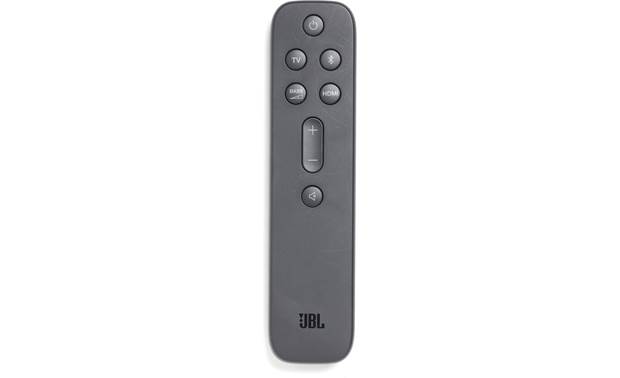
Both soundbars support CEC (Consumer Electronics Control) which allows control with your TV remote. However, the JBL Bar 5.1 offers more advanced control options through voice commands via Alexa and smartphone apps for streaming services. The Ultimea Skywave F40 provides comprehensive control through its dedicated app and remote but focuses more on audio adjustment than smart home integration.
The Ultimea Skywave F40 is superior for gaming due to its true surround sound with physical rear speakers and height channels that provide accurate positional audio. This gives competitive advantages in games where directional sound matters. The JBL Bar 5.1 can enhance gaming audio but cannot match the spatial accuracy that the Ultimea delivers through its dedicated speaker placement.
The Ultimea Skywave F40 provides HDMI eARC, optical input, USB, and Bluetooth 5.4 connectivity focused on traditional home theater connections. The JBL Bar 5.1 offers similar basic connections but adds comprehensive streaming capabilities with built-in Wi-Fi, Chromecast, AirPlay 2, and smart home integration that the Ultimea lacks.
We've done our best to create useful and informative comparisons to help you decide what product to buy. Our research uses advanced automated methods to create this comparison and perfection is not possible - please contact us for corrections or questions. These are the sites we've researched in the creation of this article: the-gadgeteer.com - youtube.com - ultimea.com - manuals.plus - youtube.com - ultimea.com - youtube.com - youtube.com - youtube.com - youtube.com - eu.ultimea.com - support.ultimea.com - jbl.com - jbl.com - jbl.com - tomsguide.com - jbl.com - bestbuy.com - bestbuy.com - jbl.com - jbl.com - worldwidestereo.com

Privacy Policy
Terms and Conditions - Affiliate Policy
Home Security
© Copyright 2008-2026.
11816 Inwood Rd #1211, Dallas, TX 75244