

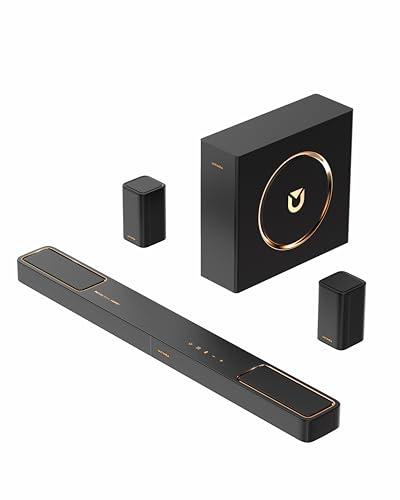

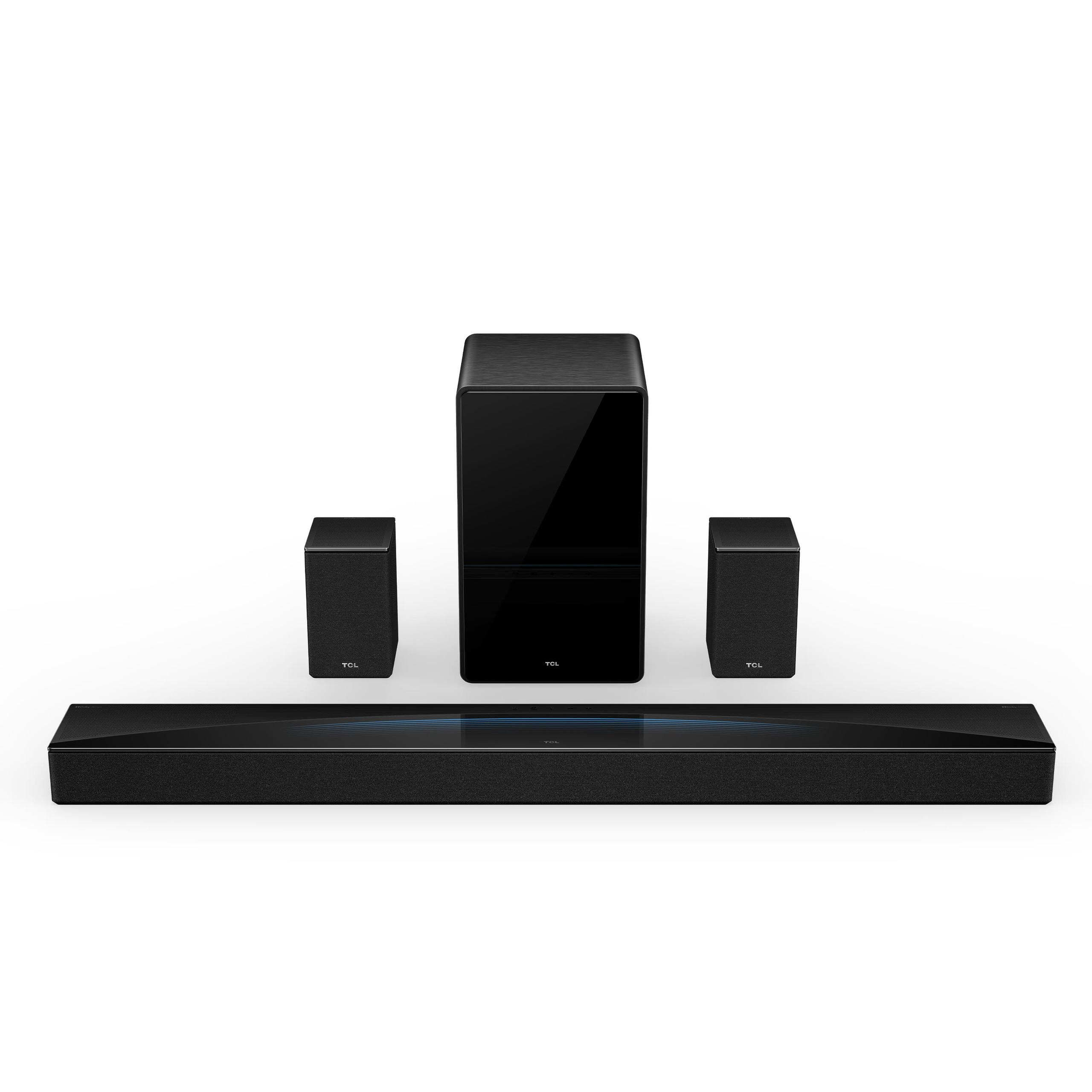
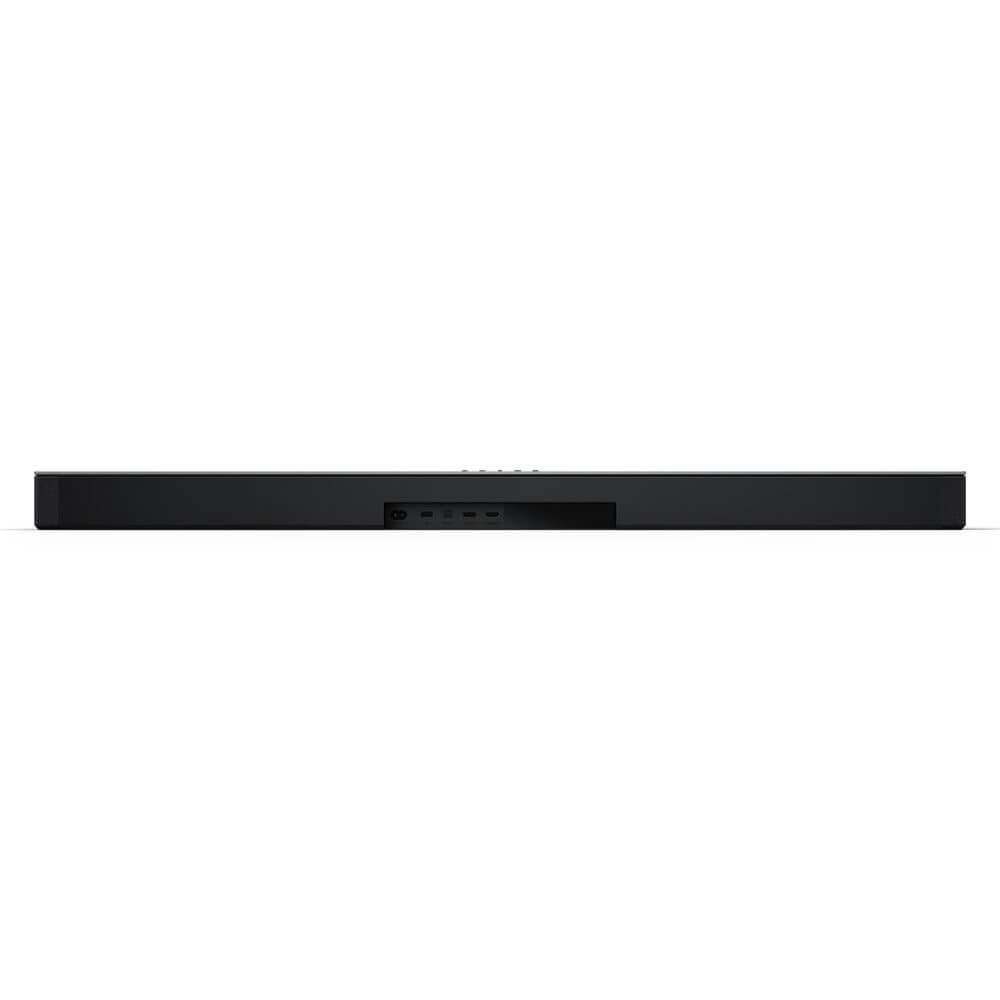
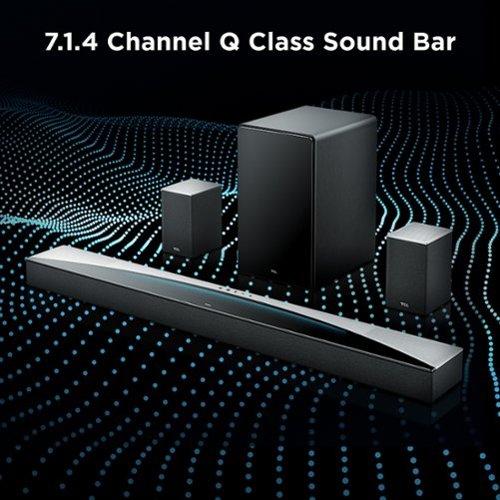

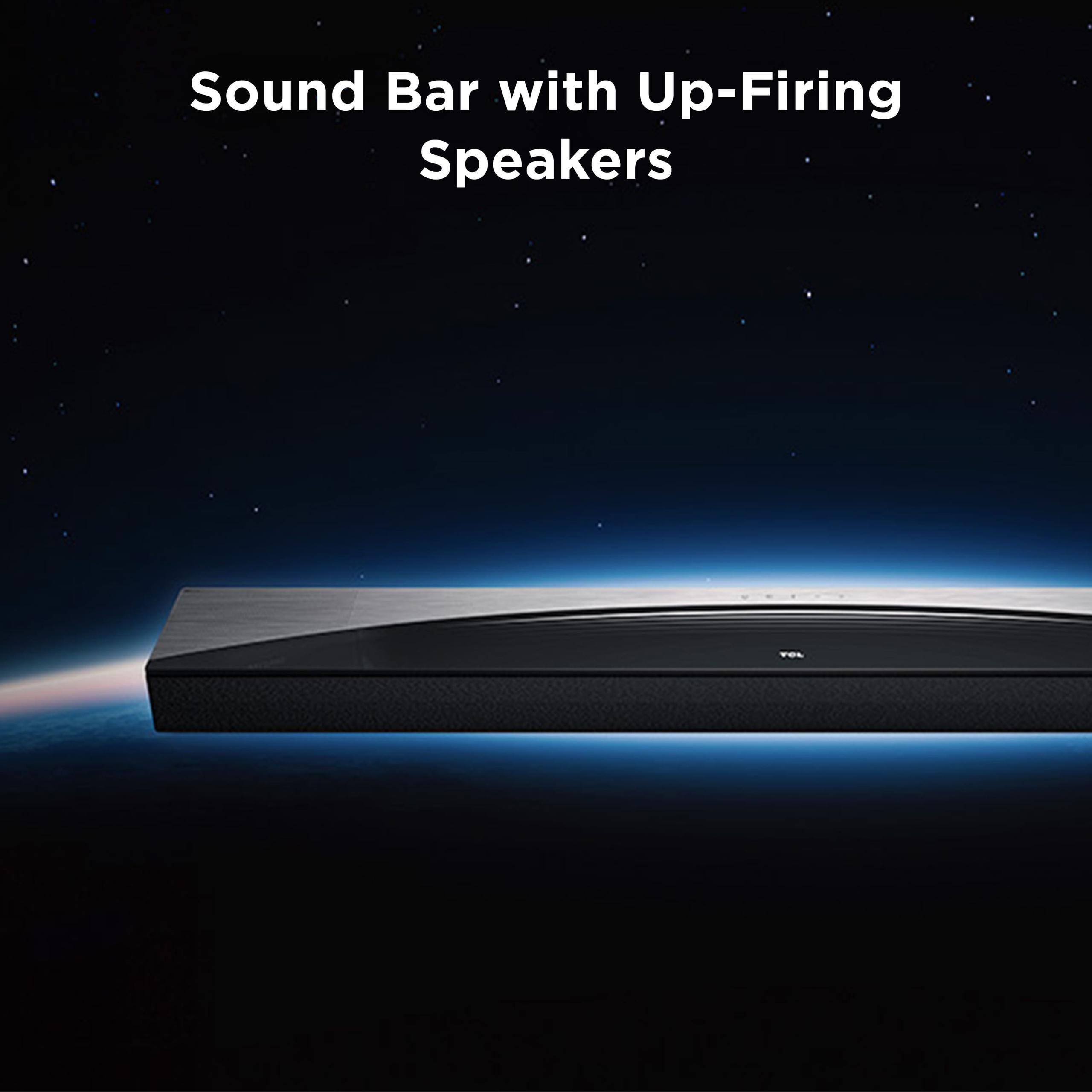
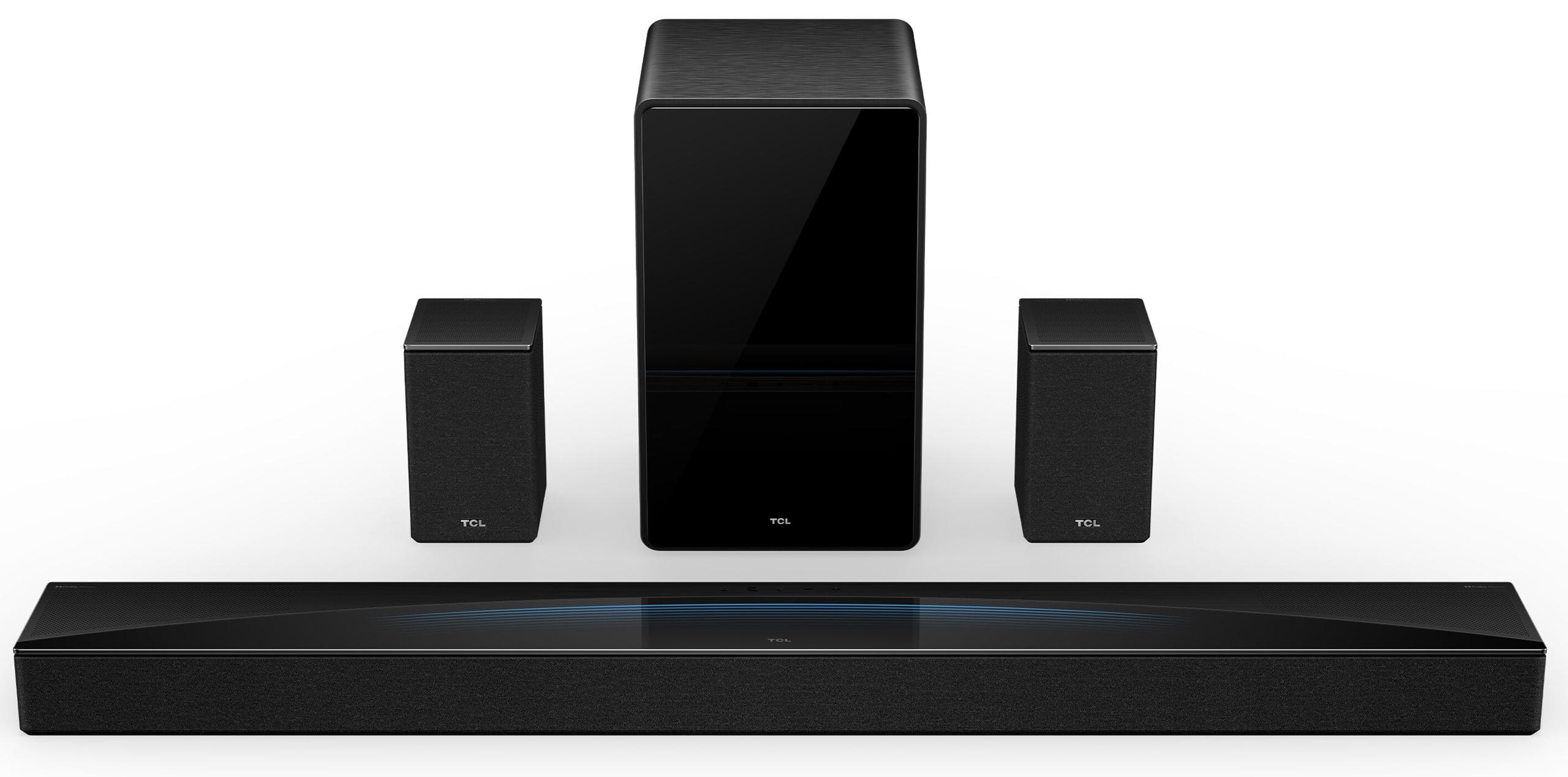
When shopping for a Dolby Atmos soundbar in 2025, you'll quickly discover a puzzling reality: sometimes spending less gets you more. That's exactly what's happening with the Ultimea Skywave F40 and TCL Q85H Q Class – two soundbars that perfectly illustrate why price doesn't always equal performance.
Both systems launched in 2024, entering a market that's become increasingly competitive as manufacturers race to bring three-dimensional audio to everyday living rooms. The technology has matured significantly since Dolby Atmos first appeared in soundbars around 2014, and we're now seeing impressive capabilities at price points that would have been impossible just a few years ago.
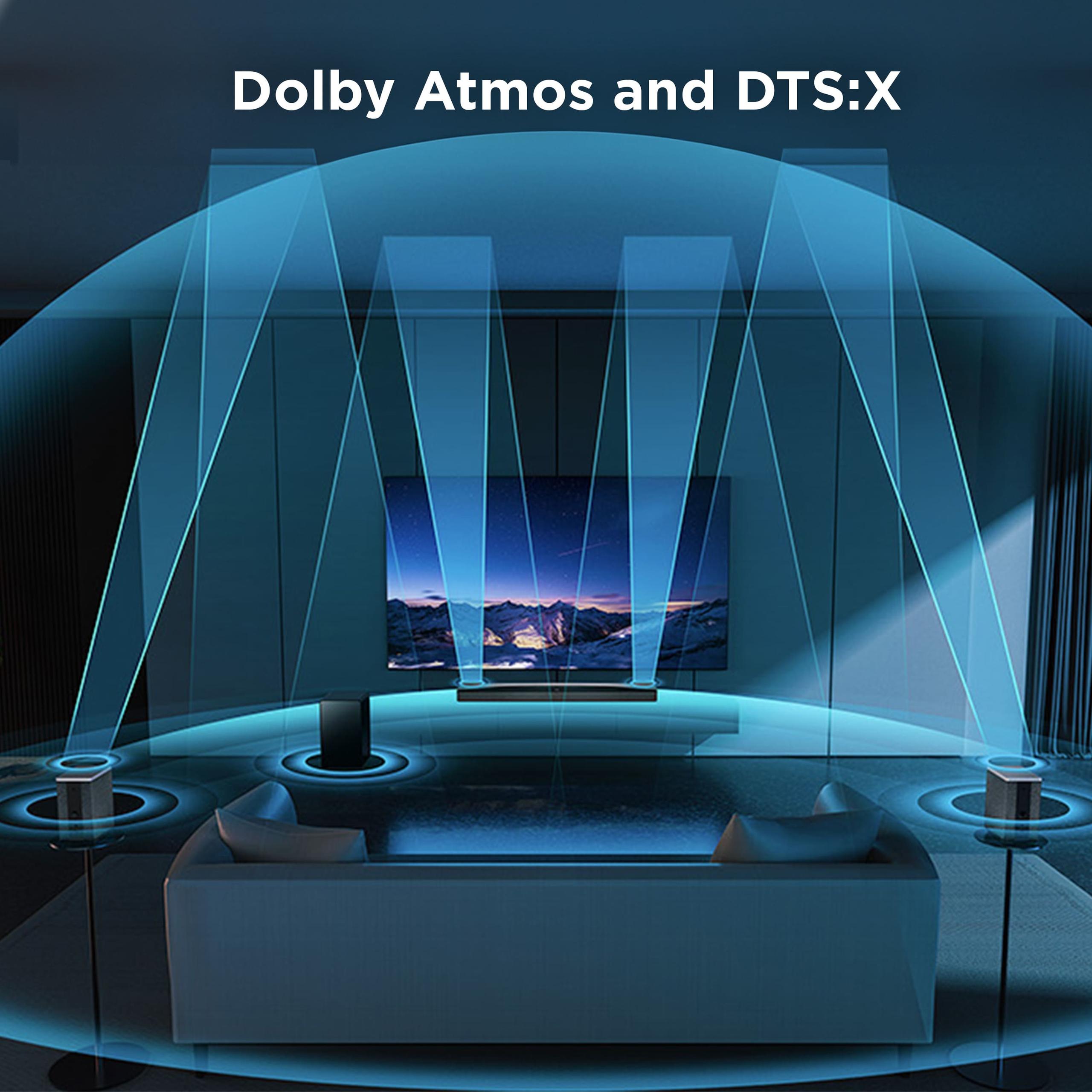
Before diving into these specific products, it's worth understanding what Dolby Atmos actually does. Traditional surround sound creates a circle of audio around you – left, right, center, and behind. Dolby Atmos adds a crucial third dimension: height. Instead of thinking about sound coming from specific speakers, Atmos treats audio as "objects" that can be positioned anywhere in three-dimensional space around you.
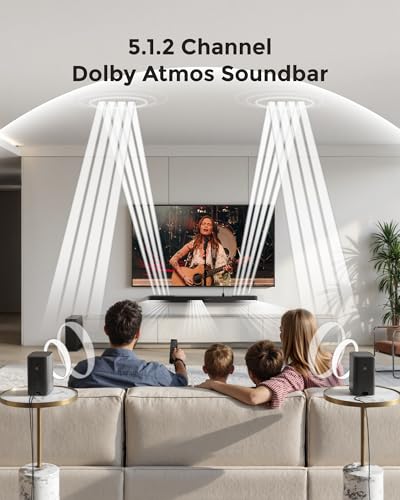
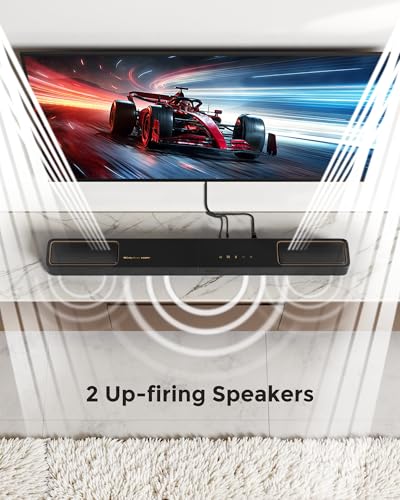
This is achieved through up-firing drivers (speakers that point toward your ceiling) that bounce sound off the ceiling back down to your ears. When done well, explosions seem to happen overhead, helicopters fly across your room's airspace, and rain appears to fall from above. The effect can be genuinely transformative, turning your living room into something approaching a movie theater experience.
However, not all Dolby Atmos systems are created equal. The number after the decimal point in channel configurations (like 5.1.2 or 7.1.4) tells you how many height channels the system has – and this is where our two contenders differ dramatically.
The Ultimea Skywave F40 positions itself as a budget-friendly option that, at the time of writing, costs roughly one-third the price of the TCL Q85H. This isn't a small difference – we're talking about hundreds of dollars separating these systems. That price gap immediately raises questions: What are you getting for that extra money? And perhaps more importantly, what are you missing if you choose the less expensive option?
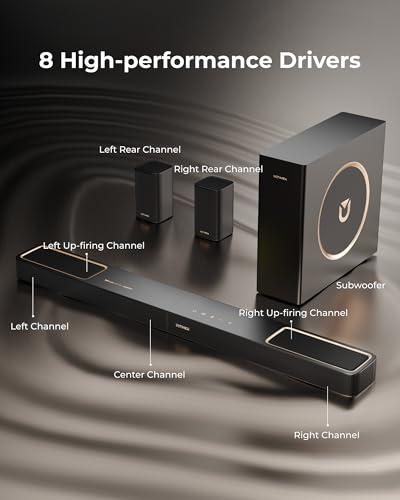
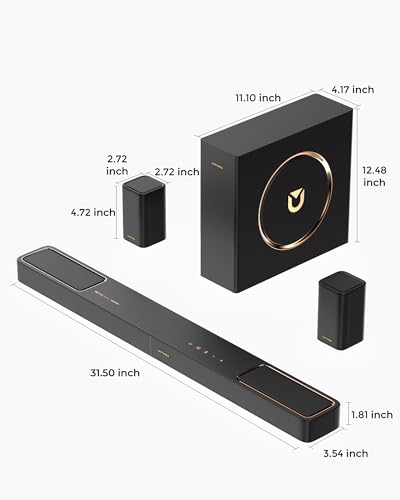
Here's where things get interesting from a technical standpoint. The TCL Q85H boasts a 7.1.4 channel configuration, meaning seven main speakers, one subwoofer, and four height channels. The Ultimea Skywave F40 offers 5.1.2 – five main speakers, one subwoofer, and two height channels.
On paper, the TCL seems like the obvious winner. More channels should mean better surround sound, right? Well, it's complicated.
The reality is that most Dolby Atmos content is mixed for a maximum of 7.1.2 channels. While having 7.1.4 capability gives you theoretical future-proofing, the practical difference in today's content is minimal. What matters more is how well those channels are implemented and how effectively the system creates that three-dimensional soundstage.
This is where the Ultimea Skywave F40 reveals its first surprise. Despite having fewer channels, it includes dedicated wireless rear surround speakers – something many soundbars in this category skip entirely. These physical rear speakers create genuine surround effects rather than relying on psychoacoustic tricks to simulate rear channel audio. It's the difference between actually having someone whisper behind you versus having someone in front of you create the illusion that they're behind you.
After spending time with both systems, the performance differences become clear – and they don't always favor the more expensive option.
Let's start with the most important aspect for most users: dialogue clarity. Nothing ruins a movie night faster than constantly reaching for the remote to turn up the volume when characters speak, only to have your ears blown out by the next explosion.
The Ultimea Skywave F40 excels here in a way that's immediately apparent. The system maintains crisp, clear dialogue even at moderate volumes, thanks to what appears to be well-tuned midrange drivers and intelligent processing. This isn't just about having a dedicated center channel – it's about how all the elements work together to ensure voices cut through the mix without becoming harsh or fatiguing.
The TCL Q85H, despite its higher channel count and power rating, doesn't demonstrate the same consistency in dialogue reproduction. This might seem counterintuitive given the price difference, but it highlights an important reality in audio: more expensive doesn't automatically mean better-tuned.
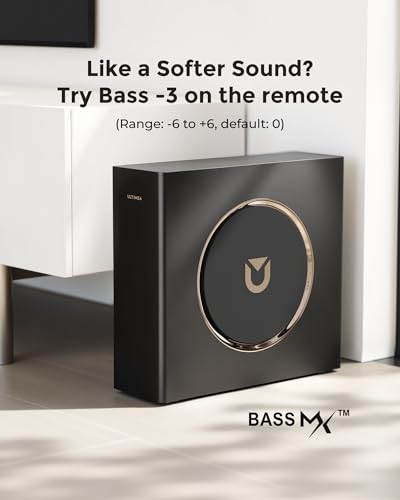
Both systems include 6.5-inch subwoofers, but their implementation differs significantly. The Ultimea Skywave F40 uses a wired subwoofer with BassMX technology – Ultimea's proprietary bass enhancement system. While "wired" might sound like a disadvantage compared to the TCL's wireless subwoofer, it actually ensures more reliable, consistent bass reproduction without the potential for wireless dropouts or latency issues.
The bass from the Ultimea is notably well-integrated with the soundbar, creating a cohesive soundstage where the subwoofer doesn't draw attention to itself. The low-end extension reaches down to around 40Hz, which covers most of what you'll encounter in movies and music. This isn't earth-shaking bass that'll annoy your neighbors, but it's substantial enough to add real impact to explosions, musical bass lines, and atmospheric effects.
The TCL Q85H theoretically has more power to drive its subwoofer, but the wireless implementation sometimes creates integration challenges. The bass can feel disconnected from the main soundstage, and some users report difficulty finding the optimal placement for the subwoofer to achieve proper integration.
This is where the Ultimea Skywave F40 really shines and demonstrates why thoughtful engineering often trumps raw specifications. The system's two up-firing drivers use neodymium magnets and larger voice coils than typically found in this price category. These aren't just check-box features – they translate to more precise height effects and better vertical sound dispersion.
Combined with the physical rear surround speakers, the Ultimea creates a surprisingly convincing 360-degree soundstage. When watching movies like "Top Gun: Maverick" or playing immersive games, aircraft genuinely seem to move overhead and behind you. The effect is subtle enough to feel natural but pronounced enough to be clearly noticeable.
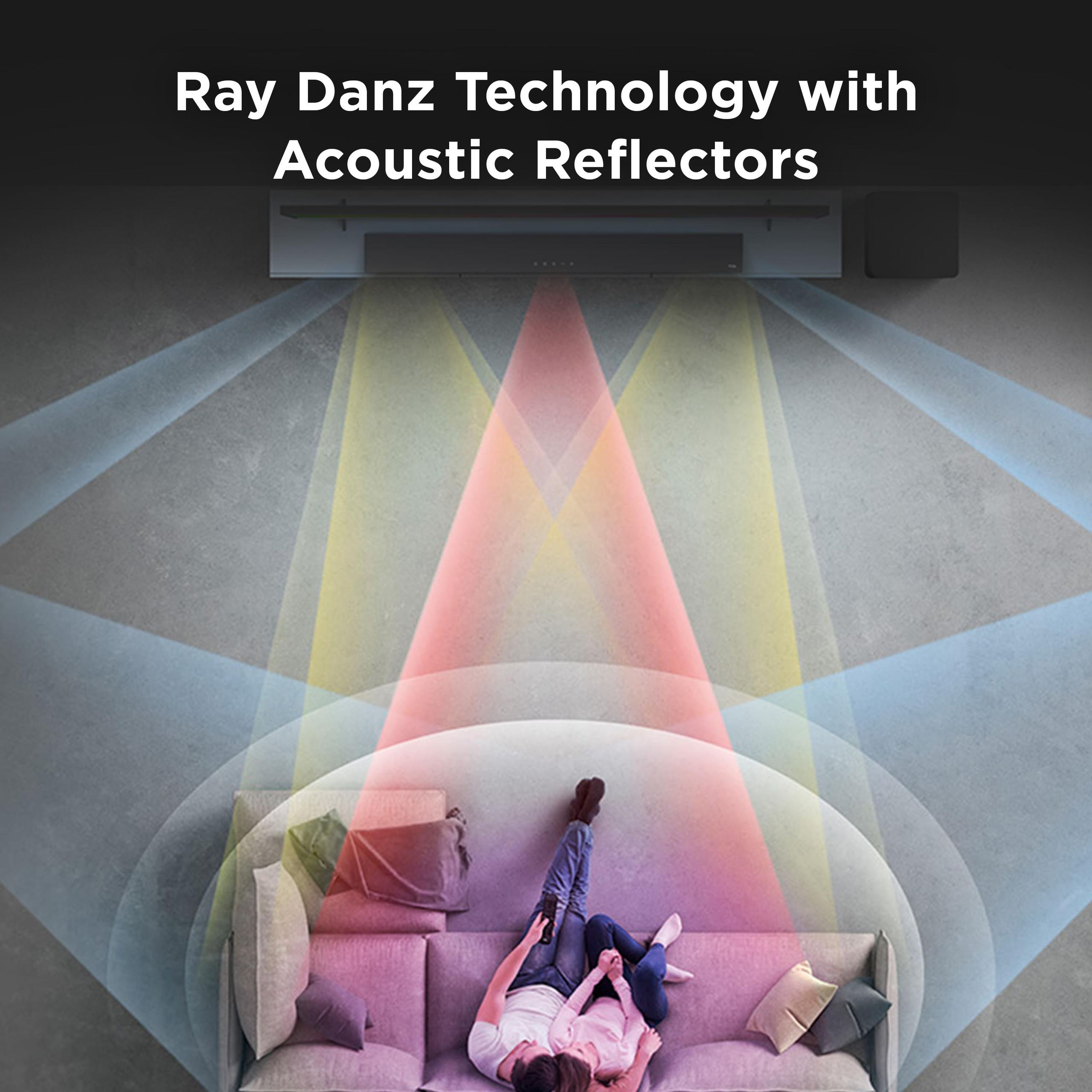
The TCL Q85H has the theoretical advantage of four height channels versus two, but the practical implementation doesn't always deliver proportional improvements. The system includes RayDanz Technology with acoustic reflectors – TCL's proprietary approach to widening the soundstage. While this can create impressive width, the height effects sometimes feel less precise than what the Ultimea achieves with its more focused approach.
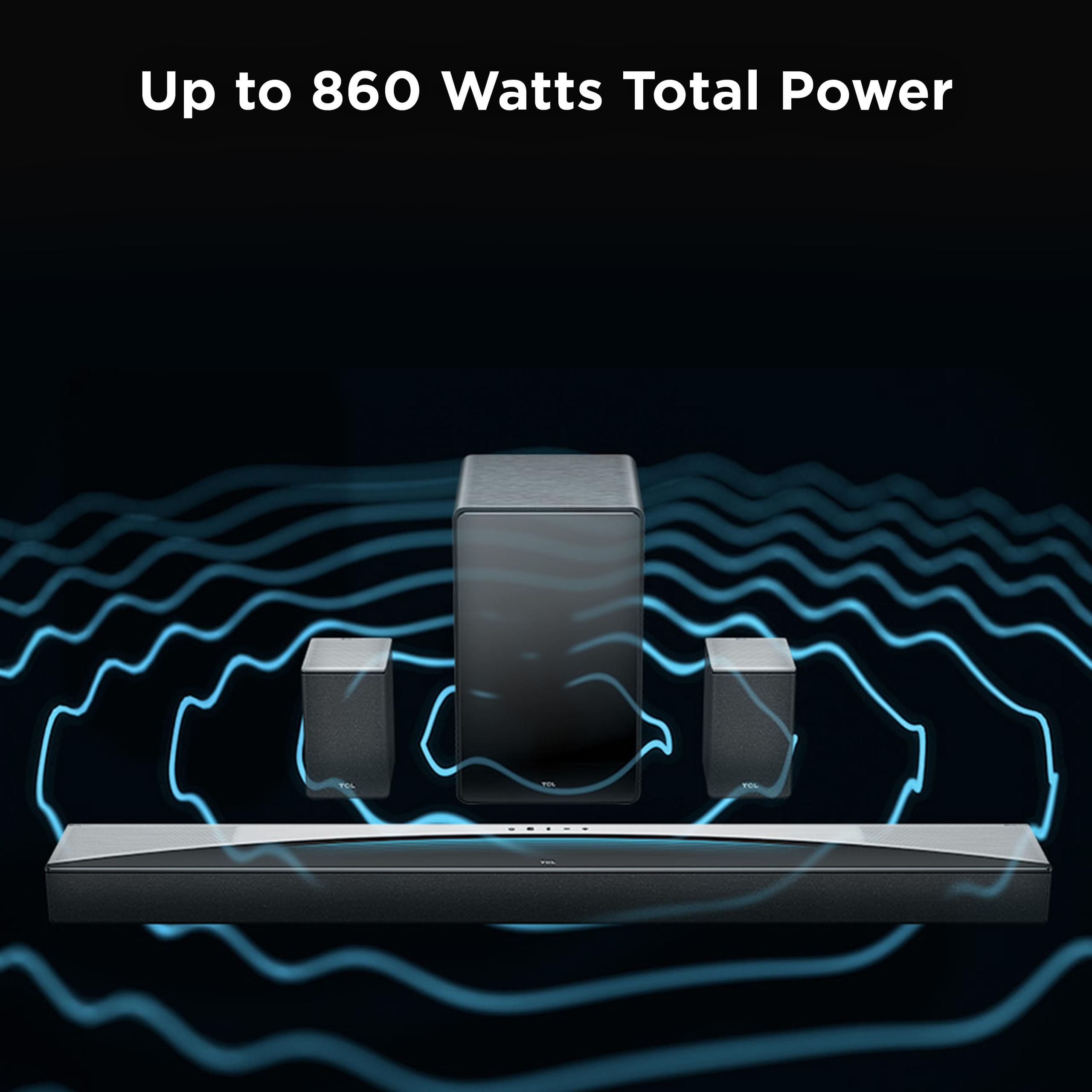
The TCL Q85H produces significantly more power on paper – up to 860 watts versus the Ultimea's 460 watts. In very large rooms (over 400 square feet), this power difference could be meaningful. However, for typical living rooms and home theaters, the Ultimea provides more than adequate volume levels.
What's particularly impressive about the Ultimea is how clean it sounds even at higher volumes. There's minimal distortion or compression, suggesting efficient amplifier design and well-matched drivers. The system maintains its composure whether you're watching dialogue-heavy dramas at moderate levels or action blockbusters at reference volumes.
Both soundbars offer modern connectivity options, but with different philosophies. The Ultimea Skywave F40 includes HDMI eARC, optical input, USB connectivity, and Bluetooth 5.4. The newer Bluetooth standard ensures more stable wireless connections with lower latency – particularly important if you're streaming music from your phone or using the system for gaming.
The TCL Q85H adds WiFi connectivity and Apple AirPlay support, along with deeper integration with TCL and Roku TVs. If you own a TCL television, the integration can be seamless, allowing you to control the soundbar with your TV remote and access advanced settings through your TV's interface.
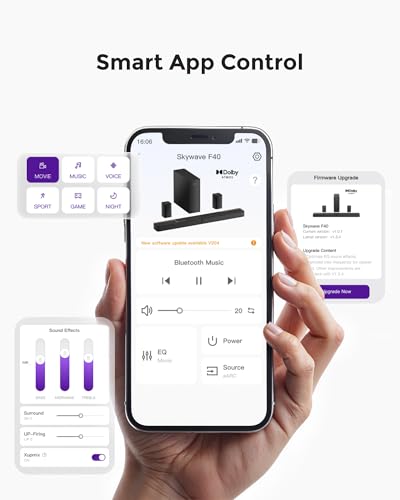
However, the Ultimea includes something often overlooked but genuinely useful: comprehensive smartphone app control. This goes beyond basic volume and input switching to include a 10-band equalizer and access to 121 preset EQ matrices. For users who like to fine-tune their audio experience, this level of control is remarkable at this price point.
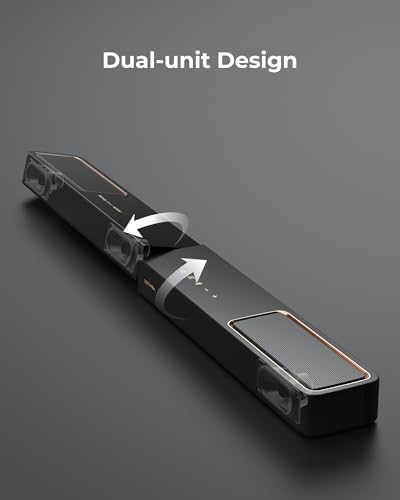
Here's where the Ultimea Skywave F40 demonstrates why good engineering extends beyond just audio performance. The system arrives with everything needed for installation: power cables, HDMI cable, optical cable, wall mounting brackets, and clear placement diagrams. The soundbar itself has an interesting modular design – it ships in two pieces that click together during setup, ensuring secure transport while maintaining structural integrity.
Setup is genuinely plug-and-play. Connect the HDMI cable to your TV's eARC port, plug in the power cables for the soundbar and rear speakers, and you're essentially done. The rear speakers connect to each other with a single wire, minimizing cable runs while maintaining the benefits of wired connectivity.
The TCL Q85H requires more consideration during setup, particularly for optimal subwoofer placement and rear speaker positioning. While the wireless connectivity reduces cable runs, it can create challenges in finding positions that optimize both audio performance and wireless signal strength.
For dedicated home theater use, both systems offer advantages, but the Ultimea Skywave F40 proves more versatile. Its compact rear speakers can be easily positioned on shelves or wall-mounted without dominating the room visually. The wired subwoofer, while requiring a power outlet, can be placed for optimal acoustics without worrying about wireless range limitations.
The system's performance with various content types is consistently impressive. Movie soundtracks benefit from the genuine surround staging and solid bass foundation. Music reproduction is surprisingly good for a system optimized for home theater, with clear separation of instruments and a wide soundstage that doesn't feel artificial.
Gaming performance deserves special mention. The Ultimea's low-latency Bluetooth 5.4 and responsive processing make it excellent for gaming, where audio cues can be crucial for gameplay. The surround effects help with directional awareness in competitive games while adding immersion to single-player experiences.
Both products represent 2024's approach to bringing Dolby Atmos to mainstream users, but they've taken different paths. The Ultimea Skywave F40 focuses on maximizing performance within budget constraints through smart engineering choices: high-quality drivers, efficient amplification, and comprehensive connectivity.
The TCL Q85H attempts to justify premium pricing through higher channel counts and proprietary technologies like RayDanz and AI Sonic room calibration. While these features sound impressive, the real-world benefits don't always justify the significant price premium.
From a future-proofing perspective, both systems should remain relevant for several years. Dolby Atmos isn't likely to undergo major changes that would obsolete either system, and both include modern connectivity standards that should handle upcoming content formats.
The Ultimea Skywave F40 makes sense for the vast majority of buyers. If you're looking to upgrade from basic TV speakers or a simple soundbar, this system delivers a genuine home theater experience without requiring a massive investment. It's particularly ideal for:
The TCL Q85H might make sense in more limited scenarios:
After extensive evaluation, the Ultimea Skywave F40 emerges as the clear winner for most users. It's a system that prioritizes real-world performance over marketing specifications, delivering genuine Dolby Atmos immersion at a price point that seemed impossible just a few years ago.
The TCL Q85H isn't a bad soundbar, but it fails to justify its premium pricing through proportional performance improvements. It's a classic example of why specifications don't tell the whole story – sometimes less is more when it's executed correctly.
For anyone considering their first serious audio upgrade, the Ultimea Skywave F40 offers an entry point into high-quality home theater audio that won't require compromising your budget for other home entertainment purchases. It's the rare product that manages to be both affordable and genuinely impressive – a combination that's increasingly difficult to find in today's market.
The fact that a relatively unknown brand can deliver better real-world performance than an established manufacturer's flagship speaks to how rapidly the audio industry is evolving. Sometimes the best choice isn't the most expensive one – it's the one engineered by people who clearly understand what home theater enthusiasts actually want and need.
| Ultimea Skywave F40 | TCL Q85H Q Class |
|---|---|
| Channel Configuration - Determines surround sound capability and immersion | |
| 5.1.2 channels with dedicated rear speakers | 7.1.4 channels (more height channels but practical benefit limited) |
| Peak Power Output - Affects maximum volume and room size capability | |
| 460W (sufficient for most home theaters) | 860W (better for very large rooms over 400 sq ft) |
| Subwoofer Connection - Impacts bass reliability and placement flexibility | |
| Wired 6.5" subwoofer (more reliable, no dropouts) | Wireless 6.5" subwoofer (flexible placement but potential connectivity issues) |
| Rear Surround Speakers - Critical for true surround sound experience | |
| Dedicated wireless rear speakers included | Wireless surround speakers included |
| Up-firing Drivers - Creates overhead Dolby Atmos height effects | |
| 2 up-firing drivers with neodymium magnets | 4 up-firing drivers with RayDanz acoustic reflectors |
| Connectivity Options - Determines device compatibility and streaming quality | |
| HDMI eARC, Optical, Bluetooth 5.4, USB, smart app control | HDMI 2.1 eARC, Bluetooth 5.1, WiFi, Apple AirPlay, TCL/Roku integration |
| Frequency Response - Shows bass extension and treble clarity range | |
| 40Hz - 20kHz (excellent bass extension for the price) | Not specified (typically similar range for this category) |
| Room Calibration - Automatically optimizes sound for your space | |
| Manual EQ with 10-band equalizer and 121 presets | AI Sonic auto room calibration |
| Setup Complexity - How easy it is to get optimal performance | |
| Plug-and-play with comprehensive included accessories | More complex wireless setup and speaker positioning |
| Brand Heritage - Company background in audio engineering | |
| Emerging brand focused on value engineering | Established TV manufacturer expanding into premium audio |
| Professional Review Consensus - Expert opinions on performance vs price | |
| Consistently praised as exceptional value with genuine surround sound | Mixed reviews noting it fails to justify premium pricing |
The Ultimea Skywave F40 delivers exceptional value by providing genuine 5.1.2 Dolby Atmos with dedicated rear speakers at a budget-friendly price point. The TCL Q85H costs significantly more but doesn't deliver proportional performance improvements, making the Ultimea Skywave F40 the clear winner for most buyers seeking the best bang for their buck.
The Ultimea Skywave F40 uses 5.1.2 channels (5 main speakers, 1 subwoofer, 2 height channels), while the TCL Q85H offers 7.1.4 channels (7 main speakers, 1 subwoofer, 4 height channels). However, most Dolby Atmos content is mixed for 5.1.2 or 7.1.2, making the extra height channels in the TCL Q85H less practically beneficial than the specification suggests.
The Ultimea Skywave F40 is significantly easier to install with plug-and-play setup, comprehensive included accessories, and clear placement diagrams. The TCL Q85H requires more complex wireless speaker positioning and calibration, making the Ultimea Skywave F40 the better choice for users who want immediate, hassle-free installation.
Yes, both the Ultimea Skywave F40 and TCL Q85H include dedicated rear surround speakers for true surround sound. This gives both systems a significant advantage over many competing soundbars that only simulate rear effects. The Ultimea Skywave F40 uses wireless rear speakers, while the TCL Q85H also features wireless surrounds.
Both systems include 6.5-inch subwoofers, but the Ultimea Skywave F40 uses a wired connection with BassMX technology that provides more reliable, well-integrated bass. The TCL Q85H has a wireless subwoofer with more power but can suffer from integration issues and potential wireless dropouts.
The Ultimea Skywave F40 excels for gaming with Bluetooth 5.4 for low-latency wireless streaming and responsive processing that helps with directional audio cues. While the TCL Q85H also supports gaming, the Ultimea Skywave F40 offers better value and more reliable performance for gaming enthusiasts.
The Ultimea Skywave F40 is ideal for apartments due to its compact design, excellent dialogue clarity at moderate volumes, and well-controlled bass that won't disturb neighbors. The TCL Q85H is designed for larger spaces and may be overpowered for typical apartment living rooms.
The Ultimea Skywave F40 offers HDMI eARC, optical, Bluetooth 5.4, USB, and comprehensive smartphone app control. The TCL Q85H adds WiFi and Apple AirPlay but focuses more on TCL/Roku TV integration. Both provide modern connectivity, but the Ultimea Skywave F40 offers more versatile device compatibility.
For most home theaters, the Ultimea Skywave F40 provides superior performance with genuine Dolby Atmos immersion, excellent dialogue clarity, and proper bass integration. The TCL Q85H only makes sense for very large home theaters where its additional power might be beneficial, but even then, the performance doesn't justify the price premium.
While both support Dolby Atmos, the Ultimea Skywave F40 implements it more effectively with precise height effects from its neodymium magnet up-firing drivers. The TCL Q85H has more height channels but doesn't always deliver better practical Atmos performance, making the Ultimea Skywave F40 the more reliable choice for experiencing three-dimensional audio.
The Ultimea Skywave F40 demonstrates superior engineering with consistent performance, reliable wired connections, and positive user feedback. The TCL Q85H suffers from mixed reviews regarding performance consistency and reliability issues, making the Ultimea Skywave F40 the more dependable choice.
The Ultimea Skywave F40 is optimized for rooms up to 300 square feet and delivers excellent performance in typical living rooms and bedrooms. The TCL Q85H is designed for larger spaces over 400 square feet, but even in large rooms, the Ultimea Skywave F40 often provides better overall value and user satisfaction.
We've done our best to create useful and informative comparisons to help you decide what product to buy. Our research uses advanced automated methods to create this comparison and perfection is not possible - please contact us for corrections or questions. These are the sites we've researched in the creation of this article: the-gadgeteer.com - youtube.com - ultimea.com - manuals.plus - youtube.com - ultimea.com - youtube.com - youtube.com - youtube.com - youtube.com - eu.ultimea.com - support.ultimea.com - gamerant.com - bestbuy.com - tcl.com - bestbuy.com - tcl.com - tcl.com - nfm.com - tcl.com - electronicexpress.com - tcl.com - tcl.com - digitaltrends.com

Privacy Policy
Terms and Conditions - Affiliate Policy
Home Security
© Copyright 2008-2026.
11816 Inwood Rd #1211, Dallas, TX 75244