

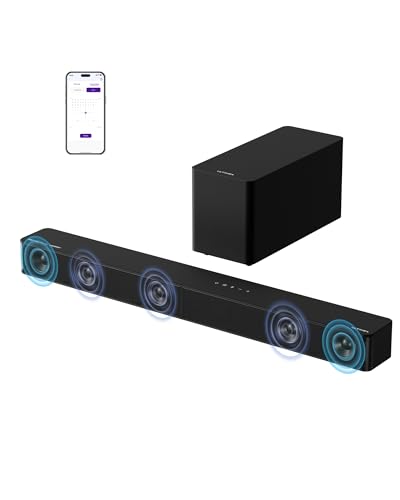


When your TV's built-in speakers just aren't cutting it anymore, you're faced with a fundamental choice in the soundbar world: go simple or go all-out. Ultimea's two standout models from recent years—the Poseidon M60 Boom released in 2025 and the Skywave F40 that hit the market in 2024—represent these two distinct philosophies perfectly.
The soundbar landscape has evolved dramatically over the past few years. What started as basic audio upgrades have transformed into sophisticated home theater systems capable of genuine surround sound. The challenge isn't finding a good soundbar anymore—it's figuring out which approach fits your life, your space, and your entertainment habits.
Before diving into specifics, it's worth understanding what modern soundbars actually do. Unlike the simple stereo sound bars of a decade ago, today's systems use advanced digital signal processing (DSP)—essentially computer chips that manipulate audio in real-time—to create surround sound effects that can genuinely fool your ears into thinking sound is coming from behind you or above your head.
The key considerations when shopping for a soundbar today revolve around authenticity versus convenience. Do you want actual speakers placed around your room for true surround sound, or are you happy with clever audio processing that simulates that experience? How much setup complexity are you willing to accept for better performance? And critically, what's your room actually capable of supporting?
The Poseidon M60 Boom and Skywave F40 represent fundamentally different answers to these questions, despite coming from the same manufacturer.
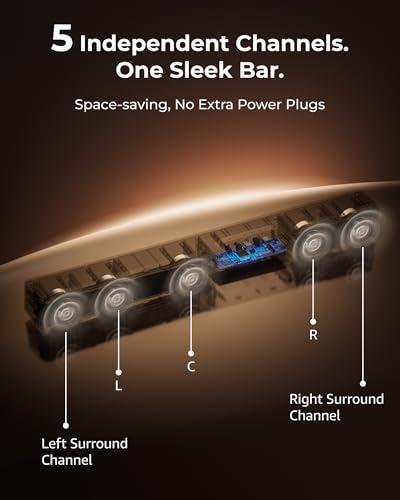
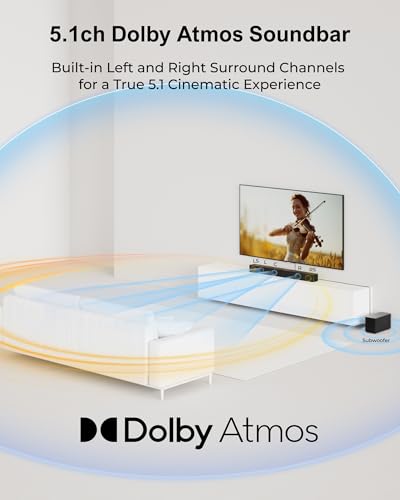
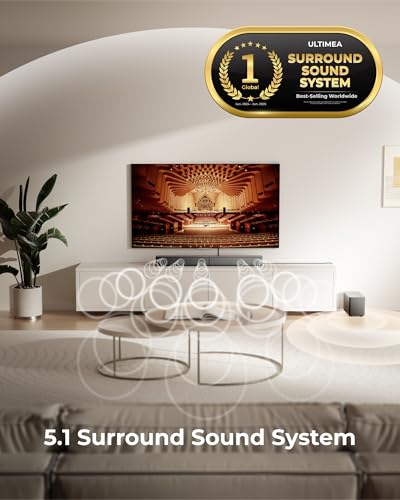
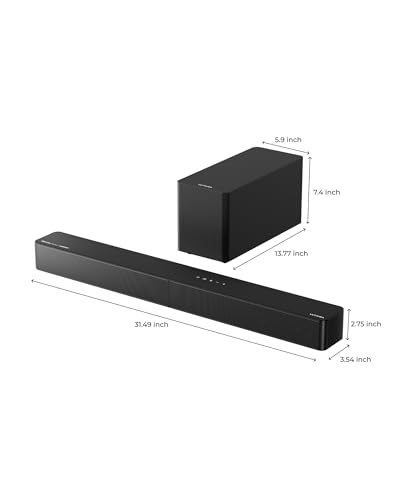
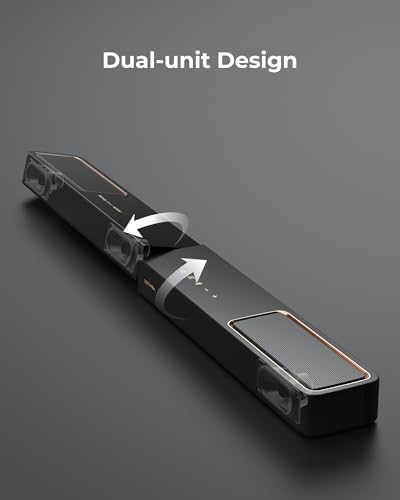
The Poseidon M60 Boom takes the streamlined approach. Everything you need comes in essentially two pieces: a sleek soundbar that splits in the middle for easier shipping and setup, plus a dedicated subwoofer for bass. The soundbar houses all five main audio channels—front left, center, front right, and both surround channels—using advanced processing to create the illusion of sound coming from around the room.
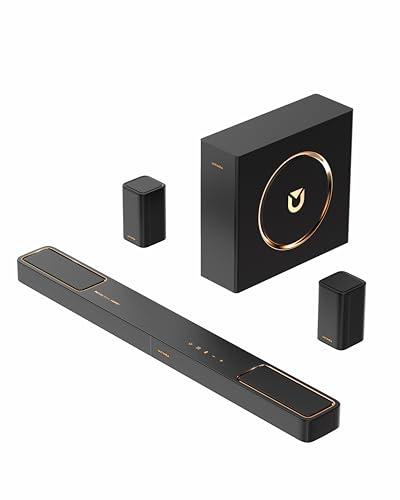
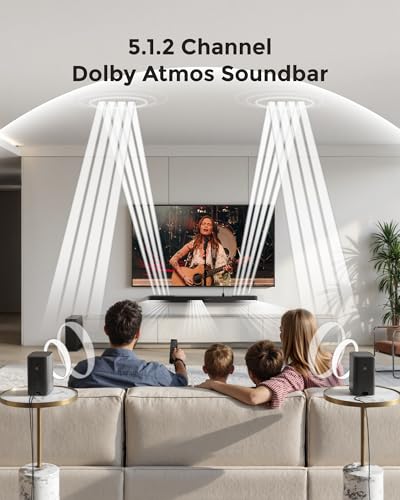
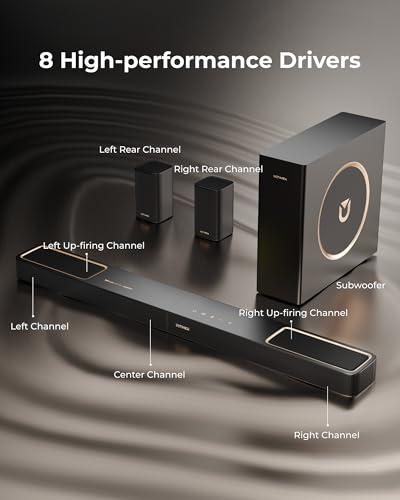
The Skywave F40, on the other hand, goes for authenticity. It includes physical rear speakers that you actually place behind your seating area, plus two up-firing drivers built into the main soundbar that bounce sound off your ceiling to create overhead effects. This is true 5.1.2 Dolby Atmos, where the numbers refer to main channels (5), subwoofer (1), and height channels (2).
Here's where the philosophical differences become tangible performance differences. The Poseidon M60 Boom uses what's called virtual surround processing—it takes audio signals and uses psychoacoustic principles (essentially tricks your brain uses to locate sounds) to make you think sounds are coming from locations where there aren't actually speakers.
This isn't just marketing fluff. Modern virtual surround can be genuinely convincing, especially for content like movies and TV shows. The M60 Boom employs triple-core DSP technology, with two processors running at 800MHz and another at 600MHz. That's serious computational power dedicated to real-time audio processing, creating what Ultimea calls "Triple-Core DSP Technology" for precise channel separation and dynamic sound adaptation.
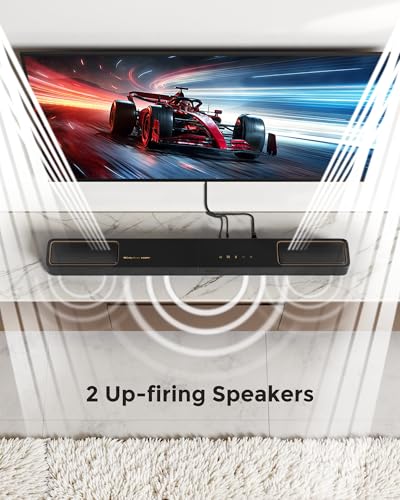
The Skywave F40, however, doesn't need to rely on tricks. When a helicopter flies overhead in a movie, the up-firing speakers actually send sound to your ceiling, which then reflects down to create a genuine sense of height. When an explosion happens behind the main character, the physical rear speakers positioned behind you create that effect authentically.
In our research across user and professional reviews, this difference is consistently noted. The M60 Boom creates an impressive soundstage for a single-bar system, but the Skywave F40 delivers spatial effects that feel more natural and immersive, particularly for action movies and gaming.
Raw power numbers tell part of the story: the Poseidon M60 Boom peaks at 340W while the Skywave F40 reaches 460W. That's about 35% more power, which translates to noticeably higher maximum volume levels and better dynamic range—the difference between quiet dialogue and explosive action scenes.
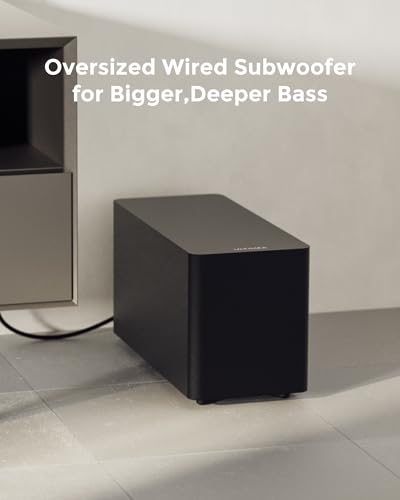
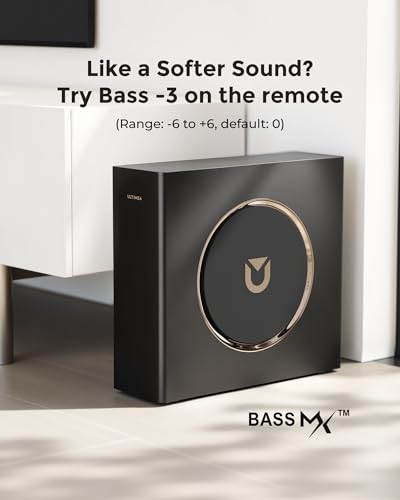
Both systems use Ultimea's BassMX Technology, but they implement it differently. The M60 Boom features a 5.25-inch subwoofer designed for tight, controlled bass that doesn't overwhelm smaller rooms. The Skywave F40 steps up to a larger driver that extends bass response down to 40-45Hz compared to the M60's 50Hz floor. In practical terms, you'll feel more of those deep rumbles in action movies and notice fuller bass in music.
The bass extension difference might seem minor on paper, but those extra 5-10Hz make a real difference for home theater use. Explosions, thunder, and the low-frequency effects that give movies their visceral impact become more pronounced with the Skywave F40.
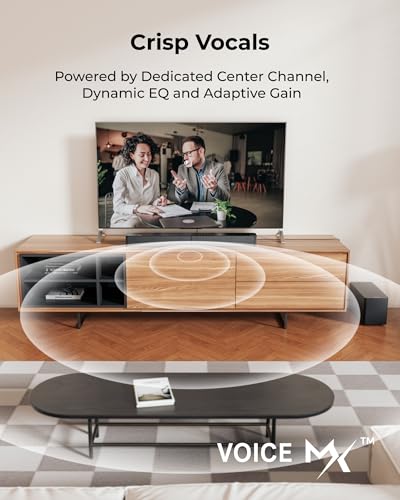
One area where both systems excel equally is dialogue clarity, thanks to Ultimea's VoiceMX technology. This feature specifically enhances the 300Hz to 3kHz frequency range where human speech lives, using adaptive equalization and gain control to ensure voices cut through even complex soundtracks.
This is genuinely important. How many times have you turned up the volume to hear dialogue, only to get blasted by the next action sequence? Both the Poseidon M60 Boom and Skywave F40 address this common frustration effectively, with dedicated voice modes that prioritize speech intelligibility.
This is where the systems diverge most dramatically. Dolby Atmos isn't just a marketing term—it's a fundamentally different approach to movie audio that treats sounds as objects in 3D space rather than just left/right/center channels.
The Poseidon M60 Boom simulates height effects through processing. It's impressive for what it is, but it's still simulation. The Skywave F40 actually includes two up-firing drivers with neodymium magnets and what Ultimea calls "18-core voice coils" for precise sound direction. These physically fire sound upward, where it bounces off your ceiling and creates genuine overhead effects.
Reviews consistently highlight this difference. The M60 Boom creates a wide, engaging soundstage that's significantly better than TV speakers or basic soundbars. But the Skywave F40 creates moments where you genuinely look up because you heard something above you—that's the difference between simulation and reality.
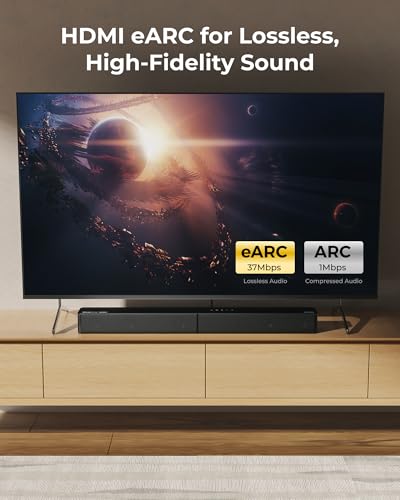
The convenience factor heavily favors the Poseidon M60 Boom. User reviews consistently mention 15-minute setup times. You connect the soundbar to your TV via HDMI eARC (Enhanced Audio Return Channel, which carries high-quality audio back from your TV to the soundbar), plug in the subwoofer, and you're done. The soundbar even comes in two pieces that twist together, making it easier to maneuver through doorways and position under your TV.
The Skywave F40 requires more planning. You need to position rear speakers behind your seating area, which means running cables (though they connect to each other with just one wire) and potentially mounting speakers on stands or walls. The setup process typically takes 30-45 minutes, and you'll need to consider your room layout more carefully.
This isn't just about time—it's about commitment. The M60 Boom works great as a plug-and-play upgrade. The Skywave F40 requires you to think about speaker placement, room acoustics, and whether your ceiling height works well for the up-firing drivers (generally 8-10 feet is ideal).
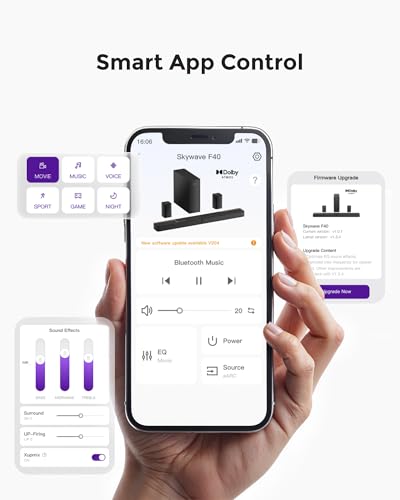
Both systems share the same modern connectivity foundations: HDMI eARC for high-quality audio, Bluetooth 5.4 for wireless streaming with minimal delay, and smart app control through Ultimea's mobile app. The Bluetooth 5.4 upgrade is worth noting—it provides faster pairing, more stable connections, and ultra-low latency that's particularly important for gaming.
Where the Skywave F40 pulls ahead is in customization options. While both systems offer EQ adjustment through their apps, the Skywave F40 includes a 10-band equalizer with 121 preset matrices. This might sound like overkill, but it reflects the system's more serious home theater positioning—you can fine-tune the sound for your specific room and preferences.
The Skywave F40 also includes Xupmix technology, powered by Dolby Digital Plus processing. This feature can take regular stereo content and upmix it into multi-channel surround sound. It won't magically make your favorite sitcom into a Dolby Atmos experience, but it does add spatial width and engagement to content that wasn't originally mixed for surround sound.
Your room plays a crucial role in soundbar performance, and the two systems have different requirements and strengths.
The Poseidon M60 Boom works well in most rooms because it doesn't rely on specific acoustic properties. Small apartments, bedrooms, or living rooms with awkward layouts can all accommodate it easily. The virtual surround processing is designed to work from your primary seating position, so as long as you're centered in front of the TV, you'll get the intended effect.
The Skywave F40 is more demanding but more rewarding. Ultimea recommends rooms sized 215-269 square feet (roughly 15x15 to 16x17 feet), and you need appropriate ceiling height for the up-firing speakers to work effectively. The rear speakers need clear positioning behind your seating area. But when everything's set up properly, the Skywave F40 creates an immersive bubble of sound that works well for multiple seating positions.
At the time of writing, the Skywave F40 carries a premium price that reflects its more complex design and additional components. The Poseidon M60 Boom represents exceptional value in the simplified soundbar category, offering performance that punches well above its price point.
But value isn't just about initial cost. The M60 Boom offers long-term convenience—no rear speakers to maintain, simpler connection management, and easier relocation if you rearrange your room. The Skywave F40 provides a more future-proof home theater foundation that will scale better with higher-quality content and larger TVs.
You're upgrading from TV speakers and want dramatically better sound without complexity. This system excels for apartment living, bedroom setups, or living rooms where simplicity matters more than absolute authenticity. It's also ideal if you primarily watch TV shows, news, and casual movie streaming rather than cinema-quality content.
The M60 Boom particularly shines for users who value the "set it and forget it" philosophy. Once it's connected, you don't need to think about it—it just works, and works well.
You're building a dedicated home theater experience and have the space to properly position multiple speakers. This system rewards users who watch movies regularly, particularly action and sci-fi content where surround effects matter. Gamers will also appreciate the authentic spatial audio for immersive gaming experiences.
The Skywave F40 is the better choice for households where movie night is a regular event and where the extra setup complexity pays off in long-term enjoyment.
Since the Skywave F40 launched in 2024, we've seen continued improvements in Dolby Atmos content availability across streaming services and UHD Blu-rays. The system's authentic height channel processing positions it well for taking advantage of this expanding content library.
The Poseidon M60 Boom, released in 2025, incorporates lessons learned from earlier virtual surround systems. Its triple-core DSP approach represents a more sophisticated take on simulated surround sound, though it's still fundamentally limited by physics compared to systems with physical speaker placement.
After evaluating user feedback, professional reviews, and technical specifications, the choice comes down to your priorities and constraints.
The Poseidon M60 Boom delivers exceptional performance for its complexity level and represents outstanding value for users who want significantly better audio without the commitment of a full surround system. It's genuinely impressive how much improvement you get for such minimal setup effort.
The Skywave F40 provides the more complete home theater experience, with authentic surround and height effects that create genuine immersion. The additional complexity and cost are justified if you have the space and inclination to set it up properly.
For most users upgrading from basic TV audio, either system will be revelatory. The M60 Boom might be the smarter choice for simplicity and value, while the Skywave F40 is worth the investment for dedicated home theater enthusiasts.
The soundbar market has matured to the point where you really can't go wrong with either approach—it's more about matching the system to your lifestyle, space, and entertainment habits than finding the "best" option. Both represent significant advances over TV speakers and offer modern features that will serve you well for years to come.
| Ultimea Poseidon M60 Boom 5.1 Soundbar | Ultimea Skywave F40 Dolby Atmos Soundbar System |
|---|---|
| Channel Configuration - Determines surround sound authenticity | |
| 5.1 virtual surround (all channels in main bar) | 5.1.2 true Dolby Atmos (physical rear + up-firing speakers) |
| Peak Power Output - Affects maximum volume and dynamic range | |
| 340W (suitable for most living rooms) | 460W (35% more power for larger spaces) |
| Height Effects - Creates overhead audio for immersive experience | |
| Virtual height processing (simulated overhead sound) | Physical up-firing drivers with neodymium magnets |
| Rear Surround Implementation - Key factor for spatial audio | |
| Virtual processing from main soundbar | Two dedicated physical rear speakers |
| Bass Extension - Determines low-frequency impact | |
| 50Hz with 5.25" subwoofer (tight, controlled bass) | 40-45Hz with 6.5" subwoofer (deeper, more impactful) |
| Setup Complexity - Time and effort required | |
| 15 minutes (soundbar + wired subwoofer only) | 30-45 minutes (multiple speakers to position) |
| Physical Components - What you need to accommodate | |
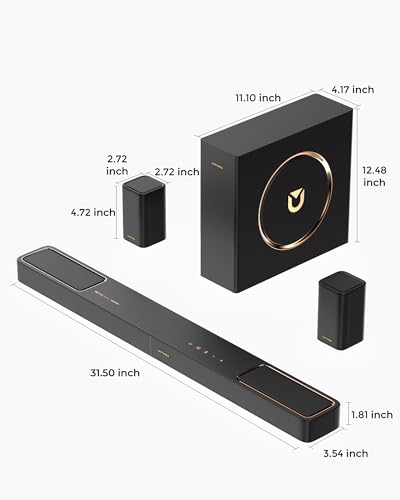
| 2 pieces: Split soundbar + subwoofer | 4 pieces: Soundbar + 2 rear speakers + subwoofer |
| Room Size Recommendation - Optimal performance space | |
| Small to medium rooms (flexible placement) | 215-269 sq ft with proper ceiling height for up-firing |
| EQ Customization - Sound tuning capabilities | |
| Basic app-controlled EQ with presets | 10-band equalizer with 121 preset matrices |
| Content Enhancement Features - Improves non-surround audio | |
| Standard processing modes | Xupmix technology for upmixing stereo to surround |
| Release Year - Indicates technology generation | |
| 2025 (latest virtual surround processing) | 2024 (proven authentic Dolby Atmos design) |
| Best For - Ideal user scenarios | |
| Convenience-focused users wanting significant upgrade | Home theater enthusiasts seeking authentic immersion |
The Ultimea Poseidon M60 Boom is significantly easier to set up, requiring only about 15 minutes with just two components: the main soundbar and a wired subwoofer. The Ultimea Skywave F40 takes 30-45 minutes due to positioning rear speakers and making multiple connections throughout your room.
The Poseidon M60 Boom uses virtual surround processing to simulate sounds coming from around you using clever audio tricks. The Skywave F40 provides true surround sound with physical rear speakers and up-firing drivers that actually bounce sound off your ceiling for genuine overhead effects.
The Skywave F40 delivers 460W of peak power compared to the Poseidon M60 Boom's 340W output. This translates to about 35% more power, allowing for higher maximum volumes and better performance in larger rooms.
Yes, but differently. The Poseidon M60 Boom simulates Dolby Atmos effects through virtual processing. The Skywave F40 provides authentic Dolby Atmos with dedicated up-firing speakers that create genuine overhead sound effects by bouncing audio off your ceiling.
The Skywave F40 features deeper bass with its larger 6.5" subwoofer extending down to 40-45Hz, compared to the Poseidon M60 Boom's 5.25" subwoofer reaching 50Hz. This means more impactful low-frequency effects for movies and music.
The Poseidon M60 Boom works well in any small to medium room due to its virtual surround approach. The Skywave F40 is optimized for rooms between 215-269 square feet with appropriate ceiling height for the up-firing speakers to function effectively.
For home theater use, the Skywave F40 provides a more cinematic experience with authentic surround sound, physical rear speakers, and genuine overhead effects. The Poseidon M60 Boom still delivers excellent movie audio but relies on virtual processing rather than true spatial placement.
Both the Poseidon M60 Boom and Skywave F40 connect to your TV via HDMI eARC cable for the best audio quality. They also support Bluetooth 5.4 for wireless music streaming from phones and tablets with ultra-low latency.
The Poseidon M60 Boom typically offers better value for users wanting significant audio improvement with minimal complexity. The Skywave F40 justifies its premium pricing with authentic Dolby Atmos, more components, and superior immersive capabilities for dedicated home theater setups.
Yes, both the Poseidon M60 Boom and Skywave F40 support smart app control through Ultimea's mobile app. The Skywave F40 offers more advanced customization with a 10-band equalizer and 121 preset sound profiles.
The Skywave F40 provides superior gaming audio with its authentic 360-degree surround sound and physical rear speakers that create realistic spatial effects. Both soundbars feature Bluetooth 5.4 with ultra-low latency, but the Poseidon M60 Boom still delivers excellent gaming audio with simpler setup.
The Poseidon M60 Boom includes the main soundbar with integrated drivers and one wired subwoofer (2 total pieces). The Skywave F40 includes the main soundbar, two separate rear surround speakers, and a subwoofer (4 total pieces requiring strategic placement).
We've done our best to create useful and informative comparisons to help you decide what product to buy. Our research uses advanced automated methods to create this comparison and perfection is not possible - please contact us for corrections or questions. These are the sites we've researched in the creation of this article: ultimea.com - ultimea.com - youtube.com - bestbuy.com - youtube.com - avsforum.com - youtube.com - manuals.plus - youtube.com - device.report - ultimea.com - ultimea.de - community.ultimea.com - ultimea.com - community.ultimea.com - ultimea.com - youtube.com - aliexpress.com - ultimea.com - the-gadgeteer.com - youtube.com - ultimea.com - manuals.plus - youtube.com - ultimea.com - youtube.com - youtube.com - youtube.com - youtube.com - eu.ultimea.com - support.ultimea.com

Privacy Policy
Terms and Conditions - Affiliate Policy
Home Security
© Copyright 2008-2026.
11816 Inwood Rd #1211, Dallas, TX 75244