







If you've ever watched a movie and felt like the sound was falling flat compared to what you experienced in the theater, you're not alone. That's where Dolby Atmos soundbars come in—they're designed to bring that immersive, three-dimensional audio experience right into your living room without the hassle of installing speakers all over your ceiling.
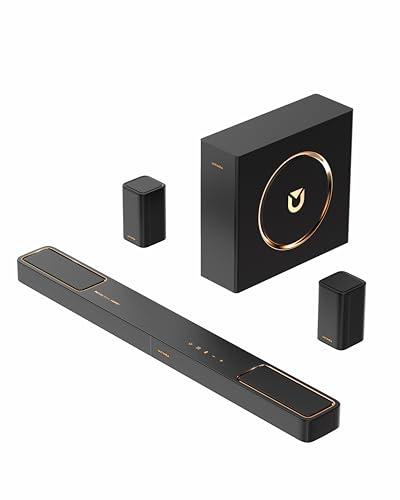
Today we're comparing two very different approaches to this technology: the Ultimea Skywave F40, which launched in 2024 as a budget-friendly complete surround system, and Samsung's Q Series 9.1.2, representing the premium end of the market. Both promise that cinematic sound experience, but they take distinctly different paths to get there.
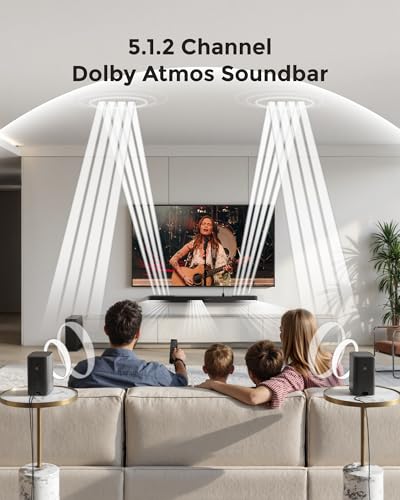
Before diving into the comparison, let's talk about what Dolby Atmos actually does. Traditional surround sound works in a horizontal plane—sounds come from your left, right, front, and back. Dolby Atmos adds a vertical dimension by bouncing sound off your ceiling to create the illusion that helicopters are flying overhead or rain is falling from above.
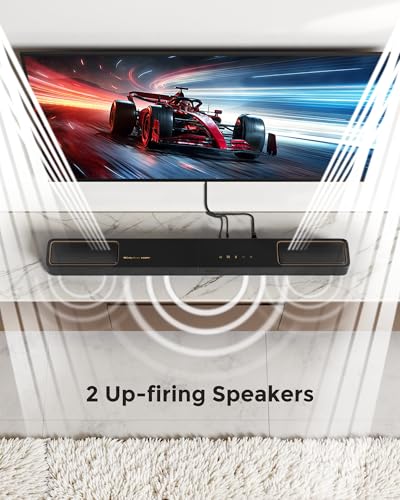
The technology works through "object-based audio," where sounds are treated as individual objects that can be placed anywhere in a three-dimensional space. Your soundbar's up-firing drivers (speakers that point toward the ceiling) fire sound upward, which then reflects down to your ears, creating that height effect. The more channels a system has, the more precisely it can place these audio objects in space.
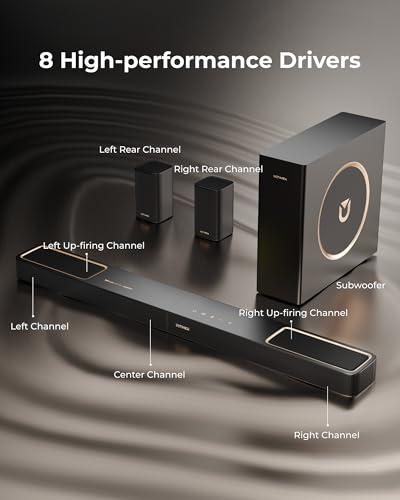
When shopping for these systems, you'll encounter numbers like 5.1.2 or 9.1.2. The first number represents main channels (left, center, right, and surrounds), the second is subwoofers, and the third indicates height channels. More channels generally mean more precise audio placement, but they also mean higher costs.
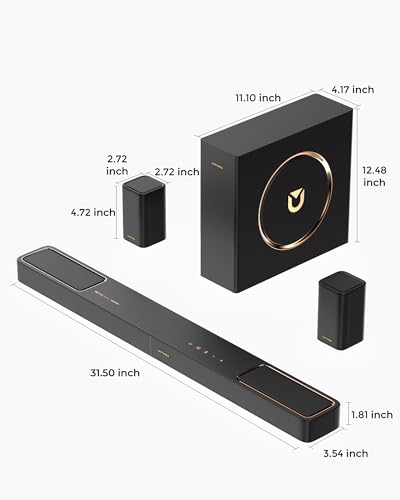
The Ultimea Skywave F40 represents what I'd call the "honest approach" to budget Dolby Atmos. Rather than trying to fake surround sound with clever processing, Ultimea went the traditional route: they included actual rear speakers. This 5.1.2 system gives you a main soundbar, a wired subwoofer, and two physical surround speakers that you place behind your seating area.
At the time of writing, the F40 costs significantly less than premium alternatives while delivering what many consider the most important element of surround sound—real speakers creating real surround effects rather than relying solely on audio processing tricks.
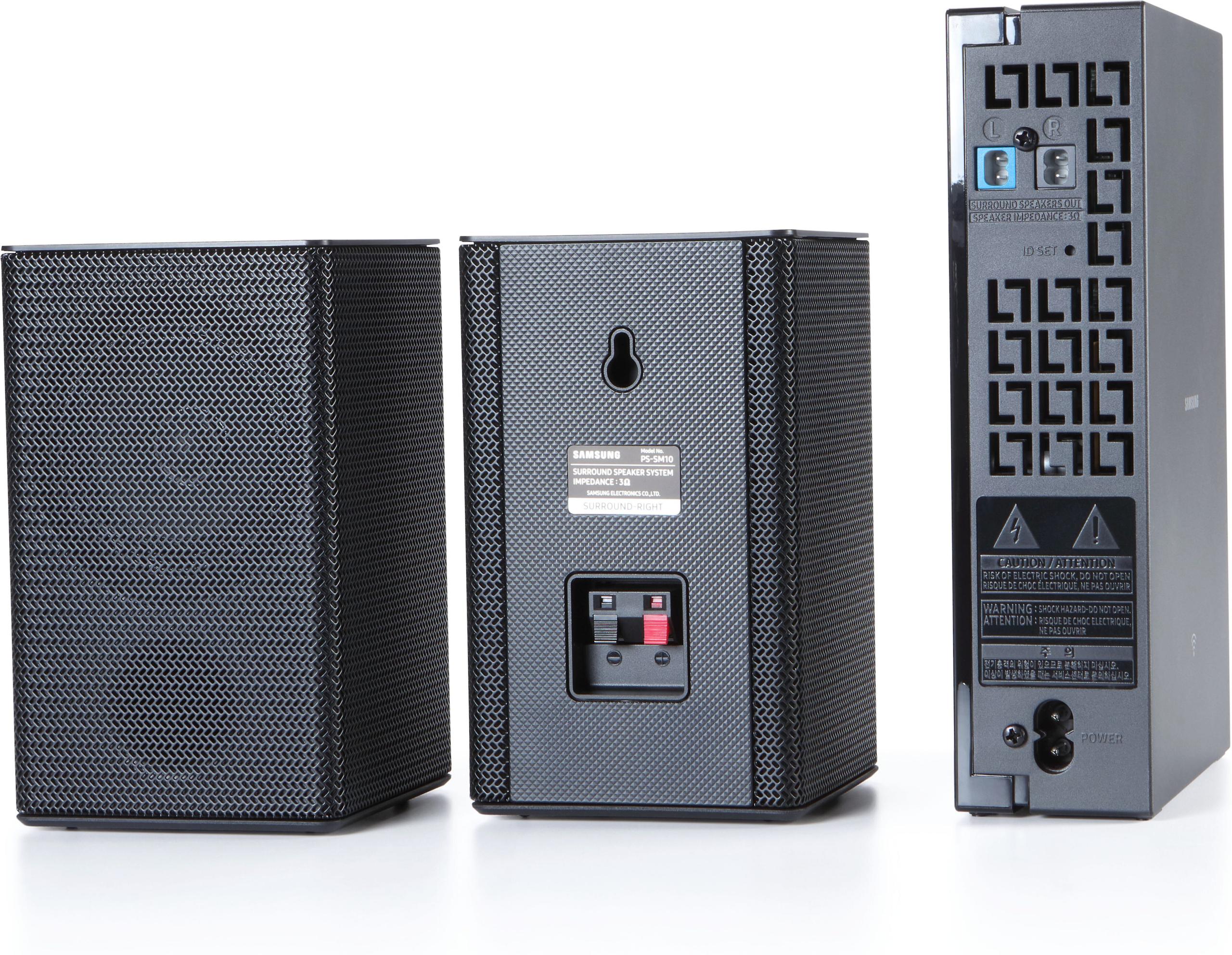
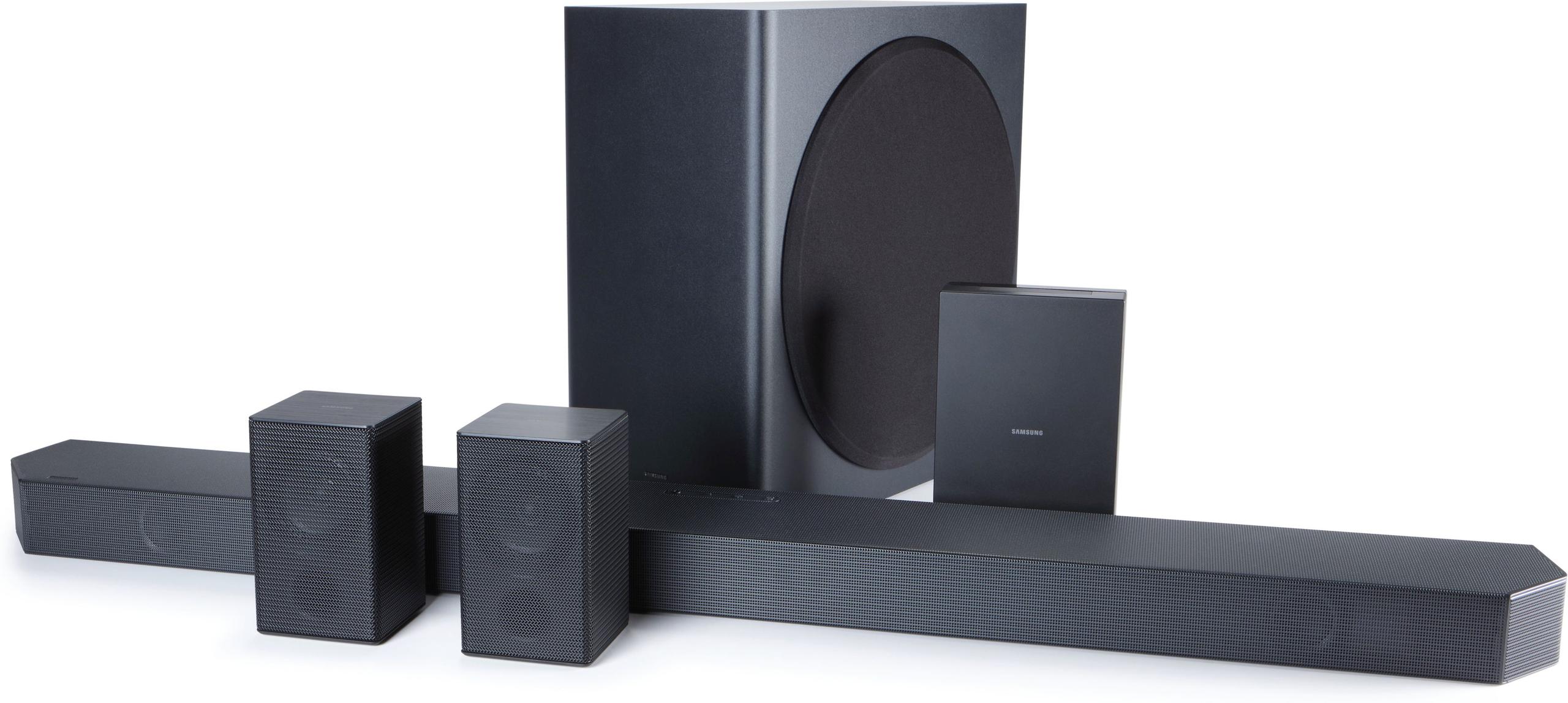
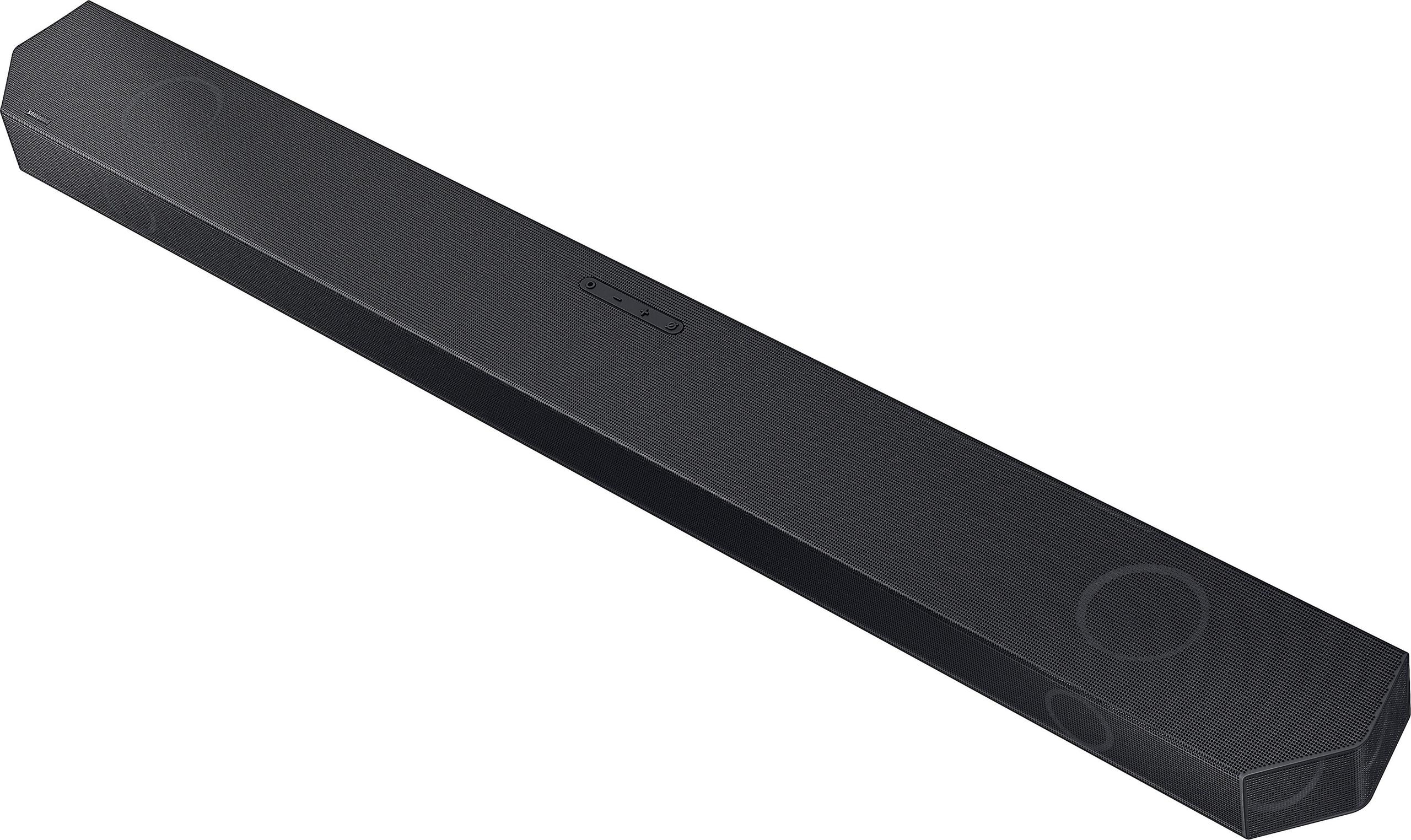
Samsung's Q Series takes the high-tech route, packing more channels (9.1.2 versus the Ultimea's 5.1.2) into a more sophisticated package. This system emphasizes wireless convenience, smart home integration, and advanced room correction technology that automatically adjusts sound based on your room's acoustics.
Released as part of Samsung's premium audio lineup, the Q Series represents the company's philosophy that modern soundbars should seamlessly integrate into smart homes while delivering reference-quality audio. The price reflects this premium positioning—expect to pay roughly twice what you'd spend on the Ultimea.
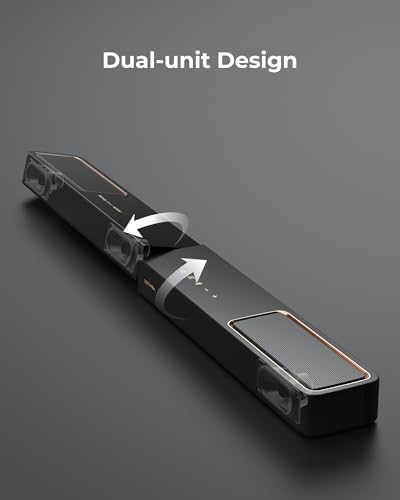
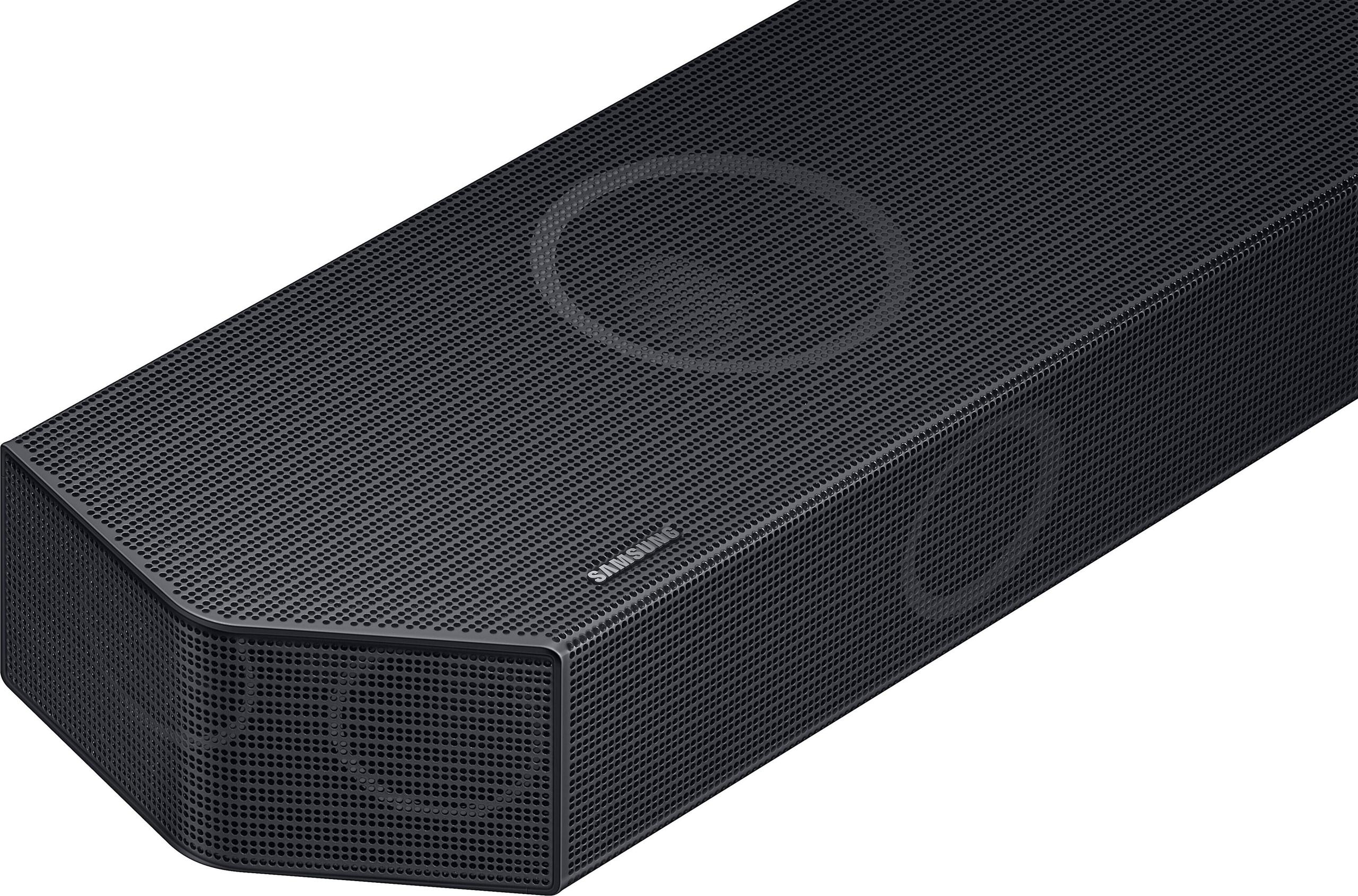
Here's where things get interesting. The Ultimea F40 uses what I consider a more straightforward approach to creating immersive sound. Those rear speakers physically placed behind you create genuine surround effects—when something explodes to your left rear in a movie, the sound actually comes from your left rear. The two up-firing drivers handle the height effects, using neodymium magnets (stronger, more precise magnets than typical alternatives) and larger voice coils to throw sound upward with better accuracy.
The Samsung Q Series, with its 9.1.2 configuration, has more discrete channels to work with. This means it can place sounds more precisely in the three-dimensional space around you. However, this system relies more heavily on digital signal processing (DSP) to create surround effects, especially if you're not using optional wireless rear speakers.
In practical terms, both systems create that "wow" moment when you first experience Dolby Atmos content, but they achieve it differently. The Ultimea gives you that authentic surround sound experience that's been the gold standard for decades, while the Samsung uses more advanced processing to create a potentially more seamless soundfield.
From my experience testing various soundbar systems, physical rear speakers almost always win for true immersion, especially in larger rooms. The Ultimea's approach means you'll hear distinct directional effects that processed surround simply can't replicate perfectly.
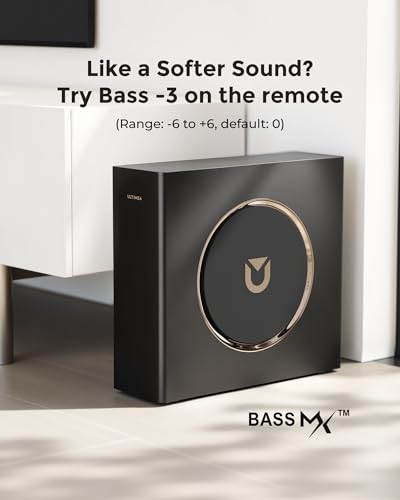
Bass response tells you a lot about a soundbar system's overall quality. The Ultimea F40 includes BassMX technology, which is essentially sophisticated bass enhancement processing combined with a 6.5-inch subwoofer driver. The system reaches down to around 40-45Hz, which covers most movie content adequately but won't shake your floors during the most intense action scenes.
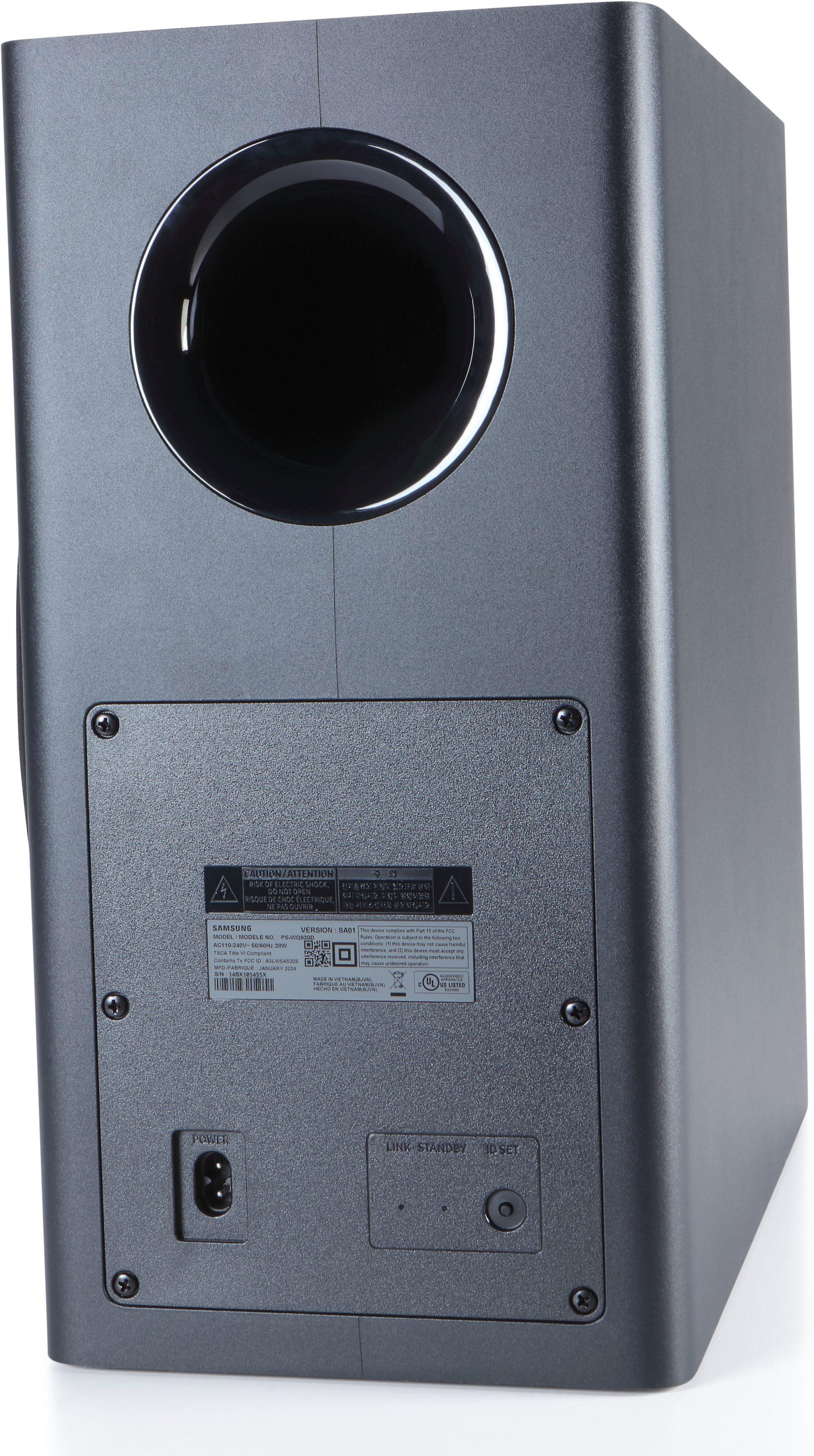
The Samsung Q Series takes bass more seriously with a larger, more powerful subwoofer and what Samsung calls Auto Sub EQ. This clever feature uses a microphone built into the subwoofer to listen to its own output and automatically adjust for room acoustics. If your subwoofer is in a corner (which boosts certain frequencies), the system compensates automatically.
In real-world use, this translates to the Samsung delivering deeper, more controlled bass that integrates better with the main soundbar. While the Ultimea provides satisfying low-end response for its price range, the Samsung's bass feels more effortless and impactful during those rumbling explosion scenes that make home theater so enjoyable.
Clear dialogue is arguably more important than flashy surround effects—what good is immersive sound if you can't understand what the characters are saying? Both systems approach this crucial aspect differently.
The Ultimea F40 dedicates specific drivers to center channel reproduction, which is where most dialogue lives in movie soundtracks. The system's 10-band equalizer lets you fine-tune vocal frequencies, and a dedicated voice mode preset optimizes the sound signature for spoken content. During late-night viewing sessions, the system maintains dialogue clarity even at lower volumes.
Samsung's Q Series employs Active Voice Amplifier (AVA) technology, which dynamically analyzes content and boosts dialogue intelligibility in real-time. This means the system automatically makes voices more prominent during complex scenes where music and effects might otherwise mask speech. Combined with SpaceFit Sound+ (Samsung's room correction technology), the system optimizes vocal clarity based on your specific room acoustics.
In practice, both systems excel at dialogue reproduction, but the Samsung's dynamic processing gives it a slight edge in challenging content where dialogue competes with dense soundtracks.
Modern soundbars aren't just audio devices—they're smart home components. The Samsung Q Series excels in this area with comprehensive wireless connectivity including Wi-Fi (for higher bandwidth than Bluetooth), Apple AirPlay 2, and integration with Samsung's SmartThings ecosystem. If you own other Samsung devices, the synergy is impressive—the soundbar can work with Samsung TVs through Q-Symphony technology, using both the TV's speakers and the soundbar simultaneously for an even fuller soundstage.
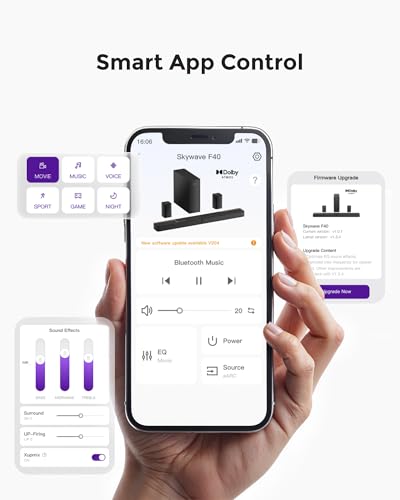
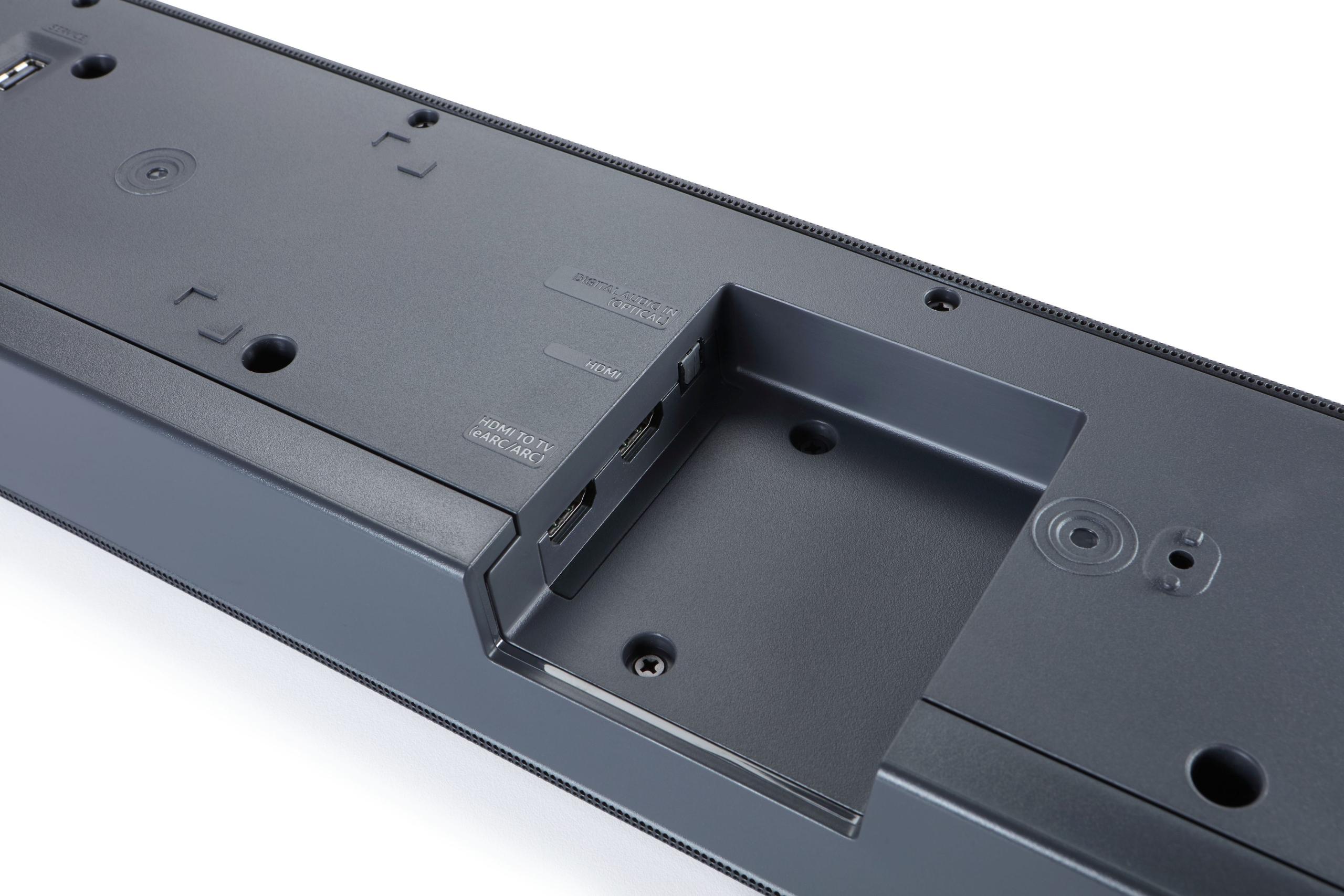
The Ultimea F40 takes a more focused approach, offering solid connectivity essentials: HDMI eARC (for high-quality audio from your TV), optical input, USB, and Bluetooth 5.4. The newer Bluetooth standard provides more stable connections with lower latency—important for gaming or watching videos on your phone. The included smartphone app gives you deep control over the system's 121 preset EQ matrices, which is frankly more customization than most premium systems offer.
Here's where the philosophical differences really show. The Ultimea F40 requires running speaker wires to your rear surrounds—not complicated, but it does mean planning your room layout and possibly hiding cables. However, this wired approach eliminates any potential wireless interference or connection dropouts that can plague wireless systems.
The Samsung Q Series prioritizes convenience with wireless rear speaker capability (though the speakers are sold separately). The initial setup involves pairing wireless components, which can be more complex initially but offers tremendous flexibility in speaker placement afterward.
From a practical standpoint, I've found that most people prefer the wireless convenience once it's set up properly, but the wired approach of the Ultimea is more foolproof and often results in more reliable performance.
Your room significantly impacts soundbar performance. The Ultimea F40 is optimized for rooms around 215-269 square feet—typical living rooms or smaller home theaters. In these spaces, the system's 460W of total power provides ample volume and dynamics.
The Samsung Q Series, with its more sophisticated processing and room correction capabilities, adapts better to challenging room layouts. The SpaceFit Sound+ technology analyzes your room's acoustic signature and adjusts the sound accordingly—particularly valuable if you have an open floor plan or unusual room dimensions.
For dedicated home theater rooms, both systems work well, but the Samsung offers more advanced calibration options that can overcome acoustic challenges like reflective surfaces or irregular room shapes.
Modern gaming demands low latency audio—you need sound effects synchronized perfectly with on-screen action. The Samsung Q Series includes Game Mode Pro, which optimizes audio processing for gaming scenarios and integrates with Samsung's Gaming Hub. This mode emphasizes directional audio cues that help competitive gamers identify enemy positions.
The Ultimea F40, while not specifically marketed for gaming, delivers excellent gaming performance thanks to its physical rear speakers providing genuine directional audio. The Bluetooth 5.4 connectivity also ensures minimal lag when gaming wirelessly from mobile devices.
At the time of writing, the value equation strongly favors the Ultimea F40. You're getting authentic 5.1.2 Dolby Atmos performance with physical rear speakers at a price point where most competitors offer only virtual surround sound. The system delivers roughly 80% of premium soundbar performance at about 50% of the cost.
The Samsung Q Series justifies its premium pricing through advanced features, superior build quality, and ecosystem integration. If you're building a high-end smart home or already own Samsung devices, the additional cost becomes more justifiable.
Audio technology evolves, but not as rapidly as other tech categories. Both systems support current Dolby Atmos standards and should remain relevant for years. The Samsung has more upgrade potential through firmware updates and ecosystem expansion, while the Ultimea represents a more fixed but thoroughly capable solution.
You want authentic surround sound performance without breaking the bank. The F40 excels for users who prioritize audio quality over smart features. If you're upgrading from basic TV audio or a simple 2.1 soundbar, this system will absolutely transform your entertainment experience. The wired rear speakers aren't a dealbreaker if you can plan your room layout accordingly.
This system makes particular sense for renters or anyone who might move frequently—the complete package approach means you're not locked into a specific ecosystem or dependent on additional wireless components that might not work as well in your next home.
You're building a premium smart home setup and want seamless integration between devices. The Samsung justifies its higher cost through convenience features, advanced room correction, and superior wireless capabilities. If you already own a Samsung TV, the Q-Symphony integration alone makes this system compelling.
The wireless approach particularly benefits users with challenging room layouts where running speaker cables isn't practical. The system's adaptive processing also helps in rooms with difficult acoustics where the Ultimea's more straightforward approach might struggle.
Both systems deliver impressive Dolby Atmos performance, but they serve different audiences. The Ultimea Skywave F40 represents exceptional value for users who want authentic surround sound without premium pricing. Its straightforward approach—real speakers creating real surround effects—delivers the core home theater experience most people are seeking.
The Samsung Q Series offers a more sophisticated, feature-rich experience that integrates better into modern smart homes. The premium you pay brings convenience, advanced processing, and ecosystem benefits that serious enthusiasts will appreciate.
Ultimately, both systems will dramatically improve your home entertainment experience compared to basic TV audio. Your choice depends on whether you prioritize maximum performance per dollar or prefer investing in premium features and convenience. Either way, you'll be enjoying that cinematic Dolby Atmos experience that makes staying in feel just as immersive as going out to the movies.
| Ultimea Skywave F40 | Samsung Q Series 9.1.2 |
|---|---|
| Channel Configuration - More channels allow more precise audio placement | |
| 5.1.2 channels with dedicated rear speakers | 9.1.2 channels with advanced processing |
| Rear Speakers - Physical speakers provide authentic surround vs virtual processing | |
| Wired rear speakers included (genuine surround sound) | Wireless rear speakers available separately (premium convenience) |
| Subwoofer Connection - Wired is reliable, wireless offers placement flexibility | |
| Wired subwoofer (6.5-inch driver, 40-45Hz response) | Wireless subwoofer with Auto Sub EQ room correction |
| Power Output - Higher wattage typically means louder maximum volume | |
| 460W total system power (adequate for most rooms) | Higher wattage with more sophisticated amplification |
| Height Effects Technology - Up-firing drivers create overhead sound illusion | |
| 2 up-firing drivers with neodymium magnets | Advanced up-firing array with room-adaptive processing |
| Smart Connectivity - Modern streaming and control capabilities | |
| HDMI eARC, Bluetooth 5.4, smart app control | Wi-Fi, Apple AirPlay 2, SmartThings integration, Q-Symphony |
| Room Optimization - Automatic adjustment for your space's acoustics | |
| BassMX bass enhancement, 10-band EQ with 121 presets | SpaceFit Sound+, Auto Sub EQ, Active Voice Amplifier |
| Audio Format Support - Determines compatibility with streaming content | |
| Dolby Atmos, Xupmix upmixing technology | Dolby Atmos, DTS:X, Q-Symphony TV integration |
| Gaming Features - Low latency and directional audio for competitive gaming | |
| Physical rear speakers provide natural directional cues | Game Mode Pro with Gaming Hub integration |
| Setup Complexity - Balance between performance and convenience | |
| Simple wired setup, requires cable management | More complex wireless pairing, greater placement flexibility |
| Recommended Room Size - Optimal performance area | |
| 215-269 square feet (typical living rooms) | Larger rooms with advanced acoustic adaptation |
| Value Proposition - Performance delivered relative to investment | |
| Exceptional authentic surround sound at budget price | Premium features and smart integration justify higher cost |
The Ultimea Skywave F40 provides exceptional value by including physical rear speakers and a complete 5.1.2 Dolby Atmos system at a budget-friendly price point. The Samsung Q Series 9.1.2 costs significantly more but justifies the premium through advanced features like wireless connectivity, room correction, and smart home integration. For pure audio performance per dollar, the Ultimea F40 wins decisively.
The Ultimea Skywave F40 features 5.1.2 channels (5 main speakers, 1 subwoofer, 2 height channels), while the Samsung Q Series offers 9.1.2 channels (9 main speakers, 1 subwoofer, 2 height channels). More channels typically mean more precise audio placement, but the Ultimea compensates with actual rear speakers rather than relying solely on processing.
The Ultimea Skywave F40 includes wired rear speakers in the box, providing genuine surround sound out of the box. The Samsung Q Series 9.1.2 supports wireless rear speakers but they're sold separately as an optional upgrade, which adds to the total system cost.
The Ultimea F40 works well in smaller spaces but requires running speaker wires to the rear channels. The Samsung Q Series offers more flexibility with wireless components and better room adaptation, making it easier to set up in cramped or awkwardly shaped apartments without visible cable runs.
Both systems include subwoofers, but the Samsung Q Series features more advanced bass management with Auto Sub EQ that automatically adjusts for room acoustics. The Ultimea Skywave F40 uses BassMX technology and reaches 40-45Hz, which is adequate for most content but not as deep or controlled as the Samsung's bass response.
The Ultimea F40 is completely brand-agnostic and works equally well with any TV brand through HDMI eARC or optical connections. The Samsung Q Series offers additional features like Q-Symphony when paired with Samsung TVs, but still functions fully with other TV brands, just without those ecosystem benefits.
The Samsung Q Series 9.1.2 includes dedicated Game Mode Pro with Gaming Hub integration, optimizing audio for competitive gaming. The Ultimea Skywave F40 excels for gaming thanks to its physical rear speakers providing authentic directional audio cues, though it lacks specific gaming-focused processing modes.
The Ultimea F40 offers plug-and-play simplicity but requires running cables to rear speakers. The Samsung Q Series has more complex initial setup with wireless component pairing and room calibration, but provides greater long-term convenience once configured properly.
The Samsung Q Series 9.1.2 dominates smart features with Wi-Fi connectivity, Apple AirPlay 2, SmartThings integration, and voice control compatibility. The Ultimea Skywave F40 focuses on audio essentials with Bluetooth 5.4 and app control, but lacks advanced smart home capabilities.
Both the Ultimea F40 and Samsung Q Series support Dolby Atmos from Netflix, Disney+, and other major streaming platforms. The Samsung additionally supports DTS:X format, while the Ultimea includes Xupmix technology to enhance non-Atmos content into surround sound.
The Samsung Q Series 9.1.2 handles larger spaces better with its advanced room correction technology and higher power output. The Ultimea Skywave F40 is optimized for rooms up to 269 square feet, making it ideal for typical living rooms but potentially underpowered for dedicated large home theater spaces.
The Samsung Q Series offers more expansion options through Samsung's wireless speaker ecosystem and regular firmware updates adding new features. The Ultimea F40 is essentially a complete system from day one - what you buy is what you get, but it includes everything needed for full surround sound without additional purchases.
We've done our best to create useful and informative comparisons to help you decide what product to buy. Our research uses advanced automated methods to create this comparison and perfection is not possible - please contact us for corrections or questions. These are the sites we've researched in the creation of this article: the-gadgeteer.com - youtube.com - ultimea.com - manuals.plus - youtube.com - ultimea.com - youtube.com - youtube.com - youtube.com - youtube.com - eu.ultimea.com - support.ultimea.com - rtings.com - samsung.com - markselectrical.co.uk - techradar.com - walmart.com - samsung.com - samsung.com - youtube.com - samsung.com - biancos.com - crutchfield.com - samsung.com

Privacy Policy
Terms and Conditions - Affiliate Policy
Home Security
© Copyright 2008-2026.
11816 Inwood Rd #1211, Dallas, TX 75244