



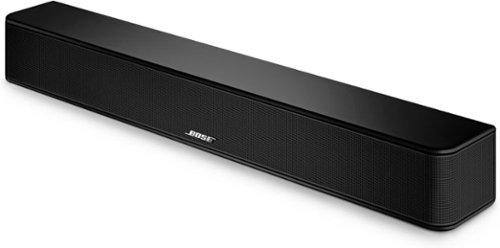
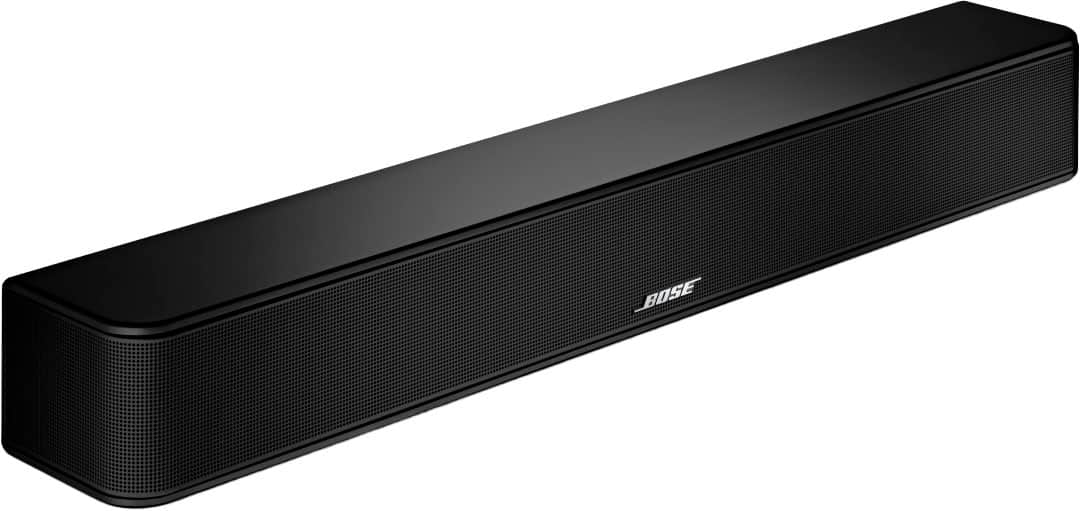
When your TV's built-in speakers make movie dialogue sound like it's coming through a tin can, it's time to upgrade. But choosing between soundbars can feel overwhelming, especially when you're comparing completely different approaches like the Ultimea Skywave F40 and Bose Solo Series 2. These two products represent opposite ends of the soundbar spectrum – one is a full home theater system disguised as a soundbar, while the other focuses on doing the basics exceptionally well.
The soundbar market has evolved dramatically since these basic audio upgrades first appeared in the mid-2000s. What started as simple speaker bars to replace terrible TV audio has branched into distinct categories serving vastly different needs.
At one end, you have complete surround sound systems like the Ultimea Skywave F40, which launched in 2024 with the latest Dolby Atmos technology. These systems include multiple speakers and a subwoofer (the large speaker that handles deep bass sounds) to create genuine surround sound. At the other end, products like the Bose Solo Series 2, also released in 2024, focus on improving dialogue clarity and overall TV audio without the complexity of multiple components.
The key considerations when choosing between these approaches include your room size, how much you're willing to spend, and most importantly, what you plan to watch or listen to. If you're primarily watching the news or sitcoms, you need different audio capabilities than someone who wants to experience action movies with thunderous explosions and helicopters flying overhead.
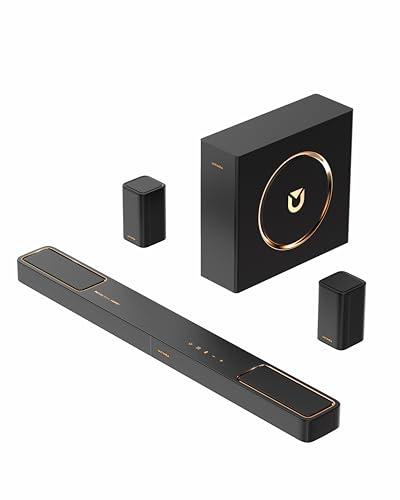
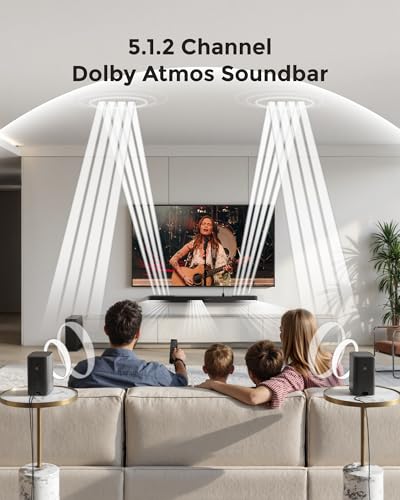
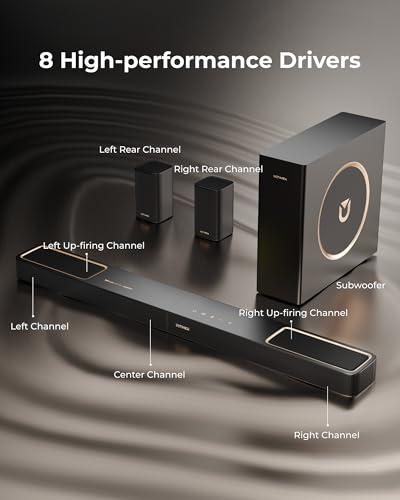
The Ultimea Skywave F40 takes the "go big or go home" approach. This isn't just a soundbar – it's a complete 5.1.2 channel Dolby Atmos system. Those numbers tell you everything: 5.1 means five main speakers plus one subwoofer, while the .2 indicates two additional height channels that bounce sound off your ceiling to create overhead effects. When a helicopter flies over in a movie, you'll actually hear it above you.
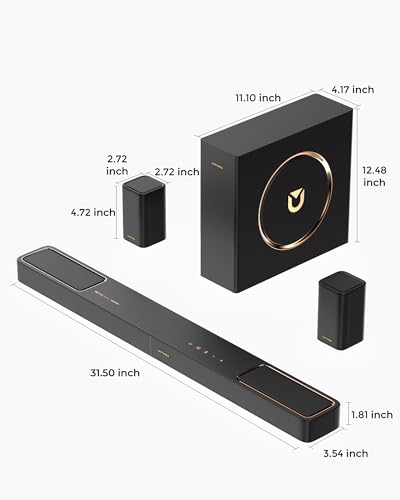
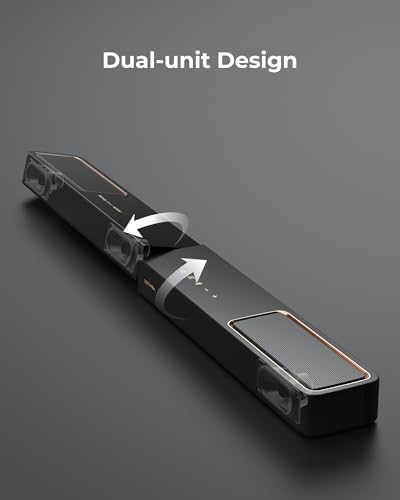
The system includes a main soundbar that splits into two pieces for shipping (they connect with a clever twist-lock mechanism), a wired subwoofer, and two wireless surround speakers. The total power output reaches 460 watts, which is enough to fill most living rooms with room-shaking sound. At the time of writing, it sits in the upper-budget category for complete systems, but offers exceptional value considering you're getting everything needed for true surround sound.
The Bose Solo Series 2, by contrast, embodies the "less is more" philosophy. This compact soundbar measures just 21.6 inches wide and houses only two speakers, making it what's called a 2.0 system (two channels, no dedicated subwoofer). Bose released this as an updated version of their popular Solo series, incorporating improved dialogue processing and Bluetooth connectivity. It falls into the entry-to-mid price range and represents excellent value for those wanting immediate TV audio improvement without complexity.
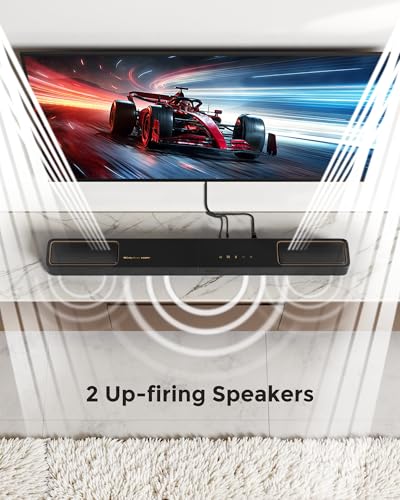
Here's where these products diverge most dramatically. The Ultimea Skywave F40 creates true surround sound positioning through its physical speaker placement. The rear speakers actually sit behind your listening position, while the upward-firing drivers in the main soundbar reflect audio off your ceiling. This isn't just stereo sound made louder – it's genuinely three-dimensional audio that places sounds precisely where they should be in space.
Dolby Atmos, the technology powering the Skywave F40, represents the latest evolution in home theater audio. Traditional surround sound systems create a horizontal sound bubble around you. Dolby Atmos adds that crucial vertical dimension, so when rain falls in a movie scene, you hear individual droplets coming from above. The system's Xupmix technology even takes regular stereo content and intelligently expands it to use all speakers, though the effect works best with content specifically mixed for Atmos.
The Bose Solo Series 2 uses a completely different approach called psychoacoustic processing. Instead of physical surround speakers, it relies on precisely angled drivers and digital signal processing to create the illusion of wider sound. Bose has mastered this technique over decades – the soundbar creates a surprisingly spacious soundstage that extends well beyond its physical boundaries. However, this is still fundamentally stereo audio, not true surround sound.
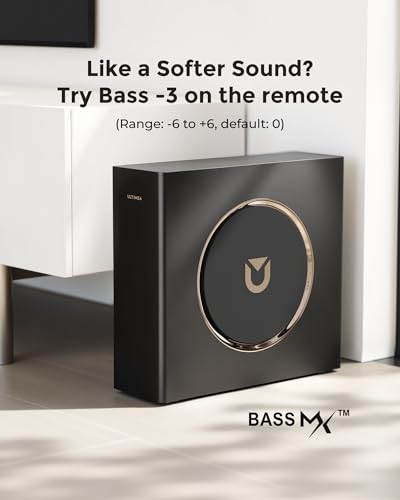
Bass performance reveals another fundamental difference. The Ultimea Skywave F40 includes a dedicated subwoofer with its own amplifier, extending frequency response down to 45Hz. In practical terms, this means you'll feel the rumble of explosions, the thump of musical bass lines, and the subtle low-frequency information that makes audio feel more realistic and impactful.
The system's BassMX technology actively manages bass output, preventing distortion even at high volumes while maintaining the punch that makes action scenes exciting. User reports consistently praise the subwoofer's ability to fill medium-sized rooms without overwhelming dialogue or becoming boomy.
The Bose Solo Series 2 takes a more challenging approach to bass. Without a dedicated subwoofer, it relies on port-based bass reflex design – essentially using the soundbar's internal air chamber to enhance low frequencies. While Bose engineers are skilled at maximizing bass from small enclosures, physics ultimately limits what's possible. The result is adequate bass for dialogue and light music, but movies and bass-heavy music reveal the limitations.
Interestingly, Bose offers an optional wireless subwoofer for the Solo Series 2, but this significantly increases the total system cost and complexity, somewhat defeating the product's core simplicity advantage.
The Ultimea Skywave F40 delivers 460 watts across its eight speakers, providing substantial headroom for dynamic content. This power distribution means each speaker works less hard, reducing distortion and maintaining clarity even during explosive action sequences. The system easily fills rooms in the 215-269 square foot range that Ultimea recommends, and many users report satisfaction in even larger spaces.
Multiple power amplifiers also allow the system to maintain proper balance between different frequency ranges. The subwoofer handles deep bass without straining the main speakers, while dedicated amplification for the surround and height channels ensures these crucial elements remain clear and present.
The Bose Solo Series 2 operates with lower total power, but Bose's efficient design philosophy means it achieves impressive volume levels for its size. The key difference lies in dynamic range – the ability to reproduce both quiet whispers and loud explosions convincingly. The Skywave F40 excels here, while the Solo Series 2 works better for content with more consistent volume levels.
Installing the Ultimea Skywave F40 requires planning and patience. You'll need to position three separate components: the main soundbar (which requires assembly of its two halves), the subwoofer, and the rear surround speakers. The subwoofer connects via cable to the main unit, while the surrounds are wireless but need their own power connection.
The setup process involves finding optimal positions for each component. The rear speakers should sit slightly behind your listening position at ear height, while the subwoofer performs best away from walls but within the cable's reach. This typically takes 30-45 minutes and requires some experimentation to achieve the best sound balance.
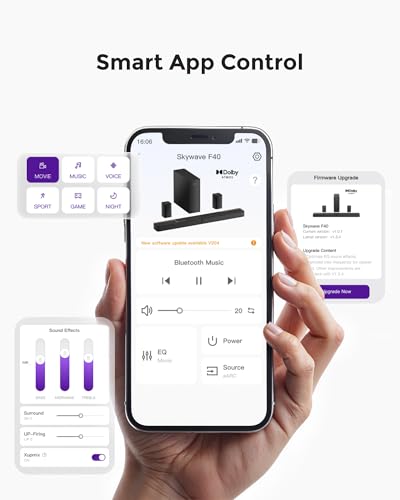
However, the Skywave F40 rewards this effort with comprehensive connectivity options. HDMI eARC (enhanced Audio Return Channel) provides the highest quality connection to modern TVs, supporting lossless audio and allowing you to control both devices with one remote through CEC (Consumer Electronics Control). Bluetooth 5.4 offers improved wireless streaming with lower latency, while the smart app provides access to extensive customization options including a 10-band equalizer.
The Bose Solo Series 2 prioritizes simplicity above all else. Setup involves connecting a single optical cable between the soundbar and your TV, plugging in the power cord, and you're done. The entire process takes under five minutes, and the compact design fits under virtually any TV without blocking infrared sensors or requiring additional space.
This simplicity extends to daily use. The Solo Series 2 automatically powers on when it detects an audio signal and turns off after periods of inactivity. The included remote provides all necessary controls without overwhelming options or complex menus.
The Ultimea Skywave F40 embraces modern connectivity standards. HDMI eARC support means compatibility with the latest gaming consoles, streaming devices, and smart TVs, while ensuring lossless audio transmission for the highest quality sound. The system also includes optical, USB, and auxiliary inputs for older devices.
Bluetooth 5.4 represents a significant upgrade over earlier versions, providing faster connection times, greater stability, and reduced audio latency – particularly important for gaming or video streaming. The Ultimea Smart App unlocks advanced features including custom EQ settings, sound mode selection, and system diagnostics.
The Bose Solo Series 2 offers more basic but reliable connectivity. Optical and coaxial digital inputs handle most modern sources, while Bluetooth 4.0 provides wireless streaming. The lack of HDMI inputs limits advanced audio format support, but for many users, this isn't a practical concern.
One notable limitation of the Solo Series 2 is its audio format handling. While it accepts Dolby Digital signals, these get downmixed to stereo rather than processed as true surround sound. This isn't necessarily problematic for dialogue-focused content, but it does represent a missed opportunity for more immersive audio.
For dedicated home theater use, the Ultimea Skywave F40 clearly excels. Action movies come alive with directional effects – bullets whizzing past your ears, helicopters circling overhead, and explosions that you feel as much as hear. The system's ability to handle dynamic range means quiet dialogue remains clear while maintaining the impact of loud effects.
Gaming represents another strong use case. Modern games increasingly support Dolby Atmos, and the Skywave F40's surround positioning provides competitive advantages in shooters and immersive experiences in adventure games. The low latency Bluetooth connection also supports wireless gaming audio without noticeable delay.
The Bose Solo Series 2 serves different purposes better. Its Dialogue Enhancement Mode specifically targets vocal clarity, making it excellent for news, talk shows, and dialogue-heavy dramas. The processing maintains consistent volume levels, reducing the need to constantly adjust volume as content shifts between quiet conversations and louder scenes.
Music reproduction reveals interesting differences between these approaches. The Ultimea Skywave F40 provides wide frequency response and spatial processing that can make stereo music feel more enveloping. However, purists might prefer more traditional stereo presentation for critical listening.
The Bose Solo Series 2 delivers more focused stereo imaging that many find preferable for music. Bose's acoustic engineering creates impressive soundstage width from its compact form factor, and the balanced frequency response suits most musical genres well.
Space limitations significantly favor the Bose Solo Series 2. Its compact footprint and single-component design work well in apartments, dorm rooms, or bedrooms where multiple speakers aren't practical. The system also respects neighbors better – you can achieve satisfying volume levels without the deep bass that travels through walls.
The Ultimea Skywave F40 requires more thoughtful placement in smaller spaces. While the surround speakers don't need to be far from the listening position, they do need placement freedom that some rooms can't accommodate.
At the time of writing, these products occupy different value propositions. The Ultimea Skywave F40 represents exceptional value for a complete surround sound system. Comparable setups from established brands often cost significantly more, making this an attractive entry point for serious home theater audio.
The system's comprehensive feature set – including Dolby Atmos processing, smart app control, and extensive connectivity – provides future-proofing that justifies the higher initial investment. Users who want room-filling sound for movies and games will find it difficult to achieve similar results for less money.
The Bose Solo Series 2 offers different but equally valid value. The higher cost per speaker reflects Bose's premium engineering and brand reputation, plus the convenience of single-component operation. For users prioritizing simplicity and reliability over ultimate performance, this represents smart spending.
However, it's worth considering upgrade paths. Adding Bose's optional subwoofer to the Solo Series 2 brings the total system cost closer to the Skywave F40 while providing fewer features and less immersive audio.
Both products reflect 2024 technology standards, but they're positioned differently for future relevance. The Ultimea Skywave F40 supports current and emerging audio formats through its HDMI eARC connection and Dolby Atmos processing. As streaming services and gaming platforms increasingly adopt immersive audio, this system remains compatible.
The Bose Solo Series 2 takes a more conservative approach, focusing on proven technologies and established audio formats. While this limits future expandability, it also reduces complexity and potential compatibility issues.
Choose the Ultimea Skywave F40 if you're building a dedicated entertainment space where immersive audio enhances your enjoyment. Movie enthusiasts, gamers, and music lovers who have adequate room space will appreciate the system's comprehensive capabilities. The setup complexity is worthwhile if you want the best possible audio experience from your investment.
The Bose Solo Series 2 suits users who prioritize immediate improvement with minimal fuss. If your primary goal is making dialogue clearer and adding some bass to your TV's built-in speakers, this simple solution delivers exactly that. Apartment dwellers, casual viewers, and anyone who values simplicity over ultimate performance will find this approach more satisfying.
Consider your content consumption patterns carefully. If you primarily watch dialogue-heavy content like news, sitcoms, or dramas, the Solo Series 2 provides everything you need. But if you regularly enjoy action movies, play immersive games, or listen to music through your TV setup, the Skywave F40 offers experiences that simpler systems simply cannot match.
The decision ultimately comes down to whether you want to enhance your TV audio or transform it entirely. Both products succeed at their intended purposes – the key is choosing the one that matches your expectations and living situation.
| Ultimea Skywave F40 | Bose Solo Series 2 |
|---|---|
| System Configuration - Determines surround sound capability and room-filling potential | |
| 5.1.2 channel Dolby Atmos with soundbar, subwoofer, and 2 surround speakers | 2.0 channel compact soundbar only (subwoofer sold separately) |
| Power Output - Affects maximum volume and dynamic range for movies | |
| 460W total system power across 8 speakers | Lower power output from 2 speakers (exact wattage not specified) |
| Audio Technology - Key differentiator for immersive movie and gaming experience | |
| Full Dolby Atmos with height channels, BassMX bass enhancement, SurroundX processing | Dialogue Enhancement Mode, psychoacoustic stereo widening, basic Dolby Digital support |
| Bass Performance - Critical for action movies and music enjoyment | |
| Dedicated wired subwoofer extending to 45Hz for deep, impactful bass | Port-based bass reflex design with limited low-frequency extension |
| Setup Complexity - Time investment and technical skill required | |
| Multi-component setup requiring speaker placement and cable management (30-45 minutes) | Single optical cable connection, plug-and-play setup (5 minutes) |
| Connectivity Options - Future-proofing and device compatibility | |
| HDMI eARC, optical, USB, Bluetooth 5.4, smart app control with 10-band EQ | Optical, coaxial, auxiliary, Bluetooth 4.0, basic remote control |
| Physical Footprint - Space requirements in your room | |
| Large: 31.5" soundbar + subwoofer + 2 surround speakers, recommended for 215-269 sq ft rooms | Compact: 21.6" x 2.8" soundbar only, fits under most TVs in any size room |
| Best Use Cases - Who should choose each product | |
| Movie enthusiasts, gamers, music lovers wanting full home theater experience | TV watchers prioritizing dialogue clarity and simple operation in space-constrained areas |
The Ultimea Skywave F40 is significantly better for movies due to its 5.1.2 Dolby Atmos system with dedicated surround speakers and height channels. This creates true surround sound with overhead effects, making action scenes and cinematic content much more immersive. The Bose Solo Series 2 only provides enhanced stereo sound, which is adequate for dialogue but lacks the spatial audio that makes movies exciting.
The fundamental difference is system complexity and audio capability. The Ultimea Skywave F40 is a complete home theater system with multiple speakers creating true surround sound, while the Bose Solo Series 2 is a simple, compact soundbar focused on improving TV dialogue and basic audio enhancement. One transforms your audio experience, the other enhances it.
The Bose Solo Series 2 is much easier to set up, requiring only a single optical cable connection and taking about 5 minutes. The Ultimea Skywave F40 needs positioning of multiple components, cable management, and speaker placement, typically taking 30-45 minutes. For daily use, both are simple once installed, but the Bose Solo Series 2 maintains the simplicity advantage.
The Ultimea Skywave F40 includes a dedicated subwoofer as part of the complete system, providing deep bass down to 45Hz. The Bose Solo Series 2 doesn't include a subwoofer but relies on internal bass processing, which limits low-frequency performance. Bose offers an optional subwoofer separately, but this significantly increases the total cost.
The Ultimea Skywave F40 excels for gaming with its Dolby Atmos surround sound providing directional audio cues and immersive effects. The surround speakers help with competitive gaming by accurately positioning enemy movements. The Bose Solo Series 2 works fine for casual gaming but doesn't provide the spatial audio advantages that enhance the gaming experience.
Both the Ultimea Skywave F40 and Bose Solo Series 2 support Bluetooth connectivity for wireless music streaming from phones and tablets. However, for TV connection, both require wired connections - the Skywave F40 uses HDMI eARC or optical, while the Solo Series 2 uses optical, coaxial, or auxiliary cables.
The Bose Solo Series 2 is ideal for small apartments due to its compact 21.6-inch size and single-component design. It won't disturb neighbors with excessive bass and fits anywhere. The Ultimea Skywave F40 requires space for multiple speakers and produces more bass, which might not be apartment-friendly, though it can fill larger rooms better.
No, only the Ultimea Skywave F40 provides true Dolby Atmos with dedicated height channels that create overhead sound effects. The Bose Solo Series 2 can receive Dolby Digital signals but downmixes them to stereo rather than processing true Atmos effects. For genuine immersive audio, the Skywave F40 is the clear choice.
This depends on your needs. The Ultimea Skywave F40 offers exceptional value for those wanting a complete home theater system, as comparable setups from major brands typically cost much more. The Bose Solo Series 2 provides good value for users wanting simple TV audio improvement with premium brand reliability and minimal complexity.
Both excel at dialogue clarity but through different methods. The Bose Solo Series 2 features dedicated Dialogue Enhancement Mode specifically designed to improve vocal clarity and maintain consistent volume levels. The Ultimea Skywave F40 handles dialogue well through its balanced frequency response and can isolate vocals through its multi-speaker setup and EQ options.
For music, preferences vary. The Ultimea Skywave F40 provides wider frequency response and spatial processing that can make music feel more enveloping, especially with its dedicated subwoofer. The Bose Solo Series 2 offers more traditional stereo presentation with Bose's renowned acoustic engineering, creating impressive soundstage width despite its compact size.
The Ultimea Skywave F40 supports CEC (Consumer Electronics Control) through its HDMI eARC connection, allowing control with your TV remote. The Bose Solo Series 2 also supports basic TV remote control through its optical connection, automatically adjusting volume when you change your TV's volume. Both systems include their own remotes for advanced features.
We've done our best to create useful and informative comparisons to help you decide what product to buy. Our research uses advanced automated methods to create this comparison and perfection is not possible - please contact us for corrections or questions. These are the sites we've researched in the creation of this article: the-gadgeteer.com - youtube.com - ultimea.com - manuals.plus - youtube.com - ultimea.com - youtube.com - youtube.com - youtube.com - youtube.com - eu.ultimea.com - support.ultimea.com - rtings.com - bose.com - bose.com - assets.bose.com - bestbuy.com - youtube.com - pistonheads.com - costco.com - googlenestcommunity.com - youtube.com - discussions.apple.com

Privacy Policy
Terms and Conditions - Affiliate Policy
Home Security
© Copyright 2008-2026.
11816 Inwood Rd #1211, Dallas, TX 75244