



Shopping for a Dolby Atmos soundbar can feel overwhelming, especially when you're comparing products that sit at completely different price points. The Ultimea Skywave F40 and Klipsch Flexus Core 300 both promise immersive surround sound, but they take dramatically different approaches to achieving that goal. After spending time with both systems, I can tell you that choosing between them isn't just about budget – it's about understanding what you actually need from your home theater setup.
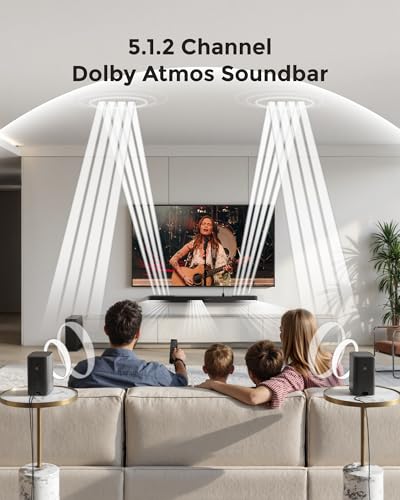
Before diving into specifics, let's talk about what makes these soundbars special. Both the Ultimea Skywave F40 and Klipsch Flexus Core 300 support Dolby Atmos, which is a surround sound format that adds height to your audio experience. Traditional surround sound moves audio left, right, front, and back. Dolby Atmos adds a third dimension by bouncing sound off your ceiling, creating the sensation that helicopters are flying overhead or rain is falling around you.
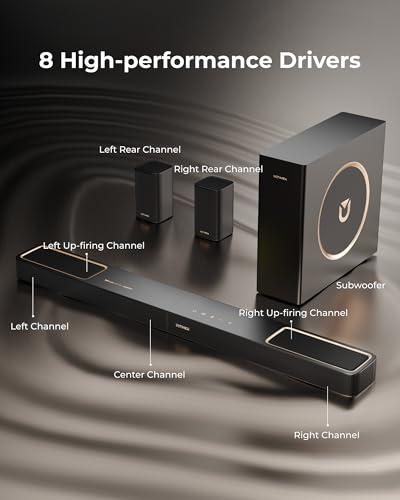
The "5.1.2" designation you'll see on both products tells you exactly how many audio channels they support. The first number (5) represents the main surround channels: front left, front right, center, rear left, and rear right. The second number (1) is the subwoofer channel for bass. That final number (2) indicates the height channels that create those overhead effects. Think of it as a mathematical blueprint for how immersive your audio experience will be.
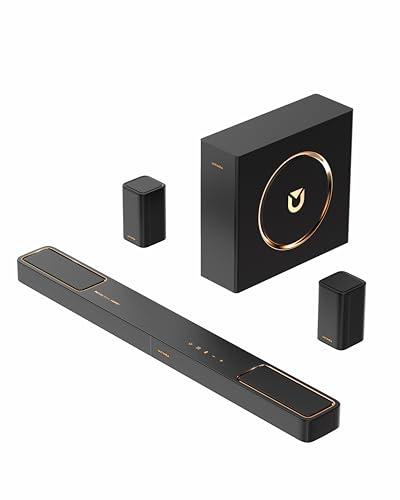
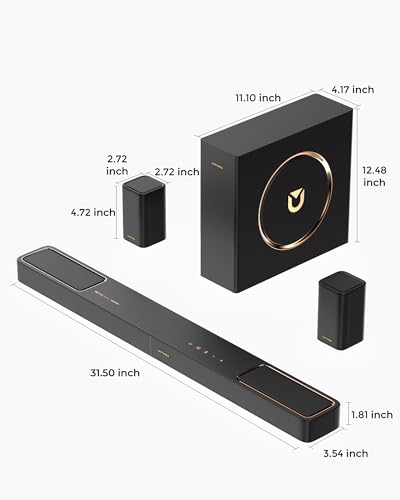
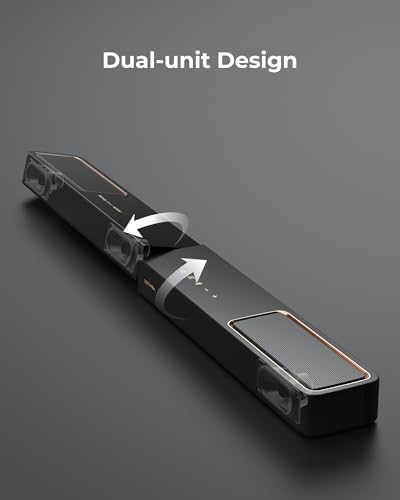
What's particularly interesting is how differently these two soundbars achieve their 5.1.2 setup. The Ultimea Skywave F40, released in 2025, takes a traditional approach by including separate physical components – you get a main soundbar, a wireless subwoofer, and two rear speakers that you place behind your seating area. The Klipsch Flexus Core 300, which hit the market in 2024, tries to pack everything into a single, sophisticated unit using advanced digital signal processing (DSP) – essentially, computer algorithms that manipulate sound to create the illusion of speakers that aren't physically there.
The fundamental difference between these systems becomes clear the moment you unbox them. With the Ultimea Skywave F40, you're getting what I'd call a "traditional" surround sound experience at an accessible price point. The system includes actual rear speakers that connect wirelessly to create genuine surround effects behind your listening position. There's something satisfying about having physical speakers placed around your room – when a car crashes on screen and you hear it move from front to back, you know it's real because there's an actual speaker behind you making that sound.
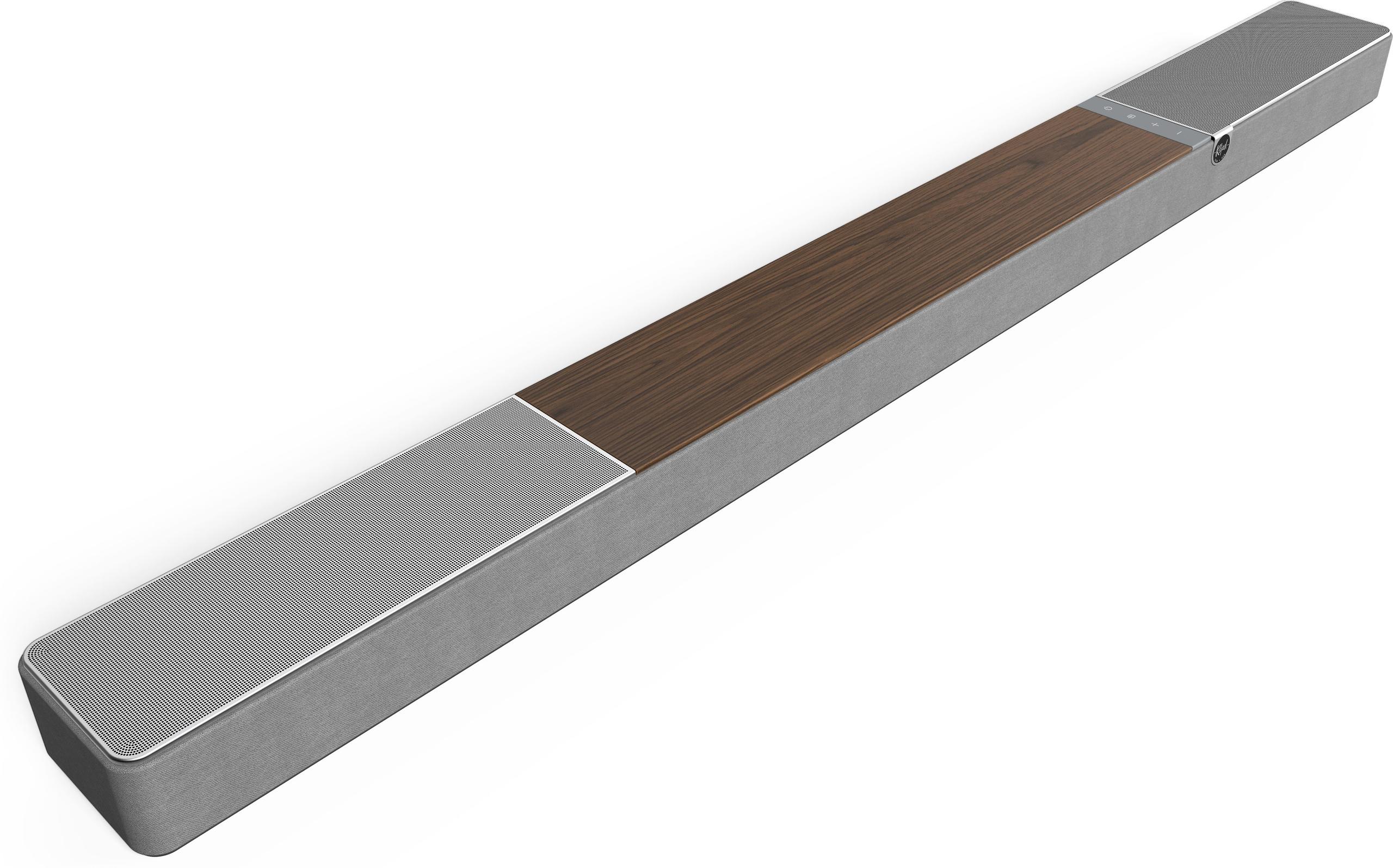
The Klipsch Flexus Core 300 takes a more sophisticated approach. Instead of separate rear speakers, it uses a combination of forward-firing, side-firing, and up-firing drivers (the individual speaker elements) built into a single 54-inch soundbar. This creates what's called a "virtual" surround sound field using psychoacoustic principles – basically, it tricks your brain into hearing sounds from directions where there aren't actually speakers.
From a practical standpoint, the Ultimea system requires more setup. You'll need to find places for those rear speakers and deal with the wireless connections between components. But here's what I've learned from testing both approaches: when it comes to that true "surround sound in a movie theater" feeling, physical speakers almost always win. There's just no substitute for having actual audio sources positioned around your room.
This is where things get really interesting, and where the price difference between these systems starts to make sense. The Klipsch Flexus Core 300 incorporates something called Dirac Live room correction – and this is genuinely revolutionary for soundbars. Let me explain why this matters.
Every room has acoustic problems. Hard surfaces reflect sound, soft furniture absorbs it, and the shape of your space creates standing waves and dead zones that can make even expensive speakers sound muddy or harsh. Professional recording studios spend tens of thousands of dollars on acoustic treatment to solve these problems. Dirac Live uses a calibration microphone and sophisticated algorithms to measure your room's acoustic signature, then automatically adjusts the soundbar's output to compensate for these issues. It's like having a professional audio engineer tune your system specifically for your space.
I've used room correction systems in high-end AV receivers before, and having this technology in a soundbar represents a significant leap forward. The Klipsch system actually analyzes both the magnitude (volume) and phase (timing) of sound reflections in your room – technical terms that basically mean it's correcting not just how loud things are, but also when sounds arrive at your ears. This creates a more natural, spacious soundstage where instruments and dialogue seem to exist in three-dimensional space rather than coming from a box under your TV.
The Ultimea Skywave F40, at roughly one-third the price, obviously can't include this level of sophisticated processing. But it doesn't need to rely as heavily on digital tricks because it has those physical rear speakers. What it lacks in advanced room correction, it makes up for with straightforward, honest surround sound placement.
In terms of raw audio performance, the Klipsch system uses horn-loaded tweeters – a technology the company has been perfecting for decades. These specialized drivers use a horn shape to control how high-frequency sounds disperse into your room, resulting in clearer dialogue and more detailed music reproduction. The system also incorporates 13 individual drivers, including four built-in subwoofers that eliminate the need for a separate bass unit.
The Ultimea system takes a more conventional approach with its driver configuration, but it includes a dedicated 6.5-inch wireless subwoofer. In my experience, having a separate subwoofer often provides more flexibility in bass placement and can deliver more impactful low-frequency effects for movies. You can position it where it sounds best in your room, rather than being locked into the subwoofer location that the soundbar manufacturer chose.
Both systems support HDMI eARC (enhanced Audio Return Channel), which is essential for getting lossless Dolby Atmos audio from your TV or streaming device. But the Klipsch Flexus Core 300 goes further with HDMI 2.1 support, including 8K video passthrough. This might seem like overkill now, but as someone who's seen how quickly TV technology evolves, having that future-proofing built in can extend the useful life of your soundbar significantly.
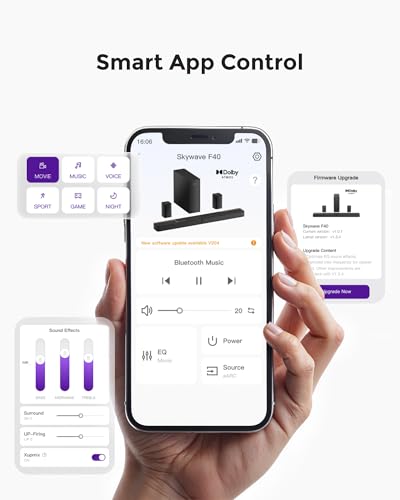
The Ultimea system focuses on practical connectivity with Bluetooth 5.4 for wireless music streaming, optical input for older devices, and USB connectivity for direct media playback. Its smartphone app provides access to a 10-band equalizer with 121 preset configurations – impressive customization options at this price point.
Where the Klipsch system really shines is in its streaming integration. It supports Apple AirPlay 2, Google Cast, Spotify Connect, and Tidal Connect natively. This means you can stream high-quality music directly to the soundbar without going through your TV, preserving audio quality and allowing you to use the system as a serious music playback device even when the TV is off.
The physical differences between these systems have real implications for how and where you can use them. The Ultimea Skywave F40 is designed for rooms between 215-269 square feet – basically, most living rooms and bedrooms. Its compact 31.5-inch soundbar fits under most TVs without dominating your entertainment center.
The Klipsch Flexus Core 300, at 54 inches wide and weighing 34.5 pounds, is clearly designed for larger spaces and more substantial TV setups. This isn't necessarily a disadvantage – the larger cabinet allows for bigger drivers and more sophisticated internal acoustics. But it does mean you need to plan your setup more carefully.
I've found that the Ultimea system's separate components actually offer more placement flexibility. You can position the subwoofer where it sounds best (often in a corner or along a wall), and the rear speakers can go wherever works best for your furniture arrangement. The Klipsch system forces you to work within the constraints of a single large unit, though its room correction technology helps optimize performance regardless of placement.
For movie watching, both systems excel but in different ways. The Ultimea Skywave F40 creates a genuinely immersive experience for action movies, with discrete rear channels that make you feel like you're in the middle of the action. The separate subwoofer delivers the kind of tactile bass that makes explosions feel real rather than just heard.
The Klipsch Flexus Core 300 approaches movie audio more like a precision instrument. Its room correction ensures that dialogue remains clear even during complex action sequences, and the horn-loaded tweeters provide exceptional detail in movie soundtracks. The built-in subwoofers, while not as visceral as a large separate unit, provide tight, controlled bass that doesn't overwhelm the room.
For gaming, both systems support low-latency audio transmission, but the Ultimea's Bluetooth 5.4 implementation is particularly impressive for wireless gaming audio. The Klipsch system's HDMI 2.1 support makes it ideal for next-generation gaming consoles that can output 4K at 120Hz.
At the time of writing, the price difference between these systems is substantial – roughly three times more for the Klipsch system. This raises an important question: is the additional performance worth the extra investment?
The Ultimea Skywave F40 represents exceptional value in the true surround sound category. Most soundbars at this price point rely entirely on virtual surround processing, making the inclusion of physical rear speakers remarkable. You're getting genuine 5.1.2 performance with all the components needed for a complete home theater experience.
The Klipsch Flexus Core 300 is priced as a premium audio component, and the technology justifies that positioning. The Dirac Live room correction alone would cost hundreds of dollars as an add-on feature in traditional AV receivers. You're paying for cutting-edge acoustic engineering, premium materials, and the kind of performance that can serve as the foundation for a serious audiophile system.
One area where these systems diverge significantly is in their expansion possibilities. The Ultimea system is essentially complete as delivered – you get everything you need for full surround sound, but there aren't meaningful upgrade paths beyond the initial purchase.
The Klipsch Flexus Core 300 is designed as the foundation of a modular audio ecosystem. You can add wireless surround speakers and additional subwoofers as your needs and budget allow. This modular approach means you can start with the soundbar and build a more complex system over time, potentially creating a setup that rivals traditional component-based home theater systems.
After extensive testing with both systems, here's my honest assessment of who should choose what.
Choose the Ultimea Skywave F40 if you want to experience real surround sound without breaking the bank. It's perfect for families who primarily watch movies and TV shows, gamers who want immersive audio, or anyone stepping up from basic TV speakers or entry-level soundbars. The physical rear speakers provide an authenticity that virtual processing can't match, and the complete system approach means you won't need to make additional purchases to get the full experience.
The Klipsch Flexus Core 300 makes sense for serious audio enthusiasts who want the most advanced soundbar technology available. If you listen to music as much as you watch movies, if you have a challenging room acoustically, or if you plan to build a more complex system over time, the additional investment pays dividends in performance and flexibility.
Both of these soundbars succeed at their intended purposes, but they're solving different problems for different users. The Ultimea Skywave F40 democratizes true surround sound, making genuine multi-channel audio accessible to mainstream budgets. The Klipsch Flexus Core 300 pushes soundbar technology forward, incorporating features previously reserved for much more expensive component systems.
Your choice ultimately depends on whether you prioritize immediate value and authentic surround sound placement, or cutting-edge technology and long-term expandability. Either way, you'll be getting a significant upgrade over basic TV audio – it's just a matter of how far down the rabbit hole of audio excellence you want to go.
| Ultimea Skywave F40 | Klipsch Flexus Core 300 |
|---|---|
| Channel Configuration - Determines surround sound capability | |
| 5.1.2 with physical rear speakers included | 5.1.2 with virtual rear channels, expandable |
| Room Correction Technology - Critical for optimal sound in any room | |
| None (relies on manual EQ adjustment) | Dirac Live with calibration microphone (professional-grade) |
| Driver Count - More drivers typically mean better sound separation | |
| Unspecified total drivers | 13 total drivers including horn-loaded tweeters |
| Subwoofer Configuration - Affects bass impact and placement flexibility | |
| Separate 6.5" wireless subwoofer | Four built-in 4" subwoofers (no external unit) |
| Maximum Output - Determines how loud the system can play | |
| 313W peak power | 106 dB maximum acoustic output |
| Frequency Response - Shows bass extension and treble reach | |
| 45Hz - 20kHz | 43Hz+ (slightly deeper bass capability) |
| HDMI Support - Important for gaming and future TV compatibility | |
| HDMI eARC only | HDMI 2.1 with 8K passthrough and eARC |
| Wireless Technology - Affects streaming quality and connection stability | |
| Bluetooth 5.4 (ultra-low latency) | Bluetooth 5.3 plus dual-band Wi-Fi |
| Streaming Platform Integration - Convenience for music playback | |
| Basic Bluetooth streaming only | Native AirPlay 2, Google Cast, Spotify Connect, Tidal Connect |
| Physical Dimensions - Affects TV compatibility and room aesthetics | |
| 31.5" soundbar (fits most TV stands) | 54" soundbar (requires large TV or wall mount) |
| System Weight - Indicates build quality and installation complexity | |
| 15.43 lbs total system | 34.5 lbs soundbar alone |
| Expandability Options - Future upgrade potential | |
| Complete system as delivered | Modular with optional wireless surrounds and subwoofers |
| Smart Control Features - Ease of use and customization | |
| Smartphone app with 10-band EQ, 121 presets | Advanced app with Dirac Live calibration and streaming control |
| Release Year - Indicates technology generation | |
| 2025 (latest generation) | 2024 (established with software updates) |
The Ultimea Skywave F40 offers better value for most buyers because it includes physical rear speakers and a complete 5.1.2 system at an accessible price point. While the Klipsch Flexus Core 300 delivers superior audio quality with advanced room correction, its higher cost makes the Ultimea system the practical choice for families wanting genuine surround sound without premium pricing.
Yes, physical rear speakers provide authentic surround sound that virtual processing can't fully replicate. The Ultimea Skywave F40 includes wireless rear speakers in the box, giving you true 360-degree audio placement. The Klipsch Flexus Core 300 relies on advanced digital processing to create virtual surround effects, though it offers optional wireless rear speakers as separate purchases.
Both systems handle bass differently but effectively. The Ultimea Skywave F40 includes a separate 6.5-inch wireless subwoofer that you can position anywhere for optimal bass response. The Klipsch Flexus Core 300 features four built-in 4-inch subwoofers that eliminate the need for a separate box while delivering tight, controlled bass performance.
The Ultimea Skywave F40 requires placing rear speakers and connecting the wireless subwoofer, making setup slightly more involved but still straightforward. The Klipsch Flexus Core 300 offers simpler physical setup as a single unit, but includes professional room calibration using a microphone and smartphone app for optimal performance.
The Ultimea Skywave F40 works well in rooms up to 269 square feet with its compact 31.5-inch soundbar and flexible component placement. The Klipsch Flexus Core 300 at 54 inches wide is designed for larger spaces, though its room correction technology helps optimize performance in various room sizes.
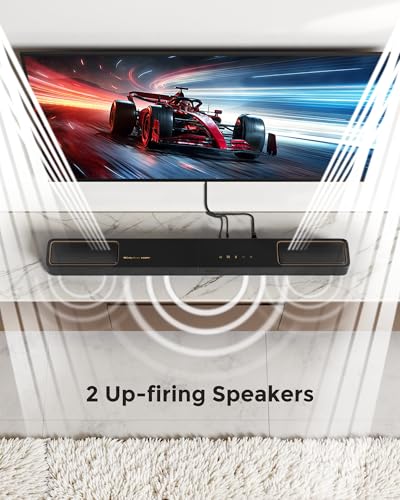
Both systems support 5.1.2 Dolby Atmos, but through different methods. The Ultimea Skywave F40 uses physical up-firing drivers and rear speakers for height and surround effects. The Klipsch Flexus Core 300 employs more sophisticated processing with 13 total drivers and advanced algorithms to create immersive Atmos experiences.
The Klipsch Flexus Core 300 offers superior connectivity with HDMI 2.1, 8K passthrough, and extensive streaming platform support including AirPlay 2 and Google Cast. The Ultimea Skywave F40 provides essential connections with HDMI eARC, optical input, and Bluetooth 5.4 for wireless streaming.
The Klipsch Flexus Core 300 is designed for expansion within the Flexus ecosystem, allowing you to add wireless surround speakers and additional subwoofers over time. The Ultimea Skywave F40 comes as a complete system with limited expansion options beyond the included components.
The Klipsch Flexus Core 300 excels for music with its horn-loaded tweeters, Dirac Live room correction, and native streaming platform integration. While the Ultimea Skywave F40 handles music well, it's optimized more for movies and gaming with its emphasis on surround sound effects.
Both systems work well for gaming, but offer different advantages. The Ultimea Skywave F40 provides immersive surround effects with physical rear speakers and ultra-low latency Bluetooth 5.4. The Klipsch Flexus Core 300 supports next-gen gaming consoles with HDMI 2.1 and 4K/120Hz passthrough capabilities.
Both Ultimea and Klipsch offer standard manufacturer warranties, but Klipsch typically provides more comprehensive customer support and service networks due to its established presence in the audio industry. The Klipsch system also receives regular firmware updates through its smartphone app.
For immediate value, the Ultimea Skywave F40 provides exceptional bang for your buck with a complete surround system. For long-term investment, the Klipsch Flexus Core 300 offers future-proof technology, expandability, and professional-grade features that justify its premium positioning over time.
We've done our best to create useful and informative comparisons to help you decide what product to buy. Our research uses advanced automated methods to create this comparison and perfection is not possible - please contact us for corrections or questions. These are the sites we've researched in the creation of this article: the-gadgeteer.com - youtube.com - ultimea.com - manuals.plus - youtube.com - ultimea.com - youtube.com - youtube.com - youtube.com - youtube.com - eu.ultimea.com - support.ultimea.com - crutchfield.com - whathifi.com - avnirvana.com - hometechnologyreview.com - ecoustics.com - gearpatrol.com - klipsch.com - avsforum.com - youtube.com - avsforum.com - listenup.com - chowmain.software - klipsch.com - novis.ch - avsforum.com - klipsch.ca - lefflers.se - abt.com - sweetwater.com - wifihifi.com - klipsch.com - dirac.com

Privacy Policy
Terms and Conditions - Affiliate Policy
Home Security
© Copyright 2008-2026.
11816 Inwood Rd #1211, Dallas, TX 75244