








If you've ever turned up your TV volume just to hear dialog clearly, only to have action scenes blast you out of your seat, you know why soundbars exist. These sleek audio solutions have revolutionized home entertainment by replacing those pathetic built-in TV speakers with dedicated drivers and proper amplification. But here's where it gets interesting: not all soundbars take the same approach to solving your audio problems.
Today we're comparing two fundamentally different philosophies in soundbar design. The Ultimea Poseidon D70, released in 2023, represents the "more speakers, more better" approach with its true 7.1 channel system. Meanwhile, the Sonos Ray, launched in 2022, embodies the "smart and sophisticated" philosophy with virtual surround processing and ecosystem integration. At the time of writing, these products occupy different price tiers, with the Ultimea system positioned as an affordable home theater solution while the Sonos Ray commands a premium for its streaming capabilities and build quality.
Before diving into specifics, let's establish what matters most in soundbar performance. The primary mission is improving dialog clarity - those whispered conversations in movies should be crystal clear without cranking the volume. Next comes dynamic range, which is the difference between the quietest and loudest sounds. Good soundbars handle both whisper-quiet scenes and explosive action sequences without compression artifacts (that "squashed" sound when everything gets equally loud).
Bass response deserves special attention because it's where most TV speakers fail miserably. Deep, controlled bass adds weight to music and rumbling impact to movies without becoming muddy or overwhelming. Finally, there's soundstage width - how spread out the audio feels - and imaging, which refers to how precisely you can pinpoint where specific sounds are coming from.
The technical approaches to achieving these goals vary dramatically, leading us to our two contenders with completely different philosophies.
The most fundamental difference between the Ultimea Poseidon D70 and Sonos Ray lies in how they create surround sound. This isn't just a technical detail - it shapes everything about how these systems perform and where they excel.
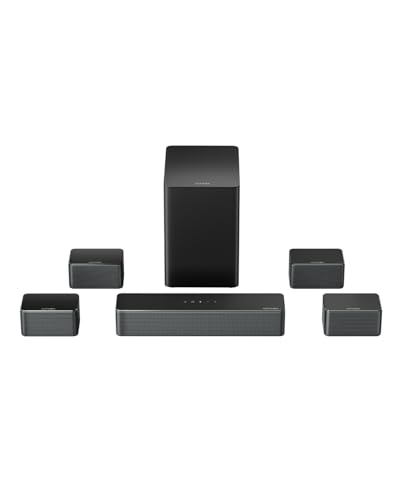
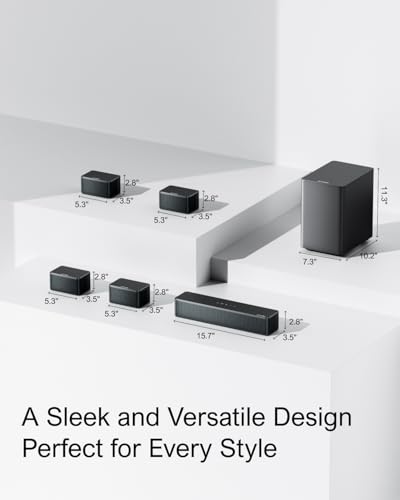
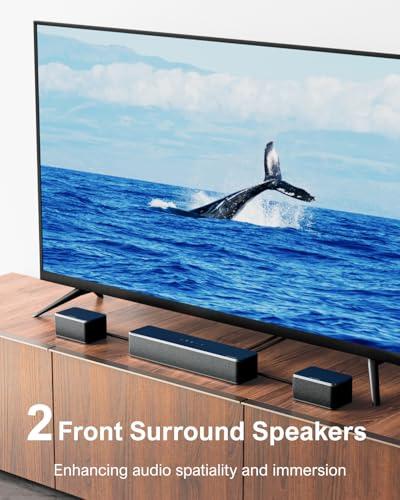
The Poseidon D70 takes the traditional approach: actual speakers placed around your room. The system includes a main soundbar housing three 2.25-inch mid-bass drivers, four separate surround speakers (each with their own 2.25-inch driver), and a wireless 6.5-inch subwoofer. When a helicopter flies overhead in a movie, it literally moves from speaker to speaker around your room. This is called discrete channel separation, and it's the same principle used in movie theaters.
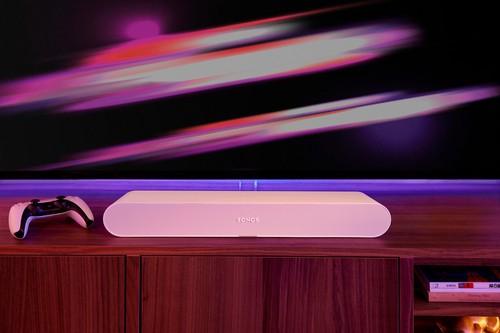
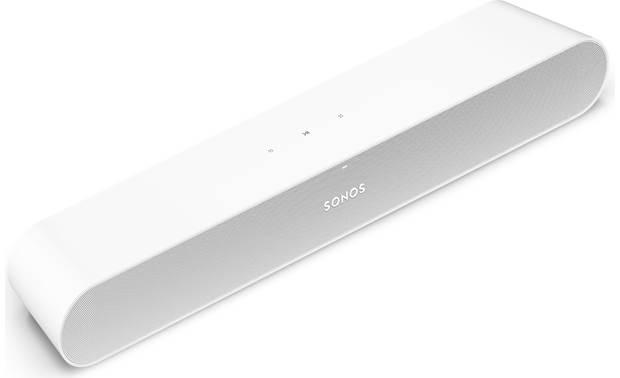
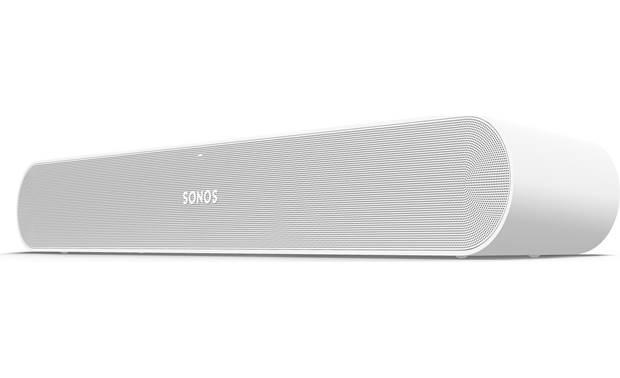
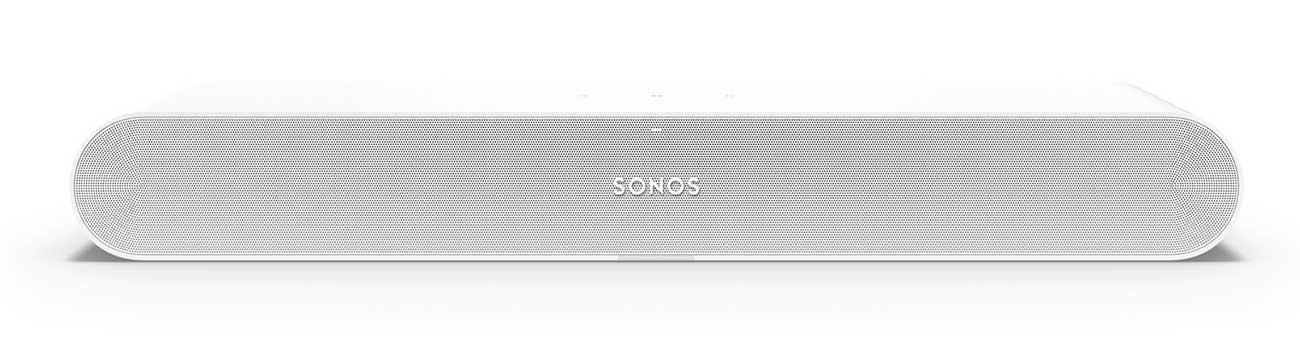
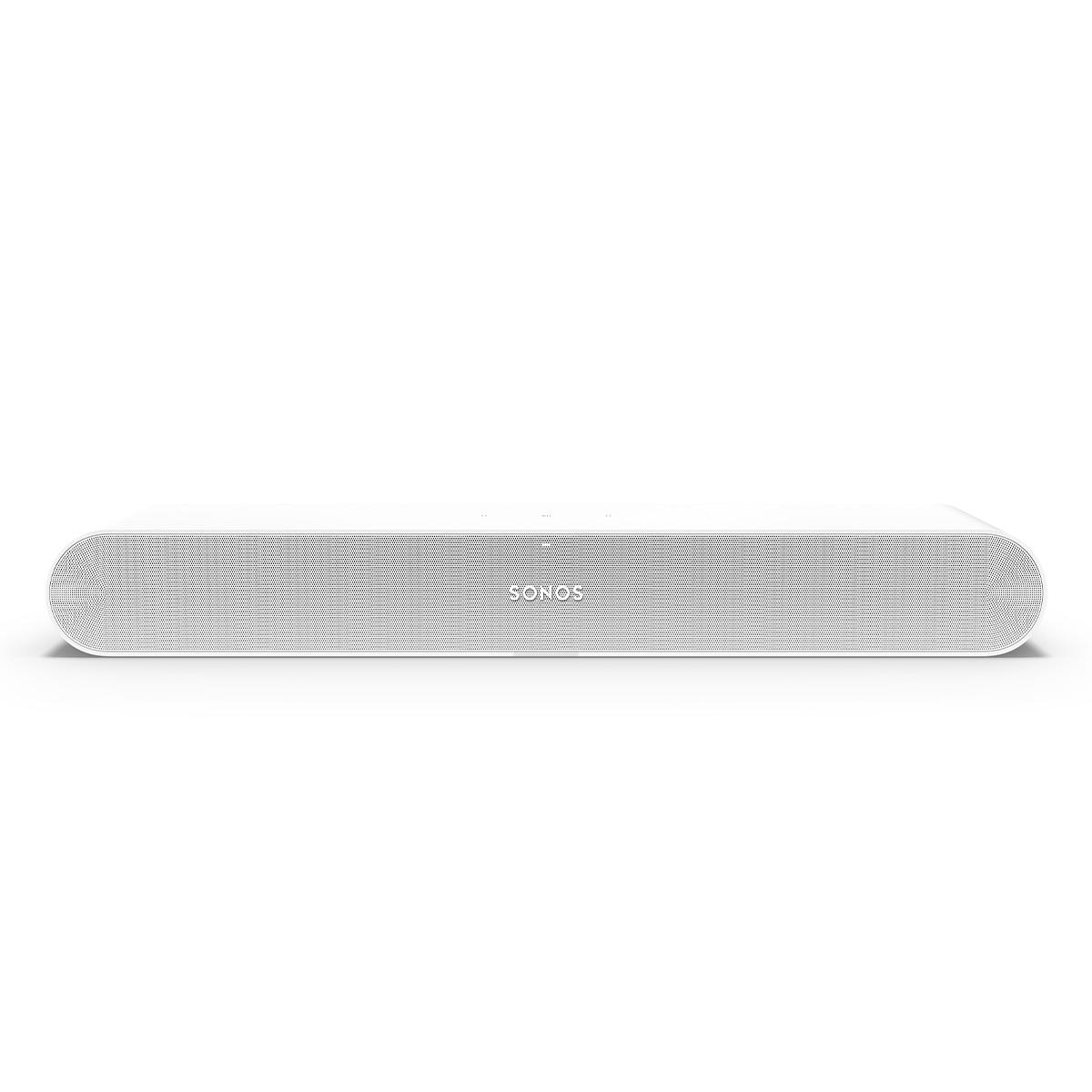
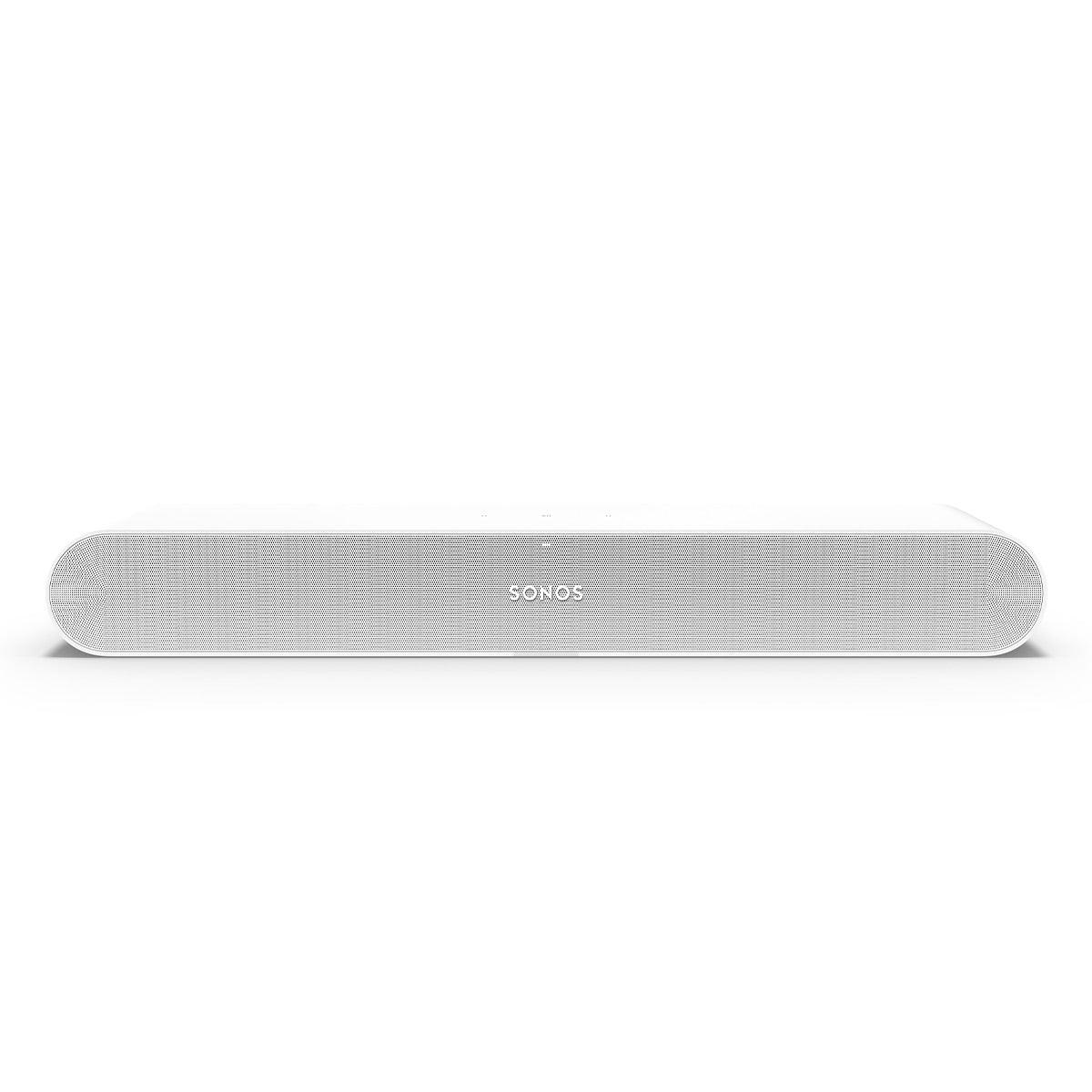
The Sonos Ray uses a completely different strategy called virtual surround processing. All the drivers are packed into a single compact soundbar, then sophisticated algorithms manipulate the audio signals to trick your brain into perceiving sounds coming from different directions. It's like audio sleight of hand - your ears are fooled into hearing width and depth that doesn't physically exist.
Both approaches have merit, but they excel in different scenarios. Physical surround speakers create undeniably authentic spatial audio because sound actually originates from multiple locations. Virtual processing can be surprisingly effective, especially for music and in smaller rooms, while maintaining a clean aesthetic with minimal setup complexity.
Here's where the Ultimea D70 shows its biggest advantage. With four physical surround speakers positioned around your room, sounds genuinely come from behind and beside you. When reviewing user feedback and expert opinions, the consensus is clear: nothing matches the immersion of actual rear speakers for movie watching. The system's SurroundX technology coordinates timing between all eight speakers, ensuring sound effects pan smoothly from front to back.
The Sonos Ray, despite its clever processing, simply cannot replicate this experience. Virtual surround can widen the soundstage and create some sense of space, but sounds remain anchored to the front of the room. For casual TV watching, this limitation might not matter much. For serious movie nights or gaming sessions where positional audio provides competitive advantages, the difference becomes significant.
However, the Ray has its own strengths in this category. Its Trueplay room correction technology - available through iOS devices - actually measures your room's acoustics and adjusts the sound accordingly. This adaptive processing can optimize the virtual surround effect for your specific space, potentially making it more convincing than a poorly positioned traditional surround system.
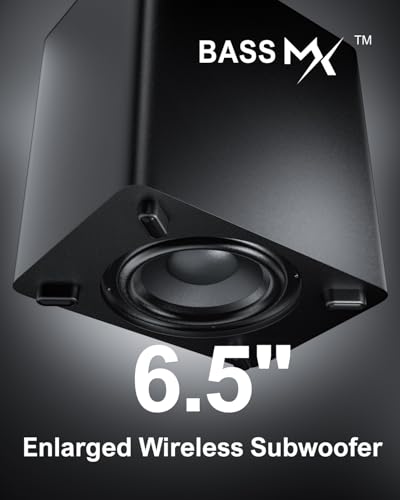
The bass department reveals another clear winner. The D70's dedicated 6.5-inch subwoofer with BassMX technology delivers the kind of deep, room-shaking bass that smaller soundbars simply cannot match. With frequency response extending down to 35Hz, it reproduces those subsonic rumbles that add weight to explosions and depth to music.
BassMX technology essentially optimizes the subwoofer's output for maximum impact while minimizing distortion. Users consistently report that the D70 provides satisfying bass for both movies and music without becoming boomy or overwhelming dialog. The wireless connection eliminates cable clutter while allowing flexible subwoofer placement for optimal bass response in your room.
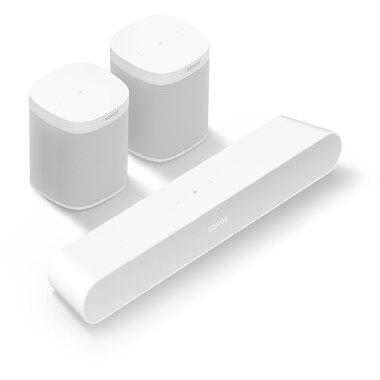
The Sonos Ray faces the physics limitations of its compact form factor. While it produces respectable bass for its size, it cannot match the output or extension of a dedicated subwoofer. Sonos does offer the option to add their separate Sub, but at the time of writing, this addition significantly increases the total system cost, pushing it well beyond budget-friendly territory.
Both systems excel here, but for different reasons. The Ultimea D70 achieves clear dialog through dedicated mid-range drivers in the main soundbar, combined with AI-powered processing that analyzes audio content in real-time to optimize voice frequencies. The system's 144W RMS power output provides sufficient headroom to maintain clarity even at higher volumes.
The Sonos Ray has built its reputation partially on exceptional vocal reproduction. Expert reviews consistently praise its ability to render speech with remarkable clarity and presence. The built-in dialog enhancement mode specifically boosts voice frequencies, while the night mode compresses dynamic range to prevent volume swings that might disturb others.
Both systems offer dedicated dialog enhancement features, making this category essentially a tie for practical purposes. Your choice here depends more on overall system priorities than vocal performance alone.
This is where the Sonos Ray demonstrates its core strengths. As part of the Sonos ecosystem since 2022, it benefits from years of audio engineering focused on music reproduction. The Ray supports high-quality wireless streaming through Wi-Fi (which provides more bandwidth and stability than Bluetooth), Apple AirPlay 2, Spotify Connect, and Tidal Connect.
The stereo imaging on the Ray receives consistent praise for music playback. Instruments occupy precise positions in the soundstage, and the tonal balance favors accuracy over artificial enhancement. The Trueplay room correction becomes particularly valuable for music, adapting the frequency response to compensate for room acoustics and speaker placement.
The Ultimea D70 takes a different approach to music with its extensive customization options. The system offers 121 preset EQ matrices covering various music genres, plus a 10-band graphic equalizer accessible through the mobile app. This level of control appeals to listeners who prefer tailoring sound to their preferences rather than accepting a fixed tuning.
However, the D70's seven-speaker configuration isn't optimized for stereo music reproduction. While it sounds impressive due to its power and bass response, purist music listeners might find the soundstage presentation less focused than a well-designed stereo system like the Ray.
The connectivity story reveals each system's target audience clearly. The Ultimea D70 offers practical connections including HDMI ARC (Audio Return Channel - allows TV remote control and sends audio back from TV to soundbar), optical audio, Bluetooth 5.3, USB, and auxiliary inputs. This covers virtually any device you might want to connect, from modern 4K TVs to older gaming consoles.
The dedicated Ultimea mobile app deserves special mention for its comprehensive control options. Beyond basic volume and source selection, it provides firmware updates, detailed EQ adjustment, and a unique dot-matrix soundboard interface for personalized tuning. This level of control is unusual in budget-oriented systems and adds significant value for tweaking enthusiasts.
The Sonos Ray takes a more minimalist approach with only optical audio input for TV connection. This immediately creates a limitation - if your TV lacks optical output, you'll need adapters or alternative solutions. The absence of HDMI ARC means you cannot control the soundbar with your TV remote, requiring the separate Sonos app or dedicated remote.
However, what the Ray lacks in physical connections, it makes up for in wireless sophistication. The Wi-Fi streaming implementation is rock-solid, supporting seamless multiroom audio with other Sonos speakers throughout your home. The ecosystem integration allows you to start music in one room and have it follow you to others - a compelling feature that the standalone D70 cannot match.
Setting up the Ultimea D70 requires more planning but isn't overly complex. The four surround speakers need wall mounting or stands, with wired connections running from the subwoofer to each satellite. The cables are color-coded and labeled, simplifying the process, but you'll still need to manage wire routing through your room.
The wireless subwoofer pairs automatically with the soundbar, eliminating one major cable run. User feedback suggests most people complete setup within 30-60 minutes, though achieving optimal surround speaker placement might require some experimentation.
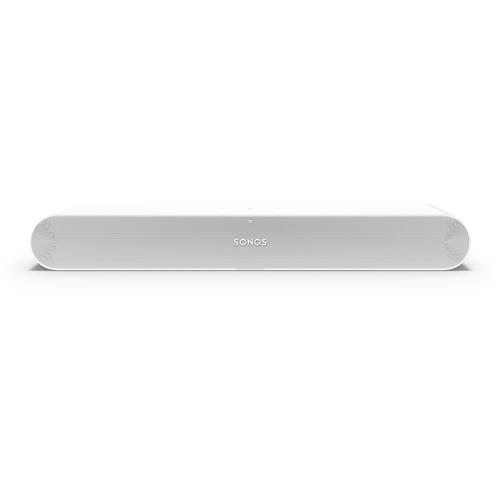
The Sonos Ray installation is refreshingly simple: connect one optical cable to your TV, plug in power, and launch the Sonos app. The compact dimensions (22.6 x 3.9 x 2.7 inches) fit easily in most TV stands or mounted on walls. The forward-facing acoustic design minimizes interference from nearby surfaces, making placement less critical than traditional soundbars.
At the time of writing, these products occupy different value equations. The Ultimea D70 represents exceptional bang-for-buck in home theater performance, delivering genuine 7.1 surround sound at prices typically associated with basic stereo soundbars. For movie enthusiasts and gamers seeking maximum immersion without complex AV receiver setups, it's tough to beat.
The Sonos Ray commands a premium but delivers different value through ecosystem integration, build quality, and sophisticated streaming capabilities. It's positioned for users who prioritize music streaming, multiroom audio, and long-term reliability over pure home theater impact.
Since the Ray's 2022 launch, soundbar technology has continued emphasizing spatial audio processing and streaming integration. The D70's 2023 release incorporated more recent developments in AI-powered audio optimization and mobile app control, reflecting the industry trend toward user customization.
Both systems remain current with today's content consumption patterns. The D70 handles modern gaming audio effectively, while the Ray excels with streaming service integration that has become increasingly important as cord-cutting accelerates.
Choose the Ultimea Poseidon D70 if you're primarily focused on home theater performance and have the space for proper surround speaker placement. It's ideal for movie buffs, gamers, and anyone who wants authentic surround sound without the complexity of separate AV receivers and speaker shopping. The extensive EQ customization appeals to audio tweakers, while the powerful bass satisfies those who want impactful low-end reproduction.
The D70 makes sense for larger rooms where its distributed speakers can create proper surround effects. If you're building a dedicated home theater space or upgrading a family room where movies and gaming are primary activities, this system delivers exceptional value.
Choose the Sonos Ray for music-focused listening, compact installations, or as part of a broader Sonos ecosystem. It's perfect for apartments, bedrooms, offices, or secondary rooms where space constraints matter. The superior streaming integration and room correction make it ideal for users who primarily consume audio content through streaming services.
The Ray also suits situations where aesthetic considerations matter greatly - its clean lines and minimal footprint integrate seamlessly with modern decor. If you're already invested in the Sonos ecosystem or planning a multiroom audio setup, the Ray provides seamless expansion capabilities.
These soundbars represent two valid but different approaches to improving your audio experience. The Ultimea Poseidon D70 prioritizes maximum impact and authentic surround sound at an accessible price point, making it a standout choice for dedicated home theater setups. The Sonos Ray emphasizes refinement, streaming integration, and ecosystem compatibility, excelling in music reproduction and multiroom scenarios.
Your choice ultimately depends on whether you prioritize immersive movie experiences or sophisticated music streaming, room size constraints, and long-term system expansion plans. Both deliver significant improvements over TV speakers, but they excel in distinctly different use cases. Consider your primary content consumption patterns, room layout, and future audio needs to determine which philosophy aligns better with your priorities.
| Ultimea Poseidon D70 7.1 Channel Soundbar System | Sonos Ray Soundbar |
|---|---|
| Audio Architecture - Determines surround sound authenticity | |
| True 7.1 channel with 8 physical speakers (soundbar + 4 surround speakers + subwoofer) | Stereo soundbar with virtual surround processing |
| Peak Power Output - Affects volume capability and bass impact | |
| 410W peak (144W RMS) across all speakers | Not specified (compact form factor limits output) |
| Subwoofer - Critical for deep bass and movie impact | |
| Dedicated 6.5" wireless subwoofer with BassMX technology | No subwoofer included (expandable with separate Sonos Sub) |
| Connectivity Options - Determines device compatibility | |
| HDMI ARC, Optical, Bluetooth 5.3, USB, AUX | Optical only (no HDMI or Bluetooth) |
| Smart Features - Affects ease of use and customization | |
| Mobile app with 10-band EQ, 121 presets, firmware updates | Trueplay room correction, multiroom integration, extensive streaming |
| Installation Complexity - Time and effort required | |
| Moderate setup (4 surround speakers need mounting/wiring) | Simple single-unit installation |
| Room Size Suitability - Space requirements for optimal performance | |
| Medium to large rooms (323-538 sq ft recommended) | Small to medium rooms, compact spaces |
| Primary Use Case Strength - Where each excels most | |
| Home theater, gaming, movie watching | Music streaming, multiroom audio, secondary rooms |
| Ecosystem Integration - Long-term expandability | |
| Standalone system with limited expansion | Part of comprehensive Sonos multiroom ecosystem |
| Value Positioning - Price-to-performance ratio | |
| Budget-friendly true surround sound | Premium compact soundbar with ecosystem benefits |
The Ultimea Poseidon D70 is significantly better for home theater use. It provides true 7.1 surround sound with four physical surround speakers placed around your room, creating authentic directional audio for movies and TV shows. The Sonos Ray only offers virtual surround processing from a single soundbar unit, which cannot match the immersive experience of actual rear speakers for home theater applications.
The fundamental difference is audio architecture. The Ultimea Poseidon D70 is a complete 7.1 channel system with eight separate speakers including four surround speakers and a wireless subwoofer. The Sonos Ray is a compact stereo soundbar that uses virtual processing to simulate surround sound effects from a single unit.
The Ultimea Poseidon D70 has significantly better bass due to its dedicated 6.5-inch wireless subwoofer with BassMX technology. The Sonos Ray lacks a subwoofer and is limited by its compact form factor, though you can add a separate Sonos Sub for additional cost.
With the Ultimea Poseidon D70, you'll need to mount or position four surround speakers around your room for optimal performance. The Sonos Ray requires no additional speakers - it's a single soundbar unit that sits under your TV or mounts on the wall.
The Sonos Ray excels at music streaming with Wi-Fi connectivity, AirPlay 2 support, and integration with streaming services like Spotify Connect. It's designed primarily for music reproduction with excellent stereo imaging. The Ultimea D70 focuses more on home theater performance, though it offers extensive EQ customization for music listening.
The Ultimea Poseidon D70 offers HDMI ARC, optical audio, Bluetooth 5.3, USB, and auxiliary inputs for comprehensive device compatibility. The Sonos Ray only provides optical audio input for TV connection, with no HDMI or Bluetooth connectivity.
The Sonos Ray is ideal for small spaces due to its compact single-unit design that fits easily in TV stands or mounted setups. The Ultimea D70 requires room for four additional surround speakers and is better suited for medium to large rooms where the speakers can be properly positioned.
The Ultimea Poseidon D70 supports TV remote control through HDMI ARC connection. The Sonos Ray cannot be controlled by TV remotes due to its optical-only connectivity, requiring use of the Sonos app or included remote.
The Ultimea D70 offers exceptional value for home theater enthusiasts, providing true 7.1 surround sound at budget-friendly pricing. The Sonos Ray represents premium value for music streaming and multiroom integration but at a higher cost for the core soundbar functionality.
The Sonos Ray has simple setup - just connect one optical cable and use the app. The Ultimea Poseidon D70 requires moderate setup time to position and wire four surround speakers, though the process is straightforward with color-coded cables.
The Ultimea D70 is superior for gaming due to its true surround sound capabilities that provide accurate directional audio cues. The physical speaker placement helps with positional awareness in competitive games. The Sonos Ray lacks the spatial audio precision that enhances gaming experiences.
The Sonos Ray integrates into the broader Sonos ecosystem, allowing expansion with additional Sonos speakers throughout your home for multiroom audio. The Ultimea Poseidon D70 is a complete standalone system with limited expansion options beyond the included components.
We've done our best to create useful and informative comparisons to help you decide what product to buy. Our research uses advanced automated methods to create this comparison and perfection is not possible - please contact us for corrections or questions. These are the sites we've researched in the creation of this article: ultimea.com - provantage.com - ultimea.com - youtube.com - youtube.com - bestbuy.com - the-gadgeteer.com - shopmyexchange.com - youtube.com - youtube.com - youtube.com - ultimea.com - manuals.plus - device.report - images.thdstatic.com - shopmyexchange.com - staples.com - ultimea.de - tomsguide.com - soundandvision.com - youtube.com - techradar.com - en.community.sonos.com - rtings.com - howtogeek.com - youtube.com - cnet.com - sonos.com - videoandaudiocenter.com

Privacy Policy
Terms and Conditions - Affiliate Policy
Home Security
© Copyright 2008-2026.
11816 Inwood Rd #1211, Dallas, TX 75244