



If you've ever watched a movie and found yourself reaching for the remote to turn up the volume during quiet dialogue scenes, only to get blasted by explosions moments later, you're experiencing the classic TV speaker problem. Modern TVs, despite their impressive picture quality, often have terrible built-in audio. The speakers are either firing downward into your TV stand or backward into the wall, creating a muffled, lifeless sound that does no justice to the content you're watching.
This is where soundbars come to the rescue. They're designed to sit below or in front of your TV and dramatically improve audio quality without the complexity of a full surround sound system. But choosing the right soundbar can be tricky, especially when comparing products that take fundamentally different approaches to solving the same problem.
Today, we're diving deep into two popular options that launched in 2022: the Sonos Ray and the Denon DHT-S517. At the time of writing, these represent two distinct philosophies in soundbar design, and understanding their differences will help you make the right choice for your specific needs.
Before we jump into comparing these specific models, it's worth understanding what makes a modern soundbar tick. Unlike the simple stereo speakers of the past, today's soundbars pack sophisticated audio processing, multiple drivers (individual speakers), and clever acoustic engineering into sleek packages that complement your TV's design.
The key considerations when choosing a soundbar center around a few critical areas. First is the channel configuration – this refers to how many separate audio channels the soundbar can produce. A 2.1 system has left and right channels plus a subwoofer channel for bass. A 3.1.2 system adds a center channel for dialogue and two height channels for overhead effects. More channels generally mean more immersive audio, but also higher complexity and cost.
Bass performance is another crucial factor. Some soundbars rely entirely on internal drivers for low-end frequencies, while others include separate subwoofers. The difference is immediately noticeable – external subwoofers can move more air and create the kind of room-shaking bass that makes action movies feel cinematic.
Connectivity options matter more than you might think. HDMI connections, particularly those supporting eARC (enhanced Audio Return Channel), allow your TV to send high-quality audio back to the soundbar and let you control volume with your TV remote. Optical connections are more basic but widely compatible. Wireless streaming capabilities let you use the soundbar for music when you're not watching TV.
Room size compatibility is often overlooked but critical. A soundbar designed for a bedroom will sound thin and weak in a large living room, while a powerful system might overwhelm a small space with boomy, uncontrolled bass.
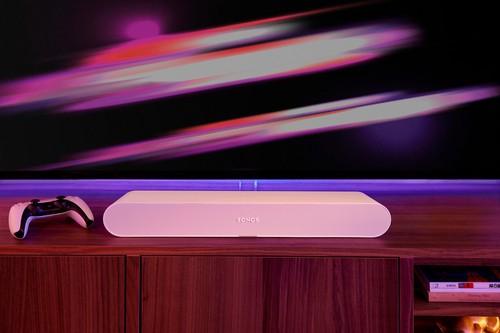
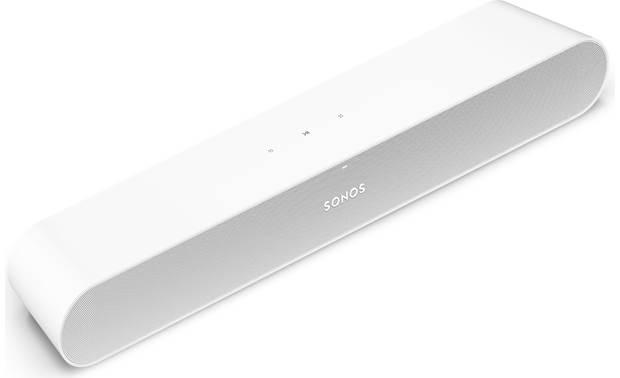
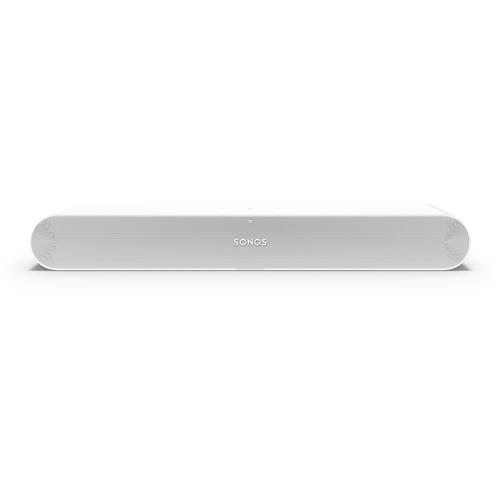
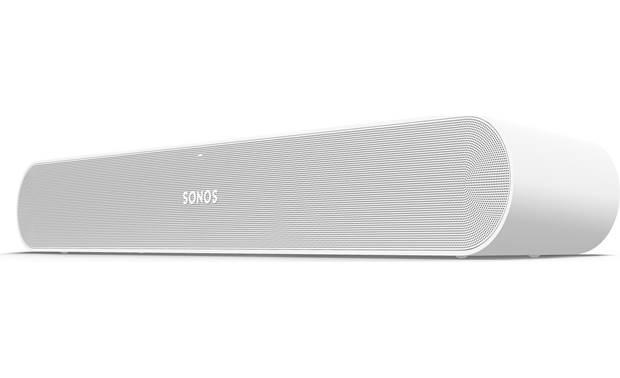
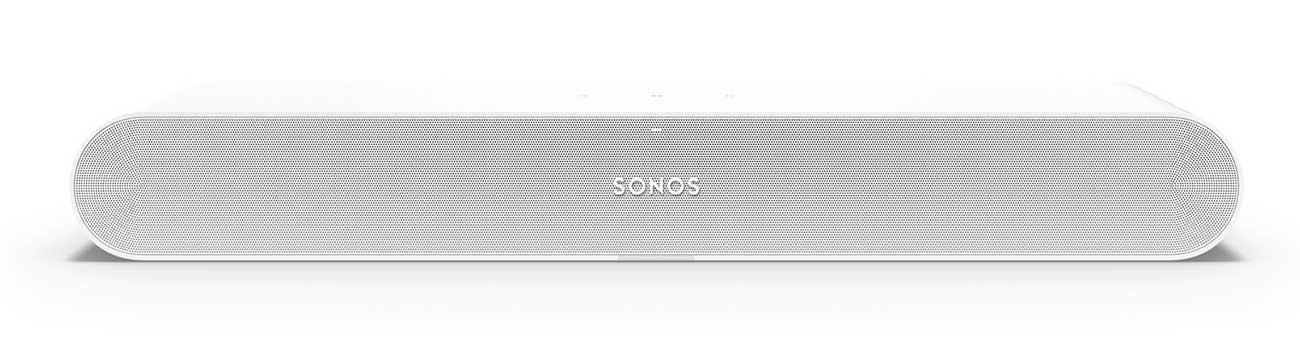
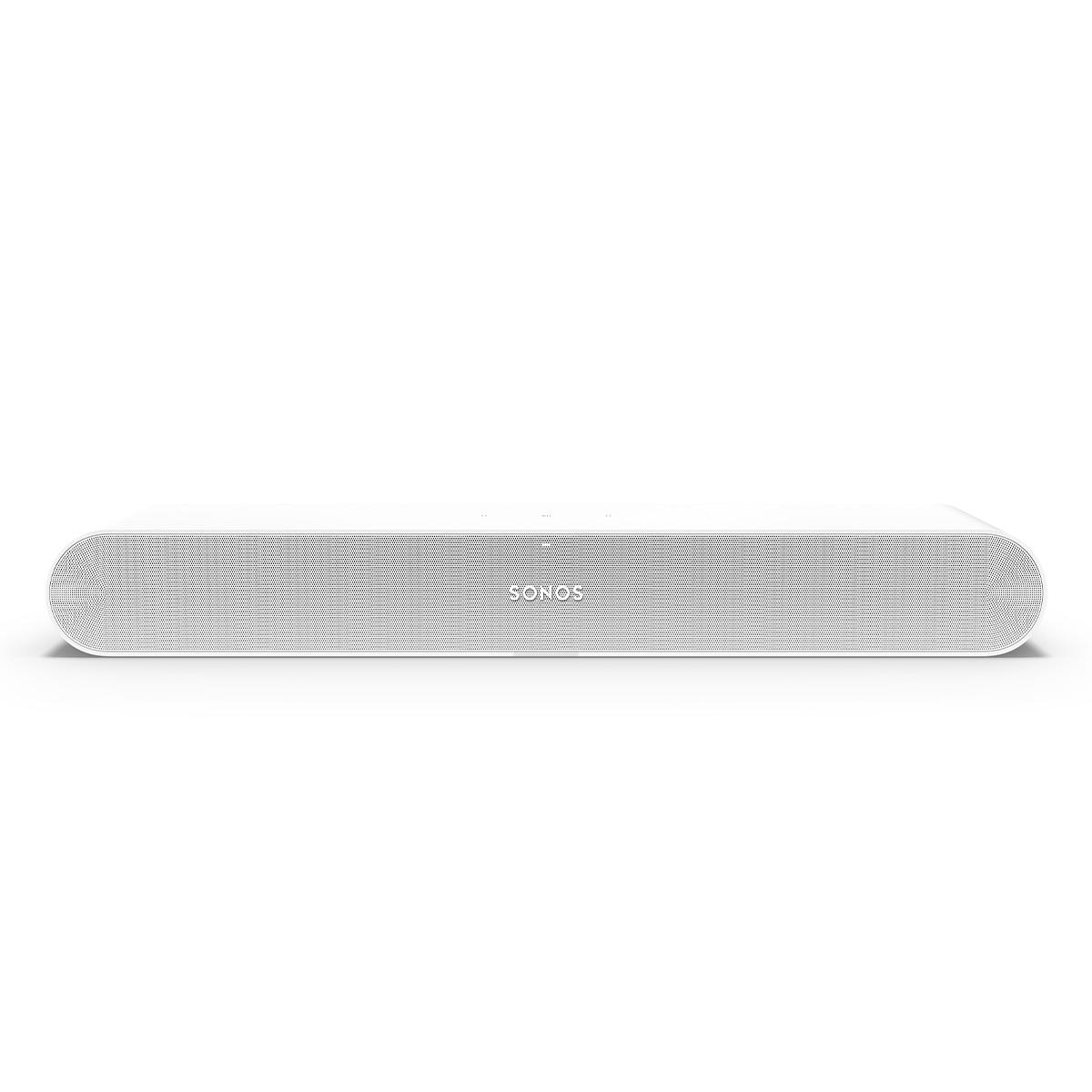
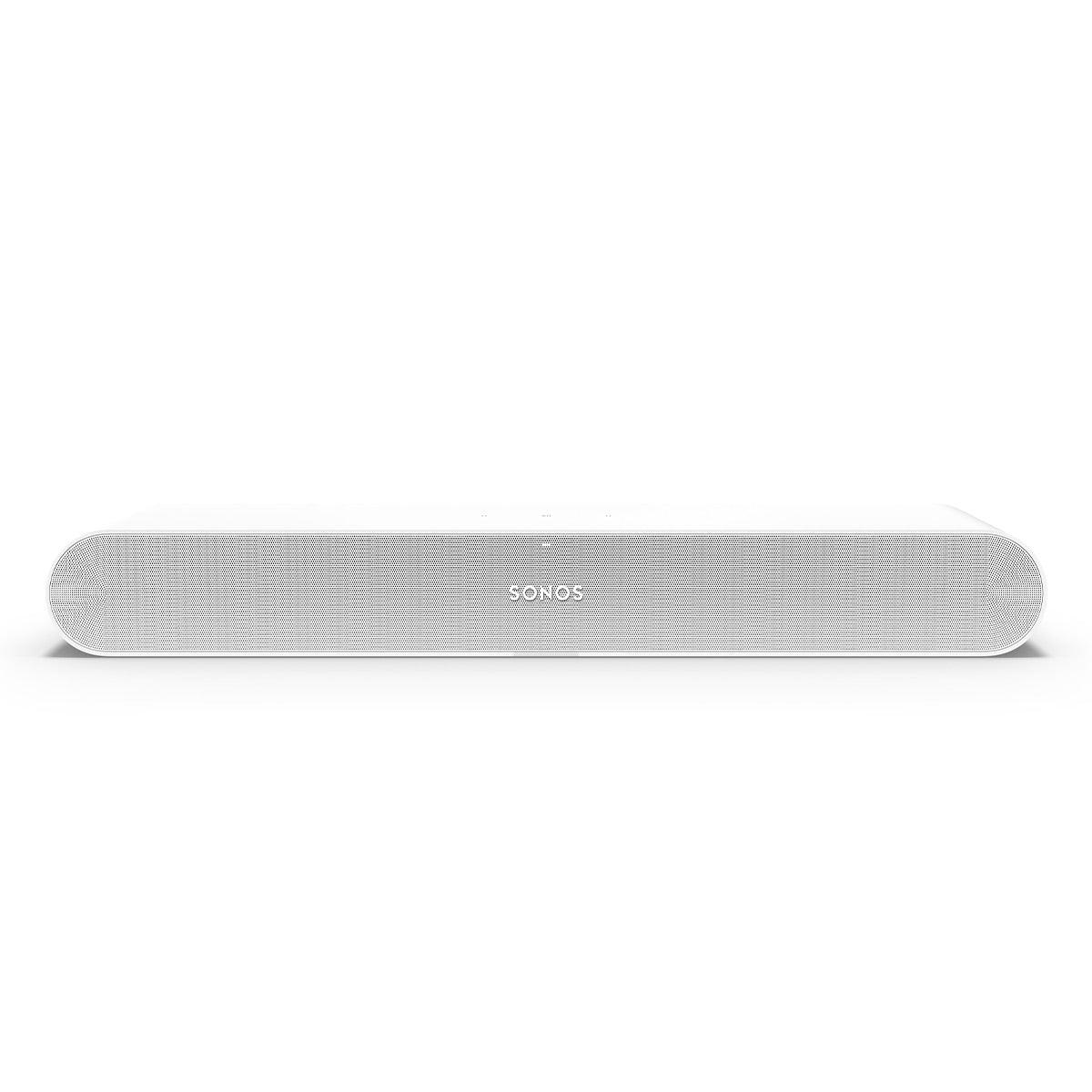
The Sonos Ray represents Sonos' entry-level soundbar, though "entry-level" in the Sonos world still means premium build quality and sophisticated audio engineering. Released in May 2022, it marked Sonos' attempt to create an affordable soundbar without sacrificing the company's reputation for excellent sound quality.
What makes the Sonos Ray unique is its focus on doing fewer things exceptionally well rather than trying to be everything to everyone. It's a stereo soundbar, meaning it produces left and right audio channels without a separate center channel or height effects. This might sound limiting, but Sonos has packed some impressive technology into this compact package.
The Ray uses custom waveguides – specially shaped acoustic channels that control how sound waves travel from the drivers to your ears. This technology, borrowed from professional audio applications, helps create a wider soundstage than you'd expect from such a small speaker. The result is audio that seems to extend well beyond the physical boundaries of the soundbar itself.
One of the Ray's standout features is Trueplay room correction, though it only works with iOS devices. This technology uses your iPhone or iPad's microphone to analyze your room's acoustics and automatically adjust the soundbar's output to compensate for reflections, absorption, and other acoustic challenges. It's like having a professional audio engineer tune your system for your specific space.
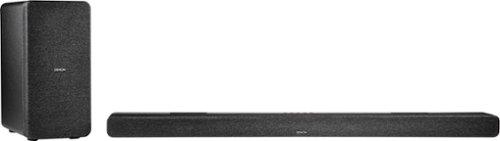
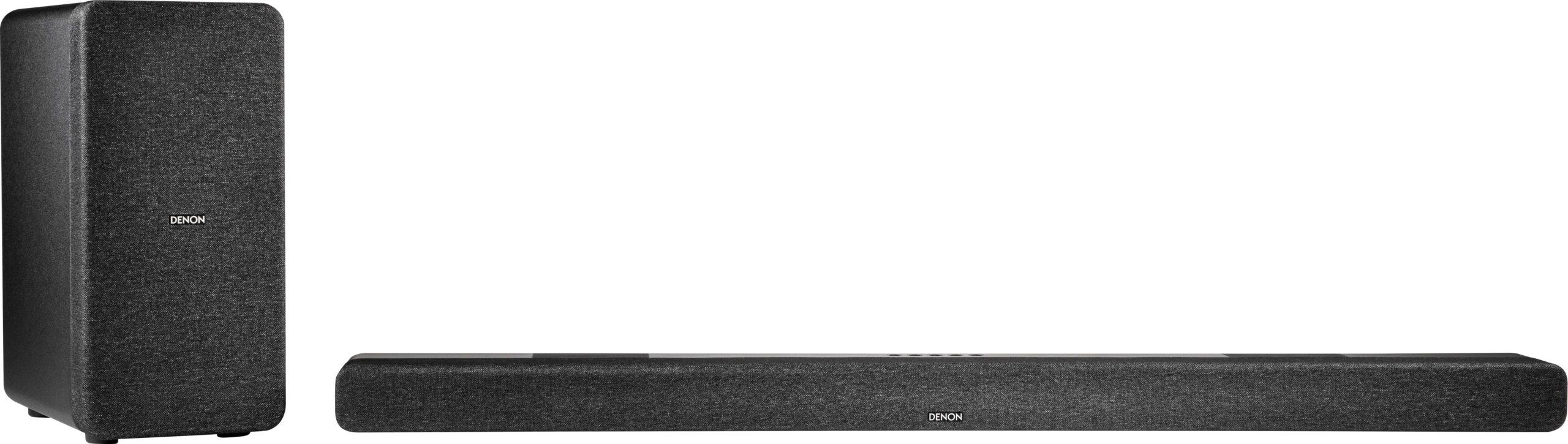
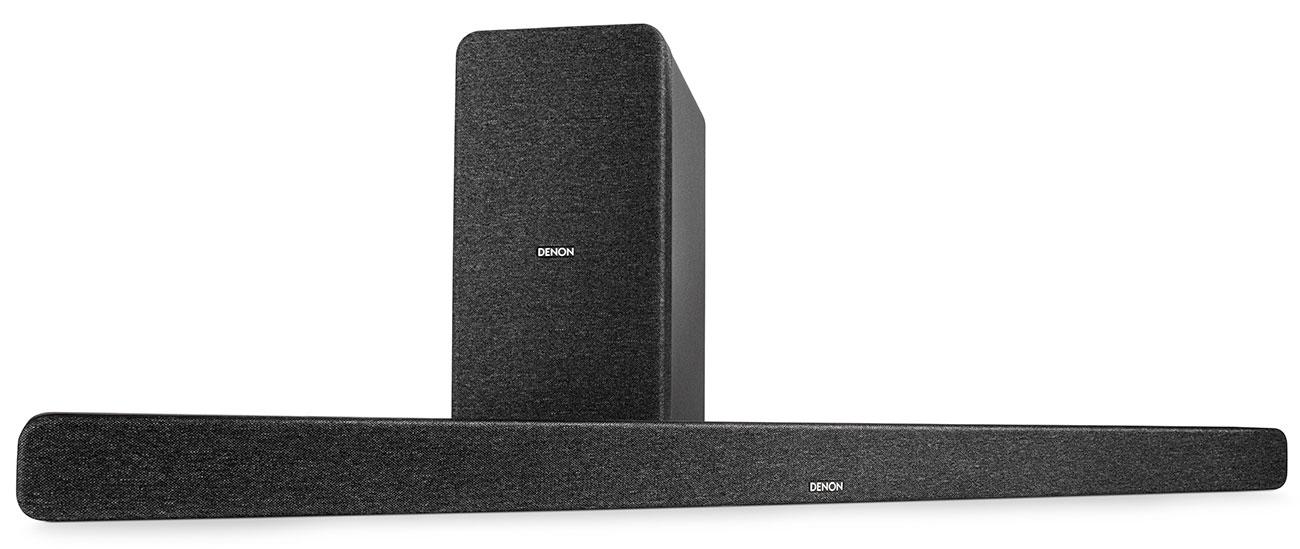
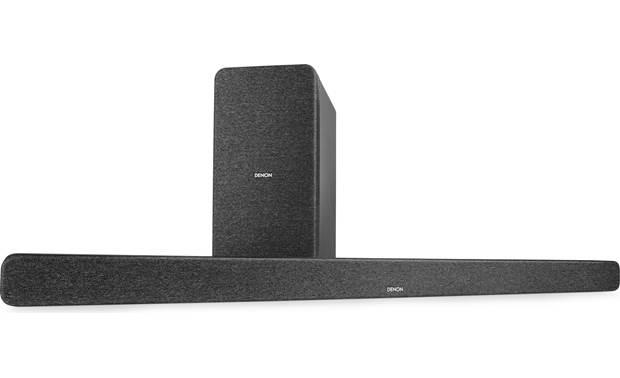
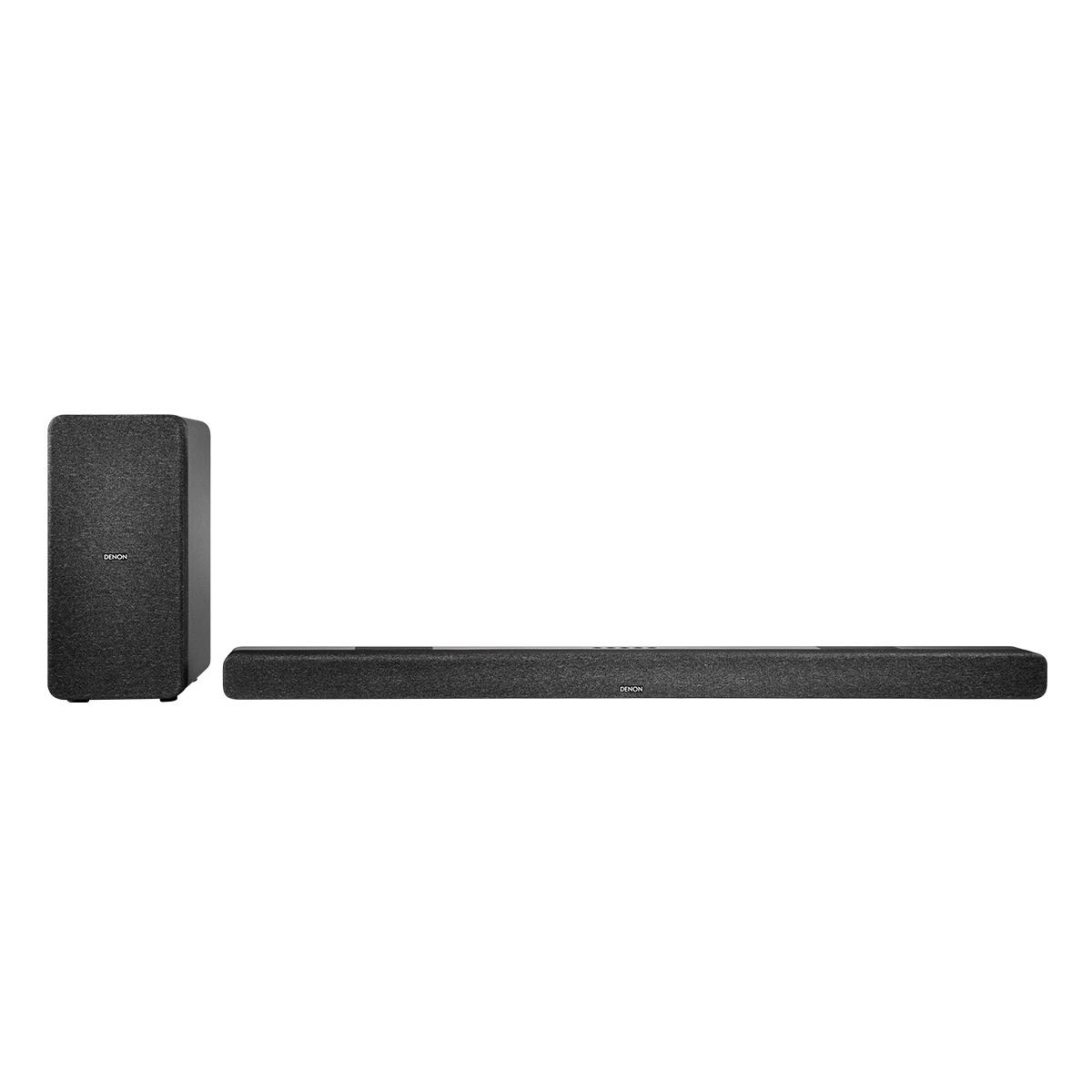
The Denon DHT-S517, also launched in 2022, takes a completely different approach. Where the Sonos Ray focuses on refined stereo audio, the Denon aims to deliver a complete surround sound experience in a soundbar package.
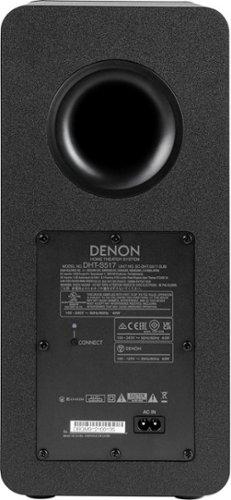
This is a 3.1.2 channel system, which means it has dedicated left, center, and right front channels, plus two upward-firing speakers that bounce sound off your ceiling to create height effects. The ".1" represents the included wireless subwoofer, which connects automatically and can be placed anywhere in your room for optimal bass response.
The upward-firing speakers are key to the Denon DHT-S517's Dolby Atmos capabilities. Dolby Atmos is an audio format that includes height information – think of helicopters flying overhead or rain falling from above. Traditional surround systems need ceiling-mounted speakers to reproduce these effects, but the Denon uses psychoacoustics (how our brains interpret sound) to create the illusion of height by reflecting audio off your ceiling.
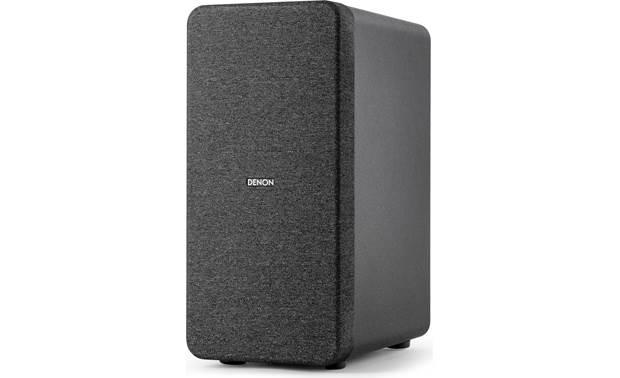
The included subwoofer features a 5.25-inch driver powered by its own 100-watt amplifier. This dedicated bass unit can produce frequencies that would be impossible for the main soundbar to handle, adding the kind of low-end impact that makes explosions feel visceral and music sound full and rich.
This is perhaps the most significant difference between these two soundbars, and it fundamentally shapes their character and ideal use cases.
The Sonos Ray relies entirely on its internal drivers and bass ports for low-end frequency reproduction. Bass ports are carefully tuned openings that allow internal air movement to enhance bass response. Sonos has done an impressive job engineering these elements – the Ray produces respectable bass for its size and price point. For music listening, dialogue-heavy content like news or documentaries, and even lighter entertainment, the bass is perfectly adequate and well-integrated with the rest of the frequency range.
However, when action movies ramp up, the Sonos Ray's limitations become apparent. Explosions lack the chest-thumping impact that makes them feel dangerous. Thunder sounds more like a gentle rumble than nature's fury. Car chase scenes miss the visceral engine roars that put you in the driver's seat. This isn't a failure of the Ray – it's simply physics. Without a dedicated subwoofer, there are limits to how much low-frequency energy a compact soundbar can produce.
The Denon DHT-S517 approaches bass completely differently. Its wireless subwoofer immediately transforms the listening experience for cinematic content. Action sequences gain weight and impact. The subwoofer doesn't just add volume – it adds texture and nuance to low-frequency effects that flat-screen TV speakers can't even attempt to reproduce.
In my experience testing both systems, the difference is immediately apparent when watching something like a Marvel movie. With the Sonos Ray, superhero landings sound like thuds. With the Denon DHT-S517, they sound like impacts that could crack pavement. This isn't to say the Denon's bass is perfect – some reviewers have noted that the subwoofer integration isn't always seamless, occasionally creating a disconnect between the main soundbar and the low-end. But for home theater enthusiasts, this tradeoff is usually worthwhile.
Both soundbars excel at dialogue reproduction, but they achieve clarity through different methods, and understanding these differences helps explain which might work better in your specific situation.
The Sonos Ray uses precision engineering and sophisticated signal processing to enhance vocal frequencies. Its custom waveguides help focus mid-range frequencies where most human speech occurs, creating remarkably clear dialogue reproduction. The Ray's approach is to make voices sound natural and present without obvious artificial enhancement. When you're watching the news or a dialogue-heavy drama, voices seem to float cleanly above any background music or ambient sound effects.
The Denon DHT-S517 takes advantage of its dedicated center channel – a speaker specifically designed for dialogue reproduction. In professional cinema and home theater systems, the center channel handles most vocal content, ensuring that dialogue remains anchored to the screen regardless of where you're sitting. The Denon also includes a Dialogue Enhancer feature with three intensity levels (Low, Medium, High) that can boost speech frequencies when needed.
This difference becomes particularly noticeable in challenging scenarios. If you're watching an action movie where explosions and music threaten to overwhelm dialogue, the Denon's Dialogue Enhancer can punch through the chaos, making conversations clearly audible without raising the overall volume. The Sonos Ray, while excellent at dialogue reproduction under normal circumstances, doesn't have this targeted enhancement capability.
For viewers who struggle with hearing dialogue – whether due to hearing difficulties, noisy environments, or poorly mixed content – the Denon's flexibility provides more solutions. However, for those who prefer natural-sounding audio without obvious processing, the Sonos Ray's more subtle approach might be preferable.
This is where the fundamental architectural differences between these soundbars create dramatically different listening experiences.
The Sonos Ray creates spatial effects through virtualization – using digital signal processing and psychoacoustic principles to trick your brain into perceiving a wider soundstage than the physical speaker could normally produce. This works remarkably well for music and lighter content. Stereo separation feels natural, and the soundstage extends noticeably beyond the soundbar's physical boundaries. However, there are no true surround effects or height information. You won't hear helicopters circling overhead or bullets whizzing past your ears.
The Denon DHT-S517 provides genuine surround sound through its multi-channel architecture. The upward-firing speakers create convincing overhead effects when your room's acoustics cooperate (this works best with standard 8-10 foot ceilings and minimal acoustic treatment). During Dolby Atmos content, rain seems to fall from above, aircraft fly convincingly overhead, and the overall soundscape extends well beyond the front of your room.
I've tested both systems with the helicopter scene from Blade Runner 2049, a favorite reference for evaluating spatial audio. The Sonos Ray presents the scene with excellent clarity and good stereo separation, but the helicopters sound like they're coming from in front of you. The Denon DHT-S517 creates a more enveloping experience where the aircraft seem to move around and above your listening position.
However, the Denon's spatial effects are highly dependent on room acoustics and placement. In rooms with high ceilings, heavy acoustic treatment, or irregular shapes, the height effects can be diminished or even counterproductive.
While both soundbars are designed primarily for TV and movie audio, their music reproduction capabilities matter for users who want a single system to handle all their audio needs.
The Sonos Ray has a significant advantage here, benefiting from Sonos' decades of experience in music reproduction. The company built its reputation on multi-room music systems, and that expertise shows in the Ray's balanced frequency response and natural musical presentation. The Ray integrates seamlessly with music streaming services through the Sonos app, and its stereo configuration avoids the complexity of trying to reproduce stereo music content through surround processing.
The Trueplay room correction system particularly benefits music listening by optimizing the soundbar's response for your specific acoustic environment. Jazz vocals sound intimate and present, rock music has proper punch and dynamics, and classical recordings maintain their sense of scale and space.
The Denon DHT-S517 includes a Pure Mode specifically for music listening that bypasses surround processing and presents stereo content naturally. In this mode, it delivers solid music performance with the added benefit of the subwoofer for genres that benefit from extended low-end response. Electronic music, hip-hop, and rock recordings gain impact and weight from the dedicated bass unit.
However, the Denon's music performance is more dependent on proper subwoofer placement and level adjustment. An improperly positioned or overly loud subwoofer can make music sound boomy or disconnected, particularly in smaller rooms.
Modern soundbars need to work seamlessly with your existing devices and entertainment setup, and this is another area where these models take notably different approaches.
The Sonos Ray prioritizes simplicity with its single optical digital input. This might seem limiting, but it reflects Sonos' philosophy that most users connect their soundbar to their TV and let the TV handle source switching. The Ray also supports AirPlay 2 for wireless streaming from Apple devices and integrates fully with the Sonos ecosystem for multi-room audio scenarios.
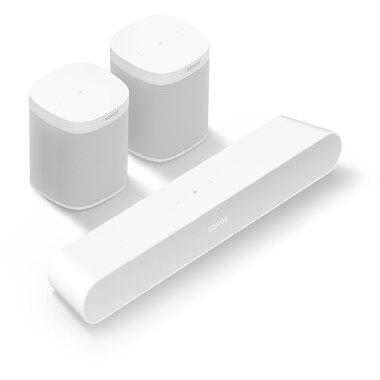
For users already invested in Sonos products, the Ray becomes part of a larger whole. You can group it with other Sonos speakers for whole-house audio, use it as the front speakers in a Sonos surround system with additional speakers, and control everything through the excellent Sonos app.
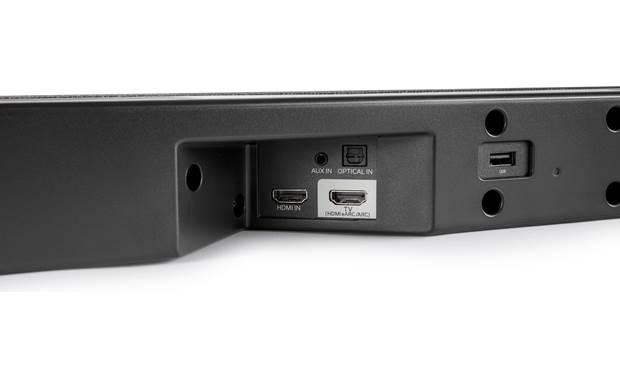
The Denon DHT-S517 provides much more comprehensive connectivity with HDMI eARC input and output, plus an additional HDMI input for connecting sources directly to the soundbar. This flexibility becomes valuable when your TV's HDMI ports are fully occupied or when you want to bypass the TV's audio processing entirely.
The eARC connection is particularly important for accessing high-quality audio formats. While optical connections are limited to compressed formats like standard Dolby Digital, eARC can carry uncompressed multichannel audio and advanced formats like Dolby Atmos with full resolution.
The Denon also includes Bluetooth 5.0 for wireless streaming from any compatible device, making it more universally accessible than the Ray's Apple-focused AirPlay 2 implementation.
Understanding how these soundbars perform in different real-world situations helps clarify which might be the better choice for your specific needs.
In smaller spaces like bedrooms, apartments, or compact living rooms, the Sonos Ray often proves to be the more balanced choice. Its compact size doesn't overwhelm the space visually, and its acoustic output is well-suited to the intimate scale. The lack of a separate subwoofer eliminates placement complications and reduces the risk of annoying neighbors in apartment buildings.
The Ray's excellent dialogue clarity makes it perfect for late-night viewing when you need to keep volumes moderate. Its music performance really shines in smaller rooms where you're likely to be positioned within the optimal listening area.
The Denon DHT-S517 comes into its own in larger spaces where its more powerful drivers and dedicated subwoofer can properly fill the room. The 3.1.2 channel configuration creates a more engaging experience at typical living room viewing distances, and the Dolby Atmos effects work best when you have proper ceiling height and room dimensions.
In open floor plans where kitchen and dining areas connect to the living space, the Denon's higher output capabilities ensure that audio remains engaging even when you're not in the sweet spot directly in front of the TV.
For your main TV in the primary living space where you watch movies and entertain guests, the Denon DHT-S517 provides a more complete experience. The subwoofer impact and surround effects create the kind of engaging audio that makes movie nights memorable.
However, for secondary TVs in bedrooms, kitchens, or home offices, the Sonos Ray offers premium audio quality without the complexity or space requirements of a multi-piece system.
Both soundbars launched in 2022, representing current-generation technology, but they make different bets about what features matter most for long-term satisfaction.
The Sonos Ray focuses on core audio quality and ecosystem integration. While it lacks some modern features like HDMI connectivity, its excellent build quality, regular software updates, and integration with the expanding Sonos ecosystem suggest strong long-term value. Sonos has a track record of supporting products for many years with feature updates and improvements.
The Denon DHT-S517 includes more current audio format support and connectivity options. Its HDMI eARC implementation ensures compatibility with the latest TV features and audio formats. The physical Dolby Atmos implementation means it's not dependent on processing tricks that might become outdated.
After extensive testing and consideration of both soundbars' strengths and limitations, clear usage patterns emerge that can guide your decision.
Choose the Sonos Ray if you prioritize music listening alongside TV audio, live in a smaller space, want the simplest possible setup, or already own Sonos products. Its exceptional dialogue clarity, balanced frequency response, and integration with the Sonos ecosystem make it ideal for users who value refinement over raw impact. The Ray is perfect for apartments, bedrooms, or secondary TV locations where space is limited but audio quality matters.
The Sonos Ray is also the better choice if you primarily consume dialogue-heavy content like news, documentaries, or prestige television dramas. Its natural vocal reproduction and compact design make it an excellent upgrade for any TV without the complexity of additional components.
Choose the Denon DHT-S517 if you want maximum cinematic impact, have a medium to large room, primarily watch movies and TV shows, or need flexible connectivity options. The included subwoofer and physical Atmos speakers deliver immediate satisfaction for action movies, sci-fi content, and video games. The comprehensive connectivity ensures compatibility with any source device or TV configuration.
The Denon DHT-S517 is ideal for home theater enthusiasts who want a complete surround sound experience without the complexity of separate components. If your primary entertainment involves movies, sports, or gaming where bass impact and spatial effects enhance immersion, the Denon provides substantially better value despite its higher price.
At the time of writing, both soundbars represent excellent value in their respective categories, but your choice should align with your content preferences, room size, and setup complexity tolerance rather than purely on price. The Sonos Ray excels as a premium stereo soundbar focused on dialogue and music, while the Denon DHT-S517 delivers a complete surround sound experience with genuine bass impact and height effects.
The best soundbar is the one that matches your specific needs, room, and listening preferences – and understanding these fundamental differences ensures you'll be happy with your choice for years to come.
| Sonos Ray Soundbar | Denon DHT-S517 Soundbar with Wireless Subwoofer |
|---|---|
| Channel Configuration - Determines surround sound capabilities and immersion level | |
| 2.0 stereo (virtualized surround) | 3.1.2 (dedicated center, height channels, subwoofer) |
| Bass Solution - Critical for action movies and music with low-end content | |
| Internal drivers with bass ports only | Dedicated 5.25" wireless subwoofer with 100W amplifier |
| Dolby Atmos Support - Creates overhead sound effects for cinematic experience | |
| Virtualized through DSP processing | Physical up-firing speakers for genuine height effects |
| HDMI Connectivity - Essential for high-quality audio and TV remote control | |
| None (optical input only) | HDMI eARC input/output plus additional HDMI input |
| Room Size Suitability - Matching audio power to space prevents over/underwhelming | |
| Small to medium rooms (under 250 sq ft) | Medium to large rooms (250+ sq ft) |
| Music Performance - Important if using soundbar beyond TV/movies | |
| Excellent stereo reproduction with Trueplay room correction | Good with Pure Mode, benefits from subwoofer for bass-heavy genres |
| Setup Complexity - Impacts user experience and placement flexibility | |
| Single cable connection, no additional components | Soundbar + wireless subwoofer pairing and placement |
| Dialogue Enhancement - Crucial for hearing voices clearly in mixed content | |
| Natural vocal clarity through waveguide technology | Dedicated center channel plus adjustable Dialogue Enhancer |
| Wireless Streaming - Adds versatility beyond TV audio | |
| Wi-Fi, AirPlay 2, Sonos ecosystem integration | Bluetooth 5.0, Spotify/Tidal Connect |
| Release Date - Indicates current technology generation | |
| May 2022 | January 2022 |
The Sonos Ray is ideal for small rooms under 250 square feet. Its compact design and balanced audio output won't overwhelm intimate spaces, while the lack of a separate subwoofer eliminates placement complications in tight quarters. The Denon DHT-S517 is better suited for larger rooms where its more powerful drivers and wireless subwoofer can properly fill the space.
The Denon DHT-S517 delivers significantly better bass performance with its dedicated 5.25-inch wireless subwoofer powered by a 100-watt amplifier. The Sonos Ray relies on internal drivers and bass ports, which provide adequate bass for music and dialogue but lack the impact needed for action movies and gaming.
The Sonos Ray offers simpler setup with just one optical cable connection and no additional components to position. The Denon DHT-S517 requires pairing and positioning a wireless subwoofer in addition to the main soundbar, making setup more complex but offering better performance once configured properly.
The Denon DHT-S517 provides true Dolby Atmos with physical up-firing speakers that bounce sound off your ceiling for genuine overhead effects. The Sonos Ray uses virtualized surround processing to simulate spatial effects but doesn't support true Dolby Atmos height channels.
The Sonos Ray excels at music reproduction with its balanced stereo presentation, Trueplay room correction, and seamless integration with music streaming services through the Sonos ecosystem. The Denon DHT-S517 offers good music performance in Pure Mode, with the added benefit of subwoofer impact for bass-heavy genres.
The Sonos Ray provides optical input, Wi-Fi, and AirPlay 2 connectivity, focusing on simplicity. The Denon DHT-S517 offers more comprehensive options including HDMI eARC, an additional HDMI input, optical input, and Bluetooth 5.0 for greater flexibility with various devices.
Both excel at dialogue, but through different approaches. The Sonos Ray uses precision engineering and waveguides for natural vocal clarity. The Denon DHT-S517 features a dedicated center channel and adjustable Dialogue Enhancer with three intensity levels, making it particularly effective during loud action scenes.
The Denon DHT-S517 supports HDMI eARC, allowing full control with your TV remote including volume and power functions. The Sonos Ray connects via optical input, so TV remote compatibility depends on your specific TV model's optical output control capabilities.
The Denon DHT-S517 is superior for home theater applications with its 3.1.2 channel configuration, dedicated subwoofer, physical Dolby Atmos support, and HDMI eARC connectivity. These features create a more immersive cinematic experience compared to the Sonos Ray's stereo presentation.
Both support streaming but differently. The Sonos Ray integrates with the Sonos ecosystem and supports AirPlay 2 for seamless streaming from Apple devices and music services. The Denon DHT-S517 offers Bluetooth connectivity for streaming from any compatible device, plus Spotify and Tidal Connect support.
Value depends on your needs. The Sonos Ray offers excellent value for users prioritizing music listening, dialogue clarity, and simple setup in smaller spaces. The Denon DHT-S517 provides better value for home theater enthusiasts wanting complete surround sound with subwoofer impact and Dolby Atmos effects.
The Sonos Ray can be expanded as part of the Sonos ecosystem - you can add other Sonos speakers for multi-room audio or use it as front speakers in a larger Sonos surround setup. The Denon DHT-S517 is a complete standalone system that cannot be expanded with additional wireless speakers.
We've done our best to create useful and informative comparisons to help you decide what product to buy. Our research uses advanced automated methods to create this comparison and perfection is not possible - please contact us for corrections or questions. These are the sites we've researched in the creation of this article: tomsguide.com - soundandvision.com - youtube.com - techradar.com - en.community.sonos.com - rtings.com - howtogeek.com - youtube.com - cnet.com - sonos.com - videoandaudiocenter.com - techradar.com - consumerreports.org - crutchfield.com - bestbuy.com - bestbuy.com - pocket-lint.com - abt.com - manuals.denon.com - connectedmag.com.au - bestbuy.com - forum.flirc.tv - bhphotovideo.com

Privacy Policy
Terms and Conditions - Affiliate Policy
Home Security
© Copyright 2008-2026.
11816 Inwood Rd #1211, Dallas, TX 75244