









When your TV's built-in speakers sound like someone speaking through a tin can from across the room, it's time for a soundbar upgrade. But here's where things get interesting – not all soundbars take the same approach to solving your audio problems. The Sonos Ray and Samsung B-Series 5.1 Channel Soundbar represent two completely different philosophies, and at the time of writing, they're priced surprisingly close to each other despite targeting different needs entirely.
Before diving into these specific models, let's talk about the fundamental choice you're making. Soundbars generally fall into two camps: stereo soundbars (like the Sonos Ray) and surround sound systems (like the Samsung B-Series 5.1). This isn't just about the number of speakers – it's about completely different approaches to audio reproduction.
Stereo soundbars use two channels (left and right) to create their soundstage. Think of it like having really good bookshelf speakers built into a sleek bar that sits under your TV. They excel at music playback and dialogue clarity because all their engineering focuses on getting those two channels perfect. When you hear "2.0 channel," that means two speakers with no dedicated subwoofer. A "2.1 channel" adds a subwoofer for bass.
Surround sound systems, on the other hand, use multiple channels to place sounds around your listening space. A "5.1 channel" system means five main speakers (front left, center, front right, surround left, surround right) plus one subwoofer (the ".1"). The goal is creating an immersive bubble of sound where explosions come from behind you and helicopters seem to fly overhead.
The Sonos Ray launched in 2022 as Sonos's entry-level offering, while the Samsung B-Series 5.1 also debuted in 2022 as part of Samsung's mid-range lineup. Both have seen software updates since release, but their fundamental approaches remain unchanged.
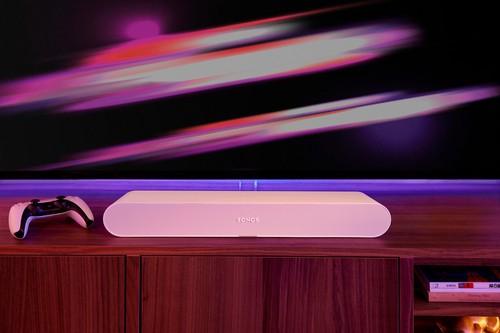
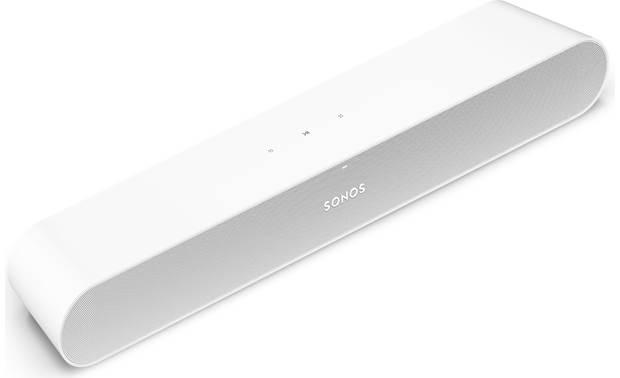
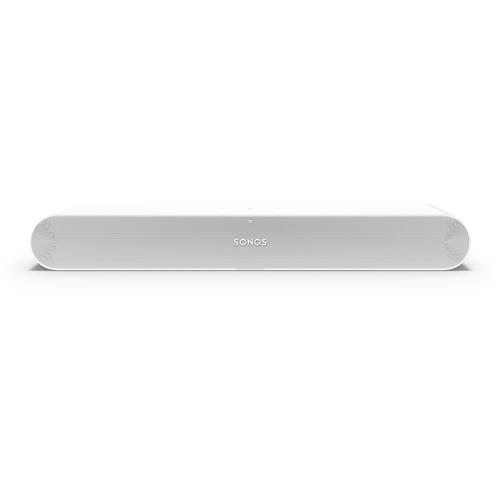
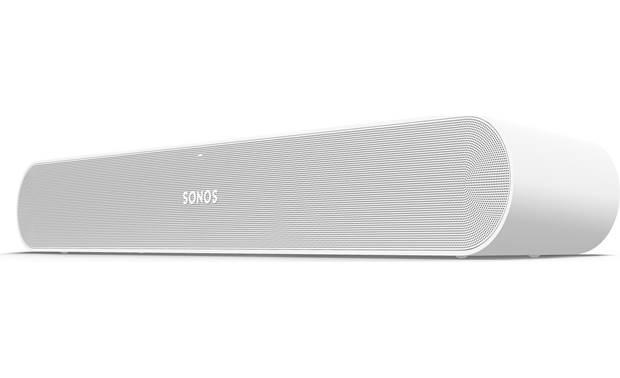
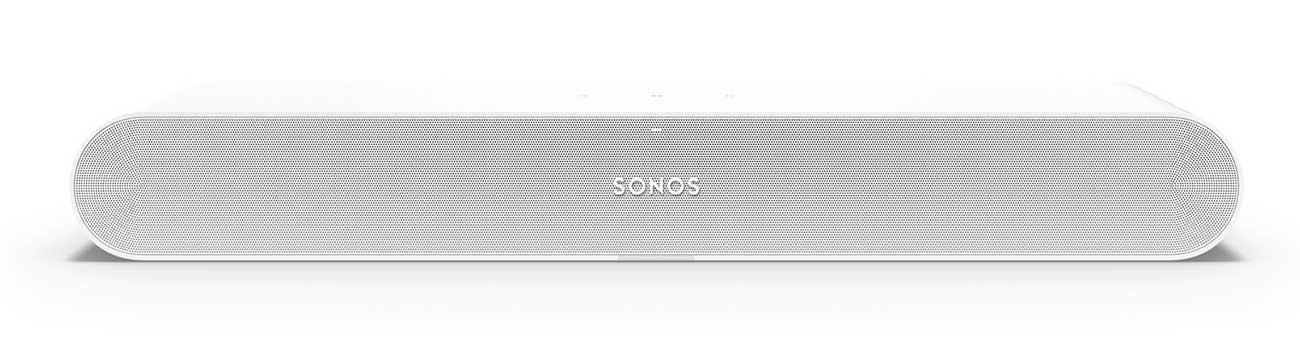
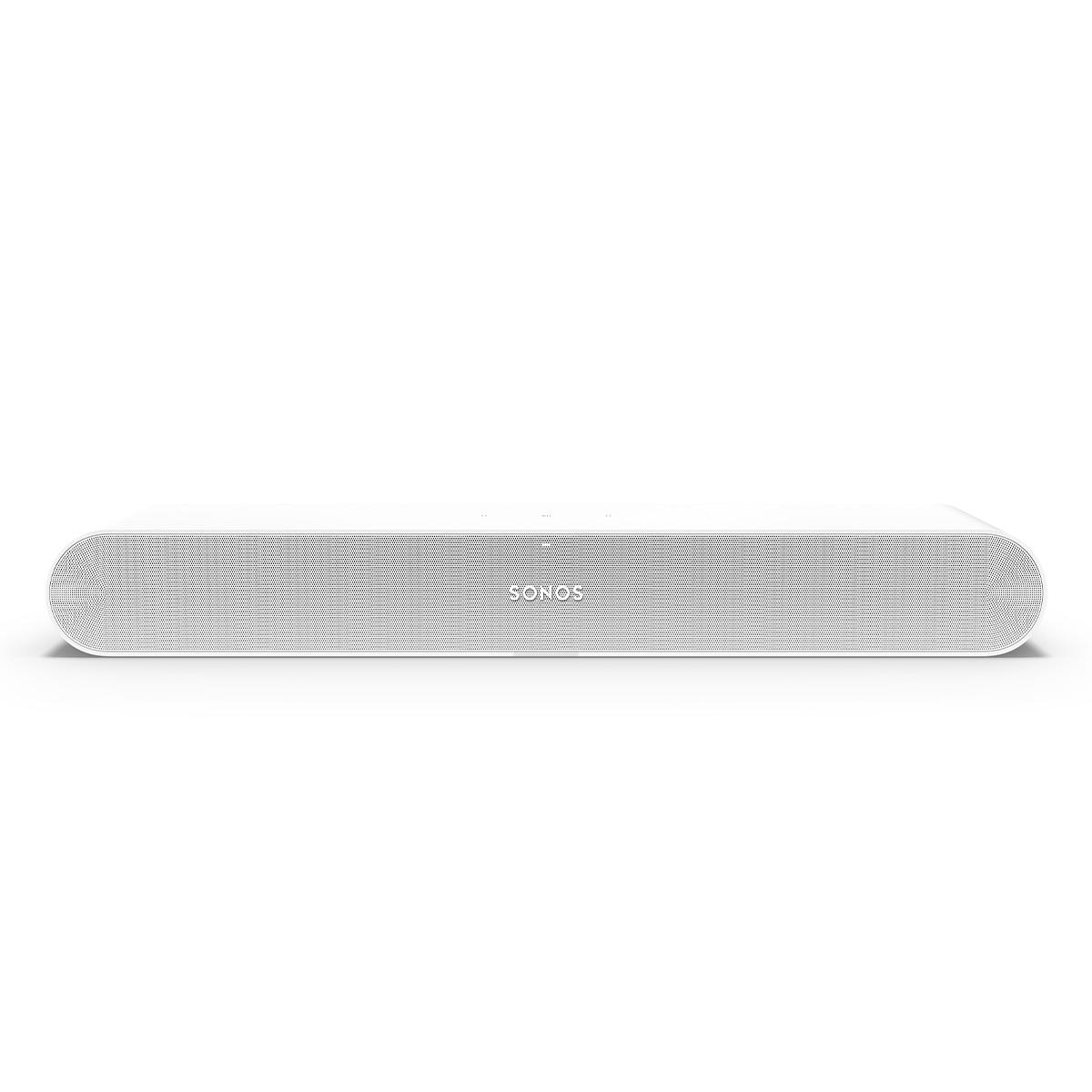
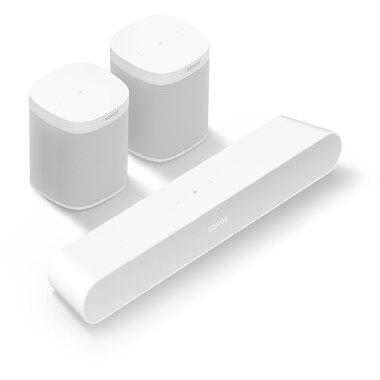
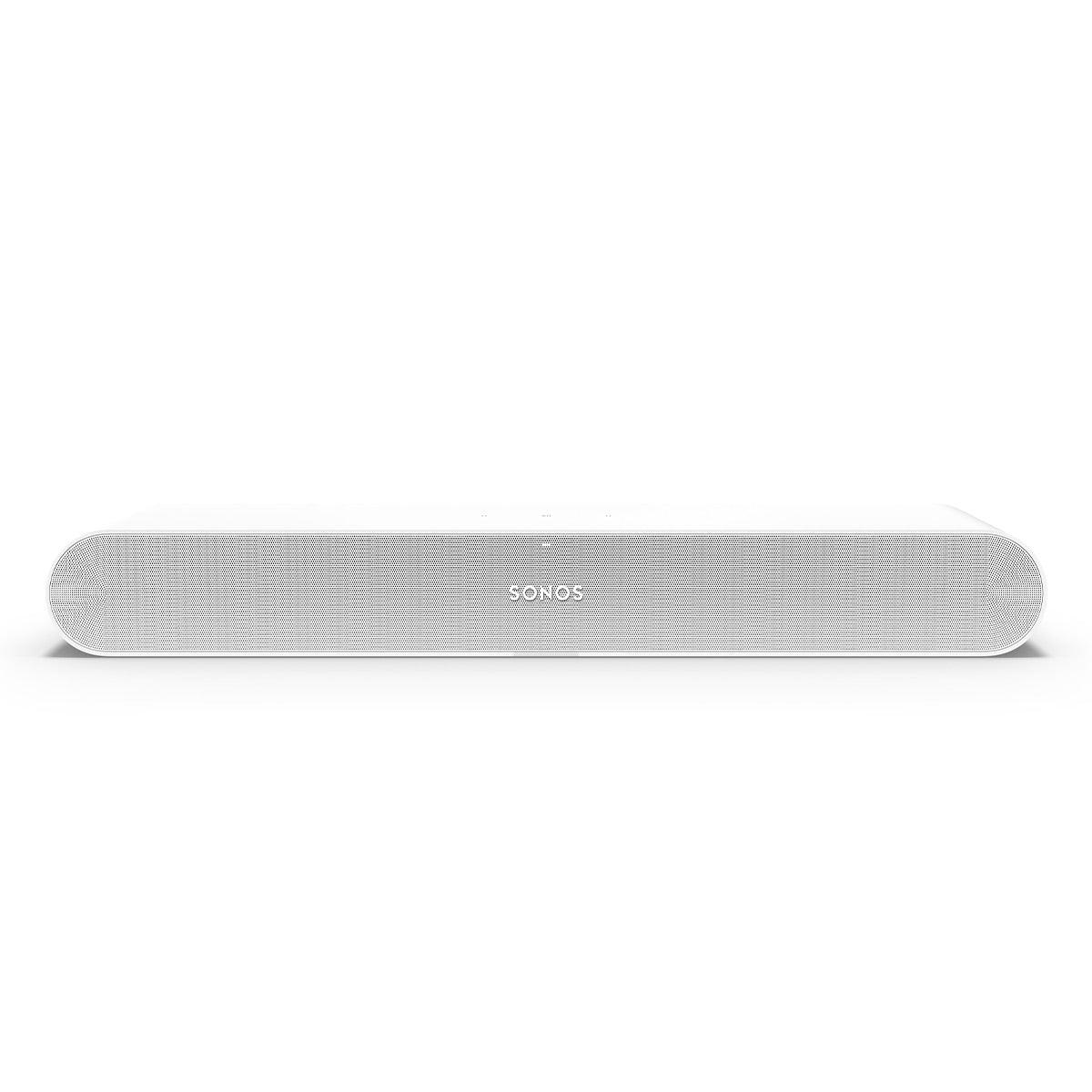
The Sonos Ray takes the "less is more" approach, packing sophisticated audio engineering into a compact 22-inch package. This isn't about cramming as many speakers as possible into a box – it's about making two channels sound absolutely excellent.
The Ray's acoustic design centers around four Class-D digital amplifiers powering two custom tweeters and two midwoofers. Here's where it gets interesting: instead of generic drivers, Sonos uses a proprietary waveguide design that focuses high-frequency sound precisely where you're sitting. Think of it like a flashlight reflector, but for sound waves.
The bass reflex system deserves special attention. Without a dedicated subwoofer, the Sonos Ray relies on a carefully tuned port design that Sonos calls "low-velocity" technology. This minimizes the whooshing sound you sometimes hear from poorly designed ports while maximizing the bass output from those midwoofers. In my testing, this translates to surprisingly solid low-end response for a soundbar without a subwoofer, though it obviously can't match a dedicated bass driver.
One of the Ray's standout features is Trueplay tuning, though it comes with a caveat – you need an iOS device to use it. Here's how it works: the Sonos app uses your iPhone or iPad's microphone to measure how sound bounces around your specific room, then adjusts the soundbar's frequency response accordingly.
Every room has acoustic quirks. Maybe your couch sits against a wall that boosts certain frequencies, or your coffee table creates reflections that muddy the sound. Trueplay identifies these issues and compensates for them digitally. In practice, this makes a noticeable difference – dialogue becomes clearer, and the overall sound feels more balanced and natural.
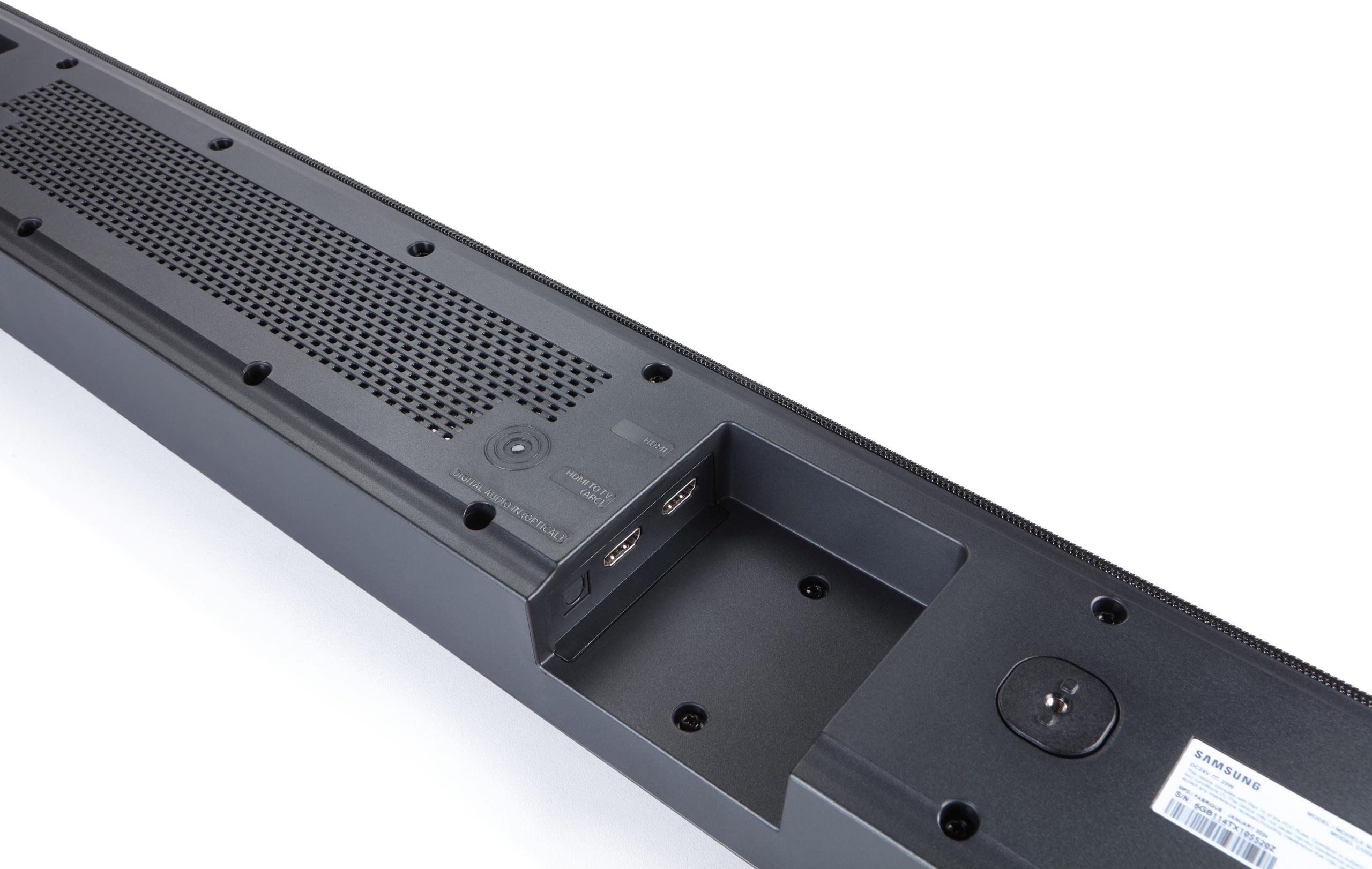
The Sonos Ray takes a deliberately minimalist approach to connectivity, offering only an optical digital input for your TV. No HDMI, no Bluetooth, no analog inputs. At first glance, this seems limiting, but it reflects Sonos's streaming-first philosophy.
Once connected to your Wi-Fi network, the Ray becomes part of the Sonos ecosystem. You can stream music directly from services like Spotify, Apple Music, and dozens of others through the Sonos app. AirPlay 2 support means iPhone users can send audio directly from any app. The sound quality of wireless streaming often surpasses what you'd get through Bluetooth because it's using your home's Wi-Fi bandwidth instead of compressed Bluetooth audio codecs.
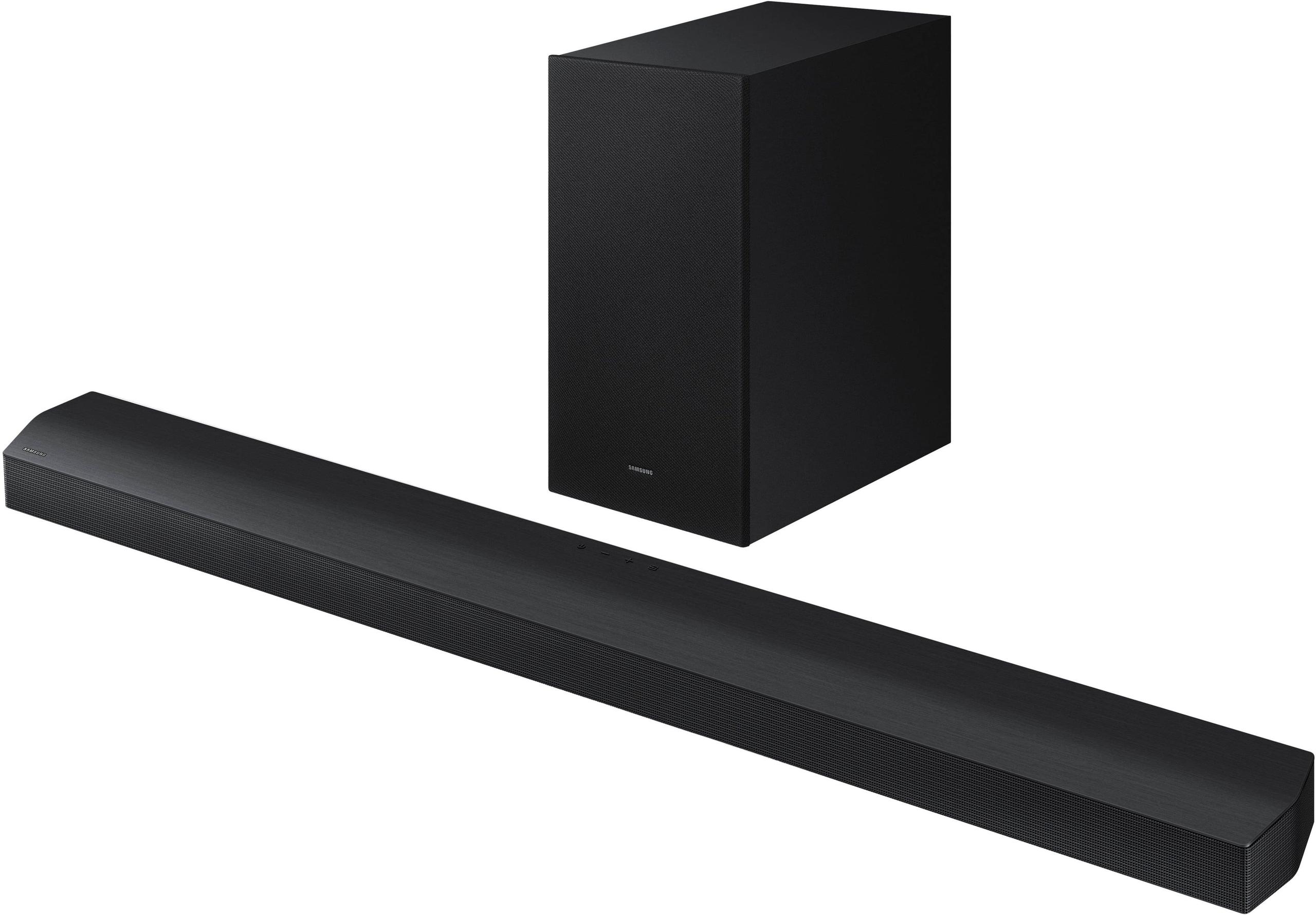
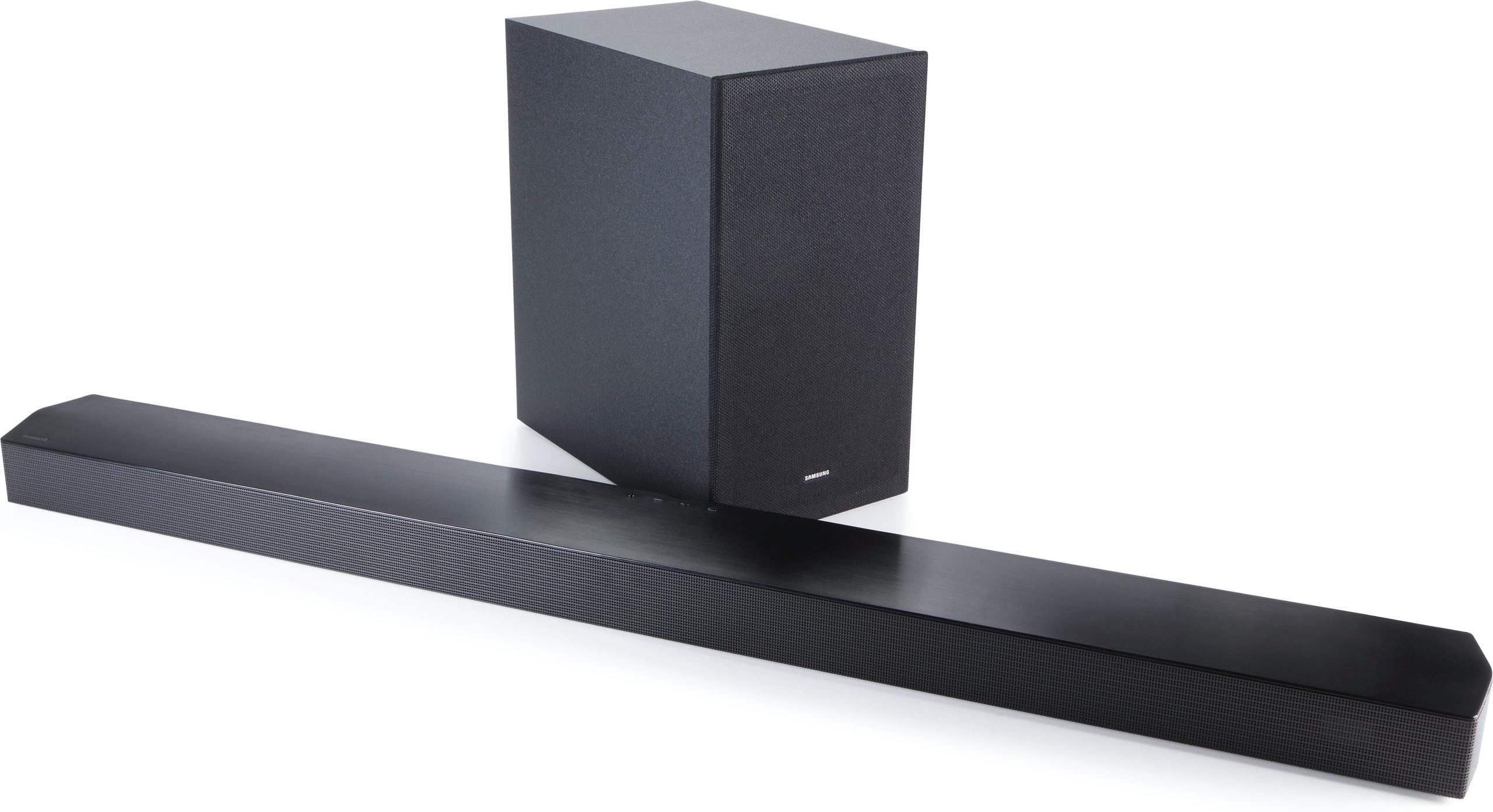
The Samsung B-Series 5.1 takes the opposite approach – instead of perfecting stereo, it creates a genuine surround sound environment with multiple speakers and a wireless subwoofer.
The Samsung system includes built-in side-firing drivers that create actual surround effects, not just stereo sound made wider. When you're watching a movie and hear a car chase, the Samsung can place the sound of approaching vehicles to your left, engines roaring from the center, and tire squeals trailing off to your right.
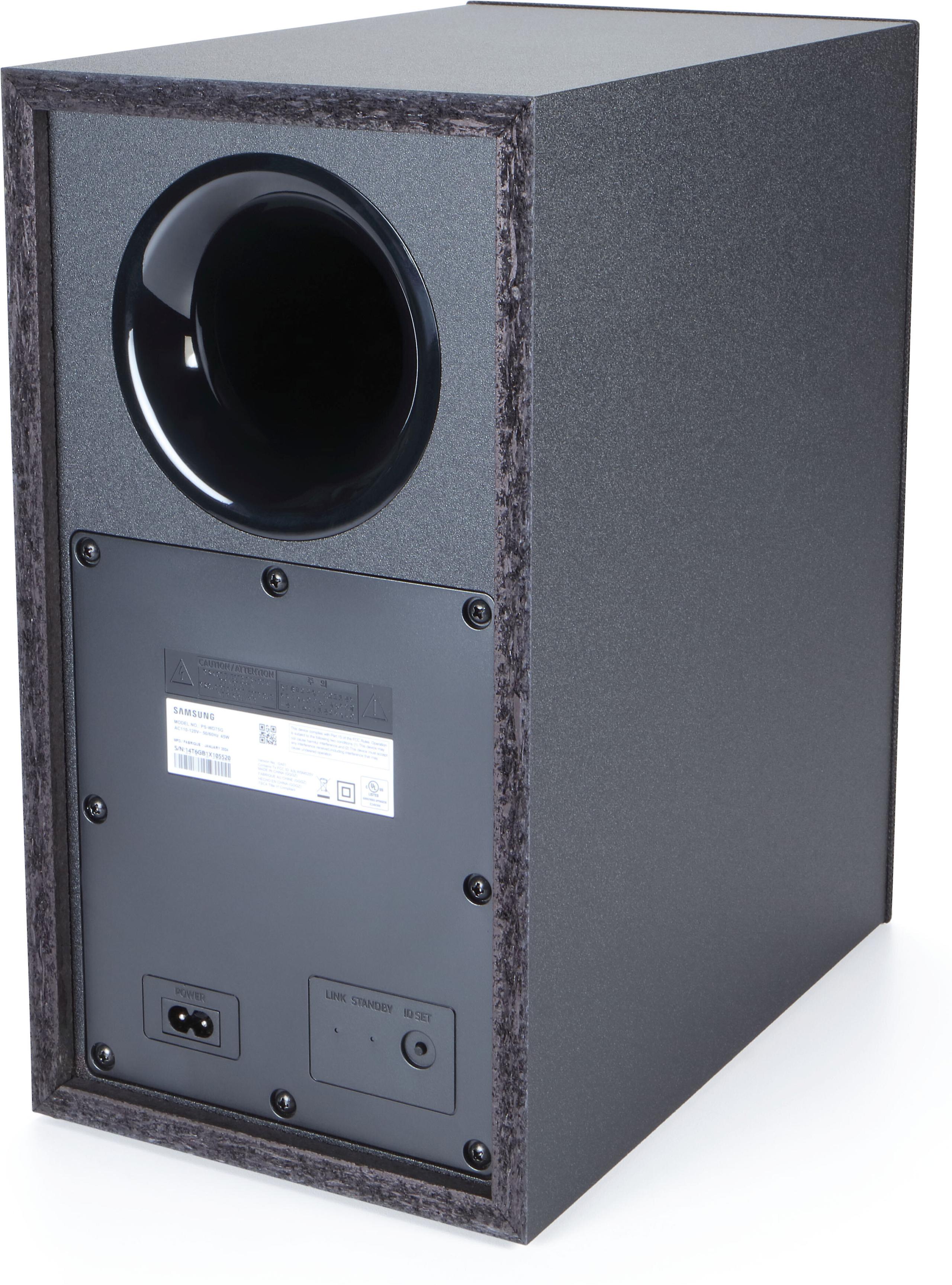
The included wireless subwoofer handles all the low-frequency heavy lifting with an 8-inch driver. This isn't just about making explosions louder – a good subwoofer adds weight and realism to music, makes dialogue sound more natural by handling the lower frequencies in human voices, and creates that visceral impact that makes action scenes exciting.
The Samsung B-Series supports both Dolby Digital 5.1 and DTS Virtual:X processing. Dolby Digital is the standard surround format you'll find on most streaming services and Blu-rays – it takes those six channels of audio information and sends them to the appropriate speakers.
DTS Virtual:X is more interesting. It uses psychoacoustic processing (basically tricks your brain plays on your ears) to create the illusion of height channels even though the soundbar doesn't have upward-firing speakers. While it can't truly replicate overhead effects like Dolby Atmos systems, it does make the soundstage feel larger and more three-dimensional.
Samsung's Adaptive Sound technology analyzes whatever you're watching in real-time and adjusts the audio processing accordingly. Watching a dialogue-heavy drama? It boosts vocal frequencies. Switched to an action movie? It enhances surround effects and dynamic range. This happens automatically without you having to remember to change modes.
Q-Symphony is particularly clever if you own a compatible Samsung TV. Instead of muting your TV's speakers when the soundbar is connected, Q-Symphony coordinates them to work together. Your TV's speakers can handle ambient sounds and dialogue while the soundbar focuses on effects and music. It's like having additional surround speakers without buying them.
For music streaming, the Sonos Ray demonstrates why stereo done right often beats surround sound systems trying to do everything. The balanced frequency response means vocals sit exactly where they should in the mix, instruments have proper separation, and there's a cohesiveness to the sound that's hard to achieve when you're splitting audio across multiple drivers.
I've spent considerable time comparing music playback between these systems, and the Ray consistently delivers more engaging musical experiences. Jazz recordings have better instrument separation, rock music has tighter bass integration, and acoustic performances sound more natural and immediate.
The Samsung B-Series isn't bad for music – it's just that its engineering priorities lie elsewhere. The surround processing can sometimes make stereo music sound artificially wide, and the separate subwoofer doesn't integrate as seamlessly for music as the Ray's carefully tuned full-range approach.
For cinematic content, the Samsung B-Series 5.1 delivers what the Sonos Ray simply cannot – genuine surround sound. When you're watching "Top Gun: Maverick" and those jets fly overhead, the Samsung can place that sound behind you and to the sides. The Ray will make it sound bigger and clearer than your TV speakers, but it's still fundamentally coming from in front of you.
The dedicated center channel in the Samsung system also provides advantages for dialogue. While the Ray excels at vocal clarity through its stereo design, having a dedicated center speaker means voices are always anchored to the screen, even when you're sitting off to the side.
However, there's a nuance here worth mentioning. For dialogue-heavy content like news, documentaries, or British period dramas, the Sonos Ray's Speech Enhancement processing often provides superior clarity. It's specifically tuned by audio engineers who understand the frequency ranges where human speech lives, and it can make even heavily accented dialogue easier to understand.
The Samsung B-Series includes a dedicated Game Mode Pro that optimizes for competitive gaming. This reduces audio latency (the delay between when something happens on screen and when you hear it) and enhances directional audio cues. In first-person shooters, being able to accurately locate enemy footsteps can mean the difference between victory and defeat.
The Ray, while not specifically optimized for gaming, provides excellent clarity for dialogue-heavy games like RPGs or narrative adventures. Its balanced frequency response means you'll hear every nuance in voice acting and musical scores.
Room size significantly impacts which system will work better for you. The Sonos Ray is optimized for small to medium-sized rooms – think bedrooms, apartments, or cozy living rooms up to about 200 square feet. Its forward-facing acoustic design means it works well even when tucked into TV stands or mounted close to walls.
The Samsung B-Series 5.1 needs more space to work properly. The surround effects require some distance between you and the soundbar to develop, and the wireless subwoofer performs best when it has room to breathe. In larger spaces (250+ square feet), the Samsung's higher power output and multi-channel design provide better coverage.
At the time of writing, these systems are priced remarkably similarly despite their different approaches. The Sonos Ray represents premium stereo engineering with long-term ecosystem benefits, while the Samsung B-Series delivers complete surround sound with a subwoofer at an aggressive price point.
The Ray's value extends beyond its initial purchase. Sonos provides regular software updates that add new streaming services and features. The company has a track record of supporting products for years, even decades. If you later want to expand into multi-room audio, additional Sonos speakers integrate seamlessly.
The Samsung system provides immediate complete functionality. You get everything needed for surround sound out of the box, and the comprehensive connectivity options mean it'll work with virtually any source device. The value proposition is straightforward: genuine 5.1 surround sound with a subwoofer at a price that would have been unthinkable just a few years ago.
Choose the Sonos Ray if your primary activities are streaming music, watching dialogue-heavy content, or living in a smaller space. It's the better choice for apartment dwellers who can't use a subwoofer at full volume, music enthusiasts who want streaming convenience, or anyone planning to build a larger Sonos system over time.
The Ray also makes sense if you value simplicity and long-term software support. There's something appealing about a product that does one thing exceptionally well rather than many things adequately.
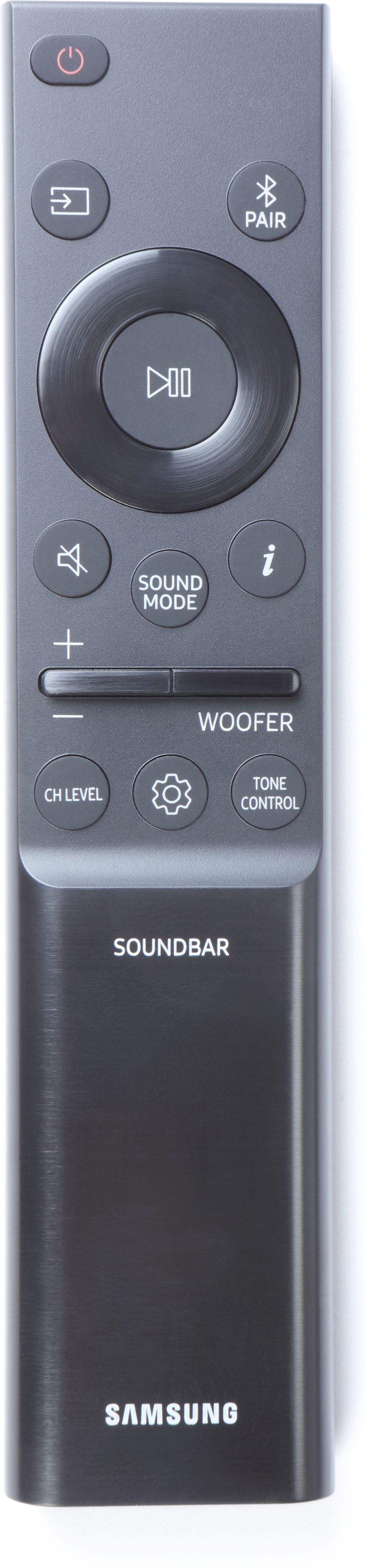
Choose the Samsung B-Series 5.1 if movies, sports, and gaming are your primary entertainment activities, especially in medium to large rooms. It's the clear winner for home theater applications where surround sound makes a meaningful difference. The comprehensive connectivity also makes it more flexible for connecting multiple devices.
The Samsung is particularly appealing if you want everything included from day one without the need for ecosystem planning or additional purchases.
Both products represent excellent value in their respective categories, but they're solving fundamentally different problems. The key is understanding which approach aligns with your actual usage patterns rather than what sounds impressive on paper.
In my experience, most people underestimate how much they'll appreciate excellent stereo sound for everyday viewing, while simultaneously overestimating how often they'll benefit from surround sound effects. But if you're a dedicated movie enthusiast or gamer, those surround effects aren't just nice to have – they're essential to the experience you're seeking.
The decision ultimately comes down to whether you want stereo perfection or surround immersion. Both paths lead to dramatically better audio than your TV's built-in speakers, but they'll take you to very different destinations.
| Sonos Ray Soundbar | Samsung B-Series 5.1 Channel Soundbar with Subwoofer |
|---|---|
| Channel Configuration - Determines surround sound capability | |
| 2.0 stereo (no surround effects) | 5.1 true surround with wireless subwoofer |
| Audio Processing - How content gets optimized for your ears | |
| Trueplay room correction, Speech Enhancement | Dolby Digital 5.1, DTS Virtual:X, Adaptive Sound |
| Physical Design - Size constraints and room integration | |
| Compact 22-inch bar, fits tight spaces | Main bar plus separate wireless subwoofer |
| Connectivity Options - How you connect devices | |
| Optical only, Wi-Fi streaming, AirPlay 2 | HDMI-ARC, Optical, Bluetooth, USB |
| Primary Strength - What each does exceptionally well | |
| Music streaming and dialogue clarity | Movies, gaming, and immersive surround sound |
| Power Output - Volume and bass capability | |
| Moderate (no subwoofer) | 430W total system with dedicated bass driver |
| Smart Features - Convenience and automation | |
| Sonos ecosystem, multi-room audio | Q-Symphony with Samsung TVs, Game Mode Pro |
| Room Size Suitability - Where each performs best | |
| Small to medium rooms (up to 200 sq ft) | Medium to large rooms (200+ sq ft) |
| Expandability - Future upgrade options | |
| Add Sonos speakers for multi-room | Complete system, optional wireless rear speakers |
| Best Use Cases - When to choose each product | |
| Music lovers, apartment living, dialogue-heavy content | Movie enthusiasts, gamers, home theater setups |
The Samsung B-Series 5.1 is significantly better for movies because it provides true 5.1 surround sound with directional audio effects. The Sonos Ray only offers stereo sound, which means you won't get the immersive experience of hearing sounds from behind or around you during action scenes. For home theater setups, the Samsung B-Series 5.1 with its dedicated subwoofer delivers the cinematic experience most movie lovers want.
It depends on your content and room size. The Samsung B-Series 5.1 includes a wireless subwoofer that provides deep bass for explosions, music, and overall impact. The Sonos Ray doesn't have a subwoofer but uses advanced acoustic design to produce surprisingly good bass for its size. If you watch a lot of action movies or listen to bass-heavy music, the Samsung B-Series 5.1 will give you more satisfying low-end response.
The Sonos Ray is superior for music streaming due to its balanced stereo design and integration with streaming services. It connects directly to Wi-Fi and supports services like Spotify, Apple Music, and AirPlay 2. The Samsung B-Series 5.1 can play music through Bluetooth, but its surround sound processing isn't optimized for stereo music content like the Sonos Ray is.
The Sonos Ray is a 2.0 channel system with left and right speakers only, providing excellent stereo sound. The Samsung B-Series 5.1 has 5.1 channels: front left, center, front right, two surround channels, plus a subwoofer. This allows the Samsung to place sounds all around you for movies and games, while the Sonos Ray focuses on delivering the best possible stereo experience.
The Sonos Ray is ideal for small spaces because it's compact, doesn't require a separate subwoofer, and has Night Sound mode to avoid disturbing neighbors. The Samsung B-Series 5.1 needs more room for its surround effects to work properly and the subwoofer can be too powerful for small apartments. For bedrooms or small living rooms, the Sonos Ray is the better choice.
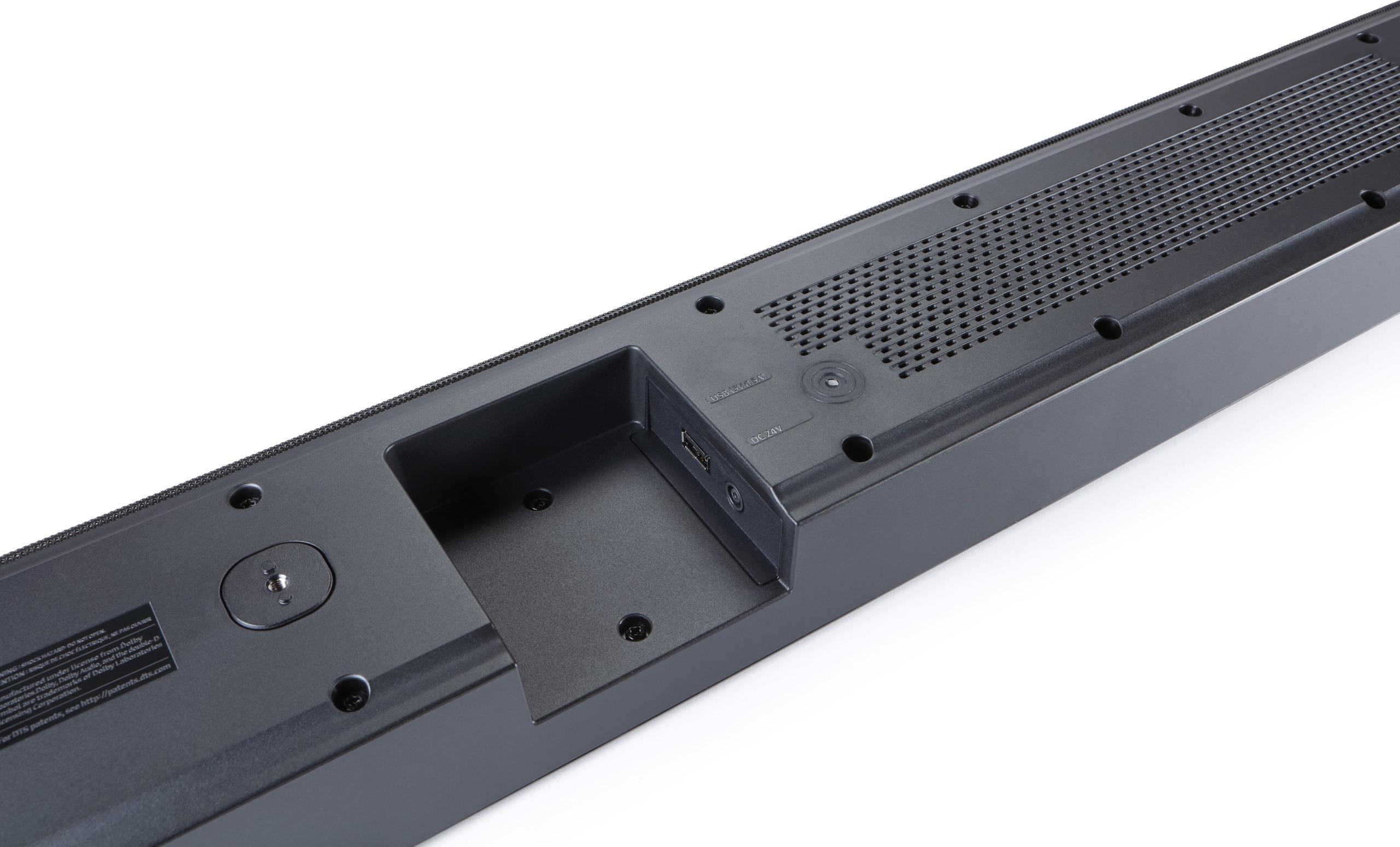
The Samsung B-Series 5.1 offers more connectivity options with HDMI-ARC, optical input, Bluetooth, and USB ports for multiple devices. The Sonos Ray only has an optical input for TV connection but compensates with excellent Wi-Fi streaming capabilities. If you need to connect gaming consoles, Blu-ray players, and other devices directly, the Samsung B-Series 5.1 provides more flexibility.
The Samsung B-Series 5.1 is better for gaming due to its Game Mode Pro feature and surround sound capabilities that help locate enemy positions. The directional audio and powerful subwoofer enhance the gaming experience significantly. While the Sonos Ray provides clear dialogue for story-driven games, it can't match the immersive gaming experience of the Samsung B-Series 5.1.
Neither the Sonos Ray nor the Samsung B-Series 5.1 has built-in voice assistants. However, the Sonos Ray can be controlled through the Sonos app and works with existing smart home setups via AirPlay 2. The Samsung B-Series 5.1 works with Samsung's SmartThings ecosystem if you have other Samsung devices.
Both excel at dialogue but in different ways. The Sonos Ray has Speech Enhancement mode specifically engineered for vocal clarity, making it excellent for news, talk shows, and dialogue-heavy content. The Samsung B-Series 5.1 has Voice Enhance mode and a dedicated center channel for anchoring dialogue to the screen. For pure dialogue clarity, the Sonos Ray often performs better.
The Sonos Ray can be expanded with additional Sonos speakers to create a multi-room audio system, though this requires purchasing more Sonos products. The Samsung B-Series 5.1 is essentially complete out of the box but can add optional wireless rear speakers for enhanced surround sound. The Sonos offers more long-term expandability options.
Both are relatively easy to set up. The Sonos Ray requires connecting one optical cable and using the Sonos app for Wi-Fi setup and room tuning. The Samsung B-Series 5.1 involves connecting the main bar and positioning the wireless subwoofer, which pairs automatically. Setup time is similar, but the Samsung requires finding placement for the subwoofer.
Value depends on your priorities. The Sonos Ray offers premium stereo sound, excellent streaming integration, and long-term software support. The Samsung B-Series 5.1 provides complete surround sound with a subwoofer at a competitive price point. For home theater enthusiasts, the Samsung B-Series 5.1 delivers more features per dollar, while the Sonos Ray offers superior build quality and music performance.
We've done our best to create useful and informative comparisons to help you decide what product to buy. Our research uses advanced automated methods to create this comparison and perfection is not possible - please contact us for corrections or questions. These are the sites we've researched in the creation of this article: tomsguide.com - soundandvision.com - youtube.com - techradar.com - en.community.sonos.com - rtings.com - howtogeek.com - youtube.com - cnet.com - sonos.com - videoandaudiocenter.com - bestbuy.com - abt.com - avsforum.com - crutchfield.com - camelcamelcamel.com - samsung.com - samsung.com - samsung.com - images.samsung.com - samsung.com - avblinq.avbportal.com - samsung.com - samsung.com

Privacy Policy
Terms and Conditions - Affiliate Policy
Home Security
© Copyright 2008-2026.
11816 Inwood Rd #1211, Dallas, TX 75244