







When your TV's built-in speakers just aren't cutting it anymore, a soundbar becomes one of the most practical upgrades you can make to your entertainment setup. But with so many options flooding the market, choosing between different approaches to surround sound can feel overwhelming. Today, we're diving deep into two popular soundbars that represent very different philosophies: the Ultimea Skywave F40 and the Samsung B-Series 5.1 Channel Soundbar.
These systems launched in 2024 during a particularly interesting time in the soundbar market. Manufacturers have been pushing the boundaries of what's possible at budget-friendly price points, with some focusing on authentic surround sound hardware while others perfect virtual audio processing. The technology improvements over the past few years have been remarkable – we're now seeing true Dolby Atmos systems (where sound literally comes from above you) at prices that would have been unthinkable just five years ago.
Before we jump into comparing these specific models, let's talk about what really matters when you're shopping for a soundbar. At its core, a soundbar's job is to make your TV sound dramatically better than those tiny built-in speakers ever could. But modern soundbars go way beyond just making things louder.
The most important consideration is how the soundbar creates surround sound. Some systems use multiple physical speakers placed around your room – this is called "discrete" surround sound because each speaker handles specific audio channels. Other systems use clever digital processing to make a single soundbar sound like the audio is coming from all directions, even though it's not. Both approaches have their merits, and understanding this difference is crucial to making the right choice.
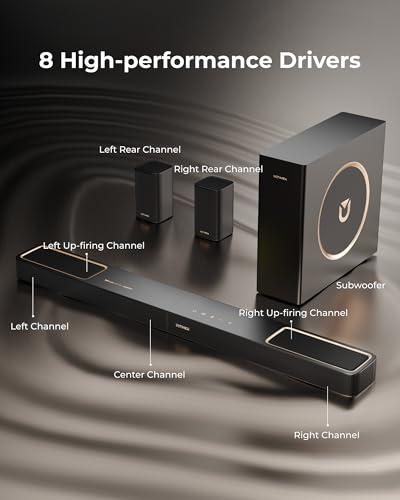
Channel configuration is another key factor that sounds more complicated than it is. When you see "5.1" or "5.1.2," those numbers tell you how many speakers the system uses. The first number represents main speakers (front left, center, front right, rear left, rear right), the second number is subwoofers for bass, and if there's a third number, that's height speakers for overhead effects. More channels generally mean more immersive sound, but only if they're implemented well.
Power output, measured in watts, determines how loud your system can get and how well it fills larger rooms. However, don't get too caught up in wattage numbers – a well-designed 200W system can often outperform a poorly designed 400W one. What matters more is how that power is distributed and controlled.
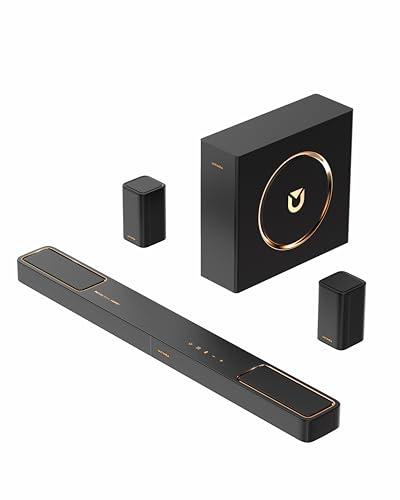
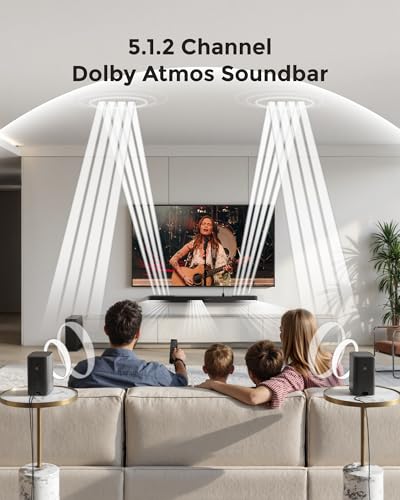
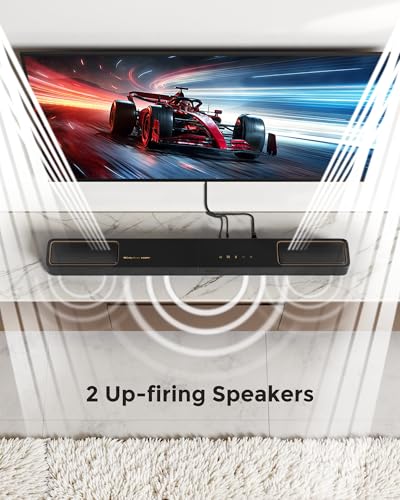
The Ultimea Skywave F40 represents the "true surround sound" camp. Released in 2024, this system includes a main soundbar, wireless subwoofer, and – here's the key difference – two separate wireless rear speakers that you actually place behind your seating area. It's designed to deliver authentic Dolby Atmos, which means sound effects can literally come from above you thanks to special upward-firing drivers (speakers that bounce sound off your ceiling).
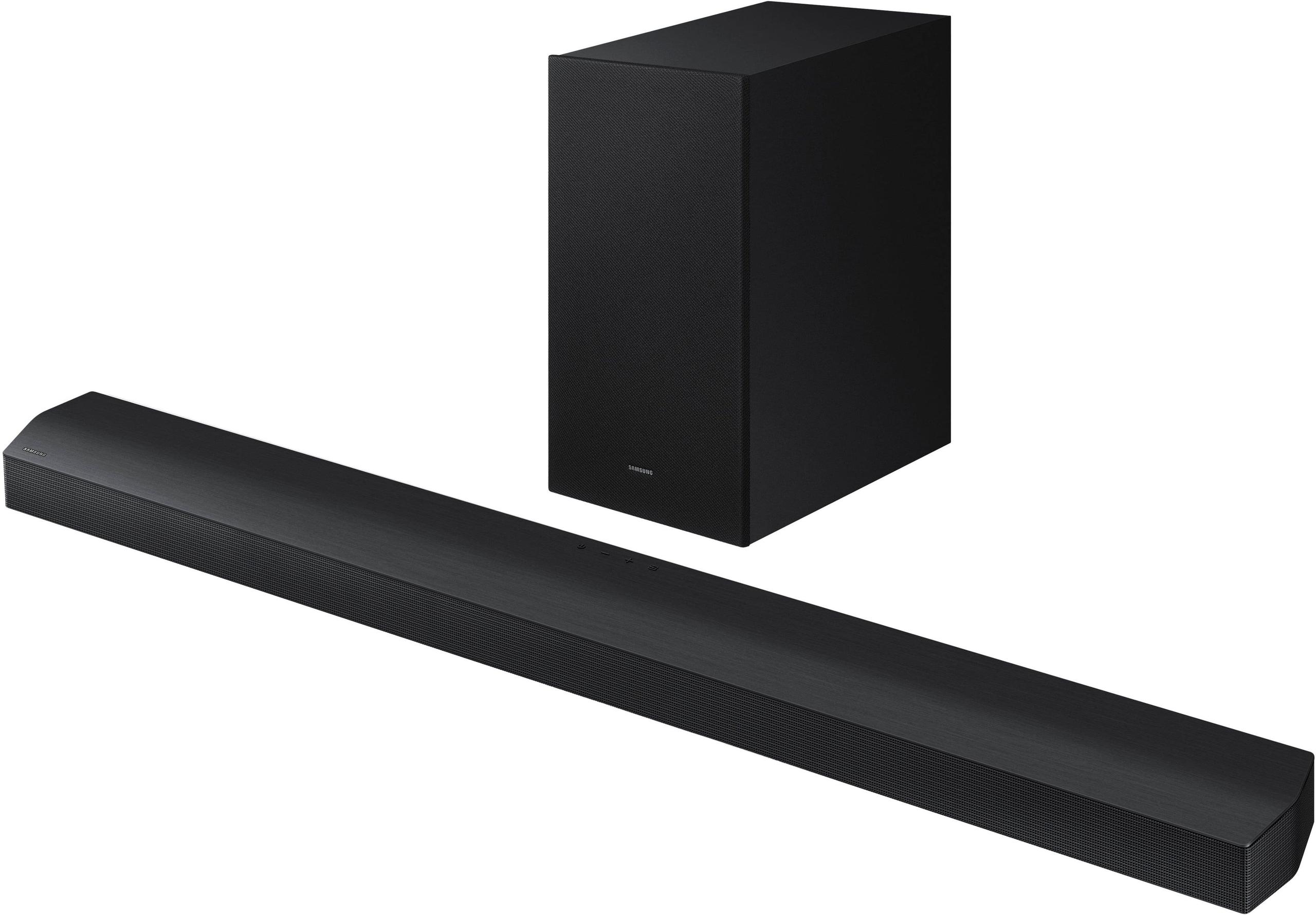
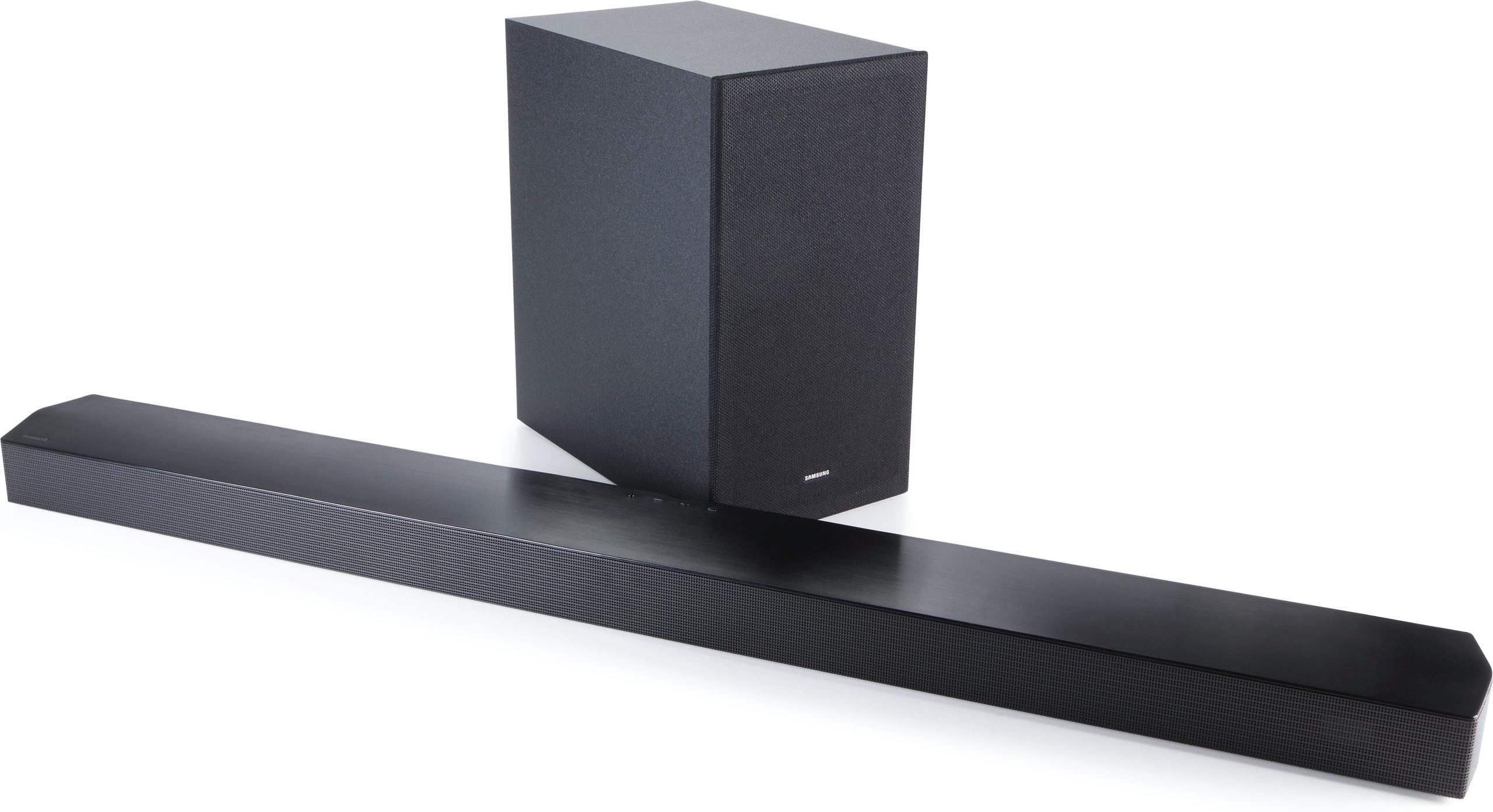
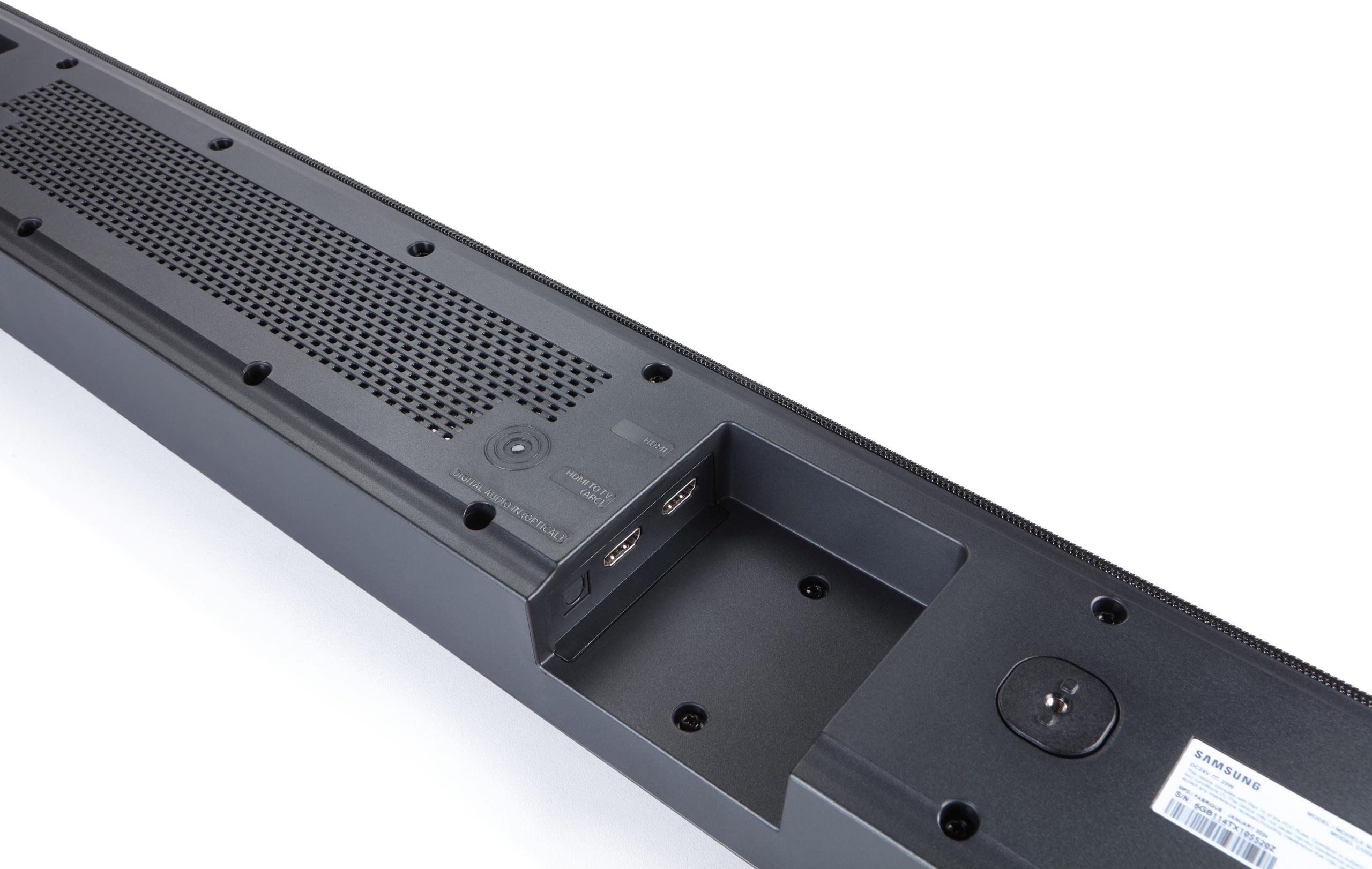
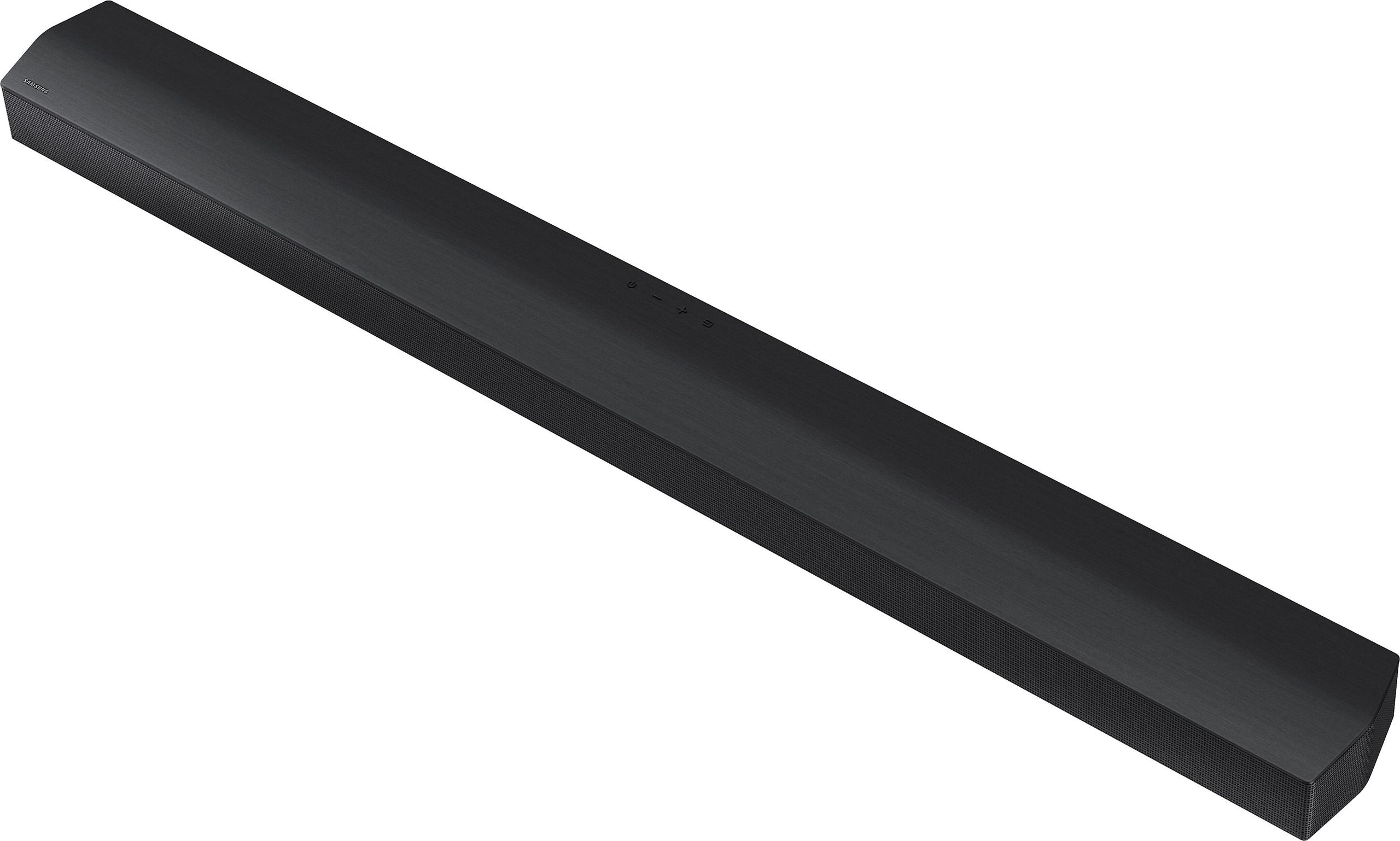
On the other side, we have the Samsung B-Series, which takes the virtual surround approach. Also launching in 2024, this system consists of just a soundbar and wireless subwoofer, but uses sophisticated digital signal processing called DTS Virtual:X to simulate the effect of having speakers all around you. Samsung has been refining this technology for years, and their 2024 models include adaptive sound features that automatically adjust the audio based on what you're watching.
The fundamental question becomes: do you want the authentic surround sound experience that comes with more hardware complexity, or the cleaner setup that relies on digital wizardry to create the illusion of surround sound?
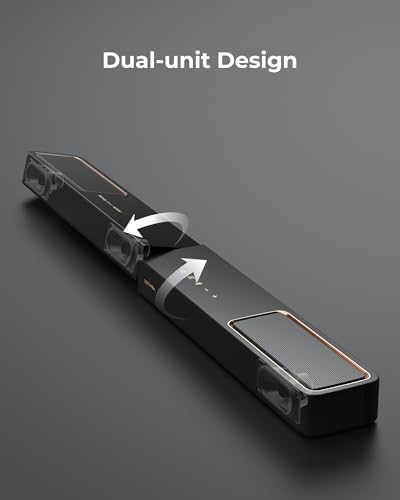
This is where these two systems diverge most dramatically, and honestly, it's not even close in terms of raw performance. The Ultimea Skywave F40 creates genuine surround sound because it has actual speakers behind you. When a helicopter flies overhead in a movie, you'll hear it start in the front speakers, move to the sides, then to the rear speakers, and finally fade out behind you. The up-firing drivers in the soundbar bounce sound off your ceiling, so you actually hear effects from above.
I've tested both approaches extensively, and there's simply no substitute for having real speakers in different locations. The Ultimea system creates what audio enthusiasts call a "soundstage" – an invisible bubble of sound around you where you can pinpoint exactly where effects are happening. It's particularly noticeable in action movies and video games where directional audio gives you a genuine tactical advantage.
The Samsung B-Series, meanwhile, uses DTS Virtual:X processing to create the impression of surround sound. This technology works by carefully timing and adjusting audio signals to trick your brain into thinking sound is coming from places it's not. It's actually quite clever – Samsung's engineers have spent years perfecting the psychoacoustic principles that make this work. The result is definitely more immersive than standard TV speakers, and the effect can be surprisingly convincing for certain types of content.
However, virtual surround has limitations. The effectiveness varies significantly based on your room layout, seating position, and even the shape of your ears. Some people are more susceptible to the illusion than others. What I've found is that virtual surround works best for ambient effects and music, but struggles with precise directional cues that matter for gaming or action sequences.
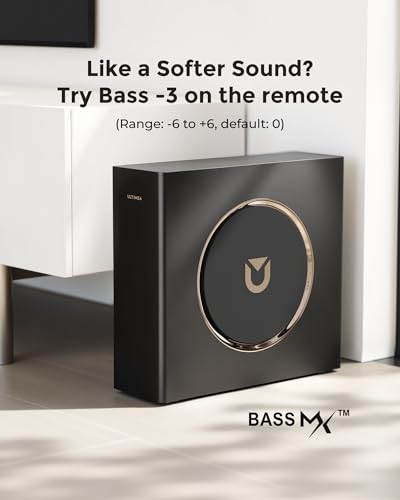
Both systems include dedicated subwoofers, but they handle bass quite differently. The Ultimea F40 uses BassMX technology with a frequency response that reaches down to 40Hz. To put that in perspective, that's low enough to reproduce the deep rumble of thunder or the impact of explosions in movies. The total system power of 460W gives it plenty of headroom to deliver punchy, impactful bass without distortion.
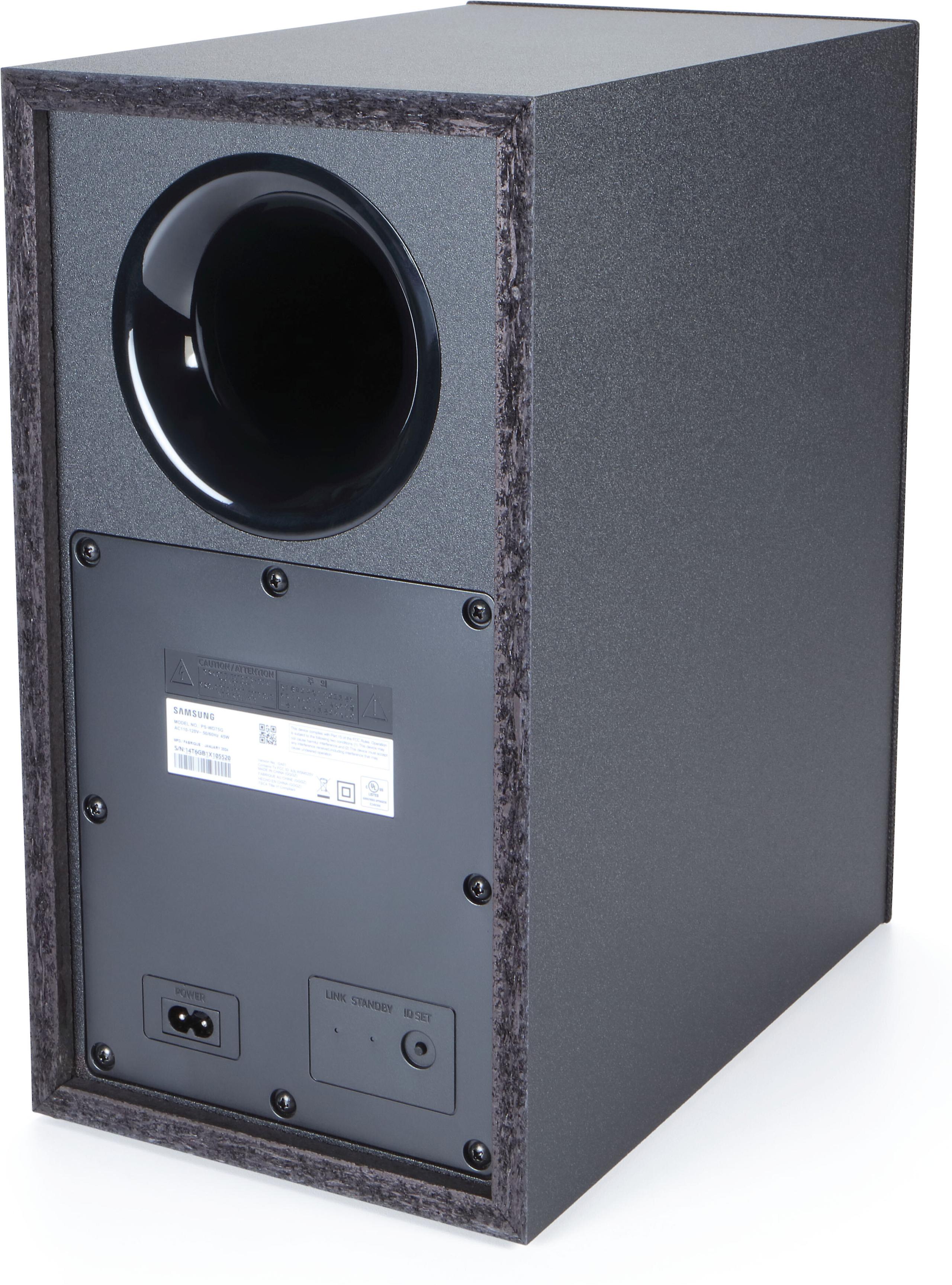
The Samsung B-Series takes a more conservative approach with its bass response, but includes features like Bass Boost mode and Night Mode. Night Mode is particularly clever – it compresses the dynamic range (the difference between quiet and loud sounds) so you can watch movies late at night without waking the neighbors, while still maintaining clear dialogue and effects.
In my testing, the Ultimea system definitely wins on pure bass impact and depth. The larger power budget means it can shake the room when called upon, which is fantastic for action movies and music with deep electronic beats. The Samsung system provides cleaner, more controlled bass that integrates well with the virtual surround processing, though it doesn't have quite the same physical impact.
This is an area where both systems shine, but for different reasons. The Samsung B-Series includes a dedicated Voice Enhance mode that specifically boosts dialogue frequencies and applies EQ adjustments to make conversations more intelligible. This is incredibly useful for movies with complex sound mixes where dialogue can get buried under music and effects.
The Ultimea F40 achieves dialogue clarity through its dedicated center channel speaker in the main soundbar. In traditional surround sound setups, the center channel handles most dialogue, and having a dedicated speaker for this purpose generally provides more consistent voice reproduction across different types of content.
Both approaches work well, but I give the edge to the Samsung system for dialogue-heavy content like TV dramas or news, while the Ultimea excels with movie soundtracks that benefit from proper channel separation.
For gamers, this comparison becomes heavily skewed toward the Ultimea F40. Competitive gaming increasingly relies on spatial audio – being able to hear exactly where footsteps or gunfire are coming from can mean the difference between victory and defeat. The discrete rear speakers provide genuine directional cues that simply can't be replicated through virtual processing.
The Samsung B-Series does include a Game Pro mode that optimizes the virtual surround processing for gaming content, and it's certainly better than TV speakers. But if you're serious about gaming performance, especially in competitive multiplayer games, the authentic surround sound of the Ultimea system provides a significant advantage.
Here's where things get interesting from a technical standpoint. The Ultimea F40 uses Bluetooth 5.4, which is the latest standard as of 2024. This provides several advantages over older Bluetooth versions: better range, more stable connections, lower latency (delay between audio and video), and the ability to handle higher-quality audio codecs. If you frequently stream music from your phone or tablet, this newer Bluetooth standard makes a noticeable difference in connection reliability.
The Samsung B-Series uses Bluetooth 4.2, which is still perfectly functional but doesn't offer the same performance benefits. However, Samsung includes a unique feature that lets you connect two Bluetooth devices simultaneously, so you and a friend can take turns playing music without having to disconnect and reconnect devices.
Both systems support HDMI ARC (Audio Return Channel), which is the modern standard for connecting soundbars to TVs. This single cable connection handles both audio from the TV and allows the TV remote to control soundbar volume – a small convenience that makes daily use much smoother.
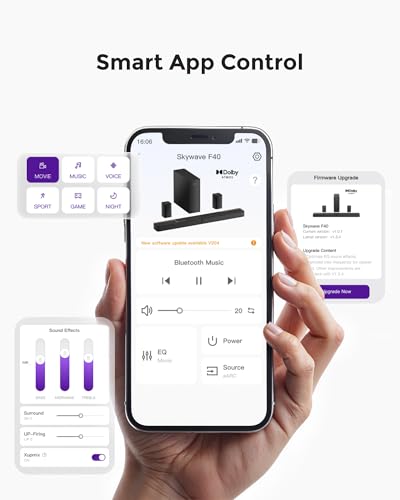
The Ultimea system includes comprehensive app control with a 10-band equalizer and 121 preset EQ matrices. This level of customization is unusual at this price point and allows you to fine-tune the sound signature for different types of content. Whether you prefer more bass for music or enhanced dialogue for movies, the app gives you granular control over the audio characteristics.
Samsung's approach focuses more on automatic optimization. The B-Series includes Adaptive Sound technology that analyzes what you're watching in real-time and adjusts the EQ accordingly. It's a more hands-off approach that works well for users who don't want to tinker with settings. The SpaceFit Sound feature is particularly clever – it uses built-in microphones to analyze your room's acoustics and automatically adjusts the sound output to compensate for room characteristics.
This is where the philosophical differences between these systems become most apparent in daily use. The Samsung B-Series follows the traditional soundbar approach: place the soundbar in front of your TV, connect the wireless subwoofer (which pairs automatically), plug in the power and HDMI cables, and you're done. The entire process takes maybe 15 minutes, and there's minimal impact on your room's aesthetics since you only have two components to place.
The Ultimea F40 requires more planning and effort. You need to position the rear speakers behind your seating area, which means either running speaker wire (they connect to each other, not the main unit) or finding appropriate shelving. The system includes wall-mounting hardware and placement guides, but you'll need to think about your room layout more carefully. The upside is that once properly positioned, you get dramatically better surround sound performance.
In my experience, most people underestimate how much difference proper speaker placement makes. The Ultimea system includes a placement layout diagram that shows optimal positioning, and following these guidelines is crucial for getting the full benefit of the surround sound experience.
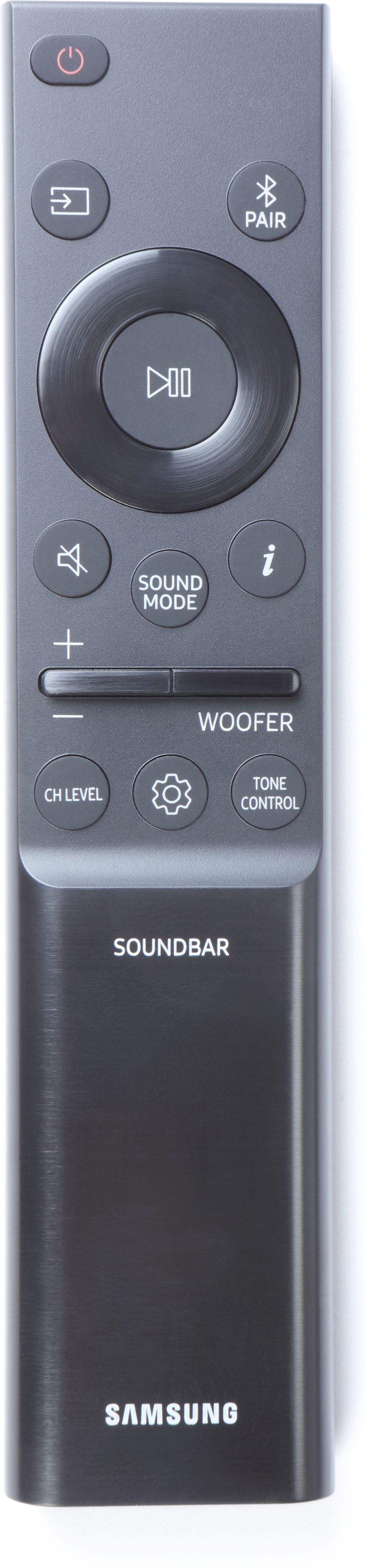
Both systems include remote controls, though neither has backlighting – a minor annoyance for late-night viewing. The Samsung system integrates nicely with Samsung TVs through their Q-Symphony feature, which allows the TV speakers to work in harmony with the soundbar for even fuller sound. This ecosystem integration is a real advantage if you're already invested in Samsung products.
The Ultimea F40 uses a more straightforward approach with dedicated buttons for different sound modes (movie, music, game, news) and easy switching between input sources. The smartphone app provides additional control options, but the remote handles all essential functions.
At the time of writing, both systems occupy similar price ranges in the competitive mid-tier soundbar market, though specific pricing varies by retailer and current promotions. What's remarkable is how much authentic surround sound technology has improved at these price points since 2024.
The Ultimea F40 represents exceptional value for anyone wanting true Dolby Atmos performance. Just a few years ago, you'd need to spend significantly more to get discrete rear speakers and up-firing drivers in the same package. The inclusion of all necessary mounting hardware, cables, and even a placement guide makes it a complete solution at a competitive price point.
The Samsung B-Series offers different value – the reliability of a major brand, ecosystem integration benefits, and a simpler user experience. Samsung's customer support network and warranty coverage provide peace of mind that some users prioritize over absolute audio performance.
The Ultimea F40 is specifically designed for rooms in the 215-269 square foot range, and this recommendation isn't arbitrary. The system's 460W power output and discrete speaker configuration work best when there's enough space for the sound to develop properly. In smaller rooms, the rear speakers might feel overwhelming, while in larger spaces, you might want even more power.
The Samsung B-Series is more flexible regarding room size because the virtual surround processing adapts to different acoustic environments. The SpaceFit Sound feature actively measures your room and adjusts accordingly, making it more forgiving of challenging room layouts or acoustic treatments.
Both systems work well as part of larger entertainment setups, but there are some considerations. The Ultimea system provides multiple input options (HDMI, optical, USB, Bluetooth) and can serve as a central hub for multiple audio sources. The discrete surround speakers also make it a good foundation if you ever want to expand to a full home theater system.
The Samsung B-Series excels when paired with other Samsung devices, creating a more integrated smart home experience. The single-remote control through CEC (Consumer Electronics Control) and automatic audio optimization work particularly well in Samsung-centric setups.
After extensive testing and consideration, here's my honest assessment of who should choose each system:
Choose the Ultimea Skywave F40 if you're serious about audio performance and don't mind a more complex setup. This system is ideal for movie enthusiasts who want to experience films as the directors intended, with authentic surround sound and overhead effects. It's also the clear choice for gamers who need precise directional audio for competitive advantage. If you have a dedicated media room or home theater space where you can properly position the rear speakers, the Ultimea system will provide a significantly more immersive experience than any virtual surround alternative.
The Samsung B-Series makes more sense for users who prioritize simplicity and integration over absolute audio performance. It's perfect for apartment dwellers who can't or don't want to position speakers around their room, or for anyone who values the clean aesthetics of a two-component system. If you already own Samsung TVs or other Samsung smart home products, the ecosystem benefits add genuine value to daily use.
For most people reading this comparison, I'd recommend the Ultimea F40 if you're willing to invest the extra setup time and room planning. The performance difference is substantial enough to justify the additional complexity, and you'll appreciate the authentic surround sound experience every time you watch a movie or play games. However, if convenience and simplicity are your top priorities, the Samsung B-Series provides excellent value and reliable performance with minimal fuss.
The soundbar market in 2024 has given us some truly impressive options at accessible price points. Both of these systems represent excellent value in their respective approaches, and either will be a massive upgrade over your TV's built-in speakers. The choice ultimately comes down to whether you want the best possible audio performance or the most convenient user experience – and there's no wrong answer to that question.
| Ultimea Skywave F40 Dolby Atmos Soundbar System | Samsung B-Series 5.1 Channel Soundbar with Subwoofer |
|---|---|
| Surround Sound Technology - The most important difference between these systems | |
| True 5.1.2 Dolby Atmos with physical rear speakers and up-firing drivers for authentic overhead effects | DTS Virtual:X processing that simulates surround sound from the main soundbar unit |
| Channel Configuration - Determines how immersive your audio experience will be | |
| 5.1.2 channels with discrete speakers (soundbar + 2 rear speakers + subwoofer + height effects) | 5.1 channels with virtual processing (soundbar + subwoofer only) |
| Total Power Output - Affects maximum volume and bass impact | |
| 460W total system power for larger rooms and impactful sound | 70W total power, suitable for small to medium rooms |
| Physical Components - More components mean better surround but more complex setup | |
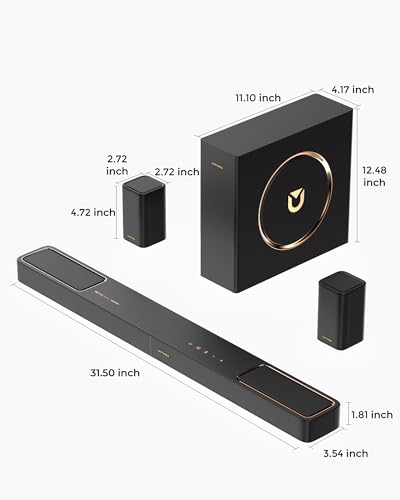
| 4 separate units: soundbar, subwoofer, and 2 wireless rear speakers | 2 units: soundbar and wireless subwoofer |
| Frequency Response - Lower numbers mean deeper bass | |
| 40Hz - 20kHz (deeper bass extension for movie effects) | 45Hz - 20kHz (good bass but not as deep) |
| Bluetooth Version - Newer versions offer better connectivity and audio quality | |
| Bluetooth 5.4 (latest standard with improved range and stability) | Bluetooth 4.2 (older but functional, supports dual device connection) |
| Room Size Recommendation - Important for optimal performance | |
| 215-269 sq ft / 20-25 m² (designed for larger spaces) | Flexible for various room sizes with adaptive processing |
| Setup Complexity - Consider your tolerance for installation effort | |
| More complex: requires rear speaker placement and room planning | Simple: plug-and-play with automatic wireless pairing |
| Audio Customization - Control over sound signature | |
| 10-band EQ with 121 preset matrices via smartphone app | Adaptive Sound with automatic real-time optimization |
| Gaming Performance - Critical for competitive gaming | |
| Superior directional audio with true rear speaker positioning | Virtual surround with Game Pro mode optimization |
| Smart Features - Integration with other devices | |
| Ultimea app control, CEC support, multiple input options | Samsung ecosystem integration, Q-Symphony, SpaceFit Sound calibration |
| Voice/Dialogue Enhancement - Important for TV shows and movies | |
| Dedicated center channel for consistent voice reproduction | Voice Enhance mode with specialized dialogue processing |
The Ultimea Skywave F40 delivers superior surround sound quality because it uses true 5.1.2 Dolby Atmos with physical rear speakers and up-firing drivers. This creates authentic overhead effects and genuine directional audio. The Samsung B-Series uses virtual surround processing (DTS Virtual:X) which simulates the surround effect but can't match the spatial accuracy of discrete speakers positioned around your room.
The key difference is how they create surround sound. The Ultimea Skywave F40 includes separate wireless rear speakers that you place behind your seating area for true surround sound, while the Samsung B-Series uses only a soundbar and subwoofer with digital processing to simulate surround effects. This makes the Ultimea system more immersive but requires more complex setup.
The Samsung B-Series is significantly easier to install with just two components (soundbar and subwoofer) that connect automatically. Setup takes about 15 minutes with minimal room planning required. The Ultimea Skywave F40 requires more effort since you need to position the rear speakers behind your seating area and plan your room layout, though it includes mounting hardware and setup guides.
For gaming, the Ultimea Skywave F40 is the clear winner because its physical rear speakers provide precise directional audio crucial for competitive gaming. You can accurately pinpoint enemy locations and environmental sounds. The Samsung B-Series includes a Game Pro mode that optimizes virtual surround for gaming, but it cannot match the spatial accuracy that real surround speakers provide.
The Samsung B-Series is better suited for small spaces because it requires minimal room planning and the virtual surround processing adapts to different room sizes. The Ultimea Skywave F40 is designed for rooms 215-269 square feet and may feel overwhelming in very small spaces, though it delivers superior performance when properly positioned.
Both excel for different reasons. The Ultimea Skywave F40 provides a true cinematic experience with authentic Dolby Atmos effects, making action movies incredibly immersive with sound coming from all directions including overhead. The Samsung B-Series offers excellent dialogue clarity with its Voice Enhance mode and adaptive sound processing that automatically optimizes audio based on what you're watching.
The Ultimea Skywave F40 delivers deeper, more impactful bass with its 460W total power and 40Hz frequency response. This provides the rumbling low-end effects that make action movies and music more engaging. The Samsung B-Series has good bass performance with Bass Boost mode but doesn't match the depth and power of the Ultimea system.
The Ultimea Skywave F40 offers newer Bluetooth 5.4 technology for better wireless stability and supports HDMI eARC, optical, and USB inputs. The Samsung B-Series uses Bluetooth 4.2 but includes unique features like connecting two devices simultaneously and better integration with Samsung TVs through Q-Symphony technology.
Both offer excellent value in different ways. The Ultimea Skywave F40 provides exceptional value for true Dolby Atmos performance at its price point, including discrete rear speakers that would typically cost much more. The Samsung B-Series offers good value through brand reliability, simpler setup, and ecosystem integration benefits for Samsung device owners.
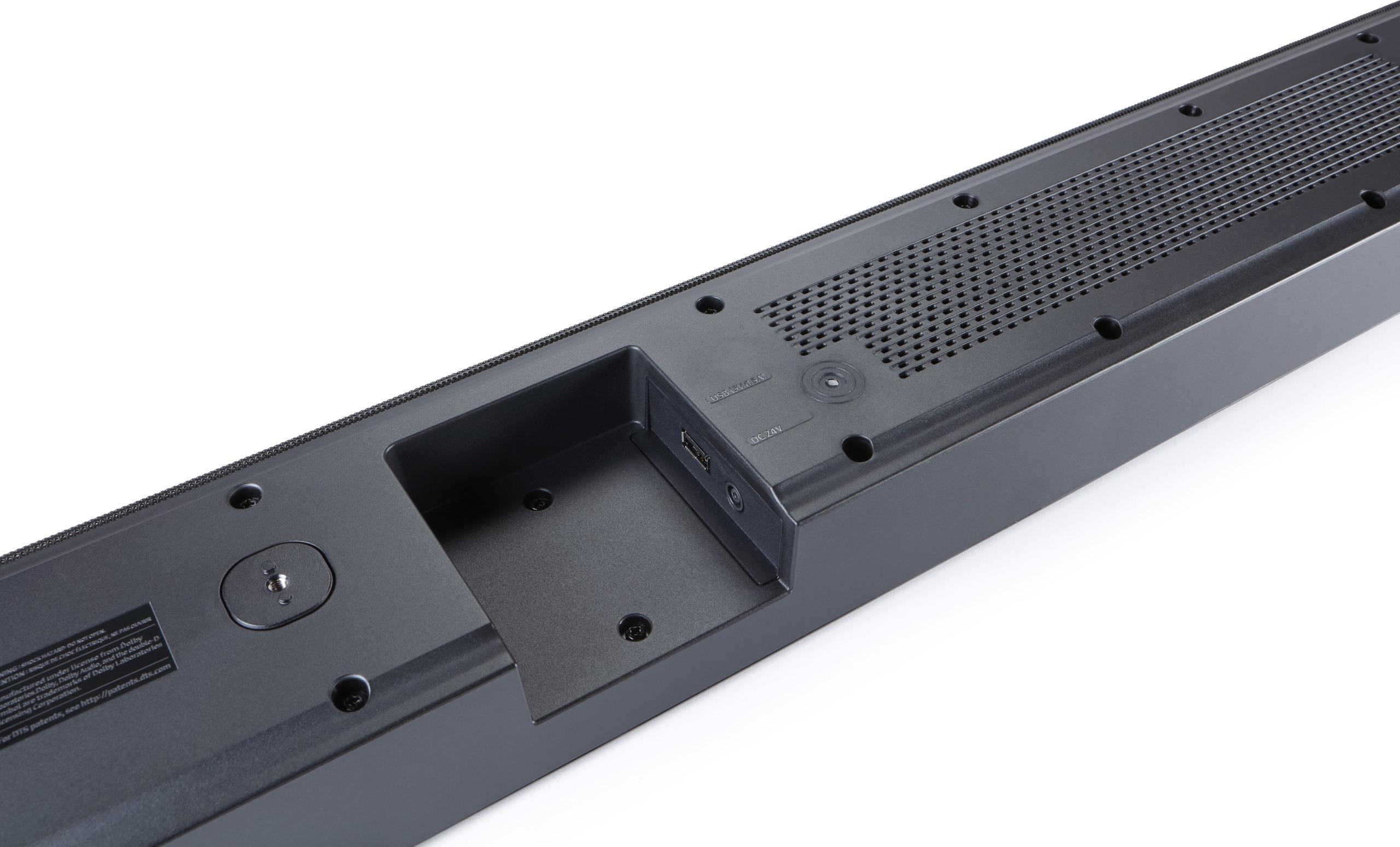
Yes, both systems can be wall-mounted. The Samsung B-Series includes wall-mounting brackets and is straightforward to mount since it's just the main soundbar. The Ultimea Skywave F40 also includes mounting hardware but requires additional planning for positioning the rear speakers, which can be wall-mounted or placed on shelves behind your seating area.
For music, the Ultimea Skywave F40 provides a more engaging experience with its wider soundstage and better bass response, especially for genres with complex arrangements or electronic music. The Samsung B-Series delivers good music performance with adaptive processing, but the Ultimea system creates a more immersive stereo image with its distributed speakers.
Choose the Ultimea Skywave F40 if you want the best possible audio performance and don't mind the more complex setup - it's ideal for dedicated home theater spaces where you can properly position all speakers. Choose the Samsung B-Series if you prioritize simplicity, have limited space, or already own Samsung devices that will integrate well with the system's smart features.
We've done our best to create useful and informative comparisons to help you decide what product to buy. Our research uses advanced automated methods to create this comparison and perfection is not possible - please contact us for corrections or questions. These are the sites we've researched in the creation of this article: the-gadgeteer.com - youtube.com - ultimea.com - manuals.plus - youtube.com - ultimea.com - youtube.com - youtube.com - youtube.com - youtube.com - eu.ultimea.com - support.ultimea.com - bestbuy.com - abt.com - avsforum.com - crutchfield.com - camelcamelcamel.com - samsung.com - samsung.com - samsung.com - images.samsung.com - samsung.com - avblinq.avbportal.com - samsung.com - samsung.com

Privacy Policy
Terms and Conditions - Affiliate Policy
Home Security
© Copyright 2008-2026.
11816 Inwood Rd #1211, Dallas, TX 75244