




If you've ever watched an action movie on your TV's built-in speakers and felt like something was missing, you're not alone. Those tiny speakers simply can't deliver the room-filling sound that makes explosions feel real or dialogue crystal clear. That's where soundbars come in, and the choice between traditional surround sound and modern Dolby Atmos technology can make or break your home theater experience.
Today we're comparing two compelling options from Ultimea: the budget-friendly Aura A40 U2601 and the premium Skywave F40 Dolby Atmos system. Both represent different philosophies in soundbar design, and understanding these approaches will help you make the right choice for your space and budget.
The soundbar market has evolved dramatically since the early 2000s when these devices were simple TV audio upgrades. Modern systems fall into two main categories: traditional channel-based surround sound (like 5.1 or 7.1) and object-based audio systems that use Dolby Atmos technology.
Traditional surround sound works by sending specific audio to designated speakers—front left, front right, center, surround left, surround right, and a subwoofer for bass. This creates an immersive experience by placing sounds where they should logically come from in a scene.
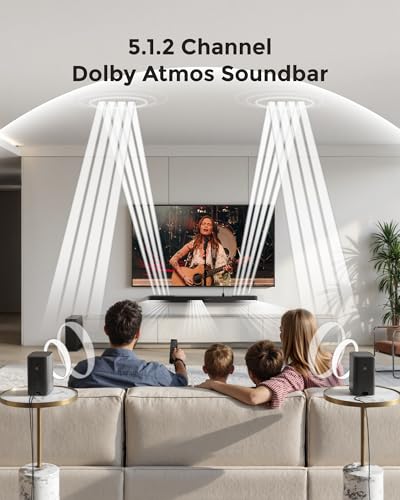
Dolby Atmos, introduced around 2012 and reaching consumer soundbars in the mid-2010s, takes a different approach. Instead of just sending audio to specific speakers, it treats sounds as "objects" that can be placed anywhere in three-dimensional space, including above your head. This is achieved through up-firing drivers that bounce sound off your ceiling, creating height effects that traditional systems can't reproduce.
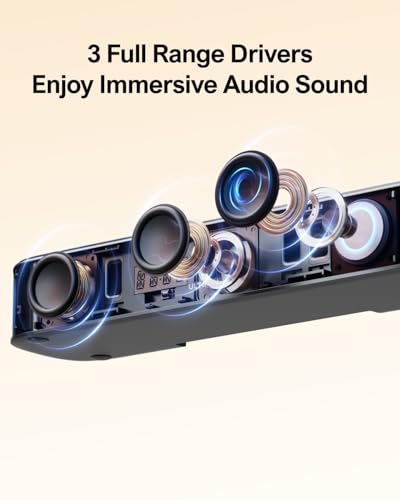
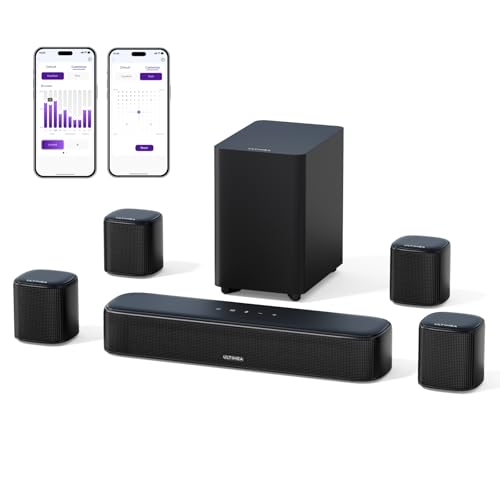
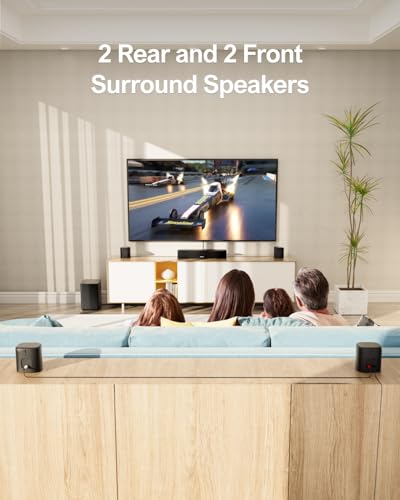
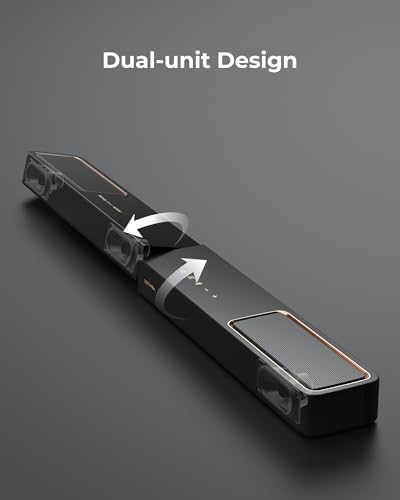
The Ultimea Aura A40 U2601, released in 2024, represents the traditional approach done exceptionally well. It's a 7.1 channel virtual surround system that includes four dedicated surround speakers—two for the front and two for the rear. This physical speaker placement creates authentic positional audio that many budget systems try to simulate with digital processing alone.
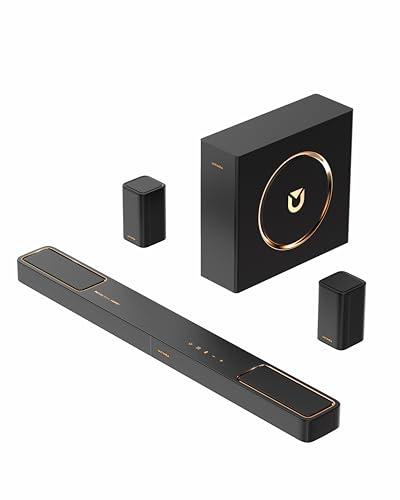
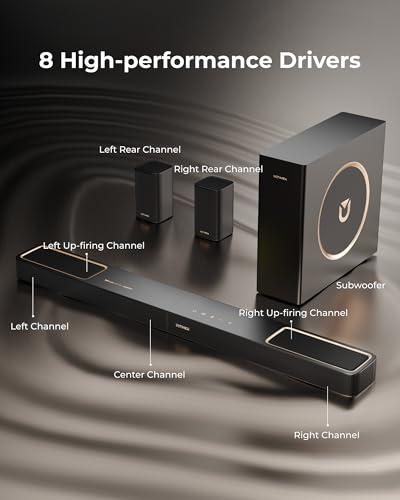
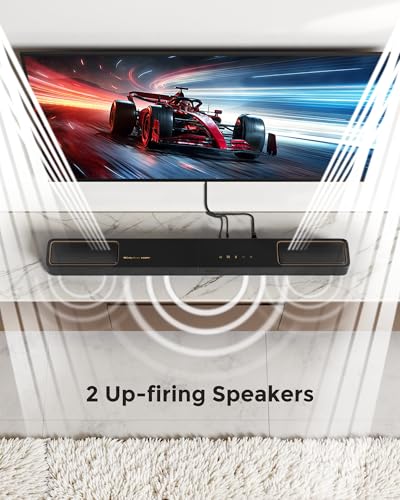
The Ultimea Skywave F40, also from 2024, embraces the modern Dolby Atmos standard with a 5.1.2 channel configuration. That ".2" indicates two up-firing drivers mounted on top of the main soundbar, designed to reflect sound off your ceiling and create overhead effects. It's Ultimea's answer to premium systems that cost significantly more.
At the time of writing, these systems occupy different price tiers, with the Aura A40 positioned as an exceptional value option while the Skywave F40 commands a premium for its advanced features. This price difference reflects not just marketing positioning, but genuine technological differences that affect performance.
When it comes to creating an immersive audio experience, both systems excel but in different ways. The Aura A40 uses brute force: four dedicated surround speakers create a 360-degree sound field that physically places audio effects around your room. When a helicopter flies overhead in a movie, you hear it move from the front speakers to the rear ones in a convincing arc.
This approach has real advantages. Physical speaker placement can't be faked—when sound comes from behind you, it actually comes from behind you. The system's SurroundX technology (Ultimea's proprietary processing) coordinates all these speakers to maintain proper timing and phase relationships, ensuring effects don't sound disjointed or artificial.
The Skywave F40 takes the modern approach with its Dolby Atmos implementation. Those two up-firing drivers on top of the soundbar fire sound toward your ceiling, where it reflects down to create the illusion of overhead audio. This works remarkably well in rooms with flat, reflective ceilings between 8-12 feet high. The height dimension adds a layer of realism that traditional systems simply can't match—rain actually sounds like it's falling from above, not just from speakers around you.
However, Dolby Atmos performance depends heavily on your room. Vaulted ceilings, textured surfaces, or incorrect speaker placement can diminish the effect. The Aura A40 works consistently regardless of ceiling type because it doesn't rely on acoustic reflections.
Based on our research into user experiences and expert reviews, the Skywave F40 provides more dramatic "wow" moments with properly mastered Atmos content, while the Aura A40 delivers more consistent performance across all types of audio content.
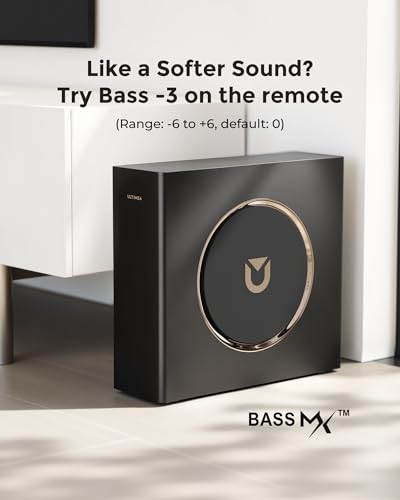
The difference in bass performance between these systems is immediately apparent and technically significant. The Aura A40 includes a 4-inch subwoofer with a frequency response down to 65Hz, while the Skywave F40 features a much larger 6.5-inch driver that reaches down to 38Hz.
To understand why this matters, consider that most male voices and many musical instruments operate in the 80-250Hz range, while the really impactful movie effects—explosions, rumbling engines, seismic activity—happen below 60Hz. That 27Hz difference in extension means the Skywave F40 can reproduce sounds that the Aura A40 simply cannot.
In practical terms, this translates to more chest-thumping impact during action sequences and fuller, more satisfying music reproduction. Bass frequencies below 40Hz add physical sensation to audio—you feel the sound as much as hear it. The Aura A40's 4-inch subwoofer handles mid-bass well and won't disappoint most users, but it can't match the visceral impact of its bigger sibling.
Both systems incorporate BassMX technology, Ultimea's bass enhancement processing that optimizes low-frequency output without distortion. However, you can't overcome physics: larger drivers simply move more air and produce deeper bass.
Peak power specifications often mislead consumers, but the difference here is meaningful. The Aura A40 delivers 330W peak power across its eight speakers, while the Skywave F40 pushes 460W. More importantly, this power is distributed differently.
The Aura A40's power gets split among more speakers (four surround speakers versus two), meaning each individual driver receives less power but the system creates more localized sound sources. The Skywave F40's concentrated power delivery, combined with its larger subwoofer, means it can fill larger rooms more effectively and handle demanding content with greater dynamic range.
Room size recommendations support this difference. The Aura A40 works optimally in spaces up to 270 square feet, making it perfect for apartments, bedrooms, and smaller living rooms. The Skywave F40 can handle these spaces easily but also scales up to larger environments where the Aura A40 might struggle to maintain impact.
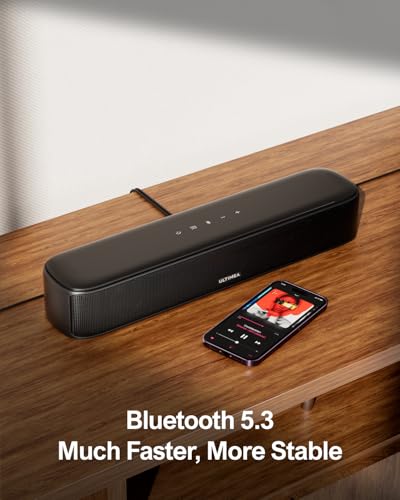
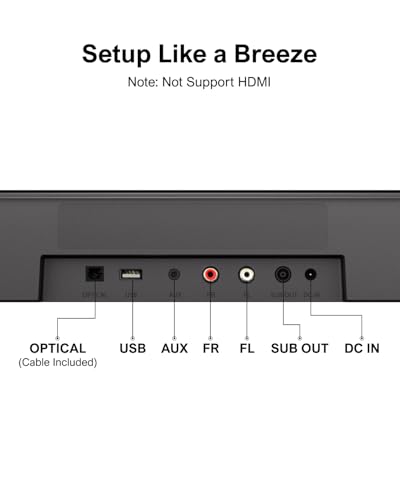
Here's where the systems diverge significantly, and it affects long-term value. The Aura A40 omits HDMI connectivity entirely, relying on optical digital, analog AUX, USB, and Bluetooth 5.3. This isn't necessarily problematic—optical connections handle most audio formats adequately—but it limits compatibility with high-end audio formats and modern TV features.
The Skywave F40 includes HDMI eARC (enhanced Audio Return Channel), the gold standard for soundbar connectivity. HDMI eARC allows lossless audio transmission, including uncompressed Dolby Atmos, and enables CEC (Consumer Electronics Control) functionality. CEC means your TV remote can control the soundbar's basic functions, eliminating the need to juggle multiple remotes.
The Skywave F40's Bluetooth 5.4 implementation also provides advantages over the Aura A40's 5.3 version: lower latency for gaming, more stable connections, and better power efficiency. These improvements might seem minor, but they enhance daily usability.
For users planning to keep their soundbar for several years, the Skywave F40's modern connectivity provides better future compatibility with emerging audio formats and TV technologies.
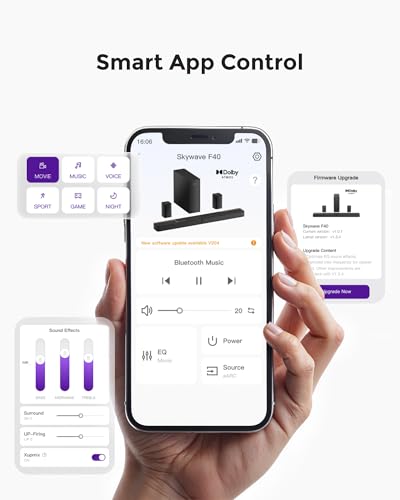
Both systems excel in user control and customization, offering identical smart app functionality through the Ultimea app. This includes a 10-band equalizer and 121 preset EQ matrices covering everything from classical music to heavy rock. The level of control rivals much more expensive systems.
Where they differ is in exclusive features. The Skywave F40 includes Xupmix technology, powered by Dolby DAP (Digital Audio Processing), which can transform regular stereo or 5.1 content into immersive multi-channel audio with overhead effects. This means even older movies and TV shows gain some spatial dimension, extending the Atmos experience beyond specifically mastered content.
The Aura A40 offers six adjustable surround levels, allowing fine-tuning of the rear speaker output to match room acoustics and personal preferences. This flexibility helps optimize performance in different spaces and listening scenarios.
Both systems support over-the-air firmware updates, ensuring continued improvement and bug fixes. However, some users have reported issues with recent Skywave F40 firmware updates affecting bass response, highlighting the complexity of modern audio processing.
For apartment dwellers and small space living, the Aura A40 offers compelling advantages. Its four-speaker configuration creates impressive surround effects without requiring excessive volume levels, and the smaller subwoofer provides satisfying bass without disturbing neighbors. The simpler connectivity reduces cable clutter, important in tight spaces.
Home theater enthusiasts with dedicated rooms should strongly consider the Skywave F40. Dolby Atmos content is increasingly common on streaming services and 4K Blu-rays, and the height dimension genuinely enhances the cinematic experience. The larger subwoofer and higher power output create the impact that makes movies feel theatrical.
Gamers represent an interesting case. The Aura A40's precise directional audio excels in competitive gaming, where pinpointing enemy positions provides tactical advantages. The Skywave F40's Dolby Atmos creates more immersive environmental effects in single-player games, but the height information matters less for competitive play.
Music listeners benefit more from the Skywave F40's superior bass extension and power handling. The system handles everything from delicate acoustic tracks to bass-heavy electronic music with authority. The Aura A40 performs well with music but can't match the full-range impact of its premium sibling.
The Aura A40 faces some inherent limitations from its design choices. Without HDMI connectivity, it cannot receive uncompressed audio formats or high-resolution streams directly from modern sources. The 4-inch subwoofer, while adequate, simply cannot reproduce the lowest frequencies that add physical impact to movie soundtracks.
The Skywave F40 has its own challenges. Dolby Atmos effectiveness depends heavily on room acoustics—specifically ceiling height, material, and shape. Users with cathedral ceilings, heavily textured surfaces, or asymmetrical rooms may not experience the full benefit of the up-firing drivers. Additionally, firmware complexity introduces potential stability issues that simpler systems avoid.
Both systems use wired connections for their surround speakers, which some users might find less convenient than fully wireless alternatives. However, wired connections eliminate latency issues and ensure reliable performance, particularly important for gaming and dialogue synchronization.
The choice between these systems ultimately depends on your priorities, space, and budget expectations. The Aura A40 represents exceptional value for traditional surround sound, delivering genuine four-speaker immersion at a price point where most competitors offer virtual processing only.
Choose the Aura A40 if you want authentic surround sound without paying premium prices, live in a smaller space, prefer simpler setup and connectivity, or prioritize consistent performance over cutting-edge features.
The Skywave F40 justifies its premium positioning with modern audio format support, superior bass performance, and future-proof connectivity. It's the better long-term investment for users who want the latest audio technology.
Choose the Skywave F40 if you have a larger room that can benefit from its power, want Dolby Atmos for modern content, need HDMI connectivity for high-end sources, or prefer deeper bass extension for movies and music.
Neither system disappoints in its intended market segment. The Aura A40 punches well above its weight class in traditional surround sound, while the Skywave F40 delivers premium features at a competitive price for Dolby Atmos systems. Your choice should align with your specific needs, room characteristics, and technology preferences rather than simply following the latest trends.
Both represent significant upgrades over TV speakers and basic soundbars, ensuring either choice will dramatically improve your audio experience. The key is matching the system's strengths to your particular use case and listening environment.
| Ultimea Aura A40 U2601 | Ultimea Skywave F40 Dolby Atmos |
|---|---|
| Channel Configuration - Determines surround sound approach and immersion quality | |
| 7.1 Virtual Surround with 4 physical surround speakers | 5.1.2 Dolby Atmos with 2 up-firing drivers for height |
| Total Speaker Count - More speakers can mean better sound placement | |
| 8 speakers (3 soundbar + 4 surround + 1 subwoofer) | 8 speakers (5 soundbar + 2 surround + 1 subwoofer) |
| Peak Power Output - Affects maximum volume and dynamic range | |
| 330W (adequate for small-medium rooms) | 460W (40% more power for larger spaces) |
| Subwoofer Size - Directly impacts bass depth and impact | |
| 4-inch driver (good for apartments, less neighbor disturbance) | 6.5-inch driver (significantly deeper bass, more cinematic impact) |
| Bass Frequency Range - Lower numbers mean deeper, more felt bass | |
| 65Hz-18kHz (solid mid-bass, limited deep bass) | 38Hz-18kHz (27Hz deeper extension, theater-like rumble) |
| Dolby Atmos Support - Modern 3D audio for overhead effects | |
| No (traditional surround only) | Yes (full object-based spatial audio with height channels) |
| HDMI Connectivity - Essential for high-quality TV integration | |
| None (optical/AUX/USB/Bluetooth only) | HDMI eARC with CEC control (future-proof, lossless audio) |
| Bluetooth Version - Affects connection stability and gaming latency | |
| 5.3 (reliable but older standard) | 5.4 (improved stability, lower latency for gaming) |
| Recommended Room Size - Optimal performance area | |
| 108-270 sq ft (apartments, bedrooms, small living rooms) | 215-269+ sq ft (larger living rooms, dedicated theaters) |
| Setup Complexity - Time and technical knowledge required | |
| Simple wired setup, no ceiling considerations | More complex with HDMI, ceiling acoustics affect Atmos performance |
| Unique Technologies - Proprietary features that differentiate performance | |
| SurroundX 360° processing, 6 adjustable surround levels | Xupmix upmixing technology, BassMX enhanced bass processing |
| Best For - Primary use cases where each system excels | |
| Budget-conscious users wanting true surround, apartments, traditional content | Skywave F40 users wanting cutting-edge audio, larger rooms, modern streaming content |
The Ultimea Aura A40 U2601 delivers excellent traditional 7.1 surround sound using four dedicated surround speakers that physically place audio around your room. The Ultimea Skywave F40 Dolby Atmos offers more advanced 5.1.2 Dolby Atmos with overhead height effects from up-firing drivers. For traditional content, the Aura A40 provides consistent surround accuracy, while the Skywave F40 excels with modern movies and streaming content that support Dolby Atmos.
The Ultimea Aura A40 U2601 uses 7.1 channel surround sound, sending specific audio to designated speakers around your room in a flat, horizontal plane. The Ultimea Skywave F40 Dolby Atmos uses object-based audio that can place sounds anywhere in three-dimensional space, including above your head through ceiling-reflecting up-firing drivers. Dolby Atmos creates a more immersive, theater-like experience when the content supports it.
The Ultimea Skywave F40 Dolby Atmos significantly outperforms the Ultimea Aura A40 U2601 in bass quality. The Skywave F40 features a 6.5-inch subwoofer that reaches down to 38Hz, while the Aura A40 has a 4-inch subwoofer limited to 65Hz. This means the Skywave F40 delivers deeper, more impactful bass for movies and music with that chest-thumping effect you feel in theaters.
Both systems connect to most TVs, but with different capabilities. The Ultimea Aura A40 U2601 uses optical, AUX, and USB connections, working with virtually any TV but missing HDMI support. The Ultimea Skywave F40 Dolby Atmos includes HDMI eARC plus the same connections as the Aura A40, offering better integration with modern TVs and access to higher-quality audio formats.
The Ultimea Aura A40 U2601 is generally better for apartments due to its smaller 4-inch subwoofer that provides good bass without disturbing neighbors, and its four surround speakers create excellent immersion in smaller spaces. The Ultimea Skywave F40 Dolby Atmos has more powerful bass that might be too much for thin walls, though both systems offer volume and bass controls for apartment living.
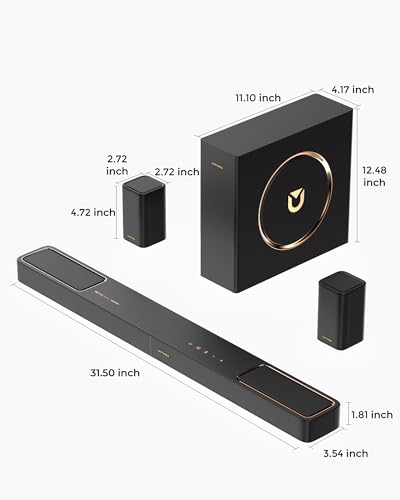
Both systems include 8 total speakers but configured differently. The Ultimea Aura A40 U2601 has 3 speakers in the soundbar, 4 separate surround speakers, and 1 subwoofer. The Ultimea Skywave F40 Dolby Atmos has 5 speakers in the soundbar (including 2 up-firing), 2 rear surround speakers, and 1 subwoofer. The Aura A40 provides more physical surround placement while the Skywave F40 adds overhead dimension.
The Ultimea Aura A40 U2601 offers simpler setup with straightforward wired connections and no special room requirements. The Ultimea Skywave F40 Dolby Atmos requires more consideration for optimal Dolby Atmos performance, including ceiling height and material, plus HDMI connection setup. However, both systems include all necessary cables and clear instructions, making either manageable for most users.
Yes, both the Ultimea Aura A40 U2601 and Ultimea Skywave F40 Dolby Atmos work with the Ultimea Smart App, offering identical control features including 10-band equalizer, 121 preset EQ matrices, and various sound modes. The app provides much more customization than the included remote controls, and both systems receive firmware updates through the app.
For competitive gaming, the Ultimea Aura A40 U2601 excels with precise directional audio from its four surround speakers, helping locate enemies and environmental cues. For immersive single-player gaming, the Ultimea Skywave F40 Dolby Atmos provides more cinematic effects with overhead audio. The Skywave F40's Bluetooth 5.4 also offers lower latency than the Aura A40's Bluetooth 5.3 for wireless gaming.
The Ultimea Aura A40 U2601 works with any ceiling type since it doesn't use ceiling reflections. The Ultimea Skywave F40 Dolby Atmos performs best with flat, reflective ceilings between 8-12 feet high for optimal up-firing driver performance. Vaulted, textured, or very high ceilings can reduce the Skywave F40's Atmos effects, though it still provides excellent regular surround sound.
The Ultimea Aura A40 U2601 provides exceptional value for traditional surround sound, offering four physical surround speakers at a budget-friendly price point where competitors typically offer only virtual processing. The Ultimea Skywave F40 Dolby Atmos delivers premium Dolby Atmos features and superior bass at a competitive price compared to other Atmos systems. Value depends on whether you prioritize budget savings or cutting-edge audio technology.
For dedicated home theater use, the Ultimea Skywave F40 Dolby Atmos is generally superior due to its Dolby Atmos support for modern movie formats, deeper bass extension for cinematic impact, and higher power output for larger rooms. However, the Ultimea Aura A40 U2601 still provides excellent home theater performance at a lower cost, especially for traditional content and smaller theater rooms where its four-speaker surround setup creates impressive immersion.
We've done our best to create useful and informative comparisons to help you decide what product to buy. Our research uses advanced automated methods to create this comparison and perfection is not possible - please contact us for corrections or questions. These are the sites we've researched in the creation of this article: walmart.com - newegg.com - youtube.com - ultimea.com - youtube.com - device.report - ultimea.co - manuals.plus - homestudiobasics.com - youtube.com - bestbuy.com - community.ultimea.com - manuals.plus - eu.ultimea.com - navesapeugeot.com.br - bestbuy.com - images.thdstatic.com - provantage.com - ultimea.com - bestbuy.com - the-gadgeteer.com - youtube.com - ultimea.com - manuals.plus - youtube.com - ultimea.com - youtube.com - youtube.com - youtube.com - youtube.com - eu.ultimea.com - support.ultimea.com

Privacy Policy
Terms and Conditions - Affiliate Policy
Home Security
© Copyright 2008-2026.
11816 Inwood Rd #1211, Dallas, TX 75244