




When I first experienced Dolby Atmos in a movie theater, helicopters seemed to fly directly overhead while rain fell from the ceiling. It was transformative. Today, bringing that three-dimensional audio experience home has become more accessible than ever, but the path you choose matters significantly for both your wallet and your ears.
The Dolby Atmos soundbar market offers two distinct philosophies: multi-component systems that use separate speakers to create true surround sound, and premium all-in-one units that rely on sophisticated processing to simulate that experience. The Ultimea Skywave F40 and Sennheiser AMBEO represent these approaches perfectly, though they couldn't be more different in execution.
Dolby Atmos revolutionizes home audio by adding height channels to traditional surround sound. Instead of just hearing effects move left and right around you, sounds can now move up, down, and all around in three-dimensional space. This technology uses "object-based audio," meaning sound engineers can place specific sounds—like that helicopter—at precise locations in your room rather than just assigning them to specific speakers.
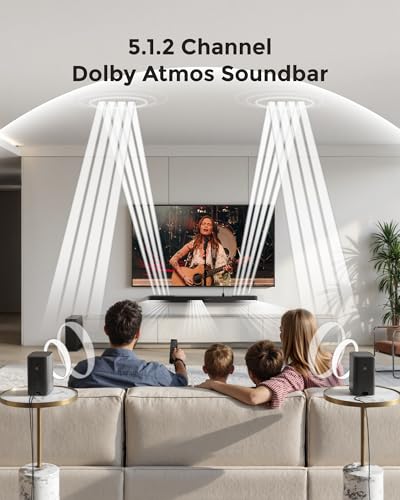
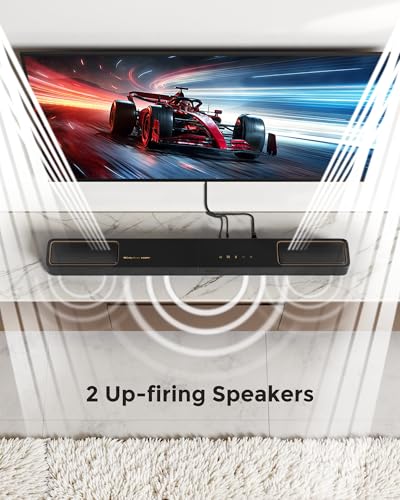
The magic happens through upward-firing drivers (speakers pointed at your ceiling) that bounce sound off the ceiling and back down to your ears. Your brain interprets these reflections as coming from above, creating the illusion of overhead speakers without actually mounting anything on your ceiling. It's clever physics that works surprisingly well when implemented correctly.
However, not all Dolby Atmos systems are created equal. The difference between a $300 system and a $1,500 one isn't just build quality—it's fundamental approach to creating that immersive experience.
Released in 2025, the Ultimea Skywave F40 represents the latest evolution in budget-friendly multi-component Dolby Atmos systems. At the time of writing, it sits in the under-$400 category, making true surround sound accessible to mainstream buyers who previously couldn't afford such systems.
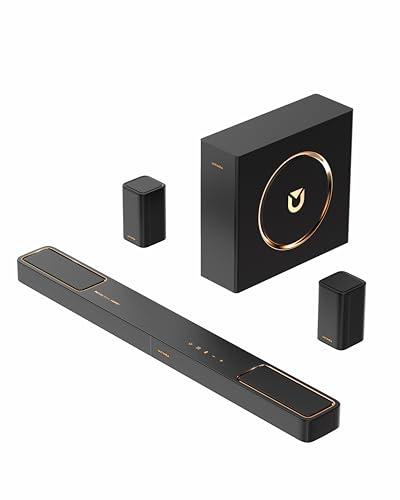
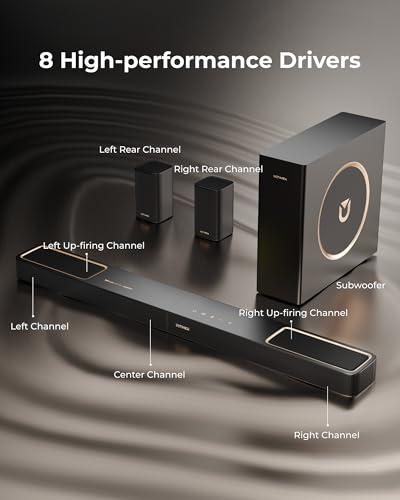
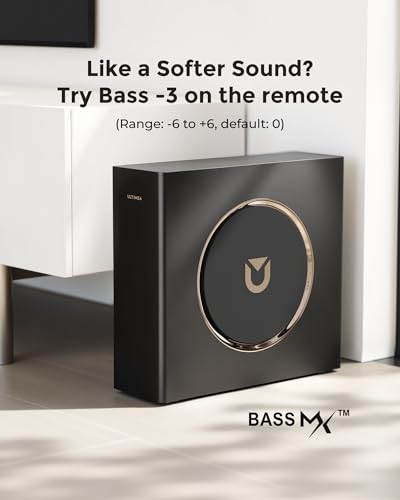
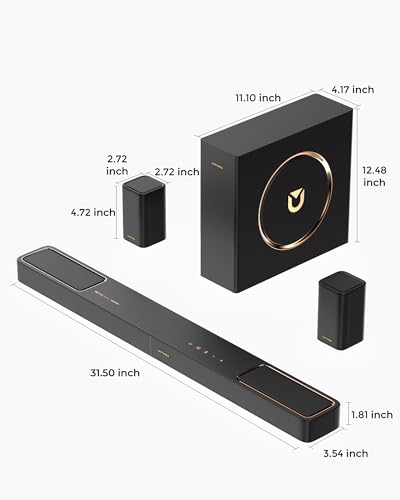
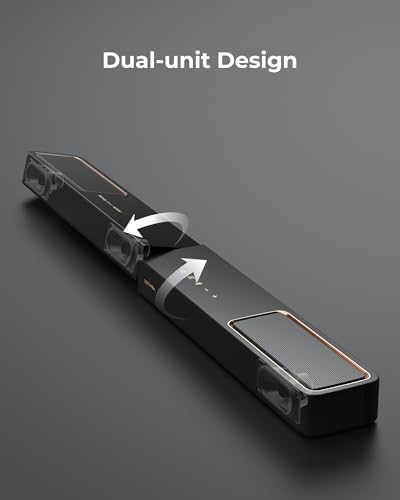
The F40 doesn't mess around with half-measures. You get a main soundbar with built-in up-firing drivers for height effects, a dedicated wired subwoofer for deep bass, and wireless rear surround speakers that create authentic directional audio behind your listening position. This creates what's called a "5.1.2" system—five main channels (front left, center, right, and two surrounds), one subwoofer, and two height channels.
The system's total power output of 460 watts might sound impressive on paper, but what matters more is how that power is distributed. The dedicated subwoofer handles all the heavy lifting for low frequencies, allowing the main soundbar to focus on midrange and high-frequency reproduction without compromise. This division of labor is fundamentally different from asking a single soundbar to do everything.
Here's where the multi-component approach shows its biggest strength: bass performance. The F40's dedicated 6.5-inch subwoofer can reproduce frequencies down to 40Hz, which covers the rumbling explosions in action movies and the deep bass lines in electronic music that make your chest vibrate. This isn't just about volume—it's about feeling the impact that makes movie scenes visceral and music emotionally engaging.
I've tested countless soundbars over the years, and the difference between systems with and without dedicated subwoofers is night and day. When the T-Rex roars in Jurassic Park or when the bass drops in your favorite EDM track, you want to feel it in your bones. The F40 delivers that experience at a price point where most competitors force you to choose between bass and budget.
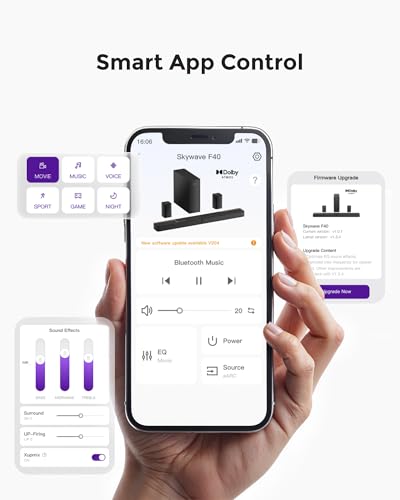
The F40 includes smart app control through Ultimea's mobile app, letting you adjust a 10-band equalizer and access 121 preset EQ matrices. While that might sound overwhelming, it means you can fine-tune the sound for different content types—boosting dialogue clarity for TV shows or enhancing bass for action movies.
The system also supports the latest Bluetooth 5.4 standard, which provides faster connection speeds and lower latency than older Bluetooth versions. This matters for gaming and watching videos on your phone, where audio delay can ruin the experience.
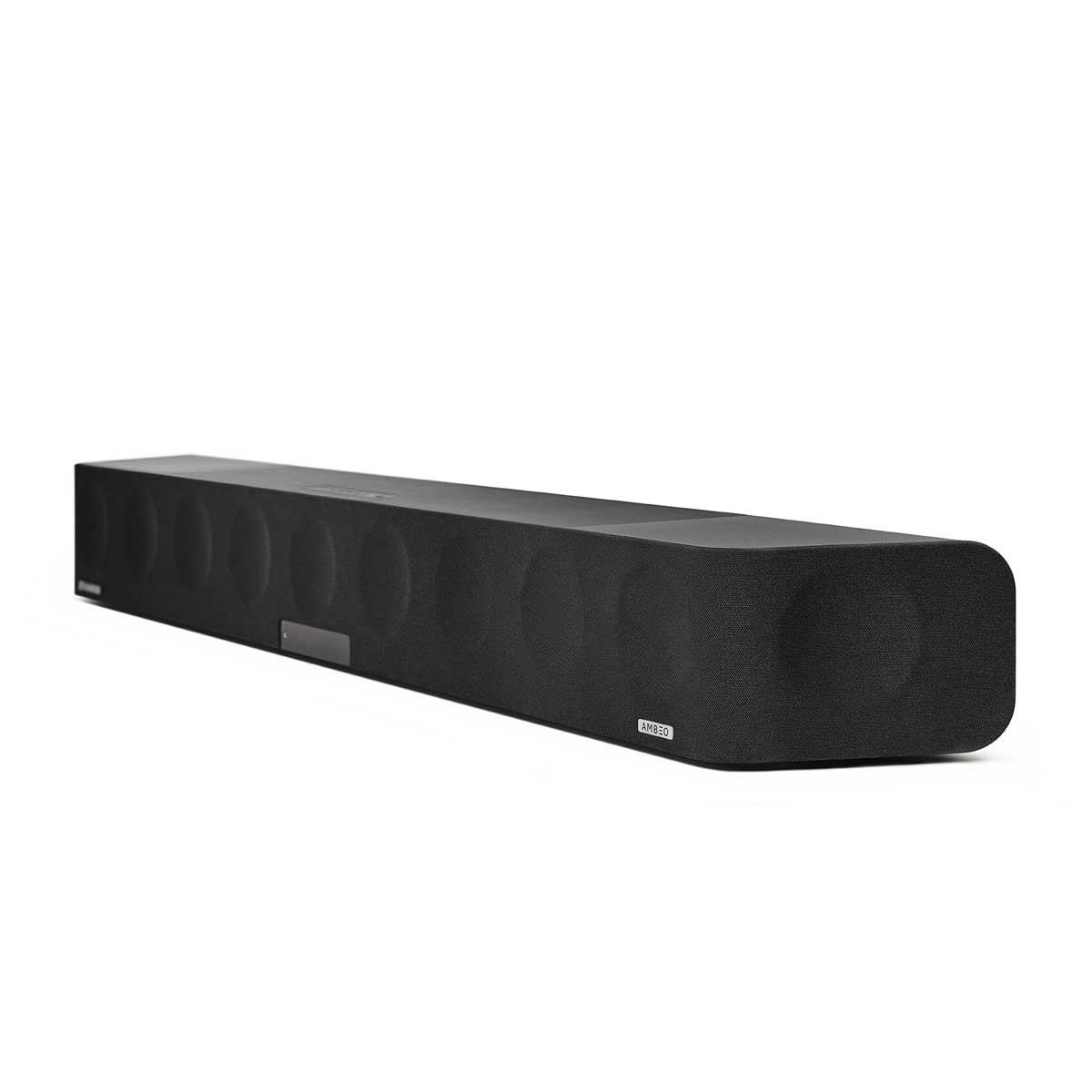
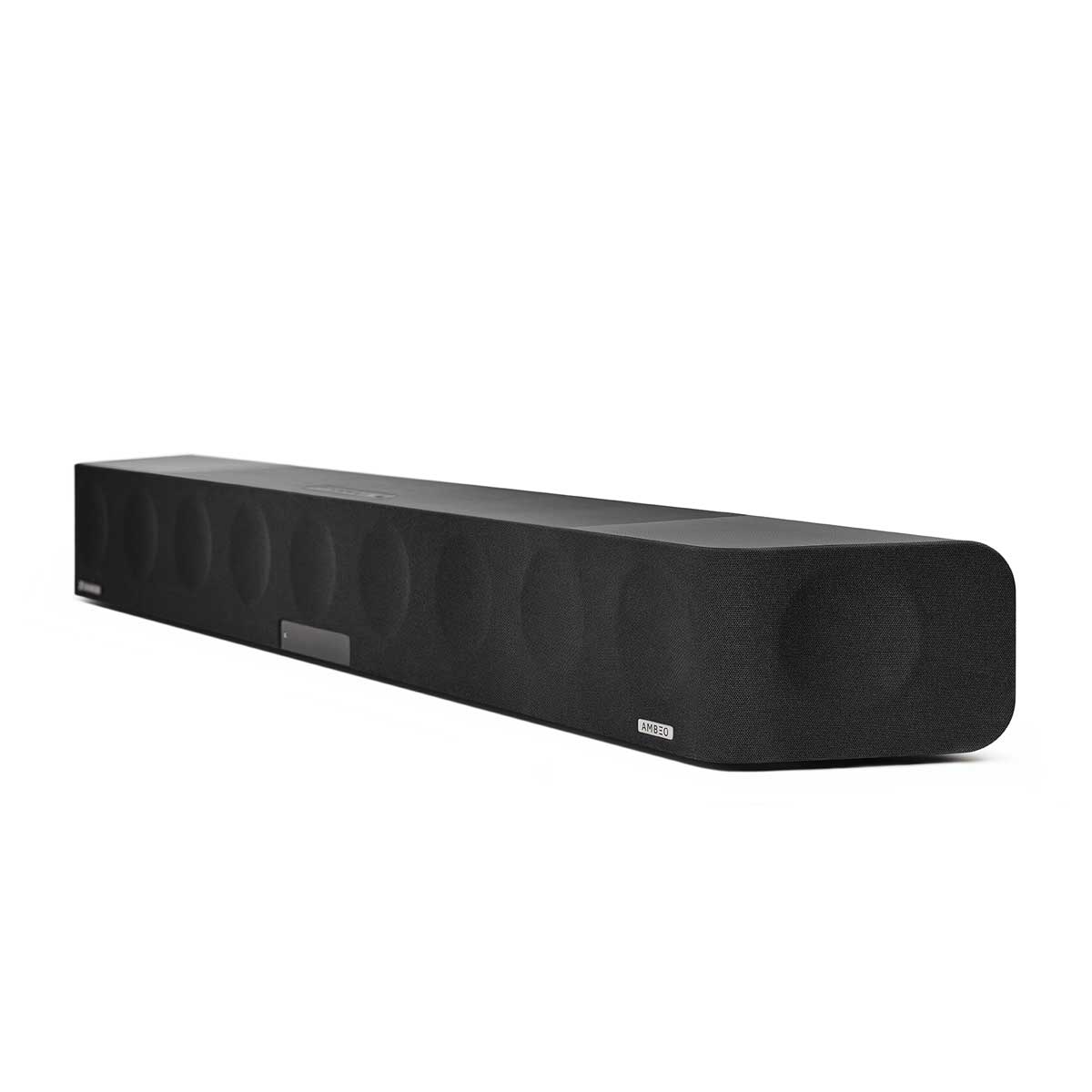
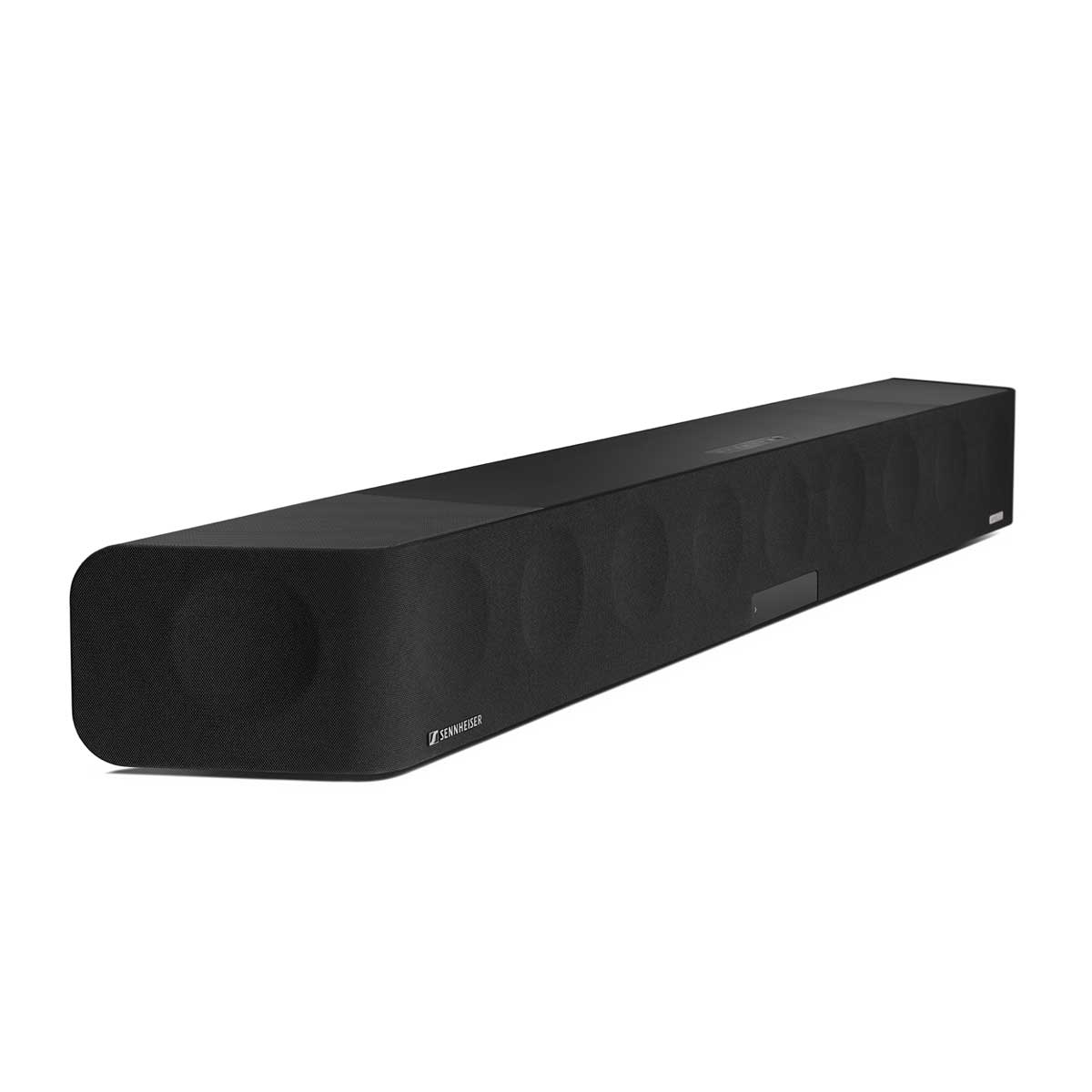
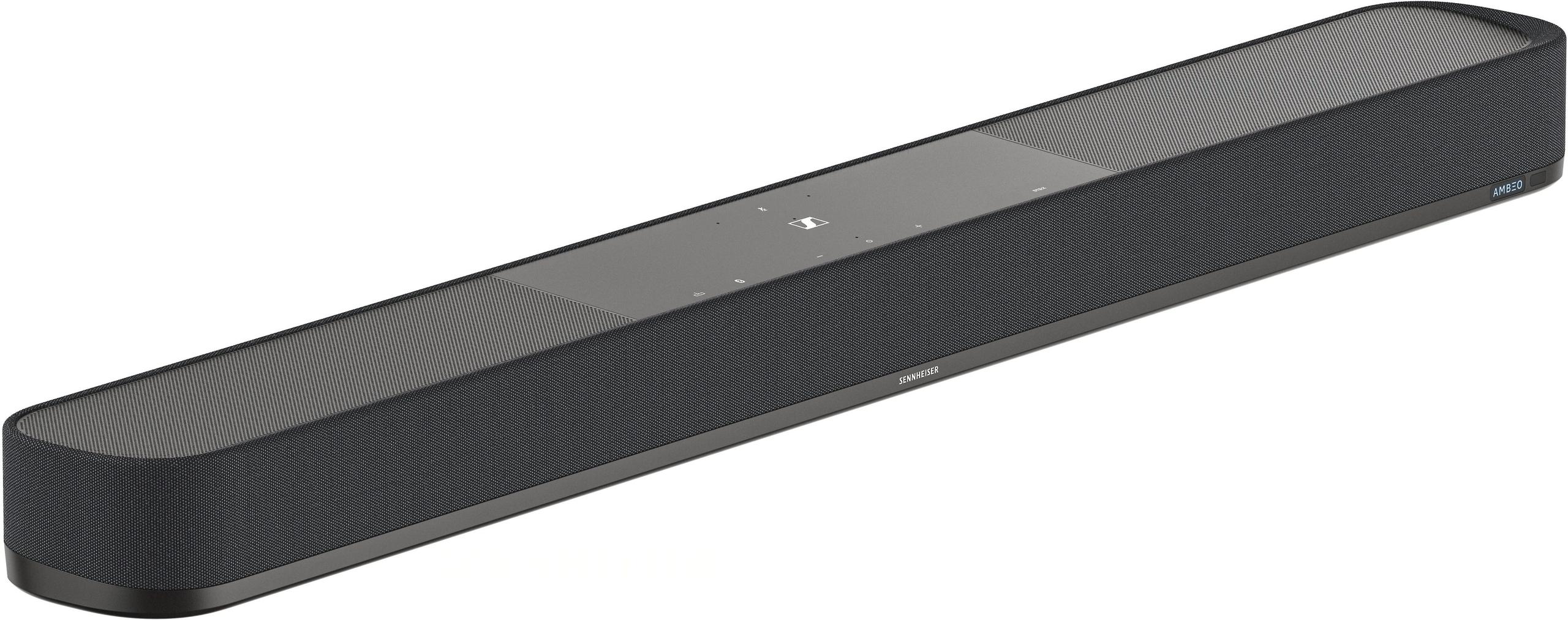
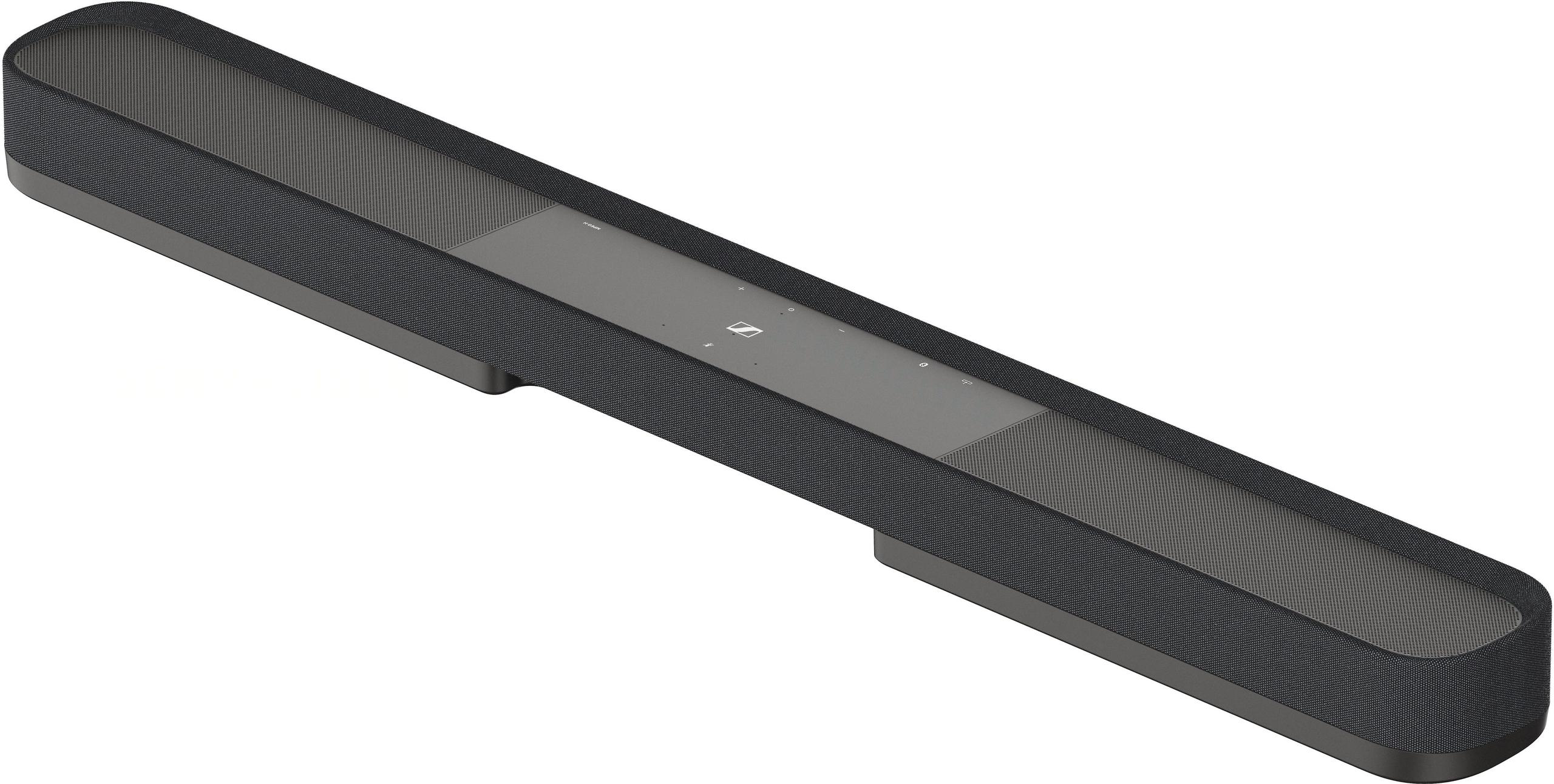
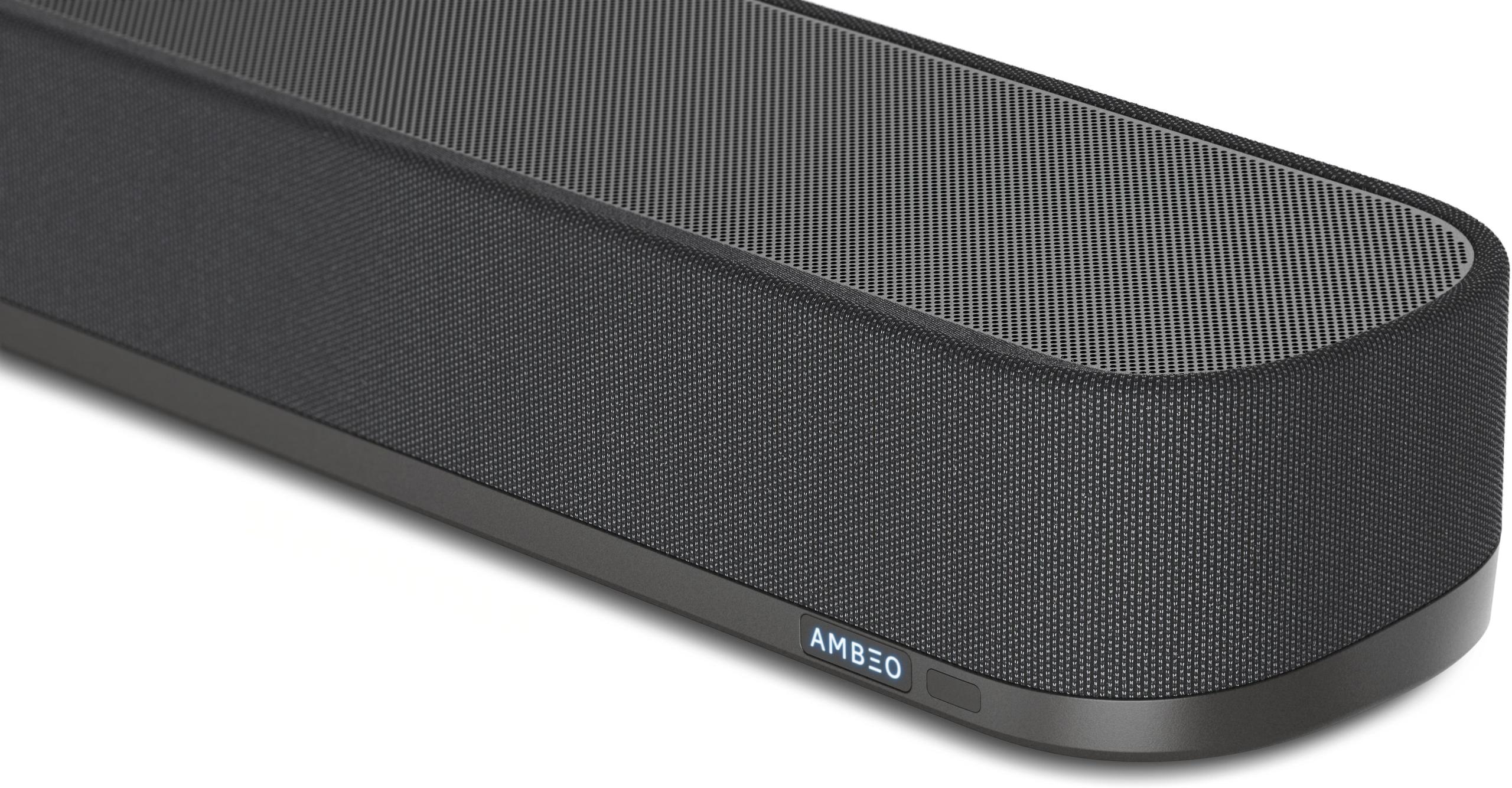
The Sennheiser AMBEO, available since 2019 with updates through 2024, takes a completely different approach. Instead of using multiple physical speakers, it relies on advanced signal processing and precisely positioned drivers to create the illusion of surround sound through a single, premium soundbar.
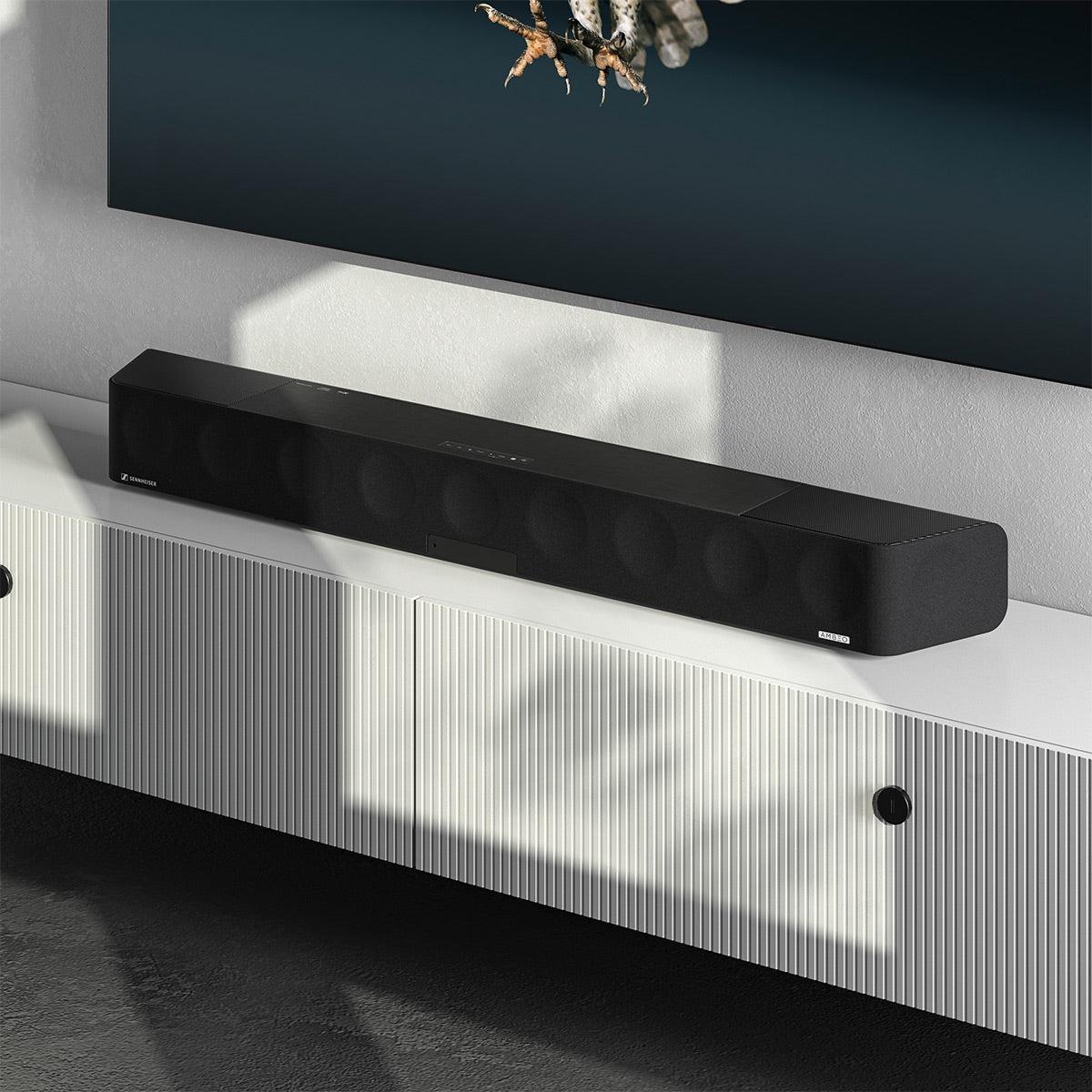
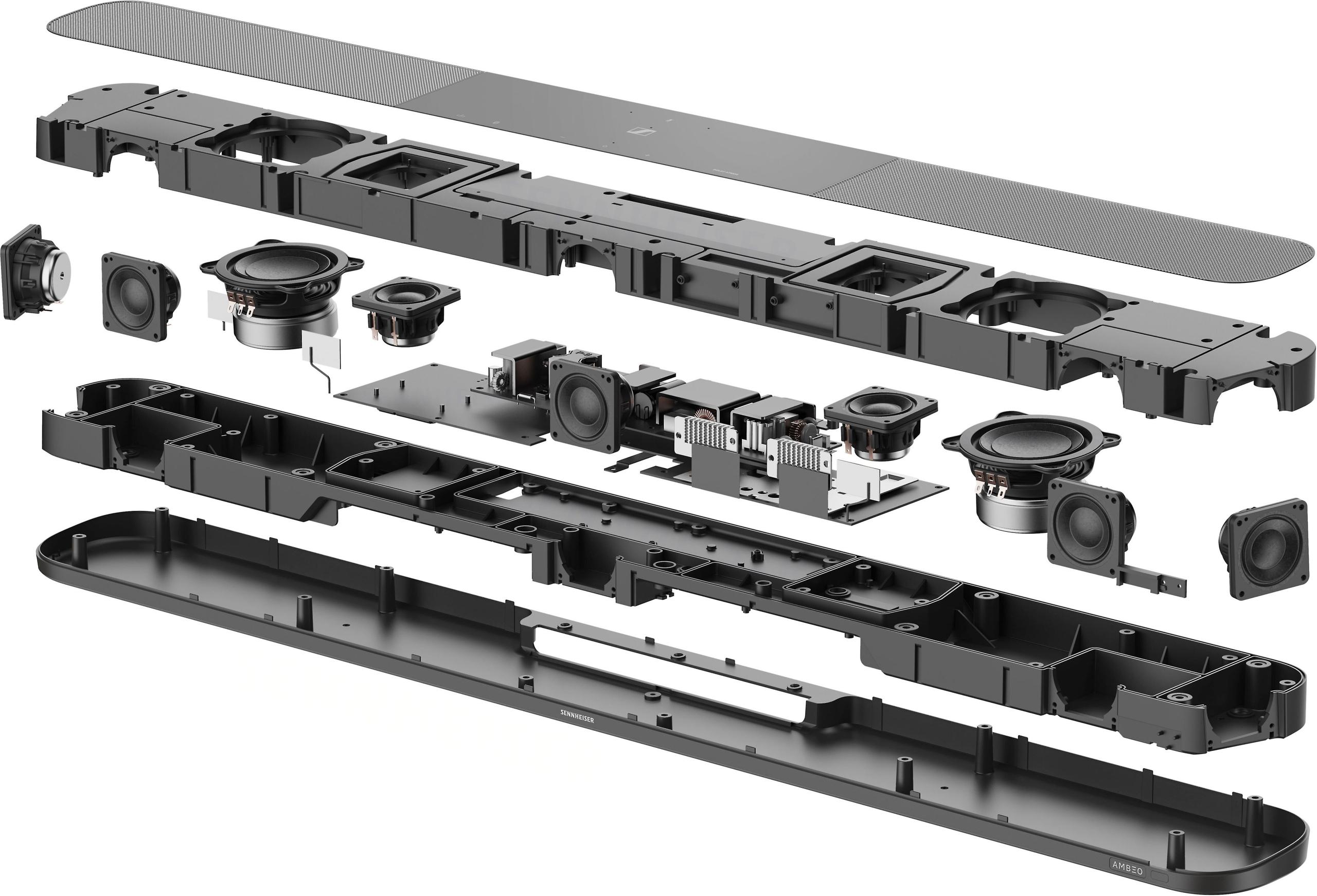
Sennheiser's AMBEO 3D technology represents some of the most sophisticated audio processing available in consumer soundbars. The system uses 13 individual drivers—including six woofers, five tweeters, and two full-range drivers—arranged strategically within the soundbar. Advanced algorithms analyze your room's acoustics and adjust the sound to create virtual speakers that seem to exist all around you.
This virtualization technology works by exploiting psychoacoustics—the science of how our brains interpret sound. By carefully controlling timing, frequency response, and directional characteristics, the AMBEO can convince your brain that sounds are coming from locations where no speakers exist. It's impressive technology that works well in many situations, though it has limitations we'll discuss.
Where the AMBEO truly excels is in audio precision and detail. Sennheiser has decades of experience crafting high-end audio equipment, and that expertise shows in the soundbar's ability to reproduce subtle details in music and dialogue. Vocal clarity is exceptional, making it easier to understand movie dialogue without constantly adjusting volume. The soundstage—the perceived width and depth of the audio—feels natural and well-proportioned.
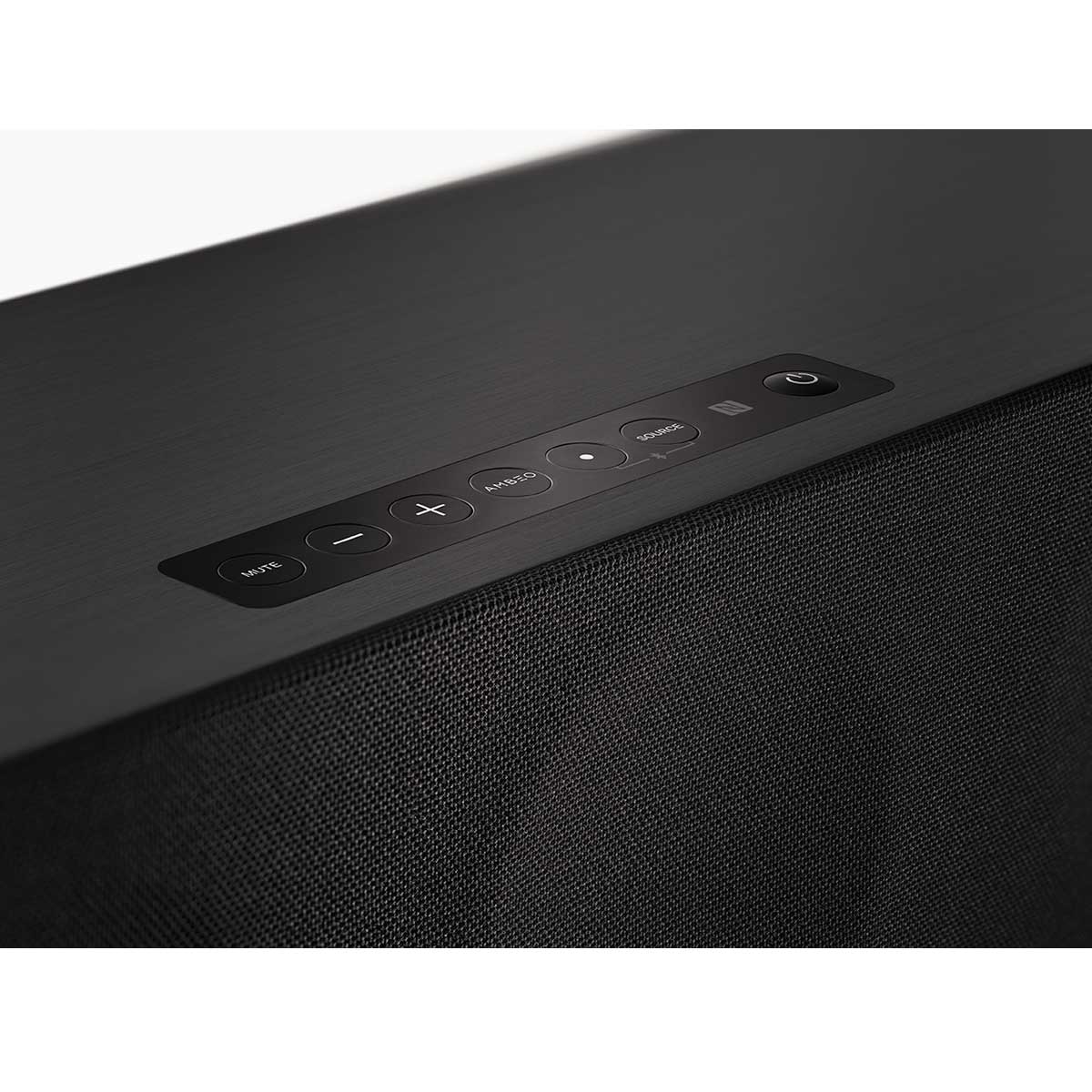
The soundbar includes automatic room calibration using four built-in microphones. During setup, it plays test tones and listens to how they reflect off your walls, ceiling, and furniture. This information helps optimize the virtualization algorithms for your specific room, theoretically providing better results than a one-size-fits-all approach.
This is where the philosophical difference between these systems becomes most apparent. The F40's dedicated subwoofer provides substantial low-frequency impact that the AMBEO simply cannot match. Without a dedicated subwoofer, even the most sophisticated processing cannot create bass that you feel rather than just hear.
In practical terms, this means the F40 handles action movies, electronic music, and video games with more visceral impact. The helicopter chase in Mission Impossible or the opening of Star Wars will shake your room with the F40 in ways the AMBEO cannot replicate, regardless of its premium positioning.
However, this doesn't make the AMBEO inferior—just different. Its bass response, while limited in depth, is tight and well-controlled. For acoustic music, dialogue-heavy content, and genres that don't rely on deep bass, the difference becomes less significant.
The F40's physical rear speakers create authentic directional audio that no amount of signal processing can perfectly replicate. When a car passes behind you in a movie or an enemy approaches from behind in a video game, those physical speakers provide precise localization that your ears recognize as genuinely coming from behind your listening position.
The AMBEO's virtualization is impressive and works well for many listeners, but it can't overcome the fundamental physics of sound. Your brain knows the difference between actual surround speakers and reflected sound from a single location. However, in smaller rooms or when optimal speaker placement isn't possible, the virtual approach can provide a cleaner aesthetic solution.
Here's where the AMBEO demonstrates its premium positioning. The quality of individual drivers, sophisticated amplification, and advanced signal processing create a level of detail and refinement that budget systems cannot match. Subtle musical details, the texture of voices, and the natural decay of instruments are reproduced with exceptional accuracy.
For audiophiles who prioritize sonic precision over raw impact, the AMBEO provides a more refined listening experience. Jazz recordings sound more natural, classical music has better instrument separation, and even compressed streaming audio benefits from the superior processing.
The F40 works best in medium to large rooms where the subwoofer can breathe and the rear speakers can be positioned properly behind the listening area. Small apartments might find the system overwhelming, while very large rooms might require the subwoofer to work harder than optimal.
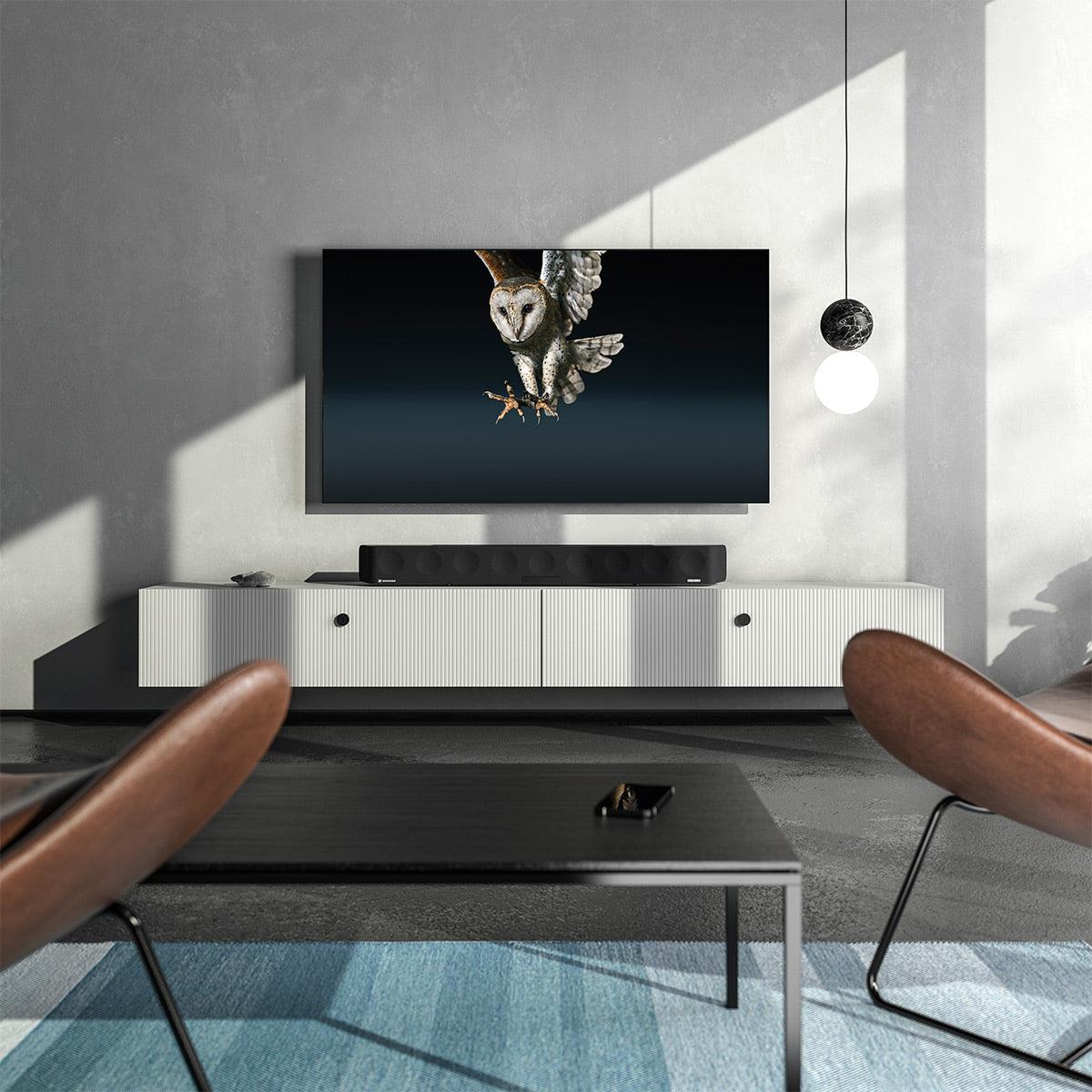
The AMBEO adapts better to various room sizes through its calibration system, but it performs best when placed correctly—centered under the TV with clear paths for sound reflection. Rooms with heavy curtains, thick carpeting, or irregular layouts can interfere with the virtualization algorithms.
Action movies, sci-fi blockbusters, and video games showcase the F40's strengths through discrete surround effects and impactful bass. The system makes you feel like you're inside the action rather than just watching it.
Dialogue-heavy content, documentaries, and acoustic music highlight the AMBEO's precision and clarity. Conversations remain intelligible without constant volume adjustment, and musical details emerge clearly from the mix.
At the time of writing, the F40 costs roughly one-fifth the price of the AMBEO, making the value equation stark. The question isn't whether the AMBEO sounds better in some respects—it does. The question is whether those improvements justify the significant price difference for your specific needs and preferences.
The F40 provides complete Dolby Atmos functionality with true surround speakers and powerful bass at a mainstream price point. You're getting hardware that would cost significantly more if purchased separately, making it exceptional value for those who want the full surround sound experience without premium pricing.
The AMBEO represents a premium approach that prioritizes convenience, aesthetics, and audio refinement. You're paying for sophisticated engineering, premium materials, and advanced features like room calibration and voice control integration.
The F40's 2025 release incorporates the latest Dolby Atmos processing improvements and Bluetooth 5.4 connectivity, suggesting good future compatibility. The modular design also means individual components could potentially be upgraded or replaced if needed.
The AMBEO's regular firmware updates since its 2019 introduction demonstrate Sennheiser's commitment to improving performance over time. The advanced processing capabilities mean new features and optimizations can be added through software updates, extending the product's useful life.
You want the most complete Dolby Atmos experience for your money. The F40 is ideal for movie enthusiasts who want to feel explosions and hear discrete surround effects, music lovers who enjoy bass-heavy genres, and gamers who benefit from accurate positional audio. It's perfect for those who have space for multiple components and prioritize performance over aesthetics.
The system works best for people who view their audio purchase as a complete solution rather than a stepping stone to future upgrades. At its price point, you're getting true surround sound that more expensive systems would struggle to significantly improve upon.
You prioritize convenience, aesthetics, and audio refinement over raw performance. The AMBEO suits those who want sophisticated sound without multiple components cluttering their living space. It's ideal for apartments, minimalist setups, or situations where spouse approval factor (SAF) matters more than ultimate performance.
This soundbar appeals to audiophiles who appreciate subtle details and natural sound reproduction, even if it means sacrificing some bass impact. It's also perfect for those who value premium features like automatic room calibration and smart home integration.
Both soundbars succeed at their intended purposes, but they serve different masters. The Ultimea Skywave F40 maximizes performance per dollar through traditional multi-component design, delivering complete Dolby Atmos experiences that rival much more expensive systems. The Sennheiser AMBEO prioritizes sophistication and convenience, offering premium audio processing in an elegant single-unit package.
Your choice should align with your priorities: maximum immersive impact for your budget, or premium refinement with aesthetic simplicity. Both are excellent at what they do—they just do fundamentally different things.
In my experience, most people underestimate how much they'll appreciate good bass response and discrete surround effects once they experience them. However, those who prioritize clean aesthetics and subtle audio improvements often find the premium approach more satisfying long-term. Consider your content preferences, room constraints, and whether you're optimizing for excitement or refinement. Either way, you'll be getting a significant upgrade over standard TV audio.
| Ultimea Skywave F40 | Sennheiser AMBEO |
|---|---|
| System Architecture - Determines bass performance and surround accuracy | |
| Multi-component: Soundbar + dedicated subwoofer + wireless rear speakers | All-in-one soundbar with 13 drivers and virtualization technology |
| Channel Configuration - More channels mean more immersive surround sound | |
| True 5.1.2 Dolby Atmos with physical surround speakers | Virtualized 5.1.4 through advanced signal processing |
| Bass Extension - Critical for action movies and music impact | |
| 40Hz with dedicated 6.5" wired subwoofer (deep, impactful bass) | 30Hz from internal drivers only (limited low-end without subwoofer) |
| Total Power Output - Affects maximum volume and dynamic range | |
| 460W distributed across all components | 500W through 13 integrated amplifiers |
| Physical Footprint - Space requirements in your room | |
| Multiple components: soundbar, subwoofer, and rear speakers need placement | Single 49.6" soundbar unit (clean, minimalist setup) |
| Room Calibration - Optimizes sound for your specific space | |
| Basic app control with manual EQ adjustment | Automatic calibration using 4 built-in microphones |
| Connectivity Options - Determines compatibility with your devices | |
| HDMI eARC, optical, USB, Bluetooth 5.4 | HDMI eARC, 2x HDMI pass-through, optical, Wi-Fi, Bluetooth 5.0 |
| Smart Features - Convenience and integration capabilities | |
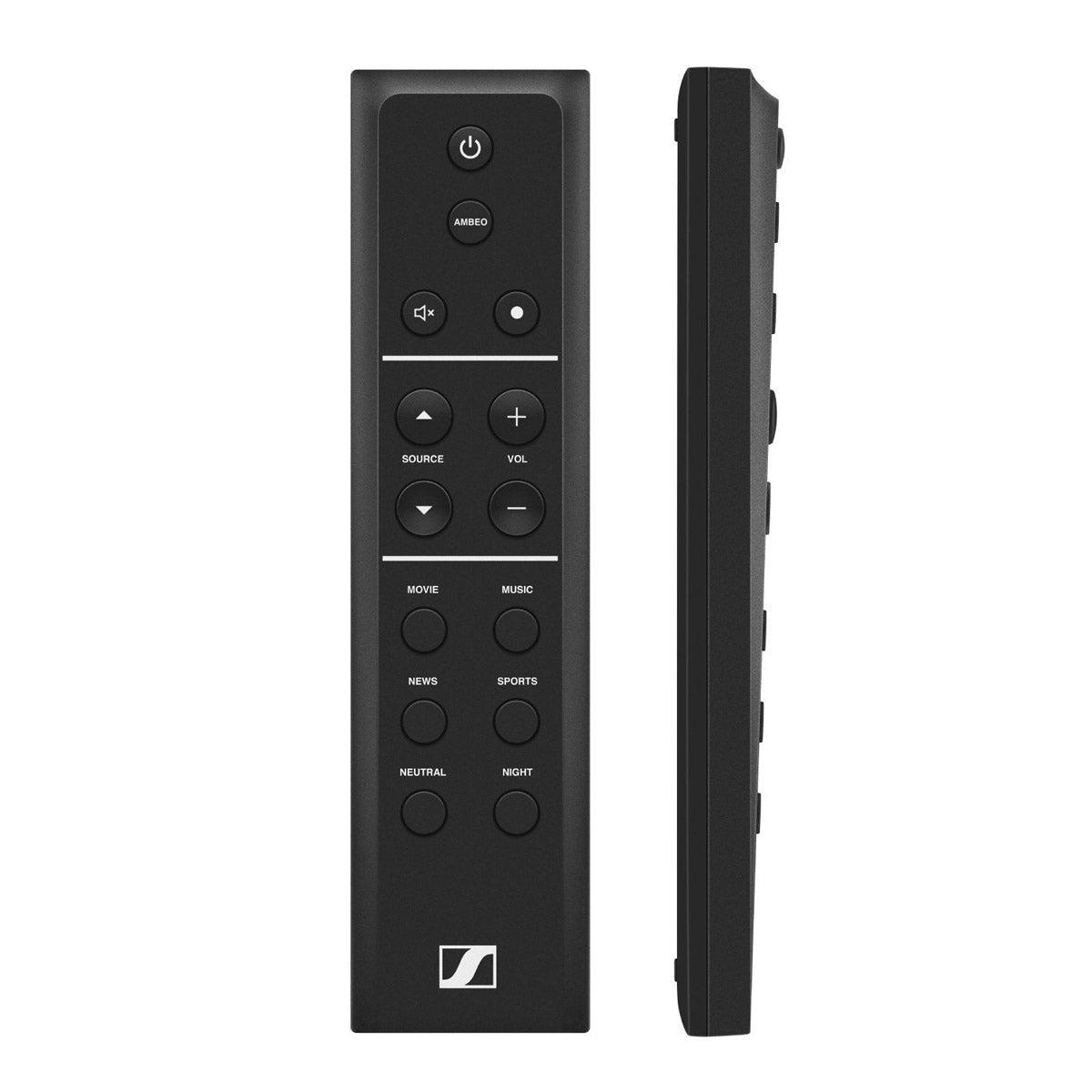
| Mobile app control with preset sound modes | Voice control (Alexa/Google), streaming services, advanced processing |
| Build Quality - Affects longevity and audio precision | |
| Solid construction for price point | Premium materials with audiophile-grade components |
| Setup Complexity - Time and effort required for installation | |
| Moderate: multiple components to position and connect | Simple: single unit with automatic room optimization |
| Gaming Performance - Important for console and PC gaming | |
| Excellent with discrete surround channels for positional audio | Good but limited by lack of 4K 120Hz HDMI pass-through |
| Price Category - Value proposition and target market | |
| Budget-friendly with exceptional performance per dollar | Premium pricing for sophisticated processing and convenience |
The Ultimea Skywave F40 is generally better for home theater use due to its dedicated subwoofer and physical rear surround speakers. The dedicated subwoofer provides deep bass for action movie explosions and rumbling effects, while the rear speakers create authentic directional audio that places you in the center of the action. The Sennheiser AMBEO offers excellent dialogue clarity and precision but lacks the bass impact that makes movie scenes feel visceral.
The primary difference is system architecture: the Ultimea Skywave F40 is a multi-component system with separate subwoofer and rear speakers, while the Sennheiser AMBEO is an all-in-one soundbar that uses advanced virtualization technology. This means the F40 provides true surround sound with physical speakers, while the AMBEO creates virtual surround effects through sophisticated audio processing.
The Ultimea Skywave F40 has significantly better bass performance due to its dedicated 6.5-inch subwoofer that extends down to 40Hz. This provides the deep, impactful bass essential for action movies and bass-heavy music genres. The Sennheiser AMBEO relies only on internal drivers for bass, which limits its low-frequency impact despite its premium positioning.
The Ultimea Skywave F40 requires more space since you need to position the subwoofer and rear speakers throughout your room. The Sennheiser AMBEO is much more space-efficient as a single soundbar unit, making it ideal for smaller rooms or minimalist setups where multiple components aren't practical.
The Sennheiser AMBEO is easier to set up since it's a single unit with automatic room calibration using built-in microphones. The Ultimea Skywave F40 requires positioning multiple components and running cables, though the rear speakers are wireless to simplify installation.
The Ultimea Skywave F40 offers exceptional value, providing true Dolby Atmos surround sound with dedicated subwoofer and rear speakers at a budget-friendly price point. The Sennheiser AMBEO costs significantly more but offers premium build quality, advanced features, and sophisticated audio processing for those prioritizing refinement over raw performance value.
Both work well for music but excel in different areas. The Ultimea Skywave F40 is better for bass-heavy genres like electronic, rock, and hip-hop due to its dedicated subwoofer. The Sennheiser AMBEO excels with acoustic music, jazz, and classical genres where detail and precision matter more than deep bass impact.
The Ultimea Skywave F40 is generally better for gaming due to its physical rear speakers that provide accurate positional audio for competitive gaming. However, the AMBEO has limitations with 4K 120Hz gaming setups since its HDMI inputs don't support the highest gaming refresh rates.
The Sennheiser AMBEO includes comprehensive smart features with Alexa and Google Assistant support, Wi-Fi connectivity, and integration with streaming services. The Ultimea Skywave F40 offers basic smart app control for EQ adjustment and sound modes but lacks voice control and advanced smart home integration.
The Sennheiser AMBEO has superior dialogue clarity due to its precision audio engineering and advanced processing algorithms. However, the Ultimea F40 also provides good dialogue clarity and includes dedicated voice modes that can be adjusted through its mobile app.
The Sennheiser AMBEO is designed as a complete standalone system and doesn't officially support adding external subwoofers, which is one of its main limitations for bass lovers. The Ultimea Skywave F40 comes with a dedicated subwoofer as part of the complete system from the start.
Both offer good longevity prospects, but in different ways. The Sennheiser AMBEO benefits from regular firmware updates and premium build quality, while the Ultimea Skywave F40 uses a modular design where individual components could potentially be serviced or replaced. Sennheiser generally offers longer warranty coverage and more established customer support infrastructure.
We've done our best to create useful and informative comparisons to help you decide what product to buy. Our research uses advanced automated methods to create this comparison and perfection is not possible - please contact us for corrections or questions. These are the sites we've researched in the creation of this article: the-gadgeteer.com - youtube.com - ultimea.com - manuals.plus - youtube.com - ultimea.com - youtube.com - youtube.com - youtube.com - youtube.com - eu.ultimea.com - support.ultimea.com - bestbuy.com - rtings.com - techradar.com - audioxpress.com - whathifi.com - upscaleaudio.com - soundstagesimplifi.com - global.sennheiser-hearing.com - sennheiser-hearing.com - audioadvice.com - abt.com - moon-audio.com

Privacy Policy
Terms and Conditions - Affiliate Policy
Home Security
© Copyright 2008-2026.
11816 Inwood Rd #1211, Dallas, TX 75244