







The soundbar market has exploded over the past few years, and for good reason. Modern TVs keep getting thinner, which means their built-in speakers keep getting worse. Enter the soundbar – a simple solution that dramatically improves your audio without the complexity of a full surround sound system with receivers, multiple amplifiers, and speaker wire running throughout your room.
But here's where it gets interesting: not all soundbars are created equal, and the differences between budget and premium options have never been more dramatic. Today we're comparing two fundamentally different approaches to home theater audio: the Ultimea Poseidon D70, which delivers true physical surround sound at a budget price point, and the Samsung Q Series 9.1.2 Channel Soundbar, which focuses on premium audio processing and three-dimensional sound.
Before diving into specifics, let's talk about what actually makes a difference when you're watching movies or listening to music. The most important factors are channel configuration (how many speakers and where they're positioned), audio quality and refinement, connectivity options, and whether the system can create genuine surround sound versus just simulating it.
Channel configuration gets confusing quickly. When you see "7.1" or "9.1.2," those numbers tell you exactly how the audio is distributed. The first number represents horizontal channels (front, sides, rear), the second is dedicated subwoofer channels, and the third (when present) indicates height channels for overhead effects. More channels generally mean better spatial audio, but the quality of implementation matters more than raw numbers.
The biggest consideration is physical versus virtual surround sound. Physical surround means actual speakers positioned around your room – behind you, beside you, creating real directional audio. Virtual surround uses digital signal processing (DSP) to trick your brain into hearing directional effects from speakers only positioned in front of you. Both have merits, but they create very different listening experiences.
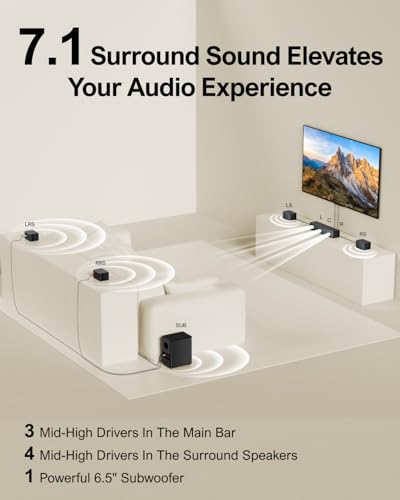
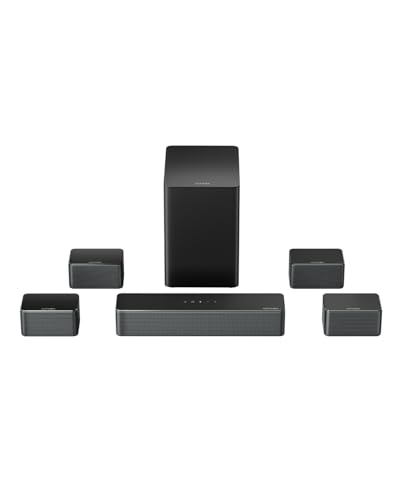
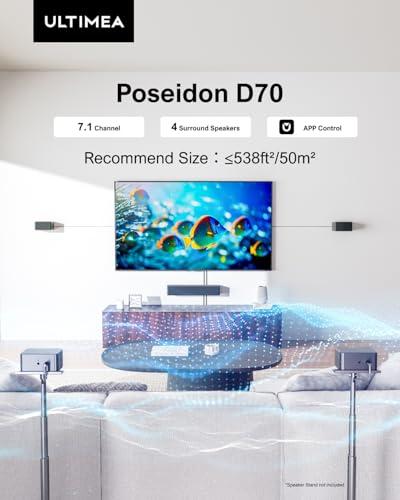
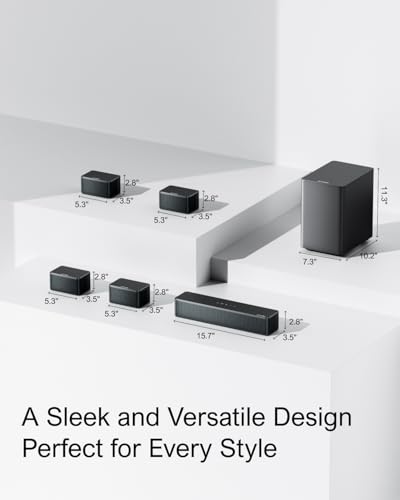
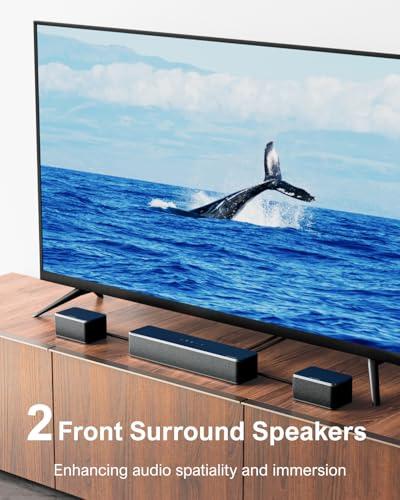
The Ultimea Poseidon D70, released in 2024, represents the "more speakers for less money" approach. It's a 7.1 channel system that includes eight physical speakers: a main soundbar with three drivers, four separate surround speakers you place around your room, and a wireless subwoofer. At the time of writing, it's positioned in the budget category, typically selling for well under $300.
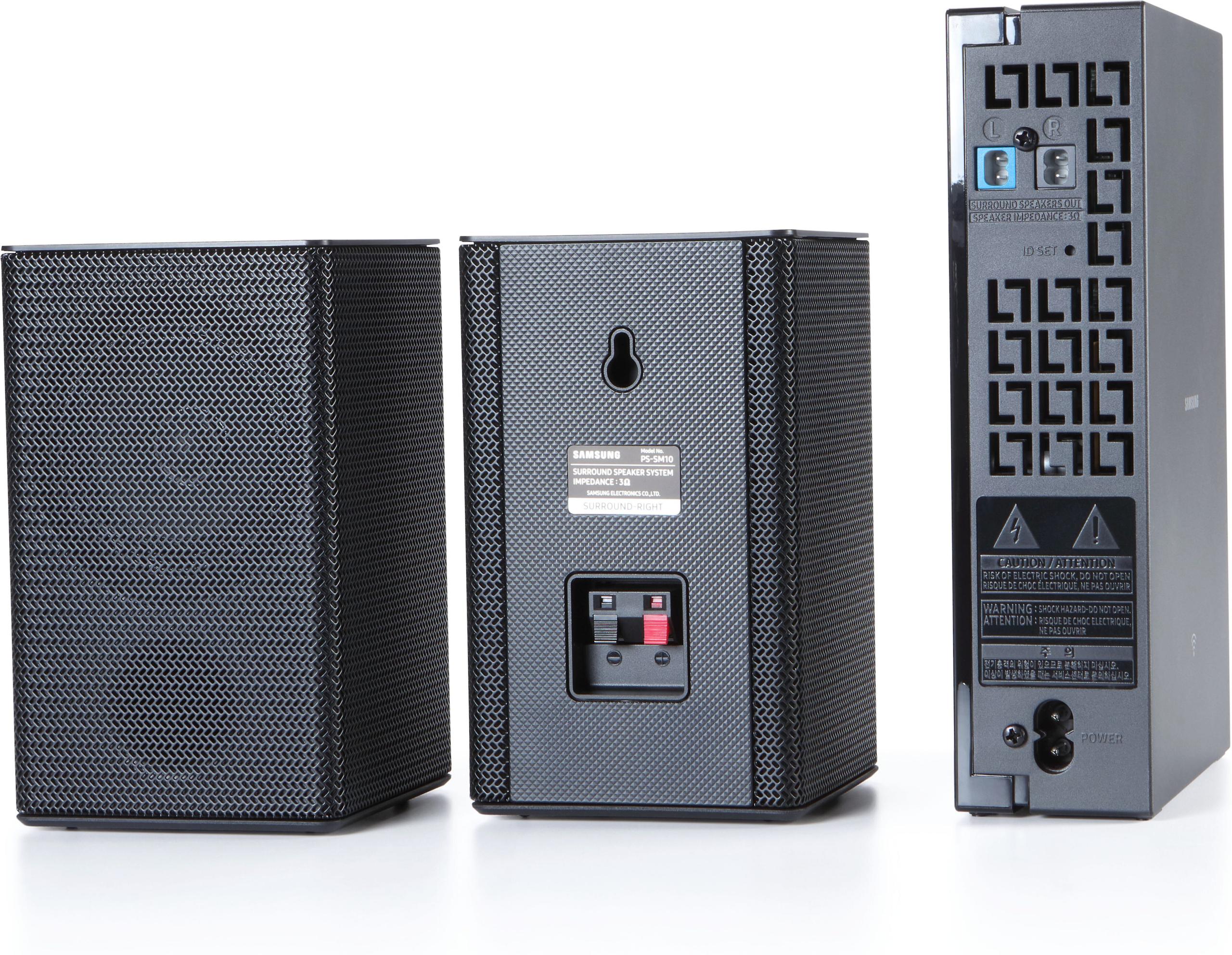
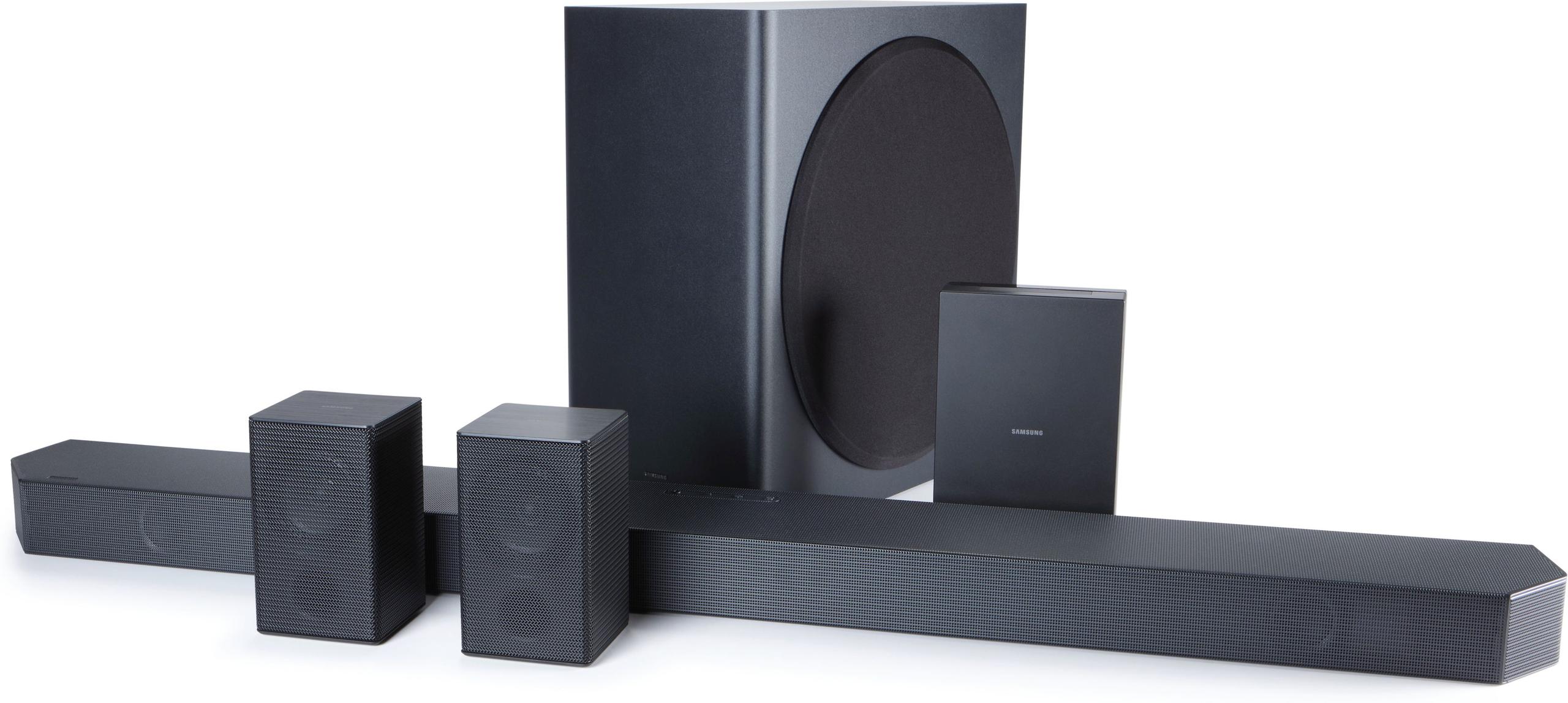
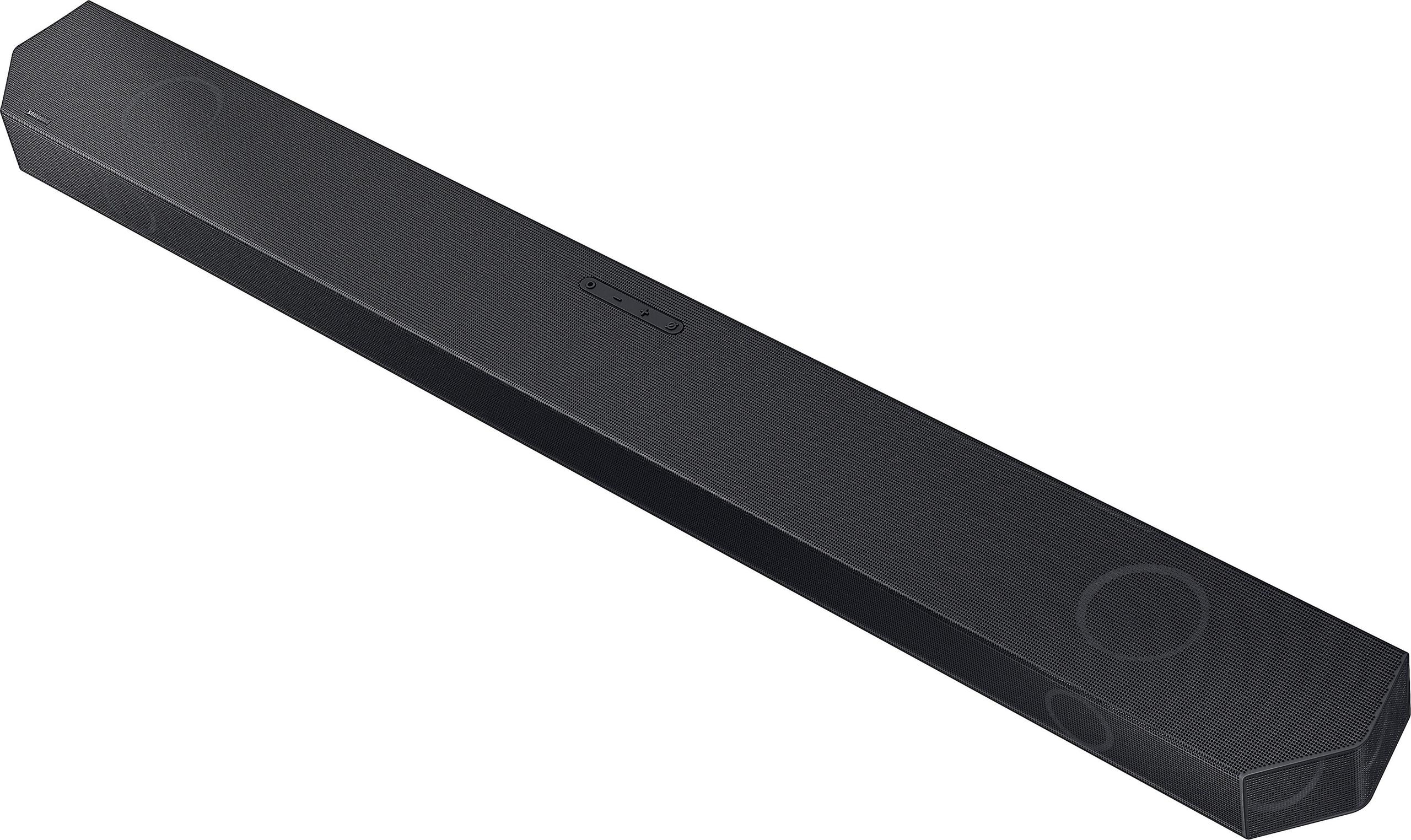
Samsung's approach with their Q Series 9.1.2 Channel, also from 2024, is completely different. Rather than maximizing speaker count, Samsung focuses on audio processing sophistication, premium build quality, and modern features like Dolby Atmos. It's positioned in the mid-range category, usually costing significantly more than budget options but less than flagship models.
These represent fundamentally different value propositions, and understanding which approach suits your needs better is crucial to making the right choice.
The most dramatic difference between these systems becomes apparent the moment you start playing content. Our research into professional and user reviews reveals stark contrasts in audio refinement and processing capability.
The Samsung Q Series delivers what reviewers consistently describe as "balanced" and "refined" audio reproduction. This means the frequency response – how loud different pitches sound relative to each other – has been carefully tuned. Bass doesn't overpower midrange frequencies where dialogue lives, and treble remains crisp without becoming harsh or fatiguing during long listening sessions. Professional testing shows the Samsung maintains clean audio reproduction even at 90dB listening levels, which is quite loud, and experiences notably less compression when pushed to maximum volume.
The Ultimea D70, by contrast, shows the hallmarks of budget engineering. Reviews of similar Ultimea models note that while speech clarity is good and the surround sound is genuinely impressive for the price, the audio "sometimes veers on tinny" at higher volumes. The rear speakers "sometimes struggle to keep up" with demanding content. This doesn't mean it sounds bad – just that the audio processing and component quality reflect the lower price point.
Here's where this matters practically: if you're primarily watching dialogue-heavy content like dramas or comedies, the Samsung's superior midrange reproduction and dedicated center channel make conversations significantly easier to follow. If you're mostly interested in action movies and gaming where the surround effects matter more than perfect tonal balance, the Ultimea's physical speaker placement might be more impactful than audio refinement.
This is where these two systems diverge most dramatically, and where your room layout and preferences become critical.
The Ultimea D70 provides true physical surround sound through four dedicated speakers that you position around your listening area. When a helicopter flies overhead in a movie, you hear the sound actually moving from speaker to speaker around your room. When an explosion happens behind the main character, the audio genuinely comes from behind you. This creates an undeniably convincing surround experience – sound actually emanates from the directions it should.
The Samsung Q Series uses its 9.1.2 channel processing to create surround effects primarily through DSP and psychoacoustic manipulation. This means sophisticated algorithms analyze the audio and process it to trick your brain into perceiving directional effects. The main soundbar creates a wider, more enveloping soundstage than typical soundbars, and the included satellite speakers extend effects to the sides and rear.
In practice, both approaches work, but they feel different. Physical surround from the Ultimea tends to be more obvious and dramatic – you clearly hear sounds coming from specific directions. The Samsung's virtual processing is more subtle and refined, creating a sense of space and immersion without drawing attention to individual speakers.
Your room layout significantly impacts which approach works better. If you can properly position the Ultimea's four surround speakers – ideally to your sides and behind your seating area – the physical surround effect is remarkably convincing for the price. If your room layout makes speaker placement difficult, or if you prefer a cleaner aesthetic without multiple speakers visible, the Samsung's approach might suit you better.
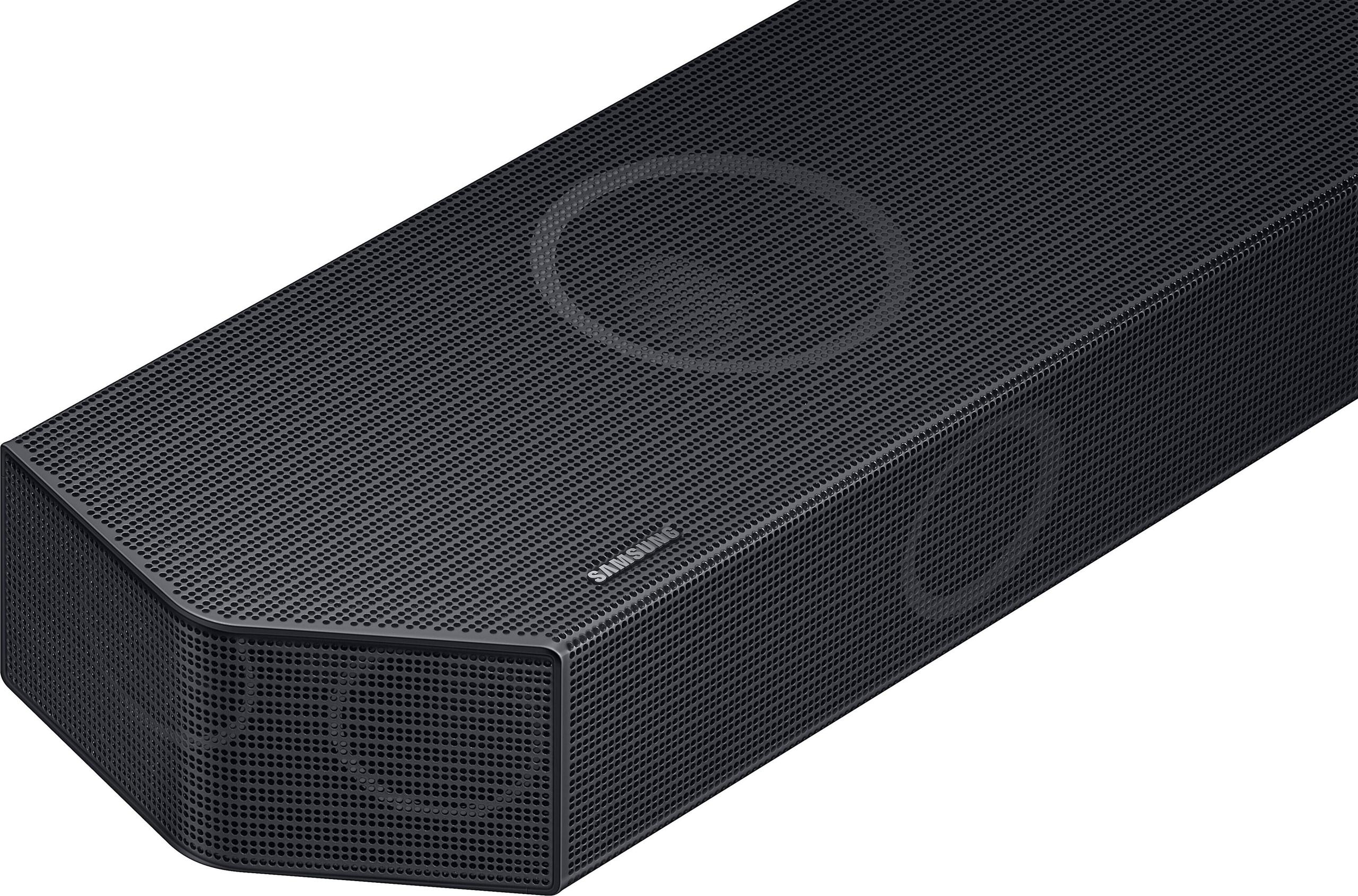
Here's where the Samsung Q Series pulls dramatically ahead: three-dimensional audio. The ".2" in its 9.1.2 designation represents two up-firing drivers that bounce sound off your ceiling to create overhead effects. This enables full Dolby Atmos support – an object-based audio format that positions sounds in three-dimensional space rather than just assigning them to specific channels.
Dolby Atmos transforms how movie soundtracks work. Instead of mixing audio for specific speaker positions, sound engineers place audio "objects" in virtual space. Rain falls from above, helicopters pass overhead with convincing altitude changes, and ambient sounds like forest noises surround you vertically as well as horizontally. The Samsung also supports DTS:X, another object-based format that works similarly.
The Ultimea D70 simply cannot replicate this experience. It has no physical height channels and relies on virtual surround processing that only works in the horizontal plane. While its surround effects are convincing, they're limited to sounds coming from in front, behind, and beside you – not above.
This limitation matters more for some content than others. Modern action movies, especially those mixed specifically for Dolby Atmos, benefit dramatically from height effects. Older movies and most TV shows were mixed for traditional surround sound, so the Ultimea's capabilities are sufficient. Gaming increasingly supports object-based audio, making height channels valuable for competitive and immersive gaming.
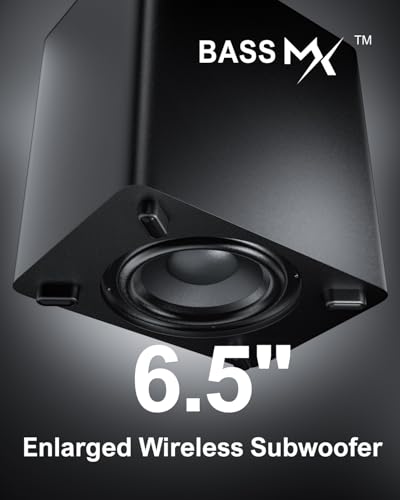
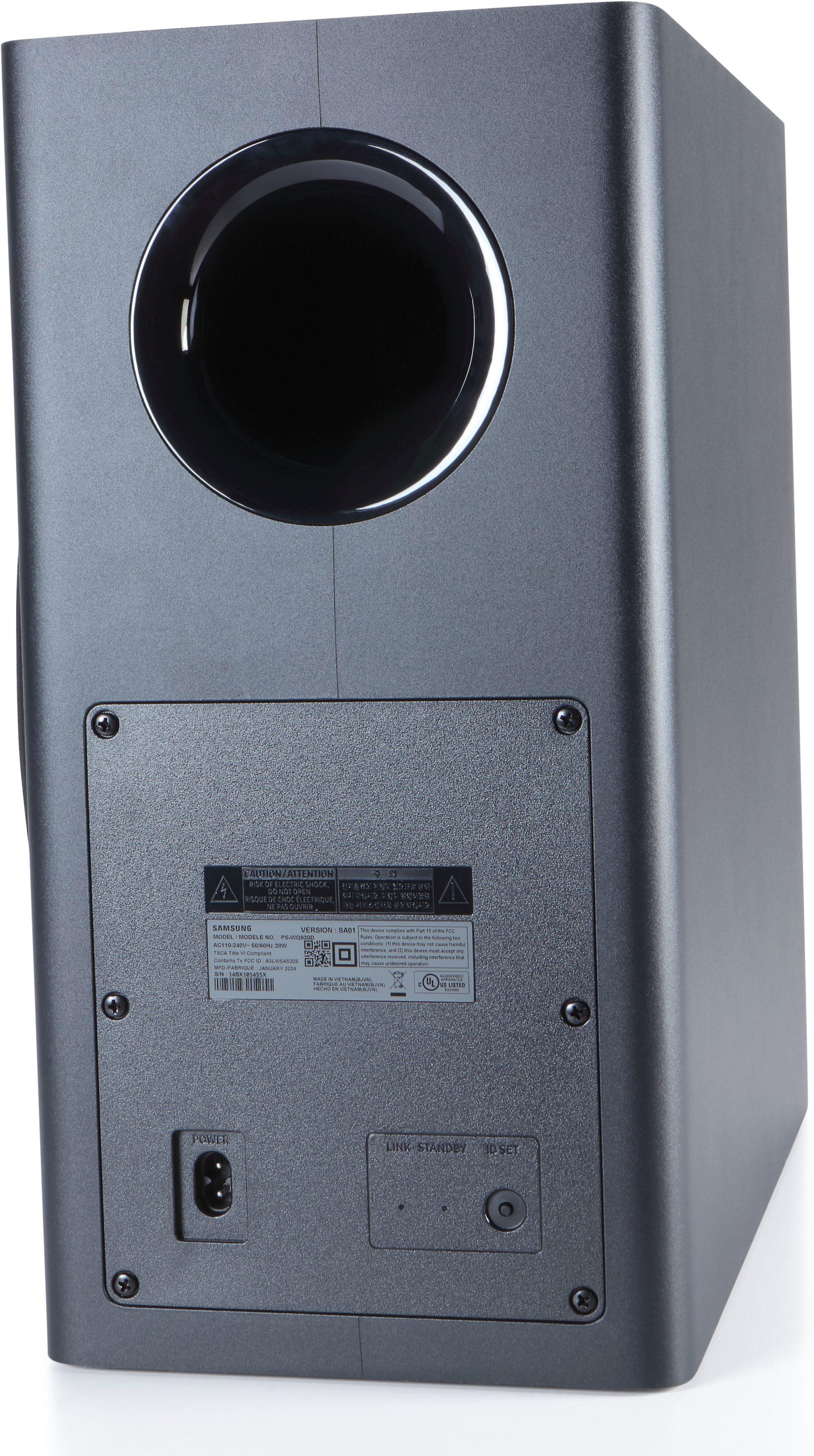
Both systems include wireless subwoofers, but they're engineered quite differently. The Ultimea D70 features a 6.5-inch subwoofer with what the company calls BassMX technology – essentially bass enhancement processing that lets you adjust low-frequency impact via the remote or smartphone app. This provides good impact for movies and music, with flexible placement since the subwoofer connects wirelessly to the main soundbar.
The Samsung's subwoofer incorporates more sophisticated room correction through Auto Sub EQ technology. This uses a microphone in the subwoofer itself to analyze your room's acoustics and adjust the bass response accordingly. Room dimensions and furniture placement dramatically affect how bass sounds, and this automatic correction helps ensure more accurate, controlled low-frequency reproduction regardless of where you place the subwoofer.
In practical terms, the Ultimea provides more dramatic, adjustable bass impact – great for action movies where you want that chest-thumping effect. The Samsung delivers more accurate, refined bass that integrates better with the midrange and treble – better for music and content where bass should enhance rather than dominate.
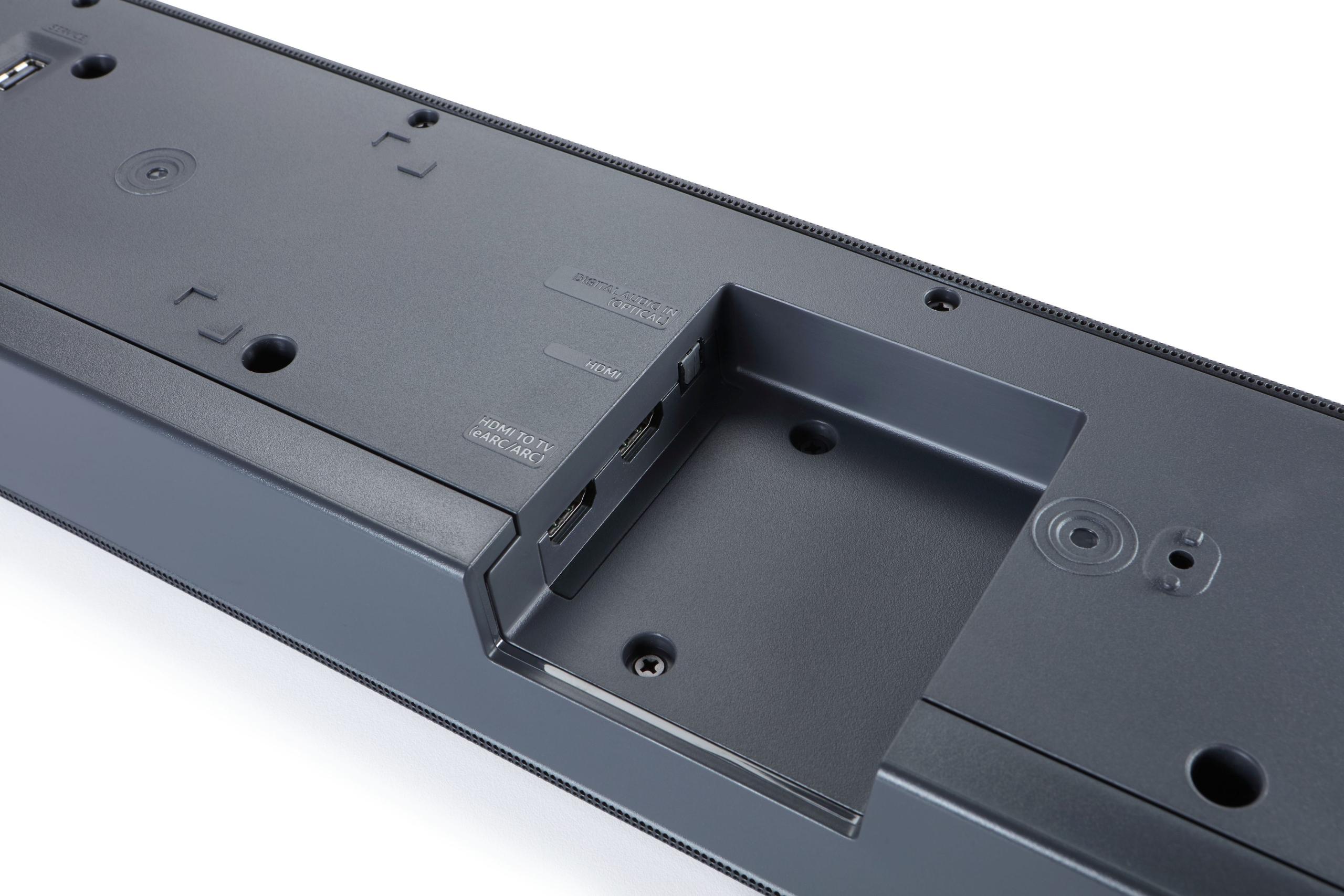
This is another area where the price difference becomes apparent. The Samsung Q Series includes comprehensive modern connectivity: HDMI eARC support, full 4K passthrough at 120Hz (though limited to 8-bit color depth), and extensive audio format support including multi-channel PCM, Dolby Digital, DTS, Dolby Atmos, and DTS:X across various connection types.
The Ultimea D70 covers the basics well with HDMI ARC, optical input, Bluetooth, USB, and 3.5mm auxiliary connections. This handles most setups perfectly, but lacks the 4K passthrough capabilities that matter for modern gaming consoles and high-end streaming devices.
For gaming specifically, the Samsung offers notably low latency across all audio formats, making lip-sync issues unlikely. Combined with its Game Mode processing and 4K 120Hz support, it's well-optimized for PlayStation 5, Xbox Series X, and high-end PC gaming.
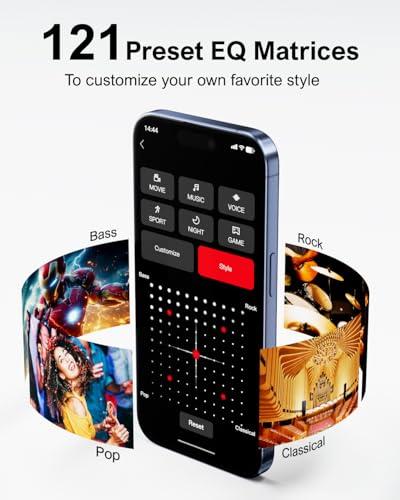
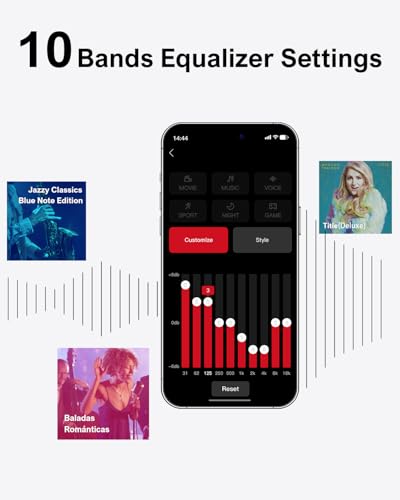
Both systems offer smartphone app control, but with different philosophies. The Ultimea D70 emphasizes manual customization with 121 preset EQ matrices – essentially 121 different pre-configured sound profiles covering various music genres, movie types, and personal preferences. It also includes a 10-band graphic equalizer for precise frequency adjustment. This appeals to users who enjoy tweaking their audio setup to perfection.
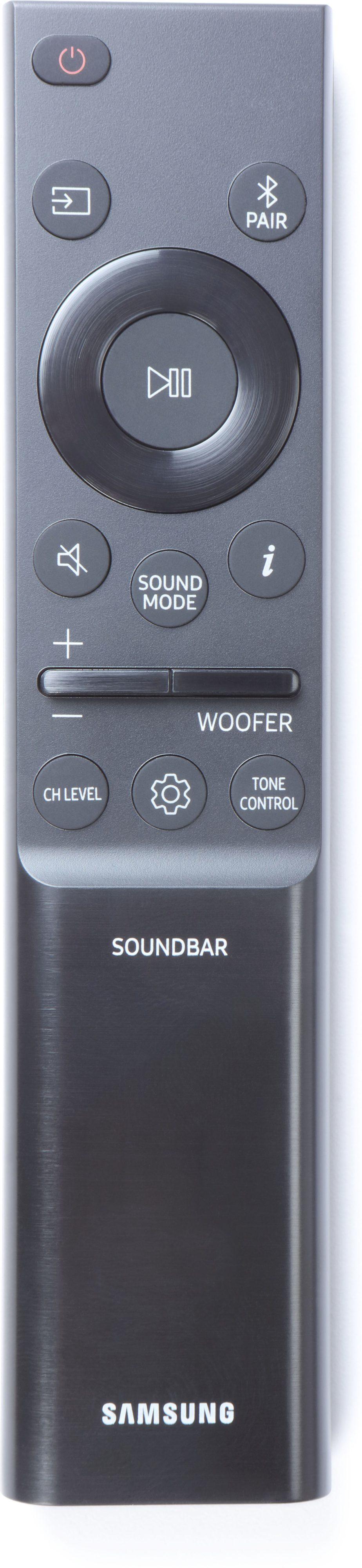
The Samsung Q Series focuses more on intelligent automation. Its SpaceFit Sound Pro technology analyzes your room's acoustics and automatically adjusts the sound accordingly. Adaptive Sound analyzes content in real-time and optimizes audio settings for dialogue, action sequences, or music. While it includes manual EQ controls, the emphasis is on the system automatically optimizing itself.
The construction quality difference reflects the price gap clearly. User reviews describe the Ultimea D70 as having a "plain, plasticky look" with metal mesh grills that wrap around the speakers. It's functional and adequate, but clearly built to hit a price point rather than make a design statement.
The Samsung Q Series represents premium build quality with more sophisticated materials and finish. It's designed to complement modern TV setups aesthetically while delivering superior acoustic performance from better-engineered drivers and cabinet construction.
This matters beyond aesthetics – better build quality typically means better acoustic performance, reduced vibration and resonance, and longer lifespan. The Samsung is engineered as a long-term investment, while the Ultimea delivers impressive performance for its price category.
The decision ultimately comes down to your priorities, room setup, and budget constraints.
Choose the Ultimea Poseidon D70 if you're primarily focused on getting genuine surround sound immersion without spending premium money. If your room allows proper placement of four surround speakers, and you're more interested in dramatic surround effects than perfect audio refinement, this system delivers remarkable value. It's ideal for action movie enthusiasts, gamers who want directional audio advantages, and anyone who wants to experience true multi-speaker surround without the complexity of traditional AV receivers.
The Ultimea also makes sense if you enjoy manual audio customization. With 121 EQ presets and extensive manual controls, it appeals to users who like tweaking their sound setup. If you're connecting to basic sources and don't need modern gaming features or 4K passthrough, its connectivity covers everything necessary.
Choose the Samsung Q Series 9.1.2 if audio quality and modern features matter more than maximizing speaker count per dollar. If you want genuine Dolby Atmos three-dimensional audio, superior dialogue clarity, and automatic room optimization, the premium engineering justifies the higher cost. It's particularly valuable for mixed content consumption – movies, TV shows, music, and gaming – where the refined processing and format support provide consistent benefits.
The Samsung is also the clear choice for modern gaming setups, 4K streaming devices, and future-proofing. If you prefer automated optimization over manual tweaking, or if your room layout makes multiple physical speakers impractical, this system delivers premium performance in a more streamlined package.
These two soundbars represent different peaks in their respective categories. The Ultimea Poseidon D70 maximizes the surround sound experience you can get at a budget price point, delivering genuine physical immersion that's genuinely rare in its price category. The Samsung Q Series justifies its premium positioning with superior audio processing, three-dimensional capability, and comprehensive modern features.
Neither choice is wrong – they serve different needs and priorities. The Ultimea proves that impressive surround sound doesn't require premium spending, while the Samsung demonstrates why audio enthusiasts are willing to pay more for refinement and advanced features. Your choice should align with whether you prioritize maximum immersion per dollar or premium audio quality and modern capabilities.
At the time of writing, both represent strong values in their respective categories, making either a solid foundation for elevating your home entertainment experience beyond basic TV speakers.
| Ultimea Poseidon D70 7.1 Channel Soundbar System | Samsung Q Series 9.1.2 Channel Soundbar |
|---|---|
| Channel Configuration - Determines surround sound capability and immersion | |
| 7.1 channels with 8 physical speakers (3 in soundbar, 4 surround, 1 subwoofer) | 9.1.2 channels with height effects (includes 2 up-firing drivers for Dolby Atmos) |
| Physical Speaker Setup - Affects room placement and surround realism | |
| True physical surround: 4 wired speakers positioned around room + wireless subwoofer | Wireless subwoofer + 2 wireless satellites (require wired connection to receiver) |
| Height Audio Support - Critical for modern movie soundtracks and gaming | |
| No height channels - virtual surround processing only | Dedicated up-firing drivers for genuine Dolby Atmos and DTS:X overhead effects |
| Power Output - Determines volume capability and dynamic range | |
| 410W peak / 144W RMS across 8 speakers | Not specified but delivers superior clarity at high volumes with less compression |
| Audio Processing Quality - Affects dialogue clarity and overall refinement | |
| Basic DSP with SurroundX and BassMX technologies, can sound "tinny" at high volumes | Premium processing with balanced frequency response, exceptional dialogue clarity |
| Customization Options - Important for fine-tuning sound to your preferences | |
| 121 preset EQ matrices + 10-band graphic equalizer for extensive manual control | SpaceFit Sound Pro room correction + Adaptive Sound with 7-band EQ |
| Connectivity Features - Determines compatibility with modern devices | |
| HDMI ARC, Optical, Bluetooth, USB, 3.5mm - covers basics but no 4K passthrough | HDMI eARC, 4K 120Hz passthrough, comprehensive format support including Atmos |
| Smart Features - Enhances convenience and automation | |
| Mobile app control, firmware updates, extensive manual EQ control | SmartThings integration, Q-Symphony TV pairing, automatic room optimization |
| Build Quality - Affects longevity and acoustic performance | |
| Budget construction with plastic housing and basic materials | Premium build quality with refined materials and superior acoustic engineering |
| Gaming Performance - Important for console and PC gaming | |
| Multiple inputs available but no specific gaming optimizations | Game Mode Pro, low latency, 4K 120Hz support optimized for PS5/Xbox Series X |
| Format Support - Determines compatibility with streaming and disc content | |
| Standard surround formats, no object-based audio support | Full Dolby Atmos, DTS:X, and comprehensive format support across all inputs |
| Setup Complexity - Affects installation difficulty and wire management | |
| Requires positioning and wiring 4 surround speakers around room | Mostly wireless setup with minimal wiring, automated calibration |
The Ultimea Poseidon D70 provides true physical surround sound with four dedicated speakers positioned around your room, creating genuine directional audio effects. The Samsung Q Series 9.1.2 uses advanced digital processing and fewer physical speakers but delivers more refined audio quality. For dramatic surround immersion, the Ultimea D70 excels, while the Samsung offers more balanced, sophisticated sound processing.
The Ultimea Poseidon D70's 7.1 setup includes 7 horizontal channels plus 1 subwoofer channel, using 8 physical speakers total. The Samsung Q Series 9.1.2 features 9 horizontal channels, 1 subwoofer channel, and 2 height channels for Dolby Atmos overhead effects. The Samsung's configuration enables three-dimensional audio that the Ultimea cannot match.
For home theater use, the Samsung Q Series 9.1.2 is superior due to its Dolby Atmos support, refined dialogue clarity, and balanced audio processing. However, the Ultimea Poseidon D70 provides more dramatic surround effects through its physical speaker placement, making it excellent for action movies where directional audio impact matters more than refinement.
Only the Samsung Q Series 9.1.2 supports true Dolby Atmos with dedicated up-firing drivers that create overhead audio effects. The Ultimea Poseidon D70 lacks height channels and cannot reproduce genuine Dolby Atmos, relying instead on virtual surround processing limited to horizontal plane audio.
The Ultimea Poseidon D70 requires more complex setup as you must position and wire four surround speakers around your room. The Samsung Q Series offers mostly wireless setup with automatic room calibration, making installation simpler and less intrusive in your living space.
The Ultimea D70 includes HDMI ARC, optical, Bluetooth, USB, and 3.5mm inputs - covering basic needs but lacking 4K passthrough. The Samsung Q Series provides HDMI eARC, 4K 120Hz passthrough, and comprehensive format support, making it better suited for modern gaming consoles and streaming devices.
The Ultimea Poseidon D70 delivers exceptional value by providing eight physical speakers and true surround sound at a budget-friendly price point. The Samsung Q Series 9.1.2 justifies its higher cost with premium audio processing, Dolby Atmos capability, and advanced features, representing better long-term value for audio quality.
Both the Ultimea D70 and Samsung Q Series offer smartphone app control. The Ultimea provides 121 preset EQ settings and extensive manual customization options, while the Samsung focuses on automated optimization with SpaceFit Sound Pro room correction and adaptive sound processing.
The Samsung Q Series 9.1.2 excels for gaming with its Game Mode Pro, low latency performance, and 4K 120Hz passthrough support optimized for PlayStation 5 and Xbox Series X. The Ultimea Poseidon D70 offers good directional audio for competitive gaming but lacks modern gaming-specific features and connectivity.
The Ultimea D70 includes a 6.5" wireless subwoofer with BassMX technology for adjustable bass enhancement. The Samsung Q Series features a wireless subwoofer with Auto Sub EQ room correction that automatically optimizes bass response based on your room's acoustics, delivering more accurate and controlled low-frequency performance.
The Samsung Q Series 9.1.2 works better in smaller spaces since it doesn't require positioning multiple speakers around the room and uses intelligent processing to create immersive sound from fewer physical components. The Ultimea Poseidon D70 needs adequate space to properly position its four surround speakers for optimal performance.
The Samsung Q Series features premium construction with refined materials and superior acoustic engineering designed for long-term use. The Ultimea Poseidon D70 uses budget-friendly materials and construction that prioritize functionality and value over premium aesthetics, though it still delivers solid performance for its price category.
We've done our best to create useful and informative comparisons to help you decide what product to buy. Our research uses advanced automated methods to create this comparison and perfection is not possible - please contact us for corrections or questions. These are the sites we've researched in the creation of this article: ultimea.com - provantage.com - ultimea.com - youtube.com - youtube.com - bestbuy.com - the-gadgeteer.com - shopmyexchange.com - youtube.com - youtube.com - youtube.com - ultimea.com - manuals.plus - device.report - images.thdstatic.com - shopmyexchange.com - staples.com - ultimea.de - rtings.com - samsung.com - markselectrical.co.uk - techradar.com - walmart.com - samsung.com - samsung.com - youtube.com - samsung.com - biancos.com - crutchfield.com - samsung.com

Privacy Policy
Terms and Conditions - Affiliate Policy
Home Security
© Copyright 2008-2026.
11816 Inwood Rd #1211, Dallas, TX 75244