


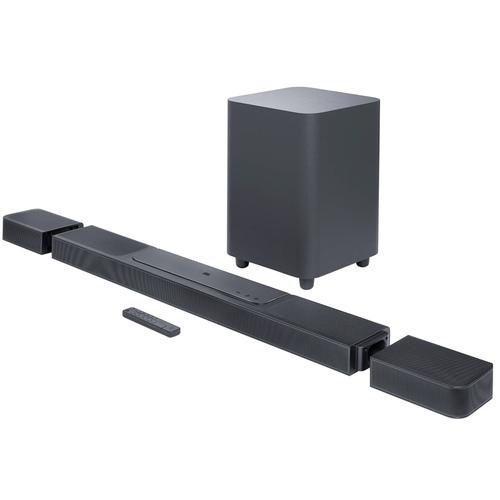
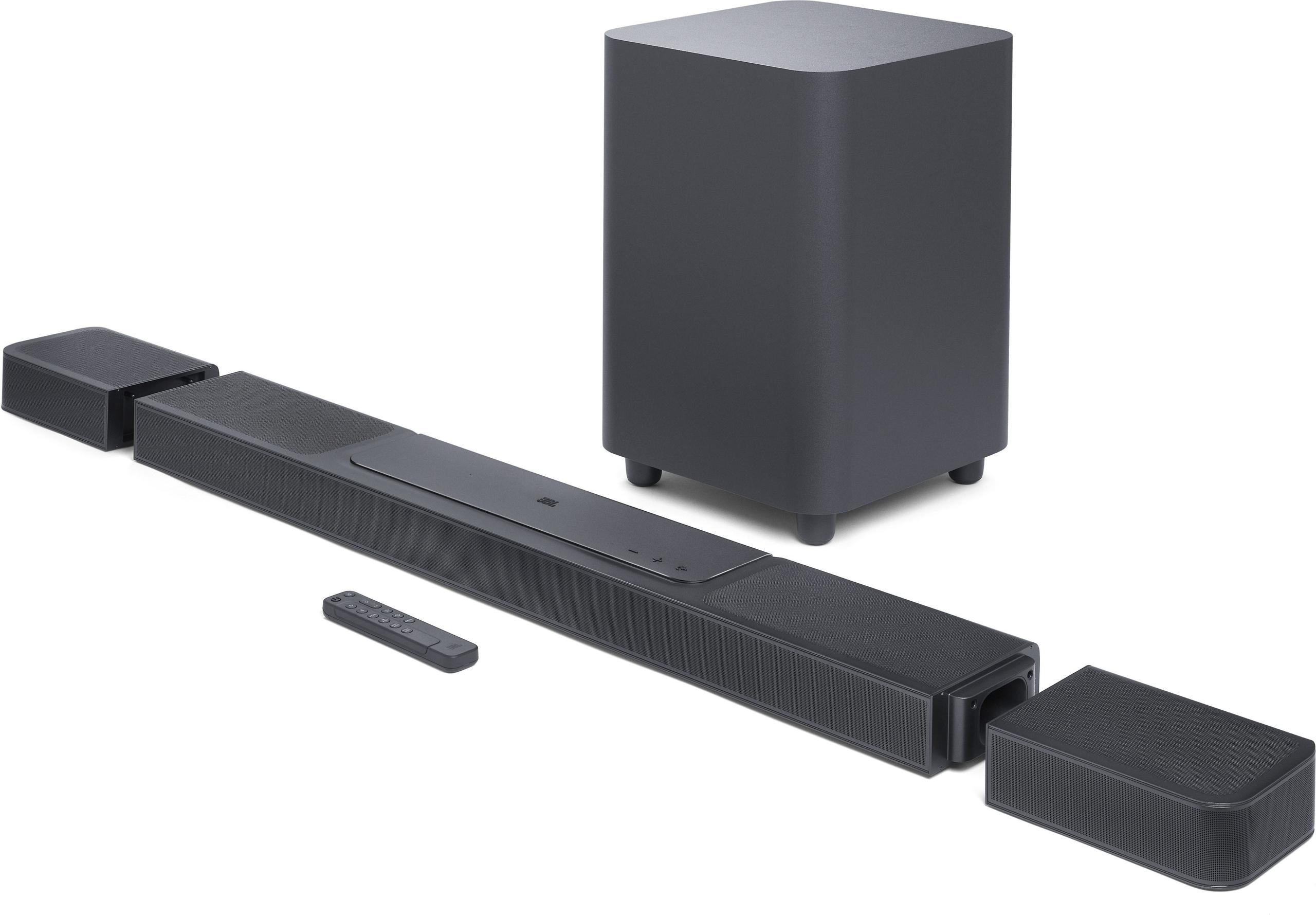
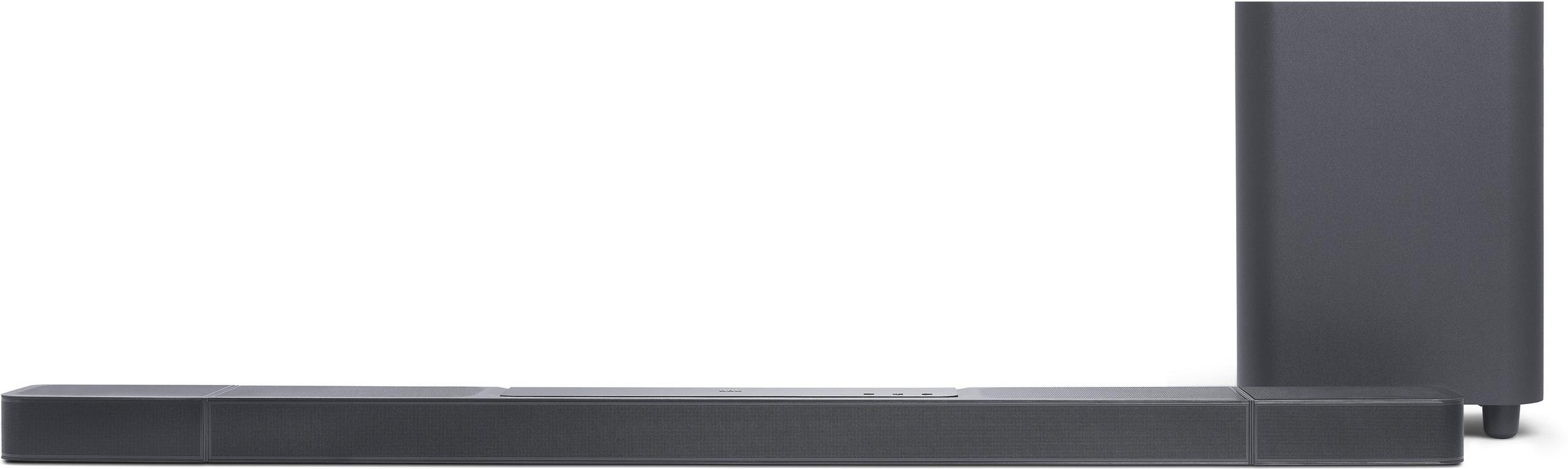
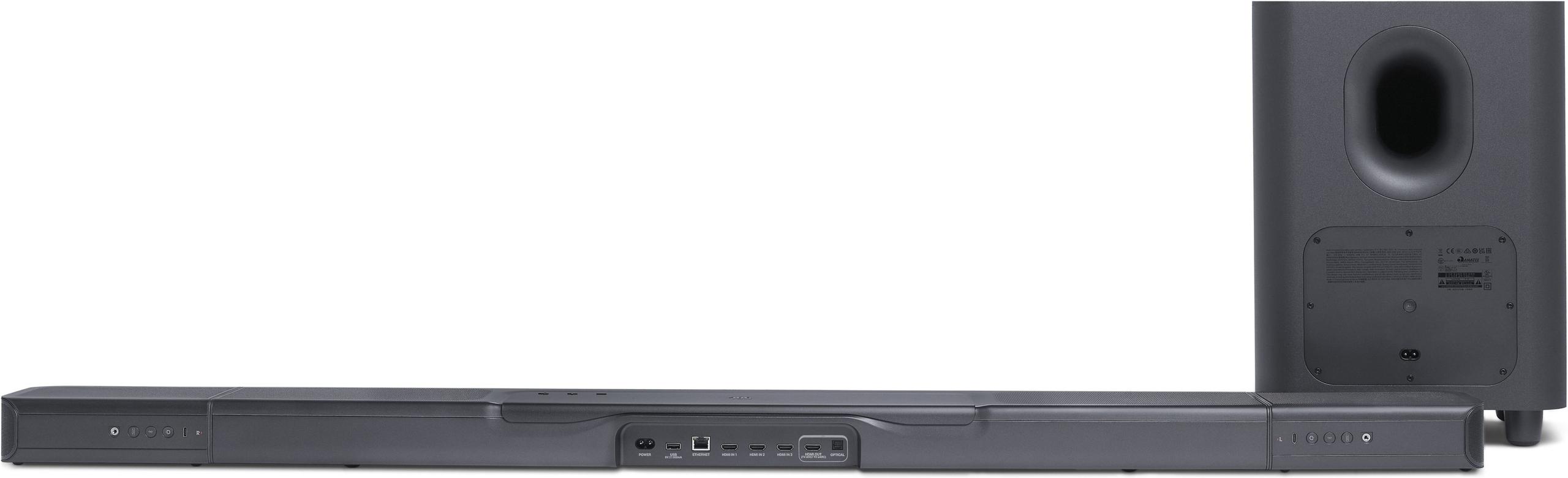



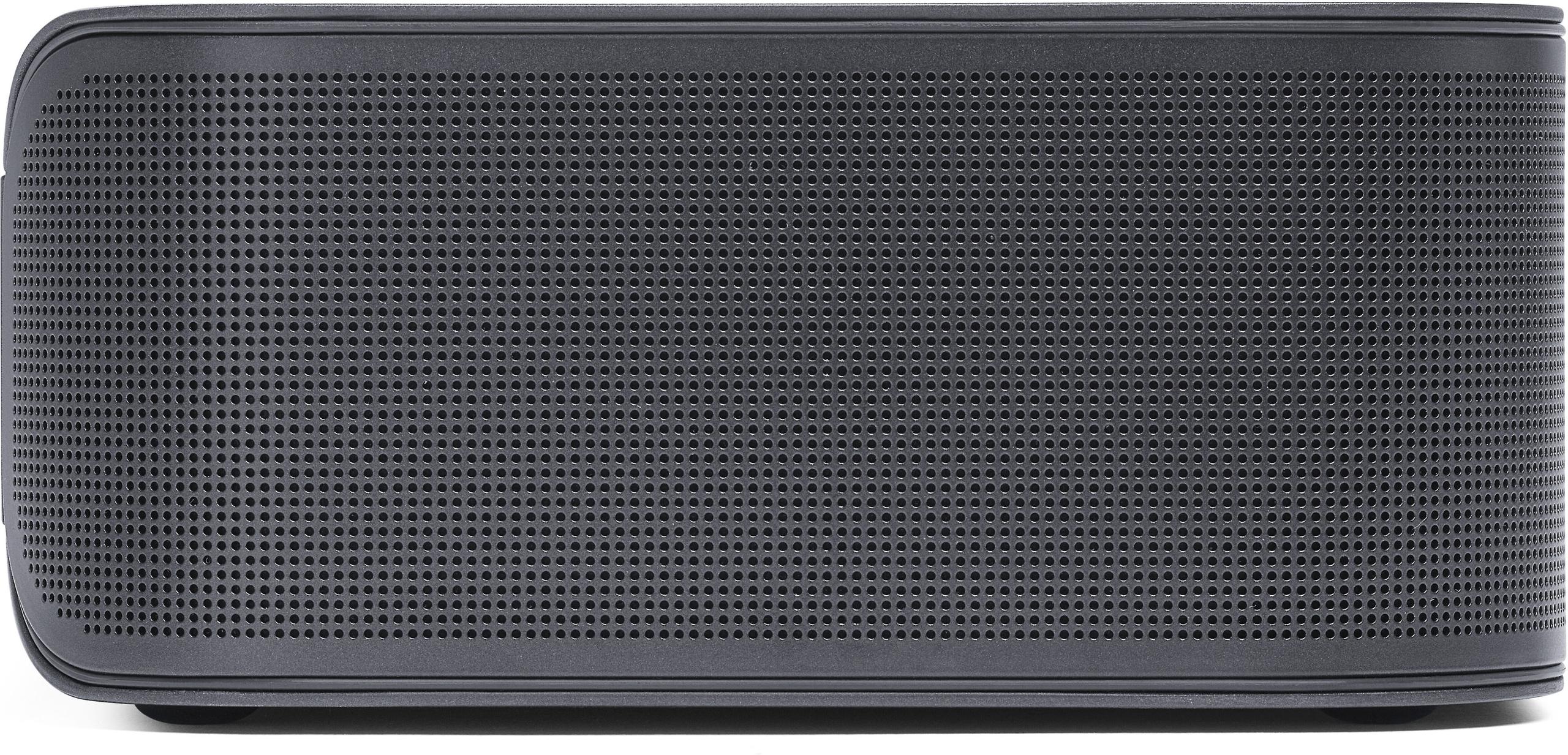
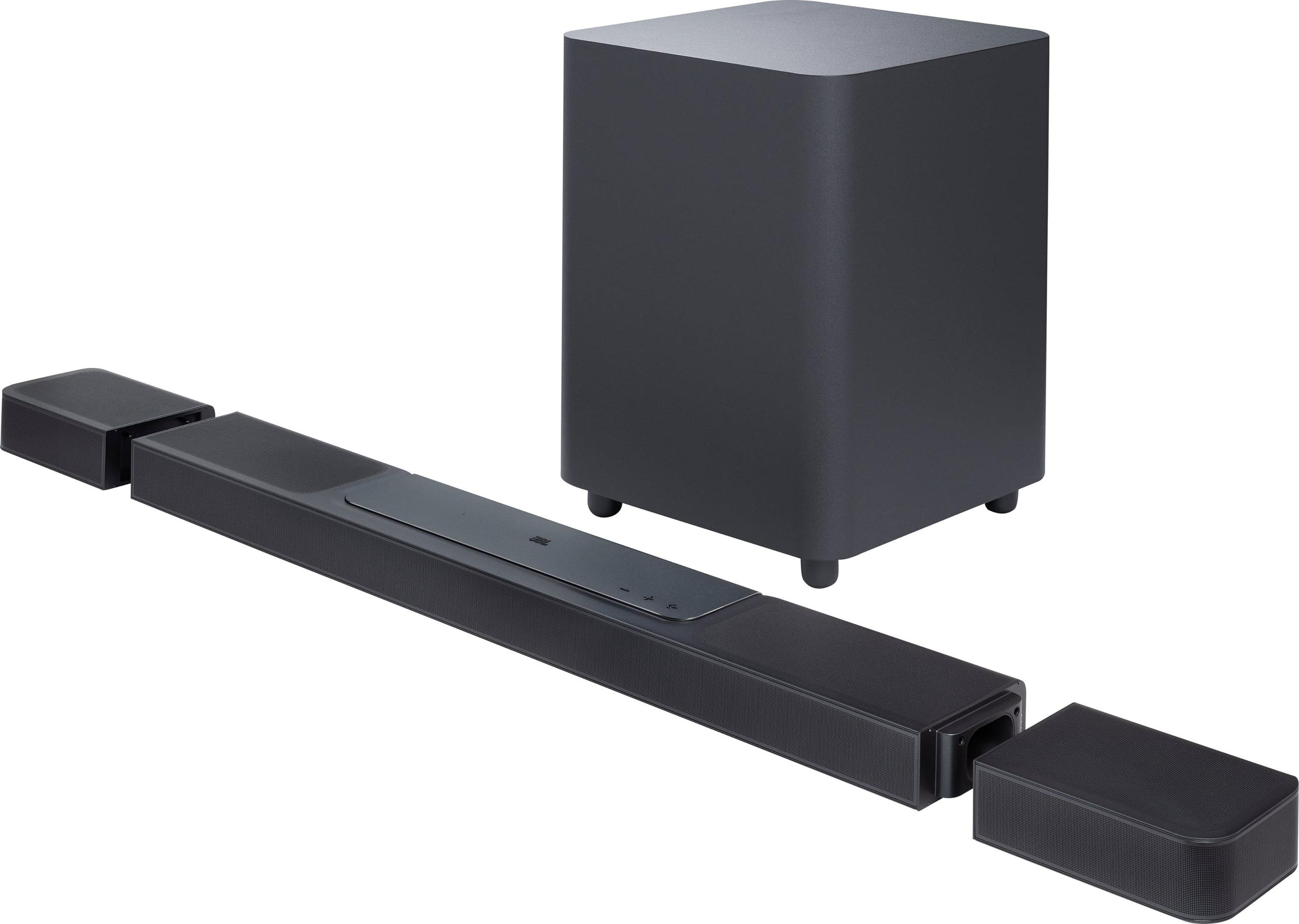
When it comes to upgrading your TV's audio, the soundbar market offers everything from basic stereo bars to sophisticated surround systems that rival traditional home theater setups. Two products that perfectly illustrate this range are the Ultimea Poseidon D70 and the JBL Bar 1300X—systems separated by not just price, but by fundamentally different approaches to delivering immersive audio.
The soundbar category has evolved dramatically since these systems launched. The Ultimea Poseidon D70 arrived in 2023 as part of the wave of budget systems offering genuine multi-channel surround sound, while the JBL Bar 1300X represents the premium end that emerged around the same time, focusing on object-based audio formats like Dolby Atmos that create true three-dimensional soundscapes.
Understanding what separates a good soundbar from a great one comes down to several key factors: how many channels it supports (more channels mean more precise sound placement), what audio formats it can decode, how much power it delivers, and most importantly, how well it integrates into your living space without becoming a hassle to use.
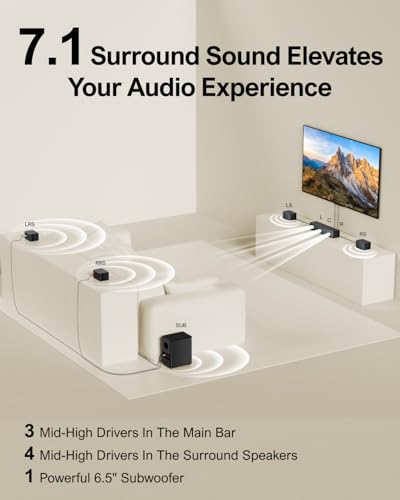
The most fundamental difference between the Ultimea Poseidon D70 and JBL Bar 1300X lies in their channel architecture—essentially, how many separate audio streams they can handle simultaneously. The Ultimea delivers 7.1 channel surround sound, meaning it processes seven discrete channels at ear level plus one dedicated bass channel. The JBL takes this much further with an 11.1.4 configuration: eleven channels at ear level, one subwoofer channel, and four height channels that fire sound upward to bounce off your ceiling.
This height dimension is where modern premium soundbars really shine. Dolby Atmos—a technology that treats sounds as objects that can be placed anywhere in three-dimensional space—requires these upward-firing drivers to create the sensation of helicopters flying overhead or rain falling from above. The Ultimea Poseidon D70 lacks these height channels entirely, instead using digital signal processing through its SurroundX technology to simulate surround effects from ear-level speakers only.
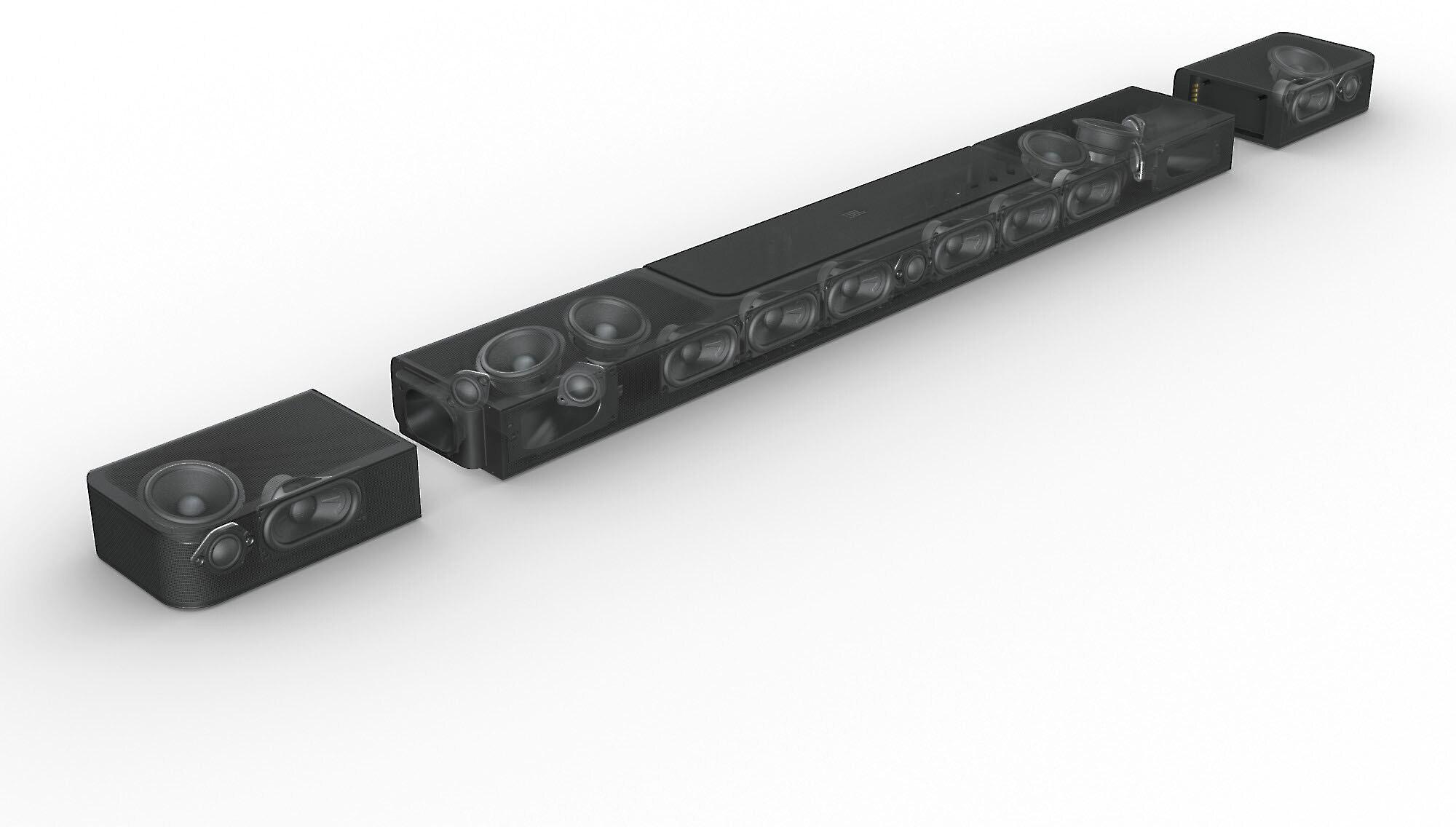
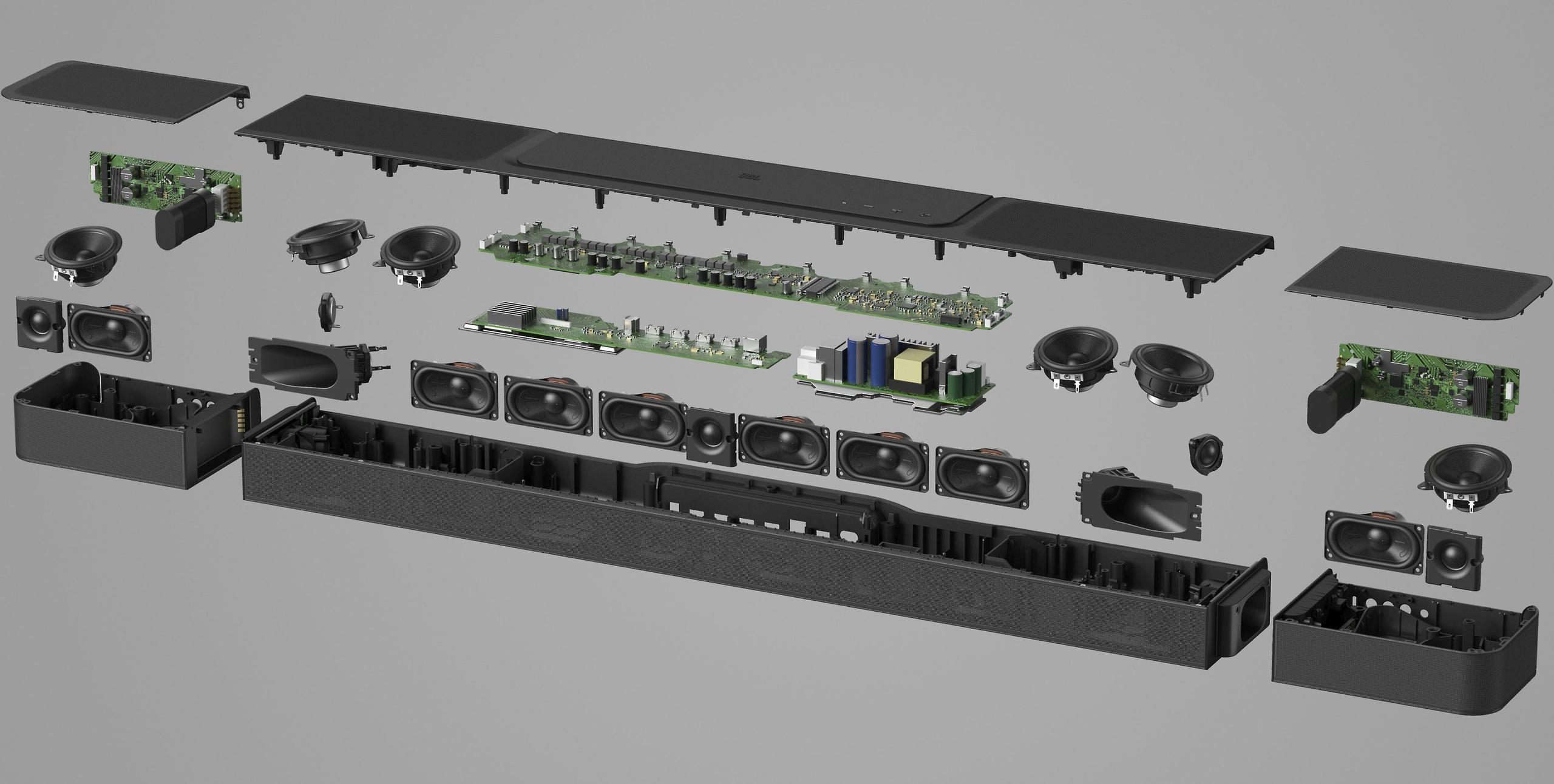
The JBL Bar 1300X incorporates six up-firing drivers: four built into the main soundbar and two in its detachable surround speakers. These fire sound toward your ceiling at precise angles, creating reflection points that your brain interprets as overhead audio. It's genuinely impressive technology when it works well, and based on user reports, the JBL's implementation is among the more convincing in the soundbar category.
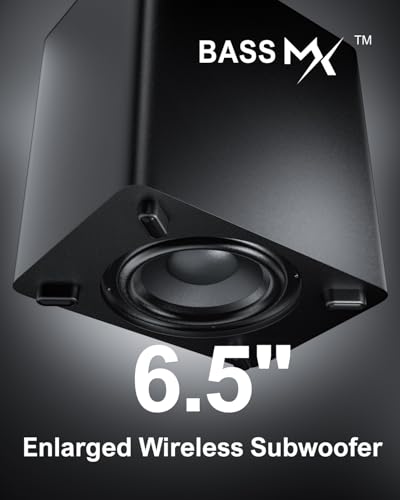
Raw power numbers tell only part of the story, but they matter significantly for bass impact and overall dynamics. The Ultimea Poseidon D70 delivers 410 watts of peak power, with its 6.5-inch wireless subwoofer handling the low frequencies. The JBL Bar 1300X operates in a completely different league with 1,170 watts of total system power, including 300 watts dedicated to its massive 12-inch subwoofer.
This power difference translates directly into real-world performance. The larger subwoofer in the JBL Bar 1300X can move significantly more air, creating deeper bass extension down to 33Hz compared to the Ultimea's 35Hz—a small numerical difference that represents meaningfully more impactful low-frequency reproduction. More importantly, the JBL's subwoofer has the power reserves to maintain clean bass at higher volumes without the compression and distortion that plague smaller systems when pushed hard.
From our research into user experiences, the Ultimea Poseidon D70's bass performance is surprisingly good for its size and price point, thanks to its BassMX technology that optimizes the digital signal processing for enhanced low-frequency output. However, it simply cannot compete with the physical advantages of the JBL's much larger driver and amplifier combination when it comes to filling larger rooms or delivering the kind of visceral impact that makes action movies truly exciting.
For smaller rooms under 300 square feet, the Ultimea's bass capabilities prove adequate and won't overwhelm the space. But if you're dealing with an open-concept living area or a dedicated home theater room, the JBL Bar 1300X's superior power output becomes essential for maintaining that sense of scale and drama that good movie sound requires.
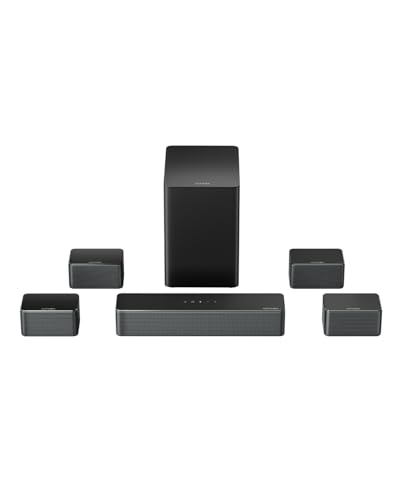
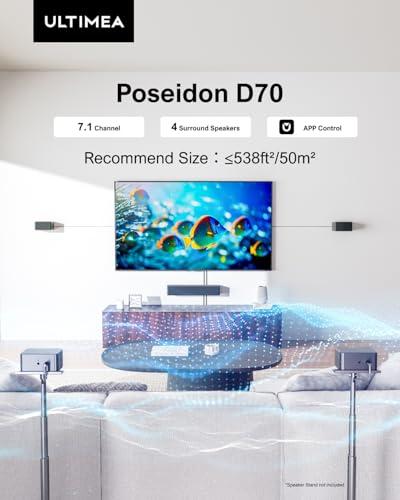
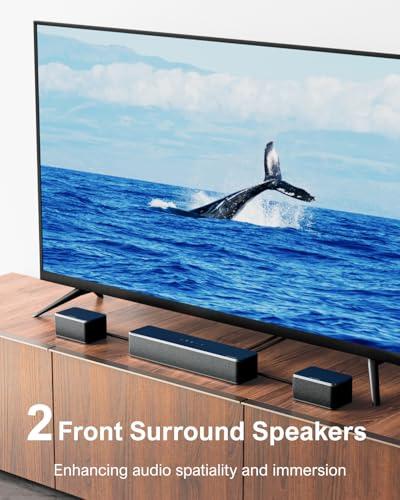
Perhaps no difference between these systems is more immediately apparent than their approach to surround speakers. The Ultimea Poseidon D70 includes four discrete surround speakers that connect via RCA cables—two shorter 3-meter cables for the front surrounds and two longer 6-meter cables for the rear channels. This wired approach ensures consistent connection and eliminates concerns about wireless dropouts or battery life, but it requires careful cable management and limits speaker placement flexibility.
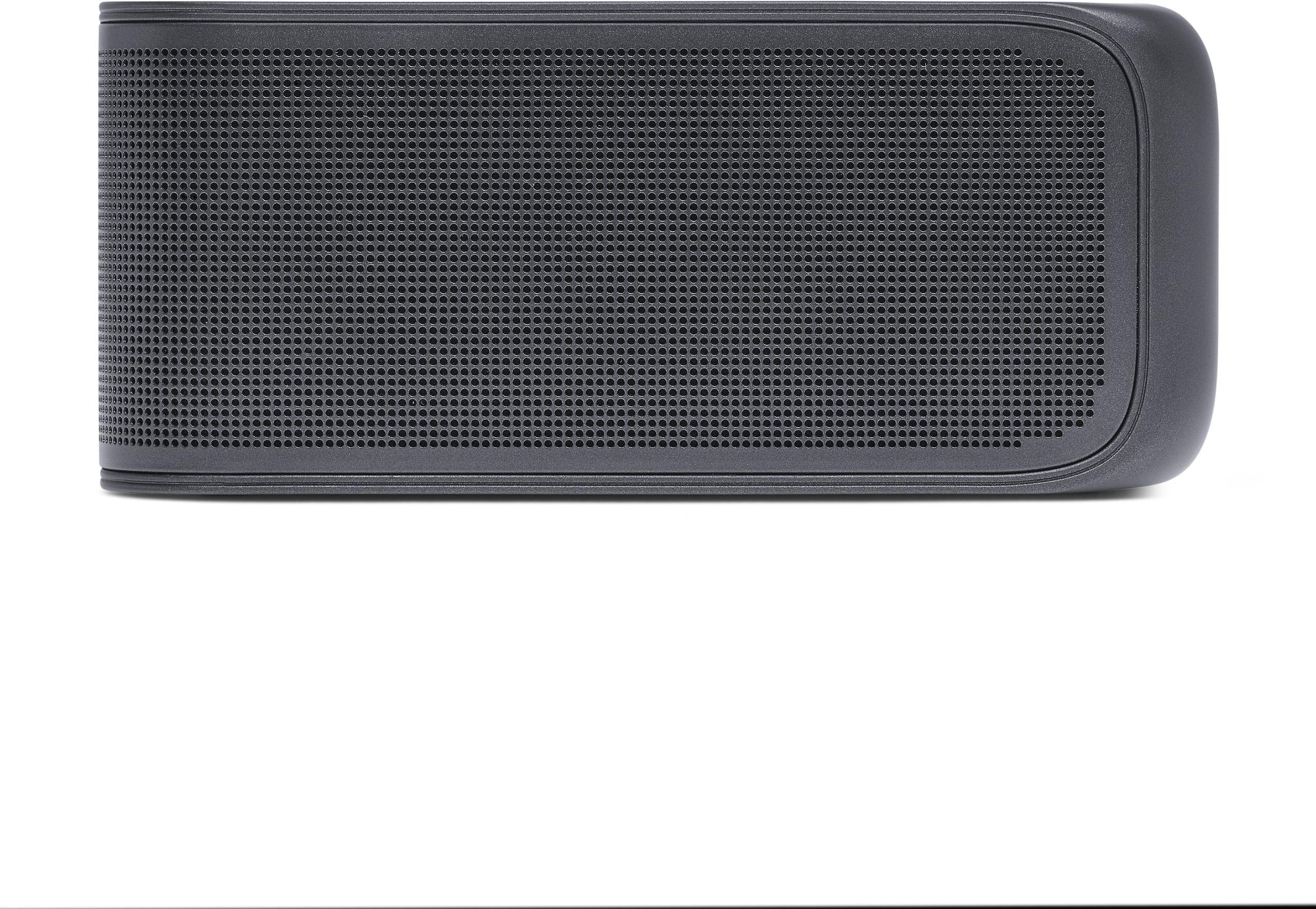
The JBL Bar 1300X takes a radically different approach with detachable battery-powered surround speakers that can operate wirelessly for up to 12 hours. These speakers literally clip onto the ends of the main soundbar for charging and storage, then detach when you want true wireless surround placement. Each surround speaker contains its own amplifier, multiple drivers including an up-firing unit for Atmos effects, and even functions as a standalone Bluetooth speaker when removed from the system.
This wireless implementation represents genuine innovation in the soundbar space. The convenience of being able to place surrounds anywhere without running cables cannot be overstated, especially for apartment dwellers or anyone renting their living space. However, you do need to remember to charge them periodically, and wireless audio can occasionally suffer from dropouts or interference in congested RF environments.
Based on user feedback, the JBL Bar 1300X's wireless surround implementation works reliably in most home environments, though some users report occasional connection hiccups when the speakers are placed very far from the main unit or when multiple wireless devices are operating nearby.
The technical capabilities of these systems diverge sharply when it comes to advanced audio formats. The Ultimea Poseidon D70 processes standard surround formats like Dolby Digital and DTS, then uses sophisticated digital signal processing to create virtual height effects and expanded soundstage width. Its SurroundX technology analyzes incoming audio signals and distributes them strategically across its seven physical speakers to simulate immersive surround effects.
The JBL Bar 1300X supports true Dolby Atmos and DTS:X decoding, meaning it can process object-based audio tracks that contain metadata specifying exactly where each sound should appear in three-dimensional space. When you're watching a movie with native Atmos mixing, the JBL can place individual sound elements with precision—a bird chirping in the upper left corner of your room, or debris falling from directly overhead.
This distinction matters more than you might expect. While the Ultimea Poseidon D70's virtual processing can make regular stereo or 5.1 content sound more expansive and engaging, it cannot recreate the specific overhead effects that filmmakers intended when they mixed content in Dolby Atmos. Streaming services like Netflix, Disney+, and Amazon Prime Video increasingly offer Atmos soundtracks for their premium content, and 4K Blu-ray discs routinely include Atmos mixes that simply cannot be fully experienced without compatible hardware.
The JBL Bar 1300X's MultiBeam technology also deserves mention—this proprietary system uses digital beamforming to project sound in multiple directions simultaneously, creating a wider and more enveloping soundstage even with non-Atmos content. Combined with its six up-firing drivers, this creates a genuinely three-dimensional audio experience that the Ultimea cannot match despite its impressive virtual processing.
Modern soundbars need to integrate seamlessly with today's entertainment ecosystems, and this is where the price difference between these systems becomes most apparent. The Ultimea Poseidon D70 offers essential connectivity including HDMI ARC (Audio Return Channel, which allows audio to flow from your TV back to the soundbar through a single cable), optical input, Bluetooth, USB, and auxiliary connections. This covers the basics well, though it lacks the advanced HDMI features that serious home theater enthusiasts increasingly require.
The JBL Bar 1300X includes three HDMI 2.1 inputs plus an eARC (enhanced Audio Return Channel) output, supporting modern gaming features like 4K resolution at 120Hz refresh rates, Variable Refresh Rate (VRR) for smoother gaming, and Auto Low Latency Mode (ALLM) that reduces input lag. These features matter significantly for PlayStation 5 and Xbox Series X owners who want the full capabilities of their consoles.
Beyond gaming, the JBL's eARC support enables uncompressed Dolby Atmos audio transmission from compatible TVs, while the Ultimea's standard ARC connection may compress these signals. The difference in audio quality can be subtle but becomes more noticeable on high-quality content with complex soundtracks.
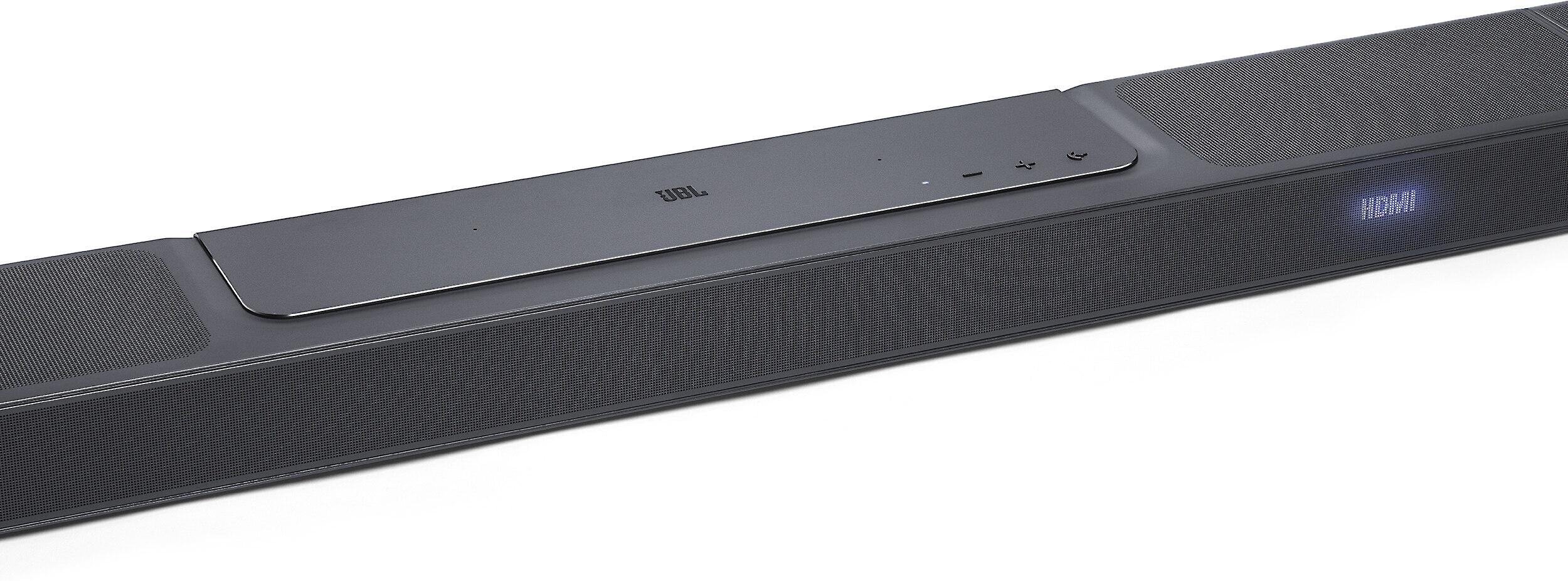
Streaming integration represents another major differentiator. The JBL Bar 1300X includes built-in Wi-Fi with support for AirPlay 2, Chromecast, and Alexa Multi-Room Music, providing access to hundreds of streaming music services directly through the soundbar. Voice assistant integration allows control through Alexa, Google Assistant, or Siri commands. The Ultimea Poseidon D70 relies primarily on Bluetooth for wireless connectivity, with streaming handled through connected devices rather than built into the system itself.
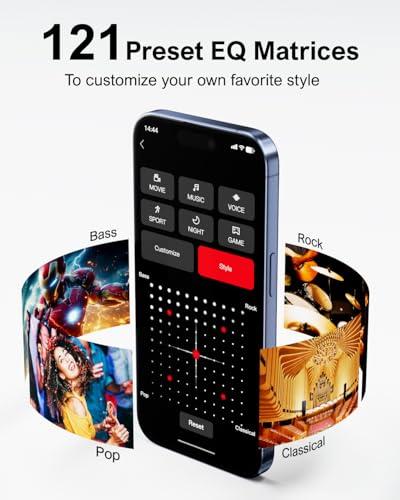
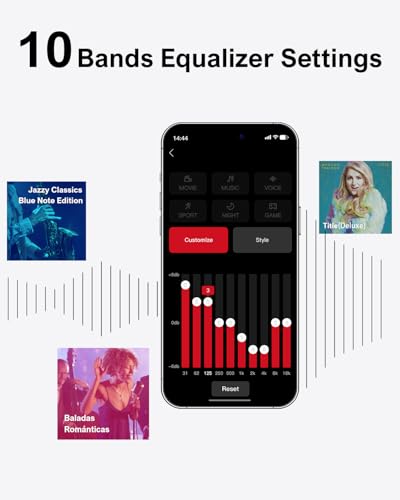
One area where the Ultimea Poseidon D70 genuinely excels is audio customization. The system includes 121 preset EQ matrices covering various music genres, content types, and listening preferences, plus a full 10-band graphic equalizer accessible through its mobile app. This level of manual control is unusual in the soundbar category and allows users to fine-tune the audio response for their specific room acoustics and personal preferences.
The system's six sound modes—movie, music, voice, sports, game, and night—can be further customized using individual adjustments for bass (via BassMX technology), mid-range, and treble frequencies. For audio enthusiasts who enjoy tweaking their system's performance, the Ultimea Poseidon D70 offers more granular control than many soundbars costing twice as much.
In contrast, the JBL Bar 1300X emphasizes automated optimization over manual control. Its room calibration system analyzes your space and adjusts the audio processing accordingly, while its PureVoice dialogue enhancement automatically maintains speech clarity even during loud action sequences. The JBL One app provides basic EQ adjustment, but the focus is clearly on sophisticated automatic processing rather than extensive manual tweaking.
This philosophical difference reflects their target audiences: the Ultimea Poseidon D70 appeals to users who want hands-on control over their audio experience, while the JBL Bar 1300X prioritizes convenience and automated excellence for users who prefer their technology to work optimally without intervention.
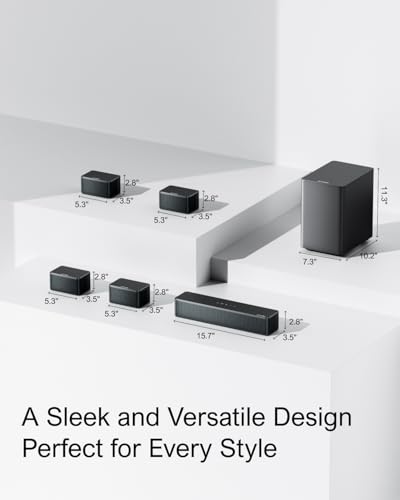
Room size and layout significantly influence which system makes more sense. The Ultimea Poseidon D70's compact main soundbar measures just 15.7 inches wide, making it ideal for TVs between 43-65 inches and smaller living spaces. Its four surround speakers work well in rooms up to about 300 square feet, though the wired connections can be challenging in open-concept layouts where running cables isn't practical.
The JBL Bar 1300X measures 54.2 inches total width with surround speakers attached, designed for 75-inch and larger TVs in substantial living spaces. Its 1,170 watts of power and room calibration technology are engineered for larger rooms where the Ultimea might sound thin or underwhelming. The wireless surround speakers eliminate cable routing challenges but require strategic placement within reasonable range of the main unit.
Based on extensive user feedback analysis, dialogue clarity—often the most important performance characteristic for daily TV viewing—strongly favors the JBL Bar 1300X. Its discrete center channel processing and PureVoice technology consistently deliver clearer speech reproduction, especially during complex movie soundtracks where dialogue competes with music and effects. The Ultimea Poseidon D70 handles dialogue adequately, particularly with its voice-specific EQ presets, but cannot match the JBL's sophisticated center channel optimization.
At the time of writing, these systems occupy completely different price segments, with the Ultimea Poseidon D70 typically available in the $200-300 range while the JBL Bar 1300X commands premium pricing around $1,000 or more. This roughly 3-4x price difference reflects their fundamentally different approaches to delivering surround sound.
The Ultimea Poseidon D70 represents exceptional value for budget-conscious buyers who want genuine multi-channel surround sound. Getting seven discrete audio channels plus a wireless subwoofer at this price point was virtually impossible just a few years ago, and the extensive customization options rival systems costing much more. For users comfortable with wired speaker connections and primarily interested in enhanced TV audio and movie watching, it delivers impressive performance per dollar spent.
The JBL Bar 1300X's premium pricing reflects its flagship features: true Dolby Atmos processing, innovative wireless surround speakers, massive power output, advanced connectivity, and professional-grade build quality. For serious home theater enthusiasts or anyone building a high-end entertainment setup, these features justify the investment. The detachable surround speakers alone represent unique functionality unavailable elsewhere in the soundbar market.
The Ultimea Poseidon D70 makes the most sense for users with smaller to medium-sized rooms, budgets under $400, and willingness to manage wired speaker connections. It's particularly appealing for apartment dwellers or anyone who enjoys fine-tuning their audio settings. The extensive EQ options mean it can be optimized for various content types and personal preferences, potentially extending its useful life as tastes change.
The JBL Bar 1300X targets users with larger rooms, premium TVs (75 inches and up), and budgets that prioritize maximum performance over value. It's ideal for serious movie enthusiasts who watch Dolby Atmos content regularly, gamers who need advanced HDMI features, and anyone who values convenience features like wireless streaming and automatic calibration.
For most users, the decision comes down to whether Dolby Atmos capability and wireless convenience are worth the substantial price premium. If you're primarily watching regular TV shows, standard movies, and non-Atmos streaming content in a smaller room, the Ultimea Poseidon D70 delivers satisfying surround sound at an accessible price. If you're building a serious home theater, regularly watch premium content with Atmos soundtracks, or have a large room that demands serious power, the JBL Bar 1300X provides flagship performance that justifies its premium positioning.
The JBL Bar 1300X also offers better long-term value despite its higher upfront cost, thanks to its advanced format support, HDMI 2.1 connectivity, and premium build quality that should remain relevant longer as streaming services and gaming consoles continue adopting advanced audio formats.
| Ultimea Poseidon D70 7.1 Channel Soundbar System | JBL Bar 1300X Soundbar with Wireless Subwoofer |
|---|---|
| Channel Configuration - Determines how precisely sound can be positioned around you | |
| 7.1 channels (no height channels for overhead effects) | 11.1.4 channels (includes 4 height channels for true 3D audio) |
| Audio Format Support - Critical for streaming services and 4K Blu-rays with advanced soundtracks | |
| Standard surround formats with virtual height processing | True Dolby Atmos and DTS:X decoding with object-based audio |
| Total System Power - Affects maximum volume and bass impact in larger rooms | |
| 410W peak power (adequate for small-medium rooms) | 1,170W total power (designed for large rooms and high impact) |
| Subwoofer Specifications - Most important factor for movie bass and music depth | |
| 6.5" wireless subwoofer, 35Hz frequency response | 12" wireless subwoofer, 33Hz frequency response, significantly more powerful |
| Surround Speaker Design - Affects placement flexibility and setup complexity | |
| 4 wired surround speakers (3m and 6m cables included) | 2 detachable battery-powered wireless surrounds (12-hour runtime) |
| HDMI Connectivity - Essential for modern gaming consoles and 4K content | |
| HDMI ARC only (standard audio return) | 3x HDMI 2.1 inputs + eARC output (supports 4K/120Hz gaming) |
| Streaming Integration - Determines how easily you can play music services directly | |
| Basic Bluetooth connectivity only | Built-in Wi-Fi with AirPlay 2, Chromecast, Alexa MRM |
| Audio Customization - Important for fine-tuning sound to your room and preferences | |
| 121 preset EQ matrices + 10-band equalizer (extensive manual control) | Automatic room calibration with limited manual EQ options |
| Physical Dimensions - Must fit your TV size and room layout | |
| Compact 15.7" soundbar (ideal for 43-65" TVs) | Large 54.2" total width (designed for 75"+ TVs) |
| Voice Assistant Support - Convenience feature for smart home integration | |
| No built-in voice assistant support | Compatible with Alexa, Google Assistant, and Siri |
| Dialogue Enhancement - Critical for clear speech during movies and TV shows | |
| Voice-specific EQ presets with manual adjustment | JBL Bar 1300X PureVoice technology with automatic speech optimization |
| Future-Proofing - How long the system will remain compatible with new content | |
| Limited by lack of Atmos support for newer streaming content | Excellent with Atmos, HDMI 2.1, and advanced format support |
The JBL Bar 1300X is significantly better for large rooms due to its 1,170W total power output and 12-inch subwoofer. The Ultimea Poseidon D70 works well in smaller to medium rooms but may sound underwhelming in spaces over 300 square feet. The JBL Bar 1300X also includes room calibration technology to optimize performance for your specific space.
Only the JBL Bar 1300X supports true Dolby Atmos and DTS:X with dedicated height channels and up-firing speakers. The Ultimea Poseidon D70 uses virtual surround processing to simulate height effects but cannot decode actual Atmos soundtracks from streaming services or 4K Blu-rays.
The JBL Bar 1300X delivers substantially better bass with its 12-inch subwoofer and 300W of dedicated bass power, compared to the Ultimea Poseidon D70's 6.5-inch subwoofer. For movie watching and music with deep bass, the JBL Bar 1300X provides much more impact and room-filling low frequencies.
No, only the JBL Bar 1300X has wireless surround speakers that are battery-powered and detachable. The Ultimea Poseidon D70 includes four wired surround speakers that connect via RCA cables, requiring you to run wires to each speaker location around your room.
The Ultimea Poseidon D70 provides significantly more manual customization with 121 preset EQ settings and a 10-band graphic equalizer. The JBL Bar 1300X focuses more on automatic optimization and room calibration, offering fewer manual adjustment options but more sophisticated automatic processing.
The JBL Bar 1300X includes three HDMI 2.1 inputs plus one eARC output, supporting modern gaming features and multiple device connections. The Ultimea Poseidon D70 has only HDMI ARC connectivity, requiring you to connect most devices directly to your TV instead.
The JBL Bar 1300X is much better for next-gen gaming, supporting 4K/120Hz, Variable Refresh Rate (VRR), and Auto Low Latency Mode through its HDMI 2.1 inputs. The Ultimea Poseidon D70 lacks these gaming-specific features and has limited HDMI connectivity.
The JBL Bar 1300X supports direct music streaming through built-in Wi-Fi, AirPlay 2, Chromecast, and Alexa Multi-Room Music access to hundreds of services. The Ultimea Poseidon D70 only supports Bluetooth streaming from your phone or other devices, with no built-in streaming services.
The JBL Bar 1300X is generally easier to set up due to its wireless surround speakers and automatic room calibration. The Ultimea Poseidon D70 requires running speaker wires around your room and manual audio adjustment, though it includes clearly labeled cables and mounting hardware.
The JBL Bar 1300X offers superior dialogue clarity with its discrete center channel and PureVoice technology that automatically enhances speech during loud scenes. The Ultimea Poseidon D70 includes voice-specific EQ presets but lacks dedicated center channel processing for speech optimization.
The Ultimea Poseidon D70 is better suited for smaller TVs (43-65 inches) due to its compact 15.7-inch soundbar width. The JBL Bar 1300X measures 54.2 inches total width and is designed for 75-inch and larger TVs, potentially overwhelming smaller setups.
The JBL Bar 1300X delivers true three-dimensional audio with overhead effects through Dolby Atmos support and significantly more powerful bass response. The Ultimea Poseidon D70 provides good 7.1 surround sound with excellent customization options but cannot match the immersive height effects and power output of the premium JBL Bar 1300X system.
We've done our best to create useful and informative comparisons to help you decide what product to buy. Our research uses advanced automated methods to create this comparison and perfection is not possible - please contact us for corrections or questions. These are the sites we've researched in the creation of this article: ultimea.com - provantage.com - ultimea.com - youtube.com - youtube.com - bestbuy.com - the-gadgeteer.com - shopmyexchange.com - youtube.com - youtube.com - youtube.com - ultimea.com - manuals.plus - device.report - images.thdstatic.com - shopmyexchange.com - staples.com - ultimea.de - techradar.com - jbl.com - audioadvice.com - youtube.com - rtings.com - jbl.com - greentoe.com - harmanaudio.com - youtube.com - mm.jbl.com - jbl.com

Privacy Policy
Terms and Conditions - Affiliate Policy
Home Security
© Copyright 2008-2026.
11816 Inwood Rd #1211, Dallas, TX 75244